Blog Customer FeedbackCustomer Focus: Definition, Examples & Strategy
Customer Focus: Definition, Examples & Strategy
Customer focus is the practice of building your whole company around customer needs. Here's what it means, how it differs from customer service, why it pays off, and how to build it.


Almost every company says it's customer-focused. Very few can actually prove it.
The gap usually isn't intent. It's that "customer focus" stays a slogan on the wall instead of a system the team runs every day.
This guide fixes that. I'll define customer focus in plain terms, clear up how it differs from customer service and customer-centricity, show why it moves real numbers, walk through 5 brands that get it right, and give you a practical way to build it yourself. 👇
Key takeaways
- Customer focus is a company-wide mindset that puts customer needs at the center of every decision, from the product roadmap to the return policy.
- It's not the same as customer service (a single function) or customer-centricity (a deeper operating model where customer value drives strategy).
- It pays off because experience now drives revenue: roughly half of bad experiences lead customers to cut or stop their spending with you.
- Brands like Amazon, Zappos, and Netflix built durable advantages by obsessing over customer needs, not just satisfying them.
- Building it comes down to a repeatable loop: listen to customers, empower your team to act, close the loop, and measure whether it's working.
- The fastest way to make customer focus real is a reliable system for collecting and acting on feedback. Featurebase✨ gives you a feedback forum, voting, and surveys in one place.
What is customer focus?
Customer focus is a business approach that puts the customer's needs, preferences, and experience at the center of how a company operates.
In practice, it means every team, not just support, makes decisions with a simple question in mind: what does this do for the customer? Product decides what to build based on real requests. Marketing writes for the buyer's actual problems. Leadership funds the things customers care about, even when they're not the flashiest bets.
A useful way to think about it: a customer-focused company is obsessed with understanding what customers need and then organizing itself to deliver it. It's proactive, not reactive. Instead of waiting for complaints, you're constantly gathering input and using it to get better.
That last part is where most companies fall short. Being customer-focused isn't a personality trait. It's a habit backed by a system for hearing customers clearly and acting on what they say.
Customer focus vs customer service vs customer-centricity
These three terms get used interchangeably, but they describe different things. Getting them straight matters, because confusing them is how "we care about customers" turns into a support team doing all the caring alone.
- Customer service is one function: the team that helps customers when they have a question or problem. It's tactical and reactive by nature, and it's only one expression of customer focus.
- Customer focus is the broader mindset that customer needs should shape decisions across the whole company. Customer service is one activity inside it, but so is product, pricing, and marketing.
- Customer-centricity goes one level deeper. It's an operating model where long-term customer value drives strategy, resourcing, and how you measure success, not just individual decisions.
The simplest framing: customer service is what your support team does, customer focus is how your whole company thinks, and customer-centricity is how you structure the business around your most valuable customers.
You don't need to win a semantics debate. You do need everyone to agree that caring about customers is more than a support function.
Why customer focus matters
Customer focus matters because experience now drives revenue as directly as the product does.
The cost of getting it wrong is measurable. In a global study of more than 28,000 consumers, the Qualtrics XM Institute found that after a bad experience, people cut their spending 38% of the time and stopped buying from the company entirely another 13% of the time. Roughly half of poor experiences directly drain revenue, which makes focusing on the customer a bottom-line issue, not a nice-to-have.
The business logic follows from there. Customers who feel understood stick around longer, which lowers churn and raises lifetime value. Happy customers refer others, so your best marketing gets cheaper. And a steady stream of customer input means you build the right things instead of guessing, which cuts wasted engineering effort.
There's a competitive angle too. Product features get copied fast. A genuine, organization-wide focus on customers is much harder for a rival to replicate, because it lives in your culture and processes rather than your feature list.
5 customer focus examples from real brands
The best way to understand customer focus is to see what it looks like when a company commits to it. Here are 5 brands that turned customer focus into a real advantage.
1. Amazon
Amazon built "customer obsession" into its first leadership principle. Teams famously "work backwards" from the customer, writing the press release and FAQ for a product before they build anything. Decisions like free returns and one-click checkout came from removing friction customers hated, even when it was expensive to do.
2. Zappos
Zappos turned customer service into its brand. It offers free shipping both ways, a long return window, and support reps who aren't rushed off calls by handle-time targets. The bet was simple: treat every interaction as a chance to earn loyalty, and the repeat business will follow.
3. Netflix
Netflix repeatedly reshaped itself around customer behavior. It scrapped late fees when they were an industry norm, then leaned hard into personalization so the experience adapts to what each viewer actually watches. When the data showed people wanted to stream, it moved before its own DVD business was ready to let go.
4. Spotify
Spotify's product is deeply shaped by listening data and direct feedback. Features like Wrapped exist because the company noticed how much users love seeing their own habits reflected back to them. It's a good reminder that customer focus can be a source of delight, not just problem-solving.
5. Slack
Slack grew largely by taking user feedback seriously and acting on it fast. Early on, the team obsessed over onboarding friction and small annoyances that most tools ignore, fixing them based on what users reported. That responsiveness turned early adopters into vocal advocates.
The common thread isn't a big budget. It's that each company built a reliable way to hear customers and the discipline to act on what they heard.

Turn feedback into products your users love
Centralize feedback, identify product opportunities, and build the right features
How to build a customer-focused strategy
Customer focus isn't a campaign you run once. It's a loop you build into how the company operates. Here's how to put that loop in place.
1. Listen to customers systematically
You can't focus on customers you can't hear. The first step is a dependable way to collect input, not a once-a-year survey you forget about.
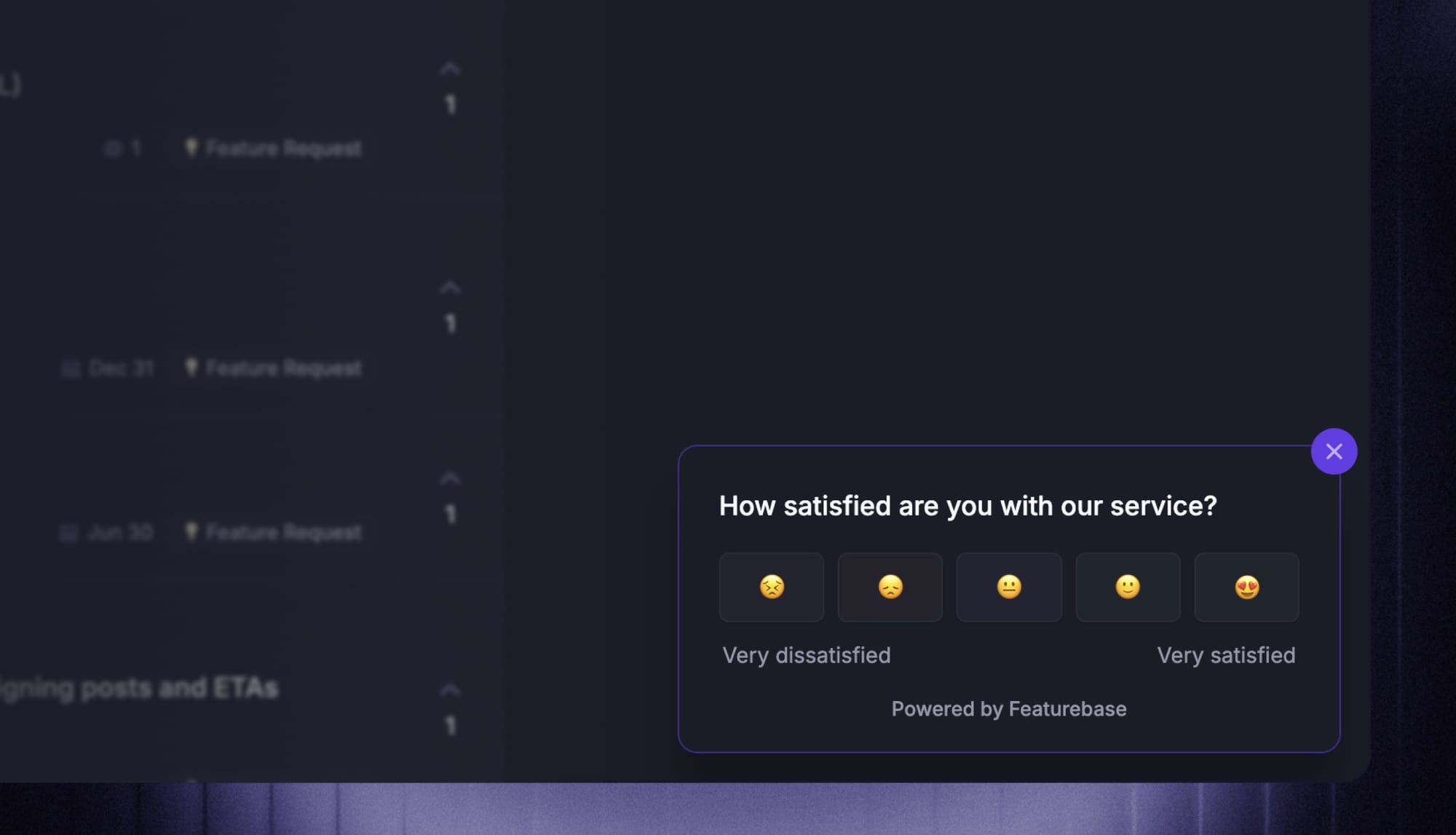
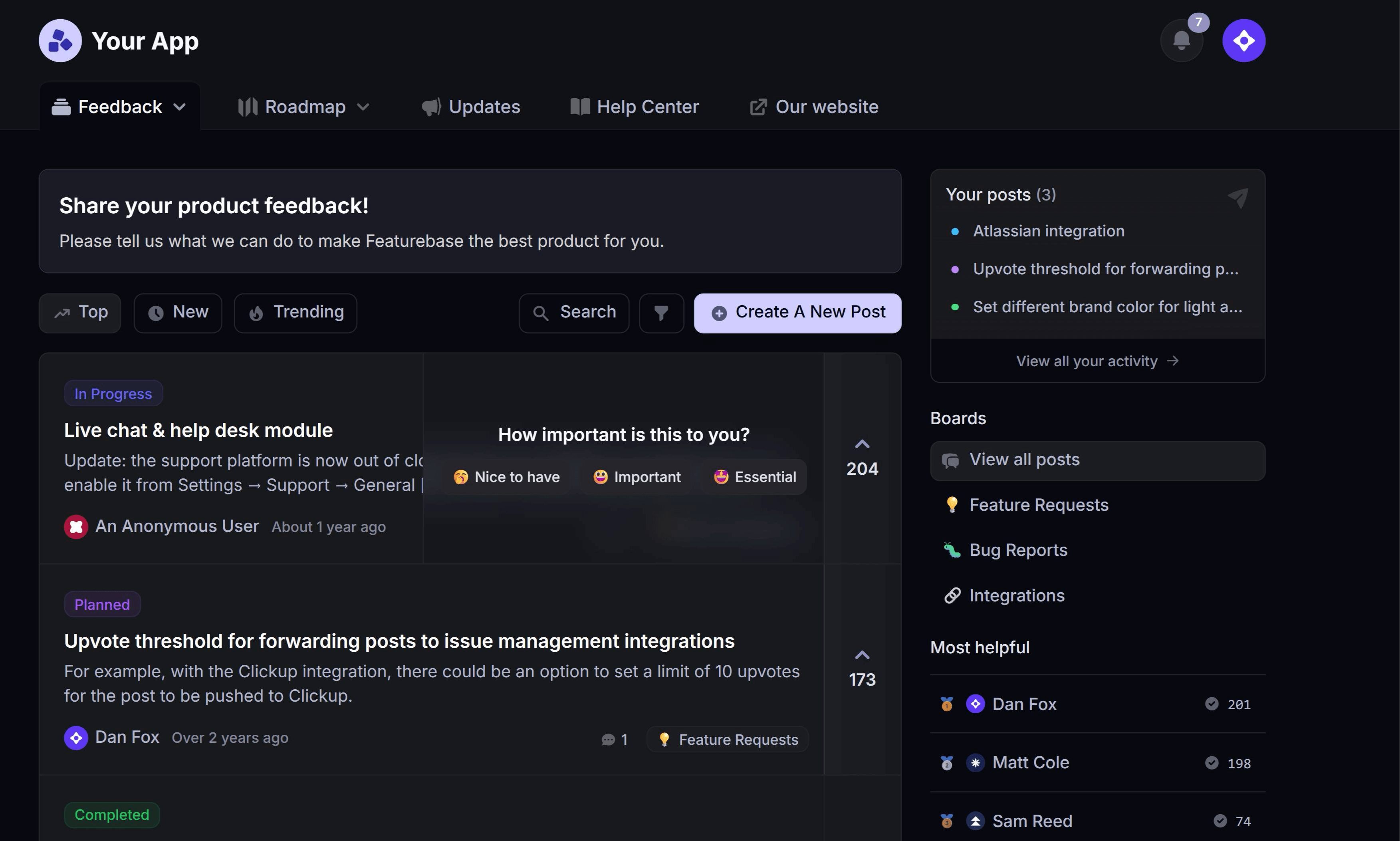
This is where a dedicated feedback tool earns its place. With something like Featurebase, you can run a public feedback forum where customers submit ideas and vote on each other's requests, so you can see what people actually want instead of guessing. Targeted surveys like NPS and CSAT help you catch how customers feel at specific moments, and in-app widgets let them share input without leaving your product.
The goal is a steady flow of real customer signal, all in one place, that the whole team can look at.
2. Make customer insight everyone's job
Customer focus dies when feedback lives in one team's inbox. Share what you're hearing across product, marketing, sales, and leadership so decisions everywhere start from the same customer reality.
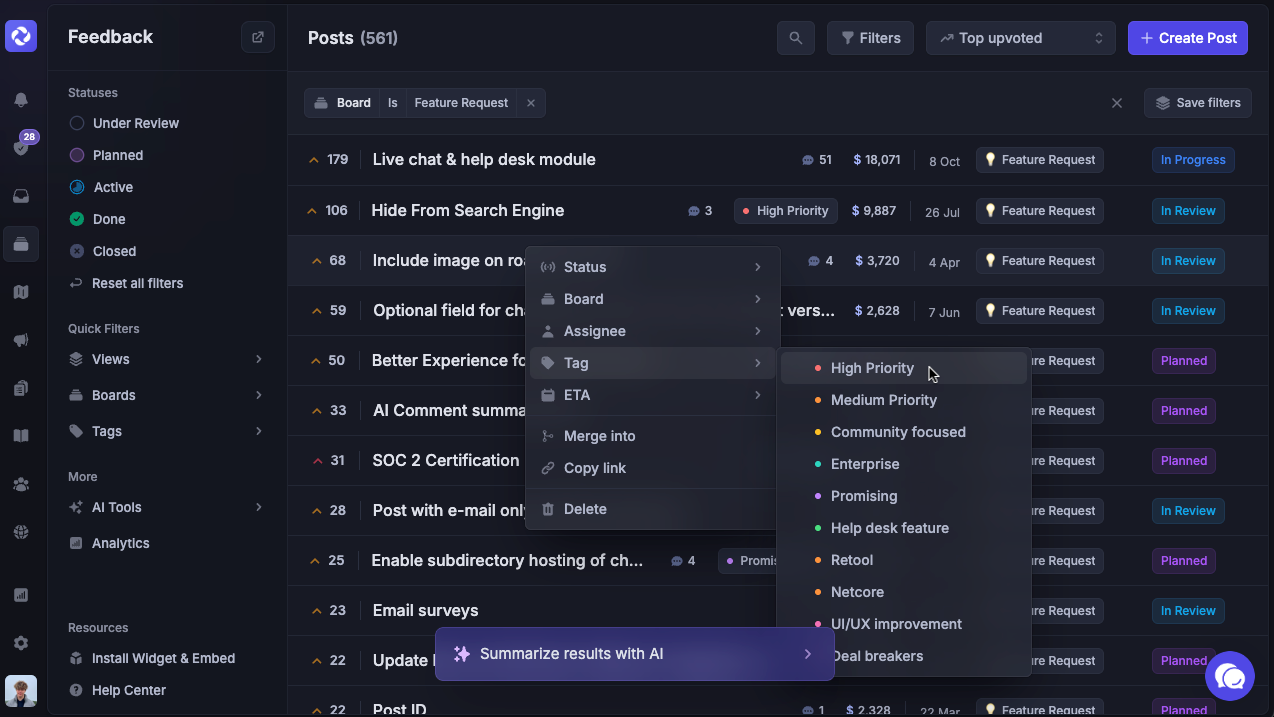
A shared view of the top requests and recurring complaints keeps everyone honest. It's much harder to argue for a pet project when the customer input on the screen says otherwise.
3. Empower your frontline to act
The people closest to customers should be able to fix problems without escalating everything. When you give support and success teams room to make judgment calls, customers get faster resolutions and feel genuinely taken care of.
This is a culture choice as much as a policy one. Trust your team to do right by the customer, and set the guardrails wide enough that they actually can.
4. Close the loop
Collecting feedback and going silent is worse than not asking. When you act on a request or ship a fix, tell the people who asked for it.
Closing the loop is the single most underrated customer-focus habit. It proves you were listening, and it turns a one-time suggestion into an ongoing relationship where customers keep telling you what they need.
5. Base decisions on customer data, not opinions
Customer focus falls apart the moment the loudest voice in the room overrides what customers are actually telling you. Anchor decisions in real signal: request volume, revenue tied to specific asks, churn reasons, and support trends.
Connecting feedback to customer data, like which accounts want a feature and what they're worth, helps you prioritize the things that matter most rather than the things that were mentioned most recently.
6. Measure it and keep improving
Finally, track whether your customer focus is working. Watch satisfaction scores, retention, and churn over time, and treat them as feedback on your own performance.
Customer focus is never finished. Customer needs shift, so the loop of listening, acting, and measuring has to keep running.
Conclusion
Customer focus isn't a slogan or a support function. It's the discipline of building your whole company around what customers actually need, then proving it with the decisions you make. The companies that win at it don't just have good intentions. They have a reliable system for hearing customers and acting on what they say.
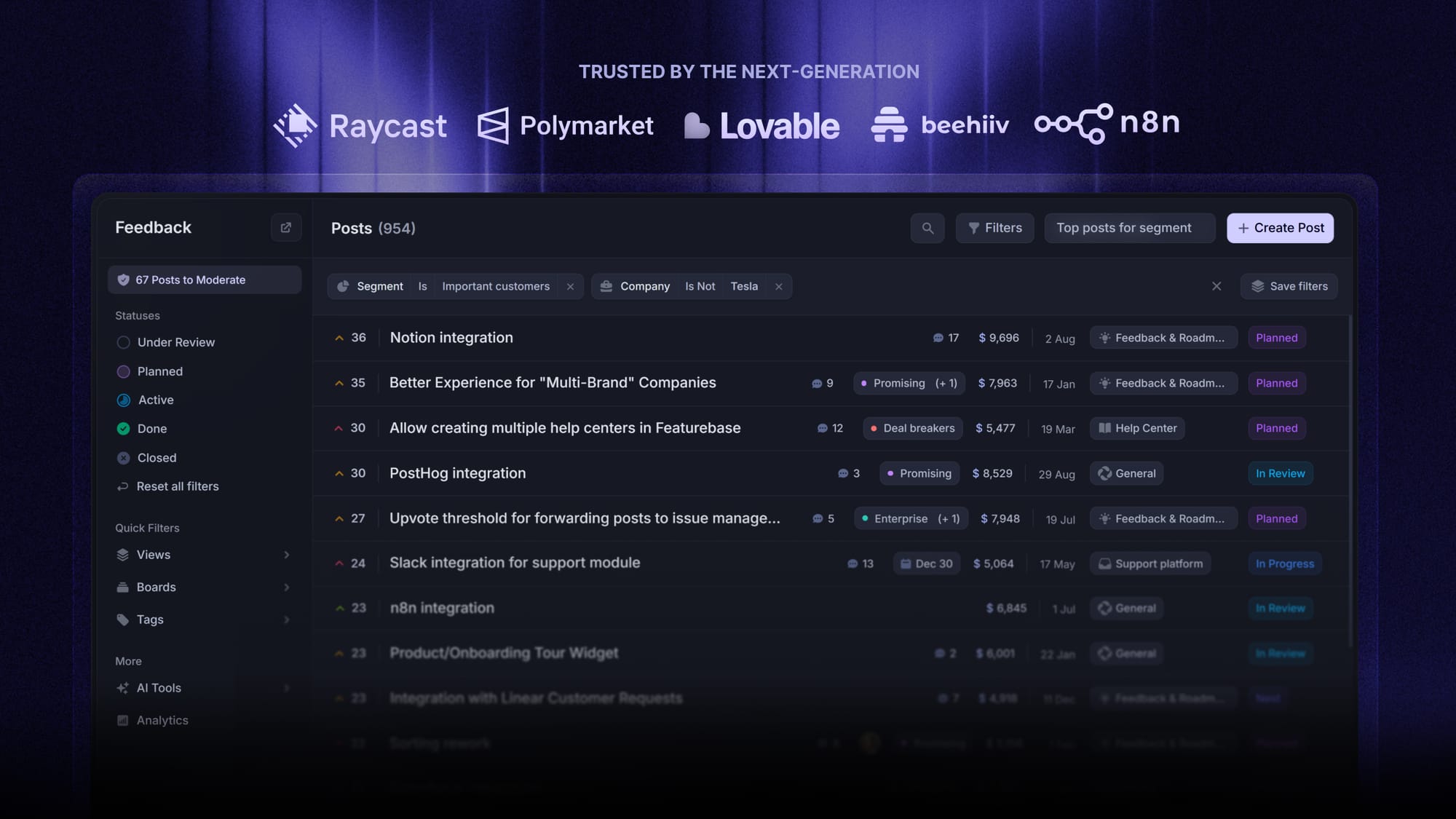
Featurebase is a modern feedback tool that helps you collect feedback with a feature voting forum, surveys, embeddable widgets, and integrations. You can then analyze all of that feedback in one place by connecting it to your customers' revenue and data, so you focus on what really matters and close the loop when you ship.
It comes with a Free plan that includes unlimited feedback collection, and onboarding takes minutes and no credit card, so there's no downside to trying it. 👇
✨ Start collecting & managing feedback with Featurebase for free →
FAQs
What role does leadership play in customer focus?
Leadership sets the tone. A customer-focused culture only sticks when leaders model it, fund it, and reward it, rather than treating it as the support team's job. When executives make decisions in front of the company based on customer input, everyone else follows suit.
How do you measure customer focus?
You measure it through a mix of customer signals over time: CSAT and NPS for satisfaction and loyalty, Customer Effort Score for how easy you are to deal with, and retention, churn, and customer lifetime value for the business impact. No single number tells the whole story, so watch the trend across several. Rising retention alongside improving satisfaction is a strong sign your focus is working.
How long does it take to build a customer-focused culture?
Realistically, months to build momentum and often a year or more to make it stick across every team. It's a cultural shift, not a project with an end date. The upside is that early wins, like closing the loop on a few requests, show results quickly and build belief along the way.
Can small businesses benefit from being customer-focused?
Yes, and it's often their biggest advantage. Smaller teams are closer to their customers and can act on feedback faster than large incumbents weighed down by process. Being genuinely customer-focused lets a small business compete on experience even when it can't match a bigger rival on budget or features.
How can AI help improve customer focus?
AI helps you make sense of customer input at scale. It can automatically group large volumes of feedback into themes so you spot patterns you'd otherwise miss, summarize recurring complaints, and speed up support responses. That frees your team to spend time acting on customer needs instead of manually sorting through them.
What tools help teams stay customer-focused?
The most useful tools are ones that centralize customer input and make it easy to act on. Featurebase brings a feedback forum, feature voting, surveys, and a public roadmap into one place, so you can see what customers want, prioritize by revenue, and tell them when you've shipped it. That turns customer focus from a good intention into a repeatable workflow.