Blog Customer ServiceCustomer Service Burnout: Causes and How to Prevent It
Customer Service Burnout: Causes and How to Prevent It
Customer service burnout has real, fixable causes. Here's what drives it and a practical playbook to prevent and reduce it on your support team.


✨ Automate your support with the fastest AI-enhanced Inbox today →
Most advice on customer service burnout tells drained agents to take a break and practice self-care. That helps for a day. Then the queue is full again.
Burnout in support isn't a personal-resilience problem. It's built into how most teams run: too much repetitive volume, clunky tools, and metrics that reward speed over sanity. The good news is that all of those are fixable.
Here's what actually causes customer service burnout, and a practical playbook to prevent and reduce it. 👇
Key takeaways:
- Burnout is chronic, not a bad day: it builds from prolonged stress and shows up as exhaustion, cynicism, and slipping performance, not simple tiredness.
- The real causes are operational: emotional labor, high ticket volume, low autonomy, clunky tools, and speed-only metrics do most of the damage.
- Prevention beats recovery: cutting avoidable workload and fixing broken workflows protects agents far better than after-the-fact wellness perks.
- Ignoring it gets expensive: burnt-out agents disengage and quit, and replacing experienced support staff is costly.
- Featurebase✨ reduces burnout-driving workload: it deflects repetitive tickets with AI and unifies every channel in one support inbox.
- Wellbeing habits still matter: breaks, boundaries, and honest conversations round out the operational fixes.
What is customer service burnout?
Customer service burnout is a state of emotional, physical, and mental exhaustion caused by prolonged workplace stress. It's the point where an agent stops caring, not because they're lazy, but because the job has drained everything they had to give.
It's more common than most teams admit. In Salesforce's research, 56% of service agents say they've experienced burnout.
The term was originally coined to describe the exhaustion of "helping" professions like doctors and nurses. Support work sits in the same bucket. You absorb other people's frustration all day, stay calm when you'd rather not, and rarely get thanked for it.
Burnout also shows up gradually. A single rough call won't cause it, but a steady stream of them, month after month, will. Early warning signs include detachment, irritability, procrastination, and a slow loss of motivation.
Why customer service is so prone to burnout
Burnout rarely comes from one thing. It's the pile-up of several, most of them baked into how support teams operate. Workloads aren't getting lighter, either: 77% of agents say theirs have grown and become more complex over the past year.
Here are the usual root causes:
- Emotional labor: agents manage their own feelings to meet the job's expectations, staying upbeat and empathetic while fielding back-to-back complaints. That gap between what you feel and what you have to show is draining in a way raw call volume isn't.
- Relentless ticket volume: a queue that never empties turns speed into a source of dread. When there aren't enough people or hours to keep wait times down, the pressure to resolve fast works against the team.
- Low autonomy and rigid rules: inflexible policies and rigid scripts signal that agents aren't trusted to make decisions, which quietly erodes morale.
- Clunky tools and constant context-switching: hunting for information across disconnected systems slows every reply and adds friction to an already hard job.
- Speed-only metrics: when average handling time is the only number that matters, agents get pushed to treat people like tickets, which strips the work of meaning.
- No recognition or growth: doing hard emotional work with no acknowledgement and no path forward is one of the fastest routes to checking out.
How to prevent and reduce customer service burnout
You can't eliminate every difficult customer. But you can remove most of the avoidable load and rebuild the parts of the job that drain people. Here's where to start.
Cut avoidable ticket volume with automation and self-service
The single biggest lever is reducing how many tickets reach agents in the first place. Every repetitive question a customer can answer themselves, or a bot can resolve, is one your team never has to touch.
The biggest wins here:
- Self-service content: a searchable help center lets customers solve common problems on their own, at any hour.
- AI deflection: an AI agent can handle repetitive, low-complexity tickets end to end, so your team only sees the ones that truly need a human.
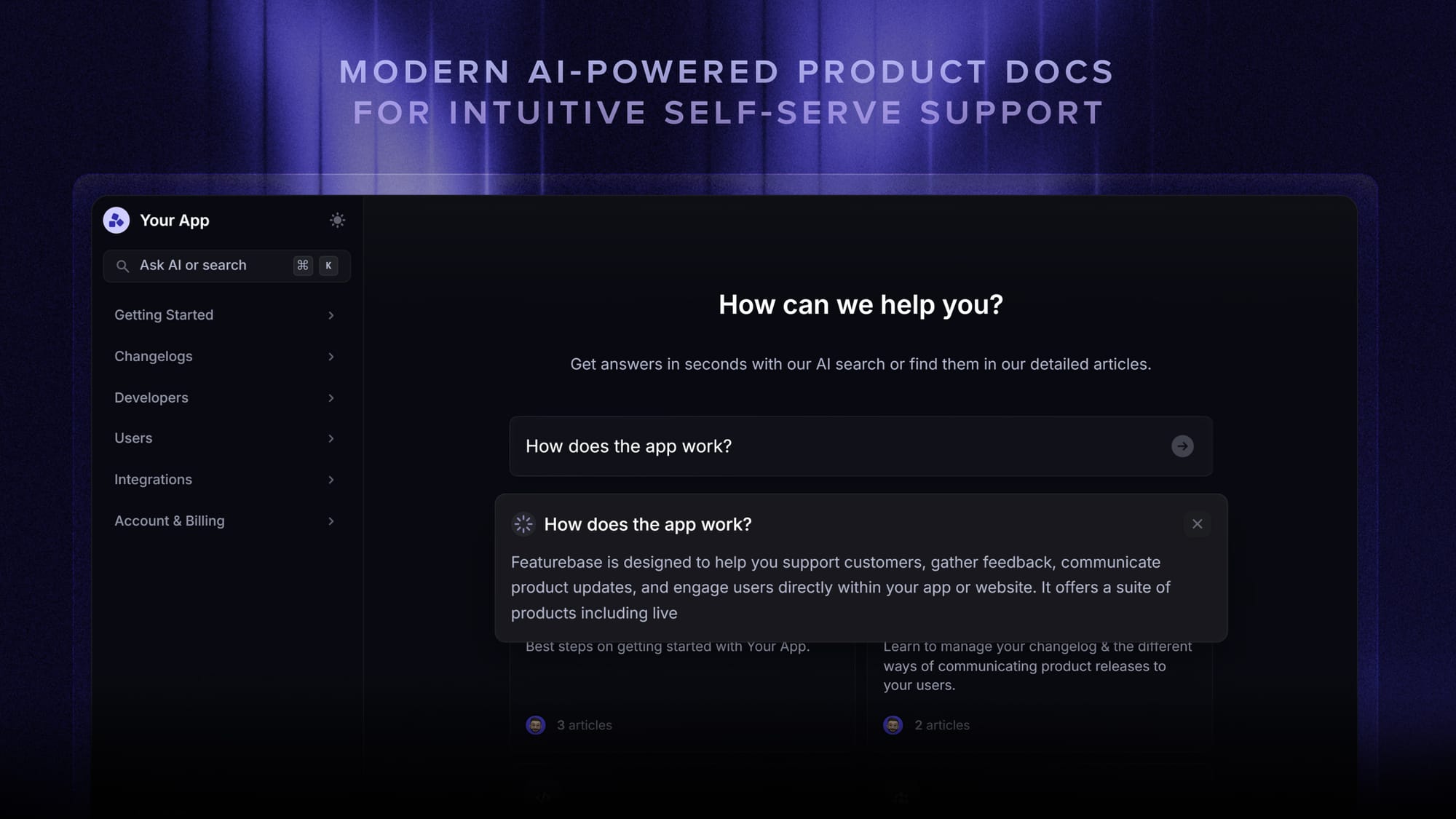
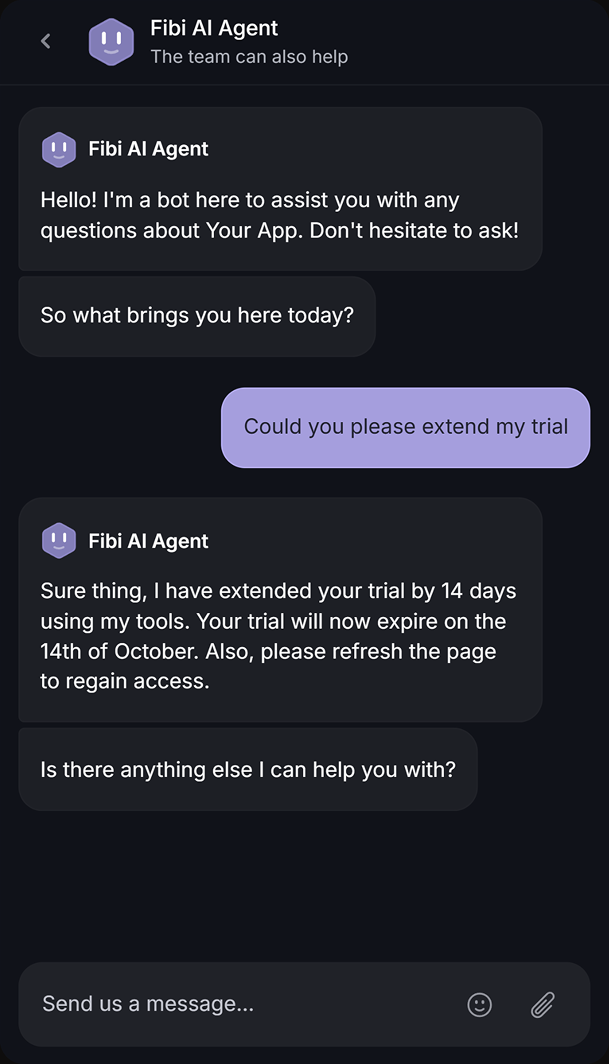
This is where tooling matters. With Featurebase, Fibi AI Agent resolves common issues on autopilot, and an AI-powered help center gives customers instant, multilingual answers before they ever open a ticket. Less repetitive volume means more breathing room for your team.
Fix the tools and workflows that slow agents down
Every extra tab, copy-paste, and manual handoff is a small tax on an already stretched team. Consolidating channels into one inbox and automating routine steps like routing, assignment, and data collection removes friction that quietly compounds into burnout.
The fix is unglamorous but effective: give agents fewer places to look and fewer manual steps to repeat.
Rebalance metrics away from pure speed
If average handling time is the only number that counts, agents will feel like machines. Reward resolution quality and customer outcomes alongside speed. Redesigning KPIs so empathy and actually solving the problem count is one of the most cited fixes from people who've managed teams through burnout.
Give agents autonomy, recognition, and room to grow
Boredom burns people out as fast as overload. Once an agent has mastered the role, give them something to reach for:
- New responsibilities: leading QA, training new hires, or owning help-center content.
- Work tied to impact: connect their effort to business results like retention so it feels like it matters.
- Real recognition: title change, public credit, or a peer shout-out sent through employee recognition software signals you value them.
Make burnout something your team can talk about
Burnout thrives in silence. If admitting "I can't do this" feels unsafe, people stuff it down until they break. Normalize the conversation: check in often, talk openly about workload, and give people easy access to mental-health resources. Managers who spot the early signs can step in before someone quits.
Protect individual wellbeing with breaks and boundaries
System fixes do the heavy lifting, but personal habits still matter. Encourage genuine breaks during the day, clear boundaries around work hours, and real time off to unplug. A short reset during a brutal shift isn't a luxury, it's maintenance.
How the right support platform lowers burnout
A lot of burnout traces back to tools that create work instead of removing it. If you're rethinking your support stack with your team's sanity in mind, it's worth looking at a platform built to cut the load. 👇
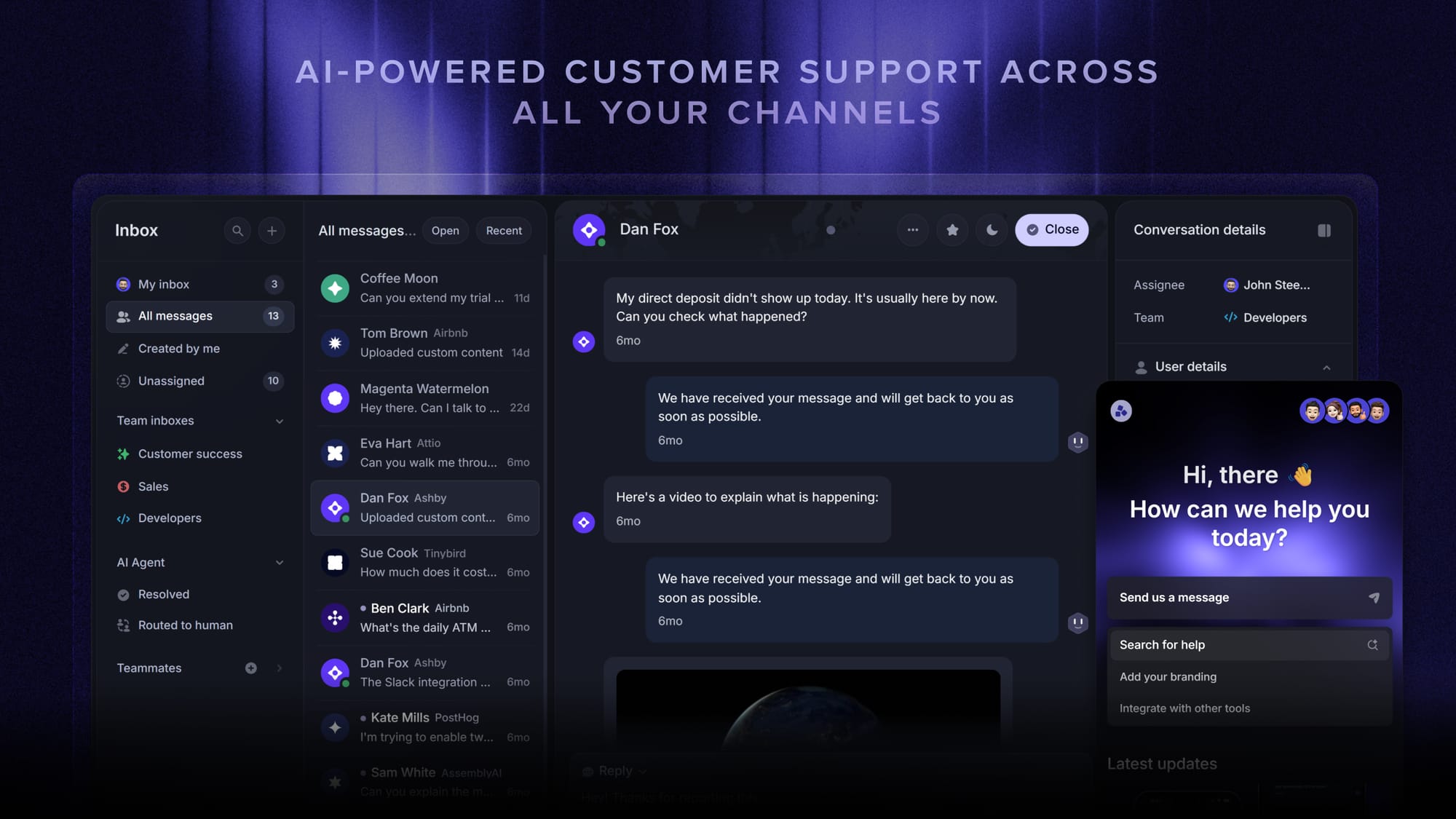
Featurebase is a modern AI customer support platform for product-led SaaS. It combines AI-powered support, help center, and feedback management into a single platform for startups that want all their customer-facing tools in one place. Featurebase is loved by thousands of support teams from companies like Lovable, Raycast, and n8n. 💫
Top features:
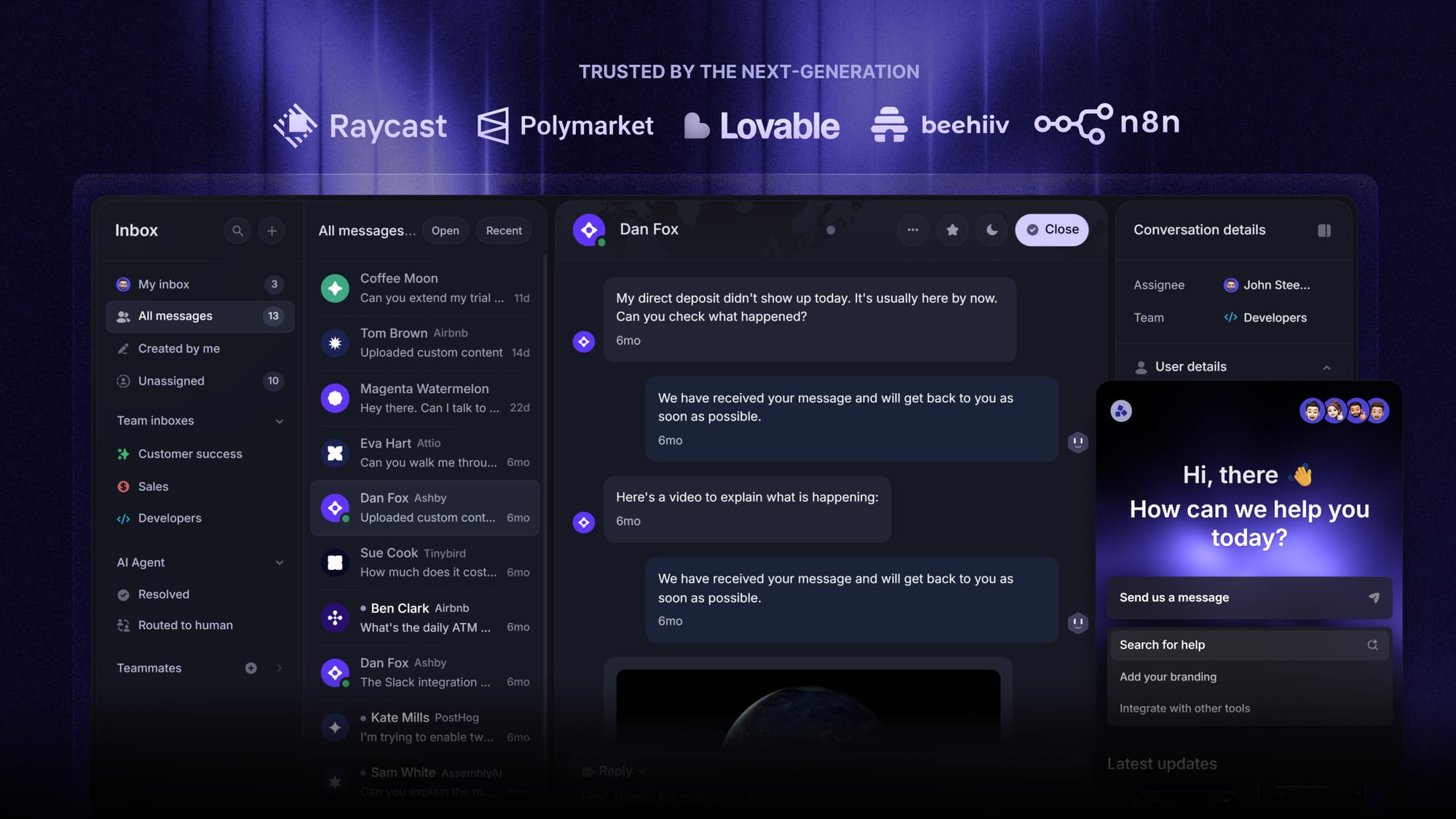
- Omnichannel inbox – Manage live chat, email, and Slack conversations from one AI-powered view
- Fibi AI Agent - Resolve customer issues on autopilot & run custom actions like trial extensions and refunds
- Help center with AI search – Provide instant, multilingual self-serve answers
- Workflows & automations – Auto-assign tickets, route conversations, collect customer data, and more
- AI Copilot – Help your agents answer customers faster with AI Copilot that uses your internal knowledge
- Multi-brand support – Manage multiple Help Centers and Live chats from a single workspace
- Automatic AI translations – Automatically translate all messages and help articles to your customers native language
- Service Level Agreements – Track SLAs to make sure your team responds to customers on time, every time
- Mobile app – Respond to customers, receive notifications, and unblock users on the go
- Feedback & roadmap tools – Collect feature requests and close the loop with updates
- Product updates – Publish release notes with a changelog page, in-app widget, and emails
- Integrations – Connects with Slack, Linear, Jira, HubSpot, and more
Pricing: Free plan available with unlimited conversations. Paid plans start at $29/seat/month with $0.49 per AI resolution.
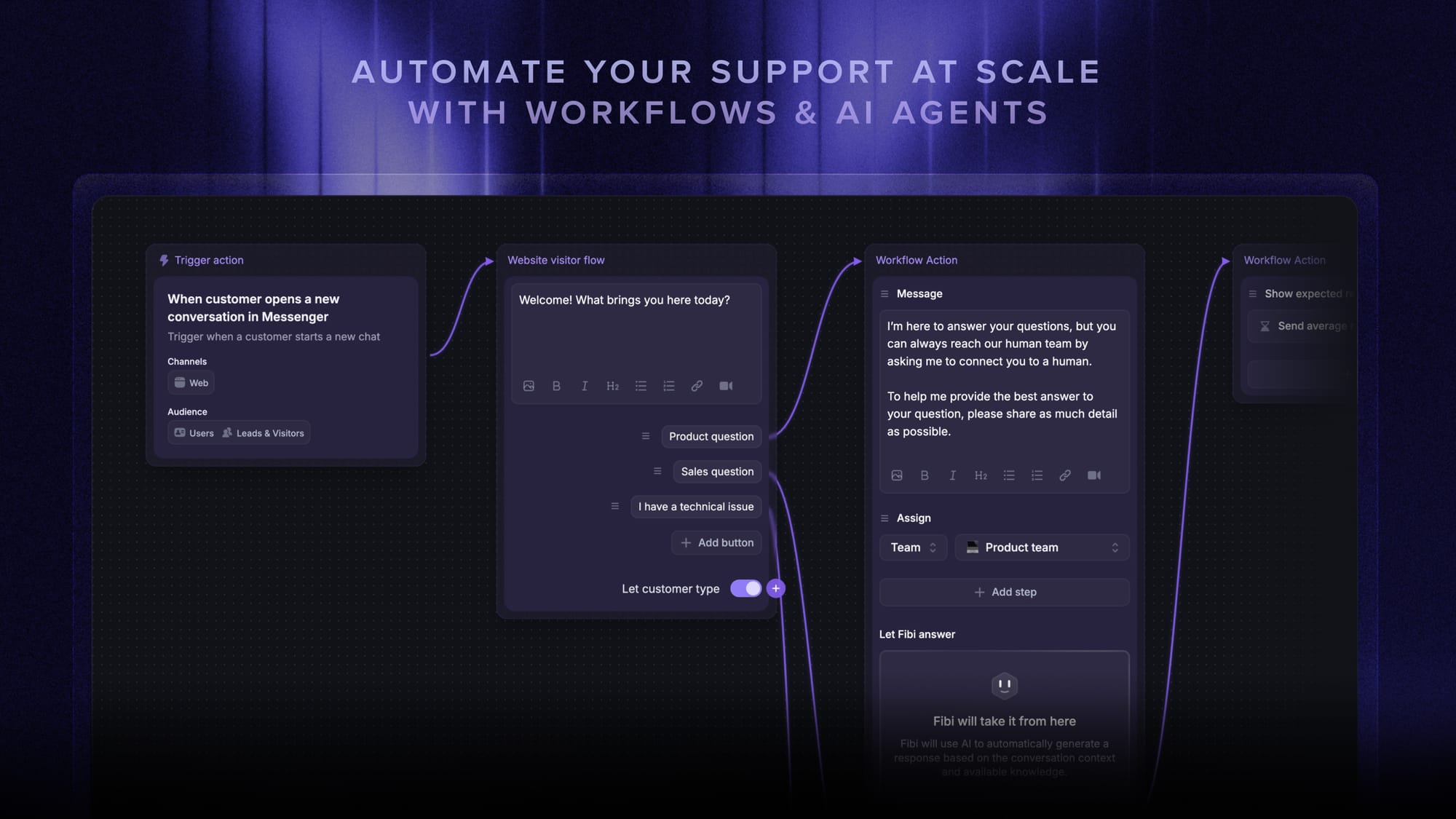
Featurebase covers all the basic support features that legacy platforms do, but with a much more modern approach. It comes with AI automations, a mobile app, and multiple channels (email, live chat, Slack, etc.).
Conclusion
Customer service burnout isn't fixed with a pizza party or a mindfulness app. It's fixed by removing the avoidable load, giving agents better tools and more control, and making it safe to talk about stress before it turns into attrition.
Featurebase is a modern AI-powered support platform that helps you do exactly that. It deflects repetitive tickets with AI, brings live chat, email, and Slack into one inbox, and pairs your support with feedback tools and product updates in one place, so your team spends less time firefighting and more time on work that matters.
It comes with a Free plan and quick onboarding that doesn't need a credit card, so there's no downside to trying it. 👇
✨ Automate your support with the fastest AI-enhanced Inbox today →
FAQs
What are the symptoms of customer service burnout?
The common signs cluster into emotional, physical, and behavioral categories. Emotional signs include cynicism, detachment, irritability, and loss of motivation. Physical ones show up as fatigue, headaches, and trouble sleeping, while behavioral ones look like more mistakes, procrastination, and withdrawing from coworkers. A useful rule of thumb: if you notice 3 or more of these regularly, it's time to adjust workload or seek support.
What is the 42% rule for burnout?
The 42% rule says you should spend around 42% of your day, roughly 10 hours, resting and recovering, including sleep. The idea is that sustainable energy depends on protecting that recovery time rather than powering through it. For support teams, it's a reminder that recovery has to be built into schedules, not treated as optional.
What job has the highest burnout rate?
Healthcare workers, teachers, and customer-facing roles like contact center agents consistently rank among the highest-burnout jobs. They share the same core stressor: high-volume emotional labor with limited control over the workload. Customer service lands near the top because agents absorb frustration all day while being measured on speed.
How long does it take to recover from customer service burnout?
It varies. Mild burnout can ease in a few weeks with rest and workload changes, while severe, long-running burnout can take several months. The catch is that time off alone rarely fixes it. If you return to the same root causes, burnout comes back, so lasting recovery usually needs the workload or environment to change too.
What's the difference between burnout and everyday stress?
Everyday stress is temporary and usually resolves with rest, a good night's sleep, or a lighter day. Burnout is chronic: it builds over time and affects your ability to function both at work and outside it. Put simply, stress is "too much," and burnout is "empty."
Can the right software actually reduce agent burnout?
Yes, when it removes work rather than adding it. Tools that deflect repetitive tickets with AI, unify channels into one inbox, and automate routine steps directly shrink the workload that fuels burnout. Featurebase does this by resolving common issues with an AI agent and letting customers self-serve through an AI-powered help center, so agents handle fewer, more meaningful conversations.