Blog Customer ServiceCustomer Service Motivation: 9 Ways to Inspire Your Team
Customer Service Motivation: 9 Ways to Inspire Your Team
Customer service motivation drives engagement, retention, and better customer outcomes. Here are 9 proven ways to motivate your support team, why it matters, and quotes to share.


✨ Automate your support with the fastest AI-enhanced Inbox today →
Your best support agent started the year fired up. Six months in, the replies are shorter, the sighs are longer, and the spark is gone. That's not a hiring problem, it's a motivation problem, and most advice for fixing it (pizza parties, a one-off bonus) barely moves the needle.
Real customer service motivation comes from removing what drains your team and doubling down on what actually drives them. Here are 9 tactics that work, why motivation matters more than you'd think, and a few quotes to share along the way. 👇
Key takeaways:
- Customer service motivation is what keeps agents engaged, energized, and invested in customer outcomes. It's driven far more by recognition, autonomy, and purpose than by pay.
- Motivated teams aren't a nice-to-have. The most engaged teams see measurably higher customer loyalty and profitability, while burnout quietly pushes your best people out the door.
- Most motivation killers (monotony, feeling unseen, unmanageable workloads) are within a manager's control to fix.
- The highest-leverage tactics are mostly free: recognition, sharing customer praise, autonomy, growth, and connecting daily work to a bigger purpose.
- Giving agents modern tools that remove repetitive busywork is one of the most underrated motivators. Featurebase✨ combines an AI-powered inbox, help center, and feedback tools so your team spends its energy on work that matters.
- A well-timed motivational quote costs nothing and can reset a rough shift.
What is customer service motivation?
Customer service motivation is the drive that keeps support agents engaged, attentive, and willing to go the extra mile for customers, day after day. It's the difference between an agent who copies and pastes a canned reply and one who actually solves the problem.
Once fair pay is on the table, money stops being the main lever. Psychologist Daniel Pink's research points to 3 intrinsic drivers that matter most:
- Autonomy - the freedom to decide how they solve a customer's problem
- Mastery - the sense that they're getting better at their craft
- Purpose - knowing their work genuinely helps real people
Keep those 3 in mind. Almost every tactic below is really just a way to feed one of them.
Why motivating your customer service team matters
Motivation isn't a soft, feel-good metric. It shows up directly in your numbers.
According to Gallup's meta-analysis of more than 183,000 business units, the most engaged teams deliver 23% higher profitability and stronger customer loyalty than the least engaged. That tracks with common sense: agents who care create experiences that make customers stay.
The reverse is just as true. A demotivated support team means slower replies, flatter tone, and higher turnover, and replacing an experienced agent is expensive and slow. In a role that's already prone to churn, motivation is one of the few levers that protects both your customer service strategy and your headcount at the same time.
What drains customer service motivation
Before you add motivators, remove the drains. Otherwise you're pouring water into a leaking bucket.
Gallup found that 76% of employees experience burnout on the job at least sometimes. The striking part: the top causes have little to do with hours worked. They're about how people are managed:
- Unfair treatment: agents who feel singled out or treated inconsistently disengage fast.
- Unmanageable workload: a queue that never empties signals that no amount of effort is ever enough.
- Unclear communication from managers: when priorities keep shifting, agents stop trusting the direction.
- Lack of manager support: feeling alone with hard tickets is exhausting.
- Unreasonable time pressure: rigid handle-time targets punish the careful, thorough work you actually want.
The good news is that every one of these is something you can influence. If you want to go deeper on the warning signs, we cover them in our guide to customer service burnout.
9 ways to motivate your customer service team
None of these require a big budget. They require attention, consistency, and a bit of intent.
1. Recognize and appreciate great work
Employee recognition is the single most reliable motivator there is, and it's almost free. Agents who feel their effort is noticed keep showing up with that effort.
Make it specific and timely. "Nice job this week" fades fast. "The way you calmed down that furious enterprise customer on Tuesday saved the account" sticks. Mix public shout-outs in team channels with private notes, since some people love the spotlight and others quietly dread it.
2. Share customer praise with the whole team
Agents hear complaints all day. The kind words usually vanish into a survey response nobody reads back to them. That's a wasted motivator.
When a customer says something nice, pass it straight to the agent who earned it, and post it where the team can see it. Knowing their work made someone's day easier feeds that sense of purpose better than almost anything else. Building a habit of routing positive feedback back to agents is a simple way to close the feedback loop internally, not just with customers.
3. Give agents autonomy to solve problems
Nothing deflates an agent faster than having to escalate every small decision. It's slow for the customer and demoralizing for the agent.
Give your team room to make judgment calls: a refund limit they can approve without asking, permission to bend a policy when it's clearly right, the freedom to choose their own words instead of reading a script. Autonomy tells agents you trust them, and trusted people take more ownership.
4. Give them tools that remove the busywork
Motivation dies in monotony. When agents spend all day answering the same password-reset question and fighting slow, clunky software, the interesting work gets buried.
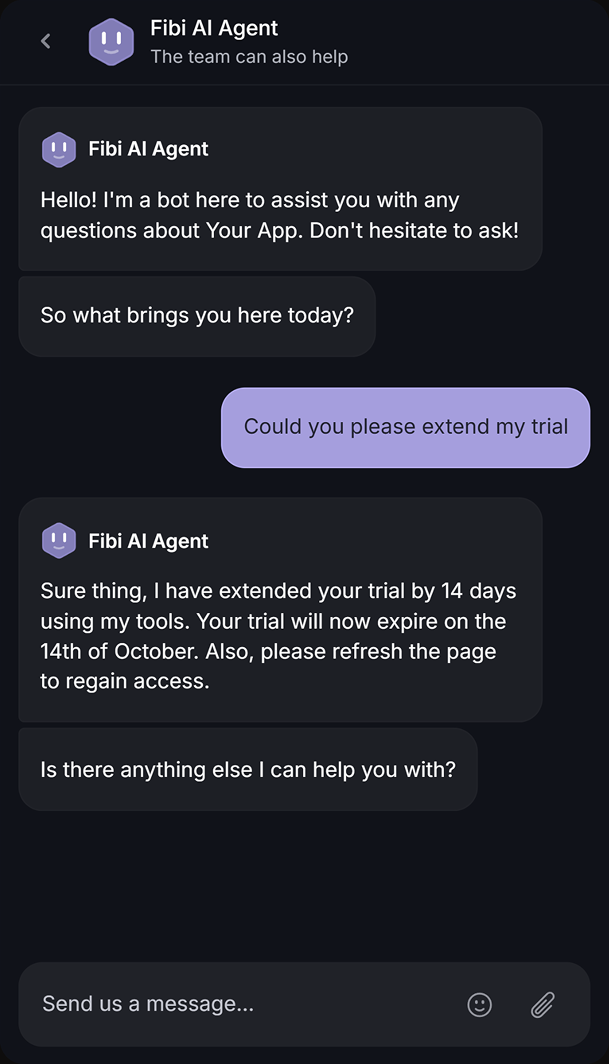
Good tools give that time back. A modern support platform like Featurebase can help here: its AI agent, Fibi, resolves repetitive, low-value tickets on its own, and an AI Copilot drafts answers from your knowledge base so agents aren't typing the same reply for the hundredth time. An omnichannel inbox keeps chat, email, and Slack in one place instead of scattered across a dozen tabs. The point isn't the software itself, it's that agents get to spend their energy on the conversations that actually need a human.
5. Invest in growth and mastery
People stay motivated when they're getting better at something. In a repetitive role, that sense of progress can stall unless you build it in deliberately.
Offer regular training, teach new skills, and show agents a path forward, whether that's a senior support role, a move into QA, or a jump to product. Investing in customer service training signals that you see agents as people with a future, not just seat-fillers working a queue.
6. Learn what motivates each person
Motivation isn't one-size-fits-all. One agent is driven by public recognition, another by a clear promotion path, a third just wants a predictable schedule.
Regular one-on-ones are the simplest way to find out. Ask what they enjoy, what frustrates them, and what would make the job better, then actually act on a few answers. These conversations double as an early-warning system: you'll spot a disengaging agent long before they hand in a resignation.
7. Add friendly competition and gamification
A little friendly competition can inject energy into an otherwise repetitive day, as long as it stays fun and doesn't pit people against each other in a cutthroat way.
Try leaderboards for positive customer ratings, small rewards for the most tickets resolved with high satisfaction, or team-based challenges where everyone wins together. Keep the focus on quality, not just speed, so you're rewarding great service instead of rushed replies.
8. Set realistic goals and protect workloads
Impossible targets don't push people to work harder. They teach people that failing is inevitable, which is the fastest route to giving up.
Base goals on real data about ticket volume and resolution times, and set clear, achievable targets like a specific CSAT improvement over a quarter. Just as importantly, protect your team from a bottomless queue. Sensible customer service goals and a manageable workload keep the pressure motivating instead of crushing.
9. Connect daily work to a bigger purpose
It's easy for an agent to feel like a cog closing tickets. Your job is to remind them that those tickets are real people whose day they just improved.
Share stories of how support saved a customer or shaped the product. When agents see their fingerprints on the roadmap, or hear that a fix they flagged shipped, the work stops feeling like a treadmill and starts feeling like it matters.
10 motivational quotes to inspire your customer service team
Sometimes the fastest way to reset a tough shift is a good quote dropped into your team channel or a Monday meeting. Here are 10 worth sharing:
- "Customers will never love a company until the employees love it first." - Simon Sinek
- "Your most unhappy customers are your greatest source of learning." - Bill Gates
- "There is only one boss. The customer. And he can fire everybody in the company from the chairman on down, simply by spending his money somewhere else." - Sam Walton
- "I've learned that people will forget what you said, people will forget what you did, but people will never forget how you made them feel." - Maya Angelou
- "The customer experience is the next competitive battleground." - Jerry Gregoire
- "Customer service shouldn't just be a department, it should be the entire company." - Tony Hsieh
- "We see our customers as invited guests to a party, and we are the hosts." - Jeff Bezos
- "It is not the employer who pays the wages. Employers only handle the money. It is the customer who pays the wages." - Henry Ford
- "Success is not final, failure is not fatal: it is the courage to continue that counts." - Winston Churchill
- "Kind words can be short and easy to speak, but their echoes are truly endless." - Mother Teresa
Where Featurebase fits
Most of the tactics above cost nothing but attention. The one that quietly makes or breaks the rest is the software your team lives in all day. Clunky tools add friction to every single ticket, while good ones give agents back the time and headspace for the work that actually motivates them.
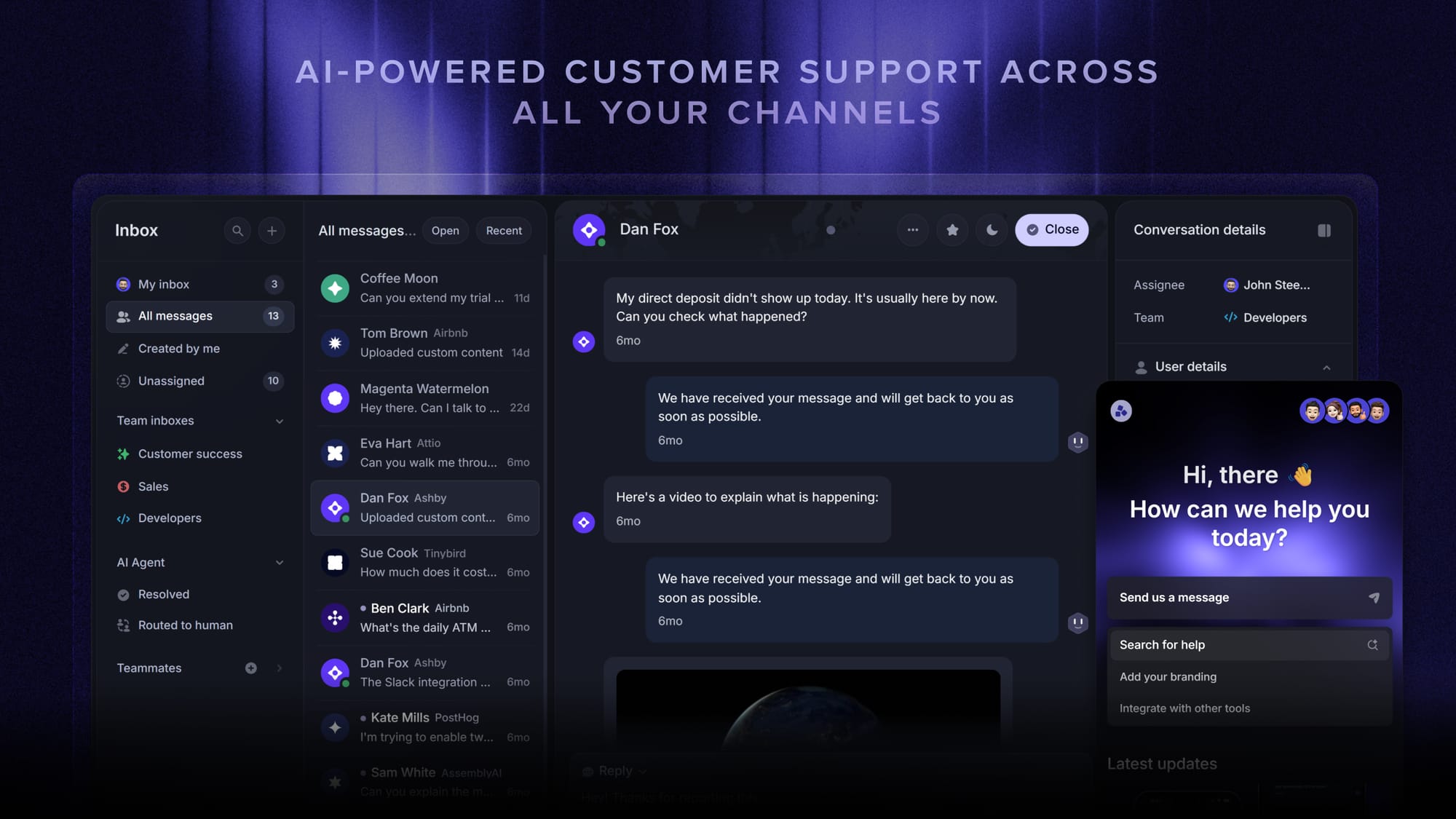
Featurebase is a modern, AI-powered support platform built for product-led teams. The part that matters for motivation is what it takes off your team's plate:
- Omnichannel inbox – Handle live chat, email, and Slack from one view instead of juggling tabs
- Fibi AI Agent – Resolve repetitive questions automatically so agents focus on higher-value conversations
- AI Copilot – Draft answers from your knowledge base to cut response time
- Feedback & roadmap tools – Route customer ideas and close the loop, so agents see their input shape the product
- Surveys (CSAT, NPS) – Surface the positive customer feedback that's worth celebrating with the team
There's a free plan, so it's easy to see whether better tooling takes some of the daily friction off your team.

A CX tool for your team that starts at $29/seat/month
Automatically resolve 70% of customer requests & cut down manual support loads
Conclusion
Customer service motivation isn't about grand gestures. It's about consistently removing the drains (burnout, monotony, feeling invisible) and feeding the real drivers: recognition, autonomy, mastery, and purpose. Do that, and better customer experiences follow almost on their own.
Part of that is giving agents tools they don't have to fight. Featurebase brings your inbox, help center, AI automations, and feedback tools into one place, so your team can spend less time on repetitive busywork and more on the conversations that make the job worth doing.
It comes with a Free plan and quick onboarding, so there's no downside to trying it. 👇
✨ Automate your support with the fastest AI-enhanced Inbox today →
FAQs
What motivates customer service employees the most?
Beyond fair pay, the biggest motivators are recognition, autonomy, growth, and purpose. Agents want their effort noticed, the freedom to solve problems their own way, a sense that they're improving, and proof that their work helps real people. Money matters, but it rarely tops the list once compensation is reasonable.
How do you motivate a customer service team without money?
Most of the strongest motivators are free. Recognize good work specifically and often, share positive customer feedback with the person who earned it, give agents autonomy over how they solve problems, and offer growth opportunities like new skills or a clear promotion path. Flexible scheduling and protecting people from an impossible workload also go a long way.
What role does feedback play in motivating support teams?
Feedback works in both directions. Agents stay motivated when their own input is heard and acted on, and when the positive things customers say actually reach them instead of disappearing into a survey. Tools like Featurebase make this easier by capturing customer satisfaction scores and feedback in one place, so managers have real praise to share and agents can see the impact of their work.
How do you keep agents motivated in a high-volume contact center?
Protect them from the firehose. Automate or deflect repetitive, low-value tickets so the queue feels manageable, set realistic handle-time expectations, and build in small, frequent moments of recognition rather than waiting for a quarterly review. Rotating agents across channels or tasks also breaks up the monotony that drives high-volume burnout.
What are the 5 C's of customer service?
The 5 C's are commonly listed as communication, consistency, caring, competence, and commitment. Together they describe a support culture where agents communicate clearly, deliver a reliable experience every time, genuinely care about customers, know their product, and stay dedicated to solving problems. A motivated team is what makes all 5 sustainable.
How do you measure customer service team motivation?
There's no single number, so watch a few together. Employee net promoter score (eNPS) and pulse surveys capture how agents feel, while attrition and absenteeism rates reveal disengagement over time. Pair those with customer service KPIs like CSAT trends and one-on-one sentiment to get a fuller picture of morale.