Blog Customer Service12 Customer Service Skills Every Support Team Needs in 2026
12 Customer Service Skills Every Support Team Needs in 2026
82% of service pros say customer expectations are rising. Here are the 12 skills support teams need to keep up in 2026.


;✨ Automate your support with the fastest AI-enhanced Inbox today →
Customer expectations keep climbing, AI is reshaping every channel, and your support team is still the face of your product. The skills that made a great support rep in 2020 still matter in 2026, but the list is longer now.
This guide covers the 12 customer service skills support teams actually need today, grouped into soft skills, hard skills, and the AI-era skills you can't ignore anymore. Each comes with a clear definition, a real example, and a tactical way to practice or coach it. 👇
Key takeaways
- Excellent customer service has always leaned on soft skills like empathy, active listening, and patience. Those still matter most in 2026.
- Hard skills (product knowledge, writing, problem-solving, time management) turn good intent into resolved tickets.
- The new addition is AI-era skills. Your top customer service agents now pair empathy with AI fluency and route product feedback back to the team that ships fixes.
- Per Salesforce, 82% of service professionals say customer expectations are higher than they used to be. Skills training is the cheapest lever a support team has.
- The 12 skills below each come with a tactical way to practice or coach them, so this isn't just a list; it's a development plan.
- Featurebase✨ gives support teams an AI-enhanced inbox, an AI Copilot, and built-in feedback collection so agents can practice the skills that matter while AI handles the volume.
What are customer service skills?
Customer service skills are the abilities a support agent uses to resolve customer issues, build trust, and turn one transaction into long-term customer loyalty. Some are innate-feeling: patience, empathy, a genuinely positive attitude. Others are taught: product knowledge, writing, working a CRM. Most great customer service reps have a mix of both.
The reason this list keeps getting talked about is the gap between what customers expect and what teams can deliver. According to Salesforce's latest State of Service research, 82% of service professionals say customer expectations are higher than they used to be. Agents are being asked to know more, respond faster, and feel more human across every channel, all at once.
That's why skills training is the cheapest lever a customer service strategy has. New tools and new headcount are slow. Coaching a rep on how to write a clearer response or hand off cleanly to an AI agent pays off this week. And the gap between teams that invest in interpersonal skills and those that don't is the gap between providing stellar customer service and watching customers churn quietly.
Soft skills: How you connect with customers
Soft skills are the part of customer service that's hardest to fake and hardest to teach in a single training session. They show up in tone, word choice, and whether the customer hangs up feeling like the company is on their side or stuck in a script. These are the skills closest to emotional intelligence, and the 5 below are the foundation.
1. Empathy

Empathy is the ability to understand what the customer is actually feeling, not just what they're literally saying. A user writing "this is the third time I've had to ask about this" doesn't need a faster answer first. They need an acknowledgment that the situation is frustrating before any troubleshooting starts.
You can practice empathy with a simple drill: before drafting a reply, write one sentence to yourself that names what the customer might be feeling. Tired. Embarrassed. Worried about losing data. You'll write a different response than if you'd jumped straight to the fix.
In a 2026 contact center, empathy is more, not less important. AI handles the easy customer queries, and the ones that land on a human agent are usually the messier, more emotionally charged ones. That's where strong customer service skills earn their keep.
2. Active listening

Active listening means reading what the customer is saying carefully enough to catch the actual issue, not the surface-level one. A ticket that says "the app is broken" might really mean "I can't find the export button." Misreading that wastes everyone's time.
Practically, active listening on tickets looks like reading the message twice before replying, restating the issue back in your first sentence, and asking one specific follow-up if anything is unclear. On a call, it's not interrupting and summarising back what you heard before moving on to a fix.
This is the skill that makes every other skill work. Empathy without listening lands wrong. Problem solving without listening solves the wrong problem.
3. Clear communication

Clear communication is using simple words, short sentences, and a friendly tone to explain something the customer might not already know. The fastest way to confuse a customer is to drop jargon. Terms like SAML, webhook, or rate limit mean nothing to most users, even technically literate ones.
A practical exercise: pick one of your common explanations, rewrite it so a smart 12-year-old could follow it, then read it back. Cut every word that doesn't earn its place. Cut "just," "kindly," "as per," and "please be advised." Communication skills are about clarity, not formality.
Communication also includes tone. A short clipped reply reads as rude. A 4-paragraph essay for a simple yes-or-no reads as unconfident. Get to the point in 2-3 sentences when you can.
4. Patience

Patience is staying calm and steady even when a customer is upset, repeats themselves, or asks the same question for the fourth time in a thread. Some customers genuinely need extra explanation. Others are working through their frustration before they can hear an answer.
The best agents don't fake patience. They reset between tickets. Two slow breaths, drop the previous ticket's mood, and start fresh. Frustrated customers can feel residual tension from your last interaction even through text.
Patience is not the same as letting yourself be a punching bag. If a customer is abusive, your patience is best used to set a calm boundary, not absorb it. Both the employee and the customer deserve a respectful conversation.
5. Positive language

Positive language is the habit of telling customers what you can do, not what you can't. "I can't transfer that ticket" reads as a wall. "I can get this to our billing team and have them reach out by EOD" reads as a path forward, and it's the same information.
This isn't fake positivity, it's just framing. Replace "unfortunately" with the next step. Replace "you'll have to" with "the easiest way is." Replace "we don't support that yet" with "that's on our roadmap, and I'll log your vote for it."
Positive language also closes the loop. Saying "I'll check on this and get back to you within 2 hours" is better than "let me look into it" because it sets an expectation the customer can hold you to. Specificity feels like care.
Hard skills: What you know and how you apply it
Hard skills are the part of customer service that can be tested and measured. They're learnable, which is good news. If a new hire is empathetic and curious but doesn't know the product, you can fix that in 2 weeks. The reverse is much harder. Most teams hire for soft skills and train technical skills.
6. Product knowledge
Product knowledge means knowing your own product well enough to answer most customer questions without guessing or escalating. It's the skill that separates a rep who can resolve customer issues in one reply from a rep who has to bounce every ticket to engineering.
The best support teams treat this as ongoing, not onboarding. Every shipped feature should come with a 10-minute walkthrough for support, and every "I didn't know we did that" moment in tickets should turn into a help-center article or an internal note.
If your reps regularly say "let me check on that" for things you've shipped, the gap isn't agent attitude. It's a missing knowledge-transfer process between product and support.
7. Writing skills
In a support inbox, writing skills matter more than speaking skills. Most tickets are written, most responses are written, and every word builds or breaks the customer relationship. Exceptional customer service in 2026 is mostly delivered in text.
The fundamentals are tight: short paragraphs (1-3 sentences), a clear structure (acknowledge, answer, next step), and no buried lead. If the answer is "yes," put "Yes" in the first sentence. If the answer is "no, but here's a workaround," put both in the first sentence.
Writing also includes the small things: matching the customer's tone, using their name once early, signing off in a way that feels human. Templates are fine for the body. The opening and closing should feel like a person, every time.
8. Problem-solving
Problem-solving is the muscle that turns a customer's reported symptom into a real fix. Most tickets have a stated problem and an underlying one. The customer says "the integration isn't working," but the underlying issue is they're using the wrong API key.
The practical move is to ask one good question before guessing. "Can you send me a screenshot of the error?" or "What did the integration look like the last time it worked?" surfaces the real issue faster than 3 rounds of trial-and-error.
The most useful problem-solving skill, though, is knowing when to stop. If you've tried 2 things and neither worked, escalate to someone who's seen this before. Burning 90 minutes on a ticket alone is rarely the right call.
9. Time management and prioritization
Time management in customer service isn't about working faster. It's about working in the right order. A busy contact center can have 50 open tickets at any moment, and the agent who triages well has a measurable advantage.
The simple framework most teams use:
- SLA-at-risk first: any ticket about to breach your service-level agreement jumps to the front.
- Customer impact next: a paying customer who's blocked outranks a free-tier user asking a feature question.
- Quick wins to clear the queue: anything that can be closed in under 5 minutes gets done before the harder cases.
- Block focus time for messy tickets: a reply that takes 20 minutes of focused investigation will take 90 minutes if it's chopped into 3 interrupted attempts.
That same triage discipline is the difference between a calm Monday and chaos. It's also one of the more learnable parts of customer support operations.

Get the best customer service tool
Automatically resolve 70% of customer requests & cut down manual support loads
AI-era skills: how you work with technology in 2026
The newest category, and no longer optional. According to Salesforce's State of Service research, 65% of teams using AI report more opportunities to focus on developing customer relationships, because AI handles the volume that used to fill the day. The agents who get the most out of that shift have skills the 2020 list never named.
10. Human-AI collaboration
Human-AI collaboration is knowing when to let an AI agent handle a ticket and when to step in. AI handles repetitive, well-defined questions well: password resets, basic plan questions, where-is-my-order. It struggles with anything ambiguous, emotionally charged, or that requires reading between the lines of how a customer worded something.
The skill is mostly judgment. Scan the ticket for tone, complexity, and what kind of answer would satisfy. A frustrated long-time customer with a billing problem needs a human early. A trial user asking how to invite a teammate is fine for AI.
Tools like an AI Copilot make this tangible day-to-day. With Featurebase, the AI Copilot drafts a response in your tone using your help center articles and internal notes, and the agent decides what to send. The skill is editing the draft faster than writing from scratch would have taken, and over time the judgment gets sharper.
11. Omnichannel fluency
Omnichannel fluency is the ability to adjust your style across channels without losing your voice. Live chat is short and conversational. Email tolerates more detail and structure. Slack support, if you do it, sits somewhere in between. Phone calls and SMS each have their own pacing.
The instinct most agents need to drop is "one template fits all." A 6-paragraph email pasted into live chat reads as a wall. A 2-line chat reply emailed to a customer reads as dismissive. Reps who handle an omnichannel customer support platform well adapt the format without changing the brand voice underneath.
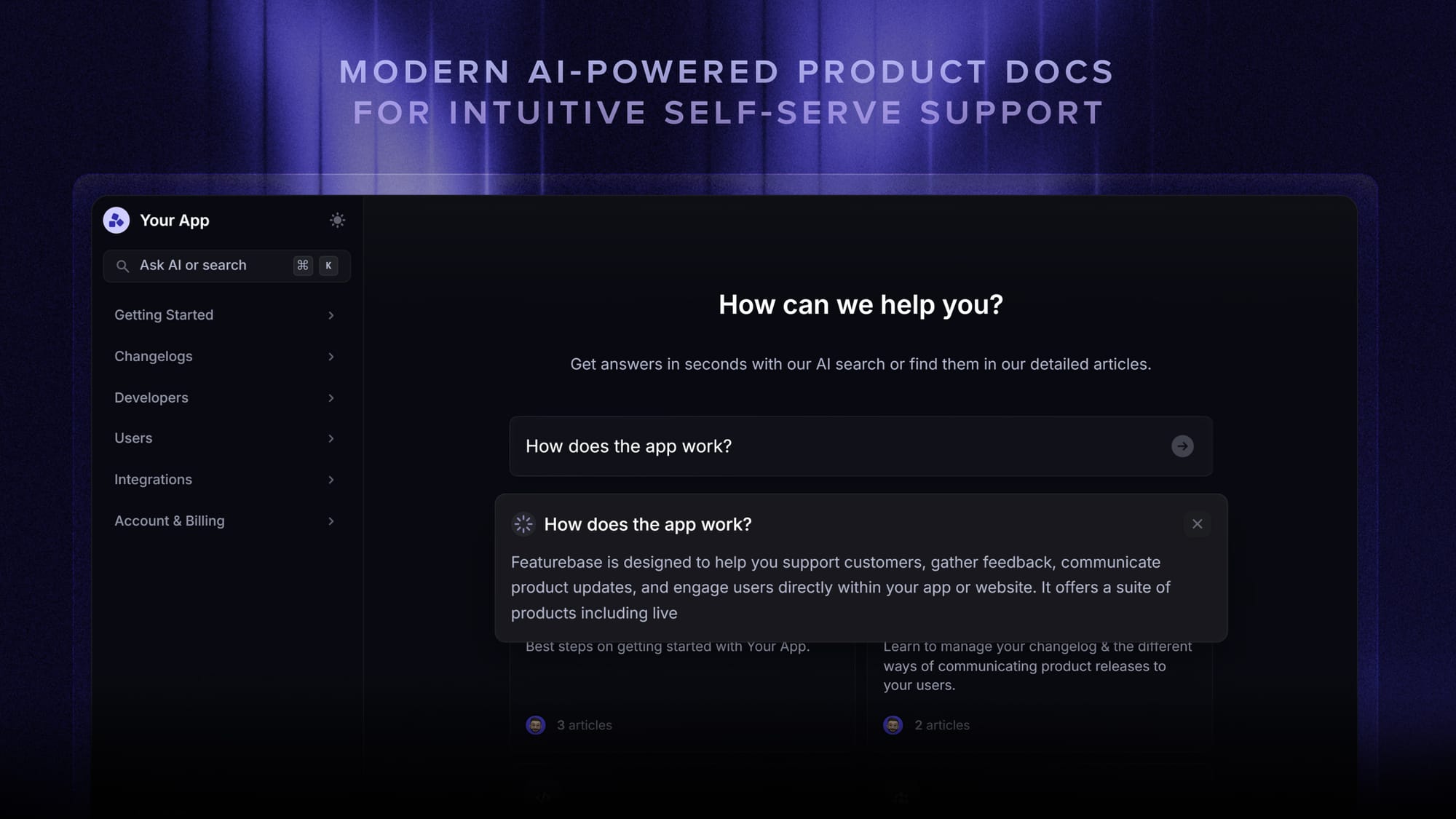
Self-service is part of this skill too. Salesforce found that 61% of customers prefer to use self-service to resolve simple issues. The best agents know when not to be the channel and point customers to a help center article when that's faster and more useful for everyone, including the agent.
12. Data and feedback literacy
Data and feedback literacy is the skill of turning conversations into insights the rest of the company can act on. Every ticket has signal. What feature is missing, which onboarding step trips people up, which bug affects high-value accounts. Most of it gets lost in the inbox without a deliberate system to capture it.
The agents who develop this skill review analytics dashboards weekly, tag tickets in a way that's queryable later, and proactively flag patterns to product. "I've seen 8 tickets about CSV exports this week" is the kind of contribution that turns a support rep into a real partner to product and engineering.
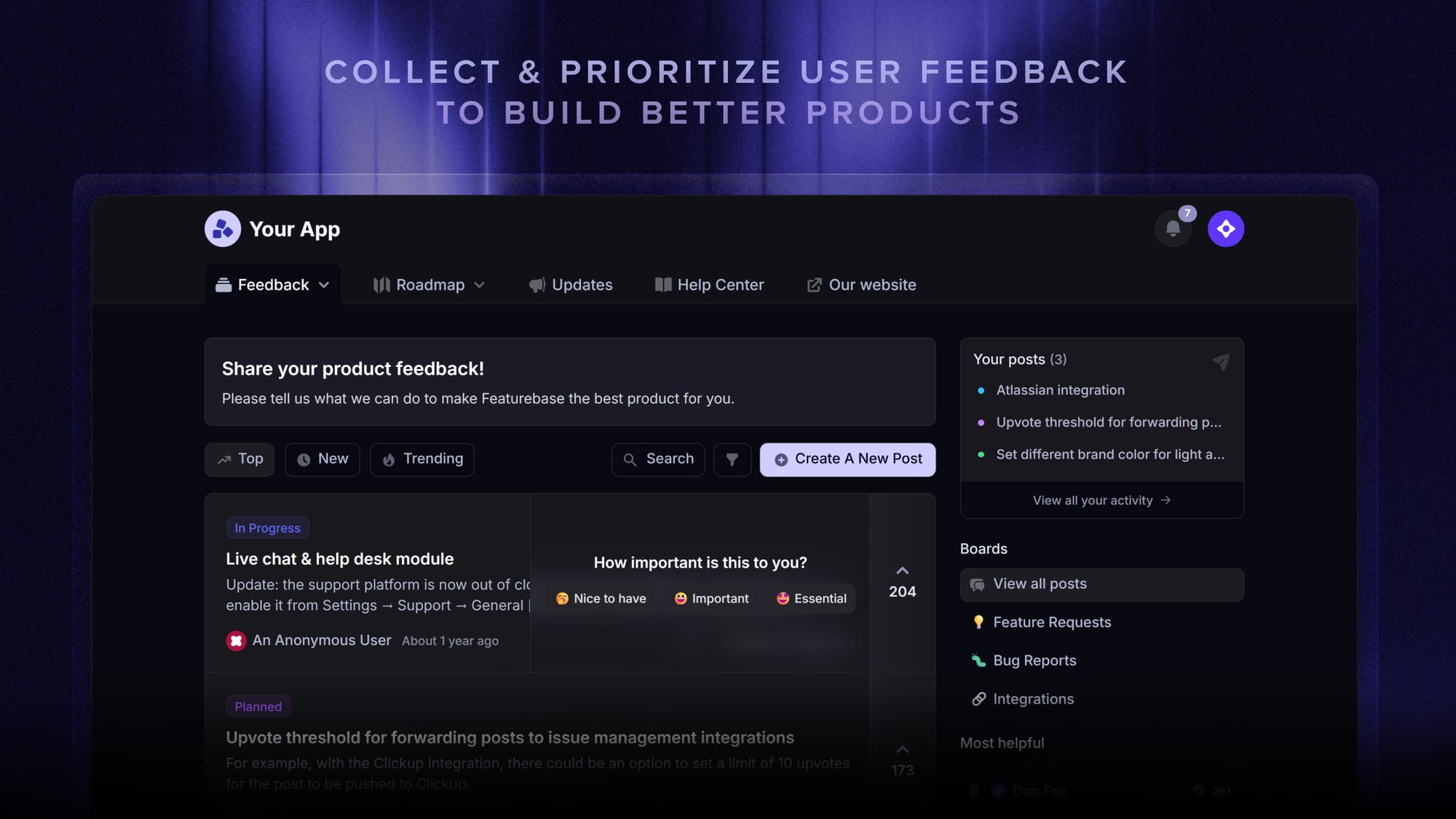
Closing the customer feedback loop matters too. When the engineering team ships a fix for something a customer reported, the agent who first responded should email back: "We shipped the fix you asked for in v2.4." It costs 30 seconds and earns customer loyalty for years. With Featurebase's feedback collection and roadmap tools, the loop is built in. Agents can log a feature request from any ticket and customers get notified automatically when it ships.
How to develop customer service skills on your team
Skills don't develop from reading a list. They develop through practice, feedback, hands-on training, and a manager who actually coaches. The teams that consistently produce great customer service agents share a few habits:
- Run weekly skill micro-sessions: One 30-minute meeting a week, each on a single skill. Listen to one call together or read one ticket thread together. Name what worked, what could improve, move on. Beats annual training day every time.
- Use a 3-week shadowing rotation for new hires: Week 1 is product. Week 2 is shadowing your top 2 reps, one for writing style, one for tricky tickets. Week 3 is supervised live tickets with senior review on every reply. Most new-hire skill gaps close in this 3-week window.
- Score with a per-skill rubric: Empathy, communication, product knowledge, and problem-solving each need their own 1-5 scale and concrete examples of what each level looks like. A shared view of team capabilities makes those ratings easier to compare across agents and reveals where coaching should focus. Vague feedback ("be more empathetic") doesn't change behavior. "Acknowledge the customer's frustration in the first sentence" does.
- Take low-value work off agents' plates: Empathy and active listening get harder when you're triaging 80 password-reset tickets in a row. With an omnichannel inbox and AI agents handling the routine ones, your team has the headspace to do the harder, more human work well.
- Track skill-aligned metrics, not just speed: CSAT and quality scores measure how good your team is at the skill. Average handle time and tickets-per-hour just measure how fast they are. Optimise for both, but coach on the first set.
Skills training also compounds. An agent who got 1% better at writing each week is dramatically better in 6 months. Most teams underrate the compounding effect because the weekly delta is small, but the 6-month delta is huge.
Train better support agents with AI
Use Featurebase to automate routine tickets, coach better replies, and give your team more time for high-impact customer conversations.
Customer service skills are the multiplier. Tools are the lever.
Even the best customer service skills hit a ceiling if your tools are slow, fragmented, or missing the AI features your team is now expected to use. The flip side is also true: the right platform makes great skills go a lot further.
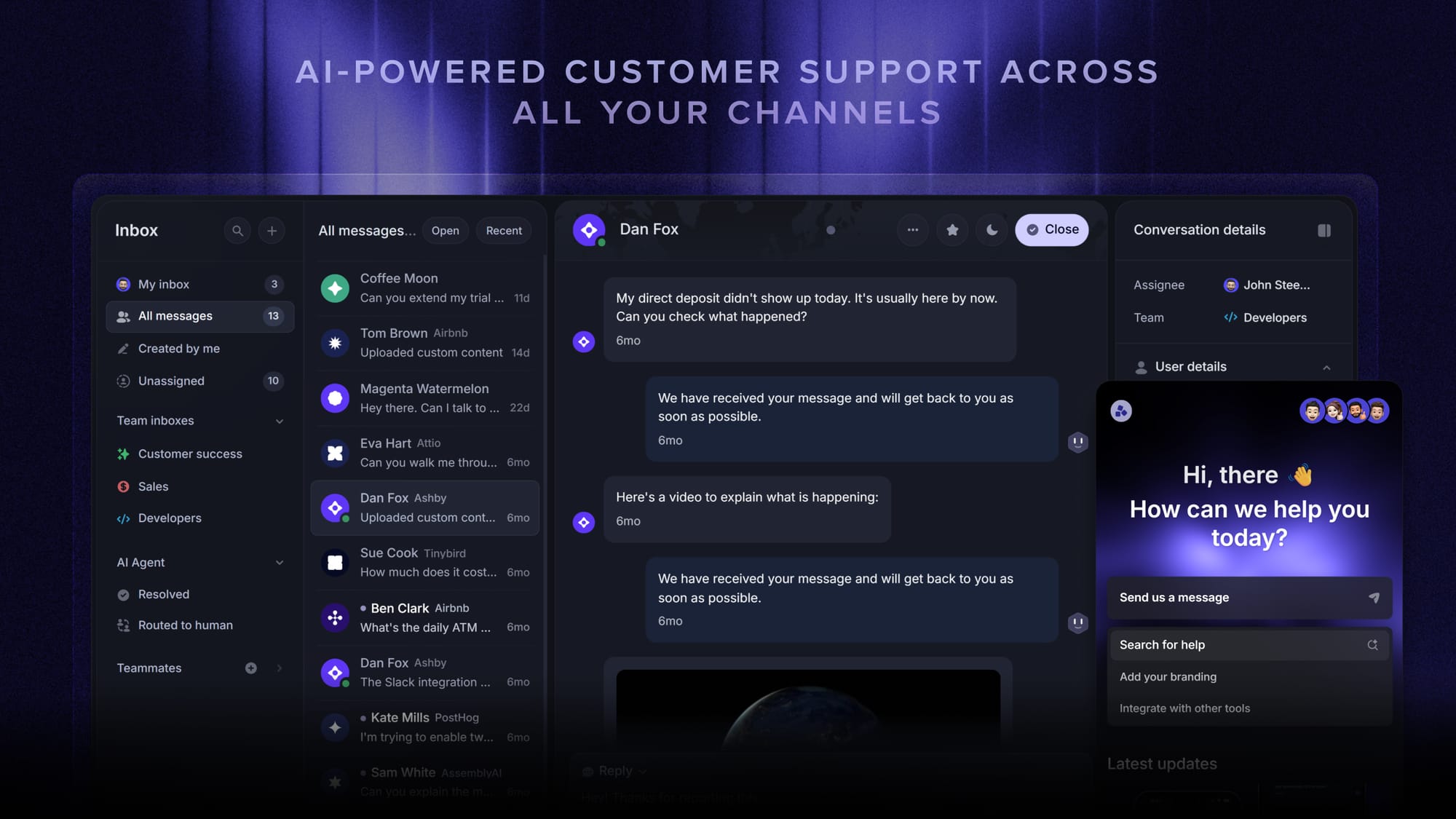
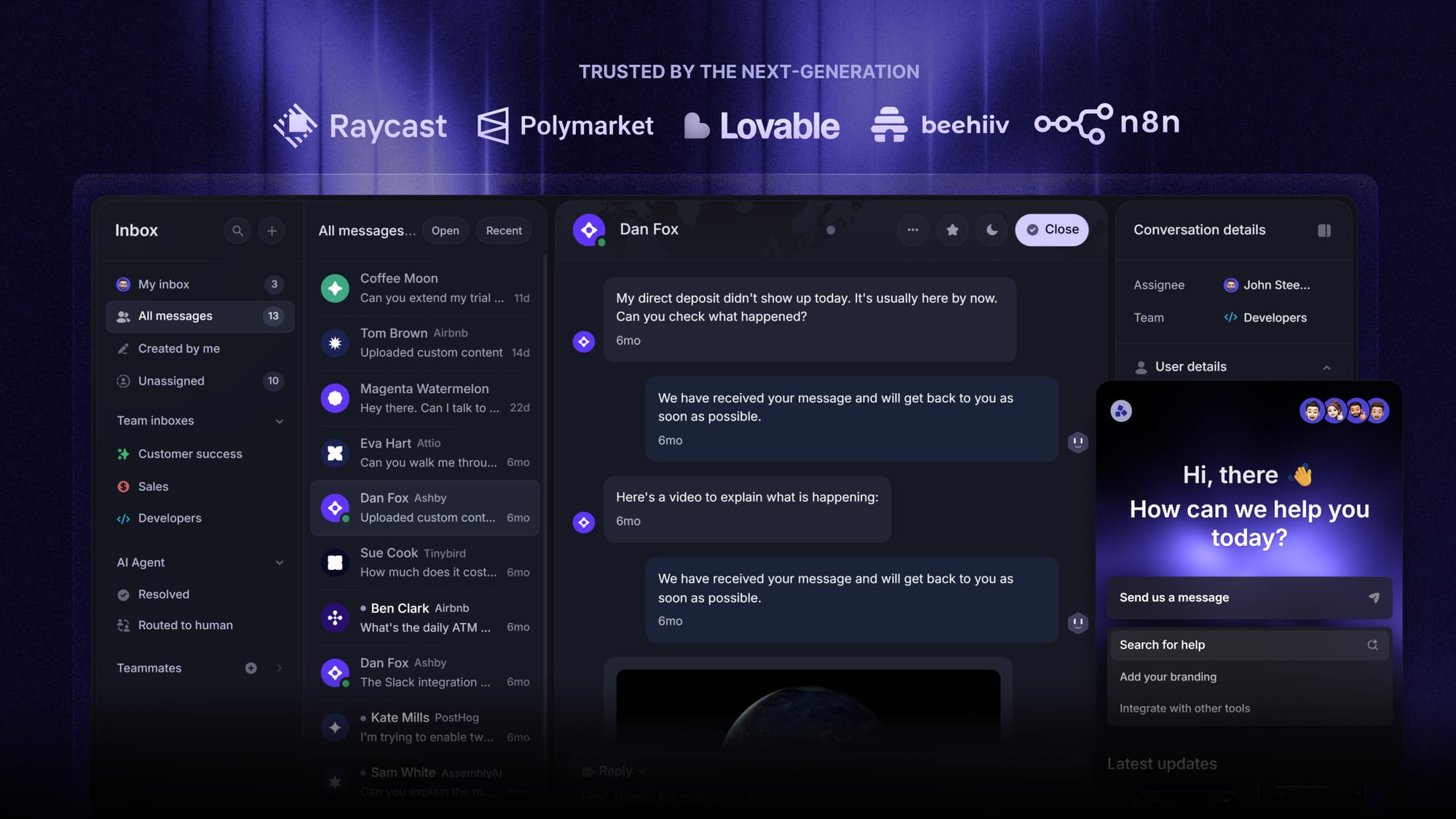
Featurebase is a modern AI customer support platform for product-led SaaS. It combines AI-powered support, help center, and feedback management into a single platform for startups that want all their customer-facing tools in one place. Featurebase is loved by thousands of support teams from companies like Lovable, Raycast, and n8n. 💫
Top features:
- Omnichannel inbox – Manage live chat, email, and Slack conversations from one AI-powered view
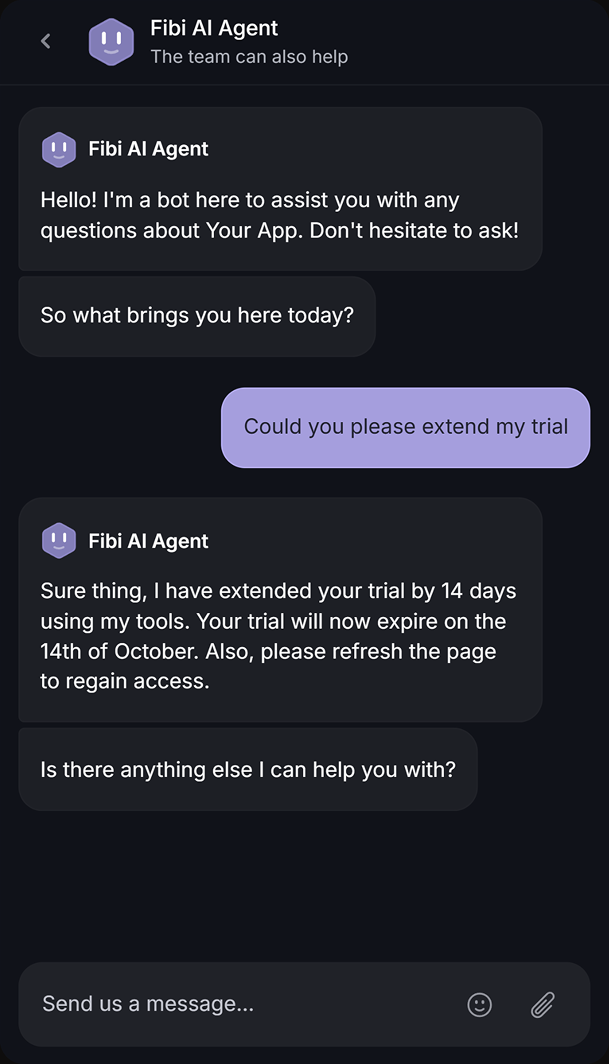
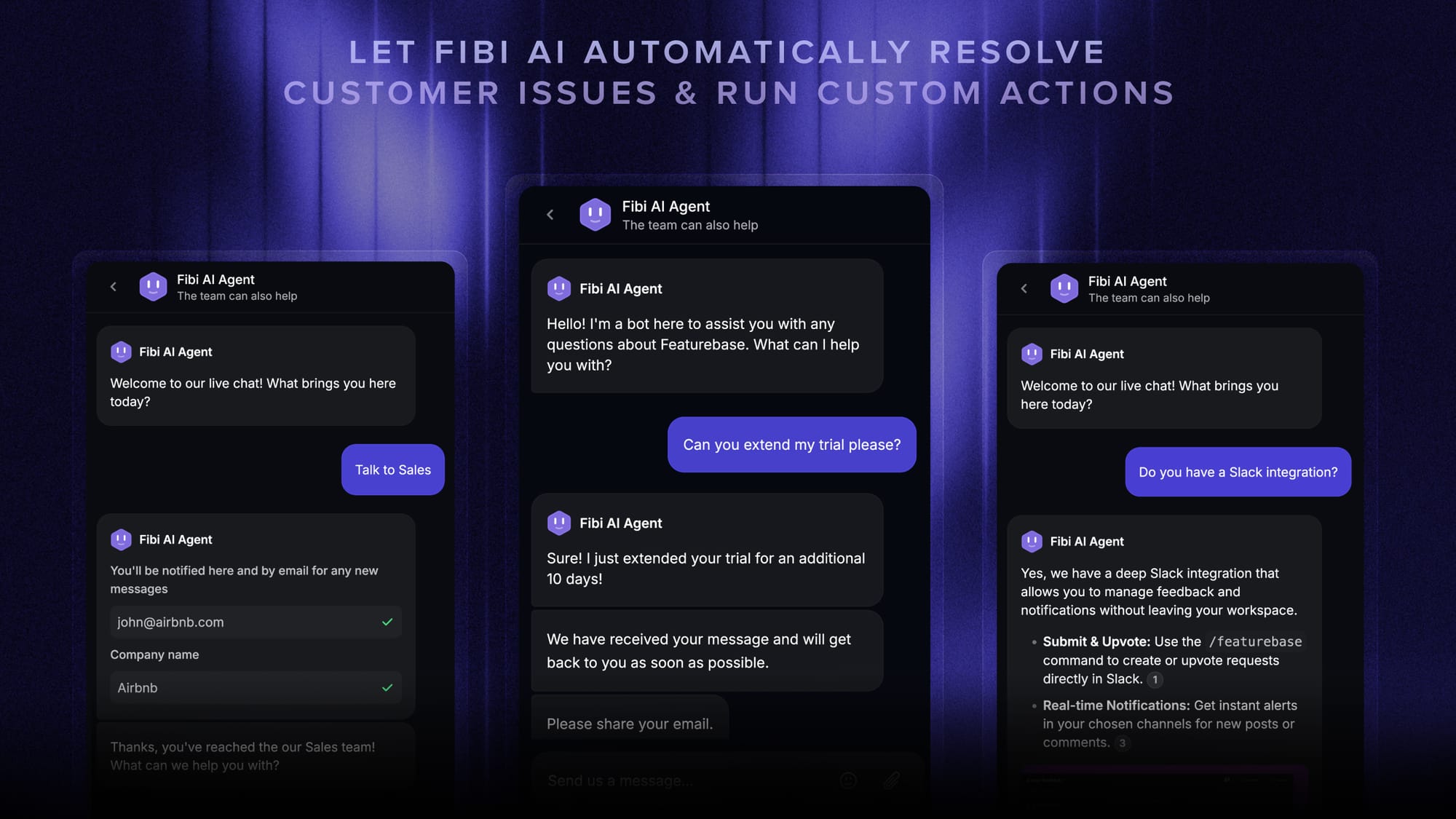
- Fibi AI Agent - Resolve customer issues on autopilot & run custom actions like trial extensions and refunds
- Help center with AI search – Provide instant, multilingual self-serve answers
- Workflows & automations – Auto-assign tickets, route conversations, collect customer data, and more
- AI Copilot – Help your agents answer customers faster with AI Copilot that uses your internal knowledge
- Multi-brand support – Manage multiple Help Centers and Live chats from a single workspace
- Automatic AI translations – Automatically translate all messages and help articles to your customers native language
- Service Level Agreements – Track SLAs to make sure your team responds to customers on time, every time
- Mobile app – Respond to customers, receive notifications, and unblock users on the go
- Feedback & roadmap tools – Collect feature requests and close the loop with updates
- Product updates – Publish release notes with a changelog page, in-app widget, and emails
- Integrations – Connects with Slack, Linear, Jira, HubSpot, and more
Pricing: Free plan available with unlimited conversations. Paid plans start at $29/seat/month with $0.29 per AI resolution.
Featurebase covers all the basic support features that legacy platforms do, but with a much more modern approach. It comes with AI automations, a mobile app, and multiple channels (email, live chat, Slack, etc.).
Conclusion
The 12 customer service skills above haven't replaced each other over time, they've stacked. Empathy still wins the hard conversations. Product knowledge still saves the easy ones. AI fluency is just the newest layer on top, and it's the one that's pulling away from teams that haven't built it yet.
The teams that compound these skills month after month are the ones whose customers actually stick around. The 2026 difference is that the platform under your team matters more than ever, because AI does the easy work and your agents have to be sharper on everything else.
Featurebase is a modern AI-powered support platform that gives your team an omnichannel inbox, an AI Copilot, a help center with AI search, and built-in feedback and roadmap tools. So your agents can practice the skills that matter while AI handles the volume.
It comes with a Free plan and onboards in minutes, so there's no downside to trying it. 👇
✨ Automate your support with the fastest AI-enhanced Inbox today →
FAQs
What are customer service skills?
Customer service skills are the abilities a support rep uses to resolve issues, build trust, and turn frustrated customers into loyal ones. They include soft skills like empathy and patience, hard skills like product knowledge and writing, and newer AI-era skills like working alongside an AI agent. The best support reps have a mix of all 3 categories.
What's the difference between soft skills and hard skills in customer service?
Soft skills are how you connect with customers (empathy, patience, communication, positive language). They're harder to teach and easier to spot in a hiring interview. Hard skills are what you know and how you apply it (product knowledge, writing, CRM proficiency, time management). Hard skills are learnable in weeks. Soft skills usually take longer to coach. Most teams hire for soft skills and train hard skills, since the reverse is much harder.
How can I improve my customer service skills?
The fastest improvements come from review, not reading. Pick one skill, then look at your own work weekly through that lens. Re-read 5 of your sent tickets and ask if you opened with empathy, used positive language, and closed the loop on next steps. Shadow your team's top performer for a week and copy what they do that you don't yet. Batch-review your CSAT comments monthly and look for patterns in the low scores. Most agents improve by 10-20% in a quarter just doing those 3 things.
How do you train a new customer service team?
The shape that works for most teams is a 3-week ramp followed by an ongoing weekly cadence. Week 1 is product immersion. The new hire uses the product like a customer and reads every help-center article. Week 2 is shadowing. They sit with 2 senior reps and watch how tickets get handled end-to-end. Week 3 is supervised live tickets where every reply gets reviewed before it sends. After ramp, weekly 30-minute skill sessions on a single skill keep the team improving.
Why is empathy so important in customer service?
Empathy is the skill that reframes the conversation from "defending the company" to "solving for the human." Once a customer feels heard, they're much easier to help, and the troubleshooting itself usually goes faster. In 2026, AI handles most of the simple, transactional tickets, so the ones that reach a human agent are disproportionately the emotionally charged ones. That makes empathy even more valuable than it was 5 years ago.
Can AI replace customer service skills?
AI handles volume well, password resets, plan questions, simple how-tos. It doesn't handle nuance, ambiguity, or emotional context the way a trained human does. The skill that matters most in 2026 is knowing when to let AI carry a conversation and when to step in. Tools like Featurebase pair an AI agent for the easy tickets with an AI Copilot that drafts replies for the harder ones, so human agents spend their time on the work that actually needs human skills.
How do you measure customer service skills on a team?
Three metrics cover most of the picture. CSAT (customer satisfaction surveys after a resolved ticket) tells you whether the customer left happy. First-response time and resolution time tell you whether the team is efficient. A quality-score rubric scored by a senior rep or manager on a sample of tickets per week tells you whether the skills are actually showing up in the writing. The rubric is the one most teams skip, and the one that drives the most improvement.