Blog Customer ServiceAI Agent Examples: 12 Real-World Use Cases
AI Agent Examples: 12 Real-World Use Cases
AI agent examples across customer support, sales, finance, and more, with 12 real-world deployments from named companies and a plain-English guide to how agents actually work.


✨ Automate your support with the fastest AI-enhanced Inbox today →
AI agents are everywhere in 2026, but most explanations stop at the buzzwords. Gartner expects 33% of enterprise software to include agentic AI by 2028, up from less than 1% in 2024, so the real question isn't whether you'll use them. It's what they actually do.
This guide skips the theory. Below are 12 real-world AI agent examples, grouped by business function and backed by named companies already running them, so you can picture exactly what an agent looks like in a job like yours. 👇
Key takeaways:
- An AI agent is a software system that takes a goal, plans the steps to reach it, uses tools, and acts with limited human supervision, which is what separates it from a scripted chatbot.
- There are 5 main types of agents, from simple reflex agents up to learning agents that improve from feedback.
- The most useful agents today live inside everyday business functions: customer support, sales, data analysis, finance, and software development.
- Real deployments already exist at companies like Uber, Ramp, Dropbox, Intercom, and Anthropic, not just in demos.
- Agents deliver the most value when they're pointed at one well-scoped, high-value task with clean data and a human in the loop.
- Featurebase✨ puts an AI support agent, help center, and feedback tools in one platform, with a free plan to start.
What is an AI agent?
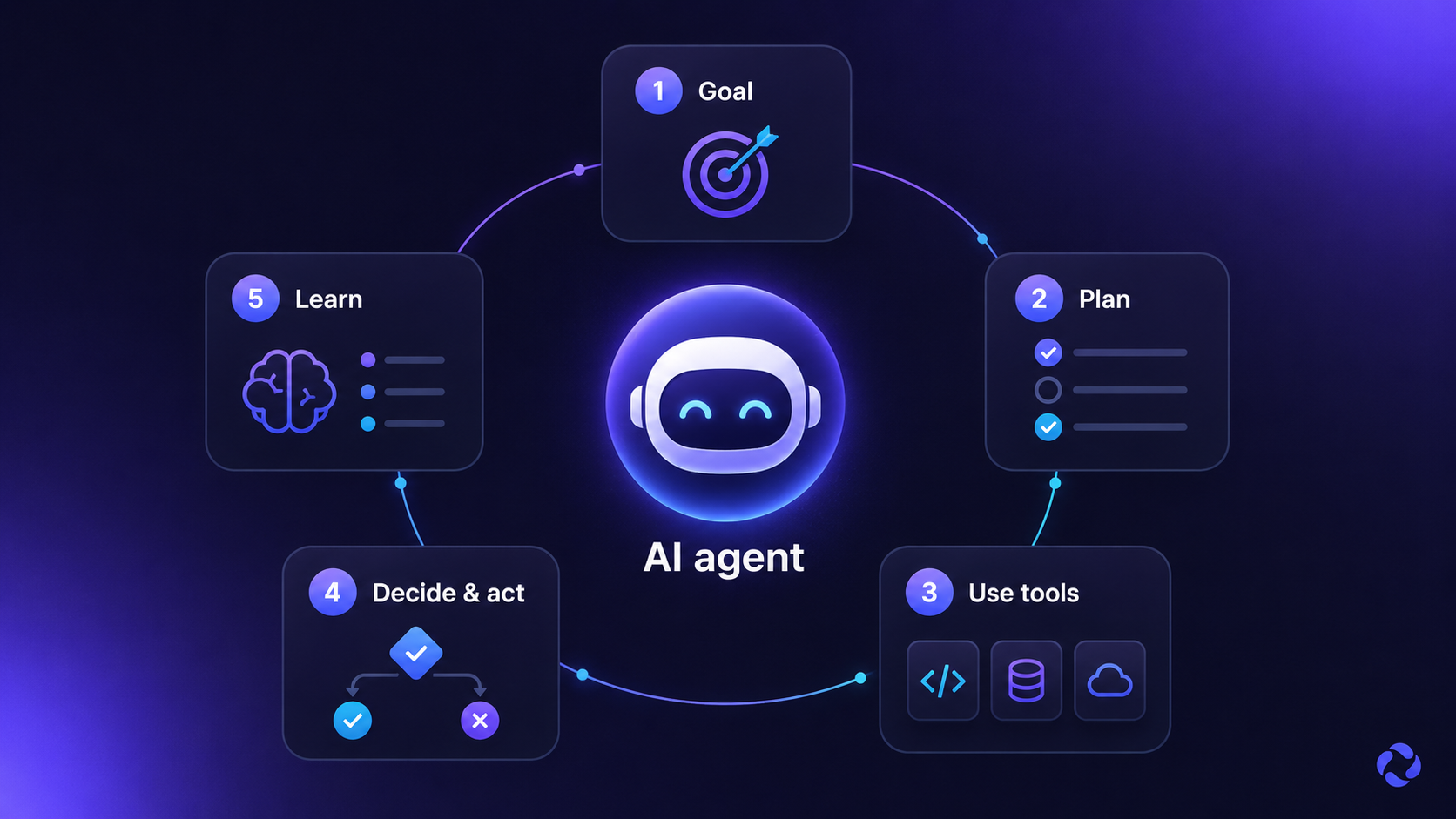
An AI agent is a software system that can take a goal, figure out the steps to reach it, use tools to get there, and act on its own with limited human oversight.
That last part is the difference that matters. A traditional chatbot waits for input and replies from a script. An AI agent can break a request into subtasks, call APIs or databases, make decisions along the way, and remember what happened so it does better next time.
Most modern agents are built on large language models, which give them the reasoning to interpret a messy request and decide what to do. The model is the brain. The tools, the memory, and the ability to act are what turn it into an agent. An AI agent builder simplifies the creation of intelligent, task-driven agents.
The main types of AI agents
Not every agent is equally capable. They range from simple rule-followers to systems that learn and adapt. In order of increasing sophistication:
- Simple reflex agents: act on the current input using preset rules, with no memory. A spam filter that blocks messages matching known patterns is the classic example.
- Model-based reflex agents: keep an internal model of their environment, so they can act even when they can't see everything. A robot vacuum that remembers a room's layout works this way.
- Goal-based agents: weigh possible actions against a defined goal and choose the path that gets there. A navigation app picking the fastest route is the everyday version.
- Utility-based agents: go a step further and optimize for the best outcome, not just any outcome, scoring trade-offs like time, cost, and risk.
- Learning agents: improve over time by learning from feedback and new data, which is what powers most modern recommendation and support agents.
In practice, the agents companies actually deploy are usually a blend of these, wrapped around a large language model and connected to real business tools.
12 AI agent examples across business functions
Theory is easy. Here's what AI agents look like in real jobs, grouped by the function they serve, with a named company behind each one.
Customer support agents
Support is the most common place to meet an AI agent, because the work is high-volume and pattern-heavy.
Intercom built Fin Voice, a voice AI agent that takes customer phone calls, answers questions, and escalates to a human when the issue is too complex. It runs a full voice stack (transcription, language model, text-to-speech, and retrieval) inside existing support workflows. If you want to see how this kind of agent is priced, we broke down Intercom Fin's pricing separately.
These agents shine at deflecting repetitive tickets so human reps can focus on the hard ones. It's the same logic behind most customer service automation software: let the agent handle the routine, route the rest.
Sales and marketing agents
Netguru built Omega, an AI agent that streamlines sales workflows using a multi-agent setup. One agent analyzes the request and decides next steps, another executes tasks, and a third reviews the output. Omega prepares call agendas, summarizes sales conversations, drafts proposals, and tracks deal momentum across Slack, CRMs, and Drive.
Similarly, a revenue agent can continuously monitor customer interactions and sales activity to surface actionable insights and help teams focus on the opportunities most likely to convert.
In a similar vein, teams fielding formal requests for proposal use dedicated RFP tools such as AutoRFP that draft first-pass responses by pulling consistent answers from a company's existing knowledge base, then flag any gaps or low-confidence sections for a human to review before submission.
On the marketing side, Delivery Hero uses agents to manage a huge product catalog. Social teams can use AI chat for social media to draft captions, reply to comments, and turn campaign notes into fresh post ideas. It fits well in a workflow where the team already has approved messaging and clear audience notes.
An attribute-extraction agent reads vendor product titles and images to pull out details like brand and volume, then a title-generation agent writes standardized, on-brand product titles, with low-confidence outputs flagged for human review.
A similar approach can be used for lifecycle marketing, where AI agents turn customer data into personalized campaign content, coordinate campaigns across channels, and help teams optimize engagement at scale with a lifecycle marketing platform.
Data and analytics agents
This is one of the highest-leverage uses, because it lets non-technical people query data in plain English.
Uber built Finch, a conversational agent inside Slack that turns natural-language questions into SQL. A supervisor agent routes each question to sub-agents like a SQL writer, which query the data and return formatted results, so analysts skip the manual queries entirely.
Salesforce built something similar internally with Horizon, a text-to-SQL Slack agent that takes everyday questions, returns the query and the answer, and explains its reasoning so people trust the result.
Knowledge and productivity agents
These agents sit on top of a company's documents and turn scattered information into instant answers.
- Dropbox Dash: breaks a request like "show me the notes for tomorrow's all-hands" into steps, resolves the date, finds the meeting, retrieves the documents, and delivers them.
- Moveworks Brief Me: lets employees upload files into chat and then summarize, compare, and ask questions about them, effectively talking to their own documents.
- Airtable Field Agents: AI-powered fields that gather insights and generate content across a database, with a conversational interface for follow-up questions.
- Kai: an AI executive assistant that sorts your inbox by what each email needs from you, drafts replies in your voice, and turns what was agreed in meetings and email into tracked tasks. Nothing is sent until you click Send.
The common thread: instead of you searching, the agent does the searching and hands back an answer.
Finance and operations agents
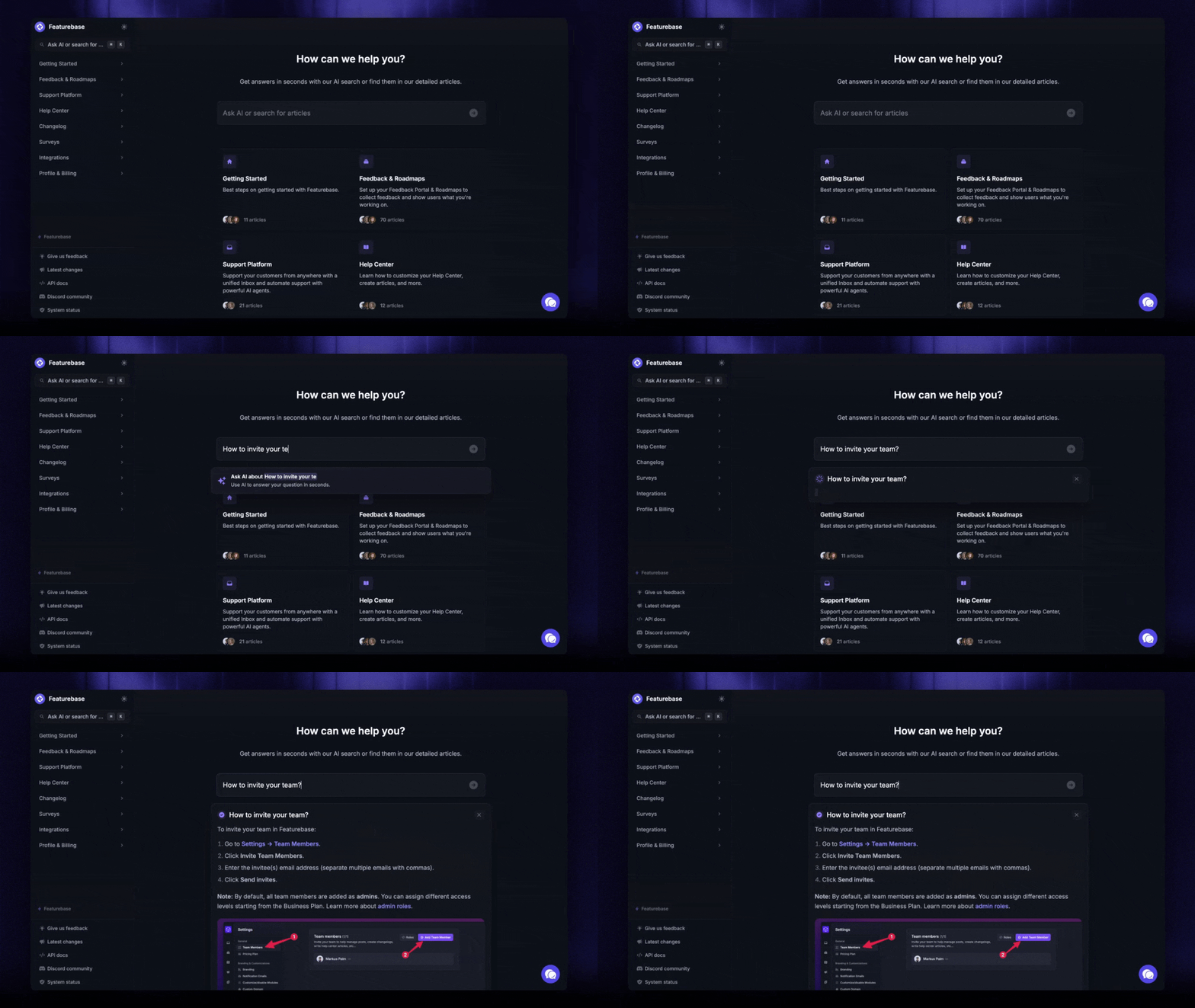
Ramp, a fintech company, built an agent that fixes merchant classification, a problem that used to eat hours of manual work across support, finance, and engineering. The agent combines a language model with embeddings, fast queries, and strict guardrails so it can only take approved actions. It now resolves incorrect merchant reports in under 10 seconds instead of hours.
Finance teams also use agents for continuous work like flagging transaction anomalies before the books close, updating forecasts as new data lands, and monitoring spend for policy violations in real time.
Software development and research agents
Anthropic built a multi-agent Research feature for Claude, where a lead agent plans the work and spins up parallel subagents to search different angles of a question, then synthesizes their findings into one answer. It's a clear example of multiple agents collaborating on a single goal.
Coding agents are advancing fast too, and can take a development task and work through it autonomously, writing and testing code with limited supervision, which is exactly the kind of multi-step, tool-using work agents are built for.
When these agents browse the web or scrape data autonomously, proxies for AI agents help avoid IP bans and rate limits, ensuring uninterrupted access at scale.
Industry-specific agents
Beyond software, agents are showing up in the physical world:
- Autonomous vehicles: companies like Waymo run layered agents that fuse camera, radar, and lidar input, make driving decisions, and convert them into controls in real time.
- Agriculture: John Deere's Blue River Technology uses an AI-driven robotics platform that recognizes individual plants and sprays only the ones that need herbicide, cutting waste.
- HR: IBM's AskHR automates more than 80 common HR requests, freeing the team for more nuanced work.
Benefits of AI agents
Across all these examples, the payoff comes down to 3 things:
- They handle multi-step work: unlike a chatbot that answers and stops, an agent can plan and execute a whole task end-to-end.
- They run continuously and scale: an agent doesn't sleep, and adding more volume doesn't mean adding more headcount.
- They improve with feedback: learning agents get more accurate over time as they take in new data and corrections.
The result is teams spending less time on repetitive, rules-based work and more time on the judgment calls that actually need a human.
Challenges and risks to plan for
Agents aren't magic, and the failure rate is real. Gartner predicts over 40% of agentic AI projects will be canceled by the end of 2027, driven by escalating costs, unclear business value, and weak risk controls.
A few things separate the projects that survive from the ones that don't:
- Hype and "agent washing": plenty of products slap "agent" on what's really a chatbot or a simple automation. Judge tools by what they can actually do on their own, not the label.
- Unclear ROI: an agent without a measurable goal tends to become an expensive experiment. Tie it to a real metric like resolution rate or hours saved.
- Guardrails and oversight: the best deployments limit what an agent can do and keep a human in the loop for high-impact actions. Ramp's agent, for instance, can only take approved actions and has guardrails to catch hallucinations.
- Data quality: agents are only as good as the data they reach. Noisy or scattered data leads to unreliable output.
How to get started with AI agents
You don't need a moonshot to begin. The companies above mostly started narrow and expanded once the agent proved itself.
- Pick one high-value, well-scoped task: a job that's repetitive, rules-heavy, and currently eating your team's time, like ticket deflection or data lookups.
- Make sure the data is clean: the agent needs reliable access to the right information to act on.
- Keep a human in the loop: especially early on, route uncertain or high-stakes decisions to a person.
- Measure against a real metric: decide upfront what success looks like, then track it.
Starting with a clear, contained use case builds confidence and gives you a track record before you scale to anything more ambitious.
Bring AI agents into your customer support with Featurebase
If the support examples above resonated, Featurebase is a modern AI customer support platform for product-led SaaS. It combines AI-powered support, help center, and feedback management into a single platform for startups that want all their customer-facing tools in one place. Featurebase is loved by thousands of support teams from companies like Lovable, Raycast, and n8n. 💫
Top features:
- Omnichannel inbox – Manage live chat, email, and Slack conversations from one AI-powered view
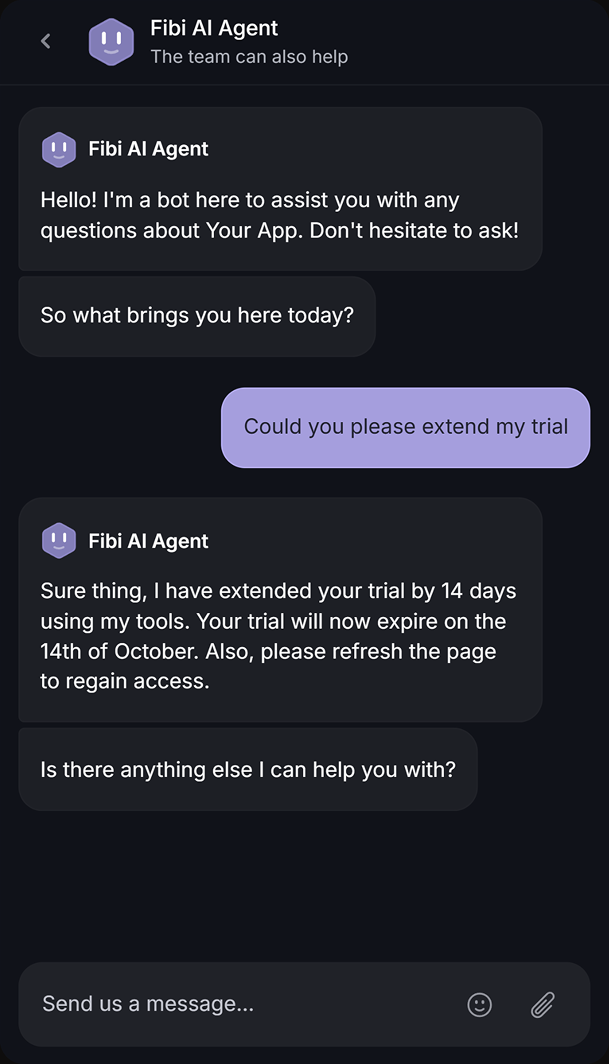
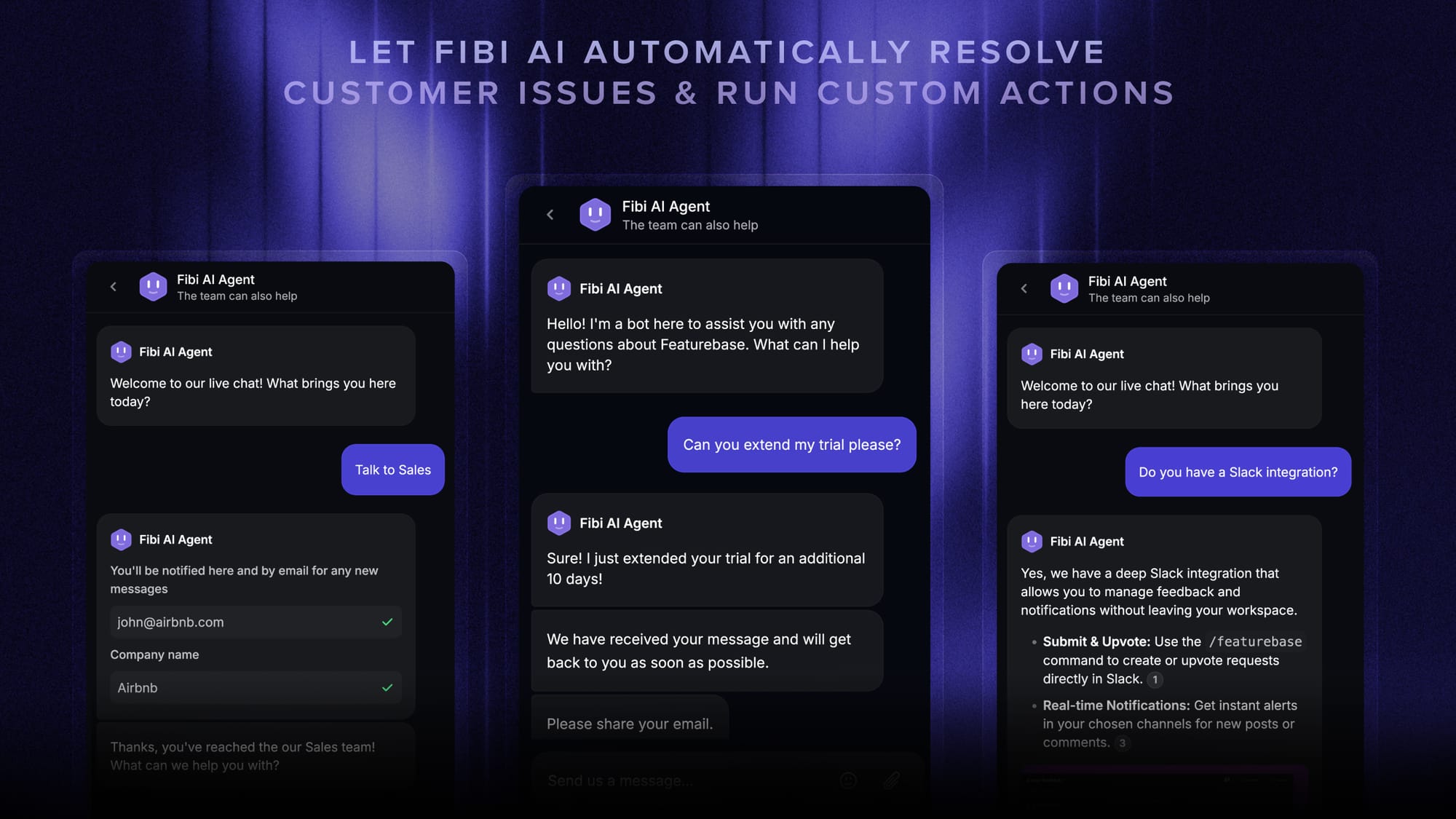
- Fibi AI Agent - Resolve customer issues on autopilot & run custom actions like trial extensions and refunds
- Help center with AI search – Provide instant, multilingual self-serve answers
- Workflows & automations – Auto-assign tickets, route conversations, collect customer data, and more
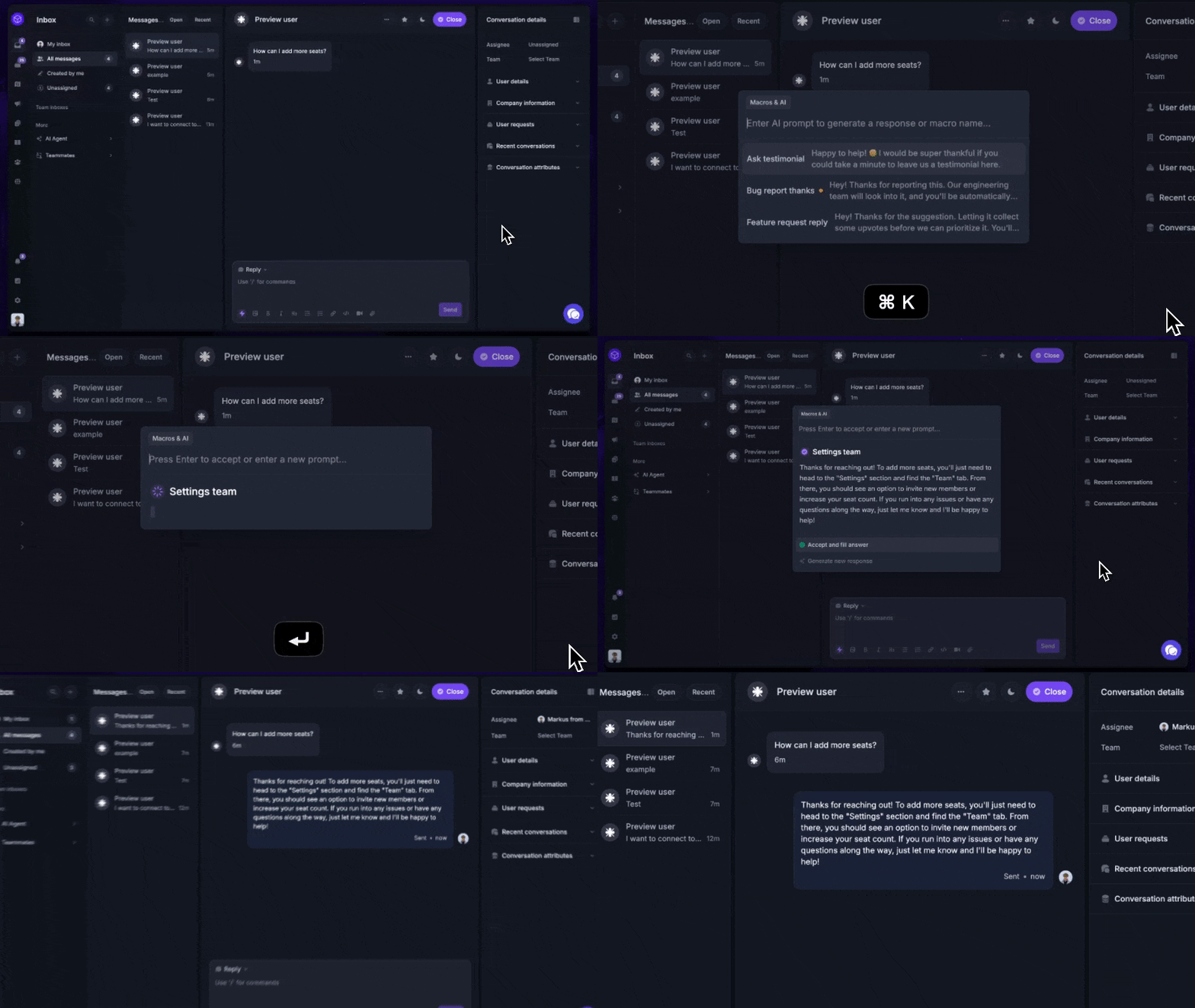
- AI Copilot – Help your agents answer customers faster with AI Copilot that uses your internal knowledge
- Multi-brand support – Manage multiple Help Centers and Live chats from a single workspace
- Automatic AI translations – Automatically translate all messages and help articles to your customers native language
- Service Level Agreements – Track SLAs to make sure your team responds to customers on time, every time
- Mobile app – Respond to customers, receive notifications, and unblock users on the go
- Feedback & roadmap tools – Collect feature requests and close the loop with updates
- Product updates – Publish release notes with a changelog page, in-app widget, and emails
- Integrations – Connects with Slack, Linear, Jira, HubSpot, and more
Pricing: Free plan available with unlimited conversations. Paid plans start at $29/seat/month with $0.29 per AI resolution.
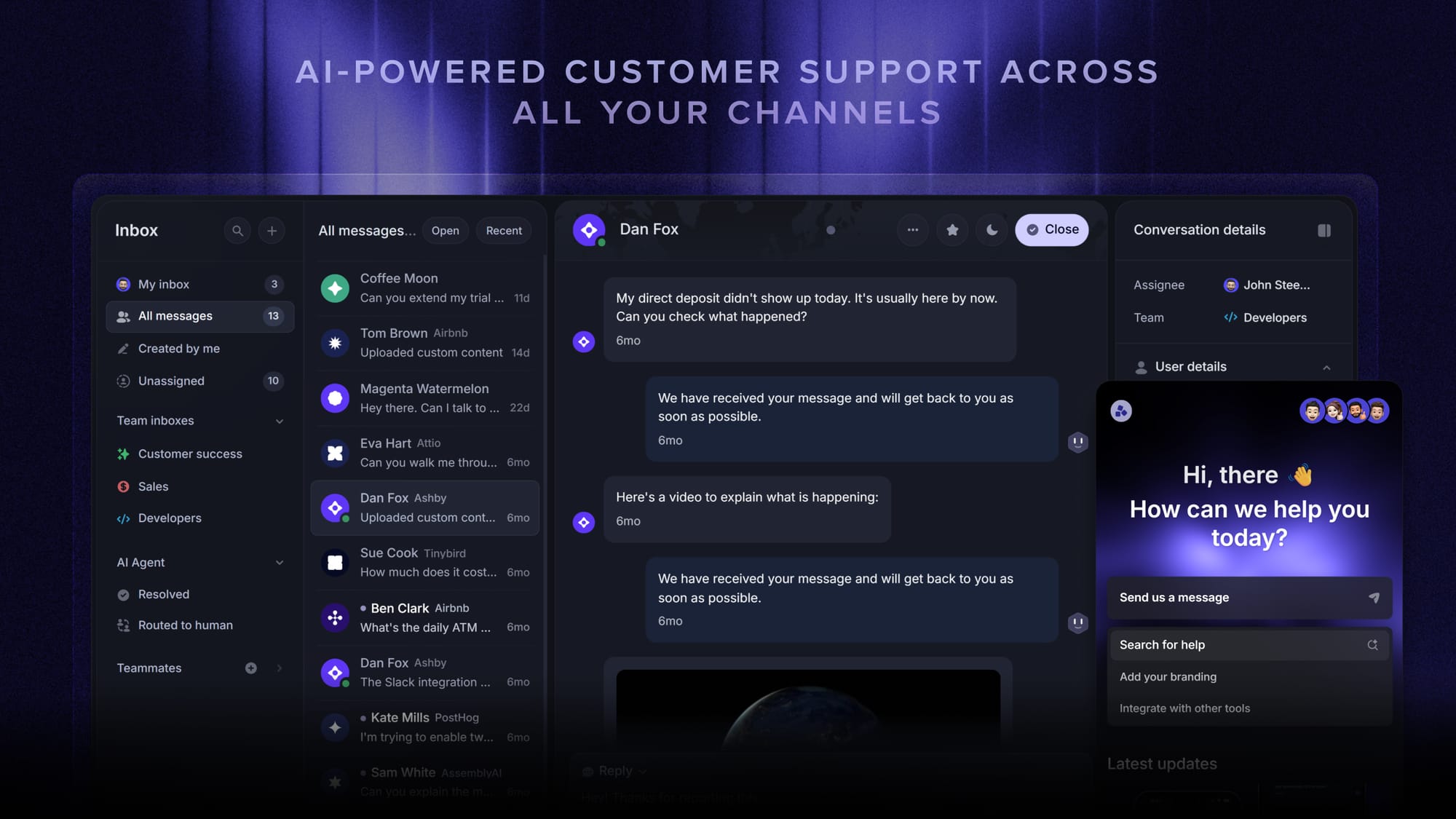
Featurebase covers all the basic support features that legacy platforms do, but with a much more modern approach. It comes with AI automations, a mobile app, and multiple channels (email, live chat, Slack, etc.).
Conclusion
AI agents have moved past the demo stage. The examples here, from Uber's data agent to Intercom's voice support to Ramp's finance cleanup, show the same pattern: take a repetitive, multi-step job, point a goal-driven agent at it, and let your team focus on the work that needs a human.
Featurebase is a modern AI support platform that brings an AI agent, omnichannel inbox, help center, and feedback tools into one place. Its Fibi AI Agent resolves customer issues on autopilot and runs real actions like trial extensions and refunds, while handing off to your team whenever a human is needed.
It comes with affordable pricing and a Free plan, and the onboarding is quick with no credit card required, so there's no downside to trying it. 👇
✨ Automate your support with the fastest AI-enhanced Inbox today →
FAQs
What is an example of an AI agent?
A good everyday example is a navigation app that reroutes you around traffic to reach your destination fastest. A business example is Uber's Finch, an agent that turns plain-English questions in Slack into database queries and returns the answer. In both cases the system sets a path toward a goal and acts on it, rather than just replying to a prompt.
What's the difference between an AI agent and a chatbot?
A chatbot responds to messages using scripted or single-turn replies and waits for the next input. An AI agent can plan multiple steps, use tools like databases and APIs, take actions on its own, and remember past interactions to improve. Put simply, a chatbot answers, while an agent gets things done.
What industries use AI agents the most?
Customer support, finance, and software development are among the heaviest adopters, since those fields have high-volume, rules-based work that agents handle well. Healthcare, retail, logistics, and HR are also moving quickly, using agents for scheduling, inventory, routing, and routine requests, for example, for comparing health insurance providers in Australia. Most early wins land wherever a task is repetitive and data-rich.
How do companies get started with AI agents?
The companies that succeed usually start with one narrow, high-value task instead of trying to automate everything at once. They make sure the agent has clean, reliable data, keep a human in the loop for high-stakes decisions, and measure results against a clear metric. Once that first agent proves its value, they expand from there.
Why do so many AI agent projects fail?
Gartner predicts over 40% of agentic AI projects will be canceled by the end of 2027, largely due to escalating costs, unclear business value, and weak risk controls. Many projects chase hype rather than a concrete goal, and some tools branded as agents are really just chatbots. The fix is to scope tightly, tie the agent to a real metric, and build in guardrails from the start.
Is there a free AI agent I can try?
Yes, several platforms offer free tiers to experiment with. Featurebase has a free plan that includes its Fibi AI support agent, so you can see an agent resolve real customer questions and run actions like trial extensions without paying upfront.