Blog Customer ServiceBest Ecommerce Help Desk Software in 2026
Best Ecommerce Help Desk Software in 2026
Ecommerce support is more complex than ever in 2026. The right ecommerce help desk helps teams manage customer conversations, reduce manual work, and deliver faster, more reliable support at scale.


✨ Automate your support with the fastest AI-enhanced Inbox today →
Customer support software for online stores, often called an e-commerce help desk, is changing how teams manage customer queries, reduce repetitive tasks, and deliver a better customer experience across every support channel.
The National Retail Federation reports that 19.3% of online sales are expected to be returned in 2025. That helps explain why support has become such a critical part of e-commerce operations. For growing brands, every return, refund request, shipping issue, and order update adds more pressure on the support team.
But not every platform offers the same level of value. Some tools are built specifically for online retail and connect deeply with order data, self-service, and post-purchase workflows. Others are broader customer service software platforms that still work well for stores with the right setup.
That is why it helps to compare the options before choosing one.
Short answer:
- If you want the best e-commerce help desk software for fast-moving teams that want AI, self-service, and a modern shared inbox, use Featurebase
- If you want the most e-commerce-specific platform for larger online stores, use Gorgias
- If you want a proven platform with strong workflows and omnichannel support, use Zendesk
- If you want flexible desk software for growing support teams, use Freshdesk
- If you want chat-first e-commerce customer service, use Intercom
See the full list below for a closer look at all the tools.👇
TL;DR - Comparison table of the best e-commerce help desk software tools for 2026
| Platform | Best fit for | Key strength | Pricing |
|---|---|---|---|
| ✨Featurebase | E-commerce brands that want a modern AI inbox and help center | AI-powered inbox, knowledge base, live chat, and automation in one platform | Free plan available; Growth starts at $29/seat/month billed yearly + $0.29 per AI resolution |
| Gorgias | Established e-commerce businesses with high support volume | Deep e-commerce workflows and integrations for online stores | Ticket-volume-based pricing starting at $10/month for 50 tickets |
| Zendesk | Larger support teams with advanced workflows | Mature automation, routing, reporting, and omnichannel support | Starts at $19/agent/month, billed annually, with Suite plans from $55 to $169/agent/month |
| Freshdesk | Growing customer service teams | Good balance of automation, usability, and pricing | Free program for 1–2 agents for 6 months; paid plans start at $19/agent/month, billed annually |
| Intercom | Chat-first e-commerce brands | Strong customer conversations, bots, and AI agent workflows | Essential starts at $19/seat/month billed annually ($29 monthly); Fin costs $0.99 per outcome |
| Help Scout | Smaller support teams that want simplicity | Clean shared inbox, collaboration, and self-service | Free plan available; paid plans start at $25/user/month; AI Answers costs $0.75 per resolution |
| Zoho Desk | Budget-conscious e-commerce businesses | Broad core features and strong value | Free Edition for 3 users; paid plans start at $7/user/month billed annually |
| eDesk | Marketplace-heavy online businesses | Strong support for marketplace messages and multichannel commerce | Starts at $39/agent/month; AI Automation costs $0.99 per resolution |
| Richpanel | Brands focused on self-service and post-purchase support | Customer portal, order lookups, and e-commerce-focused workflows | Starts at $69/agent/month; Self-Service Portal add-on starts at $99/month billed annually |
| HubSpot Free Ticketing System | New E-commerce brands looking for a simple way to provide support | Unified inbox, automation, ticket tracking | Free forever plan available; paid plans start at $9 per user per month via Service Hub |
What is an e-commerce help desk software?
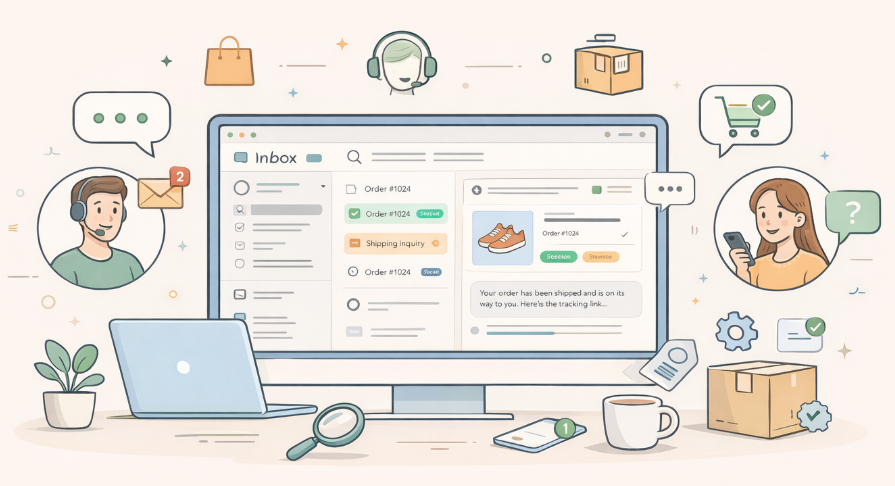
An e-commerce help desk software is customer service software built for online stores. It helps support teams manage customer inquiries, support tickets, and conversations across multiple support channels from one place.
Unlike a basic help desk, it is designed for ecommerce workflows like orders, shipping, returns, subscriptions, and account issues. The best tools combine a shared inbox, omnichannel support, order data, self-service, workflow automation, AI assistance, and reporting to help teams work faster and deliver a better customer experience.
Compared with a generic helpdesk system, an ecommerce help desk gives teams more context, improves service quality, and makes it easier to scale support as the business grows.
How we evaluated these e-commerce help desk software tools
We focused on one core question:
Which ecommerce help desk software tools actually help support teams resolve more customer queries with less manual work while improving customer satisfaction?
To answer that, we looked at:
- support for ecommerce customer service workflows
- integrations with major ecommerce platforms
- omnichannel support across key support channels
- knowledge base and self-service capabilities
- workflow automation and smart automation
- AI features like an AI agent, AI suggestions, and agent assistance
- access to customer data, order data, and customer history
- a unified customer view with full context from past interactions
- support for fulfillment teams, refunds, and order-related workflows
- ease of use for customer service teams and human agents
- reporting on response time, service performance, and agent performance
- pricing flexibility, free plan availability, and transparent pricing
- ability to scale across multiple brands or larger teams
We also considered how well each platform helps support teams reduce operational costs, improve operational efficiency, and manage customer interactions without overwhelming the team’s productivity.
Our goal was not to list every help desk software option on the market. It was to identify the desk software options that are the best fit for real ecommerce businesses, from smaller online business teams to larger ecommerce brands handling high ticket volume.
The 9 best e-commerce help desk software tools for 2026
1. Featurebase✨
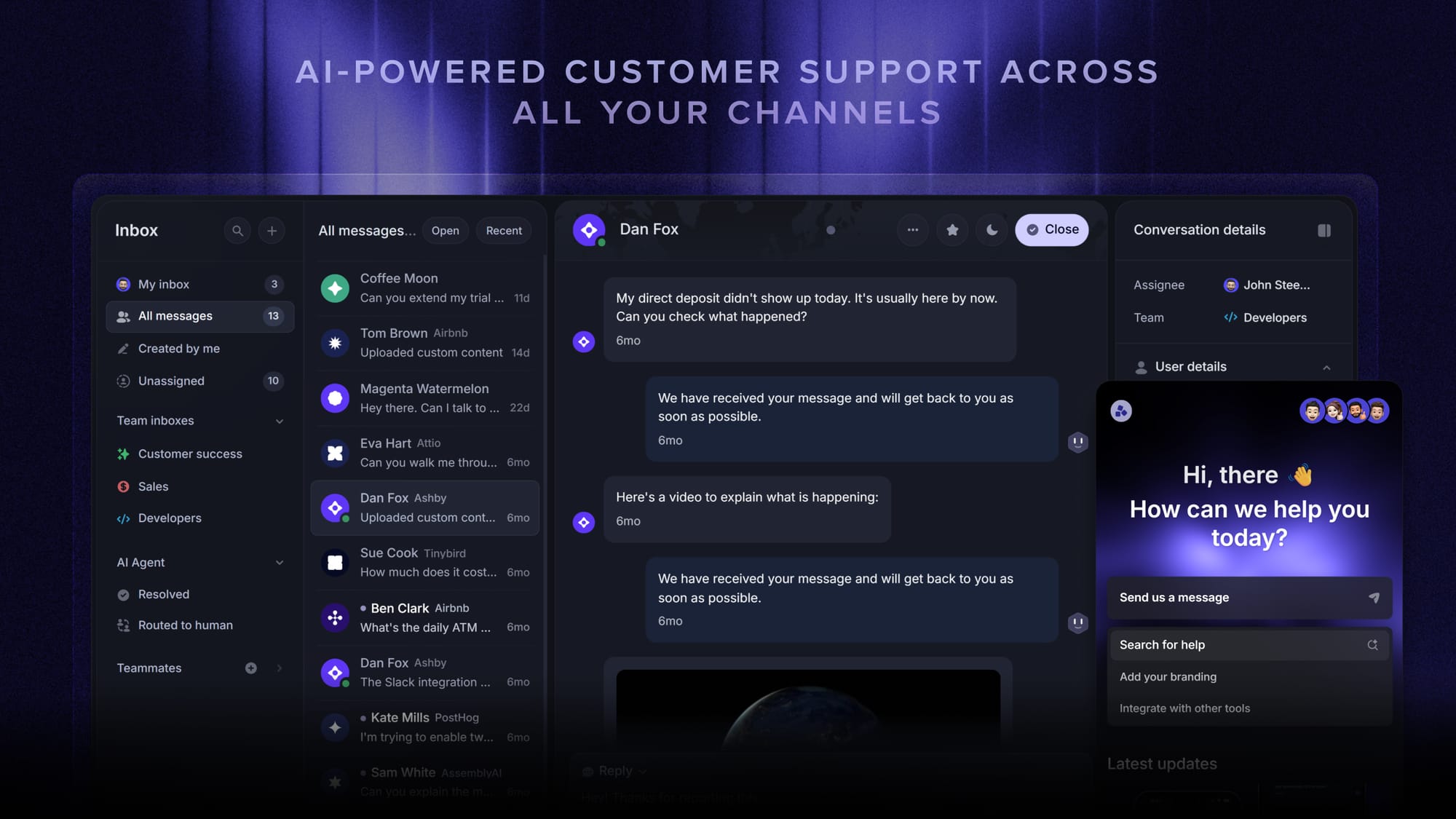
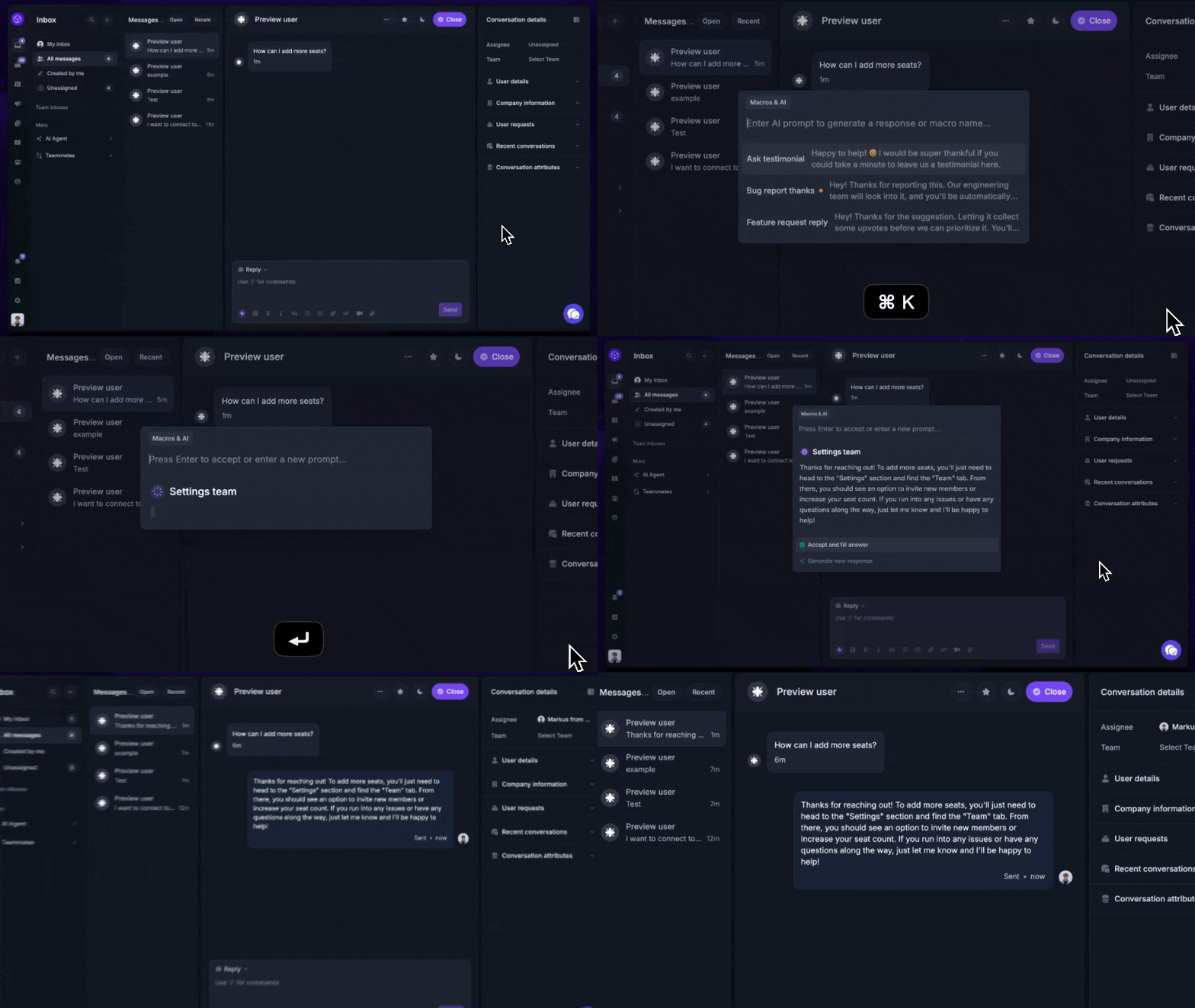
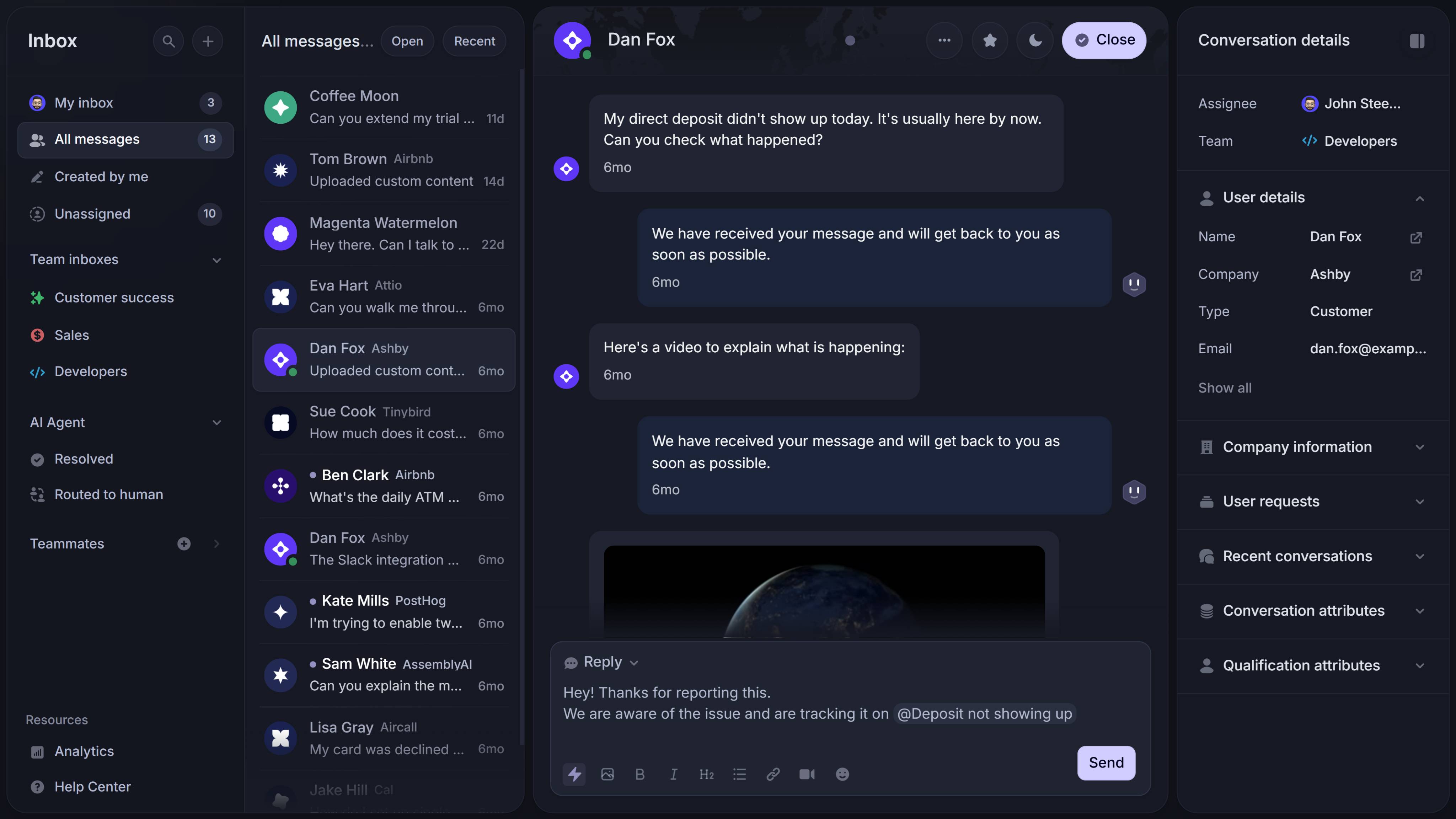
Featurebase is our top pick for the best ecommerce help desk software for teams that want a modern support stack with AI, live chat, a knowledge base, and workflow automation in one place.
While many help desk software platforms focus only on support tickets, Featurebase combines an AI-powered inbox, self-service, and a help center experience that can help ecommerce businesses improve both support efficiency and customer experience. That makes it especially useful for ecommerce brands that want to move faster without building a fragmented support setup.
Key features
- AI-powered inbox for faster ticket handling
- live chat and shared inbox for customer conversations
- knowledge base and self-service portal
- AI automation for routine inquiries
- AI suggestions for faster replies
- internal notes and team collaboration
- workflow automation for repetitive tasks
- full context across customer interactions
- support for personalized responses
- free plan for getting started quickly
Featurebase is on this list because modern ecommerce customer service is not just about a queue. Teams need to answer customer questions quickly, maintain service quality, and give human agents the context they need to resolve issues without back-and-forth.
For ecommerce brands, that can mean helping agents find the right answer faster, guiding customers to self-service, and reducing agent workload without sacrificing great customer service.
For this, make sure your CMS catalog is optimized, and your Merchant feed has conversational attributes for GEO.
Best for: Fast-moving ecommerce brands that want AI, self-service, and a modern support experience in one platform.
Pricing: Featurebase has a free plan, and its Growth plan starts at $29/seat/month billed yearly, plus $0.29 per AI resolution.
✨ Automate your support with the fastest AI-enhanced Inbox today →
2. Gorgias
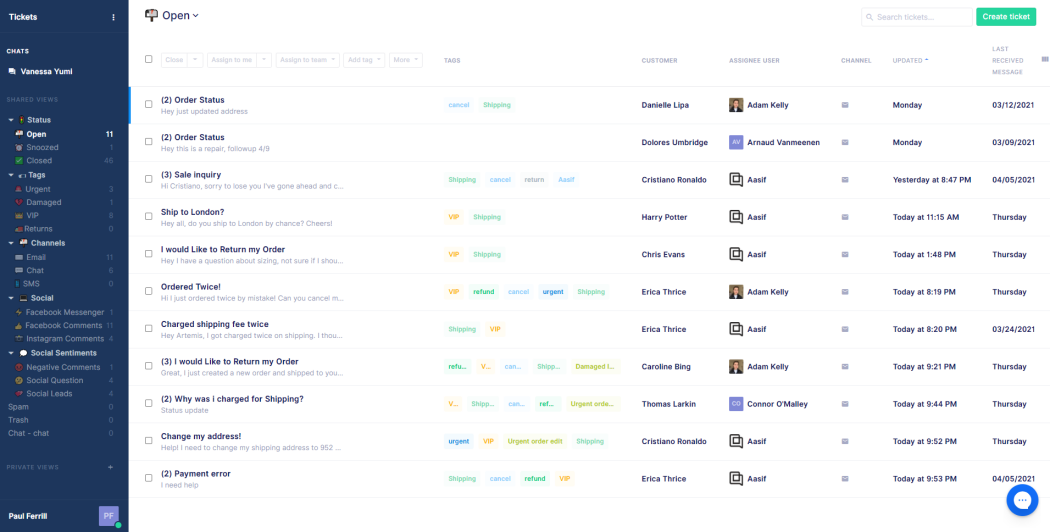
Gorgias is one of the most recognized ecommerce help desk software platforms on the market, and for good reason. It is built specifically for ecommerce customer service and is widely used by online stores that want to centralize support channels and automate high-volume support.
Its main strength is how closely it fits ecommerce workflows. For many ecommerce businesses, that means faster handling of customer tickets related to shipping delays, refunds, order updates, and returns.
Key features
- ecommerce-focused shared inbox
- support for email, chat, social, and other support channels
- automation for repetitive customer queries
- order data and customer data inside the workspace
- macros, rules, and smart automation
- collaboration tools for support teams
- support for customer conversations at scale
- integrations with major e-commerce platforms
Gorgias is on this list because it is one of the clearest examples of a true e-commerce helpdesk. It is purpose-built for online stores and often works best for teams that want specialized tooling instead of a more general help desk.
Best for: Established businesses with larger support volumes and e-commerce-specific requirements.
Pricing: Gorgias uses ticket-volume-based pricing rather than seat-based pricing, with plans starting at $10/month for 50 tickets and scaling up based on monthly ticket volume.
3. Zendesk
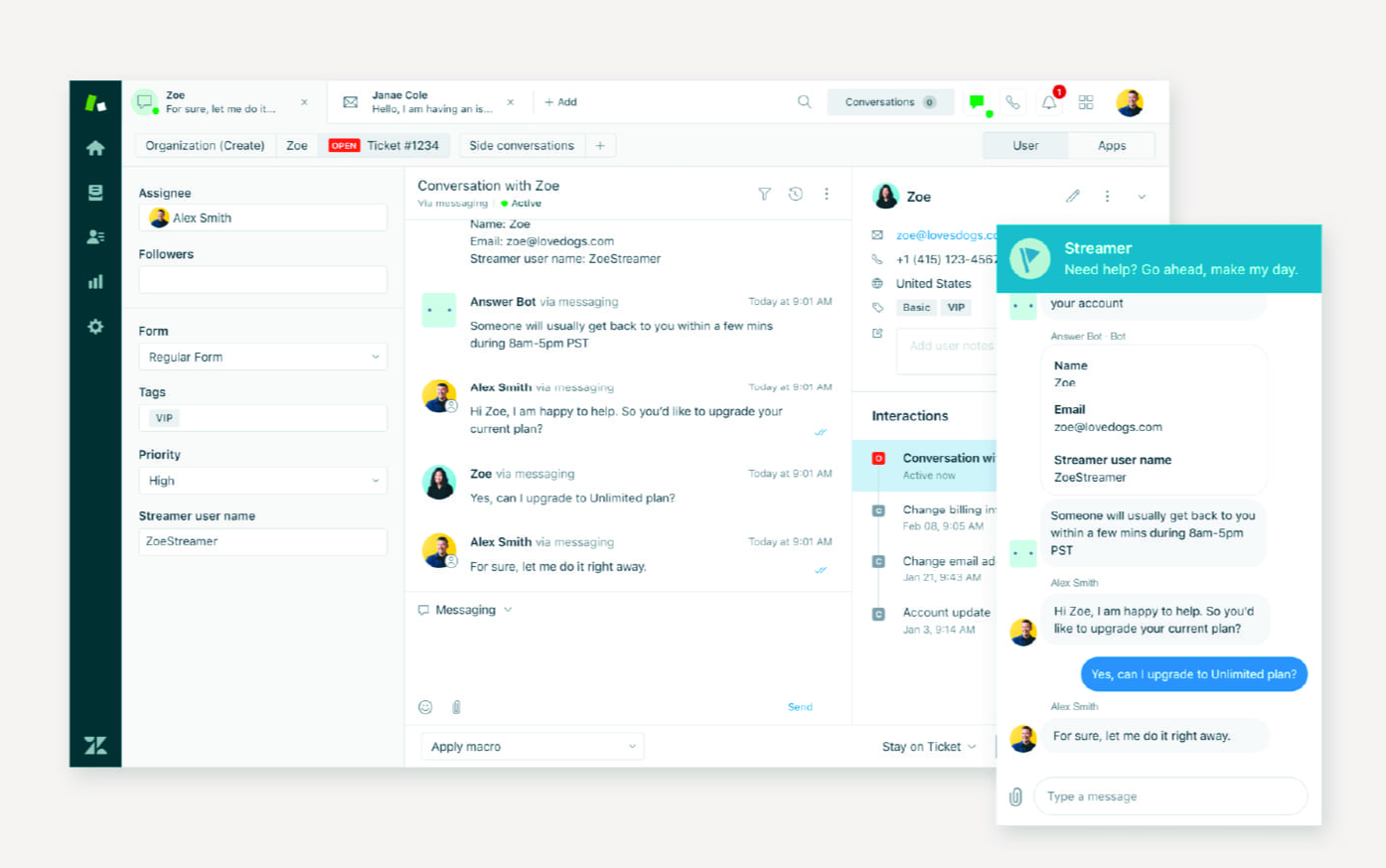
Zendesk remains one of the strongest customer service software platforms for teams that need mature workflows, advanced routing, and deep reporting.
It is not e-commerce-only, but it can be a strong fit for larger ecommerce brands that need more process control, more customization, and support for multiple agents across several support channels.
Key features
- robust ticketing systems and workflow automation
- omnichannel support across email, chat, messaging, and phone support
- SLA rules, routing, and automation
- knowledge base and self-service tools
- customer history and past interactions
- internal notes and collaboration
- reporting on service performance and agent performance
- scalable admin and security controls
Zendesk is on this list because it can support complex ecommerce customer service operations with high service expectations. It is especially useful when customer service teams need to coordinate across multiple brands, specialized queues, or larger support structures.
Best for: Larger ecommerce brands that need advanced automation, reporting, and scale.
Pricing: Zendesk pricing starts at $19 per agent/month billed annually, with Suite plans ranging from $55 to $169 per agent/month depending on features and scale.
4. Freshdesk
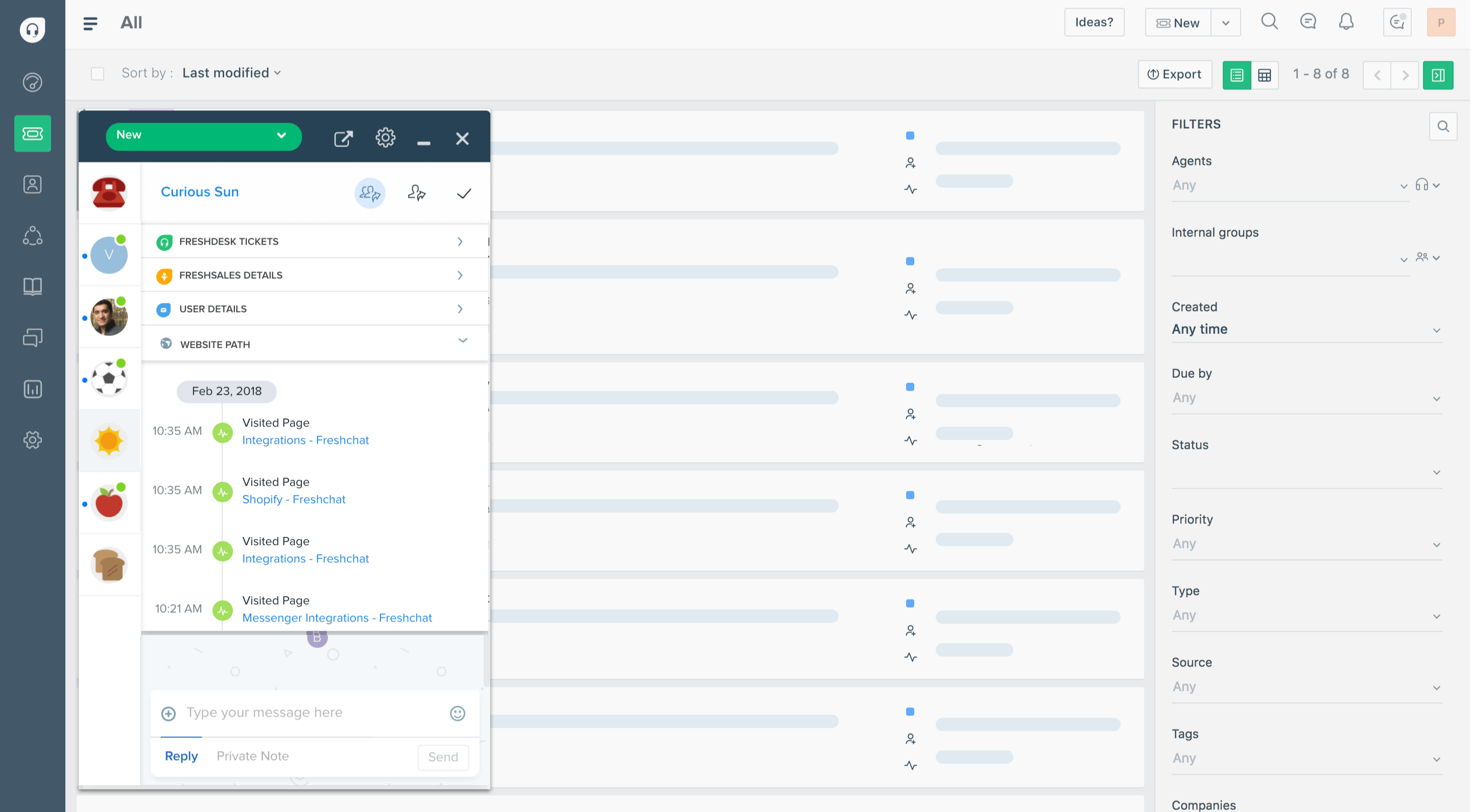
Freshdesk is a strong option for growing support teams that want a balance of ease of use, workflow automation, and solid omnichannel support.
For ecommerce businesses that are growing quickly, Freshdesk offers a practical way to manage customer inquiries, improve response time, and organize support tickets without moving into a more complex enterprise platform too early.
Key features
- multichannel help desk software
- automation rules and ticket routing
- self-service portal and knowledge base
- AI automation and agent assistance
- customer data and conversation context
- internal collaboration tools
- support for customer tickets across channels
- reporting for support efficiency
Freshdesk is on this list because it gives ecommerce brands many of the core features they need without overwhelming the support team. It can work well for a growing online store that wants better workflows and improved operational efficiency.
Best for: Growing ecommerce customer service teams that want flexibility and solid value.
Pricing: Freshdesk’s paid plans start at $19 per agent/month billed annually for Growth, with Pro at $55 and Enterprise at $89 per agent/month; it also offers a free program for 1–2 agents for 6 months.
5. Intercom
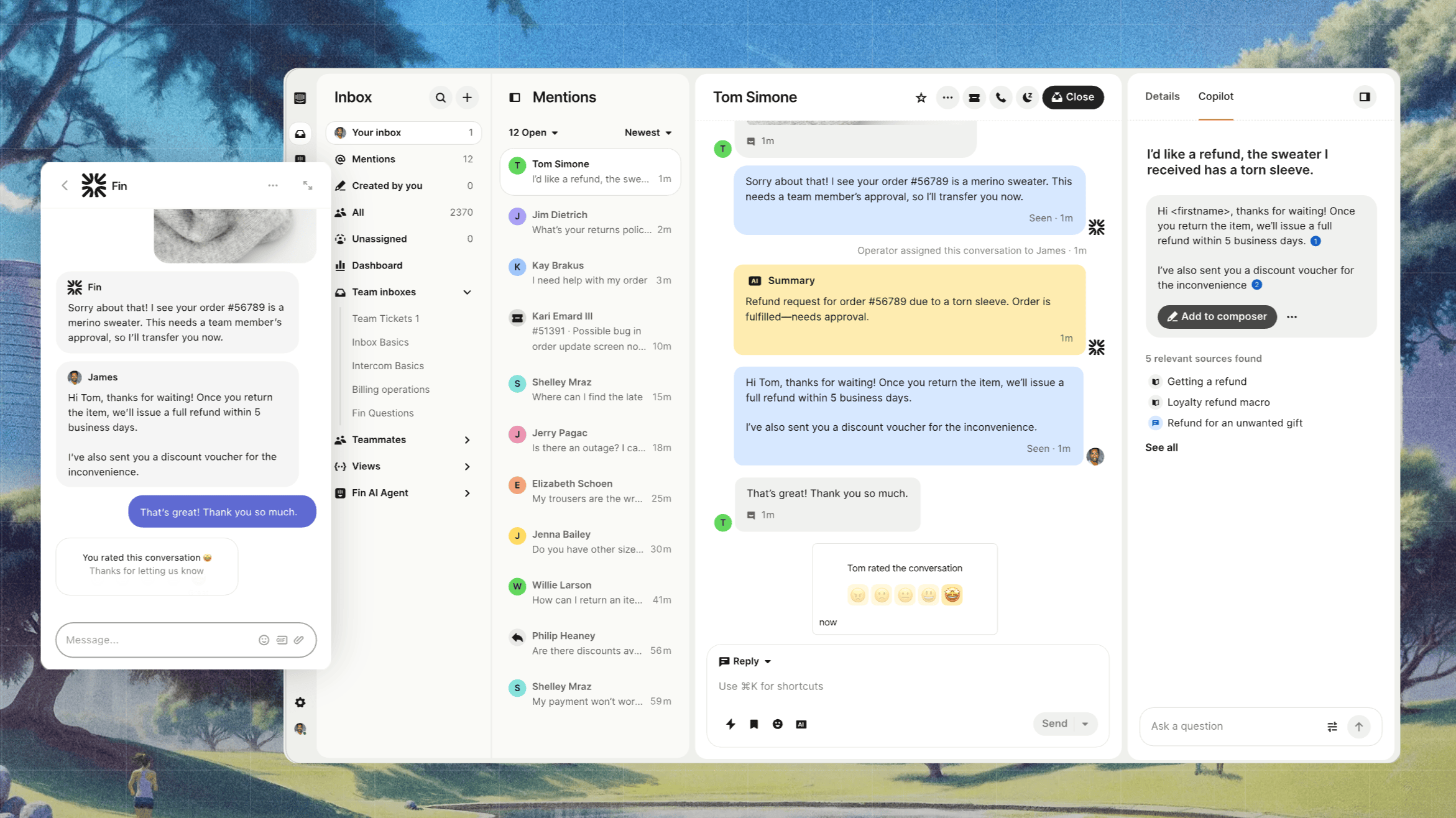
Intercom is one of the best options for ecommerce brands that want chat-first support and more real-time customer interactions.
Instead of centering everything on traditional ticketing systems, Intercom puts customer conversations and messaging workflows at the center. That can be especially useful for ecommerce brands focused on personalized support, faster answers, and proactive communication.
Key features
- chat-first support and live messaging
- AI agent for handling routine inquiries
- AI suggestions for agents
- knowledge base and self-service
- shared inbox for multiple agents
- customer history and full context
- omnichannel support capabilities
- automation for customer questions and follow-ups
Intercom is on this list because it is strong for brands that want to make e-commerce customer service feel more conversational. It can improve customer experience for teams that handle lots of pre-purchase and post-purchase questions in real time.
Best for: Ecommerce brands that want chat-first support and strong AI agent workflows.
Pricing: Intercom’s customer service platform starts at $19 per seat/month billed annually for Essential ($29 billed monthly), with Advanced at $85 and Expert at $132 per seat/month, billed annually; Fin AI Agent is priced separately at $0.99 per outcome.
6. Help Scout
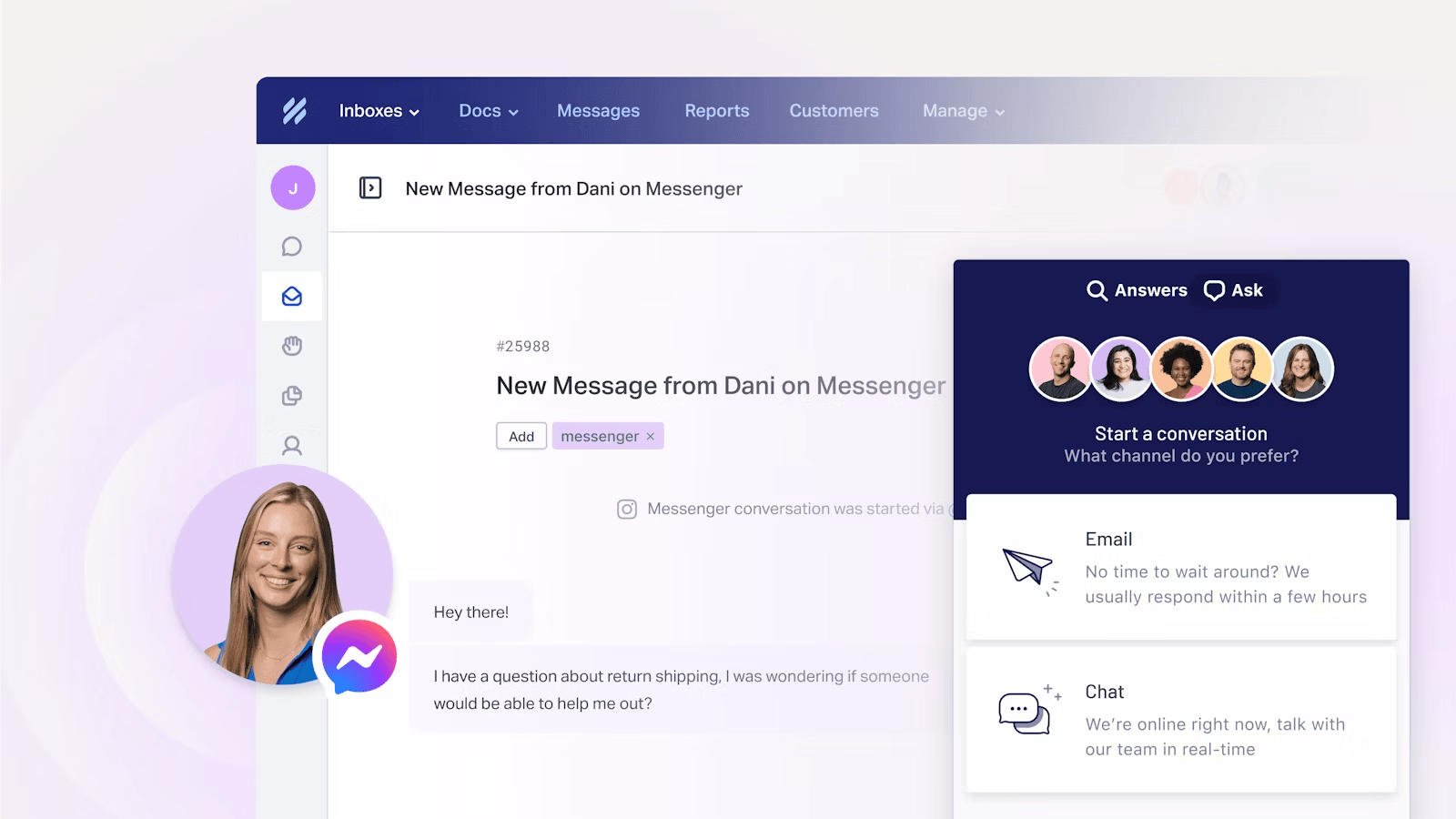
Help Scout is a simpler help desk platform that works well for smaller support teams that want to stay fast and personal.
It is a good fit for e-commerce businesses that do not need a highly complex helpdesk system but still want a polished help desk, strong self-service, and a clean way to manage customer tickets.
Key features
- shared inbox for customer messages
- knowledge base for self-service
- customer history and conversation visibility
- internal notes and collaboration
- simple reporting for service quality
- automation for basic workflows
- support for personalized responses
Help Scout is on this list because it gives ecommerce brands a lighter-weight way to deliver great customer service without a heavy implementation. For many smaller teams, simplicity improves support efficiency more than complexity does.
Best for: Small to mid-sized ecommerce businesses that want a clean, easy-to-use support platform.
Pricing: Help Scout has a Free plan, while its paid plans start at $25 per user/month for Standard, with Plus at $45 and Pro at $75 per user/month; AI Answers is available as an add-on at $0.75 per resolution.
7. Zoho Desk
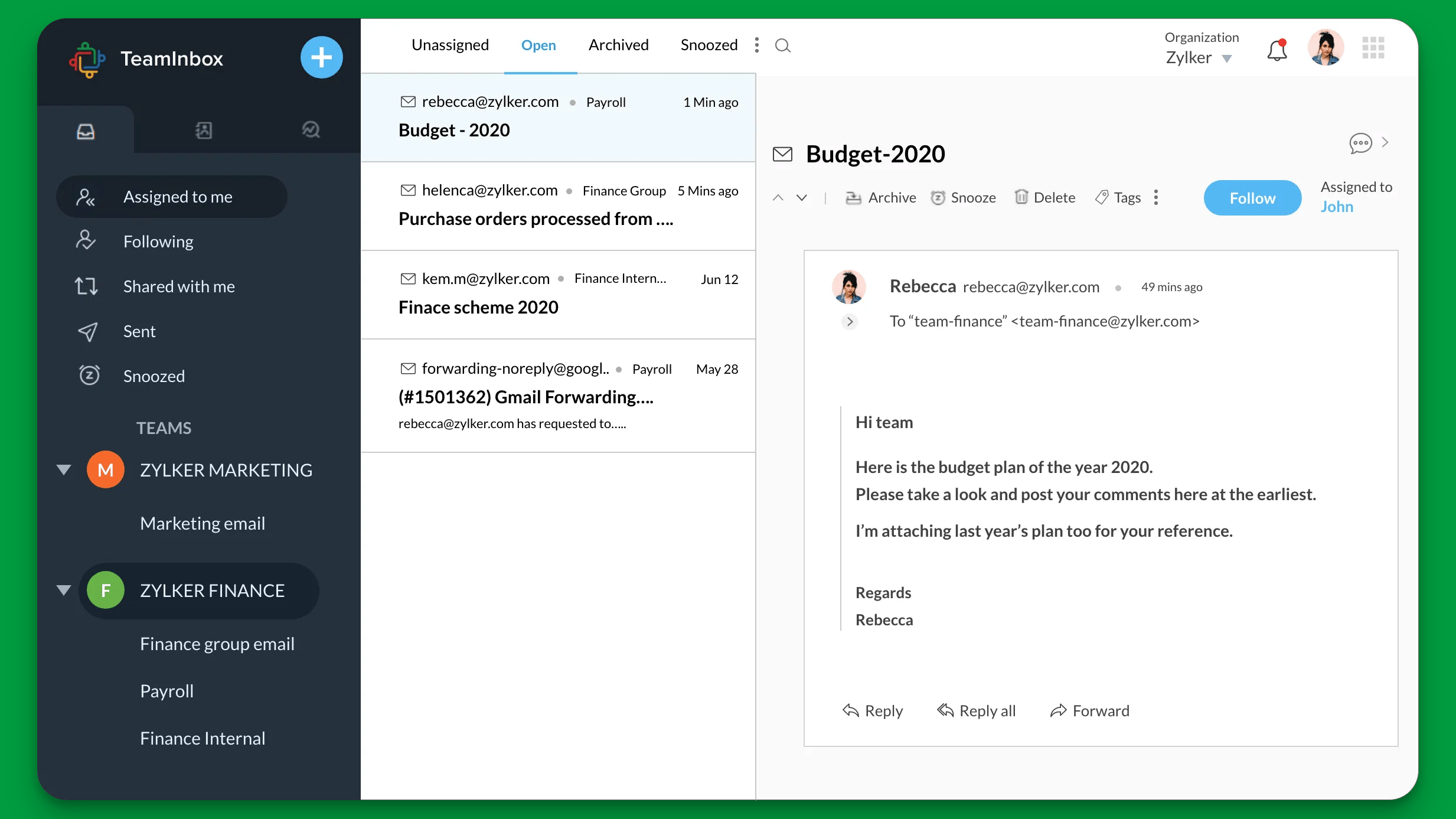
Zoho Desk is a practical, cost-effective option for ecommerce businesses that want broad functionality at a lower price point.
It offers many of the core features an online business needs, including ticket management, self-service, automation, and reporting. While it may not be the most specialized ecommerce help desk, it can still be a strong choice for budget-conscious teams.
Key features
- support tickets and multichannel workflows
- knowledge base and self-service portal
- workflow automation
- reporting on response time and service performance
- collaboration tools for customer service teams
- AI features on selected plans
- integrations with broader business tools
Zoho Desk is on this list because it offers a lot of value for ecommerce businesses that need a dependable help desk without high operational costs.
Best for: Budget-conscious ecommerce businesses that want balanced desk software.
Pricing: Zoho Desk has a Free Edition for 3 users, while its paid plans start at $7 per user/month billed annually for Express, with Standard at $14, Professional at $23, and Enterprise at $40 per user/month.
8. eDesk
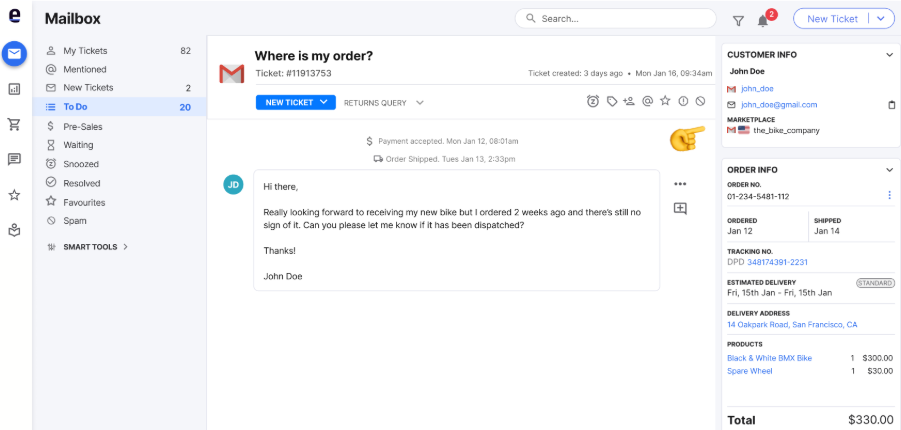
eDesk is built with ecommerce support in mind, especially for sellers who manage multiple sales channels and marketplace messages.
That makes it especially relevant for ecommerce brands selling through marketplaces as well as their own ecommerce store. When support teams need to keep all customer messages in one place, that specialized positioning becomes valuable.
Key features
- centralized inbox for marketplace messages and store support
- multichannel support across ecommerce channels
- order details and customer context
- automation for customer inquiries
- team collaboration and internal notes
- reporting for service performance
- support for multiple brands and channel complexity
eDesk is on this list because it is well-suited to ecommerce businesses that need one help desk across several selling environments. If your support team handles Amazon, eBay, Shopify, and direct store support, that channel coverage can matter a lot.
Best for: Marketplace-heavy ecommerce businesses and multichannel sellers.
Pricing: eDesk’s paid plans start at $39 per agent/month for Essential, with Growth at $89 and Professional at $119 per agent/month; Enterprise uses custom pricing, and AI Automation is available as an add-on at $0.99 per resolution.
9. Richpanel
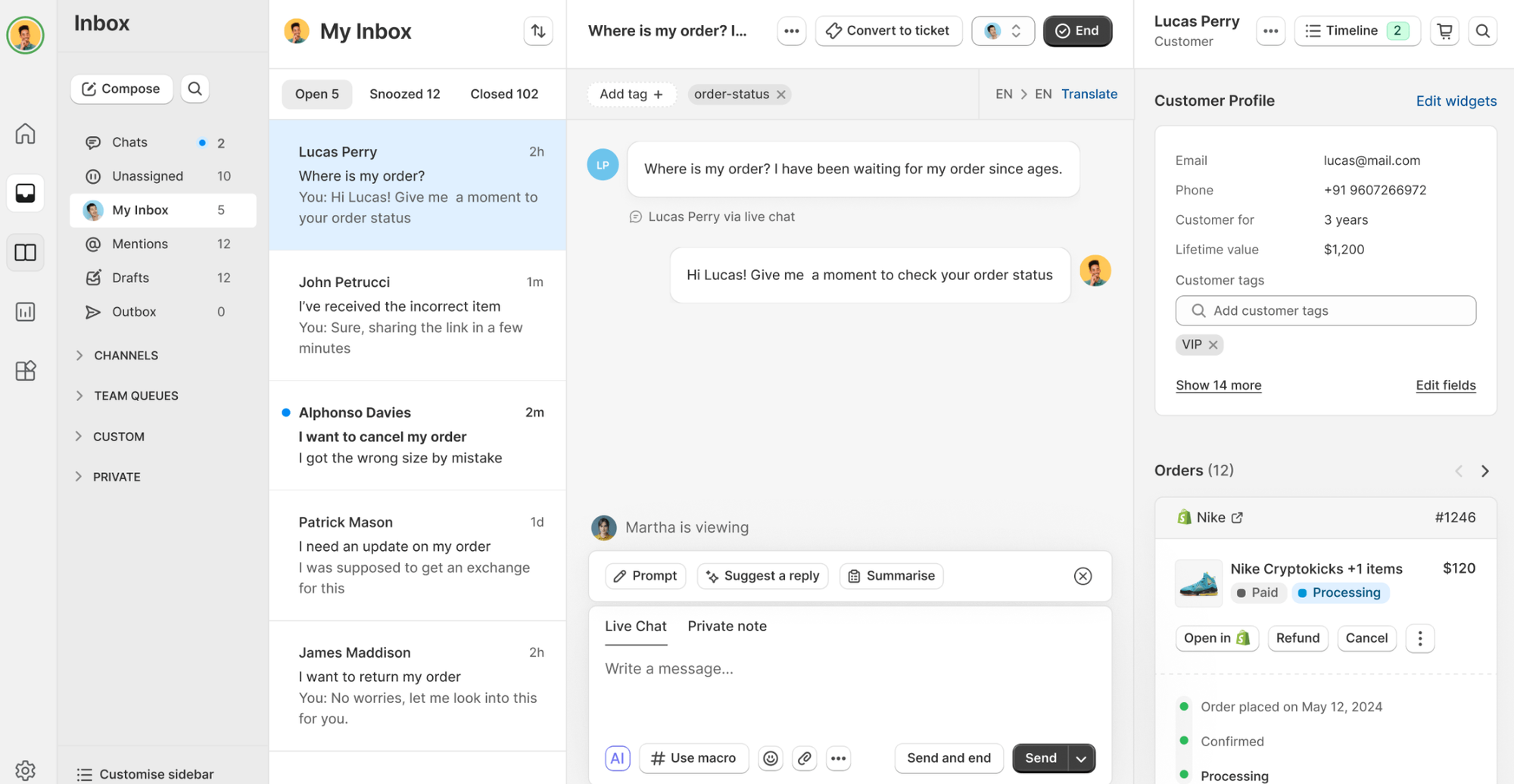
Richpanel is a strong option for ecommerce customer service teams that want more self-service, stronger order support workflows, and a customer-facing support experience.
It focuses heavily on helping brands reduce customer tickets by letting customers solve common issues themselves, while still giving human agents the tools they need when escalation is required.
Key features
- self-service portal for common support needs
- knowledge base and help center tools
- order data and order details in the support flow
- automation for refunds and common workflows
- support for process refunds and post-purchase questions
- customer history and past interactions
- unified customer view for agents
- workflow automation for repetitive tasks
Richpanel is on this list because self-service is often one of the biggest levers for reducing operational costs in ecommerce customer service. When customers can resolve routine issues on their own, support teams can focus on higher-value customer needs.
Best for: Ecommerce brands focused on self-service and post-purchase support automation.
Pricing: Richpanel’s paid plans start at $69 per agent/month for Pro, with Pro Max at $99 per agent/month, while Enterprise uses custom pricing; its Self-Service Portal is available as an add-on starting at $99/month billed annually.
10. HubSpot Free Ticketing System
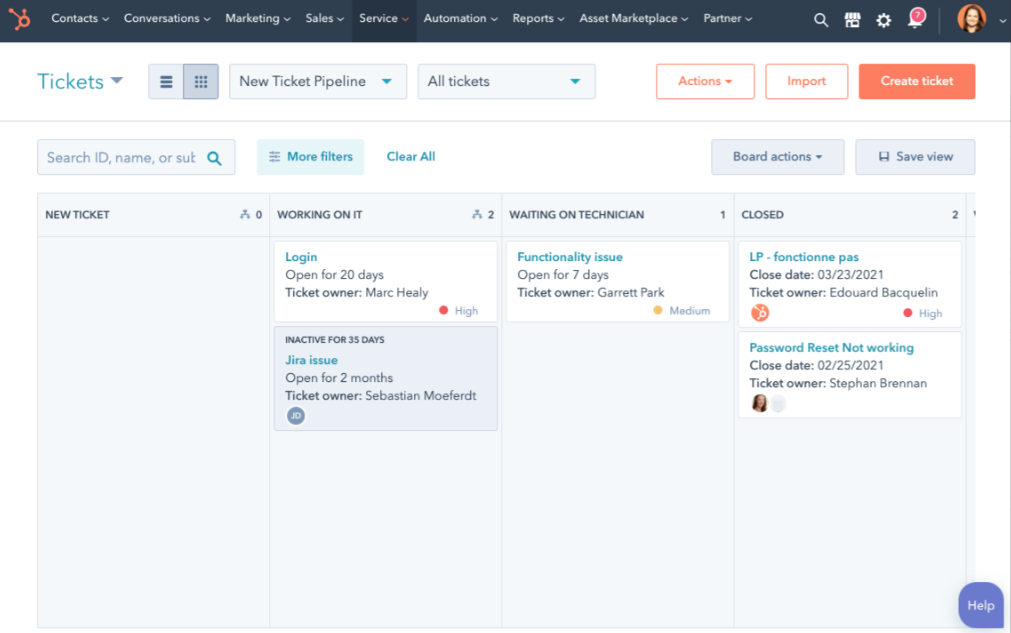
HubSpot offers a free ticketing system. The platform is simple yet effective: you can organize all incoming inquiries under unified dashboards, prioritize them by difficulty, and track their resolution statuses.
HubSpot also includes automation capabilities that create and route tickets, escalate issues, and populate your CRM database with new customer information.
Key features
- Shared inboxes
- Built-in CRM
- Ticket automation workflows
- Customer context and history displays
- Customer service reporting dashboards
- Customer service collaboration tools: tags, notes, comments
- Extra free and paid customer service tools available in HubSpot Service Hub
- Excellent scalability options with multiple products throughout HubSpot’s offering
HubSpot’s ticketing system made it on the list because it’s a solid free option for small ecommerce stores with plenty of features. Plus, the platform unlocks numerous other advanced tools in an otherwise affordable entry-level paid plan.
Best for: Small or brand new ecommerce looking for a free platform with scalability potential.
Pricing: HubSpot’s Ticket System is free, while more advanced features are available in the Service Hub: pricing starts from $9 per user per month.
Key features to look for in ecommerce help desk software
Not every ecommerce help desk software tool offers the same level of value. If you are comparing desk software options, these are the core features that matter most.
1. Omnichannel support
Customers do not all reach out in the same place. Some prefer email, some use live chat, some send social messages, and some still expect phone support. Strong omnichannel support helps support teams manage customer inquiries across all relevant support channels in one workspace.
2. A strong knowledge base and self-service portal
Self-service matters because many customer questions are predictable. Customers want quick answers about shipping, returns, sizing, product availability, and order status. A good knowledge base and self-service portal can reduce customer tickets while improving customer satisfaction.
3. Order data and full context
For ecommerce customer service, context is everything. Agents need quick access to order data, order details, customer history, and past interactions. The more full context your team has, the easier it is to deliver personalized responses.
4. Workflow automation and smart automation
Support teams should not spend hours on repetitive tasks. Smart automation can tag tickets, route customer queries, trigger workflows, assign owners, and help teams process common issues more efficiently.
Business process automation services can help extend these workflows beyond the help desk, reducing manual data entry and handoffs between support and fulfillment teams.
5. AI automation and agent assistance
Modern help desk software should help human agents do their jobs better. That can include AI suggestions, AI automation, and even an AI agent that handles routine inquiries before escalation. The goal is not to replace your support team. It is helping them work faster and with better quality.
6. Internal notes and collaboration for multiple agents
Many customer tickets involve handoffs. The best ecommerce helpdesk tools make it easy for multiple agents to collaborate, leave internal notes, and coordinate with fulfillment teams when needed.
7. Unified customer view
A unified customer view helps support teams see customer interactions, customer data, order history, and customer messages in one place. That improves support efficiency and reduces the chance of duplicated effort.
8. Reporting on service performance and customer satisfaction
The right platform should help you measure response time, agent workload, agent performance, and customer satisfaction. Those metrics matter if you want to improve service quality over time.
9. Transparent pricing and scalability
Some help desk software tools look affordable at first, then get expensive as ticket volume or team size grows. Look for transparent pricing, a realistic free plan if you need one, and a clear understanding of when you will need to contact sales.

Resolve 70% of customer requests with AI
Automatically resolve customer issues & cut down support loads for your team
How to choose the right ecommerce help desk for your business
The best ecommerce help desk software depends on your workflow, your support volume, and the kind of customer experience you want to deliver.
- Choose Featurebase if you want a modern help desk with AI, self-service, and a strong help center experience in one platform.
- Choose Gorgias if you want a more ecommerce-specific platform and your team needs deeper workflows tied to ecommerce customer service.
- Choose Zendesk if your customer service teams need advanced automation, detailed reporting, and support for a more complex operation.
- Choose Freshdesk if you want a flexible help desk software option for a growing ecommerce store.
- Choose Intercom if your ecommerce customer service strategy is built around live chat, customer conversations, and real-time support.
- Choose Help Scout if your team wants simplicity, fast onboarding, and a lightweight support workflow.
- Choose Zoho Desk if you want to control operational costs while still getting the core features you need.
- Choose eDesk if your online business depends on marketplace messages and selling across multiple brands or channels.
- Choose Richpanel if you want to reduce support tickets with stronger self-service and customer-facing support flows.
As you compare options, ask:
- Does this tool support the major ecommerce platforms we use?
- Can it bring together customer data, order data, and customer history?
- Does it support the support channels our customers actually use?
- Can it help us process refunds, manage shipping delays, and answer customer questions faster?
- Will it improve operational efficiency for our support team?
- Does it give human agents a better context instead of just adding more tools?
- Is the pricing realistic as our online store grows?
The right desk software should match the way your support team already works and help you deliver better ecommerce customer service without adding unnecessary complexity.
Conclusion
The right platform can make a huge difference in how ecommerce brands handle customer questions, reduce support workload, and improve the overall shopping experience.
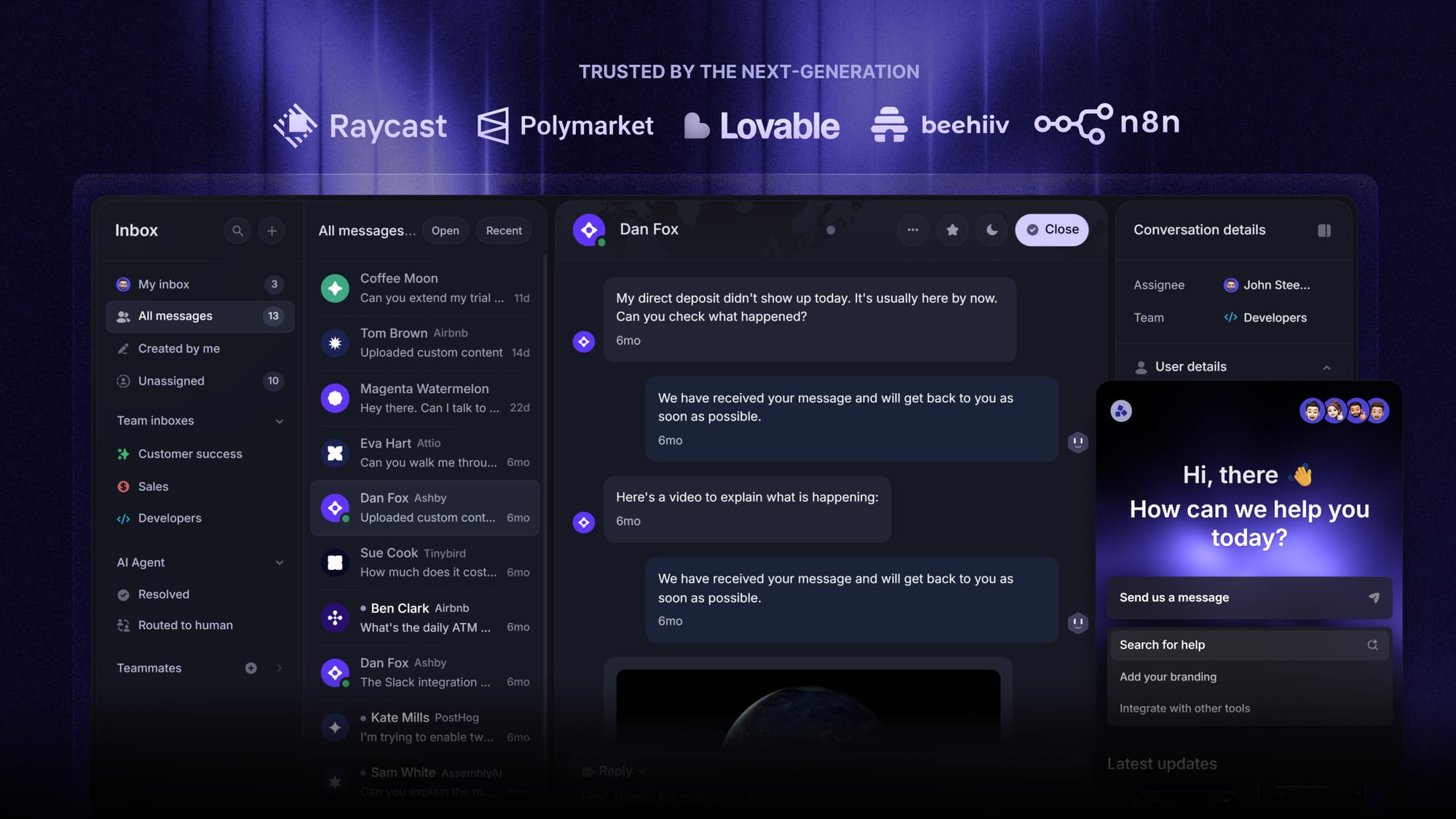
Featurebase is a modern and powerful support platform for online stores. With an AI-powered inbox, live chat, knowledge base, self-service tools, and workflow automation, it helps teams manage order-related questions, reduce repetitive tasks, and deliver faster, more consistent support. It's trusted by Raycast, n8n, and Lovable.💫
It has affordable pricing, a Free plan, and fast onboarding with no credit card required, so it’s easy to try without any extra friction. 👇
✨ Automate your support with the fastest AI-enhanced Inbox today →
FAQs about ecommerce help desk software
What is an ecommerce help desk?
An ecommerce help desk is help desk software designed to help online stores manage customer inquiries, support tickets, and customer interactions across channels like email, chat, and social. It often includes ecommerce-specific features such as order data, returns workflows, and marketplace support.
What is the difference between ecommerce help desk software and general customer service software?
General customer service software works across many industries. Ecommerce help desk software is more tailored to ecommerce businesses and often includes features like order details, marketplace messages, refund workflows, and integrations with major ecommerce platforms.
Why do ecommerce businesses need self-service?
Self-service helps customers solve routine issues on their own through a knowledge base or self-service portal. That reduces customer tickets, lowers operational costs, and frees up human agents to focus on more complex customer needs.
What features matter most in ecommerce customer service software?
The most important features usually include omnichannel support, workflow automation, a knowledge base, order data, customer history, internal notes, reporting, and support for personalized responses.
Can an ecommerce help desk software improve customer satisfaction?
Yes. When support teams have full context, faster response time, and better workflows, they can answer customer queries more accurately and consistently. That often leads to better customer satisfaction and stronger customer relationships.
Do I need an AI agent in my help desk?
Not always, but AI can be useful for routine inquiries, agent assistance, and workflow automation. A good AI agent can reduce repetitive tasks, while AI suggestions can help customer service teams reply faster and more consistently.
Is a free plan enough to get started?
For some smaller ecommerce businesses, yes. A free plan can be a good way to test a help desk, validate workflows, and see how the platform fits your support team before committing to a paid plan.