Blog Customer ServiceBest Help Desk Ticketing Software in 2026: 13 Tools Compared
Best Help Desk Ticketing Software in 2026: 13 Tools Compared
We compared the best help desk ticketing software tools for 2026 to see which ones actually help teams manage tickets, reduce manual work, and scale support more efficiently. Here are the 12 best options for SaaS, IT, customer support, and service desk teams.


✨ Automate your support with the fastest AI-enhanced Inbox today →
Help desk ticketing software helps teams bring order to support. It turns incoming requests into trackable tickets, keeps conversations organized, and makes it easier to assign, manage, and resolve issues without losing context.
Some teams just need a simple system that is easy to roll out. Others need deeper automation, reporting, AI features, and service desk workflows. The best choice depends on your help desk software requirements - how your team works and how much complexity you actually need.
In this guide, we compare 13 help desk ticketing software tools based on the criteria that matter most in practice: ease of use, routing, knowledge base support, reporting, automation, and overall fit.
Short answer:
- If you want the best all-in-one help desk ticketing software for modern SaaS teams, use Featurebase✨.
- If you want advanced workflows and enterprise scale, use Zendesk.
- If you want a flexible help desk system for growing teams, use Freshdesk.
- If you want chat-first customer support, use Intercom.
- If you want a service desk for internal operations and IT teams, use Jira Service Management.
See the full list below for a closer look at all 13 tools.👇
TL;DR - Comparison table of the best help desk ticketing software tools for 2026
| Platform | Best for | Key strength | Pricing |
|---|---|---|---|
| ✨Featurebase | Product-led SaaS teams | AI-powered inbox, knowledge base, live chat, and feedback in one platform | Free plan; paid plans from $29/seat/month + $0.29 per AI resolution. |
| Zendesk | Advanced support operations | Powerful automation, ticket routing, and reporting tools | Paid plans from $19/agent/month. |
| Freshdesk | Growing teams | Strong help desk software with AI features and multichannel support | Free plan; paid plans from $19/agent/month. |
| Intercom | Chat-first support teams | Conversational support, live chat, and AI agents | Essential from $19/seat/month billed annually ($29 monthly) + $0.99 per Fin outcome. |
| Help Scout | Email-first support teams | Clean interface, collaboration, and knowledge base tools | Free plan; paid plans from $25/user/month + $0.75 per AI resolution. |
| ProProfs Help Desk | Support teams that need AI-assisted ticket management and workflow automation | AI-powered ticket resolution, shared inbox, omnichannel ticketing, automation, and SLA management | Free plan available; paid plans start at $19.99/month. |
| Zoho Desk | Budget-conscious teams | Balanced desk software with automation and strong value | Free plan; paid plans from $7/user/month. |
| Jira Service Management | IT teams and internal service desks | Service management workflows and request tracking | Free plan; paid plans from $20/agent/month. |
| HappyFox | Structured support operations | Predefined rules, ticket assignment, and process control | Paid plans from $21/agent/month. |
| Desk365 | Microsoft-centric teams | Works well with Microsoft Teams and Microsoft environments | Free plan; paid plans from $12/agent/month. |
| HubSpot Service Hub | CRM-centric support teams | Customer data and support operations in one ecosystem | Free plan; paid plans from $9/seat/month. |
| Salesforce Service Cloud | Enterprise service teams | Deep customization and large-scale service management | Free plan; paid plans from $25/user/month. |
| Spiceworks | Lean internal help desks | Free desk ticketing system for basic IT support | Free plan; Premium from $5/active employee/month. |
What is help desk ticketing software?
Help desk ticketing software is a type of customer service software that helps support teams collect, manage, and resolve customer requests in one place. Each new support request becomes a support ticket, making it easier to assign ownership, track ticket status, manage conversations, and move issues through to resolution.
The best help desk ticketing software also includes smart ticket routing, a connected knowledge base with AI and automation, reporting tools, multichannel support, strong security, and an intuitive interface. When email is your main support channel specifically, look at an email ticketing system that converts every inbound message into a tracked ticket.
In short, a good help desk ticketing system helps teams stay organized, respond faster, and scale customer support without adding more manual work.
If you want the fundamentals first, our guide on what a ticketing system is breaks down the core workflow every help desk is built on.
How we evaluated these help desk ticketing software tools
We focused on one question:
Which help desk ticketing system actually help teams handle more support tickets with less manual effort?
To answer that, we looked at:
- overall ease of use and intuitive interface
- ticket routing, round robin assignment, and ticket assignment flexibility
- ability to manage tickets across multiple channels
- knowledge base and knowledge base articles
- AI tools, AI features, and AI agents
- reporting tools, custom reports, and visibility into ticket volume
- custom fields and workflow flexibility
- live chat, web forms, and customer support coverage
- data security and customer data controls
- fit for small business, growing teams, and enterprise support operations
- fit for service desk use cases and IT teams
- free plan availability and the value of paid plans
We also considered how well each help desk solution supports real-world support operations.
Some desk software works best for SaaS teams that want a fast, AI-powered inbox with built-in knowledge base and live chat features. Other platforms are better for internal service requests, technical expertise-heavy environments, or support teams that need fully customizable workflows and advanced service management.
Our goal was not to list every desk solution on the market.
It was to find the platforms that give support agents the best mix of usability, automation, ticket tracking, and long-term value.
But if you're looking for a general help desk comparison, you can read our blog that list every tools that can handle that job.
The 13 best help desk ticketing software tools for 2026
1. Featurebase ✨
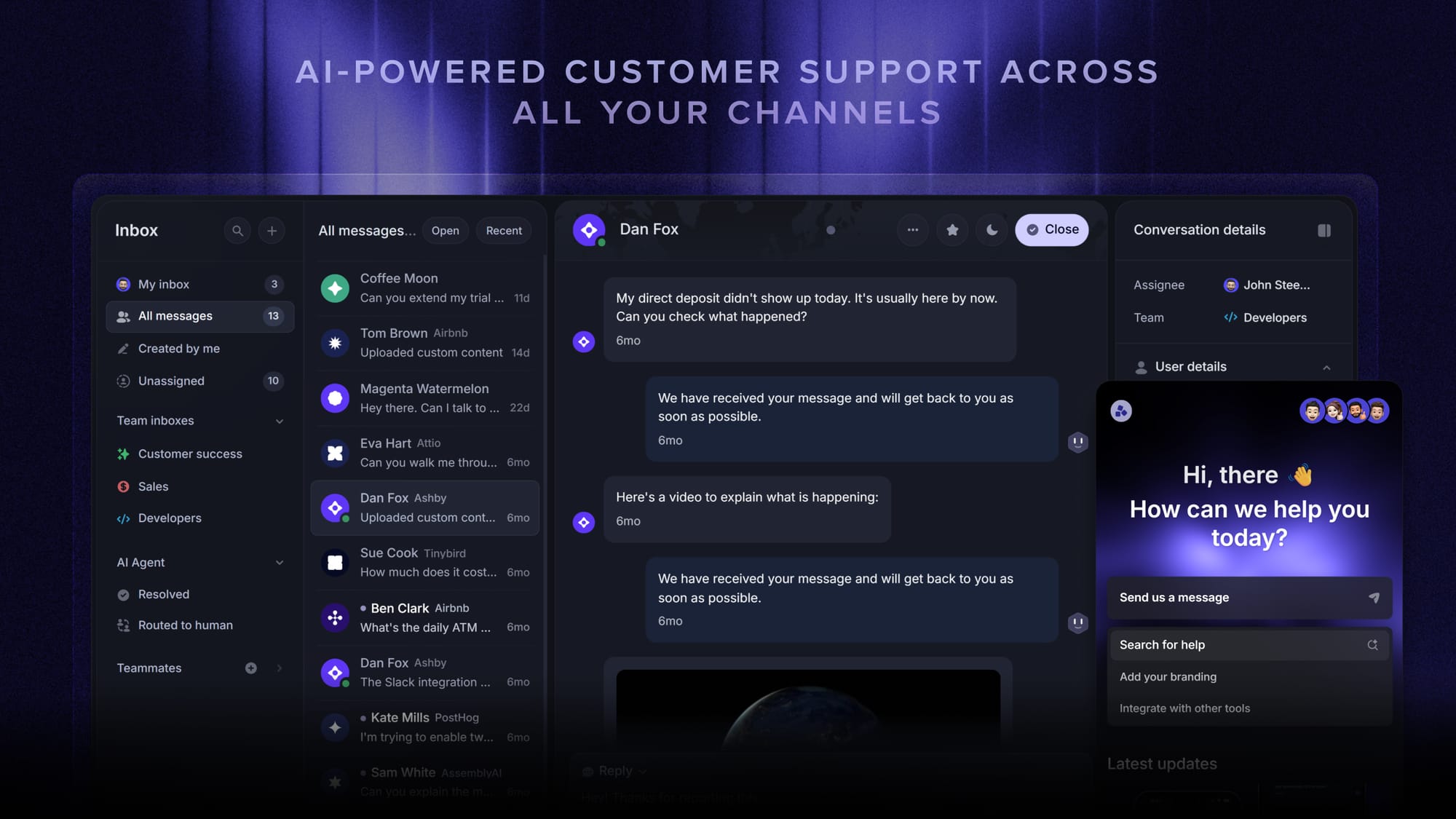
Featurebase is our top pick for the best help desk ticketing software for modern product-led SaaS teams.
It combines an AI-powered support inbox, live chat, knowledge base, feedback collection, and product communication in one platform. That makes it especially useful for teams that want more than a basic helpdesk ticketing system. Instead of stitching together separate desk software, request tracker tools, knowledge tools, and feedback systems, teams can run customer support in one place.
Key features
- AI-powered support inbox for faster ticket resolution
- live chat and shared inbox for customer support
- built-in knowledge base with AI search
- AI agents and AI capabilities for repetitive support tickets
- ticket routing, ticket assignment, and workflow automation
- customer context and internal notes for support agents
- custom fields and automation rules
- feedback and roadmap tools tied to customer requests
Featurebase stands out because it scores well across the criteria that matter most for modern SaaS support teams: ease of use, AI assistance, built-in knowledge base, multichannel support, and workflow speed. It is especially strong for teams that want to reduce manual effort without adding a heavier service desk layer, and it gives growing support teams a practical mix of ticket routing, customer context, automation, and product feedback in one place.
Best for: Product-led SaaS teams that want support, knowledge base, and feedback in one platform.
Pricing: Featurebase offers a free plan, with paid plans starting at $29/seat/month for Growth, $59/seat/month for Professional, and $99/seat/month for Enterprise, plus $0.29 per AI resolution on paid plans.
✨ Automate your support with the fastest AI-enhanced Inbox today →
2. Zendesk
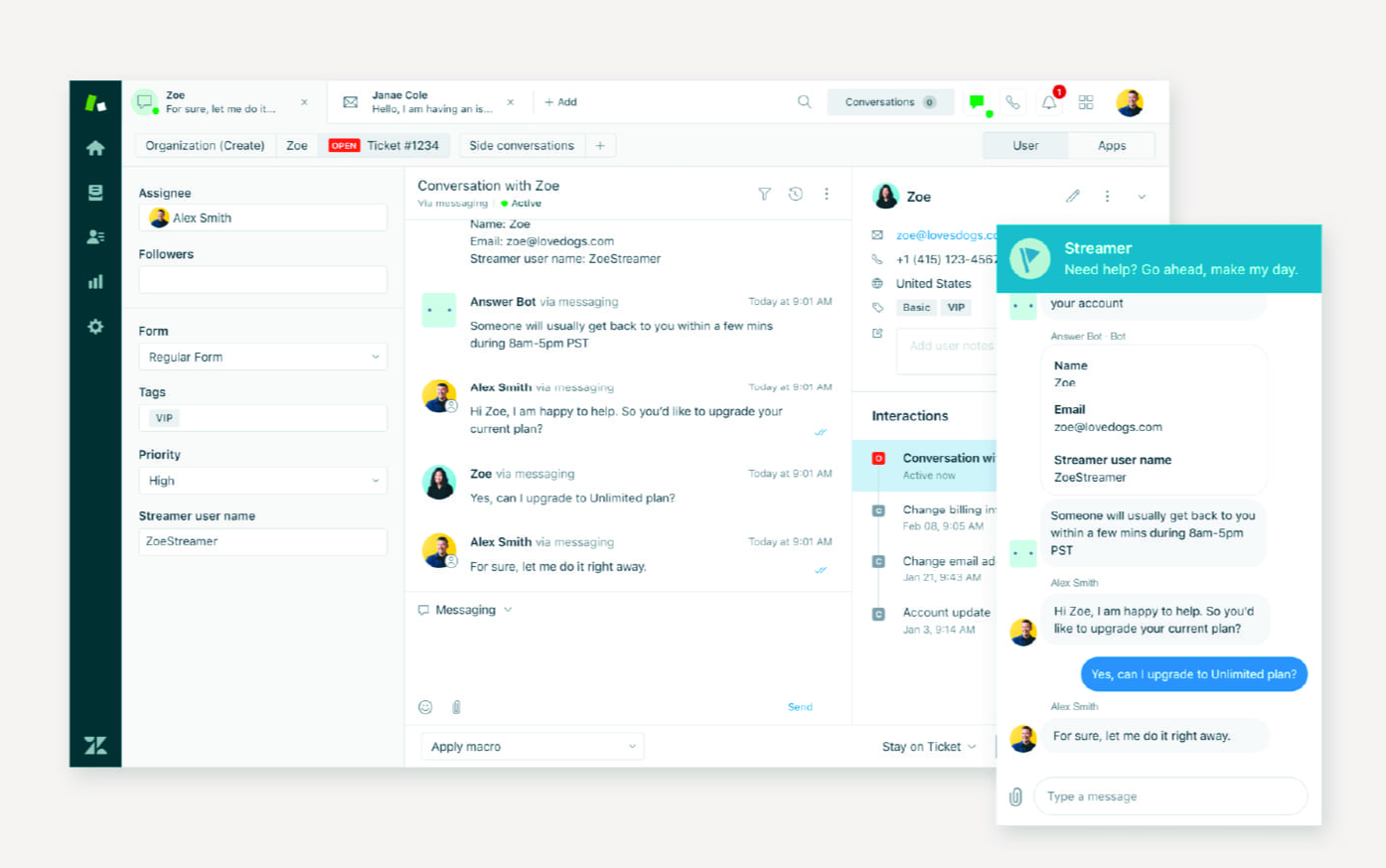
Zendesk is one of the most established names in help desk software, and it remains a strong choice for larger support teams that need advanced workflows.
Its platform is built for support operations with higher ticket volume, more support agents, and more complex service management requirements. If your desk team needs advanced ticket routing, automation rules, multiple channels, and reporting tools, Zendesk is a serious contender.
Key features
- omnichannel help desk and ticketing system
- advanced ticket routing and ticket assignment
- knowledge base and self-service tools
- AI tools and AI-powered suggestions
- reporting tools and custom reports
- SLA support and workflow automation
- customer data visibility and security controls
Zendesk is on this list because it performs well in the areas larger support operations care about most: advanced ticket routing, workflow automation, multichannel coverage, reporting depth, and admin control. It is a better fit for teams with higher ticket volume and more complexity than for teams that just want a lightweight tool, but for organizations that need customizable workflows, SLAs, and mature reporting, it remains one of the strongest options.
Best for: Teams with advanced support operations and complex workflows.
Pricing: Zendesk’s pricing starts at $19 per agent/month billed annually for Support Team, with Suite Team at $55, Suite Professional at $115, and Suite Enterprise at $169 per agent/month billed annually.
See our full Zendesk review walks through Zendesk's features, pricing, and user feedback in depth.
3. Freshdesk
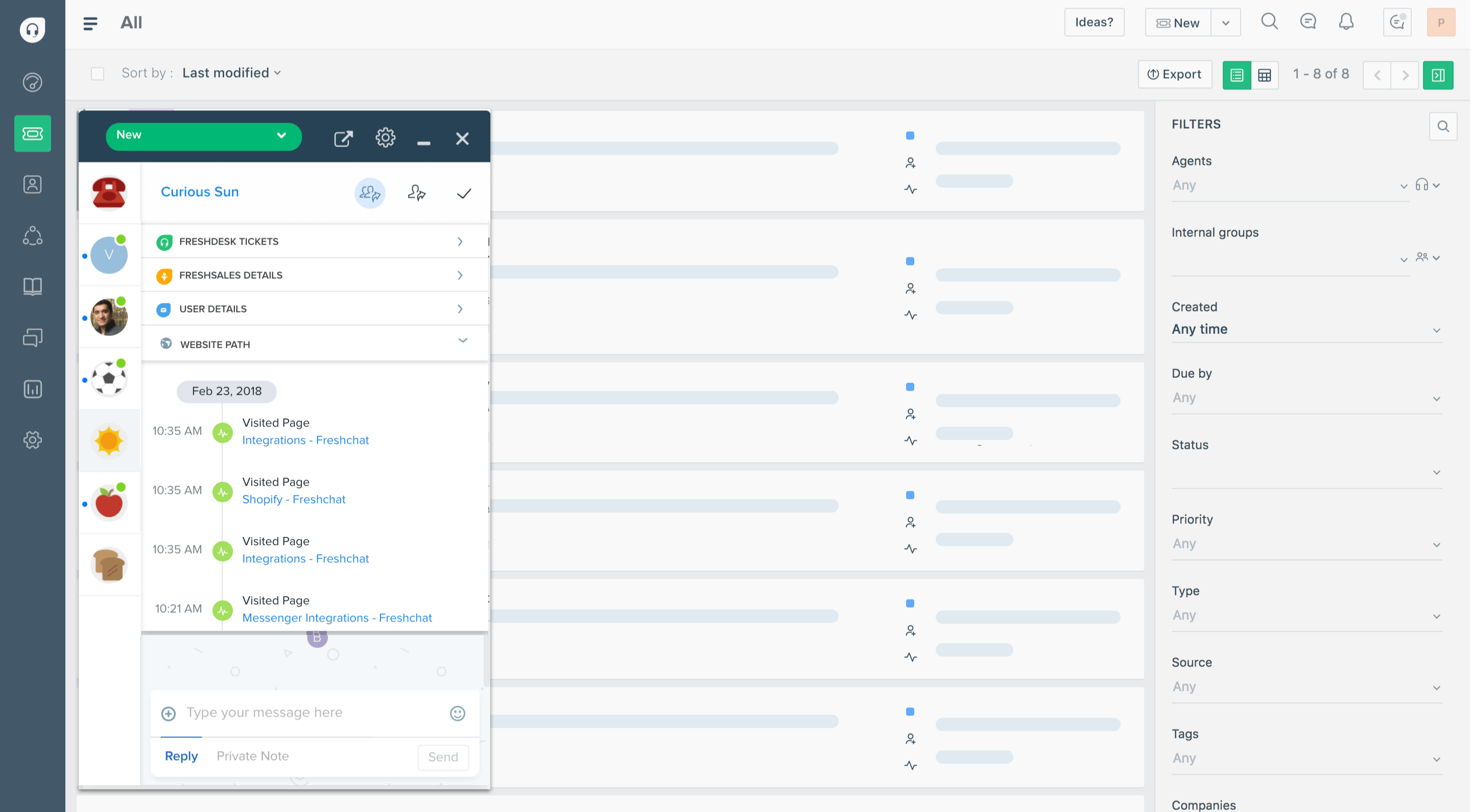
Freshdesk is a popular help desk solution for growing teams that want a modern ticketing system with solid AI features and multichannel support.
It offers a good balance of usability, automation, and flexibility. For teams that want to reduce manual effort, improve ticket tracking, and support customer queries across multiple channels, Freshdesk is a practical option.
Key features
- help desk ticketing software with AI features
- shared inbox and support tickets management
- ticket routing and automation rules
- knowledge base and self-service
- reporting tools and custom reports
- customer data and conversation context
- live chat and multichannel support
Freshdesk makes this list because it offers one of the better balances of usability, automation, AI features, and pricing for growing teams. It covers the core evaluation criteria well without feeling too heavy: ticket routing, multichannel support, knowledge base tools, reporting, and workflow flexibility are all strong enough for teams that have outgrown a basic shared inbox but are not ready for a more complex enterprise setup.
Best for: Growing teams that want flexible help desk software with automation.
Pricing: Freshdesk offers a free plan for 1–2 agents for 6 months, and its paid plans start at $19 per agent/month billed annually for Growth, $55 for Pro, and $89 per agent/month billed annually for Enterprise.
4. Intercom
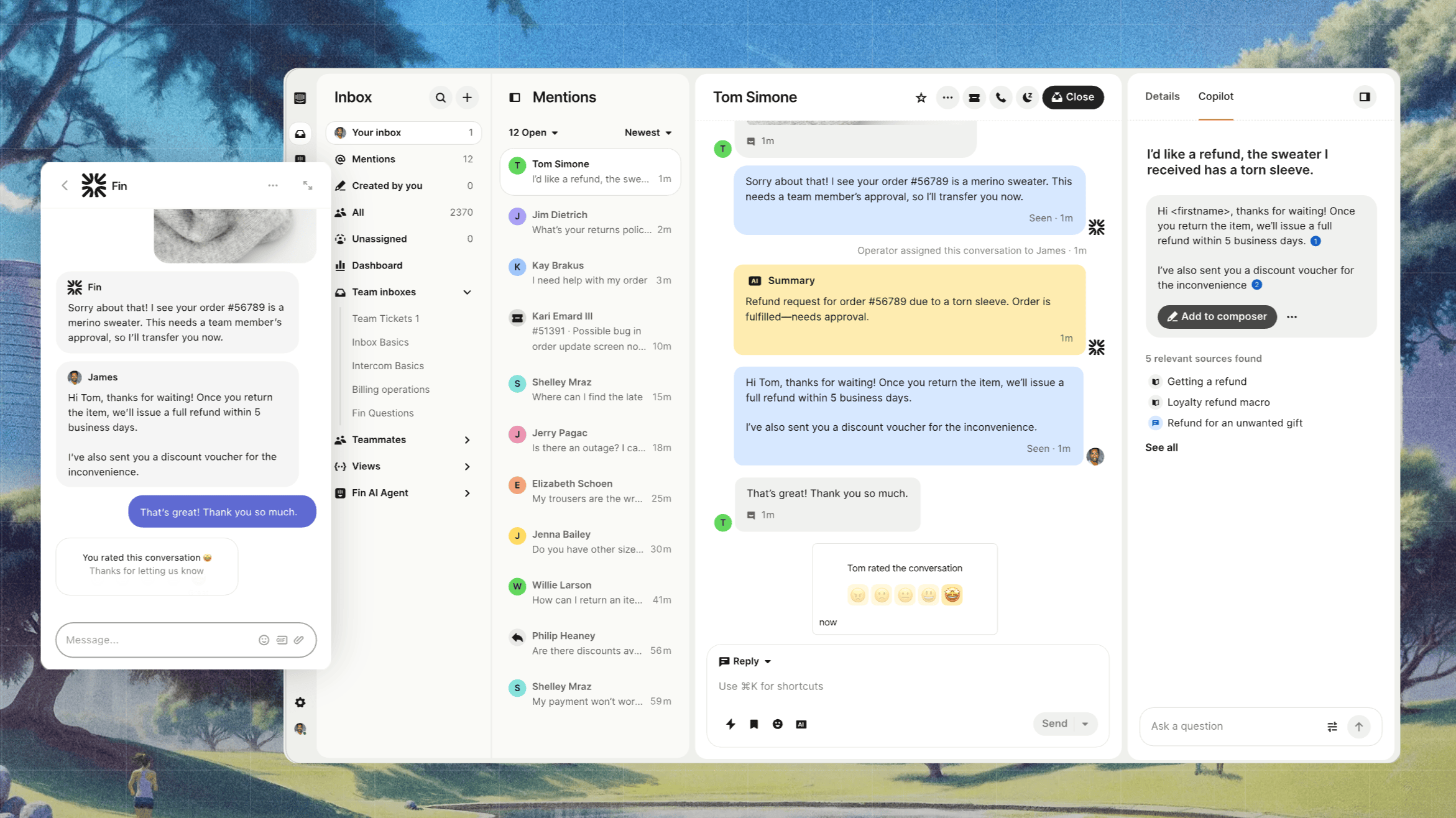
Intercom is one of the best-known platforms for chat-first customer support.
Instead of centering everything around a traditional desk ticketing system, it focuses more on conversations, live chat, AI agents, and customer messaging. That makes it especially strong for SaaS teams that want to resolve support requests quickly inside the product experience.
Key features
- live chat and messaging-first customer support
- AI agents and AI capabilities
- shared inbox and team collaboration
- knowledge base tools
- automation rules and conversation workflows
- customer data and conversation history
- support for multiple channels
Intercom stands out because it approaches help desk ticketing software from a conversation-first angle, with strong live chat, AI agents, and customer messaging workflows. It is less about traditional service desk structure and more about speed, real-time support, and reducing friction across customer conversations, so it is best for teams that value chat, automation, and in-product support more than formal internal service management workflows.
Best for: Chat-first support teams.
Pricing: Intercom’s pricing starts at $19 per seat/month billed annually for Essential ($29 billed monthly), with Advanced at $85 and Expert at $132 per seat/month billed annually, while Fin AI Agent costs $0.99 per outcome.
5. Help Scout
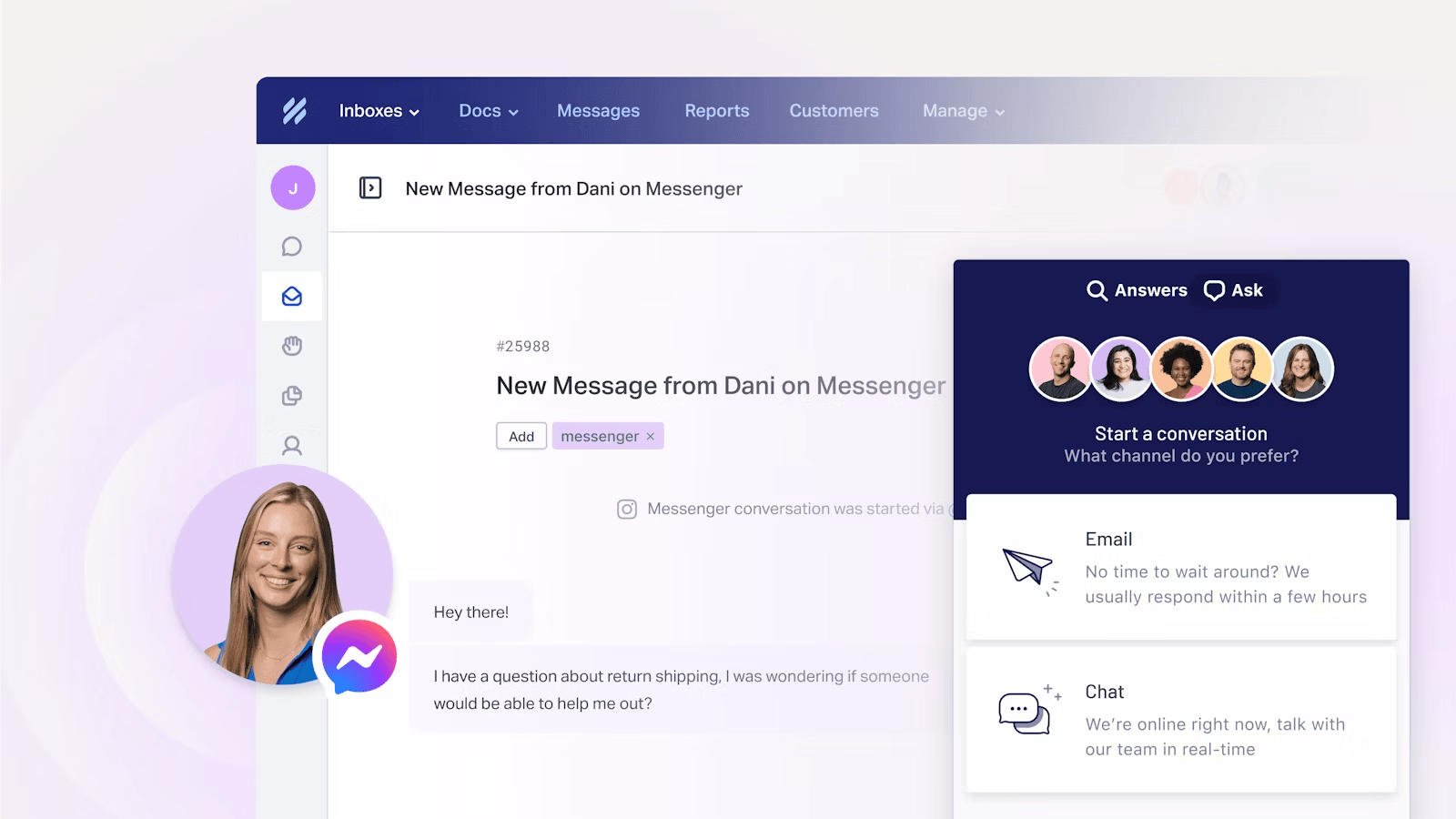
Help Scout is a simpler help desk platform that works well for support teams who want an intuitive interface without the overhead of a larger enterprise help desk system.
It is built around shared inbox workflows, which makes it a strong fit for teams that want to manage tickets collaboratively while keeping the customer experience personal.
Key features
- shared inbox for support tickets
- knowledge base and knowledge base articles
- live chat support
- internal notes and canned responses
- reporting tools
- AI tools for drafting and assistance
- easy collaboration for support agents
Help Scout earns its place because it scores especially well on usability, collaboration, and ease of adoption. Compared with more complex platforms, it gives smaller support teams a cleaner way to manage tickets, maintain a knowledge base, use canned responses and internal notes, and get started quickly without extensive training or heavy implementation work.
Best for: Email-first support teams that want simplicity and collaboration.
Pricing: Help Scout offers a free plan for up to 5 users, with paid plans starting at $25 per user/month for Standard, $45 for Plus, and $75 per user/month for Pro, while AI Answers costs $0.75 per resolution.
6. ProProfs Help Desk
ProProfs Help Desk is an AI-assisted help desk and ticketing platform for managing customer requests through shared inboxes, automated workflows, and multichannel support. It combines AI-powered ticket resolution and response assistance with ticket routing, SLA management, customer portals, reporting, and collaboration tools to help customer support and service teams organize and manage support requests.
Key features
- AI ticket resolution: AI can read, decide on, respond to, and close repetitive support tickets based on trained support content.
- AI agent training: Teams can train the AI on their help center, previous tickets, and FAQs, then test it before deployment and maintain human control.
- AI ticket summarization: Summarizes lengthy ticket conversations and surfaces intent, mood, and urgency for support agents.
- AI response suggestions: Generates context-aware response drafts that agents can review and edit before sending.
- AI ticket prioritization: Identifies urgent tickets using signals such as sentiment and customer history to help teams prioritize their queues.
- Omnichannel ticketing: Converts customer requests from email, live chat, social messaging, and web forms into trackable tickets.
- Shared inbox: Centralizes incoming customer conversations so teams can assign, manage, and collaborate on tickets from one place.
- Automation and routing: Uses rule-based or round-robin assignment to route tickets and automate alerts, tags, and follow-ups.
- SLA management: Tracks response and resolution commitments and provides reminders and escalation support for SLA-related workflows.
- Customer portal: Lets customers submit support requests and check ticket status and conversation history.
- Reports and CSAT: Tracks response time, resolution time, overdue tickets, agent ratings, and customer satisfaction.
- Integrations: Connects with tools including ProProfs Knowledge Base, ProProfs Chat, Salesforce, Microsoft Dynamics CRM, Jira, Slack, ClickUp, Shopify, and BigCommerce.
Best for: Easiest AI help desk for shared inboxes, ticket workflow automation, and scaling support teams.
Pricing: ProProfs Help Desk offers a free plan for one agent with all premium features. Paid plans are available for teams, with current pricing and ticket allowances varying by plan.
7. Zoho Desk
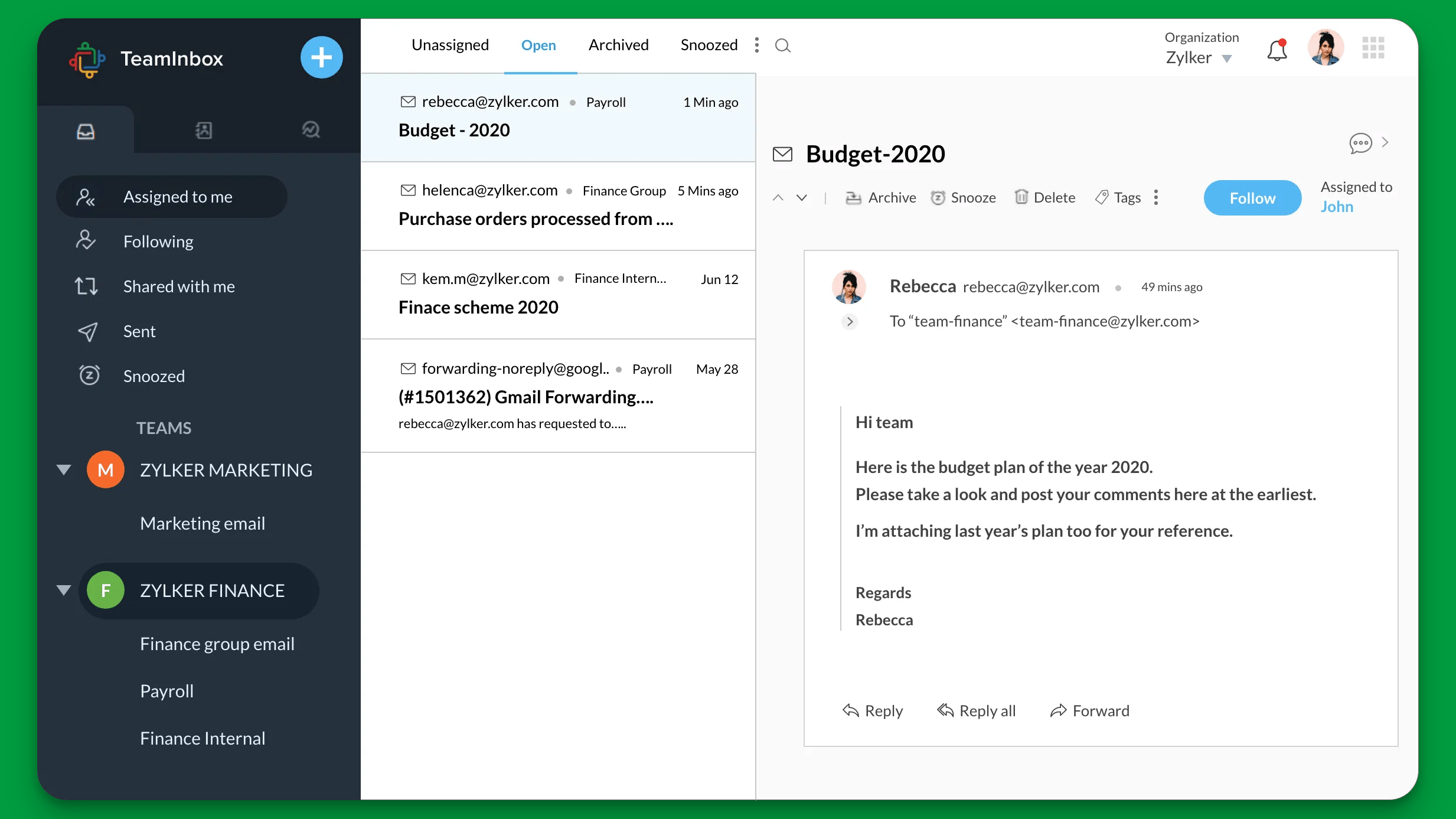
Zoho Desk is a practical and cost-effective help desk ticketing software option for teams that want a broad feature set without paying enterprise-level prices.
It covers the basics well and also includes enough automation, reporting, and self-service functionality to support growing support operations.
Key features
- help desk ticketing software for support teams
- ticket tracking and ticket status updates
- knowledge base and self-service portal
- automation rules and predefined rules
- custom reports and dashboards
- support for multiple channels
- built-in integrations with the wider Zoho ecosystem
Zoho Desk is on this list because it offers strong value across many of the same criteria more expensive tools compete on: ticket tracking, automation rules, custom reports, multichannel support, and self-service. It is not the most premium or specialized option here, but for small business teams and budget-conscious support operations, it gives you a broad feature set at a lower price point than many competing help desk platforms.
Best for: Budget-conscious teams and small business support teams.
Pricing: Zoho Desk offers a free plan for 3 users, with paid plans starting at $7/user/month billed annually for Express, $14 for Standard, $23 for Professional, and $40/user/month billed annually for Enterprise.
8. Jira Service Management
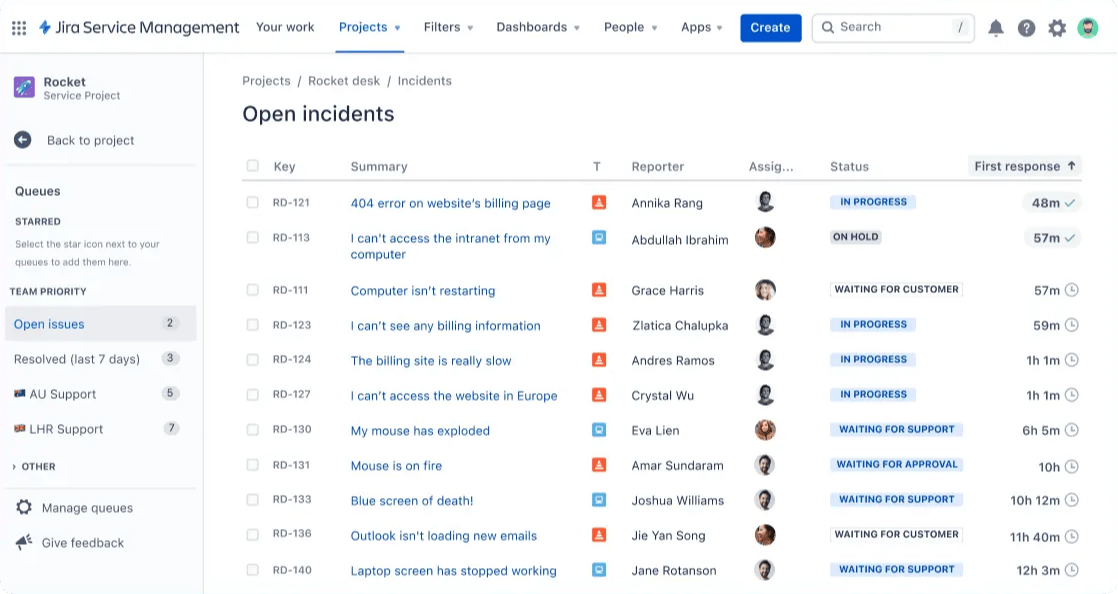
Jira Service Management is one of the best platforms for internal service desk workflows and IT teams.
While many tools on this list focus primarily on external customer support, Jira Service Management is especially useful for handling employee support requests, internal service requests, access management, and technical workflows.
Key features
- service desk workflows for internal teams
- request tracker tools for service requests
- ticket assignment and request management
- automation rules for repetitive tasks
- knowledge base integration
- reporting tools for internal support operations
- strong fit with engineering and IT workflows
Jira Service Management stands out because it is built for structured service desk workflows, not just general customer support. It performs especially well for internal service requests, request management, workflow control, and technical team collaboration, making it one of the best fits here for IT teams, ops teams, and organizations that need deeper service management capabilities rather than a lighter customer support tool.
Best for: IT teams and internal service desk environments.
Pricing: Jira Service Management offers a free plan for up to 3 agents, with paid plans starting at $20 per agent/month for Standard and $51.42 per agent/month for Premium, while Enterprise pricing is custom.
9. HappyFox
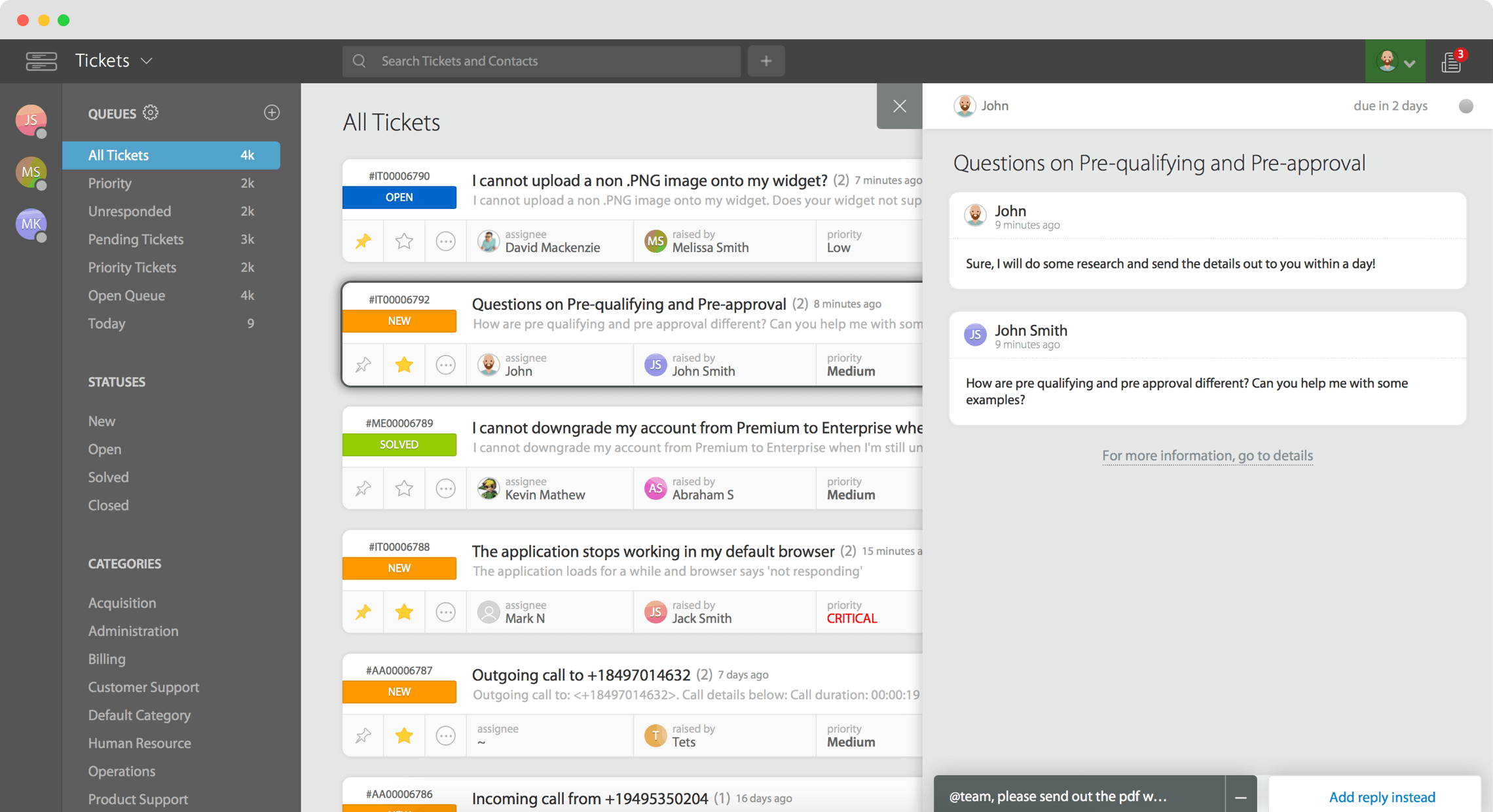
HappyFox is a strong option for teams that want more structured desk software with tighter control over the ticketing process.
It works well for support operations where consistency, ticket status visibility, and clear predefined rules matter across the whole desk team.
Key features
- helpdesk ticketing system for structured workflows
- ticket routing and ticket assignment
- custom fields and process control
- knowledge base and self-service
- reporting tools and service analytics
- support for service requests and customer requests
- predefined rules for better consistency
HappyFox makes this list because it is a stronger fit for teams that care about process discipline, ticket assignment logic, and operational consistency. Its value is less about flashy AI positioning and more about structured workflows, predefined rules, reporting, and control over how tickets move through the system, which makes it appealing for teams with more formal support operations.
Best for: Teams that want more process control in their desk ticketing system.
Pricing: HappyFox’s paid plans start at $21 per agent/month for Basic, $39 for Team, and $89 per agent/month for Pro, while Enterprise Pro pricing is custom.
10. Desk365
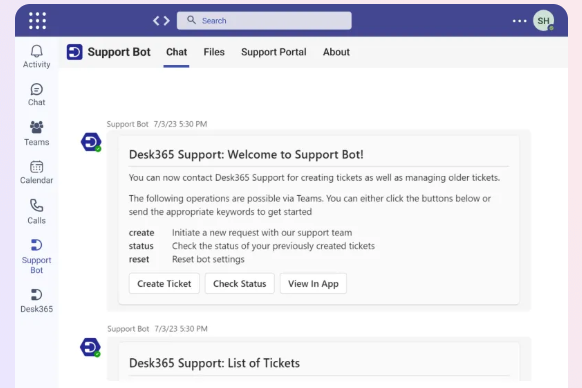
Desk365 is a practical choice for teams seeking a straightforward desk system that integrates well with Microsoft environments.
For organizations already using Microsoft Teams and other Microsoft tools, Desk365 offers a familiar setup that can help support teams manage tickets without a major migration.
Key features
- help desk ticketing software for Microsoft-centric teams
- Microsoft Teams integration
- knowledge base support
- automation rules and ticket assignment
- reporting tools
- support ticket tracking
- service desk workflows for internal requests
Desk365 is on this list because it combines a strong Microsoft ecosystem fit with useful ticketing, reporting, automation, and knowledge base features at a lower price than many larger platforms. It is especially practical for teams already working inside Microsoft Teams or Microsoft 365 that want better ticket tracking and workflow automation without introducing a tool that feels disconnected from the rest of their environment.
Best for: Microsoft-centric teams and lean service desk environments.
Pricing: Desk365 offers a free plan for up to 50 tickets per month, with paid plans starting at $12 per agent/month for Standard, $22 for Plus, and $32 per agent/month for Premium, while its AI Agent add-on costs $50 per 1,000 credits.
For Microsoft-first teams deciding between native tools and a dedicated desk, see our Microsoft help desk software guide.
11. HubSpot Service Hub
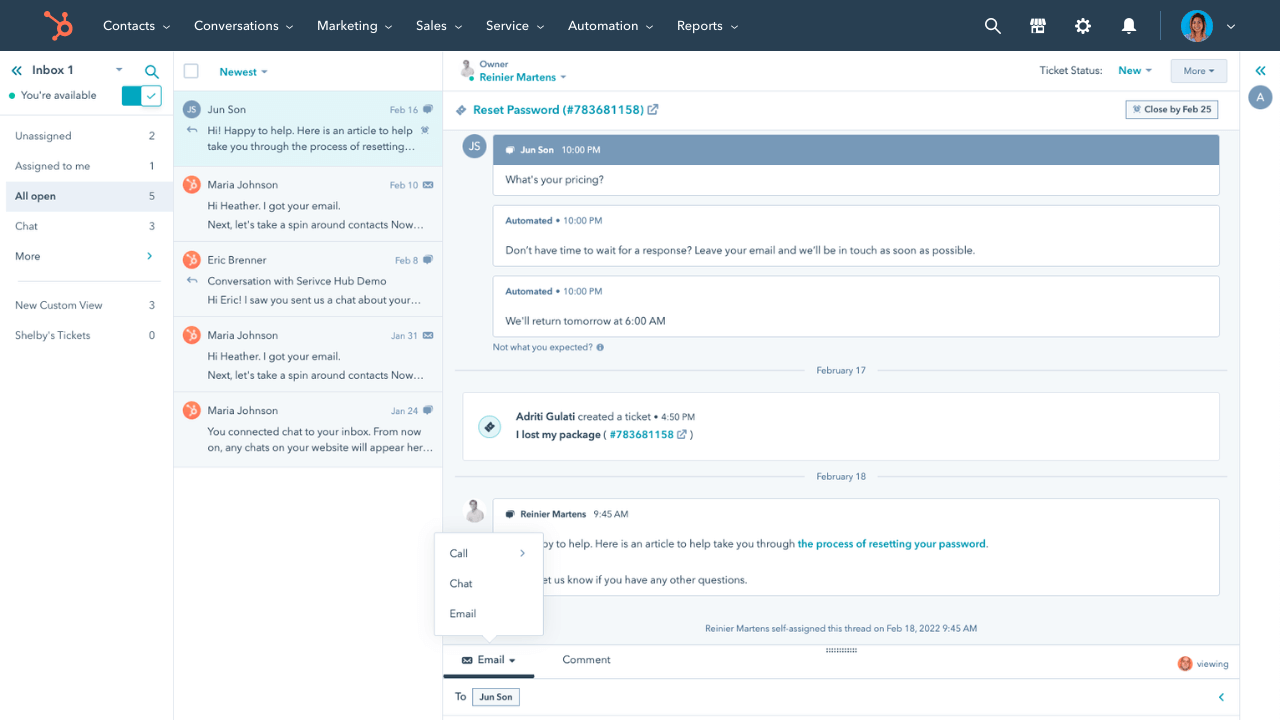
HubSpot Service Hub is a strong option for companies that want customer support tightly connected to their CRM.
It is a good fit for support teams that rely heavily on customer data, want visibility into customer requests, and need support operations that sit close to sales and marketing workflows.
Key features
- ticketing system connected to CRM data
- shared inbox and customer support workflows
- knowledge base and self-service
- reporting tools and custom reports
- live chat and multiple channels
- automation rules and canned responses
- customer data in one workspace
HubSpot Service Hub stands out because it ties help desk workflows closely to customer data, making it a strong fit for teams that want support, sales, and customer context connected in one system. It performs well for organizations that prioritize shared inboxes, ticket routing, reporting, live chat, and CRM visibility, though its biggest advantage is really how well it fits into a broader customer platform rather than operating as a standalone service desk ticketing system.
Best for: CRM-centric support teams.
Pricing: HubSpot Service Hub offers a free plan for up to 2 users, with paid plans starting at $9/seat/month for Starter, $90/seat/month for Professional, and $150/seat/month for Enterprise.
12. Salesforce Service Cloud
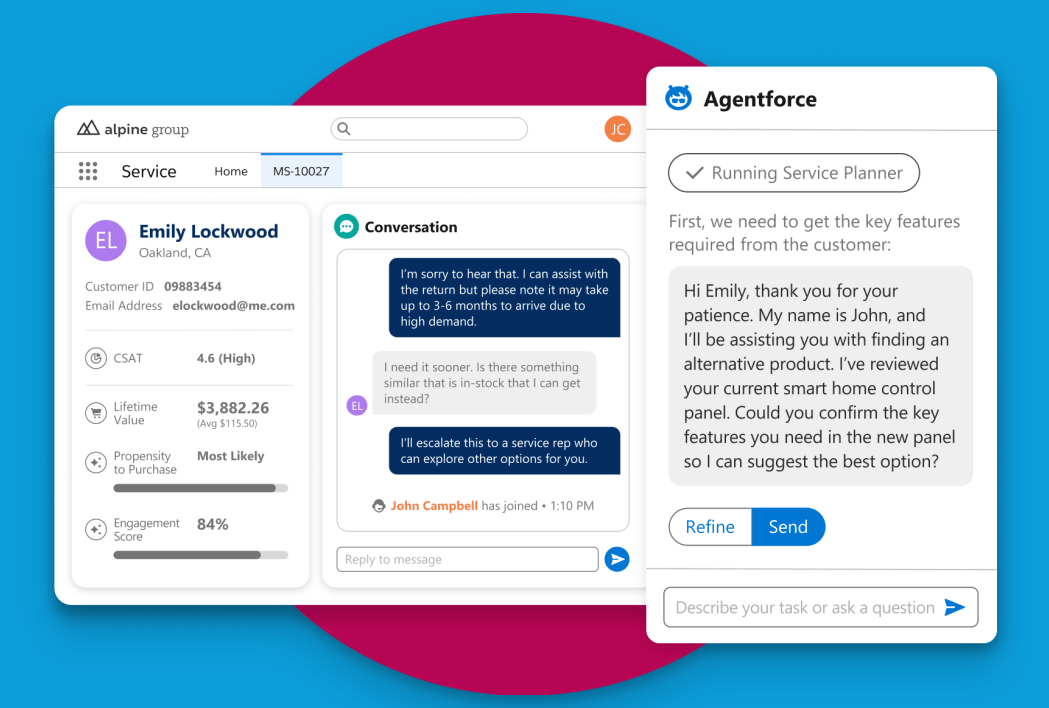
Salesforce Service Cloud is built for large enterprise support teams that need deep customization and serious scale.
It is one of the most fully customizable options on this list, which makes it appealing for organizations with high ticket volume, advanced workflows, and strong technical expertise on hand.
Key features
- enterprise help desk software and service management
- fully customizable workflows
- automation rules and AI features
- deep reporting tools and custom reports
- customer data and enterprise security
- support for multiple channels
- large-scale ticket routing and assignment
Salesforce Service Cloud makes this list because it is one of the strongest options for enterprise teams that need deep workflow customization, high-scale routing, advanced reporting, and strong security controls. It is not the easiest platform to deploy or manage, but for organizations with complex support operations, high ticket volume, and the technical resources to support implementation, it offers a level of flexibility and scale that lighter tools usually cannot match.
Best for: Enterprise support operations that need deep customization.
Pricing: Service Cloud: Salesforce Service Cloud offers a free plan for up to 2 users, with paid plans starting at $25/user/month for Starter Suite, $100 for Pro Suite, $175 for Enterprise, $350 for Unlimited, and $550/user/month for Agentforce 1 Service.
13. Spiceworks
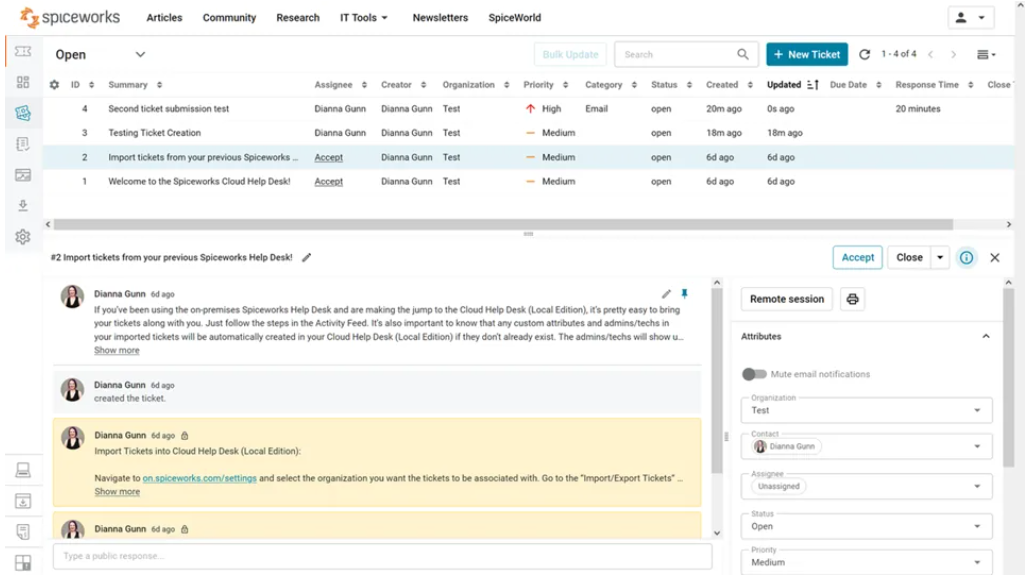
Spiceworks remains a useful option for small internal help desk teams that need a free plan and basic ticket tracking.
It is especially relevant for lean IT teams that want a simple help desk solution for service requests without a major budget commitment.
Key features
- free help desk ticketing software
- ticket tracking and request tracker basics
- service desk workflows for internal support
- knowledge base support
- reporting tools for lightweight teams
- web forms to receive tickets
- ticket status and update tracking
Spiceworks is on this list because it lowers the barrier to entry for internal help desk teams that need basic ticket tracking, request management, and reporting without a large budget. It is clearly more limited than the more advanced platforms here, especially around AI, customization, and enterprise workflows, but for lean IT teams that want a free or low-cost way to organize service requests, it still offers solid practical value.
Best for: Lean internal help desks and budget-sensitive IT teams.
Pricing: Spiceworks offers a free Core plan for 1–5 admin or technician seats, while its Premium plan starts at $5 per active employee/month billed annually or $6 per active employee/month billed monthly.
How to choose the right help desk ticketing software
The best choice depends on your workflow, your team size, and the kind of support requests you need to handle.
- Choose Featurebase if you want an AI-powered inbox, live chat, knowledge base, and feedback tools in one platform.
- Choose Zendesk if your support operations need deeper automation, advanced ticket routing, and enterprise reporting tools.
- Choose Freshdesk if you want a flexible help desk software option for growing teams.
- Choose Intercom if your customer support motion is built around live chat and conversational AI agents.
- Choose Help Scout if you want an intuitive interface and a lighter-weight desk system.
- Choose Zoho Desk if you want a cost-effective help desk solution with a strong free plan.
- Choose Jira Service Management if your IT teams need a true service desk for internal service requests.
- Choose HappyFox if process control and structured ticket assignment matter most.
- Choose Desk365 if your team already works inside Microsoft Teams and other Microsoft tools.
- Choose HubSpot Service Hub if you want support operations tightly connected to CRM and customer data.
- Choose Salesforce Service Cloud if you need a fully customizable enterprise service management setup.
- Choose Spiceworks if you want a free request tracker for basic internal support.
The right help desk ticketing software should align with how your support agents already work, reduce manual effort, improve response times, and help your team scale support without compromising customer satisfaction.
If you specifically want a cloud-hosted setup, see the best cloud-based help desk ticketing systems.
Conclusion
The best help desk ticketing software does more than just collect tickets. It helps your team route requests faster, reduce manual work, improve response times, and give customers better self-service options.
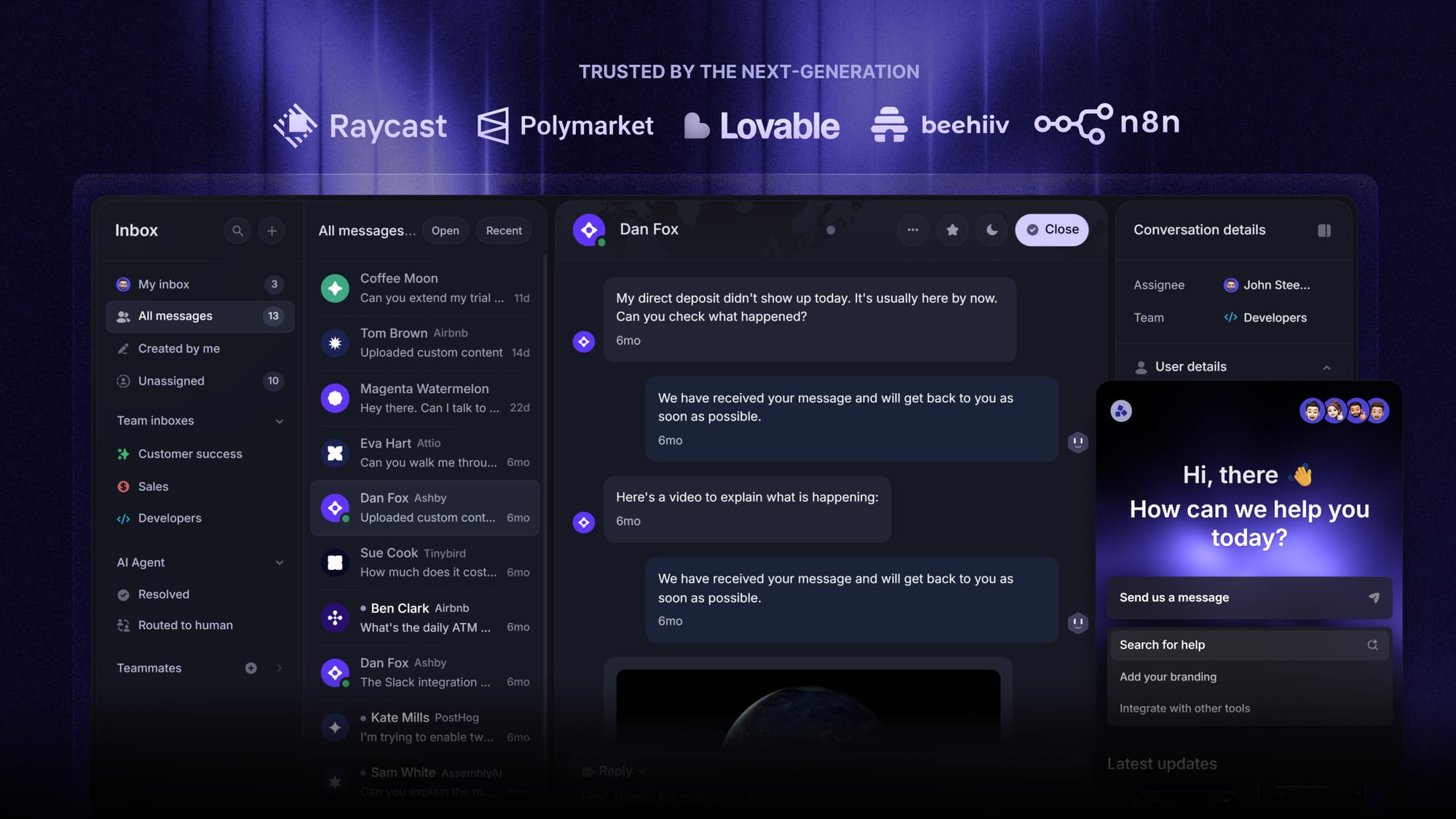
Featurebase is a modern support platform that combines an AI-powered inbox, live chat, a built-in knowledge base, automations, and customer feedback tools in one place. That makes it a strong fit for SaaS teams that want to scale support without adding more complexity or stitching together separate desk software and help center tools.
It has affordable pricing, a Free plan, and quick onboarding with no credit card required, so it’s easy to try and see if it fits your workflow. 👇
✨ Start using Featurebase for support, live chat, and self-service for free →
FAQs
What is a helpdesk ticketing system?
A helpdesk ticketing system is software that turns every support request into a trackable ticket. It helps support teams manage tickets, assign ownership, track ticket status, and move each issue through the full ticketing process until resolution.
What is the difference between a help desk and a service desk?
A help desk usually focuses more on customer support and issue resolution, while a service desk often covers broader service management workflows such as internal service requests, access requests, and IT operations.
What features should the best help desk ticketing software include?
The most important help desk features include ticket routing, ticket assignment, knowledge base support, automation rules, reporting tools, multiple channels, live chat, custom fields, data security, and AI capabilities.
Is there a free help desk ticketing software option?
Yes. Several platforms offer a free plan, especially for small business teams or lean internal service desk use cases. The best option depends on whether you need basic ticket tracking or more advanced desk software features.
What is the best help desk ticketing software for SaaS teams?
For modern SaaS teams, the best option is usually a platform that combines support tickets, live chat, knowledge base, AI features, and product context in one place. That is why Featurebase stands out for product-led companies.
Which help desk software is best for IT teams?
Jira Service Management is one of the strongest options for IT teams because it is built for internal service requests, structured workflows, and broader service management use cases.