Blog Customer ServiceSaaS Lead Generation: 11 Strategies for Better Leads
SaaS Lead Generation: 11 Strategies for Better Leads
Learn how SaaS lead generation works and use 11 practical strategies to attract, qualify, and convert better-fit prospects into the pipeline.


Most SaaS teams do not have a lead shortage. They have a focus problem: too many channels, weak qualification, and no clear link between activity and pipeline.
This guide shows how to build a lean SaaS lead generation system, choose 11 strategies that match your buyer journey, and measure which ones create qualified opportunities. 👇
Key takeaways
- SaaS lead generation should optimize for qualified pipeline, not the largest possible contact database.
- Define your ideal customer profile and qualification threshold before investing in more channels.
- Match each strategy to a specific buying stage, intent level, and next action.
- Measure conversion between stages so you can find the constraint in your funnel.
- Featurebase✨ can help turn website conversations into qualified, routed leads while keeping customer communication in 1 support workspace.
What is SaaS lead generation?
SaaS lead generation is the process of attracting potential customers, capturing enough information to identify them, and guiding suitable prospects toward a product trial or sales conversation.
It covers more than collecting email addresses. A functioning lead generation system connects 4 activities:
- Demand creation: Helping the right audience recognize a problem or opportunity.
- Demand capture: Reaching buyers who are actively researching a solution.
- Qualification: Determining whether a lead has the need, fit, authority, and timing to become a customer.
- Conversion: Moving a qualified lead toward a trial, demonstration, or purchase.
For a self-serve SaaS product, the lead may create an account before speaking with anyone. In an inbound sales motion, the lead may request a demonstration first. Both models need clear definitions for a visitor, lead, product-qualified lead, marketing-qualified lead, sales-qualified lead, and opportunity.
The exact labels matter less than the handoff rules. Everyone should know what evidence moves a person to the next stage and what happens after that movement.
Why SaaS lead generation works differently
SaaS companies sell an ongoing relationship rather than a one-time transaction. Buyers consider implementation effort, integrations, security, support, adoption, and the likelihood that the product will keep improving. That creates a longer and less linear decision process, particularly in B2B SaaS.
Much of that decision happens before a prospect becomes visible. In its survey of 2,509 recent B2B buyers, 6sense found that 81% had chosen a preferred vendor before speaking with sales. Your website, content, product experience, reviews, and customer conversations may shape the shortlist long before a sales representative enters the picture.
Recurring revenue also changes the definition of a valuable lead. A poor-fit customer can convert and still create negative value through onboarding costs, support demand, early churn, or reputational damage. A strong SaaS lead generation strategy therefore looks beyond the first conversion. It prioritizes prospects who can activate, receive value, remain customers, and potentially expand.
Build the foundation before adding channels
Define your ICP and qualification threshold
Write down the attributes of customers who receive the most value from your product. Include company size, industry, team structure, use case, current process, technical requirements, and the event that creates urgency.
Then separate fit from intent. Fit describes whether the account resembles a successful customer. Intent describes whether the buyer is taking actions that suggest an active problem or evaluation. A high-fit account with no current need should enter a nurture path. A high-intent visitor with a poor fit may need a helpful answer rather than a sales call.
Create a short qualification threshold that your team can apply consistently. For example, a lead might qualify when it matches a target segment, names a supported use case, and plans to solve the problem within 6 months. Vague labels such as “good company” make lead scoring unreliable.
Map each channel to a buying stage
Do not expect every channel to produce demo-ready prospects. Educational content can create awareness. Comparison pages and paid search can capture active demand. A free trial can reveal product intent. Outbound can open a conversation with a carefully selected account.
Buyers also move between touchpoints. McKinsey reports that B2B customers use an average of 10 interaction channels during their buying journey. Your job is not to be everywhere. It is to give buyers a consistent next step across the few channels that matter most to your market.
For each channel, document the audience, buying stage, offer, call to action, owner, and expected handoff. This prevents a common mismatch, such as asking an early-stage reader to book a sales call before they understand the problem.
Choose your metrics before launch
Start with 1 business outcome and work backward. If the goal is new recurring revenue, track qualified opportunities and customers by source. Then add the leading indicators needed to diagnose performance.
Useful metrics include visitor-to-lead conversion, lead-to-qualified conversion, trial activation, qualified-to-opportunity conversion, sales cycle length, customer acquisition cost, and payback period. Avoid treating clicks, impressions, or raw leads as the final result. They describe activity, not commercial value.
11 SaaS lead generation strategies
Start with 2 or 3 strategies that match your audience, price, and sales motion. Expand only when the system is measurable.
1. Create high-intent content
High-intent content answers questions buyers ask while defining requirements or comparing solutions. Examples include alternative pages, pricing explainers, implementation guides, security resources, migration checklists, and use-case pages for specific roles.
These assets work because they help a prospect make a decision, not merely learn a definition. They should acknowledge tradeoffs, explain who the product is for, and give the reader a logical next step. Add proof through original data, product examples, customer stories, or expert experience.
Thought leadership can also stimulate demand before a formal buying process begins. The 2024 Edelman-LinkedIn report found that 75% of decision-makers and C-suite executives had researched a product or service after encountering thought leadership about it. Publish a useful point of view that changes how the buyer understands the problem.
2. Build an SEO acquisition engine
Content marketing and SEO can create compounding demand when pages target real questions across the buying journey. Build topic clusters around the problems your product solves, then connect educational pages to commercial pages with relevant internal links.
Prioritize keywords using more than search volume. Check intent, ranking difficulty, business relevance, and whether your product can offer a credible next step. A low-volume query closely tied to a costly problem can generate more pipeline than a broad term with thousands of searches.
Refresh pages as search intent, product capabilities, and competing results change. Track qualified conversions by landing page so you know which rankings contribute to revenue. Organic traffic without downstream action is useful diagnostic data, but it is not the goal.
3. Launch a genuinely useful free tool
A free SaaS tool such as a calculator, template, grader, generator, or interactive checklist can attract links and introduce prospects to your way of solving a problem. The strongest tools produce an immediate result that would otherwise take time, expertise, or manual work.
Choose a task adjacent to your paid product. A forecasting platform might offer a revenue calculator. A support platform might offer a ticket-cost calculator. The output should naturally reveal a larger problem that the product can help solve.
Keep access friction proportional to value. Let visitors experience the core result before requesting extensive information. If you collect an email, explain what they will receive next. Measure repeat use, product sign-ups, and qualified pipeline rather than downloads alone.
4. Use a free trial as a qualification channel
In a product-led growth motion, a free trial does more than remove purchasing friction. It reveals whether a prospect can reach an activation milestone and whether the product fits their workflow.
Define the smallest meaningful outcome a user should reach during the trial. Then design onboarding around that outcome with sample data, checklists, contextual guidance, and timely support. Avoid showcasing every feature at once. A focused path makes intent easier to interpret.
Use product signals to distinguish curiosity from buying behavior. Inviting teammates, connecting an integration, importing data, or completing a core workflow may justify personal outreach. A login by itself usually does not. Share these signals with sales so follow-up reflects what the user has already tried.
5. Show up in relevant communities
Communities create trust when participation is useful before it is promotional. Identify the forums, Slack groups, professional networks, newsletters, and events where your ideal customers already exchange advice.
Listen for recurring questions and answer them in full. Share practical examples, clarify tradeoffs, and disclose your affiliation when mentioning your product. Repeated helpful contributions create recognition and reveal the language customers use to describe their problems.
Do not measure community work through links dropped or messages sent. Track meaningful conversations, referral traffic, assisted conversions, and recurring problem themes.
6. Partner with adjacent SaaS companies
Partners can introduce your product to an audience that already trusts them. Look for products, agencies, consultants, and communities that serve the same ideal customer without replacing your core offering.
Start with a concrete shared outcome. Co-host a workshop, create an integration guide, bundle complementary templates, or publish a joint customer story. Both sides should contribute distribution and expertise. A logo exchange without a useful experience rarely generates sustained demand.
Create attribution rules before launch. Use dedicated landing pages or campaign fields, then track sourced and assisted pipeline.
7. Turn customers into advocates
Happy customers can reduce the trust gap that slows SaaS purchases. Build a referral program around moments when value is already visible, such as after activation, a successful launch, a positive support interaction, or a measurable result.
Make the request specific and easy. Ask for an introduction to a peer, a short review, participation in a case study, or permission to share a result. Match the request to the strength of the relationship. A customer who has used 1 feature for 1 week is not ready for the same advocacy ask as a long-term champion.
Incentives can help, but relevance and recognition often matter more in B2B. Track referred opportunities, conversion rate, retention, and expansion. Referral volume alone can hide poor fit.
8. Capture in-market demand with paid search
Paid search is valuable when buyers already know the problem or solution category. Focus campaigns on terms with clear commercial intent, then align each ad with a landing page that answers the exact query.
Separate branded, category, competitor, and use-case campaigns so their economics remain visible. Add negative keywords early. A large share of wasted spend comes from informational searches that look relevant at the keyword level but carry no buying intent.
Send conversion quality back to the ad platform when possible. Optimizing for every form submission teaches the system to find cheap forms, not suitable customers. Use qualified leads, opportunities, or meaningful trial events as deeper conversion signals.
9. Run focused outbound campaigns
Outbound works best as a targeted account strategy, not a volume contest. Build a narrow list around your ICP and a trigger that makes the outreach timely. Triggers might include hiring, a new product launch, expansion into a region, a technology change, or visible frustration with an existing process.
Write messages around the prospect's situation and a plausible business impact. Avoid pretending that generic personalization is research. A relevant observation, a clear reason for contacting them, and a low-friction next step are enough.
Measure positive reply rate, qualified meetings, opportunities, and revenue by segment. Use objections to refine targeting and positioning. If replies are low across every segment, improve the offer before increasing sending volume.
10. Convert website demand into qualified conversations
High-intent visitors often have questions that a static page cannot answer. A chatbot lead generation flow gives them a clear way to start a conversation while collecting only the information needed to respond and route the opportunity.
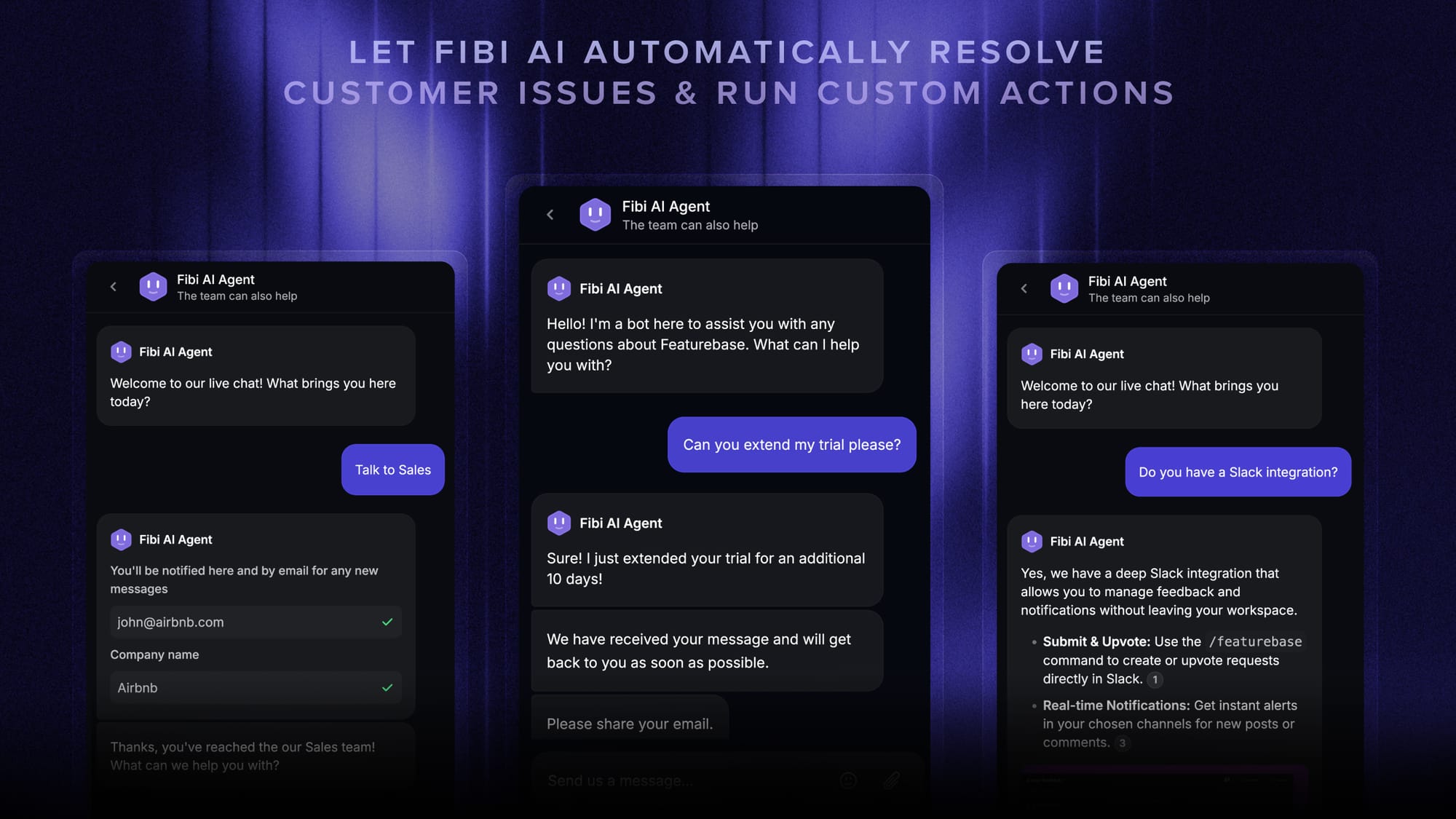
With Featurebase Messenger and Workflows, a new website conversation can become a lead, trigger short qualification questions, save details such as email or company size, and route the conversation based on the answers. This helps sales teams focus on meaningful conversations while visitors get a relevant path forward.
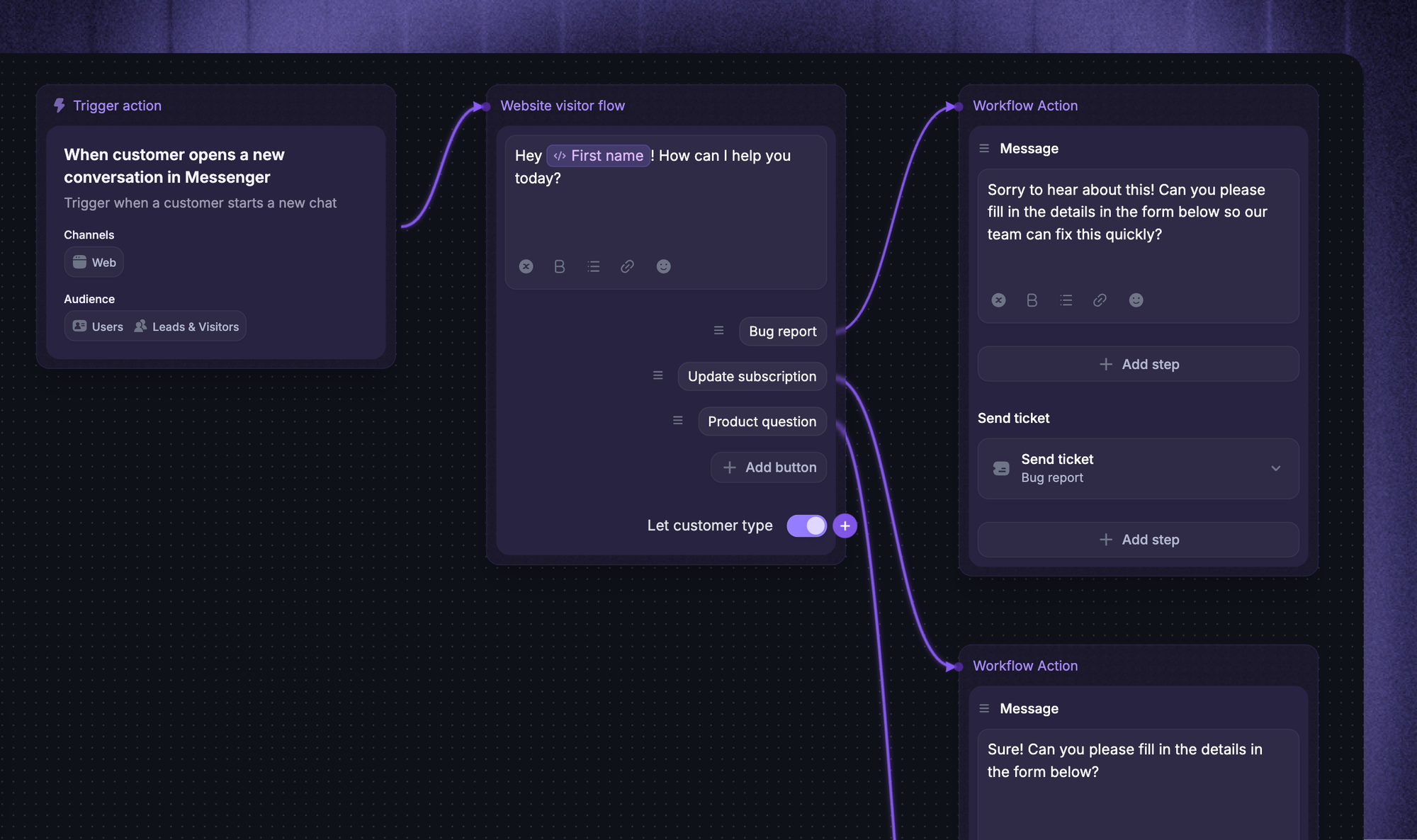
Keep qualification proportionate to the visitor's intent. Ask for essential contact and fit data first. Leave nuanced discovery questions to a person. Review conversation themes regularly because repeated pre-sales questions often reveal missing content, confusing positioning, or product friction.
11. Re-engage product users and past customers
Existing product data can surface demand that acquisition campaigns miss. Re-engage trial users who reached a meaningful milestone but did not convert, inactive accounts whose original blocker has changed, and former customers who may benefit from a new capability.
Segment by behavior and reason, not simply by last activity date. A user who completed setup and stopped needs a different message from someone who never activated. Reference the relevant action, explain what has changed, and offer 1 useful next step.
Treat re-engagement as part of the customer lifecycle rather than a generic email blast. Suppress poor-fit contacts and people who opted out. Track reactivation, qualified conversations, retained revenue, and the reasons people return.
Measure and improve your lead generation system
Review the funnel as a connected system. A channel that generates fewer leads may still be the best investment if those leads activate, convert, and retain at a higher rate.
Use a simple stage report:
| Stage | Core question | Example metric |
|---|---|---|
| Reach | Are the right people finding us? | Qualified traffic by source |
| Capture | Are they taking a meaningful next step? | Visitor-to-lead conversion |
| Qualification | Do they match our fit and intent criteria? | Lead-to-qualified conversion |
| Sales | Are qualified leads becoming opportunities? | Qualified-to-opportunity conversion |
| Revenue | Are opportunities becoming durable customers? | Win rate, payback, and retention |
Compare cohorts by source, segment, offer, and month. This makes lag visible. A channel may look efficient at lead capture but weak after qualification. Another may take longer to convert while producing larger, better-retained customers.
When results stall, find the narrowest constraint before changing everything. Low traffic calls for better distribution or demand capture. Strong traffic with weak conversion points to message, offer, or page friction. Many leads with few qualified opportunities suggests loose targeting or qualification. Opportunities that do not close require a closer look at product fit, proof, pricing, and sales execution.
Run 1 meaningful experiment at a time. Record the hypothesis, primary metric, audience, decision rule, and result so each campaign improves the next one.
Conclusion
Effective SaaS lead generation combines a clear ICP, stage-specific channels, useful offers, and measurement that reaches beyond raw lead volume. Start with a small strategy mix, fix the weakest conversion point, and scale only when lead quality is visible.
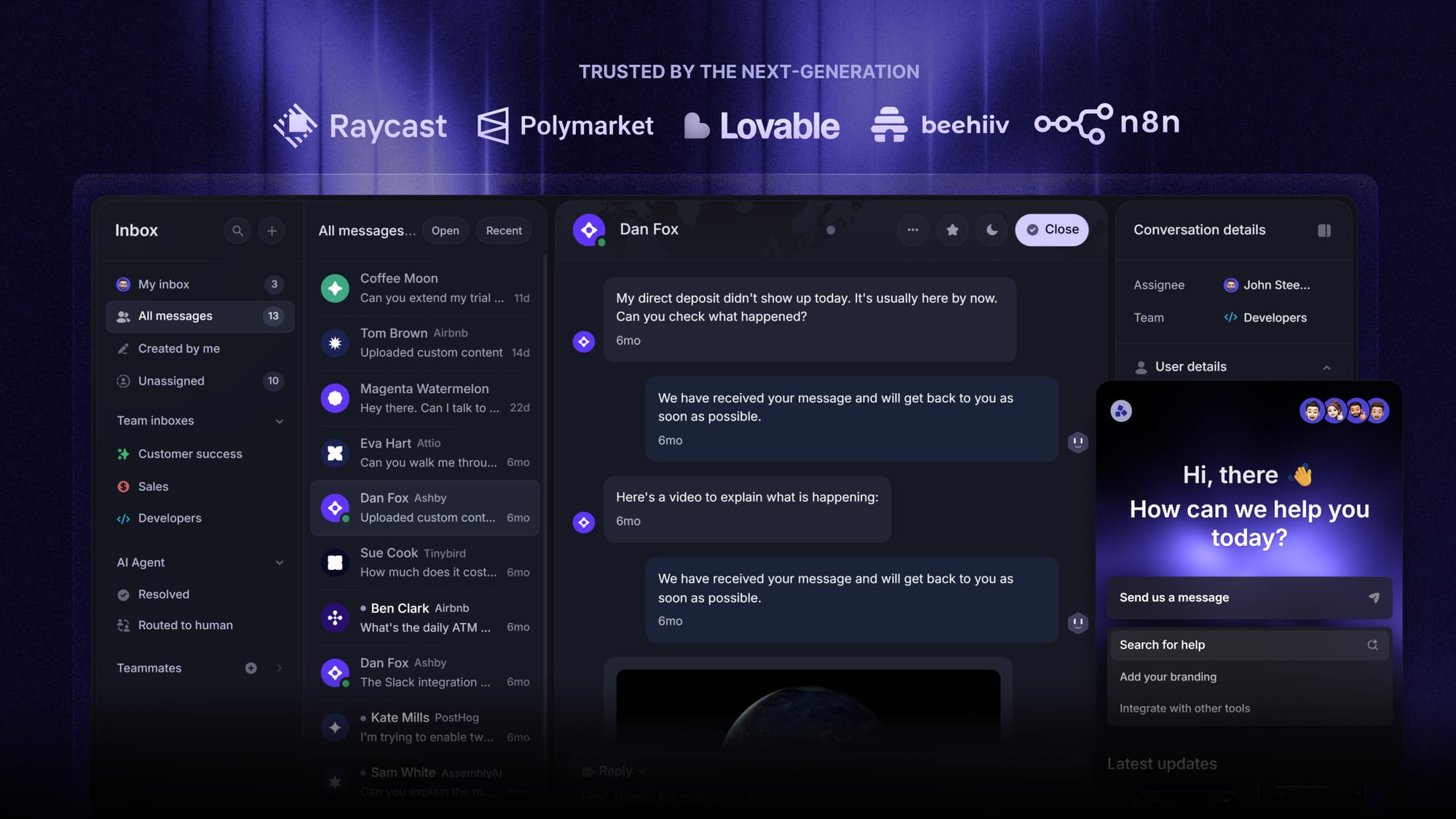
Featurebase brings support conversations, lead qualification, routing, and customer context into 1 workspace, helping SaaS teams respond faster without losing the information needed for a useful follow-up. It has a Free plan with unlimited conversations, so there is no downside to trying it. 👇
✨ Automate your support with the fastest AI-enhanced Inbox today →
FAQs
How do you use LinkedIn for B2B SaaS lead generation?
Choose a narrow audience and publish useful observations about problems they already discuss. Combine consistent expert content with thoughtful comments, direct outreach triggered by relevant events, and landing pages matched to the conversation. Measure qualified conversations and pipeline, not follower growth alone.
How important is pricing transparency when choosing a lead generation platform?
Pricing transparency helps teams compare total cost, usage limits, required seats, and likely expansion fees before committing. If public pricing is unavailable, request a complete scenario-based quote and clarify implementation, data, integration, and cancellation costs.
Are there lead generation tools that require little technical setup?
Yes. Many form builders, chat tools, email platforms, and lightweight CRM products can be launched with templates or simple website installation. Ease of setup should not replace fit, so test whether the tool supports your qualification criteria, integrations, attribution, and reporting before rolling it out broadly.
Can SaaS lead generation platforms integrate with an existing sales stack?
Most established platforms offer native integrations, APIs, or automation connectors for CRM, analytics, email, advertising, and data tools. Confirm which records and events sync in each direction, how duplicates are handled, and whether important fields remain available throughout the customer journey.
How do you calculate ROI for SaaS lead generation?
Subtract the full cost of a campaign from the gross profit attributable to customers it generated, then divide the result by campaign cost. Include media, software, content, labor, and agency costs. Use cohort-based revenue and an attribution model your team applies consistently.
How can a SaaS startup generate leads with no budget?
Start with founder-led content, customer interviews, relevant communities, partner distribution, and direct outreach to a tightly defined ICP. Turn repeated questions into useful pages and templates. Invest time in 1 or 2 channels where you can earn trust instead of spreading effort across every available platform.