11 Best Customer Engagement Tools for your Product in 2026
Acquiring customers is expensive. Losing them is worse. In this post, I break down the 8 best customer engagement tools in 2026 to help you improve retention, collect feedback, and turn users into loyal advocates.

On this page
Getting someone to purchase your product or service is just the beginning of an entire customer journey. If you don't know what you're doing, today's customer may be spending money with a competitor tomorrow. To keep your business growing, you need to engage customers instead of just converting them.
In this post, we look at some of the best tools to manage complex customer relationships, improve customer satisfaction and retention, and leave you with more money on the table while making your customers happy. Let's get into it! 👇
Short overview
- ✨ Featurebase – Best modern customer engagement tool combining AI-powered support, feedback collection, workflows, and product updates.
- Appcues – Best for onboarding and guiding users with personalized in-app experiences.
- Survicate – Best for engaging customers through multichannel surveys and sentiment tracking.
- Braze – Best for orchestrating large-scale, real-time engagement across mobile and web.
- Maestra - Best for ecommerce brands that need engagement across all their channels
- Twilio – Best for fully customizable, developer-first engagement via messaging, email, voice, and chat.
- Netcore - Best for AI-Led unified customer engagement, omnichannel and personalized marketing platform.
- Userpilot – Best for product-led engagement through onboarding flows, tooltips, and in-app surveys.
- Zendesk – Best for keeping users engaged through responsive, multi-channel customer support.
- Influitive – Best for driving long-term engagement by turning customers into brand advocates.
- InAppStory - Best for mobile app teams.
- Respond.io - Best for high-volume B2C customer conversations
What is customer engagement, and why is it important?
Customer engagement refers to the interactions and the emotional connections your customers develop with your brand across different touchpoints. From your website, to your app, social media accounts, email, customer support interactions, text messages, and more, everything is a chance to engage users further.
Customer engagement is more than a simple transaction. It's a way to build relationships through valuable, meaningful, and timely customer interactions across different communication channels.
Here are some reasons why you should invest time and money in customer engagement efforts:
- It improves customer retention because engaged customers stay with your brand longer.
- It drives repeat business. Once you improve customer engagement, those customers are more likely to shop with you again and give you their trust for the long term.
- It encourages brand advocacy. When you push your customer engagement capabilities to the limit, you'll find that engaged customers will love talking about you to their networks, helping you reduce marketing spend and customer acquisition cost in the long run.
- It increases customer lifetime value. Customers spend more over time and increase your revenue, while you don't have to spend so much time chasing new customers to improve your bottom line.
- It builds brand differentiation. High customer engagement can make your brand stand out in crowded markets where offers are very similar.
Top features to look out for in a customer engagement platform
Here are some of the best features you can find in most customer engagement solutions, and why they're so valuable.
1. Multi-channel communication
Your customers don't all use the same channels.
A good platform should support email, in-app messaging, push notifications, SMS, chat, and social media. This allows you to meet users where they already are and keep conversations consistent across channels.
Pick a tool that works where customer conversations are happening.
2. Audience segmentation
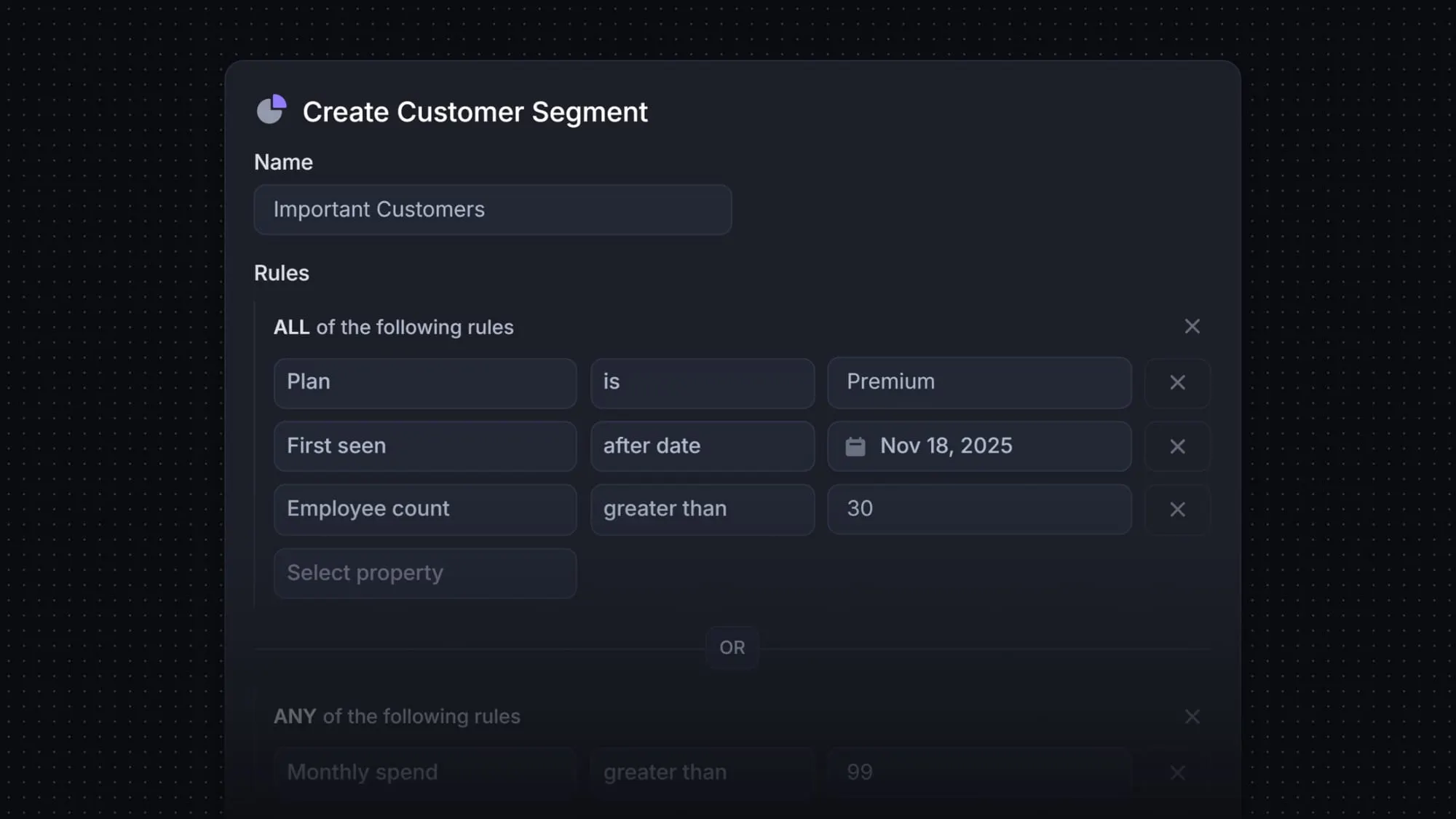
Targeting everyone with the same message is ineffective. Segmentation helps you group users by behavior, demographics, lifecycle stage, or custom attributes to send more relevant and timely messages.
The right customer engagement platform will probably be AI-powered, allowing you to quickly segment audiences based on input. For example, Featurebase offers customer sentiment analysis, letting you sort feedback and customer accounts based on the sentiment in their feedback.
3. Behavior-based triggers
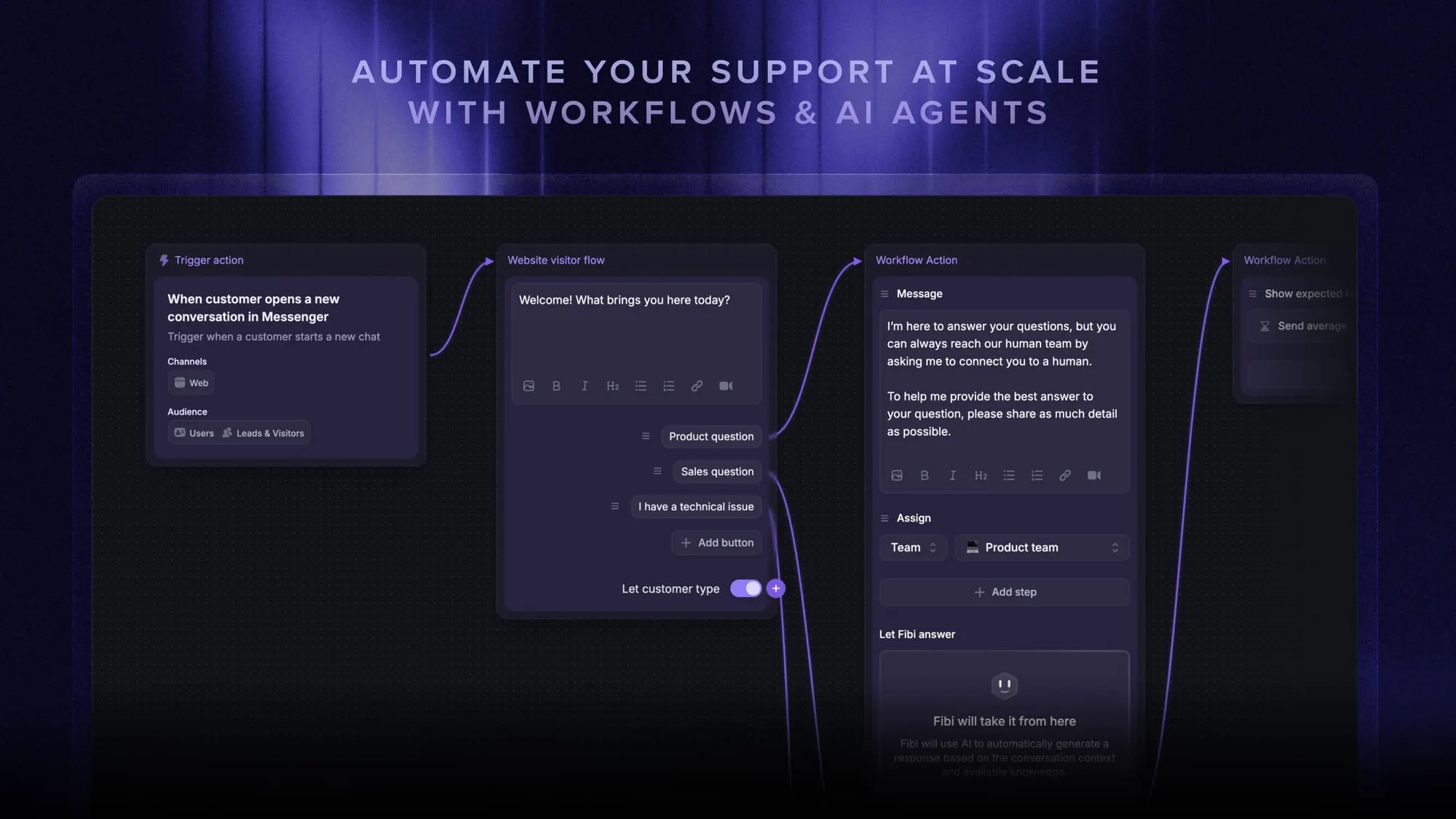
Engagement is more effective when it's context-aware. Tools that let you trigger messages based on user activity (e.g., visiting a page, abandoning a cart, completing a feature) help you engage at the right moment.
The best customer engagement platforms will allow you to set up workflows based on your unique requirements. You can track user behavior and based on the insights, create exceptional customer experiences.
4. Personalization capabilities
Generic content doesn't perform well. Platforms should support personalization tokens (like first name or company) and deeper logic based on behavior or data, improving the relevance and effectiveness of messages.
Customer support, sales, and marketing teams can benefit from personalized messages across different platforms.
5. Feedback collection tools
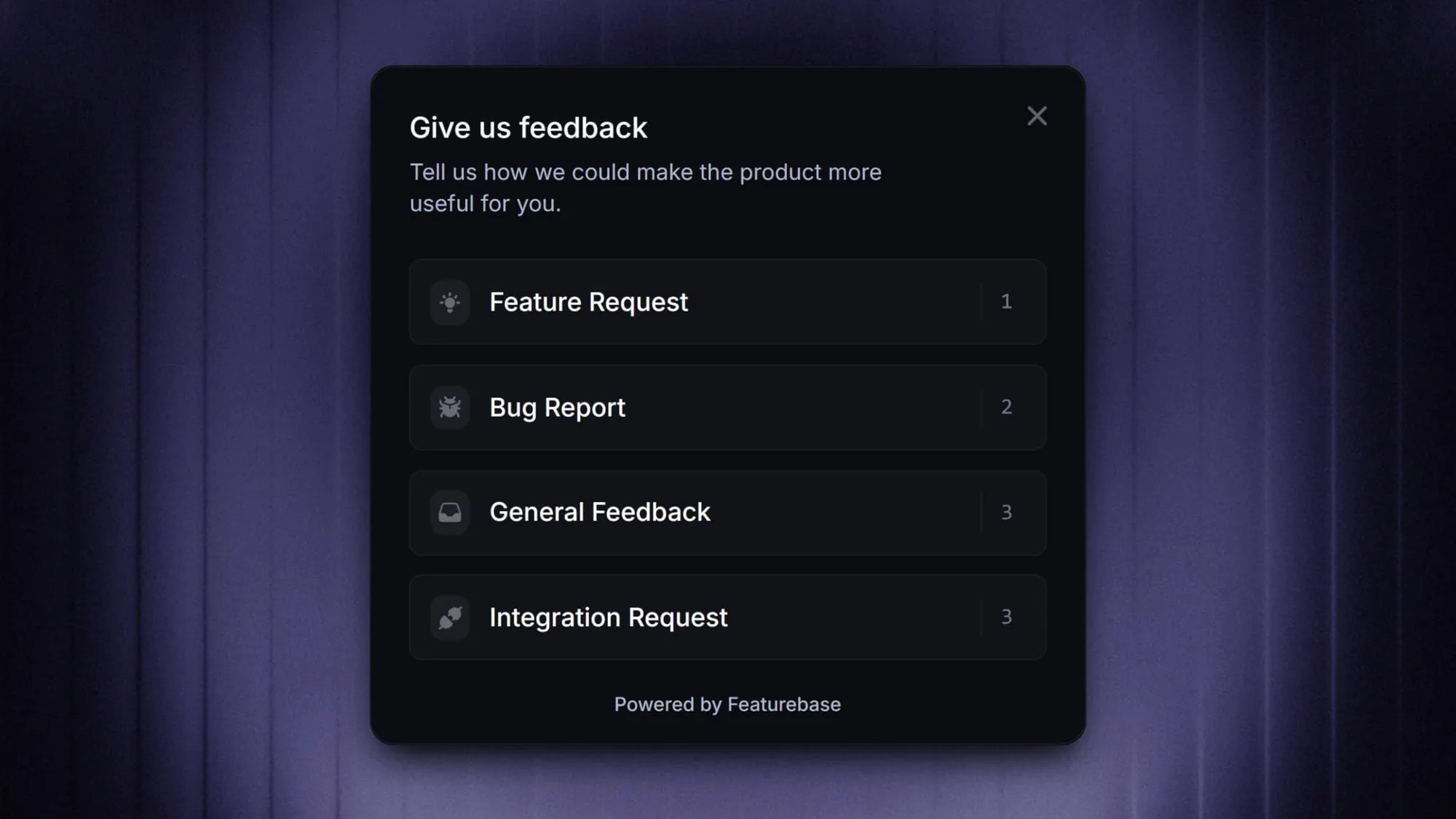
Engagement is a two-way street. Built-in surveys, NPS prompts, or feedback widgets help you gather insights directly from users and improve your product or support based on real data.
For example, Featurebase lets you capture valuable customer insights from surveys, feedback boards, in-app feedback widgets, and many more places throughout the entire customer journey.
6. Campaign performance analytics
You need to understand what works. Detailed reporting on open rates, click-throughs, conversions, and retention lets you iterate and optimize your engagement strategy.
If the customer engagement platform doesn't come with this feature, you can integrate it with your customer relationship management (CRM) tool.
7. A/B testing
Testing different subject lines, messages, or visuals helps you learn what resonates with users and make data-backed decisions that improve engagement over time.
Once again, you can integrate the customer engagement tool with email or marketing automation tools to get this feature.
8. Integration with your tech stack
Customer data should not live in silos. A platform that connects with your CRM, product analytics, customer support tools, and data warehouse helps you act on the full picture of customer behavior.
9. Customer journey mapping
Visualizing and managing user flows across their lifecycle helps you spot drop-off points and tailor engagement to each stage, from onboarding to retention and advocacy.
10. Real-time updates and alerts
If something important happens, like a customer hitting a usage milestone or running into a bug, you want to know and respond immediately. This improves both customer experience and retention.
The best customer engagement tools to try in 2025 and beyond
There are many different types of customer engagement software and you can choose one or multiple tools below, depending on your needs and budget. Here are some of the best options for your customer engagement needs in 2025.
1. Featurebase ✨
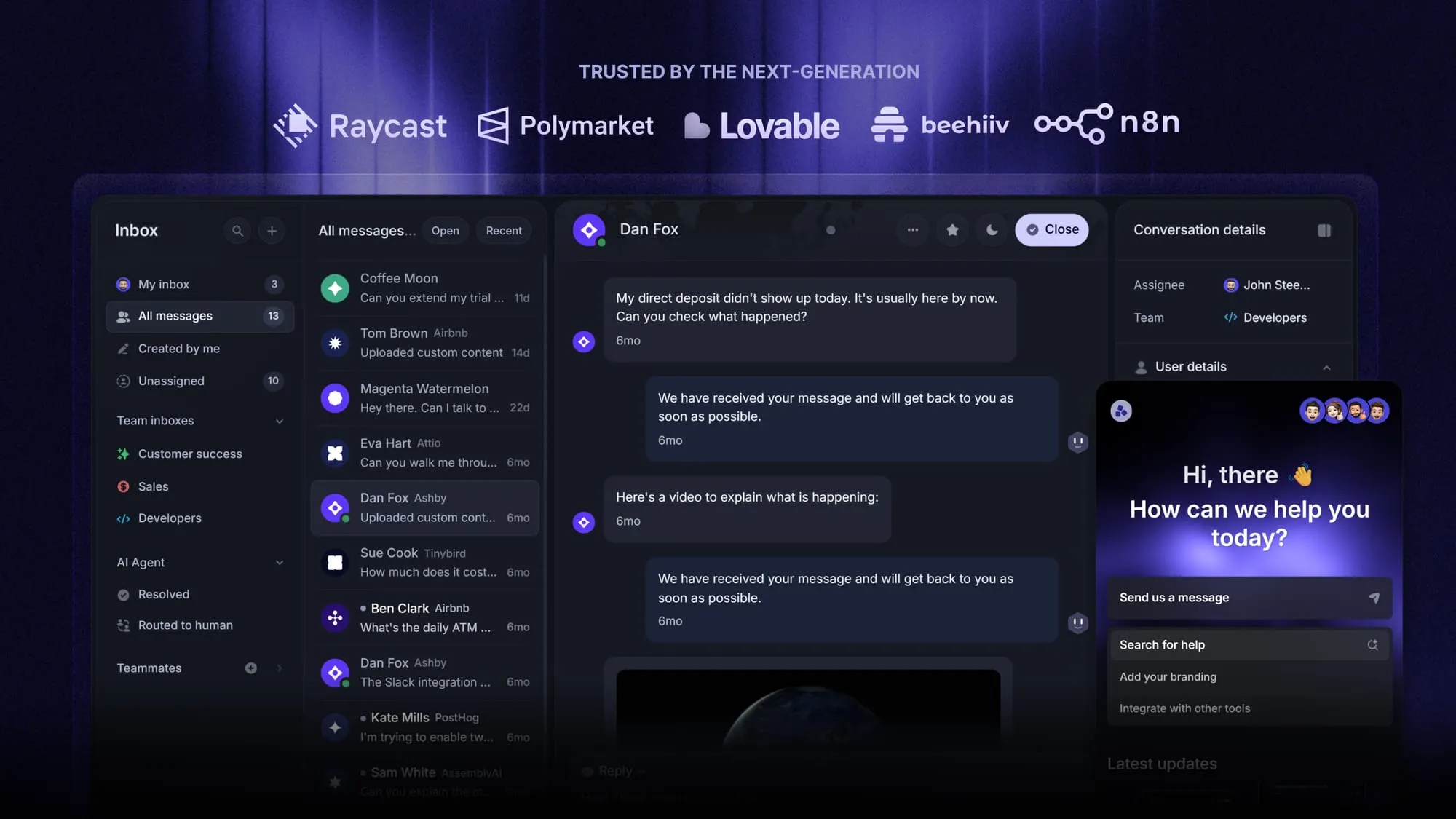
Featurebase is a modern AI-powered customer engagement platform for product-led SaaS. It combines omnichannel inbox, feedback managements, product changelogs, and AI agents into a single platform for startups that want all their customer-facing tools in one place. It's loved by thousands of support, product, and marketing teams from companies like Lovable, Raycast, and n8n. 💫
Instead of having 5+ different tools, Featurebase offers everything in one place to help you build products your users love:
- Support platform – Support your customers via live chat, email, and Slack with an omnichannel inbox and automate support with powerful AI agents.
- Help center – Provide self-serve support with an AI-powered knowledge base for instant, multilingual answers.
- Feedback collection – Centralize feedback with integrations, feedback widgets, AI, and a public feedback forum. Let users vote on each other's ideas, see their total revenue, and focus on the most impactful features.
- Surveys (NPS, CSAT, etc.) – Create targeted surveys to ask users anything and measure customer satisfaction.
- Product updates – Announce product updates and increase feature adoption with neat in-app popups, notification emails, and a dedicated updates page.
- Workflows & automations – Automate repetitive tasks, like extending trials, routing conversations, collecting customer data, and more.
Plus, it integrates with many popular tools that you likely already use, such as Linear, Jira, Slack, and many more.
Pricing: Featurebase offers a free plan, with paid plans starting at $29/seat/month. The onboarding is super fast, so there's no downside to trying it. 👇
2. Appcues
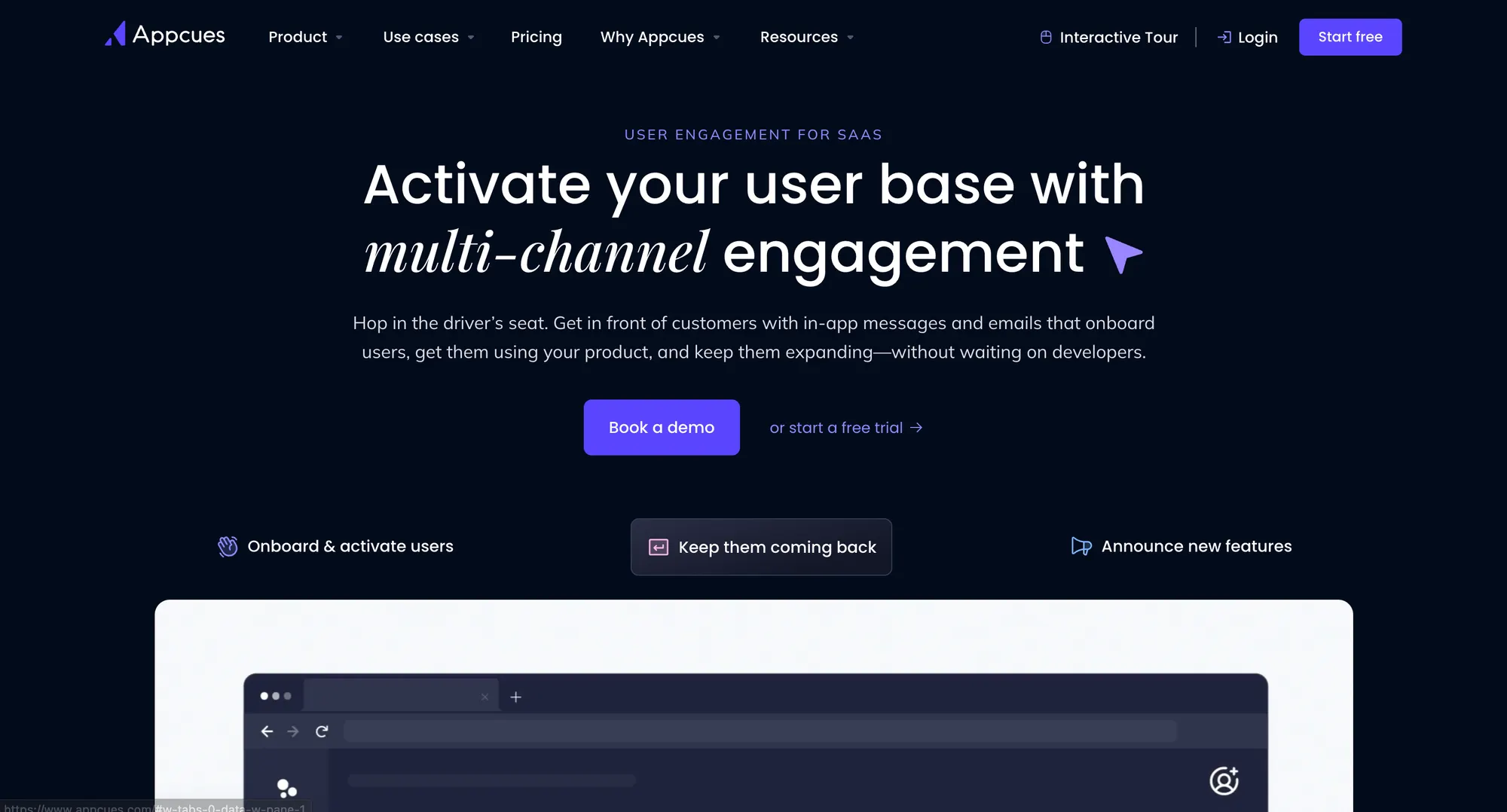
Appcues is a product experience and customer engagement platform built to increase engagement through no-code onboarding, feature adoption prompts, and in-app communication. It's best for SaaS companies that want to drive customer retention and activation through personalized experiences.
Top features
- Onboarding flows with checklists, modals, and tooltips to guide new users
- Behavioral targeting to trigger engagement content based on what users do (or don't do)
- In-app surveys and NPS to collect engagement insights in context
- User segmentation to tailor experiences by role, behavior, or lifecycle stage
- Feature announcements using banners and popups to spotlight new functionality
Pros and cons
✅ No-code builder makes it fast to deploy
✅ Strong for user onboarding and retention
✅ Great personalization controls
❌ High pricing for early-stage companies
❌ Less useful outside product environments
❌ Doesn't include feedback boards or support channels
Pricing: Starts at $249 per month.
3. Survicate
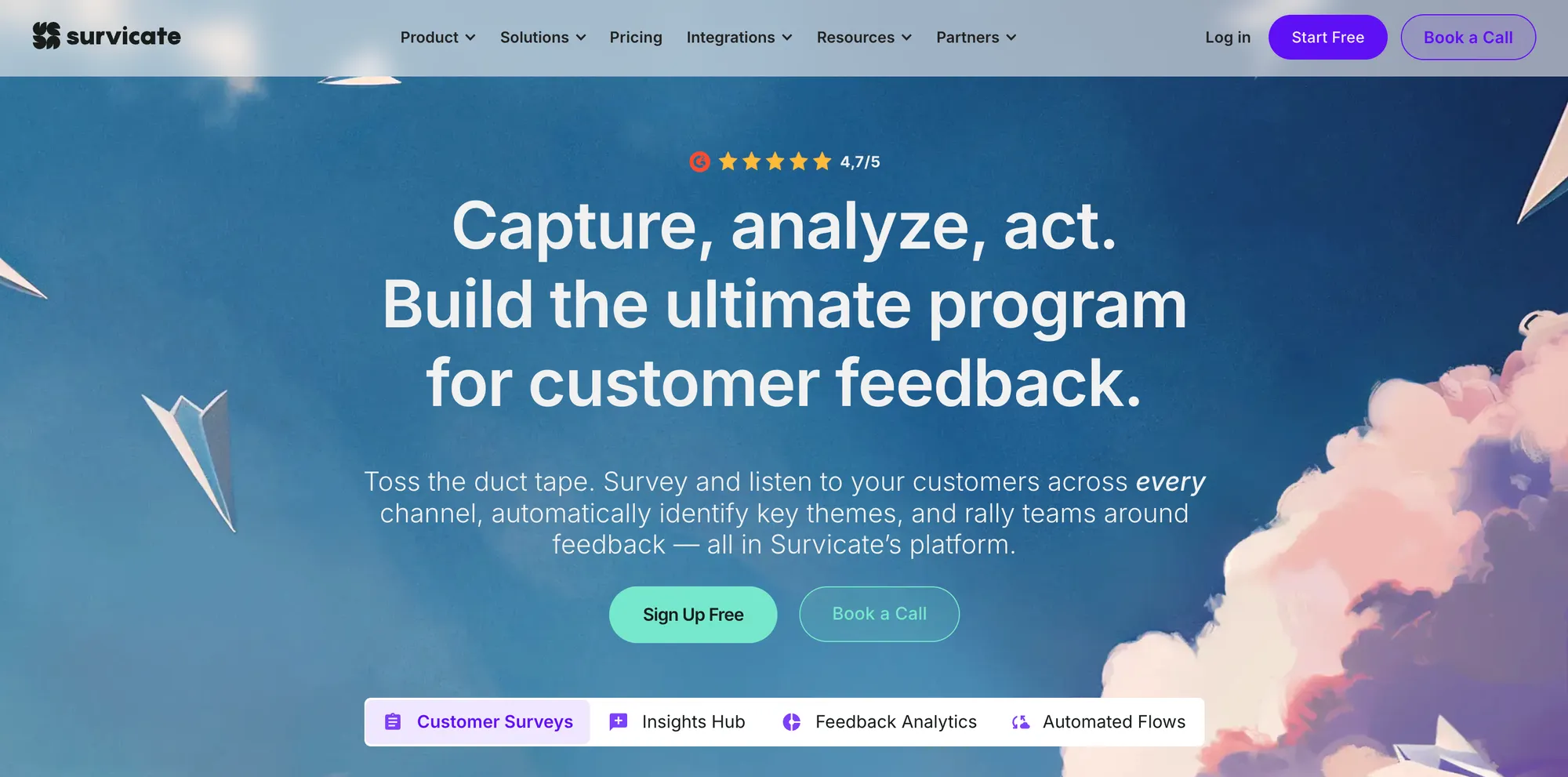
Survicate is a customer feedback and survey tool designed to boost engagement by capturing user sentiment across different touchpoints. It works well for businesses that want to keep the conversation going post-onboarding or after critical product interactions.
Top features
- In-app surveys to ask short, targeted questions right inside your product
- Multi-channel outreach to engage users via web, email, or mobile apps
- Feedback triggers to send surveys based on user behavior or timing
- Prebuilt templates to launch CSAT, NPS, and CES surveys in minutes
- Integrations with CRMs and analytics tools to use feedback for personalized follow-up
Pros and cons
✅ Strong coverage across multiple channels
✅ Good entry point for feedback-driven engagement
✅ Works well for SaaS and e-commerce
❌ Limited control over the look of surveys
❌ In-app engagement tools are basic
❌ Not built for ongoing conversation or support
Pricing: Starts at $49 per month for 100 responses and a free plan is available.
4. Braze
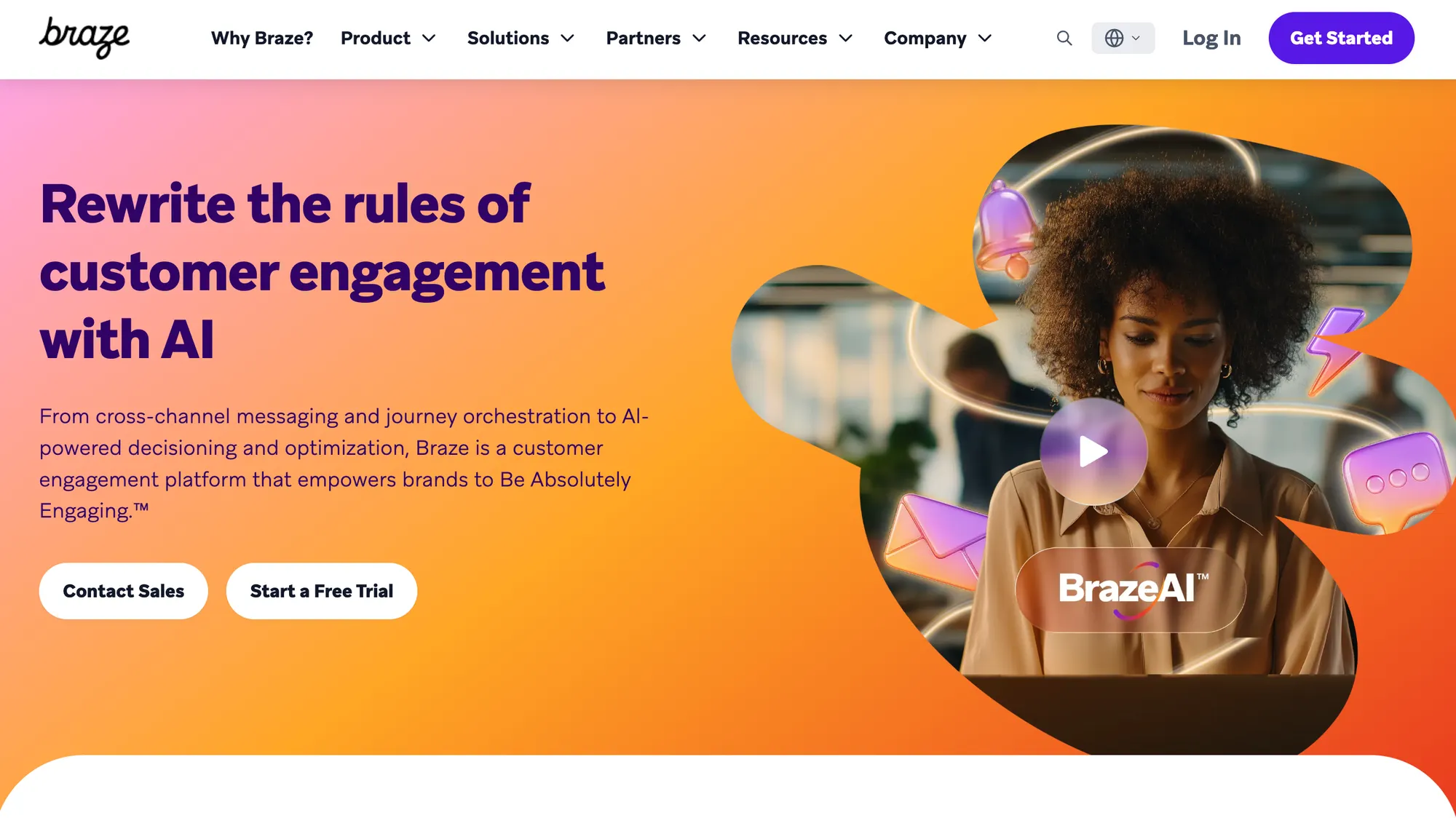
Braze is a customer engagement software platform focused on real-time messaging, user segmentation, and customer journey orchestration across mobile and web. It's best for companies with large user bases looking to drive retention with personalized communication at scale.
Top features
- Multichannel messaging to engage users via push notifications, email, SMS, and in-app messages through every customer interaction
- Customer journey builder to design dynamic user flows based on behavior and attributes
- Advanced segmentation to create cohorts based on real-time or historical actions
- Content personalization to customize every message with customer data pertaining to each individual user
- Analytics and experimentation to measure engagement impact with A/B tests and dashboards
Pros and cons
✅ Built for high-volume engagement across multiple channels
✅ Excellent segmentation and targeting tools
✅ Strong data infrastructure for personalization
❌ Expensive and complex to set up
❌ Requires technical support or engineering input
❌ Not ideal for small teams or basic engagement needs
Pricing: Starts at $60,000/year (based on custom quotes).
5. Maestra
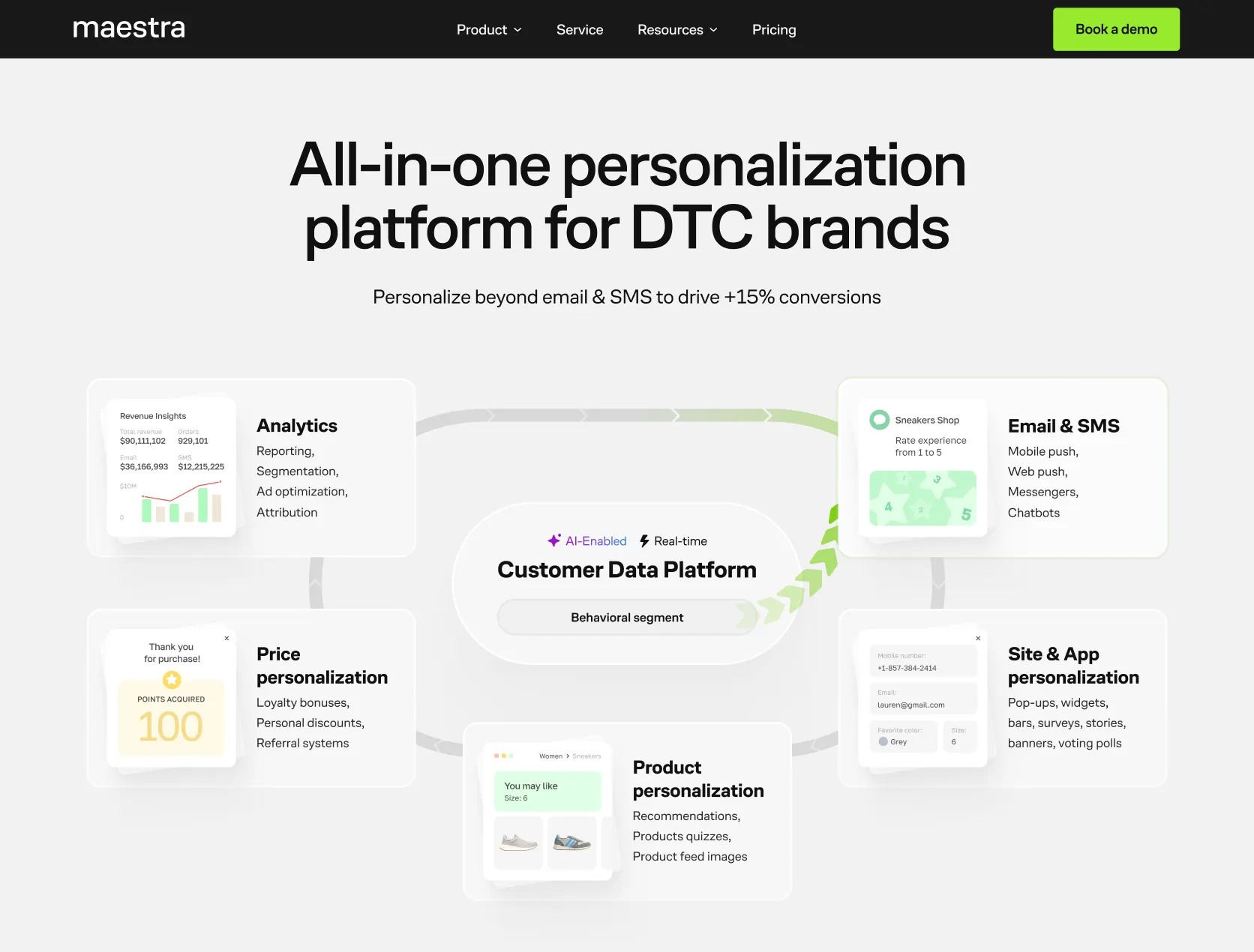
Maestra is a customer engagement platform. It covers omnichannel messaging, site and app personalization, product discovery, and loyalty in one system, so teams can orchestrate personalized journeys across every channel from a single customer profile. A strong fit for mid-sized businesses and enterprises, especially those that want Braze-level engagement, without the technical complexity or heavy dev work.
Top features
- Real-time CDP — unified customer profile built from all available data, powering granular segmentation
- Omnichannel journeys — email, SMS, MMS, RCS, push, WhatsApp, and on-site content orchestrated from a visual builder
- On-site & in-app personalization — popups, widgets, banners, and other dynamic content
- Product discovery — guided quizzes and 14 recommendation algorithms you can tune
- Loyalty and referral programs that turn one-time buyers into repeat customers
Pros and cons
✅ Easy implementation
✅ Advanced segmentation (RFM, calculated and custom fields)
✅ Hands-on CSM assigned to every account
❌ Designed for ecommerce, so less suited to pure SaaS
❌ A newer name than long-established incumbents
❌ Built for brands with real scale — more than startups need
Pricing: Starts at $2,000 per month, covering the CDP with the first 100,000 active profiles and unlimited email
6. Twilio
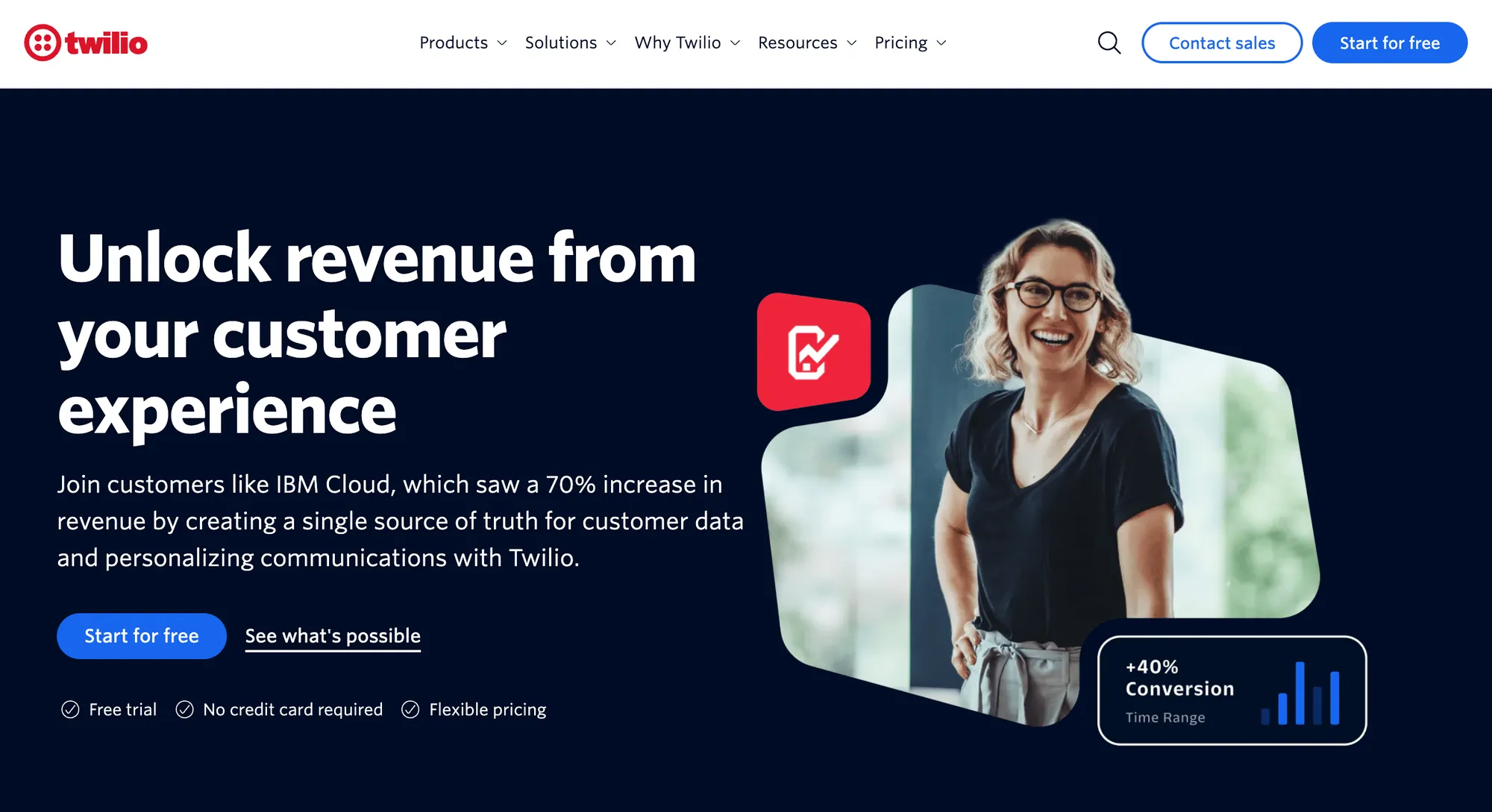
Twilio is a communications platform that enables companies to engage customers through SMS, voice, email, WhatsApp, and in-app messaging. It's ideal for businesses that want complete control over when and how they reach users across multiple channels.
Top features
- Programmable messaging to send real-time alerts, updates, or promotions via SMS, email, or chat
- Voice and video APIs to engage users with personalized support or onboarding calls
- Conversations API to power multi-channel chat threads with context across devices
- Customer data platform (Segment) to unify user data for better targeting and engagement
- Scalable infrastructure to deliver billions of messages globally with enterprise-grade reliability
Pros and cons
✅ Unmatched flexibility for multichannel messaging
✅ Powerful infrastructure and global reach
✅ Ideal for real-time and transactional engagement
❌ Requires developer resources for setup
❌ No built-in UI for non-technical teams
❌ Not purpose-built for feedback or support
Pricing: Starts at $0.0079 per SMS (usage-based pricing varies by channel).
7. Netcore
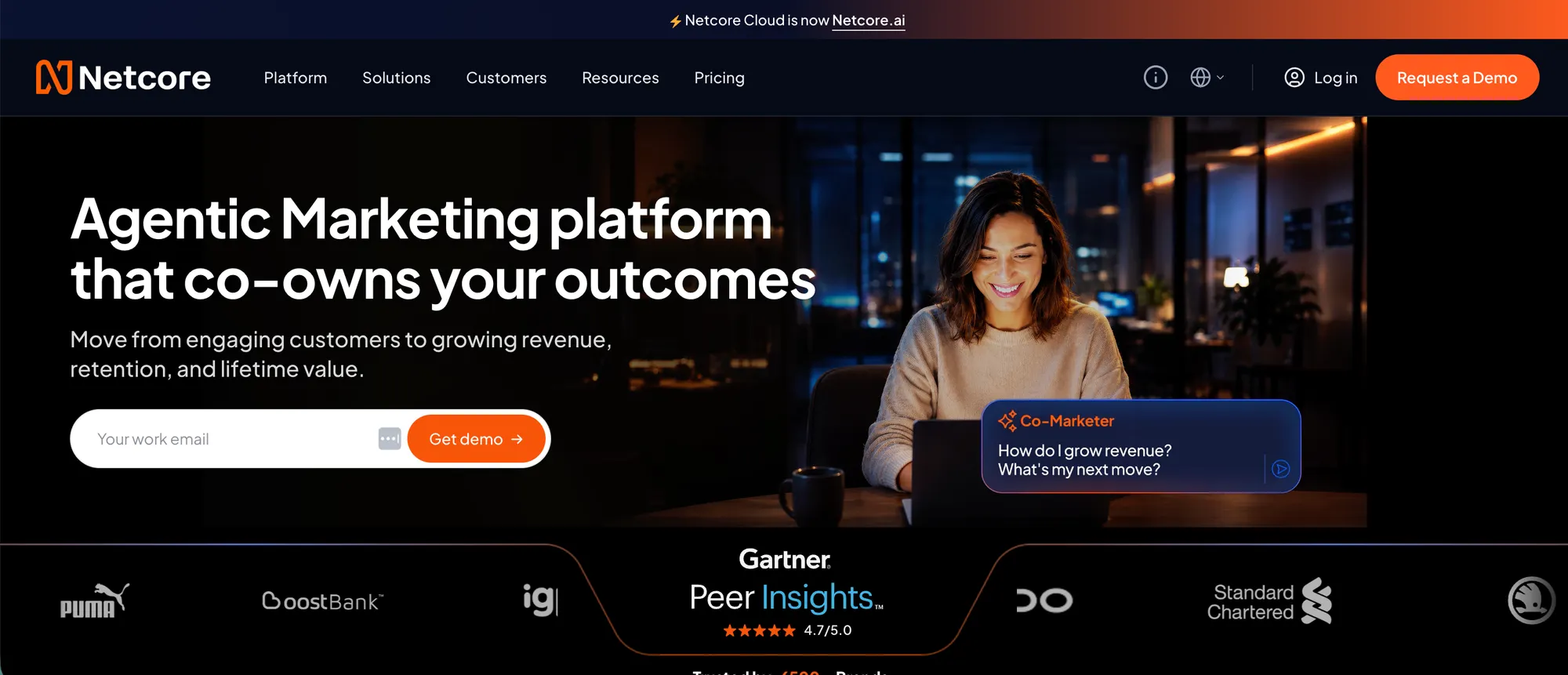
Netcore is an agentic customer engagement platform designed to help businesses create personalized experiences across multiple channels.
It supports email, WhatsApp, RCS, SMS, app and web push notifications, in-app messaging, and other engagement channels, while providing journey orchestration, behavioral segmentation, personalization, and analytics in one platform.
Top features:
Only marketing automation platform that owns end-to-end customer outcomes
- Omnichannel customer engagement across 13+ channels
- AI-powered personalization and predictive analytics
- Customer journey orchestration and automation
- Behavioral segmentation and RFM analysis
- Campaign analytics, A/B testing, and conversion tracking
- Product recommendations and churn prediction
- WhatsApp, RCS, email, SMS, push, and in-app messaging
Pros and cons
✅ Strong omnichannel engagement capabilities
✅ AI-powered personalization and predictive insights
✅ Advanced segmentation and journey automation
✅ Supports large-scale customer engagement
✅ Wide range of communication channels
✅ Outcome based pricing
✅ Strong analytics via agents
❌ Advanced features may require additional setup or add-ons
❌ The extensive feature set may have a learning curve for smaller teams
Pricing: Netcore uses customized pricing based on business requirements, outcomes and selected features. Its current plans include Growth and Enterprise, with pricing available through a demo or sales consultation.
8. Userpilot
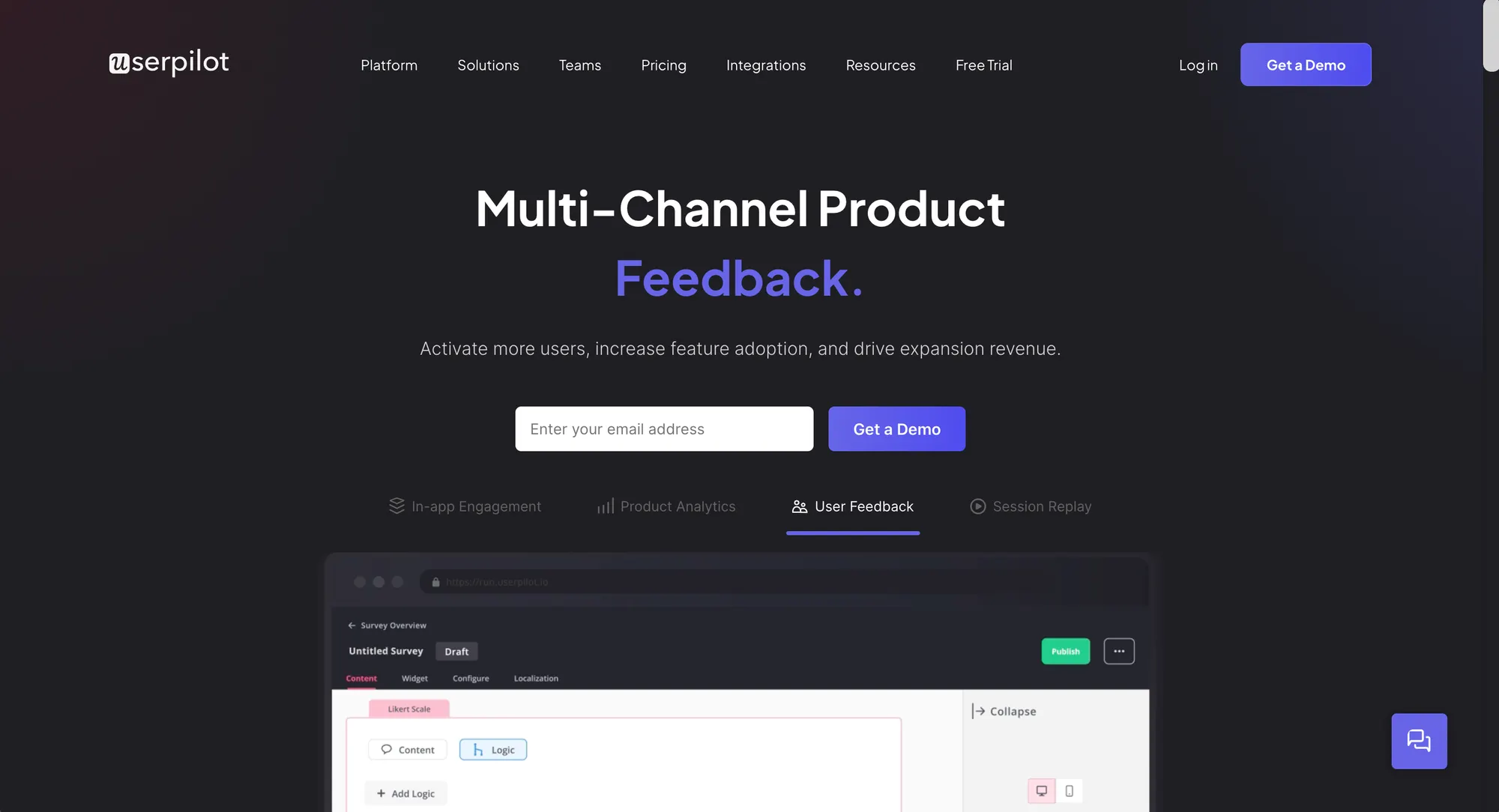
Userpilot helps product teams increase engagement through no-code in-app experiences like onboarding, feature announcements, and contextual guidance. It's best for teams focused on product adoption and customer education.
Top features
- Onboarding flows and checklists to get new users up to speed quickly and smoothly
- Feature tagging to track user interaction with specific UI elements
- Contextual tooltips and modals to drive engagement with behavior-based prompts
- NPS and in-app surveys to collect feedback right at the point of use
- User segmentation to target flows based on product usage and customer type, providing personalized customer experiences
Pros and cons
✅ Purpose-built for product-led engagement
✅ Fast setup for SaaS teams with no-code tools
✅ Useful for onboarding, upselling, and retention
❌ UI customization options are somewhat limited
❌ No public feedback or roadmap visibility
❌ Higher learning curve than simpler tools
Pricing: Starts at $249 per month.
9. Zendesk
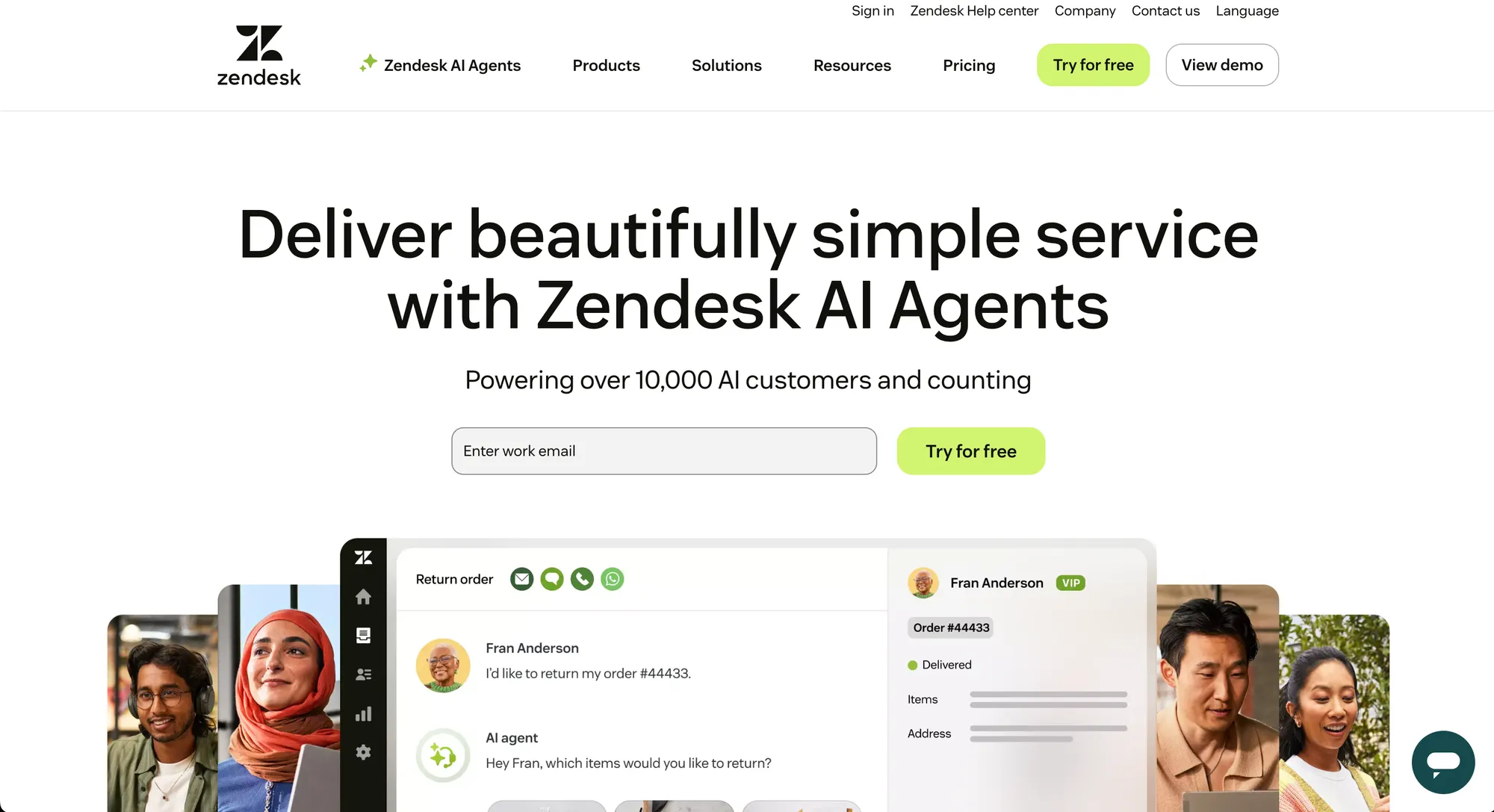
Zendesk is a customer service platform that helps businesses engage users through support, help centers, and live chat. It's ideal for keeping customers engaged through responsive support and proactive communication.
Top features
- Multi-channel support to handle tickets from email, chat, social, and more in one dashboard
- Help center and knowledge base for users to self-serve with searchable articles and FAQs
- Proactive messaging to trigger contextual messages based on user behavior or product issues
- Custom ticket workflows to route and prioritize inquiries to the right team members
- Analytics and satisfaction tracking to measure CSAT and identify engagement bottlenecks
Pros and cons
✅ Strong support tools for user engagement and retention
✅ Customizable help centers for proactive support
✅ Scales well for support-heavy teams
❌ Complex setup for smaller teams
❌ Expensive as user count grows
❌ Not designed for in-product engagement
Pricing: Zendesk pricing starts at $55 per agent per month.
10. Influitive
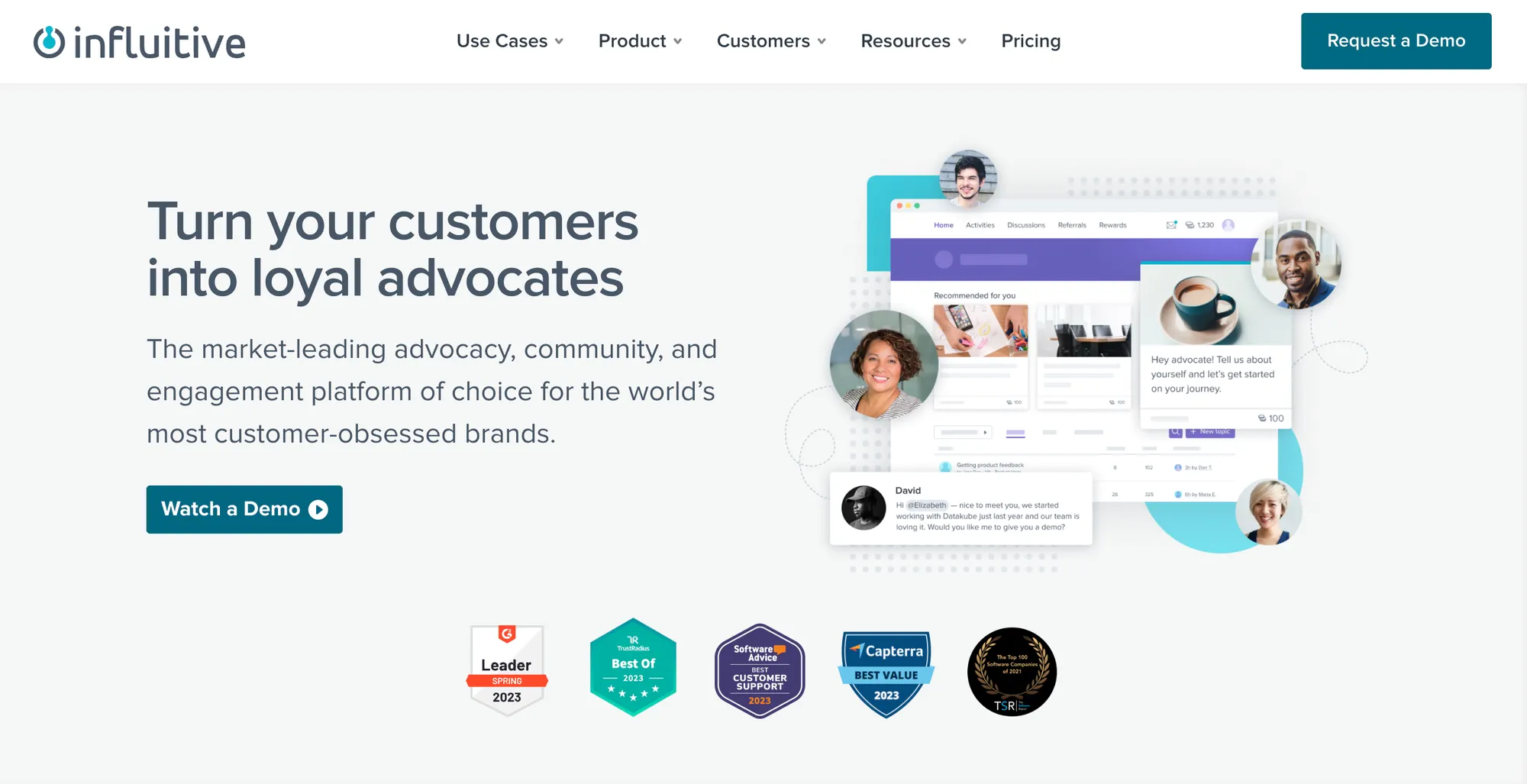
Influitive is a customer advocacy and engagement platform that helps businesses build stronger customer relationships through branded communities, referrals, and rewards. It's great for turning customers into loyal advocates, and it can be used by everyone from product to customer service teams.
Top features
- Branded advocacy hubs to engage users with gamified missions, discussions, and challenges
- Referral and review campaigns to turn engagement into social proof and new business
- Segmented customer experiences offering tailored content and rewards to different user groups
- Community engagement tools to facilitate user-to-user conversation and content sharing
- Integrated analytics to measure engagement, participation, and advocacy impact
Pros and cons
✅ Ideal for building brand advocates and loyal communities
✅ Gamification keeps users actively involved
✅ Works well alongside product and marketing
❌ Requires active management and content creation
❌ Higher cost for smaller teams
❌ Not focused on support or in-product engagement
Pricing: Starts at $1,499 per month (billed annually).
11. InAppStory
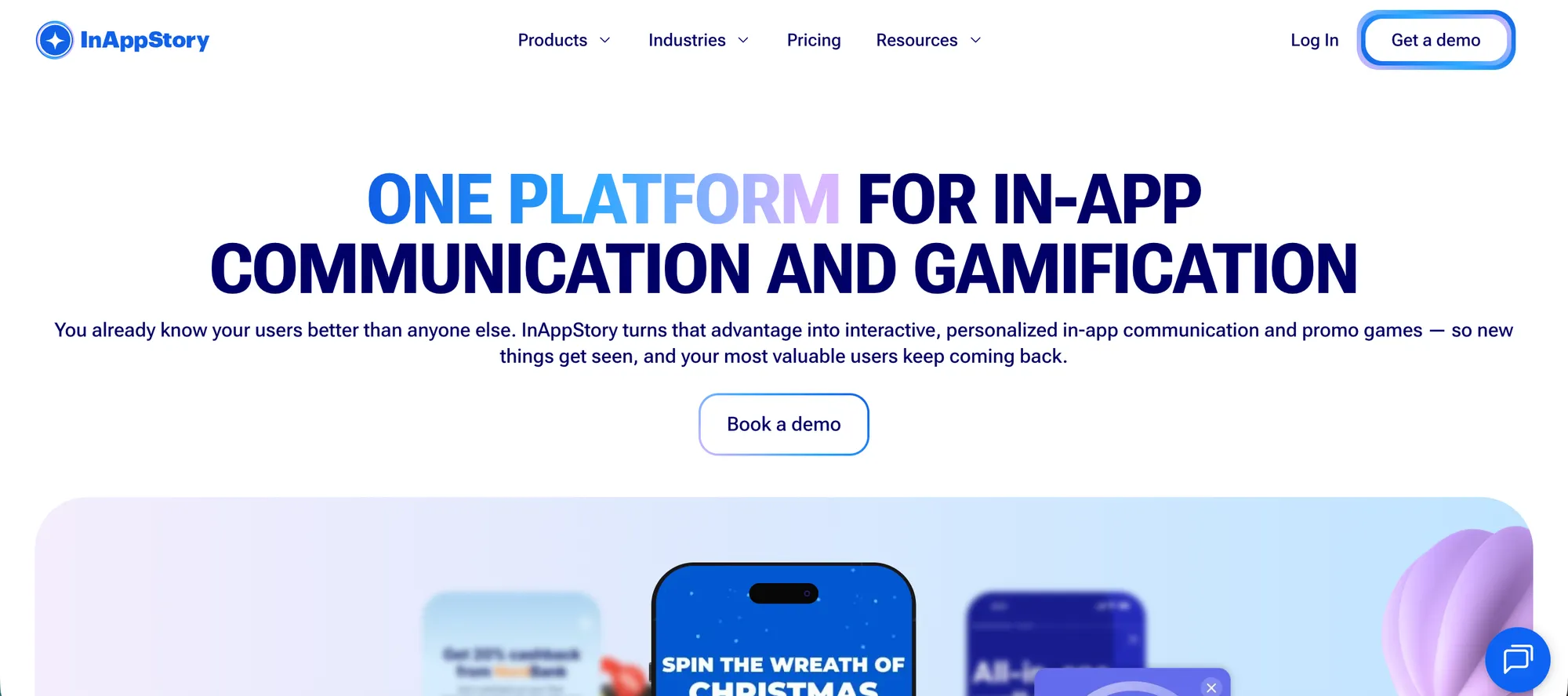
InAppStory helps mobile app teams engage users directly inside the product through stories, in-app messages, banners, in-app landings, widgets, mini-games, and personalized campaigns.
It’s best for companies that use their app as a key engagement channel and want to improve onboarding, feature adoption, loyalty, retention, and conversions without turning every campaign update into a developer task.
Top features
- In-app messages, stories, in-app landings, and banners for product updates, onboarding flows, feature announcements, and promotions
- Mini-games and interactive widgets for reward campaigns, feedback, quizzes, and loyalty mechanics
- Audience targeting based on behavior, lifecycle stage, tags, segments, and previous actions
- No-code campaign console for launching, editing, and measuring app campaigns after SDK integration
- Analytics for views, clicks, interactions, completion rates, and campaign performance
Pros and cons
✅ Strong fit for mobile-first engagement, feature adoption, and product education
✅ Useful for loyalty campaigns, gamification, seasonal promotions, and feedback collection
✅ Supports native and cross-platform app stacks, including Android, iOS, React Native, and Flutter
❌ Focused on app experiences, so teams may still use a separate tool for email or SMS
❌ Requires SDK integration before campaigns can go live
❌ Works best for apps with regular traffic and active user journeys
Pricing: Custom pricing based on the app, use case, and campaign needs.
12. Respond.io
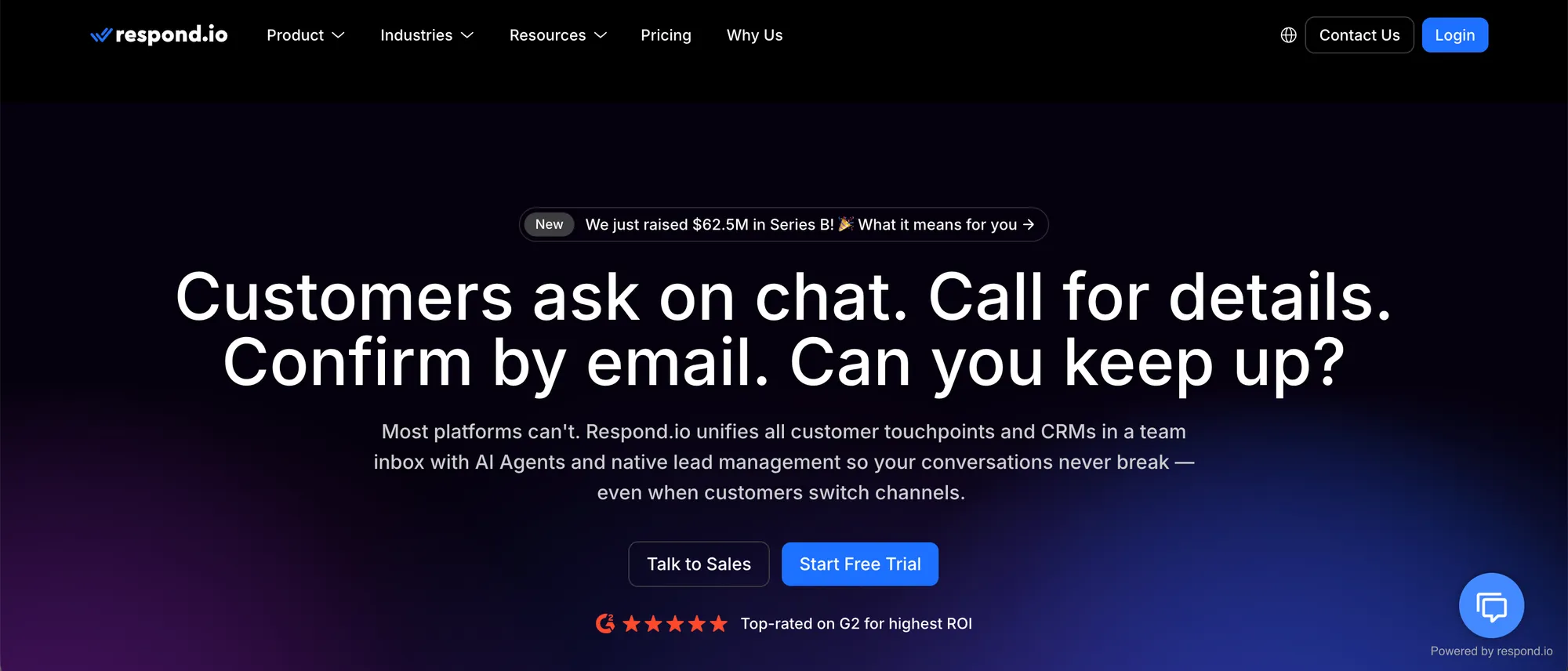
Respond.io is a customer conversation platform for mid-market B2C businesses where customer conversations drive revenue. It brings WhatsApp, Instagram, TikTok, calls, email, and other channels into one workspace, helping teams avoid missed inquiries, maintain customer context across channels, and turn more conversations into sales opportunities.
Its AI Agents can answer inquiries, qualify leads, follow up with prospects, and route conversations to the right employees. Respond.io is particularly useful for businesses handling 500+ customer conversations per month, including multi-location retailers, healthcare providers, and automotive businesses.
Top features
- Unified inbox for messaging, calls, and email
- AI Agents for lead qualification, follow-ups, and routing
- Customer lifecycle tracking from inquiry to purchase
- CRM integrations and automated workflows
- Reporting on conversations and team performance
Pros and cons:
✅ Built for high-volume B2C conversations across multiple channels
✅ AI Agents can take actions, not just answer questions
✅ 24/7 human and AI support
Cons:
❌ Less suitable for small teams with low conversation volumes
❌ Advanced automation requires some setup and configuration
Pricing: Paid plans are based on monthly active contacts and selected features. Check the official website for current pricing.
Conclusion
Finding the right customer engagement tool can feel overwhelming, especially when your users are spread across different channels and touchpoints. The key is picking a tool that helps you listen to customers, act on their input, and close the loop, without needing five different platforms to do it.
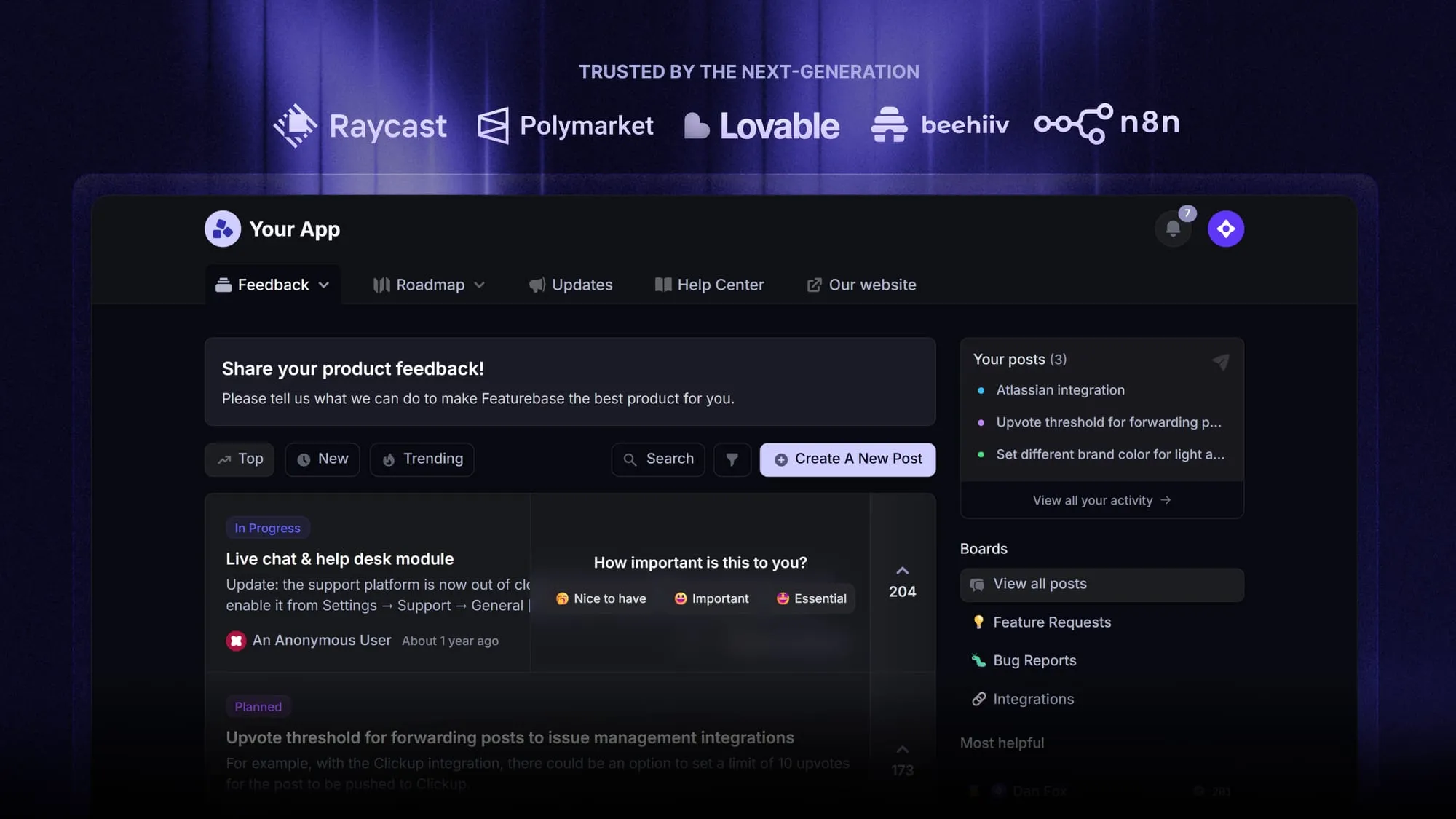
Featurebase is a customer engagement platform that helps you engage customers across their entire journey. It lets you collect feedback with a public forum, surveys, and in-app widgets, support customers with a unified inbox and AI agents, and keep them in the loop with a Help Center and product changelog – all in one place.
What's best is that it comes with a Free plan, and the onboarding is super simple, so there's no downside to trying it out! 👇
Engage customers & drive product adoption with Featurebase for free
Frequently asked questions
A customer engagement tool helps businesses build better relationships with their users by facilitating communication, collecting feedback, and tracking behavior across different channels. These tools aim to increase satisfaction, retention, and long-term customer value. They work across marketing, support, and product teams.
These tools allow companies to send timely, personalized messages and respond quickly to customer needs. By addressing pain points, celebrating milestones, and gathering feedback, they keep users interested and satisfied. This reduces the chances of churn and encourages ongoing loyalty.
Yes, many platforms like Featurebase and Survicate offer affordable plans and simple setups ideal for smaller teams. They help small businesses compete by improving customer relationships without needing large support or marketing departments. Free or entry-level plans make them accessible even with limited budgets.
CRMs are built to manage contacts and sales pipelines, while customer engagement tools focus on real-time interactions and feedback across the customer journey. Some platforms integrate both, but engagement tools prioritize communication, personalization, and behavior-based targeting. They are often used alongside CRMs for a complete view of the customer.