Blog Customer FeedbackCustomer Intimacy: How to Build Deeper Customer Bonds
Customer Intimacy: How to Build Deeper Customer Bonds
Customer intimacy is the strategy of knowing your customers so well you can anticipate their needs. Here's what it means, why it drives loyalty, and how to build it.


✨ Start collecting & managing feedback with Featurebase for free →
Most companies say they care about their customers. Far fewer actually know them well enough to prove it.
Customer intimacy is what closes that gap. It's a deliberate strategy of understanding your customers so deeply that you can anticipate what they need, then aligning your whole business to deliver it. In this guide, I'll break down what it really means, how it differs from customer experience, why it pays off, and how to build and measure it. 👇
Key takeaways
- Customer intimacy is a strategy of deeply understanding your customers and aligning your products, teams, and processes around their needs.
- It's one of the 3 value disciplines from Michael Treacy and Fred Wiersema, alongside operational excellence and product leadership.
- It's not the same as customer experience (the journey) or customer focus (caring and reacting well). Intimacy is the depth of understanding behind both.
- It drives real business results: higher retention, stronger loyalty, and greater customer lifetime value.
- You build it by talking to customers constantly, involving them in decisions, personalizing at an individual level, and aligning your metrics around them.
- Featurebase✨ helps you capture and act on the voice of your customer with a feedback forum, in-app widgets, and surveys, all in one place.
What is customer intimacy?
Customer intimacy is a business strategy where you build deep knowledge of your customers and use it to meet their needs in personalized, anticipatory ways. Instead of treating everyone the same, you get close enough to understand what each customer actually values, then design your products and service around it.
The concept isn't new. Harvard Business Review introduced it back in 1993, and it has only become more relevant as customers gained more choices and higher expectations.
Here's a simple way to think about it: if customer focus is a bachelor's degree, customer intimacy is a Ph.D. You're not just serving customers well. You know them so well you can predict what they'll want next.
The three value disciplines
Customer intimacy comes from The Discipline of Market Leaders by Michael Treacy and Fred Wiersema. They argued that market-leading companies win by choosing 1 of 3 value disciplines and excelling at it:
- Operational excellence: competing on the lowest price and the most efficient, hassle-free service. Think Walmart or Costco.
- Product leadership: competing on the best, most innovative product on the market. Think Apple.
- Customer intimacy: competing on how deeply you know your customers and how well you tailor to them. Think Nordstrom.
The point isn't that you ignore the other 2. You still need a solid product and reasonable efficiency. But customer intimacy is where you choose to be the best, and that choice shapes how you organize the entire company.
Customer intimacy vs. customer experience and customer focus
These 3 terms get used interchangeably, but they describe different things:
- Customer experience (CX) is the end-to-end journey - how easy, smooth, and consistent it is to interact with your brand across every channel and moment.
- Customer focus is caring about your customers and reacting well when they come to you. It's often reactive and transactional, like a great support interaction.
- Customer intimacy is the depth of understanding behind all of it. It's proactive: you know each customer well enough to anticipate their needs before they raise them.
A quick example makes the difference clear. Apple's Genius Bar greets you by name and fixes your problem - that's excellent customer service and a good experience. Nordstrom empowering an employee to do almost anything to get a customer exactly what they want, based on what they know about that person, is customer intimacy.
Experiences have become table stakes. Intimacy is the harder, more rewarding high ground.
Why customer intimacy matters
The business case comes down to retention. Intimate relationships keep customers longer, and loyal customers are dramatically more profitable than new ones.
The classic finding from Fred Reichheld's research at Bain is that increasing customer retention by just 5% increases profits by 25% to 95%. Retained customers spend more over time and cost far less to serve, so the effect compounds.
There's an emotional layer too. Harvard Business Review found that emotionally connected customers are 52% more valuable than customers who are merely highly satisfied. Satisfaction gets you a passing grade. Connection is what actually drives spending, loyalty, and word of mouth.
Customer intimacy is how you earn that connection. When you genuinely understand people, you:
- Build products that stick: you can anticipate needs and solve real problems, sometimes before customers even articulate them.
- Innovate faster: a shared, company-wide understanding of customer problems makes it easier for everyone to build the right things.
- Market more efficiently: customers who feel understood refer others, lowering your acquisition costs.
How to build a customer intimacy strategy
Customer intimacy isn't a campaign you launch. It's a set of habits you build into how your company operates. Here are the strategies that matter most.
Talk to your customers constantly. The foundation of intimacy is regular, direct conversation. Get people across marketing, product, and support to sit in on customer interviews every month, and treat frontline support chats as a source of insight, not just tickets to close. Questions are the tool here - they signal that you care, and they surface what customers actually value.
Get the whole company close to customers. Intimacy erodes when only the support team hears from customers. Many fast-growing companies run all-hands support, where everyone from the CEO down does a shift. Others visit customers in person or use the "empty chair" trick, leaving a literal empty seat in meetings to represent the customer whose voice should be in the room.
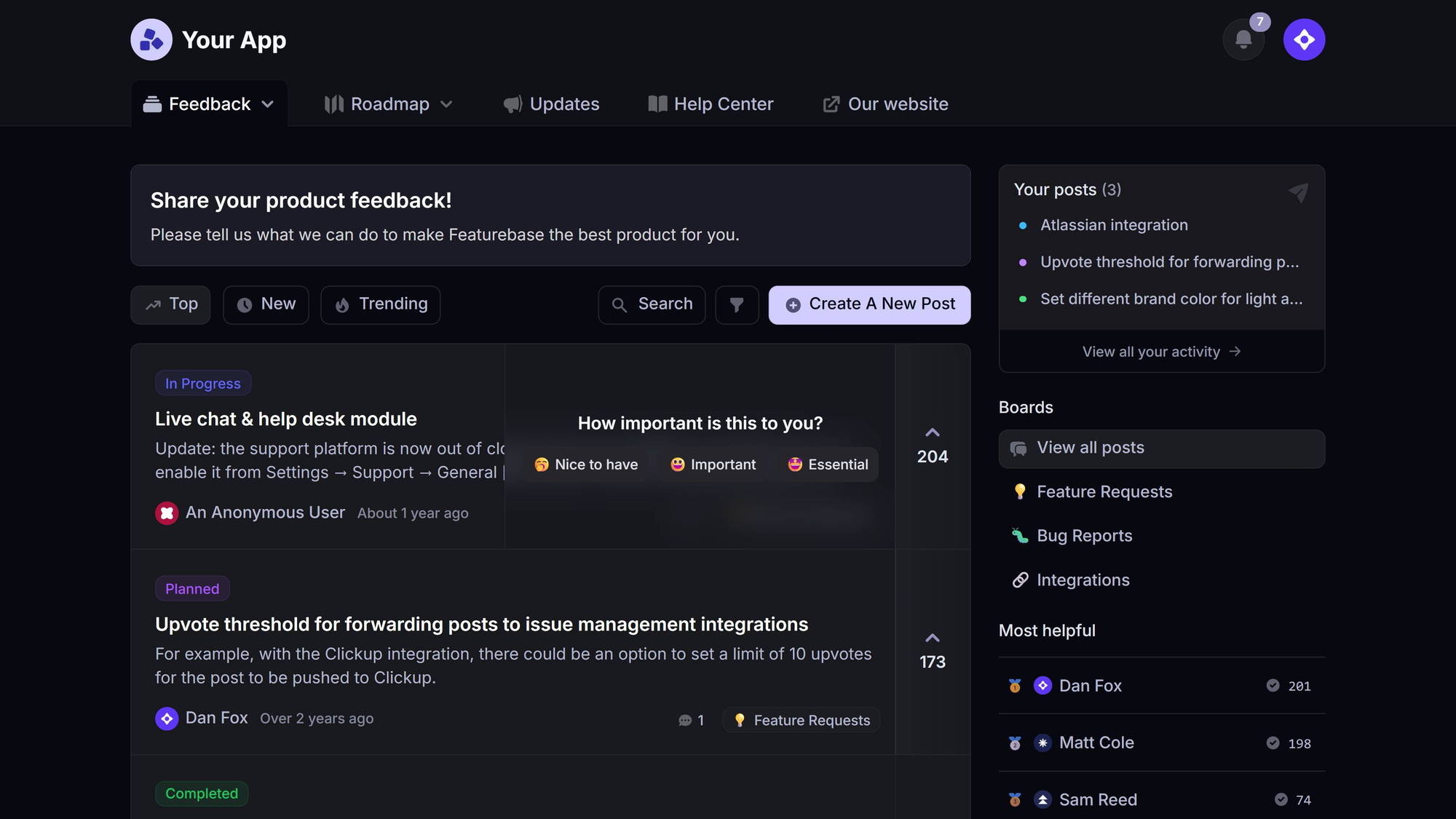
Involve customers in your decisions. People feel ownership over things they help build. Advisory boards, beta programs, and public feedback forums all give customers a real say and give you a steady stream of insight. This is where a system helps: with Featurebase, you can run a public feedback forum where users submit and vote on ideas, capture feedback through in-app widgets, and tie each request to customer revenue so you can see which requests actually matter most.
Personalize at the individual level. Segmentation used to be enough. Now customers expect you to treat them as individuals, not as a demographic bucket. That means using what you know about someone - their history, preferences, and context - to tailor how you communicate and what you offer.
Align your metrics and processes around the customer. It's easy to reward the wrong behavior. If you measure only first-response time, you might get fast but unhelpful answers. Audit your goals and your policies (returns, refunds, cancellations) and ask whether each one serves the customer or just the company.
Empower your frontline team. The people closest to customers know them best. Give them the tools, budget, and trust to solve problems creatively instead of forcing every interaction through a rigid script.

Try Featurebase's feedback tool
Centralize feedback, identify product opportunities, and build the right features
Customer intimacy examples
The easiest way to understand customer intimacy is to look at brands that have nailed it:
- Amazon wins on anticipation and fulfillment. By knowing customer profiles and suggesting the right items, then delivering flawlessly, it has become a default part of people's lives. It consistently ranks at the top of brand intimacy studies despite spending very little on traditional advertising.
- Disney turns data into delight. At its parks, it uses app and wearable data to manage experiences so a child ends up having breakfast with their favorite character or getting the perfect toy after a fall. The data serves the moment, not the other way around.
- Chewy leans into emotional connection. The online pet retailer is famous for sending handwritten cards and even flowers to customers after a pet passes away. That's not a scalable script - it's genuine care, and it's unforgettable.
- Lush aligns its whole model with what its customers value. It spends nothing on traditional ads, funnels money into ethical sourcing and causes its audience cares about, and builds an in-store experience people love. Customers feel good spending money there, and the brand grows through word of mouth.
The common thread: none of these are one-off gimmicks. Each brand has organized itself around a deep understanding of who its customers are.
How to measure customer intimacy
Customer intimacy feels soft, but you can track it with hard numbers. The goal is to measure whether your understanding of customers is actually translating into stronger relationships. The key metrics are:
- Retention and churn rate: intimate relationships keep customers around, so a rising retention rate is the clearest signal you're getting it right.
- Net Promoter Score (NPS): this tells you whether customers are connected enough to recommend you, which is the ultimate sign of a strong bond.
- Customer lifetime value (CLV): as intimacy grows, customers spend more and stay longer, pushing CLV up.
- Repeat contact rate: if customers have to ask for the same thing twice, your understanding isn't flowing through to your service. Lower is better.
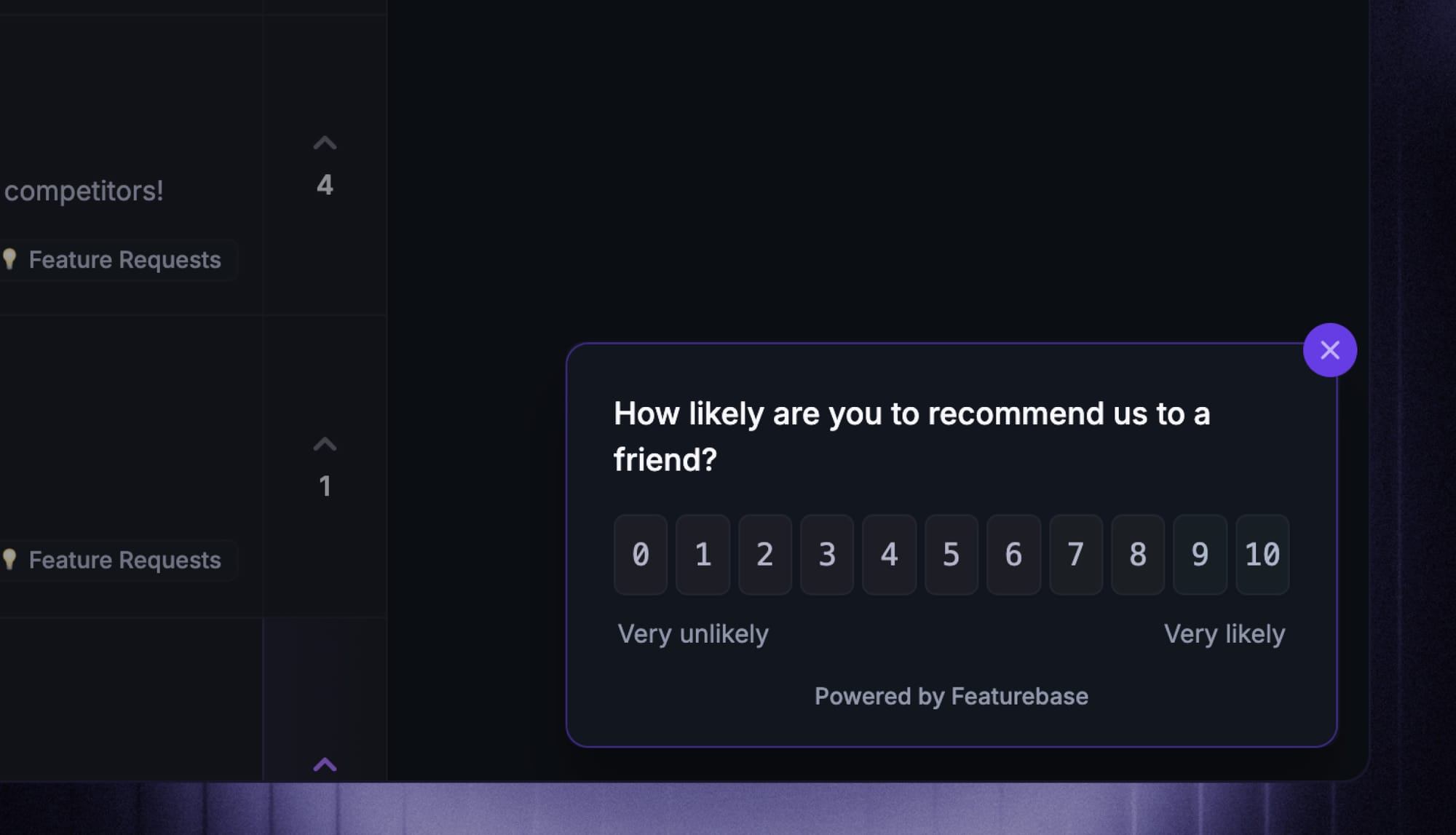
Track these together rather than in isolation. A single metric can mislead, but the trend across all 4 tells you whether your customer relationships are deepening or drifting.
Conclusion
Customer intimacy isn't fuzzy relationship talk. It's a deliberate strategy of knowing your customers so well you can anticipate their needs, then aligning your products, teams, and processes to serve them. Get it right and you earn the retention, loyalty, and lifetime value that far outlast any single sale.
The hardest part is building a reliable way to hear and act on what your customers are telling you. Featurebase is a feedback tool that helps you do exactly that. It brings feedback collection into one place with a public feature-voting forum, in-app widgets, and surveys, then connects each piece of feedback to customer revenue and data so you can prioritize what actually matters.
It comes with a Free plan and quick onboarding that doesn't need a credit card, so there's no downside to trying it. 👇
✨ Start collecting & managing feedback with Featurebase for free →
FAQs
What is a customer intimacy strategy?
A customer intimacy strategy is an ongoing commitment to deeply understanding your customers and aligning your business around what you learn. It goes beyond good service - it means continuously gathering insight into customer needs and using it to shape products, communication, and processes. The aim is to know your customers well enough to anticipate their needs rather than just react to them.
How is customer intimacy different from customer experience?
Customer experience is the end-to-end journey a customer has with your brand, focused on making every interaction smooth and consistent. Customer intimacy is the depth of understanding you build through that journey and use to act in personal, timely ways. Put simply, experience is about the quality of the interactions, while intimacy is about how well you know the person behind them.
What are the three value disciplines?
The 3 value disciplines come from Michael Treacy and Fred Wiersema's book The Discipline of Market Leaders. They are operational excellence (competing on price and efficiency), product leadership (competing on the best product), and customer intimacy (competing on how deeply you know and serve customers). The idea is that market leaders pick one to excel at while staying competent at the other two.
How do you measure customer intimacy?
You measure it with metrics that reflect the strength of your customer relationships over time. The most useful ones are retention and churn rate, Net Promoter Score, customer lifetime value, and repeat contact rate. Tracking these together shows whether your understanding of customers is translating into loyalty and long-term value.
How do CRM and feedback tools help build customer intimacy?
They help by centralizing what you know about each customer so your whole team can act on it instead of relying on scattered notes and assumptions. CRM systems unify customer data into a single view, while feedback tools capture the voice of the customer at scale. Featurebase, for example, lets you collect feedback through a public forum and in-app widgets and tie it to customer revenue, so you can see and prioritize what your most valuable customers actually want.
Is customer intimacy worth it for small businesses?
Yes, and small businesses often have an advantage. When you have fewer customers, it's far easier to talk to them directly, remember their preferences, and build genuine relationships. The challenge is keeping that intimacy as you grow, which is exactly why it's worth building the habits and systems for it early.