Blog Customer FeedbackCustomer Success Team: What It Is and How to Build One
Customer Success Team: What It Is and How to Build One
A practical guide to what a customer success team is, what it does, how to structure and build one, and the metrics that prove it's working.

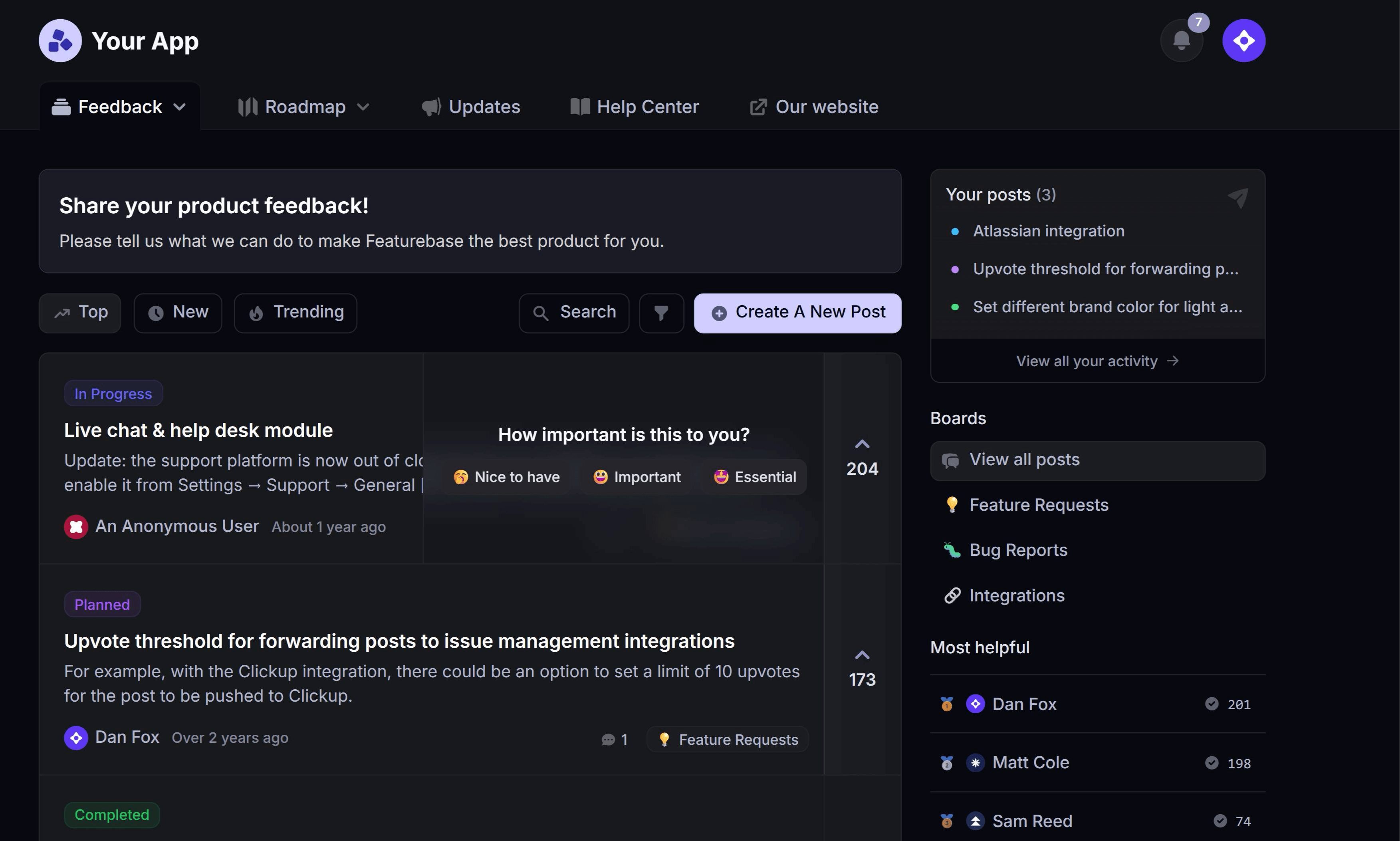

Keeping a customer costs a fraction of winning a new one, yet most growing companies still pour everything into acquisition and staff nothing but reactive support. A customer success team closes that gap. It's the function that makes sure customers actually reach their goals with your product, so they renew, expand, and stick around.
In this guide, I'll cover what a customer success team is, what it does day to day, how to structure and build one, and the metrics that tell you it's working. 👇
Key takeaways:
- A customer success team proactively helps customers reach their goals with your product, which drives retention and expansion revenue.
- It's different from support: support reacts to problems, while customer success prevents them and owns the long-term relationship.
- Core responsibilities include onboarding, driving adoption, monitoring account health, reducing churn, and surfacing expansion opportunities.
- Most teams pick a structure - pooled, segmented, pod, vertical, or hybrid - based on contract value and customer volume.
- Track gross retention, net revenue retention, time to first value, and expansion revenue to know if the team is delivering.
- Featurebase✨ gives your customer success team one place to collect feedback, run NPS and CSAT surveys, and close the loop with a public roadmap and changelog.
What is a customer success team?
A customer success team is a group of people whose job is to make sure your customers get real, measurable value from your product. Unlike support, which waits for a ticket, customer success reaches out first: guiding onboarding, watching how accounts use the product, and stepping in before a small problem turns into a cancellation.
The reason this matters is economic. Acquiring a new customer is anywhere from 5 to 25 times more expensive than retaining an existing one, according to Harvard Business Review. Once you've won a customer, keeping them happy is where the margin lives.
This is especially true for subscription and SaaS businesses, where revenue depends on renewals rather than one-off sales. If customers don't see value quickly, they churn, and no amount of new signups will outrun a leaky bucket.
Customer success vs. customer support
The two terms get used interchangeably, but they aren't the same:
- Customer support is reactive: a customer hits a problem, opens a ticket, and an agent resolves it. It's measured in resolution time and CSAT.
- Customer success is proactive: it owns the relationship over time, drives adoption, and is measured on retention and expansion.
Both matter, and most companies need both. Support keeps the product working. Customer success makes sure customers actually reach their goals with it.
Customer success vs. account management
Account management overlaps with customer success but sits closer to the commercial side of the business:
- Customer success focuses on outcomes and adoption, acting as the customer's advocate and staying out of hard sales conversations.
- Account management owns renewals, contracts, and upsell negotiations.
In smaller teams, one person often wears both hats. As you scale, splitting them lets customer success stay a trusted advisor while account management handles the money conversations.
What a customer success team actually does
Day to day, a customer success team owns a handful of core responsibilities:
- Onboarding: get new customers to their first real win as fast as possible, because early value is what makes everything else stick.
- Driving adoption: nudge customers toward the features and workflows that map to their goals, not just the ones they signed up for.
- Monitoring account health: watch usage and engagement signals to spot accounts that are quietly drifting away.
- Reducing churn: intervene early when an account looks at risk, and fix the root cause rather than the symptom.
- Finding expansion opportunities: surface upsells and new use cases when a customer is genuinely ready, not before.
- Carrying the voice of the customer: feed what customers want and where they get stuck back to the product team.
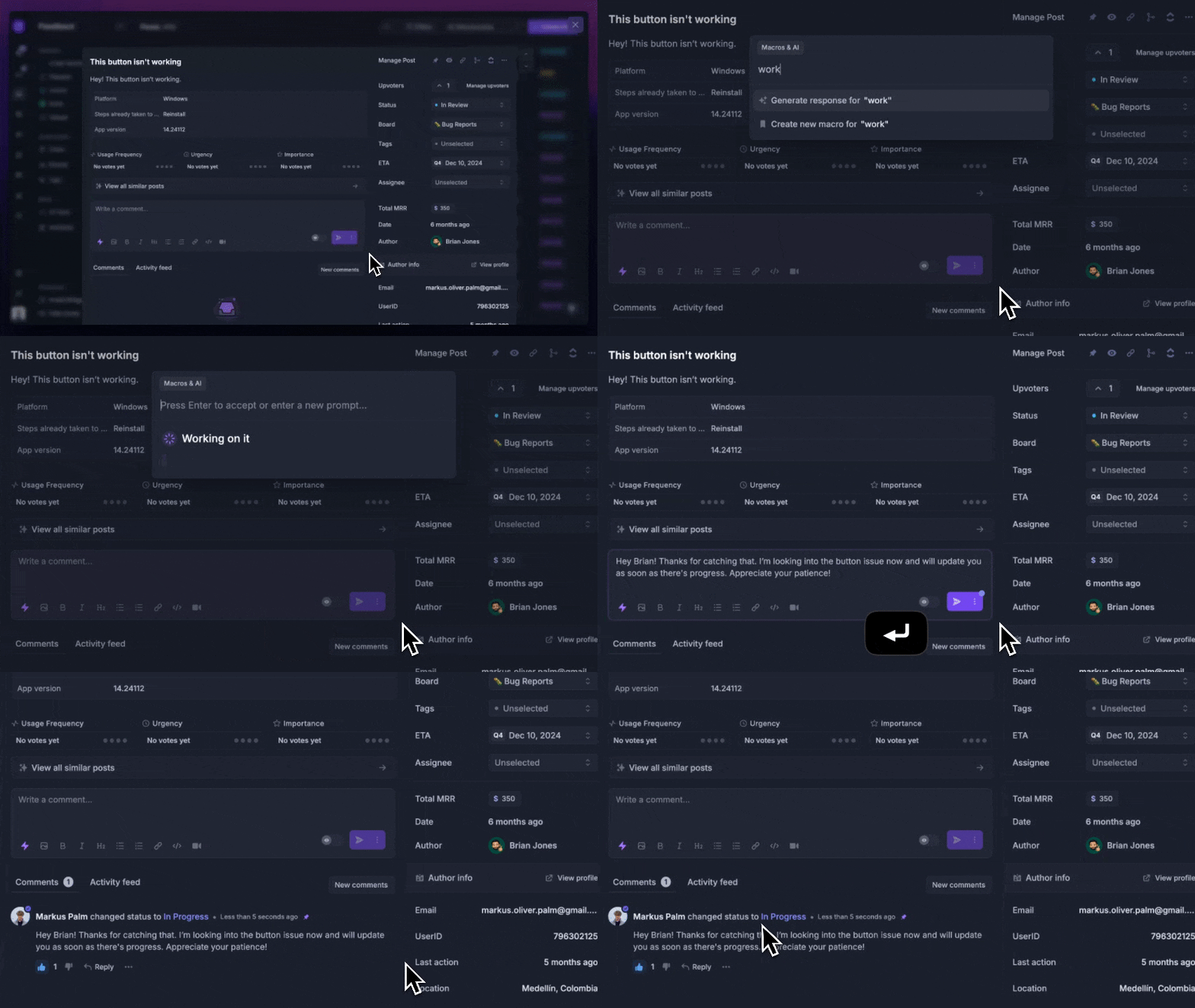
That last responsibility is where a tool like Featurebase earns its place. Your customer success team can centralize every feature request and piece of feedback in one forum, let AI group it into themes, and close the loop automatically when something ships, so customers see their input turn into real product changes.
The payoff of all this is retention. Increasing retention rates by just 5% can lift profits by 25% to 95%, based on Bain & Company research, and a customer success team is the function most directly responsible for that number.
Customer success team roles and structure
Core roles on a customer success team
As a team grows, responsibilities split across a few distinct roles:
- Customer Success Managers (CSMs): the strategic partners who own relationships, guide adoption, and drive renewals and expansion.
- Onboarding or implementation specialists: get customers set up and to first value with a smooth handoff from sales.
- Customer Success Operations (CS Ops): build the health scores, segmentation, and reporting that keep the team scalable.
- Team lead or VP of Customer Success: sets strategy, owns the retention number, and represents CS to the rest of the company.
In the early days, one generalist CSM covers most of this. Specialization comes as revenue grows.
5 team structure models (and when to use each)
How you organize CSMs depends on your customer base, deal size, and business model:
- Pooled: any CSM helps any customer, with no dedicated owners. Best for high-volume, low-value B2C or freemium SaaS.
- Segmented: CSMs own accounts grouped by revenue, size, or industry. This is the default for most scaling B2B companies.
- Pod: a small squad of specialists shares a book of business. Good for complex products serving multiple personas.
- Vertical: CSMs specialize by industry, which matters when compliance or domain knowledge is critical, like healthcare or fintech.
- Hybrid: mix touch levels by lifecycle stage or account value. This is where most mature teams end up.
How to build a customer success team from scratch
Start lean and add specialization as revenue grows. A realistic path looks like this:
- Define what success means for your customers: get concrete about the outcome a healthy customer achieves, because this becomes your north star.
- Map the customer journey: list every touchpoint from signup to renewal and mark where customers tend to get stuck.
- Pick a coverage model: go high-touch for your top accounts and digital or automated for the long tail, since you can't give everyone a dedicated CSM.
- Hire your first CSM: look for someone with onboarding or account-management experience who is proactive and comfortable with data.
- Set up your tech stack: you'll need a CRM, a way to track account health, and a channel to collect and act on customer feedback.
- Track baseline metrics from day one: measure retention and expansion from the start so you can prove the team's impact later.
A common rule of thumb is to invest roughly 10% of a contract's value in keeping that customer successful. A $12-per-month subscriber doesn't warrant a dedicated CSM, but a six-figure enterprise account absolutely does.
Customer success metrics that matter
A handful of metrics tell you whether the team is actually working:
- Gross Revenue Retention (GRR): the revenue you keep from existing customers, excluding upsells. Above 90% is generally healthy.
- Net Revenue Retention (NRR): GRR plus expansion revenue. Above 100% means expansion is outweighing churn.
- Time to first value: how long until a customer sees a real result. Faster time to value drives higher retention across every industry.
- Customer health score: a composite of usage, engagement, and sentiment that flags at-risk accounts before they churn.
- Expansion revenue: the dollars from upsells, cross-sells, and added seats within existing accounts.
NRR is the metric investors watch most closely. Median SaaS net revenue retention was around 101% in 2024, according to Benchmarkit's survey of roughly 1,000 B2B SaaS companies, with enterprise-focused companies running higher. Anything consistently above 100% means your customer base is growing on its own.
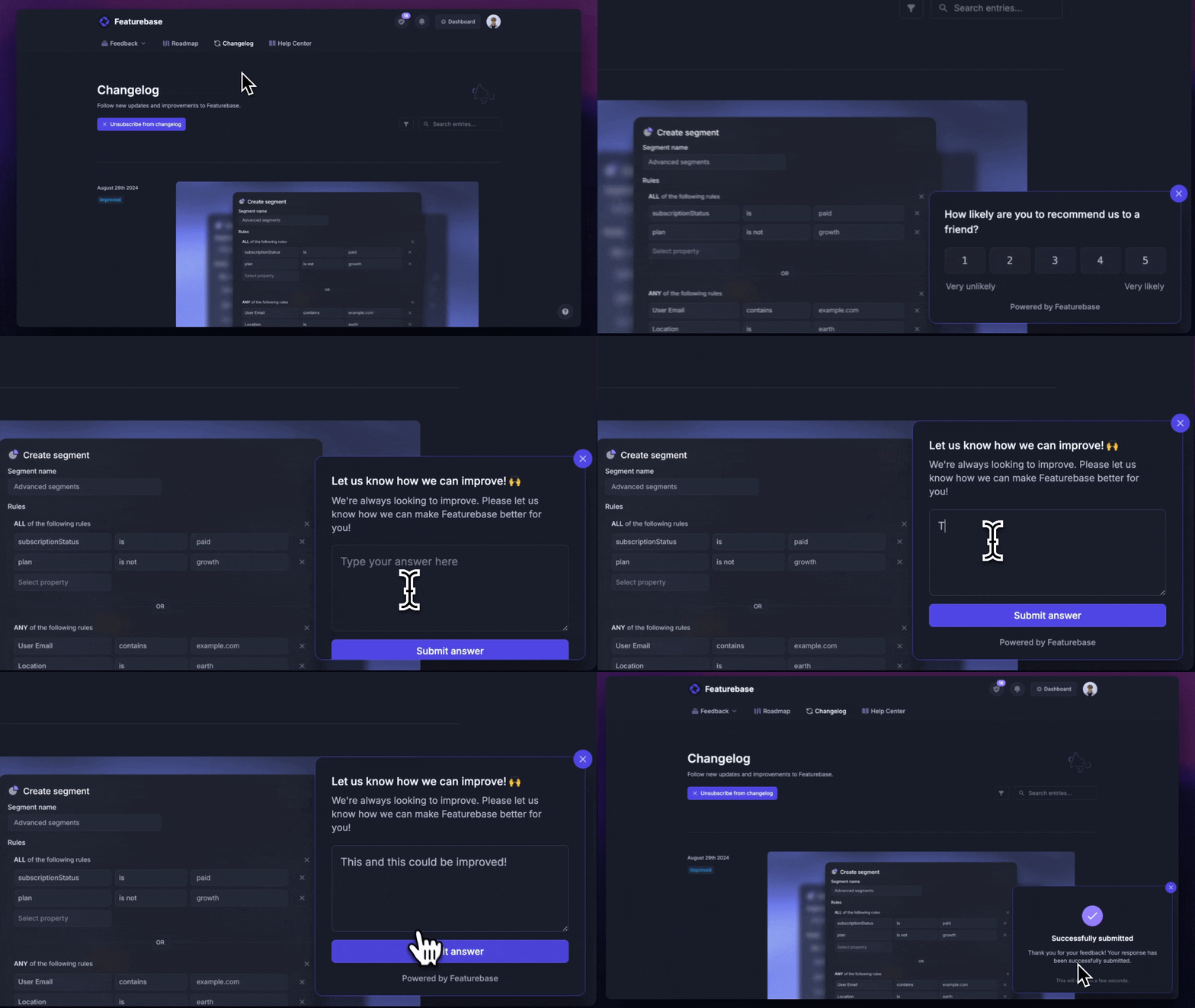
To keep those numbers moving, many teams run regular NPS and CSAT surveys to catch sentiment shifts early, then use a changelog and product updates to broadcast the value they're shipping. Both live alongside your feedback board inside Featurebase, so the same team can measure satisfaction and act on it in one place.
Give your customer success team a feedback engine: Featurebase
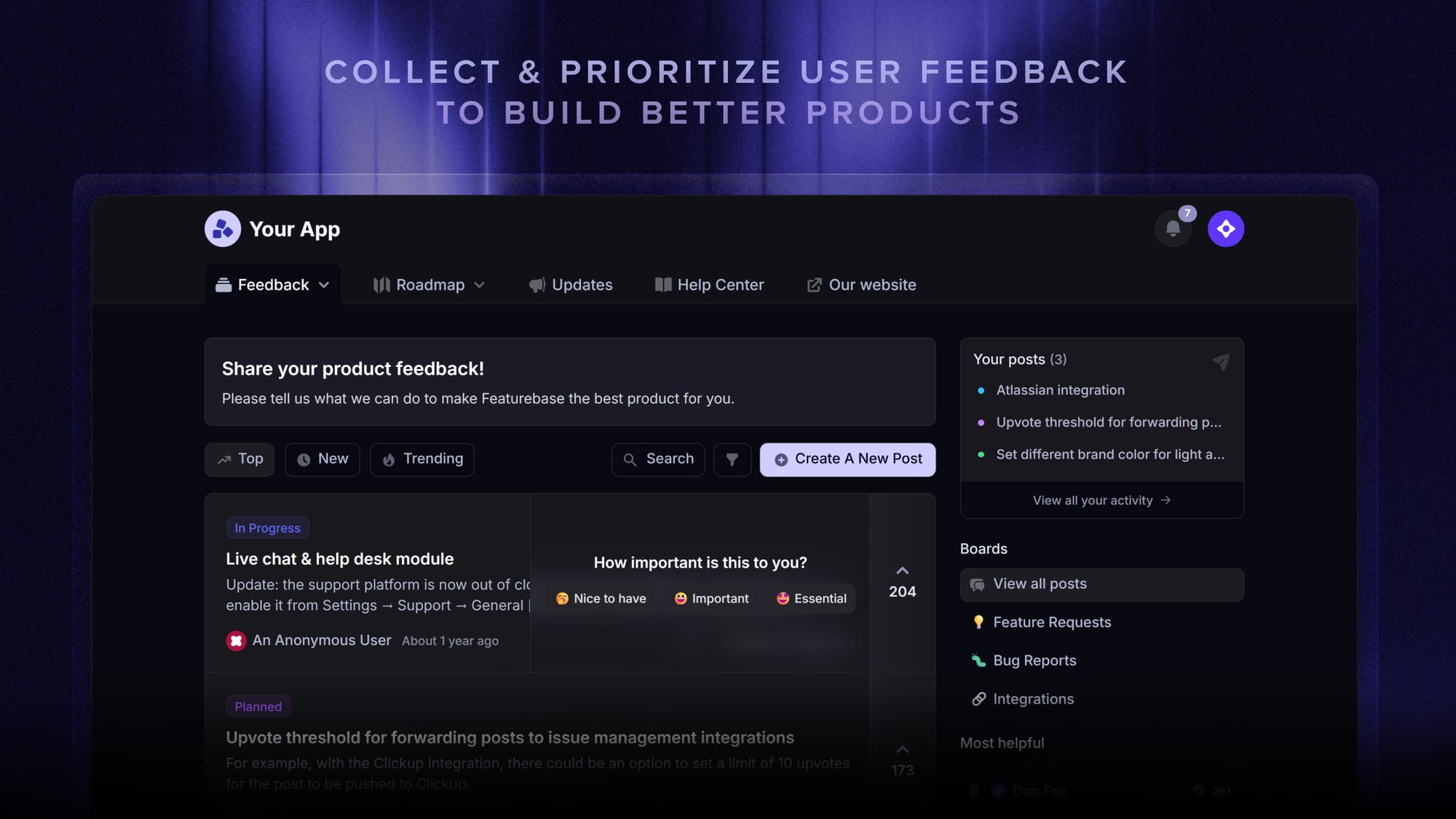
Featurebase is a modern feedback and support platform that helps product and customer success teams collect feedback, prioritize features, build roadmaps, and announce product updates, all in one place. It's loved by thousands of product teams from companies like Lovable, Raycast, and n8n. 💫
For a customer success team, it's the system that turns scattered customer input into visible progress:
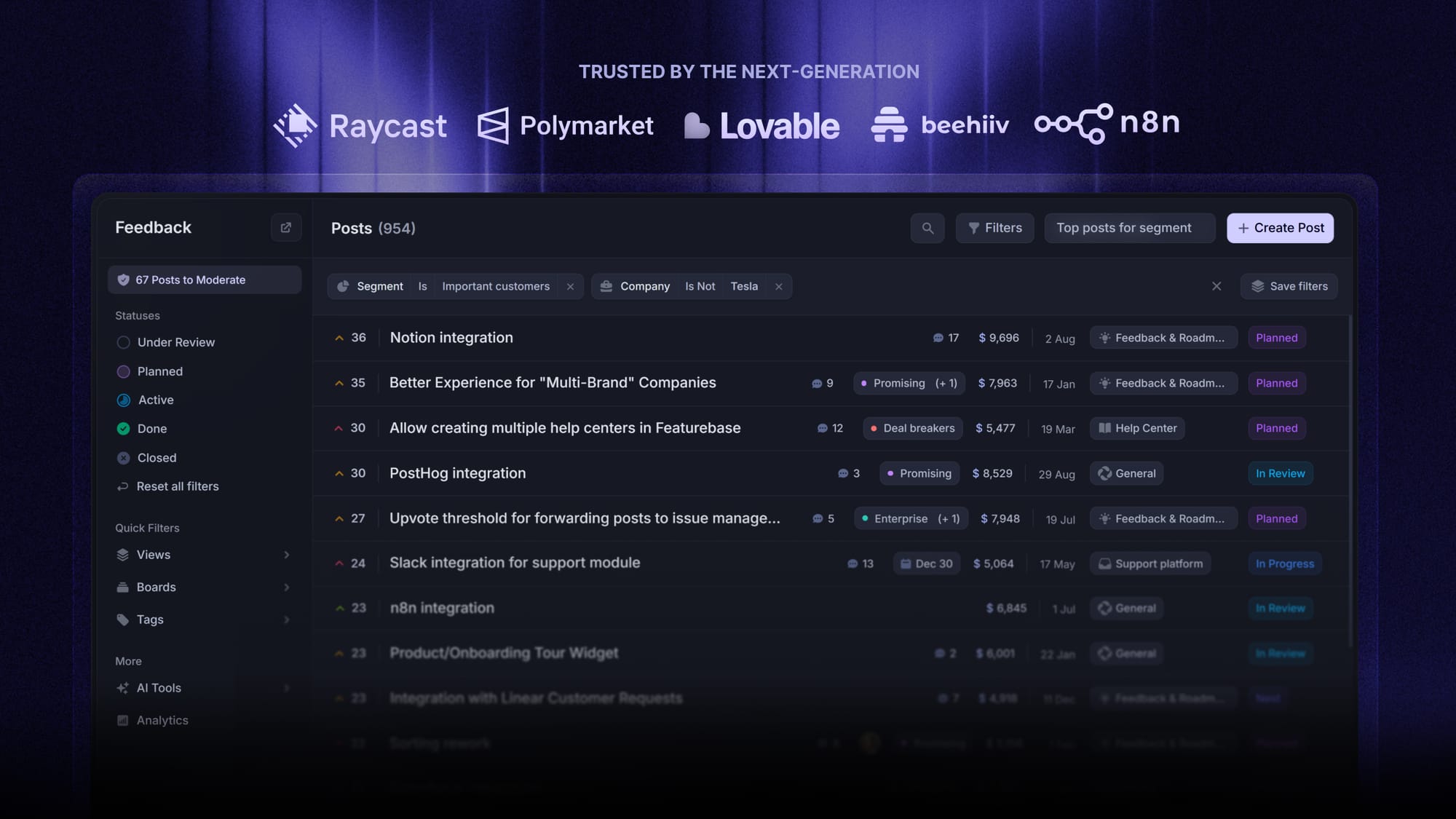
- Feedback forum – Let customers submit and vote on ideas so you always know what your accounts actually want
- Prioritize by revenue – Link feedback to customer revenue and company size to see which requests matter most to retention
- Surveys (NPS, CSAT, etc.) – Run targeted surveys to measure satisfaction and catch churn risk early
- Roadmaps – Share public or internal roadmaps so customers can see what's coming next
- Product updates – Announce shipped features with a changelog page, in-app widgets, and emails to close the loop
- Integrations – Connects with Slack, Linear, Jira, HubSpot, and more
Pricing: Free plan available with unlimited feedback collection. Paid plans start at $29/seat/mo.
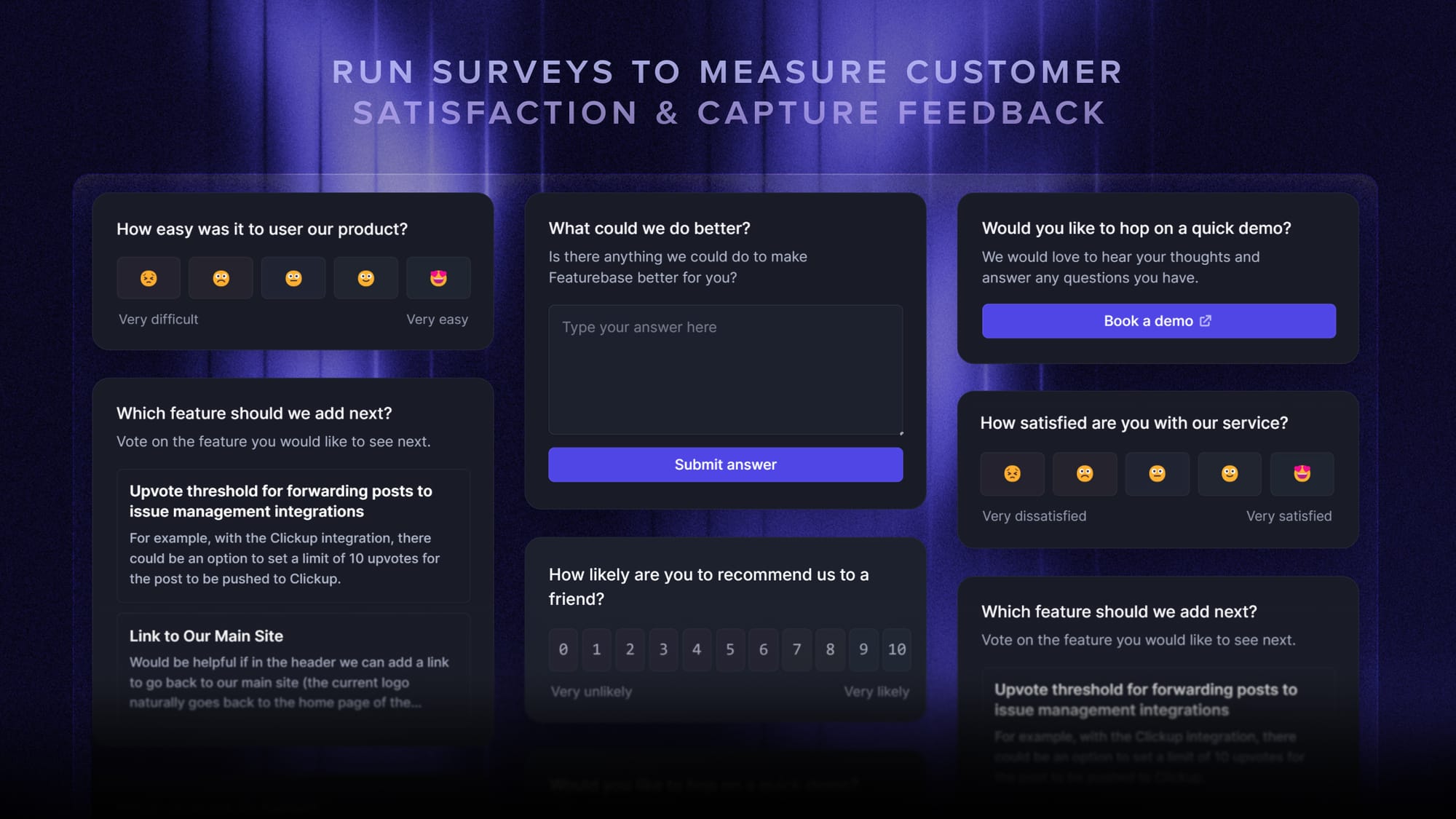
Instead of stitching together separate tools for feedback, surveys, roadmaps, and updates, your team gets one place to hear customers and show them their input turned into real changes.
Conclusion
A customer success team isn't a nice-to-have for growing subscription businesses. It's the function that protects and grows the revenue you already have. Get the fundamentals right - define what success looks like for your customers, structure the team around your accounts, hire proactively, and track the metrics that actually predict retention.
Featurebase is a modern & powerful feedback tool. It helps you collect feedback with a feature voting forum, surveys, embeddable widgets, and integrations. You can then analyze all of that feedback in one place by connecting it to your customers' revenue and data to make better product decisions.
It comes with affordable pricing and a Free plan allowing unlimited feedback. The onboarding is incredibly quick and doesn't require a credit card, so there's no downside to trying it. 👇
✨ Start collecting & managing feedback with Featurebase for free →
FAQs
When should you build a customer success team?
Most companies start investing in customer success once they're selling subscriptions and have accounts valuable enough that losing one genuinely hurts. A common trigger is moving upmarket, when larger customers need proactive guidance that reactive support can't provide. If churn is eating into your growth and your highest-value accounts need hand-holding to succeed, it's time.
How many accounts should one customer success manager handle?
It depends on your touch model and contract value. High-touch enterprise CSMs might manage 10 to 25 accounts, while tech-touch CSMs serving smaller customers can cover hundreds with automation doing the heavy lifting. A useful rule of thumb is to invest around 10% of a contract's value in keeping that customer successful, which naturally sets how many accounts one person can own.
What's the difference between customer success and account management?
Customer success focuses on helping customers achieve outcomes and adopt your product, acting as their advocate. Account management owns the commercial side: renewals, contracts, and upsell negotiations. In small teams one person often does both, but as you scale, separating them lets customer success stay a trusted advisor without the pressure of asking for money.
What tools does a customer success team need?
At minimum, you need a CRM to store account data, a way to track customer health and usage, and a channel to collect and act on customer feedback. Dedicated customer success platforms like Gainsight and ChurnZero handle health scoring and playbooks for larger teams. Featurebase covers the voice-of-customer side, giving your team one place to gather feedback, run NPS and CSAT surveys, and close the loop with a public roadmap and changelog.
Is customer success only for SaaS and subscription companies?
No. Any business that depends on repeat purchases or long-term customer value benefits from customer success, from ecommerce to professional services. It's most common in SaaS because recurring revenue makes retention existential, but the same principles of proactive engagement, measuring outcomes, and reducing churn apply anywhere loyalty drives growth.
What makes a great customer success manager?
The best CSMs are proactive relationship-builders who think in terms of long-term outcomes rather than quick fixes. They're comfortable with data, able to spot at-risk accounts before the customer complains, and willing to tell a poor-fit customer the truth. Domain knowledge in your customers' industry is a big plus, since it turns the CSM into a trusted advisor rather than just a product helper.