Blog Customer FeedbackSaaS Customer Success: A Practical Guide
SaaS Customer Success: A Practical Guide
Customer acquisition keeps getting more expensive, and churn quietly drains SaaS revenue. Here's what customer success actually is, why it matters, and how to run it.

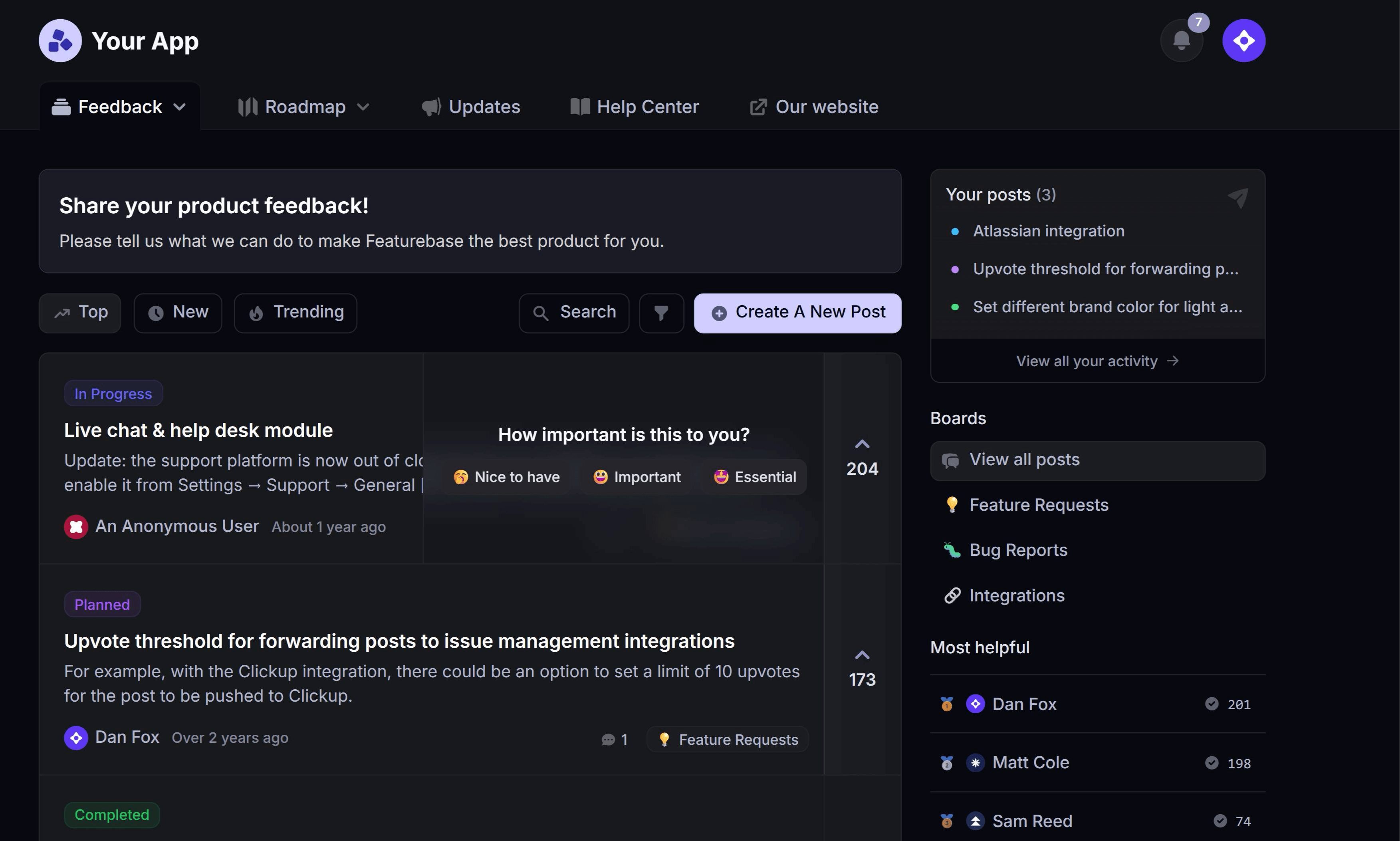

✨ Start collecting & managing feedback with Featurebase for free →
Growing a SaaS company can feel like filling a leaky bucket. You pour money into acquisition, sign new customers, and watch a chunk of them quietly churn out the bottom every month. And acquiring the next customer only gets more expensive.
Customer success is how the best SaaS companies fix the leak. Instead of chasing endless new logos, they keep and grow the customers they already have.
In this guide, I'll break down what SaaS customer success really is, why it matters, and how to actually run it. 👇
Key takeaways:
- Customer success is proactive: it's about guiding customers to real outcomes with your product, not waiting for them to raise a support ticket.
- It protects recurring revenue: in SaaS, most of a customer's value shows up after the first sale, so retention and expansion drive growth more than acquisition ever will.
- It's measured differently: net revenue retention, churn, health scores, and CSAT/NPS matter more than raw ticket volume.
- It runs across a lifecycle: onboarding, adoption, renewal, and advocacy each need their own play.
- Featurebase✨ helps you close the loop: collect feedback, run surveys, and announce what you shipped so customers see you acting on their input.
- You don't need enterprise scale to start: even a lightweight, feedback-driven process beats ignoring the customers you already have.
What is customer success in SaaS?
Customer success is the practice of proactively helping your customers reach their goals with your product, so they stay, spend more, and stick around.
In a SaaS business, you don't win when a customer buys. You win when they keep renewing. Because subscriptions renew monthly or yearly, the real revenue shows up over months and years of continued use, not the initial signup. Customer success exists to protect and grow that ongoing relationship.
The keyword is proactive. Support waits for a customer to hit a problem and raise a ticket. Customer success reaches out first: spotting an account that hasn't logged in, nudging a team that hasn't adopted a key feature, or checking in well before a renewal is at risk.
Done well, it's the difference between a customer who quietly cancels and one who upgrades and tells their network about you.
Customer success vs. customer support vs. account management
These 3 roles overlap so much that people use the names interchangeably. They aren't the same thing:
- Customer support is reactive: it solves the problems customers bring to you, like a bug, a billing question, or a how-to. It's measured by fast, accurate resolutions.
- Customer success is proactive: it drives customers toward outcomes and adoption before problems appear. It's measured by retention and expansion.
- Account management is commercial: it owns renewals, upsells, and the contract relationship, usually for a smaller book of larger accounts.
In practice, they blur together, especially at smaller companies where one person does all 3. But the mindset is different. Support fixes what's broken, success makes sure customers actually get value, and account management turns that value into revenue.
Why customer success matters for SaaS
The math is simple: keeping a customer is far cheaper than winning a new one. Research popularized by Bain & Company found that increasing customer retention by just 5% can lift profits by 25% to 95%. The same research notes that acquiring a new customer can cost 5 to 25 times more than retaining an existing one.
In SaaS, that gap is even sharper. Your customers pay you again and again, so a customer who stays 3 years is worth many times one who churns after 2 months. That's why investing in a real success function and the right customer retention software pays for itself.
There's also an expansion angle. Happy customers upgrade, add seats, and buy new products. It's why the best SaaS companies obsess over net revenue retention, a metric we'll cover below, where growth from your existing base can outpace what you'd get from new sales alone.
What a SaaS customer success team does
A customer success team owns the customer relationship after the sale. On a small team, that might be one person (or the founder). As you scale, it splits into a few customer success roles:
- Customer Success Manager (CSM): owns a portfolio of accounts, drives adoption, and runs renewals and check-ins.
- Onboarding specialist: gets new customers to their first win quickly, which sets the tone for the whole relationship.
- Customer success operations: builds the playbooks, health scores, and tooling the team runs on.
Their day-to-day responsibilities usually include:
- Onboarding new customers and driving early activation
- Monitoring account health and stepping in before customers churn
- Running renewals and spotting expansion opportunities
- Gathering feedback and carrying the customer's voice back to product
Whatever the size, the job is the same: make sure customers get enough value that staying is a no-brainer.
The customer success lifecycle
Customer success isn't a single moment; it's a cycle that repeats for the life of every account. Most teams break it into 4 stages:
- Onboarding: the customer sets up your product and reaches their first real win. This is the highest-leverage stage, because a rough onboarding creates churn that no amount of later effort can fix.
- Adoption: the customer builds your product into their daily workflow. The more people and use cases inside an account, the harder it is to leave.
- Renewal: the contract comes up and the customer decides whether to continue. If onboarding and adoption went well, this is a formality.
- Advocacy and expansion: happy customers upgrade, add seats, and refer others. Sharing product updates that show what you've shipped keeps that momentum going.
The trap is treating onboarding as the finish line. Value has to keep compounding, or customers drift and churn when renewal comes around.
Customer success metrics that matter
You can't manage customer success on vibes. A handful of customer success metrics tell you whether customers are actually getting value:
- Net revenue retention (NRR): the north-star metric. It measures how much recurring revenue you keep and grow from existing customers over a year, including upgrades and minus churn. Above 100% means your customer base grows even with zero new sales.
- Churn rate: the percentage of customers or revenue you lose in a period. It's the clearest single sign that success is or isn't working.
- Customer health score: a composite of signals like product usage, support tickets, and engagement that flags at-risk accounts before they churn.
- CSAT and NPS: direct satisfaction and loyalty signals. If you're weighing them up, our NPS vs CSAT breakdown explains when to use each.
For context on NRR, SaaS Capital's benchmarks put the median private B2B SaaS company around 100%, with best-in-class teams clearing 120%.
The easiest way to track satisfaction is to just ask. You can run in-product surveys to measure CSAT and NPS at the exact moments that matter, like right after onboarding or a support interaction.
How to build a SaaS customer success strategy
You don't need a huge team to start. You need a repeatable process. Here's a practical way to build one:
- Segment your customers: not every account deserves the same attention. Split by revenue, potential, or risk so your effort goes where it matters most.
- Define what success looks like: for each segment, pin down the outcome the customer is trying to reach and the milestones on the way there.
- Map the lifecycle to actions: decide what happens at onboarding, at adoption checkpoints, and before renewal, then turn those into playbooks anyone can run.
- Instrument health and feedback: track the metrics above and build a clear customer feedback strategy so you catch problems and requests early.
- Close the loop: act on what you learn, then tell customers you did it. Nothing builds loyalty like seeing your own feedback shipped.
Start lightweight. A simple, consistent process beats an elaborate one you can't keep up with.
How customer feedback powers customer success
Here's the throughline of everything above: customer success runs on knowing what your customers actually want, then acting on it. That's a feedback loop.
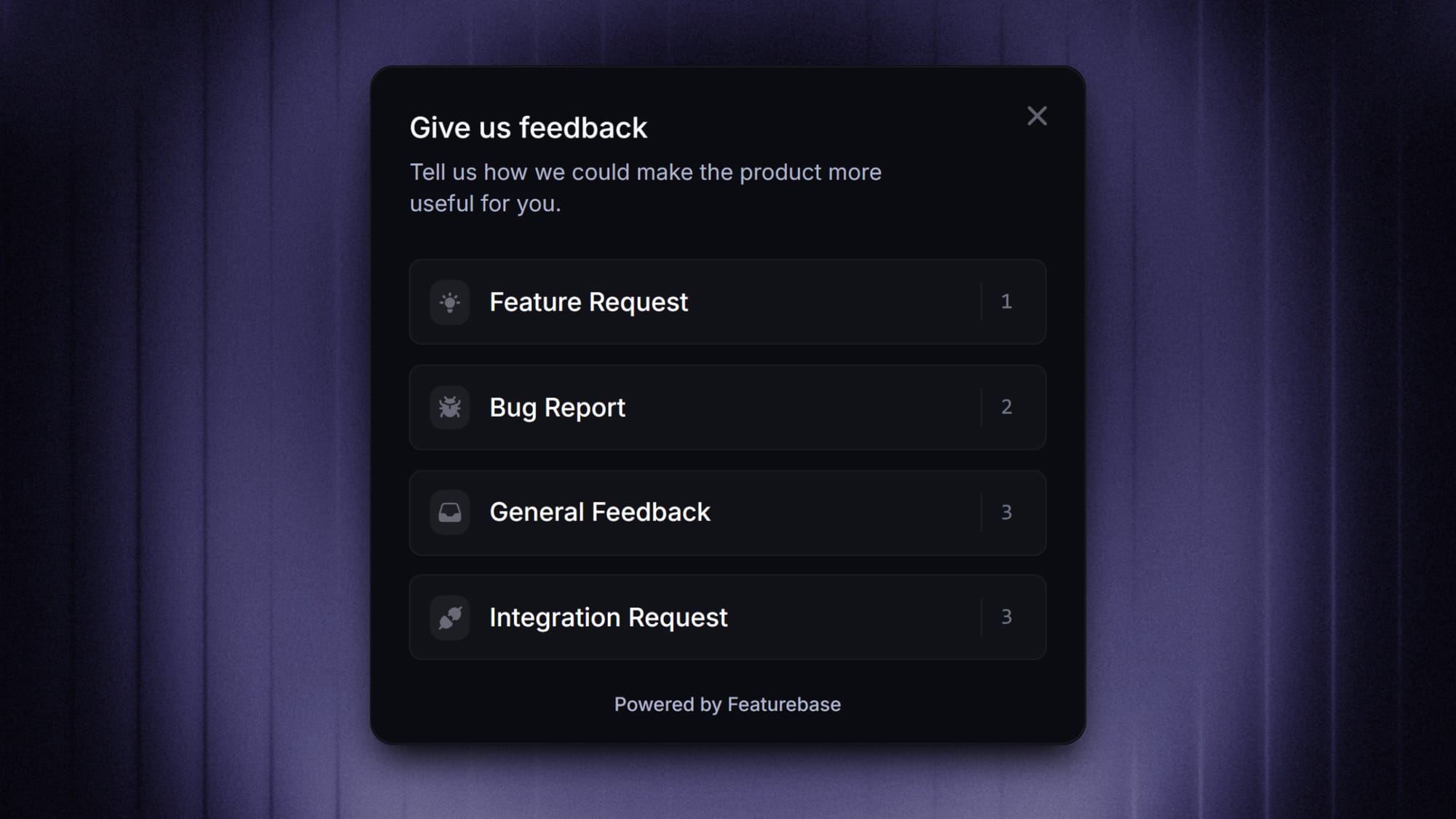
When you consistently collect feedback, you spot friction before it turns into churn, you learn which features drive retention, and you show customers you're listening. Ignoring feedback does the opposite. It quietly erodes trust until customers leave without a word.
The practical version looks like this. Centralize requests in one place instead of scattering them across email, calls, and Slack. Let customers vote so you can see what matters most. Then close the feedback loop by telling people when their idea ships.
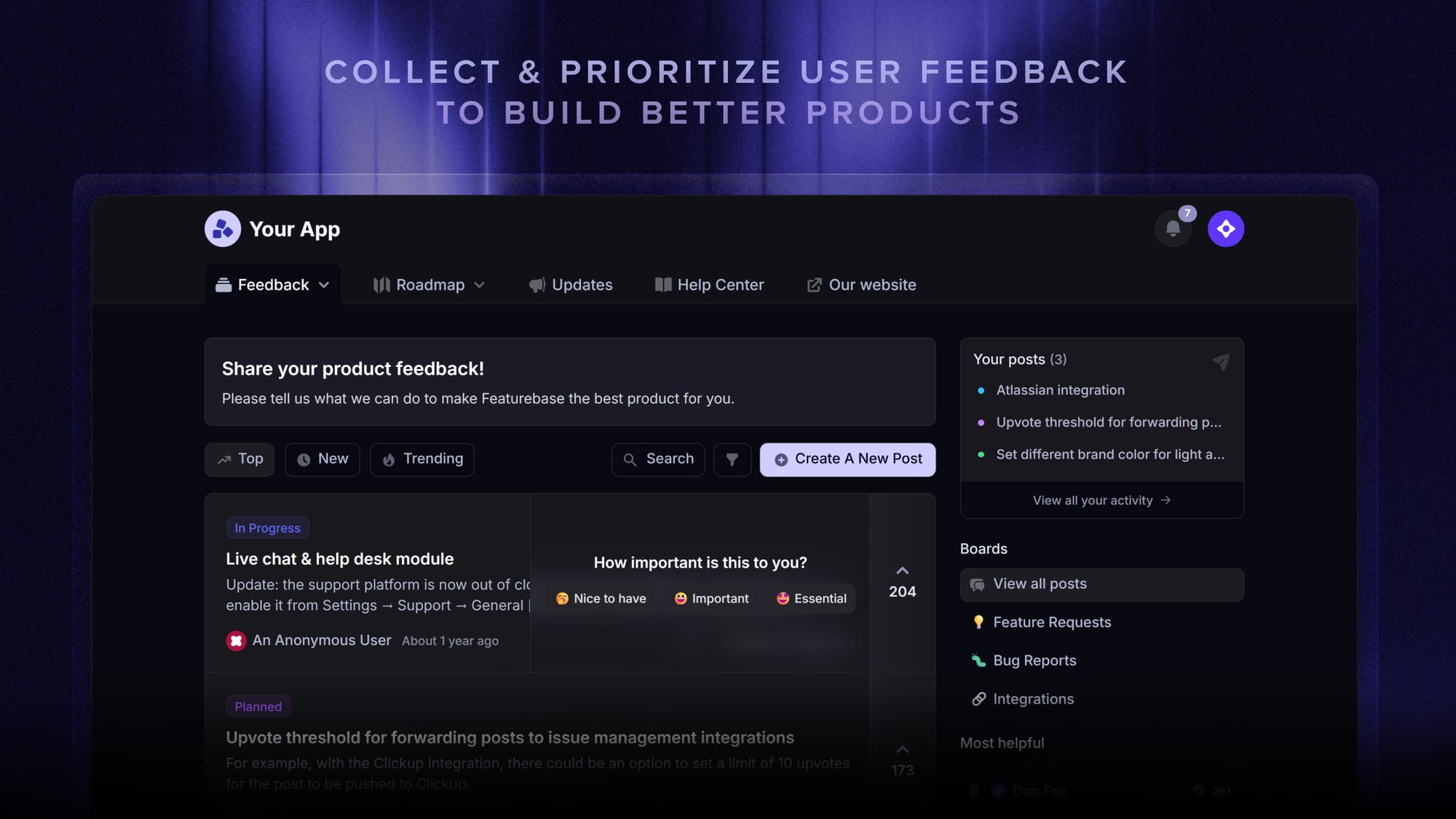
This is where a dedicated tool helps. With Featurebase, you can collect feedback through a public forum and in-app widgets, prioritize requests by the revenue behind them, and announce what you shipped so customers see their input turn into product. It turns the voice of the customer into a retention engine instead of a suggestion box nobody reads.
Conclusion
Customer success isn't a nice-to-have in SaaS, it's how the business survives. When you keep customers, help them reach real value, and grow the accounts you already have, retention and expansion do the heavy lifting that acquisition alone never could.
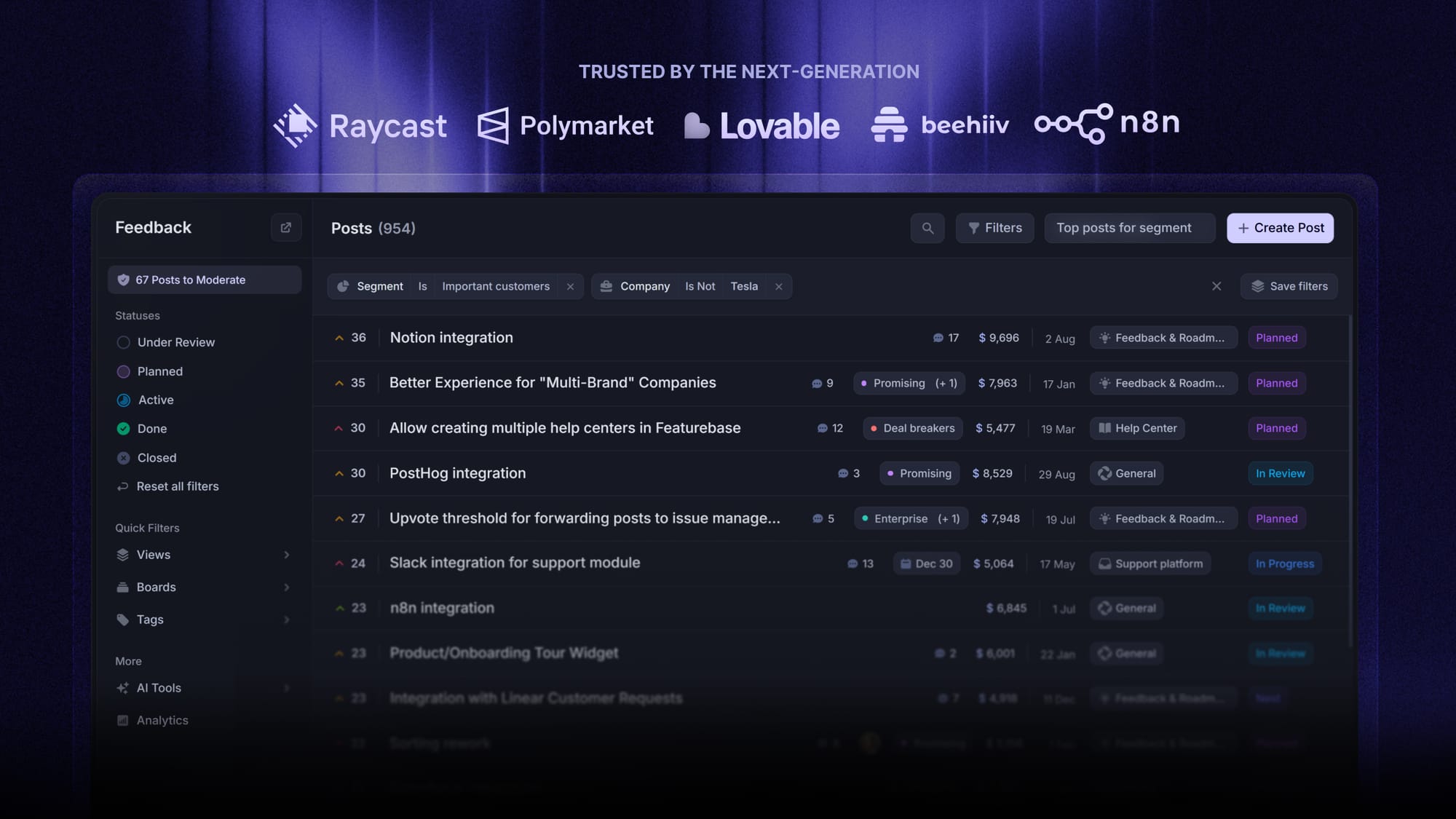
If you want one place to run that feedback loop, Featurebase is built for it: collect requests through a forum and in-app widgets, prioritize them by the revenue behind each account, then close the loop with surveys and product updates.
There's a free plan with unlimited feedback and no credit card required, so it's easy to try on your own terms. 👇
✨ Start collecting & managing feedback with Featurebase for free →
FAQs
When should a SaaS company hire its first customer success manager?
Usually once you have enough recurring revenue and customers that onboarding and renewals no longer fit around everyone's other jobs. For many SaaS companies that's somewhere after the first 10 to 20 paying accounts, or when a founder is spending more time keeping customers happy than building the product. The trigger is workload and retention risk, not a headcount target.
Is customer success only important for enterprise SaaS companies?
No. Every SaaS business with recurring revenue lives or dies on retention, regardless of size. Smaller and product-led companies simply run success differently, leaning on digital-touch tactics like in-app guidance, automated check-ins, and self-serve resources instead of a dedicated CSM for every account.
How does customer success support product-led growth?
In a product-led model, the product itself drives signups and expansion, so customer success focuses on removing friction inside the product and acting on in-product behavior. By watching adoption signals and feeding user feedback back to the product team, success helps more free users reach value and convert, then expand, without a heavy sales motion.
What is a good net revenue retention rate for SaaS?
A net revenue retention above 100% is the goal, since it means your existing customers generate more revenue over time even before any new sales. SaaS Capital's benchmarks put the median private B2B SaaS company near 100%, with best-in-class companies clearing 120%. SMB-focused products tend to sit lower than enterprise ones because smaller customers churn more.
How many accounts should one customer success manager handle?
It depends entirely on the touch model. A high-touch CSM working with large enterprise accounts might manage 10 to 25, while a low-touch or digital CSM covering smaller customers can handle hundreds with the help of automation. Rather than copy someone else's ratio, size it to how much revenue and risk sits in each account.
Do you need a dedicated customer success platform?
Not on day one. Early on, a spreadsheet and your existing tools can track health and renewals fine. As you scale, dedicated tooling saves real time, and the highest-leverage place to start is usually feedback: Featurebase lets you centralize requests, run surveys, and close the loop with product updates so you can act on what customers want before they churn.