Blog Customer FeedbackCustomer Retention Management: A Practical Guide
Customer Retention Management: A Practical Guide
Customer retention management is how you keep the customers you already have. Here's what it means, the metrics that predict churn, and a strategy you can run this quarter.

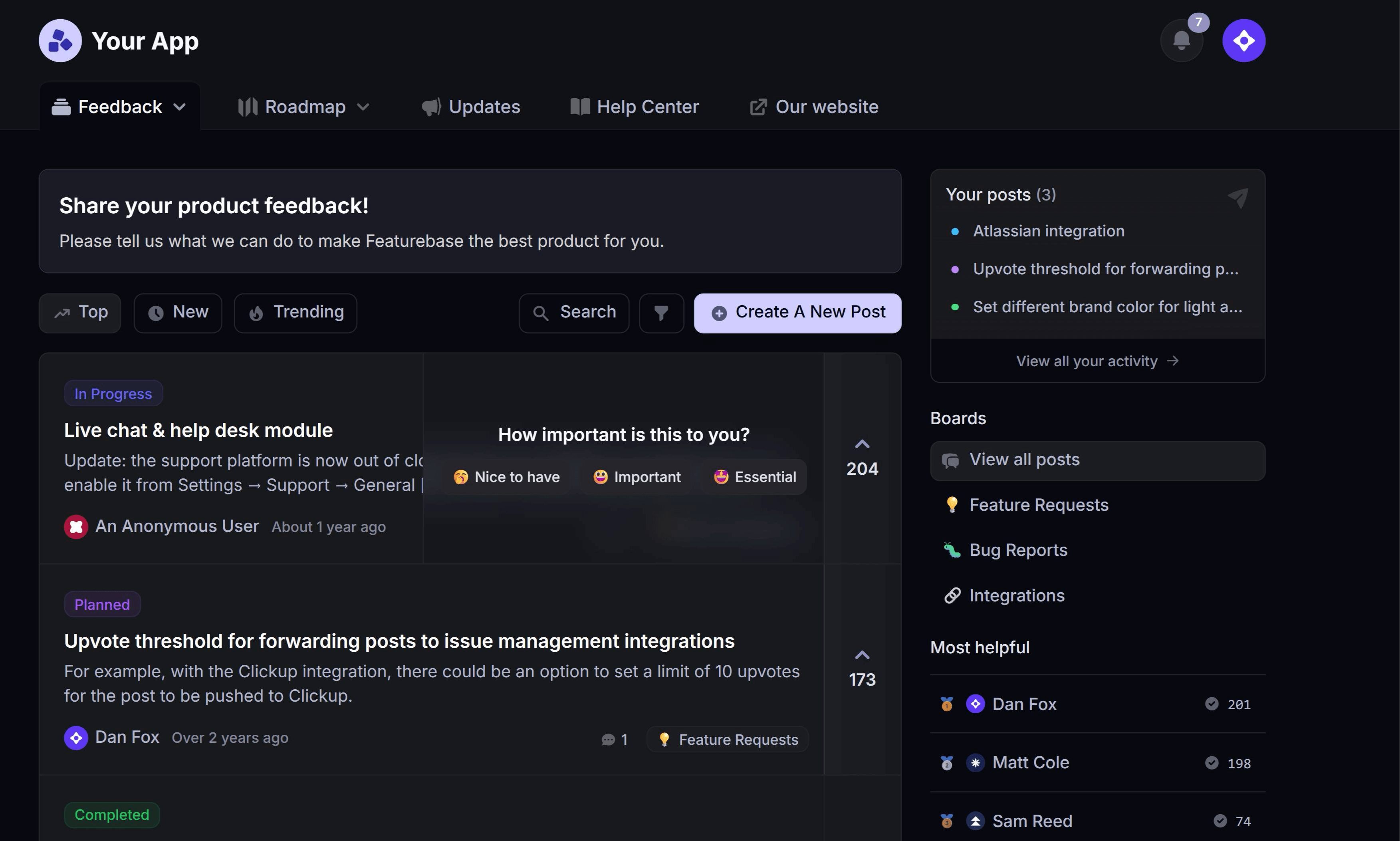

✨ Turn customer feedback into better retention with Featurebase →
Most teams pour their budget into winning new customers, then watch a chunk of them quietly slip away a few months later. It's the leaky-bucket problem: you keep pouring water in the top while it drains out the bottom.
Customer retention management is how you plug the leak. It's a repeatable system for keeping the customers you already have, instead of constantly replacing the ones you lose.
In this guide, I'll cover what it actually is, why it beats chasing new logos, the metrics that predict churn before it happens, and a strategy you can put to work right away. 👇
Key takeaways
- Customer retention management is the ongoing practice of keeping existing customers active and satisfied, not a one-off discount or win-back email.
- Retention is far cheaper than acquisition. Winning a new customer costs 5 to 25 times more than keeping one you already have.
- Small retention gains compound. A 5% lift in retention can raise profits anywhere from 25% to 95%.
- The core loop is simple: measure how customers feel, spot the ones at risk, and act before they leave.
- Track the metrics that predict churn - retention rate, churn rate, customer lifetime value, and net revenue retention - not just the ones that report it after the fact.
- Featurebase✨ helps you run the retention loop in one place with a feedback forum, NPS and CSAT surveys, product updates, and customer support.
- Most churn is preventable. The customers who leave usually gave off signals long before they cancelled.
What is customer retention management?
Customer retention management is the practice of systematically keeping your existing customers active, satisfied, and subscribed over time.
The key word is systematically. A single retention tactic - a loyalty discount, a save offer when someone tries to cancel - is not retention management. Retention management is the ongoing process of measuring how many customers you keep, understanding why the rest leave, and acting on that before they go.
It helps to separate two things that get used interchangeably:
- Customer retention is the outcome - the share of customers who stay with you over a given period.
- Customer retention management is the system that produces the outcome - the metrics you watch, the signals you act on, and the routines your team runs to keep customers around.
You can think of it as the difference between weighing yourself and actually having a plan to stay healthy. One is a number. The other is what moves the number.
Why customer retention management matters
The simplest reason is cost. Acquiring a new customer is anywhere from 5 to 25 times more expensive than retaining an existing one, according to research collected by Harvard Business Review. Every customer who churns is money you now have to spend again just to get back to where you were.
The upside compounds, too. Research by Frederick Reichheld of Bain & Company found that increasing customer retention rates by 5% increases profits by 25% to 95%. That's because retained customers tend to buy more over time, cost less to serve as they learn your product, and refer people who look like them.
There's also the math of growth. If you're losing customers as fast as you're adding them, you're running hard just to stay flat. Retention is what turns acquisition into actual growth instead of expensive replacement. This is exactly why the customer acquisition vs retention debate almost always lands on the same answer: you need both, but retention is where the margin lives.
The core elements of customer retention management
Good retention management isn't one activity. It's a handful of moving parts working together across the customer's whole lifecycle:
- Right-fit acquisition: retention starts before the sale. When you attract customers who actually match what your product does well, they're far more likely to stick. Chasing poor-fit customers just fills the bucket with people who were always going to leak out.
- Onboarding and activation: the fastest way to lose a new customer is to let them wander without reaching value. Getting people to their first real win quickly is one of the highest-leverage retention moves there is.
- Ongoing value and engagement: customers stay when your product keeps earning its place. That means shipping improvements, staying in touch, and reminding people of the value they're getting.
- Feedback and recovery: listening to customers, acting on what they say, and catching unhappy ones early is how you fix problems before they turn into cancellations.
Miss one of these and the others have to work harder to make up for it. A great onboarding flow won't save you if the product stops improving, and a strong product won't save you if you only ever hear from customers on their way out the door.
Customer retention metrics that actually predict churn
You can't manage what you don't measure. But most teams over-index on the metrics that report churn after it's happened, and under-index on the ones that predict it. Here are the ones worth watching:
- Customer retention rate (CRR): the percentage of customers you keep over a set period. Measure it by cohort so you can see whether newer customers are stickier than older ones, not just your blended average.
- Churn rate: the flip side of retention - the share of customers (or revenue) you lost. Watching it monthly by segment tells you where the leaks are, not just that they exist.
- Customer lifetime value (CLV): the total revenue you expect from a customer across the whole relationship. Rising CLV is one of the clearest signs your retention work is paying off.
- Net revenue retention (NRR): how much revenue you keep from existing customers over time, including upgrades and downgrades. An NRR above 100% means your existing base is growing on its own, even before you add anyone new.
- Repeat purchase rate: the share of customers who come back to buy again. It's a fast, honest read on whether people actually want more of what you sell.
- CSAT and NPS: satisfaction and loyalty scores are leading indicators. They tend to dip weeks or months before a customer actually leaves, which makes them an early-warning system rather than a post-mortem.
That last group matters most for prevention. If you only track retention and churn, you find out about problems once the customer is already gone.
How to build a customer retention management strategy
You don't need a huge team or a fancy platform to start. You need a loop you actually run. Here's a practical version any product or support team can follow:
- 1. Set a retention baseline: measure your current retention and churn rates by cohort before you change anything. Without a starting number, you won't know whether what you try later actually works.
- 2. Segment by risk and value: not every customer deserves the same attention. Group them by how likely they are to churn and how much they're worth, so your effort goes where it matters most.
- 3. Nail onboarding: map the onboarding path to a customer's first real win and remove every bit of friction on the way there. The faster people reach value, the less likely they are to quietly disappear in month two.
- 4. Measure satisfaction continuously: send short NPS, CSAT, and CES surveys at the moments that matter, like after onboarding or a support interaction. This is where a tool like Featurebase helps - you can run targeted in-app surveys to catch dropping satisfaction while there's still time to fix it.
- 5. Close the feedback loop: collecting feedback only works if customers see something come of it. When you close the loop by shipping a requested feature and telling the people who asked, you turn a complaint into a reason to stay. Featurebase gives you a feedback forum plus automatic updates so customers know their input actually shipped.
- 6. Be proactive, not reactive: reach out to at-risk accounts before they reach out to cancel. A proactive check-in, a helpful tip, or a fix for a problem they haven't complained about yet does more for retention than any save offer at the exit.
Run this loop on a regular cadence and retention stops being a fire drill. It becomes something your team manages on purpose.
Common customer retention mistakes to avoid
Even teams that care about retention trip over the same few things:
- Only acting after customers churn: by the time someone cancels, you've usually missed months of warning signs. Retention is won in the middle of the relationship, not at the exit interview.
- Treating every account the same: spreading attention evenly means your best customers get the same care as accounts that were never a fit. Prioritize by value and risk instead.
- Ignoring the feedback you already have: most companies sit on a pile of support tickets, survey responses, and feature requests that spell out exactly why people leave. Collecting feedback and then doing nothing with it is worse than not asking.
- Skipping onboarding: a customer who never reaches value has no reason to stay. Weak onboarding quietly caps your retention no matter what you do later.
- Chasing acquisition to cover the leak: pouring more customers into a leaky bucket feels like growth, but it just raises your costs. Fix the leak first.

Turn feedback into products your users love
Centralize feedback, identify product opportunities, and build the right features
Conclusion
Customer retention management comes down to a simple loop: measure how your customers feel, catch the ones drifting away, and act before they leave. The teams that win at retention aren't doing anything magic. They've just built that loop into how they operate, and they run it consistently.
Featurebase is a feedback platform that helps you run that loop in one place. You can collect and prioritize customer feedback in a public forum, measure satisfaction with built-in NPS and CSAT surveys, close the loop by announcing what you've shipped, and connect feedback to customer revenue so you act on what actually keeps accounts around.
It comes with a Free plan and quick onboarding that doesn't require a credit card, so there's no downside to trying it. 👇
✨ Improve customer retention with Featurebase for free →
FAQs
What's a good customer retention rate?
A good rate depends on your industry and business model. SaaS and subscription businesses often aim for an 85-95% annual customer retention rate, while ecommerce and consumer apps typically run lower. Rather than chase a universal benchmark, track your own rate over time and compare it against peers in your specific category.
What are the three R's of customer retention?
The three R's of customer retention are:
- Retention - keeping the customer active and subscribed
- Related sales - growing the account through upsells and cross-sells
- Referrals - turning happy customers into a source of new ones
Together they capture the full value a retained customer creates well beyond their first purchase.
How often should you measure customer retention?
Track your core retention and churn metrics on a monthly or quarterly cadence, ideally by cohort so you can see how each group of customers behaves over time. Satisfaction signals like CSAT and NPS are worth collecting continuously, since they tend to warn you about problems weeks before those problems show up in your churn rate.
What are the main reasons customers churn?
Most churn traces back to a few recurring causes:
- Unrealized value - the customer never reached the outcome they signed up for
- Poor or slow support - unresolved issues that wear down trust
- A better or cheaper alternative - a competitor closed the gap
- Neglect - no proactive contact, so the customer quietly drifts away
The common thread is that almost all of these are visible early if you're actually watching for them.
Is customer retention the same as customer loyalty?
Not quite. Customer retention is a behavior and a metric - whether a customer keeps buying or stays subscribed. Customer loyalty is the emotional preference behind that behavior - how much a customer actually wants to stay and recommend you. You can retain customers who aren't loyal because switching is a hassle, but loyalty is what makes retention durable instead of accidental.
What should you look for in customer retention software?
The right customer retention software helps you run the full retention loop, not just one slice of it. The essentials are a way to measure satisfaction (CSAT, NPS, and CES surveys), a channel to collect and act on customer feedback, clear churn and retention reporting, and responsive support. Featurebase brings surveys, a feedback forum, product updates, and an AI-powered support inbox together in one place, so you can spot at-risk customers and act on what they tell you without stitching five tools together.