Blog Customer ServiceHigh-Touch Customer Service: A Complete Guide
High-Touch Customer Service: A Complete Guide
Learn what high-touch customer service is, when to use it, and how to deliver personal, relationship-driven support without burning out your team.

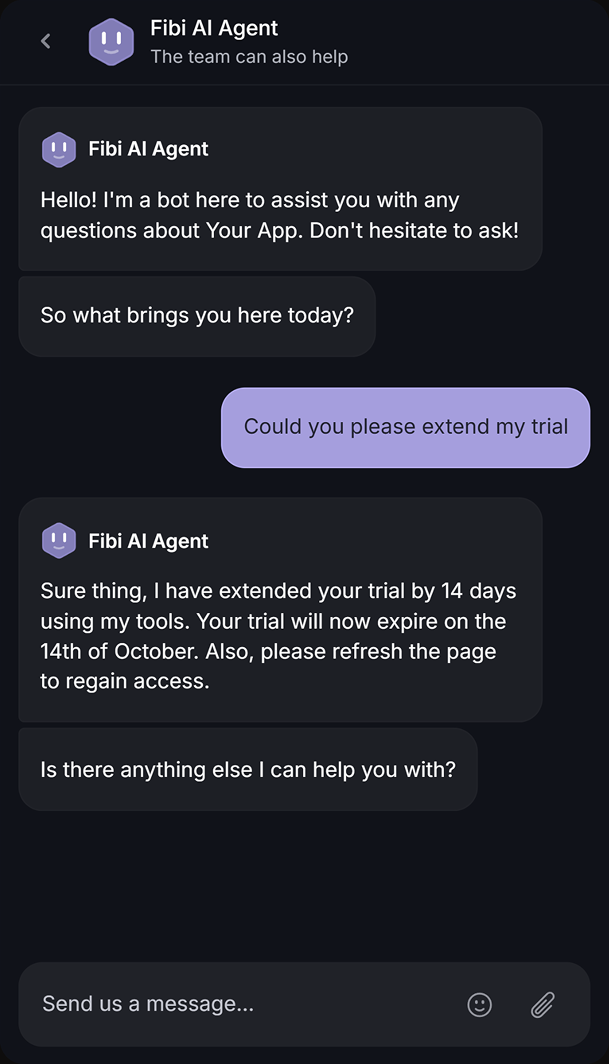

✨ Automate your support with the fastest AI-enhanced Inbox today →
Most customers have gotten used to support that feels like a vending machine: pick an option, wait, get a canned reply. It works until it doesn't. One impersonal, frustrating experience is often all it takes for a customer to start looking elsewhere.
High-touch customer service is the opposite. It puts real people and personal attention at the center of how you support customers, and it's one of the strongest ways to earn loyalty.
Here's what high-touch service is, when it's worth it, and how to deliver it without stretching your team too thin. 👇
Key takeaways
- High-touch customer service is a relationship-first model built on personalized, human-led support for customers who need more than self-service.
- It's the opposite of low-touch (automated, self-serve) and tech-touch (fully automated). Most teams blend all three rather than picking one.
- It drives loyalty, retention, and expansion, which is why it pays off most with high-value, complex accounts.
- The core moves are simple: dedicated contacts, personalized onboarding, proactive outreach, feedback loops, and smart automation.
- You don't need a huge team to pull it off. Segmenting your accounts and automating routine work lets you deliver high-touch where it actually counts.
- Featurebase✨ combines an AI-powered inbox, help center, and feedback tools so small teams can deliver high-touch support at scale.
What is high-touch customer service?
High-touch customer service is a hands-on, personalized support model built around frequent, human-led interactions. Instead of routing everyone through the same self-service flow, it gives customers direct access to real people who understand their goals and context.
The word "touch" just means contact. High-touch service has a lot of it: direct, personal, and proactive.
A few things separate it from standard support:
- Personalization: support is tailored to each customer's setup, goals, and history, not a one-size-fits-all script.
- Human-to-human contact: real people handle the important moments, not just bots and macros.
- Proactive outreach: you reach out before something breaks, rather than waiting for a complaint.
- Dedicated ownership: a named contact knows the account and follows it over time.
It's usually reserved for high-value or complex customers, where a generic answer just doesn't cut it.
High-touch vs. low-touch (vs. tech-touch)
Not every customer needs the same level of attention. Understanding the 3 main engagement models helps you decide where human effort actually pays off:
- High-touch: human-led, personalized service across the customer's lifecycle. Think dedicated contacts, custom onboarding, and regular check-ins.
- Low-touch: efficient, largely self-directed support. Think knowledge bases, chatbots, and automated emails, with limited human input.
- Tech-touch: a fully automated subset of low-touch that uses product data and AI to guide users at scale, with no real-time human involvement.
Here's how high-touch and low-touch compare side by side:
| High-touch | Low-touch | |
|---|---|---|
| Interaction | Mainly human-to-human | Mostly automated and self-serve |
| Personalization | Very high | Low |
| Scalability | Harder to scale | Easy to scale |
| Best for | High-value, complex accounts | Self-sufficient, high-volume accounts |
| Cost per customer | Higher | Lower |
| Tools | CRM, shared inbox, video calls, QBRs | Knowledge base, chatbots, product tours |
The important part: it's not either/or. The best teams blend both, using automation to handle routine requests and reserving human attention for the moments that matter most.
Why high-touch customer service matters
Customers increasingly expect to be treated like individuals, not ticket numbers. 71% of consumers expect companies to deliver personalized interactions, and 76% get frustrated when that doesn't happen, according to McKinsey.
That expectation shows up in revenue, too. 80% of business leaders say customers spend more, roughly 38% more on average, when their experience feels personalized.
When you get high-touch service right, the payoff compounds:
- Stronger retention: proactive, personal support builds trust and gives customers fewer reasons to leave.
- Higher lifetime value: engaged customers stick around longer and expand their usage over time.
- More expansion and upsell: strong relationships open natural conversations about upgrades and new features.
- A real competitive moat: when the relationship is great, customers stay even when a cheaper option shows up.
- Faster onboarding and adoption: hands-on guidance helps customers reach value sooner, so they stick.
When to use a high-touch model (and when not to)
High-touch service is powerful, but it isn't the right fit for every customer. It's resource-heavy, and forcing it on people who just want to move fast can actually annoy them.
High-touch is worth it when:
- The account is high-value: customers who represent significant revenue justify the extra attention.
- The product is complex or mission-critical: setups that need real guidance to deliver value benefit from a human in the loop.
- The relationship is strategic: accounts where retention and expansion really move the needle deserve a dedicated relationship.
For simpler needs, high-volume low-value accounts, or customers who prefer to self-serve, low-touch is often the better experience. The answer is segmentation: match the level of touch to each customer's value and preference, rather than treating everyone the same.
How to deliver high-touch customer service
Delivering high-touch support takes intentional effort, the right tools, and a few changes to how your team works. Here are 7 strategies that make it repeatable.
1. Assign dedicated points of contact
A named customer success manager or support specialist is the backbone of high-touch service. When one person owns the relationship, they learn the customer's goals, history, and quirks, so customers never have to repeat themselves.
That familiarity also lets your team spot problems early, advocate for the customer internally, and suggest the right next step at the right time.
2. Personalize onboarding
Onboarding sets the tone for the entire relationship. A generic welcome sequence tells customers they're just another signup.
Instead, tailor onboarding to each customer's use case: a warm, personal welcome, a guided product walkthrough, and follow-up resources aimed at their specific goals. The faster customers reach their first win, the more likely they are to stay.
3. Be proactive, not reactive
Don't wait for a support ticket or a complaint to be your first contact. Reach out first, on a positive note.
Schedule check-ins at meaningful milestones, run quarterly business reviews for your biggest accounts, and share resources or insights relevant to each customer. Proactive outreach shows customers you're invested in their success, not just waiting to firefight.
4. Use customer data to add context
High-touch service falls apart when your team has no memory of the customer. Pull account history, past conversations, and product usage into one place so every interaction is informed.
With the full picture in front of them, your team can give better recommendations and skip the frustrating "can you remind me what your setup is?" questions.
5. Automate the low-touch work
High-touch doesn't mean doing everything by hand. The trick is automating the routine work so your team has time for the conversations that actually need a human.
Let automation handle FAQs, ticket routing, scheduling, and survey requests. With Featurebase, the Fibi AI Agent can resolve common questions on autopilot and an omnichannel inbox keeps chat, email, and Slack in one view, so your team spends its energy on the high-value, high-touch moments instead of repetitive tickets.
6. Build feedback loops
You can't improve a relationship you're not listening to. Ask customers directly what's working and what isn't.
Run recurring surveys, add a quick question at the end of interactions, or gather input during check-ins. Then act on it, and tell customers what changed. That loop is what makes people feel genuinely heard.
7. Treat your team well
High-touch service starts inside your own company. Burned-out, overloaded agents can't deliver the genuine care the model depends on.
Give your team manageable workloads, real training, and clear paths to grow. When your people feel supported, that energy carries straight through to your customers.
How to measure high-touch service
If you're investing in high-touch service, track whether it's actually working. These are the metrics that tell the story:
- Customer retention rate: are high-touch customers staying with you longer?
- Customer lifetime value (LTV): is revenue per account growing over time?
- CSAT: how satisfied are customers with each interaction?
- Net promoter score (NPS): how likely are customers to recommend you to others?
- Time to value (TTV): how fast do new customers reach their first win?
- Escalation rate: are fewer issues blowing up into crises now that relationships are stronger?
Watch these before and after you roll out high-touch practices. If retention, LTV, and satisfaction are climbing while escalations fall, your strategy is working.
Deliver high-touch support at scale with Featurebase
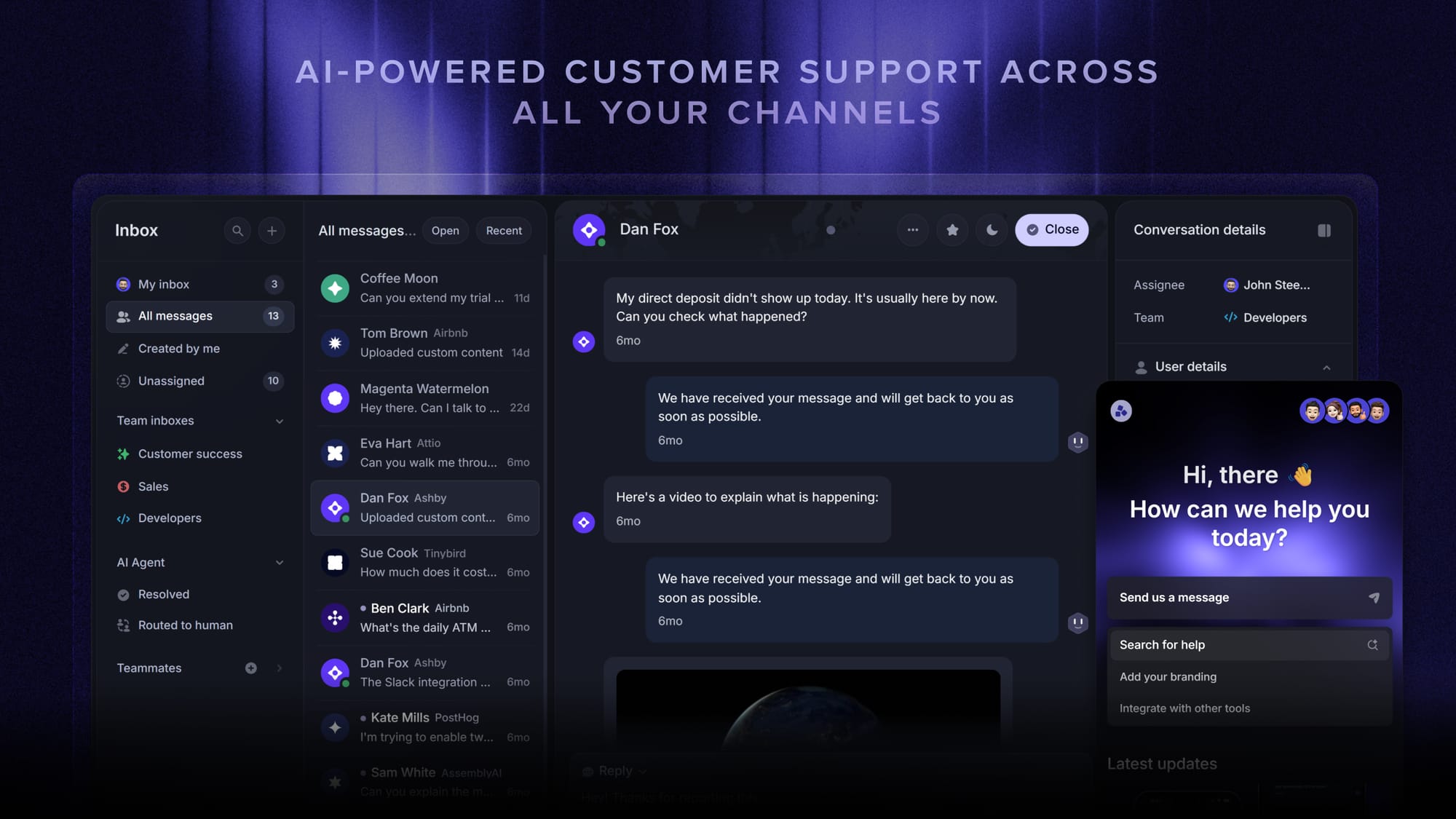
Delivering high-touch service gets a lot easier when your tools carry the routine load for you. Featurebase is a modern AI customer support platform for product-led SaaS. It combines AI-powered support, help center, and feedback management into a single platform for startups that want all their customer-facing tools in one place. Featurebase is loved by thousands of support teams from companies like Lovable, Raycast, and n8n. 💫
Top features:
- Omnichannel inbox – Manage live chat, email, and Slack conversations from one AI-powered view
- Fibi AI Agent - Resolve customer issues on autopilot & run custom actions like trial extensions and refunds
- Help center with AI search – Provide instant, multilingual self-serve answers
- Workflows & automations – Auto-assign tickets, route conversations, collect customer data, and more
- AI Copilot – Help your agents answer customers faster with AI Copilot that uses your internal knowledge
- Multi-brand support – Manage multiple Help Centers and Live chats from a single workspace
- Automatic AI translations – Automatically translate all messages and help articles to your customers native language
- Service Level Agreements – Track SLAs to make sure your team responds to customers on time, every time
- Mobile app – Respond to customers, receive notifications, and unblock users on the go
- Feedback & roadmap tools – Collect feature requests and close the loop with updates
- Product updates – Publish release notes with a changelog page, in-app widget, and emails
- Integrations – Connects with Slack, Linear, Jira, HubSpot, and more
Pricing: Free plan available with unlimited conversations. Paid plans start at $29/seat/month with $0.49 per AI resolution.
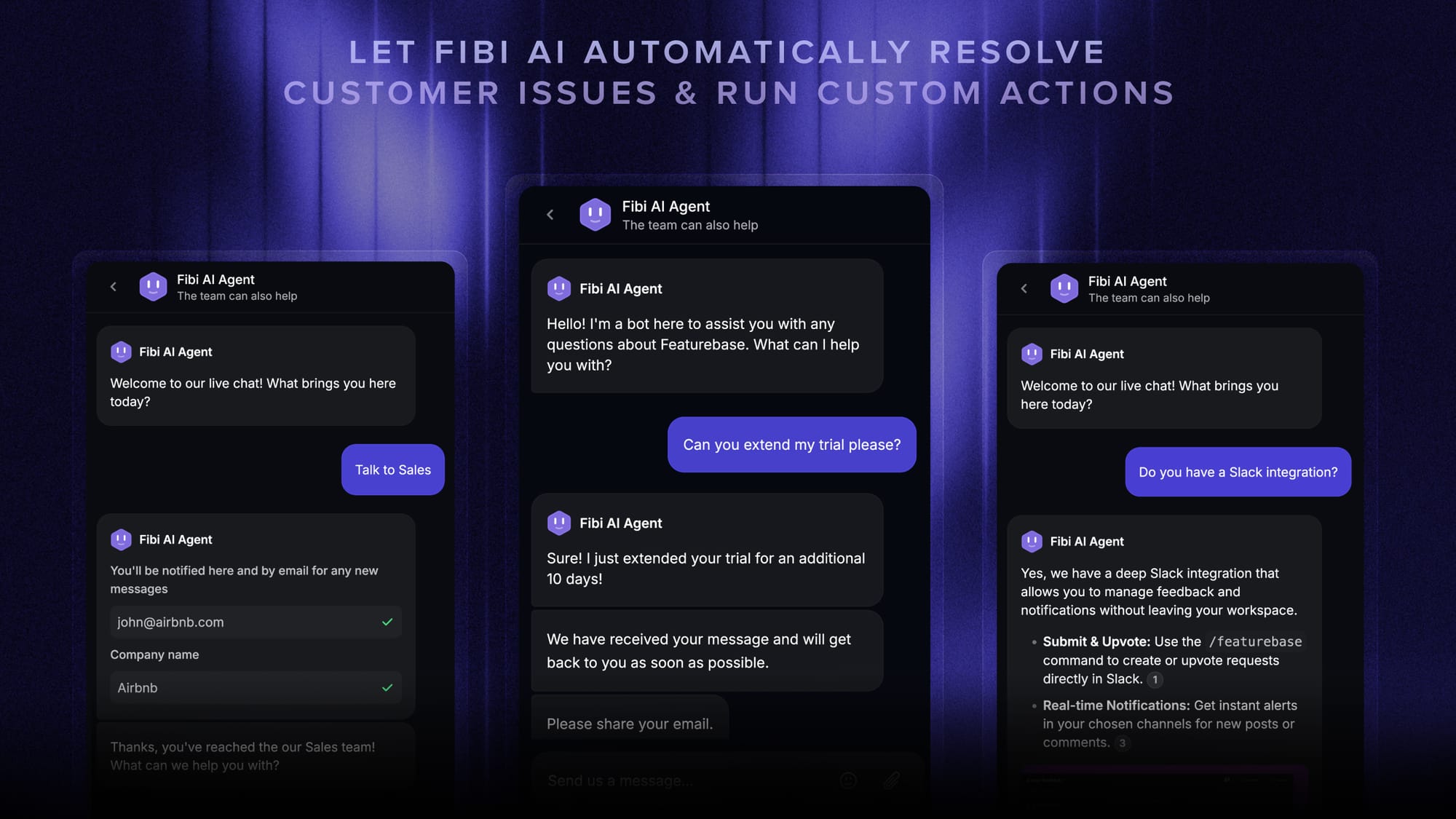
Featurebase covers all the basic support features that legacy platforms do, but with a much more modern approach. It comes with AI automations, a mobile app, and multiple channels (email, live chat, Slack, etc.), so you can keep service personal while it scales.
Conclusion
High-touch customer service is really about one thing: making customers feel known. When you give people personal attention, anticipate their needs, and follow through, they stay longer, spend more, and tell others about you.
Featurebase is a modern AI-powered support platform that helps you deliver that experience at scale. It brings your inbox, help center, and feedback tools into one place, and pairs human support with AI automation so your team can focus on the moments that matter most.
It comes with a Free plan and the onboarding takes minutes, so there's no downside to trying it. 👇
✨ Automate your support with the fastest AI-enhanced Inbox today →
FAQs
What are examples of high-touch customer service?
Common examples include a dedicated customer success manager for each account, personalized one-on-one onboarding, regular proactive check-ins and quarterly business reviews, tailored product recommendations, and VIP perks like early feature access or priority support. The thread that connects them is direct, personal, human attention rather than a generic automated flow.
What industries benefit most from high-touch customer service?
Industries with complex, high-value, or relationship-driven products tend to benefit most. B2B SaaS, financial services, healthcare, and professional services are classic examples, since customers there often need guidance to get full value and the cost of losing an account is high. Any business where customer relationships are central to revenue can gain from a high-touch approach.
Can AI and automation replace the human touch in high-touch service?
No, and that's not the goal. Automation should handle the routine work, like answering FAQs, routing tickets, and sending reminders, so your team has more time for the conversations that genuinely need a person. Used well, AI makes high-touch service more sustainable by freeing humans to focus on the high-value moments.
How can small businesses deliver high-touch service without a big team?
Focus on quality over quantity. Identify your most valuable or at-risk accounts and give them personal attention, while automating support for everyone else. A shared inbox, good customer data, and a few smart automations let a small team feel high-touch to the customers who need it, without trying to hand-hold every single user.
What tools do you need for high-touch customer service?
At minimum you need a way to keep customer context in one place (a CRM or shared inbox), a channel to reach customers where they are, and automation to handle routine requests. All-in-one platforms like Featurebase combine an AI-powered inbox, help center, feedback tools, and automation so you can deliver personal support and scale it without stitching together five separate tools.
Is high-touch customer service worth the cost?
For the right customers, yes. High-touch service is more expensive per customer, but it pays off through higher retention, larger lifetime value, and more expansion revenue, especially with high-value or complex accounts. The key is to apply it selectively: segment your customers and reserve high-touch effort for the accounts where the return justifies it.