Blog Customer ServiceConversational Customer Service: A Complete Guide
Conversational Customer Service: A Complete Guide
Conversational customer service replaces ticket-based support with one continuous, AI-augmented dialogue. Here's how it works, why it matters, and how to build the stack.


✨ Automate your support with the fastest AI-enhanced Inbox today →
Your customer fires off a question in chat at 9am, opens a support ticket about the same issue in the afternoon, and tries again on Twitter the next day. Each time, they explain who they are and what they need - from scratch.
That's three "support touches" that should have been one conversation.
Conversational customer service closes that gap. It treats support as one ongoing dialogue across every channel, not a stack of isolated tickets that each start from zero. In this guide, I'll cover what conversational customer service is, why it's overtaking traditional ticket-based support, the building blocks of a conversational support stack, and how to roll it out without breaking what's already working. 👇
Key takeaways:
- Conversational customer service is a strategy, not a single tool. It turns isolated support tickets into one continuous, context-aware dialogue.
- AI agents handle routine, repetitive questions on autopilot. Human agents handle nuance, empathy, and complex cases. They work together, not in competition.
- The stack needs five things: an omnichannel inbox, an AI agent, a help center, an AI copilot for agents, and workflows that route work where it should go.
- Gartner predicts that self-service and live chat will surpass traditional channels as the top customer service technologies by 2027.
- Featurebase✨ is a modern AI customer support platform that combines all of these - omnichannel inbox, Fibi AI Agent, AI Copilot, help center, and workflows - in one place.
What is conversational customer service?
Conversational customer service is a model where support happens as one continuous dialogue between a customer and your business, across whatever channels the customer uses, with the full conversation history and context carried through every touchpoint.
The customer doesn't repeat themselves. The agent, human or AI, sees everything that's been said. The conversation can pause and pick up later without losing the thread.
Compare that to traditional support: a ticket is opened, an agent closes it, the next interaction starts a new ticket. Even if the customer is contacting you about the same product, the same bug, the same misunderstanding from yesterday, it's a fresh start every time.
The conversational model collapses all of that into a single thread. Some companies build it around live chat. Others use a shared inbox that unifies email, chat, and messaging in one view. Most layer AI on top so the routine stuff resolves itself without ever waking up a human agent.
A quick clarification before we go further. "Conversational customer service" and "conversational AI for customer service" get used interchangeably, but they're different:
- Conversational customer service is the strategy: one continuous dialogue per customer, across every channel.
- Conversational AI is one set of tools you can use to implement that strategy. AI helps a lot. It's not the whole thing.
Conversational vs. traditional customer service
The two models differ on five axes. Each one carries a real operational consequence.
| Aspect | Traditional support | Conversational support |
|---|---|---|
| Unit of work | Ticket | Conversation |
| Channels | Siloed (email, phone, chat each separate) | Unified across every channel |
| Context | Reset every ticket | Persistent across the whole relationship |
| Style | Formal, scripted, transactional | Natural, contextual, personalized |
| Availability | Business hours, queued | 24/7, AI handles most routine cases instantly |
Conversational support puts a premium on strong customer service skills like empathy and clear communication, since the tone of every reply is part of the experience.
The biggest practical difference is what happens when a customer comes back. In a ticket system, they re-explain. In a conversational system, the agent already knows.
That's the compounding effect. Every interaction makes the next one easier, not harder.
Why conversational customer service matters now
Three forces are pushing teams off the ticket model and onto something more conversational.
The first is customer expectation. Customers don't think in tickets. They think in conversations, the same way they message a friend, a delivery service, or a doctor's office. Salesforce's research shows 78% of consumers expect a consistent experience wherever they engage, and 76% expect interactions to be consistent across departments. Ticket-based support breaks both of those expectations by design.
The second is AI maturity. Conversational AI has finally crossed the threshold where it can resolve real customer issues end-to-end, not just route them. Gartner reports that 85% of customer service leaders will explore or pilot customer-facing conversational generative AI in 2025. The same firm predicts that self-service and live chat will surpass traditional channels as the top customer service technologies by 2027.
The third is unit economics. Conversational support doesn't just feel better. It costs less per resolution because AI handles the cases that don't need a human, and the human team focuses on the cases that do.

Get the best customer service tool
Automatically resolve 70% of customer requests & cut down manual support loads
Key benefits of conversational customer service
The benefits cluster into five buckets. The magic is in the combination, not any one of them on its own.
- Customers stop repeating themselves: Context follows the customer across every channel, conversation, and time gap. They start where they left off, not from scratch. The "are you the one I spoke to yesterday?" tax goes to zero.
- Resolution times drop sharply: Routine questions get answered instantly by AI. Complex cases still go to humans, but the human gets the full conversation history and an AI-drafted reply already prepared. Wait times shrink in both lanes.
- The team handles more volume without more headcount: When a meaningful share of conversations resolve without a human, your existing team can support a much larger customer base. That's the leverage AI is meant to deliver.
- Consistency improves across the board: Every customer gets the same quality of response. Tone is consistent. Information is accurate. The Tuesday-afternoon experience doesn't differ from the Saturday-evening one.
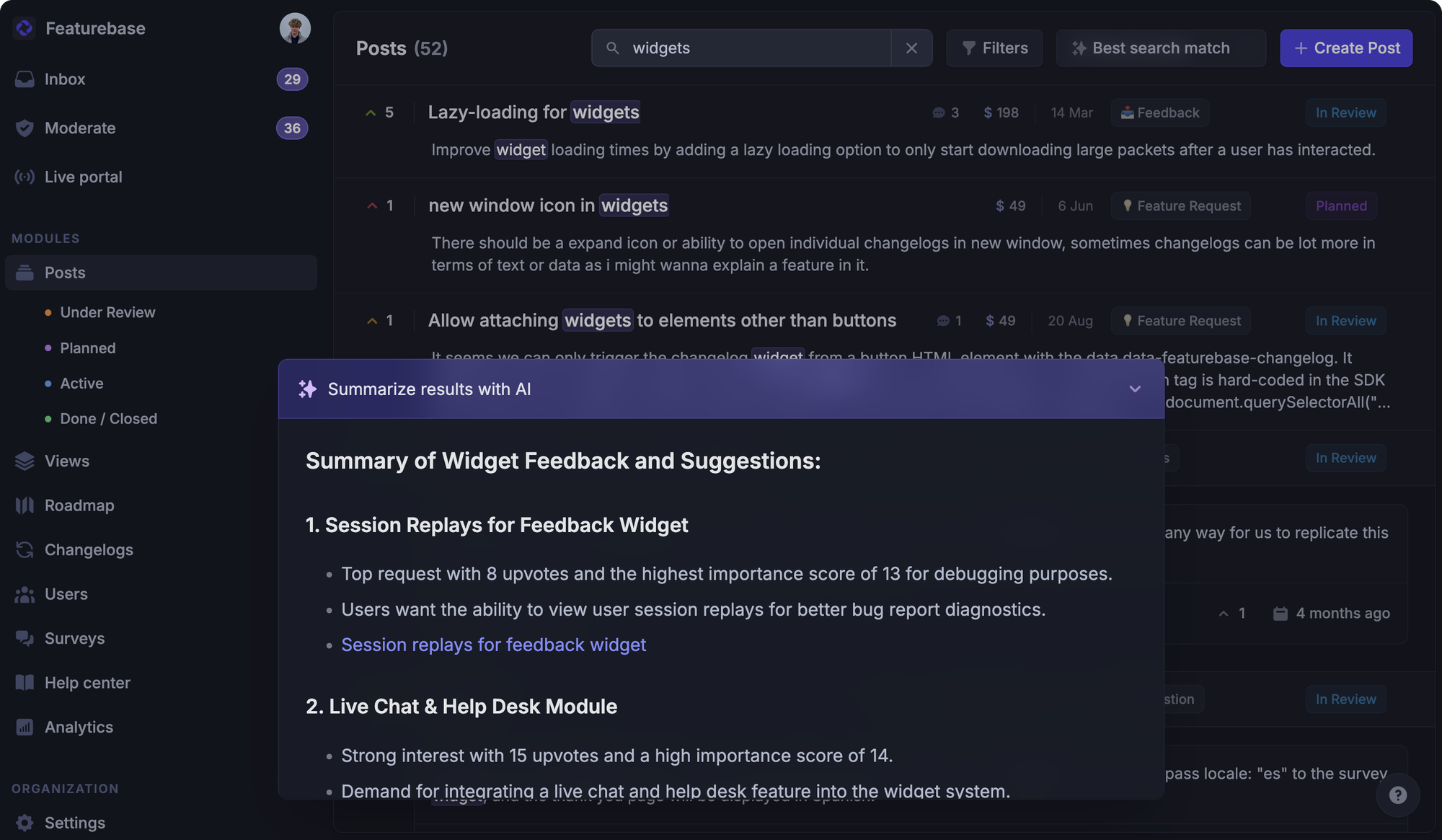
- Support becomes a source of insight, not just a cost center: Every conversation is structured data. Patterns in what customers ask, where they get stuck, and what they wish your product did all surface from the conversational stream and feed back into customer feedback and product decisions.
The building blocks of a conversational support stack
A conversational customer service strategy needs a stack to run on. There's no single tool that does the whole job. It's a system of parts working together, and six pieces matter most:
- Omnichannel inbox: One unified surface where every conversation (live chat, email, Slack, in-app messenger) lands in the same view, attached to the same customer profile. Without this, you're back to siloed channels and the customer-repeats-themselves problem.
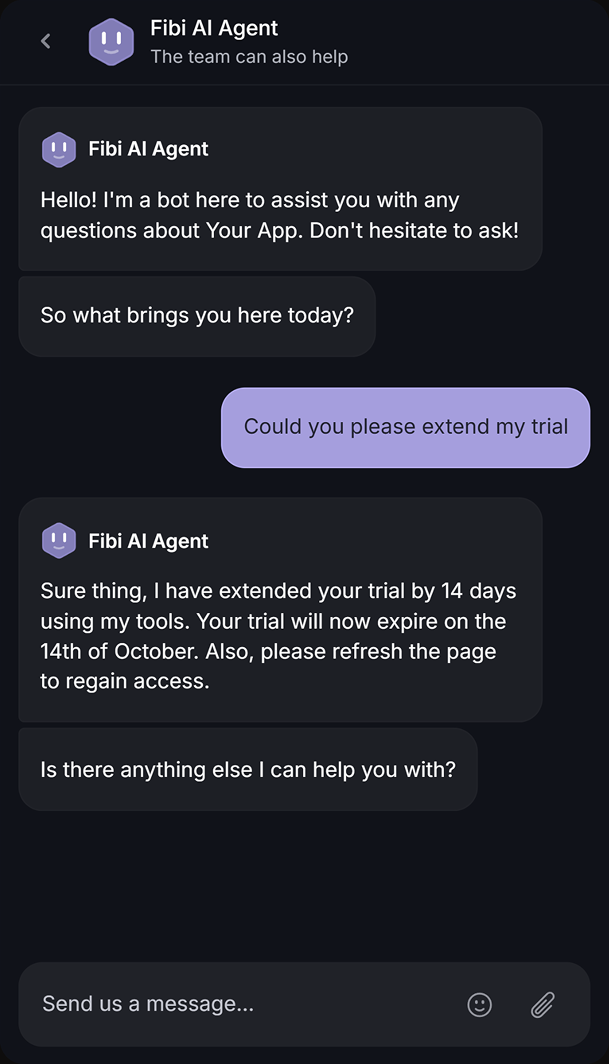
- AI agent for autonomous resolution: An AI that doesn't just route or suggest. It actually resolves cases - answers product questions from your help center, runs custom actions like trial extensions or refunds, and only escalates when the issue is outside its scope.
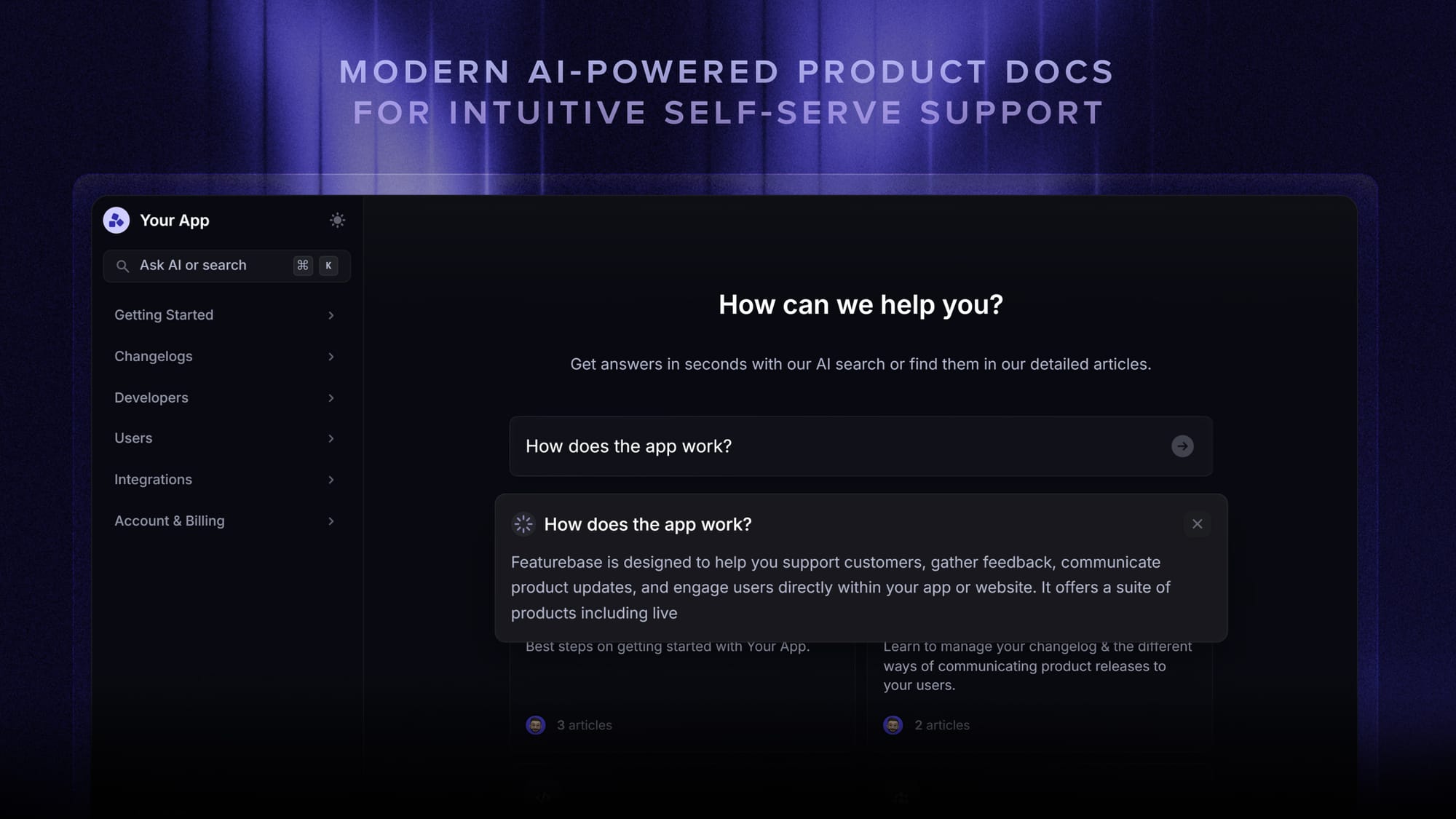
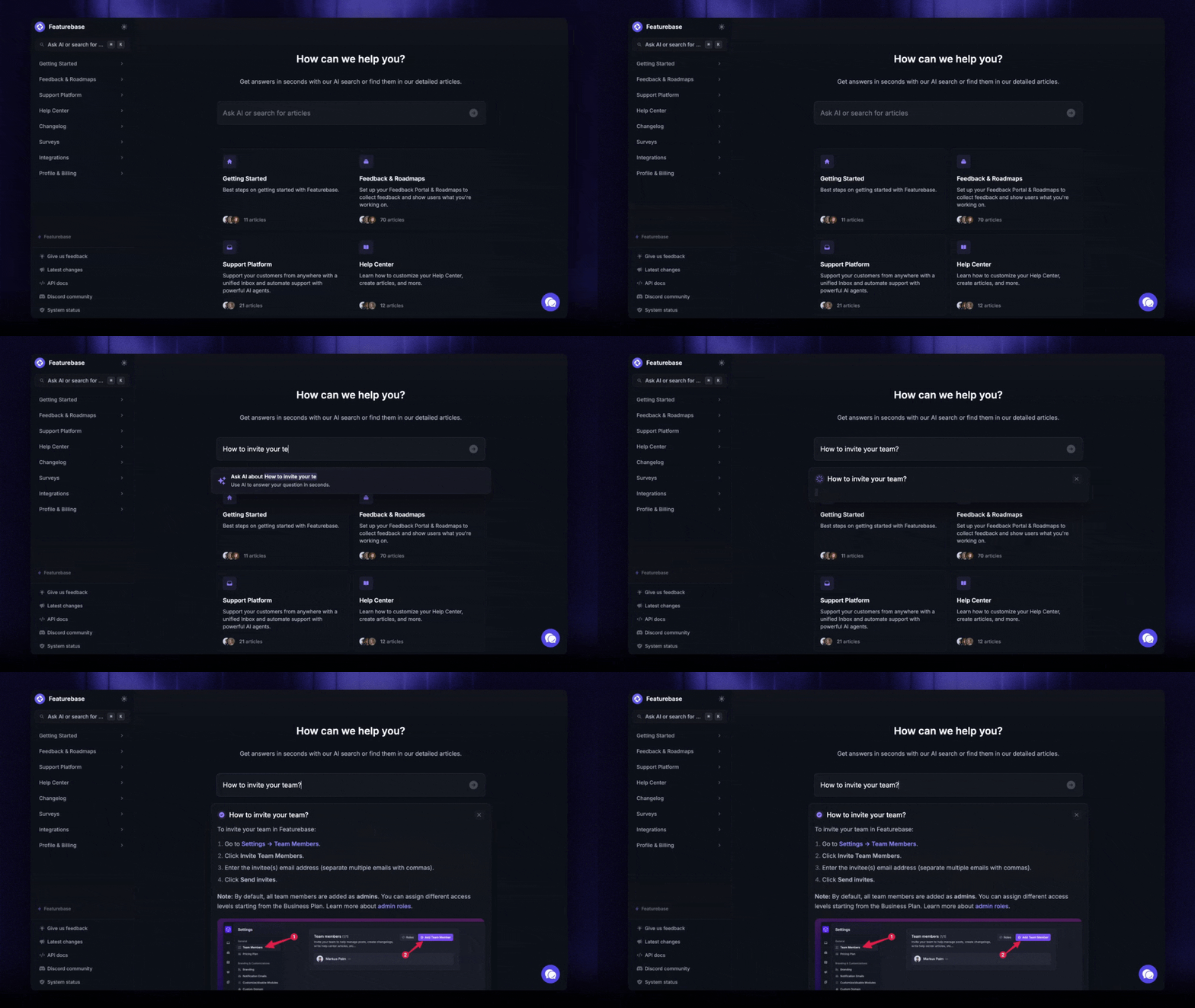
- Help center with AI search: A self-serve knowledge base that powers both the customer-facing search bar and the AI agent's answers. If the help center is good, the AI is good. If it's stale, the AI is stale.
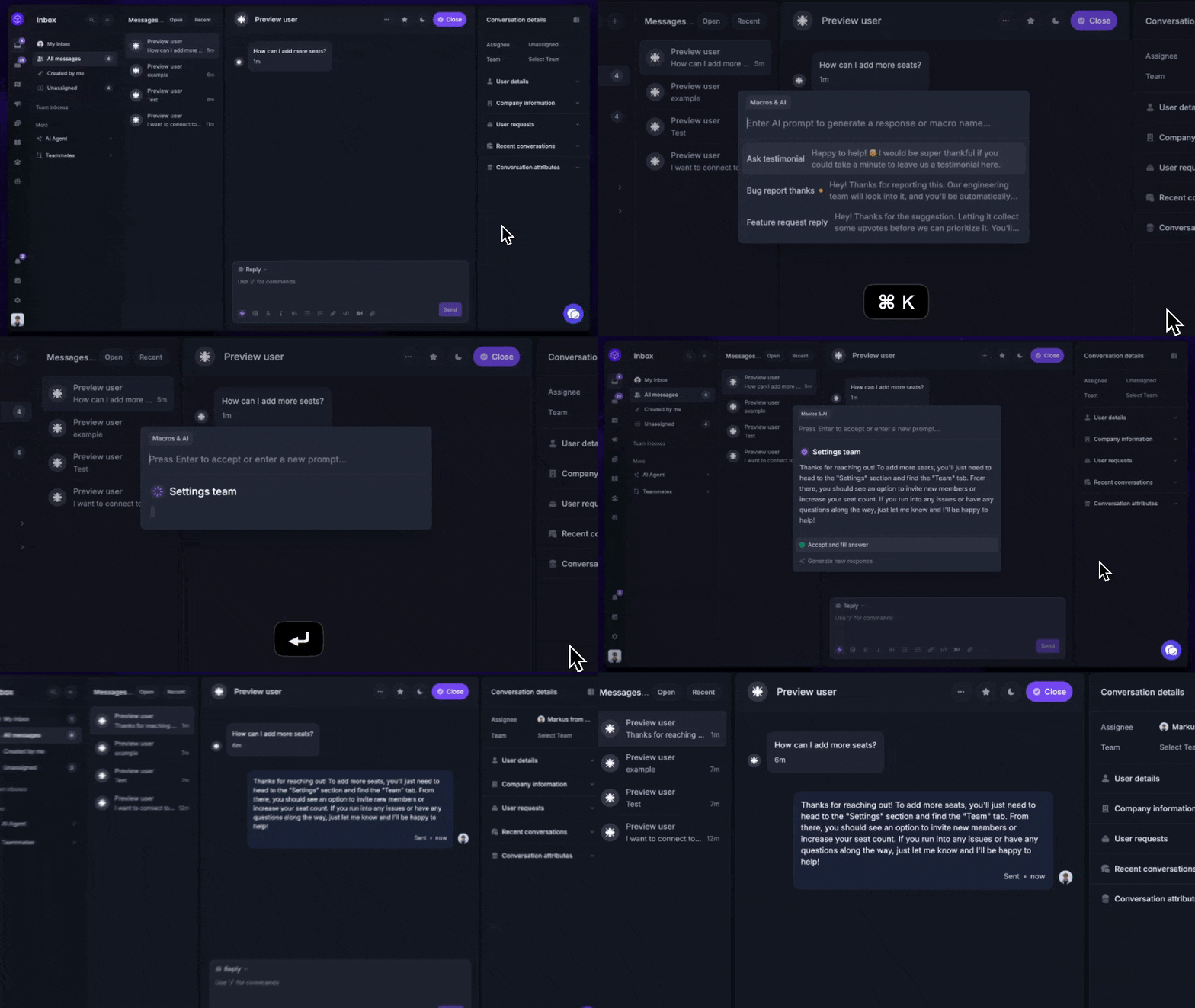
- AI copilot for human agents: A drafting assistant that pulls from your internal knowledge to write a reply in the agent's voice, before the agent even reads the message. The agent edits and sends. Median reply time drops dramatically.
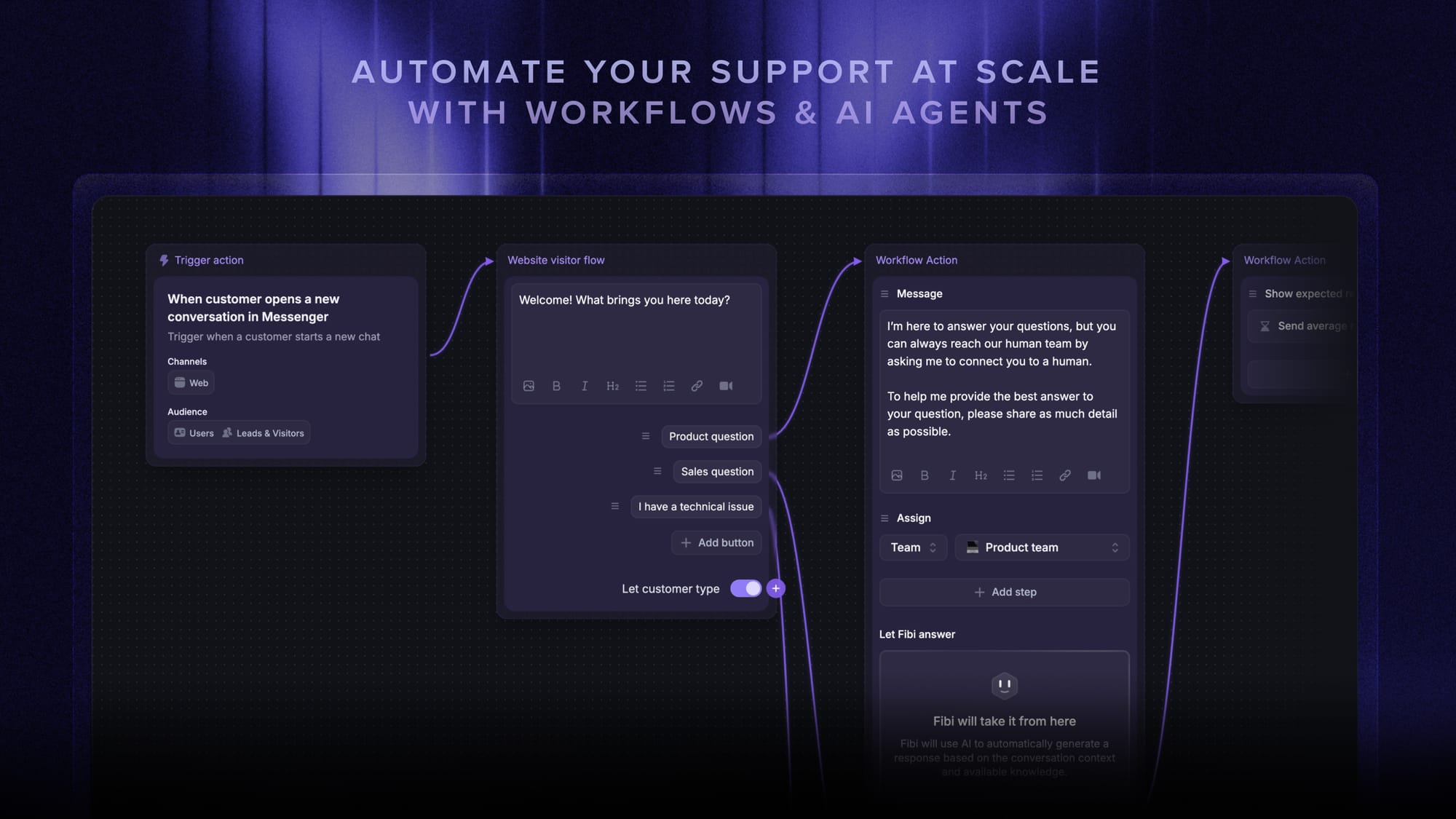
- Workflows and automations: Rules that auto-assign conversations to the right agent, escalate priority cases, collect customer data inline, or trigger follow-ups, so the team's brain isn't spent on routing.
- A real human team: AI handles routine, humans handle nuance. The handoff has to be seamless. The agent picks up exactly where the AI left off, with the full conversation in view.
This is where Featurebase fits in. It combines the omnichannel inbox, the AI agent (Fibi), the help center with AI search, the AI Copilot for agents, and workflows into a single platform, so you're not duct-taping five tools together. The Free plan includes unlimited conversations, and paid plans are $29/seat/month plus $0.29 per AI resolution, so the AI scales with what it actually solves, not with seat count.
How to implement conversational customer service in 6 steps
The shift from traditional to conversational support is a real project, not a tool swap. Here's the order of operations that tends to work.
1. Pick the channels your customers actually use
Don't try to be everywhere at once. It helps to weigh the different types of support first. Look at where your customers already reach out today (email volume, in-app chat clicks, social DMs) and consolidate those into your unified inbox first. Add channels later, once the core is stable.
2. Audit your help center
The AI agent is only as good as the content it draws from. Before you turn on any AI, spend a week cleaning up your help center: kill out-of-date articles, fill in obvious gaps, rewrite anything vague. This single step has more impact on AI resolution rate than any other configuration choice.
3. Start the AI on a narrow scope
Don't unleash the AI on every conversation on day one. Pick the top 3-5 high-volume, low-risk question types ("where's my order," "how do I reset my password," "what are your hours") and let the AI handle just those. Expand the scope as you see what it gets right.
4. Design the human handoff
Decide explicitly: at what point does the AI stop and a human take over? Common triggers are:
- Sentiment shifts - the customer is getting frustrated.
- Explicit asks - "can I talk to a person."
- Complexity thresholds - multi-step issues the AI hasn't seen before.
The handoff has to be seamless. The human picks up with the full conversation in view, not a fresh ticket.
5. Measure what matters
Conversational success metrics aren't the same as traditional ticket metrics. Track:
- AI containment rate - the percentage of conversations resolved without a human.
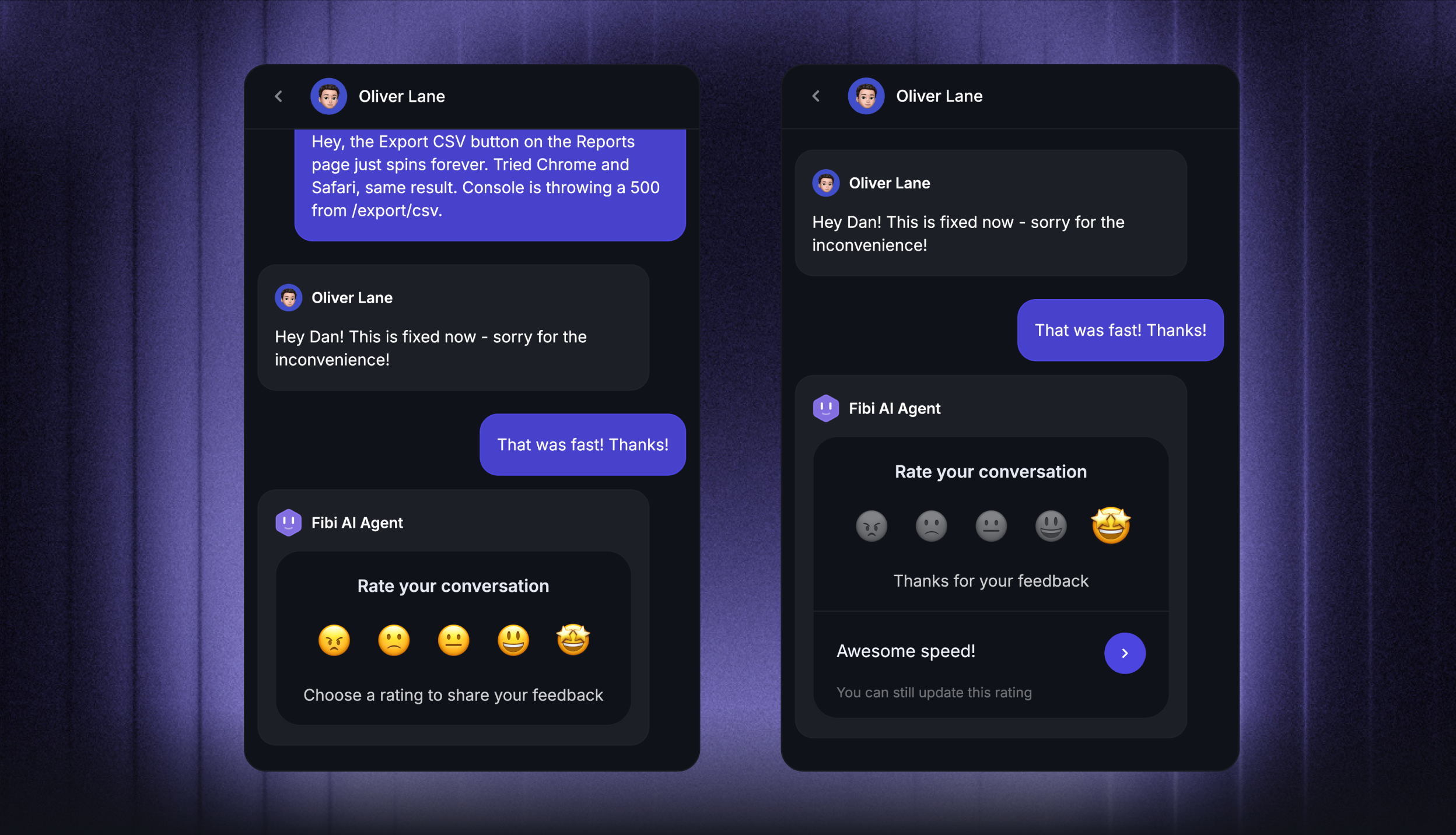
- CSAT on both AI-handled and human-handled threads - so you can compare them.
- First-response time - how fast does the first useful reply land.
- Cost per resolution - the unit economics, not the seat count.
If CSAT on AI threads is materially lower than human threads, the AI is over-extended. Pull back the scope.
6. Iterate constantly
This isn't a "set up and forget" project. Pull the transcripts of the AI's worst conversations every week. Find the patterns. Update the help center. Tune the workflows. The system gets better the more you put into it, and stale rules show up fast in customer experience.
Common pitfalls (and how to avoid them)
Five patterns trip up teams the most. Most are about over-rotating in one direction.
- Treating AI as a replacement, not an augment: Teams that try to remove the human layer entirely end up with frustrated customers and unsolvable cases stacking up in a queue. AI handles routine, humans handle nuance. Both layers stay.
- Skipping the help center work: People rush to plug in the AI and forget the AI reads from your knowledge base. A poor help center produces a poor AI agent. Always fix the source content first.
- Letting the AI scope creep: An AI that's been told to "answer anything" will start guessing on things it shouldn't, and the wrong answer to a billing question costs you trust. Keep the AI's domain narrow and grow it deliberately.
- No clear handoff trigger: When the AI doesn't know when to stop, conversations bounce back and forth between AI and human, neither side fully owning the case. Define the handoff rules up front, in writing.
- Measuring with the wrong metrics: If you keep optimizing for "tickets closed per agent per day," you'll never see the leverage conversational AI delivers. Switch to per-conversation metrics and per-resolution economics.
Avoid common issues
Automatically resolve 70% of customer requests & cut down manual support loads
Conclusion
The move from ticket-based support to conversational customer service isn't just a UX upgrade. It's a fundamental change in how you think about customer relationships: one continuous thread, AI doing the routine work, humans doing the nuanced work, every conversation building on the last.
Featurebase is a modern AI-powered support platform that gives you everything you need to make the shift: an omnichannel inbox, the Fibi AI Agent for autonomous resolutions, an AI-powered help center, AI Copilot for your team, and workflows that keep the routing on autopilot, all in one place.
It comes with affordable pricing and a Free plan with unlimited conversations. The onboarding takes a few minutes, so there's no downside to trying it. 👇
✨ Automate your support with the fastest AI-enhanced Inbox today →
FAQs
What's the difference between conversational customer service and live chat?
Live chat is a channel. Conversational customer service is a strategy that spans many channels (chat, email, in-app messenger, Slack, social) with one persistent thread per customer. Live chat without persistent context is still ticket-based, just on a faster timer. The "conversational" part is the continuity, not the channel.
Will conversational AI replace customer service agents?
No, and the teams that try to replace agents entirely end up with worse customer experiences and unsolvable cases stacking up in a queue. The model that actually works is partnership: AI handles routine, high-volume questions on autopilot, and human agents handle the nuanced cases that require empathy, judgment, or genuinely creative problem-solving. AI scales the team's capacity. It doesn't remove the team.
How do you measure the success of conversational customer service?
Track four metrics together: AI containment rate (the percentage of conversations resolved without a human), customer satisfaction on both AI-handled and human-handled threads, first-response time, and cost per resolution. If AI containment is high but CSAT is low, the AI is over-extended. If CSAT is high but containment is low, you're under-using the AI. The right balance moves both up at once.
What channels work best for conversational customer service?
The best channels are wherever your customers already are. For most B2B SaaS, that's email, in-app messenger, and Slack. For ecommerce, it's web chat, email, and SMS. The point isn't to pick a "best channel". It's to unify whatever channels you do support into one inbox so context follows the customer no matter where they reach out.
Is conversational customer service worth it for small businesses?
Yes, and small businesses arguably benefit more than enterprise teams. Modern platforms like Featurebase offer free plans with unlimited conversations and pay-per-AI-resolution pricing, so a two-person team can run a conversational stack at startup-scale cost. The smaller your team, the more leverage you get from AI handling routine cases. It's the difference between supporting 100 customers and supporting 10,000 with the same headcount.