Blog Customer ServiceIntercom vs Kustomer: Which Support Platform Wins?
Intercom vs Kustomer: Which Support Platform Wins?
Intercom vs Kustomer compared on AI, channels, ease of use, and real pricing - so you can pick the right support platform for your team in 2026.


✨Psst... Looking for a modern & affordable alternative to Intercom and Kustomer? Check out Featurebase →
You've narrowed your support platform down to Intercom and Kustomer, but they tackle customer support from opposite ends. Intercom is the chat-first, AI-led helpdesk built for speed. Kustomer is the CRM-first platform built around a unified customer timeline.
This guide breaks down how they compare on AI, channels, ease of use, integrations, and real cost, so you can pick the right one with confidence. 👇
Key takeaways:
| Dimension | Intercom | Kustomer |
|---|---|---|
| Best for | Chat-first SaaS support teams | High-volume, CRM-heavy omnichannel teams |
| Core model | Conversational AI helpdesk | CRM-first unified customer timeline |
| AI | Fin AI Agent, from $0.99 per outcome | AI for Customers $0.60/engaged convo + AI for Reps $40/user/mo |
| Starting price | $19/seat/mo (annual) + Fin usage | $89/seat/mo, 8-seat minimum, annual only |
| Free plan | No (14-day trial) | No (30-day AI trial) |
| Setup | Fast - days to weeks | Longer - technical backend configuration |
Both are strong, mature platforms. The right pick comes down to whether you want a fast, chat-led tool that scales with usage or a heavyweight CRM that unifies every customer interaction in one timeline.
What are Intercom and Kustomer?
Before the head-to-head, here's what each platform actually is and who it's built for.
Intercom
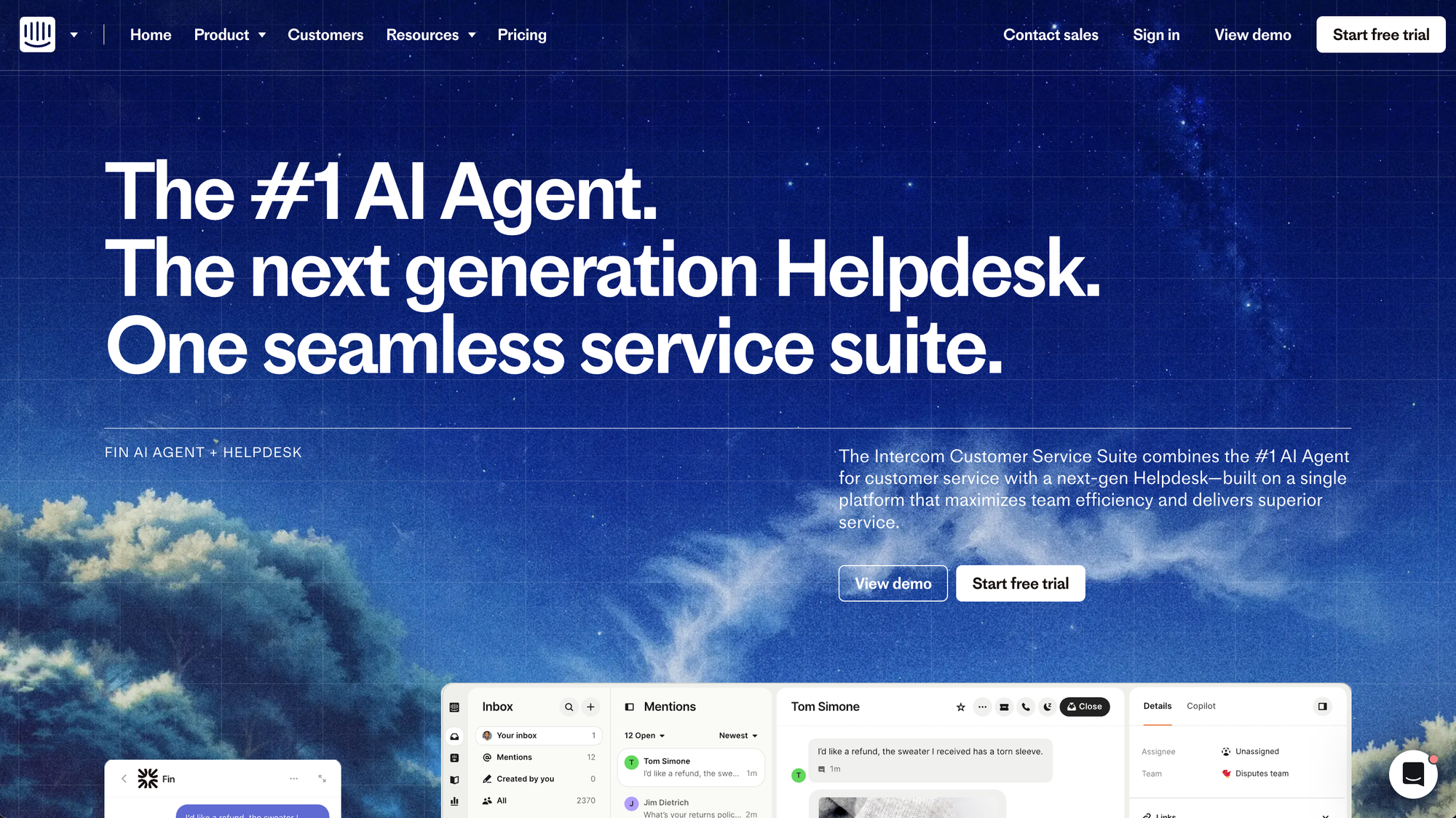
Intercom is an AI-first customer service platform best known for its Messenger and its Fin AI Agent. It started as an in-app messaging tool and grew into a full helpdesk with a shared inbox, ticketing, a help center, and automation. Its sweet spot is product-led SaaS companies that run support primarily through in-app chat and email, and want AI handling tier-1 questions out of the box.
One thing to know going in: the company behind Intercom rebranded to Fin in May 2026, putting its AI agent front and center as the corporate identity - though the helpdesk product still ships under the Intercom name. A month later, in June 2026, Salesforce agreed to acquire Fin for roughly $3.6 billion, a deal expected to close in 2027. For now the platform operates as it always has, but Salesforce ownership is worth factoring into a long-term bet.
Kustomer
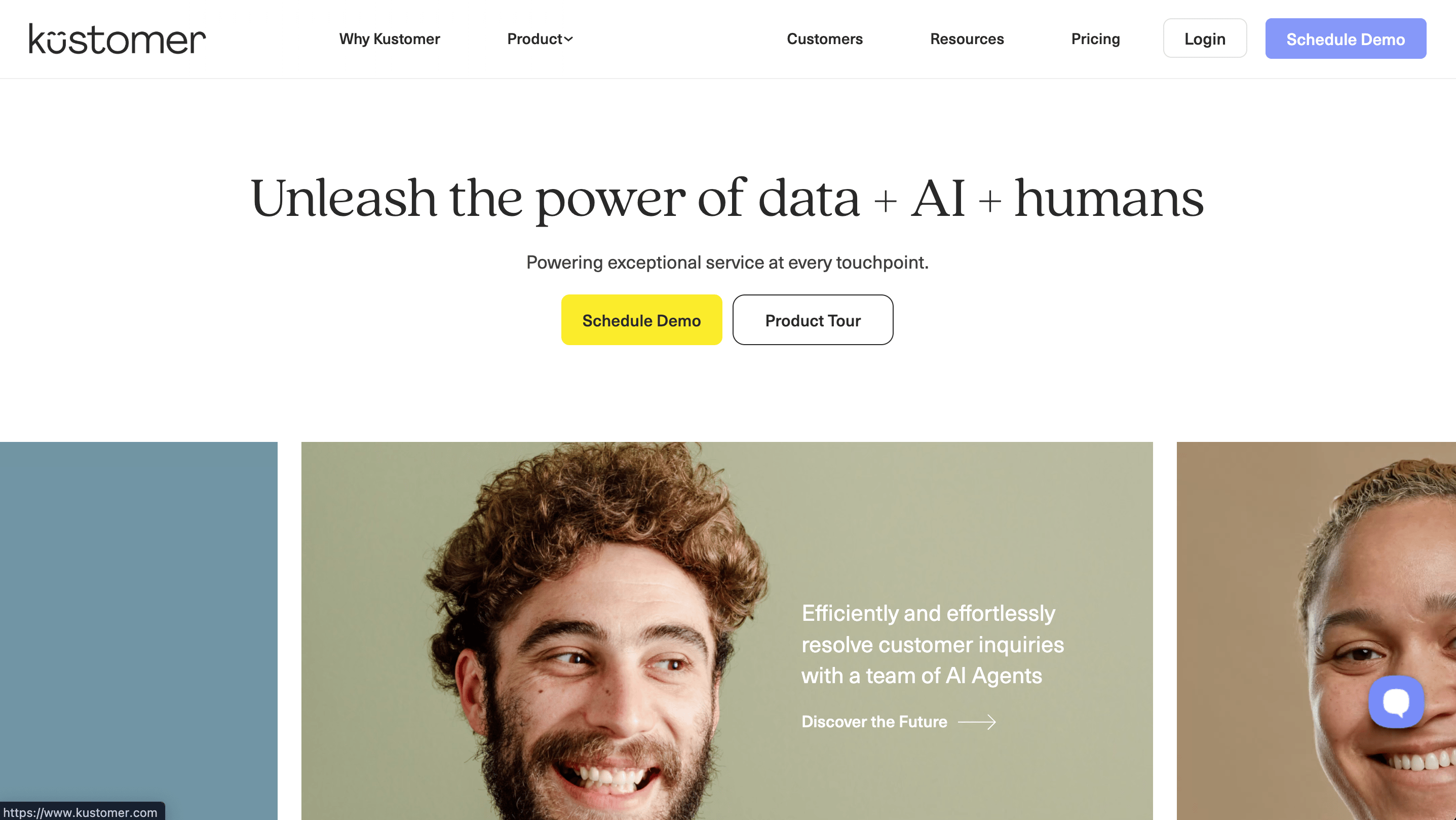
Kustomer is a customer service CRM founded in 2015, briefly owned by Meta, and independent again since 2023. Instead of organizing support around tickets, it builds a single chronological timeline of every interaction a customer has had across channels. That gives agents full context without screen-switching. Kustomer targets mid-market and enterprise teams with high volume and complex omnichannel needs, and is positioned as a premium tool for organizations that want deep CRM capability alongside a helpdesk. You can see how it stacks up against other tools on our Kustomer alternatives page.
Intercom vs Kustomer: Core approach
The biggest difference isn't a feature; it's the philosophy.
Intercom treats the conversation as the unit of work. Everything orbits the messenger and the inbox, and AI is layered on top to resolve or speed up those conversations. It's fast to grasp and fast to deploy.
Kustomer treats the customer as the unit of work. Its unified timeline pulls orders, history, and every past interaction into one view, so agents work from full context rather than isolated tickets. That's powerful for complex, relationship-heavy support, but it also means more upfront data and workflow configuration to get the timeline populated and useful.
In practice: Intercom feels lighter and more conversational, Kustomer feels heavier and more data-rich. Reviewers on G2 consistently praise Kustomer's timeline for cutting agent context-switching, while just as consistently flagging its dense backend as a hurdle for teams without technical resources.
AI and automation
This is where both platforms compete hardest, and where the market is heading. Autonomous AI resolution is fast becoming the baseline expectation for support teams, and both Intercom and Kustomer have bet heavily on it.
Intercom Fin is one of the most mature AI agents on the market. It reads your help center and past conversations, resolves questions autonomously, and is priced on outcomes from $0.99 per outcome. In 2026 Intercom moved Fin off its older per-resolution model: resolutions, configured procedure handoffs, disqualifications, and self-serve routing cost $0.99 each, while sales qualifications cost $9.99, and you're billed for at most one outcome per conversation. That keeps Fin's AI cost separate from Intercom's per-seat plans - you're paying for results, not seats. Teams are typically live within days. The trade-off G2 reviewers raise is that Fin can struggle with complex or nuanced queries, sometimes needs specific phrasing, and that its cost climbs with volume and add-ons.
Kustomer AI splits into two products:
- AI for Customers: a customer-facing chatbot across channels, billed at $0.60 per engaged conversation - and you pay whether or not the AI actually resolves the issue.
- AI for Reps: an agent-assist tool with suggested replies, summaries, and translation, billed at $40 per user per month.
Kustomer's AI is capable but reviewers note it's weaker on nuanced, multi-step, or emotionally charged conversations, and the usage-plus-seat pricing makes spend harder to forecast.
Winner: Intercom Fin is more mature, faster to deploy, and priced on outcomes rather than engagements. Kustomer's AI is solid but pricier to run and less predictable.
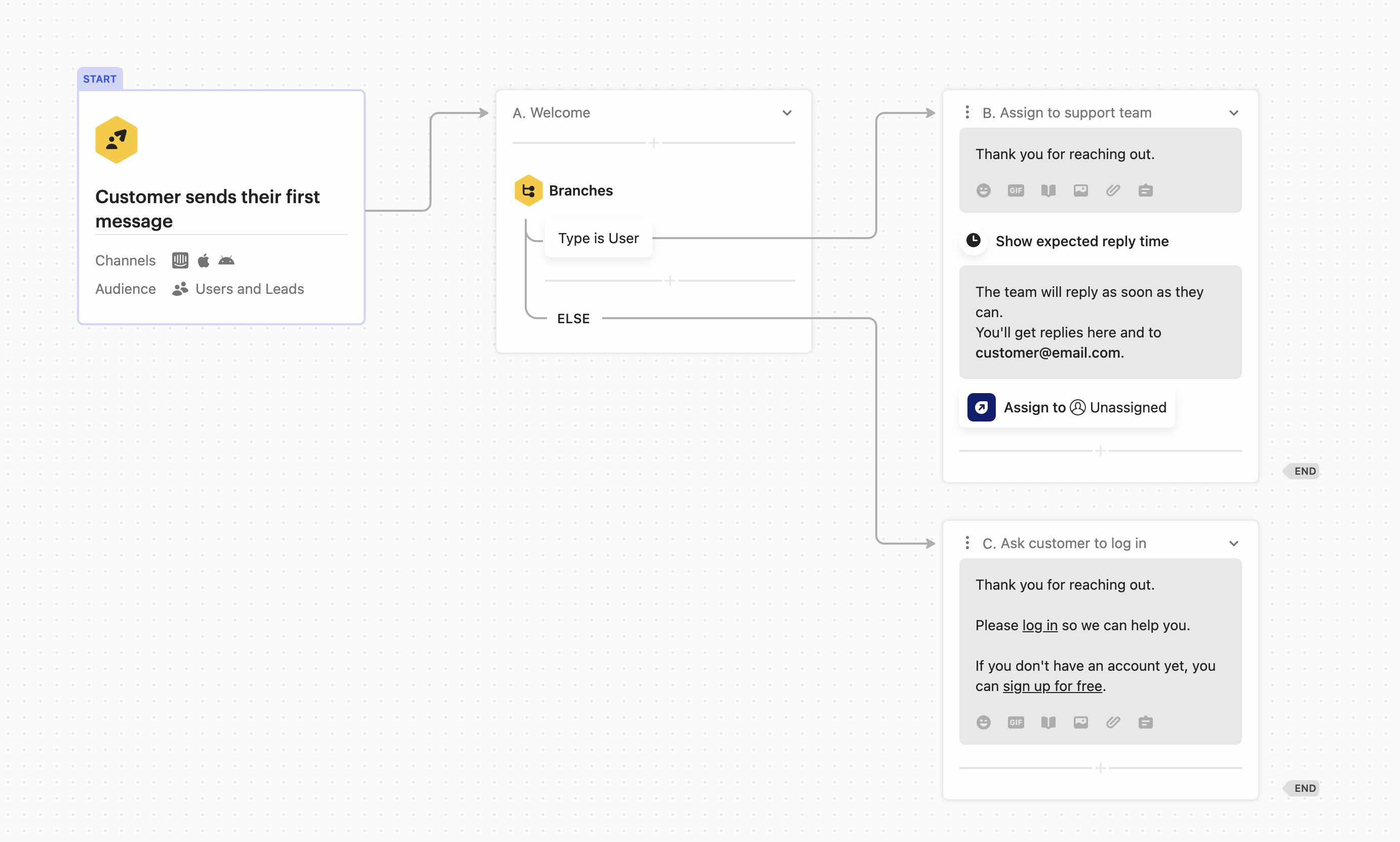
Channels and omnichannel support
Both platforms are genuinely omnichannel, but they emphasize different channels.
Intercom leads with in-app chat, the Messenger, and email, with phone, SMS, and WhatsApp available as pay-as-you-go channels. It's the stronger choice when your support lives inside your product.
Kustomer is built channel-agnostic from the ground up - chat, email, SMS, voice, and social all flow into the same timeline. Voice and SMS aren't included in the base price and run through telephony partners, but the unified handling across channels is a genuine strength for teams juggling many contact points.
If most of your support happens in-app or over email, Intercom covers it cleanly. If you're fielding high volume across social, SMS, voice, and chat at once, Kustomer's omnichannel timeline pulls ahead.
Ease of use and setup
Time-to-value is one of the clearest dividing lines between these two.
Intercom is designed to be product-owned. Most teams are live in days to a few weeks, and the interface is widely praised as modern and intuitive. The learning curve only steepens once you get into advanced workflows and automation.
Kustomer is more demanding. Its backend is powerful but dense, and the most common complaint across reviews is the steep learning curve and complex configuration. Teams without dedicated technical resources often find setup takes longer than expected, especially when integrating Kustomer's data structure with existing systems.
Winner: Intercom Faster to deploy and easier for non-technical teams to own. Kustomer rewards the investment, but only if you have the resources to configure it well.
Integrations
Intercom offers a large app store covering CRMs, Slack, and the common SaaS stack, plus a well-documented API - though it does impose usage limits that high-data teams sometimes bump into.
Kustomer integrates across messaging, ecommerce, and CRM tools, with higher API rate limits on its top tier (2,000 requests per minute on Ultimate vs 1,000 on Enterprise). Because Kustomer is itself CRM-shaped, it often reduces the need for a separate customer-data tool, which is part of its appeal for teams trying to consolidate.
For most SaaS stacks, both will connect to what you need. Kustomer edges ahead if deep, high-volume data syncing is central to your support model.
Pricing compared
Pricing is where the two diverge most sharply, and where the headline numbers hide the real cost.
| Intercom | Kustomer | |
|---|---|---|
| Entry plan | Essential - $19/seat/mo (annual), $29 monthly | Enterprise - $89/seat/mo |
| Higher tiers | Advanced $85, Expert $132/seat/mo (annual) | Ultimate $139/seat/mo |
| AI pricing | From $0.99 per Fin outcome | $0.60 per engaged AI convo + $40/user/mo for AI for Reps |
| Billing | Monthly or annual | Annual only, 8-seat minimum |
| Free option | 14-day trial | 30-day AI trial |
A few things to know beyond the table:
- Intercom pricing: seats stack with Fin's outcome-based usage (from $0.99 per outcome, with a 50-outcome monthly minimum on standalone Fin) and optional add-ons like Copilot at $29/agent/month billed annually ($35 monthly), so the real bill depends heavily on volume.
- Kustomer pricing: the $89/seat headline comes with an 8-seat minimum and annual-only billing, meaning a true entry cost of around $8,544/year before AI add-ons and storage overages. Many teams report total spend running 2-3x the advertised seat price once AI is included.
If you're a smaller team, Intercom's $29/seat/month monthly billing option ($19 billed annually) is far more accessible. Kustomer's minimums and annual commitment make it an enterprise decision.
This is also where a third option is worth a look. Featurebase offers a genuine free plan and paid plans from $29/seat/month with AI resolutions at just $0.29 each - a far more transparent, predictable model than either platform's seat-plus-usage stacking, especially for product-led SaaS teams.
Winner: Intercom for value, Featurebase for transparency Intercom is the more affordable of the two named tools, but neither offers a free plan or fully predictable AI pricing.
Who should choose Intercom vs Kustomer
| Choose Intercom if... | Choose Kustomer if... |
|---|---|
| You're a SaaS team running chat-first support | You handle high volume across many channels |
| You want a mature AI agent live in days | You need a true customer CRM, not just a helpdesk |
| You value fast setup and a modern UI | You have technical resources to configure it |
| You prefer monthly, usage-based billing | You're an enterprise comfortable with annual contracts |
| Your team is small or growing | You have 15+ agents and complex routing needs |
If you see yourself in neither column - you want modern AI support without enterprise pricing or a months-long setup - it's worth looking beyond both.
✨ Want both in one modern platform without enterprise pricing? Try Featurebase for free →
Looking beyond Intercom and Kustomer: Try Featurebase
Both Intercom and Kustomer are built to do one thing: support. The catch is that most product-led teams also run a help center, collect feedback, and ship product updates - and end up stitching together (and paying for) several tools to cover it all. That's the gap Featurebase is built to close. 👇
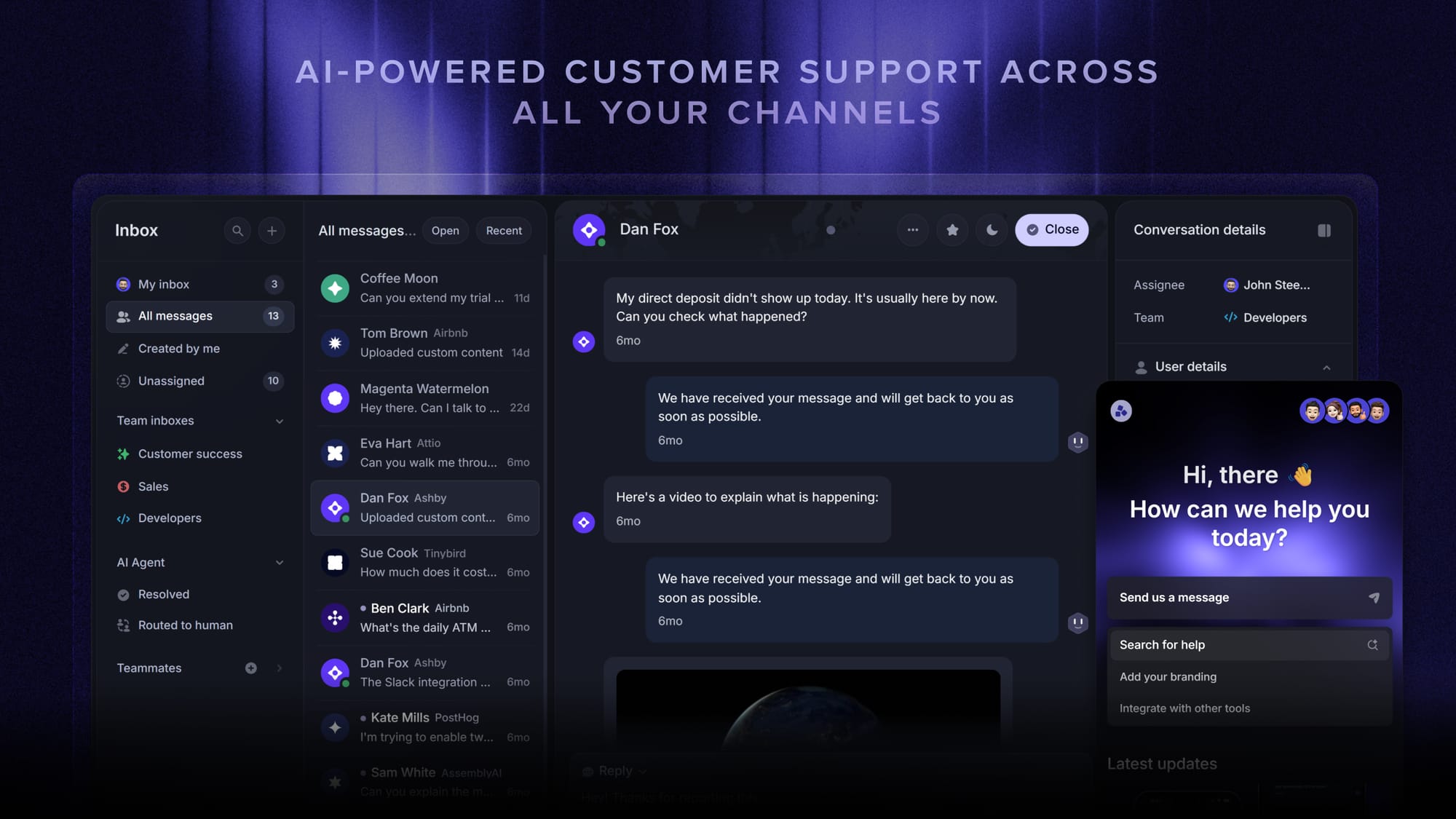
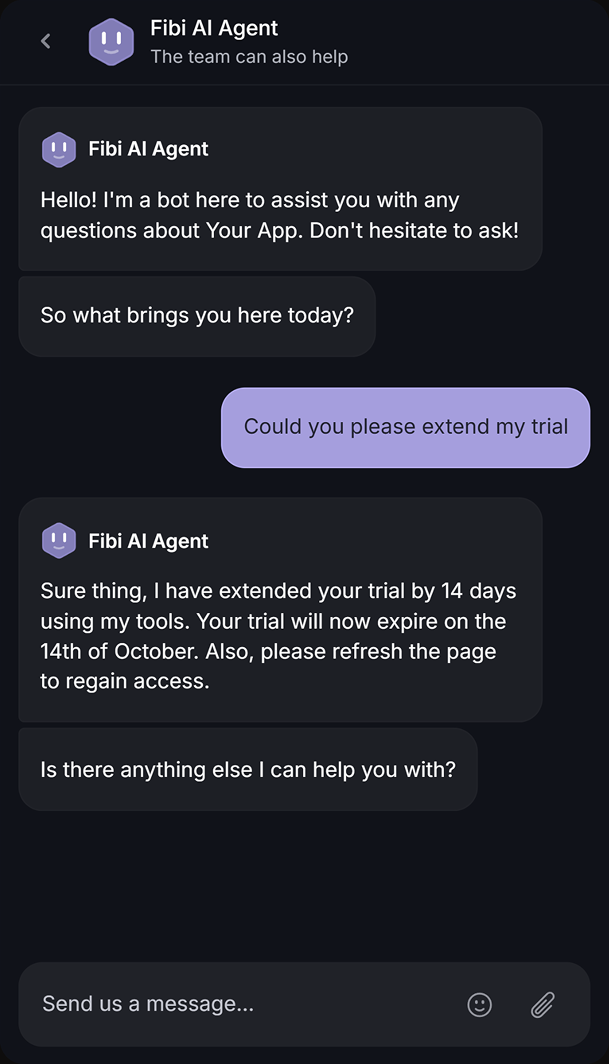
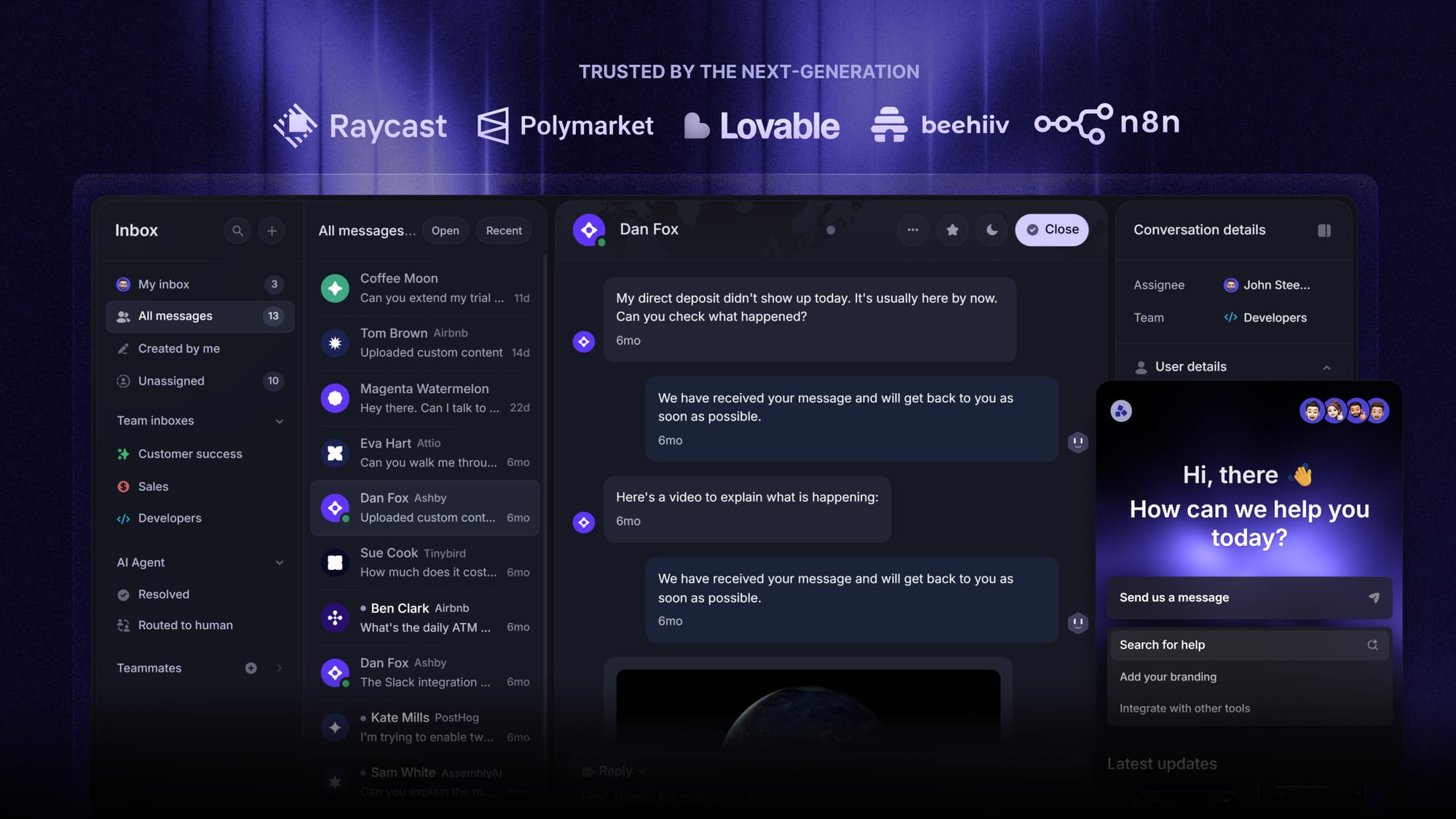
It's a modern, AI-powered support platform for SaaS that pulls live chat, email, and Slack into one omnichannel inbox, with its Fibi AI Agent resolving routine questions on autopilot - and even running actions like trial extensions or refunds. Alongside that sits an AI-searchable help center for self-serve support, plus built-in feedback and roadmap tools so the requests your team hears every day actually feed back into the product. It's the same core support job Intercom and Kustomer do, minus the tool sprawl, and it's used by teams at companies like Lovable, Raycast, and n8n.
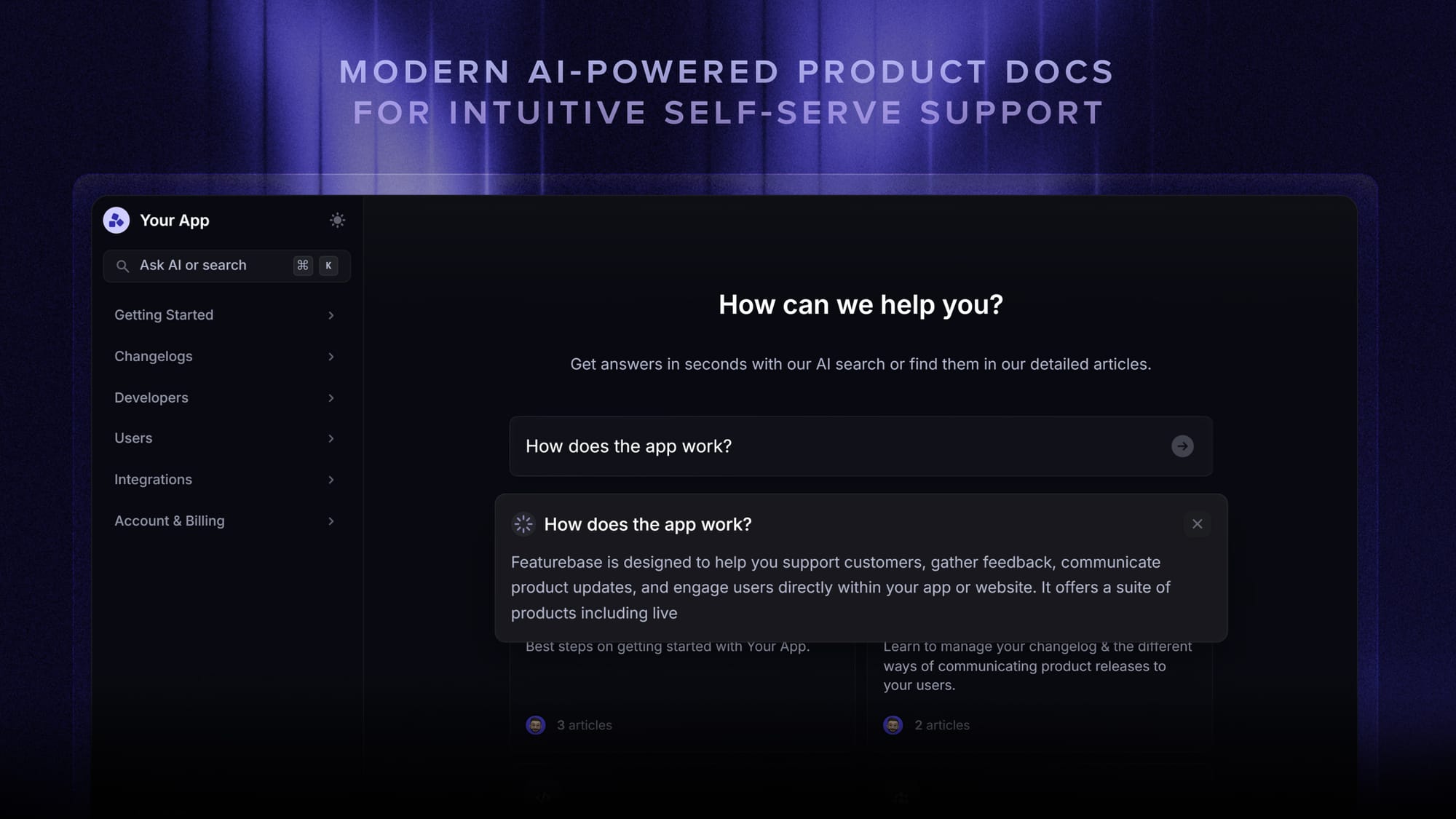
Where it really separates from both is pricing. Featurebase has a genuine free plan with unlimited conversations, and paid plans start at $29/seat/month with AI resolutions at just $0.29 each - no 8-seat minimums, no annual lock-in, and far more predictable than either platform's seat-plus-usage stacking.
Conclusion
Intercom and Kustomer both do support well, just for different teams. Intercom wins on AI maturity, speed to deploy, and accessibility for smaller, chat-first SaaS teams. Kustomer wins on CRM depth and unified omnichannel handling for high-volume enterprise operations that have the resources to configure it. Match the tool to your team size, channel mix, and how much CRM depth you actually need.
If neither feels right - too expensive, too heavy, or too narrow - Featurebase brings AI support, a help center, and feedback collection together in one modern platform. With a free plan and paid pricing from $29/seat/month, there's no downside to trying it before you commit to an annual enterprise contract. 👇
✨Automate your support with the fastest AI-enhanced Inbox today →
FAQs
Is Intercom or Kustomer better for customer support?
It depends on your support model. Intercom is better for chat-first SaaS teams that want a mature AI agent and fast setup, while Kustomer is better for high-volume, omnichannel operations that need a true customer CRM. Neither is universally "better" - the right fit follows your team size, channels, and CRM needs.
Is Kustomer a CRM or a help desk?
Kustomer is a customer service CRM, which is what sets it apart from ticket-first help desks. Instead of organizing support around individual tickets, it builds a unified timeline of every customer interaction across channels, so agents always work from full context. That CRM-first design is its main strength and the reason its setup is more involved.
How much do Intercom and Kustomer cost?
Intercom starts at $19 per seat/month billed annually on Essential, rising to $85 (Advanced) and $132 (Expert). Monthly seat rates are $29, $99, and $139 respectively, plus Fin usage from $0.99 per outcome. Kustomer starts at $89 per seat per month on Enterprise and $139 on Ultimate, both billed annually with an 8-seat minimum, with AI charged separately. Once AI and add-ons are included, real costs for both run well above the headline seat price.
Which has better AI, Intercom Fin or Kustomer?
Intercom Fin is generally the stronger AI for most teams - it's more mature, deploys faster, and has usage priced from $0.99 per outcome, including resolutions and configured procedure handoffs. Kustomer's AI is capable but charges $0.60 per engaged conversation regardless of resolution, plus $40 per user per month for agent assist, and reviewers find it weaker on nuanced, multi-step conversations.
Does Intercom or Kustomer have a free plan?
Neither offers a permanent free plan - Intercom has a 14-day trial and Kustomer a 30-day trial of its AI product. If a genuine free plan matters to you, Featurebase offers one with unlimited conversations, plus paid plans from $29 per seat per month, so you can run real support before paying anything.
Which is better for small teams and startups?
Intercom is the more startup-friendly of the two, thanks to its $19/seat/month entry plan billed annually ($29 monthly), flexible billing, and quick setup. Kustomer's 8-seat minimum and annual-only contracts make it a poor fit for small teams and clearly skew toward enterprise buyers.