Blog Customer Service14 Best Omnichannel Customer Support Platform Choices in 2026
14 Best Omnichannel Customer Support Platform Choices in 2026
Looking for a unified platform to help customers and improve agent productivity? Here are the best omnichannel customer support platforms to keep in mind.


Staying on top of customer interactions gets more complicated with each year. Customer conversations no longer happen only on the phone or through email. Nowadays, there are AI chatbots, live chat with real agents, inboxes on different social media platforms, and much more, depending on your industry and who you serve.
Omnichannel customer service is getting increasingly important. Not only does it help you improve agent productivity and increase lifetime value, but it also helps improve customer satisfaction. This is easier said than done, with most customer service platforms being notoriously difficult to start with. Or is that really the case?
Here are some of the absolute best omnichannel customer service tools you should try today. 👇
Short overview
Here are the best omnichannel customer support platforms in 2026:
- ✨ Featurebase: Best for modern teams that want omnichannel support, help center, and feedback management in a single platform.
- Kustomer: Best for fast-growing ecommerce brands that need a customer-centric view and control over high support volume.
- Freshdesk: Best for startups and mid-sized businesses that want affordable omnichannel support with solid automation.
- Zoho Desk: Best for companies using Zoho products that want structured ticketing and advanced reporting.
- Gorgias: Best for ecommerce stores that want deep store integrations and revenue-focused support.
- Zendesk: Best for companies that need mature omnichannel ticketing and AI agents across many communication channels.
- Intercom: Best for SaaS businesses focused on messaging and managing the entire customer journey.
- Salesforce Service Cloud: Best for large enterprises that require heavy customization and complex case management.
- HubSpot Service Hub: Best for growing businesses that already use HubSpot CRM and want connected support data.
- Medallia: Best for global enterprises focused on customer experience and feedback management.
- Knowmax: Best for contact centers that rely on structured knowledge and guided decision trees.
- Tidio: Best for small online businesses that want a simple website chat with basic automation.
- Hiver: Best for small teams that manage support directly from Gmail.
- Genesys: Best for large contact centers that handle complex routing and voice support at scale.
What is omnichannel customer support?
Omnichannel customer service is the approach where a company offers help to their customers across multiple channels. While "omni" does indeed stand for "all", how many channels is included in "all" depends entirely on your setup and where customers actually reach out to you.
The more important thing is that the conversations feel connected. In practice, a customer could:
- Start a chat on your website
- Follows up by email
- Send a message on social media
- Then call your support line
In the ideal omnichannel customer service scenario, support teams should have all the customer data at hand across interactions. That way, if someone starts a chat on your website and finishes with calling your support line, you should know who this customer is and what they discussed with your team in previous interactions.
Omnichannel customer service typically involves these channels:
- Live chat
- Phone
- Social media
- SMS
- Messaging apps like WhatsApp
- In-app messaging
The most important thing is that every interaction is recorded in your omnichannel customer service software. This helps support teams have context, customers feel heard, and the overall customer experience is improved.
Factors to consider when choosing an omnichannel platform
Aside from the obvious matter of picking a tool that covers the channels you actually use, there are a few other things to watch out for when shopping for your next omnichannel customer service platform.
First and most important, make sure you have true channel integration. All of the channels and interactions should pool into one dashboard, where you can see previous interactions, customer preferences, purchases and internal notes. This data should be easy to access for your agents in one dashboard.
Automated workflows are next. When your ticket volume increases, the customer service software should do the heavy lifting without forcing you to go on a hiring spree.
Many modern platforms now double as AI customer support software with features such as automatic routing, tagging, and SLA tracking help reduce repetitive work and ensure that the right agent handles the right issue. Good automation supports your team instead of replacing human judgment.
Next, look for strong reporting features. You should be able to track response times, resolution rates, and customer satisfaction across all channels and all in one place.
Then come the integrations. If you want to take your support operations to the next level, the multichannel support platform should integrate with your CRM, billing system, project management and all other tools in your tech stack.
Last but not least, check the usability and pricing. How easy is the tool to get onboarded with? Do you need hand-holding and specialized onboarding with the help from the vendor or can you figure things out on your own?
Pricing should be clear and transparent with specific up-front and recurring costs. If there are AI-powered customer service features, make sure to understand how much you pay per resolution.
The best omnichannel customer support platforms
Looking for an omnichannel platform to increase customer satisfaction and improve your agents' productivity? We researched some of the best choices in 2026.
1. Featurebase ✨
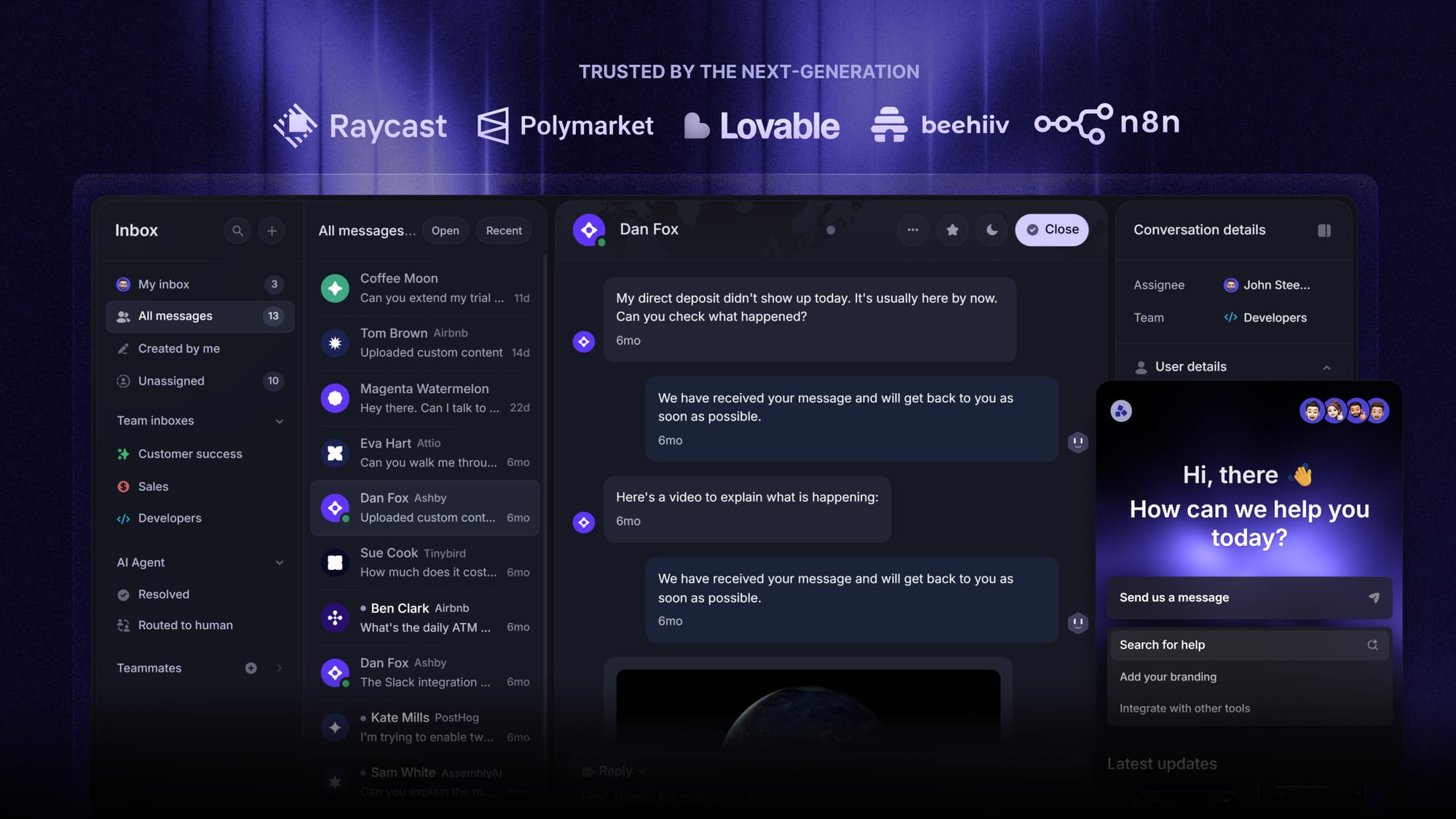
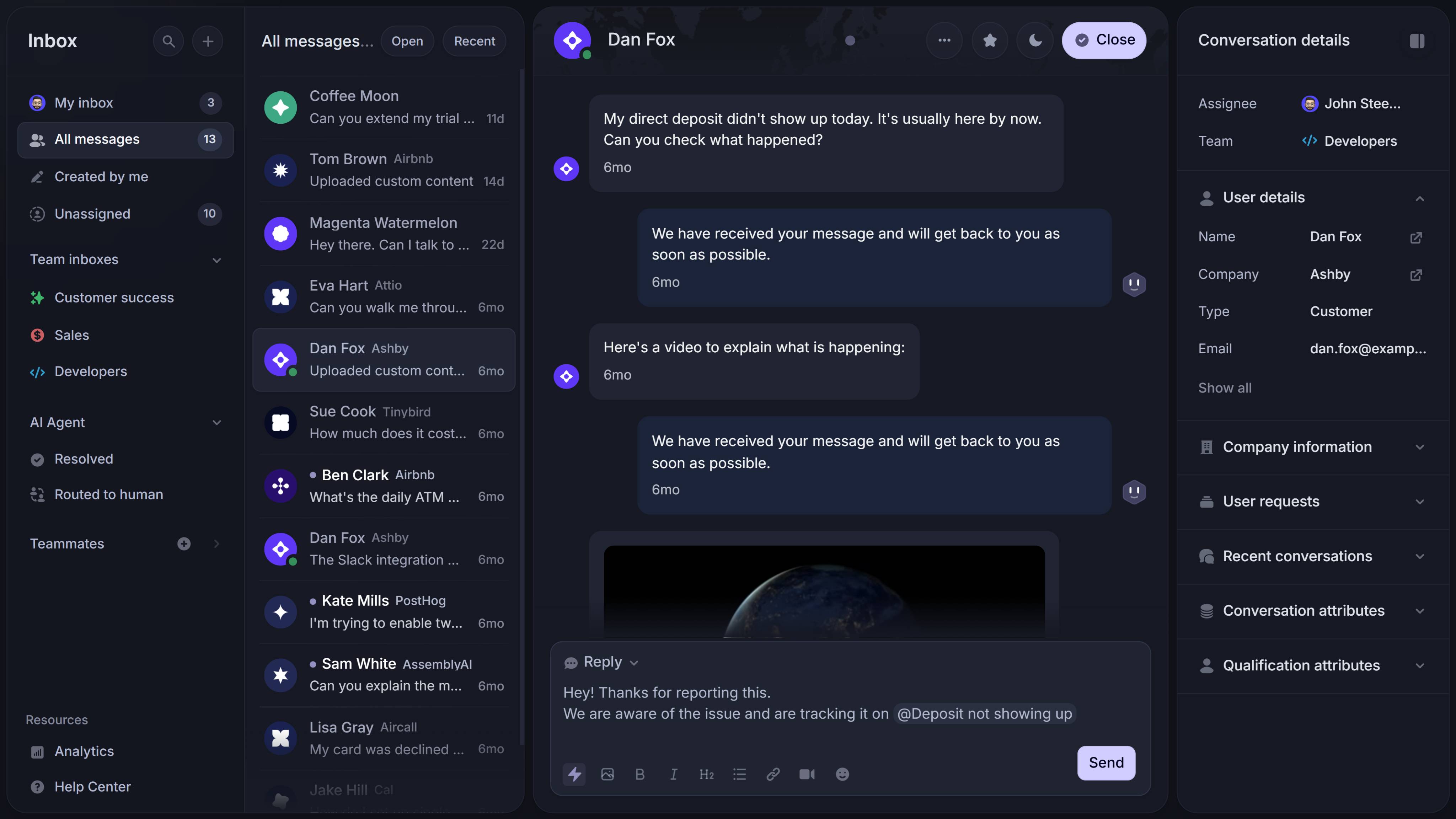
Featurebase is a modern AI customer support platform for product-led SaaS. It combines an AI-powered omnichannel inbox, help center, and feedback management into a single platform for startups that want all their customer-facing tools in one place. Featurebase is loved by thousands of support teams from companies like Lovable, Raycast, and n8n. 💫
Top features:
- Omnichannel inbox – Manage live chat, email, and Slack conversations from one AI-powered view
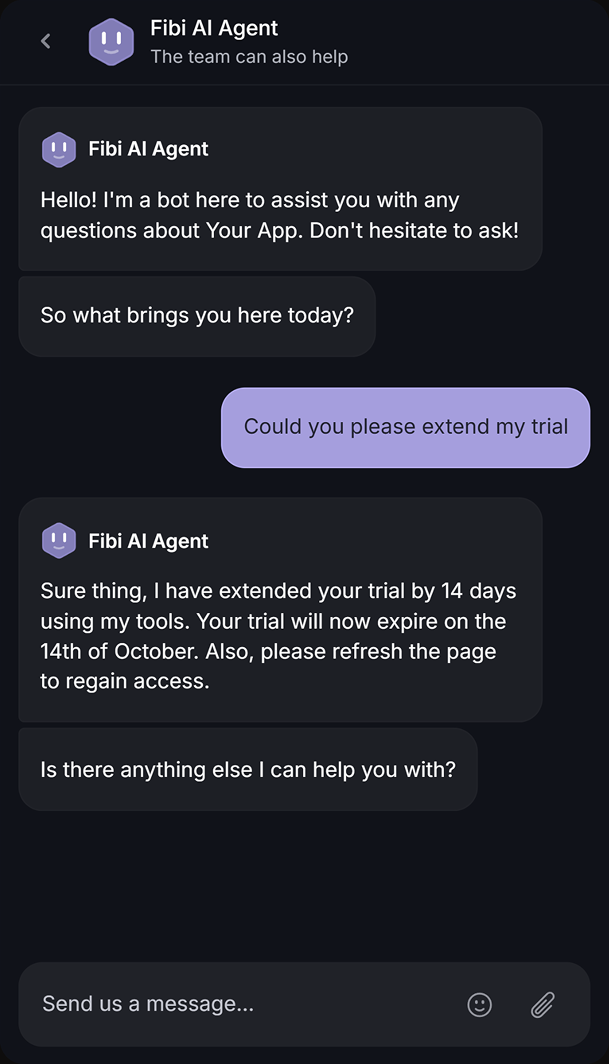
- Fibi AI Agent – Resolve customer issues on autopilot & run custom actions like trial extensions and refunds
- Help center with AI search – Provide instant, multilingual self-serve answers
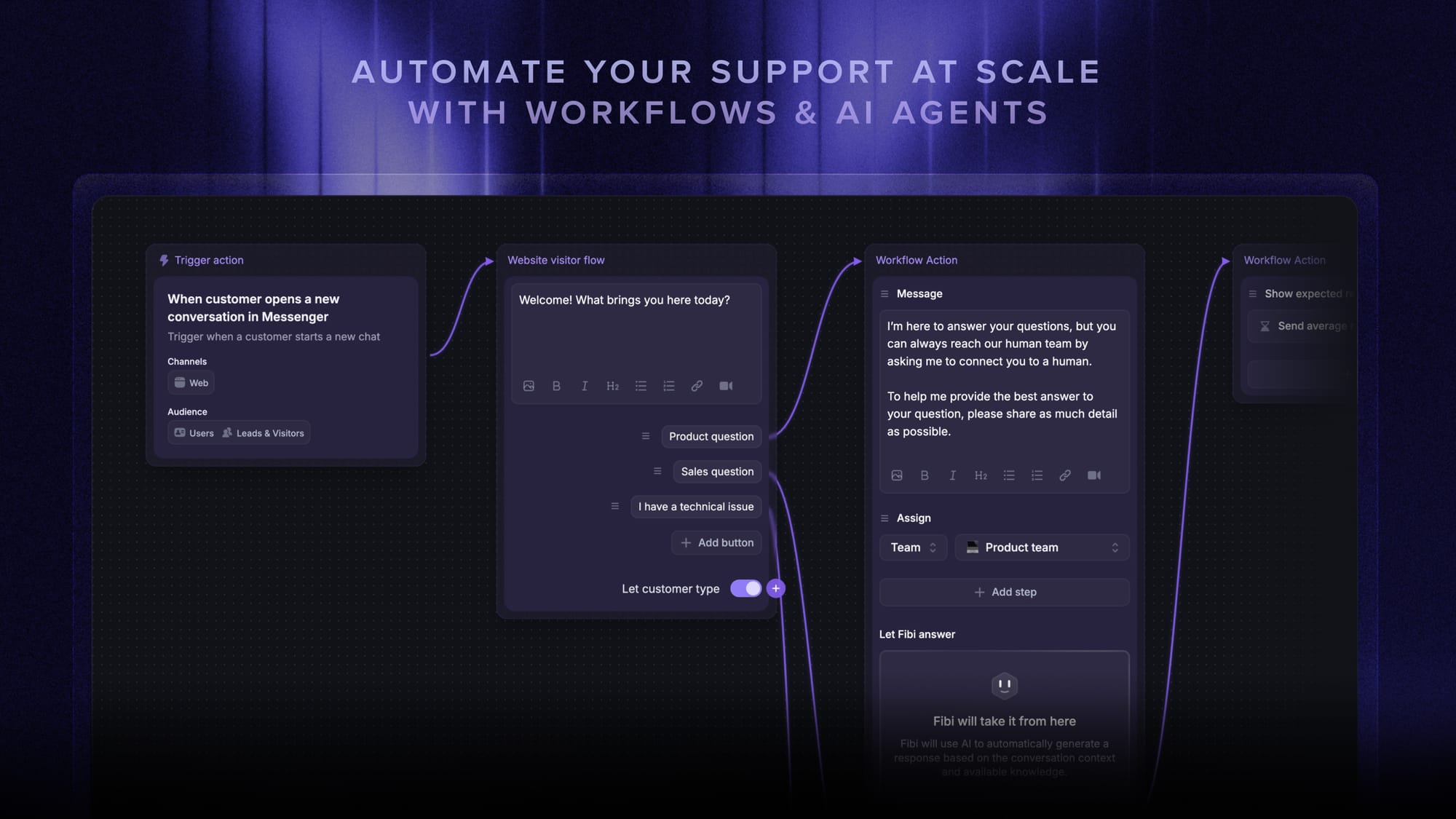
- Workflows & automations – Auto-assign tickets, route conversations, collect customer data, and more
- AI Copilot – Help your agents answer customers faster with AI Copilot that uses your internal knowledge
- Multi-brand support – Manage multiple Help Centers and Live chats from a single workspace
- Automatic AI translations – Automatically translate all messages and help articles to your customers native language
- Service Level Agreements – Track SLAs to make sure your team responds to customers on time, every time
- Mobile app – Respond to customers, receive notifications, and unblock users on the go
- Product updates – Publish release notes with a changelog page, in-app widget, and emails
- Integrations – Connects with Slack, Linear, Jira, HubSpot, and more
Pricing: Free plan available with unlimited conversations. Paid plans start at $29/seat/month with $0.29 per AI resolution.
Featurebase covers all the basic support features that legacy platforms do, but with a much more modern approach. It comes with AI automations, a mobile app, and multiple channels (email, live chat, Slack, etc.).

Get the fastest AI-powered Support Inbox
Support your customers from anywhere with an AI-powered omnichannel inbox
2. Kustomer
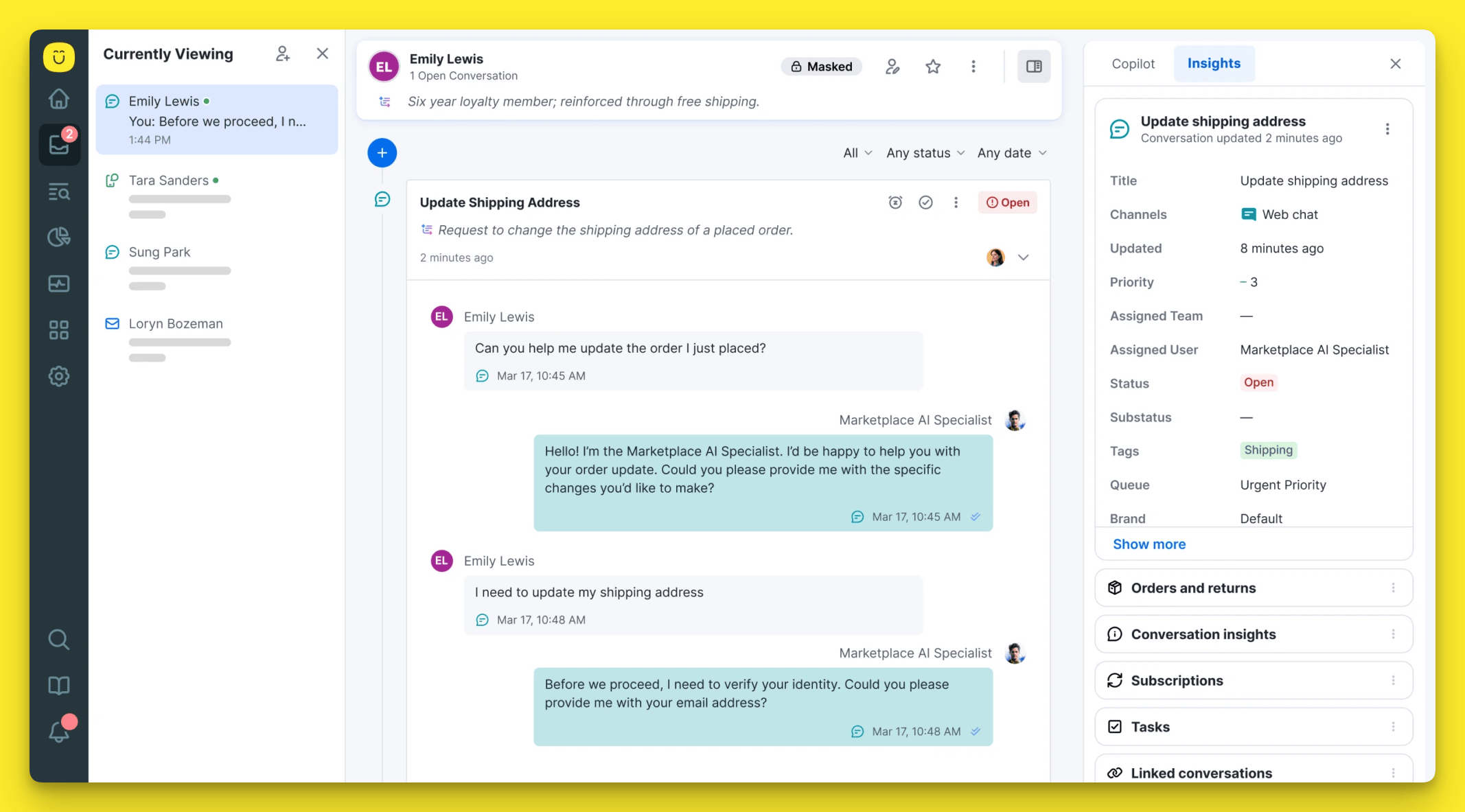
Kustomer is a customer service CRM that organizes conversations around the customer rather than separate tickets. It pulls data from email, chat, social media, SMS, and voice into a single timeline so agents can see the full history before responding.
It's popular with e-commerce and digital-first brands that handle high support volume and want to provide a more seamless support experience across channels.
Top features
- Unified customer timeline: shows all past conversations, orders, and interactions in one place to give context when handling customer requests.
- Omnichannel messaging: manages email, chat, social, SMS, and voice from a single workspace.
- Automation workflows: reduces manual work by routing, tagging, or responding to common inquiries automatically.
- Self service tools: offers help content and automated responses to deflect repetitive questions and manage support volume.
- Performance analytics: tracks response times, resolution rates, and team productivity to identify areas for improvement.
Kustomer pricing starts at $89 per user per month for the Enterprise plan. You might want to take a look at Kustomer alternatives first before purchasing this platform.
3. Freshdesk
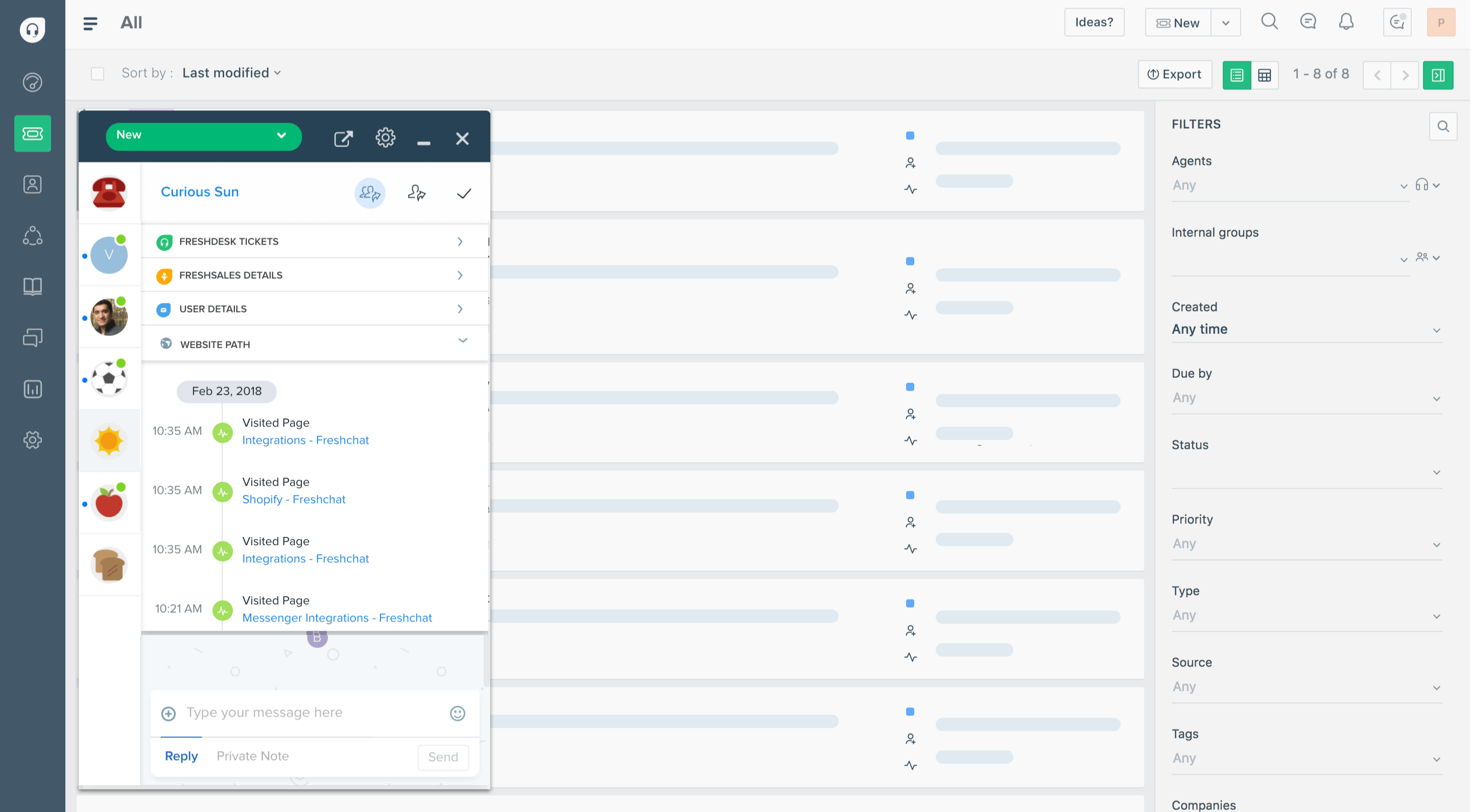
Freshdesk is a customer support platform used by startups and growing companies that want to manage multiple support channels in one place. It brings email, chat, phone, social media, and web forms into a single help desk. Unlike traditional ticketing systems that focus only on email, Freshdesk gives teams more flexibility and visibility across different types of conversations.
Top features
- Omnichannel ticketing: collects messages from various support channels and converts them into trackable tickets.
- Automation rules: automatically assign, prioritize, or escalate tickets based on predefined conditions.
- Self-service portal: allows customers to search help articles and community discussions before submitting a request.
- Customer behavior tracking: shows basic activity data and interaction history to give agents more context when replying.
- Analytics and reports: provides dashboards that track team performance, response times, and overall service quality.
Freshdesk pricing starts at $19 per user per month for the Growth plan.
4. Zoho Desk
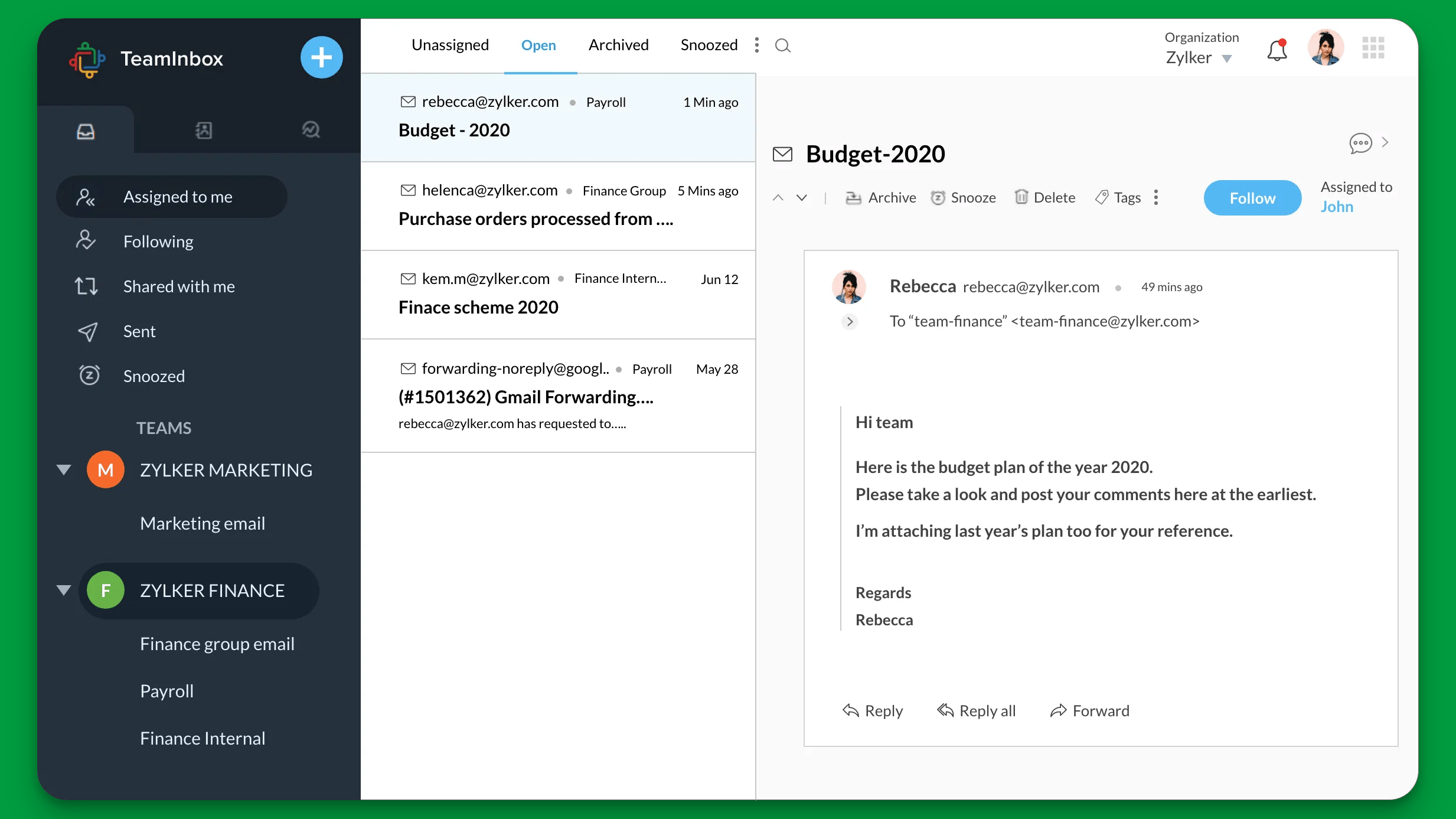
Zoho Desk is a customer support platform that helps businesses manage customer inquiries across email, phone, chat, social media, and web forms. It is often used by small and mid-sized companies that want structured ticketing without paying enterprise-level prices. Because it connects with the wider Zoho ecosystem, it works well for teams that already rely on Zoho apps and want seamless service between sales and support.
Top features
- Omnichannel ticketing: converts messages from different channels into organized tickets that can be assigned and tracked.
- Automation and workflows: sets rules for ticket assignment, escalations, and notifications to keep responses consistent.
- Knowledge base: lets teams publish help articles so customers can solve simple issues on their own.
- Advanced reporting: provides customizable dashboards and detailed reports on response times, team performance, and customer satisfaction.
- Customer context view: shows contact details, past conversations, and related records in one screen to help agents respond faster.
Zoho Desk pricing starts at 7EUR per user per month for the Standard plan.
5. Gorgias
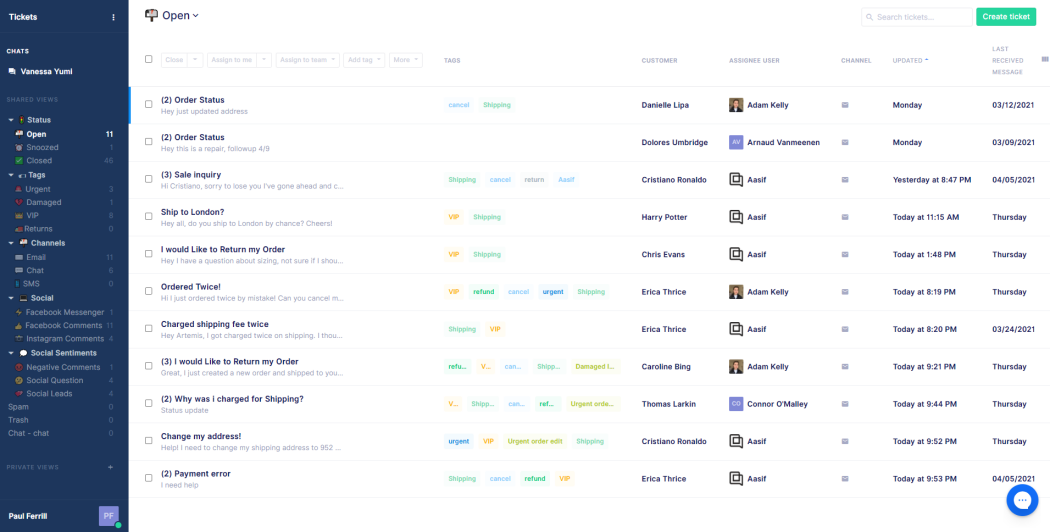
Gorgias is an e-commerce help desk platform built mainly for e-commerce brands. It connects email, live chat, social media, and store data in one place so support teams can respond with full order context. Online stores use it to meet rising customer expectations, resolve issues faster, and turn support conversations into opportunities to improve customer health and repeat purchases.
Top features
- Ecommerce integrations: connects directly with platforms like Shopify and Magento so agents can view and edit orders without leaving the help desk.
- Centralized omnichannel inbox: manages email, chat, Instagram, Facebook, and other channels from one dashboard.
- Automation rules: automatically tags, assigns, or responds to common tickets based on keywords or customer data.
- Revenue and support analytics: links support activity to sales data and provides actionable business insights on refunds, conversions, and retention.
- Macros and templates: allows agents to respond quickly with saved replies that can include dynamic customer and order information.
Gorgias pricing starts at $10 per month for up to 50 tickets.
6. Zendesk
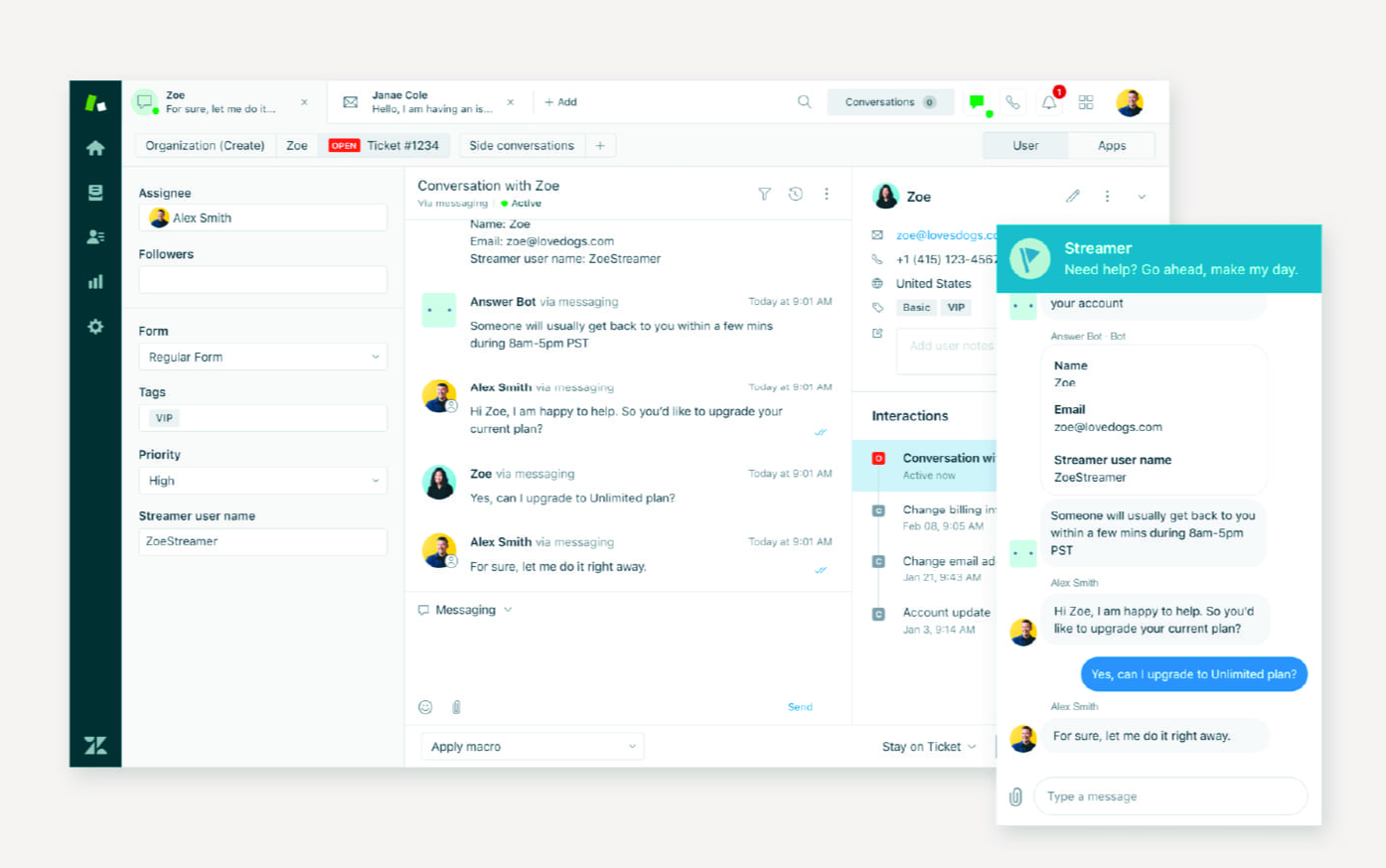
Zendesk is a customer service platform used by companies of all sizes to manage support across multiple communication channels. It brings email, chat, phone, social media, and messaging apps into one system so teams can respond from a single workspace.
Many businesses choose Zendesk when they want structured ticketing, automation, and AI agents that can assist customers, as well as support and sales teams.
Top features
- Omnichannel ticketing: converts messages from different communication channels into tickets that can be tracked and assigned.
- AI agents: answers common questions automatically, suggests replies to agents, and routes conversations based on intent.
- Unified agent workspace: gives agents one view of conversations, customer data, and past interactions across preferred channels.
- Help center and knowledge base: allows teams to publish support articles and surface them during live conversations.
- Reporting and analytics: tracks response times, resolution rates, and channel performance to improve service quality.
Zendesk pricing starts at $19 per user per month for the Support Team plan.
PS. Featurebase also has a Zendesk integration you can use so you don't have to make a choice between the two tools.
7. Intercom
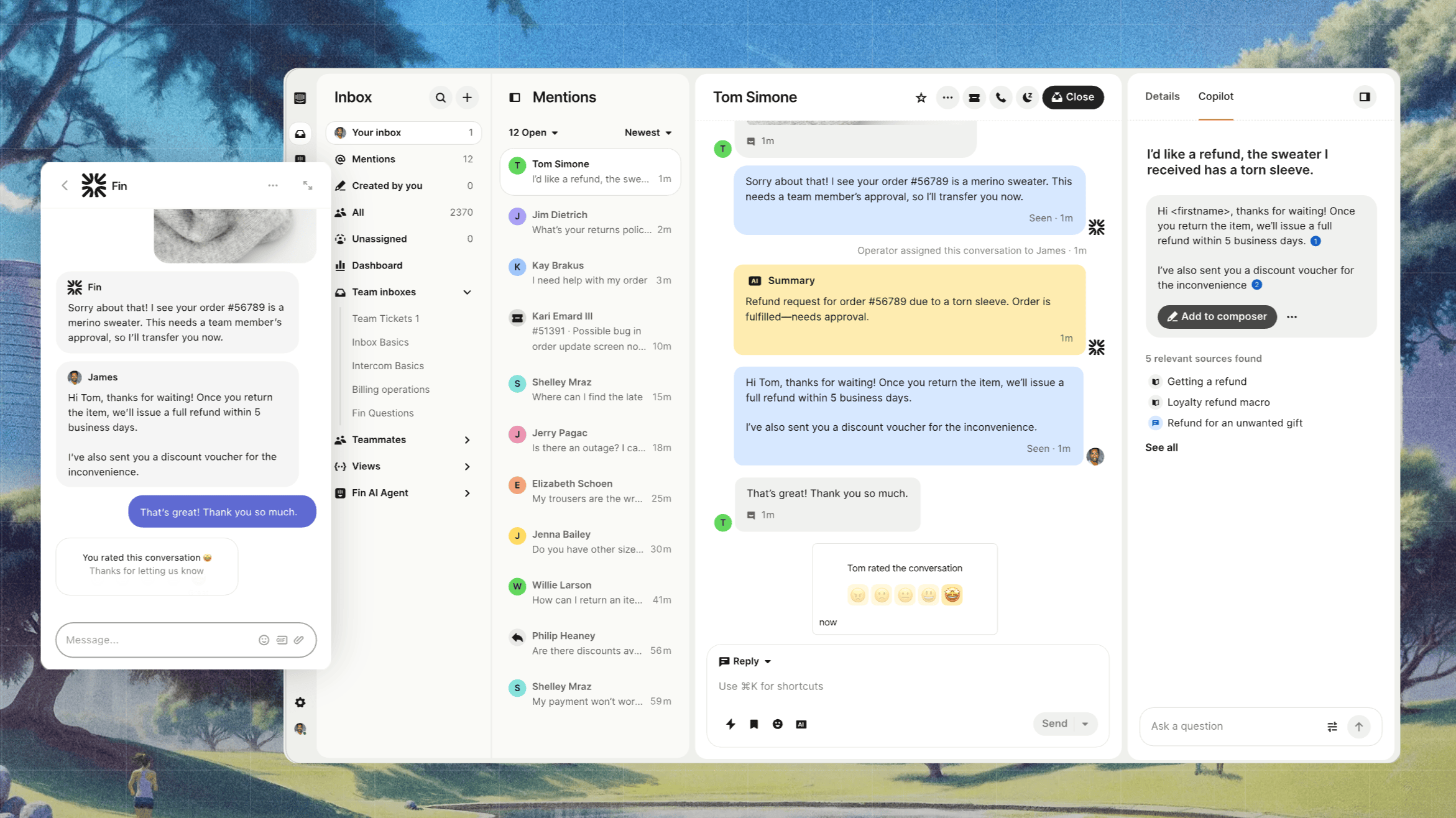
Intercom is a customer messaging platform that combines live chat, bots, help content, and product messages in one system. It is used by SaaS companies and online businesses that want to support users across the entire customer journey, from onboarding to ongoing support. Teams can automate common conversations while still involving human agents when issues need personal attention.
Top features
- Shared inbox: centralizes chat, email, and in-app messages so human agents can manage conversations from one workspace.
- Chatbots and automation: handles repetitive questions automatically and routes more complex issues to the right team member to deliver efficient support.
- Customer timeline: shows a full history of interactions, product activity, and previous conversations in one view.
- Help center: allows companies to publish searchable articles and surface relevant content inside the messenger.
- Outbound messaging: sends targeted in app messages and emails based on user behavior or lifecycle stage.
Intercom pricing starts at $19/seat/month for Essential billed annually ($29 billed monthly), plus $0.99 per Fin outcome. Advanced costs $85/seat/month and Expert costs $132/seat/month, billed annually.
8. Salesforce Service Cloud
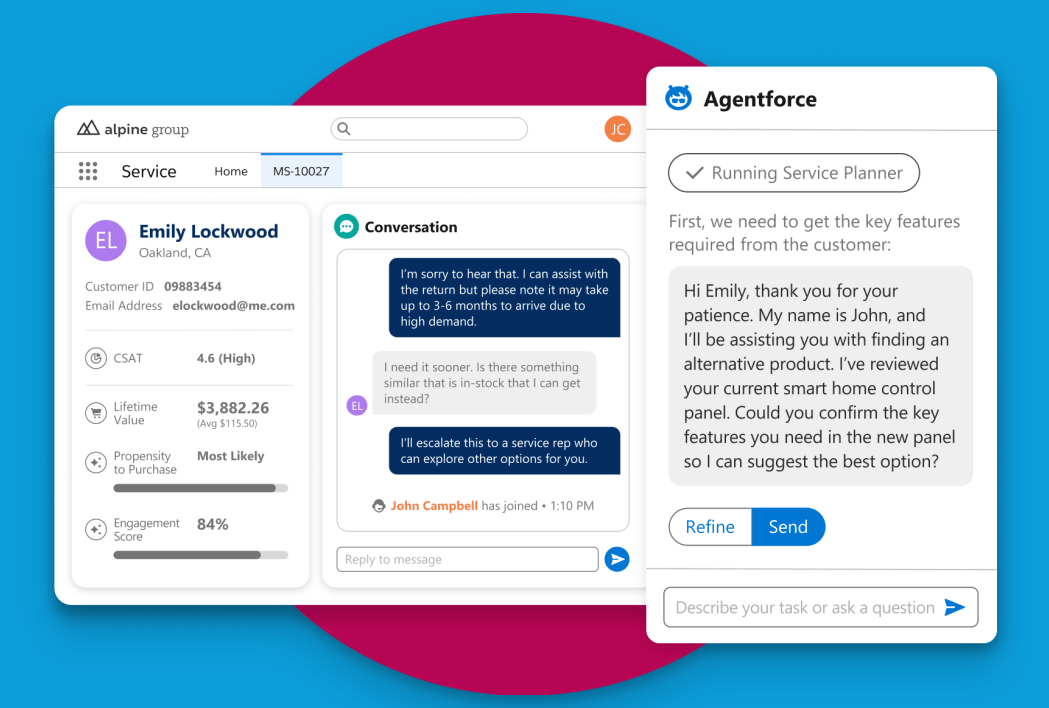
Salesforce Service Cloud is an enterprise customer service platform built on the Salesforce CRM. It is designed for larger organizations that need deep customization, complex case management, and support across many channels. Companies that already rely on Salesforce for sales often choose it to keep service data connected with the rest of the business.
Top features
- Case management: tracks customer issues from first contact to resolution with detailed status updates and history.
- Omnichannel routing: automatically assigns cases from email, chat, social, and phone to the right agents based on rules and skills.
- Knowledge management: stores internal and customer facing help content that agents can access while working on cases.
- Service console: provides a unified workspace where agents can view customer records, past interactions, and open cases.
- Automation and workflows: creates rules that trigger actions such as escalations, notifications, or task assignments.
Pricing starts at $25 per user per month for the Starter Suite plan.
9. HubSpot Service Hub
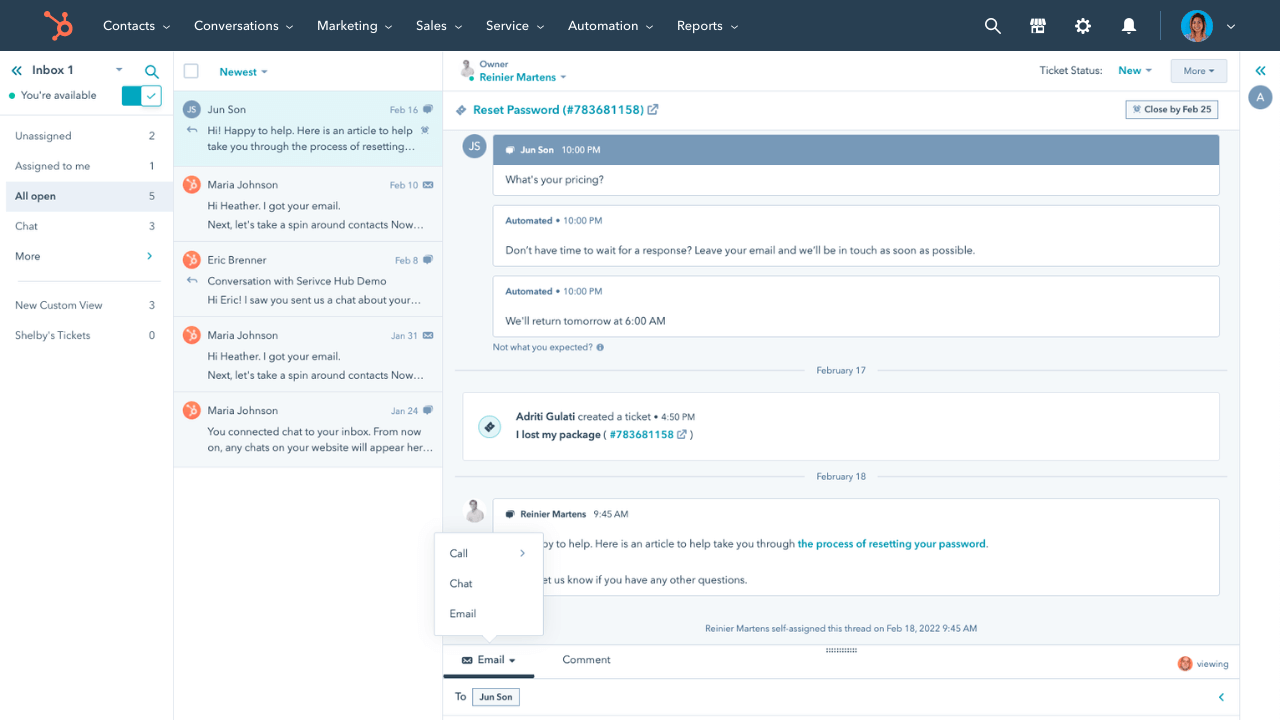
HubSpot Service Hub is the customer support product within the HubSpot ecosystem. It is built for companies that already use HubSpot CRM and want to manage support tickets, live chat, and customer communication in the same system. It works well for growing teams that want marketing, sales, and support data connected in one place.
Top features
- Ticketing system: turns emails, forms, and chats into trackable support tickets with clear ownership and status.
- Shared inbox: lets teams manage email and chat conversations together without losing visibility.
- Knowledge base: allows you to create help articles that customers can search before contacting support.
- Live chat and chatbots: adds real time chat to your website and automates basic questions.
- Customer portal: gives customers a place to log in and view the status of their open and closed tickets.
Pricing starts at $9 per user per month for the Starter plan.
10. Medallia
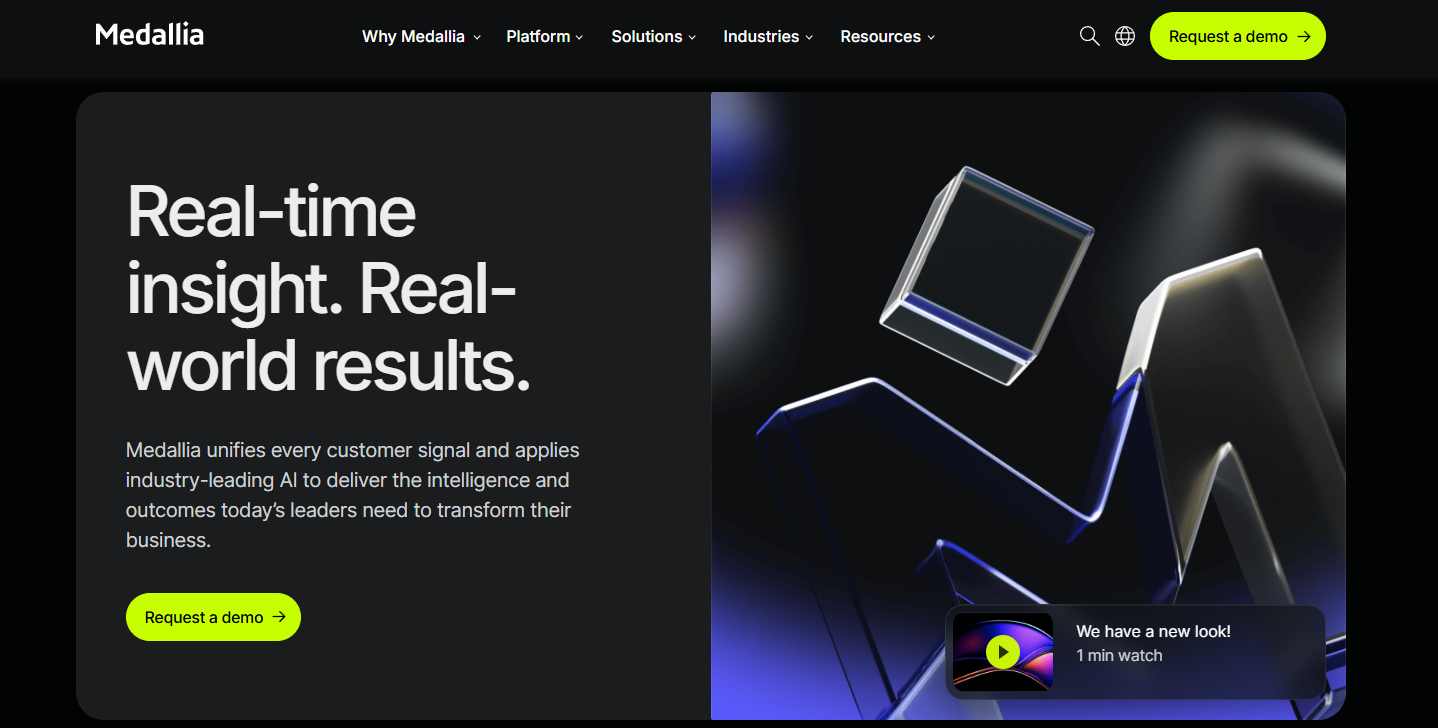
Medallia is a customer experience management platform used by large enterprises that want to collect and act on customer feedback across many touchpoints. It connects surveys, digital feedback, contact center data, and in store experiences into one system. Companies in retail, hospitality, financial services, and telecom often use it to understand trends and improve service quality at scale.
Top features
- Omnichannel feedback collection: gathers feedback from surveys, web, mobile, social, and contact center interactions in one platform.
- Experience analytics: analyzes customer sentiment and trends across different channels and locations.
- Real time alerts: notifies teams when negative feedback or high-risk interactions are detected so they can respond quickly.
- Case management tools: assigns follow ups to teams and tracks resolution of customer issues.
- Role based dashboards: provides customized views for executives, managers, and frontline staff.
Pricing is custom and based on company size and requirements.
11. Knowmax
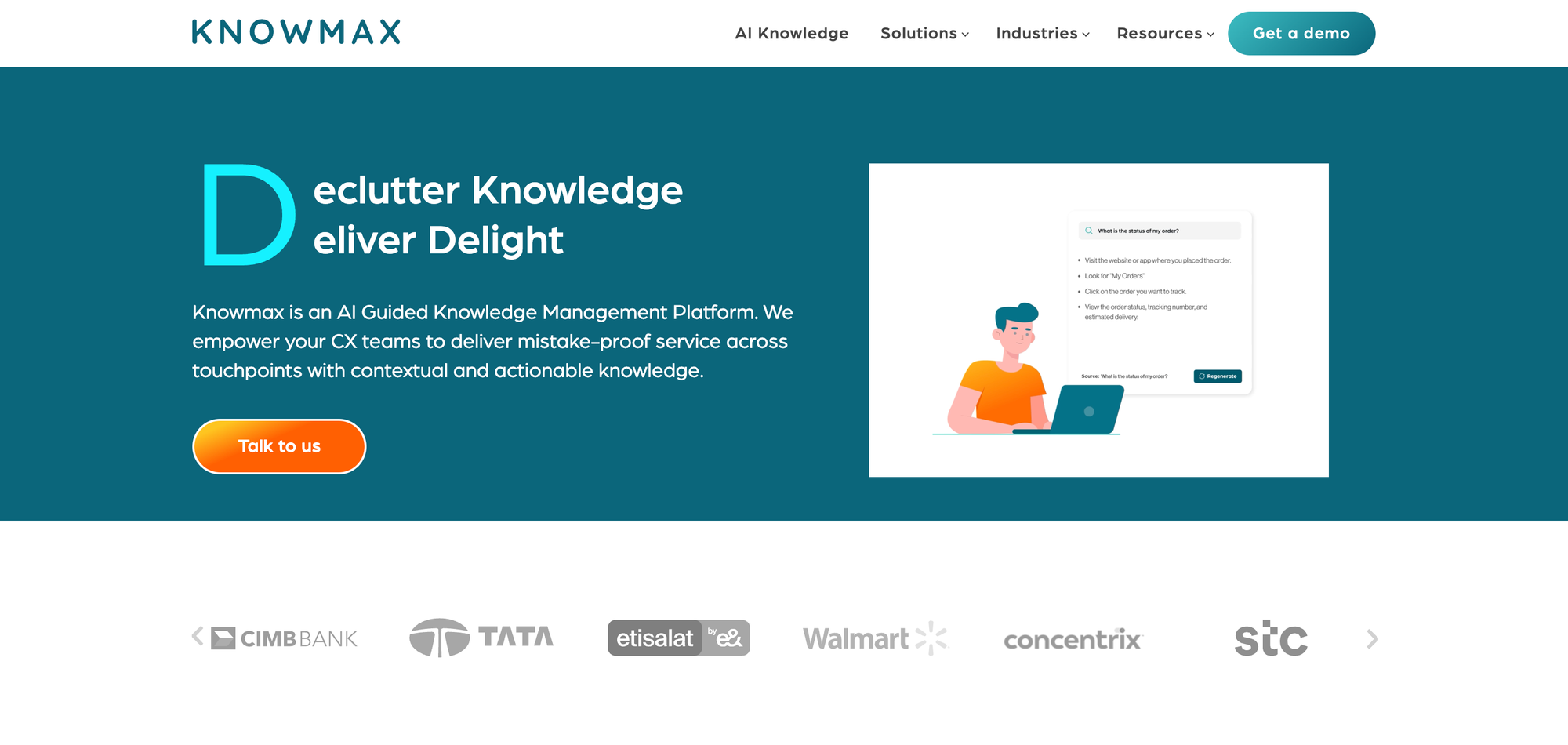
Knowmax is a knowledge management and agent support platform built for contact centers. It focuses on helping agents find the right answers during live calls, chats, or emails through structured knowledge and guided workflows. It is commonly used by telecom, banking, e-commerce, and other support-heavy industries that need consistent answers across large teams.
Top features
- Decision tree builder: creates step-by-step visual guides that help agents handle complex queries in a structured way.
- Centralized knowledge base: stores articles, scripts, and troubleshooting guides in one searchable system.
- Agent assist tools: surfaces relevant knowledge in real time while agents are handling calls or chats.
- Self service knowledge portal: allows customers to access help articles and reduce repetitive tickets.
- Analytics and content insights: tracks article usage, gaps in knowledge, and agent performance trends.
Knowmax has custom pricing based on business requirements.
12. Tidio
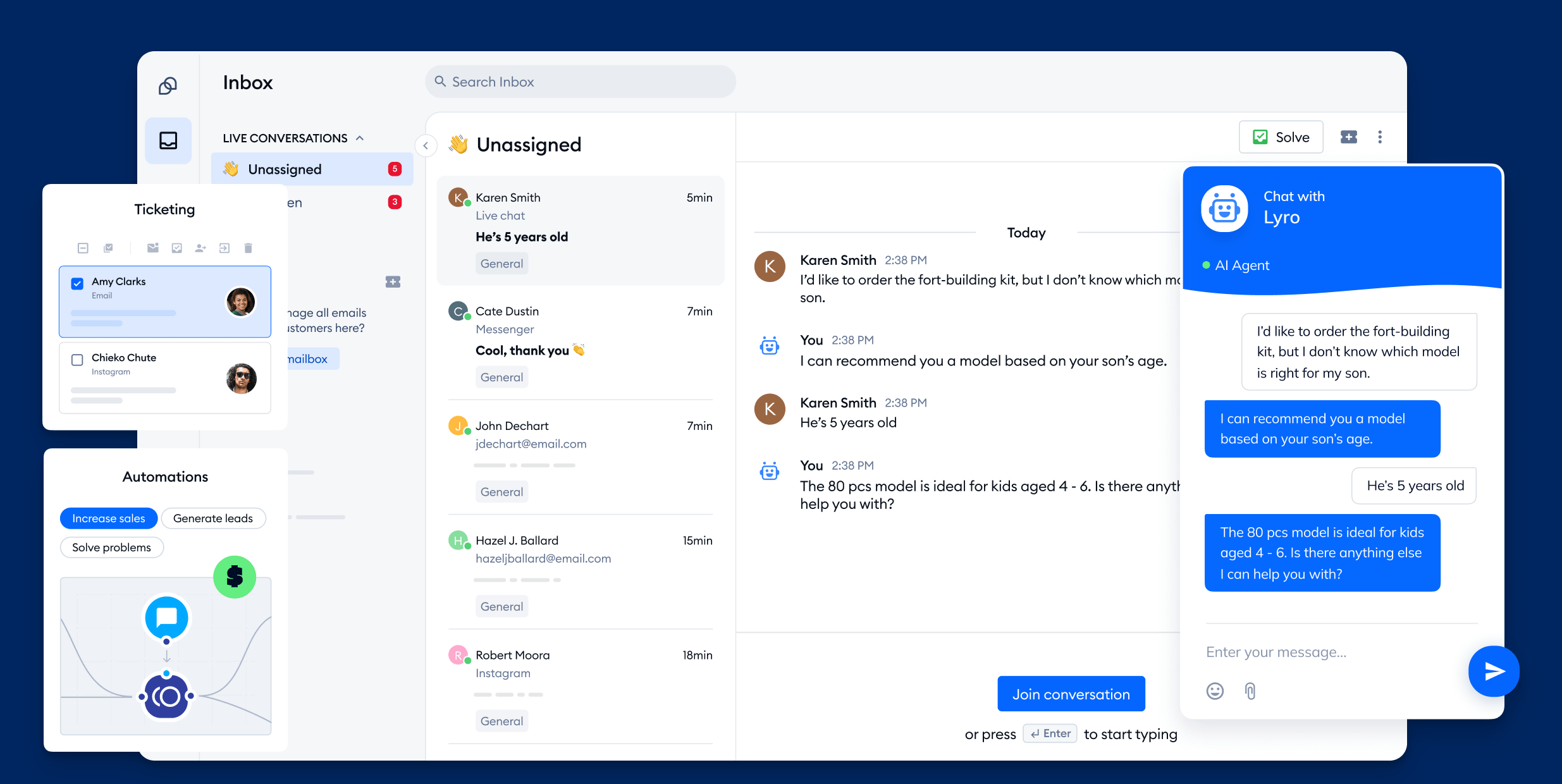
Tidio is a live chat and messaging platform used mainly by ecommerce brands and smaller online businesses. It brings website chat, email, and social messaging into one inbox so teams can reply without switching between tools. It is a good option for companies that want something quick to install and focused on website conversations rather than a traditional call center setup.
Top features
- Live chat widget: adds a customizable chat box to your website so visitors can ask questions in real time.
- Chatbot builder: lets you create automated flows that answer common questions, recommend products, or collect contact details.
- Shared inbox: combines live chat, email, and Messenger conversations into one dashboard for your team.
- Visitor tracking: shows what page a visitor is viewing and basic activity data to give agents more context.
- Automation rules: triggers messages, assigns chats, or tags conversations based on conditions you define.
Tidio pricing starts at $24.17 per month + $32.50 per month for the Lyro AI agent.
13. Hiver
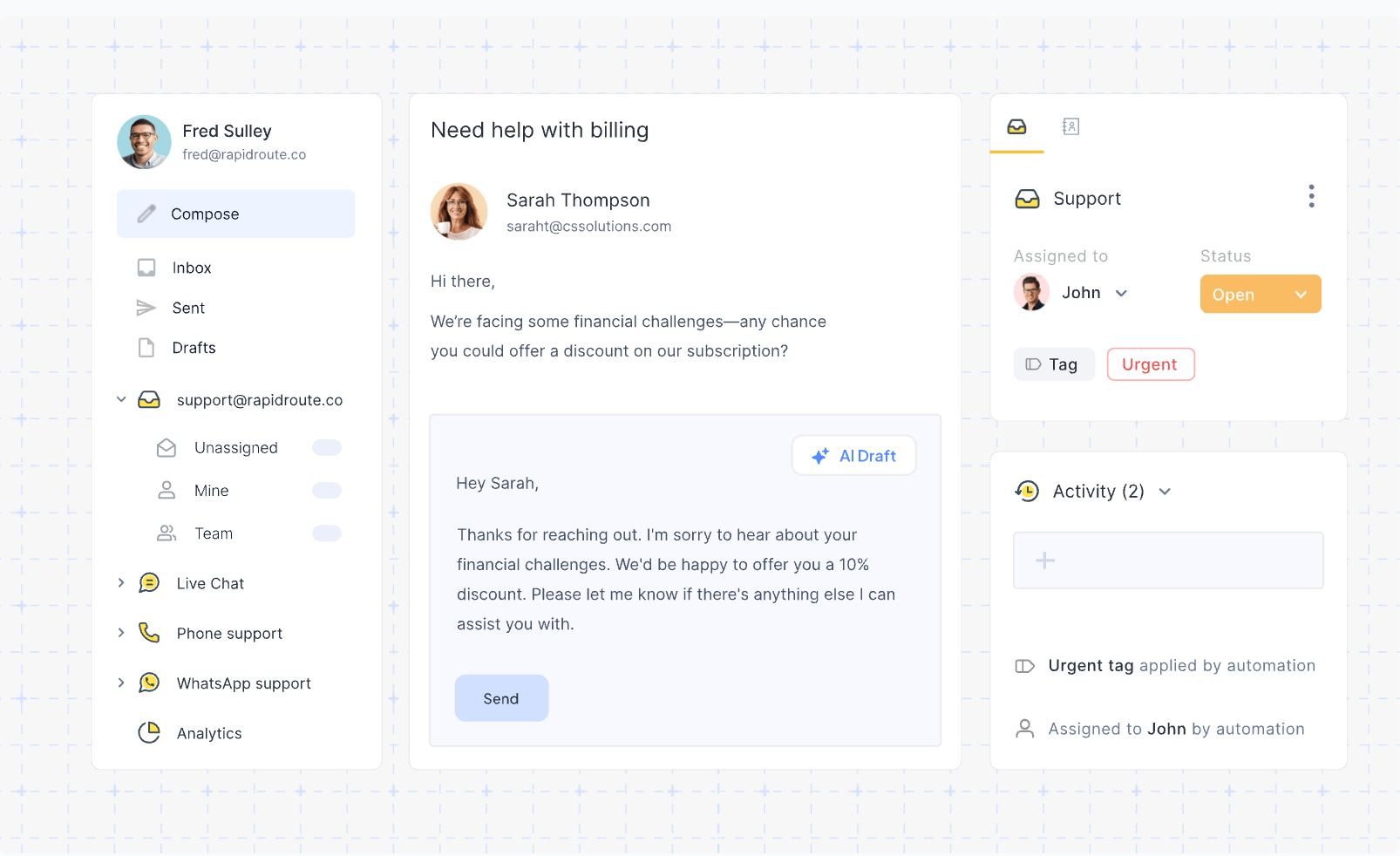
Hiver is a customer support tool that works directly inside Gmail. Instead of moving to a separate help desk system, teams can manage shared inboxes such as support or billing from the Gmail interface they already use. It is a good fit for small and mid sized teams that handle support mainly over email but still want structure, visibility, and reporting.
Top features
- Shared inbox management: turns Gmail inboxes into collaborative support queues where emails can be assigned, tracked, and resolved.
- Email assignment and ownership: allows managers to assign conversations to specific team members and avoid duplicate replies.
- Internal notes and mentions: lets agents discuss emails privately within a thread without the customer seeing those messages.
- Basic automation rules: automatically assigns or tags emails based on keywords, sender, or other conditions.
- Reporting and analytics: tracks response times, resolution times, and team workload directly from Gmail activity.
Hiver pricing starts at $25 per user per month for the Lite plan.
14. Genesys
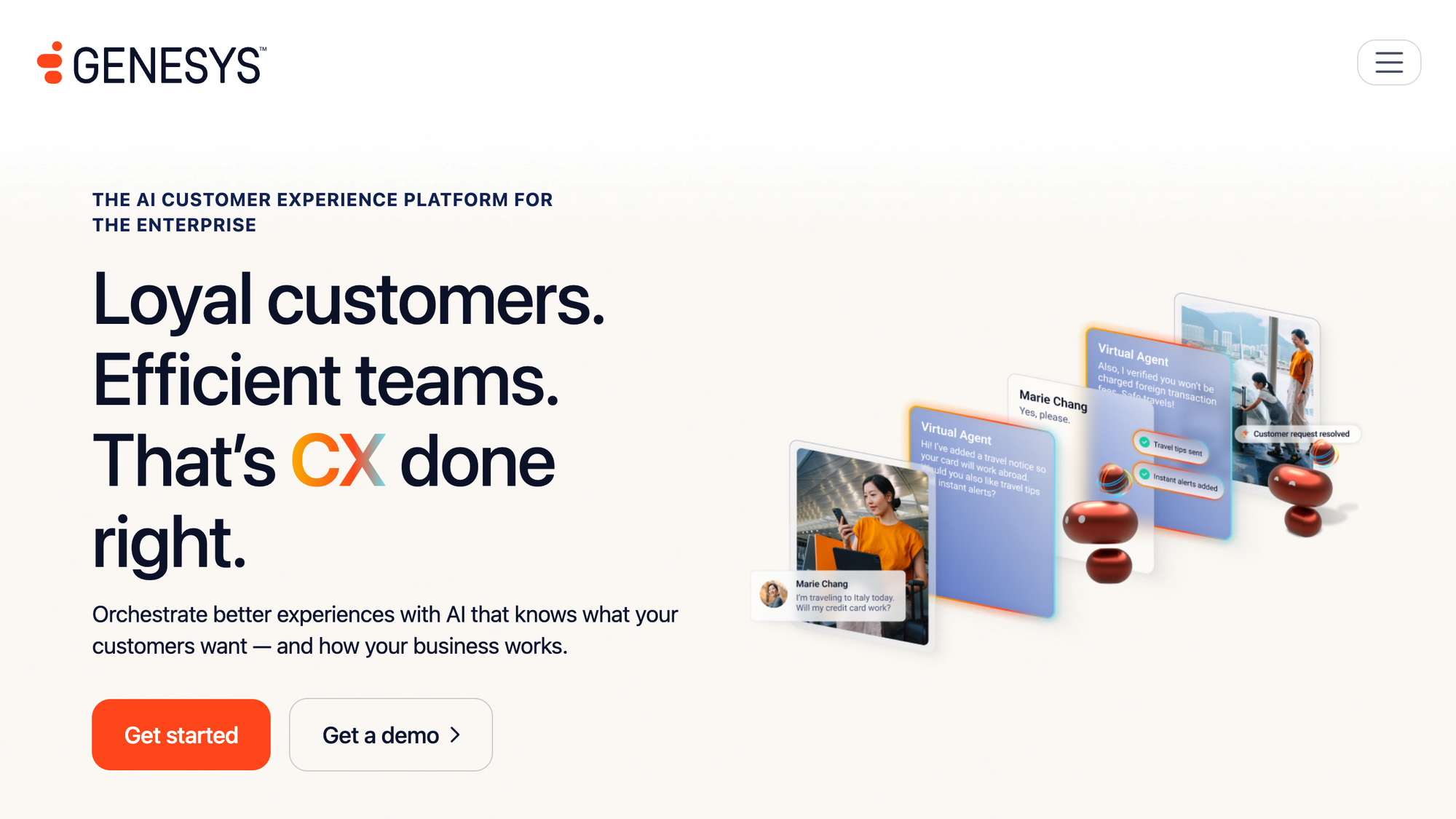
Genesys is a customer experience platform built for companies that manage a large number of customer conversations every day. It combines voice, chat, email, messaging apps, and social channels in one system so support teams can respond from a single workspace. It is commonly used by enterprises that need structured routing, deep reporting, and tools to manage bigger contact center teams.
Top features
- Omnichannel routing: routes calls, chats, emails, and social messages to the right agent based on skills, availability, or customer history.
- Advanced IVR and voice support: lets you create phone menus, automate simple requests, and manage high call volumes without overwhelming agents.
- Workforce engagement management: includes scheduling, forecasting, and performance monitoring for larger support teams.
- Customer journey tracking: shows a full history of interactions across channels so agents can understand context before replying.
- Analytics and reporting: provides real-time dashboards and historical reports on queues, agent performance, and customer satisfaction.
Pricing starts at $75 per user per month for the Genesys Cloud CX 1 plan.
Get the omnichannel support platform your customers deserve
Omnichannel no longer has to boil down to complex onboarding and lengthy implementation. With today's customer service software, covering multiple channels is easier than ever before.
Featurebase is a AI-powered customer support platform for modern teams. It combines an AI-powered omnichannel inbox, help center, and feedback management into a single platform, so your team can cover in-app widgets, live chat, email, and Slack without months of training or setup. It's loved by thousands of support teams at companies like Lovable, Raycast, and n8n. 💫
It comes with a Free plan and paid plans starting at just $29/seat/month. Setup takes minutes and doesn't require a credit card, so there's no downside to trying it. 👇
✨ Automate your support with the fastest AI-enhanced Inbox today →