Blog ComparisonsFreshdesk vs ServiceNow: Which One Should You Pick?
Freshdesk vs ServiceNow: Which One Should You Pick?
Freshdesk vs ServiceNow compared on focus, ease of use, features, AI, and pricing so you can pick the right support platform for your team.

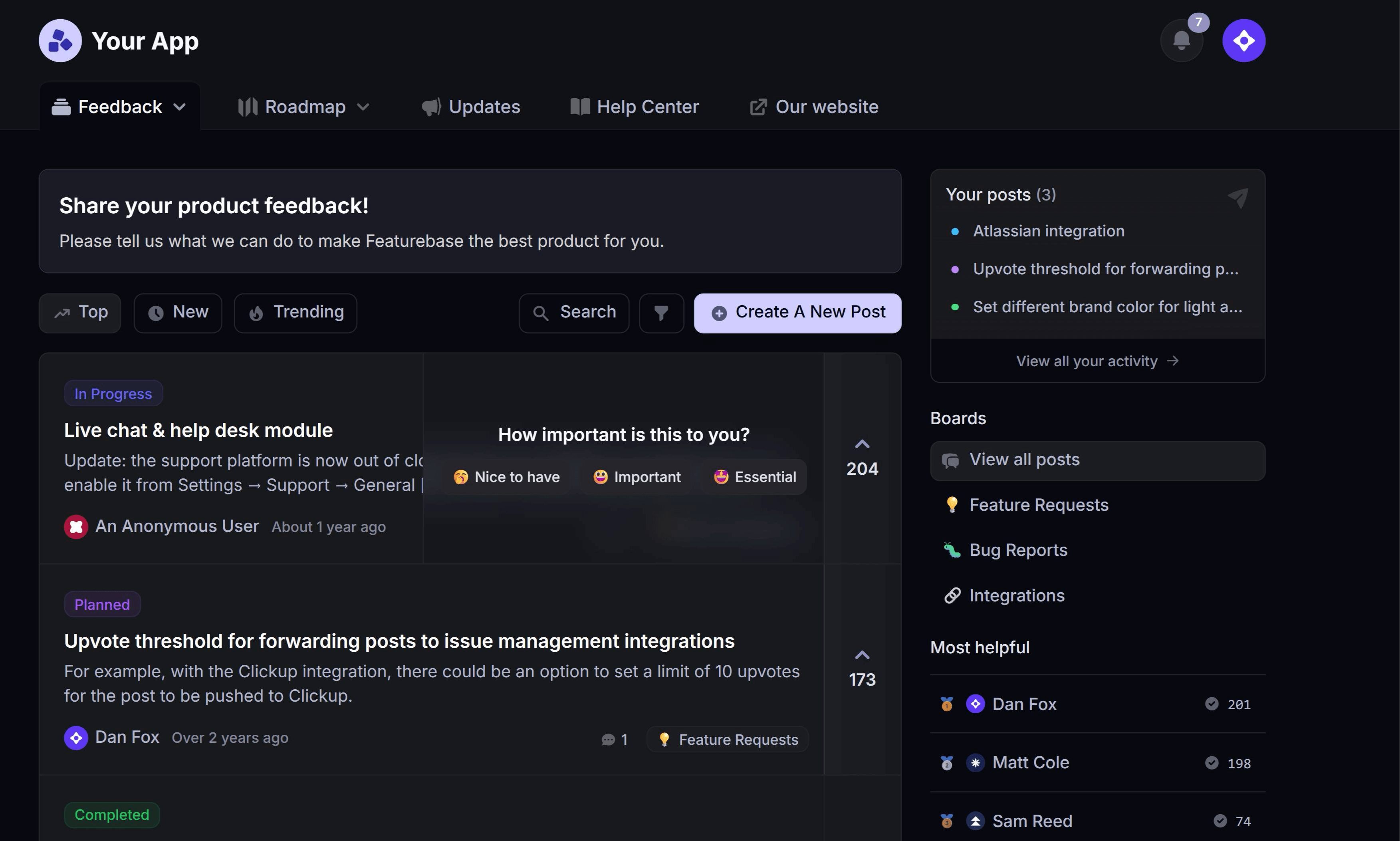

✨ Psst... want a modern support platform that's simpler than ServiceNow and more capable than Freshdesk? Check out Featurebase →
Freshdesk and ServiceNow land on the same shortlist all the time, but they're built for very different jobs. One is a fast, affordable customer help desk. The other is a heavyweight enterprise platform for IT service management.
Pick the wrong one and you'll either outgrow it within a year or bury a small team in complexity it never needed. So let's break down how they actually differ, feature by feature, so you can choose with confidence. 👇
Key takeaways:
| Tool | Best for | Pricing | Main trade-off |
|---|---|---|---|
| Freshdesk | SMBs and customer support teams that want to be live in days | Free plan, paid from $19/agent/mo | Thin for complex, enterprise-grade ITSM |
| ServiceNow | Large enterprises needing governed, end-to-end IT service management | Custom quote only | Steep learning curve and high total cost |
Freshdesk wins on speed, simplicity, and transparent pricing. ServiceNow wins on depth, governance, and scale. The catch is the gap in the middle: plenty of teams find Freshdesk too limiting but ServiceNow far too heavy.
✨ Stuck between the two? See how Featurebase compares →
What are Freshdesk and ServiceNow?
Before comparing them, it helps to know what each tool was actually built to do, because they started from opposite ends of the market.
Freshdesk
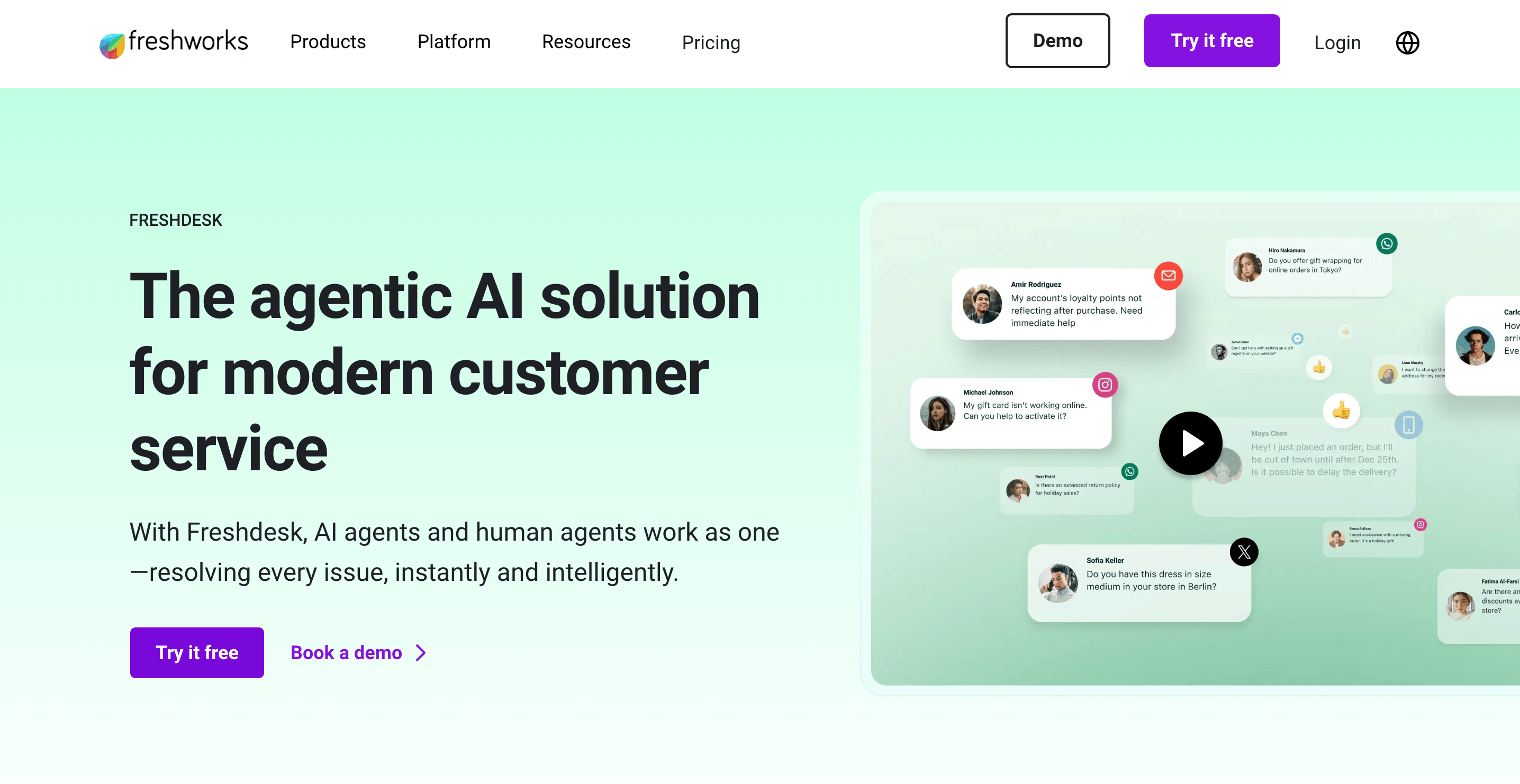
Freshdesk is a cloud-based customer support platform from Freshworks. It pulls customer conversations from email, live chat, social media, and phone into one shared inbox, then layers on automation, self-service portals, and AI through Freddy AI.
It's aimed at small and mid-sized teams that want to get organized quickly without a dedicated admin. Think of it as a modern, approachable help desk for customer-facing support.
ServiceNow

ServiceNow is an enterprise service management platform. It goes far beyond ticketing into incident, problem, change, asset, and request management, with workflows that span IT, HR, and customer service.
It's built for large, often regulated organizations that need governance, auditability, and standardized processes at scale. The strength here isn't simplicity, it's control.
Core focus: customer help desk vs enterprise ITSM
This is the difference that decides most evaluations, so it's worth getting right first.
- Freshdesk is a help desk: It's optimized for external customer support, with ticketing, knowledge bases, and self-service portals built to answer customer questions fast.
- ServiceNow is a service desk (and a lot more): It's optimized for internal IT service management, automating workflows, tracking assets, and connecting service requests across departments.
In practice, Freshdesk shines when your main job is answering customers. ServiceNow shines when a request has to trigger an approval, update a configuration database, and hand off to another team to actually get resolved.
Large support teams often shortlist enterprise-grade help desk software instead.
That's also why the two are sometimes used together rather than as either/or, with the customer-facing team on one and IT operations on the other.
Ease of use and setup
Adoption is where these tools feel most different day to day.
Freshdesk
Freshdesk is built to go live quickly. The interface is clean, onboarding is guided, and most support agents can be productive without weeks of training.
For a lean team under pressure, speed matters more than deep configuration on day one. You can receive, assign, update, and resolve a ticket without a dedicated admin keeping the lights on.
ServiceNow
ServiceNow is powerful, but that power comes with a steep learning curve. Administrators usually need real time to configure forms, workflows, roles, and business rules, and agents often need training to move quickly.
That's the tradeoff for enterprise control, not a flaw. But teams without dedicated process owners frequently find it overwhelming, and users on G2 commonly describe it as complex to evolve and not especially intuitive for everyday use.
Features and AI automation
Both platforms handle the core support loop. The difference is depth, and how far their automation goes.
Freshdesk covers omnichannel ticketing, a knowledge base, SLA tracking, automation rules, and Freddy AI for agent assist and chatbots. It's practical and quick to apply. G2 reviewers consistently praise how it keeps every conversation in one place, though they note native reporting hits a ceiling fairly fast.
ServiceNow goes much deeper: structured incident, problem, and change management, a service catalog, AI-powered virtual agents, predictive routing, and risk-scored change approvals. Reviewers value the structured, transparent workflows, but flag that real customization often demands scripting and specialist admins.
AI is now central to both, and the bar keeps rising. Gartner predicts that agentic AI will autonomously resolve 80% of common customer service issues without human intervention by 2029, so how much a platform automates today is a fair proxy for how future-ready it is.
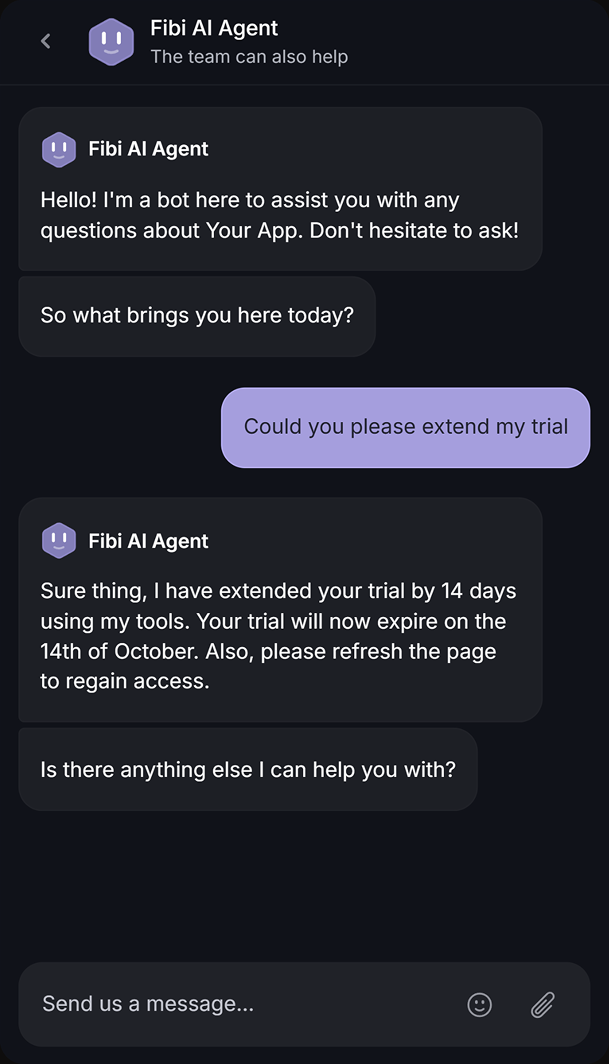
This is also where a newer category of tools sits. Featurebase, for example, pairs an omnichannel inbox with an AI agent (Fibi) that resolves common tickets on its own and can run actions like trial extensions or refunds, giving you modern automation without ServiceNow-grade setup overhead.
Customization and scalability
ServiceNow is the clear winner on raw customization and scale. It supports scoped applications, custom code, multi-step approvals, and a multi-data-center architecture that handles huge user bases and complex datasets across regions.
Freshdesk offers lighter customization: branded portals, ticket forms, views, and straightforward automation rules. That's plenty for many teams, and it scales well for SMBs as ticket volume grows.
The honest catch is that ServiceNow's flexibility can become its own problem. Over-customization creates technical debt, harder upgrades, and brittle workflows, which is exactly why G2 reviewers describe it as high-maintenance and expensive to scale. The right question isn't "which has more customization?" but "how much can my team actually maintain?"
Pricing
Cost is where the two diverge most sharply, and where total cost of ownership matters more than the sticker price.
Freshdesk
Freshdesk publishes transparent per-agent pricing:
- Free: $0 for up to 2 agents, with basic ticketing
- Growth: $19/agent/mo, for small teams that want proper ticketing and reporting
- Pro: $55/agent/mo, the most popular tier, with custom portals, objects, and advanced ticketing
- Enterprise: $89/agent/mo, adding audit logs, approval workflows, and stronger security
All paid plans are billed annually. Freddy AI agent usage includes the first 500 sessions on Pro and Enterprise, then runs $49 per 100 sessions after that.
ServiceNow
ServiceNow doesn't publish prices. It uses custom quotes based on packages (ITSM Foundation, Advanced, and Prime), the modules you need, and your level of customization.
Expect enterprise-level cost, plus implementation, training, and admin overhead on top. Reviewers repeatedly flag the price and hidden costs as a barrier for smaller organizations, and the lack of transparency makes budgeting harder.
When to choose Freshdesk vs ServiceNow
There's no universal winner here. The right call comes down to your team's size, complexity, and budget.
| Choose Freshdesk if... | Choose ServiceNow if... |
|---|---|
| You're an SMB or scaling support team | You're a large or regulated enterprise |
| Your priority is customer-facing support | You need cross-department IT service management |
| You want to be live in days, not months | You have admins and process owners to run it |
| You need transparent, predictable pricing | You can justify enterprise cost and implementation |
Bottom line: Match the platform to the complexity you actually have, not the complexity you imagine. Most teams overestimate how much process they need, and end up paying for power they never use.

Get the best customer support platform
Automatically resolve 70% of customer requests & cut down manual support loads
Looking beyond Freshdesk and ServiceNow: Try Featurebase
If Freshdesk feels too thin but ServiceNow feels like overkill, you're in the gap a lot of modern teams fall into. That's exactly where a newer, all-in-one platform fits.
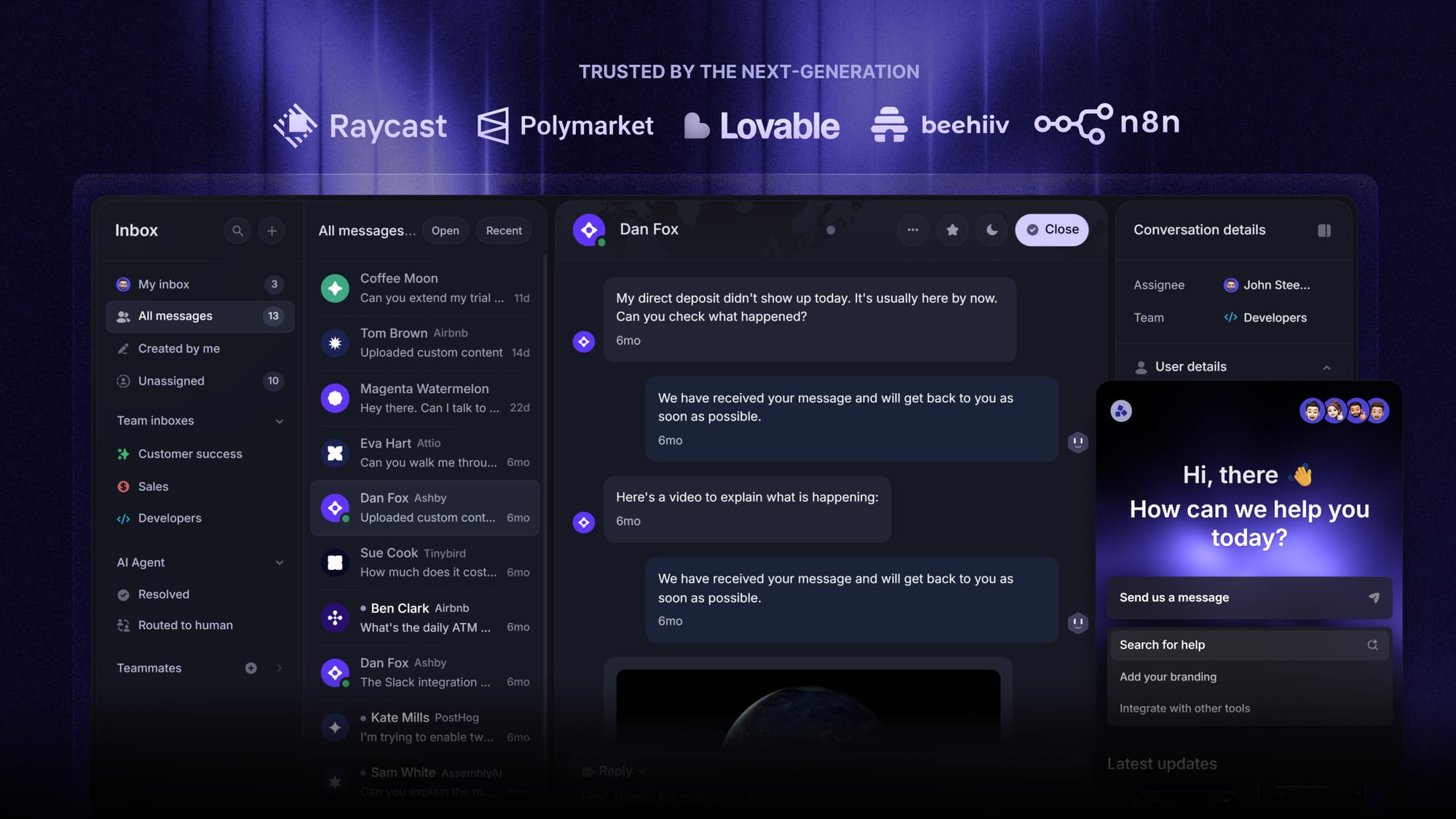
Featurebase is a modern AI customer support platform for product-led SaaS. It combines AI-powered support, help center, and feedback management into a single platform for startups that want all their customer-facing tools in one place. Featurebase is loved by thousands of support teams from companies like Lovable, Raycast, and n8n. 💫
Top features:
- Omnichannel inbox – Manage live chat, email, and Slack conversations from one AI-powered view
- Fibi AI Agent - Resolve customer issues on autopilot & run custom actions like trial extensions and refunds
- Help center with AI search – Provide instant, multilingual self-serve answers
- Workflows & automations – Auto-assign tickets, route conversations, collect customer data, and more
- AI Copilot – Help your agents answer customers faster with AI Copilot that uses your internal knowledge
- Multi-brand support – Manage multiple Help Centers and Live chats from a single workspace
- Automatic AI translations – Automatically translate all messages and help articles to your customers native language
- Service Level Agreements – Track SLAs to make sure your team responds to customers on time, every time
- Mobile app – Respond to customers, receive notifications, and unblock users on the go
- Feedback & roadmap tools – Collect feature requests and close the loop with updates
- Product updates – Publish release notes with a changelog page, in-app widget, and emails
- Integrations – Connects with Slack, Linear, Jira, HubSpot, and more
Pricing: Free plan available with unlimited conversations. Paid plans start at $29/seat/month with $0.29 per AI resolution.
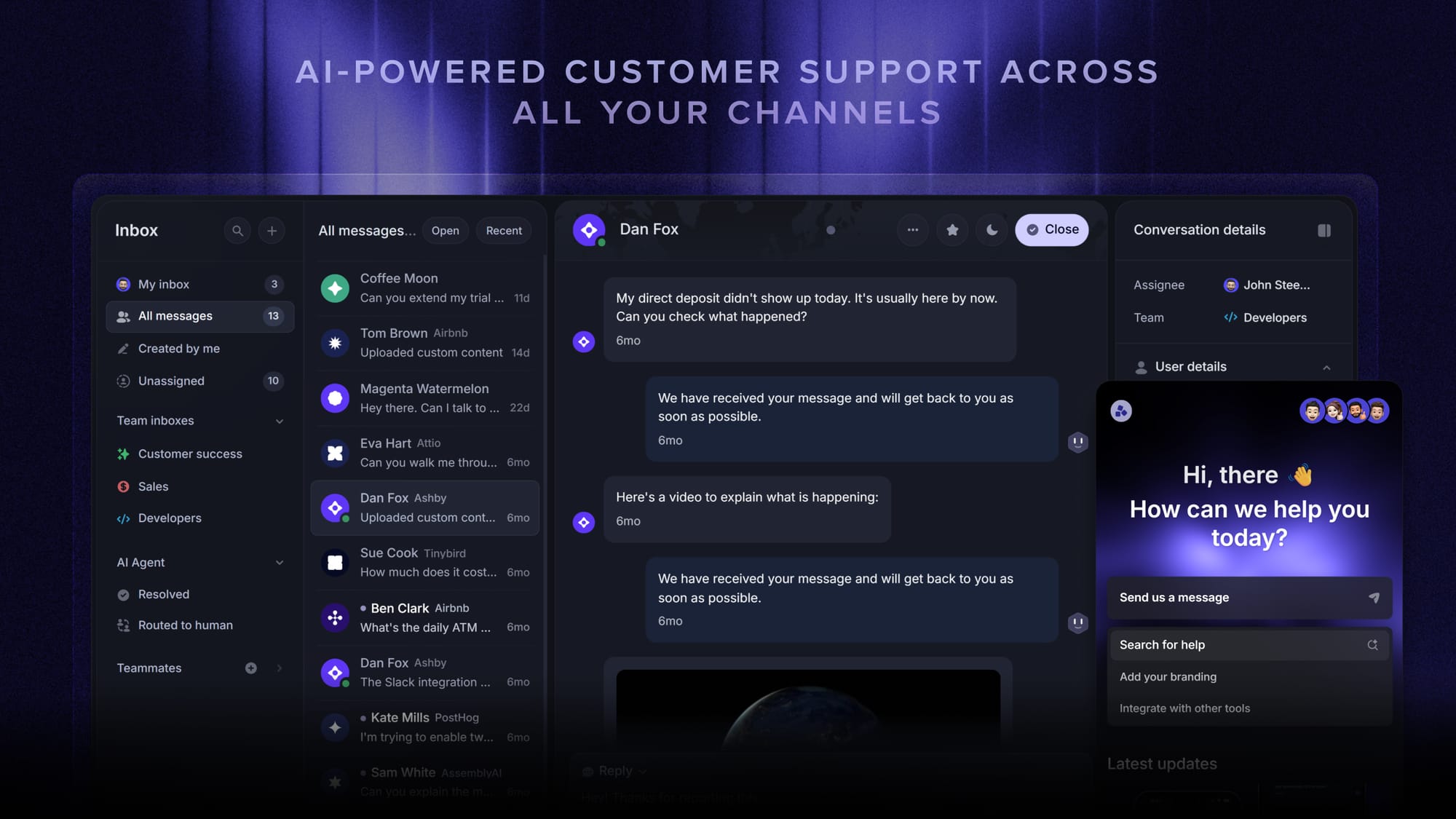
Featurebase covers all the basic support features that legacy platforms do, but with a much more modern approach. It comes with AI automations, a mobile app, and multiple channels (email, live chat, Slack, etc.).
Conclusion
Freshdesk and ServiceNow both solve service problems, just at very different levels. Freshdesk is the fast, affordable choice for customer support teams that want simplicity. ServiceNow is the enterprise standard for governed, large-scale IT service management, if you have the budget and people to run it.
Featurebase is a modern AI-powered support platform that gives you a clean middle path. It brings your omnichannel inbox, AI agent, help center, and feedback tools into one place, so you get modern automation and a great customer experience without the cost and complexity of legacy platforms.
It comes with a Free plan and unlimited conversations, and onboarding takes minutes, so there's no downside to trying it. 👇
✨ Automate your support with the fastest AI-enhanced Inbox today →
Frequently asked questions
What's the main difference between Freshdesk and ServiceNow?
Freshdesk is a customer help desk built for external support, while ServiceNow is an enterprise service management platform built for internal IT workflows. Freshdesk focuses on answering customer questions fast across channels. ServiceNow focuses on governed, end-to-end processes like incident, change, and asset management across departments.
Is Freshdesk cheaper than ServiceNow?
Yes, almost always. Freshdesk has transparent per-agent pricing with a free plan and paid tiers from $19/agent/mo, while ServiceNow uses custom enterprise quotes with no public pricing. On top of license cost, ServiceNow typically carries significant implementation, training, and admin expenses that Freshdesk does not.
Can Freshdesk be used for IT service management?
Freshdesk handles basic IT ticketing, but it lacks ServiceNow's depth in incident, problem, change, and asset management. If you need real ITSM inside the Freshworks family, Freshservice is the dedicated product for that. For light internal support, Freshdesk can work, but complex ITIL processes are a stretch.
Can you integrate Freshdesk with ServiceNow?
Yes. Many teams connect the two so customer-facing tickets in Freshdesk can sync with back-office IT work in ServiceNow. This is usually done through integration platforms or APIs, letting front-office and back-office teams share data and resolve issues faster.
Which is better for a small business?
Freshdesk is the better fit for most small businesses. It's quick to deploy, easy to learn, and priced predictably per agent, so a lean team can get value without heavy setup. ServiceNow's power and cost are hard to justify unless you have complex, cross-department processes and the staff to manage them.
Is there a simpler alternative to Freshdesk and ServiceNow?
Yes. Modern all-in-one platforms aim to give you strong support features without the limitations of one or the complexity of the other. Featurebase, for example, combines an AI-powered inbox, help center, feedback collection, and product updates in a single tool, with a free plan to start.