Blog Customer ServiceSorry for the Inconvenience: Better Ways to Say It
Sorry for the Inconvenience: Better Ways to Say It
Stop defaulting to "sorry for the inconvenience." Here's what the phrase really means, why it falls flat, and 12 better alternatives plus ready-to-send templates.

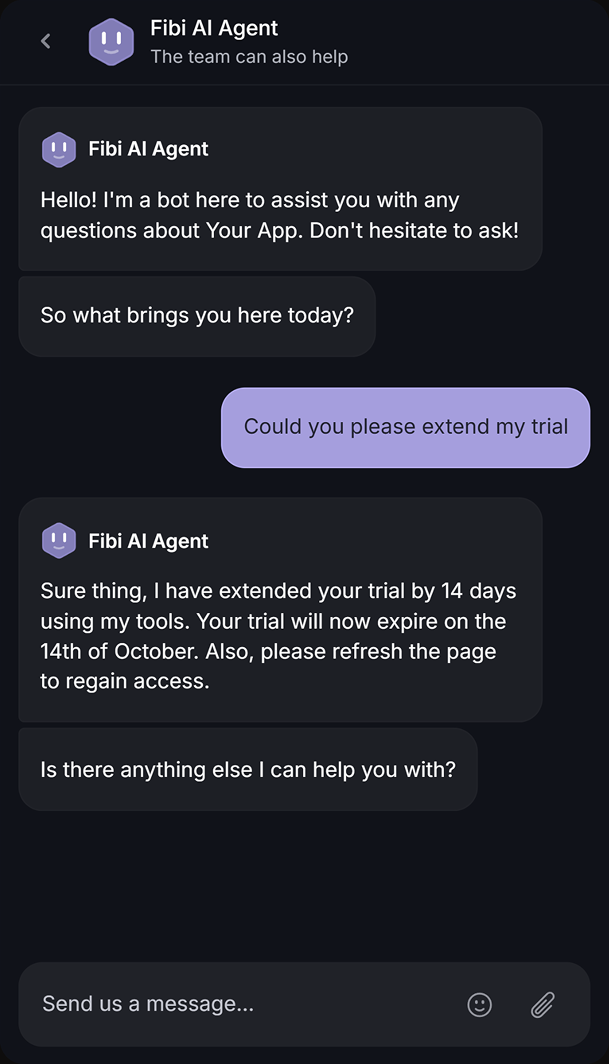

"Sorry for the inconvenience" is the customer service equivalent of hold music. It's polite, it's everywhere, and it makes people tune out. Customers have read it so many times that it lands as "we know we messed up, deal with it."
The problem is that a flat apology can do more damage than the original mistake. In this guide I'll break down what the phrase actually means, why the canned version backfires, and give you 12 better alternatives plus ready-to-send templates. 👇
Key takeaways:
- "Sorry for the inconvenience" means you're acknowledging that something caused a customer trouble and taking responsibility for it.
- The generic version reads as scripted because it names no specific issue, offers no next step, and shows no real empathy.
- The fix is to be specific: name what went wrong, own it, and say what you're doing about it.
- Match the tone of your apology to the situation. A billing error needs more weight than a typo in a newsletter.
- Support teams keep apologies sincere at scale with tools like Featurebase✨, where AI drafts on-brand replies and resolves routine issues before they ever need an apology.
- The best apology is the one you never have to send, so fix the root causes that keep generating the same complaint.
What "sorry for the inconvenience" actually means
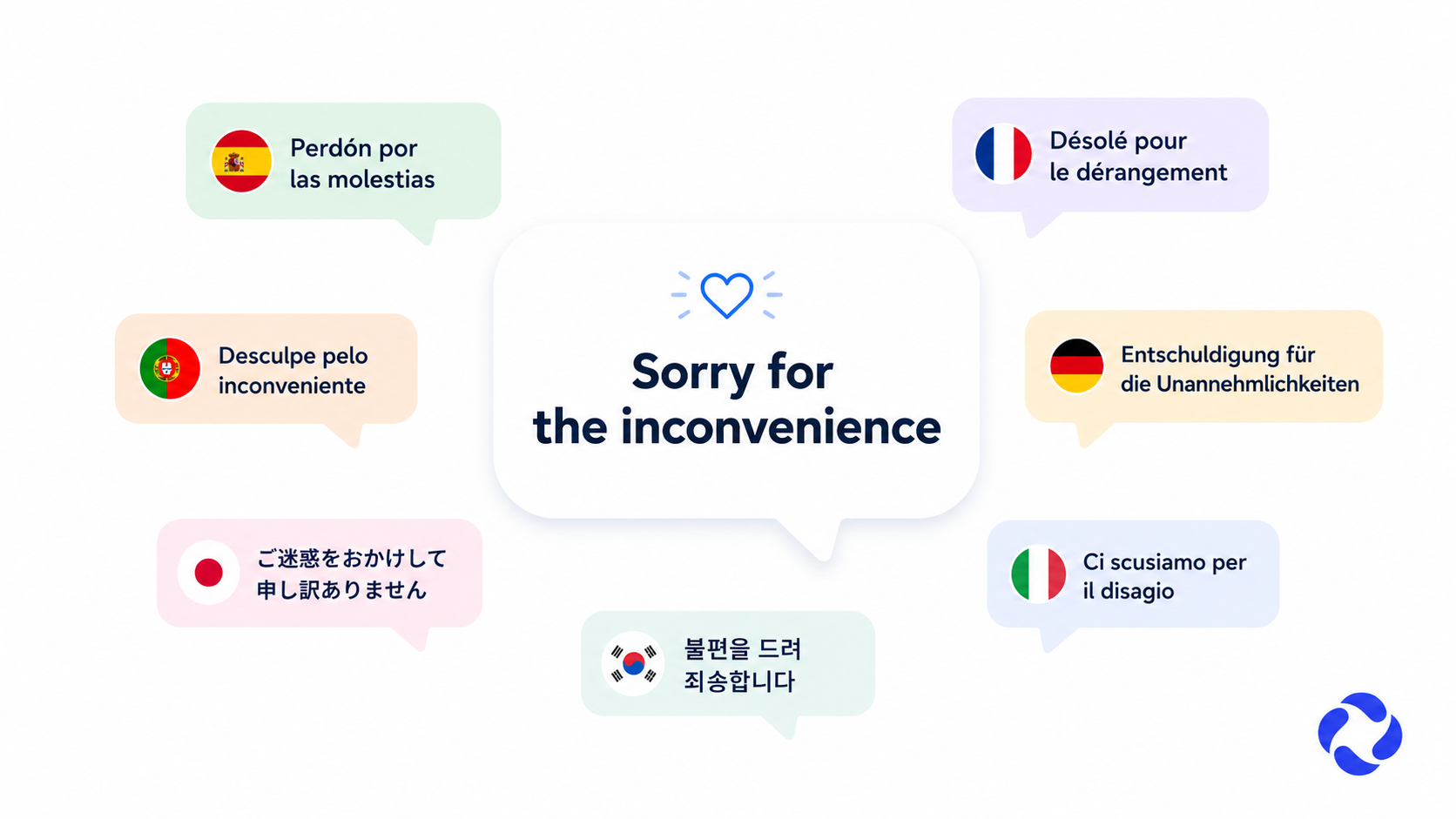
"Sorry for the inconvenience" is a standard expression of regret used when something you did (or failed to do) caused a customer trouble, discomfort, or a disruption. That could be a shipping delay, a billing error, a bug, or a service outage. The phrase is meant to signal two things at once: I see that this affected you, and I'm taking responsibility for it.
It works when it's specific. "Sorry for the inconvenience caused by the delay on order #1234" feels personal. "We apologize for any inconvenience this may have caused" feels like a form letter, because it is one.
And it's worth saying: the phrase isn't banned. For tiny, low-stakes moments like a stray notification or a two-minute delay, a quick "sorry for the trouble" is perfectly fine. The problem is reaching for it on the big stuff, where a real apology is what rebuilds trust.
Why "sorry for the inconvenience" falls flat
Most customers read the phrase on autopilot. Here's why it keeps missing:
- It names no specific issue: "Any inconvenience" could mean anything, which tells the customer you haven't actually registered what went wrong for them.
- It offers no next step: A good apology signals urgency. A line with no fix attached reads as "we're not planning to do anything about this."
- It shows no real empathy: What feels like a small slip to your team can be a genuine headache for the person on the other end. Downplaying it comes across as dismissive.
The stakes are higher than a single grumpy reply. One bad experience shapes how people talk about you and whether they come back. In Zendesk's 2025 CX Trends Report, 63% of consumers said they'd switch to a competitor after a single bad experience. How you apologize is often what tips that decision one way or the other.
12 better alternatives to "sorry for the inconvenience"
The goal isn't to memorize new scripts. It's to pick a customer service phrase that fits the situation and sounds like a person wrote it. Here are 12 options grouped by tone.
When you need to take responsibility
Use these when the fault is clearly yours and the customer needs to hear you own it.
- "That one's on us, and we're already fixing it."
- "We got this wrong, and I understand why you're frustrated."
- "This shouldn't have happened, and here's what we're doing about it."
Formal but not robotic
For higher-stakes issues or more formal relationships, where you want weight without sounding like a legal disclaimer.
- "Please accept my sincere apologies for the trouble with your order."
- "I want to personally apologize for the disruption this caused you."
- "We deeply regret the error on your account and are correcting it now."
Empathetic and human
When the customer mostly needs to feel heard before you get into the fix.
- "I completely understand how frustrating this must be."
- "Thank you for your patience while we sort this out."
- "Honestly, I'd be annoyed too. Let's get it fixed."
With a solution built in
The strongest apologies pair regret with action, so the customer sees the fix is already moving.
- "We've already issued your refund, and it'll land within a few days."
- "Here's exactly what happens next, and I'll keep you posted."
- "To make up for it, I've added a credit to your account."
Apology templates for 6 common situations
Copy any of these, swap in the bracketed details, and you have a ready-to-send reply. Notice that each one names the issue, owns it, and points to a next step.
Shipping delay
Hi [name],
Your order is running behind schedule, and I'm sorry about that. It was due to [reason], and it's now expected to arrive by [date]. I've added [discount code] to your account for the wait. If you'd rather cancel, just reply and I'll sort it out right away.
Billing error
Hi [name],
You were charged [$X] more than you should have been on your last invoice, and that's our mistake. I've issued a full refund, which should appear within [3-5 business days], and added a [credit] as an apology. Thanks for catching it.
Service outage
Hi [name],
Our [service] was down earlier today between [times], and I know that disrupted your work. It was caused by [reason], and we've already put a fix in place to stop it recurring. If it cost you anything on your end, reply here and I'll make it right.
Product bug
Hi [name],
You've been running into [bug], and I'm sorry for the hassle. Our team has confirmed the issue and is working on a fix, which we expect to ship in [timeframe]. In the meantime, [workaround] should get you unblocked. I'll message you the moment it's resolved.
Late reply
Hi [name],
Sorry for the slow response. [Brief reason]. To answer your question: [answer]. If there's anything else outstanding, let me know and I'll get straight on it.
Poor service experience
Hi [name],
I'm sorry about your experience with our team. That's not the standard we hold ourselves to, and I've raised it internally so it's addressed properly. I'd like to make it right, so here's what I can do: [resolution]. Thank you for telling us.
The anatomy of a sincere apology
Templates help, but the best apology fits the specific issue and the specific customer. Every strong one does 4 things:
- Acknowledge the specific issue: Name what actually went wrong for this person, not "the inconvenience." Specificity is what separates a real apology from a form letter.
- Own it without excuses: "Our team made a mistake" beats "the system flagged it." No blame-shifting, no hedging.
- Fix it or say what happens next: A refund, a replacement, an updated timeline, or a clear owner. The customer needs to see the solution is already moving.
- Follow up once it's resolved: A quick "is everything working now?" a day later turns a bad moment into proof that you actually cared.
Match the urgency to the situation, too. A billing error gets a same-day reply. A minor delivery hiccup can wait until end of day. Getting that balance wrong undermines the apology more than the original mistake did.
How support teams keep apologies sincere at scale
For a small team, every apology can be hand-written. Handle hundreds of conversations a day and that breaks down, but firing off pure templates feels hollow. The middle ground most growing teams land on is structured replies with mandatory personalization: a saved starting point, but the agent still fills in the order number, the specific issue, and the fix before sending. Many teams document this approach in an onboarding presentation for new support agents.
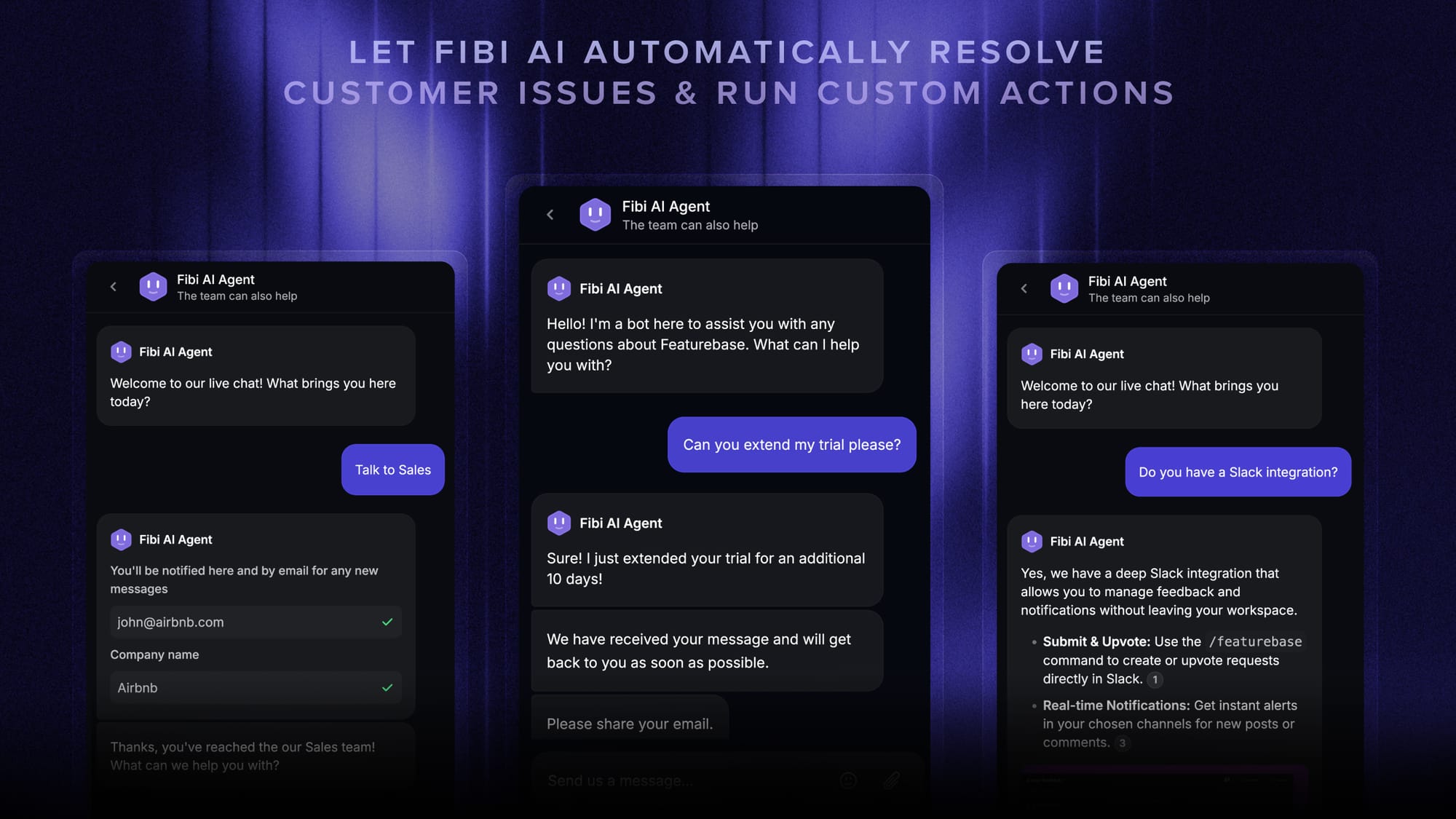
This is where good support software earns its keep. Featurebase gives agents an AI Copilot that drafts replies from your own help articles and past conversations, so a sincere, on-brand apology takes seconds instead of minutes. Its AI agent and help center also resolve or deflect the routine questions before they ever escalate, which quietly shrinks the pile of apology emails you need to write in the first place.
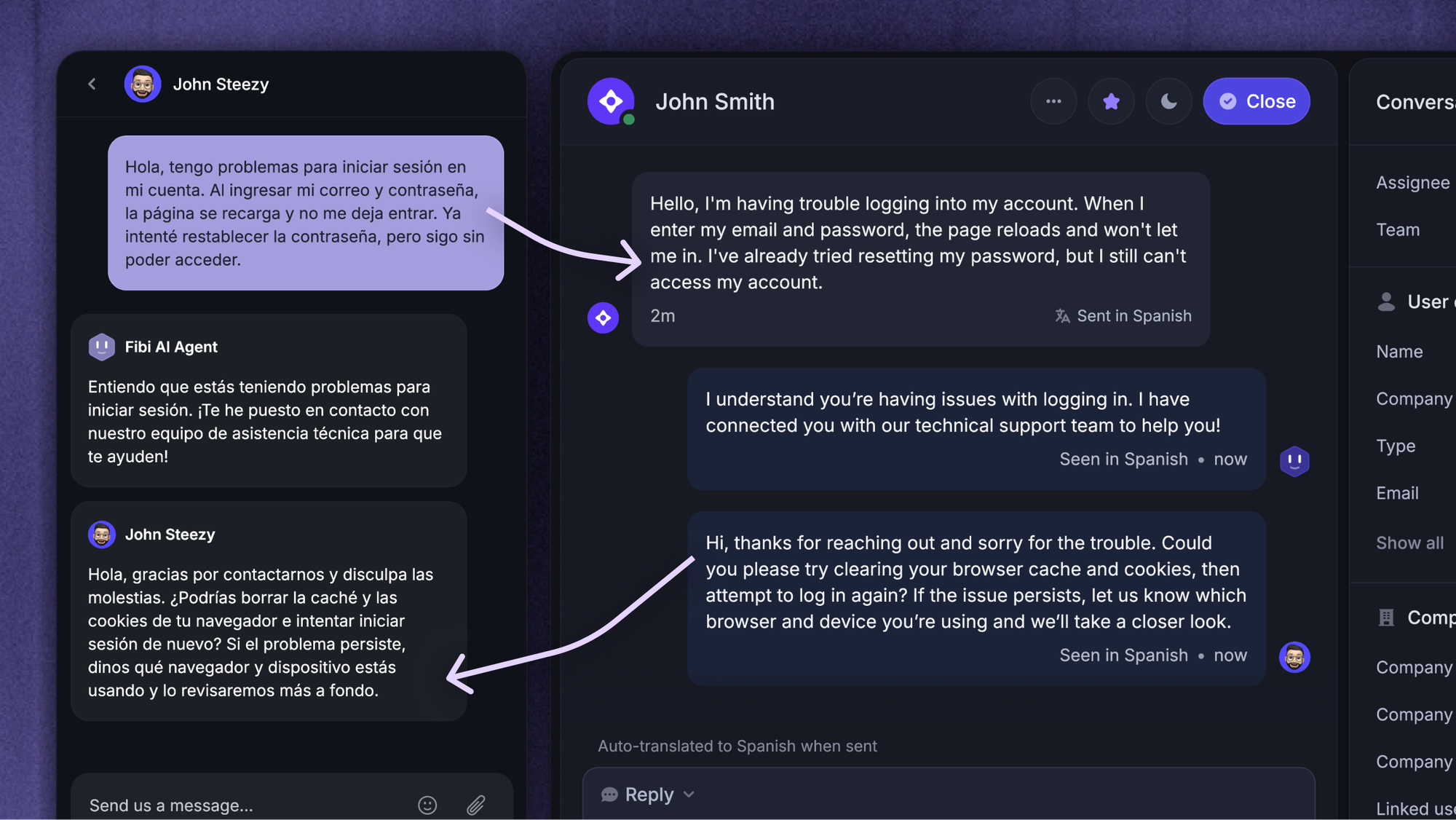
The teams that systemize this without removing the human review step tend to see satisfaction recover faster, because customers still get a response that speaks to their specific problem.
Wrapping up
"Sorry for the inconvenience" isn't wrong, it's just tired. Swap the reflex for a phrase that names the issue, owns the mistake, and points to a fix, and the same moment that annoyed a customer can end up strengthening the relationship instead.
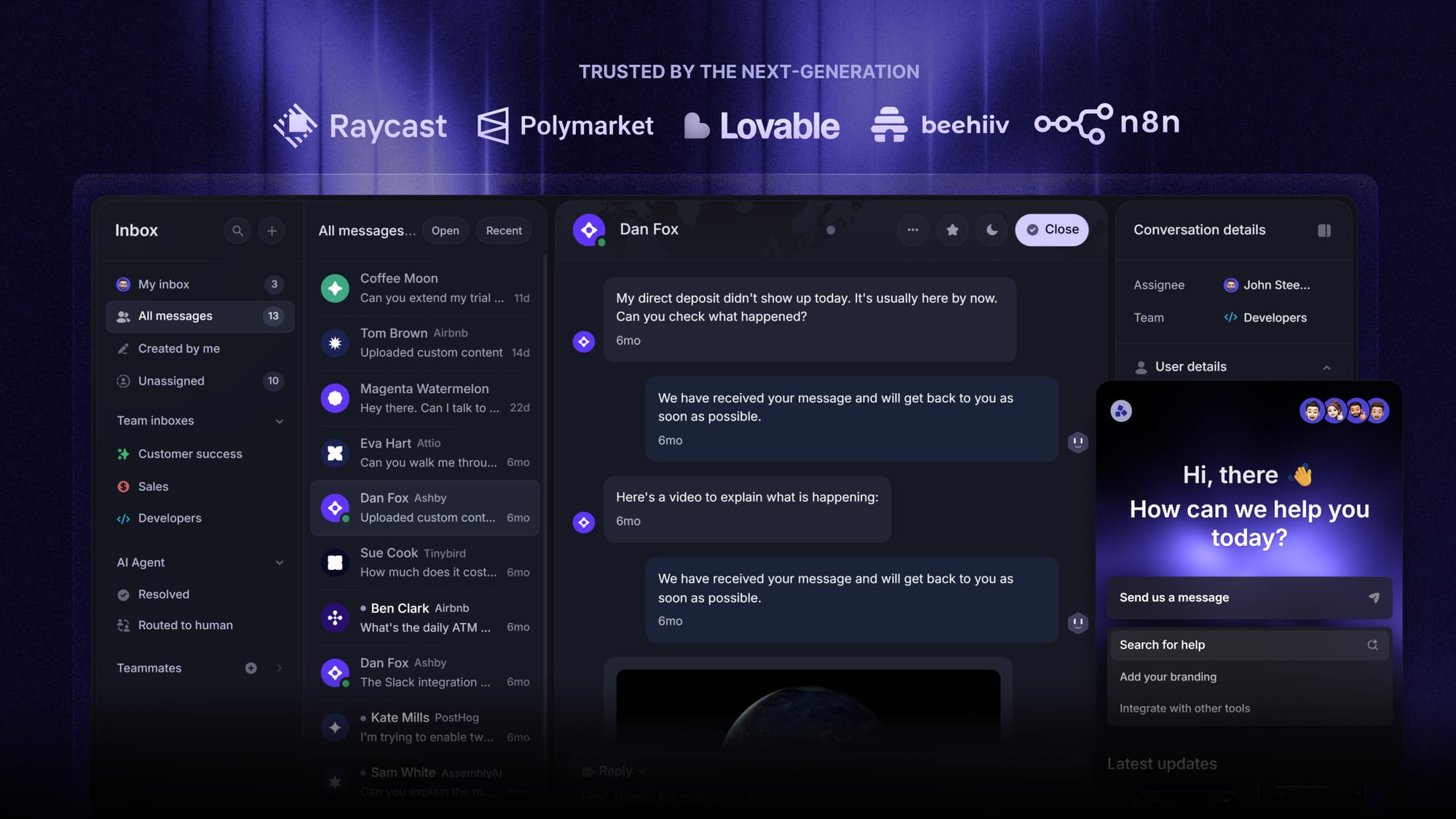
Featurebase is a modern AI customer support platform that helps you handle these moments well at scale. You get an omnichannel inbox for live chat, email, and Slack, an AI Copilot that drafts fast, on-brand replies, and an AI agent plus help center that resolve routine issues before they ever turn into an apology.
It comes with a Free plan and unlimited conversations, and the onboarding takes minutes, so there's no downside to trying it. 👇
✨ Automate your support with the fastest AI-enhanced Inbox today →
FAQs
What does "sorry for the inconvenience" mean?
It's a standard way of saying you recognize that something caused a customer trouble and you're taking responsibility for it, whether that's a delay, a billing error, a bug, or an outage. The meaning boils down to "I see this affected you, and I own it." It works best when you pair it with the specific issue instead of leaving it vague.
How do you say sorry for the inconvenience without saying sorry?
Reframe the moment around the customer or the fix. "Thank you for your patience" centers them instead of the mistake, "I appreciate you flagging this" treats them as a partner, and "here's what we're doing about it" acknowledges fault while pointing forward. These read as more confident and action-oriented once you've already apologized once.
Is it "apologize for the inconvenience" or "apologise for the inconvenience"?
Both are correct, they're just different regional standards. "Apologize" with a z is American English, and "apologise" with an s is British and Australian English. The noun "inconvenience" is spelled the same everywhere, so match the verb to your audience and stay consistent through the message.
What's the difference between "my apology" and "my apologies"?
Both are correct. "My apology" is singular and fits when you're apologizing for one specific thing, like "my apology for the mix-up on your order." "My apologies" is plural and reads as a slightly warmer, more general note. Pick one and don't switch halfway through.
How should you respond when someone says "sorry for the inconvenience"?
Keep it brief and move things forward. A simple "no problem, thanks for letting me know" works when it's minor, and if you still need something, say so clearly: "Appreciate it. Can you confirm when the refund will land?" There's no need to over-reassure. Acknowledge it and state what you need next.
Can support software reduce how many apology emails you send?
Yes. A lot of apology emails come from issues that could have been caught earlier, like a confusing checkout step or a missing tracking number. Tools like Featurebase answer common questions automatically with an AI agent and help center, and route the rest to your team quickly, so fewer problems escalate to the point of needing an apology.