Blog Customer ServiceCustomer Service Phrases for Every Support Scenario
Customer Service Phrases for Every Support Scenario
The exact customer service phrases that make customers feel heard, grouped by conversation stage, plus the ones to stop using and better replacements.


The words your team picks decide whether a frustrated customer walks away feeling heard or brushed off, even when the outcome is identical.
The good news: most support conversations follow the same beats, so you can prepare the right phrase for each one ahead of time.
This guide gives you 45+ ready-to-use customer service phrases grouped by conversation stage, the ones to avoid, and how to use them without sounding like a robot. 👇
Key takeaways:
- The right phrase depends on where you are in the conversation: opening, showing empathy, offering a solution, or closing.
- Positive phrasing (leading with what you can do) lowers how much effort a customer feels they spent, even when the result is the same.
- A short list of phrases to avoid matters as much as the ones to use. Swap each dismissive line for a solution-focused alternative.
- Phrases are starting points, not scripts to read word for word. Personalize them and match the customer's tone.
- A shared support inbox like Featurebase✨ lets your whole team reuse approved phrases and stay consistent without copy-pasting from a doc.
Why the right customer service phrases matter
Two agents can deliver the exact same answer and leave customers feeling completely different. The difference is word choice.
Challenger's research found that how a customer feels about an interaction makes up two-thirds of their perceived effort, while what they actually had to do accounts for only one-third. In other words, the phrasing you use carries more weight than the resolution itself.
That is why a stocked toolbox of phrases helps. When you already know what to say to open, to calm someone down, or to say no gracefully, you spend less energy improvising and more energy actually solving the problem. Knowing what to say is one of the most practical customer service skills you can build.
Phrases to open the conversation
The opening sets the tone. A warm, professional greeting tells the customer they reached the right place and that someone is ready to help, and it sets up a more conversational customer service experience from the first message.
- "Thanks for reaching out. How can I help you today?"
- "Hi [Name], thanks for contacting us. I'm happy to look into this for you."
- "Good morning! You've reached [Company] support. What can I do for you?"
- "Thanks for the details. Let me make sure I understand the issue correctly."
- "From what I understand, the problem is [paraphrase the issue]. Is that right?"
- "Great question. Let me find the answer for you."
- "I've read through the conversation so far, so you won't need to repeat anything."
- "Is it okay if I put you on a brief hold while I check on that?"
Two of these do quiet heavy lifting. Paraphrasing the issue back proves you were listening and gives the customer a chance to correct you. Confirming you've read the previous thread saves them from re-explaining everything, which is one of the fastest ways to frustrate someone who has already told their story once.
Empathy phrases for upset customers
When a customer is angry or stressed, acknowledging how they feel comes before any fix. Empathy defuses tension and signals you're on their side.
- "I understand how frustrating that must be."
- "That would upset me too. Let's get it sorted."
- "I'm sorry you're dealing with this. You have every right to be frustrated."
- "Thank you for flagging this. I can see why it's important to you."
- "I hear you, and I want to make this right."
- "That's not the experience we want you to have."
- "Let's figure this out together."
- "I appreciate your patience while I look into it."
The key is to read the room. Empathy has to sound genuine, so match the intensity of the customer's feeling instead of reaching for the same stock line every time. A quick "I hear you" lands very differently from a flat "I understand your frustration" repeated on a loop.
Phrases that offer solutions
Once you understand the problem, your language should shift toward action. These phrases show ownership and momentum.
- "Here's what I can do for you."
- "I'll make sure this gets resolved."
- "While we can't do [X], here's an alternative that works."
- "If you can [action], then I can [action] to fix it."
- "I've passed your feedback to our team, and I'll follow up personally."
- "You can expect an update from me by [date or time]."
- "I'll take care of this and let you know the moment it's done."
- "Let me walk you through the next steps."
Notice how many of these set expectations. Telling a customer when to expect an update ("by Thursday at noon") buys you patience and builds trust, because you're making a promise you can keep. Offering an alternative when the answer is no keeps the conversation moving toward a resolution instead of a dead end.
Phrases to close the conversation
A strong close leaves the customer feeling looked after and invites them back if they need more help.
- "Is there anything else I can help you with today?"
- "Please reach out again if anything else comes up. We're always happy to help."
- "Thanks for being a customer. We appreciate you."
- "I'm glad we could sort that out. Have a great rest of your day."
- "If you're happy with everything, I'll close this out, but feel free to reply anytime."
- "Thanks for your patience while we worked through this."
One caution: only ask "Is there anything else?" once the original issue is actually resolved. Dropping it on a customer you haven't helped yet reads as rushing them out the door. Save the genuine thank-you for the end too, since thanking an unhappy customer too early can feel hollow.
Power words that boost customer satisfaction
Beyond full phrases, a handful of single words inject confidence and warmth into any reply. Sprinkle them in naturally.
- Absolutely - conveys total agreement and reliability
- Definitely - reassures the customer you're on it
- Happy to - frames helping as a pleasure, not a chore
- Immediately - signals urgency and speed
- Appreciate - shows gratitude for their time or patience
- Gladly - softens a request or handoff
- Great - a quick, positive acknowledgement
- Guarantee - use carefully, but powerful when you can back it up
These words work because they're positive and action-oriented. "Absolutely, I can help with that" simply feels better to receive than "Okay, I'll try." Just keep them honest. Promising something "immediately" and then disappearing for an hour does more damage than never saying it.
Customer service phrases to avoid (and what to say instead)
Some phrases sound harmless but land as dismissive, defensive, or robotic. Here are the common offenders and better replacements.
- "I don't know": It tells the customer you're not interested in finding out. Say instead: "Great question, let me find that out for you."
- "That's not my department": It makes their problem sound like your inconvenience. Say instead: "Let me connect you with the right person to help."
- "Calm down": Telling an upset customer to calm down almost always makes it worse. Say instead: "That would upset me too. Here's how I can help."
- "You'll have to...": It shifts the burden onto the customer. Say instead: "Here's what we can do next."
- "It's our policy": It hides behind rules instead of solving anything. Say instead: "Here's why that happens, and here's what I can do for you."
- "No, we can't do that": A flat no feels final and cold. Say instead: "While we can't do that, here's an option that works."
- "Your call is important to us": Overused to the point of meaning nothing. Say instead: prove it by actually helping quickly, no phrase needed.
- "I'm sorry you feel that way": A non-apology that dodges responsibility. Say instead: "I'm sorry this happened. Let's fix it."
The pattern across all of these is simple. Negative or dismissive wording focuses on what you can't do or whose fault it is. The better version always pivots to what happens next.
How to use these phrases without sounding robotic
A phrase bank is only useful if it doesn't turn your team into a wall of copy-paste replies. Customers can smell a canned response, and it undercuts every empathetic word in it. The same rule applies to any live chat scripts your team leans on.
A few principles keep phrases feeling human:
- Personalize every time: Drop in the customer's name, reference their specific issue, and adjust the wording to fit the situation. A phrase is a scaffold, not a script.
- Match their tone: A playful customer and a furious one need very different energy, even for the same underlying message.
- Lead with what you can do: Positive framing is the single biggest lever. Reword "I can't process that until Monday" as "I'll have this processed first thing Monday."
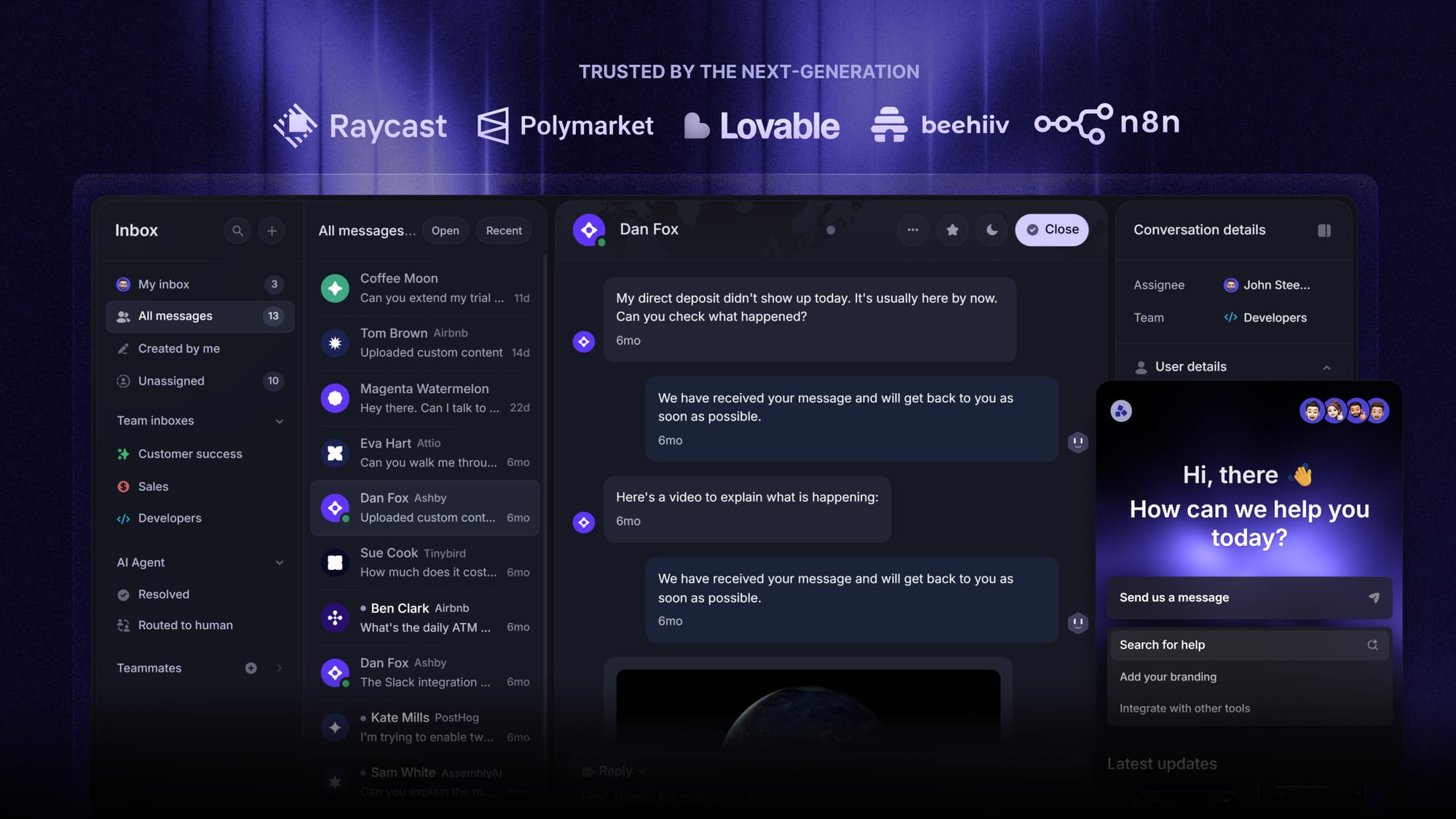
This is also where consistency across a team gets tricky. If every agent phrases the same situation differently, your support quality feels random. A shared support inbox like Featurebase lets you store approved phrases and replies your whole team can reuse and personalize on the fly, so everyone sounds on-brand without pasting from a scattered doc. Its AI Copilot can even draft a reply from your help center, giving agents a consistent starting point to tweak.
Conclusion
Great customer service phrases aren't magic words. They're a shortcut to the two things every customer wants: to feel understood and to get their problem solved. Learn the phrases for each stage of the conversation, retire the dismissive ones, and keep everything personal, and you'll turn ordinary interactions into ones people remember. Over time they become a repeatable part of your customer service strategy.
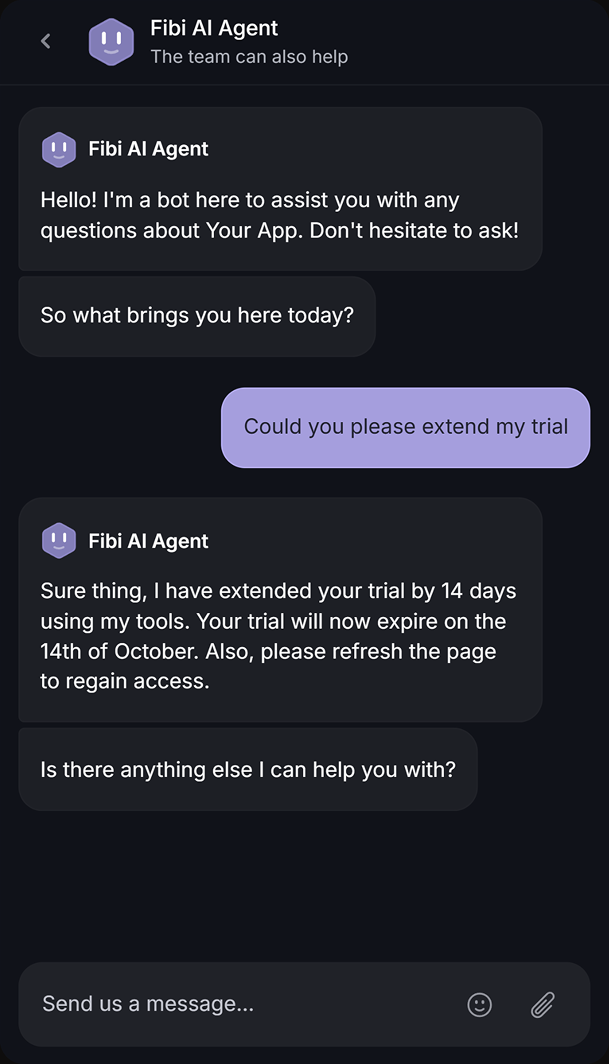
Featurebase is a modern AI customer support platform that brings your live chat, email, and Slack conversations into one AI-powered inbox, alongside a help center and feedback tools. Saved replies, an AI Copilot, and the Fibi AI Agent help your team answer faster and sound consistent, every conversation.
It comes with a Free plan and paid plans starting at $29/seat/month, and the onboarding takes minutes, so there's no downside to trying it. 👇
✨ Automate your support with the fastest AI-enhanced Inbox today →
FAQs
What are the 5 P's of customer service?
The 5 P's are a simple framework for consistent service: promptness, politeness, professionalism, personalization, and patience. Together they cover how fast you respond, how you treat the customer, and how much you tailor the interaction to them. Most great customer service phrases map back to at least one of these.
What are the 7 C's of customer service?
The 7 C's are commonly listed as clarity, communication, competence, courtesy, consistency, credibility, and customer focus. They're a broader quality checklist for support interactions than the 5 P's. The overlap is deliberate, since both frameworks push you toward clear, respectful, reliable service.
What is a good opening phrase for a customer service call?
A good opener confirms the customer reached the right place, introduces you, and offers help in one breath. Something like "Thank you for calling [Company], this is [Name], how can I help you today?" works on the phone, while "Hi [Name], thanks for reaching out, I'm happy to look into this" fits chat and email. The goal is to sound warm and ready, not scripted.
How do you use customer service phrases without sounding robotic?
Treat phrases as starting points rather than scripts to read verbatim. Personalize each one with the customer's name and specific issue, match their tone, and lead with what you can do. If a reply could have been sent to anyone, it needs more of the actual customer in it.
What's a more professional way to say "customer service"?
Common alternatives include customer support, customer care, client relations, client success, and customer experience (CX). Each carries a slightly different emphasis, with "customer success" leaning toward ongoing relationships and "CX" toward the whole journey. Pick the one that matches how your company actually works rather than swapping words for their own sake.
Should customer service teams use scripts?
Yes, as long as you use them as flexible starting points rather than rigid rules. Positive scripting helps new agents respond quickly and keeps quality consistent across a team. The risk is sounding canned, so the best teams treat scripts as a base to personalize for each customer.