Blog Customer Service18 Better Ways to Say "Happy to Help"
18 Better Ways to Say "Happy to Help"
Discover 18 warmer, more genuine alternatives to "happy to help" - plus how to stop saying it on autopilot in customer support.


"Happy to help" is the phrase every support agent reaches for. It's polite, safe, and after the hundredth time, completely forgettable.
Worse, it centers you ("I'm happy") instead of the customer, so it can read like "I'm just doing my job."
The good news: you don't need to ban it. You just need better options for the moments that matter. Here are 18 warmer ways to say "happy to help," and how to stop saying it by reflex. 👇
Key takeaways:
- "Happy to help" is polite and grammatically fine, but overuse makes it sound scripted and impersonal.
- The phrase describes your emotional state ("I'm happy") instead of the customer's result, so it reads as "just doing my job."
- There's no single magic replacement. Match your phrase to the moment: confirming a fix, sounding personal, offering more help, or keeping it casual.
- Specific, personalized replies beat any stock phrase. 84% of customers say being treated like a person, not a number, is very important to winning their business.
- A shared inbox like Featurebase✨ lets AI Copilot draft warmer, on-brand replies your team can personalize instead of defaulting to the same line.
- To break the habit: keep a cheat sheet of alternatives, listen for the outcome you delivered, and vary your closers.
What "happy to help" means (and why everyone says it)
"Happy to help" is a friendly way to say "you're welcome." It tells the other person their request wasn't a burden and that you were glad to assist. Most people use it right after a customer says thanks.
It became a support default for good reasons. It's warm, professional, and works in almost any channel: email, live chat, or a quick call. When you're answering the same question for the fortieth time in a day, it's the phrase that takes zero thought.
That's also the problem. A reply that takes zero thought usually sounds like it.
Why "happy to help" falls flat
Nothing is grammatically wrong with "happy to help." The issue is what happens when a customer reads it for the third time in one conversation.
- It's about you, not them: "Happy to help" describes your emotional state, not the customer's result. It says "I'm glad I'm a problem-solver" more than "I'm glad your problem is gone."
- It sounds canned: When every agent uses the same phrase, customers stop hearing it as sincere and start hearing it as a script. Overused lines lose meaning the same way a song you loved gets played to death.
- It's vague: The phrase never references what you actually did. "Happy to help" could follow a refund, a bug fix, or a password reset. Specificity is what makes a reply feel personal.
This matters more than it seems. 84% of customers say being treated like a person, not a number is very important to winning their business. And the stakes are real: 32% of customers would walk away from a brand they love after a single bad experience.
One robotic reply won't sink you. But a hundred of them add up to a support experience that feels like a form letter.
18 better ways to say "happy to help"
The trick isn't finding one perfect replacement. It's matching your phrase to the moment, the same way you'd tailor any of your go-to customer service phrases. Here are 18 alternatives, grouped by when they land best.
When you're glad you solved the problem
Use these right after you fix something. They point at the outcome, which is what the customer actually cares about.
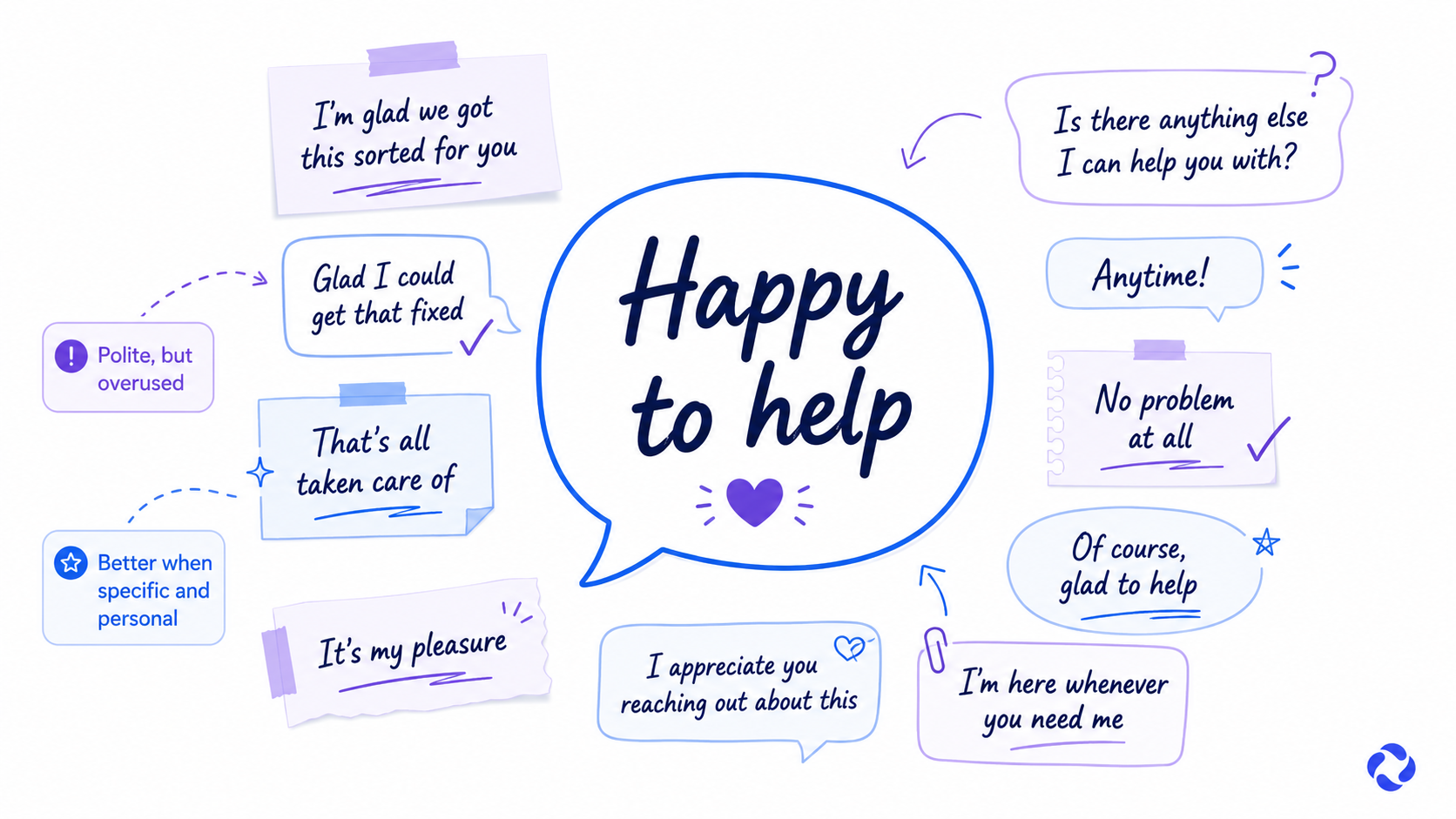
- "I'm glad we got this sorted for you": Confirms the result and quietly reassures them it's done. Example: "I'm glad we got this sorted for you, Maria. Everything should be back to normal now."
- "Glad I could get that fixed": Short, specific, and takes ownership of the fix. Works well in live chat.
- "I'm so happy this worked out": Adds a little genuine warmth when the issue was a frustrating one.
- "That's all taken care of": Clean and confident. Good for wrapping up a task the customer was worried about.
When you want to sound warm and personal
Reach for these when the interaction needs a personal touch, like after a complaint or a long back-and-forth.
- "It's my pleasure": A classic for a reason. It keeps the tone warm and implies you actually enjoyed helping.
- "It was my pleasure helping you today": The fuller version, nice for closing an email.
- "I appreciate you reaching out about this": Acknowledges the effort it took the customer to contact you in the first place.
- "Thanks for letting me help with this": Flips the gratitude back to them, which feels unexpected and sincere.
- "I'm delighted to be of service": Slightly formal, great for brands with a polished, premium voice.
When you're offering more help or wrapping up
These signal that the door stays open, without the empty "happy to help" filler.
- "I'm here whenever you need me": Reassuring and personal. Reminds them support is a person, not a black hole.
- "We've got your back": Casual and confident. Works for friendly, modern brands.
- "Is there anything else I can help you with?": A genuine offer that also gives you a clean way to close the conversation.
- "Just say the word if anything else comes up": Low-pressure and human. Invites them back without nagging.
- "We're here for you whenever you need us": Emphasizes ongoing availability, good for ending a resolved ticket.
When you want something more casual
For chat, social, or brands with a relaxed tone, a shorter reply often feels more real than a stiff live chat script.
- "Anytime!": One word, but it tells the customer they can come back without hesitation.
- "No problem at all": Reassures them their request wasn't an imposition.
- "Happy to lend a hand": A close cousin of the original, but warmer and a little more personal.
- "Of course, glad to help": Friendly and natural, like something you'd actually say out loud.
How to actually stop saying "happy to help"
Knowing the alternatives is easy. Breaking a reflex is the hard part, and one of the underrated customer service skills worth building. A few things that work:
- Keep a cheat sheet: Write your favorite alternatives somewhere visible until they come naturally. A sticky note or a saved note is enough.
- Listen for the outcome: Before you reply, ask what you actually did for the customer, then say that. "I reset your password" beats "happy to help" every time.
- Vary your closers: Rotate through a few phrases so no single one starts to sound automatic, even to you.
- Match the customer's tone: A stressed customer needs reassurance, a happy one can take a casual reply. Read the room before you type.
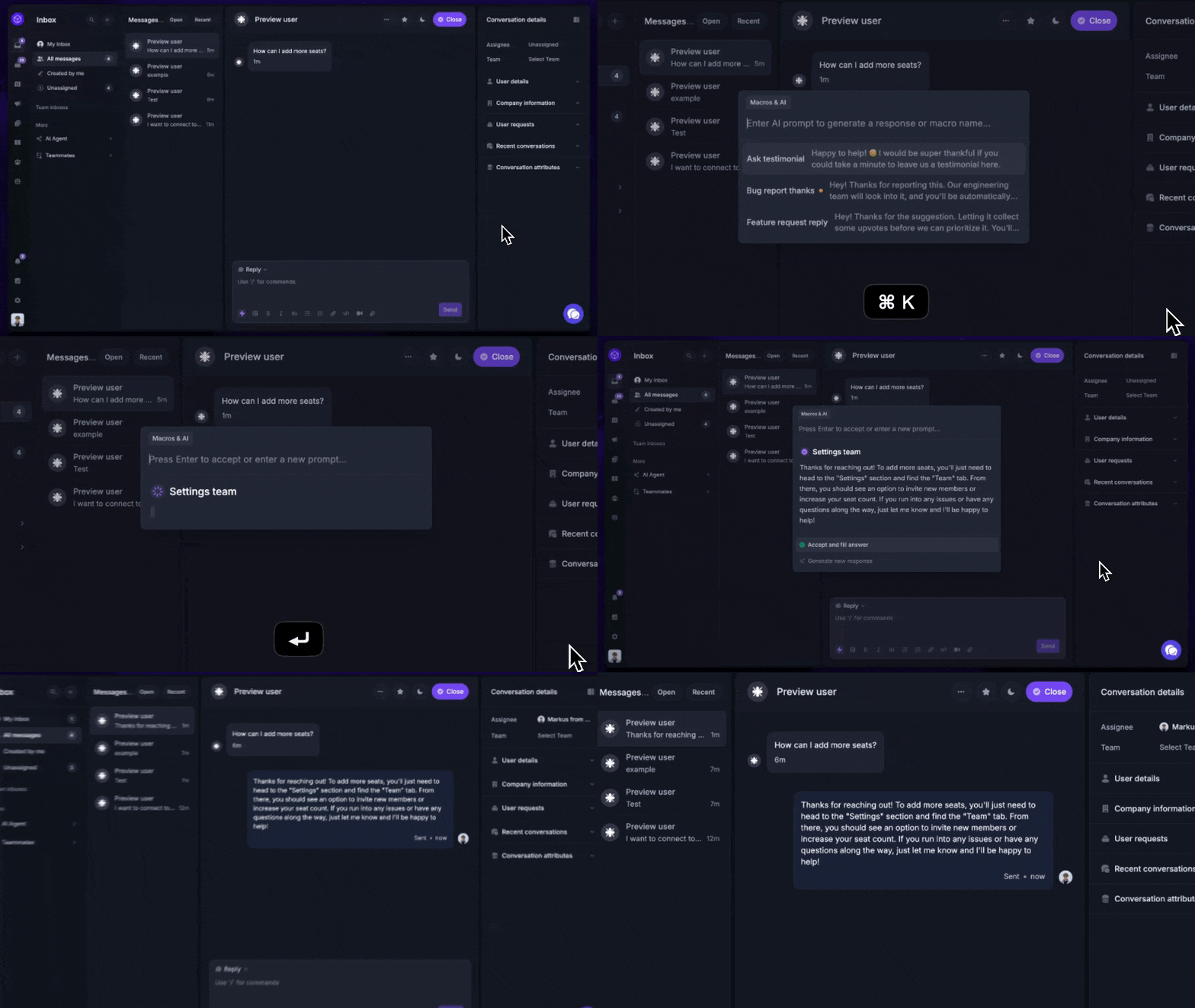
This gets easier when your whole team works from the same place. With a shared inbox like Featurebase, AI Copilot can draft warmer, on-brand replies from your own help docs, so your agents personalize a strong starting point instead of falling back on the same canned line. The result is support that sounds consistent without sounding scripted.
Even the warmest reply loses its impact if the customer reading it doesn't speak English. Lara Translate can translate support replies accurately, so a genuinely personal response lands the same way in any language.
Keep every reply warm without the scripts: Featurebase
The right phrase helps, but consistently great support comes down to giving agents the tools to reply fast and personally.
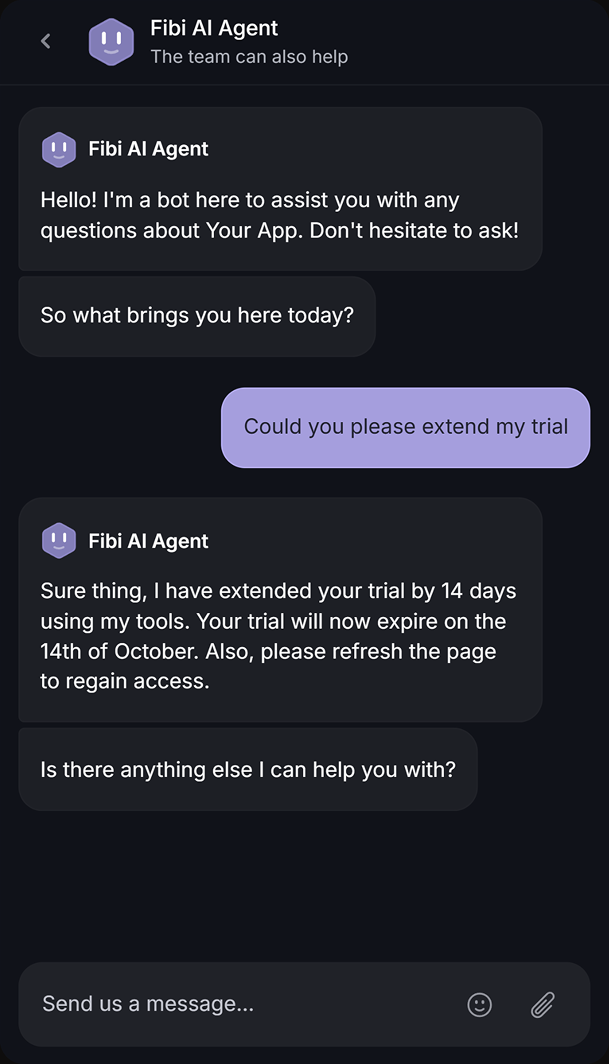
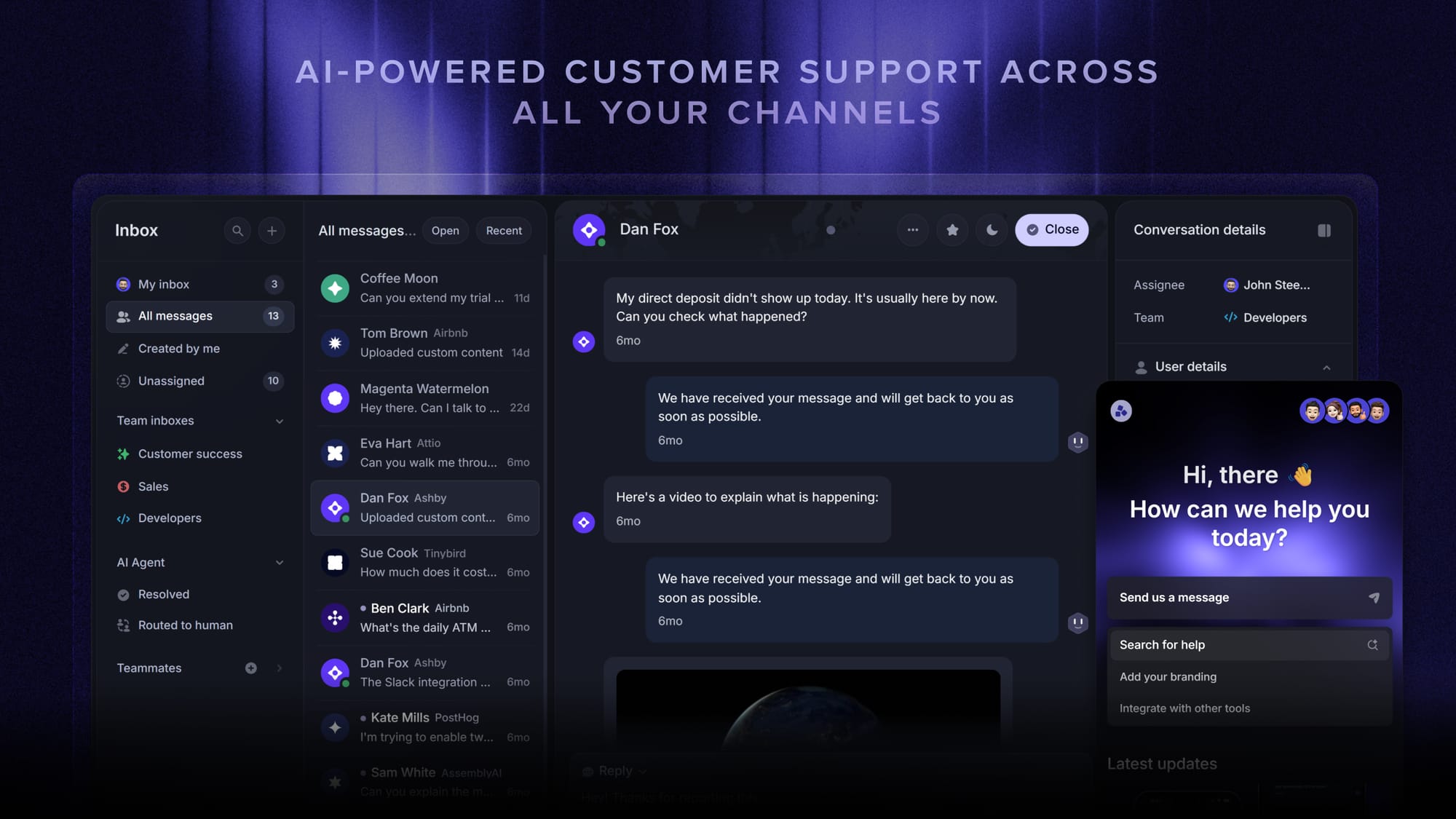
Featurebase is a modern, AI-powered support platform that brings your live chat, email, and Slack conversations into one omnichannel inbox. Its Fibi AI Agent resolves routine questions on autopilot, AI Copilot drafts on-brand replies from your own help docs, and a built-in help center gives customers instant self-serve answers, so your team spends less time on canned lines and more on real conversations.
It comes with a Free plan and the onboarding takes minutes, so there's no downside to trying it. 👇
✨ Automate your support with the fastest AI-enhanced Inbox today →
FAQs
Is it unprofessional to say "happy to help"?
No, "happy to help" is polite and perfectly professional. The only issue is overuse. When customers hear the same phrase in every reply, it starts to feel scripted rather than sincere. Using it occasionally is fine. Leaning on it for every interaction is what makes support sound robotic.
Is "happy to help" grammatically correct?
Yes. Both "happy to help" and "I'm happy to help" are correct. "Happy to help" is just a shortened, more casual version that drops the implied "I'm." Use the full "I'm happy to help" when you want a slightly warmer, complete sentence, and the short form for quick chat replies.
How do you say "happy to help" professionally in an email?
Swap the generic phrase for something that references what you actually did. Lines like "I'm glad we got this sorted for you" or "It was my pleasure helping you today" sound more professional because they're specific and personal. Ending with an open offer, such as "Just let me know if anything else comes up," keeps the tone warm.
Is saying "my pleasure" professional?
Yes, "my pleasure" is warm, polite, and appropriate in almost any customer service context. It signals that helping wasn't a burden and that you enjoyed the interaction. It works especially well for brands that want a gracious, premium tone.
What should you say when you can't actually help?
Be honest, acknowledge the problem, and point to a next step. Something like "I wasn't able to fix this on my end, but I've passed it to our team and I'll follow up by Friday" beats a hollow "happy to help." Customers forgive a lot when they feel heard and see a clear path forward.
Does the exact phrase matter more than the service itself?
No. The words are the smaller part. A perfectly chosen phrase won't save a slow, unhelpful reply, and a genuinely helpful one lands even if the wording is plain. Solve the problem and sound human first, then let your phrasing reinforce that.