Blog Customer ServiceCustomer experience outsourcing: the complete guide for 2026
Customer experience outsourcing: the complete guide for 2026
Find out what customer experience outsourcing is, the different types, and its pros and cons for everyday business operations.


✨ Automate 70% of your support with the fastest AI-enhanced Inbox today →
Your support queue is growing, your team is stretched thin, and customers in different time zones are waiting hours for a reply. At some point, every growing business asks the same question: should we outsource customer experience?
The answer depends on your goals, your budget, and how much control you're willing to give up. For some businesses, outsourcing is a lifesaver. For others, it can put carefully built customer relationships at risk.
In this guide, I'll break down what CX outsourcing actually looks like, the different types, the real pros and cons, and how to decide if it's the right move for your business. 👇
Short overview
- Customer experience outsourcing means using an external partner to handle some or all customer-facing interactions instead of running everything in-house.
- It helps businesses scale support faster, extend coverage hours, and reduce internal operational load.
- The biggest benefits are predictable costs, flexible staffing, global availability, and access to trained support specialists.
- The main downsides include less control over brand voice, ongoing onboarding effort, and variation in agent quality.
- Outsourcing still requires strong documentation, clear processes, and regular quality monitoring from your side.
- There are multiple outsourcing models, from basic customer support and call centers to technical support, customer success, and back-office operations.
- A hybrid approach using automation, such as Featurebase, combined with internal ownership, can offer many outsourcing benefits without fully giving up control.
What is customer experience outsourcing?
Customer experience outsourcing is the practice of hiring an external provider to handle some or all customer-facing interactions on your behalf.
This can include support conversations, technical troubleshooting, onboarding, renewals, community moderation, or operational tasks that directly affect how customers experience your product or service. Instead of building and managing every CX function internally, companies rely on specialized partners that run these operations as a service.
The goal is usually to maintain consistent service quality while gaining flexibility in staffing, coverage hours, and expertise.
Customer experience outsourcing is commonly used by growing companies that need to scale support faster than their internal teams can handle, or by mature businesses that want to focus internal resources on product and strategy while keeping day-to-day customer interactions running smoothly.
It's important to take note that the biggest risk in outsourcing is losing consistency, so vet partners for the customer service skills that shape your brand voice, not just headcount and cost.
The pros and cons of customer experience outsourcing
There are many tradeoffs with customer experience management outsourcing. You win some and lose some, and the exact benefits depend on your business goals, budget, and level of care for customer satisfaction.
These are the most common pros and cons of customer service outsourcing. 👇
CX outsourcing pros
1. Lower operational overhead
If you want to provide customer service in-house, the total costs go beyond the salaries for the support team. You have to factor in the product training, the hiring process, monitoring performance, the cost of customer support tools, and managing this team on a regular basis.
In other words, on top of money, you have to handle internal coordination and workflows. For small teams, this may be a distraction.
Outsourcing companies take a big portion of this workload and let you worry about acquiring more customers. Costs are also more predictable since you pay fixed monthly retainers and don't have to account for unforeseen circumstances.
2. Increased scalability (in both directions)
Providing excellent service quality with 10 and 100 inquiries per day is not the same, especially if you have limited hands on deck. Customer support doesn't follow patterns, and you could experience sudden spikes in calls or messages. For example, you launched a new feature, or Forbes featured you in an article. All of a sudden, two in-house agents are not enough.
This is where an outsourcing partner can help, adding more agents to cover for temporary urgencies.
It works the other way, too. If you're having a slow period and don't need a large team for providing technical support, you can scale back on the number of agents to save money until you need the full capacity again.
3. Extended coverage hours
If you work globally and have customers from different continents, a CS team working 8 hours per day won't be enough for business growth. Sure, you could hire agents from different time zones to have 24-hour coverage, but you'd still have to train and manage those employees.
With an outsourced model, the external team handles support around the clock, allowing you to focus on core business functions. The partner probably already has a proven track record of working globally, and they're able to cover different time zones, weekends, and your country's bank holidays.
Your first response time improves, and you don't lose valuable customers just because they're in a different time zone.
4. Access to trained specialists
Established CX providers hire agents who already have experience handling customer conversations. Many specialize in areas like technical support, billing, onboarding, or account management. This reduces the learning curve compared to hiring entry-level staff internally.
Providers also tend to have structured training programs and playbooks refined across multiple clients. While product knowledge still needs to be taught, the fundamentals of good customer communication are already there. This can lead to more confident interactions early on. For fast-growing teams, that head start matters.
5. Focus on core product and growth
Customer experience is important, but it can easily dominate leadership attention if handled entirely in-house. Outsourcing day-to-day execution allows internal teams to step back and focus on product direction, pricing, positioning, and long-term customer value.
Founders and managers spend less time firefighting queues and staffing gaps. This separation can lead to clearer priorities and better strategic decisions. It also makes it easier to measure CX outcomes without being buried in operational details. When done well, outsourcing creates mental space for higher-impact work.
CX outsourcing cons
1. Less control over customer interactions
You could hire the best team of experts with specialized knowledge, but you'll never know how they talk to your customers. They may be experts in their own field, but they don't know the company culture, the internal operations, or your product roadmap.
You could end up with answers that are technically correct but delivered bluntly, putting off (potential) customers from engaging further.
Subtle things like phrasing, empathy, or escalation judgment can differ from internal expectations. Maintaining consistency requires constant feedback and monitoring. Without strong ownership on your side, the experience can drift over time. Control is possible, but it is never automatic.
2. Onboarding and knowledge transfer still take time
Even the best customer experience outsourcing partner won't know your product as you do. The pros and cons, the biggest customer pain points, and the technical capabilities are all yours to communicate.
As the business hiring them, you need to prepare detailed technical documentation in the form of knowledge bases, guides, videos, tutorials, and anything that clearly explains how to troubleshoot your product.
Every time the product changes, so should the technical documentation. This means the burden of fresh information is on you.
And if you're already creating knowledge bases for your outsourcing partner, you may as well open them up to your customers for self-service options.
3. There is a variation in quality
They may all have specialized expertise, but the agents serving your customers won't all work in the same way. One day, you can get someone amazing who delights your customers, and another, the agent could be tone-deaf and miss context and nuance.
Even if you find the right partner and give them comprehensive training, you'll need to do constant quality control to make sure the agents are consistently delivering good work.
It's recommended to introduce clear performance metrics you can track at a glance without going into unnecessary detail, like reading through call transcripts.
4. Integration challenges
You'll need to give your outsourcing partner full control of your tools and processes to the same level as your in-house staff. They'll need access to workflows, data, and tools, which isn't always easy to do.
Setting up CRM access, ticketing systems, permissions, and reporting can take time. There may also be data security or compliance considerations to address.
Coordination between internal teams and the provider can feel slow at first. Escalations may pass through multiple layers before reaching the right person. These friction points often improve with maturity, but they rarely disappear entirely.
5. Customer perception risks
Some customers can feel when the person they're talking to is not from the company they represent.
Delays in escalation or limited authority to resolve issues can increase frustration. For high-value or long-term customers, this can affect trust. Outsourcing works best when agents are empowered to solve problems, not just reply to tickets. If the setup is too rigid, customers may feel they are talking to a buffer rather than real support. Protecting perception requires careful design, not just cost decisions.
The different types of customer experience outsourcing
Before you set out to find your new customer experience outsourcing partner, you should first determine what exactly you want to outsource. It could be technical support, handling customer interactions, or something completely different.
These are the different outsourcing types and their best use cases:
1. Customer service outsourcing
Best for: companies with growing ticket volume that need fast response coverage across email, chat, and messaging without building a large in-house team.
This is the most common type of outsourcing customer experience. You hire an external partner to help you with all inbound and outbound channels for customer support. This can include email, live chat, phone, social media, and different messaging apps.
Based on your needs, you can outsource different portions of customer service: technical support, billing support, general help desk work, and similar.
You can purchase this service for a set time period during the day or with 24-hour coverage.

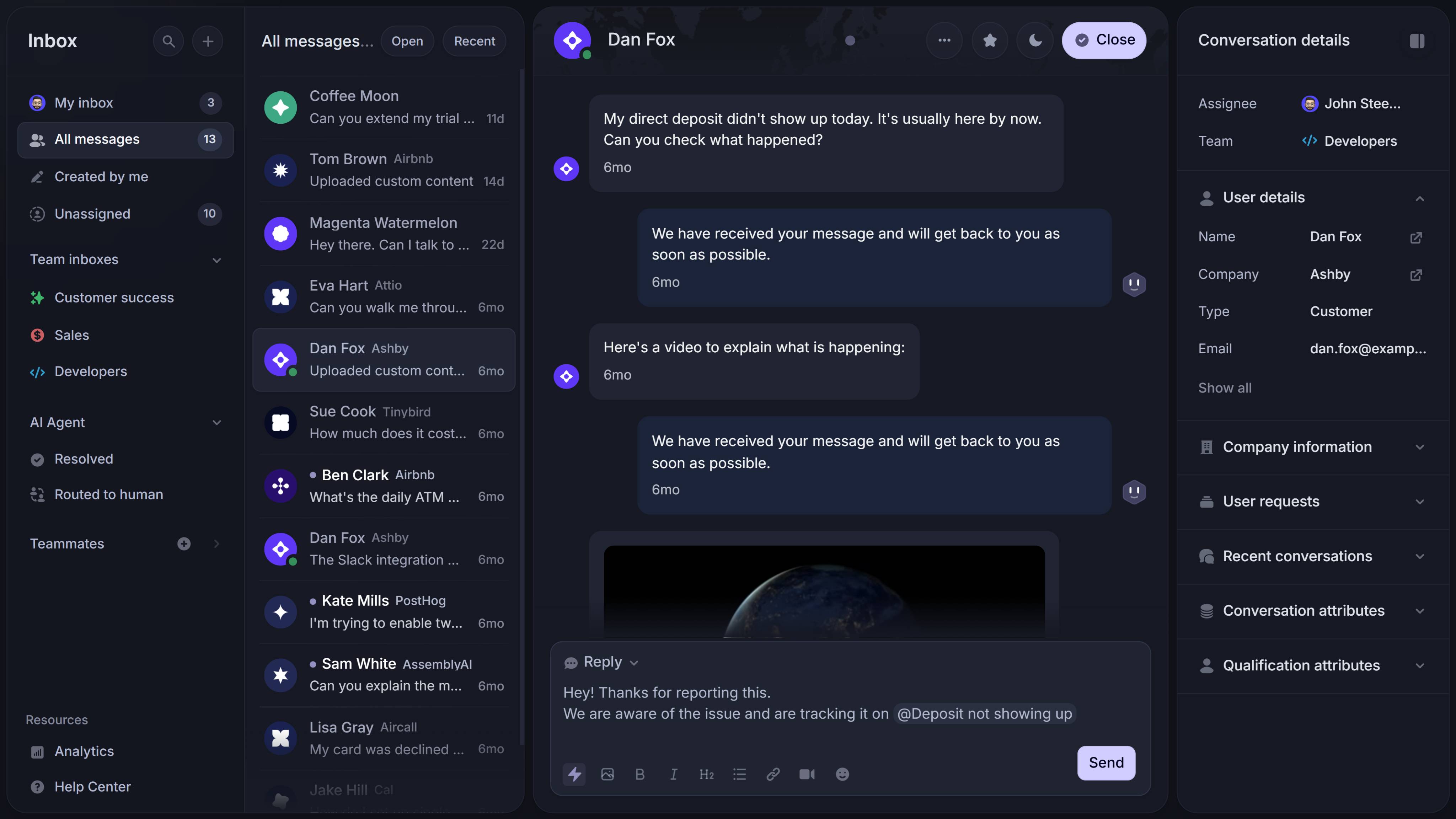
Resolve 70% of customer requests with AI
Automatically resolve customer issues & cut down support loads for your team
2. Contact center outsourcing
Best for: businesses with high call volumes, such as billing, sales, or cancellations, where phone support is the primary customer channel.
In this method, you outsource only the voice call portion of your customer support to a dedicated contact center solution. Providers manage call centers for sales inquiries, renewals, cancellations, and customer care. This can include inbound calls, outbound calls, or both, and is often used by companies with high call volumes.
This method can come in handy if you don't have the technical capabilities of running a full-scale call center in-house.
3. Omnichannel customer experience outsourcing
Best for: teams that support customers across multiple channels and want consistent context and handoffs without managing separate tools or vendors.
The outsourcing provider manages all of your communication channels and touchpoints. Across phone calls, SMS, website, emails, and more, they're responsible for all customer inquiries.
The key aspect of this outsourcing method is that all communication happens in a centralized inbox. Not only do you see e.g. WhatsApp and Facebook messages in one place, but all agents also have access to all interactions.
Everyone gets all the context, and you achieve higher customer satisfaction.
4. Technical support outsourcing
Best for: SaaS and tech products that need trained agents to handle setup, troubleshooting, integrations, and account-level issues.
The outsourcing partner focuses only on the more technical aspects of your product, such as onboarding and setup, integrations, APIs, account configurations, or hardware options.
This method is very common for SaaS and tech companies that want their hands free while building the product, but also the ability to meet increasing customer expectations.
5. Customer success outsourcing
Best for: subscription-based businesses that want help with onboarding, adoption, renewals, and churn reduction but lack internal capacity.
This type of business process outsourcing is proactive instead of reactive. While customer service means waiting for a customer to reach out, customer success is all about providing more value and increasing customer loyalty.
The provider helps with onboarding, user training, adoption, renewals, and retention by replacing in-house customer success roles. It is common in subscription businesses where long-term usage matters more than one-off interactions.
6. Back-office and CX operations outsourcing
Best for: companies that need to offload administrative work like refunds, orders, updates, and QA to keep frontline teams focused on customers.
These services support the customer experience indirectly. Examples include order processing, refunds, account updates, data entry, quality assurance, and reporting. While customers may not interact directly with these teams, their work affects response times and accuracy.
Ecommerce businesses or brick-and-mortar stores can benefit from a CX outsourcing partner with this type of skillset.
7. Community & social media management outsourcing
Best for: brands with active social channels or user communities that require timely responses, moderation, and escalation outside normal support queues.
Some providers specialize in monitoring and responding to customer questions and feedback on social platforms, forums, and community spaces. This often includes moderation, escalation, and sentiment tracking.
If your business depends heavily on leads and interactions from social channels, it's worth hiring a third-party company to handle just this channel 24/7.
Conclusion
There are significant advantages to customer experience outsourcing. From lowering overhead costs to having more focus on your product, it can be a great choice for some businesses. But you also give away sensitive customer data, trust someone else to keep your brand values, and hope that they perform at a consistent level.
There is a middle ground: using AI to automate a portion of your customer service so you keep control without needing to hire more people.
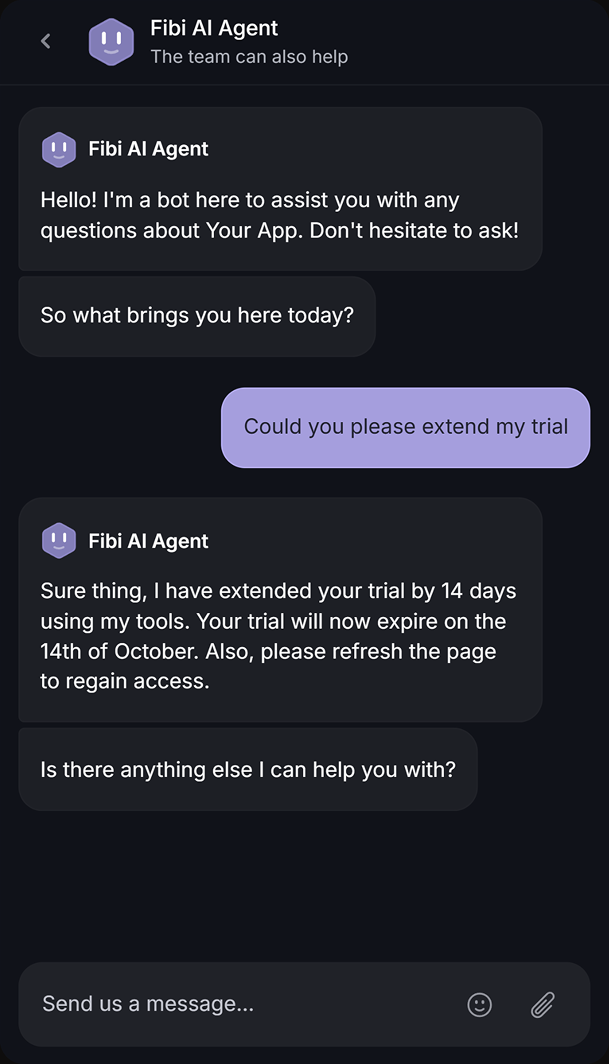
Featurebase is a modern & affordable AI customer support platform that brings all your conversations into one inbox. It connects to your SaaS app, Slack, email, or website and lets Fibi, our AI agent, handle routine questions on autopilot while escalating only the important conversations to your live agents.
It comes with a Free plan with unlimited support conversations, and the onboarding takes minutes, so there's no downside to trying it. 👇
✨ Automate your support with the fastest AI-enhanced Inbox today →