Blog Customer ServiceCustomer Success Interview Questions (+ Sample Answers)
Customer Success Interview Questions (+ Sample Answers)
30 customer success interview questions grouped by the skill each one tests, with sample answers and what interviewers are really listening for - useful whether you're hiring a CSM or preparing to become one.


A customer success interview decides two things at once: whether a hiring manager has found the person who will protect and grow their revenue, and whether a candidate can prove they're that person.
The questions below work from either side of the table. Here are 30 customer success interview questions grouped by the exact skill each one probes, with sample answers and notes on what interviewers are really listening for. 👇
Key takeaways:
- Strong CSM interviews test 7 things: motivation, relationship-building, retention, expansion, metrics fluency, cross-functional collaboration, and situational judgment.
- Candidates should answer with the STAR method (Situation, Task, Action, Result) and real numbers - churn reduced, net revenue retention, CSAT moved - not job-description language.
- Hiring managers get the most signal from situational and feedback-loop questions, where you see how someone actually thinks rather than how well they've rehearsed.
- The best answers frame customer success as proactive and revenue-linked, not reactive ticket-clearing.
- Great CSMs spend their time on relationships and retention, not repetitive tickets. Featurebase✨ supplements customer success teams with AI-powered support - AI agents and an AI copilot handle routine questions so CSMs can focus on the high-value work these interviews are built to find.
What customer success interviews are really testing
Every question in this guide maps back to a simple business reality: keeping customers is worth far more than replacing them. Research from Frederick Reichheld of Bain & Company found that increasing customer retention by 5% increases profits by 25% to 95%. That's the number sitting behind the entire customer success role, and it's why companies keep investing in it - 84% of B2B tech companies are maintaining or increasing their customer success budgets, according to Gainsight's 2024 Customer Success Index.
So when an interviewer asks a question, they're rarely interested in a textbook definition. They're checking for 7 competencies:
- Motivation and role understanding: do they know what customer success actually is, and why they want it
- Relationship-building: can they earn trust and adapt to very different customers
- Retention and churn: can they spot risk early and keep customers from leaving
- Expansion and revenue: can they grow accounts without feeling pushy
- Metrics fluency: are they comfortable with churn, retention, NPS, CSAT, and health scores
- Cross-functional collaboration: can they run the feedback loop with sales, product, and support
- Situational judgment: how do they think on their feet when something breaks
One thing separates strong answers from weak ones across all 7 areas. Weak answers describe activities ("I replied to tickets quickly"). Strong answers describe outcomes and back them with numbers ("I built a 30-60-90 onboarding plan that lifted completion from 65% to 92% and cut first-year churn by 15%"). If you're a candidate, that's the bar. If you're hiring, that's the signal.
Motivation and role-understanding questions
These open most interviews. They filter out people applying to every job and surface candidates who understand that customer success is strategic and proactive, not a rebrand of support.
- Why do you want to work in customer success?: are they genuinely drawn to the work or just job-hunting broadly
- What does customer success mean to you?: do they define it around customer outcomes, not ticket volume
- How is customer success different from customer support or account management?: do they understand the proactive, revenue-linked nature of the role
- What do you think makes a great CSM?: self-awareness about the skills that actually matter
- What's one thing you'd change about our product?: did they research the product, and can they give feedback constructively
Sample answer (why customer success): "I started in support, where I learned how much customers value someone who actually listens. I moved into customer success because I wanted to get ahead of problems instead of reacting to them. In my last role, I partnered with product to launch a health-scoring system that improved renewal forecasting accuracy by about 20%, and that mix of relationships plus measurable impact is exactly what I want to keep doing."
Customer relationship and communication questions
Customer success runs on trust. These questions test whether a candidate can build it, keep it under pressure, and flex their style across a founder, a power user, and a skeptical procurement lead.
- Walk me through how you build a relationship with a new customer: is there a repeatable process, or do they wing it
- How do you adapt your communication style to different customers?: can they meet technical and non-technical stakeholders where they are
- Tell me about the most challenging customer you've managed and how you kept the relationship healthy: resilience and emotional intelligence under real pressure
- How do you deliver bad news to a customer?: honesty, timing, and whether they come with a solution
- How do you keep in touch without becoming noise?: judgment about cadence and value in every touchpoint
Sample answer (delivering bad news): "I address it quickly and, where I can, over a call or video so I can read the reaction. I lead with what happened and what it means for them, avoid over-apologizing, and come to the conversation with a next step and a timeline. Then I follow up in writing so nothing gets lost. Customers rarely remember the problem as much as they remember how you handled it."
Retention and churn questions
This is the heart of the role, so expect several questions here. Interviewers want proof you can see churn coming and do something about it before the renewal date.
- What's your process for identifying an at-risk account?: do they use signals and data, or wait for complaints
- Tell me about a time you saved a customer who was about to churn: a real story with a real outcome
- What are the most common reasons customers churn, and how do you get ahead of them?: pattern recognition beyond "they were unhappy"
- How do you run a renewal conversation?: whether renewals are a scramble or a natural result of ongoing value
- Tell me about a time you inherited an unhappy account and turned it around: ownership and follow-through
A good candidate talks about leading indicators - dropping usage, an unresponsive champion, an unfilled seat count - not just the lagging ones. Many CS teams lean on customer retention software to surface those signals automatically, and interviewers like to hear that you'd act on them proactively rather than at renewal time.
Sample answer (saving a churn-risk account): "I noticed a mid-market account's logins had dropped roughly 40% over a quarter, and their champion had gone quiet. I set up a call, learned they'd lost the internal sponsor who originally bought us, and built a fresh onboarding plan for the new team. Within two months usage was back above the original baseline and they renewed. The lesson was to watch usage as an early warning, not treat the renewal date as the first checkpoint."

Get the best customer service software
Automatically resolve 70% of customer requests & cut down manual support loads
Expansion and revenue questions
Modern CSMs own a number. These questions test whether a candidate can grow an account while staying a trusted advisor rather than turning into a pushy salesperson.
- How do you spot an upsell or expansion opportunity?: do they read usage and needs, or just push the premium tier
- How do you balance being a trusted advisor with hitting revenue targets?: whether they see the two as aligned or in conflict
- Tell me about a time you used data to make the case for an upgrade: evidence-led selling, not pressure
- How do you approach a QBR?: do they use it to prove value and open doors, or just recap activity
Sample answer (spotting expansion): "The best expansions come from noticing a customer already outgrowing their plan. I once saw a team repeatedly hitting a usage limit on a feature they clearly relied on, so I pulled the data, showed them what the ceiling was costing them in workarounds, and framed the upgrade around that. It closed because it solved a problem they already felt, not because I pitched a bigger package."
Metrics and data questions
You can't manage customer success on vibes. Interviewers use these questions to check that a candidate speaks the language of the role and knows which number to reach for.
- Which customer success metrics do you track, and why?: fluency with churn, retention, and adoption
- How do you build or use a customer health score?: can they turn messy signals into an early-warning system
- What's the difference between NPS and CSAT, and when do you use each?: do they know what each metric actually measures
- How many accounts should one CSM manage?: do they understand segmentation and workload
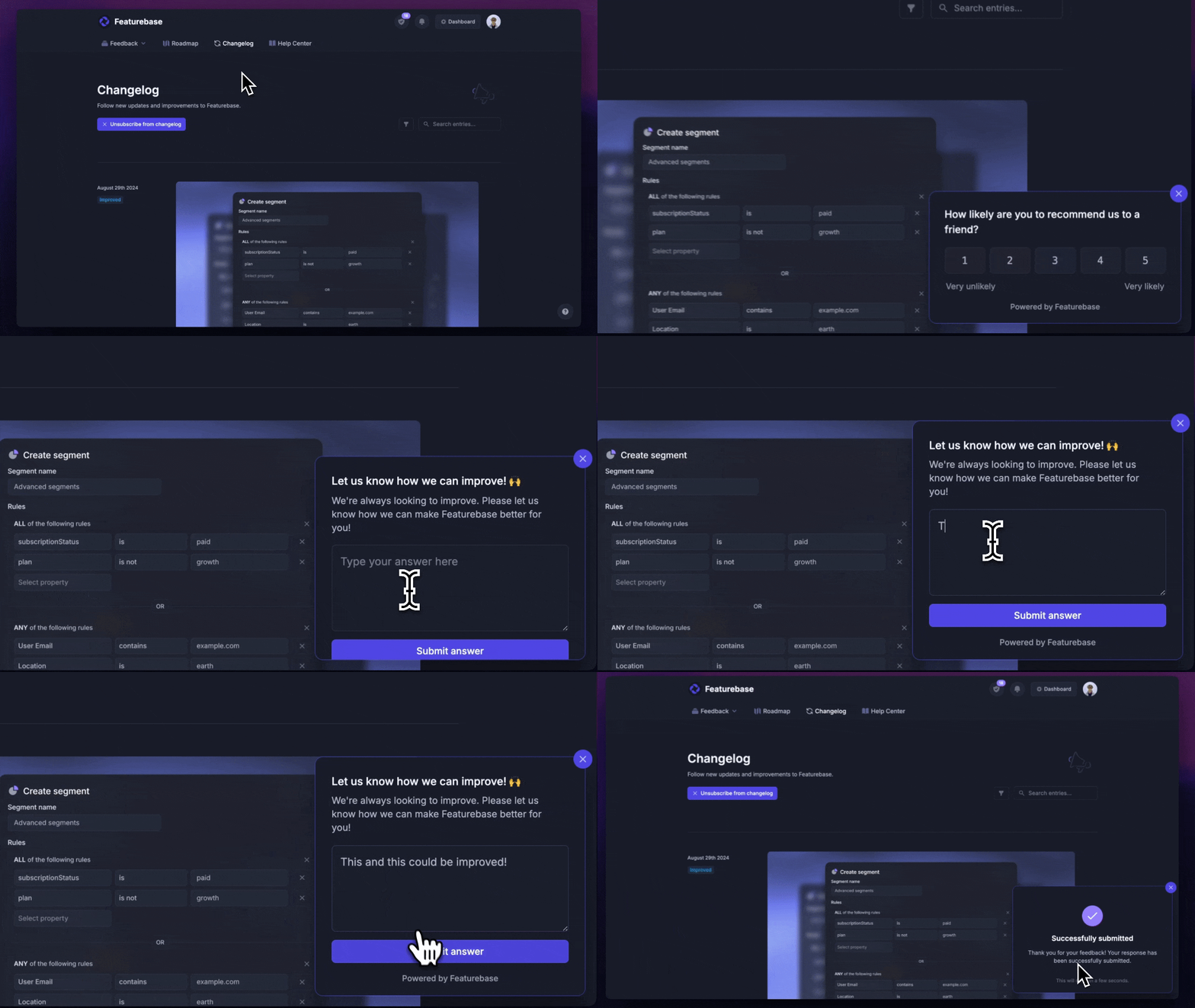
The strongest answers connect metrics to action. Knowing your NPS score is table stakes. Explaining that you treat NPS versus CSAT as answering different questions - long-term loyalty versus satisfaction with a specific interaction - is what shows real understanding. On book size, a good answer is that it depends on segment: high-touch enterprise accounts might warrant a 1:15 ratio, while low-touch, automation-heavy books can run 1:100 or more.
Collaboration and feedback-loop questions
CSMs sit between the customer and the rest of the company. These questions test whether a candidate can carry the voice of the customer inward and actually get things done across teams.
- How do you work with sales, product, and support?: are they a connector or a silo
- Tell me about a time you closed the loop on customer feedback: do they follow through from request to shipped to "we told the customer"
- How do you advocate for a customer request internally when engineering is booked?: influence without authority
- How do you handle a teammate who gave a customer wrong information?: professionalism and customer-first thinking
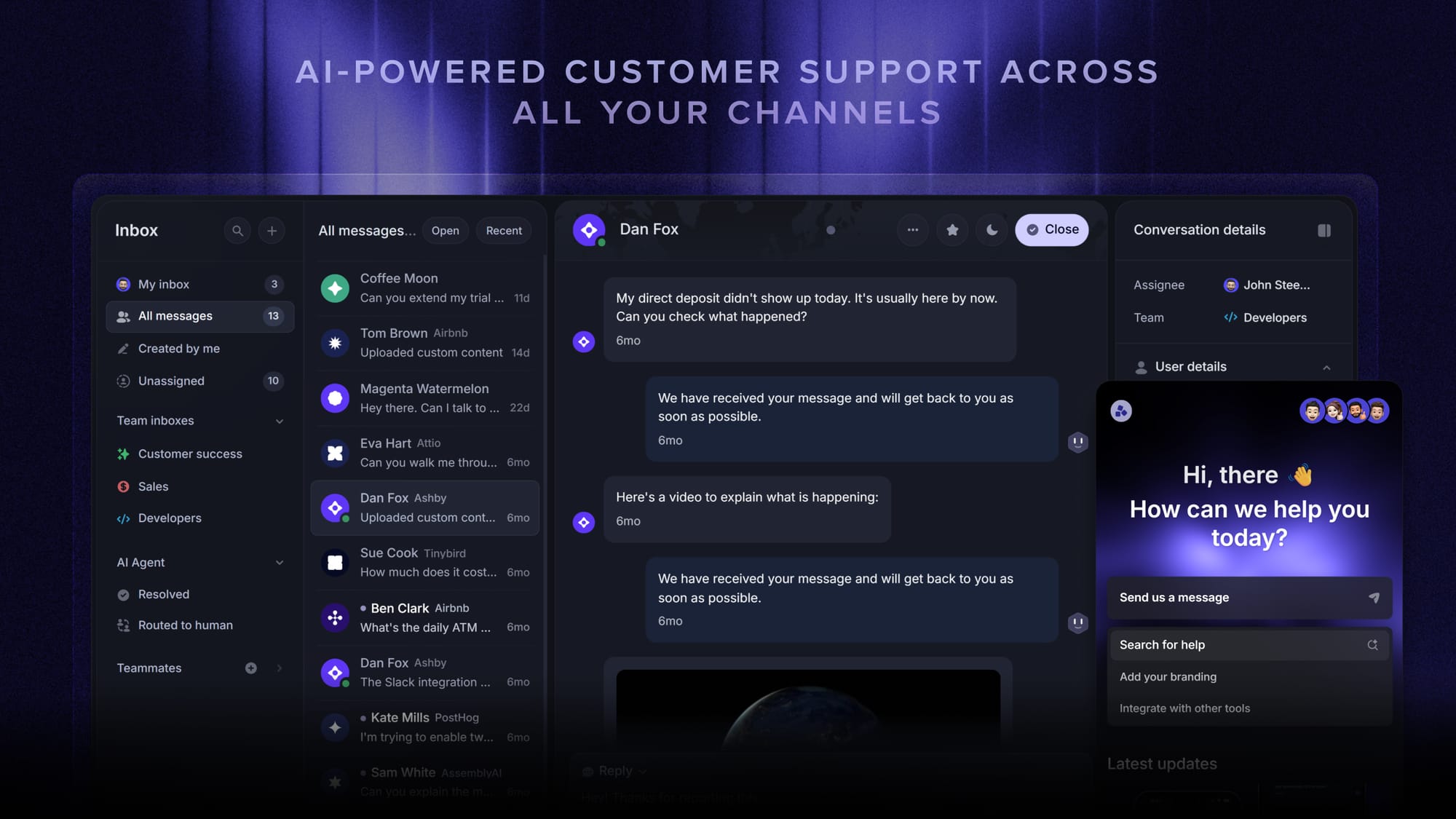
This is where a lot of interviews are won, because closing the feedback loop is one of the hardest parts of the job. Strong candidates describe a system, not good intentions. This is where a platform like Featurebase helps - it supplements CS teams with AI-powered support that deflects routine questions, while built-in feedback and roadmap tools let customers submit and vote on requests in one place, weight them by account revenue to see what actually moves retention, and auto-update everyone when a request ships, often on a public roadmap so customers can see what's coming. A candidate who can describe running a voice-of-customer program like that stands out immediately.
Sample answer (closing the loop): "A customer flagged a reporting gap that kept coming up in my other accounts too, so I gathered the examples, tied them to renewal risk, and brought that to product instead of just filing a ticket. It made the roadmap, and when it shipped, I went back to every customer who'd asked for it. Two of them referenced it in their renewal as a reason they stayed."
Situational and problem-solving questions
These are the questions that separate polished from prepared. There's no perfect answer - interviewers watch how a candidate thinks, prioritizes, and stays calm.
- A major outage just hit several of your top accounts. What do you do in the first hour?: crisis communication and prioritization
- A customer asks for something your product can't do. How do you respond?: honesty plus creative problem-solving
- A customer has gone silent for weeks. How do you re-engage them?: persistence and reading the situation
- What would your first 30-60-90 days look like in this role?: how they ramp and where they create early wins
Sample answer (the outage): "First I align with engineering to get a realistic status and timeline so I'm not guessing. Then I reach out proactively to affected accounts, biggest and most at-risk first, with a clear, honest update rather than waiting for them to find out. After it's resolved I follow up with what happened and what we're doing to prevent it. Handled well, an outage can actually build trust."
Sample answer (the 30-60-90): "In the first 30 days I'd focus on learning - the product, the customers, the existing playbooks - and meeting my accounts and internal partners. In the next 30 I'd look for quick wins, like tightening a rough onboarding step or re-engaging a quiet account. By day 90 I'd have a plan built around the specific retention and expansion gaps I'd found, with measurable goals attached."
Questions candidates should ask the interviewer
The interview goes both ways, and hiring managers notice when a candidate asks sharp questions. It signals strategic thinking and genuine interest. Strong ones to keep ready:
- How do you define success for this role in the first 90 days?: gets you a concrete picture of expectations
- Which customer health signals are most predictive of renewals here?: shows you think in leading indicators
- How does the CS team partner with sales on expansion?: reveals whether the role owns revenue and how territory works
- How does customer feedback reach the product team today?: tells you whether the feedback loop is functional or broken
- What does the CSM-to-account ratio look like?: a fast read on workload and how high- or low-touch the role really is
Conclusion
The best customer success interviews aren't about catching people out - they're about finding someone who can turn happy customers into retained, growing revenue. Group your questions by the competency each one tests, listen for outcomes over activities, and lean on situational questions when you want to see how someone really thinks. If you're the candidate, prepare real stories with real numbers and you'll stand out from everyone reciting the job description.
A huge part of the job is spending time where it matters most - customers, retention, and growth - instead of drowning in repetitive tickets. That's where Featurebase supplements customer success teams with AI-powered support: AI agents resolve routine issues on autopilot, an AI copilot helps your team reply faster, and built-in feedback and roadmap tools keep you close to what customers actually need.
It comes with a Free plan, and the onboarding is fast, so there's no downside to trying it. 👇
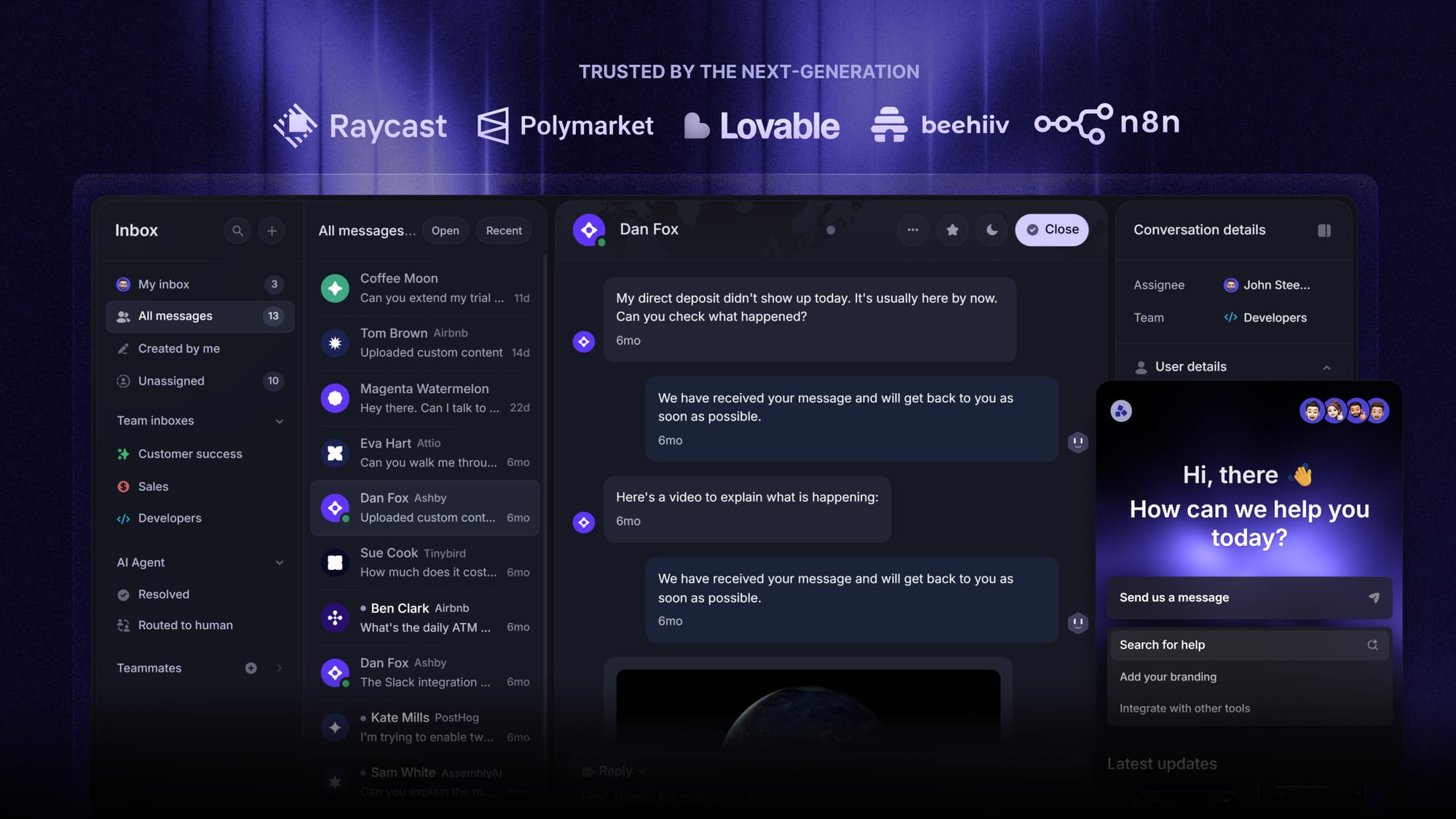
✨ Automate your support with the fastest AI-enhanced Inbox today →
FAQs
How do you prepare for a customer success interview?
Start by researching the company's product, customers, and pricing so you can speak to their business specifically. Then prepare 4-5 STAR stories tied to real numbers - churn reduced, retention improved, an account saved or expanded. Finally, brush up on core CS metrics and be ready with a few sharp questions of your own to ask the interviewer.
What's the difference between customer success and customer support?
Customer support is reactive: it solves issues as customers raise them. Customer success is proactive and strategic: it works to help customers reach their goals so they stay, renew, and expand. In an interview, always frame your examples around proactive value and business impact rather than ticket-clearing.
What are the 4 pillars of customer success?
They're usually described as onboarding and adoption (getting customers to value fast), retention (keeping them), expansion (growing the account), and advocacy (turning happy customers into references and referrals). Most interview questions map to one of these four, so it's a useful lens for organizing your prep.
What are the most common customer success interview questions?
The most common ones cover why you want to work in customer success, how you define it, how you reduce churn, how you handle a difficult or at-risk customer, how you spot expansion, and which metrics you track. The 30 questions in this guide are grouped by exactly those themes so you can prepare across all of them.
What customer success metrics should you be ready to discuss?
Be comfortable talking about churn rate, retention and net revenue retention, customer lifetime value, product adoption, and satisfaction scores like NPS and CSAT. You don't need every formula memorized, but you should be able to explain what each metric tells you and what action you'd take based on it.
What tools should a customer success manager know?
Expect to use a CRM like Salesforce, a dedicated CS platform for health scores and account management, and feedback tools for capturing and acting on customer requests. Platforms like Featurebase supplement CS teams with AI-powered support and built-in feedback tools, so AI can handle routine questions while your team focuses on customers and closes the loop on requests. Naming the categories and explaining how you'd use them together signals more than reciting brand names.