Blog Customer FeedbackCustomer Success Plan: How to Build One That Works
Customer Success Plan: How to Build One That Works
A customer success plan keeps your customers focused on outcomes, not features. Here's what to include and how to build one that survives past onboarding.

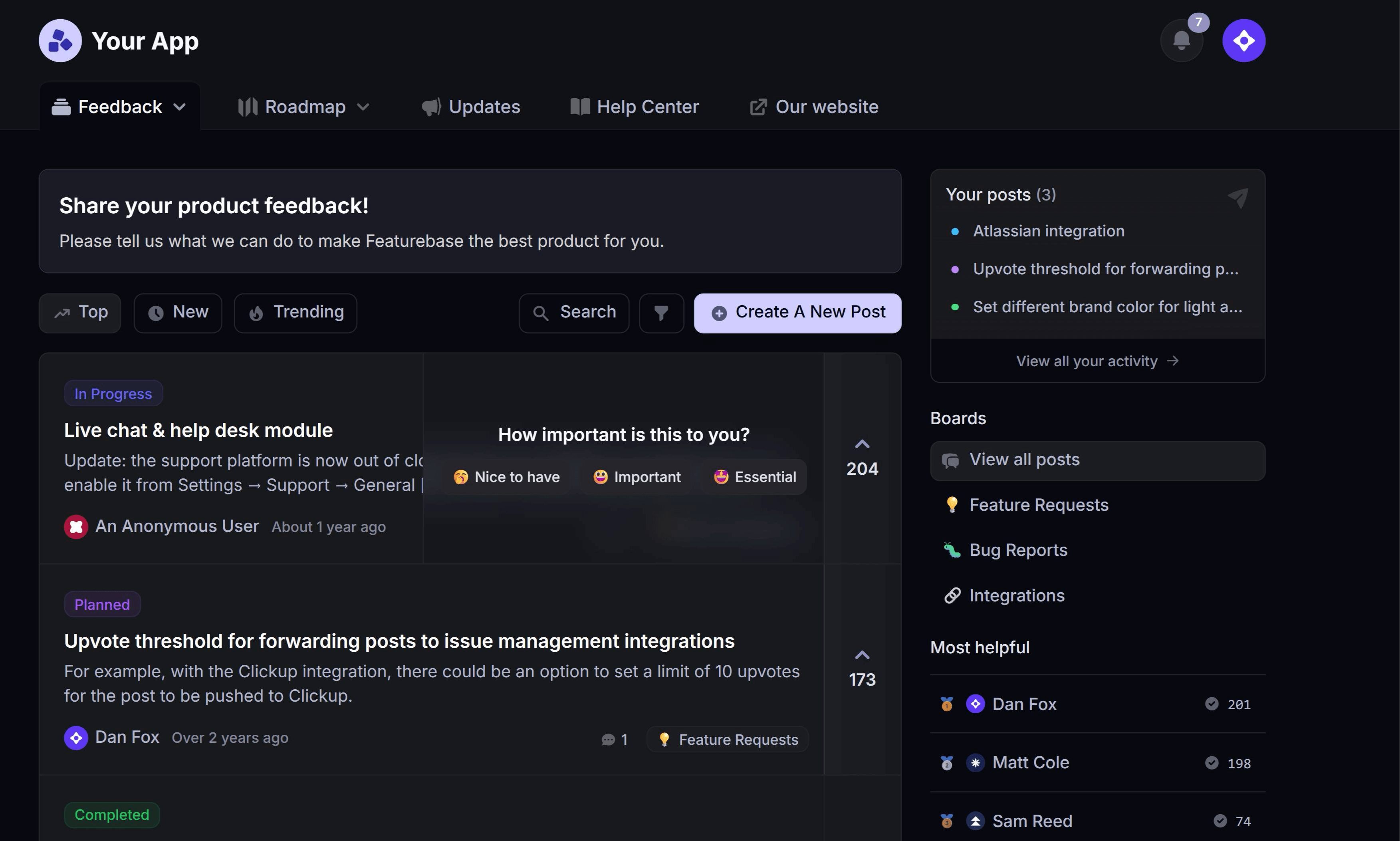

✨ Start collecting & managing feedback with Featurebase for free →
Most customer success plans get built with good intentions during onboarding, then quietly die in a spreadsheet nobody reopens.
A plan that actually drives renewals is different. It's a living, shared document tied to the customer's goals, and it stays useful long after kickoff. In this guide, I'll break down what a customer success plan is, why it matters, what to include, and how to build one you can repeat across every account. 👇
Key takeaways:
- A customer success plan is a shared roadmap that aligns your customer's goals with the actions your team will take to help them get there.
- It's not an onboarding checklist. A good plan follows the customer through adoption, expansion, and renewal.
- The strongest plans are client-facing, outcome-focused, and treated as living documents that get updated at every milestone.
- Every plan needs the same core parts: goals and KPIs, stakeholders, milestones, owned action items, a communication cadence, and feedback loops.
- Featurebase✨ gives you the feedback, survey, and roadmap tools to keep the feedback loop in your success plan running.
- The build process is repeatable: discover, map goals to outcomes, set milestones, assign owners, agree a cadence, then track and iterate.
What is a customer success plan?
A customer success plan is a shared document that outlines your customer's goals, the milestones along the way, and the actions both teams will take to reach them.
At its core, it captures three things:
- Goals: what a successful outcome looks like for this specific customer, in their words.
- Actions: the concrete steps that move them toward that outcome, from setup to adoption.
- Ownership: who is responsible for each step, on both your side and theirs.
The point is alignment. When everyone can see the same goals, milestones, and owners, there's no guessing about what "success" means or who is meant to do what next.
Customer success plan vs. onboarding checklist
The two get confused, but they do different jobs. An onboarding checklist is a task list that gets someone set up and then gets archived. A customer success plan is a longer-lived document that follows the customer through the whole relationship.
The difference comes down to time horizon and focus:
- An onboarding checklist is short-term and task-focused. It ends once the customer is live.
- A customer success plan is ongoing and outcome-focused. It evolves through adoption, quarterly reviews, expansion, and renewal.
A checklist gets a customer running. A success plan keeps them winning.
Why your customers need a success plan
Retention and expansion both start with the same thing: customers who actually reach the outcome they bought your product for. A success plan is how you make that outcome explicit and keep both teams accountable to it.
The financial case is hard to ignore. According to research by Frederick Reichheld of Bain & Company, increasing customer retention rates by 5% increases profits by 25% to 95%. Small improvements in how many customers stick around compound into large revenue gains, and a documented plan is one of the most direct ways to influence that number.
Beyond retention, a success plan does a few things a scattered set of notes never will:
- Faster time-to-value: when customers know exactly what to do and why, they hit their goals sooner and renewals become easier to justify.
- Shared alignment: a single source of truth means your CSM, the customer's champion, and their executive sponsor are all working from the same definition of success.
- A clearer path to expansion: tracking progress against goals surfaces the moments when an account is ready for an upsell or a new use case.
- Fewer silent churn risks: a plan makes it obvious when a customer has stalled, so you can step in before they quietly disengage.
The plan turns customer success from a reactive scramble into a proactive, repeatable motion.
What to include in a customer success plan
A strong plan is more than a task list. It's a shared playbook that keeps both sides aligned and accountable. These are the 8 elements every plan should cover.
- Executive summary: a few sentences on why the relationship exists, what success looks like, and where things stand today. It gives busy stakeholders the "why" in one quick scan.
- Stakeholders and roles: who's involved on both sides, including the customer's champion and sponsor plus your internal team. Clear ownership upfront prevents confusion later.
- Goals and success criteria: the specific, measurable outcomes the customer cares about, tied to real KPIs like product adoption, efficiency gains, or cost savings. Vague goals like "better adoption" don't count.
- Milestones and timeline: the key dates and deliverables, from kickoff to go-live to quarterly reviews. Milestones give the customer a visual sense of progress and keep things from slipping.
- Action items and ownership: the tactical steps needed to hit each goal, each with an owner and a due date. Plans without owners fall apart.
- Communication plan: how the two teams will stay aligned, including meeting cadence, channels, and who needs to be looped in. Set expectations early so nobody wonders how to get support.
- Feedback loops: clear ways for the customer to share input and for you to act on it. This is where you learn what's working, what's breaking, and what they need next.
- Resources: the enablement materials that help customers stay self-sufficient, like training docs, video walkthroughs, and knowledge base articles.
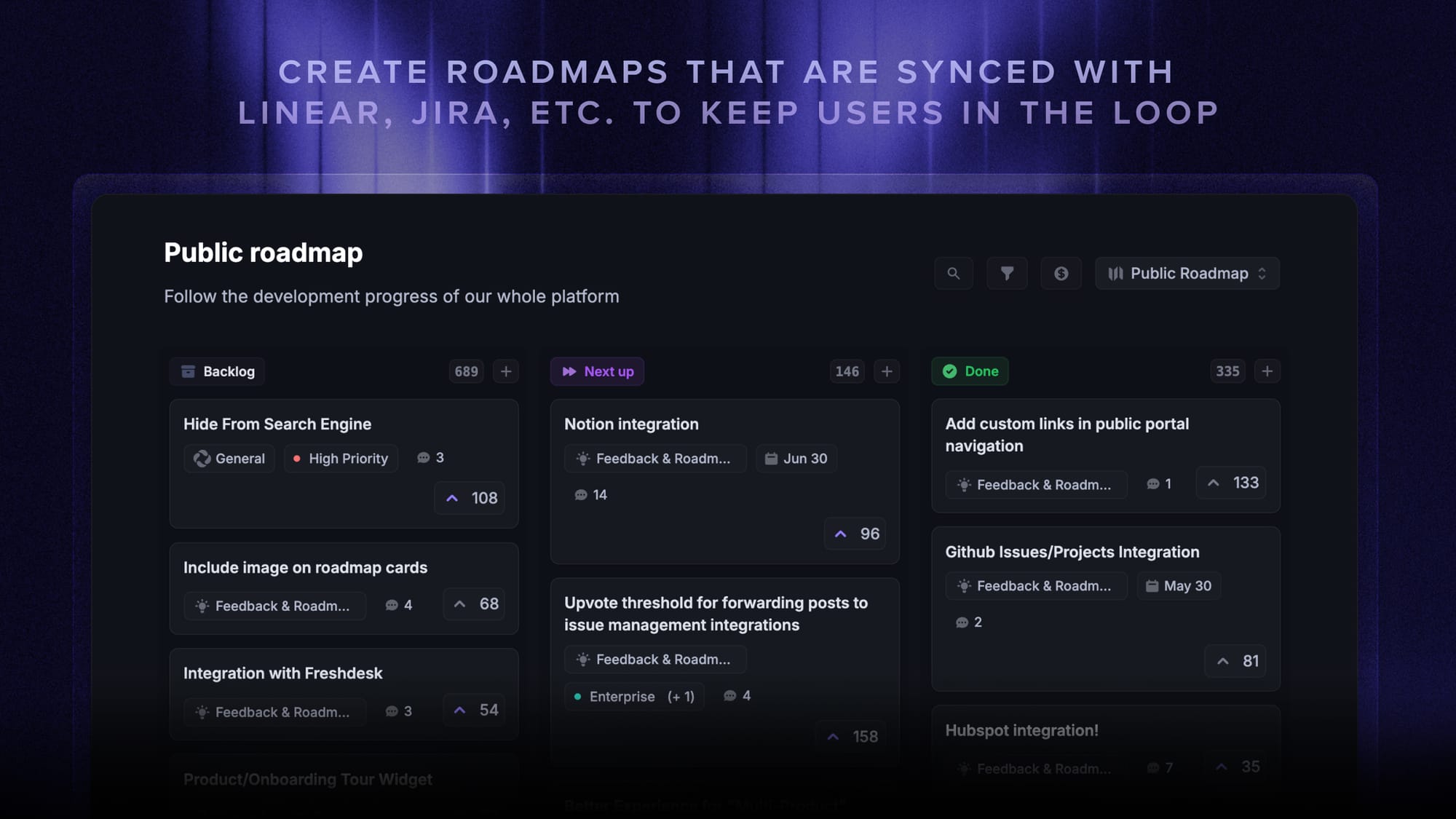
The feedback loop is the piece teams most often skip, and it's the one that keeps the plan honest. A customer feedback loop only works if input actually flows back into what you do next. With Featurebase, you can collect feedback and feature requests in one place, run NPS and CSAT surveys to measure how customers feel at each stage, and share a public roadmap so they can see the improvements they asked for are on the way.
How to build a customer success plan in 6 steps
You don't need to reinvent the plan for every account. Here's a repeatable process you can run each time.
1. Start with discovery. Before you build anything, understand the customer's world. Document their business goals, their current pain points, who the key stakeholders are, and what they've said success looks like. Much of this can carry over from the sales process, so the plan isn't a blank slate.
2. Map goals to measurable outcomes. Translate the customer's goals into KPIs you can both track. "We want to reduce costs by 10%" is a plan you can measure against. "Improve efficiency" isn't. Tie every goal to a number so you can prove progress later.
3. Break the journey into milestones. Split the path to each goal into smaller, time-bound checkpoints. For each milestone, note what you'll contribute and what the customer needs to do. Milestones make a long relationship feel like steady, visible progress.
4. Assign owners and due dates. Every action item needs a name and a deadline attached. Frame these as shared next steps so it's clear the work runs in both directions, and everyone knows what they own before the next check-in.
5. Agree on a communication cadence. Decide how often you'll meet and through which channels, whether that's a weekly sync, a monthly update, or a quarterly business review. Schedule the next touchpoint during the current one so momentum never stalls.
6. Track engagement and iterate. Watch how the customer interacts with the plan and their progress against goals. If engagement drops, it's a signal to check in. Update the plan as priorities shift, so it stays relevant instead of going stale.
Customer success plan best practices
The mechanics matter less than the habits around them. These practices are what separate a plan that drives outcomes from one that gets abandoned.
- Make it client-facing: share the plan with the customer instead of keeping it internal. A shared workspace builds trust and keeps both sides contributing.
- Treat it as a living document: revisit and update the plan through adoption, reviews, and renewals. The best plans never stop evolving.
- Tie every section to a business outcome: each goal, action, and resource should answer "how does this help the customer win?" If it doesn't, cut it.
- Start from a template, then personalize: a template gives you a consistent foundation, and personalization is what makes it land for each account.
- Use engagement as a signal: if a customer hasn't opened the plan in a while, it may be time to reach out. If they revisit it before a review, prep accordingly.
- Ensure clean handoffs: capture everything the sales team learned so nothing gets lost when ownership moves to customer success.
Avoid the common trap of running success plans out of generic spreadsheets or project tools. They lack the context, visuals, and continuity a good plan needs, and they're rarely something a customer wants to open.
Keeping the feedback loop alive
The feedback loop is usually the first part of a success plan to break down. Input gets collected in a survey or a call, then it stalls somewhere before it reaches the team that could act on it, and the customer never hears back.
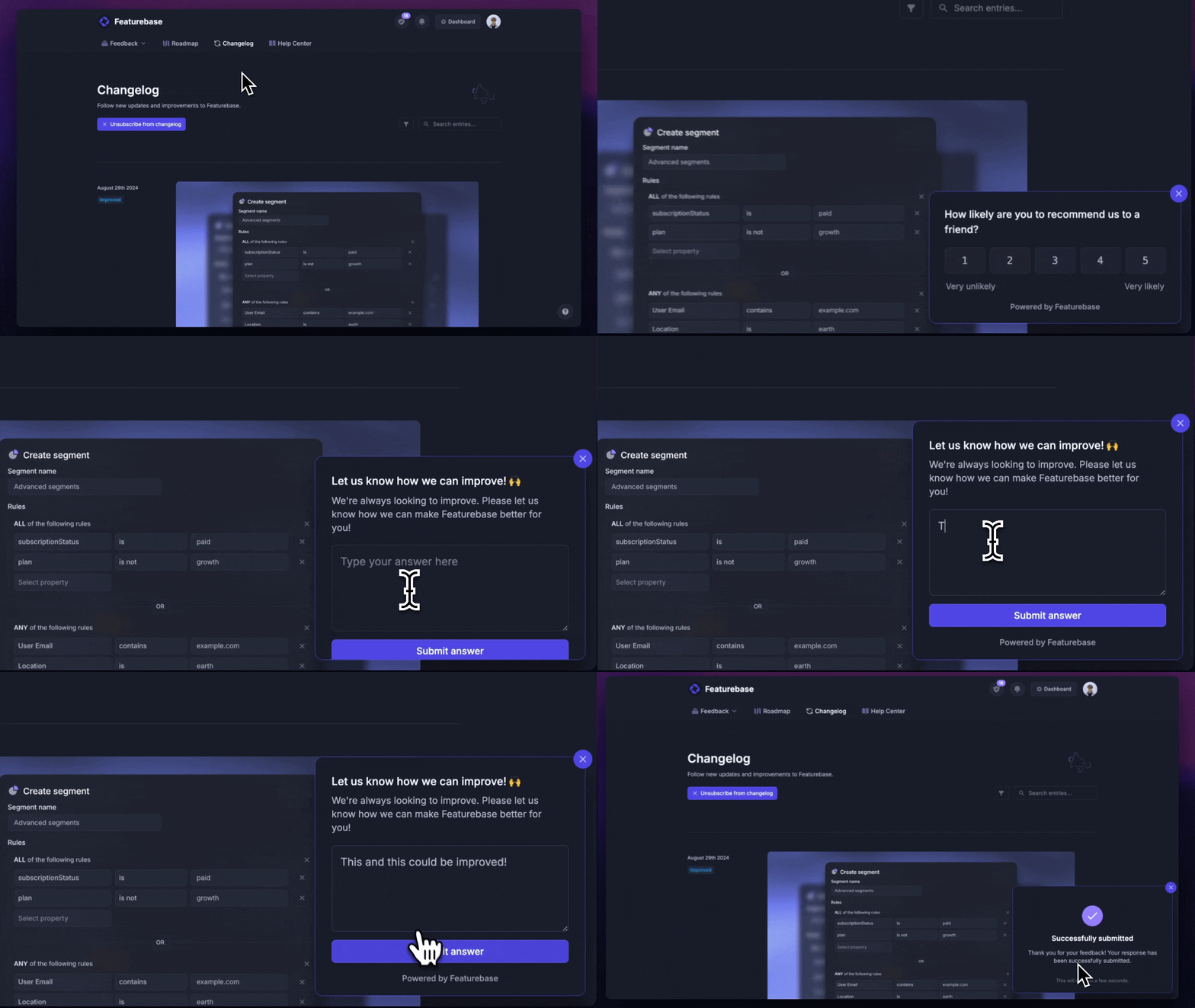
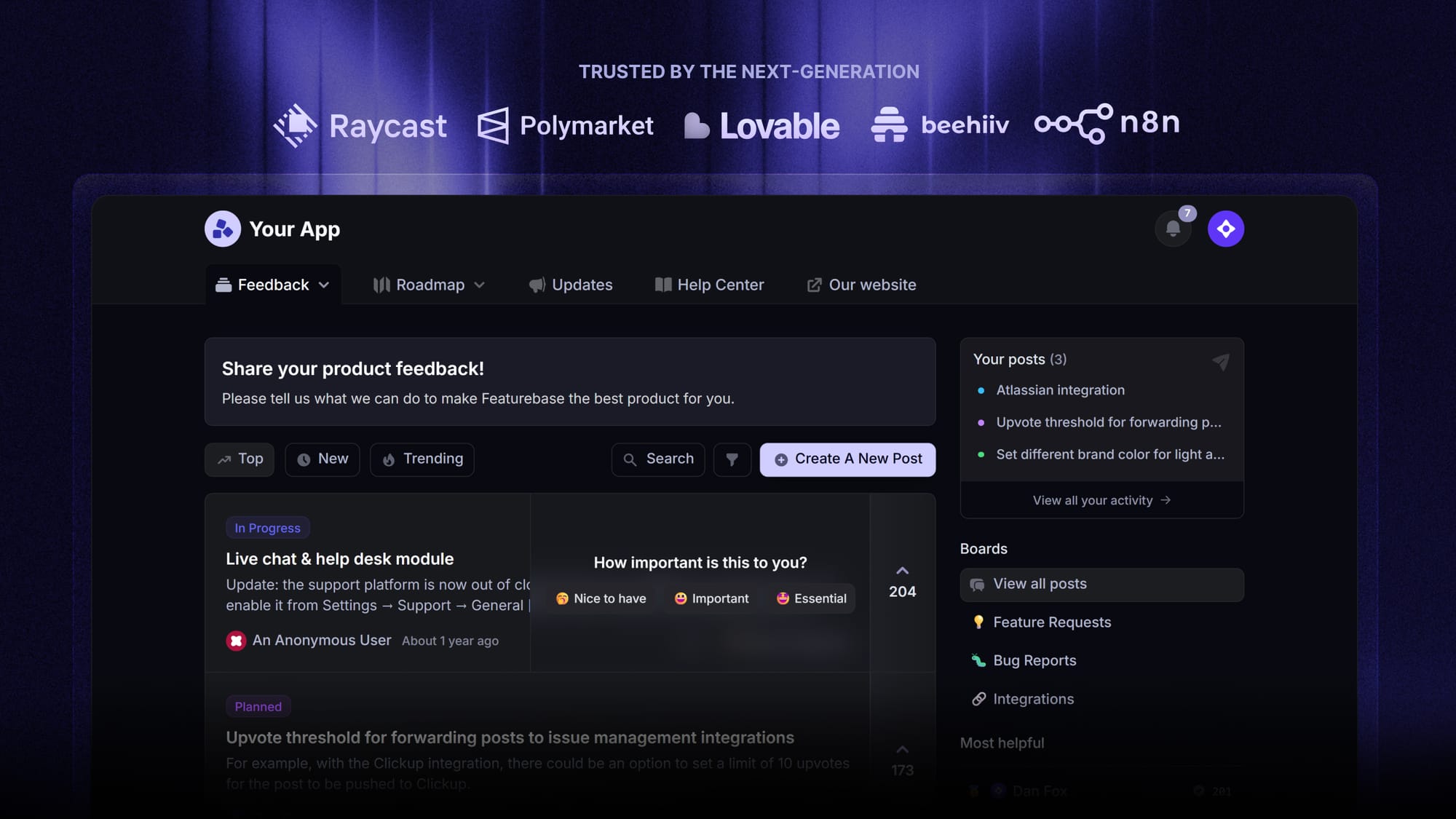
A dedicated feedback tool helps you keep that loop closed. Featurebase, for example, gives you one place to gather feature requests, run NPS and CSAT surveys at each stage of the journey, and prioritize what to build based on which accounts are asking. When something ships, a public roadmap and product updates let customers see the change they asked for actually happened.
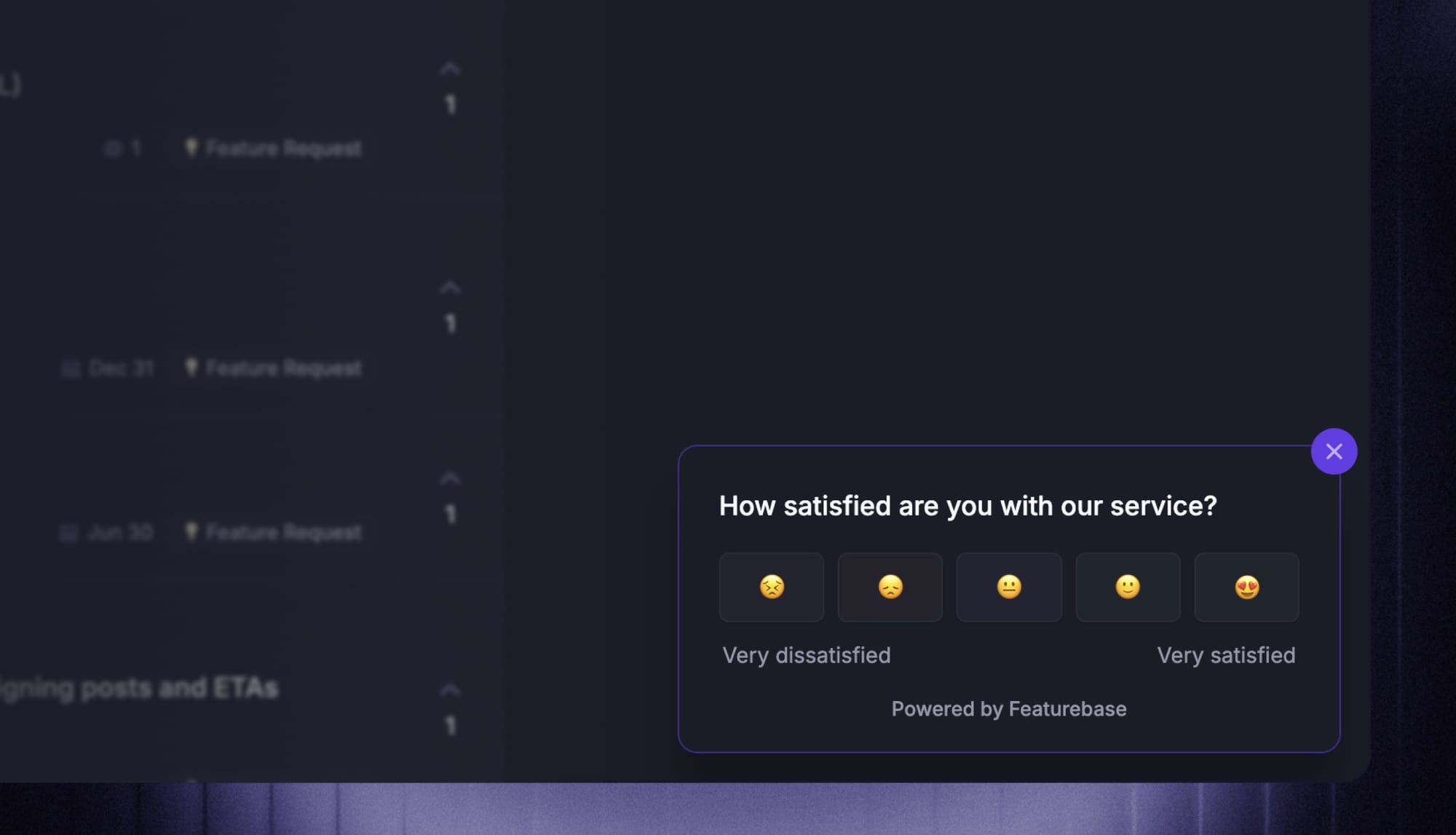
For customer success teams, that's the loop that keeps accounts engaged between reviews: customers tell you what they need, you act on it, and they see the result.
Conclusion
A customer success plan works when it stops being a document you fill out once and becomes the shared hub for the whole relationship. Define the outcomes, assign the owners, agree the cadence, and keep it alive through every milestone.
Do that, and customers reach value faster, your team spends less time chasing tasks, and renewals and expansion get a lot more predictable.
Featurebase powers the feedback loop at the heart of that plan, bringing your feedback collection, surveys, roadmaps, and product updates together in one place so customers stay engaged and heard. 💫
There's a free plan and onboarding is fast, so there's no downside to trying it. 👇
✨ Start collecting & managing feedback with Featurebase for free →
FAQs
What is a customer success plan?
A customer success plan is a shared document that maps a customer's goals to the milestones and actions needed to reach them, with clear owners on both sides. It keeps your team and the customer aligned on what success means and how you'll get there together, from onboarding through renewal.
What should a customer success plan include?
At a minimum: an executive summary, the stakeholders involved, measurable goals and KPIs, milestones with a timeline, owned action items, a communication cadence, feedback loops, and supporting resources. The exact shape flexes per account, but those components cover the essentials.
What's the difference between a customer success plan and a customer success strategy?
A customer success strategy is your program-level approach: how your whole team drives retention and growth across the customer base. A customer success plan is the account-level document that applies that strategy to one specific customer's goals. The strategy sets direction, and the plan puts it into practice for an individual relationship.
Who owns the customer success plan?
Ownership is shared. The customer success manager builds the plan, keeps it updated, and tracks progress, while the customer defines what success means for their business and flags roadblocks. This shared ownership creates buy-in and accountability on both sides.
How often should you update a customer success plan?
Treat it as a living document rather than a one-time deliverable. Revisit it at natural checkpoints like milestones, quarterly business reviews, expansion conversations, and renewals, and update it whenever the customer's priorities shift. A plan that goes stale stops being useful.
What tools do you need to build a customer success plan?
You need a place to document the plan itself, a way to track engagement and progress, and a system for collecting and acting on customer feedback. Many teams stitch these together across docs, a CRM, and project tools. A dedicated feedback platform like Featurebase covers the feedback side by centralizing feature requests, running NPS and CSAT surveys, and sharing a roadmap so customers see their input turn into shipped improvements.