Blog Customer FeedbackCustomer Success Playbook: How to Build One (+ Templates)
Customer Success Playbook: How to Build One (+ Templates)
Learn what a customer success playbook is, the 6 playbooks every team needs, and how to build one step-by-step that actually drives retention.

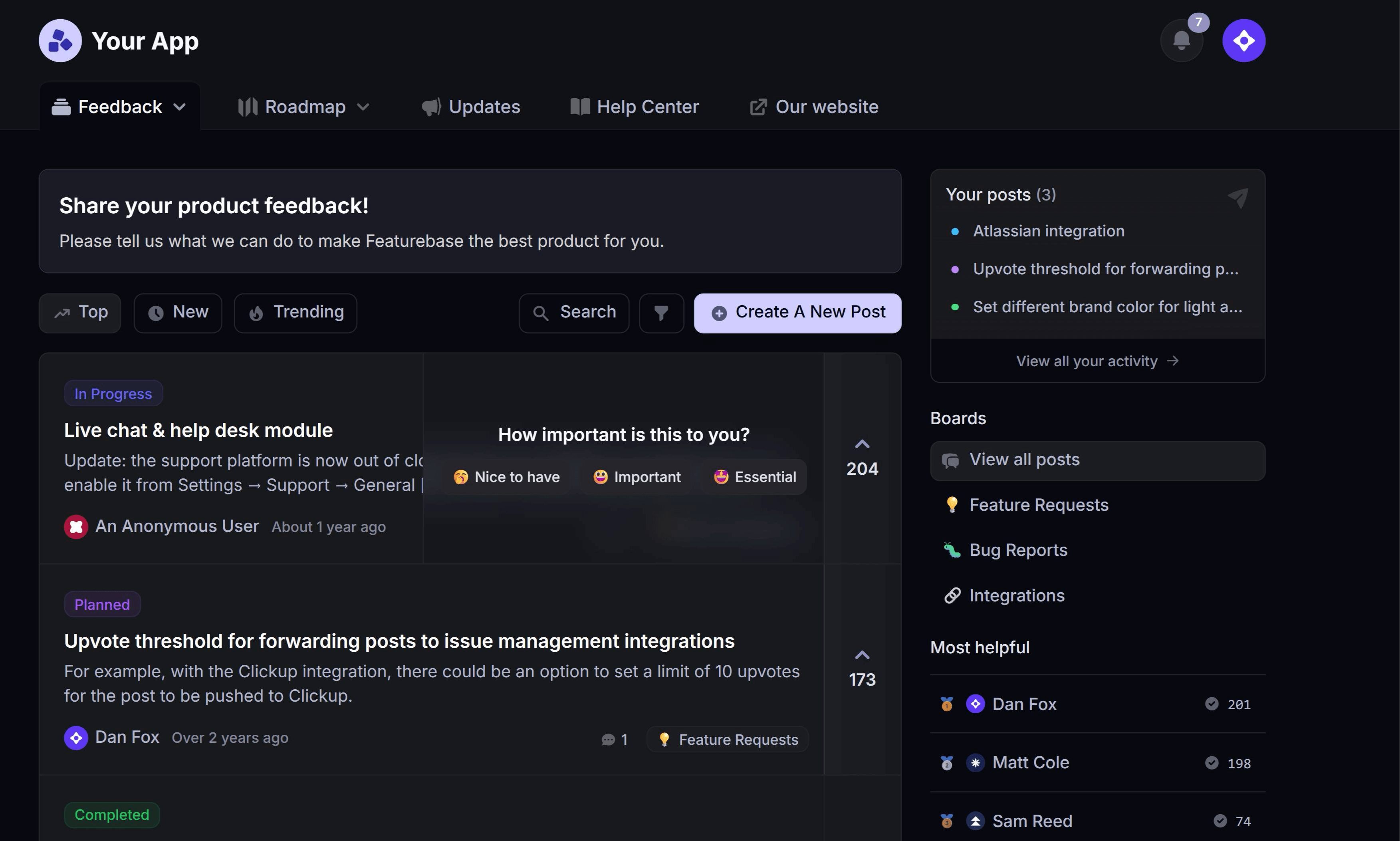

Customer success teams run the same motions every week: onboarding new accounts, watching for risk, prepping renewals, chasing expansion. Without a shared structure, every CSM improvises.
The result is customers getting wildly different experiences, outcomes that are hard to forecast, and your best practices living in one person's head instead of your team's.
A customer success playbook fixes that. It turns your most repeatable motions into documented workflows anyone can run. Here's what a playbook is, the ones every team needs, and how to build yours 👇
Key takeaways:
- A customer success playbook is a repeatable, documented workflow that defines how your team responds to a specific lifecycle event, like a new customer starting onboarding or a health score dropping.
- Every effective playbook shares the same building blocks: a trigger, a clear objective, ordered steps, an owner, and completion criteria.
- Most teams start with 3 core playbooks (onboarding, churn-risk, and renewal) and expand into adoption, expansion, QBR, and escalation as they mature.
- Playbooks only work when they're wired to real signals - health scores, product usage, and customer feedback. Static documents get ignored.
- Featurebase✨ gives you the feedback loop your playbooks run on: feature requests, NPS and CSAT surveys, and a public roadmap, all in one place.
What is a customer success playbook?
A customer success playbook is a documented, repeatable workflow your team follows when a specific event happens in the customer lifecycle. The event might be a new customer starting onboarding, a health score falling below a threshold, or a renewal window opening.
The point is to standardize execution. Instead of every CSM relying on personal judgment at each step, the playbook lays out the sequence of actions. That keeps the experience consistent across segments, regions, and experience levels.
Think of it like a sports playbook: a set of tested "plays" your team runs when a certain situation shows up on the field. Some plays are proactive (moving a customer toward a goal) and some are reactive (intervening when something goes wrong).
Why does this matter? Because retention is where the money is. Frederick Reichheld's research at Bain & Company, cited in Harvard Business Review, found that increasing customer retention rates by 5% increases profits by 25% to 95%. Consistent, repeatable customer success is one of the most direct ways to protect that revenue, and a good customer success team runs on playbooks rather than improvisation.
What goes into a customer success playbook?
A useful playbook is specific enough that a CSM can follow it without asking anyone for help. Whatever the scenario, each one should include the same building blocks:
- Trigger: The event that kicks off the workflow. A deal moves to "Active," a health score drops, a renewal window opens, or usage falls for a key feature.
- Objective: A clear, measurable goal. Complete onboarding within 60 days, restore an account from "at risk" to "stable," or finalize a renewal 30 days before the contract ends.
- Steps: An ordered list of actions, not a menu of suggestions. This usually mixes internal tasks, customer-facing communication, and data checks.
- Owner: The role responsible for each step, especially at handoffs. Assigning by role (not by name) keeps the playbook stable when people change.
- Assets: The templates and references that support execution, like email templates, meeting agendas, and internal runbooks.
- Completion criteria: The specific conditions that mark the playbook as done. Onboarding milestones reached, health score recovered, or renewal signed and logged.
Nail these 6 elements and you have a playbook. Skip them and you have a vague checklist people quietly ignore.
The customer success playbooks every team needs
You can't (and shouldn't) build a playbook for every possible scenario. Focus on the lifecycle motions with the highest coordination risk, where a mistake is costly and consistency pays off. These are the 6 that matter most.
Onboarding playbook
Onboarding sets the tone for the entire relationship, and poor onboarding is one of the most common reasons new customers churn. This playbook guides a customer from contract signature to their first real value milestone.
It typically covers reviewing handoff data before kickoff, running a structured kickoff meeting, agreeing on a mutual success plan, configuring the essentials, and verifying that first usage actually happens.
Adoption playbook
Adoption is where customers fold your product into their daily work. If adoption plateaus, risk climbs, so this playbook reinforces value once onboarding ends.
It usually triggers on low or declining usage against a benchmark, then routes the CSM to analyze usage gaps, target specific high-impact features, and share the right resources. This is also where satisfaction signals matter: sending a quick NPS or CSAT survey tells you whether adoption translates into happiness, and announcing new releases via a product changelog nudges customers back toward features they haven't tried yet.
Churn-risk playbook
Risk rarely appears overnight. Usage slips, a champion leaves, or sentiment sours. This playbook standardizes how your team responds the moment those signals show up.
The goal is to diagnose the root cause and stabilize the account. Steps include reviewing the full customer record, identifying the primary risk driver, running a focused conversation, and building a recovery plan with owners and dates. Getting this right is central to any effort to reduce churn and retain customers.
Renewal and QBR playbook
Renewals should be the result of a well-managed relationship, not a last-minute scramble. This playbook makes preparation and communication consistent in the months before a contract ends.
It usually starts around 120 days out and covers reviewing usage and outcomes against the original goals, running a value review or quarterly business review (QBR) to align on results, surfacing blockers early, and closing the renewal cleanly.
Expansion playbook
Expansion covers extra seats, new modules, or wider usage. A structured playbook makes sure growth follows real value instead of a pushy sales motion.
It triggers on signals like sustained high usage, new teams adopting the product, or repeated new use cases surfacing in QBRs. From there the CSM confirms the account is healthy, identifies expansion paths that fit the customer's goals, and coordinates with account management on next steps.
Escalation playbook
Escalations are high-visibility, high-stress moments. A clear playbook limits chaos and protects trust when something serious breaks.
It assigns a single owner, documents the issue, aligns internal stakeholders, sets a communication cadence with the customer, and logs every action until resolution. A short internal review afterward turns a bad moment into a better process.
How to build a customer success playbook (step-by-step)
Don't try to build all 6 at once. Pick one high-impact workflow, get it right, then repeat. Here's the process:
- Map the customer journey: Lay out the lifecycle end to end, from first touch through renewal and expansion. Mark the handoffs, decision points, and value milestones so it's obvious where a playbook should step in.
- Define the objective and completion criteria: Write the goal in measurable terms ("complete onboarding within 60 days") and decide up front what "done" looks like. This is what keeps the playbook from running forever.
- Segment your customers: A single playbook rarely fits everyone. Group accounts by size, complexity, or use case so you can tailor the level of attention without rebuilding the whole workflow.
- Assign ownership: Name the role responsible for each step and each handoff. Ownership by role, not by person, keeps the playbook working when your team changes.
- Build the assets: Collect the templates, scripts, and agendas the workflow needs and store them centrally. Consistent assets are what make execution repeatable and easy to automate later.
- Embed it in your daily tools: A playbook that lives in a forgotten doc gets ignored. Turn it into tasks and triggers inside the tools your team already works in so it guides real-time work.
- Measure and iterate: Track whether steps are clear, where the process stalls, and how it affects adoption, renewal, or risk. Then adjust. Watching the right customer success metrics tells you which plays are working and which need a rewrite.
Start with the workflow where inconsistency hurts the most, usually onboarding or churn-risk, and you'll see the payoff fastest.
Why customer success playbooks fail at scale
Plenty of playbooks look great on paper and fall apart the moment your account list doubles. Retention is too important to let that happen. The median SaaS company with 100% or higher net revenue retention grows at 48% year over year, more than double the rate of companies below 100%, so a playbook that quietly stops working is expensive.
Here's where they usually break:
- Over-engineering the workflow: Long checklists and endless branches are harder to use, so CSMs skip steps or revert to doing their own thing. Keep playbooks to the essential steps that define the motion.
- Treating playbooks as static: Customer needs, products, and segments change. If you never review your playbooks, they drift out of date. Set a regular cadence to revisit them.
- Ignoring segmentation: Enterprise, mid-market, and self-serve accounts rarely need the same motion. One-size-fits-all playbooks stretch too thin to be useful.
- No connection to real signals: This is the big one. If a playbook isn't triggered by health scores, usage, or customer feedback, it stays manual and reactive. Playbooks work when they run on live data, and that includes a steady feedback loop that tells you what customers actually want. Capturing feature requests and survey responses in one place turns vague "the account seems unhappy" hunches into specific triggers your team can act on.
Playbooks don't fail because people stop caring. They fail when the shared context they depend on gets scattered across too many tools.
Where Featurebase fits in
Most of these playbooks depend on one thing your CRM won't give you: a clear view of what customers are actually asking for and how they feel about it. That feedback loop is where Featurebase fits in.
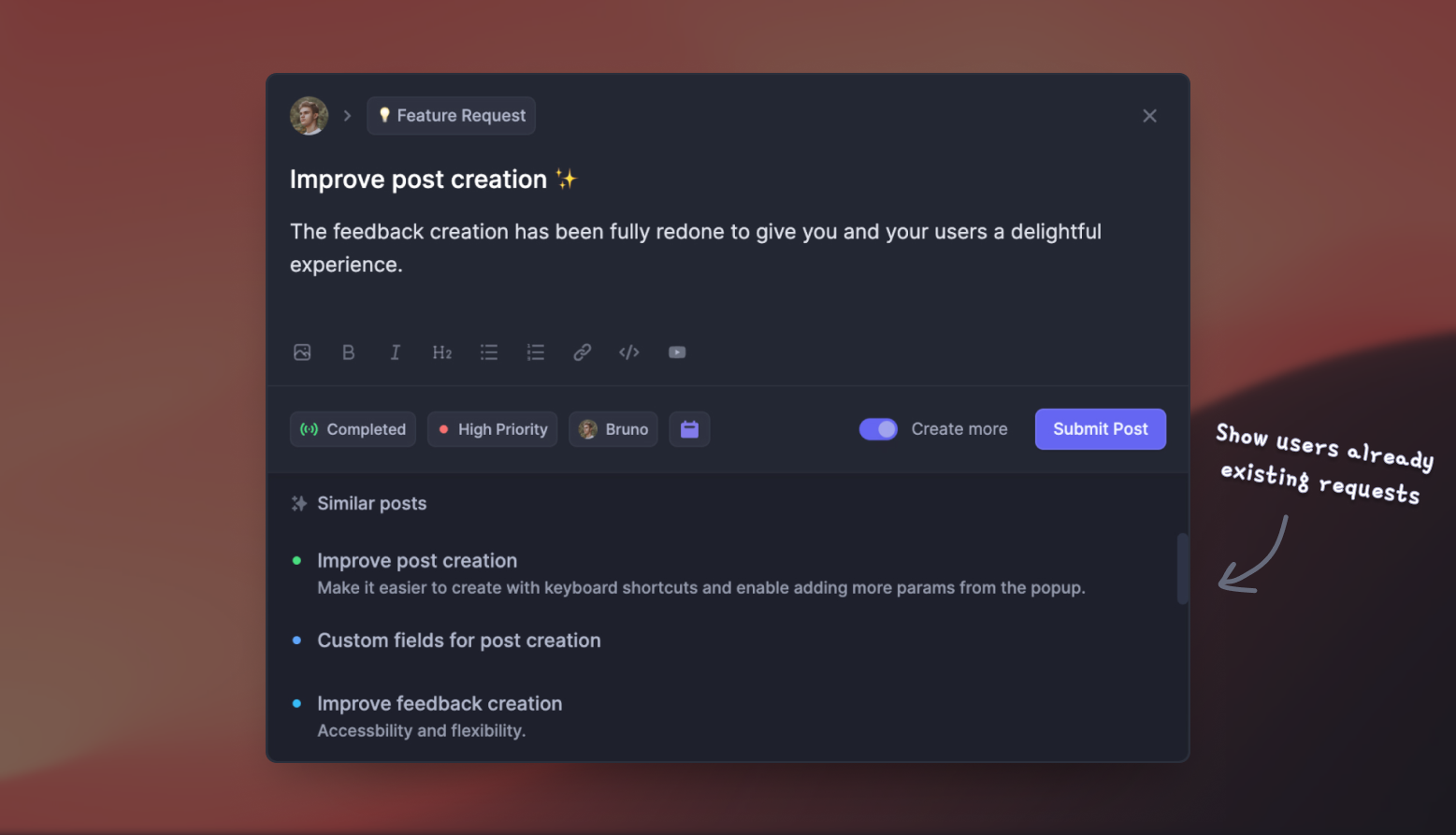
It gives customer success teams one place to collect feature requests, run NPS and CSAT surveys that feed your health scores, and share a public roadmap so customers can see what's coming. When a requested feature ships, an automated product update closes the loop, which is the moment feedback turns into loyalty.
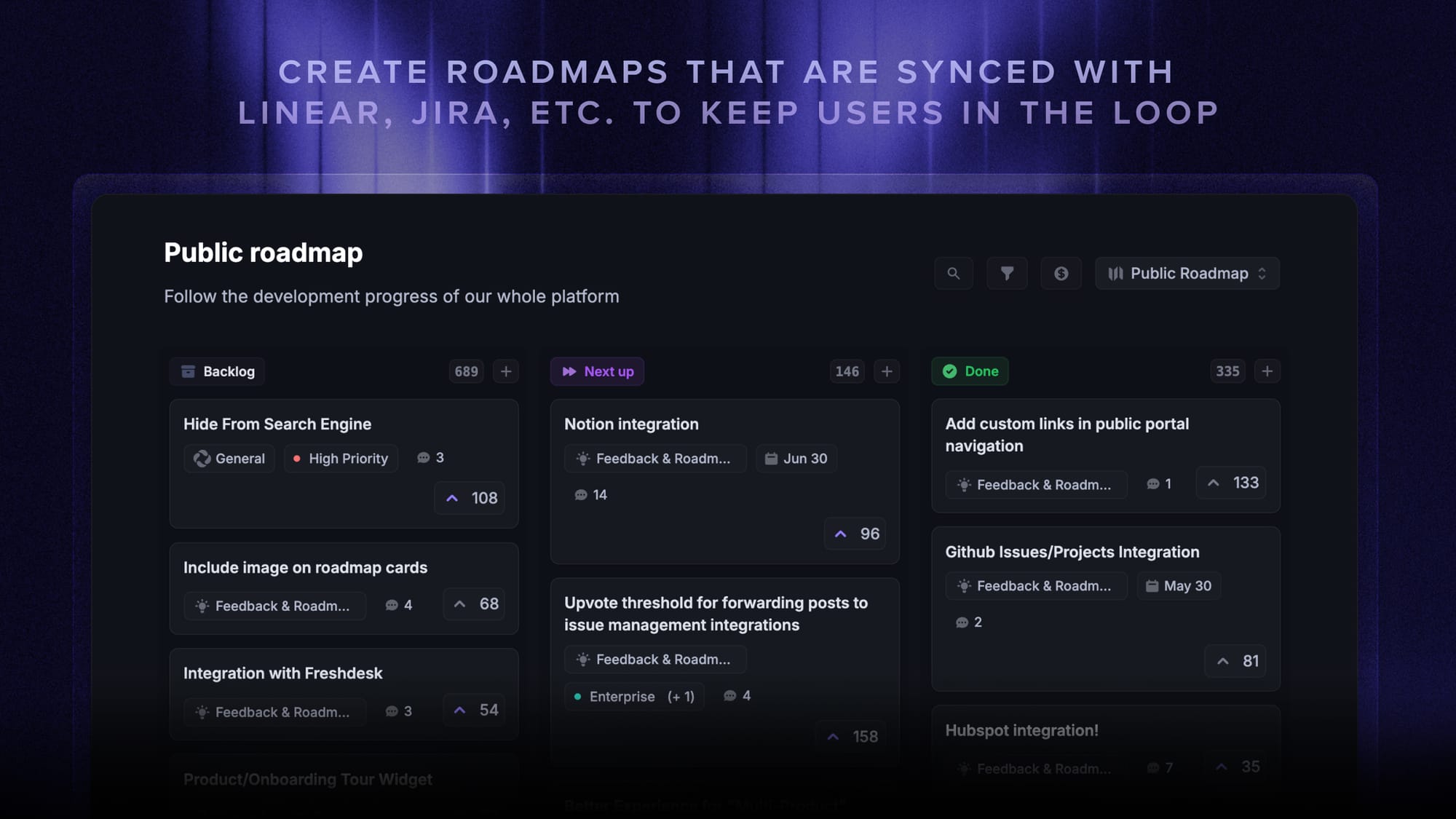
So the signals your playbooks trigger on, like what customers want and whether they're adopting new features, stop being scattered guesswork and start living in one place. There's a free plan, so it's easy to test against a playbook or two before committing.
Conclusion
A customer success playbook is really just your best work, written down and made repeatable. Define the trigger, objective, steps, owner, and completion criteria, start with the motions that matter most, and keep them wired to real customer signals.
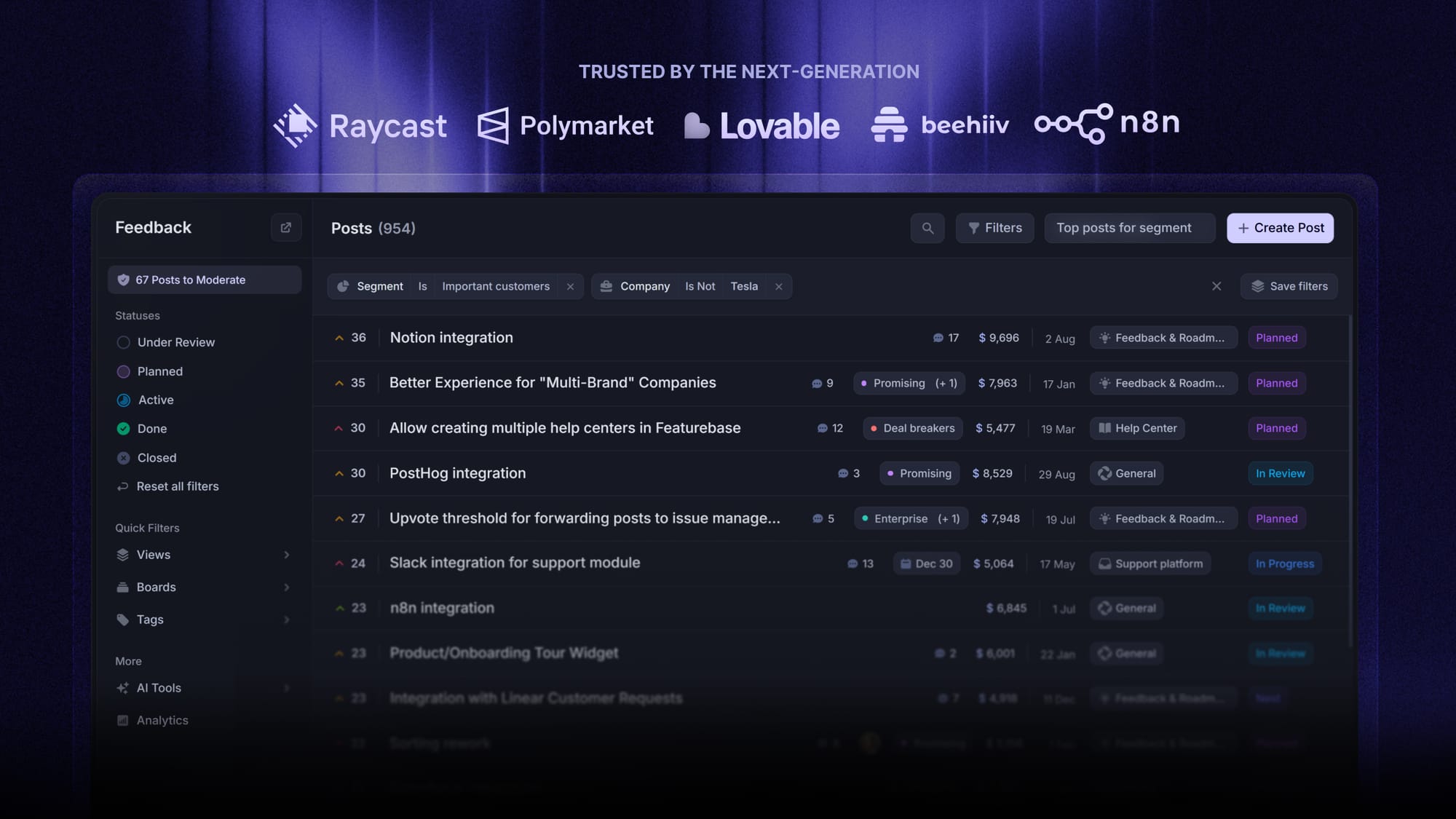
Featurebase is a modern & powerful feedback tool that helps you run that last part. You can collect feature requests with a feedback forum and widgets, measure satisfaction with NPS and CSAT surveys, and close the loop with product updates, all in one place, so your playbooks trigger on what customers actually need.
It comes with affordable pricing and a Free plan allowing unlimited feedback. The onboarding is quick and doesn't require a credit card, so there's no downside to trying it. 👇
✨ Start collecting & managing feedback with Featurebase for free →
FAQs
What's the difference between a success plan and a customer success playbook?
A success plan is a shared roadmap you build with the customer that captures their goals, outcomes, and milestones. A playbook is an internal workflow that outlines how your team will help the customer reach those outcomes. The success plan is the destination, and the playbook is how your team gets there.
How many playbooks should a customer success team start with?
Most teams start with 3: onboarding, churn-risk, and renewal. These cover the highest-stakes moments in the lifecycle and deliver the fastest payoff. Once those are running smoothly, you can add adoption, expansion, QBR, and escalation playbooks as your operation matures.
Who should own and maintain customer success playbooks?
Maintenance usually sits with customer success operations, working alongside experienced CSMs. CS Ops keeps the workflows aligned with your current processes, data, and tooling, while frontline CSMs flag what's working and what isn't. Set a regular review cadence so playbooks don't drift out of date.
How do customer success playbooks connect to customer health scores?
Health scores combine signals like product usage, sentiment, support trends, and contract data into one number. Specific thresholds can act as triggers: when an account's health drops below a set level, it kicks off your churn-risk playbook with defined steps and owners. That's what turns a health score from a dashboard metric into an action.
What tools do you need to run customer success playbooks?
At minimum you need somewhere to define and track the workflows, which is often a CRM or a dedicated customer success platform. You also need a reliable way to capture the customer signals that trigger playbooks. Featurebase covers that side by centralizing feature requests, NPS and CSAT surveys, and a public roadmap, so your team is acting on real feedback rather than guesswork.
Do small teams and startups need customer success playbooks?
Yes, and arguably more than anyone. Small teams can't afford inconsistent onboarding or a missed renewal, and playbooks make sure a good process doesn't depend on one person remembering it. Start with a single onboarding playbook, keep it lightweight, and expand as you grow.