Blog Customer FeedbackCustomer Success Roadmap: A Step-by-Step Guide
Customer Success Roadmap: A Step-by-Step Guide
A customer success roadmap is the phased plan that carries every customer from onboarding to advocacy. Here's what it is, why it protects retention, and how to build one step by step.

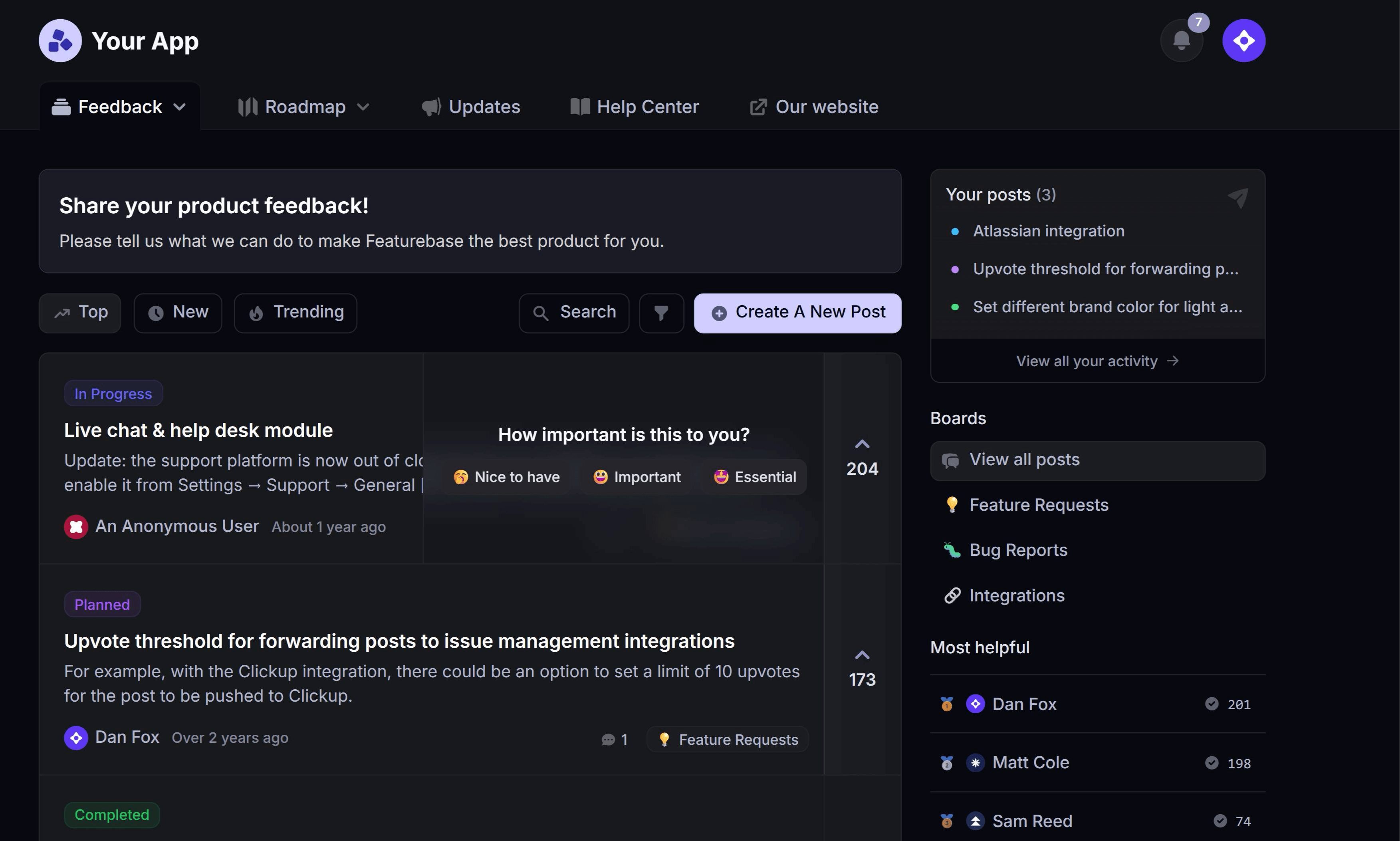

Most churn is silent. There's no angry email and no complaint ticket, just a customer who quietly stops logging in and doesn't renew. By the time you notice, the account is already gone.
A customer success roadmap fixes this. It's the phased plan that guides every customer from onboarding to advocacy, and it gives your team a repeatable way to spot risk early and drive renewals.
Here's how to build one, stage by stage. 👇
Key takeaways:
- A customer success roadmap is a phased plan that moves customers from onboarding to advocacy while giving your team a repeatable operating model.
- It's not the same as a journey map: the roadmap is your team's plan, the journey map is the customer's experience.
- The core stages are onboarding, adoption, value realization, expansion, renewal, and advocacy.
- You build it in 6 steps: baseline churn, segment and tier customers, map stages and milestones, set KPIs, add tooling, and close the feedback loop.
- Track both leading indicators (adoption, health, sentiment) and lagging indicators (NRR, churn, renewal rate).
- Featurebase✨ helps you close the loop on your roadmap by collecting feedback, running NPS and CSAT surveys, and keeping customers informed with a public roadmap.
What is a customer success roadmap?
A customer success roadmap is a phased plan that lays out how you'll guide customers to their desired outcomes, from the first day of onboarding through to renewal and advocacy.
Think of it as the operating model for your customer success team. It defines the stages a customer moves through, the milestones that signal they're on track, the actions your CSMs take at each point, and the metrics you use to measure progress.
Without one, customer success becomes reactive. Your team spends its time firefighting churn risks instead of preventing them. A roadmap turns that scramble into a system, so every customer gets a consistent, proactive experience regardless of who manages the account.
Customer success roadmap vs. customer journey map
These two get used interchangeably, but they solve different problems:
- The customer success roadmap is your team's plan. It's internal, and it describes the stages, milestones, and playbooks you'll use to move customers toward value.
- The customer journey map is the customer's side of the story. It maps the experience and touchpoints a customer moves through, so you can see how they think and feel at each step.
In practice, most teams build the journey map first to understand the customer's path, then design the roadmap around it. The journey map tells you what customers experience, and the roadmap tells your team what to do about it.
Why you need a customer success roadmap
In a subscription business, retention is the whole game. Winning a new customer is expensive, and the real profit comes from customer retention and expansion over time.
The numbers back this up. Bain & Company research famously found that a 5% increase in customer retention can increase profits by 25% to 95%. That's a huge swing from a small change, and it's why retention has become the metric investors care about most.
Yet retention is getting harder. According to ChartMogul's SaaS Retention Report, the median net revenue retention for venture-backed SaaS sits at around 106% and has slipped from its 2021 peak. Holding customers and growing them is no longer a given.
A roadmap is how you protect those numbers. It gives your team an early-warning system for churn, a consistent playbook for every account, and a clear link between customer outcomes and revenue. Instead of hoping customers succeed, you engineer it.
The stages of a customer success roadmap
Most roadmaps follow the same arc. The exact names vary by company, but the journey from onboarding to advocacy stays consistent. Here are the 6 stages your roadmap should cover:
- Onboarding: This is where customers set up your product and reach their first win. Speed matters here - the faster a customer hits early value, the less likely they are to churn before the relationship gets going.
- Adoption: The customer moves beyond setup and starts using your product as part of their regular workflow. Your job is to deepen usage, introduce the features that match their goals, and watch for stalled accounts.
- Value realization: The customer sees the tangible outcome they bought your product for, whether that's time saved, revenue gained, or a process fixed. This is the moment that justifies the next renewal.
- Expansion: Once a customer is getting value, natural growth opportunities appear, like more seats, new teams, or higher tiers. Companies that raise customer satisfaction by around 20% typically see 15% to 20% higher cross-sell rates, so this stage directly drives revenue.
- Renewal: When customers have consistently hit their goals, renewal becomes a formality rather than a negotiation. Your roadmap should make sure value is visible and stakeholders are aligned well before the contract date.
- Advocacy: The best customers become your best marketing. At this stage you turn satisfied users into references, case studies, and reviews that bring in the next wave of customers.
How to build a customer success roadmap
Knowing the stages is one thing. Turning them into a working plan is another. Here's a 6-step sequence to build your roadmap from scratch:
- Baseline your churn and retention: Start by measuring where you are today. Calculate your gross churn, net revenue retention, and renewal rate, then dig into why customers leave. Splitting churn into controllable causes (like poor onboarding) and uncontrollable ones (like a customer going out of business) tells you where a roadmap can actually help.
- Segment and tier your customers: Not every account needs the same treatment. Group customers by value, size, or complexity, then decide how much attention each tier gets, from high-touch for your biggest accounts to digital-led for the long tail. This keeps your team focused where it moves the needle.
- Map the stages and milestones: Take the 6 stages above and define what "on track" looks like at each one. Set concrete milestones, like completing setup within the first week or reaching a key usage threshold within 30 days, so progress is measurable rather than a gut feel.
- Set KPIs for each stage: Attach a metric to every milestone. Time-to-first-value for onboarding, feature adoption for the adoption stage, NRR for renewal and expansion. Clear KPIs give your CSMs something to aim for and let you spot risk before it becomes churn.
- Add the right tooling: Manual tracking breaks the moment you scale. A customer success platform or CRM gives you health scores and a single view of each account, while feedback and survey tools let you hear directly from customers. Pick tools that connect your data instead of scattering it.
- Close the feedback loop: A roadmap is only as good as the signals feeding it. That means collecting and acting on feedback at every stage, then letting customers know when you do. With Featurebase, you can gather feature requests and bug reports in one place and automatically notify customers when their requests ship, which turns a routine interaction into a retention moment.
Customer success roadmap metrics to track
You can't manage a roadmap you can't measure. The trick is to watch two kinds of customer success metrics at once.
Leading indicators predict where a customer is heading, so you can act while there's still time to change the outcome:
- Product adoption: Feature usage, login frequency, and workflow completion show whether the product is sticking.
- Health score: A blended score of usage, engagement, and sentiment from surveys like NPS and CSAT that flags at-risk accounts early.
- Onboarding milestones: Time-to-first-value and setup completion tell you if new customers are starting strong.
Lagging indicators confirm whether the roadmap is actually working:
- Net revenue retention: The north-star metric for subscription businesses, covering renewals, expansion, and contraction.
- Gross churn: How much revenue or how many logos you lose over a period.
- Renewal rate: The share of customers who renew, and the clearest proof that value landed.
Watch the leading signals to intervene early, and use the lagging ones to judge whether your roadmap is paying off.
Where Featurebase fits into your customer success roadmap
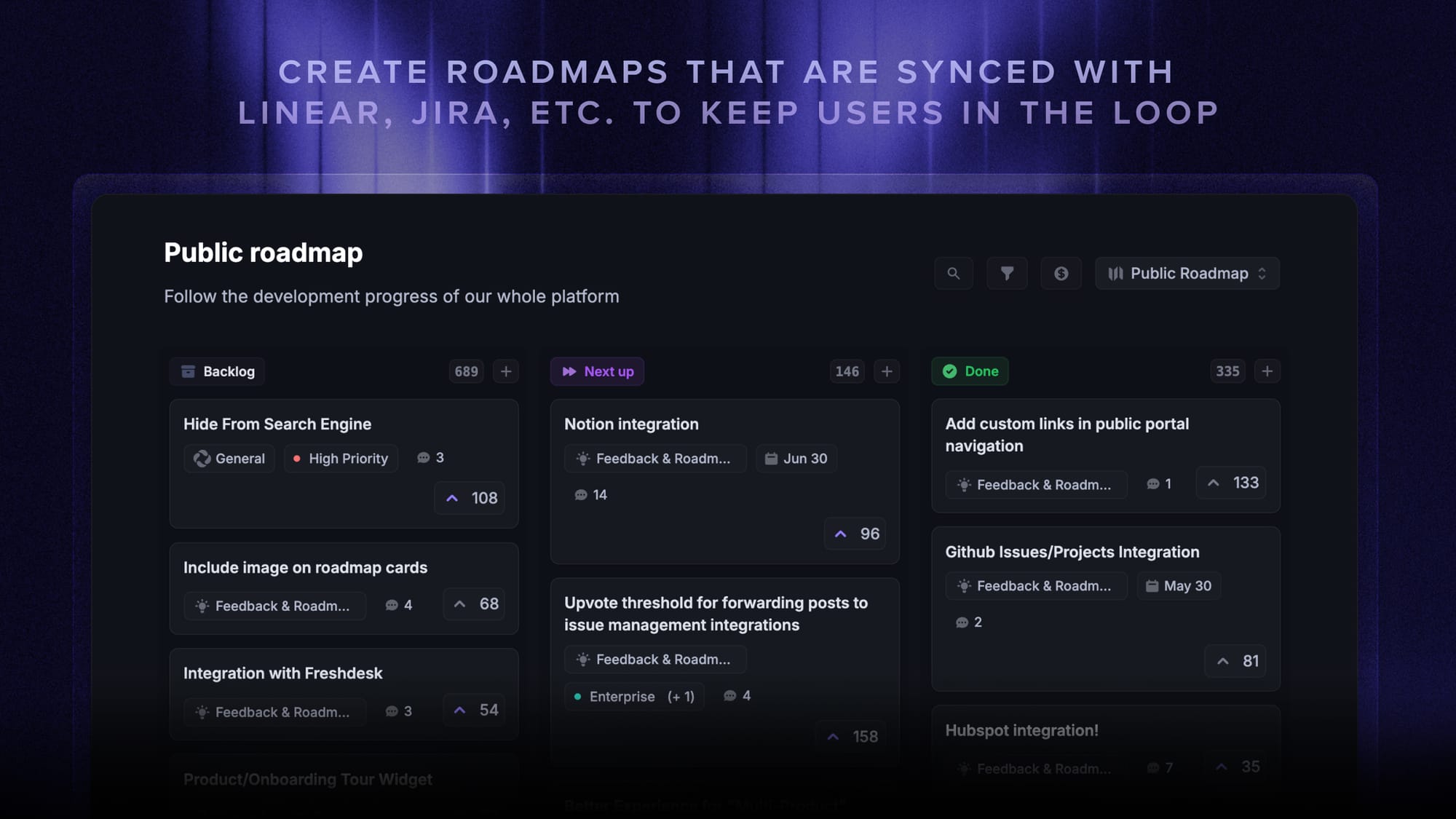
A big part of any customer success roadmap is listening to customers and acting on what they tell you. That's where Featurebase can help.
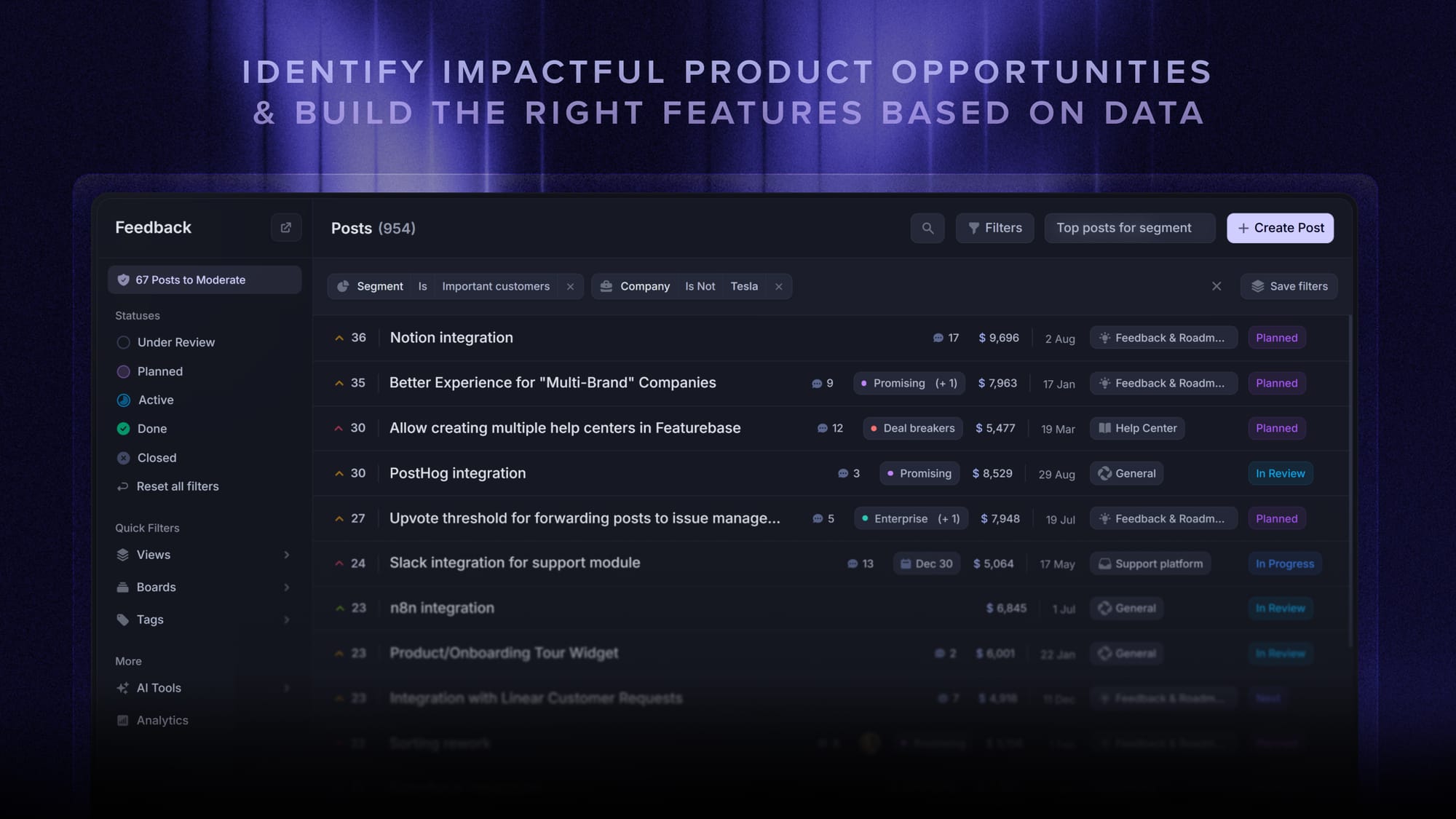
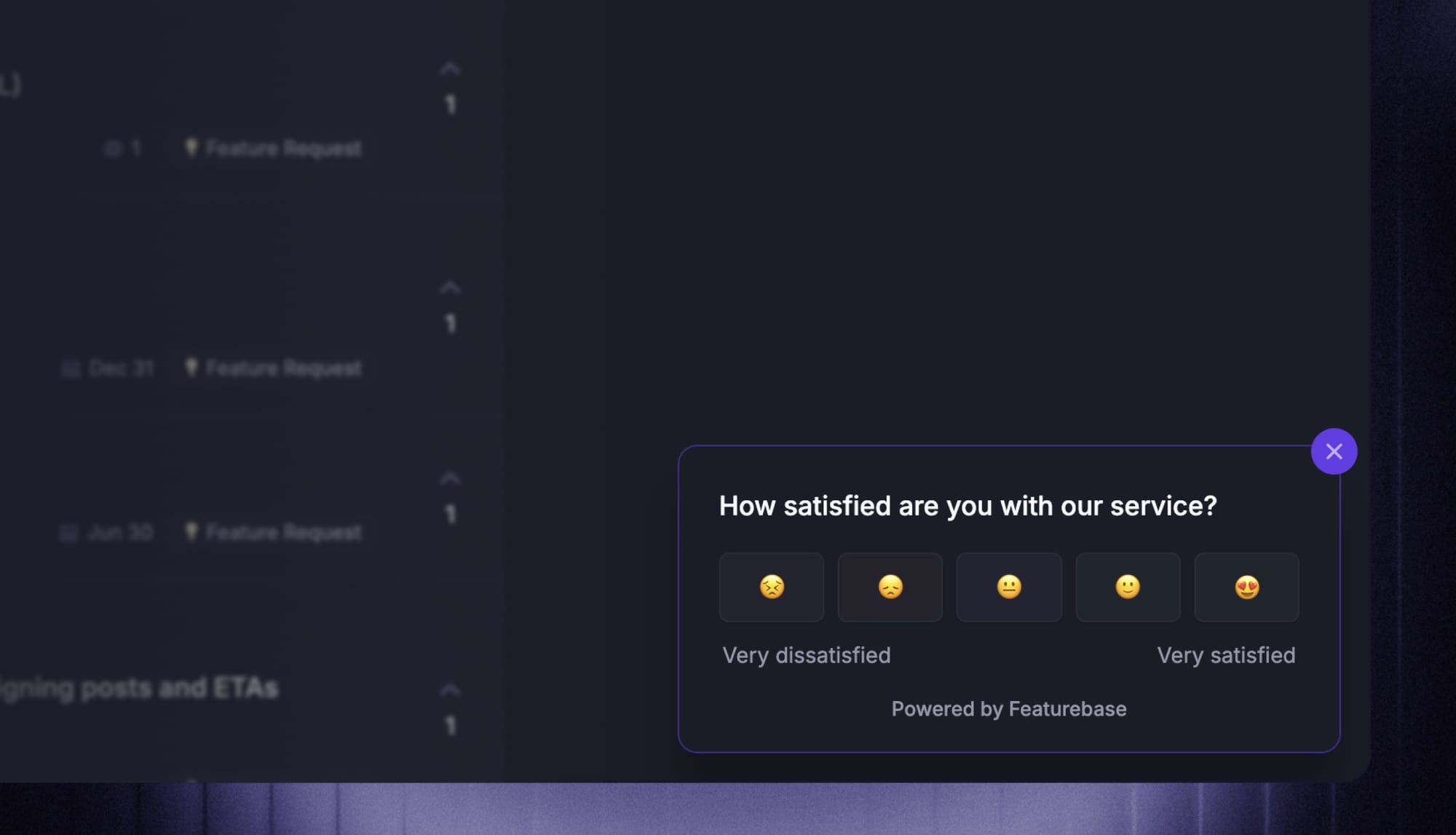
It gives your CS team one place to collect feedback, run NPS and CSAT surveys, and see which requests matter most by tying them to customer revenue. When you ship something a customer asked for, Featurebase can automatically let them know, which closes the loop and gives your team a natural reason to re-engage.
You can also share a public roadmap so customers see what's coming next, which keeps them invested between renewals. There's a free plan to start with, and paid plans begin at $29/seat/mo.
Conclusion
A customer success roadmap turns customer success from a reactive scramble into a system. Define your stages, set milestones and KPIs, add the right tooling, and you get a repeatable way to move every customer from onboarding to advocacy while protecting retention along the way.
Featurebase is a modern & powerful feedback tool. It helps you collect feedback with a feature voting forum, surveys, embeddable widgets, and integrations. You can then analyze all of that feedback in one place by connecting it to your customers' revenue and data to make better product decisions.
It comes with affordable pricing and a Free plan allowing unlimited feedback. The onboarding is incredibly quick and doesn't require a credit card, so there's no downside to trying it. 👇
✨ Start collecting & managing feedback with Featurebase for free →
FAQs
What is the difference between a customer success roadmap and a journey map?
A customer success roadmap is your team's plan - the stages, milestones, and actions you'll use to guide customers to value. A customer journey map is the customer's side of that story - the experience and touchpoints they move through. The roadmap tells your CSMs what to do, while the journey map shows what the customer feels while they do it. Most teams build the journey map first, then design the roadmap around it.
What are the stages of a customer success roadmap?
Most roadmaps follow six stages: onboarding, adoption, value realization, expansion, renewal, and advocacy. Each stage has its own goal, from getting customers to first value quickly to turning happy customers into referrals. The exact names vary by product, but the arc from onboarding to advocacy stays the same.
Who owns the customer success roadmap?
The customer success roadmap is usually owned by the head of customer success or CS operations. They set the stages, KPIs, and playbooks, but the roadmap relies on input from product, sales, and support to stay accurate. Ownership sits with CS, while accountability is shared across the customer-facing teams.
How do you measure a customer success roadmap?
Track a mix of leading and lagging indicators. Leading indicators like product adoption, health scores, and onboarding completion tell you where a customer is heading. Lagging indicators like net revenue retention, churn, and renewal rate confirm whether the roadmap is actually working. Watch the leading signals to intervene early and the lagging ones to judge results.
How often should you update your customer success roadmap?
Review your roadmap quarterly and re-baseline it once a year. A quarterly check lets you adjust playbooks and KPIs based on what's actually happening in accounts, while an annual review catches bigger shifts in segments, pricing, or product direction. Treat it as a living document, not a one-time project.
What tools do you need to run a customer success roadmap?
At a minimum you need a way to see customer health and a way to collect and act on feedback. Most teams pair a customer success platform or CRM with feedback and survey tooling so they can measure sentiment and close the loop. Featurebase covers the feedback side by letting you collect feature requests, run NPS and CSAT surveys, and automatically tell customers when their requests ship.