Blog Customer Service9 Best Ecommerce Live Chat Software for 2026
9 Best Ecommerce Live Chat Software for 2026
Compare the 9 best ecommerce live chat software for 2026 by price, free plan, and AI, with fresh pricing and honest trade-offs for online stores.


✨ Automate your support with the fastest AI-enhanced Inbox today →
A shopper is one click from checkout, but they have a question about sizing. They look for help, find none, and close the tab. That hesitation is exactly where ecommerce live chat earns its keep: an instant answer at the right moment turns a maybe into a sale.
The hard part is picking the right tool. This guide ranks the 9 best ecommerce live chat software for 2026 by who each one is genuinely best for, with fresh pricing and real trade-offs. 👇
Key takeaways:
| Tool | Best for | Starting price | Free plan | AI agent |
|---|---|---|---|---|
| ✨Featurebase | Modern SaaS and digital-first stores wanting support and feedback in one | Free, then $29/seat/mo | Yes, unlimited conversations | Fibi, $0.29 per resolution |
| Gorgias | Shopify and ecommerce-native stores | $10/mo + AI from $0.90 per resolution | Trial only | Yes (Shopify only) |
| Tidio | Small to mid-size stores wanting fast setup | Free, then $29/mo | Yes, 50 conversations | Lyro, billed separately |
| Intercom | Scaling teams wanting AI-first support | $19/seat/mo billed annually ($29 monthly) + $0.99 per Fin outcome | Trial only | Yes (Fin) |
| Zendesk | High-volume and enterprise support | $19/agent/mo (Suite from $55) | Trial only | Yes, per resolution |
| LiveChat | Sales-focused, dedicated live chat | $20/agent/mo | Trial only | Paid add-on |
| Re:amaze | Multichannel ecommerce support | $29/user/mo (or $59 flat) | Trial only | Beta |
| Tawk.to | Bootstrapped stores on zero budget | Free | Yes, fully free | Paid add-on |
| Olark | Simple live chat for small stores | $29/seat/mo | Limited (1 agent, 20 chats) | Limited |
What is ecommerce live chat?
Ecommerce live chat is a messaging window on your online store that lets shoppers talk to your team (or an AI agent) in real time, usually through a small pop-up widget in the corner of the page. Instead of waiting on an email reply or sitting on hold, a customer gets an answer in the moment they need it, which is often the moment they decide whether to buy.
For an online store, that immediacy is the whole point. Most shoppers who hit a question mid-purchase will not chase down an answer, they will just leave. Live chat closes that gap by handling pre-sale questions, order and shipping updates, and returns without breaking the shopping flow.
The data backs this up. In a 2024 study of nearly 5 billion website visits across 175,438 accounts, e-shops using chatbots resolved 89.2% of customer inquiries versus 71.2% for those without, and they handled roughly 6 times more conversations per month. Better service also compounds over time: classic research from Bain & Company shows that a 5% increase in customer retention can lift profits by 25% to 95%.
Modern ecommerce live chat is rarely just a chat box anymore. The better tools fold in AI agents, a shared inbox across channels, and a help center, so routine questions get answered automatically and your team only handles what actually needs a human.
What to look for in ecommerce live chat software
Not every live chat tool fits an online store. A few things separate the ones that move revenue from the ones that just add a widget:
- Ecommerce integrations: The tool should connect to your platform (Shopify, BigCommerce, WooCommerce) so agents see order history, cart contents, and shipping status inside the chat. Without that context, every reply starts from zero.
- An AI agent that actually resolves: A 2026 live chat tool should deflect routine "where is my order" and return questions on autopilot, then hand off cleanly to a human for anything complex. Resolution rate and handoff quality matter more than how many bot templates ship in the box.
- Omnichannel inbox: Shoppers message from your site, email, Instagram, and WhatsApp. One shared inbox keeps every conversation in a single place so nothing gets missed across channels.
- Proactive triggers: The ability to start a chat based on behavior, like a visitor lingering on a product page or hitting checkout, is what turns chat from reactive support into a sales channel.
- Transparent pricing: Conversation-based and per-resolution AI billing can balloon during seasonal spikes. Know how a tool charges before peak season, not after.
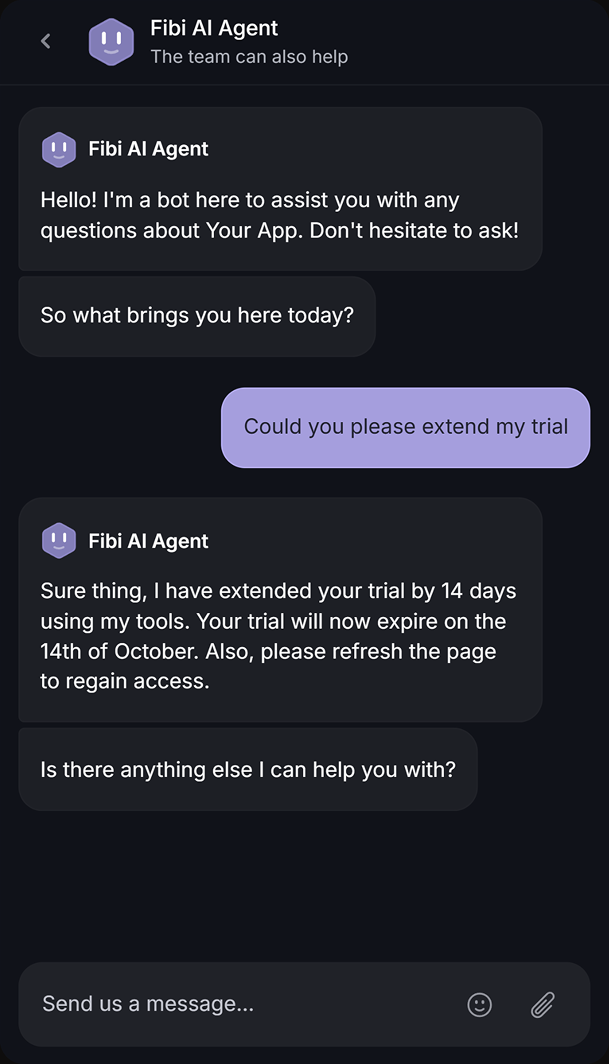
This is also where a platform like Featurebase fits the modern store. Its Fibi AI Agent resolves common order, shipping, and return questions on its own and can run custom actions like processing a refund or extending a trial, while its omnichannel inbox keeps live chat, email, and Slack conversations in one AI-powered view. Anything the AI cannot handle routes to a human with full context attached.
The 9 best ecommerce live chat software in 2026
Here are the 9 best ecommerce live chat tools this year, starting with the most modern all-in-one option and covering everything from Shopify-native helpdesks to a genuinely free choice.
1. Featurebase✨
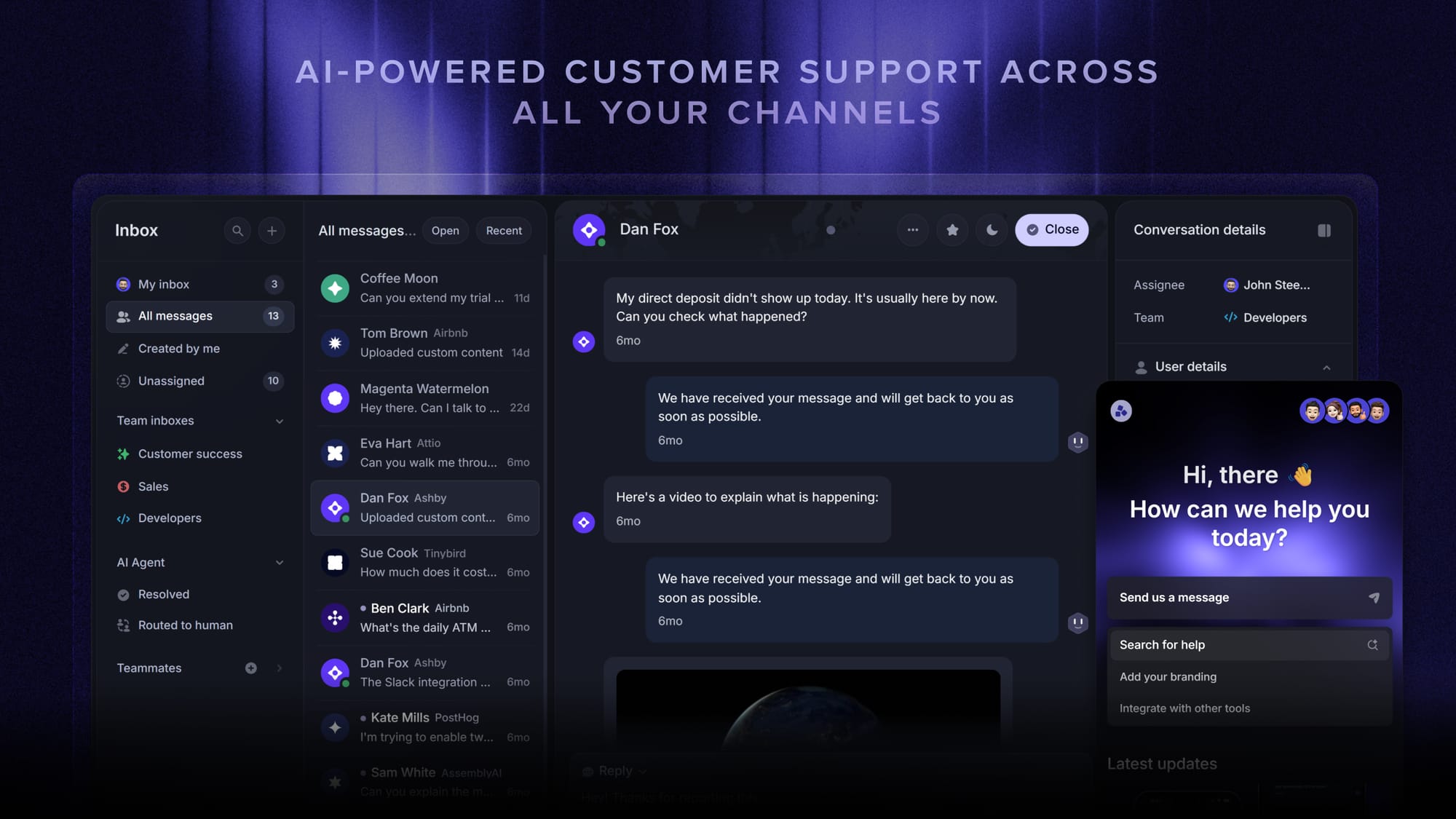
Featurebase is a customer support platform aimed at product-led SaaS and digital-first stores. It pairs AI-powered live chat with a help center and built-in feedback collection, so smaller teams can run support without stitching several separate tools together.
For an online store, the practical draw is automation plus context in one place. Its Fibi AI Agent resolves routine order, shipping, and return questions on its own and can run actions like issuing a refund, and the omnichannel inbox keeps live chat, email, and Slack conversations in a single view.
Key features
- Omnichannel inbox for live chat, email, and Slack in one AI-powered view
- Fibi AI Agent that resolves common questions and runs custom actions
- AI-powered help center for instant, multilingual self-serve answers
- Workflows to auto-assign, route, and qualify conversations
- Feedback, roadmap, and product-update tools alongside support
- Mobile app and integrations with Slack, Linear, Jira, and HubSpot
Pricing: Free plan with unlimited conversations. Paid plans start at $29/seat/month, with AI resolutions billed at $0.29 each.
Best for fast-growing SaaS and digital-first stores that want modern AI support and feedback tools in one platform, rather than a Shopify-specific helpdesk.

Get the best live chat software for your ecommerce store
Automatically resolve 70% of customer requests & cut down manual support loads
2. Gorgias
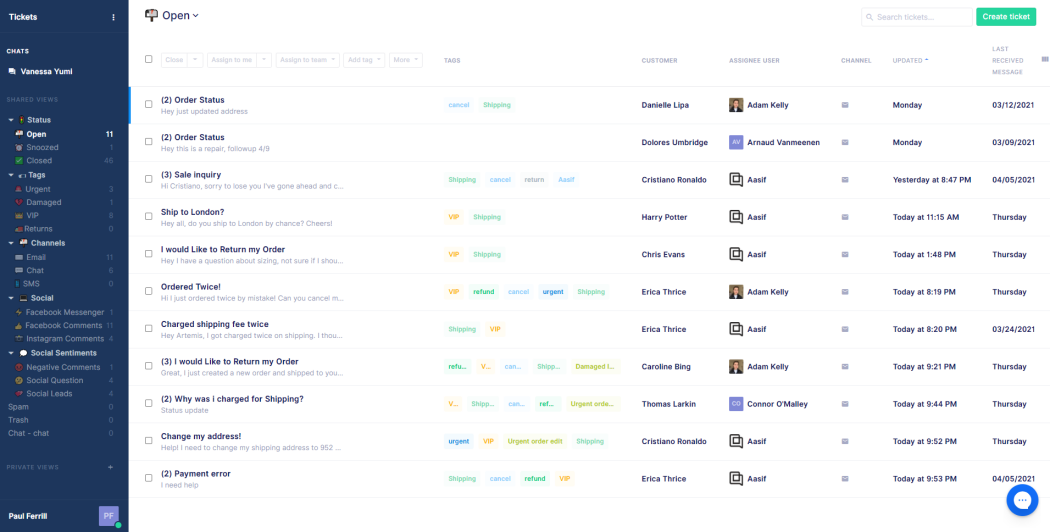
Gorgias is a helpdesk and live chat platform built specifically for ecommerce, with some of the deepest Shopify integration on the market. Agents can see and edit order data, issue refunds, and manage subscriptions without leaving the chat window, which is why fast-scaling Shopify stores gravitate to it.
Key features
- Deep Shopify, BigCommerce, and Adobe Commerce integrations
- Live chat plus macros and automation for repetitive requests
- AI Agent for common pre-sale and post-sale questions
- Multichannel support across email, social, and SMS
Where it gets harder is cost and flexibility. Gorgias reviewers on G2 consistently praise the Shopify depth and ticket organization, but the recurring complaints are pricing and rigidity: the AI Agent is effectively Shopify-only, an AI resolution counts as a billable ticket on top of the AI fee, and overage charges sting during seasonal spikes. Several reviewers also note a steep learning curve and limited customization.
Pricing: Helpdesk plans start at $10/month (Starter, 3 seats), then $60/month (Basic), $360/month (Pro), and $900/month (Advanced). The AI Agent is billed separately at around $0.90 per resolution. Best for Shopify-first stores that can absorb usage-based costs.
3. Tidio
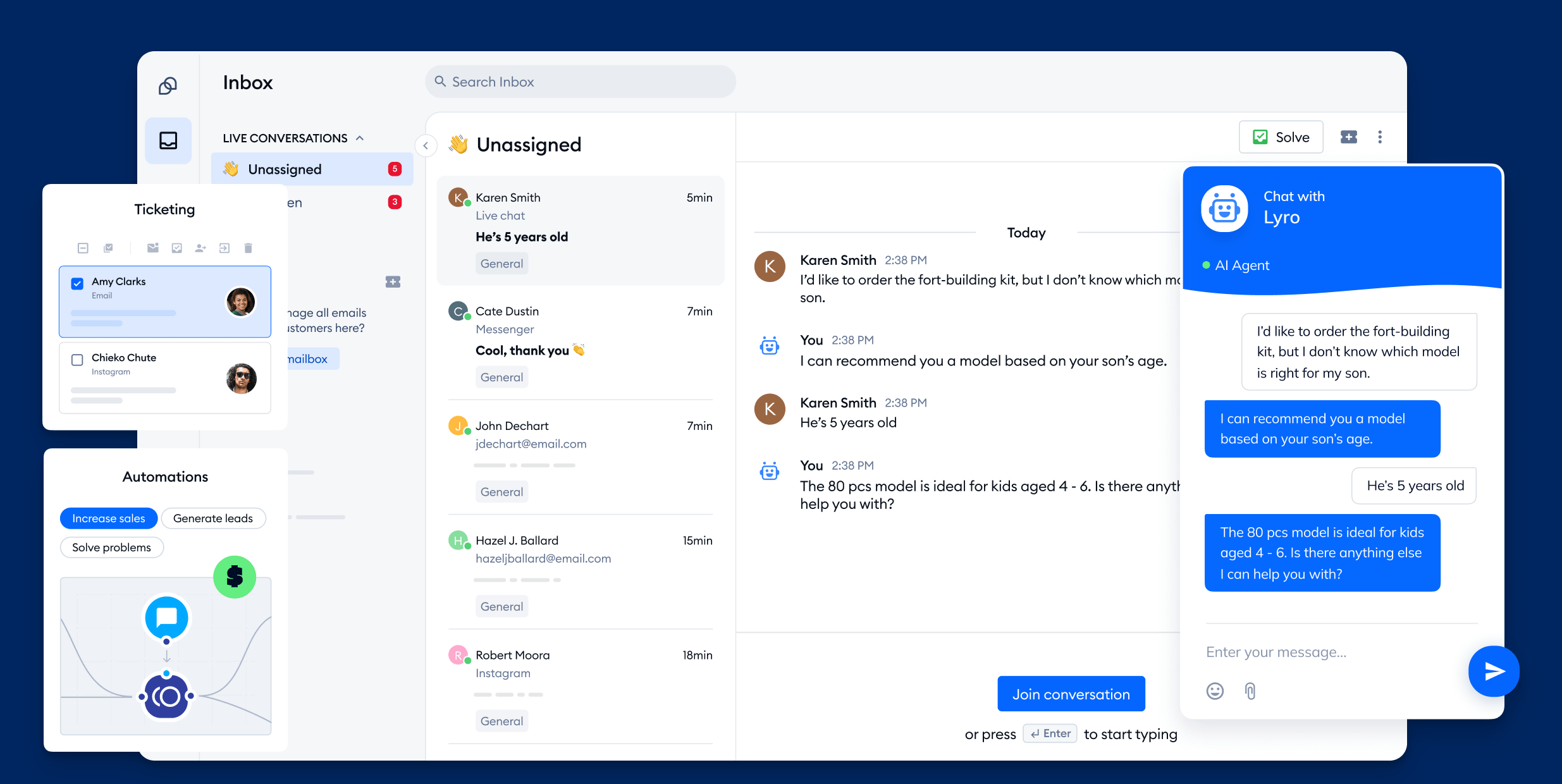
Tidio is a popular live chat and chatbot tool aimed at small and mid-size online stores. It is known for being quick to install (live in under 20 minutes), pairing a clean chat widget with its Lyro AI agent and a shared inbox across website, Messenger, Instagram, and WhatsApp.
Key features
- Live chat with a shared multichannel inbox
- Lyro AI agent trained on your help content
- Ecommerce integrations with Shopify, WooCommerce, and BigCommerce
- Visitor tracking and proactive chat triggers
Tidio is genuinely easy to start with, and the free plan is more generous than most. The trade-offs show up as you scale: G2 reviewers note that conversation-based billing climbs quickly, Lyro AI and custom Flows cannot both run on the same conversation, customization is limited, and analytics stay fairly basic. The bot-to-agent handoff also draws complaints.
Pricing: Free plan with 50 conversations per month. Paid plans start at $29/month (Starter), then $59/month (Growth) and $749/month (Plus). Lyro AI and Flows are billed as separate add-ons, so the real cost is often higher than the headline. Best for smaller stores that want a fast, friendly setup.
4. Intercom
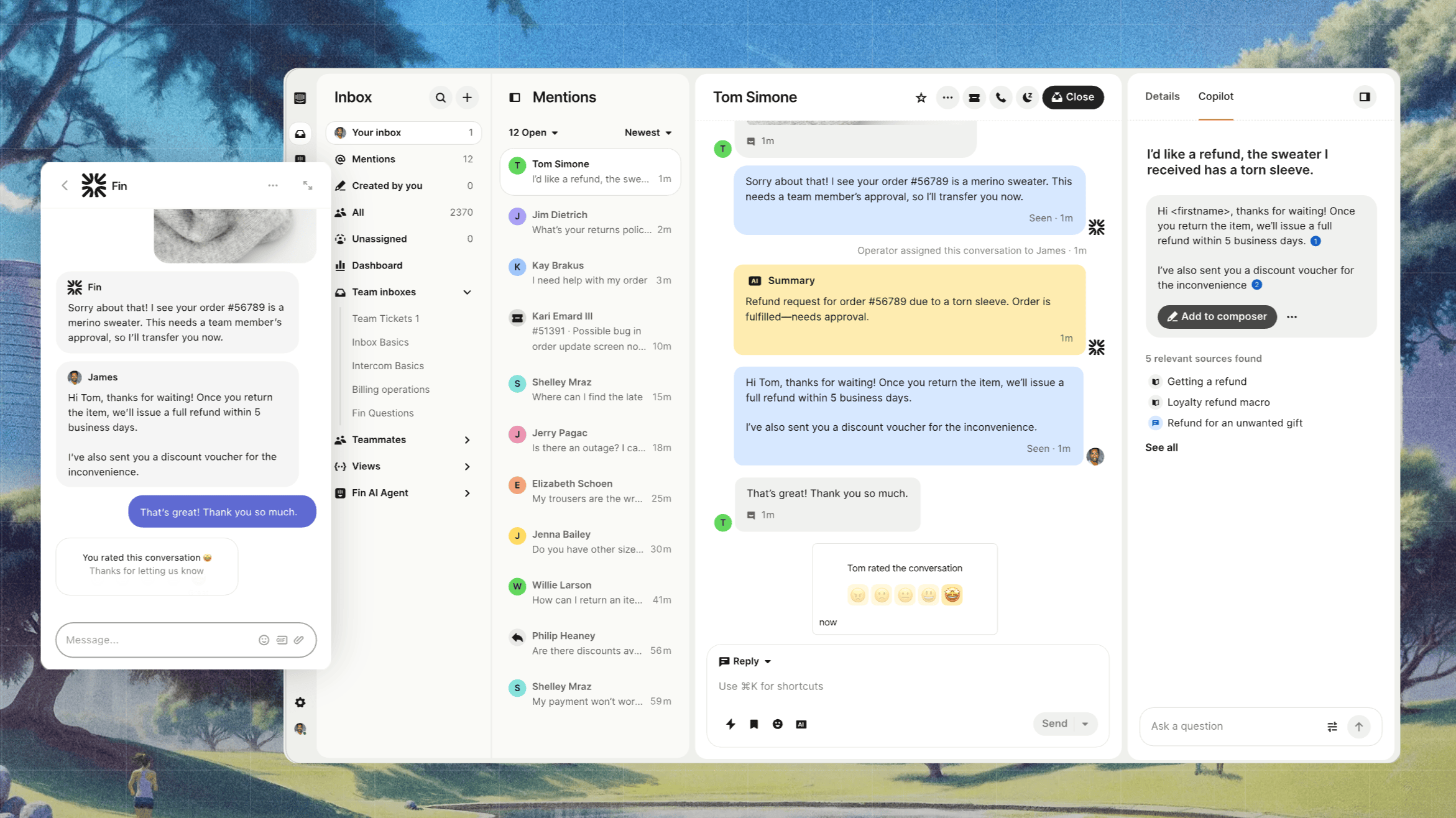
Intercom is an AI-first customer service platform built around its Fin AI agent. It suits scaling stores and SaaS-style ecommerce that want automation, onboarding messages, and support in one polished package, and that have the budget to match.
Key features
- Fin AI agent with strong resolution rates
- Omnichannel inbox across chat, email, SMS, and social
- Product tours, onboarding flows, and proactive messaging
- Workflow automation and a built-in help center
Reviewers on G2 like the modern interface and Fin's performance, but pricing is the dominant complaint. Per-seat costs add up fast, Fin's per-outcome fees make budgets hard to predict at scale, and some of the better features sit behind higher tiers. There is also a real learning curve when configuring automation.
Pricing: Plans start at $19/seat/month for Essential, $85 for Advanced, and $132 for Expert, billed annually. Essential costs $29/seat/month billed monthly. Fin is billed separately at $0.99 per outcome. Best for scaling teams that want AI-first support and can manage usage-based costs.
5. Zendesk
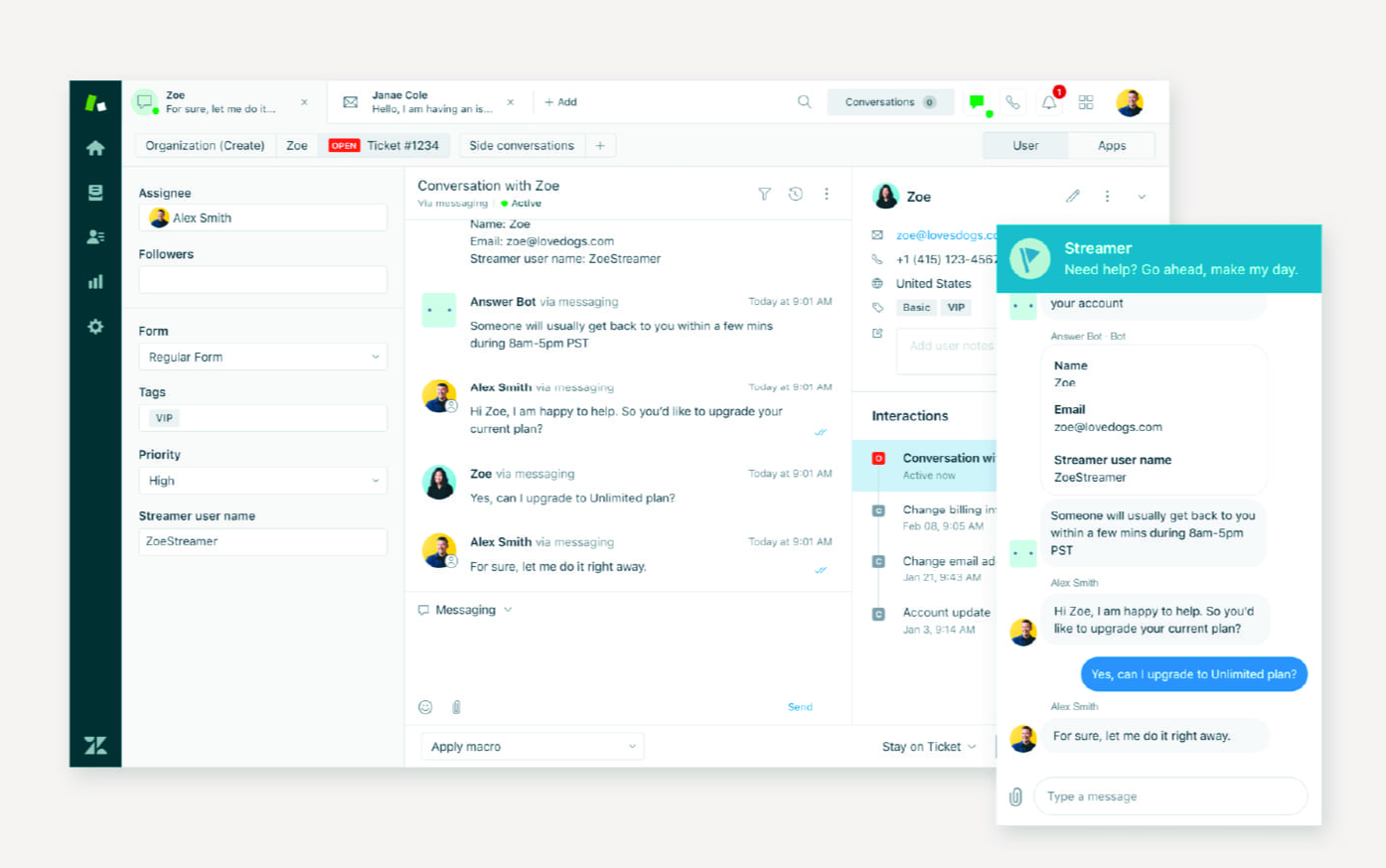
Zendesk is the enterprise-grade name in customer service, and its live chat sits inside a much larger ticketing and omnichannel suite. For high-volume stores with complex workflows and strict SLAs, it is a safe, mature choice.
Key features
- Live chat and messaging inside a full ticketing suite
- AI agents billed per automated resolution
- Omnichannel routing, knowledge base, and voice
- Deep reporting and a large app marketplace
The flip side of that power is weight. G2 reviewers describe a steep learning curve, customization limits on ticket forms and roles, and costs that climb quickly as you add agents and AI. Slower support responses come up often too. It is a lot of platform for a small store, and priced accordingly.
Pricing: The Support Team plan starts at $19/agent/month (billed annually), but the Suite plans with messaging and live chat start at $55/agent/month (Suite Team), then $115 (Suite Professional), with Enterprise priced by sales. Best for high-volume and enterprise support teams.
6. LiveChat
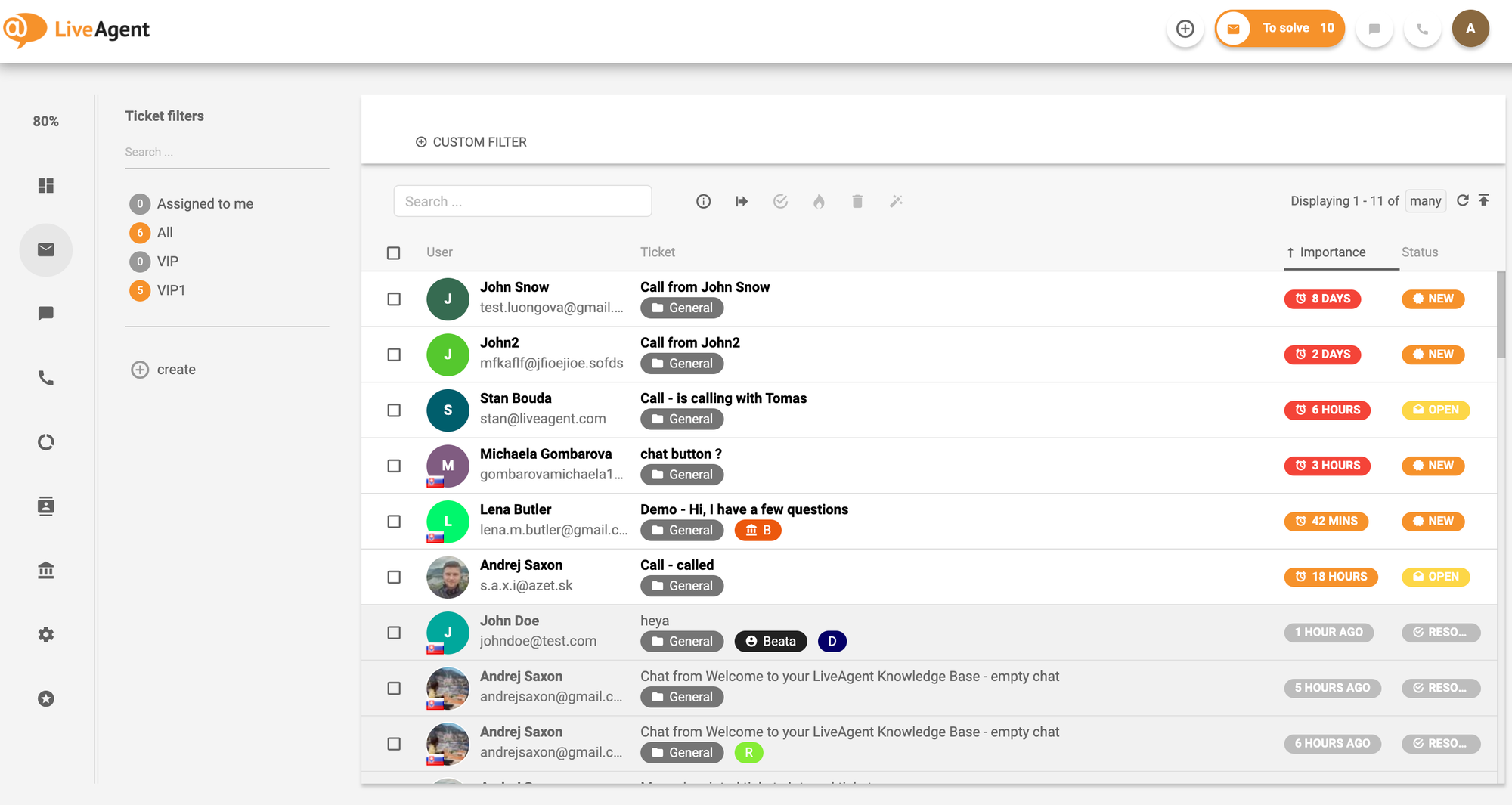
LiveChat is a dedicated, sales-oriented live chat tool with a clean interface and a long track record. It leans into conversion features like product cards, targeted messages, and a built-in ticketing fallback when you are offline.
Key features
- Fast-to-install, customizable chat widget
- Product cards and canned responses for selling in chat
- Ticketing for offline messages and follow-ups
- Multichannel support across email, Messenger, and WhatsApp
G2 reviewers like the polish and ease of use, but flag that the chatbot is a paid add-on (around $50/month), widget customization is limited, and the move to per-agent pricing made it pricier for bigger teams. A few long-term users report reliability and notification hiccups.
Pricing: Plans start at $20/agent/month (Starter, billed annually), then $49 (Team) and $79 (Business), with Enterprise by sales. The chatbot and AI features cost extra. Best for stores that want a focused, sales-driven live chat rather than a full helpdesk.
7. Re:amaze
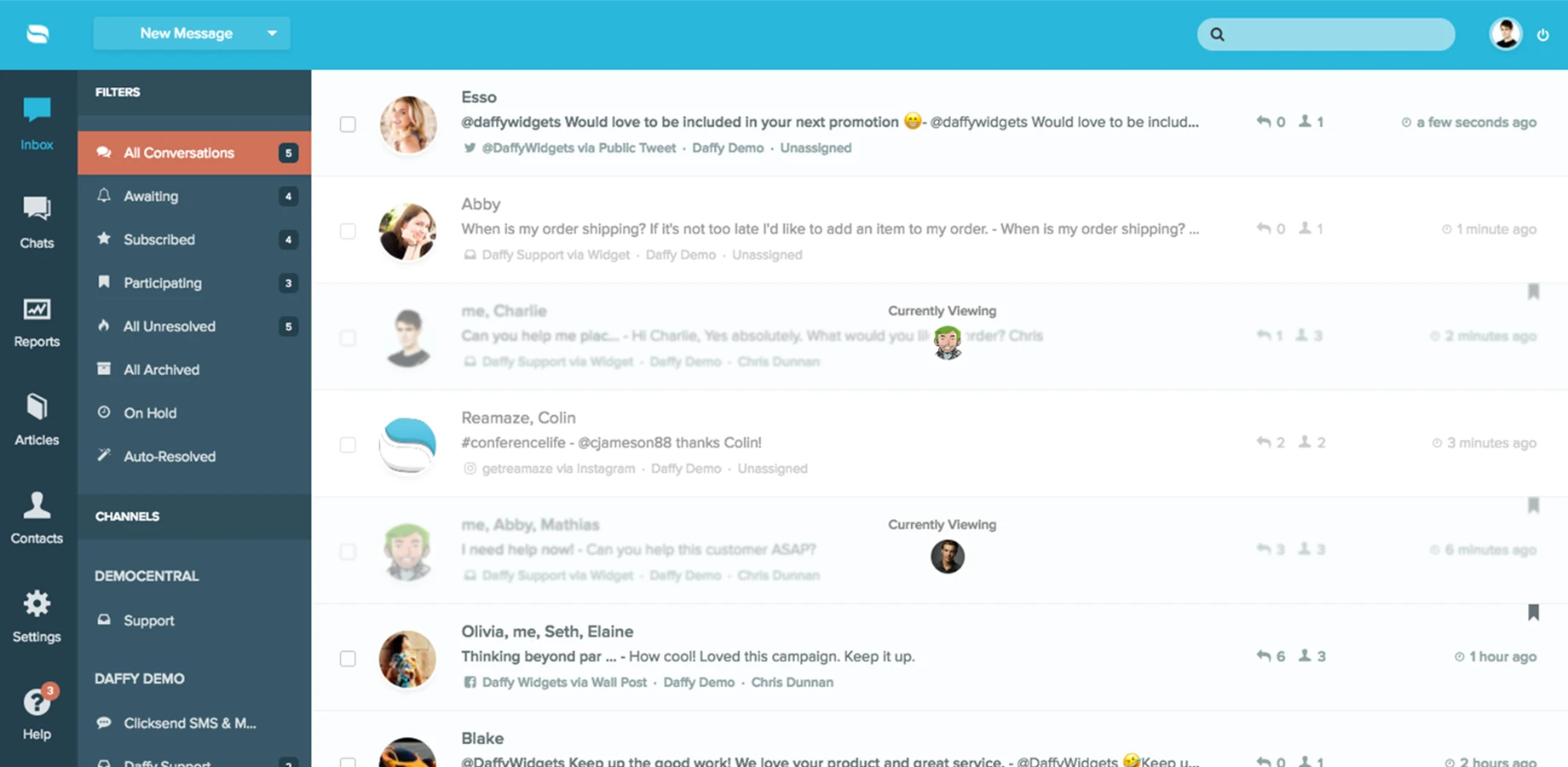
Re:amaze is a helpdesk and live chat platform built for multichannel ecommerce. It pulls email, live chat, social, and SMS into one shared inbox and connects natively to Shopify, BigCommerce, and WooCommerce, which makes it a practical pick for stores selling across several channels.
Key features
- Shared inbox across email, chat, social, and SMS
- Native Shopify, BigCommerce, and WooCommerce integrations
- Chatbots and workflows available on lower tiers
- FAQ center, proactive Cues, and live visitor monitoring
It is affordable and feature-rich for the price, but the experience shows its age. G2 reviewers point to a weak search function, a dated interface with a learning curve, an AI Agent that is still in beta with no published resolution rates, and occasional sync issues with Shopify and social channels.
Pricing: Plans start at $29/user/month (Basic), then $49 (Pro) and $69 (Plus), with a flat $59/month Starter plan for unlimited members capped at 500 conversations. The AI Agent includes a few resolutions per user, then charges $0.85 per extra resolution. Best for multichannel ecommerce brands that want one affordable inbox.
8. Tawk.to
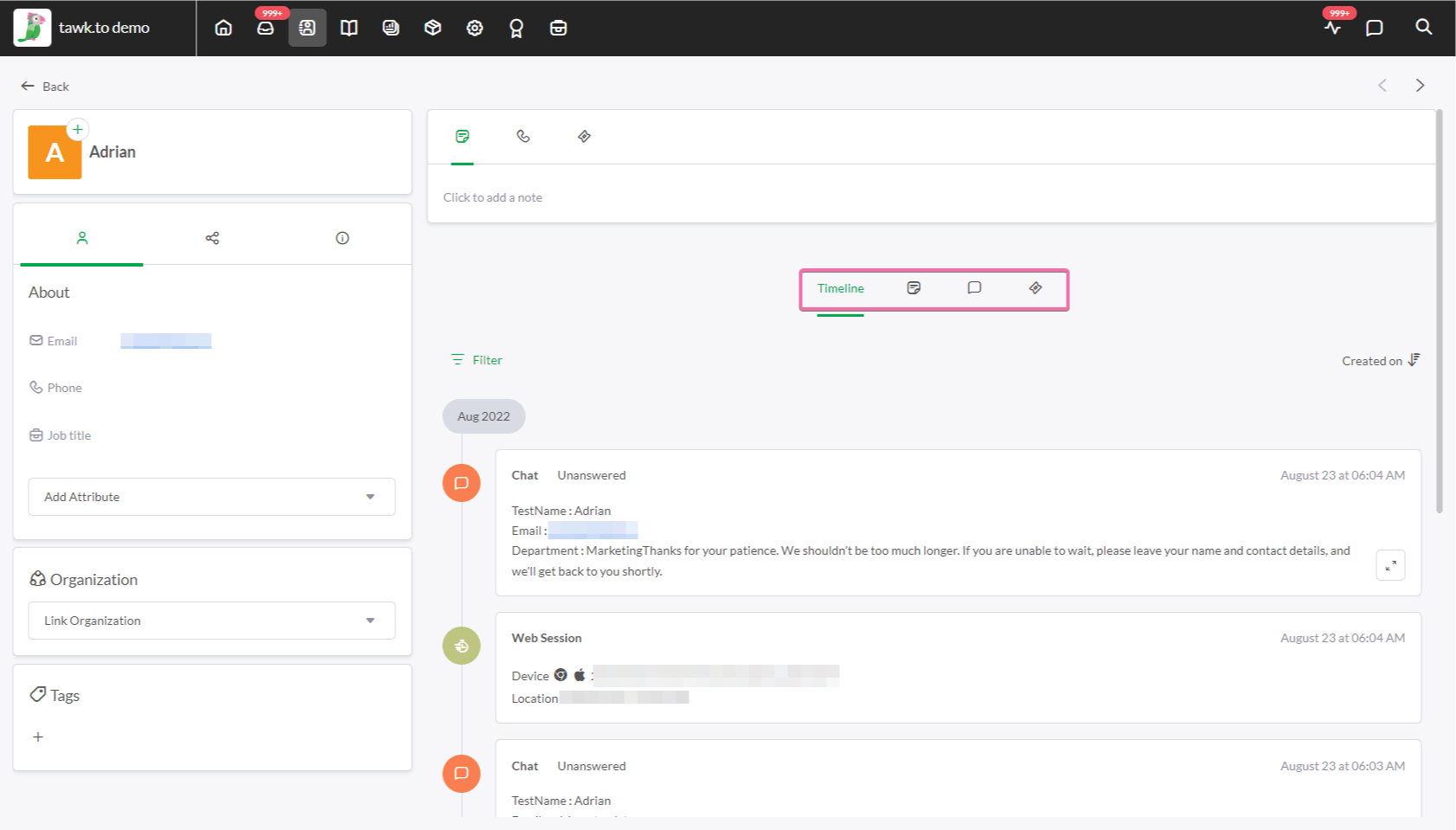
Tawk.to is the go-to free option. Its core live chat, ticketing, and knowledge base are free forever with unlimited agents and chats, which makes it genuinely useful for bootstrapped stores that cannot justify a subscription yet.
Key features
- Free live chat with unlimited agents and chats
- Built-in ticketing and knowledge base
- Real-time visitor monitoring
- Mobile apps for iOS and Android
Free comes with real caveats. The most common complaint across review sites is delayed or missed chat notifications, which directly costs leads. Reviewers also flag limited customization, a basic interface, and the fact that advanced features (and removing the "Powered by tawk.to" branding) require paid add-ons.
Pricing: Free forever for the core product. Removing branding runs about $29/month per property, and add-ons like AI Assist and hired agents cost extra. Best for stores on a zero budget that can live with the rough edges.
9. Olark
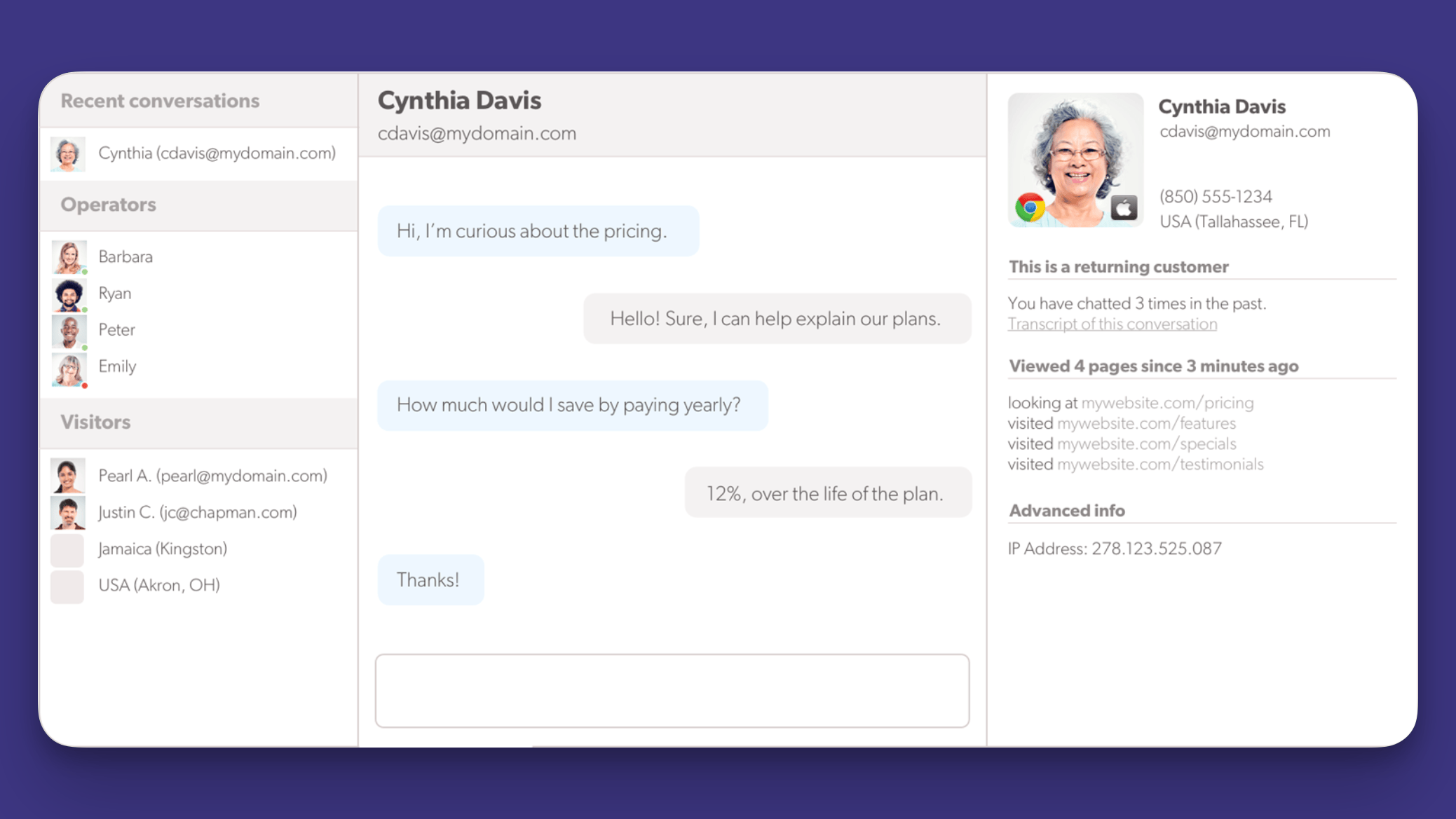
Olark is a simple, no-frills live chat tool that has stayed focused on doing the basics well. For a small store with modest chat volume, its straightforward setup and clean reporting are easy to live with.
Key features
- Simple, fast live chat setup
- Targeted chat automation based on visitor behavior
- Transcripts, reporting, and CRM integrations
- Integrations with Shopify, BigCommerce, Salesforce, and more
The simplicity is also the ceiling. G2 reviewers note there is no mobile app, the interface looks dated, and core extras like co-browsing, translation, and branding removal are sold as separate PowerUps that quickly inflate the bill. Per-seat costs also climb for growing teams.
Pricing: The Standard plan is $29/seat/month (with annual discounts), and there is a limited free tier capped at 1 agent and 20 chats per month. PowerUps run $29 to $99/month each, and the Pro plan is custom. Best for small stores that want simple live chat and little else.
How to choose the right ecommerce live chat software
The right tool depends less on feature counts and more on your store's stage, channels, and budget. A few questions narrow it down fast:
- What platform are you on?: If you live in Shopify, an ecommerce-native tool like Gorgias or Re:amaze gives agents order context out of the box. Platform-agnostic stores have more freedom to choose on features and price.
- How much do you want AI to handle?: If routine order and return questions dominate your volume, prioritize a strong AI agent and clean human handoff over chat-widget styling. Most successful stores run a hybrid: AI for tier-1, humans for the complex cases.
- What is your real budget at peak?: Conversation-based and per-resolution pricing looks cheap at low volume and expensive during a holiday rush. Model your busiest month, not your quietest.
- Do you need more than chat?: If you also want a help center, feedback collection, and product updates, an all-in-one platform avoids stitching together (and paying for) several separate tools.
Match those answers to the "best for" column above and the shortlist gets short quickly.
Conclusion
Ecommerce live chat has moved from a nice-to-have widget to a core revenue channel, and the best tool for your store depends on your platform, your volume, and how much you want AI to carry. Shopify-heavy stores lean Gorgias or Re:amaze, enterprise teams lean Zendesk, and bootstrapped shops can start free with Tawk.to.
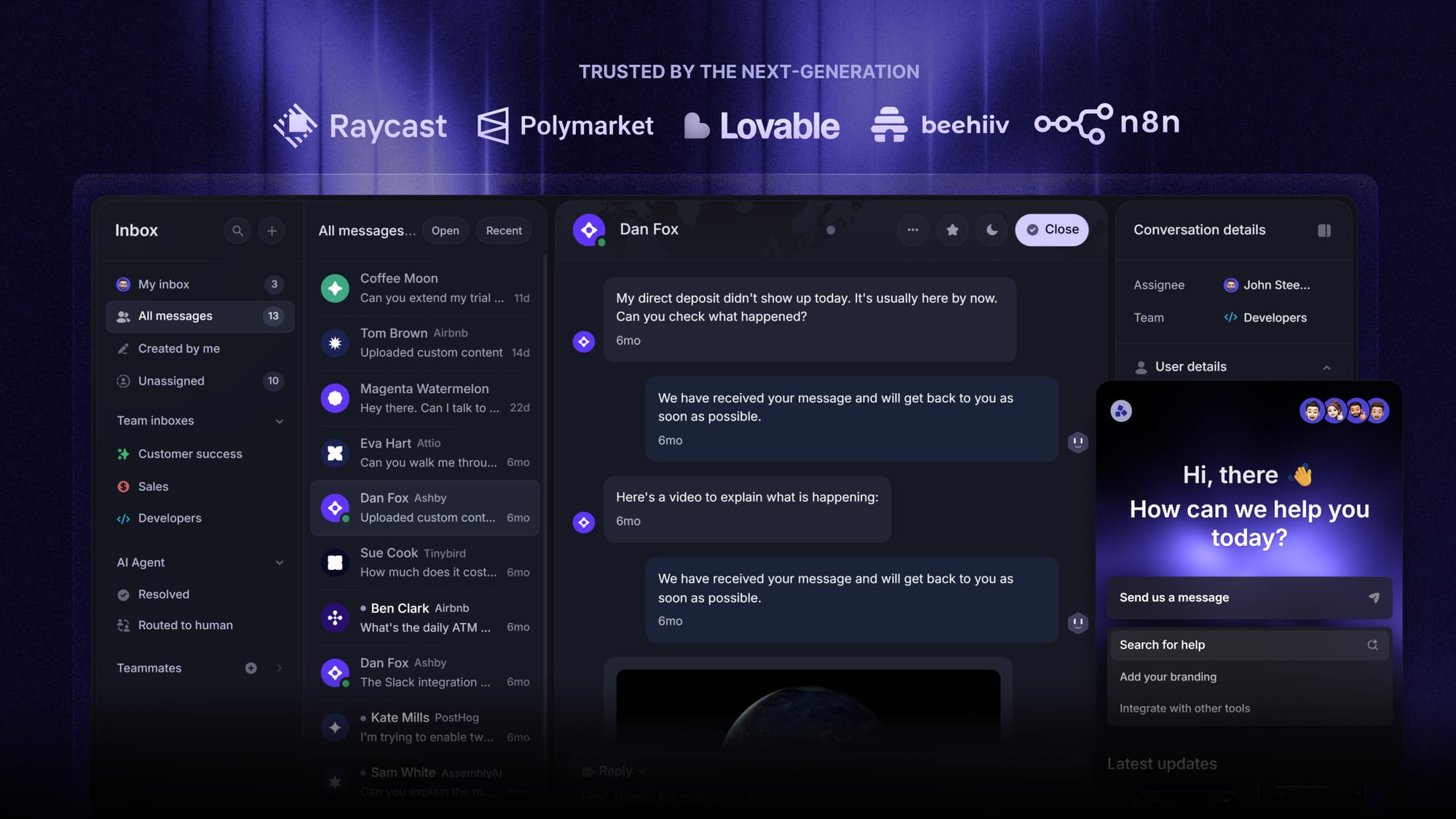
If you want a modern platform that combines AI-powered live chat, a help center, and feedback collection in one place, Featurebase is built for fast-growing teams that would rather not juggle five tools. Its Fibi AI Agent resolves routine questions on autopilot, the omnichannel inbox keeps every conversation in one view, and the whole thing connects to the tools you already use.
There is a free plan with unlimited conversations and onboarding takes minutes, so there is no downside to trying it. 👇
✨ Automate your support with the fastest AI-enhanced Inbox today → Get started with Featurebase
FAQs
Does live chat increase ecommerce sales?
Yes. Live chat answers buying questions in the moment a shopper is deciding, which reduces cart abandonment and lifts conversion. A 2024 study of nearly 5 billion visits found stores using chat and chatbots resolve far more inquiries and handle roughly 6 times more conversations than those without, which means more chances to turn browsers into buyers.
Should I use a chatbot or live agents for my online store?
Use both. A hybrid setup lets an AI chatbot handle routine, repetitive questions (order status, shipping, returns) instantly and around the clock, while human agents take the complex or high-value conversations. This keeps response times low without ballooning staffing costs, and it scales cleanly through seasonal spikes.
How fast should live chat response time be?
Aim to answer within about 30 seconds. Shoppers choose live chat precisely because it is immediate, and a slow first reply often sends them back to browsing or straight to a competitor. An AI agent or proactive auto-greeting helps you hit that window even when your team is busy or offline.
How much does ecommerce live chat software cost?
It ranges widely. Fully free tools like Tawk.to cost nothing for the core product, while most paid plans run from roughly $19 to $80 per agent per month. On top of that, many tools now charge usage-based AI fees (often $0.30 to $1.00 per resolved conversation), so your real cost depends heavily on volume.
Is there a free live chat tool for ecommerce?
Yes. Tawk.to is free forever for its core live chat, and several tools offer free tiers, though they tend to cap conversations or agents. Featurebase offers a free plan with unlimited conversations, so a small store can run AI-powered live chat and a help center without paying upfront.
Can live chat improve customer retention?
Yes. Fast, consistent support builds trust, and proactive follow-ups and personalized help encourage repeat purchases. The economics are striking: Bain & Company research shows a 5% increase in retention can raise profits by 25% to 95%, and reliable live chat is one of the simpler ways to keep customers coming back.