Blog Customer Service11 Best Live Chat Software for Customer Support in 2026
11 Best Live Chat Software for Customer Support in 2026
The best live chat software for SaaS support teams in 2026 - from modern AI-powered platforms to free widgets - with features, pricing, and where each one actually fits.


Customers expect a reply the moment they have a question, and 88% now expect faster response times than they did a year ago. Live chat is how modern SaaS teams hit that bar without burning out, but the gap between AI-powered chat and legacy widgets has never been wider.
Here are the 10 best live chat software tools for customer support in 2026 - what they do well, what they cost, and how to pick the right live chat software for your team. 👇
Key takeaways
The best live chat software for customer support in 2026:
- Featurebase ✨ - Best for modern SaaS teams that want AI-powered live chat, feedback, and help center in one tool
- Chatbase - Best for teams that want AI-powered live chat with omnichannel support, action-taking agents, and human handoff
- Intercom - Best for mid-market teams with a budget for a polished AI-powered messaging stack
- Zendesk - Best for large enterprises needing a full CRM-style service suite
- LiveChat - Best for e-commerce teams that want a polished, dedicated chat widget
- Tidio - Best for small e-commerce stores adding AI chatbots cheaply
- HubSpot Live Chat - Best for teams already running on HubSpot CRM
- Tawk.to - Best for cost-conscious teams that need a 100% free chat widget
- Olark - Best for small teams that want a simple, stable live chat application
- Drift - Best for B2B sales teams using live chat for lead generation
- LiveAgent - Best for teams wanting gamified support with a legacy ticketing system

Get the fastest AI-powered Live Chat
Support your customers from anywhere with an AI-powered omnichannel inbox
What is live chat software?
Live chat software lets your support team have real-time conversations with website visitors and customers directly inside your product or marketing site. A small chat widget sits in the corner of the page, the customer types a question, and an agent (or AI agent) replies in seconds.
The market has moved a long way from the simple "chat with us" bubble. Modern live chat tools now bundle 4 things into one widget:
- Real-time messaging for live conversations between support agents and customers.
- AI agents that handle inquiries automatically using your knowledge base, past tickets, and product documentation.
- Self-serve content like in-widget help articles and FAQs so customers can find relevant articles without waiting.
- Lead generation tools for sales teams using chat to capture leads from website visitors.
The shift is being driven by changing customer expectations. According to Gartner, self-service and live chat will surpass traditional channels like phone and email as the most valuable customer service technologies in the next two years. Salesforce research backs this up: 53% of consumers prefer to engage digitally over picking up the phone.
For SaaS teams, that means live chat is no longer a "nice to have" sitting next to email and phone. For many product-led companies, it's the primary support channel - and the platform you pick directly shapes customer satisfaction, support agent productivity, and how efficiently you serve customers at scale.
What to look for in live chat software
Picking the right live chat software comes down to matching the platform to how your team actually works. A 3-person SaaS startup has very different needs from a 200-agent contact center, and the essential features for each are not the same. Here's what to evaluate:
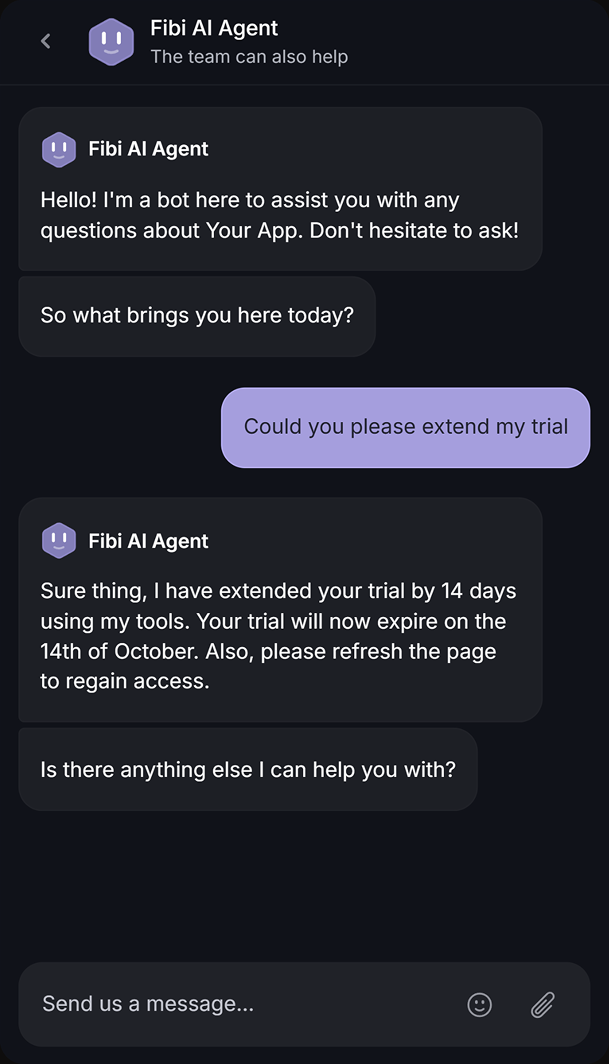
- AI agent capabilities - Modern live chat tools should include an AI agent that can resolve repetitive customer queries automatically, pull from your knowledge base, and hand off cleanly to a human when needed. The best AI agents go beyond answering FAQs and actually run actions like trial extensions, refunds, and routing conversations to the right team.
- Omnichannel support - Live chat alone is rarely enough. Look for a unified inbox that handles email, chat, and Slack support conversations in one view so your agents aren't toggling between business tools and creating data silos. CRM integration with HubSpot or Salesforce makes this stronger by pulling customer data into every conversation.
- AI features for agents - AI Copilot and AI replies help support agents respond faster by drafting accurate responses in your tone of voice, pulling from past responses, and translating into other languages. This is one of the biggest productivity wins of modern chat software.
- Knowledge base integration - The chat widget should surface relevant articles automatically so customers can self-serve before a human gets involved. This deflects repetitive tickets and frees up your team to focus on complex issues.
- Customization options - The chat widget should match your brand, support light and dark modes, and offer a user-friendly interface for customers. Look for proactive chat invitations, modules for different use cases, and a no-code design editor.
- Multi-language support - If you serve customers in multiple countries, look for automatic AI translations across all messages and help center articles. Manual multilingual setups slow your team down and create inconsistent experiences.
- Third-party integrations - The platform should connect to your CRM systems, product tools (Linear, Jira), and team chat (Slack). Strong CRM data pull-through prevents data silos and gives agents context on every conversation.
- Workflows and automation - No-code workflows for routing conversations based on user behavior, qualifying leads, and automating repetitive tasks save hours each week.
The 10 best live chat software for customer support in 2026
Below are the 10 best live chat tools for SaaS support teams in 2026, ranked by overall fit for modern product-led companies.
1. Featurebase ✨
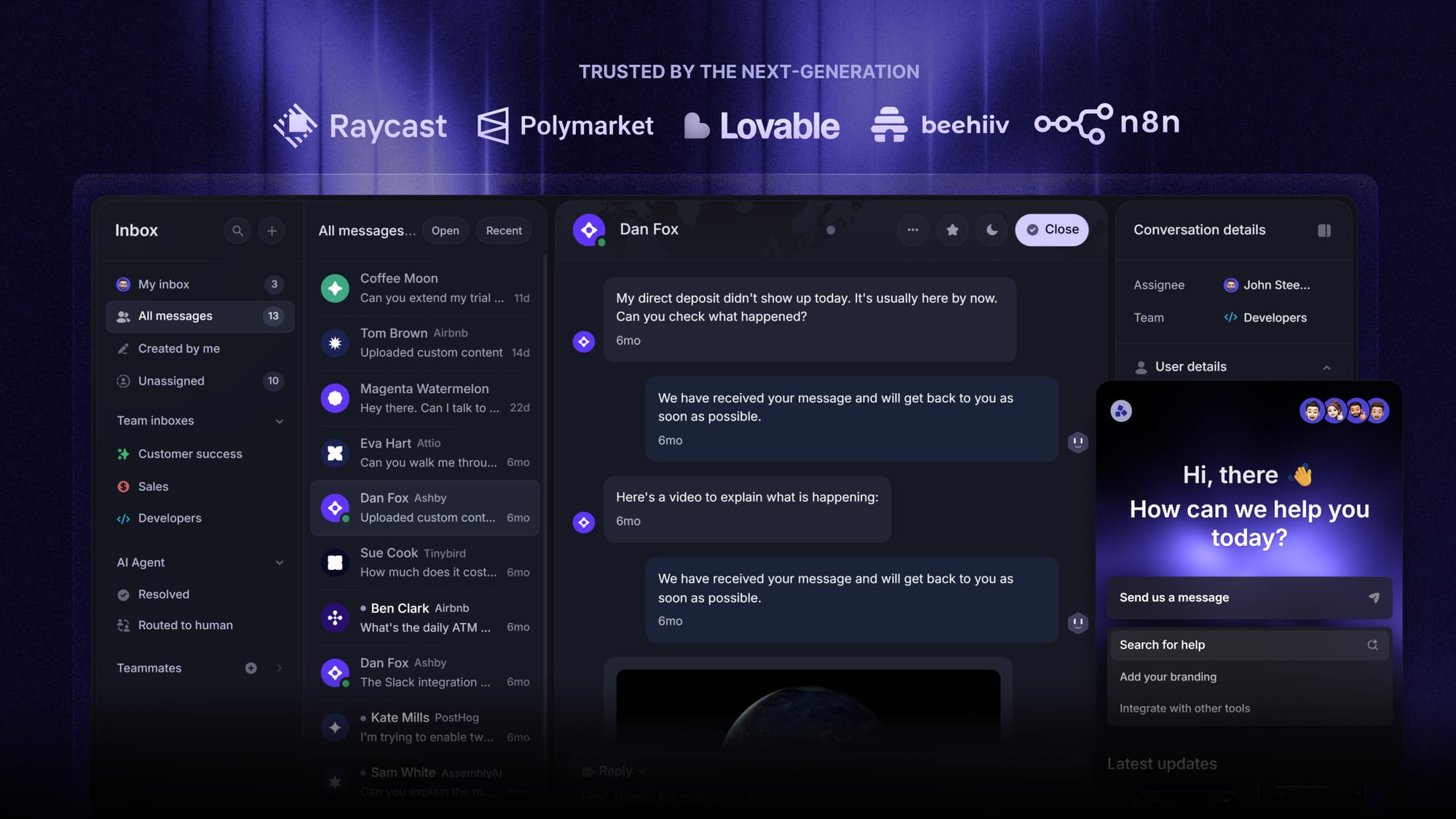
Featurebase is a modern AI customer support platform for product-led SaaS. It combines AI-powered support, help center, and feedback management into a single platform for startups that want all their customer-facing tools in one place. Featurebase is loved by thousands of support teams from companies like Lovable, Raycast, and n8n. 💫
Top features:
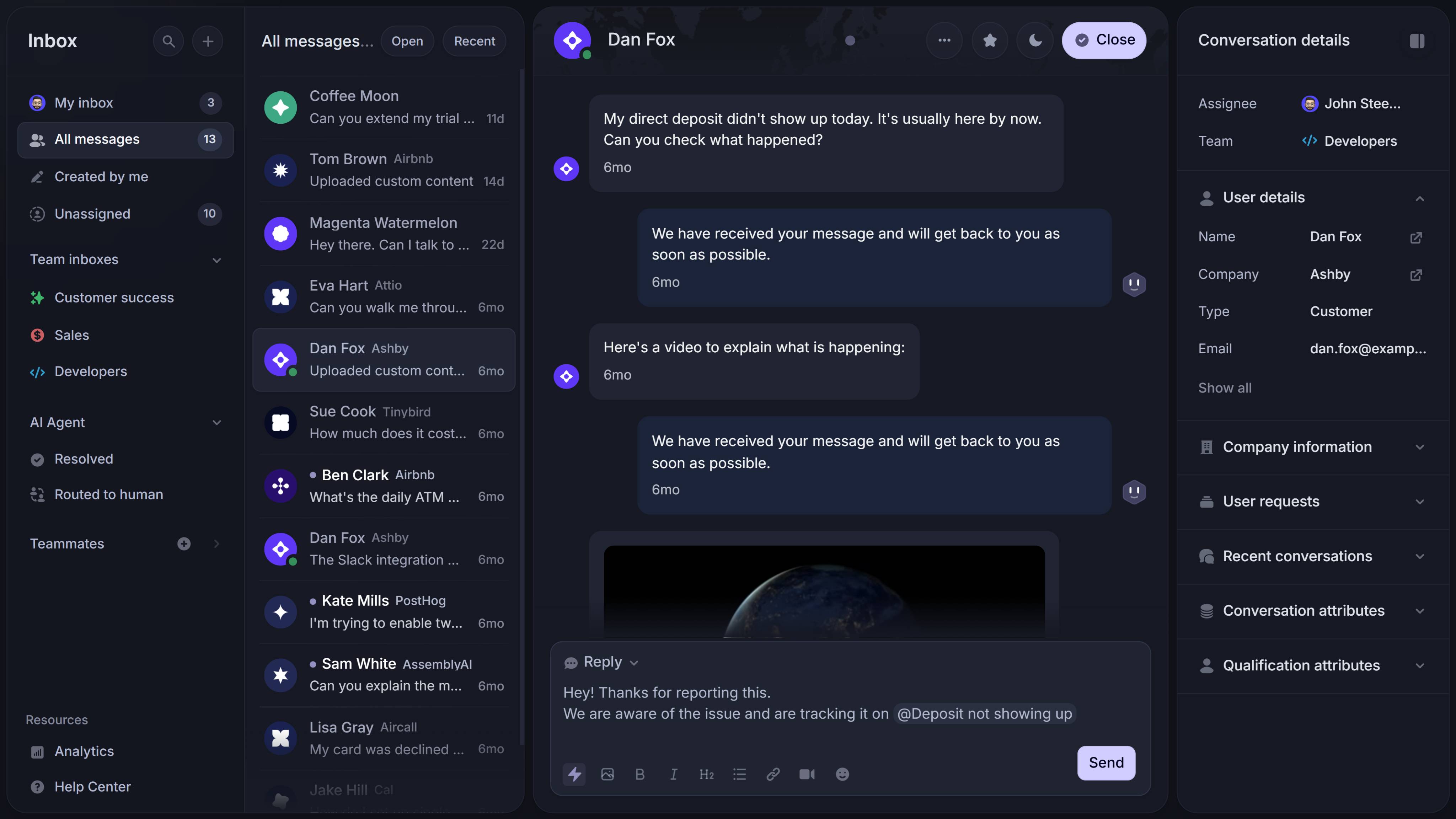
- Omnichannel inbox – Manage live chat, email, and Slack conversations from one AI-powered view
- Fibi AI Agent - Resolve customer issues on autopilot & run custom actions like trial extensions and refunds
- Help center with AI search – Provide instant, multilingual self-serve answers
- Workflows & automations – Auto-assign tickets, route conversations, collect customer data, and more
- AI Copilot – Help your agents answer customers faster with AI Copilot that uses your internal knowledge
- Multi-brand support – Manage multiple Help Centers and Live chats from a single workspace
- Automatic AI translations – Automatically translate all messages and help articles to your customers native language
- Service Level Agreements – Track SLAs to make sure your team responds to customers on time, every time
- Mobile app – Respond to customers, receive notifications, and unblock users on the go
- Integrations – Connects with Slack, Linear, Jira, HubSpot, and more
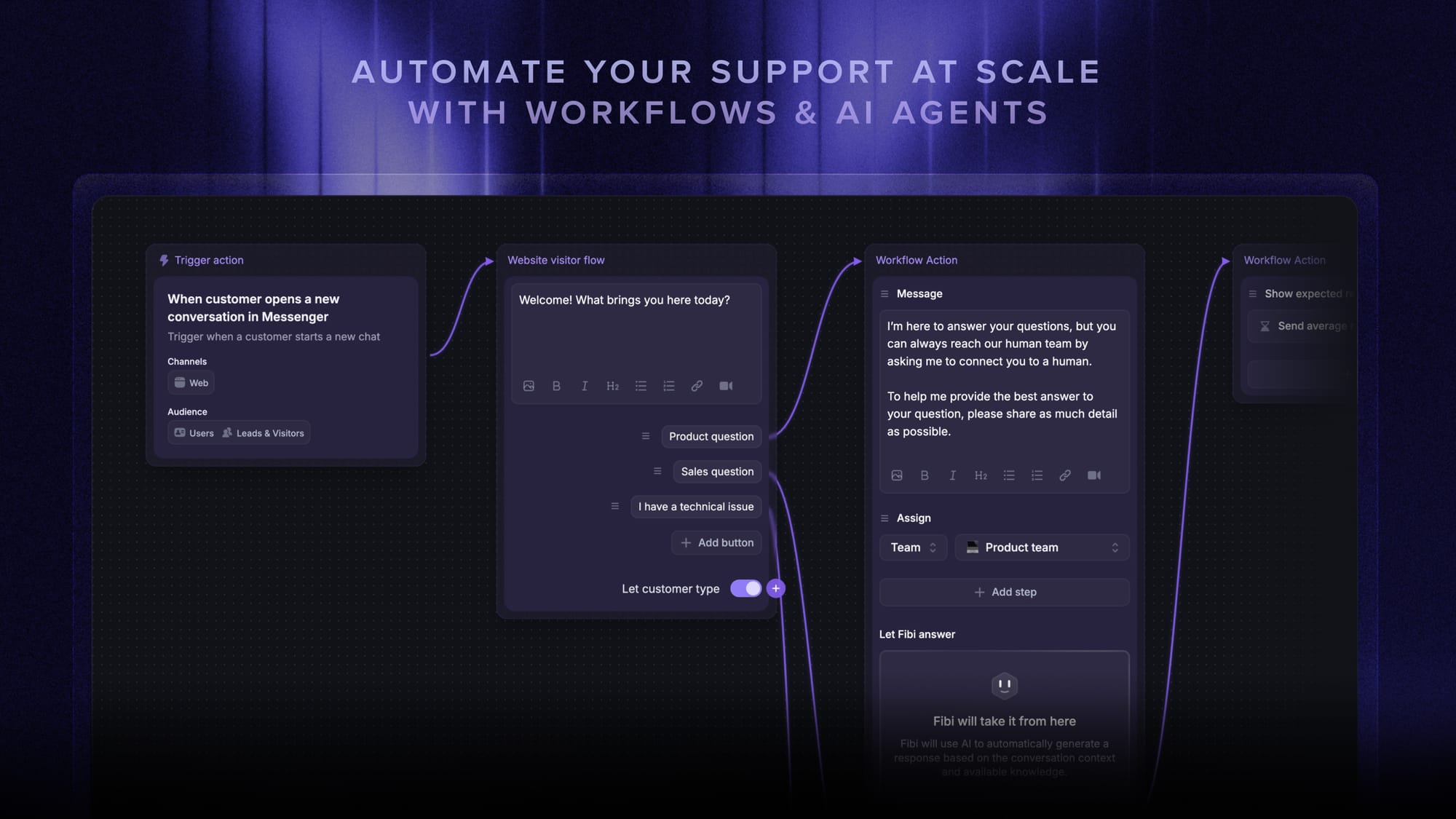
Pricing: Free plan available with unlimited conversations. Paid plans start at $29/seat/month with $0.29 per AI resolution.
Featurebase covers all the basic support features that legacy platforms do, but with a much more modern approach. It comes with AI automations, a mobile app, and multiple communication channels (email, live chat, Slack, etc.).
Resolve 70% of customer requests with AI
Automatically resolve customer issues & cut down support loads for your team
2. Chatbase
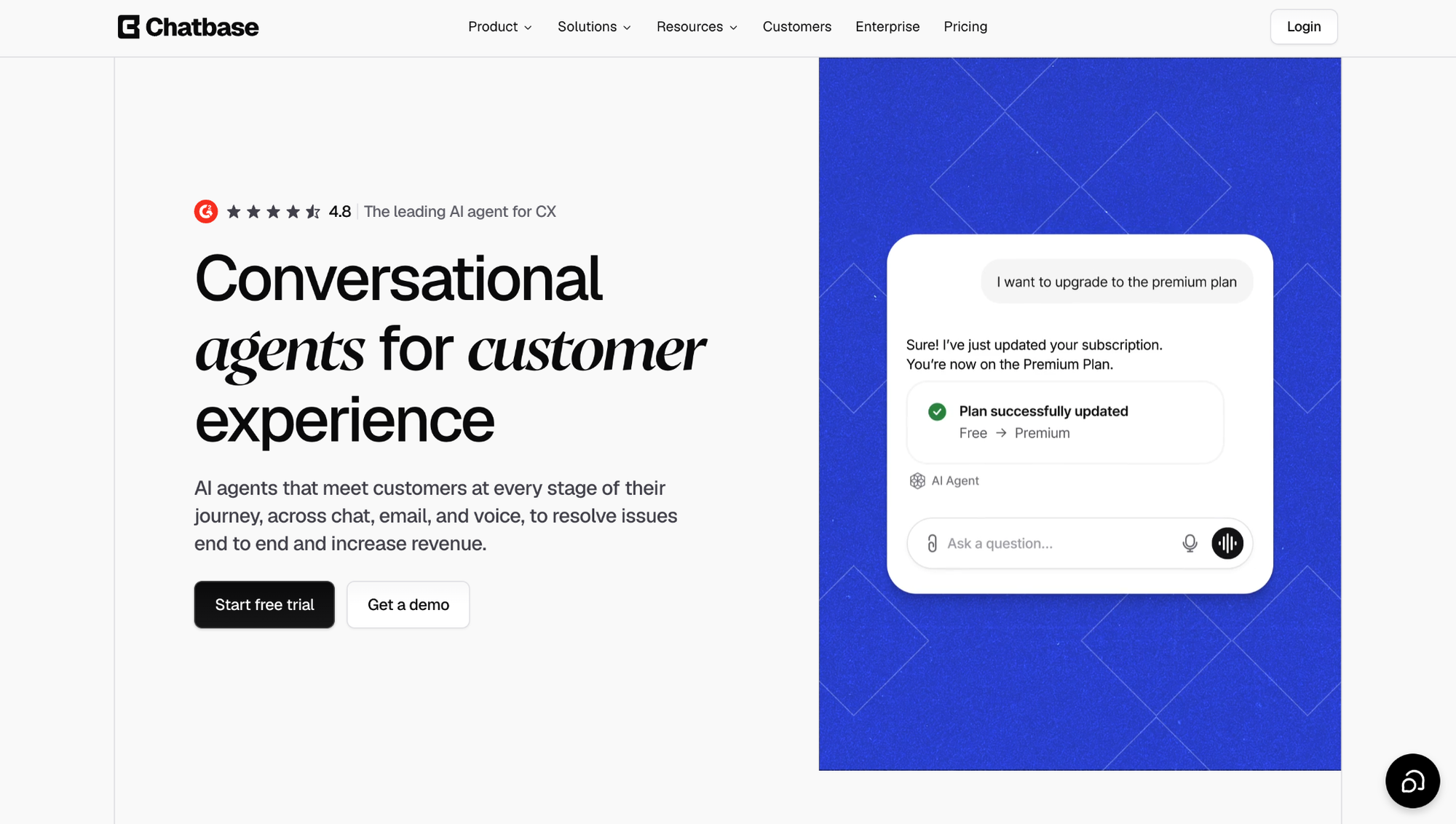
Chatbase is an AI-powered customer support platform for teams that want live chat to do more than connect visitors with a human agent. Its customer-facing AI agents can answer questions, qualify leads, guide product conversations, carry out approved Actions, and escalate conversations when human judgment is needed.
Beyond the website widget, the same agent can work across email, WhatsApp, Facebook Messenger, Instagram DM, Slack, and voice. Chatbase also includes a built-in Help Desk, so human agents can review, assign, track, and take over conversations without losing the context collected by AI.
Top features
- AI-powered website chat trained on websites, help centers, documents, support tickets, and business data
- AI agents that can answer questions, qualify leads, provide product guidance, and run approved Actions
- Procedures for controlling repeatable support, sales, and routing workflows
- Omnichannel support across live chat, email, WhatsApp, Messenger, Instagram DM, Slack, and voice
- Built-in Help Desk for assignment, conversation tracking, and AI-to-human handoff
- Interactive Widgets that can show structured information and let customers take actions inside the conversation
- Shopify workflows for product discovery, cart assistance, orders, and customer account requests
- Testing, analytics, and Suggestions for improving agent performance and identifying gaps
- Enterprise controls including SSO, custom roles and permissions, audit logs, SLAs, SOC 2 Type II, GDPR, and HIPAA-eligible Enterprise environments
Pricing: Chatbase has a free plan. Paid plans start at $40/month on Hobby, Standard is $150/month, Pro is $500/month, and Enterprise pricing is custom. Standard includes Help Desk, voice, telephony, outbound campaigns, API access, and advanced integrations.
Pros
✅ AI agents can take approved actions instead of only answering questions
✅ Live chat connects with email, messaging, Slack, and voice
✅ Built-in Help Desk keeps human support in the same workflow
✅ Strong ecommerce, sales, and customer support use cases
✅ Enterprise controls available for larger support organizations
Cons
❌ More setup than a basic live chat widget if you want Actions and multi-step workflows
❌ Teams that only need human-to-human website chat may not use the broader AI agent capabilities
2. Intercom
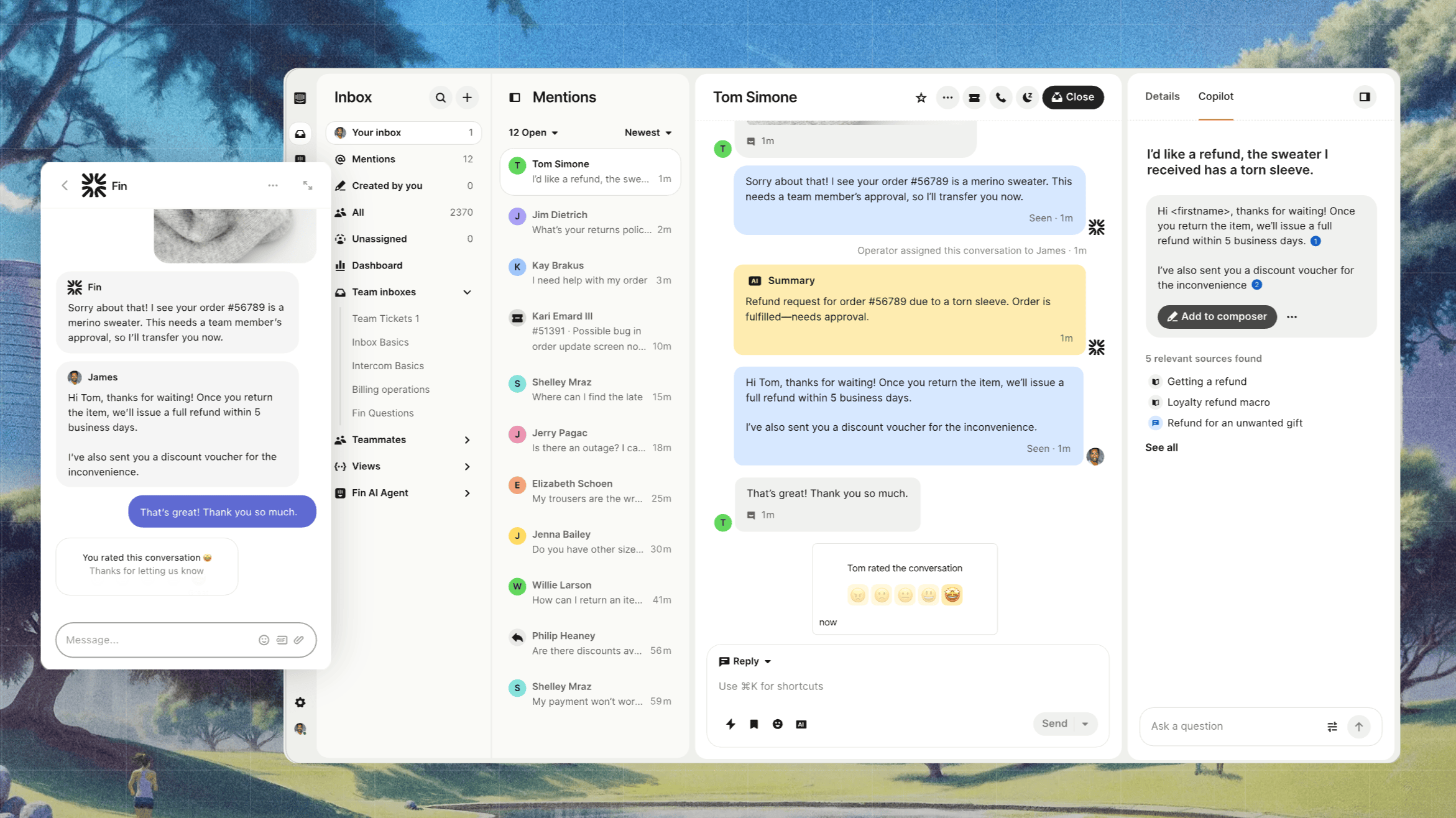
Intercom is one of the most established names in live chat software, with a mature platform built around its Fin AI agent and a heavy mid-market and enterprise customer base. It pioneered the in-app messenger format that most modern chat widgets now copy.
Intercom is a strong fit if you already have budget for an enterprise plan and want a polished, deeply integrated chat application with extensive customization options and a wide integration catalog.
Top features
- Fin AI agent for autonomous resolution of common customer queries
- Omnichannel support across live chat, email, SMS, and social media platforms
- AI Copilot for support agents with drafted responses
- Workflows builder for automation and routing
- Tickets, help center, and product tours bundled in
Pricing: Intercom pricing starts at $19/seat/month for Essential, $85 for Advanced, and $132 for Expert, billed annually. Monthly billing is $29, $99, and $139 per seat, respectively. Fin AI usage is billed separately at $0.99 per outcome, which adds up fast at any reasonable conversation volume.
Pros
✅ Mature live chat product with stable widget
✅ Strong AI agent (Fin) and AI features for agents
✅ Large integration ecosystem
Cons
❌ Expensive at scale, with Fin resolutions roughly 3× the cost of competitors
❌ Learning curve for full configuration
❌ Add-ons stack up quickly
3. Zendesk
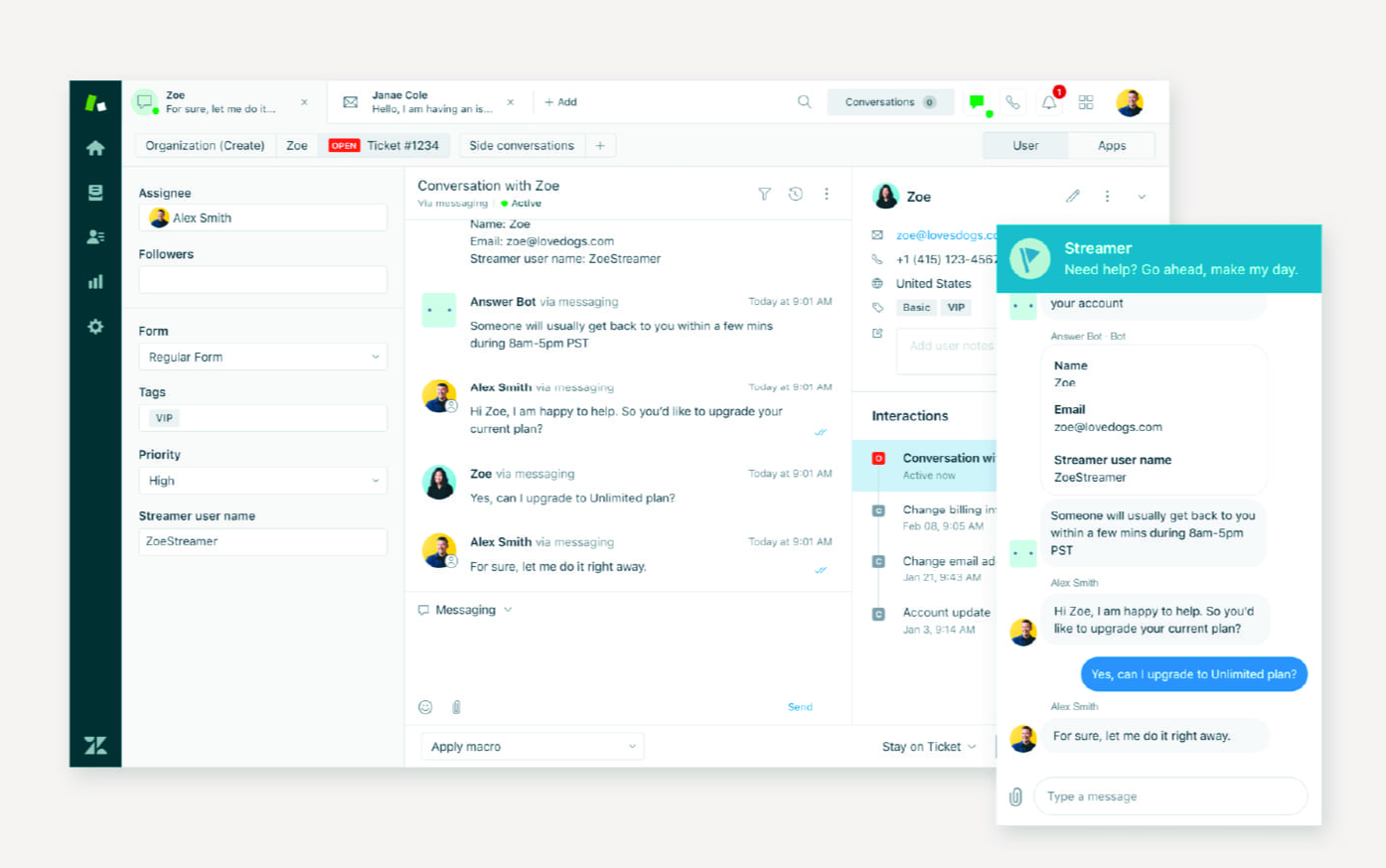
Zendesk is the legacy giant of customer support. Originally a ticketing platform, it has expanded into a full-service suite that bundles live chat (Zendesk Chat, formerly Zopim), voice, AI, and help center under one umbrella.
It's the safe pick for large enterprises that need a CRM-style customer service platform, advanced features like skills-based routing, and the kind of audit logs and compliance controls that legal teams ask for.
Top features
- Zendesk Chat live chat widget with proactive chat invitations
- AI agents and generative replies (Zendesk AI add-on)
- Full omnichannel support across email, chat, voice, and messaging channels
- Help center with AI search
- 1,000+ third-party integrations across CRM systems and business tools
Pricing: Zendesk pricing starts at $19/agent/month on Support Team and climbs quickly: Suite Team is $55/agent/mo, Suite Professional $115, Suite Enterprise $169. The most popular AI features sit behind a separate Advanced AI add-on at $50/agent/mo.
Pros
✅ Most complete enterprise feature set on the market
✅ Strong reporting on agent performance
✅ Massive integration catalog
Cons
❌ Expensive once you stack add-ons, with real costs often 2-3× the base
❌ Older interface compared to newer competitors
❌ Overkill for teams under 20 agents
4. LiveChat
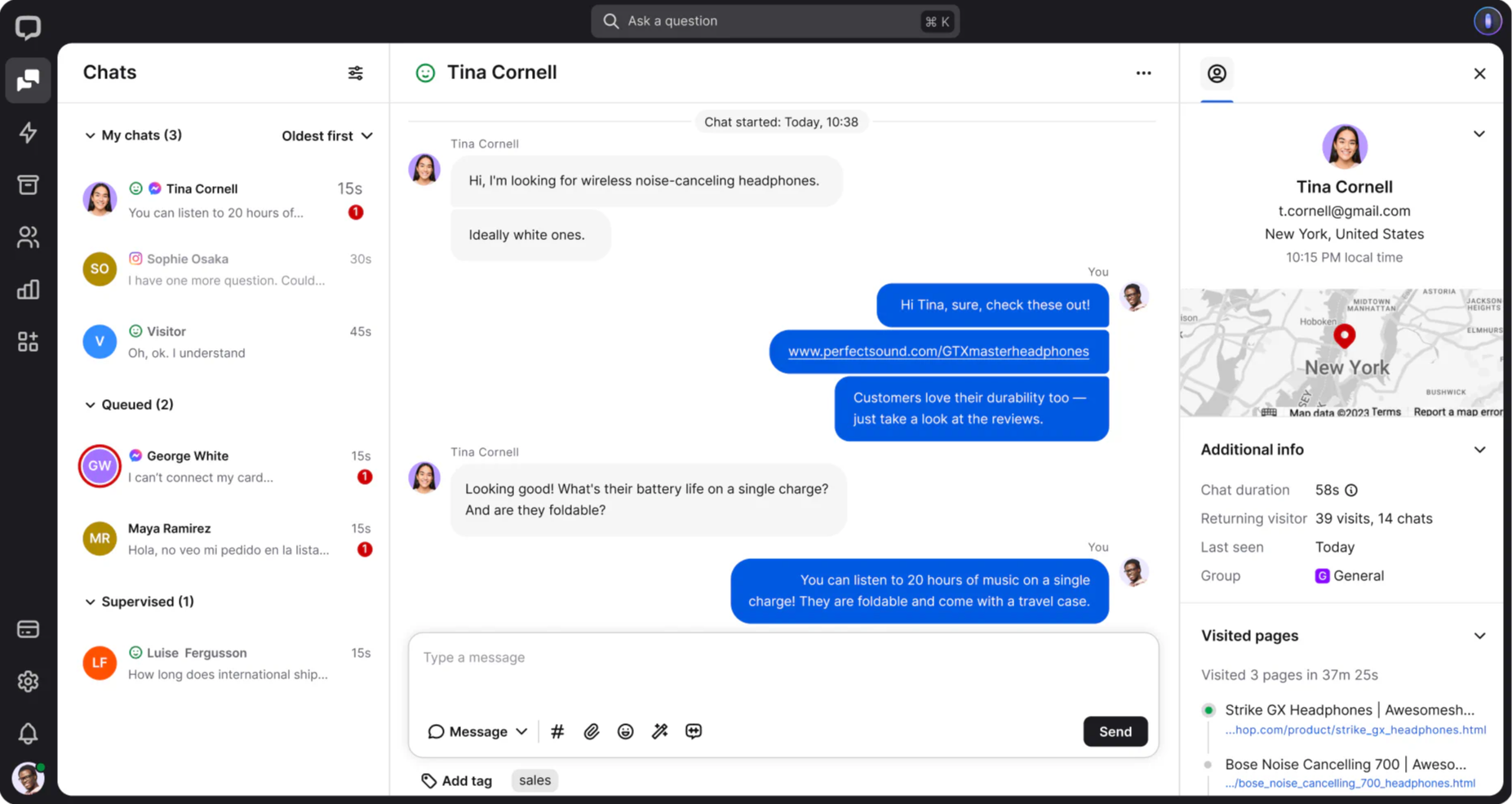
LiveChat is a focused, dedicated live chat platform built around the chat widget itself. It's been around since 2002 and is one of the most polished, single-purpose chat applications on the market.
Where Intercom and Zendesk are sprawling service suites, LiveChat keeps things tight. A great chat app, a clean agent interface, file sharing capabilities, and the basics of ticketing. It's a strong pick for ecommerce teams that just want a fast, reliable chat widget without a steep learning curve.
Top features
- Polished, customizable chat widget with proactive chat invitations
- File sharing capabilities and rich messaging
- Basic reporting and agent availability tracking
- 200+ integrations including Shopify and HubSpot
- Mobile apps for iOS and Android
Pricing: LiveChat pricing starts at $20/agent/month (Starter), $41 (Team), $59 (Business), with a custom Enterprise plan. The ChatBot AI add-on is sold separately.
Pros
✅ Clean, dedicated live chat product with fast widget
✅ Strong ecommerce focus
✅ Reliable mobile apps for iOS and Android
Cons
❌ Limited compared to suites like Zendesk on ticketing depth
❌ AI features locked behind a separate ChatBot add-on
❌ Reporting is fairly basic
5. Tidio
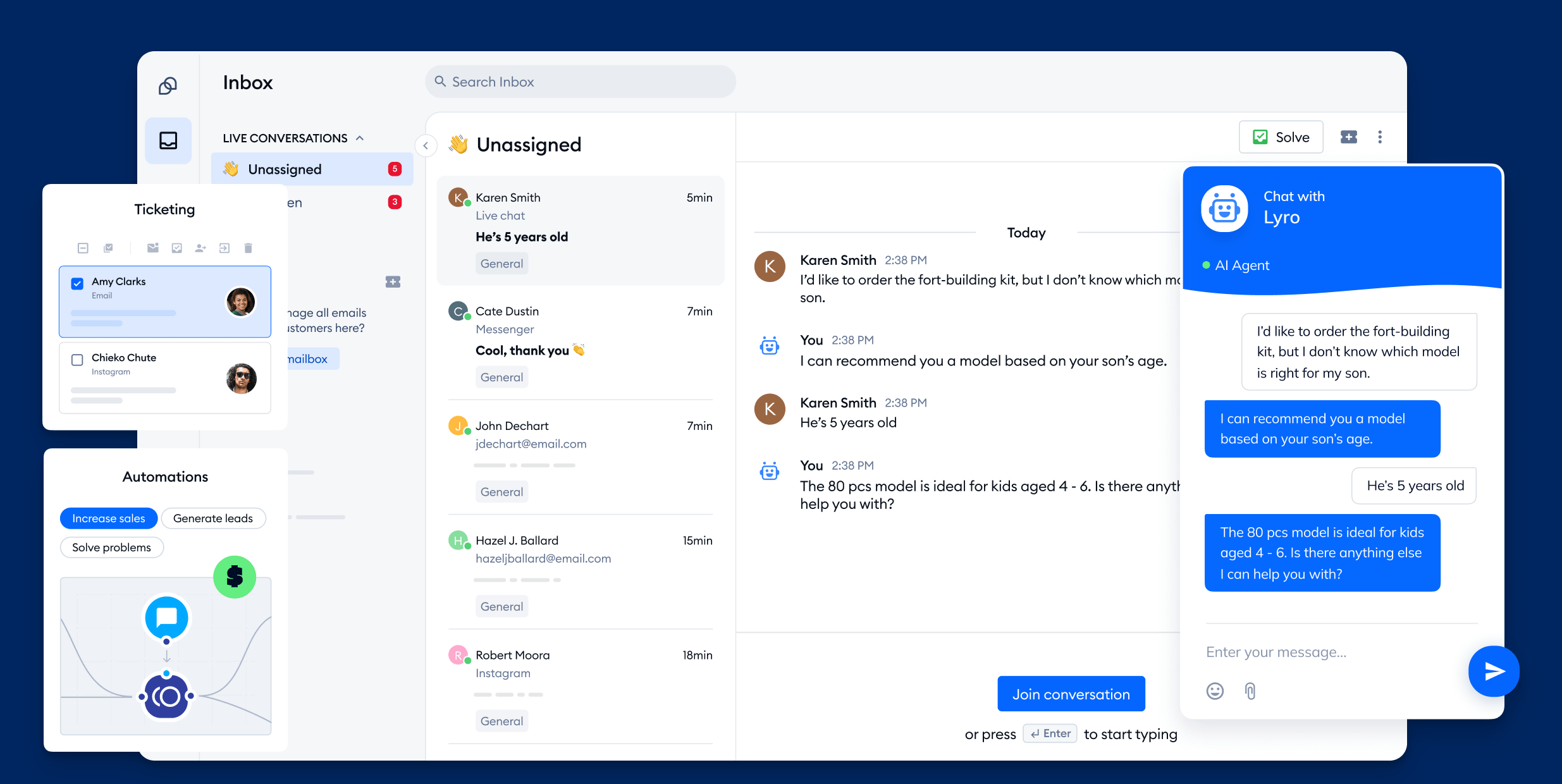
Tidio is a budget-friendly live chat and chatbot platform aimed at small businesses and e-commerce stores. It bundles live chat with AI-powered chatbots (Lyro) and a basic ticketing system at a price point well below Intercom or Zendesk.
It's a popular pick for Shopify stores that want a chat widget with AI agent capabilities without paying enterprise rates.
Top features
- Live chat widget with proactive chat invitations
- Lyro AI agent for handling repetitive customer queries
- Visual chatbot builder for flow-based bots
- Email and Instagram channel support
- Shopify and Ecwid integrations
Pricing: Tidio pricing includes a free plan capped at 50 conversations per month. Paid plans run from Starter $29/mo to Growth $59/mo to Plus from $749/mo. Lyro AI resolutions are billed in addition.
Pros
✅ Affordable for small e-commerce teams
✅ Decent AI agent at a low price
✅ Easy to set up
Cons
❌ Conversation caps on cheaper plans
❌ Limited advanced features for larger support teams
❌ Reporting is basic compared to enterprise tools
6. HubSpot Live Chat
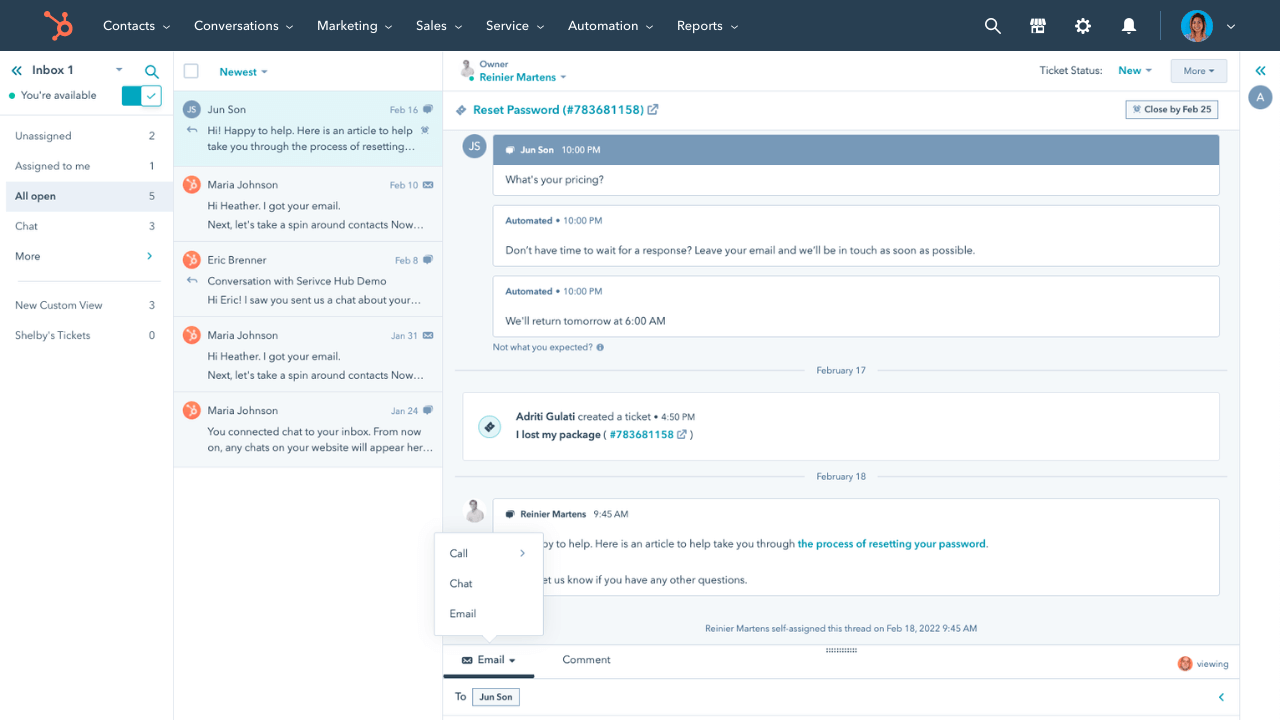
HubSpot is best known as a CRM, but its Service Hub includes a fully functional live chat widget tied directly into the HubSpot contact database. Every chat conversation pulls in CRM data automatically, which makes it a strong fit for teams already running on HubSpot.
It's not a standalone live chat product, but if your team is already using HubSpot for sales or marketing, the included live chat is a sensible default that streamlines operations without adding another tool to the stack.
Top features
- Live chat widget tied to HubSpot CRM contact records
- Chatbot builder with conditional flows
- Routing rules based on CRM data
- Email, calls, and chat in one inbox
- Native integration with HubSpot marketing, sales, and other CRM tools
Pricing: HubSpot pricing for live chat is free with the HubSpot CRM. Service Hub Starter is $20/seat/month, Professional jumps to $100/seat/month, and Enterprise is $150/seat/month.
Pros
✅ Best-in-class CRM integration for HubSpot teams
✅ Free tier available
✅ Strong reporting tied to CRM data
Cons
❌ Expensive jump from Starter to Professional
❌ Live chat is one of many features, not the flagship product
❌ AI features limited compared to Intercom or Featurebase
7. Tawk.to
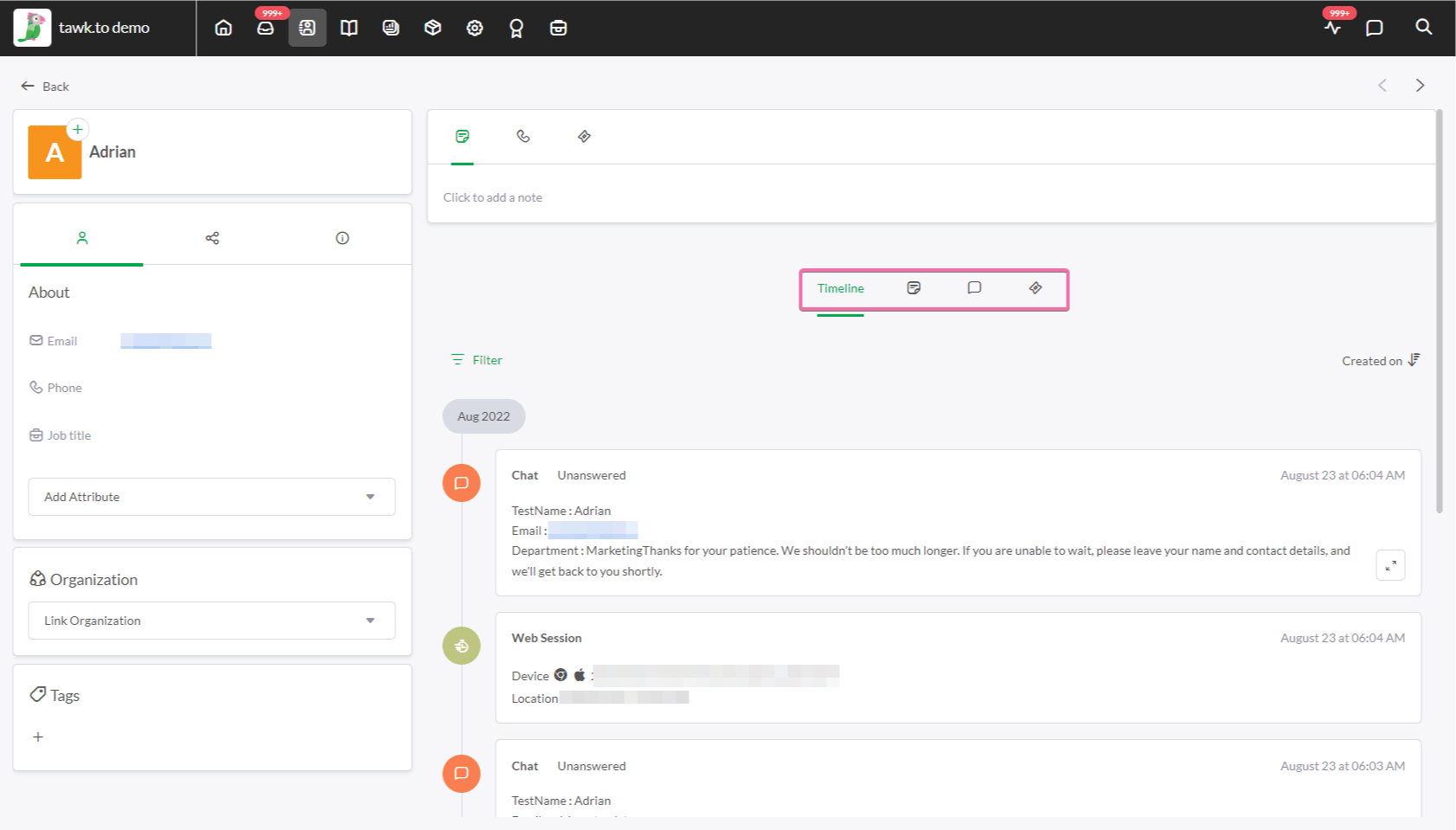
Tawk.to is the most popular 100% free live chat software on the market. It supports unlimited support agents and unlimited chats at zero cost, with the business model funded by paid add-ons (branding removal, hired chat agents, AI assist).
For very small teams or hobby projects that just need a chat widget on a website, Tawk.to is hard to beat on price. The trade-off is a dated interface and limited AI features compared to modern paid platforms.
Top features
- Unlimited free live chat agents and conversations
- Chat widget across multiple platforms (websites, mobile apps)
- Basic ticketing and visitor tracking
- Mobile apps for iOS and Android
- 45+ languages in the widget itself
Pricing: Free forever for the core product. Paid add-ons include Remove Branding ($19/mo), Hired Chat Agents ($1/hour), and AI Assist (custom pricing).
Pros
✅ Genuinely free with unlimited agents
✅ Solid for very small teams
✅ Easy installation
Cons
❌ Tawk.to branding on the free plan
❌ Limited customer support from the vendor
❌ No real AI agent without paid add-ons
8. Olark
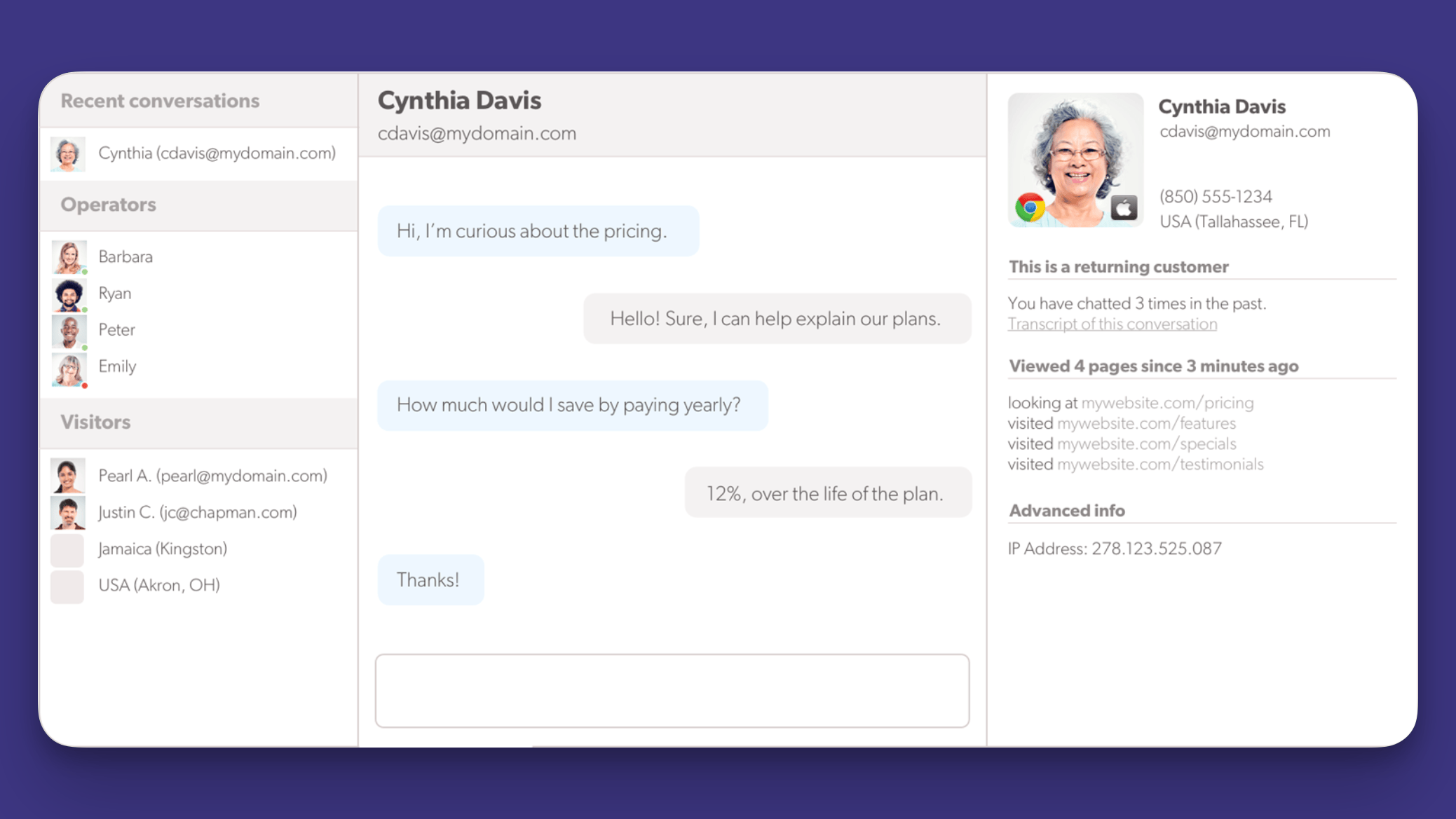
Olark is one of the longest-running live chat tools, focused on simplicity. It does live chat support well, with a clean widget and straightforward agent interface, but stays away from the everything-in-one trend that platforms like Intercom and Featurebase have moved toward.
It's a fit for small businesses that want a no-fuss chat widget with solid reporting, and aren't looking for an AI agent or ticketing system bolted on.
Top features
- Simple, customizable chat widget
- Proactive chat invitations and visitor targeting
- Co-browsing add-on for live conversations
- Basic reporting and chat transcripts
- Integrations with Salesforce, HubSpot, and other CRM systems
Pricing: Olark pricing starts at $29/seat/month on the Standard plan, with optional add-ons (Pro, Live Cobrowsing, Visitor Insights, AI agents) priced separately. Most teams end up at $50-70/seat/month after add-ons.
Pros
✅ Simple to learn and operate
✅ Stable, reliable chat widget
✅ Strong accessibility features
Cons
❌ Limited AI features by default
❌ Add-on pricing model gets expensive
❌ Feature set is narrower than newer competitors
9. Drift
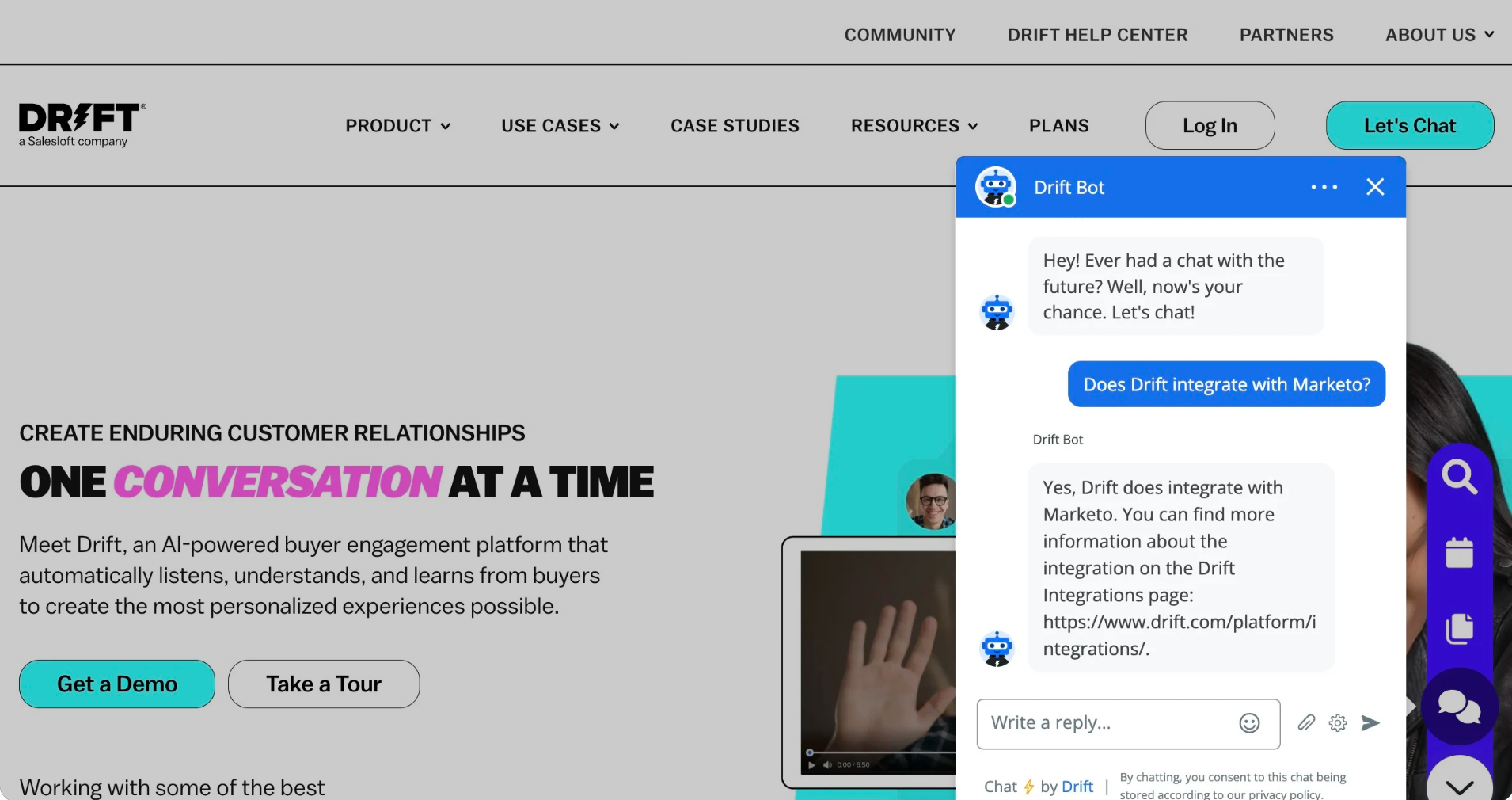
Drift (now part of Salesloft) is a B2B-focused live chat platform built for lead generation rather than customer support. It pioneered the "conversational marketing" category, where chat is used to qualify website visitors and route them to sales reps in real time.
If your live chat use case is sales-driven (book demos, qualify leads, route to sales reps) rather than support-driven, Drift is purpose-built for it. For pure customer support, it's usually overkill and over-priced.
Top features
- Conversational marketing bots for lead capture
- Meeting scheduling inside the chat widget
- Real-time visitor identification and routing
- Account-based targeting for ABM teams
- Strong CRM integration with Salesforce and HubSpot
Pricing: Drift no longer publishes pricing publicly after the Salesloft acquisition. Historical entry points sat around $2,500/month and went up sharply for enterprise plans.
Pros
✅ Best-in-class for B2B lead generation
✅ Strong CRM and account-based marketing fit
✅ Mature reporting on pipeline impact
Cons
❌ Opaque, sales-only pricing
❌ Built for sales, not customer support
❌ Heavy investment to justify ROI
10. LiveAgent
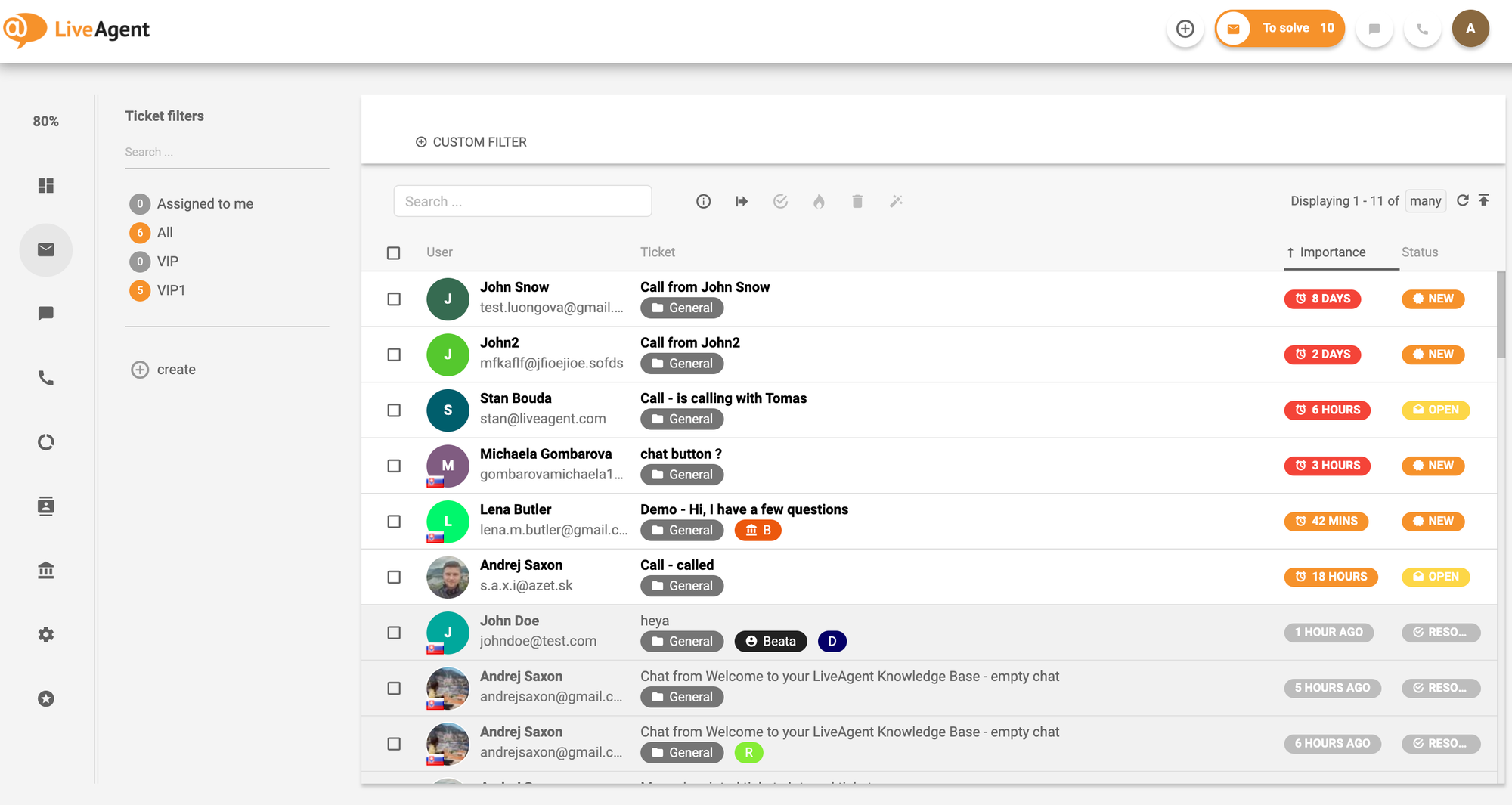
LiveAgent is a long-running help desk with live chat built in. It leans on a traditional ticketing-first approach, with the live chat widget acting as one of many channels feeding into the same agent inbox.
LiveAgent is known for its gamified agent interface (leveling up, rank tracking, awards) and a long feature list at an accessible price point, which makes it popular with mid-sized teams that want everything in one tool.
Top features
- Universal inbox covering chat, email, voice, social media platforms, and forms
- Built-in call center features
- Gamification for support agents
- Knowledge base and customer portal
- 200+ third-party integrations
Pricing: LiveAgent pricing is Small $9/agent/month, Medium $29, Large $49, and Enterprise $69. Add-on features (call center extras, advanced features) are priced separately.
Pros
✅ Affordable entry point with a long feature list
✅ Built-in voice / call center
✅ Gamification appeals to large teams
Cons
❌ Interface feels dated compared to modern alternatives
❌ Limited AI features unless on higher plans
❌ Steeper learning curve for the full feature set
Live chat software comparison at a glance
| Tool | Starting price | Free plan | AI agent | Best for |
|---|---|---|---|---|
| ✨ Featurebase | $29/seat/mo | ✅ Yes | ✅ Fibi | Modern SaaS support teams |
| Chatbase | $40/mo | ✅ Yes | ✅ Yes | AI powered omnichannel live chat and support |
| Intercom | $19/seat/mo billed annually ($29 monthly) + $0.99 per Fin outcome | ❌ No | ✅ Fin | Mid-market with budget |
| Zendesk | $19/agent/mo | ❌ No | Add-on | Enterprise / CRM-style suite |
| LiveChat | $20/agent/mo | ❌ No | Add-on | E-commerce |
| Tidio | $29/mo | ✅ Yes | ✅ Lyro | Small ecommerce |
| HubSpot Live Chat | Free with CRM | ✅ Yes | Limited | HubSpot CRM users |
| Tawk.to | Free | ✅ Yes | Add-on | Tiny teams |
| Olark | $29/seat/mo | ❌ No | Add-on | Simple, no-frills chat |
| Drift | Custom (~$2.5k+/mo) | ❌ No | ✅ Yes | B2B lead generation |
| LiveAgent | $9/agent/mo | ❌ No | Limited | Gamified support |
How to choose the right live chat software for your team
There's no single "best" live chat tool, just the right one for what you're optimizing for. Here's how to narrow it down:
- Start with your team size and budget.
A 3-person SaaS startup will get more value from Featurebase or Tidio than from a $169/agent Zendesk plan. Conversely, a 200-agent contact center will outgrow Tawk.to in a week. - Decide if AI is a core requirement or a nice-to-have.
If you want an AI agent that handles inquiries automatically and runs custom workflows, look at Featurebase, Intercom, or Tidio. If you just need a chat widget and human agents, LiveChat or Olark are simpler picks. - Check the messaging channels you actually need.
Most modern platforms include email, live chat, and social media platforms in the same inbox. If you also need voice or SMS, LiveAgent and Zendesk are stronger. Slack support is more niche, and Featurebase is one of the few that handles it natively. - Factor in the integrations you can't live without.
If your team lives in HubSpot, the HubSpot Live Chat tool gets you CRM data inside chat for free. If you're heavy on engineering tools like Linear and Jira, Featurebase, Intercom, and Zendesk integrate cleanly with both. - Get hands-on experience before signing.
Every tool on this list offers free trials or free plans. Run 2 or 3 real customer interactions through the platform before committing - you'll learn more in an afternoon than a week of demos.
Final thoughts
The live chat market in 2026 splits into 3 buckets: modern AI-native platforms (Featurebase, Intercom), legacy enterprise suites (Zendesk, LiveAgent), and free or lightweight widgets (Tawk.to, Olark). The right pick depends on whether you're after speed, depth, or cost, and how much of your front-line support you trust AI to handle.
If you want a modern, AI-powered live chat that also handles your help center, feedback collection, and product updates from the same workspace, without the per-agent pricing pain of legacy tools, Featurebase is built for exactly that. It bundles an omnichannel inbox, the Fibi AI Agent, AI Copilot for support agents, automatic AI translations, workflows, and a mobile app into one platform that gets out of the way and lets your team respond faster.
Featurebase has a free plan with unlimited conversations, so there's no downside to trying it. 👇
✨ Automate your support with the fastest AI-enhanced Inbox today →