Blog Comparisons10 Best Harvestr Alternatives for Product Management in 2026
10 Best Harvestr Alternatives for Product Management in 2026
Harvestr is pricey, doesn't have all the features you need and the reviews are not promising. Here are the best Harvestr alternatives to consider instead.

If you're looking to invest time and money in product management, you're probably looking at a starter tool that does it all. Harvestr promises to do just that, unifying feedback across multiple channels. Ideally, you then review the feedback and make informed decisions about your product.
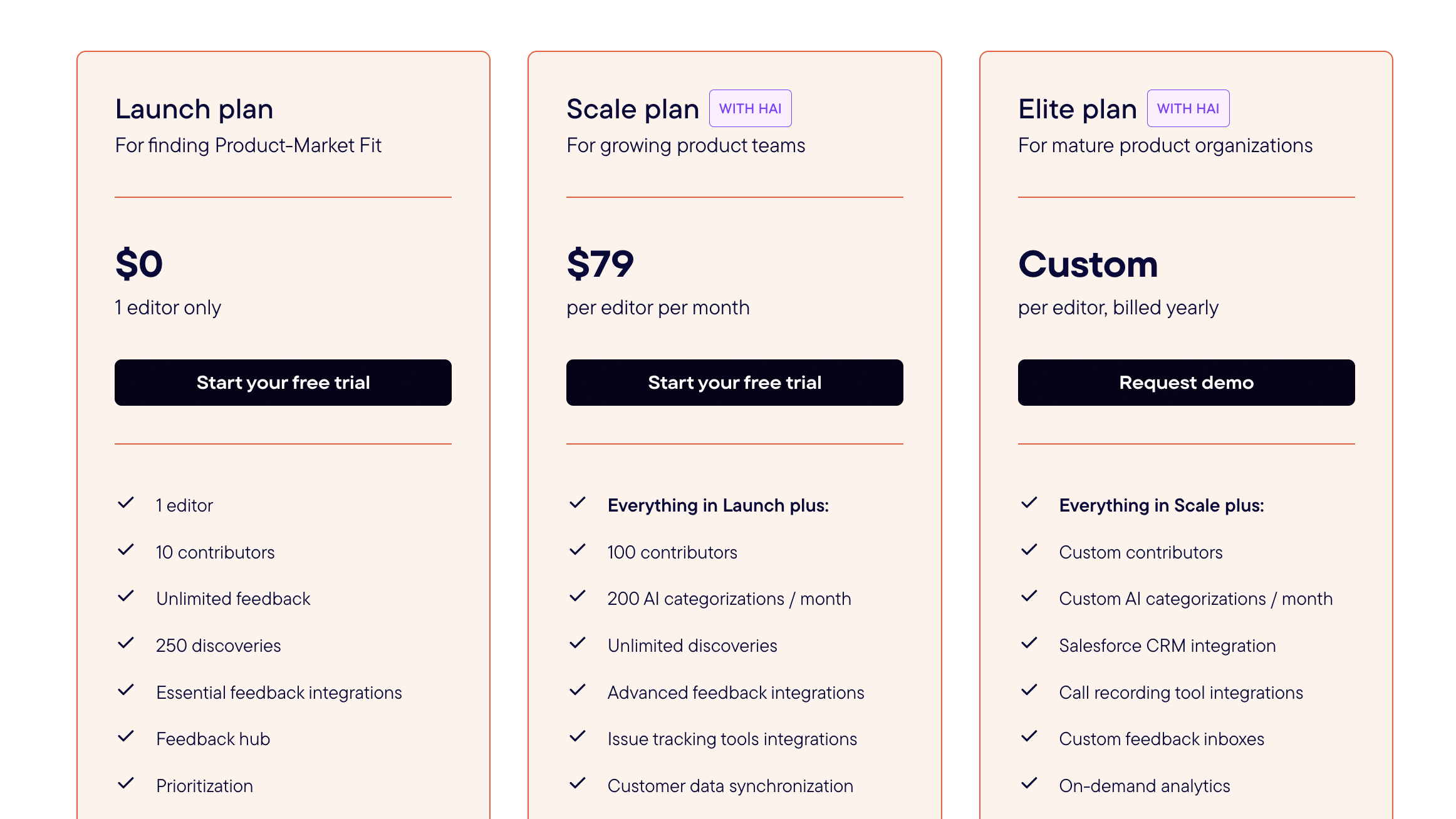
But what if Harvestr doesn't inspire confidence? Perhaps the $65/month price tag is a bit much, given the feature set? Or you just want to explore other options for managing projects and products?
These are the very best Harvestr alternatives to try for your team. 👇
Short overview
The best Harvestr alternatives for product and task management:
- ✨ Featurebase: Best for SaaS teams that want a modern AI-powered product suite wiht feedback voting, AI analysis, surveys, and more.
- Aha!: Best for larger product teams that need strategic planning, goal setting, and long-term roadmap alignment.
- Productboard: Best for product managers who want structured prioritization and customer-driven decision making.
- Savio: Best for teams that want a simple, dedicated hub for collecting and prioritizing customer feedback.
- Craft.io: Best for product teams looking for flexible planning tools and customizable product workflows.
- Monday.com: Best for cross-functional teams that need a visual workspace for planning and managing projects.
- Asana: Best for teams that want a clean, organized system for tracking tasks and coordinating projects.
- Jira: Best for engineering teams that need sprint planning, backlog management, and issue tracking.
- Wrike: Best for teams managing complex multi-department projects with advanced workflow needs.
- Trello: Best for small teams and simple projects that benefit from an easy visual board system.
Why look for alternatives to Harvestr?
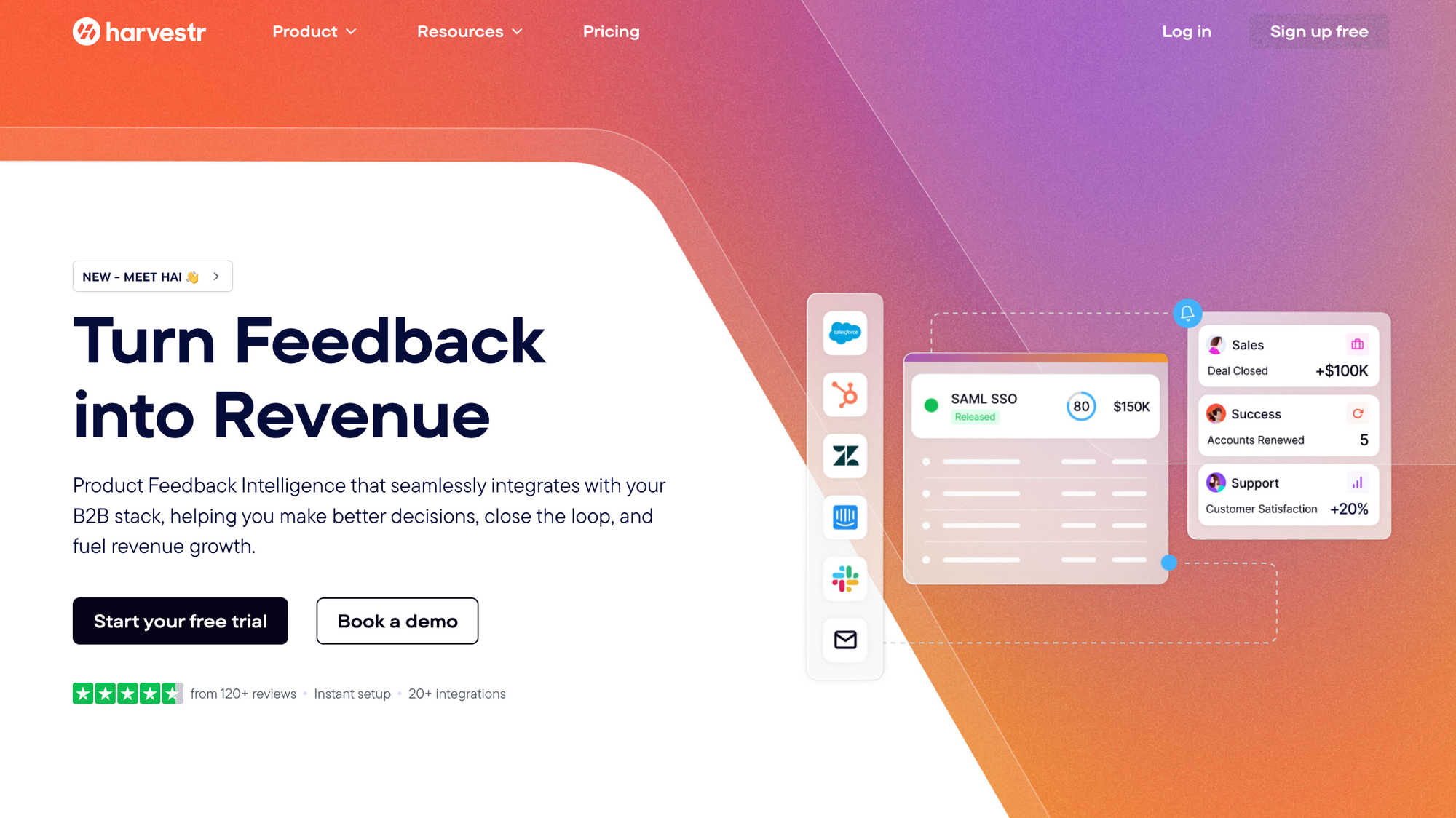
Harvestr helps you collect feedback, tie it to revenue, prioritize what you're building, and then close the feedback loop. This makes for a solid product tech stack, but there are some concerns.
If we take a look at G2, Harvestr's profile is unclaimed, and their most recent reviews are more than two years old. In a very competitive arena such as product management tools, it seems pretty careless, especially since Harvestr boasts some very well-known customers.
It's also pretty new in a market where ProductBoard, Featurebase, and Aha! have been around for years. It seems like Harvestr still has some growing pains to go through, and many features feel unfinished.
- "Ui/ux of the app/platform can be more user-friendly" - G2 review
- "SFDC Data sync + Public API are still missing features, but are not blocking points. As you know, our main difficulty is really to set up an operating model associated with the tool..." - G2 review
- "Working in a B2B Enterprise context, I would enjoy a better way for Customer Success team to easily keep track of clients' requests." - G2 review
If you don't trust the possibly outdated feedback, the biggest issue could be the pricing. At $65 per user per month, you can only gather feedback from 100 customers at a time, which is pretty pricey.
The best Harvestr alternatives for product and project management
Whether you want more features, lower pricing, or better UX and UI, there's plenty of other choices to go around. These are the best Harvestr alternatives you can get in late 2026.
1. Featurebase ✨
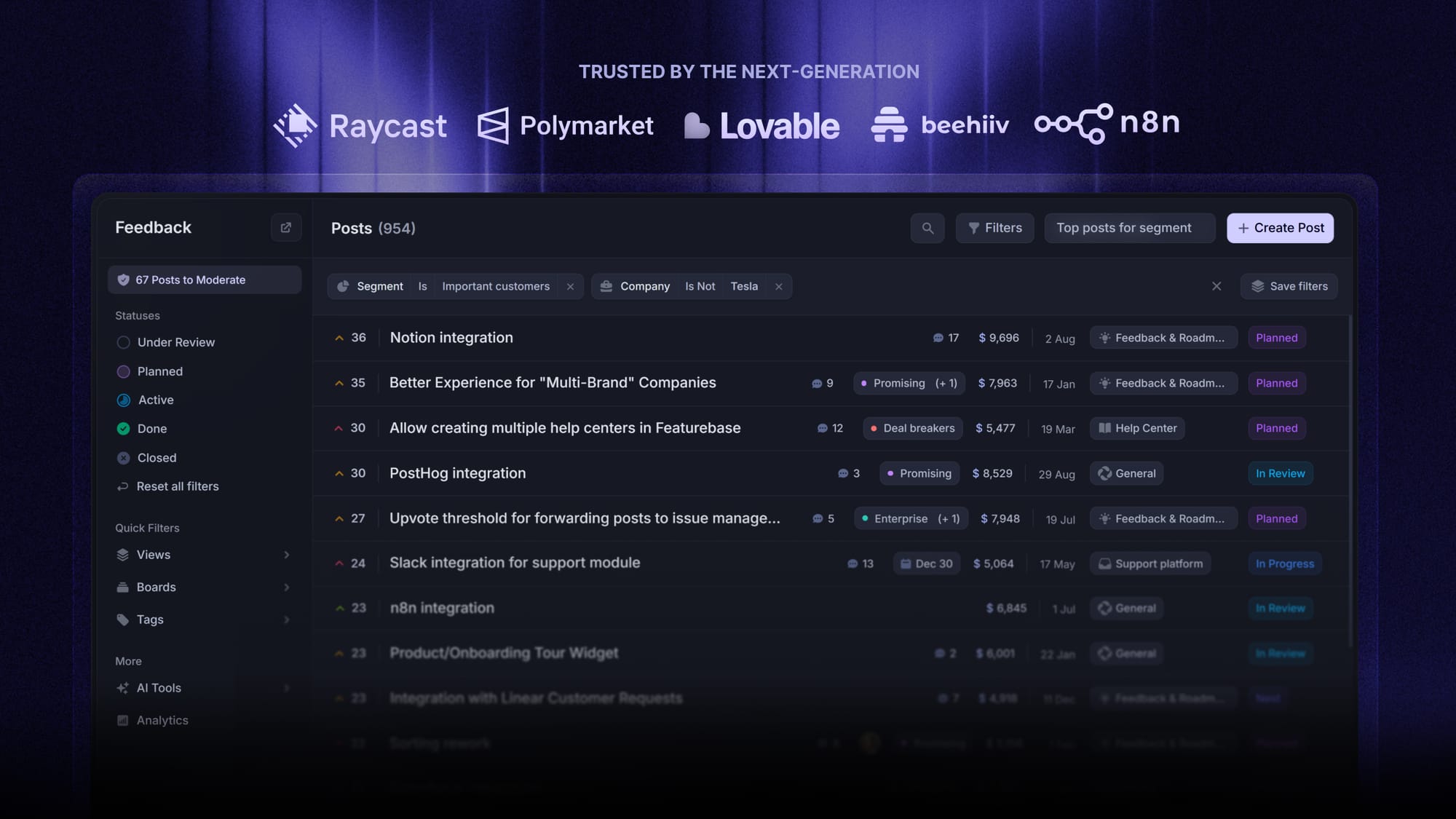
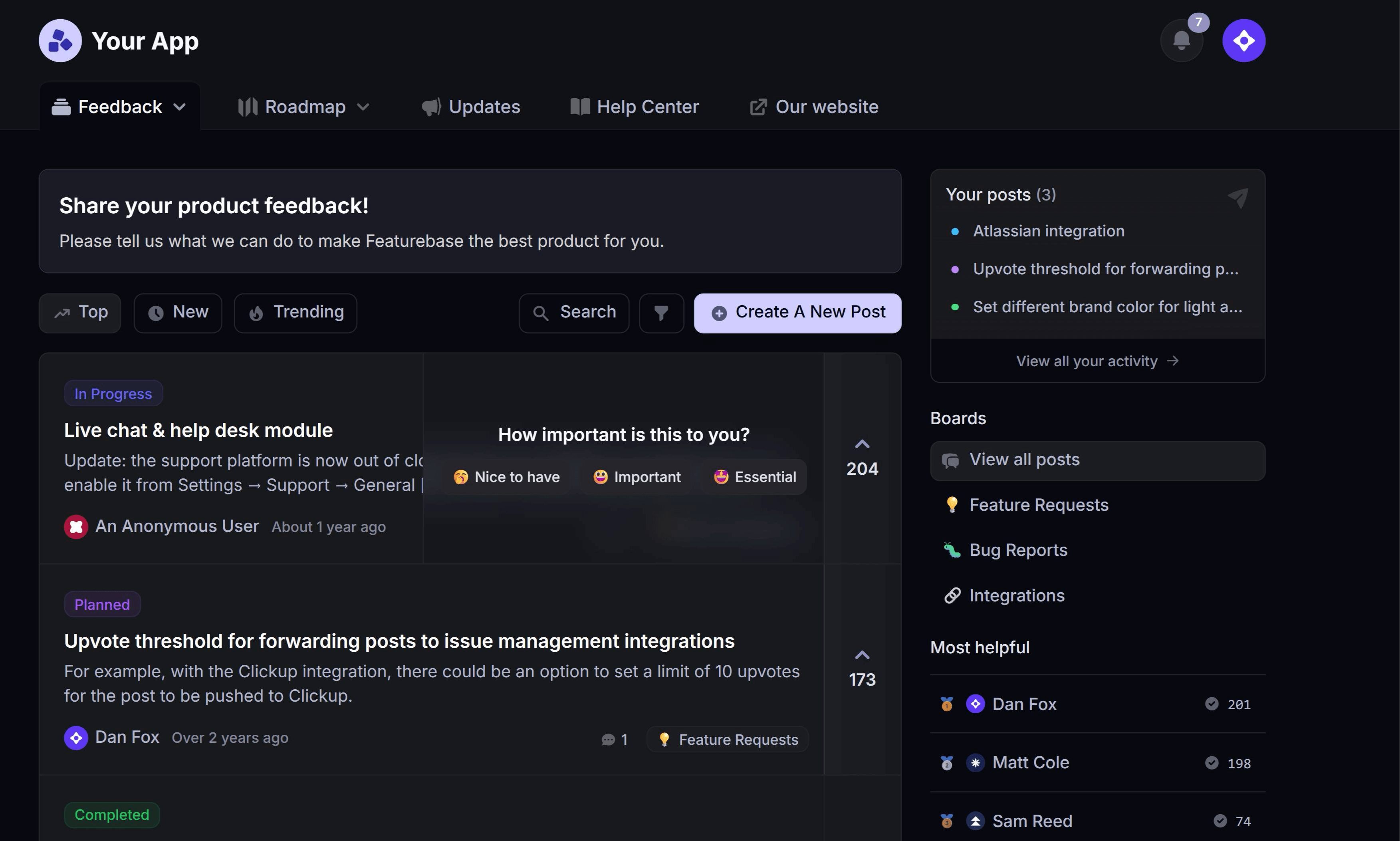
Featurebase is a powerful Harvestr alternative that helps product teams collect feedback, prioritize features, build roadmaps, and announce product updates – all in one place. It’s loved by thousands of support teams from companies like Lovable, Raycast, and n8n. 💫
Top features:
- Prioritize by revenue – Link feedback with customer revenue, company size, and much more to better understand the impact of ideas
- AI feedback categorization - Automatically group large volumes of feedback into product areas, projects, or themes with AI.
- Feedback forum – Public feedback forum where users can submit ideas and vote on features helping you know what customers want
- In-app widgets – Embed feedback, changelog, and help center widgets directly in your product
- Automated email updates – Automatically notify users when their requested features are implemented
- Roadmaps – Create internal & public product roadmaps to keep users informed and build engagement
- Product updates – Publish release notes with a changelog page, in-app widget, and emails
- Surveys (NPS, CSAT, etc) – Create targeted surveys to ask users anything and measure customer satisfaction.
- Integrations – Connects with Slack, Linear, Jira, HubSpot, and more
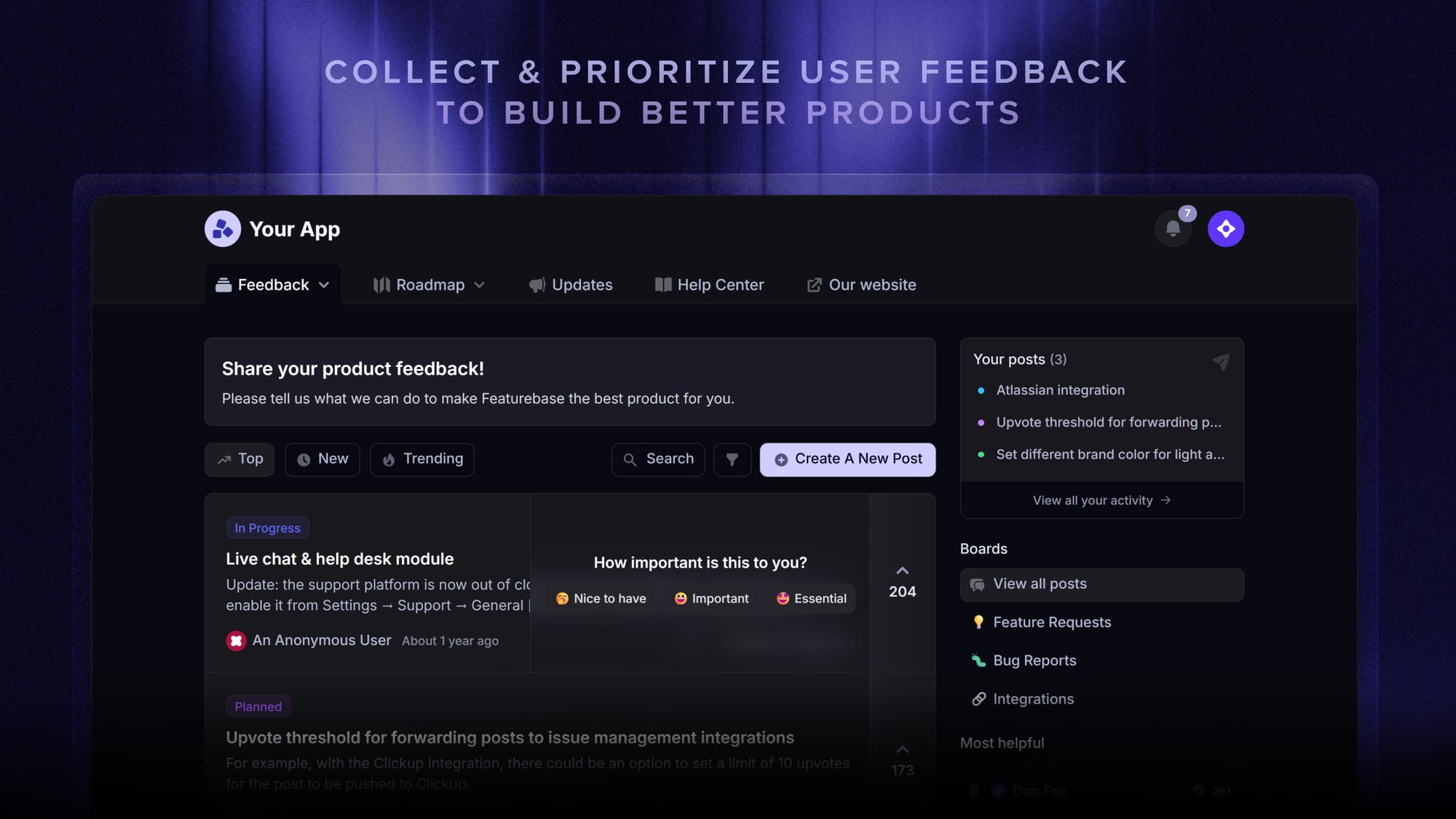
How it’s better than Harvestr: Featurebase gives you everything Harvestr offers and much more. Instead of only capturing feedback, Featurebase helps you manage support, send surveys, share product updates, and prioritize features with deeper customer context. It replaces multiple tools and gives SaaS teams a complete loop from feedback to delivery.
Pricing: Free plan with unlimited end-users and feedback. Paid plans start at $29/seat/month, with a 10-day free trial. 👇

Get the best powerful Harvestr alternative
Centralize feedback, identify product opportunities, and build the right features
2. Aha!
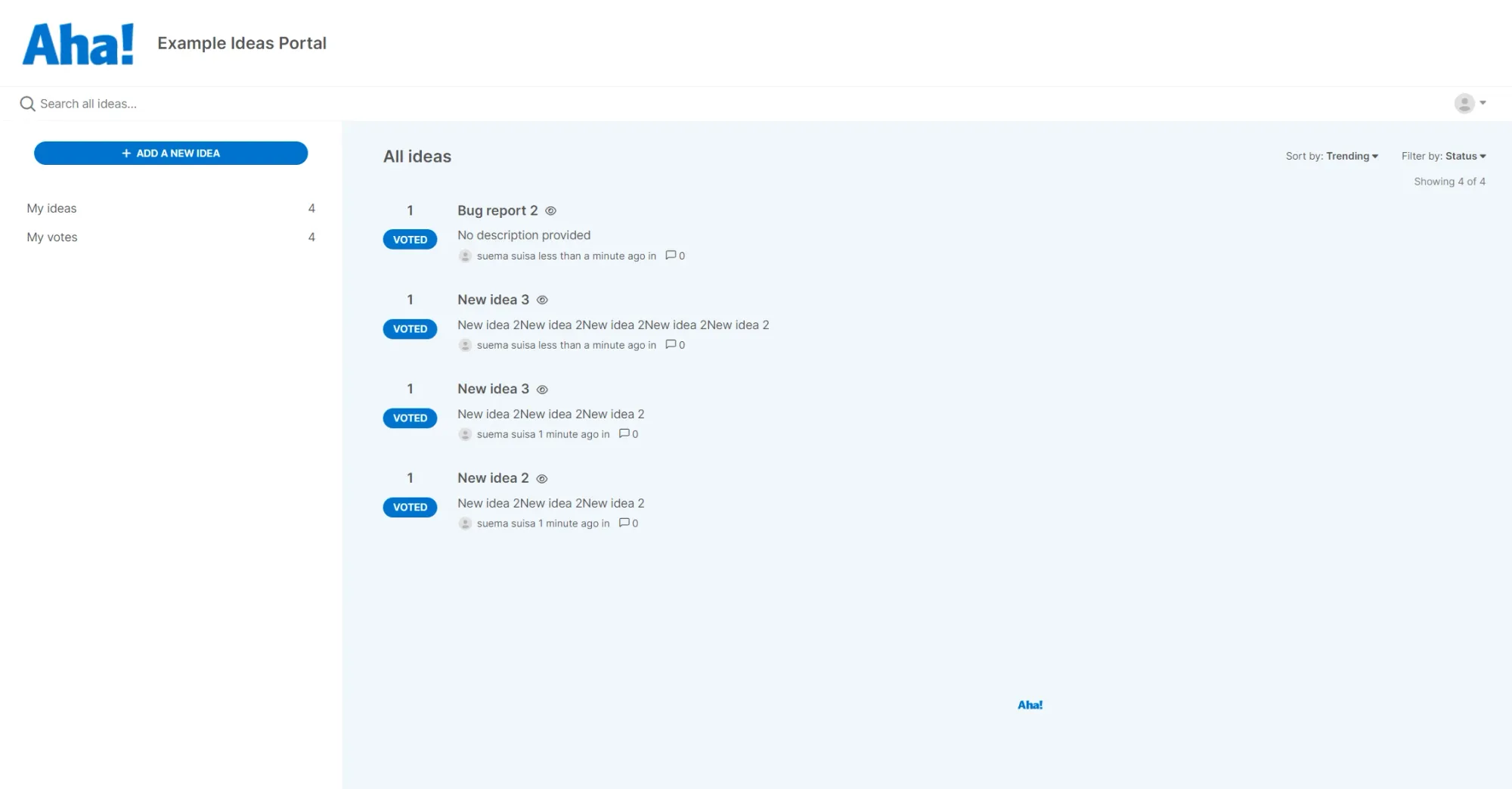
Aha! is a complete product management suite built for companies that want to plan strategy, capture ideas, and build detailed roadmaps in one structured workspace. It’s a good choice for larger product teams that need clear alignment between goals, features, and releases.
Top features
- Strategic planning: Define product vision, goals, and initiatives at a high level.
- Idea portal: Collect and rank feedback from customers and internal teams.
- Feature prioritization: Score ideas using customizable criteria to help decide what moves forward.
- Multiple roadmap styles: Build timeline, goal-based, or release-focused roadmaps.
- Deep development integrations: Sync with Jira, Azure DevOps, GitHub, and more.
How it’s better than Harvestr:
Aha! is more comprehensive and strategy-focused, giving product teams tools to define vision, manage goals, and plan long-term releases. Harvestr is stronger in feedback operations, while Aha! is better for end-to-end product planning.
Pricing: starts at $59 per user per month (for Aha! Roadmaps).
3. Productboard
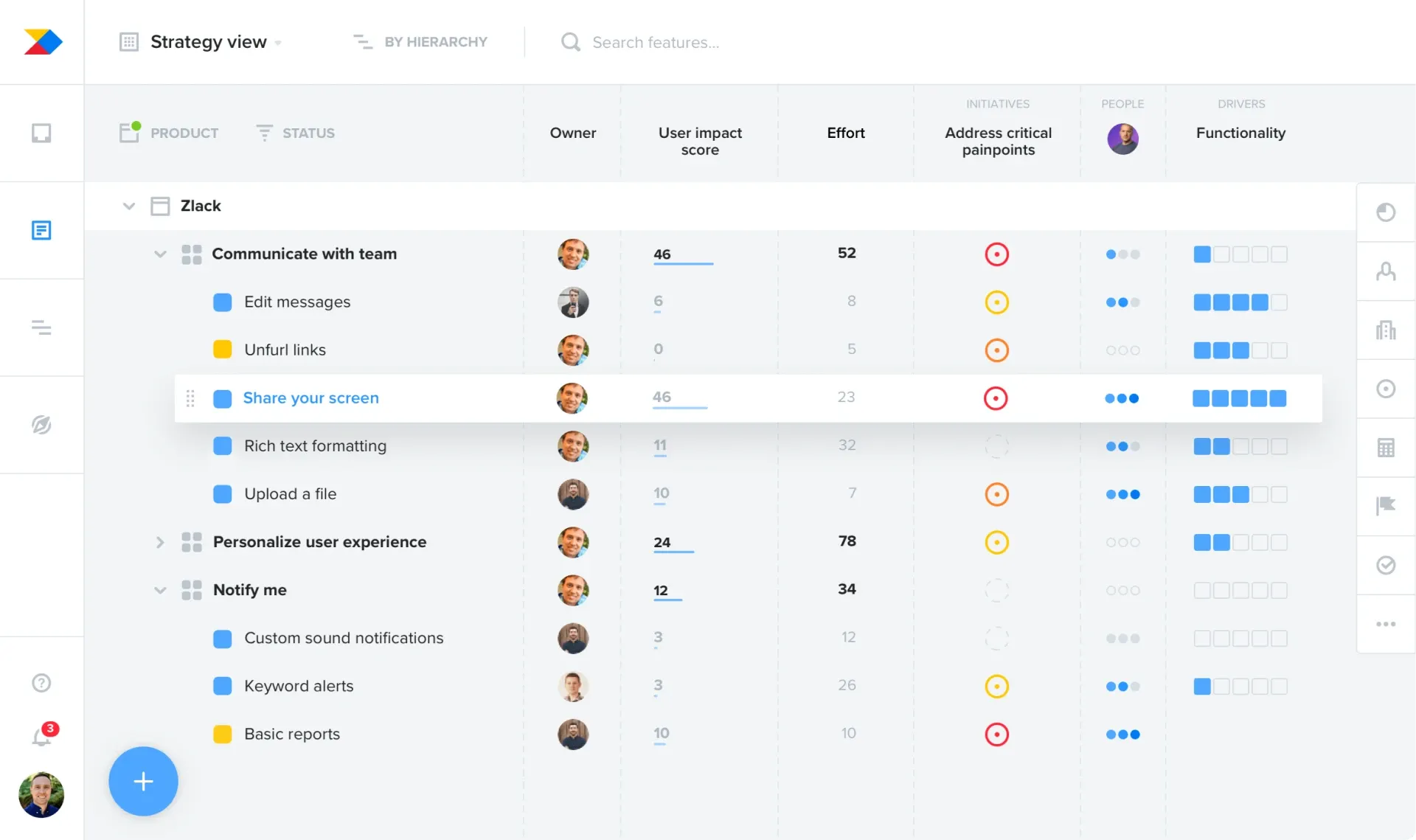
Productboard is a product management platform that helps teams understand customer needs, prioritize what to build, and share clear roadmaps. It’s made for product managers who want a structured way to translate feedback into product decisions.
Top features
- Feedback repository: Collect insights from email, support tools, and internal teams in one central hub.
- Customer insights scoring: Highlight the most important pain points based on urgency and frequency.
- Feature prioritization: Use built-in frameworks like RICE or custom scoring to decide what to build next.
- Roadmaps: Create shareable, customizable roadmaps for internal teams or public stakeholders.
- Integrations: Connect with tools like Jira, Salesforce, Intercom, and Slack to streamline workflows.
How it’s better than Harvestr:
Harvestr offers feedback and ticket management, but Productboard gives wider product management depth. It comes with scoring systems, flexible roadmaps, and strong enterprise integrations. It’s a better fit for teams that need a full product decision-making platform, not just feedback handling.
Pricing: ProductBoard pricing starts at $19 per maker per month.
4. Savio
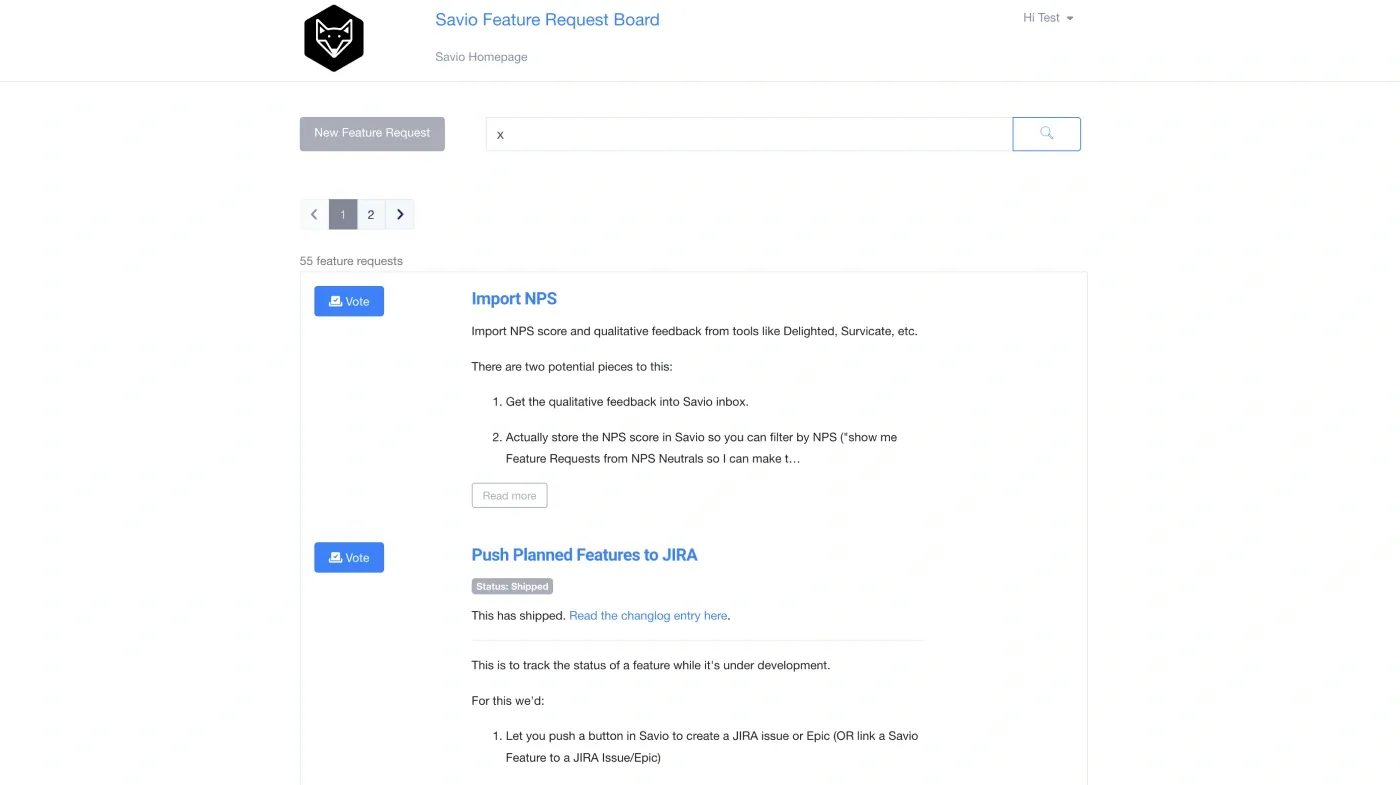
Savio is a customer feedback management platform built to help SaaS teams centralize feature requests and prioritize their product roadmap based on real user data. It’s best for product managers who want to connect customer conversations with actionable insights.
Top features
- Centralized feedback inbox: Collect customer feedback from multiple sources like Intercom, Zendesk, and Slack.
- Feature request tracking: Link feedback to specific features and see which requests matter most.
- Prioritization tools: Rank product ideas using customer segments, plan tiers, or revenue impact.
- Roadmap visualization: Turn insights into a shareable, transparent roadmap.
- Integrations: Connect Savio with CRMs, support platforms, and analytics tools to close the feedback loop.
How it’s better than Harvestr:
While Harvestr combines feedback with project tracking, Savio is stronger at capturing, organizing, and quantifying feedback from multiple sources. It’s ideal for teams that already have a product management system and want a dedicated hub for customer-driven decisions.
Pricing: starts at $39 per month.
5. Craft.io
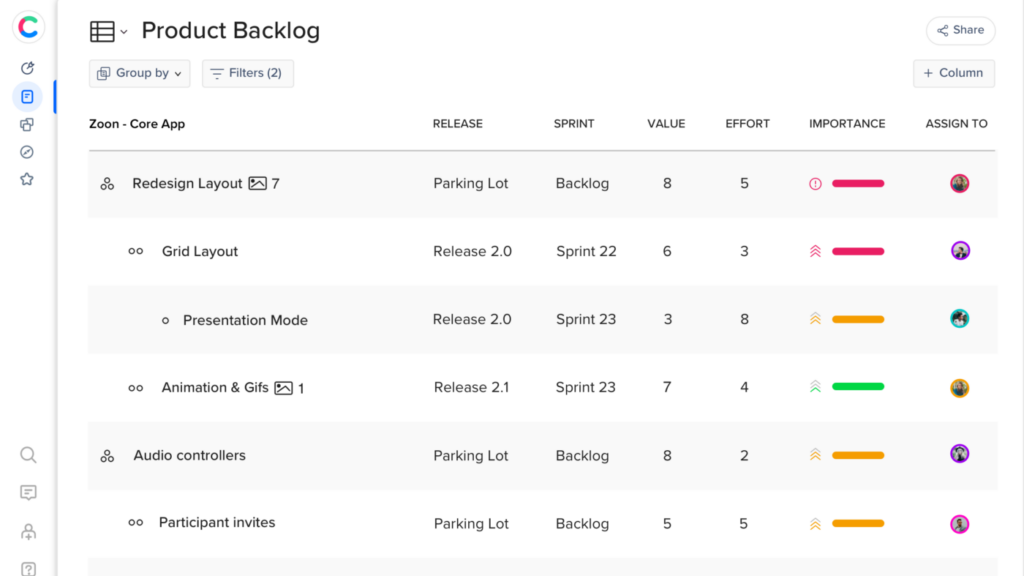
Craft.io is a product management platform that helps teams collect feedback, prioritize features, plan releases, and align everyone around a shared product vision. It’s designed for modern product teams that want a flexible and intuitive PM workflow.
Top features
- Feedback collection: Gather customer insights from multiple sources in one workspace.
- Spec editor: Write detailed product specs with templates, custom fields, and team input.
- Prioritization frameworks: Use RICE, MoSCoW, Value vs. Effort, or build your own scoring model.
- Roadmaps and views: Create visual roadmaps and switch between lists, boards, swimlanes, or timelines.
- Development integrations: Sync data with Jira, Azure DevOps, Linear, and GitHub.
How it’s better than Harvestr:
Craft offers more flexibility in how teams plan features, write specs, and build roadmaps. Harvestr focuses on support-driven feedback loops, while Craft.io is better for PM teams that need deeper planning tools and customizable product workflows.
Pricing: starts at $19 per editor per month.
6. Monday.com
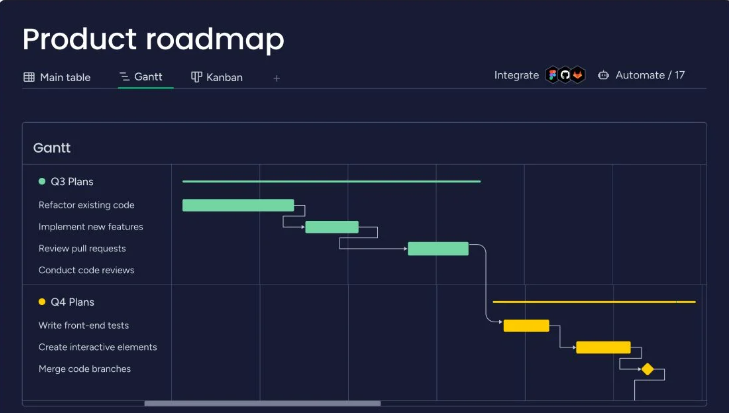
Monday.com is a work management platform that helps teams organize projects, track progress, and collaborate in a visual workspace. It’s great for cross-functional teams that need flexible boards and automation for day-to-day planning.
Top features
- Customizable boards: Build workflows for sprints, product launches, roadmaps, or feedback tracking.
- Views and dashboards: Switch between tables, timelines, calendars, Gantt-style views, and more.
- Automation rules: Set triggers to assign tasks, move items or notify teammates.
- Forms: Collect feedback or requests and send them directly to a board.
- Integrations: Connect Monday.com with Slack, Jira, HubSpot, and other tools, including calling and communication apps through Monday integrations.
How it’s better than Harvestr:
Harvestr focuses on product feedback and support linked insights. Monday.com is stronger for overall project management, planning and team coordination. It fits teams that want one workspace for all internal work rather than a dedicated feedback system.
Pricing: starts at $12 per seat per month.
7. Asana
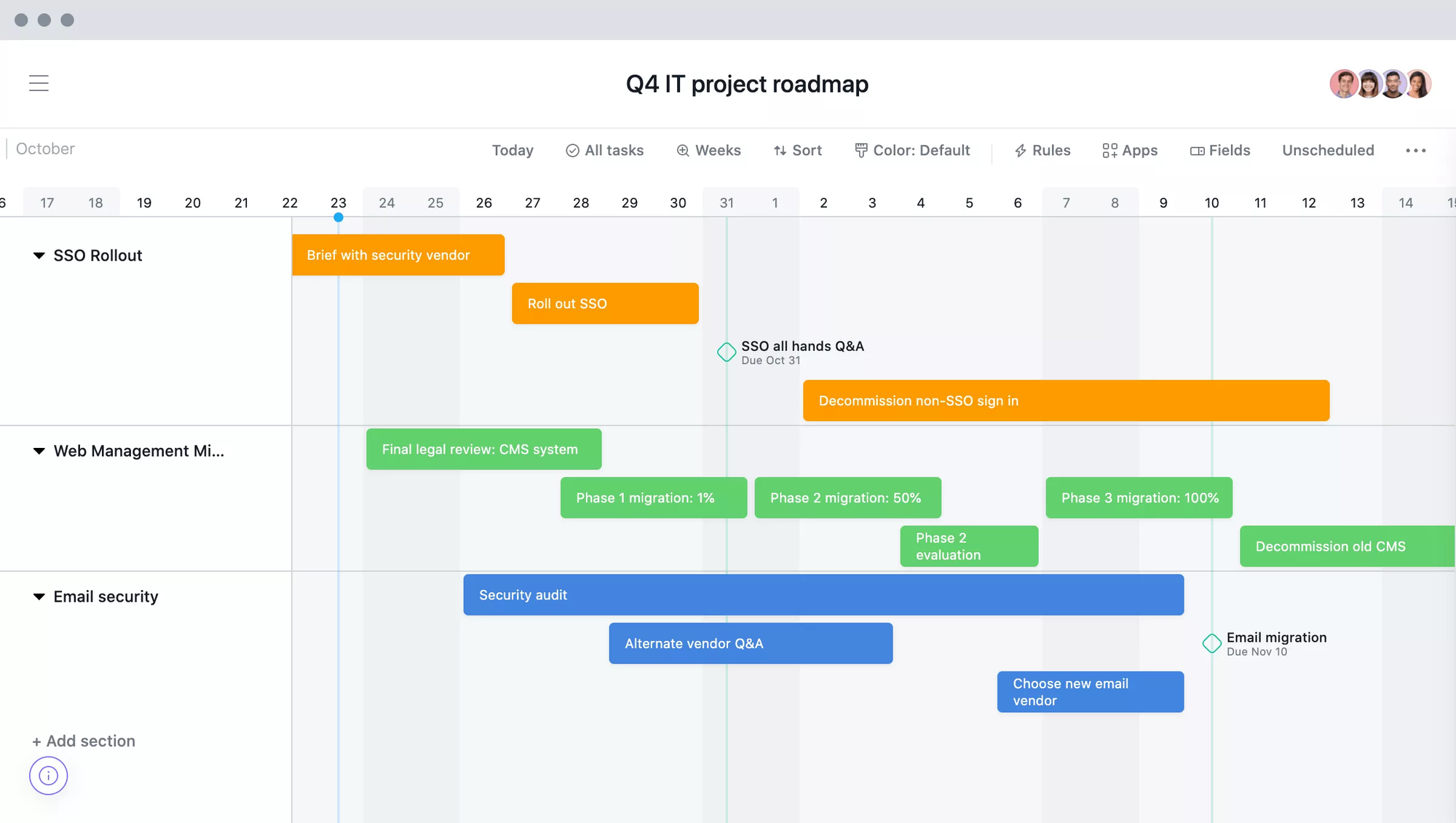
Asana is a project management tool built to help teams track tasks, plan projects, and keep workflows organized. It works well for teams that want a simple interface but a powerful structure as projects grow.
Top features
- Tasks and subtasks: Break work into clear actionable items.
- Multiple views: Use lists, boards, calendars and timeline views depending on the project.
- Workload management: See how much work each teammate has assigned.
- Automation: Reduce repetitive actions with rules for assignments and updates.
- Templates: Start quickly with ready-made flows for sprints, product plans, and creative requests.
How it’s better than Harvestr:
Asana is broader and better for coordinating full company projects. It is ideal if your team needs structured project planning rather than a system built specifically for product feedback and prioritization.
Pricing: starts at $10.99 per user per month (Starter plan).
8. Jira
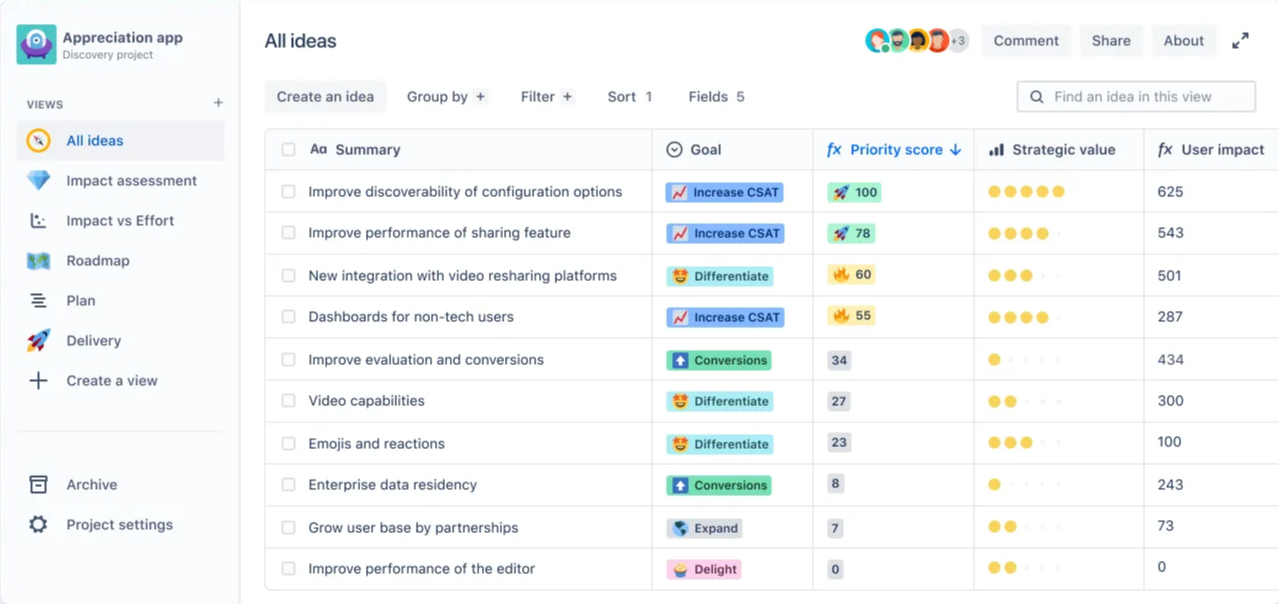
Jira is a powerful work management and issue tracking platform made for development teams that follow agile methods. It is best for engineering teams that need sprints, backlog management, and clear tracking of bugs and releases on top of advanced project management features.
Top features
- Backlog management: Prioritize upcoming tasks, bugs, and feature ideas in one organized space.
- Scrum and Kanban boards: Run sprints or continuous delivery using visual boards.
- Advanced workflows: Build custom states and approvals that match your development process.
- Release tracking: Plan versions, track progress, and connect work to deployments.
- Integrations: Connect with Confluence, GitHub, Bitbucket, Slack, and hundreds of development tools.
How it’s better than Harvestr:
Jira is purpose-built for engineering execution. It handles sprints, issues, and releases in a way Harvestr cannot. This makes it the better choice if your goal is project delivery rather than customer feedback management. However, managing feature requests in Jira and handling similar product management activities is not ideal, as we wrote before.
Pricing: starts at $7.91 per user per month.
9. Wrike
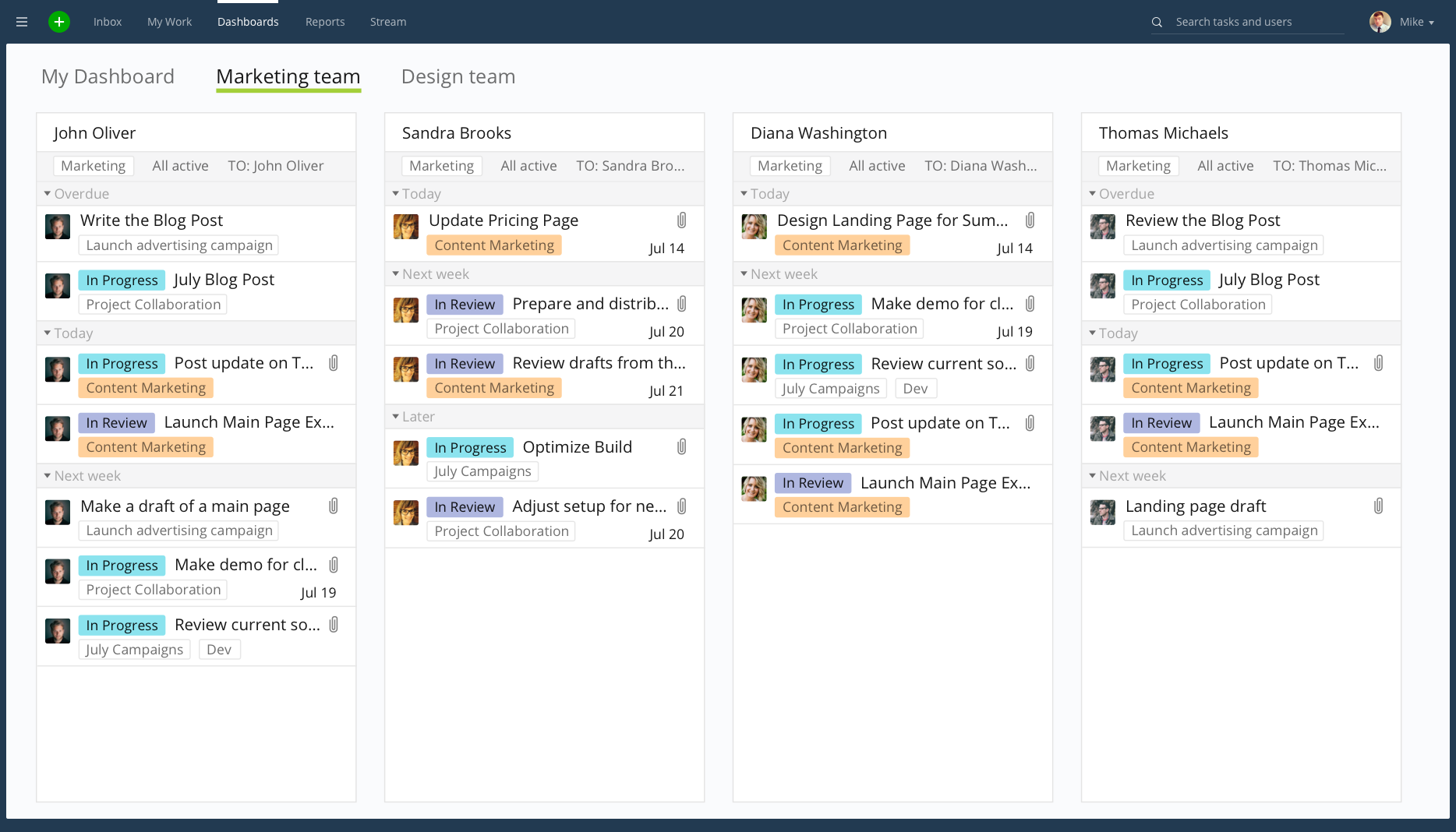
Wrike is a project management platform built for teams that need structure, visibility, and detailed control over complex work. It suits product, operations, and marketing teams that want customizable workflows without getting stuck in a rigid system.
Top features
- Custom workspaces: Create tailored project structures for sprints, roadmaps, or cross-functional planning.
- Multiple views: Switch between list, board, calendar, table, Gantt style views, or dashboards.
- Request forms: Capture feedback or requests and route them into the right folder automatically.
- Automations: Reduce manual actions with rules for assignments, updates, and approvals.
- Resource management: Monitor workloads and balance team capacity.
How it’s better than Harvestr
Wrike is stronger for full project delivery rather than feedback operations. If your team needs detailed planning, approvals, and execution tracking across departments, Wrike offers a broader project management system than Harvestr’s feedback-centered workflow.
Pricing: starts at $10 per user per month.
10. Trello
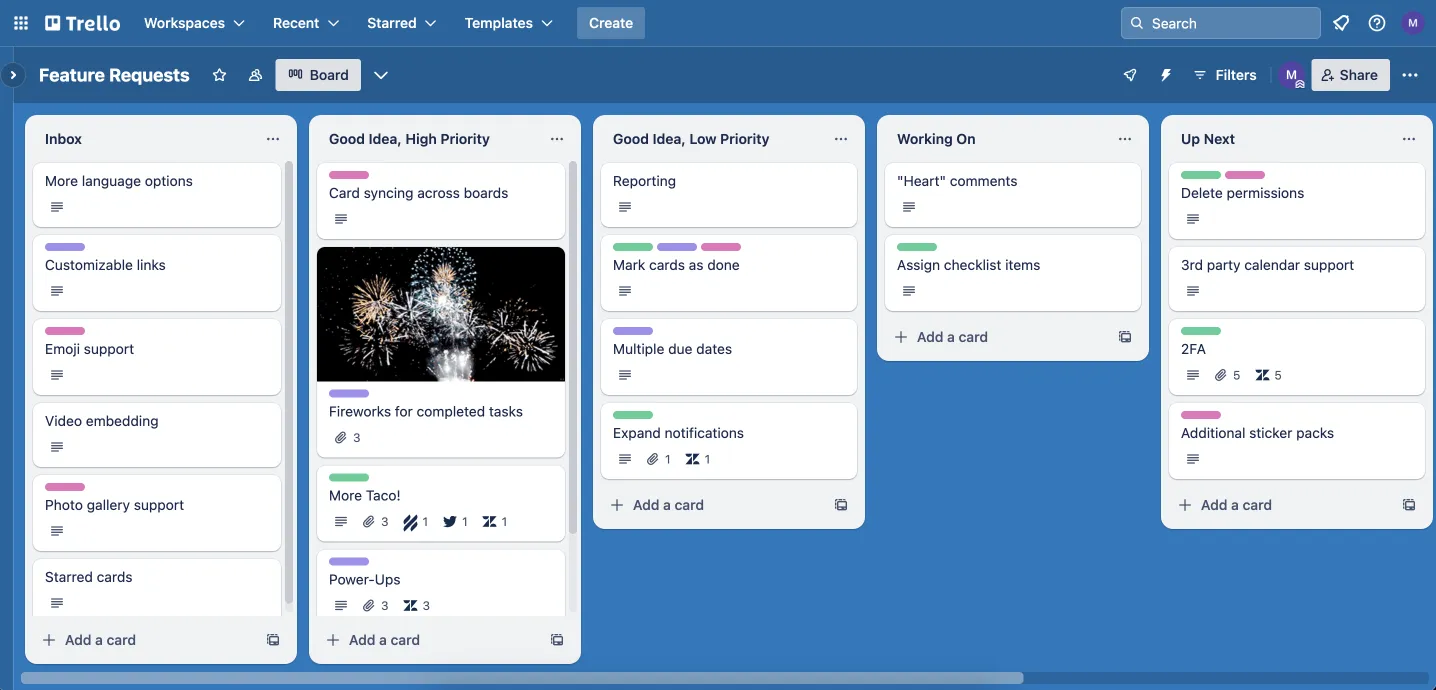
Trello is a lightweight project management tool that uses a card and board system to help teams organize tasks and ideas. It is best for small teams or those who prefer a simple visual approach without a complex setup.
Top features
- Kanban boards: Create pipelines for tasks, ideas, bugs or backlog items.
- Power ups: Add features like calendars, custom fields or integrations.
- Automation through Butler: Automate card movement, reminders and assignments.
- Checklists and attachments: Add details, documents and steps to each card.
- Templates: Use pre-built boards for product planning, content calendars, and meeting agendas.
How it’s better than Harvestr
Trello is easier for teams that want simple organization for tasks and ideas. It works well as a lightweight backlog tool. On the other hand, Harvestr is more specialized for structured product feedback and customer insight workflows.
Pricing: starts at $5 per user per month.
Conclusion
Harvestr is a bit of a gamble for product management. It's relatively new in the market but comes with a hefty price tag, which puts it in a tight spot. It's expensive for smaller teams, and enterprise businesses need something more flexible.
Featurebase is the best Harvestr alternative that helps you collect feedback, prioritize features, build roadmaps, and announce product updates – all in one place. It’s loved by thousands of product, marketing, and support teams from companies like Lovable, Polymarket, and Raycast. 💫
It comes with affordable pricing and a Free plan allowing unlimited feedback. The onboarding is incredibly quick and doesn't require a credit card, so there's no downside to trying it. 👇
✨ Start collecting & managing feedback with Featurebase for free →