Top 7 Voiceflow Alternatives for Conversational AI (2026)
Looking for modern Voiceflow alternatives? This guide spotlights modern alternatives with natural voice, instant responses, and transparent costs - plus when each one fits best.


On this page
Looking for more Voiceflow? You’re not alone.
Voiceflow is a great tool for prototyping chat and voice agents - simple drag-and-drop setup, no code needed, and solid for early testing. But once you try scaling those prototypes into production, you quickly start hitting limits. The voices sound robotic, the latency becomes noticeable, and pricing turns unpredictable fast.
Many teams realize Voiceflow is built for designing and testing, not for running real, high-quality AI voice automation.
Luckily, there are plenty of modern Voiceflow alternatives that combine natural-sounding AI, instant response times, and transparent pricing - all ready for real-world use. 👇
Short overview
- ✨ Featurebase – Best modern AI support & automation platform with human handoff
- Synthflow – Best for high-quality voice AI with zero latency
- Ada – Best for enterprise-grade omnichannel automation
- Chatbase – Best for simple AI chatbot building on your content
- Front – Best for teams needing shared inbox + multichannel AI support
- Decagon – Best for advanced, outcome-based AI agents across voice and chat
- ManyChat – Best for small businesses automating social and WhatsApp messages
What is Voiceflow?
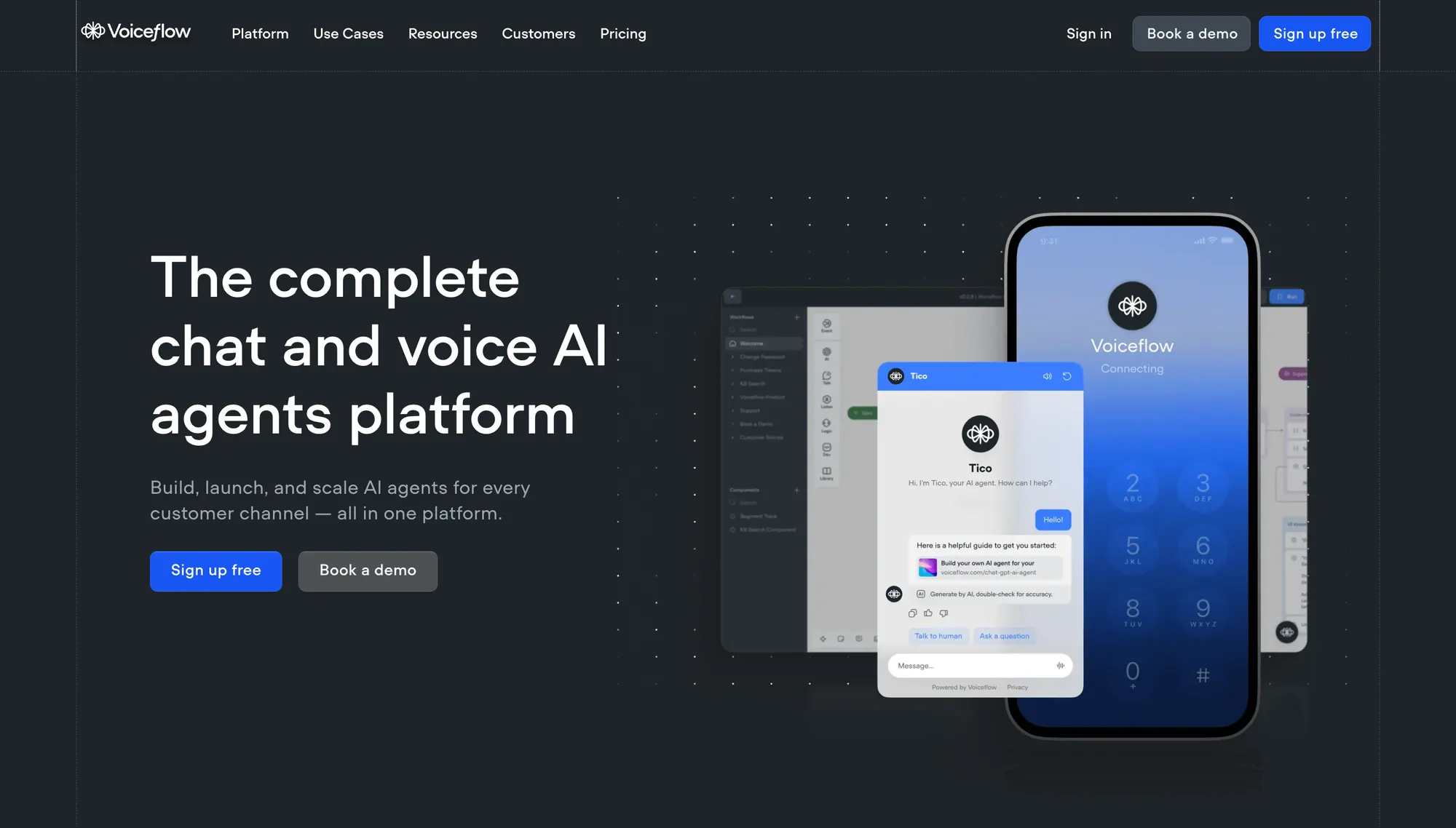
Voiceflow is a no-code conversational AI builder used to create chatbots and voice assistants. It lets you design, prototype, and deploy AI voice or chat agents using a drag-and-drop interface - no coding required.
Originally popular for building Alexa and Google Assistant skills, Voiceflow has evolved into a broader conversational design tool. You can connect APIs, add logic blocks, and test real-time conversations inside the editor.
It’s great for early-stage projects or UX teams mapping conversation flows. But once you need real production automation, custom AI behavior, AI voice detector capabilities, or enterprise-grade telephony, Voiceflow’s limitations start to show, especially around scalability, latency, and pricing complexity.
Why look for a Voiceflow alternative?
Voiceflow is great for prototyping, but many teams hit limits fast when moving to production. Here are the main reasons real users start looking elsewhere.
1. Complicated pricing & unpredictable costs
Voiceflow’s pricing combines plan tiers, per-seat fees, and usage credits - which makes it very complex. Paid plans start at $60/month for 10,000 credits and $150/month for 30,000 credits, but that includes only one editor. Each extra seat adds $50/month.
- "I dislike that Voiceflow’s pricing can get expensive as projects or teams grow, and some advanced features (like version control or analytics) are locked behind higher plans. Also, large or complex flows can feel a bit slow to load, especially on lower-end devices." (G2 review)
Once you hit your credit limit, your bots stop responding immediately - and there’s no way to buy top-ups. Add separate Twilio or Vonage call costs, and bills can climb fast. Great for prototyping, but too unpredictable for real production use.
2. Voice capability limitations
Voiceflow’s voice features rely on third-party APIs instead of being built in. This causes lag (1–1.5s delays) and limited control over tone, pacing, or emotion, making voices sound robotic. Voice testing is also basic - you can’t simulate full real-time conversations before launch.
- "Can get expensive as your usage or team grows. Voice replies can be slow sometimes. Limited built-in reports; hard to track detailed performance. Complex bots can still be tricky to set up." (G2 review)
3. Missing integrations & handoff features
There’s no native way to hand conversations from bots to humans or connect easily with tools like Zapier, HubSpot, or Make. Integrations often require custom APIs, and some users report Twilio calls failing to pass key data like user IDs or names.
4. Weak analytics & data visibility
Analytics are basic, with no deep reporting or conversation insights. Transcript exports are unreliable - some users say only the first message logs correctly, making it hard to analyze or audit customer interactions.
Top 7 Voiceflow alternatives in 2025
Here’s a list of the best 7 Voiceflow alternatives worth considering - based on real reviews, pricing, and use cases. 👇
1. Featurebase ✨
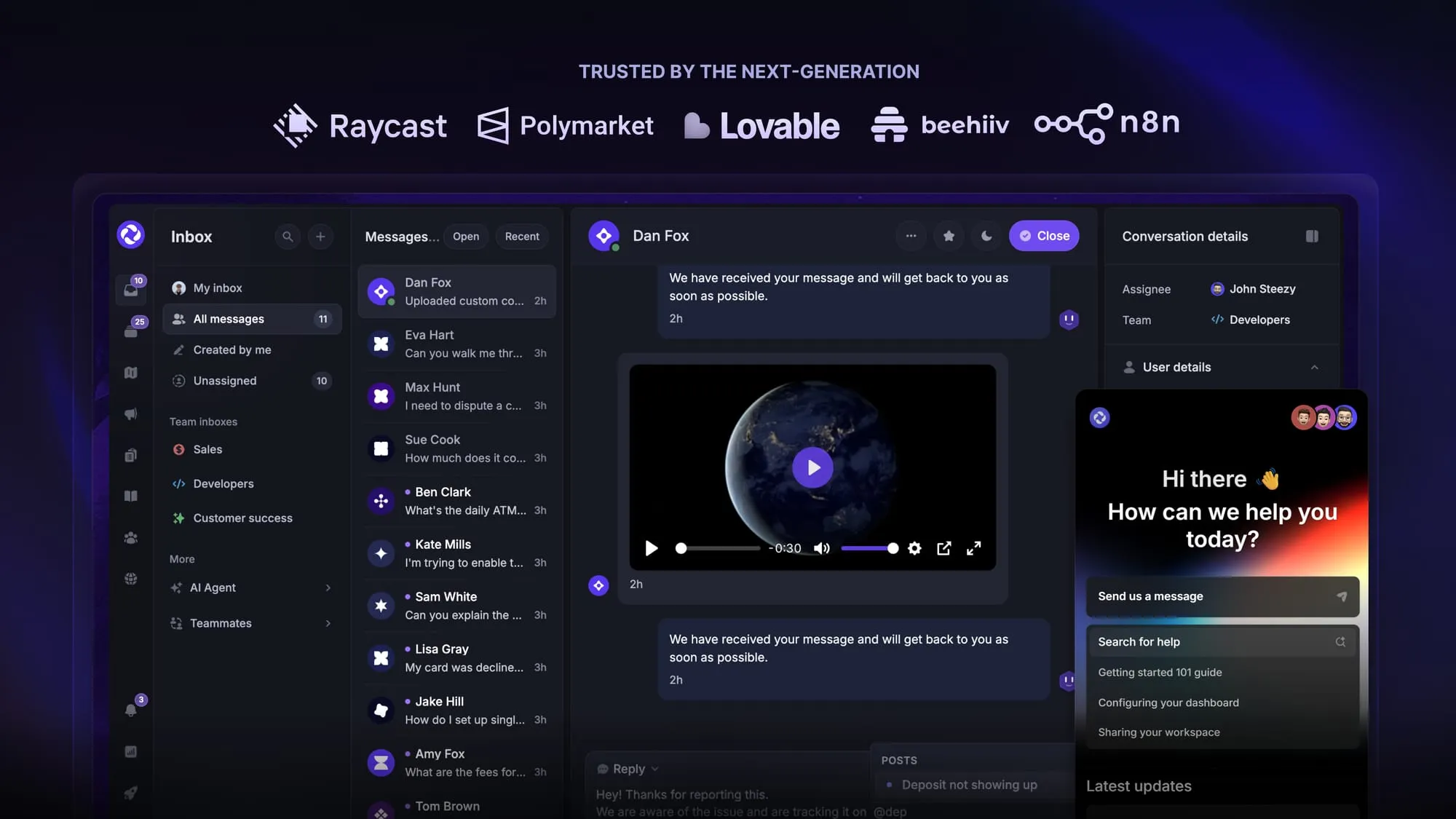
Featurebase is a modern Voiceflow alternative built for conversational AI support for fast-growing SaaS companies. It combines AI agents, live chat, automations, and a help center into one unified platform - while allowing seamless handovers to humans. It's loved by thousands of support teams from companies like Lovable, Raycast, and n8n. 💫
Top features:
- AI agent & automations – Automate tasks like trial extensions, refunds, and lead qualification
- Unified inbox – Manage chat, email, and Slack conversations from one AI-powered view
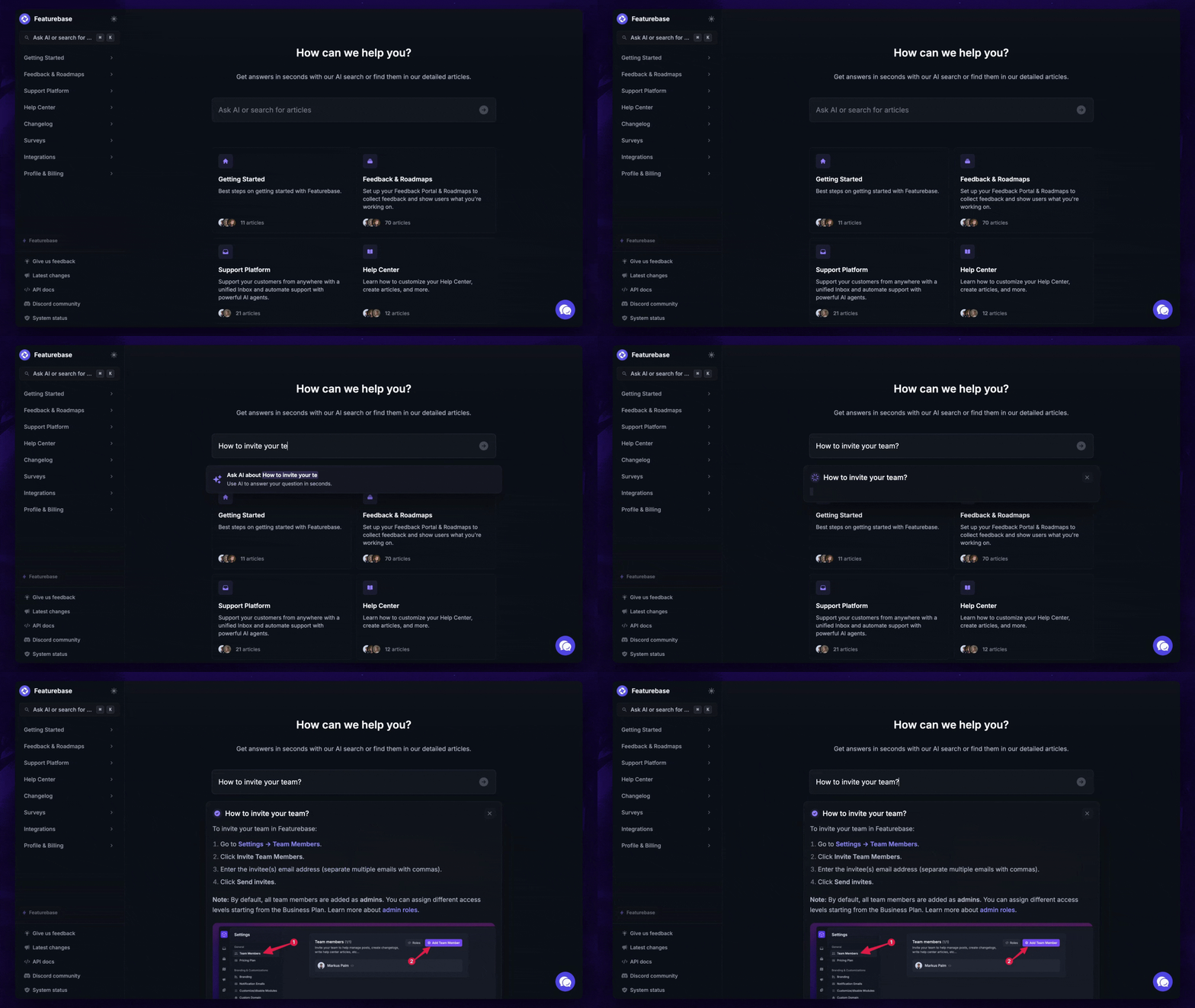
- Help center with AI search – Provide instant, multilingual self-serve answers
- Mobile app – respond to customers, receive notifications, and unblock users on the go
- Live chat widget – Deliver AI and human support in-app or on your website
- Feedback & roadmap tools – Collect feature requests and close the loop with updates
- Changelog – publish product updates with a changelog page, in-app widget, and emails
- Integrations – Connects with Slack, Linear, Jira, HubSpot, and more
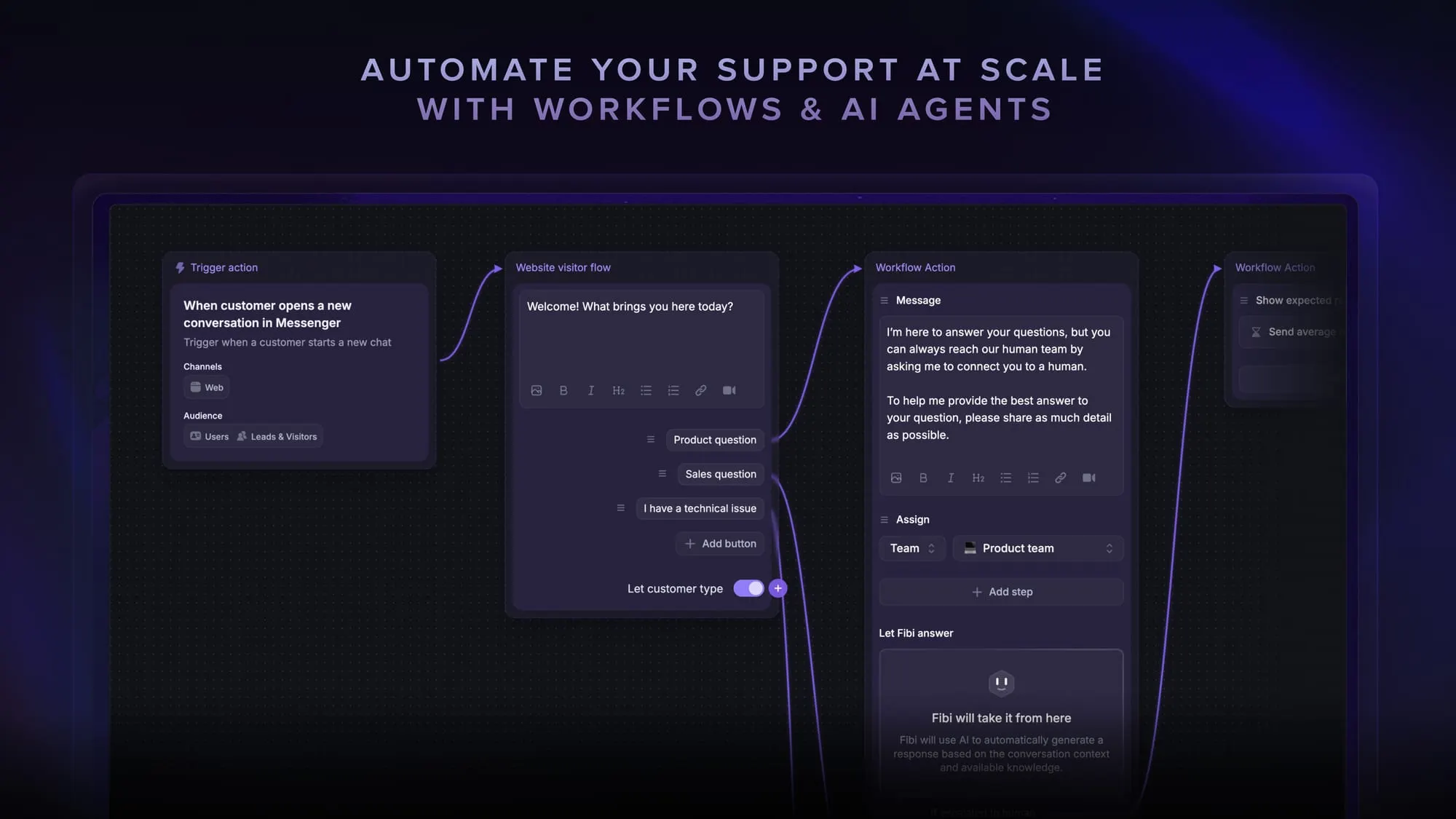
Why it’s better than Voiceflow:
Featurebase offers a comprehensive AI-powered platform for real, scaling support operations. It combines AI support agents, powerful automations, and multiple channels (live chat, email, etc.) into one ecosystem.
Pricing: Free plan available with unlimited conversations. Paid plans start at $29/month with transparent pricing. The onboarding is super fast, and doesn't require a credit card, so there's no downside to trying it. 👇
Automate your customer support with the fastest AI-enchanced inbox today
2. Synthflow
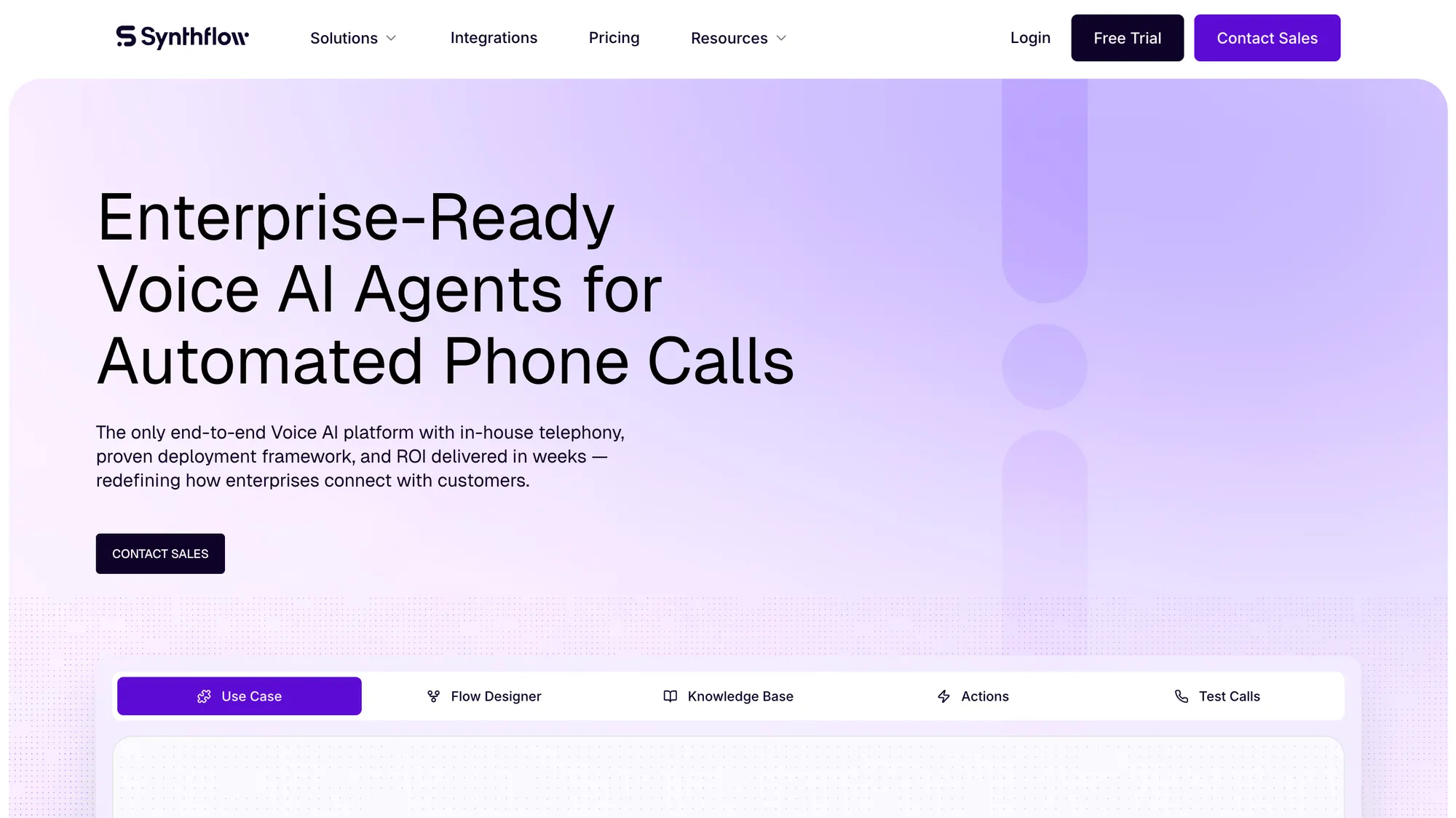
Synthflow is built for real production voice automation, not just prototyping. It delivers natural-sounding voice agents, instant responses, and built-in telephony without relying on third-party APIs like Twilio. Unlike Voiceflow's AI, everything runs natively, so latency is near zero and voice quality stays consistent even at scale.
Key features:
- Zero-latency, human-like voices with emotion control
- Built-in telephony and call routing
- HIPAA-compliant infrastructure
- No-code visual flow builder with an intuitive interface
- Integrations with CRMs, scheduling tools, and other platforms
Why it’s better than Voiceflow:
Voiceflow depends on external APIs and often suffers from 1–2 second lag. Synthflow eliminates that with native voice capabilities and predictable, usage-based pricing that scales cleanly with your business needs.
Pricing: Starts at $29/month for 5,000 minutes and 1 agent.
Best for: Teams that need real-time, lifelike conversational AI for customer service calls and support automation.
3. Ada.cx
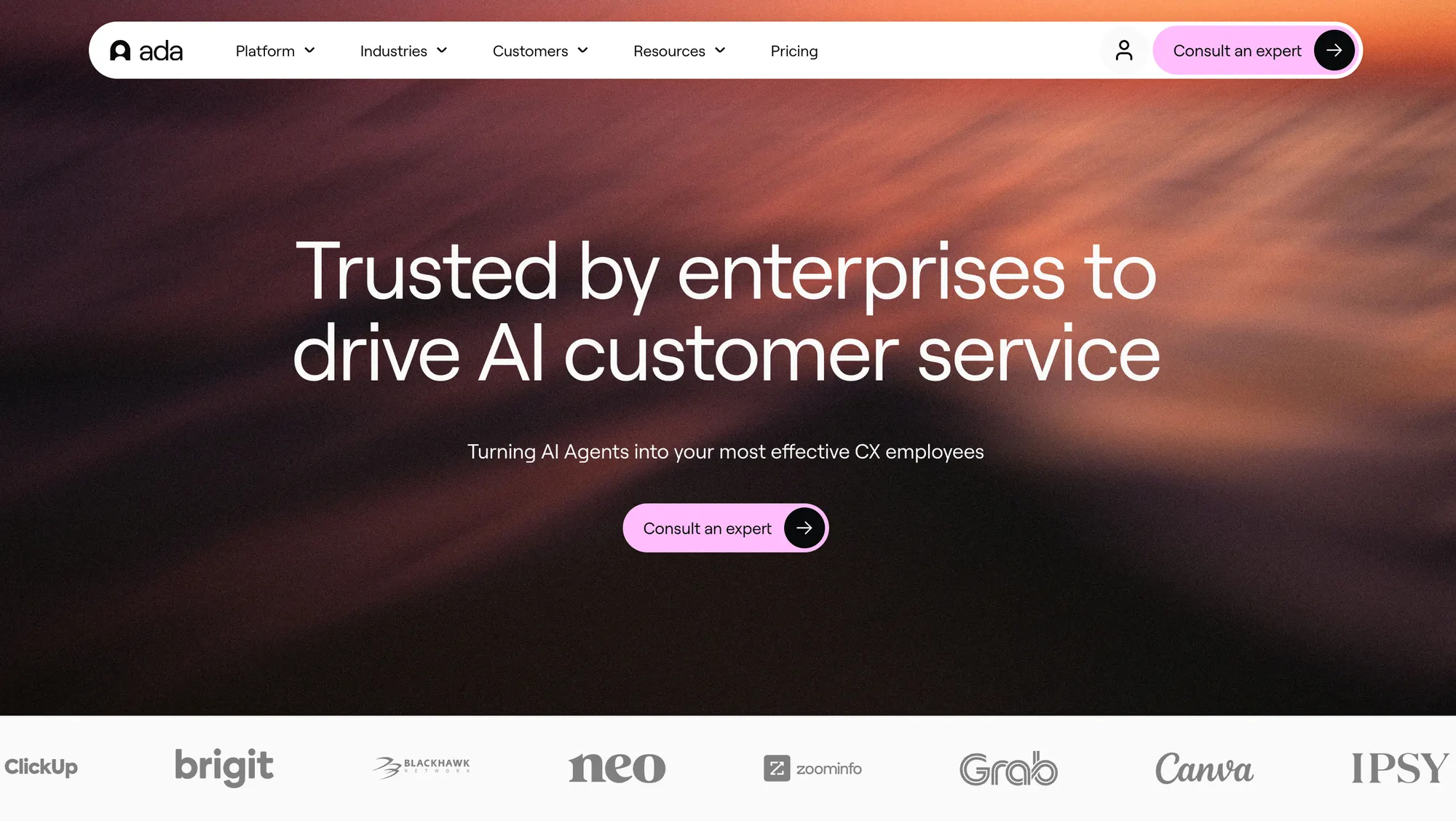
Ada is a powerful conversational AI platform that helps large teams automate customer conversations across voice, chat, and email - all in one place. It’s ideal for enterprises that need multichannel support, advanced AI features, and seamless handoffs between bots and human agents.
Key features:
- Omnichannel automation (chat, voice, and email)
- Sentiment-aware responses and intent detection
- Advanced routing and escalation logic
- Robust integrations with Salesforce, Zendesk, and Genesys
- Multilingual support for 50+ languages
Why it’s better than Voiceflow:
While Voiceflow AI is great for prototyping, Ada is made for enterprise-grade production automation. Its adaptive AI assistants continuously learn from customer interactions, boosting efficiency and customer satisfaction while reducing operational costs.
Pricing: Custom enterprise pricing (typically starts in the low six figures annually).
Best for: Large organizations that need scalable AI-powered automation and multilingual customer support across multiple channels.
4. Chatbase
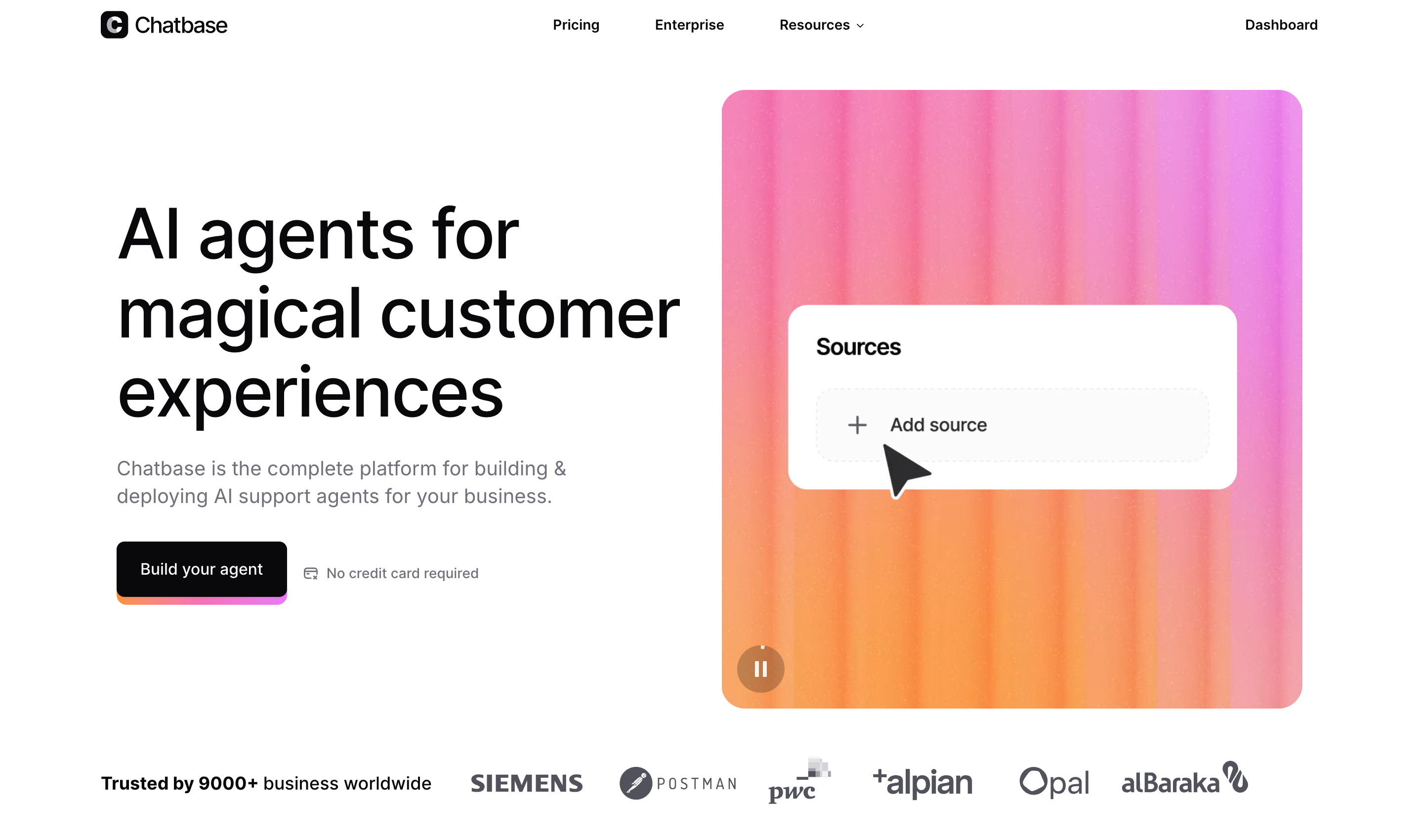
Chatbase is one of the easiest Voiceflow alternatives if you want a no-code platform to launch chatbots powered by GPT-4. You can train bots on your company’s content - PDFs, URLs, or Notion docs - and deploy them anywhere in minutes.
Key features:
- No-code setup with GPT-4 chatbot builder
- Train bots on your website or documents
- Multi-channel deployment (web, app, or API)
- Advanced analytics for tracking performance
- Supports 80+ languages
Why it’s better than Voiceflow:
Voiceflow can feel like just a chatbot builder, while Chatbase makes conversational AI development simple and fast for non-technical users. It’s perfect for capturing leads, onboarding, or handling FAQs with zero setup complexity.
Pricing: Chatbase's pricing starts with a Free plan; paid plans start at $19/month.
Best for: Startups and small teams that want an affordable, AI-powered chatbot trained on their own content.
5. Front
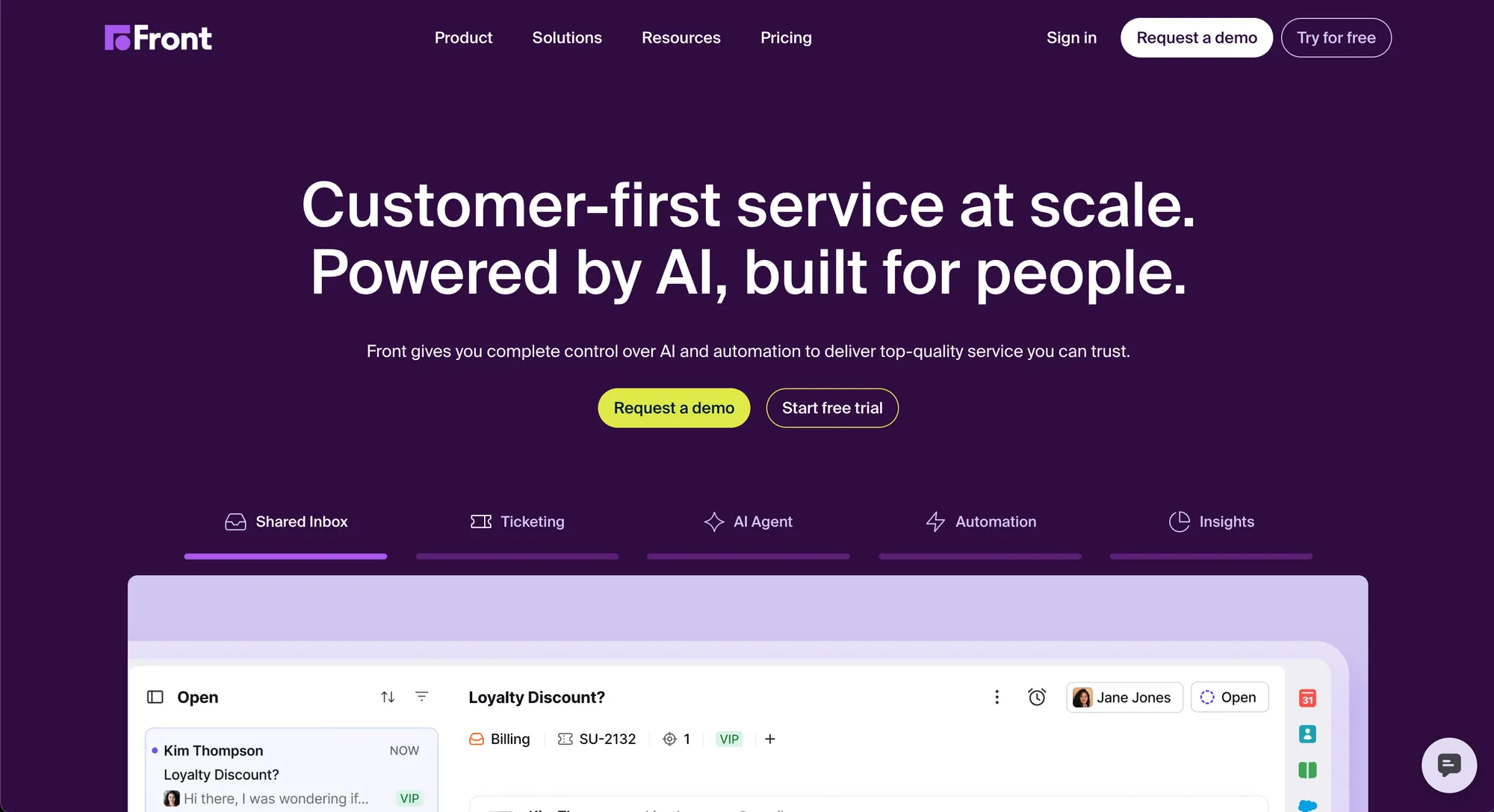
Front is a comprehensive Voiceflow alternative for managing all communication channels in one place. It combines email, chat, and social messages into a shared inbox and layers on AI-powered automation to speed up responses.
Key features:
- Unified inbox for email, chat, and social
- AI reply suggestions and workflow automation
- Rules for routing, tagging, and prioritizing conversations
- Advanced analytics to measure team performance
- Integrations with CRMs and project management tools
Why it’s better than Voiceflow:
Unlike Voiceflow AI, which focuses on building voice bots, Front is about improving real customer engagement. It bridges human agents and automation, making it easier to manage high volumes of customer queries efficiently.
Pricing: Front's pricing starts at $25/user/month (billed annually).
Best for: Teams that want AI-enhanced collaboration and better customer engagement across multiple channels.
6. Decagon
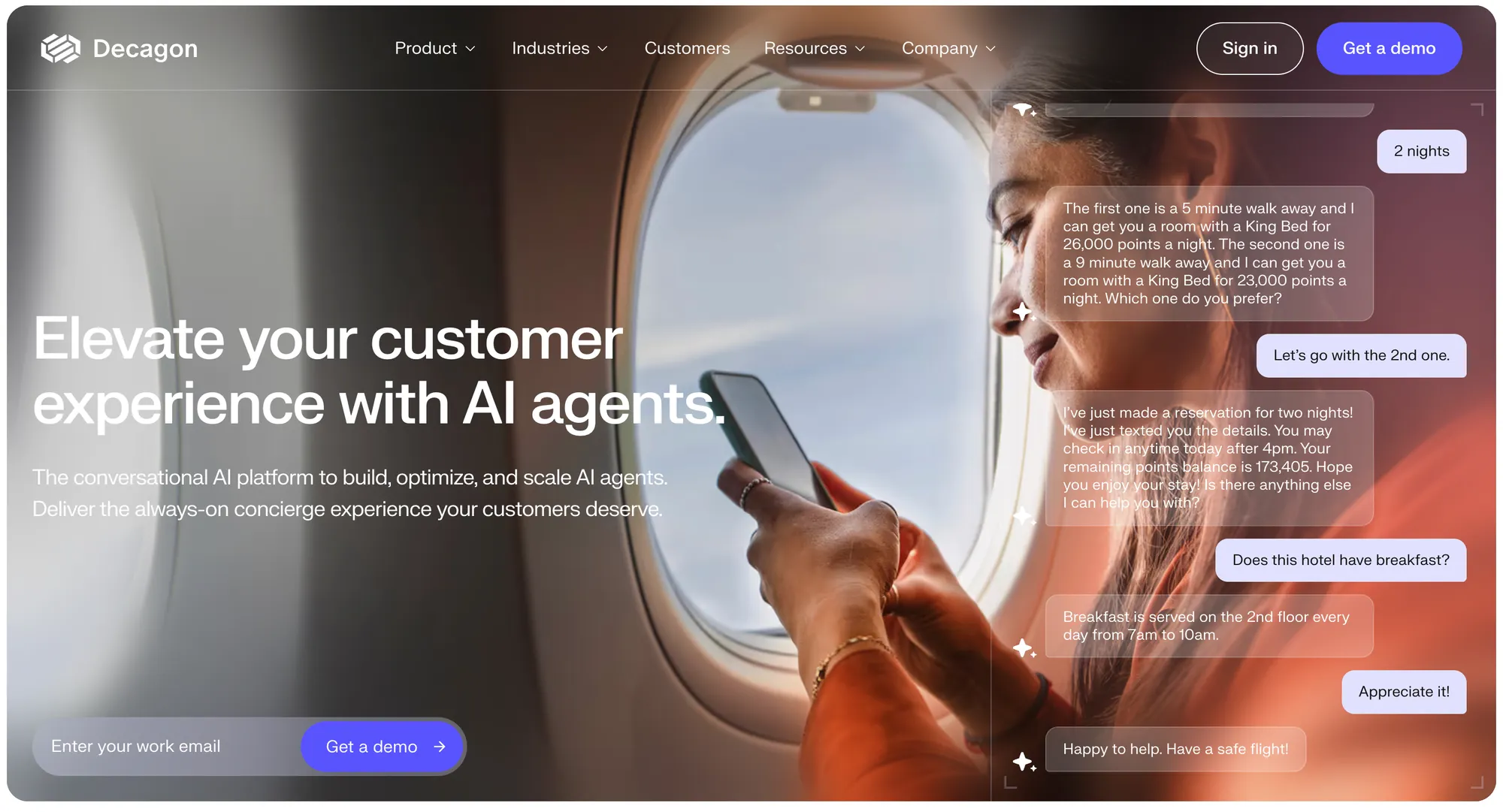
Decagon is an enterprise-focused Voiceflow alternative for large teams that need advanced AI agents capable of reasoning and real-time adaptation. Its Agent Operating Procedures (AOPs) let you define logic in plain English, giving teams complete control without code.
Key features:
- Real-time AI agents for voice, chat, and email
- Agent logic defined in natural language (AOPs)
- Shared AI “brain” for consistent context across channels
- Deep observability with full transcript tracking and analytics
- Custom voice tuning and brand voice control
Why it’s better than Voiceflow:
Voiceflow handles scripted conversational flows, but Decagon supports autonomous AI assistants that think and respond dynamically. It’s built for enterprise-grade reliability, advanced analytics, and full transparency.
Pricing: Enterprise-only; typically starts around $95K/year, depending on volume and integrations.
Best for: SaaS and telecom companies needing reliable, auditable AI agents across multiple communication channels.
7. ManyChat
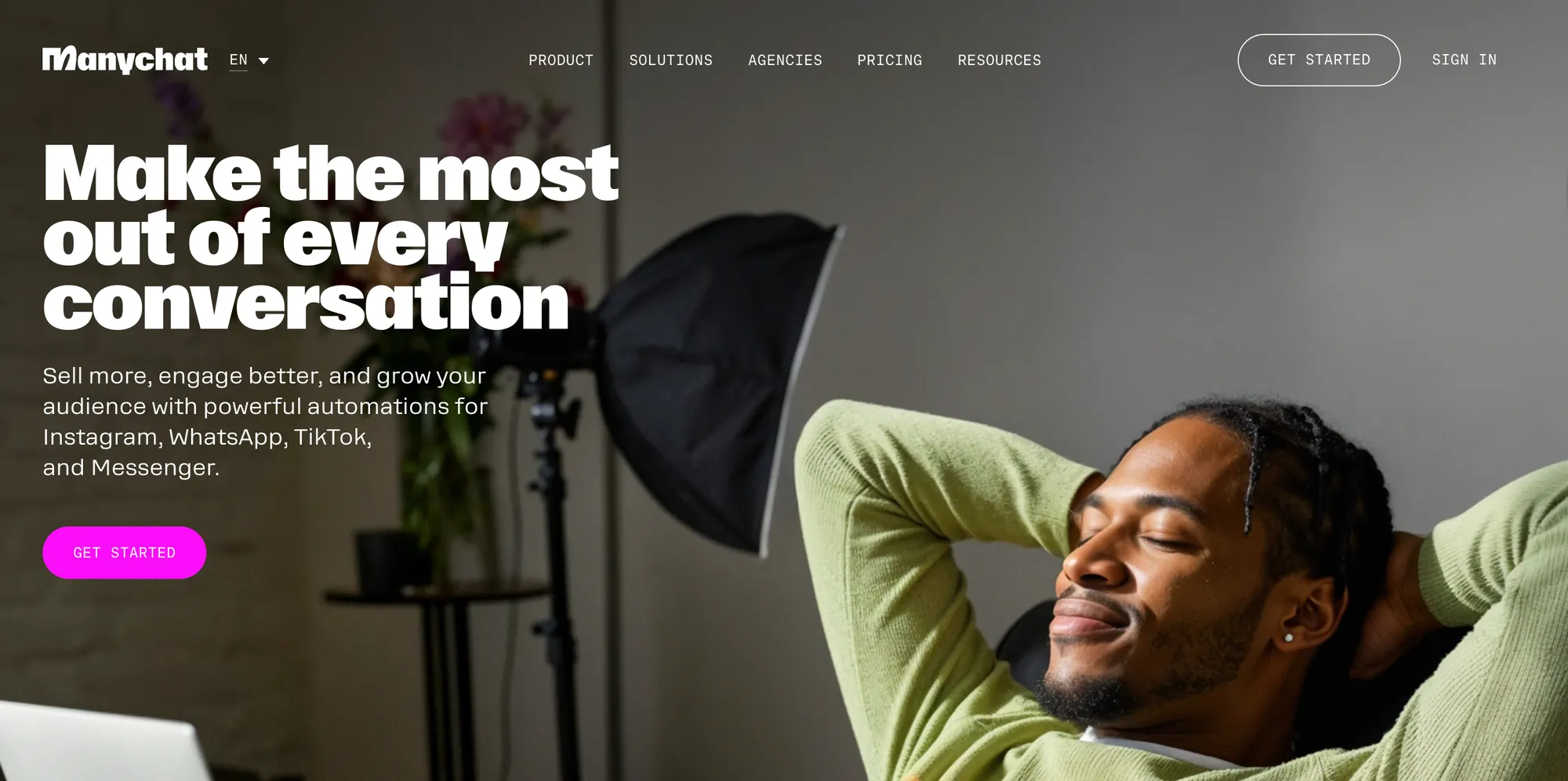
ManyChat is a no-code platform for marketing automation that helps businesses engage customers on Instagram, WhatsApp, and Facebook Messenger through drag-and-drop conversational flows. It's a good Voiceflow alternative for e-commerce teams looking to engage customers through social channels.
Key features:
- Visual drag-and-drop builder for social chat flows
- Multi-channel messaging (Instagram, WhatsApp, Facebook)
- Templates for lead generation, eCommerce, and customer support
- Broadcast and campaign automation
- Integrations with Shopify, HubSpot, and Google Sheets
Why it’s better than Voiceflow:
While Voiceflow is better for prototyping voice apps, ManyChat is purpose-built for seamless customer engagement on social channels. It’s easier to use, highly visual, and much cheaper - ideal for mid-sized businesses and marketing teams.
Pricing: ManyChat's pricing comes with a Free plan; paid plans start at $15/month.
Best for: Businesses that want to automate customer interactions on social platforms with an intuitive drag-and-drop interface and affordable pricing.
Final verdict
Voiceflow is solid for designing and testing conversational AI flows, but it struggles when you move to production-level AI automation. Its pricing gets complex fast, voice quality feels robotic, and integrations are limited - making it unideal for real-world performance.
Featurebase is the best modern Voiceflow alternative for AI-powered support with seamless human handoff and ticketing. It combines AI automation, omnichannel chatbots, and a help center into a single powerful platform. What’s best is that it comes with a Free plan and unlimited AI credits on paid plans, so there’s no downside to trying it out. 👇
Automate your customer support with the fastest AI-enchanced inbox today


