Blog Comparisons11 Best Decagon Alternatives for Modern AI-powered Support
11 Best Decagon Alternatives for Modern AI-powered Support
Worried Decagon’s untransparent pricing, limited reviews, and early features make it a risky bet for AI-powered support? This guide compares 11 stronger alternatives so you can pick the right tool without guesswork.

When purchasing software for your tech stack, it's sometimes worth taking a risk.
In the case of customer support and AI agents, customer support leaders like Intercom Fin or Zendesk can seem like a logical choice. But over time, these tools become expensive, add unnecessary features, and it becomes really difficult to get started if you're a complete newbie.
If you want to root for the underdog, Decagon is a newish tool that helps businesses achieve better customer satisfaction through AI agents. But trusting your customer interactions to a new market player can seem like a risk, too.
Today, we show you some of the reasons why users look for Decagon alternatives and which tools you should consider instead. 👇
TL;DR – The best Decagon alternatives to try in 2025
- ✨ Featurebase: Best modern AI support & product suite for fast-growing startups
- Intercom: Conversational AI-powered customer engagement and in-app support
- Zendesk: Enterprise-grade ticketing and automation across global teams.
- Sierra AI: Fully autonomous AI agents for complex voice and chat interactions
- Cognigy: Enterprise conversational AI and voice automation at scale
- Voiceflow: No-code platform to design and deploy advanced AI assistants
- Kore AI: Customizable AI agents for automating service, sales, and support
- Kustomer: Unified automation and omnichannel support in one timeline
- Kodif: AI-driven workflow automation and low-code self-service for support teams
- eesel AI: AI assistant for unified knowledge, ticket automation, and search
- Quiq: enterprise agentic AI platform for handling customer inquiries from end to end
Why look for Decagon AI alternatives?
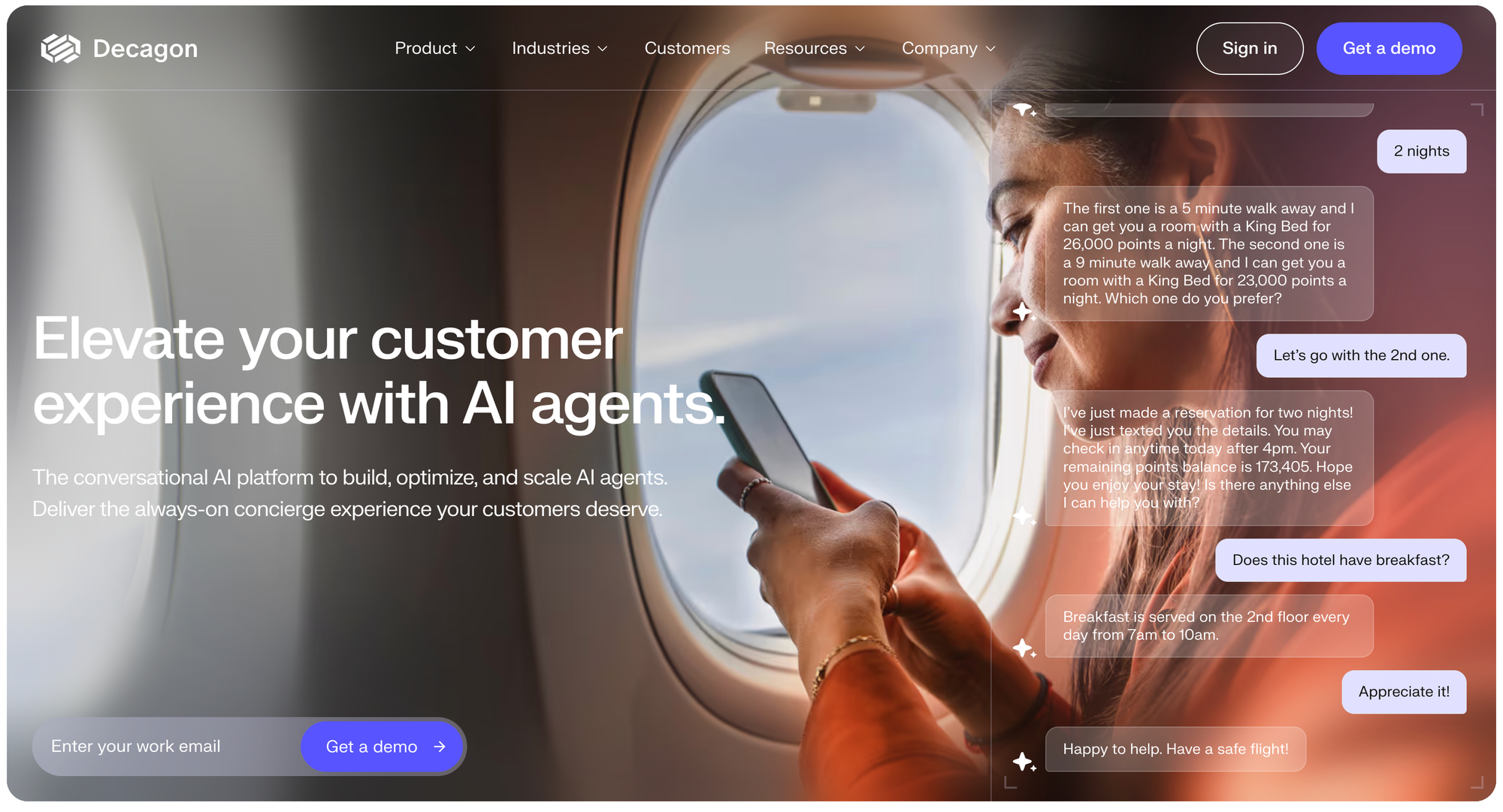
Decagon is built for large, complex CX orgs. If you’re a startup or mid-market team that wants transparent pricing, mixed AI and human workflows inside one tool, and granular control without a heavy rollout, you will feel boxed in.
1. Pricing is untransparent & enterprise-first
Decagon doesn’t list any pricing on their website. No free plan, no trial, not even a ballpark estimate. The only option is to book a demo and hope the quote fits your budget.
That’s usually fine for companies like Notion, Hertz, or Duolingo. But for startups or smaller CX teams that want to experiment, test ROI, and move fast, it's far from ideal.
2. AI-first & no human handoff
Decagon’s entire platform is built around AI automation. That’s the pitch: autonomous AI agents that resolve customer issues without human help.
The problem is that there’s no native way for your human support agents to jump in when needed. Decagon expects you to integrate it with another helpdesk, like Zendesk or Salesforce, for human handoffs, which easily 2-3x your tooling costs.
That might work for enterprise workflows, but for most growing startups, it’s a pain. You end up managing two tools instead of one - your AI chatbot in Decagon, and your actual customer support in something else.
3. Limited control
Even though Decagon gives you AI monitoring and “guardrail” tools, it’s not built for teams that want fine-tuned control over every interaction.
A few G2 reviews mention that the product still feels early-stage, with features rolling out slowly and occasional bugs. That’s not surprising for a newer platform, but it can be frustrating if you need something stable and predictable:
- "Decagon is still a new product, and lacks maturity in some of its features. For instance, regression testing on recently became available, and they are still building out guardrails that are necessary for the long term quality of our chatbots." - G2 review
If you want clear pricing, a mix of AI + human support, and more control over how your assistant behaves, you’ll be better off with one of the Decagon alternatives below. 👇
The best AI-powered Decagon alternatives
Looking for a more established tool for conversational and voice AI assistance? These are some of the best alternatives to consider in 2025.
1. Featurebase ✨
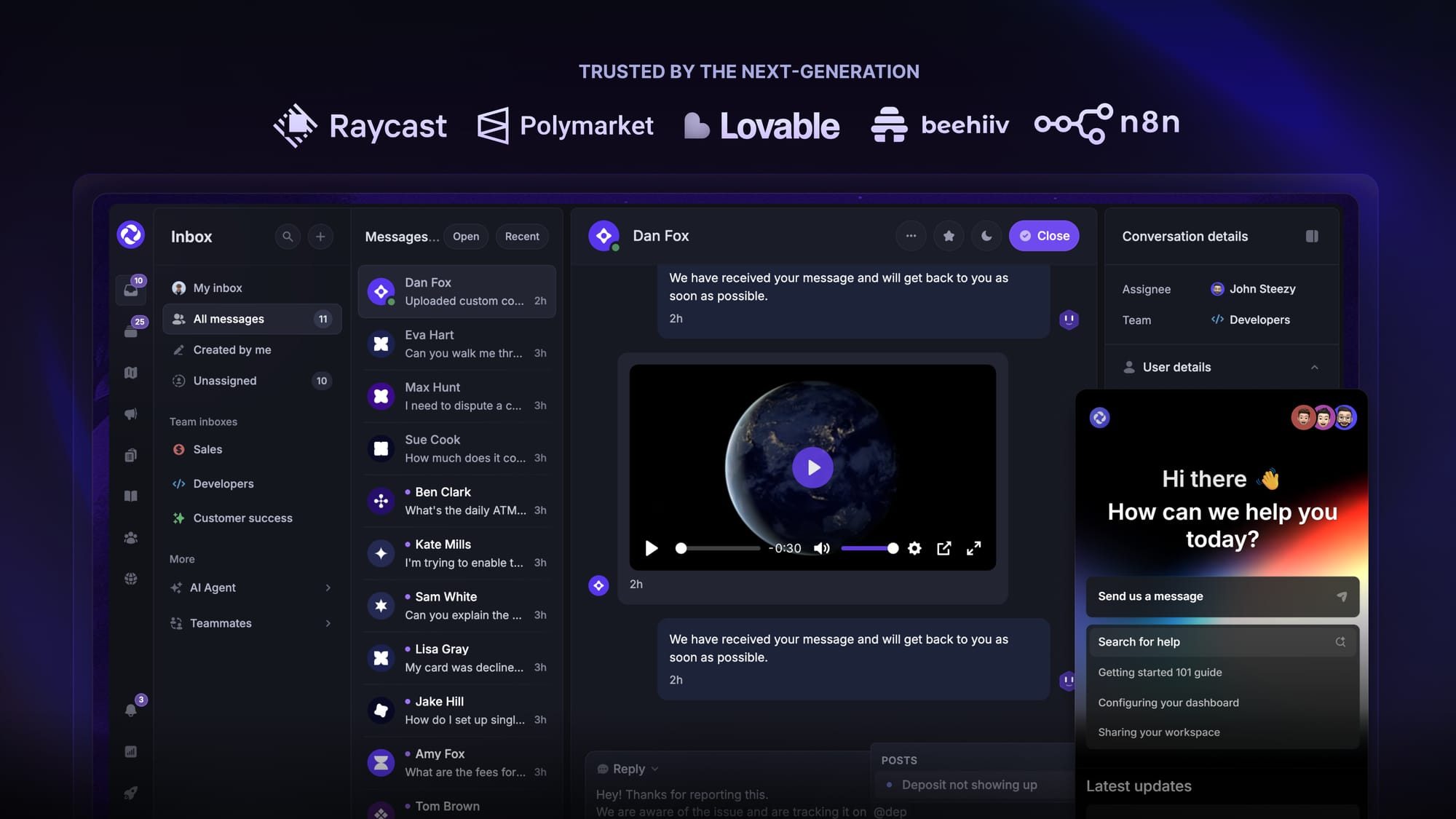
Featurebase is a modern Decagon alternative that combines AI-powered support, with human handoff, documentation, surveys, and changelogs into a single platform for SaaS. It's loved by thousands of support teams from companies like Lovable, Raycast, and n8n. 💫
Top features:
- Unified inbox – manage your live chat & email conversations in one AI-enchanced inbox with your whole team
- Omnichannel support – seamlessly provide support to your customers via email or Slack sync, in addition to live chat
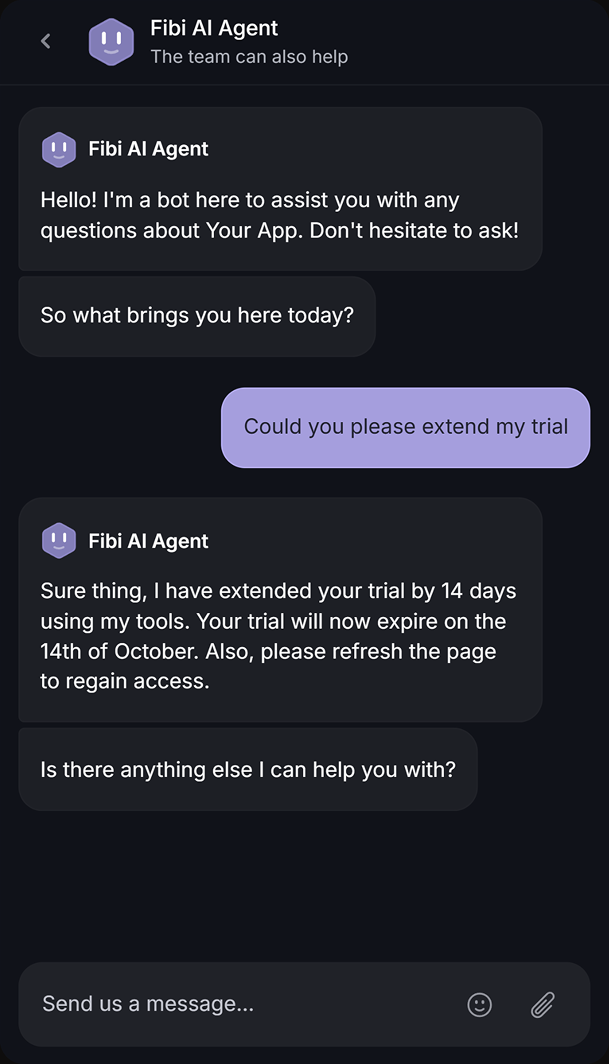
- AI agent & automations – fully automate your support with Fin-level AI and endless custom workflows, like extending trials, offering discounts, qualifying leads, etc.
- Messenger widget – provide AI and human support from anywhere with a customizable in-app widget
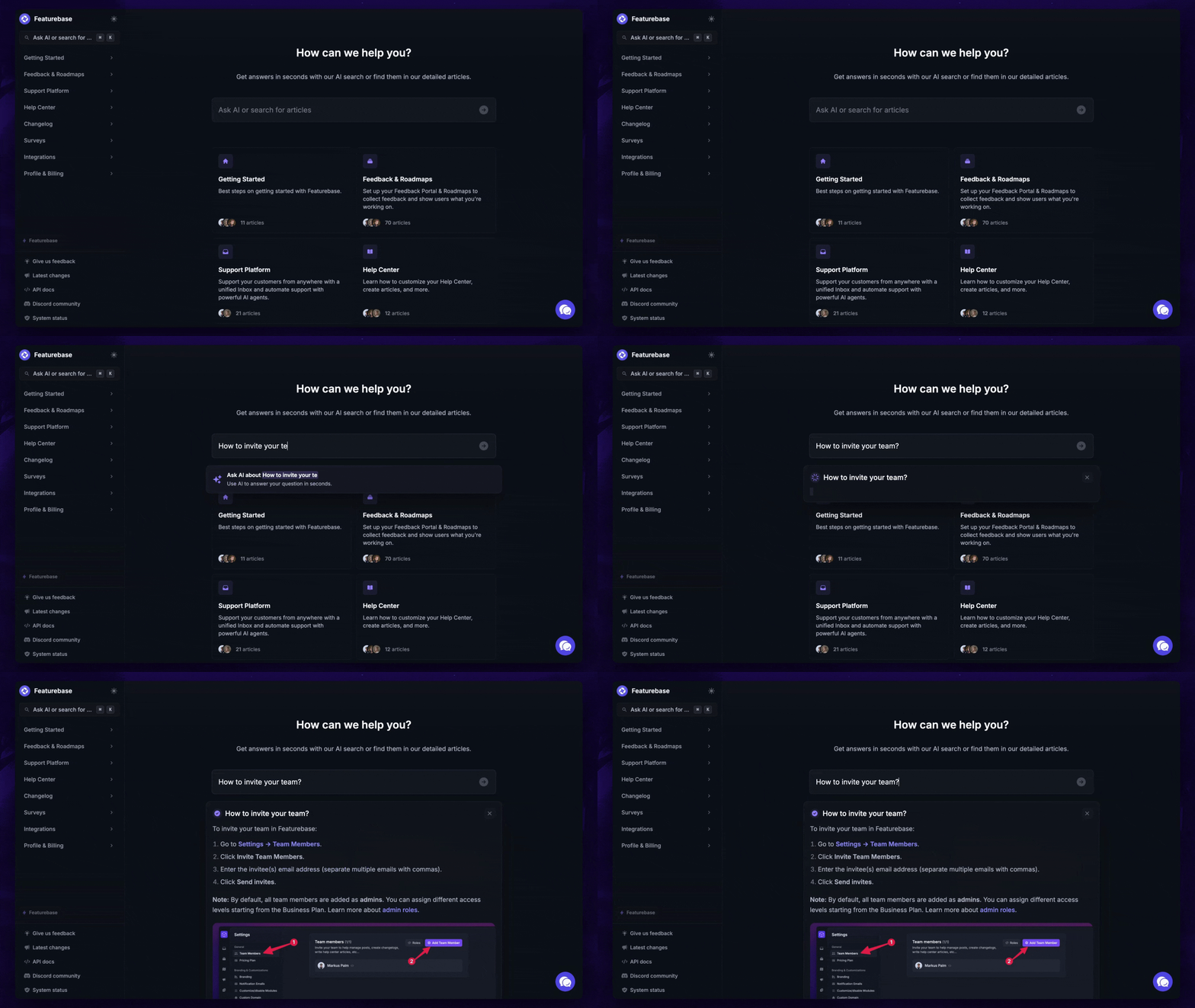
- AI-powered Help Center – a knowledge base with instant AI answers that can be multilingual and private
- Feedback portal & Roadmaps – centralize & keep track of all customer requests in one place, and show a public roadmap
- Product updates – publish and schedule release notes, push in-app notifications, and automatically email users
- Embedded surveys – run multi-step NPS, CSAT, or custom surveys targeted by user behavior or events
- Mobile app – respond to customers, receive notifications, and unblock users on the go
- Integrations – Slack, Linear, Jira, Discord, HubSpot, and many more
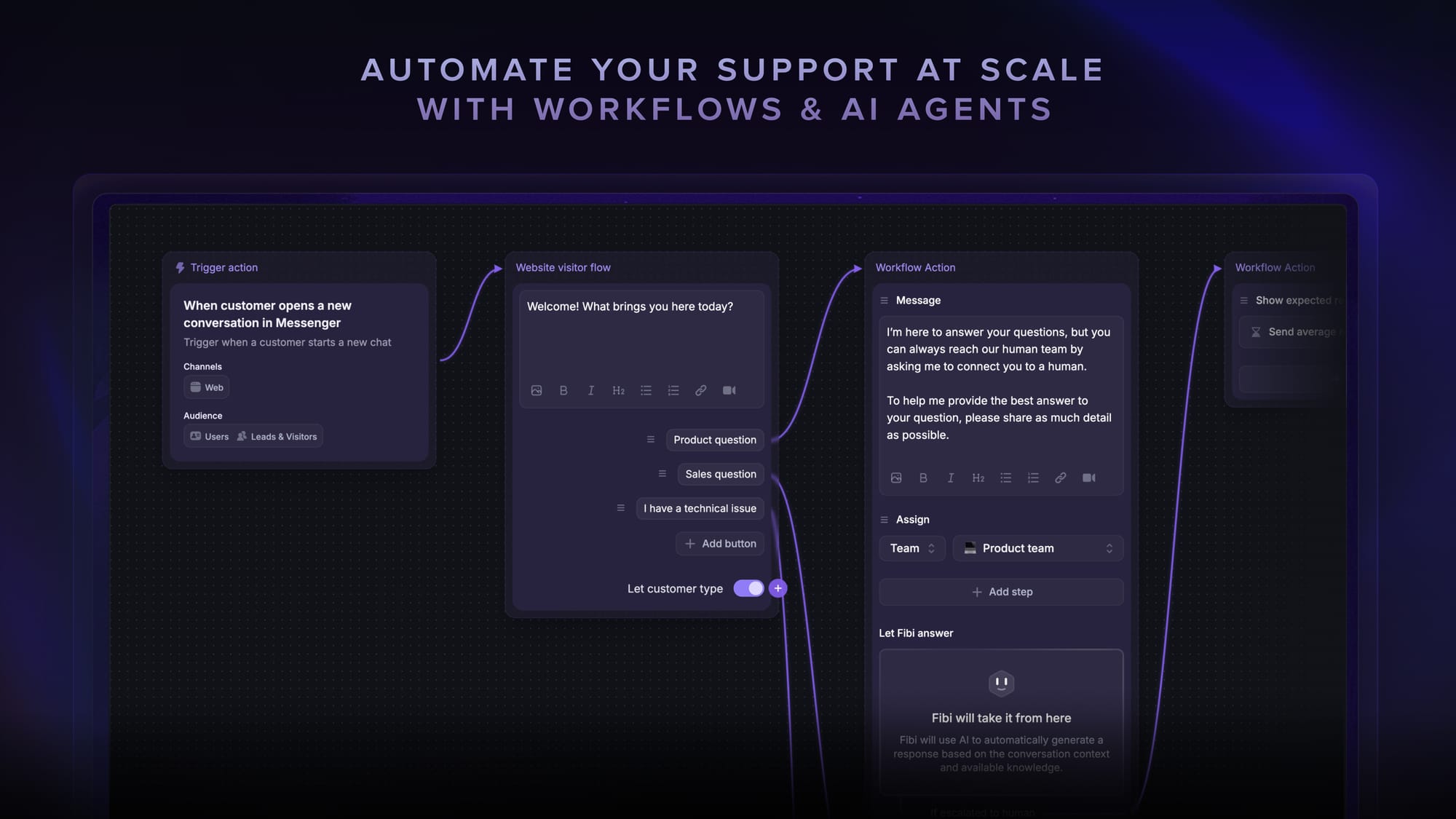
How it’s better than Decagon: Unlike Decagon, which is primarily for AI automation, Featurebase also has a human inbox and enables you to replace all your customer-facing tools by bringing your support, help center, product updates, and feedback collection together in one place, providing powerful ecosystem advantages in modern support.
Pricing: Featurebase offers a generous Free plan, which includes unlimited support conversations. The paid plans start at $29/user/month + $0.29 for each AI resolution. You can migrate your Intercom help center with one click, so there's no downside to trying it. 👇
✨ Automate your support with the fastest AI-enhanced Inbox today →
2. Intercom Fin
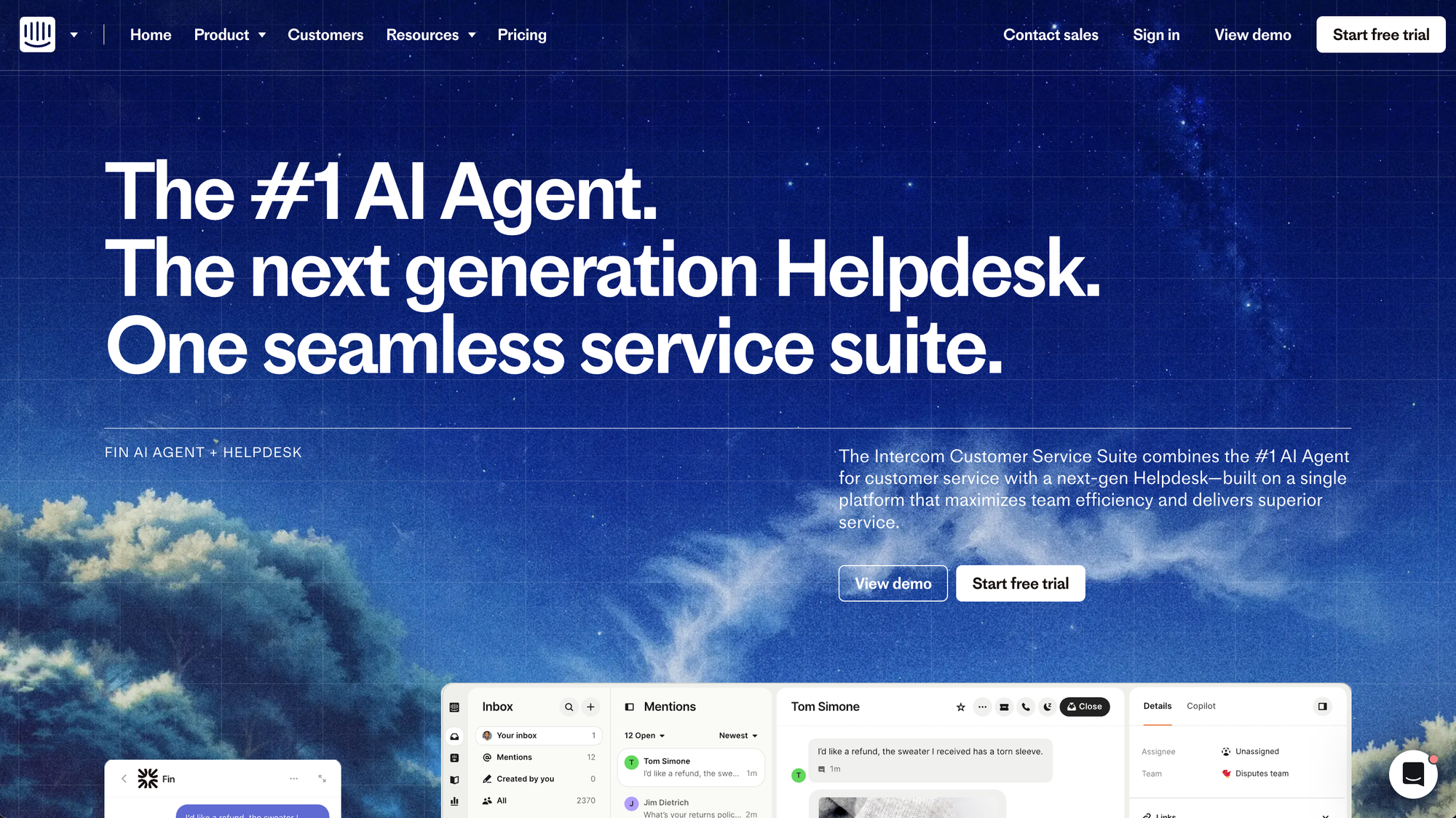
Intercom is a conversational customer service platform that combines live chat, AI-bots, and in-app messaging to engage users and support teams alike. It supports both proactive outreach and reactive support, making it a popular choice for SaaS and product-led companies.
Top features
- Shared inbox with AI assistance: Agents work in one unified inbox enhanced with AI tools and automation.
- Business Messenger & in-app chat: Deploy chat widgets on websites or inside apps to engage users directly.
- AI chatbots (Fin Agent): Use the built-in AI agent to resolve queries automatically or assist human agents.
- Product tours & targeted messages: Create onboarding flows, help center, and send messages based on user behavior.
- Robust reporting dashboard: Access rich analytics and root-cause metrics for conversations and customer engagement.
How it’s better than Decagon: Decagon may focus on standard ticket- and workflow-based support, whereas Intercom offers deeper conversational design, AI-assisted support, and in-product messaging. For teams that want to combine support and user engagement within one platform, Intercom offers more flexibility and future-focused features.
Pricing: Intercom pricing starts at $29 per seat per month.
3. Zendesk
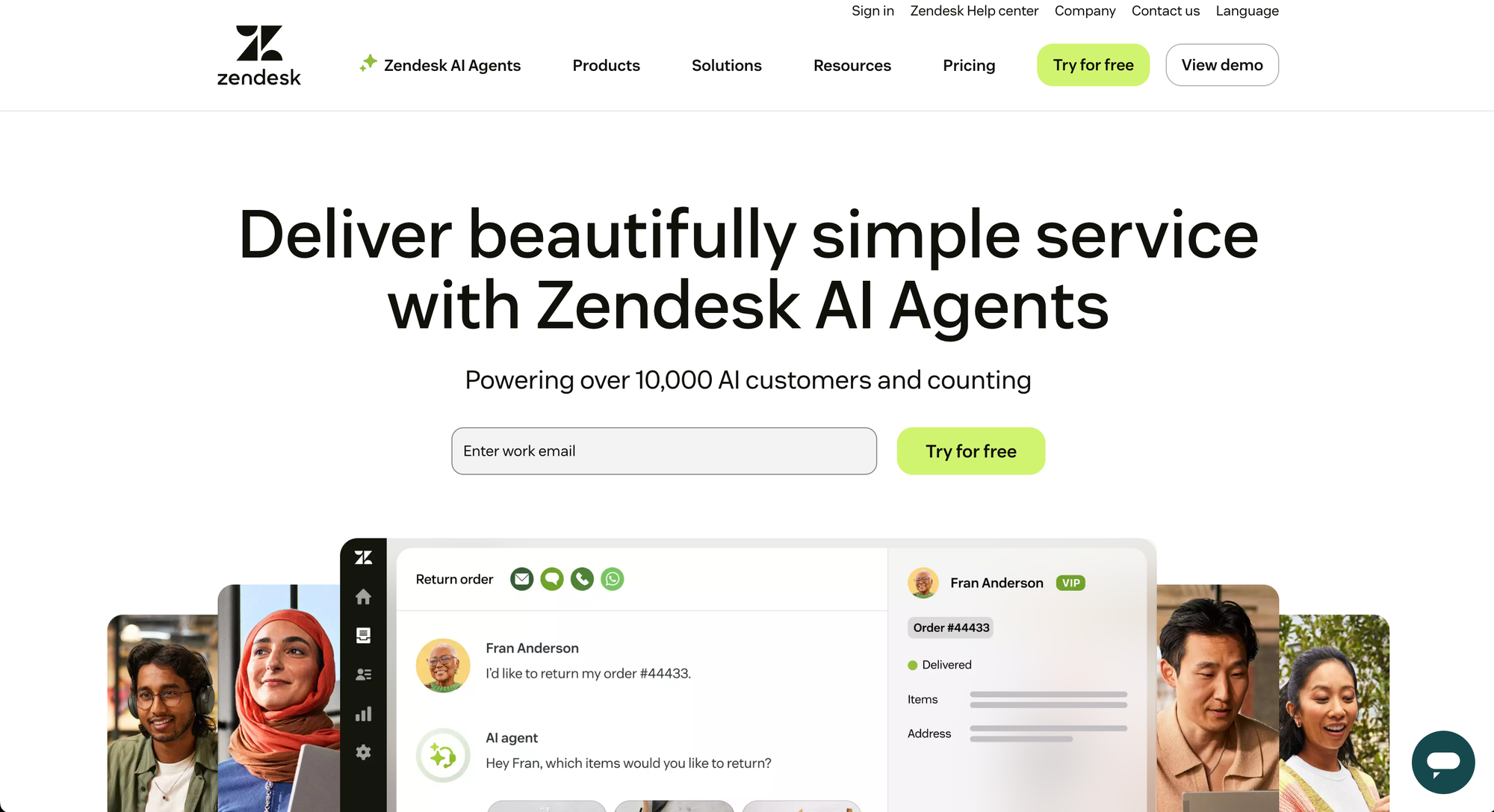
Zendesk is a leading customer service and experience platform that gives support teams tools for ticketing, automation, omnichannel communication, self-service, and analytics. It’s ideal for organizations of any size looking to manage customer conversations across channels and scale their support operations.
Top features
- Omnichannel ticketing: Handle customer requests from email, chat, phone, social, and messaging apps within one system.
- Automation & AI tools: Use triggers, workflows, and AI-powered bots to route, respond, and escalate tickets automatically.
- Self-service & knowledge base: Build help centers, FAQs, and community forums so customers can find answers without contacting support.
- Reporting & analytics: Monitor performance metrics such as first reply time, resolution time, SLAs, and agent workload with real-time dashboards.
- Scalable platform & integrations: Supports multiple brands, languages, and integrates with many apps, making it fit for enterprises as well as small teams.
How it’s better than Decagon: While Decagon may provide solid support workflow features, Zendesk offers greater depth in automation, channel coverage, self-service, and scalability. If your team wants to serve customers across multiple touchpoints, build self-service resources, and grow into a full-scale support operation, Zendesk is a stronger fit.
Pricing: Zendesk's pricing starts at $19 per user per month.
4. Sierra AI
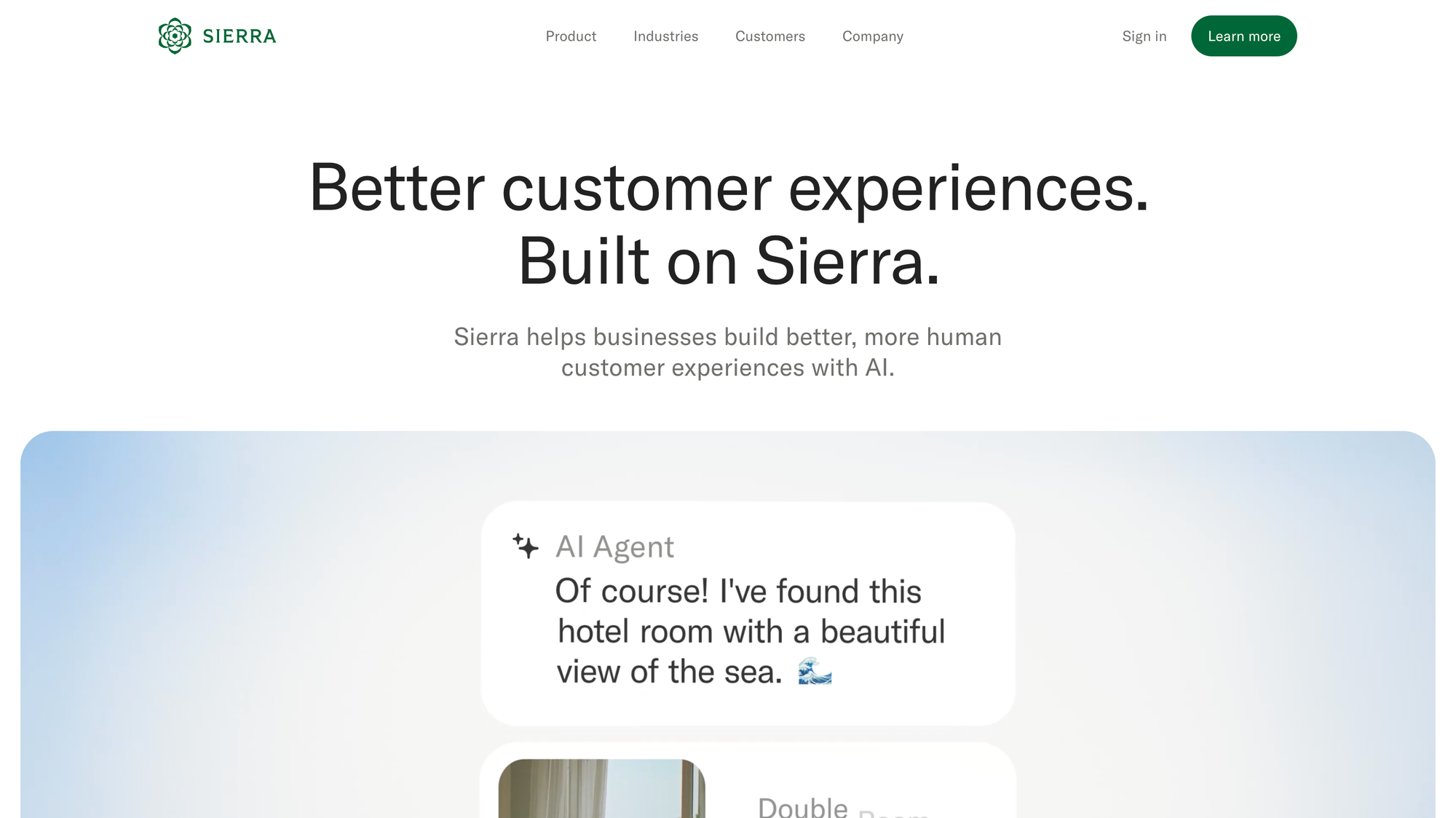
Sierra AI is a next-generation conversational AI platform built for enterprise customer service, offering omnichannel AI agents that support chat, voice, and back-office integration.
Top features
- Brand-aligned AI agents: Create AI assistants that reflect your brand tone, handle complex queries and take action in your systems.
- Omnichannel conversation support: Deploy across web chat, voice calls, SMS, social channels and apps from the same platform.
- Hybrid build model (no-code + SDK): Teams can use both visual studio for non-developers and SDKs for advanced workflows.
- Action-capable agents: Agents can not just reply but execute tasks like updating records, checking order status or changing subscriptions.
- Enterprise-grade security and compliance: Built for large organizations with strong data governance, privacy, and reliability.
How it’s better than Decagon: Decagon focuses on traditional customer-support workflows. Sierra AI takes it further by delivering fully autonomous agents, native voice support, deeper system integrations and AI-oriented automation that go beyond ticketing. If your business is ready to upgrade to a truly AI-driven support platform, Sierra offers a more advanced path.
Pricing: Custom outcome-based pricing model.
5. Cognigy
Cognigy is a conversational-AI platform built for enterprise contact centers and support operations, enabling organizations to design, deploy, and manage intelligent AI chat and voice agents at scale. It’s ideal for companies looking to deeply automate customer service and unify digital and voice assistants across channels.
Top features
- Generative-AI and multimodal agents: Run LLMs, speech-and-text workflows, power agents that reason, personalize, and adapt across touchpoints.
- Omnichannel integration: Deploy agents across phone (IVR), web chat, messaging apps, social, SMS, and other digital channels.
- Low-code/no-code builder & orchestration: Use drag-and-drop flow designers and advanced modules to build conversation flows, integrations and automations.
- Enterprise meet-ups: global language support, security & scale: Over 100 languages, high-volume conversation capacity, SOC2/ISO complianc,e and enterprise deployment options.
- Knowledge AI & agent-assist tools: Provide agents with live context, answer extraction, memory, and virtual-assistant support for human-agent triage.
How it’s better than Decagon: While Decagon may provide standard customer-support automation and ticket workflows, Cognigy.AI makes the stack fully self-service. It provides voice-plus-chat automation with live-agent handover, generative-AI orchestration and cross-channel coverage. If your operation needs high-volume, multilingual, enterprise-grade automation beyond classic support, Cognigy is the stronger fit.
Pricing: starts at roughly $2,500 per month for the base usage tier.
6. Voiceflow
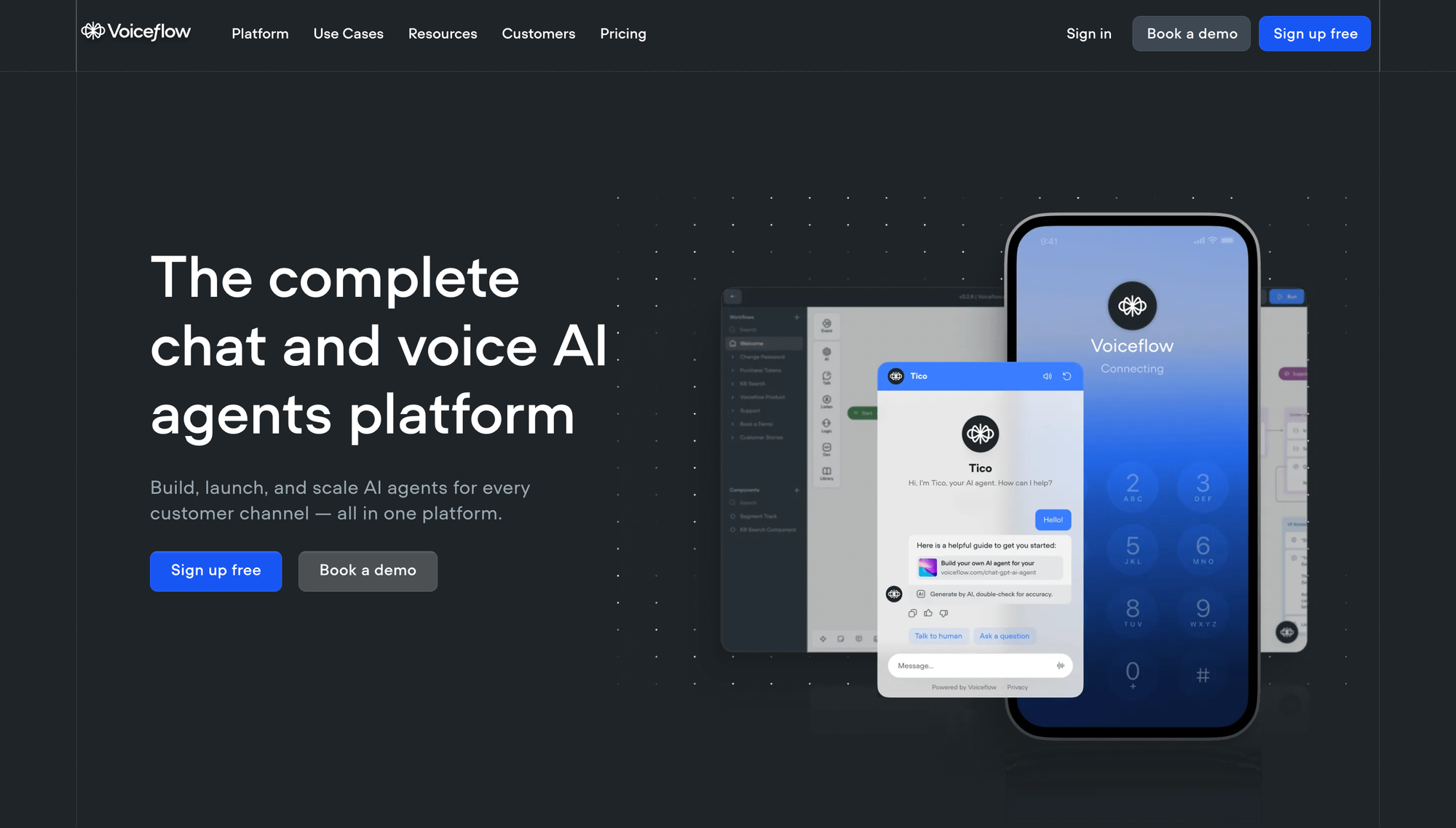
Voiceflow is a collaborative AI design and automation platform that helps teams build, test, and launch conversational assistants without writing code. It’s ideal for companies that want to create sophisticated AI agents, chatbots, or voice apps that handle real customer interactions.
Top features
- Visual conversation builder: Design and prototype chat and voice experiences using a drag-and-drop interface.
- AI agent orchestration: Manage multiple AI models, tools, and APIs within a single conversation flow.
- Team collaboration tools: Work with designers, developers, and product teams in real time on one shared workspace.
- Knowledge base integration: Import FAQs and documents so your AI assistant can provide accurate, context-based responses.
- Testing and analytics: Simulate user interactions, analyze performance, and iterate quickly before going live.
How it’s better than Decagon: While Decagon focuses on automating ticket resolution, Voiceflow gives teams a full design and execution environment for building conversational AI. It’s better suited for organizations that want to create flexible, branded virtual assistants that go beyond support tickets.
Pricing: Voiceflow's pricing starts at $60 per month.
7. Kore AI
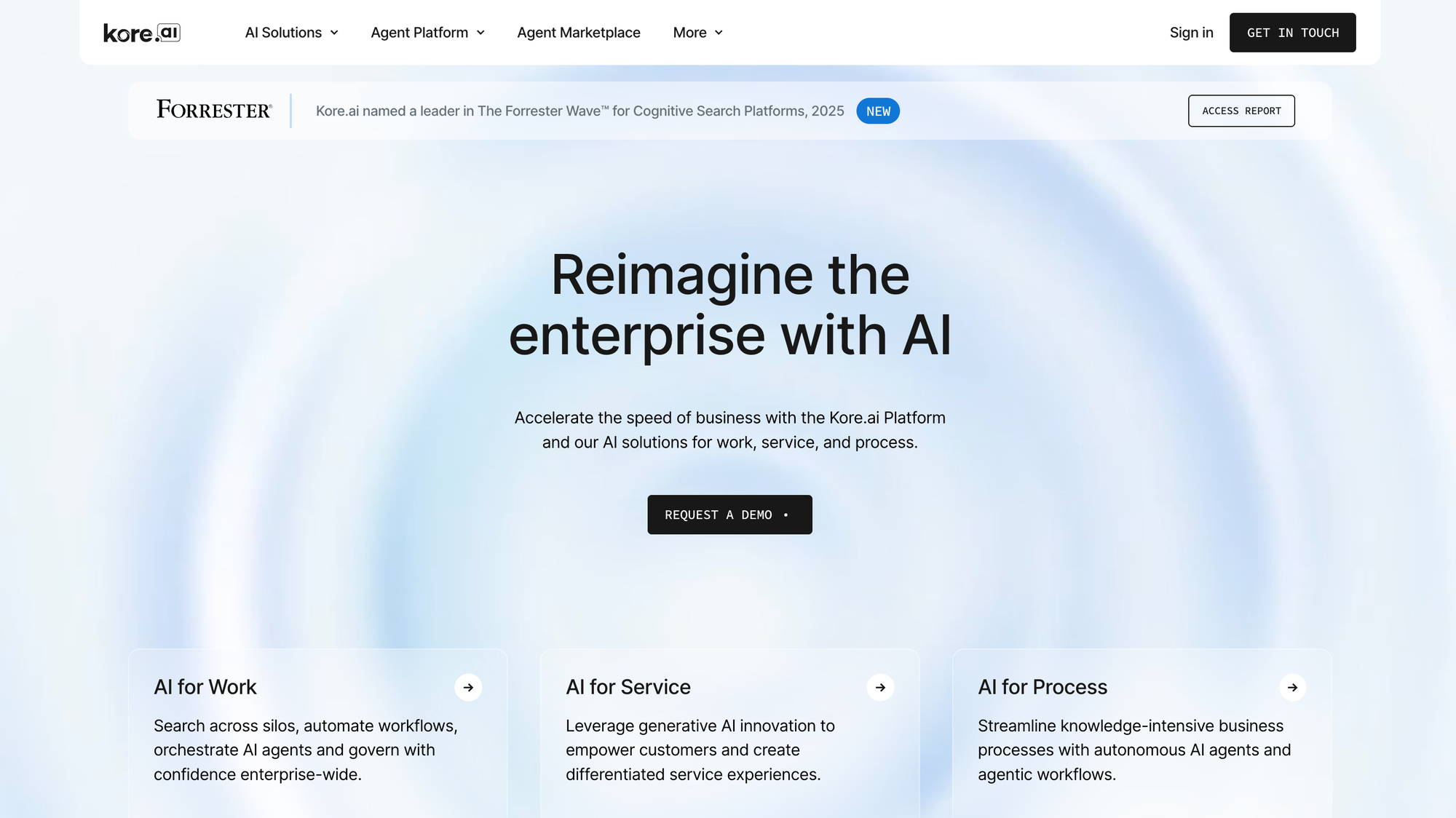
Kore.ai is an enterprise-grade conversational AI and agent automation platform that helps organizations deploy virtual assistants, automate workflows, and enable self-service across channels. It suits companies that want to elevate their service and support functions with AI, not just manage tickets.
Top features
- Multi-channel conversational agents: Build virtual assistants and virtual receptionists that work across web chat, voice, mobile app, SMS and social.
- No-code & pro-code builder tools: Use drag-and-drop interfaces or extend with SDKs to build complex workflows and integrations.
- AI-powered agent assistance & summarisation: Provide live agents with next-best actions, conversation summaries and automated responses.
- Multi-agent orchestration & persistent memory: Coordinate multiple AI agents, maintain context across sessions, and integrate with enterprise knowledge graphs.
- Enterprise security, deployment & governance: Support on-premise, cloud or hybrid deployment, with governance tools, compliance and audit capabilities.
How it’s better than Decagon: While Decagon may focus largely on support ticket and agent workflows, Kore.ai goes further by embedding generative AI, workflow orchestration, and self-service agents into the service stack. If your team is looking to automate beyond standard ticket handling, enable agents with AI support, and deploy conversational experiences, Kore.ai offers a more advanced platform.
Pricing: not available publicly.
8. Kustomer
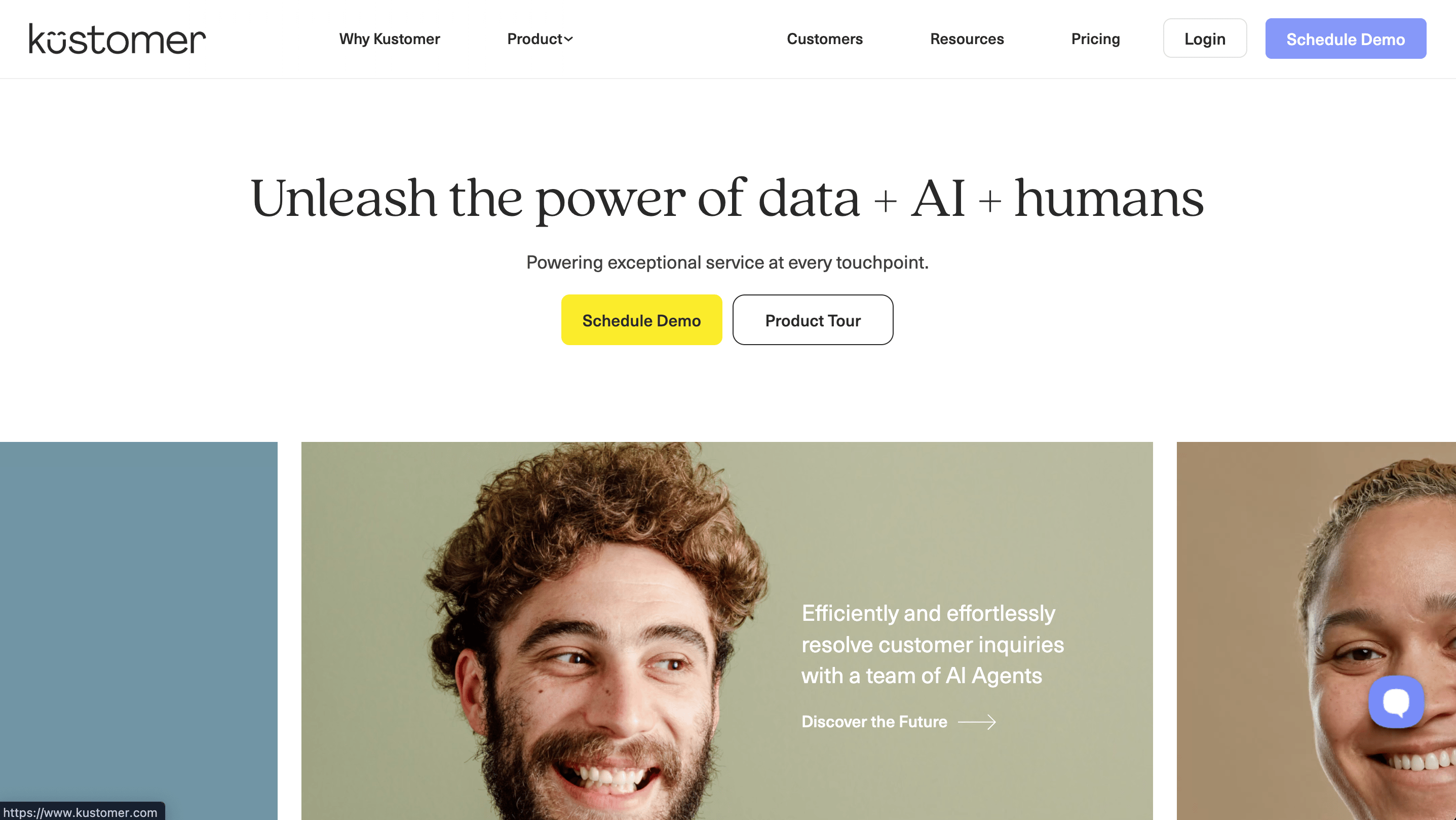
Kustomer is a unified customer service platform that combines CRM, omnichannel support, and AI-driven automation in one system. It’s a good option for businesses that want to deliver personalized, contextual support across chat, email, phone, social and texts.
Top features
- Unified customer timeline: View all interactions—emails, chats, phone calls, purchases, and more in one continuous thread.
- Omnichannel support: Support customers across email, chat, SMS, voice, social media and more from one workspace.
- AI-powered workflows & chatbots: Automate routing, triage, responses and use AI-agents to handle simple queries.
- Custom objects & data modeling: Store and relate custom data objects beyond standard tickets, which is ideal for unique business models.
- Proactive service & automation: Set triggers and outbound campaigns based on customer status or behavior to deliver pre-emptive support.
How it’s better than Decagon: While Decagon may target traditional support workflows, Kustomer brings together deep automation, CRM context and omnichannel presence in one platform. If your team wants to move from reactive ticketing into proactive, personalized service, Kustomer gives you the tools.
Pricing: Kustomer pricing starts at $89 per user per month.
9. Kodif
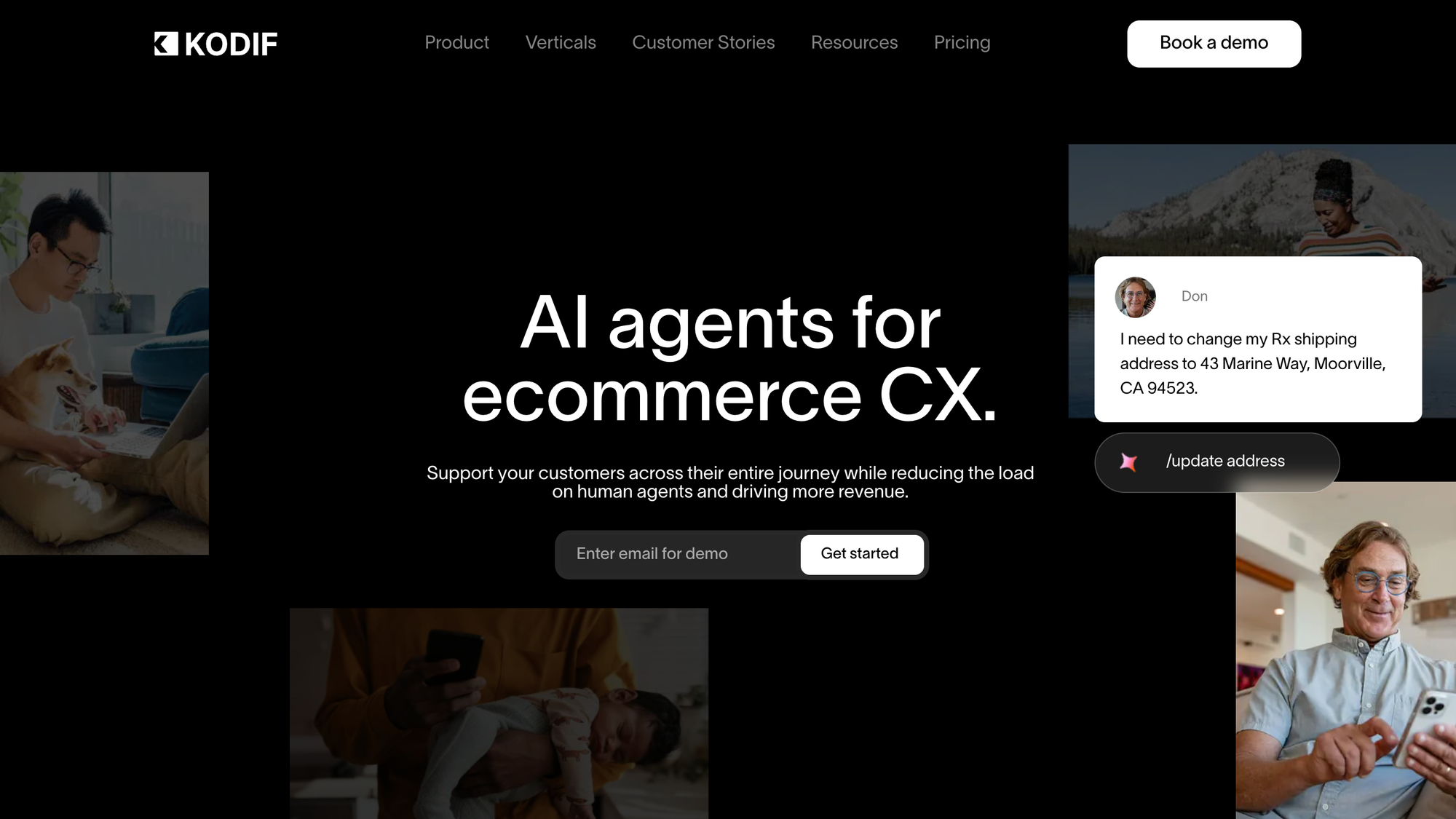
Kodif is an AI-powered customer support automation platform that helps businesses reduce repetitive ticket tasks, deliver self-service across channels, and empower agents with AI assistance. It’s a strong option for teams seeking to automate support workflows while maintaining control and brand voice.
Top features
- Multi-channel AI agent: Automate support across chat, SMS, email, and social, all from one platform.
- AI agent copilot & workflow shortcuts: Provide agents with one-click actions, contextual replies based on customer data, and low-code automation tools.
- Self-service & no-code automation builder: Let customers resolve common issues themselves (for example, order tracking or returns) and build automations without deep engineering.
- Advanced analytics & insights: Identify trends, sentiment, root causes, and track agent effectiveness and workflow bottlenecks.
- Enterprise-grade security & integrations: Works with existing help desk systems and CS platforms, supports compliance with SOC 2, HIPAA, and other standards.
How it’s better than Decagon: Decagon focuses on traditional support workflows and agent help tools. Kodif moves further by embedding generative AI, self-service automation and analytics into support operations. If your team is ready to reduce agent load, speed up resolution and harness insights from support data, Kodif provides a more modern, AI-first alternative to Decagon.
Pricing: Not available publicly.
10. eesel AI
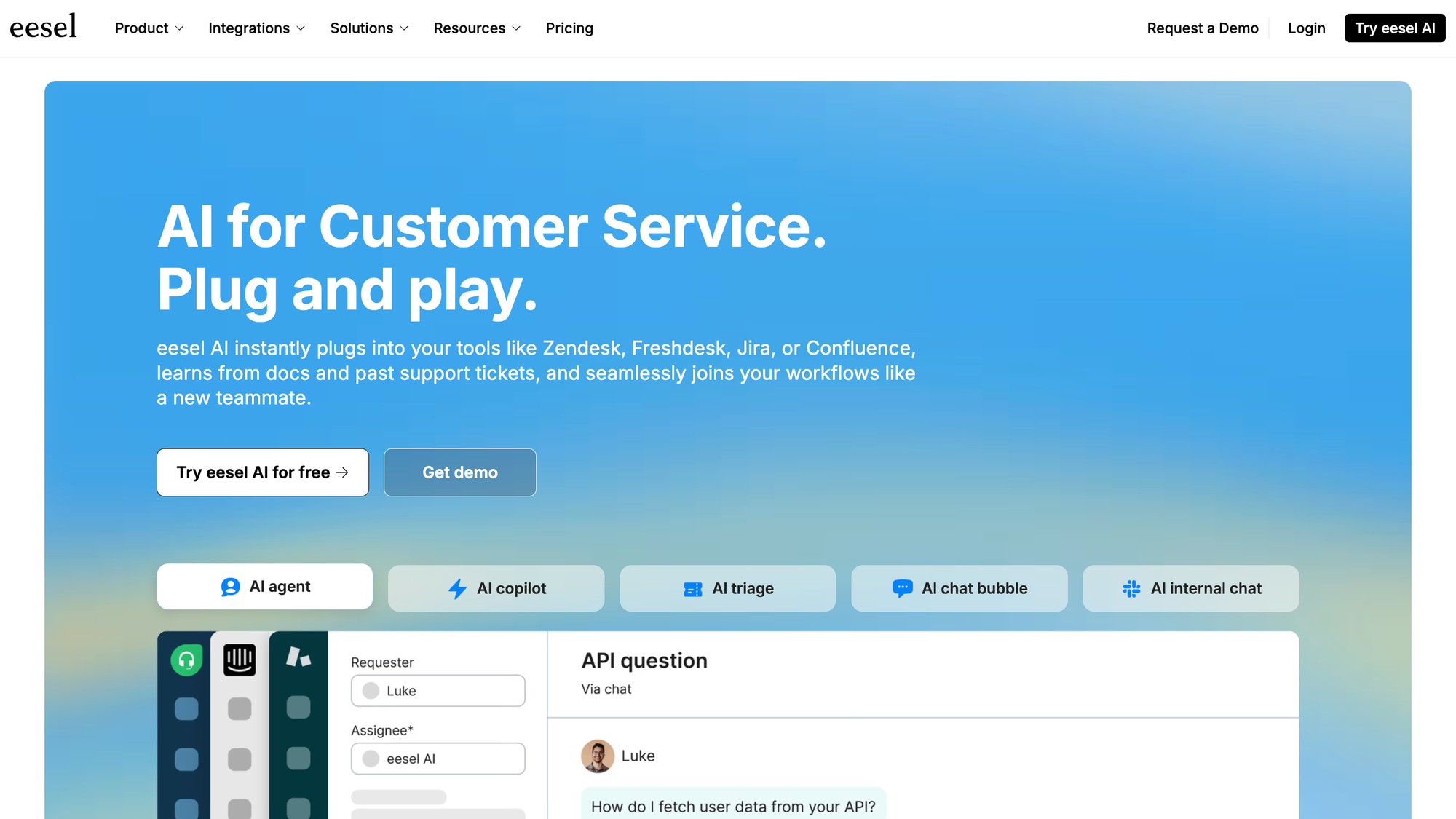
eesel AI is an AI-powered knowledge and support assistant that taps into your company documents, tickets and tools to provide instant, accurate responses for customers and teams. It’s built for businesses that want to automate support and make knowledge searchable across systems.
Top features
- Integrated helpdesk AI agent: Works with tools like Zendesk, Freshdesk, Jira, and Confluence to learn from past tickets and handle support flows.
- AI triage & routing: Automatically tag, assign, or close tickets based on configured triggers and learned behavior.
- Embedded chat bubble for website/app: Deploy an AI-driven chat widget on your site or app that answers queries 24/7.
- Internal knowledge bot for teams: Train the AI on your internal docs and let team-members query via Slack or Teams for faster answers.
- Enterprise security & privacy controls: Supports encryption, data-residency, and keeps your data out of general model training pipelines.
- Quick setup and sandbox testing: Import your existing documentation, simulate responses before full rollout to evaluate performance.
How it’s better than Decagon: While Decagon may focus on standard customer-support workflows, eesel AI brings advanced automation and knowledge management in one platform. It helps teams reduce repetitive work, speed up agent training, and unify support + internal knowledge in a single system — rather than deploying separate bots, search tools and documentation systems.
Pricing: starts at $239 per month.
11. Quiq
Quiq is an enterprise agentic customer journey platform built around resolving customer issues across AI and human support. Its AI Agents can answer questions and take actions such as processing returns, updating accounts, rebooking flights, and troubleshooting problems. When a conversation moves to a human agent or another channel, Quiq carries the context with it.
Top features
- Agentic AI Agents: Handle customer conversations and execute actions across connected business systems.
- Continuous context: Preserve conversation history across AI, human agents, voice, and digital channels.
- Process Guides: Define workflows, brand rules, and agent behavior using natural language rather than rigid templates.
- Verified safety: Add customizable guardrails and claim verification to check agent responses and actions.
- Conversation analytics: Analyze interactions across AI and human agents, including CSAT and custom metrics.
- Human agent workspace: Give agents one place to manage digital conversations with AI assistance and contextual guidance.
How it’s better than Decagon: Quiq puts more emphasis on keeping AI and human support connected across the full customer journey. Compared with Decagon, Quiq offers native support for more messaging channels, a workspace for human agents, channel switching without losing context, customizable guardrails, and analytics that cover both AI and human conversations.
Pricing: Custom enterprise pricing. Quiq uses annual contracts based primarily on conversation volume, with additional charges for automated resolutions and premium capabilities.
Final verdict
Decagon is a popular upcoming enterprise conversational AI chatbot. However, for most startups, it's too expensive, lacks the necessary control, and human handoff. Fortunately, there are many powerful alternatives out there.
Featurebase is the best Decagon alternative with an affordable AI-powered inbox & help center. It comes with human handoff, omnichannel support, native ticketing, custom workflows, and much more. It's loved by thousands of companies like Lovable, Polymarket, and Raycast.
What's best is that it comes with a Free plan, and the onboarding is super simple, so there's no downside to trying it out! 👇
✨ Automate your support with the fastest AI-enhanced Inbox today →