What is Qualtrics and who is it for? 2026 overview
Qualtrics is powerful, but it can feel confusing fast. This guide breaks down what Qualtrics actually does, who it’s best for, and when a simpler feedback tool makes more sense.


On this page
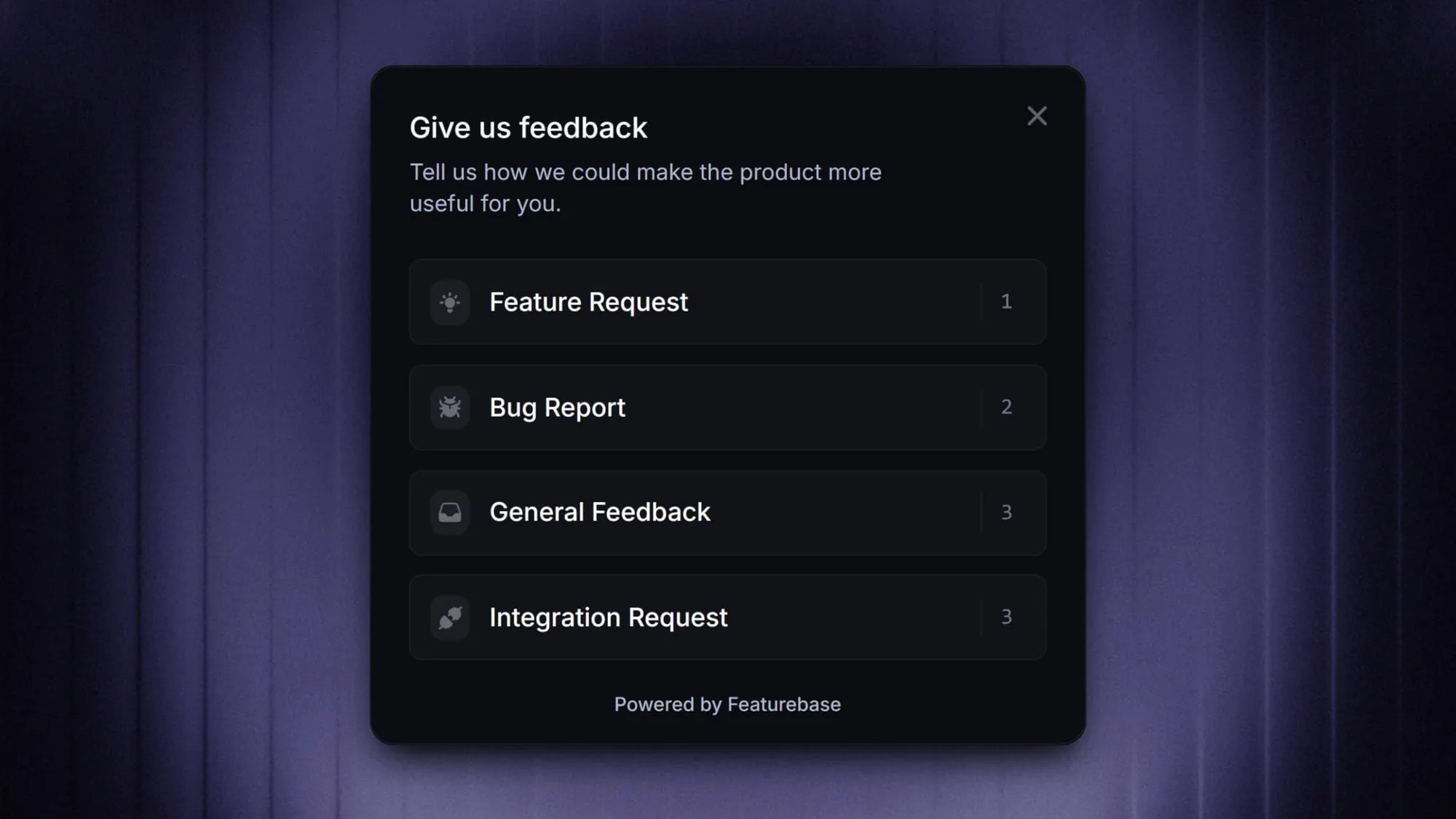
Psst... Looking for a simpler Qualtrics alternative for product feedback and surveys? Check out Featurebase
If you land on the Qualtrics website without ever having heard of the brand, it may take you a bit to figure out what Qualtrics actually does and how it helps its customers.
At its core, Qualtrics is a customer experience platform that helps businesses collect feedback from their customers and employees.
When you scratch beneath the surface, you'll find that most of Qualtrics' offer boils down to surveys for market research and other data collection.
But there's a little bit more nuance.
In this guide, I’ll break down what Qualtrics is, who it’s for, who it’s not for, and when a simpler alternative makes more sense. 👇
What is Qualtrics?
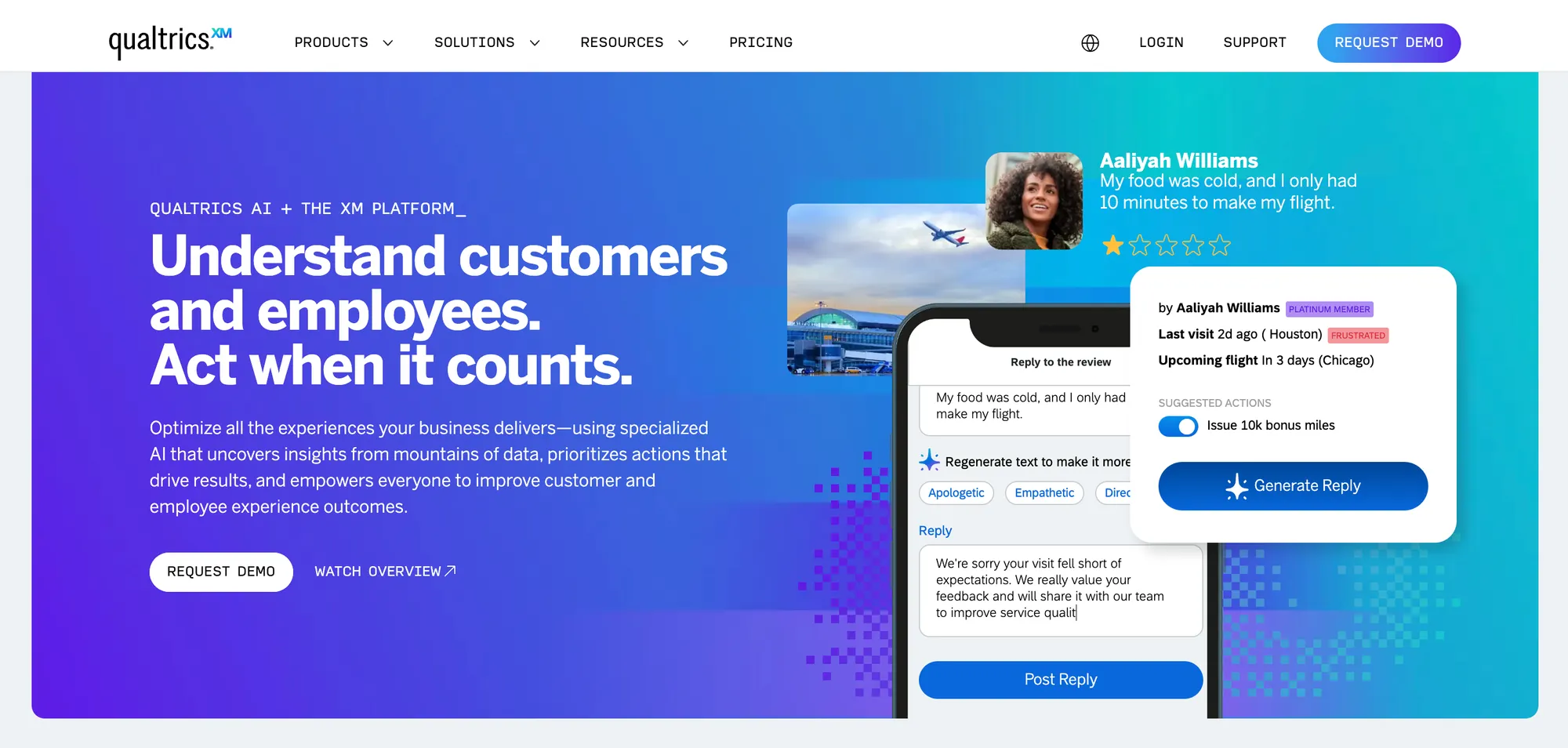
Qualtrics is a cloud software platform that helps companies collect feedback and turn it into decisions.
At its core, it’s built around surveys, but calling it “survey software” today is like calling Salesforce a contact database. It started there, but it didn’t stay there.
Today, Qualtrics sits in a category it helped define called experience management. That means it tracks and analyzes how people feel about your business, across customers, employees, products, and brand, then turns that data into reports, alerts, and actions.
Qualtrics was founded in 2002 by a university professor and his sons, initially as a way to make academic research and surveys easier to run online. Back then, it was mostly used by universities and researchers who needed a better way to collect data without spreadsheets and manual work.
Things shifted around 2012, when the company moved beyond academia and started targeting enterprise customers. That’s when Qualtrics began evolving from a survey tool into something bigger, a platform for collecting feedback across entire organizations.
The real turning point came with the launch of its “XM” platform in 2017, which formalized this idea of managing experiences at scale. From there, it went through a series of big moves that pushed it into the mainstream:
- Acquired by SAP for $8 billion in 2019
- Went public in 2021
- Taken private again in 2023 by Silver Lake in a $12.5 billion deal
Each step pulled it further away from its academic roots and deeper into enterprise software.
Today, Qualtrics is a platform used by large companies to answer questions like:
- Why are customers churning?
- How do employees actually feel about leadership?
- Which product features are frustrating users?
- What’s hurting brand perception right now?
It collects that feedback through surveys, forms, and other inputs, then layers analytics and automation on top.
That’s the promise, at least. In practice, it’s a powerful system, but also a complex one, and very much built with large organizations in mind.
Who uses Qualtrics?
Short answer: Qualtrics customers are big organizations that care a lot about feedback, and have the budget and team to do something with it.
Qualtrics is heavily used by enterprises. Think global brands, large B2B companies, universities, healthcare systems, and government agencies. It’s not niche software, and it’s used across industries like retail, tech, education, finance, and healthcare.
A few patterns show up pretty quickly when you look at their customer base.
1. Large companies with complex operations
Qualtrics is used by a big chunk of the Fortune 100, around 75 percent by some estimates.
These are companies with multiple departments, regions, and customer segments where feedback is messy and spread across systems. They need something centralized.
You’ll see names like Microsoft, Google Cloud, EY, and Kroger using it to track customer and employee experience at scale.
2. Teams that run a lot of market research
Marketing teams, product teams, and research departments rely on Qualtrics for surveys, testing, and reporting.
It’s still widely used in universities and academic environments, too, which is where it originally gained traction.
3. Organizations focused on customer experience
Retail brands, airlines, and service companies use Qualtrics to understand satisfaction, churn, and brand perception.
For example, companies like Shake Shack use it to move from gut feeling decisions to data-backed ones.
4. HR and people teams
Employee engagement surveys, onboarding feedback, and internal sentiment tracking are a big use case.
Large organizations use Qualtrics to figure out why employees stay or leave, and where things break internally.
5. Public sector and healthcare
Governments, hospitals, and large institutions use it to collect structured feedback at scale, from patient experience to public services, with the goal of getting actionable insights from response data.
One thing is clear: Qualtrics is not built for scrappy startups that want to collect customer feedback and monitor survey progress.
It’s built for companies that already have processes, teams, and enough data to justify a platform this heavy.
Qualtrics core offer
Qualtrics splits its platform into three main products. They all run on the same underlying system, but each one targets a different type of feedback and a different team inside the company.
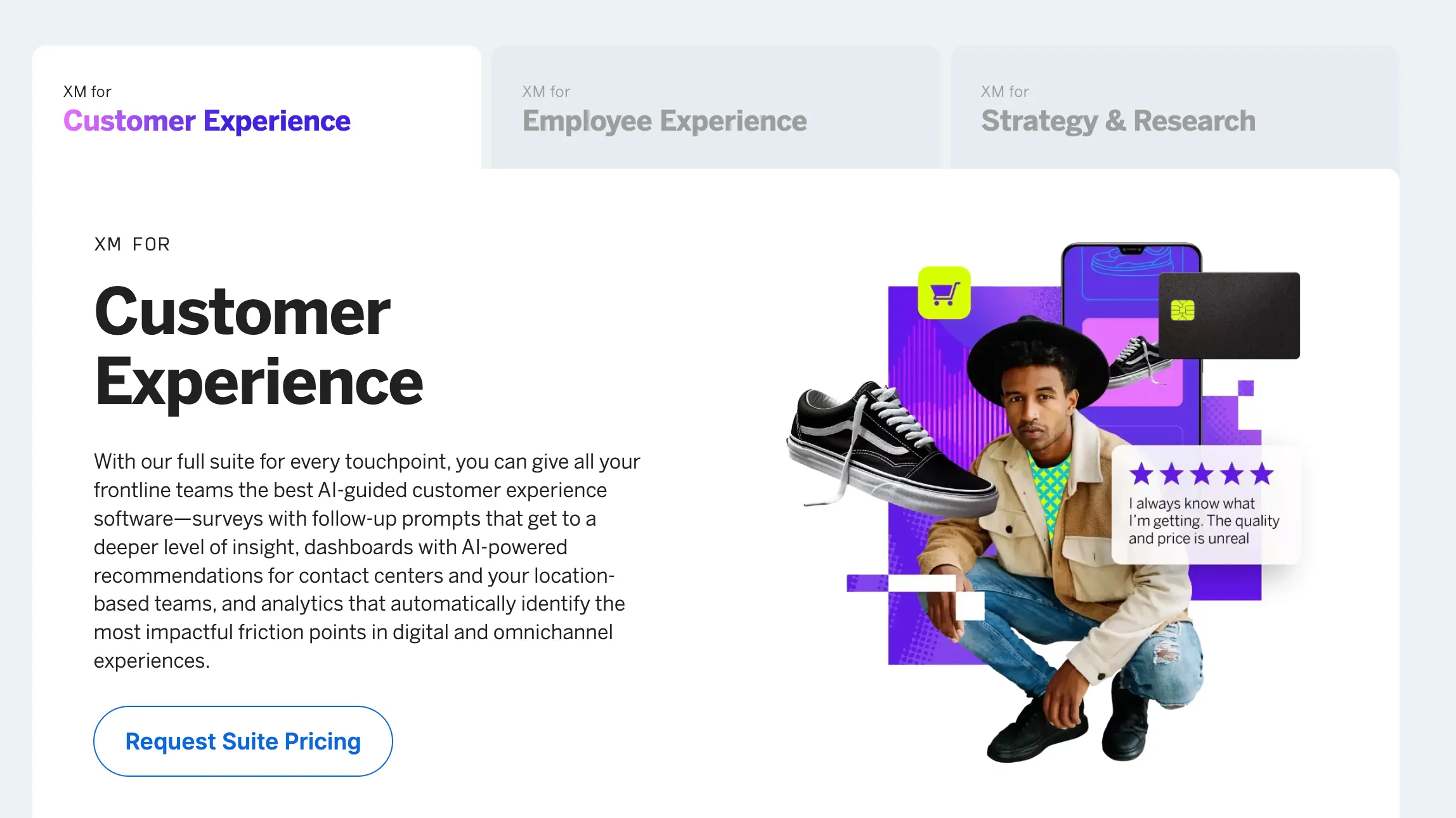
Customer experience
This is where most companies start with Qualtrics.
The customer experience management platform is built to track how customers feel across the entire journey, from first interaction to support and retention.
It pulls in feedback from surveys, NPS programs, website interactions, and support touchpoints, then ties it back to real customer profiles.
Key capabilities include:
- NPS and satisfaction tracking with automated surveys after key events
- Journey analytics to map where customers drop off or get frustrated
- Text analysis that scans open-ended responses and groups themes
- Closed-loop feedback workflows that alert teams and trigger follow-ups
- Integrations with CRM and support tools so feedback connects to real accounts
In practice, the customer experience management platform is used by support, marketing, and CX teams trying to reduce churn and understand what’s actually going wrong, not just what dashboards say.
Employee experience
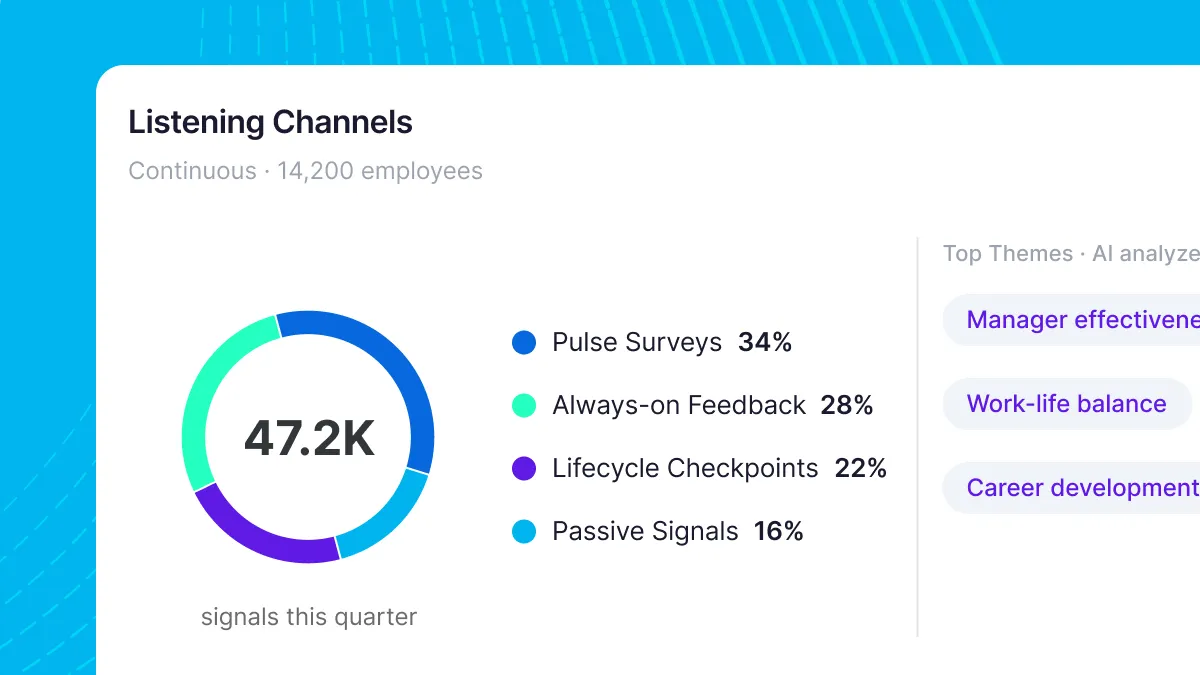
The employee experience side is aimed at HR and leadership teams.
It focuses on measuring how employees feel at different stages: hiring, onboarding, engagement, performance reviews, and exit.
Instead of guessing why people leave or disengage, it gives companies structured data on internal sentiment.
Key capabilities include:
- Employee engagement surveys with recurring pulse checks to gather employee feedback
- Lifecycle feedback across onboarding, promotions, and exits
- Confidential feedback collection to encourage honest responses as you distribute surveys in your team
- Driver analysis to identify what impacts retention and satisfaction
- Action planning tools for managers to respond to feedback
This is where Qualtrics positions itself as more than just HR tooling. It tries to connect employee sentiment directly to business outcomes like retention and productivity.
Strategy and research
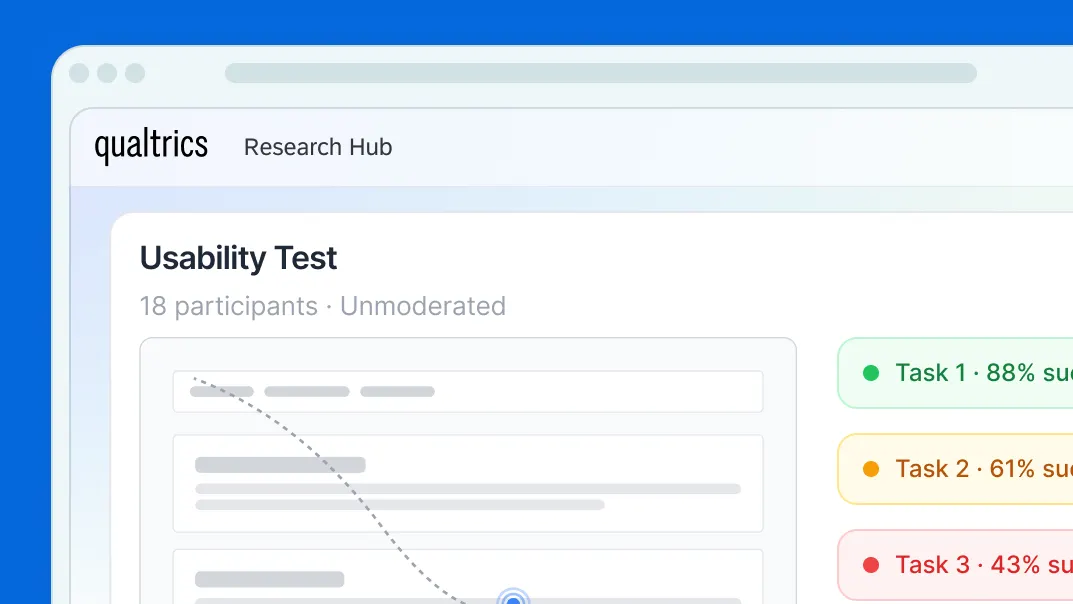
This is closest to Qualtrics’ original roots.
The strategy and research product is used by research teams, product managers, and marketers who need to run structured studies, test ideas, and validate decisions before rolling them out.
Key capabilities include:
- Advanced survey builder with logic, branching, and custom flows
- Market research tools for concept testing, pricing studies, and segmentation
- Panel management to recruit and manage respondents
- Data analysis and reporting with statistical tools built in to analyze data, identify trends, and improve customer satisfaction
- Experimentation support for testing messaging, features, or campaigns
If CX and EX are about ongoing feedback, this part is about one-off research and deeper analysis after you collect responses.
Together, these three products cover most types of feedback a company might want to collect. The tradeoff is that the advanced features can feel like a lot, especially if you only need one piece of Qualtrics survey software.
Who is Qualtrics not for?
Qualtrics is powerful, but it’s not for everyone. In fact, for a lot of teams, it’s overkill.
Here’s where it tends to fall short.
1. Startups and small teams
If you’re a small product team trying to collect feedback and move fast, Qualtrics will feel heavy.
Setup takes time, the interface isn’t exactly intuitive, and you’ll likely use a fraction of what you’re paying for.
Most early-stage teams just need a simple way to collect feedback, prioritize it, and act on it. Qualtrics isn’t built for that pace.
It's made for big-budget industry leaders that need advanced tools and have the money to blow on them.
2. Product teams that want visible feedback loops
Qualtrics is great at collecting data, but not great at making that feedback visible to users.
There’s no native public feedback forum, voting system, or changelog that keeps customers in the loop.
If your goal is to show users what’s being built and close the feedback loop publicly, you’ll run into limitations quickly.
3. Teams without dedicated resources
This is not a plug-and-play tool.
To get real value and make Qualtrics provide actionable insights, you need people who know how to design surveys, interpret data, and maintain workflows.
Without that, it turns into an expensive survey tool with dashboards no one looks at.
4. Companies that want product feedback tied to revenue or accounts
Qualtrics can integrate with CRM systems, but it’s not built around product feedback prioritization.
You won’t get a clear view of which feature requests come from your highest-value customers unless you build that logic yourself.
5. Businesses looking for transparent, simple pricing
Qualtrics pricing is not public and not straightforward.
It’s sold through custom enterprise contracts, which usually means long sales cycles and higher costs than most alternatives.
If you’re running a large organization with dedicated teams and complex research needs, Qualtrics makes sense. If you’re looking for speed, visibility, and tight product feedback loops, it’s probably not the right fit.
Why Featurebase is the better Qualtrics alternative
Qualtrics is built for collecting feedback at scale. Featurebase is built for actually doing something with it. If you’re a product team, especially in SaaS, you don’t just want dashboards and reports. You want to understand what users are asking for, prioritize it, build it, and close the loop.
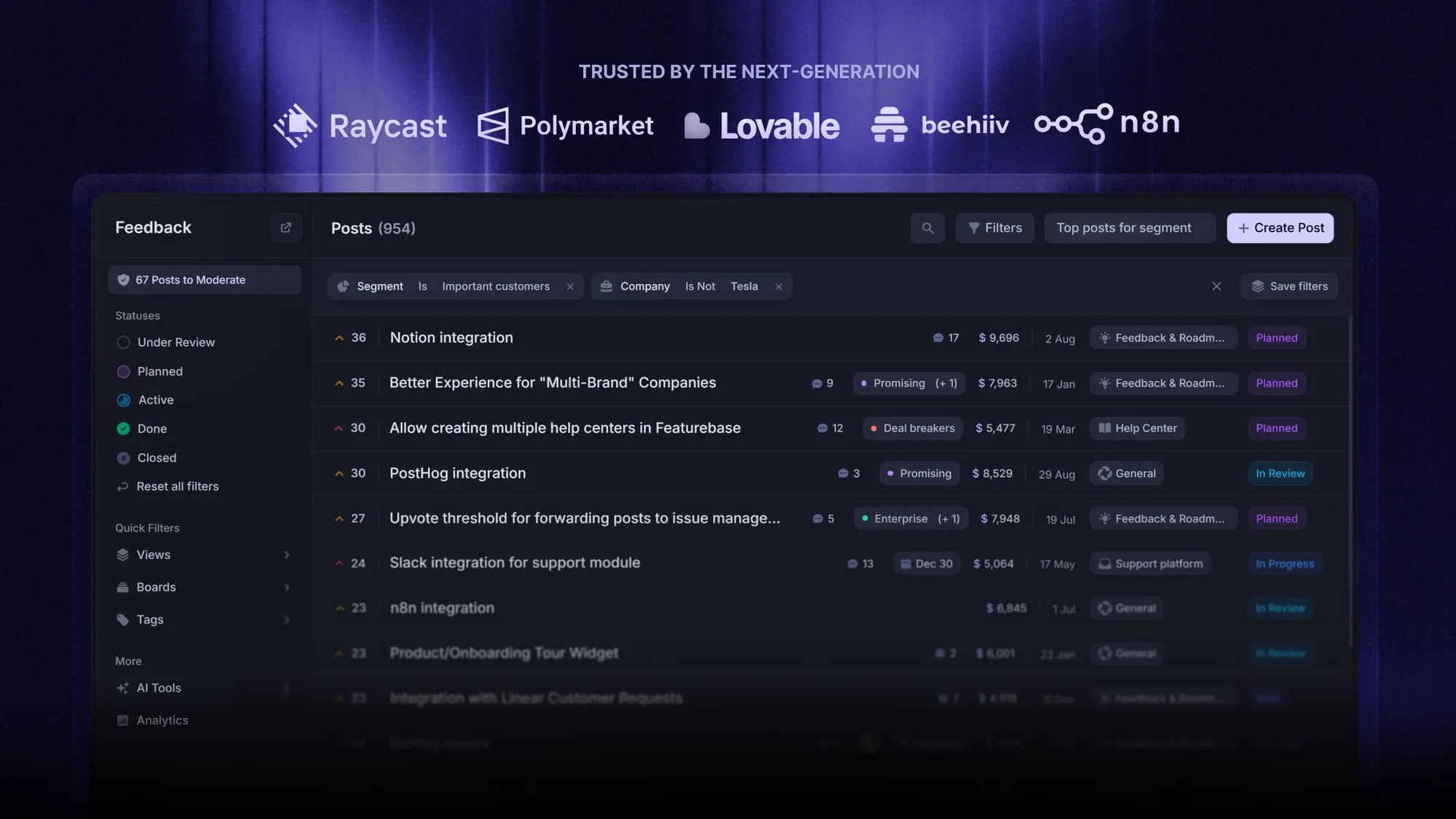
Featurebase is a modern feedback & support platform that helps product teams collect feedback, prioritize features, build roadmaps, and announce product updates, all in one place. It’s loved by thousands of product teams from companies like Lovable, Raycast, and n8n. 💫
Top features:
- Feedback forum - Public feedback forum where users can submit ideas and vote on features helping you know what customers want
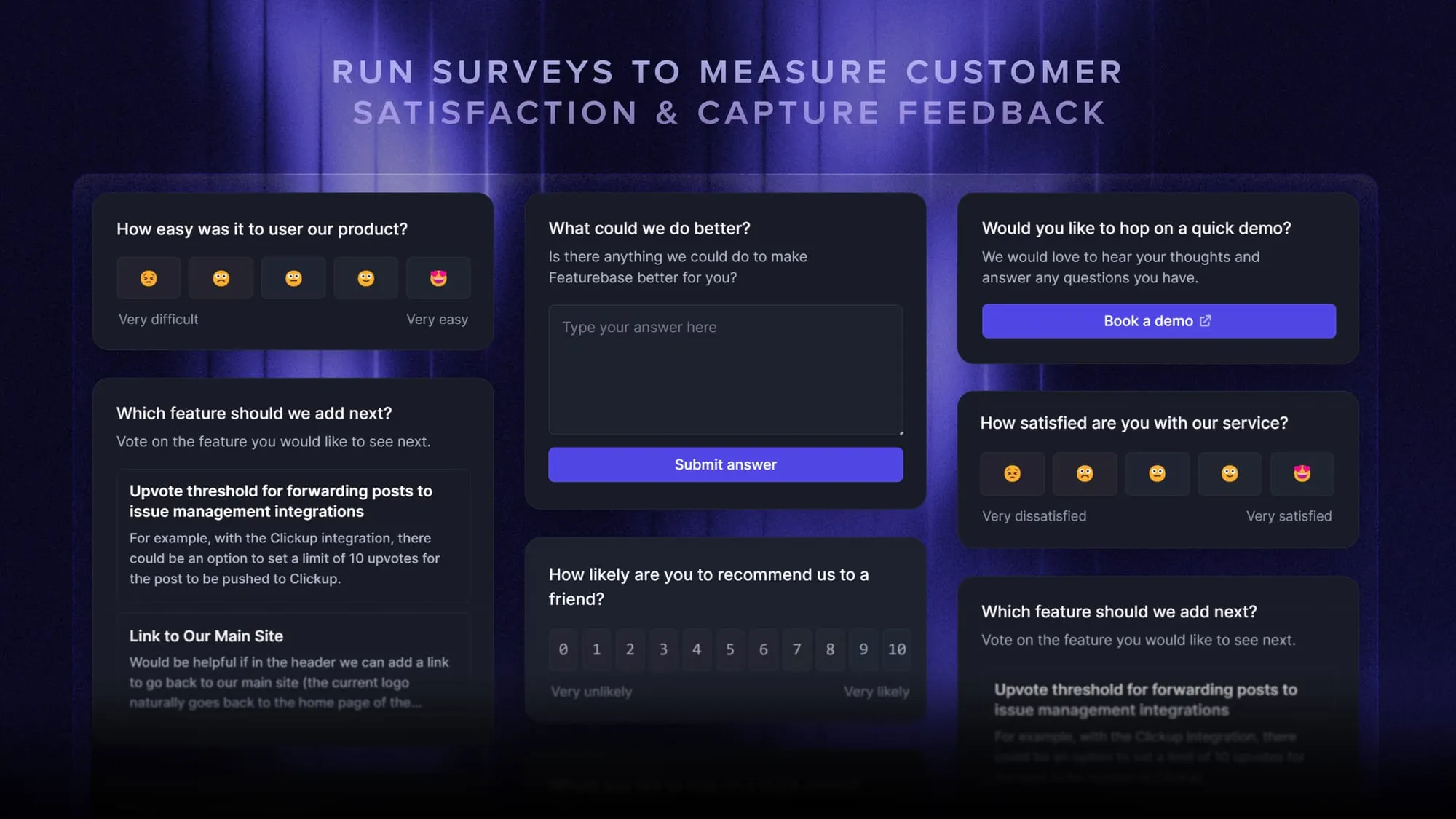
- Surveys (NPS, CSAT, etc.) - Create targeted surveys to ask users anything and measure customer satisfaction
- In-app widgets - Embed feedback, changelog, and help center widgets directly in your product
- Prioritize by revenue - Link feedback with customer revenue, company size, and much more to better understand the impact of ideas
- AI feedback categorization - Automatically group large volumes of feedback into product areas, projects, or themes with AI
- Automated email updates - Automatically notify users when their requested features are implemented
- Roadmaps - Create internal & public product roadmaps to keep users informed and build engagement
- Product updates - Publish release notes with a changelog page, in-app widget, and emails
- Automatic AI translations - Automatically translate all feedback and comments to your customers' and teammates' native languages
- Integrations - Connects with Slack, Linear, Jira, HubSpot, and more
Featurebase comes with a Free plan for unlimited feedback collection, and paid plans start at $29/seat/month.
The onboarding is super fast and doesn't require a credit card, so there's no downside to trying it. 👇
Start collecting & managing feedback with Featurebase for free