Blog Customer ServiceZendesk vs LiveAgent: Which Is Better in 2026?
Zendesk vs LiveAgent: Which Is Better in 2026?
Zendesk vs LiveAgent compared on pricing, channels, automation, and AI - plus a modern alternative that gives you AI-first support without the enterprise price tag.


✨ Psst... Looking for a modern & affordable alternative to Zendesk? Check out Featurebase →
Zendesk and LiveAgent both promise the same thing: every customer conversation in one place, handled faster. But they sit at opposite ends of the spectrum. Zendesk is the deep, powerful, enterprise-leaning platform. LiveAgent is the affordable, channel-rich option with a lighter (and older) feel.
Picking wrong is expensive, and not just in dollars. Around 80% of customers have switched brands after poor experiences, so the tool your team lives in every day matters.
In this guide, I'll compare Zendesk vs LiveAgent category by category - pricing, channels, automation, knowledge base, reporting, and security - so you can decide fast. 👇
Key takeaways:
| Tool | Starting price | Free option | Best for | Main trade-off |
|---|---|---|---|---|
| Zendesk | $19/agent/mo (Support), $55+ (Suite) | No (trial only) | Scaling teams that need depth and integrations | Cost climbs fast with tiers and add-ons |
| LiveAgent | $15/agent/mo | No (30-day trial) | Budget teams wanting every channel, including calls | Dated interface, weaker AI |
TL;DR: Zendesk wins on depth, automation, and integrations, but you pay for it. LiveAgent wins on price and channel breadth, but the interface feels dated and its AI lags behind. If you want modern, AI-first support without either trade-off, Featurebase is worth a look.
Zendesk vs LiveAgent at a glance
Before the category breakdown, here's what each tool actually is.
What is Zendesk?
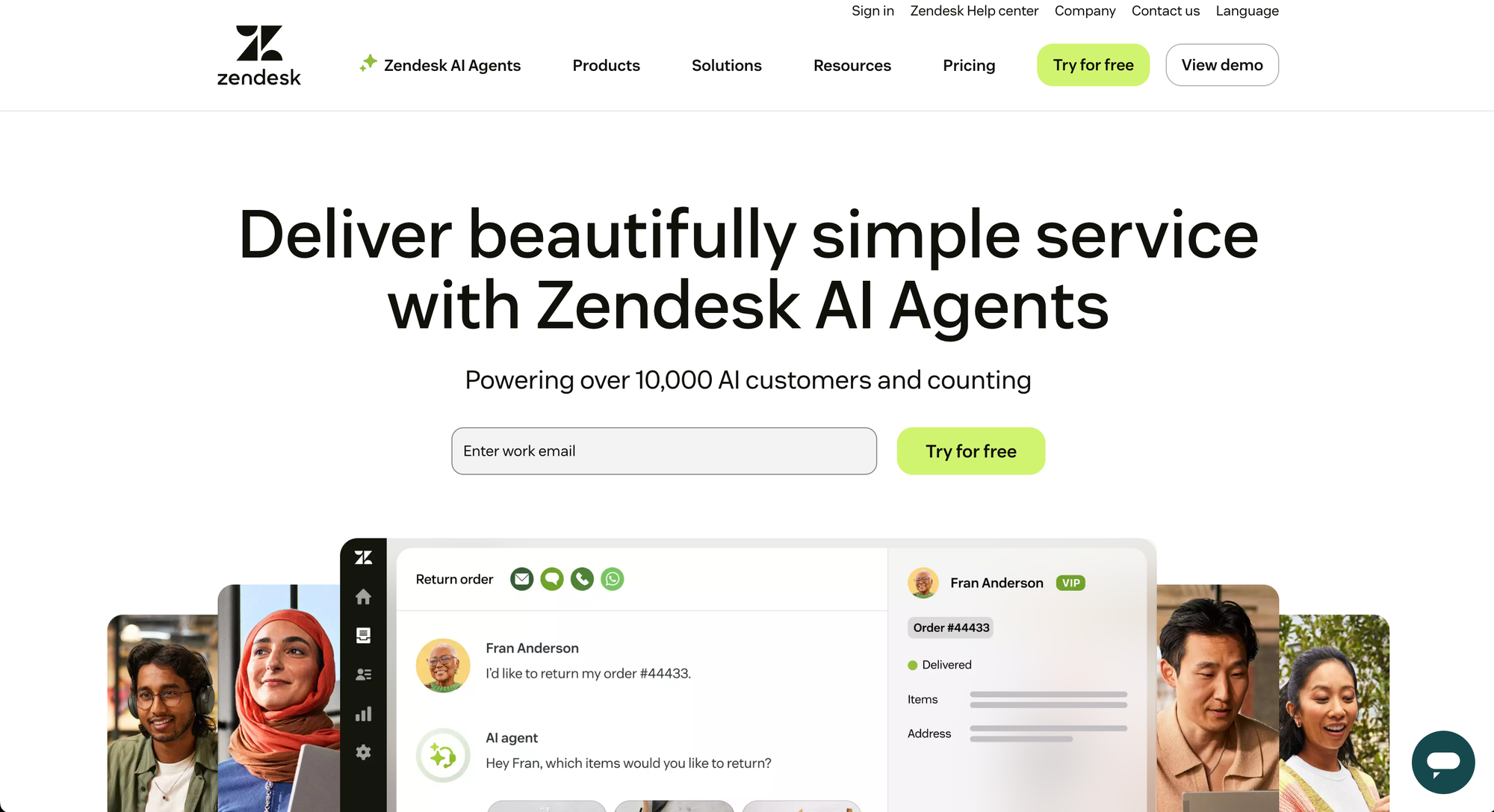
Zendesk is one of the oldest and best-known customer service platforms, around since 2007. It's a full support suite: ticketing, messaging, live chat, voice, a knowledge base, and a large AI layer, all wrapped in deep reporting and an 1,800+ app marketplace.
It's built for teams that want to scale support and customize heavily. That power is the draw, and also the catch. G2 reviewers consistently praise the unified inbox, automation, and reporting, while flagging a steep learning curve and costs that climb as you add tiers and add-ons.
What is LiveAgent?
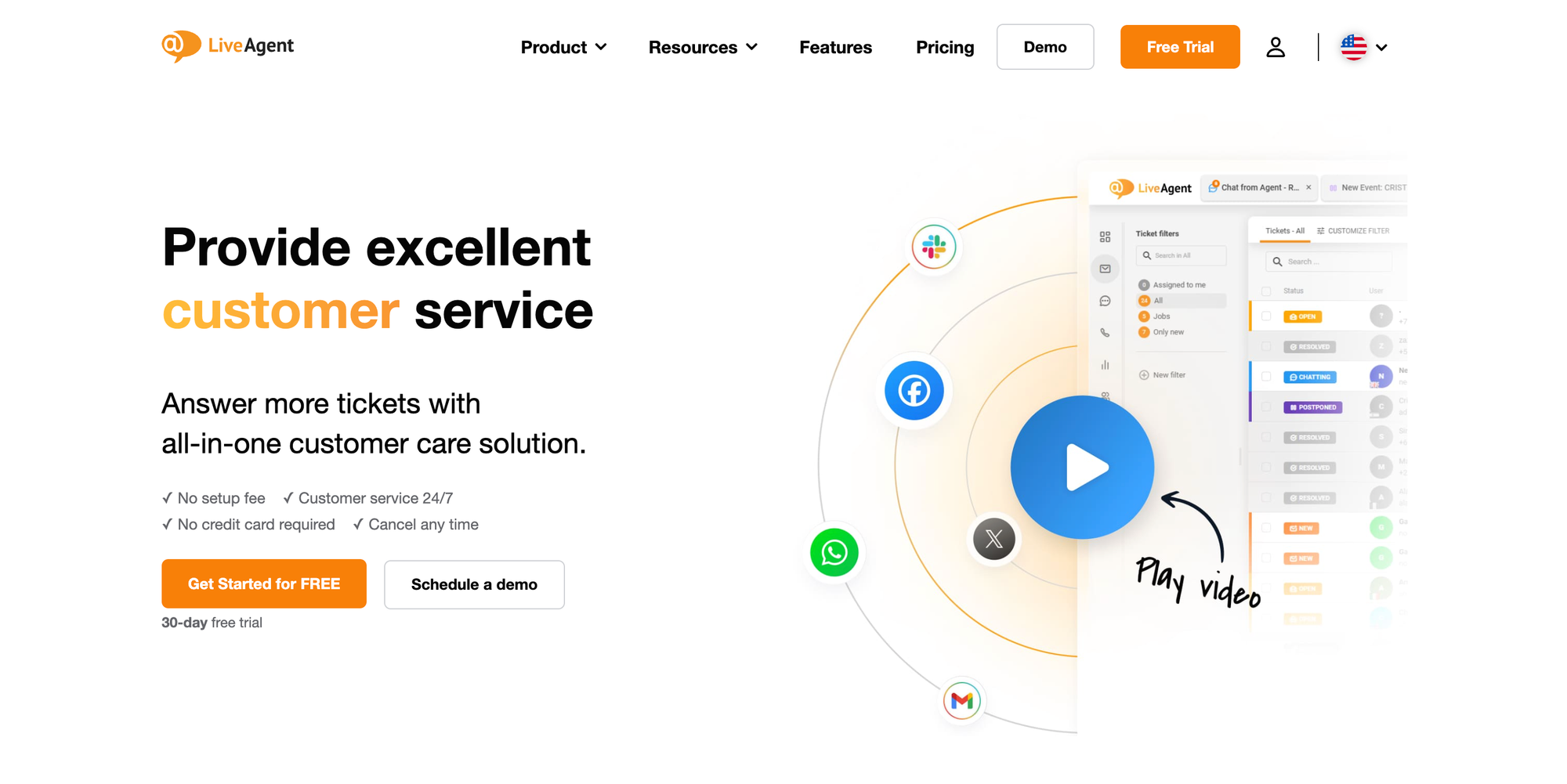
LiveAgent is an all-in-one help desk built around one idea: pull every channel into a single ticket stream. Email, live chat, a built-in call center, and social messages (Facebook, Instagram, WhatsApp, Viber, X) all become tickets in one view.
It's used by brands like Forbes and NASCAR, and its pitch is breadth at a low price. The trade-off shows up in the experience. Reviewers love how affordable and channel-complete it is, but a recurring theme in G2 feedback is a dated interface, a learning curve, and AI that trails newer live chat software.
Pricing
Price is usually the first deciding factor, so let's start here.
Zendesk pricing
Zendesk's pricing splits into Support plans and the fuller Suite plans:
- Support Team - $19/agent/mo (billed annually): email and ticketing, routing, prebuilt dashboards
- Suite Team - $55/agent/mo: adds AI agents, knowledge base, messaging, live chat, and voice
- Suite Professional - $115/agent/mo: adds skills-based routing, app builder, and advanced reporting
- Suite Enterprise - custom pricing for advanced security and governance
Two things inflate the real bill. AI agents are billed per automated resolution on top of your plan, and the Copilot AI assistant is a $50/agent/mo add-on. There's no free plan, only a 14-day trial (and a 6-month program for qualifying startups).
LiveAgent pricing
LiveAgent's pricing keeps it simpler with four flat tiers, all billed per agent per month annually:
- Small business - $15/agent/mo
- Medium business - $29/agent/mo
- Large business - $49/agent/mo
- Enterprise - $69/agent/mo
The plans bundle channels by tier rather than charging per-resolution AI fees, so the price you see is closer to the price you pay. There's no permanent free plan, but you get a 30-day free trial with no card required.
Winner: LiveAgent LiveAgent is cheaper at every comparable tier, and its flat per-agent pricing is far easier to forecast than Zendesk's plan-plus-add-ons-plus-resolutions model.
Channels & live chat
The number of ways customers can reach you shapes how many you actually help.
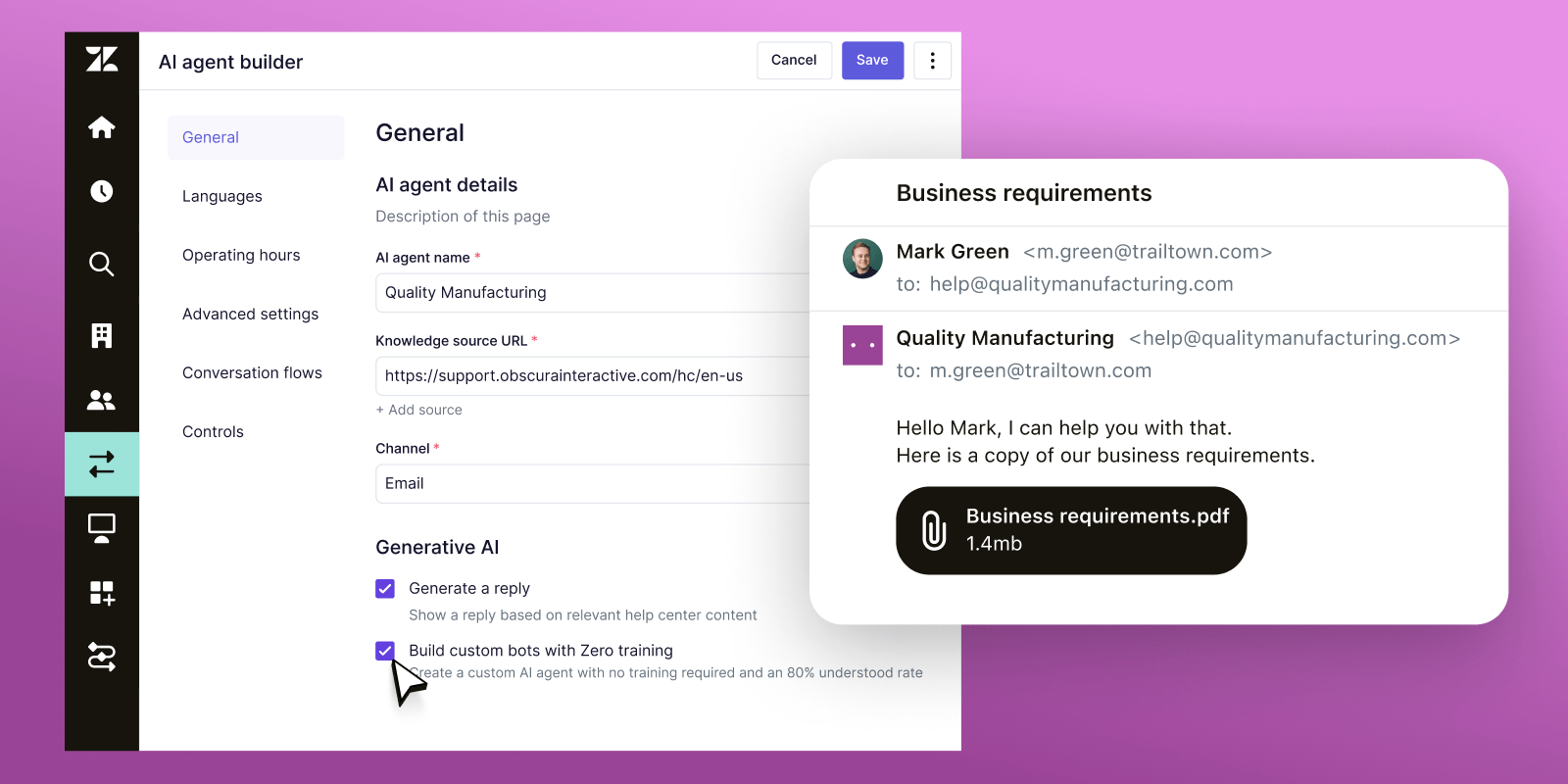
Zendesk covers email, messaging and live chat, voice, web widgets, mobile SDKs, and the major social channels, all routed into one omnichannel workspace. Routing and unified context across those channels are genuinely strong, which is why larger teams lean on it.
LiveAgent arguably casts an even wider net for the money. On top of email and live chat, it ships a built-in call center and connects Facebook, Instagram, WhatsApp, Viber, and X, plus video calling. Its live chat is fast and supports multi-site setups from one hub.
Winner: Tie Zendesk has tighter routing and context, while LiveAgent packs more raw channels (including telephony) into cheaper plans. Pick on whether you value depth or breadth.
Ticketing, workflows & AI
This is where the gap between a legacy tool and a modern one shows most.
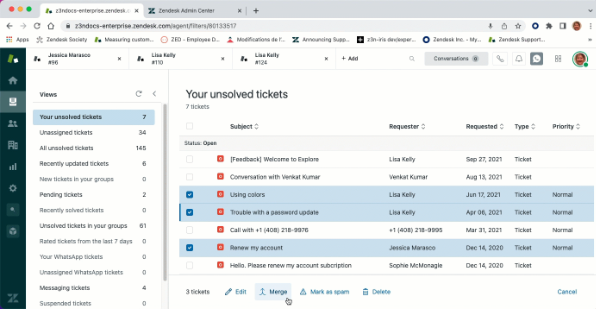
Both turn every interaction into a ticket with full history, custom fields, tags, merges, and satisfaction surveys. Zendesk goes further on automation: triggers, macros, SLA management, skills-based routing, and an AI layer that suggests replies, triages, and powers autonomous AI agents. LiveAgent offers solid rules - time triggers, SLA conditions, canned messages, mass actions - but its AI and chatbot are noticeably lighter, which reviewers cite as a limit when they try to scale automated resolution.
This matters more every year. Customers increasingly expect fast, always-on responses, and that's hard to deliver on manual workflows alone.
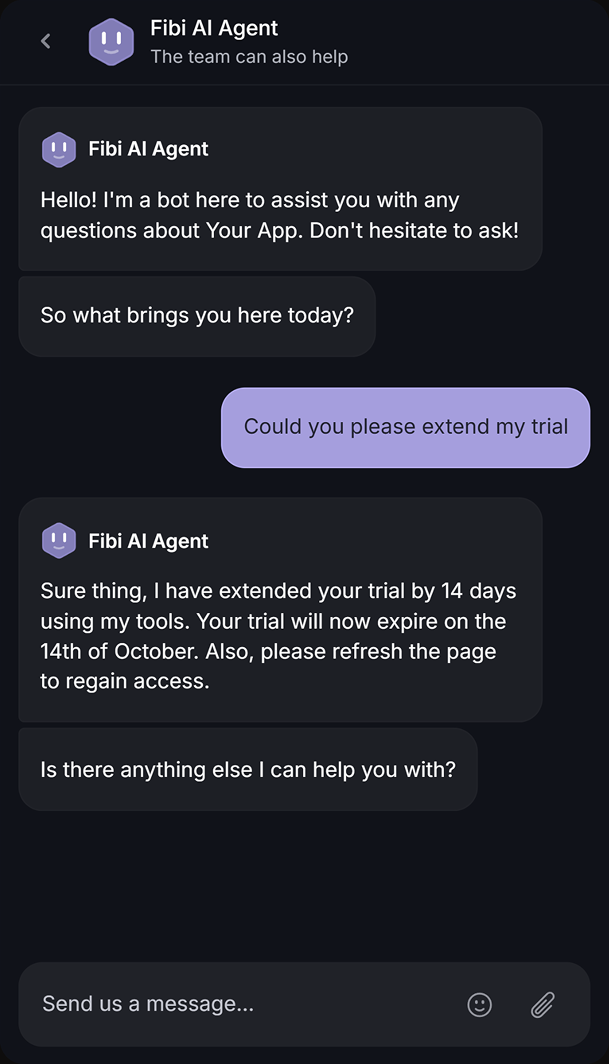
It's also where a modern alternative pulls ahead. With Featurebase, the Fibi AI Agent resolves common issues on autopilot and can run real actions like trial extensions, while AI Copilot drafts agent replies from your own knowledge base, so your team clears the queue faster without bolting on a separate AI product.
Winner: Zendesk Zendesk's automation and AI are deeper and more mature than LiveAgent's. If hands-off resolution is a priority, it's the stronger of the two.
Knowledge base & self-service
Good self-service deflects tickets before they reach an agent.
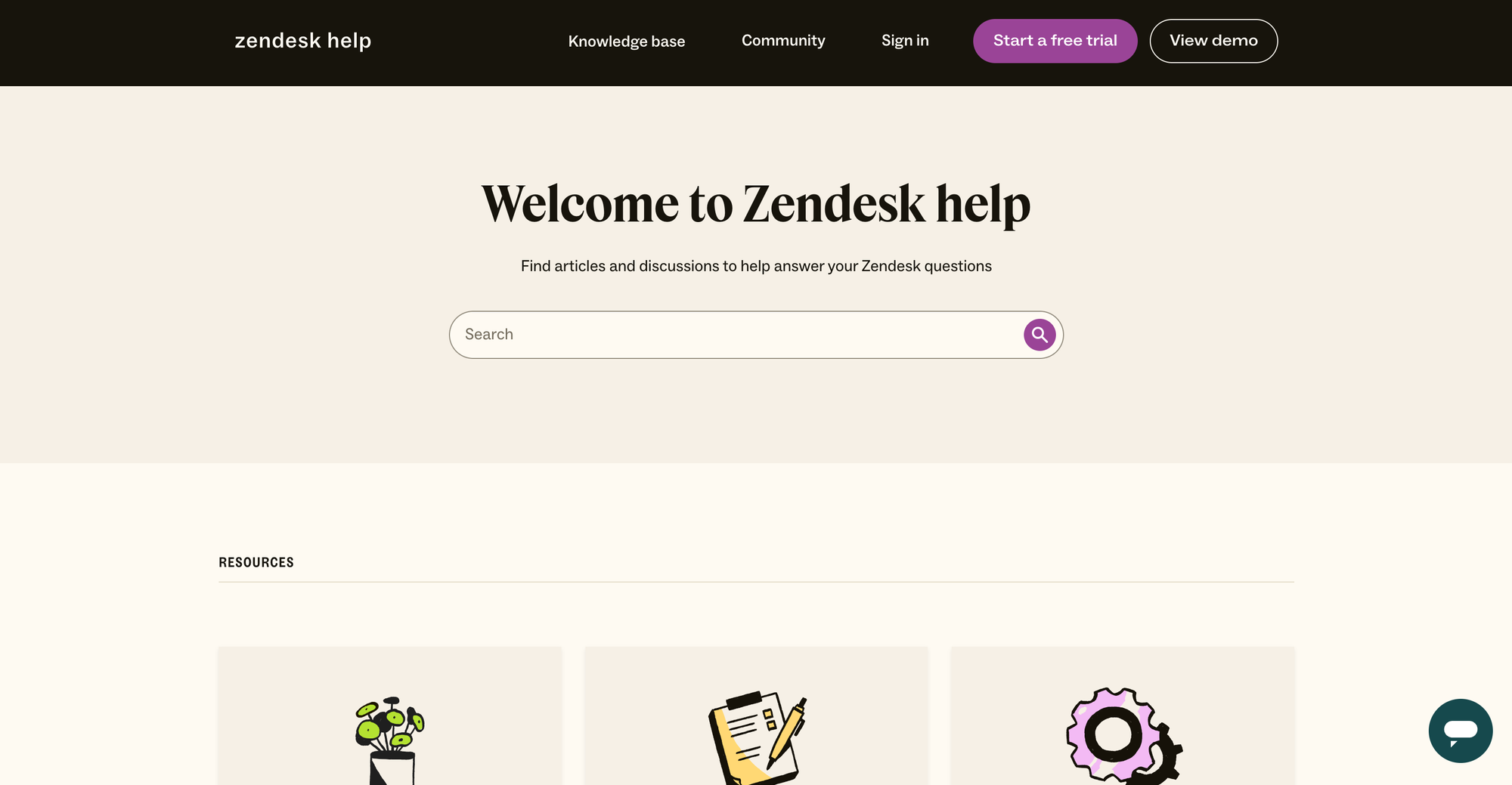
Zendesk offers a robust help center with community forums, guided learning paths, and AI-powered article suggestions, all backed by strong analytics on what content performs. It's one of its most complete areas.
LiveAgent includes a knowledge base, customer portal, and forums too, and you can run multiple knowledge bases for different products. It covers the basics well, but the authoring and search experience feel more utilitarian than Zendesk's.
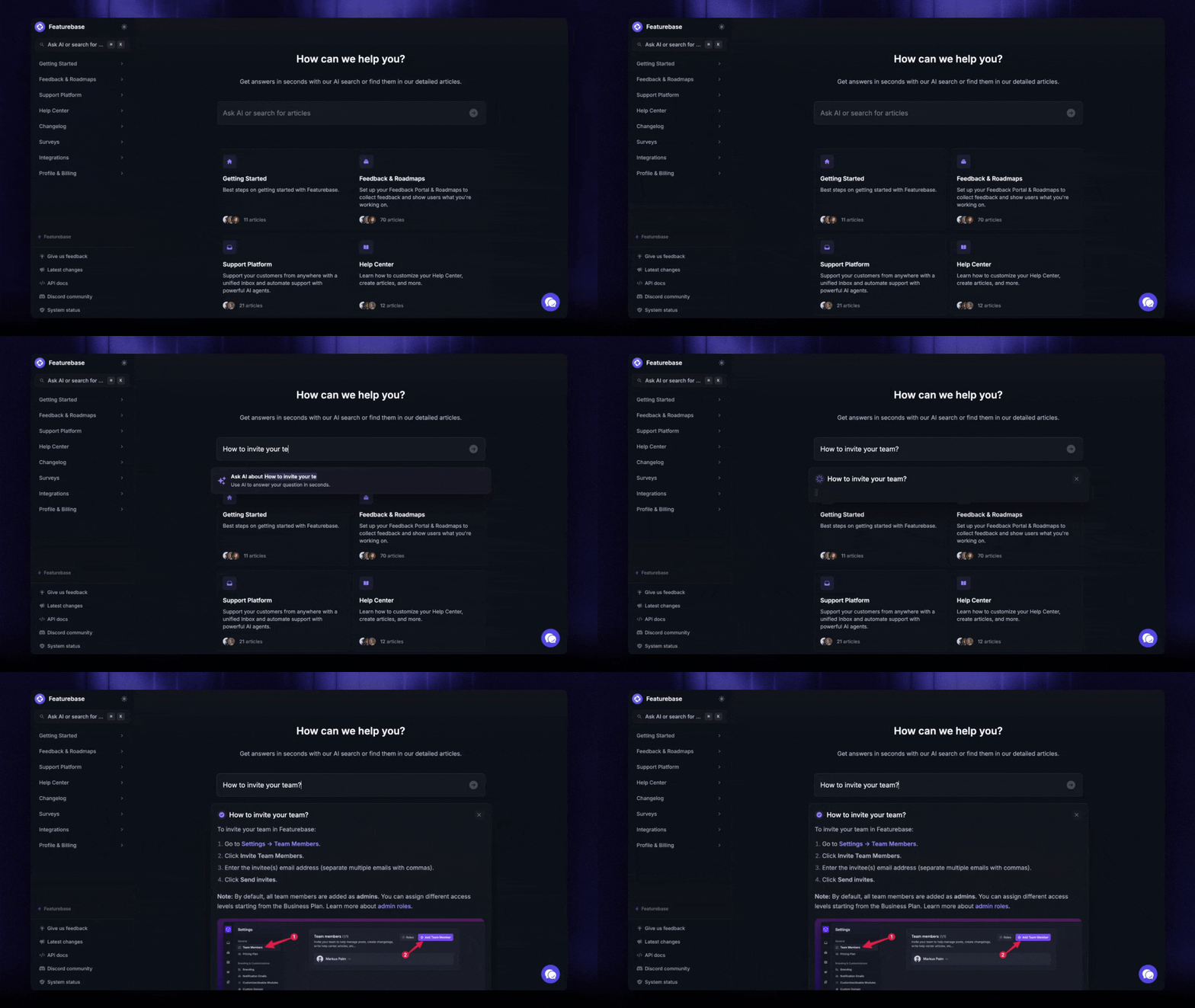
Self-service is also where modern tools compete hard on AI. Featurebase, for example, ships a help center with AI search that summarizes answers right in the search bar and auto-translates articles into your customers' languages.
Winner: Zendesk Deeper authoring, better analytics, and more mature AI search give Zendesk the edge for self-service at scale.
Reporting & analytics
Both platforms do this well, and it's close.
Zendesk's analytics are a headline feature: real-time dashboards, agent productivity views, and deep filtering that scale to large operations. LiveAgent's reporting is genuinely solid too, with real-time overviews across performance, agents, departments, channels, and tags - plenty for most SMB teams to monitor resolution times and CSAT.
Winner: Tie Zendesk goes deeper for enterprise reporting needs, while LiveAgent covers what most growing teams actually use.
Security & support quality
Two practical tiebreakers: how well your data is protected, and how well you're treated as a customer.
On security, both offer 2FA, encryption, audit logs, and access controls. Zendesk adds more enterprise-grade options - SSO, IP restrictions, data masking, automatic redaction, and HIPAA support - which matters for regulated industries.
On vendor support, the picture flips. A recurring complaint in Zendesk's G2 reviews is slow response times and support gated behind higher tiers or paid packages. LiveAgent generally includes support across its plans, which smaller teams appreciate.
Winner: Split Zendesk wins on enterprise security, while LiveAgent wins on accessible, included customer support.
When to choose Zendesk vs LiveAgent
| Choose Zendesk if... | Choose LiveAgent if... |
|---|---|
| You're scaling fast and need deep automation and AI | You want the lowest price for the most channels |
| You rely on a large integration ecosystem | You need a built-in call center out of the box |
| You operate in a regulated, security-heavy industry | You're a small team that wants included support |
| Budget is flexible | Predictable, flat per-agent pricing is a must |
Neither is wrong. The honest summary: Zendesk is the better platform if you can absorb the cost and complexity, and LiveAgent is the better value if you can live with an older interface and lighter AI.
But there's a third option worth weighing before you commit.
Looking beyond Zendesk and LiveAgent: Try Featurebase
If Zendesk feels too expensive and complex, and LiveAgent feels too dated, Featurebase is the modern middle ground worth weighing against the usual Zendesk alternatives. It's an AI customer support platform built for product-led SaaS, and it's used by teams at companies like Lovable, Raycast, and n8n. 💫
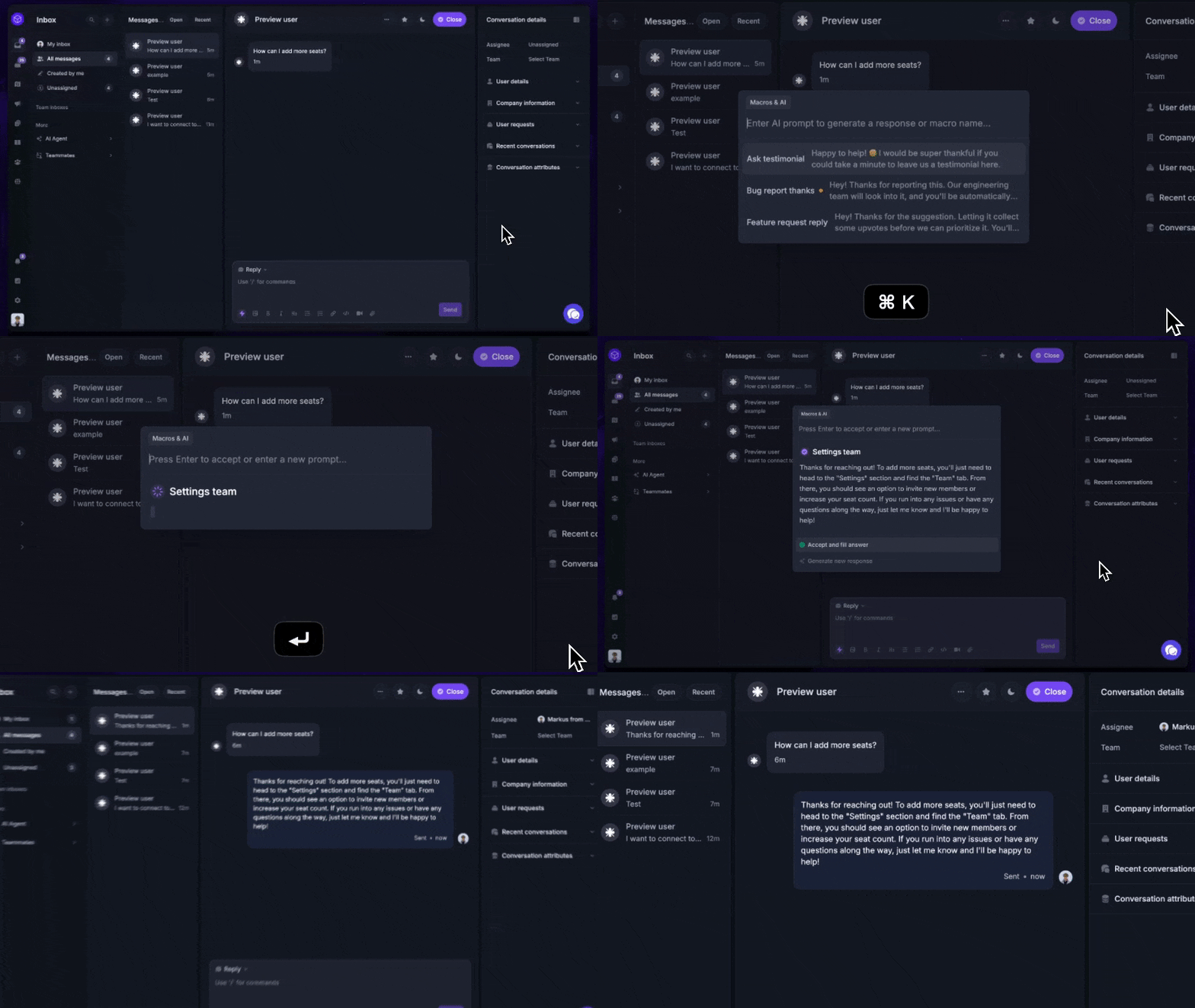
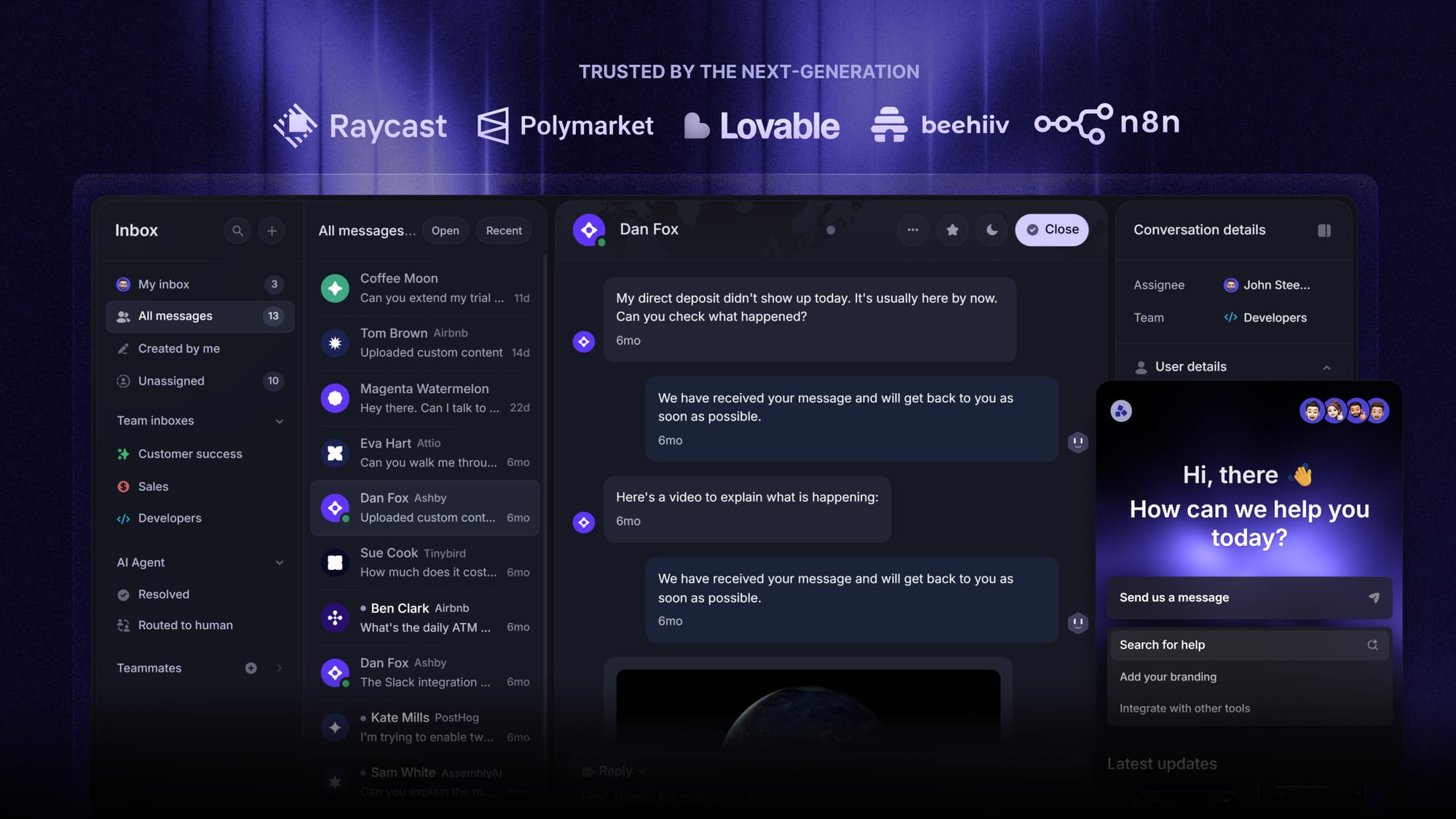
The idea is to give you the depth Zendesk is known for without the sprawling price tag, and the modern feel LiveAgent lacks. You manage live chat, email, and Slack from one omnichannel inbox, while the Fibi AI Agent resolves common issues on autopilot - and can run real actions like trial extensions or refunds, not just deflect. When a conversation does reach a human, AI Copilot drafts replies from your own knowledge base so agents clear the queue faster.
Self-service is handled by an AI-powered help center that answers questions instantly and translates articles into your customers' languages automatically. And because feedback boards, a public roadmap, and product changelogs live in the same workspace, your support, product, and marketing teams stop juggling separate tools.
There's a free plan with unlimited conversations, and paid plans start at $29/seat/month with $0.29 per AI resolution - no per-tier add-ons or surprise resolution fees stacked on top.
Conclusion
Zendesk vs LiveAgent comes down to a single trade-off: power versus price. Zendesk gives you the deepest automation, AI, integrations, and security, but the bill grows with every tier, add-on, and resolution. LiveAgent gives you more channels for less money, with a flat, predictable price, but you accept a dated interface and lighter AI.
If neither extreme fits, Featurebase is the modern alternative that splits the difference - AI-first support, an omnichannel inbox, and an AI-powered help center, all in one clean platform built for fast-moving SaaS teams.
It comes with a free plan, and onboarding takes minutes, so there's no downside to trying it. 👇
✨ Automate your support with the fastest AI-enhanced Inbox today →
FAQs
What's the main difference between Zendesk and LiveAgent?
Zendesk is a deeper, pricier enterprise-grade platform with stronger automation, AI, and integrations. LiveAgent is a more affordable, channel-rich help desk built around turning every interaction (including phone calls) into a ticket. In short, Zendesk optimizes for depth and scale, LiveAgent for breadth and budget.
Is LiveAgent cheaper than Zendesk?
Yes, at list price LiveAgent is cheaper at every comparable tier, starting at $15/agent/mo versus Zendesk's $19 Support plan and $55+ Suite plans. The gap widens once you factor in Zendesk's per-resolution AI billing and add-ons like the $50/agent/mo Copilot. LiveAgent's flat pricing is also easier to forecast.
Does Zendesk or LiveAgent offer a free plan?
Neither offers a true permanent free plan today. Zendesk has a 14-day trial (plus a 6-month program for qualifying startups), and LiveAgent offers a 30-day free trial with no card required. If a free plan is a must-have, you'll need to look at alternatives.
Which is better for small businesses, Zendesk or LiveAgent?
For most small businesses on a budget, LiveAgent is the easier starting point thanks to its lower price, included support, and built-in call center, and it ranks among the more affordable help desk software for small businesses. Zendesk makes more sense if you expect to scale quickly and want room to grow into deeper automation and integrations. The decision usually comes down to budget today versus headroom tomorrow.
Is LiveAgent a CRM?
No, LiveAgent is a help desk and live chat platform, not a CRM. It manages customer support conversations and tickets rather than sales pipelines and contact records. It does integrate with CRMs and other tools, so you can sync customer data between systems.
Is there a more affordable alternative to Zendesk and LiveAgent?
Yes. Modern, AI-first tools often deliver comparable support features at a lower entry cost. Featurebase, for example, offers an omnichannel inbox, an AI support agent, and an AI-powered help center on a free plan, with paid plans from $29/seat/mo, making it a strong option for SaaS teams who find Zendesk too expensive and LiveAgent too dated.