Blog Comparisons16 Best Intercom Alternatives for Modern Customer Support (2026)
16 Best Intercom Alternatives for Modern Customer Support (2026)
Thinking of ditching Intercom? You’re not alone. Its pricing is unpredictable, the support isn’t great, and many teams are tired of paying extra for every little feature. The good news? There are better (and cheaper) alternatives out there - and we’ve rounded up the best ones for 2025.


Thinking about switching from Intercom? You’re not alone.
Intercom is one of the biggest names in customer support software. It gives teams live chat, ticketing, email, a knowledge base, and AI tools in one platform.
The problem is that Intercom isn’t cheap. Its pricing is high, often unpredictable, and packed with add-ons and usage-based fees. For many teams, that makes it hard to scale without overspending.
That’s why so many businesses start looking for Intercom alternatives. Whether you want a more affordable help desk, better AI-powered support, a simpler live chat tool, or a more flexible customer support platform, there are plenty of strong Intercom competitors worth considering.
Short answer:
- If you want the best modern AI-powered support platform for SaaS, use Featurebase
- If you want affordable live chat and chatbots, use Tidio
- If you want simple email-first support, use Help Scout
- If you need enterprise-grade support workflows and reporting, use Zendesk
See the table below for a quick comparison of all the tools.👇
TL;DR - Comparison table of the best Intercom alternatives in 2026:
| Tool | Best for | AI agent | Live chat | Knowledge base | Shared inbox | Starting price |
|---|---|---|---|---|---|---|
| ✨Featurebase | Fast-growing SaaS teams wanting support + feedback + docs in one platform | Yes | Yes | Yes | Yes | Free plan, from $29/seat/mo |
| Tidio | Small businesses and ecommerce teams using chat + AI bots | Yes | Yes | No | Yes | From $29/mo |
| Help Scout | Teams wanting a clean, email-first help desk | Yes | Yes | Yes | Yes | From $25/mo |
| Zendesk | Large teams needing enterprise ticketing and analytics | Yes | Yes | Yes | Yes | From $55/agent/mo |
| Crisp | Startups and SMBs wanting affordable live chat + automation | Yes | Yes | Yes | Yes | Free plan, paid from $45/mo |
| Olark | Teams that just want simple live chat | Limited | Yes | No | No | From $29/agent/mo |
| Zoho Desk | Budget-conscious teams wanting omnichannel support | Yes | Yes | Yes | Yes | Free plan, paid from $7/agent/mo |
| Front | Teams collaborating heavily in a shared inbox | Limited | Yes | No | Yes | From $25/seat/mo |
| HubSpot Service Hub | Teams already using HubSpot CRM | Yes | Yes | Yes | Yes | Free plan, paid from $20/seat/mo |
| Freshdesk | Growing support teams needing omnichannel ticketing | Yes | Yes | Yes | Yes | From $15/agent/mo |
| Drift | Sales-led teams using AI chat to qualify leads | Yes | Yes | No | No | From $2,500/mo |
| HelpCrunch | SMBs wanting chat, email automation, and docs | Limited | Yes | Yes | Yes | From $15/seat/mo |
| HappyFox | Teams needing structured ticketing and SLAs | Limited | Yes | Yes | Yes | From $39/agent/mo |
| Helply | B2B software teams wanting AI-native support + outcome pricing | Yes | Yes | Yes | Yes | Free platform, $0.50/outcome |
| Kayako | Teams wanting timeline-based support conversations | Limited | Yes | Yes | Yes | From $15/agent/mo |
| Quiq | Enterprise brands needing agentic AI across messaging channels | Yes | Yes | Limited | Yes | Custom pricing |
What is Intercom?
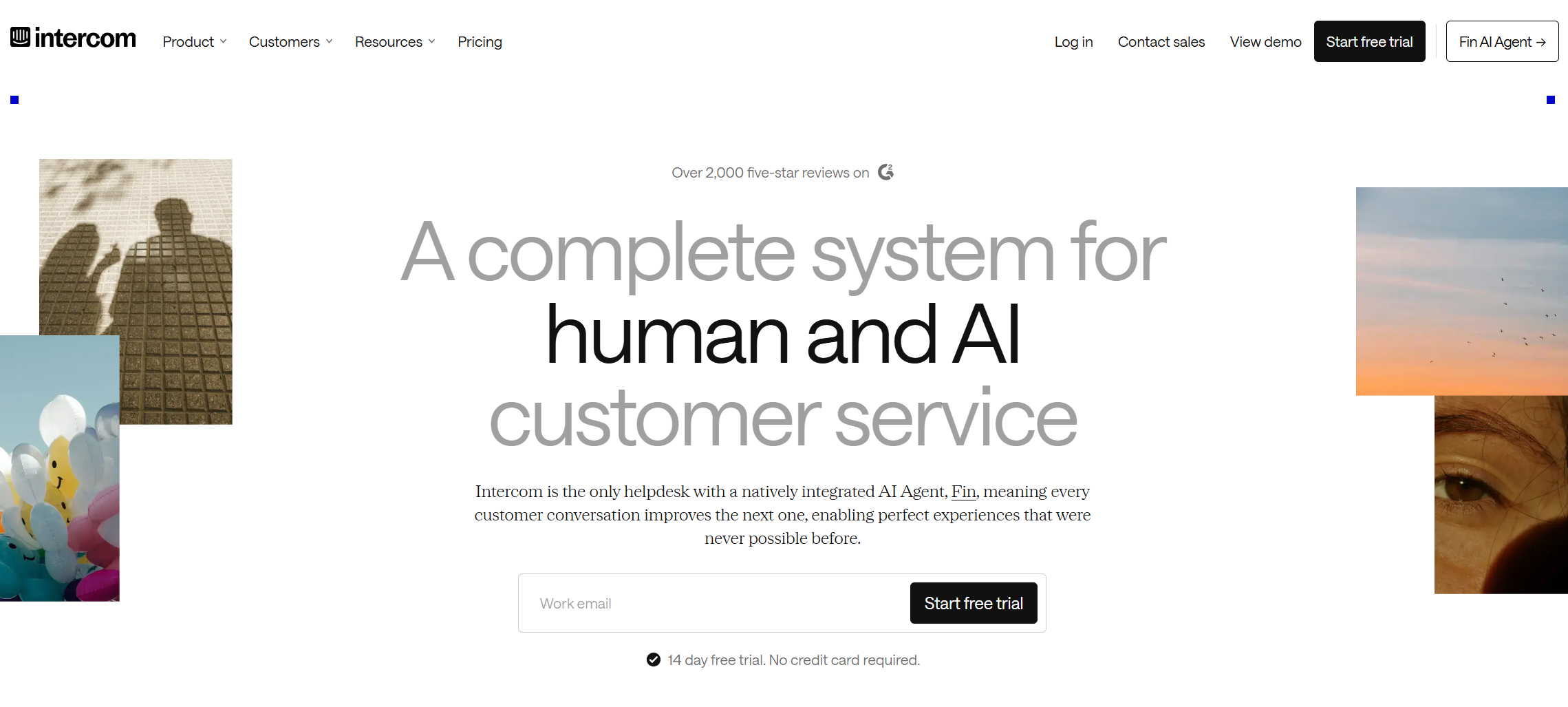
Intercom is one of the most well-known customer support platforms on the market. It combines live chat, email support, ticketing, a knowledge base, and proactive messaging into a single tool. On top of that, it’s been pushing heavily into AI with features like Fin, its AI chatbot.
It’s widely used by SaaS companies, ecommerce businesses, and enterprise customer support teams to manage conversations across multiple channels. With chatbots, product tours, automation, and integrations, Intercom positions itself as a full customer engagement suite.
But while it’s a powerful tool, many teams quickly run into limitations - especially around the high cost and scalability.
Why look for an alternative to Intercom?
Intercom can do a lot, but it has major drawbacks that lead businesses to look elsewhere. Let’s break down the biggest reasons users switch:
1. Extremely high & unpredictable pricing
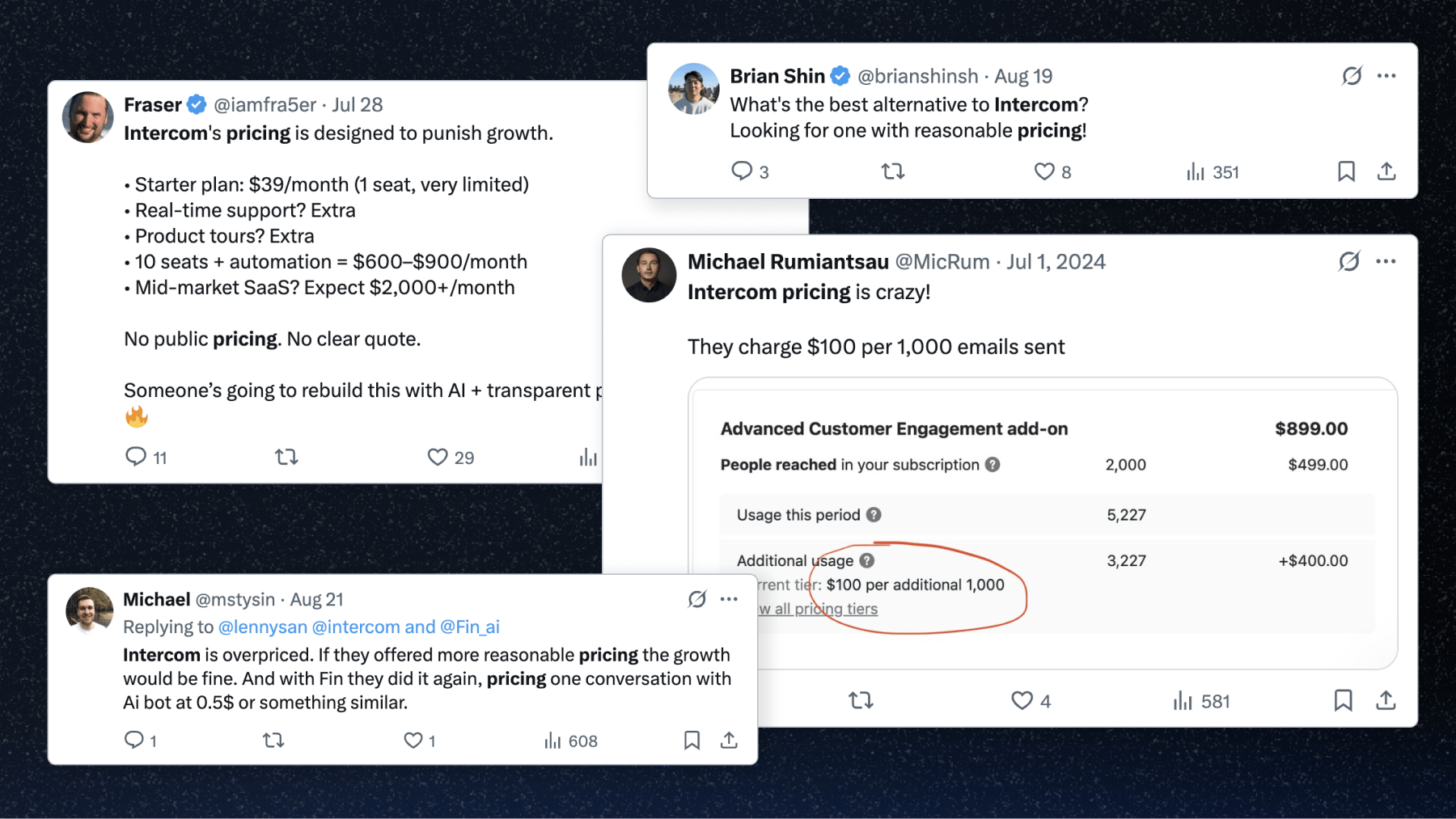
One of the biggest reasons teams look for an Intercom alternative is pricing. Essential starts at $19/seat/month billed annually ($29 billed monthly). Advanced costs $85/seat/month and Expert costs $132/seat/month, billed annually. Fin is billed separately at $0.99 per outcome. Intercom’s base plans may look manageable at first, but the real cost can rise quickly once you add extra seats, Fin AI, Copilot, and other add-ons.
That becomes even harder to manage because parts of Intercom’s pricing are usage-based. In the Reddit post you shared, one team said their monthly bill jumped from $4k to $9k, with extra costs coming from Fin resolutions, add-ons, and seat creep - a good example of why many teams find Intercom pricing hard to predict and harder to control.
2. Poor customer support
Another common reason teams switch from Intercom is the quality of support. While many users like the product itself, some reviews mention slow response times, unhelpful replies, and having to wait days or even weeks - to get clear answers on urgent issues.
That is a tough sell when you are paying premium prices for business-critical support software. According to several reviews on Trustpilot, multiple customers complained about slow, inefficient support and difficulty getting timely help with billing, bugs, and account issues.
4. Outages and bugs
Several reviews mention that Intercom suffers from occasional outages or buggy features. For example, email automations can break, or chat notifications might not come through reliably. In customer support, every minute counts - so these issues can quickly become deal-breakers.
5. Not always the best value
Ultimately, while Intercom is feature-packed, you may not actually use (or need) everything you’re paying for. For many teams, especially small businesses or scaling SaaS startups, there are many more affordable tools that do the job just as well - often with better pricing models and more modern AI capabilities.
If these pain points sound familiar, because there are numerous complaints about Intercom leading to failing scores on customer satisfaction, here are the best affordable Intercom alternatives worth your time in 2026. 👇
Top 15 Intercom alternatives for customer service in 2025
1. Featurebase ✨
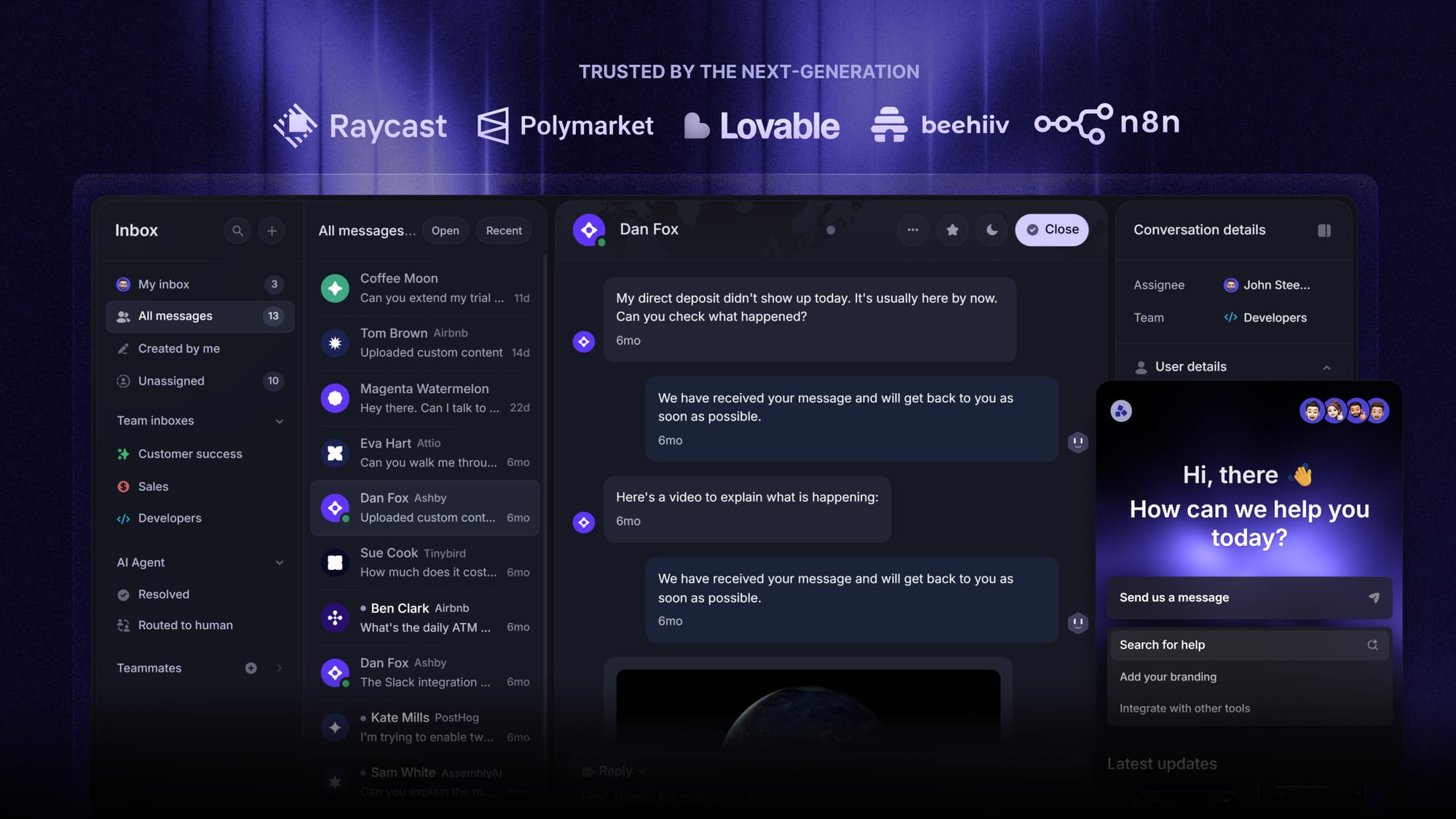
Featurebase is a modern Intercom alternative that combines AI-powered support, feedback, documentation, surveys, and changelogs into a single platform for SaaS. It's loved by thousands of support teams from companies like Lovable, Raycast, and Beehiiv. 💫
Top features:
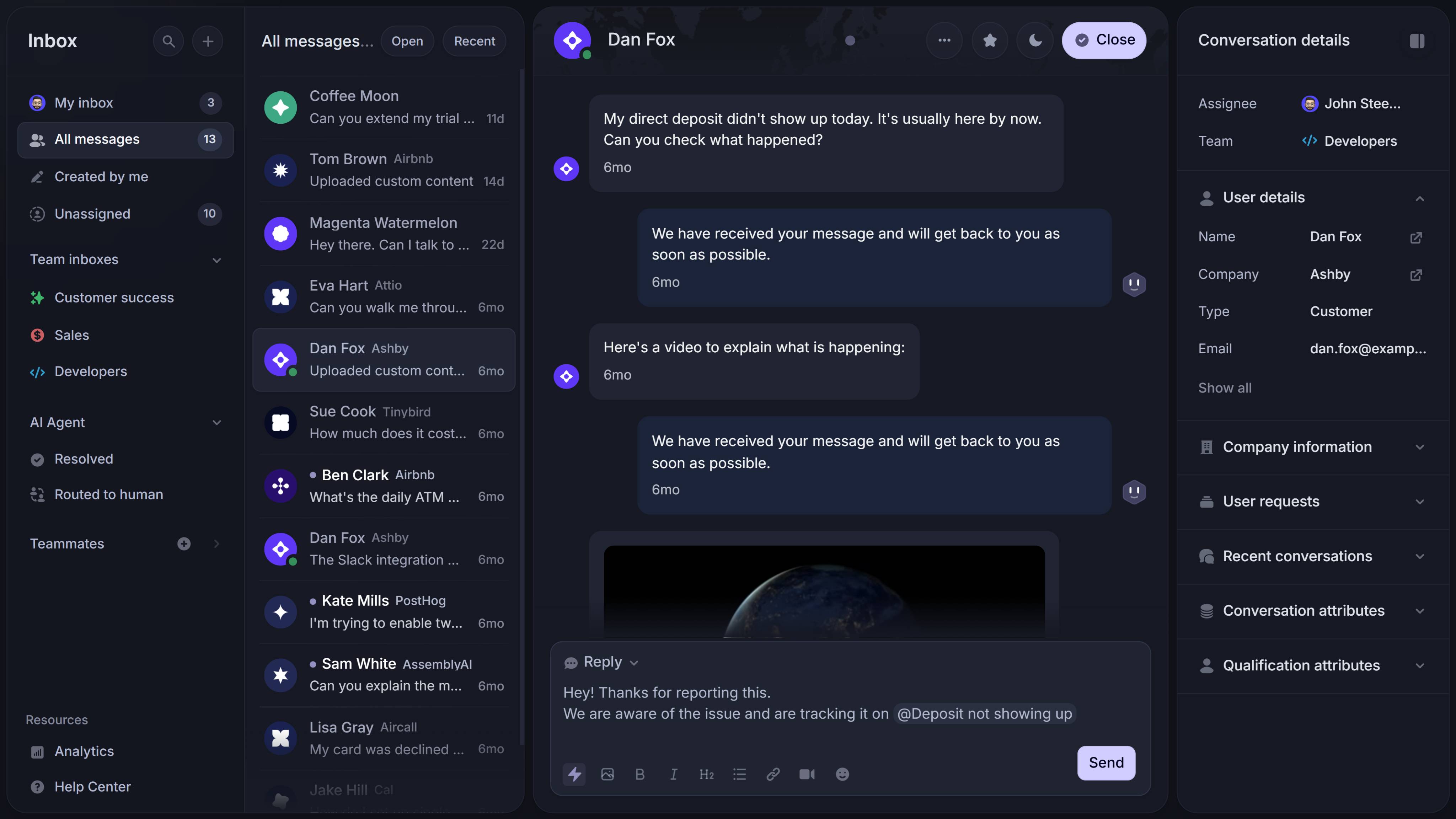
- Unified inbox – manage your live chat & email conversations in one AI-enchanced inbox with your whole team
- Omnichannel support – seamlessly provide support to your customers via email or Slack sync, in addition to live chat
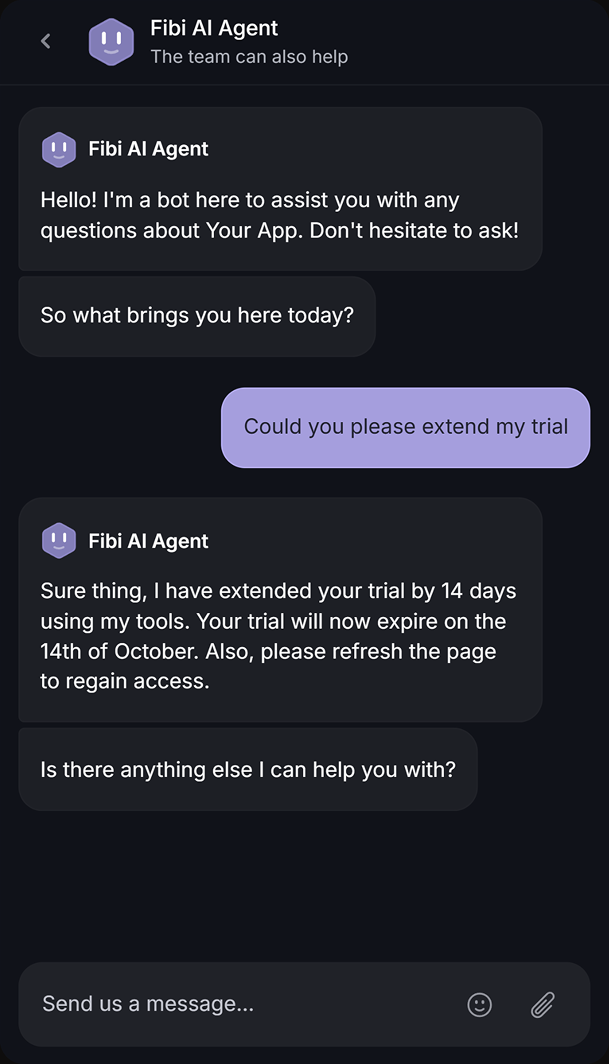
- AI agent & automations – fully automate your support with Fin-level AI and endless custom workflows, like extending trials, offering discounts, qualifying leads, etc.
- Messenger widget – provide AI and human support from anywhere with a customizable in-app widget
- AI-powered Help Center – a knowledge base with instant AI answers that can be multilingual and private
- Feedback portal & Roadmaps – centralize & keep track of all customer requests in one place, and show a public roadmap
- Product updates – publish and schedule release notes, push in-app notifications, and automatically email users
- Embedded surveys – run multi-step NPS, CSAT, or custom surveys targeted by user behavior or events
- Mobile app – respond to customers, receive notifications, and unblock users on the go
- Integrations – Slack, Linear, Jira, Discord, HubSpot, and many more
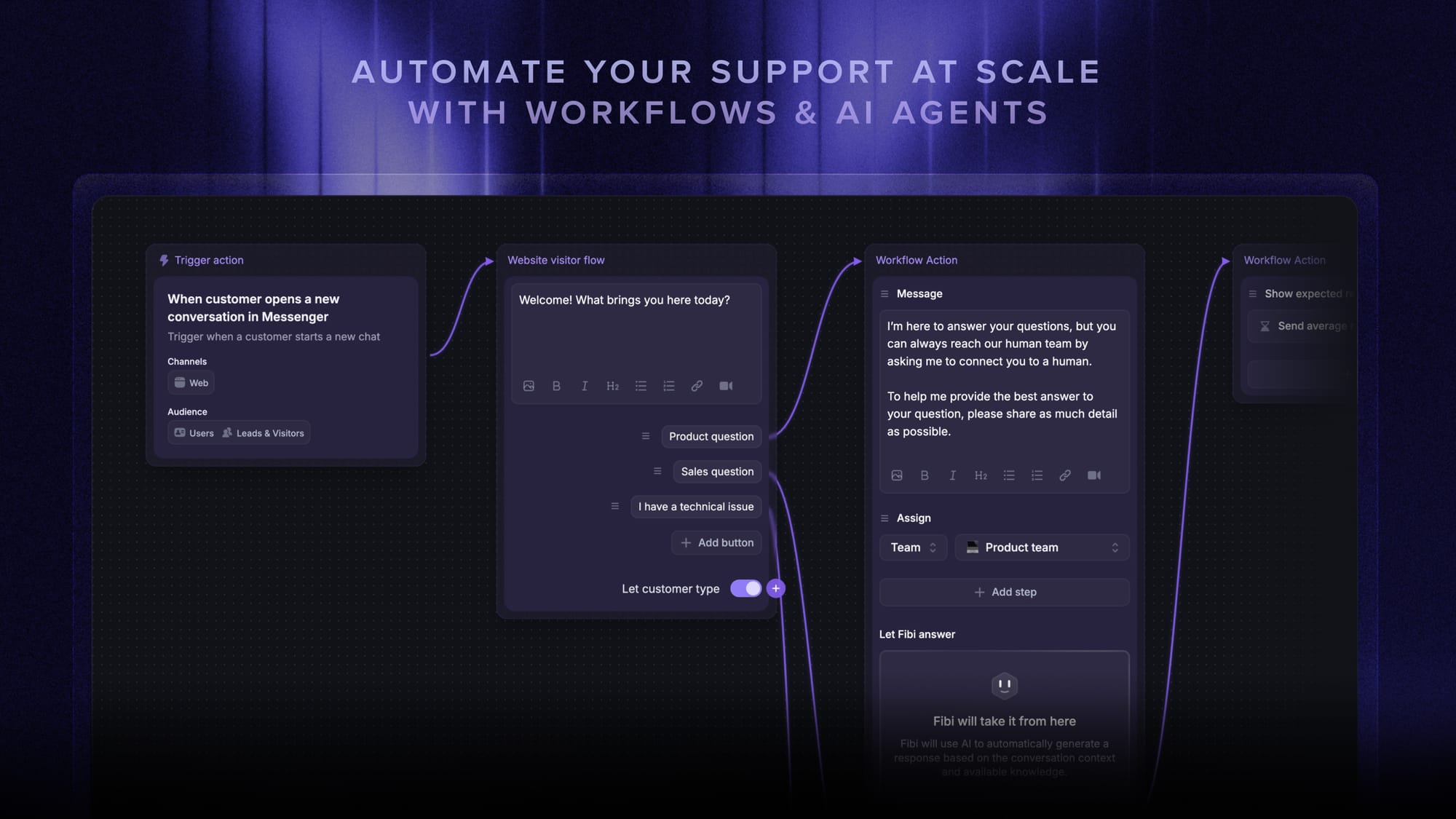
How it’s better than Intercom: Unlike Intercom, which is primarily for support, Featurebase enables you to replace all your customer-facing tools by bringing your support, help center, product updates, and feedback collection together in one place, providing powerful ecosystem advantages in modern support.
Pricing: Featurebase offers a generous Free plan, which includes unlimited support conversations. The paid plans start at $29 per user per month with AI resolutions coming in at $0.29 per resolution. You can migrate your Intercom help center with one click, so there's no downside to trying it. 👇

Get the best modern Intercom alternative
Automatically resolve 70% of customer requests & cut down manual support loads
2. Tidio
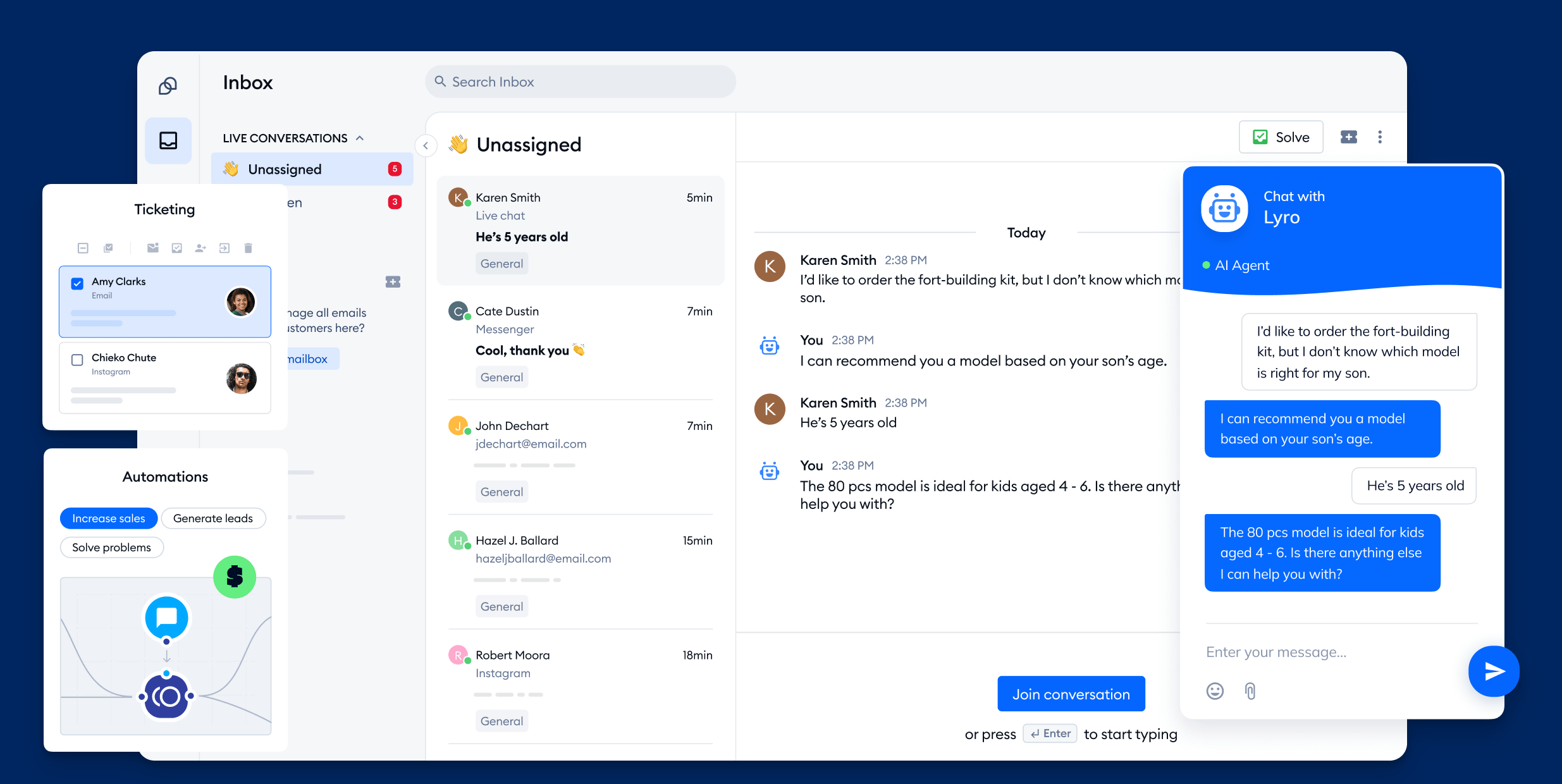
Tidio is one of the best-known Intercom alternatives for small businesses and e-commerce shops. It combines live chat, AI chatbots, and email marketing into a single tool that’s both affordable and easy to set up. With deep integrations into Shopify and WooCommerce, Tidio is especially popular with online stores looking to automate customer interactions and sales at scale.
Top features:
- Live chat widget with real-time visitor view and typing preview
- AI chatbot (Lyro) that resolves automatically common queries
- Shared inbox for chat, email, Messenger, and Instagram messages
- Prebuilt chatbot templates for sales, customer support, and abandoned cart recovery
- Integrations with Shopify, WordPress, and Zapier
How it’s better than Intercom: Tidio focuses heavily on e-commerce use cases, offering abandoned-cart recovery, product-recommendation flows, and prebuilt templates that Intercom lacks. It’s also much easier to set up for small support teams who don’t have time to spend weeks configuring a support suite.
Pricing: Starts at $24.17 per month for 100 conversations. For example, 5000 conversations cost $749/mo. A free plan is available with limited usage.
3. Help Scout
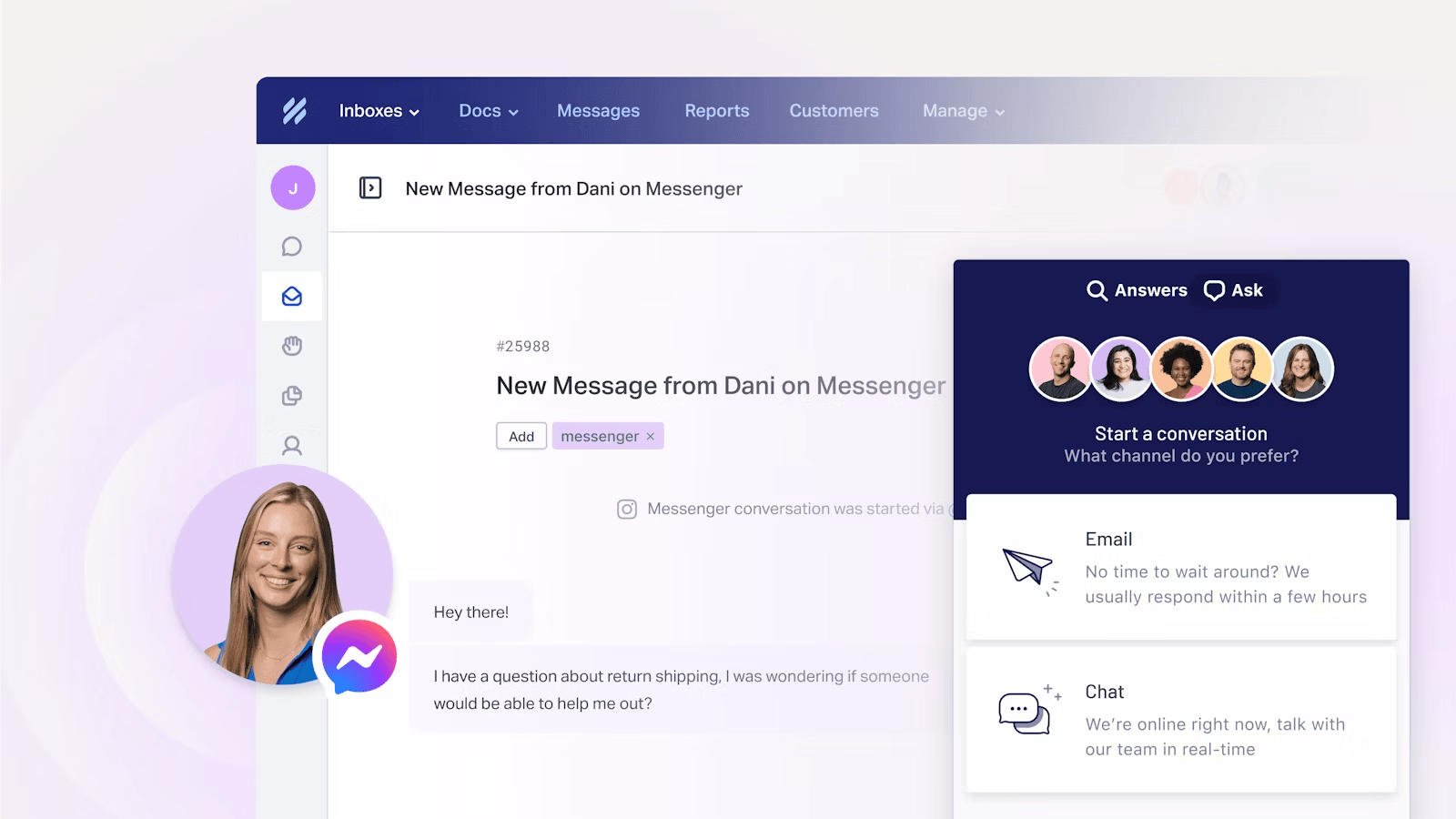
Help Scout is a straightforward, email-first customer support platform that prioritizes simplicity and usability. Instead of overwhelming you with complexity, it focuses on shared inboxes, live chat, and a built-in knowledge base to help customer service teams deliver personal, human support at scale. It’s widely used by SMBs that want a lightweight Intercom alternative without unpredictable costs.
Top features:
- Shared inboxes with assignments, tags, and collision detection
- Beacon live chat widget that combines docs, chat, and email options
- Branded knowledge base with SEO-friendly articles
- Automation workflows for routing and prioritizing tickets
- Reporting dashboards for team performance and customer happiness
How it’s better than Intercom: Help Scout’s biggest edge is its clarity and simplicity. There’s no usage-based pricing or endless add-ons - just a clean per-user model and an interface that’s easy for customer engagement teams to adopt. It’s also better suited for content-driven support since the knowledge base is at the heart of the platform, unlike Intercom’s add-on-heavy model.
Pricing: Starts at $25 per month for the Standard plan, which covers up to 100 contacts each month with unlimited users and includes the inbox, docs site, live chat, and reporting features.
4. Zendesk
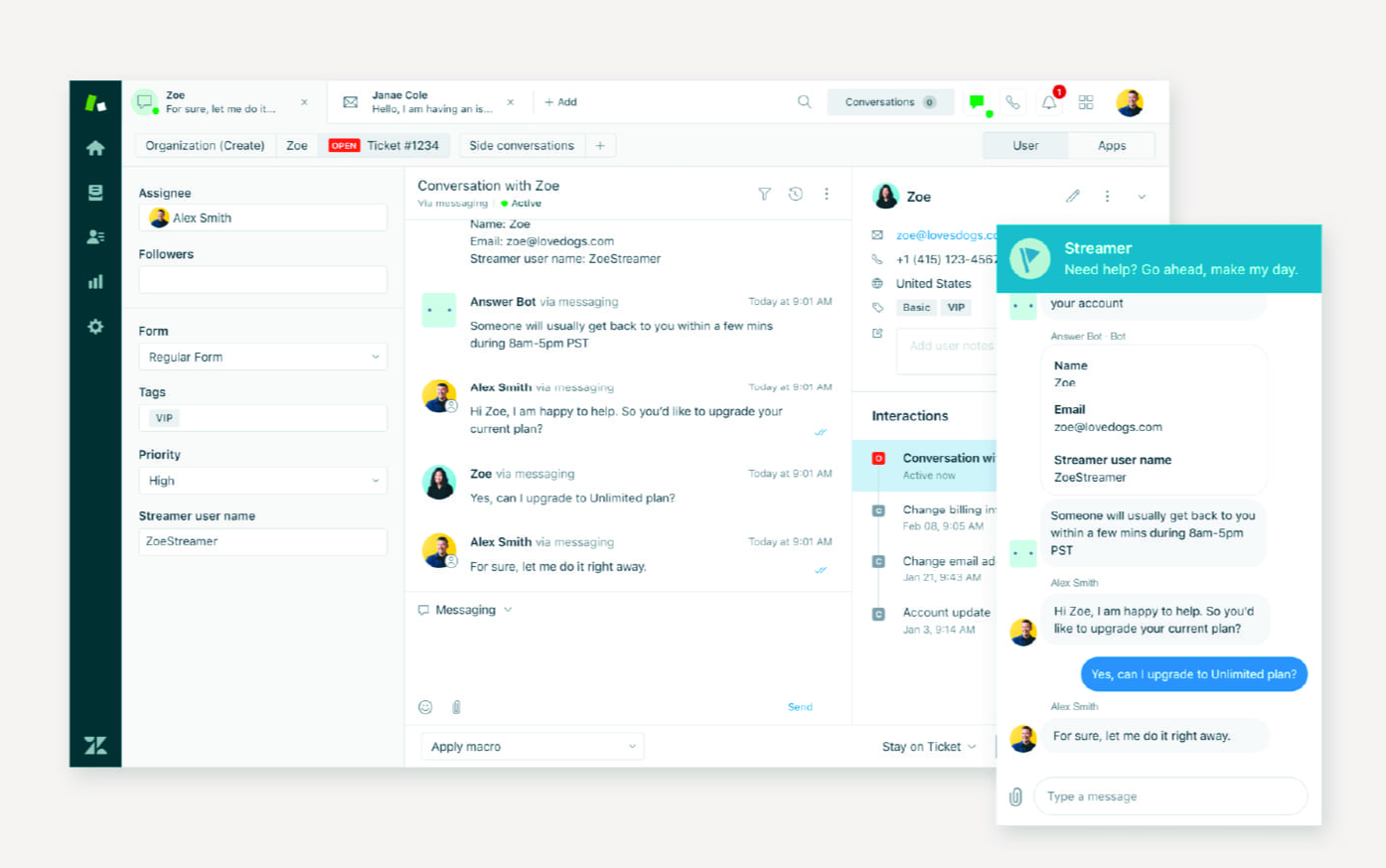
Zendesk is one of the oldest and most established customer service platforms on the market. Unlike Intercom, which started with messaging, Zendesk built its reputation on a help desk and ticketing system - making it the go-to Intercom alternative for enterprises with complex workflows, large teams, and strict compliance needs. It’s known for its scalability, governance, and reporting power.
Top features:
- Omnichannel customer support across email, live chat, phone, and social
- AI Answer Bot for article suggestions and ticket deflection
- Knowledge base (Zendesk Guide) with multilingual support
- Advanced SLAs and skill-based routing rules
- Explore analytics suite for detailed reporting
How it’s better than Intercom: Zendesk offers enterprise-grade ticketing infrastructure that Intercom simply doesn’t match. Its advanced SLAs, granular permissions, and multi-brand support make it ideal for global teams. While Intercom is strong on messaging, Zendesk dominates when it comes to structured support processes and deep reporting.
Pricing: Starts at $55/agent/month for Suite Team, with higher tiers at $115+.
5. Crisp
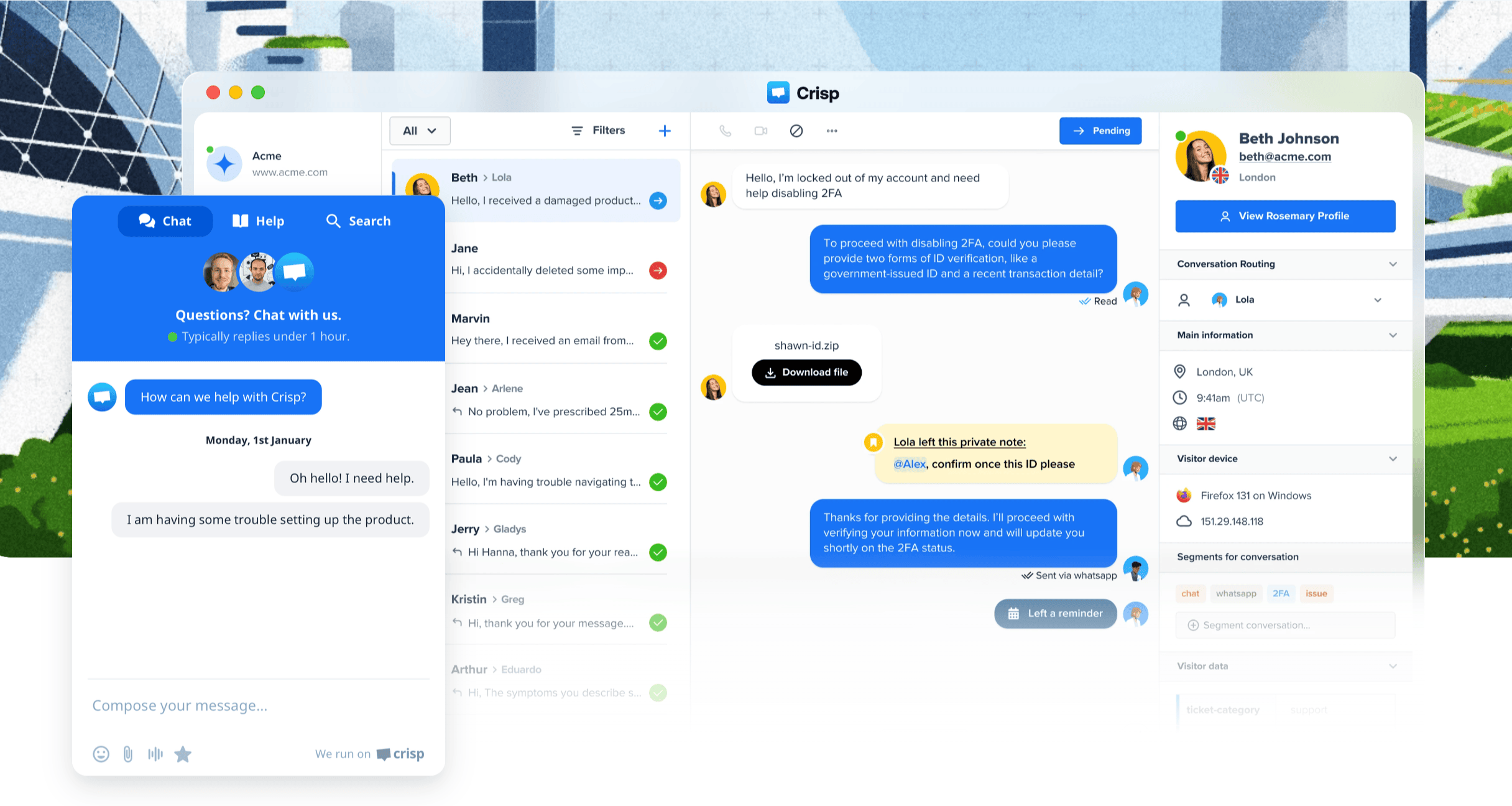
Crisp is a modern customer messaging platform designed for startups and SMBs that want a balance of affordability and power. This Intercom alternative combines live chat, shared inbox, bots, and a multilingual knowledge base into one product. Crisp is especially popular among smaller teams that want a polished live chat software without the cost of Intercom.
Top features:
- Shared inbox for email, chat, Messenger, WhatsApp, and more
- Chatbots, canned responses, and automation workflows
- Built-in multilingual knowledge base
- Contact timeline showing full customer history
- MagicBrowse screen sharing and video call support
How it’s better than Intercom: Crisp provides many out-of-the-box features that Intercom locks behind expensive add-ons, such as screen sharing and video calls. It also offers better multilingual support on lower tiers and more flexibility for startups that need to stretch budgets.
Pricing: Free plan available. Paid plans start at $45/month per workspace. Unlimited plan costs $295/month.
6. Olark
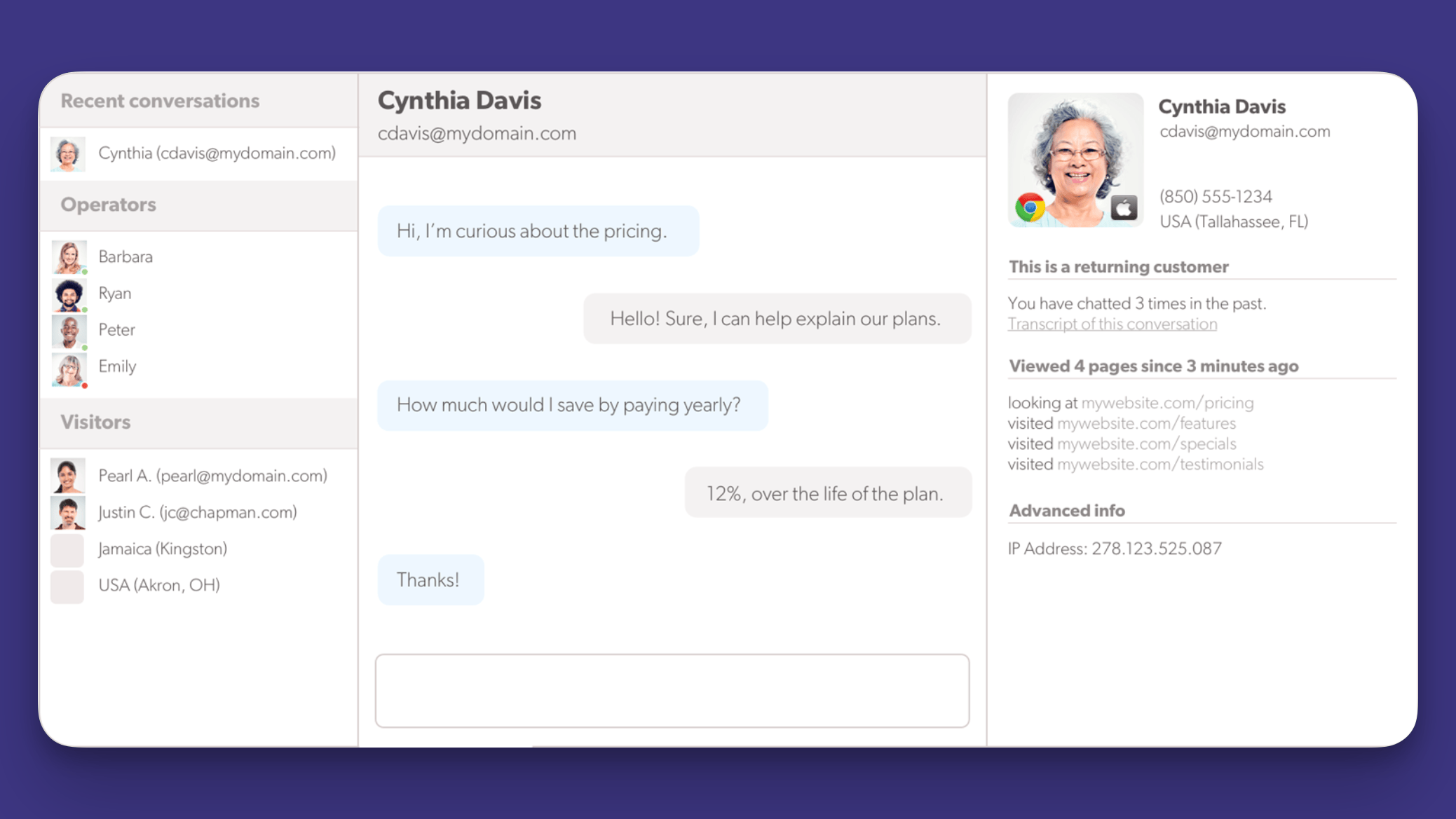
Olark is one of the simplest Intercom alternatives and focuses almost entirely on live chat software. It’s designed for teams that don’t need a complex customer service solution but want to offer fast, personalized help through their website. Its minimal setup and clear pricing make it attractive for smaller teams and online stores.
Top features:
- Real-time live chat with a customizable widget
- Automated greetings and chat routing
- Transcripts and searchable chat history
- Integrations with CRMs and help desk software like Salesforce and Zendesk
- PowerUps like co-browsing and live chat translation
How it’s better than Intercom: Olark is much easier to set up and far more affordable. Instead of overwhelming you with extra features you might not need, it focuses on delivering a best-in-class live chat experience. It’s a solid choice if you only need chat without paying Intercom-level prices for extras.
Pricing: Flat $29/month per agent. Add-ons (“PowerUps”) available at extra cost.
7. Zoho Desk
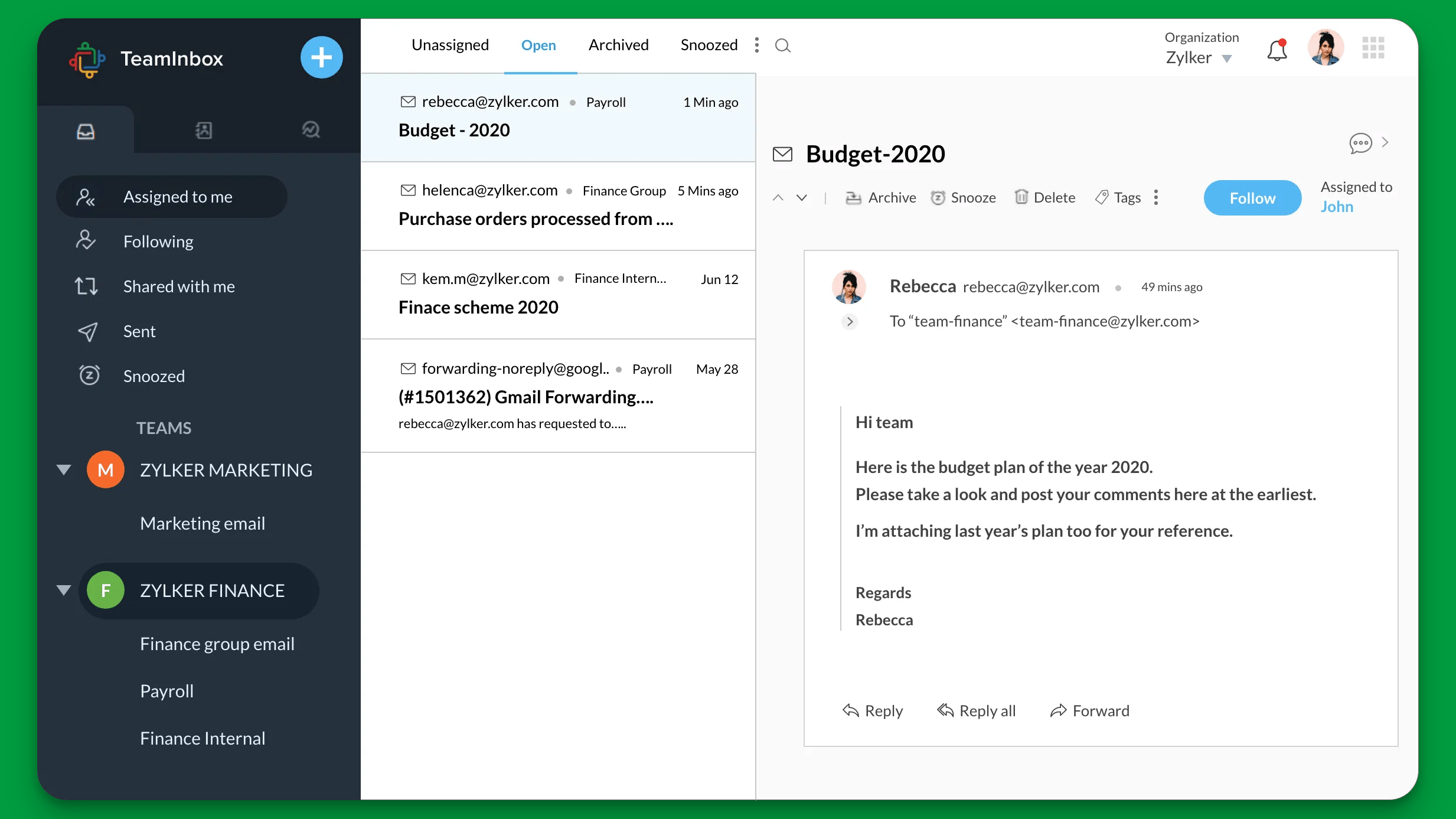
Zoho Desk is part of the larger Zoho suite and brings together email, chat, phone, and social support into one tool. It’s known for its affordability and flexibility, making it a great option for budget-conscious teams that still want powerful help desk software. As part of the Zoho ecosystem, it integrates seamlessly with Zoho CRM and Zoho Campaigns.
Top features:
- Omnichannel ticketing system with email, live chat, phone, and social
- Zia AI assistant for automations and suggestions
- Customizable knowledge base and community forums
- SLAs, automation blueprints, and advanced workflows
- Reporting dashboards and analytics
How it’s better than Intercom: Zoho Desk offers much broader help desk functionality at a fraction of the cost. Where Intercom focuses heavily on live chat and add-ons, Zoho Desk delivers ticketing, automation, and knowledge management in its entry tiers. It’s an especially strong customer service software pick if you already use Zoho tools.
Pricing: Zoho Desk's pricing is generally pretty affordable. It offers a Free plan for up to 3 agents. Paid plans start at $7/agent/month, with Standard at $14, Professional at $23, and Enterprise at $40.
8. Front
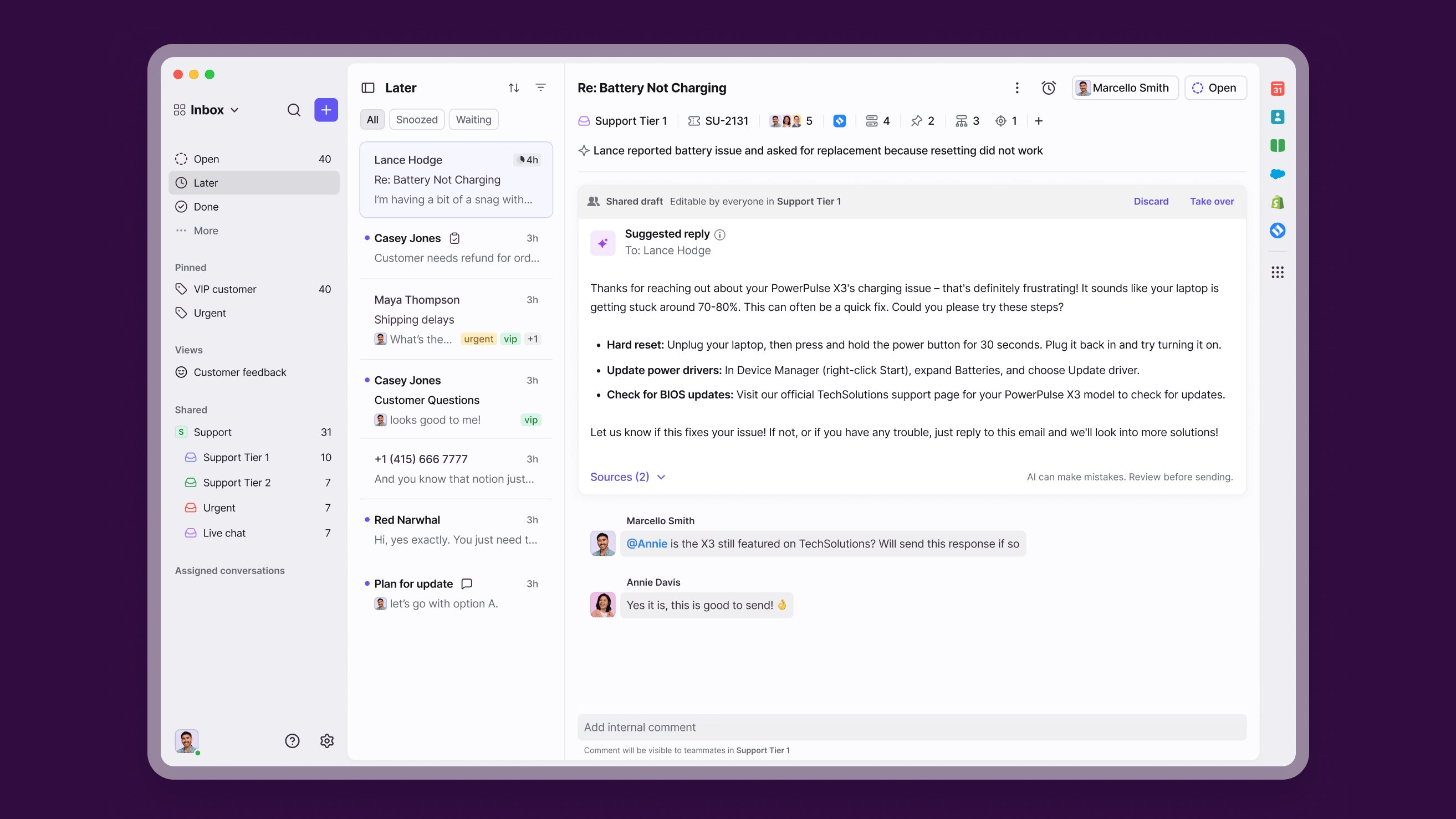
Front takes the familiar email inbox and makes it collaborative. It’s designed for teams that manage high volumes of email, SMS, and live chat, and need to work together on customer communication. Instead of treating every interaction like a ticket, Front keeps the natural conversation flow while adding collaboration and automation, making it a popular Intercom alternative.
Top features:
- Shared inboxes for email, SMS, live chat, and social
- Internal comments and shared drafts for team collaboration
- Automated routing, tagging, and rules
- Analytics for response times, workload, and team performance
- Integrations with CRMs, project management tools, and Slack
How it’s better than Intercom: Front is perfect for teams that collaborate heavily on customer communication. Instead of a traditional ticketing system, it keeps everything in an inbox-style interface, which many teams find more natural. It also has stronger collaboration features like shared drafts and comments.
Pricing: Starts at $25/user/month for the Starter plan. Growth plan is $65/user/month, and Scale is $105/user/month.
9. HubSpot Service Hub
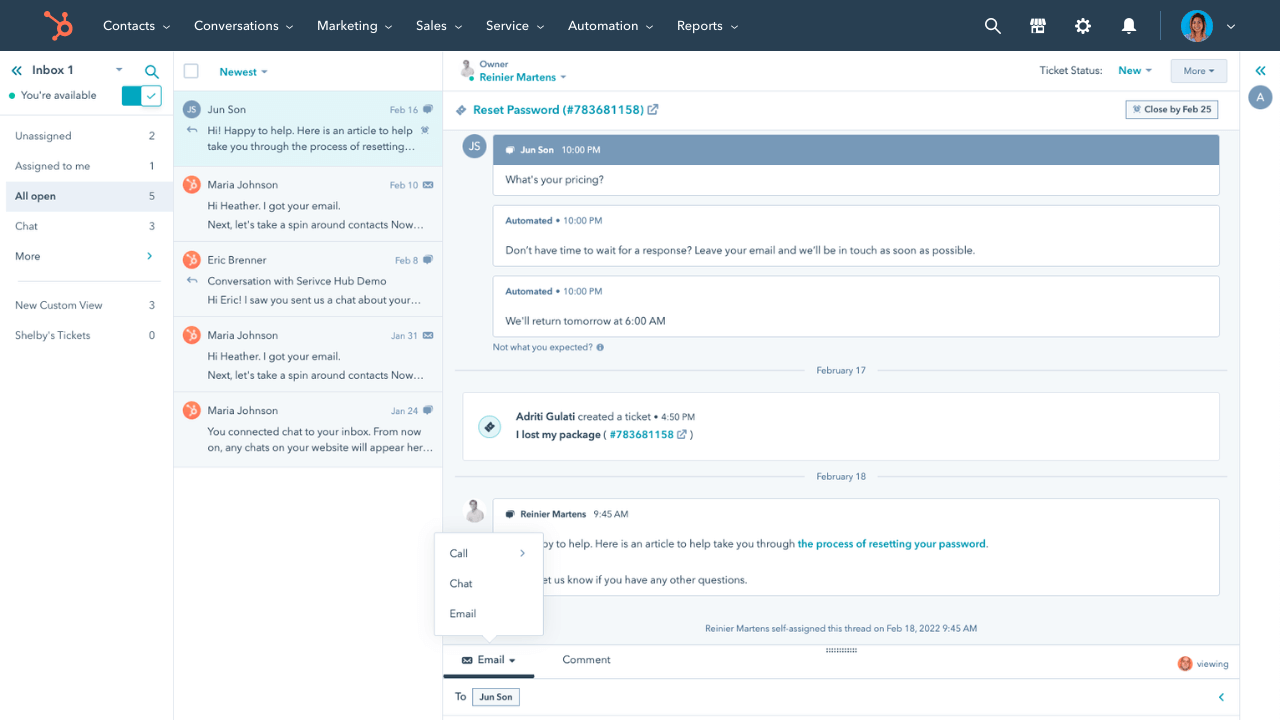
HubSpot Service Hub is built on top of HubSpot’s popular CRM and is a strong choice if you already use HubSpot for marketing and sales. It includes ticketing, live chat, a knowledge base, and reporting, all tightly integrated with your customer relationship management data.
Top features:
- Free live chat and chatbot tools for customer conversations
- Ticketing system with workflows and automation
- Knowledge base with SEO-friendly articles
- Reporting dashboards for support metrics & customer satisfaction surveys
- Deep integration with HubSpot CRM and marketing tools
How it’s better than Intercom: HubSpot Service Hub is a popular Intercom alternative for teams already using HubSpot. It unifies your customer relationship management across marketing, sales, and customer support, something Intercom doesn’t natively provide. It’s also more affordable at lower tiers, with solid free tools to get started.
Pricing: Free plan available with basic tools. Paid plans start at $20/user/month, with Professional at $100 and Enterprise at $150.
10. Freshdesk
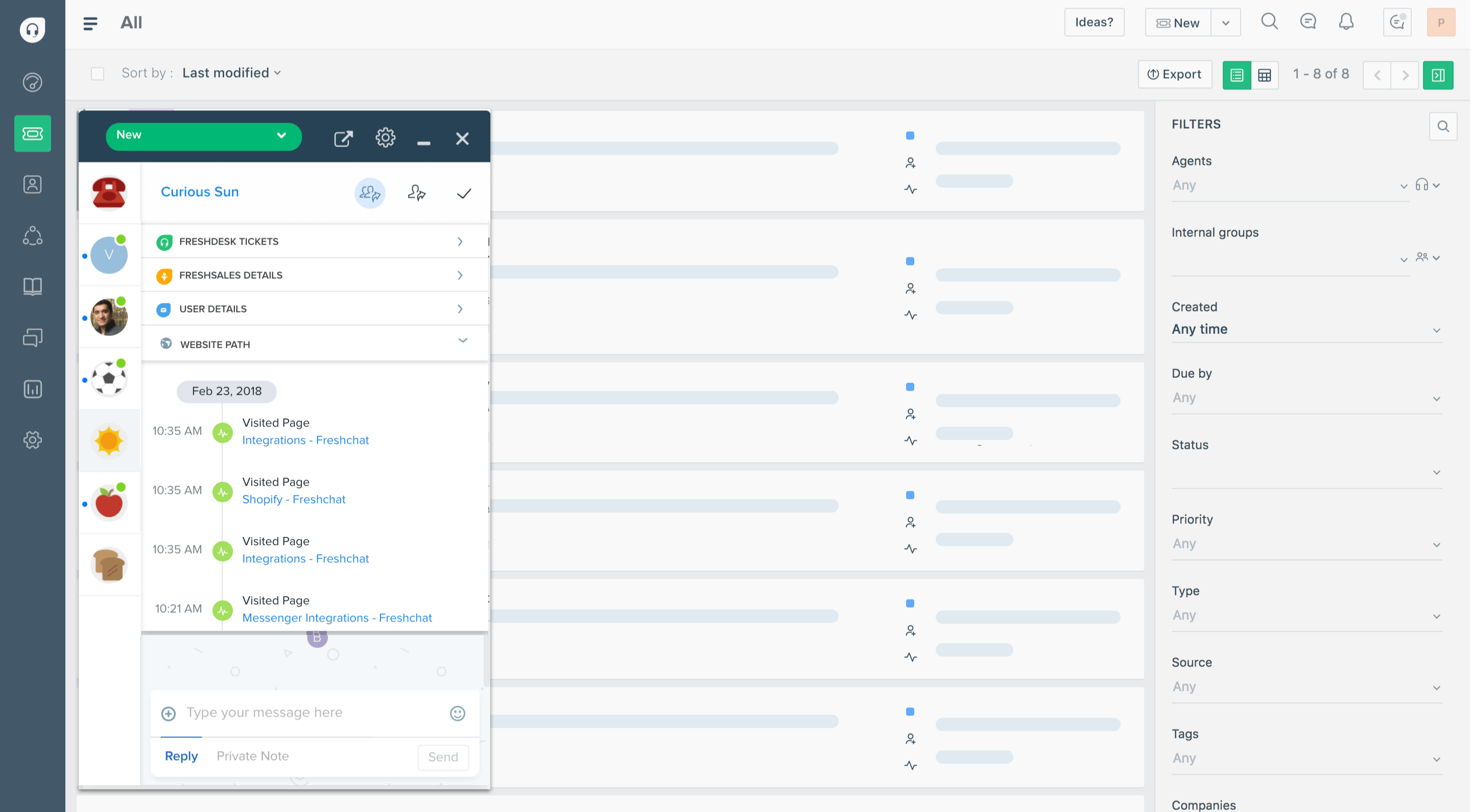
Freshdesk is a comprehensive customer communication platform, scalable help desk with multichannel ticketing, a knowledge base, live chat, phone, and strong automation. It’s a go-to Intercom alternative for growing customer service teams that want clear workflows, SLAs, and reports - without the pricing gymnastics.
Top features:
- Email, live chat, social, and voice ticketing in one queue
- Knowledge base and customer portal (multilingual)
- Freddy AI for triage, suggested replies, and routing
- Scenario automations and SLA management
- Marketplace apps and integrations
How it’s better than Intercom: Freshdesk is built for structured customer support. If you need SLAs, clear ticket lifecycles, and automation at lower price points, it’s a good Intercom alternative. The entry cost is lower, and the free plan helps small customer support teams get moving quickly.
Pricing: Starts at $19/agent/month (billed annually), Pro at $55/agent/month, Enterprise at $89/agent/month.
11. Drift
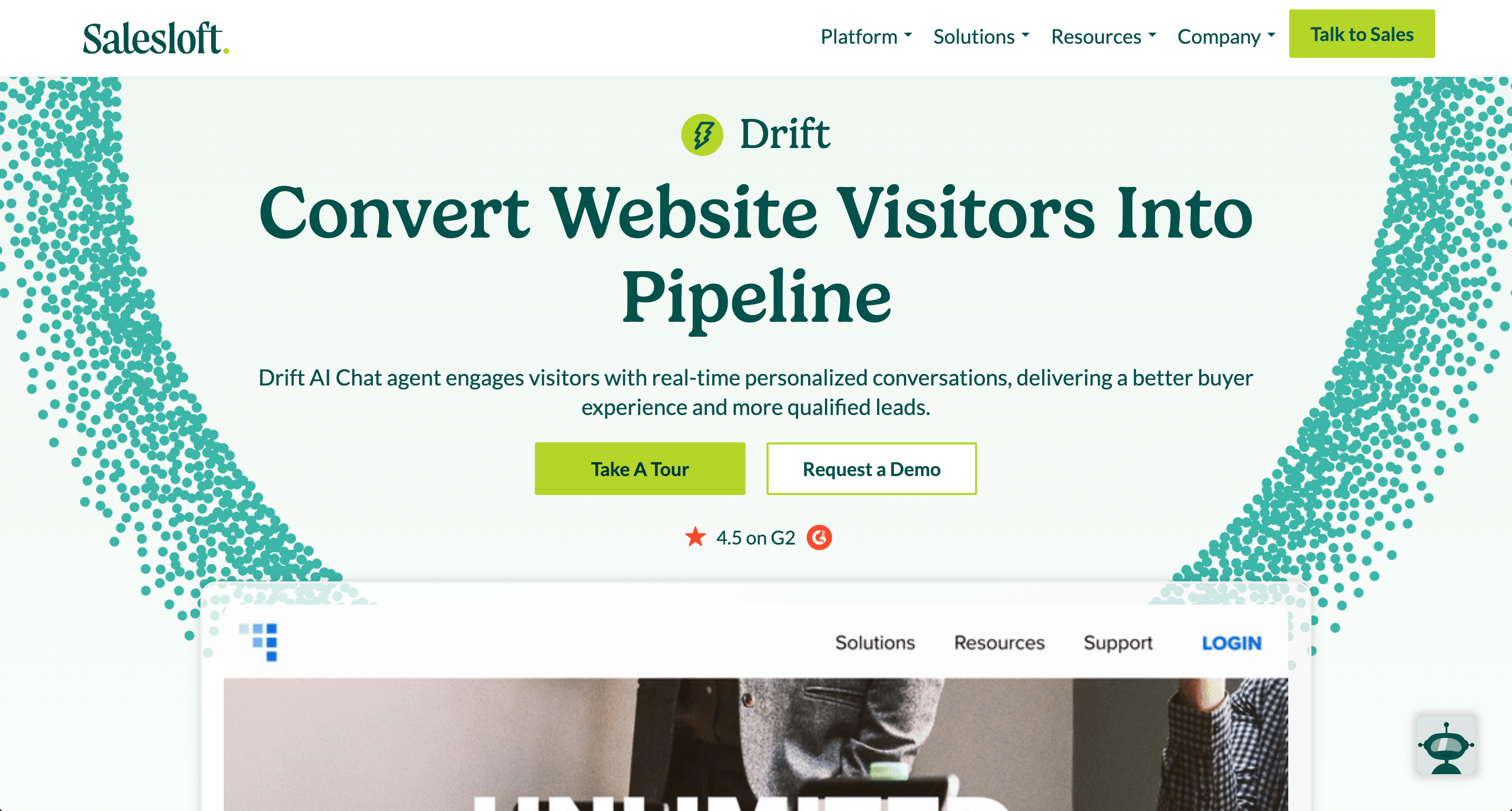
Drift is a sales‑focused messaging platform built to capture and qualify leads in real time. Unlike many Intercom alternatives, Drift leans into conversational marketing, giving sales teams chatbots and playbooks that engage visitors proactively and route them to reps. It’s less about ticket resolution and more about turning conversations into revenue.
Top features:
- Custom chatbots for lead qualification, live chat, routing, and automated messages
- Real‑time notifications and conversational landing pages
- Playbooks for sales outreach and customer engagement
- Integrations with Salesforce, HubSpot, Marketo, and Slack
- Reporting on pipeline impact and conversation outcomes
How it’s better than Intercom: If your main goal is pipeline generation, Drift is far more focused on sales workflows. While Intercom mixes customer support and customer engagement, Drift specializes in helping sales teams capture, qualify, and convert leads with less setup. It’s not a full help desk, but for sales automation it’s tough to beat.
Pricing: Not publicly available
12. HelpCrunch
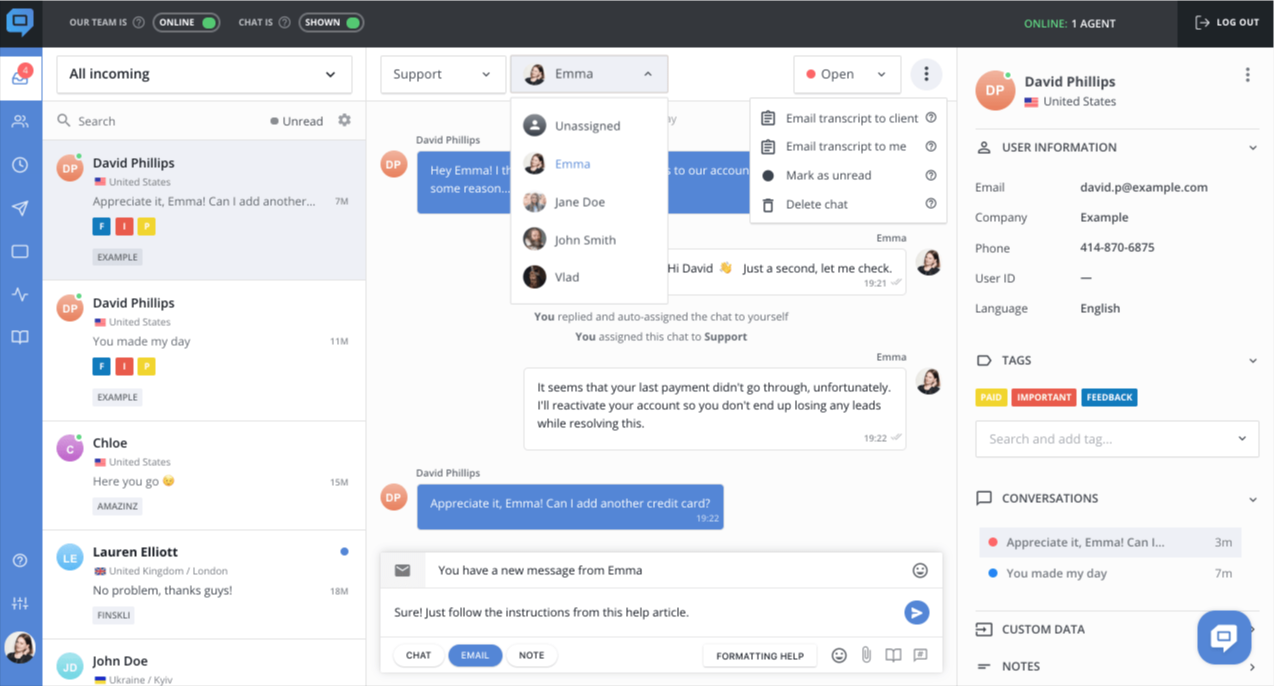
HelpCrunch is a customer communication platform that blends live chat, shared inboxes, email marketing, and knowledge base tools. It positions itself as a modern, affordable Intercom alternative that small and midsize businesses can set up quickly.
Top features:
- Unified inbox for chat, email, and social
- Customizable live chat widget with proactive messages
- Email marketing campaigns and automation sequences
- Knowledge base builder with SEO‑friendly docs
- Rule‑based automations for assignment and workflows
How it’s better than Intercom: HelpCrunch covers a similar surface area - chat, inbox, email, docs - but at a fraction of the cost. Pricing is transparent and predictable, without surprise usage fees. It’s particularly attractive for SMBs that want Intercom‑like breadth without enterprise‑level bills.
Pricing: Basic plan from $15/seat/month; Pro at $25/seat/month; Unlimited plan at $620/month.
13. HappyFox
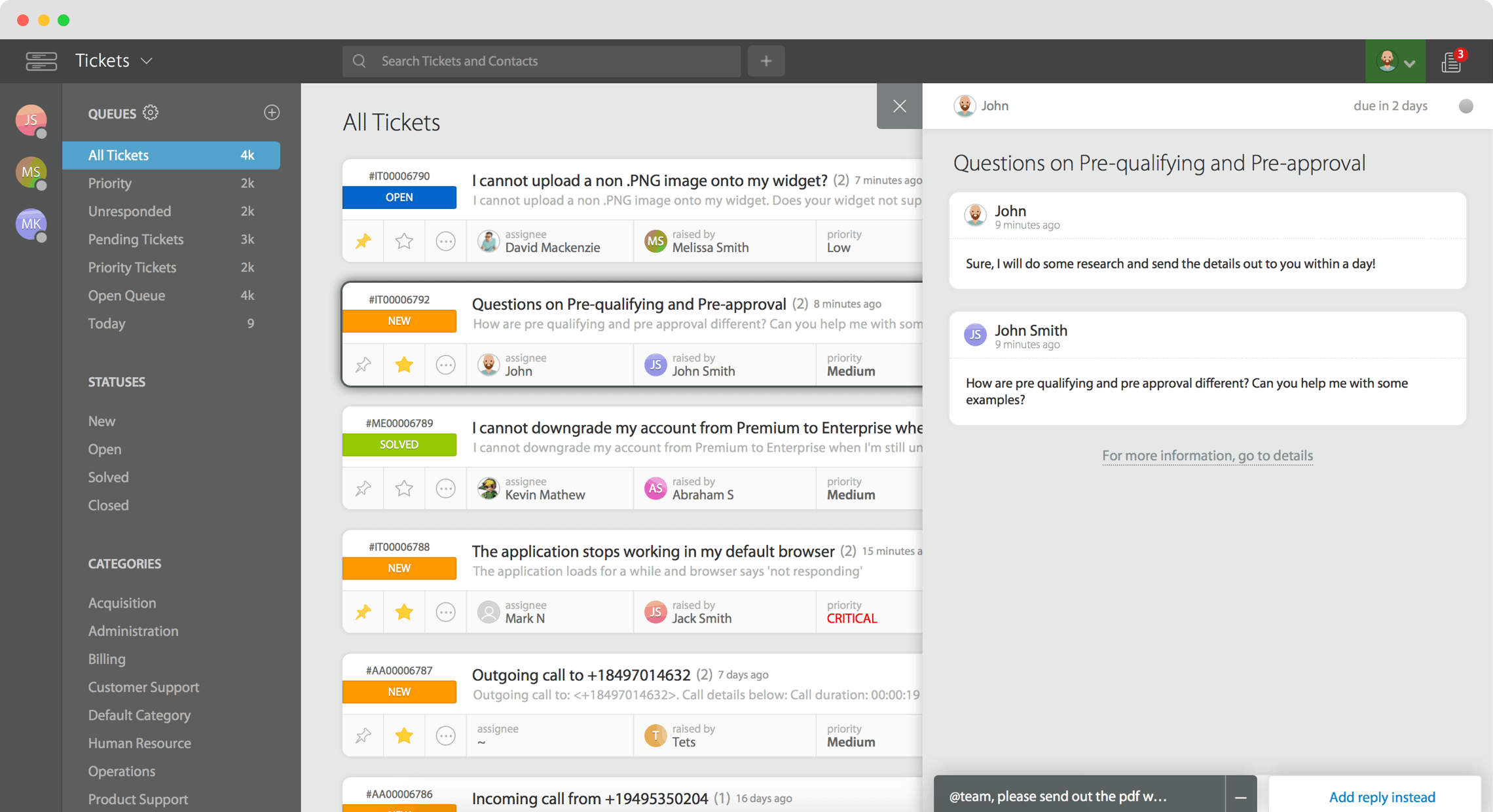
HappyFox is a cloud‑based help desk and ticketing platform with strong automation, SLA enforcement, and multi‑channel support. It’s designed for support agents that need structured workflows and service standards but don’t want the overhead of enterprise systems.
Top features:
- Omnichannel ticketing system (email, chat, social, phone)
- SLA management and advanced automation rules
- Knowledge base and self‑service portal
- Reporting dashboards and analytics
- Integrations with Slack, Jira, and CRM tools
How it’s better than Intercom: HappyFox is built around ticket discipline - auto‑converting chats and emails into tickets, enforcing SLAs, and giving managers tight visibility. If you need compliance and structured customer support more than conversational marketing, it’s a stronger choice than Intercom.
Pricing: Starts at $21/agent/month with a maximum of 5 agents for agent-based pricing. Unlimited agent's Growth plan starts at $ 1,599/month.
14. Helply
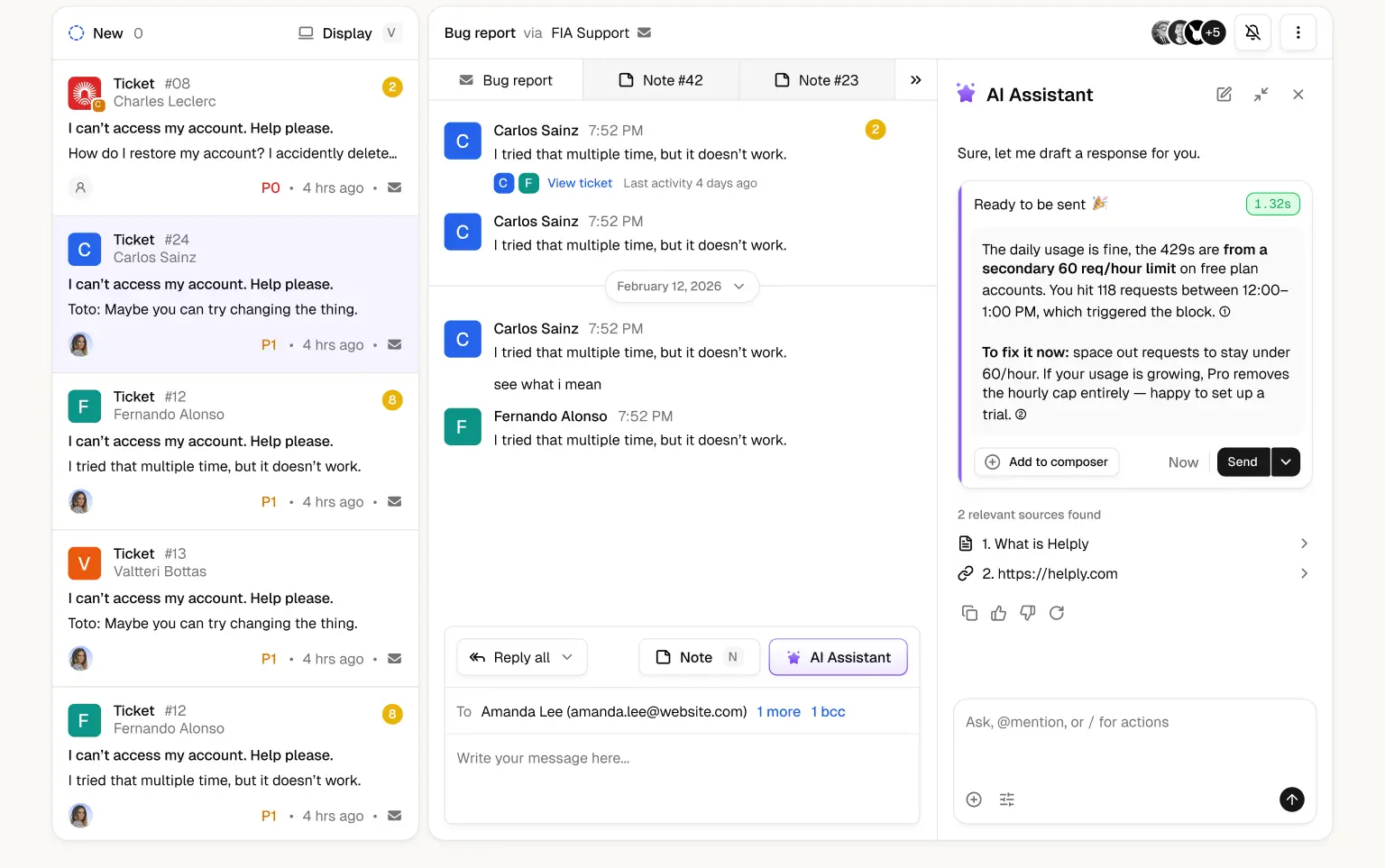
Helply is the AI-native B2B support platform that replaced Groove. While Groove used to be a simple shared inbox and help desk for small teams, Helply now positions itself as a support platform for B2B software companies that want to turn support into a revenue engine.
It combines a free support platform with shared inbox, ticketing, email, live chat, a knowledge base, macros, and reporting. On top of that, Helply offers AI outcomes like resolutions, draft replies, churn detection, upsell opportunities, article creation, feature flags, support intelligence, and competitor monitoring.
Top features:
- AI-powered resolutions and draft replies
- Churn detection and upsell opportunity detection
- Shared inbox, ticketing, email, and live chat
- Knowledge base with AI article creation
- Support intelligence and customer insights
- Free platform with unlimited seats
How it’s better than Intercom: Helply’s biggest difference is its outcome-based pricing model. Instead of charging per seat, it offers its support platform for free and charges based on AI outcomes. That can make it attractive for B2B teams that want AI support automation without paying for every teammate who needs access.
Pricing: Free support platform with unlimited seats. AI outcomes cost $0.50 each. Enterprise pricing is custom.
15. Kayako
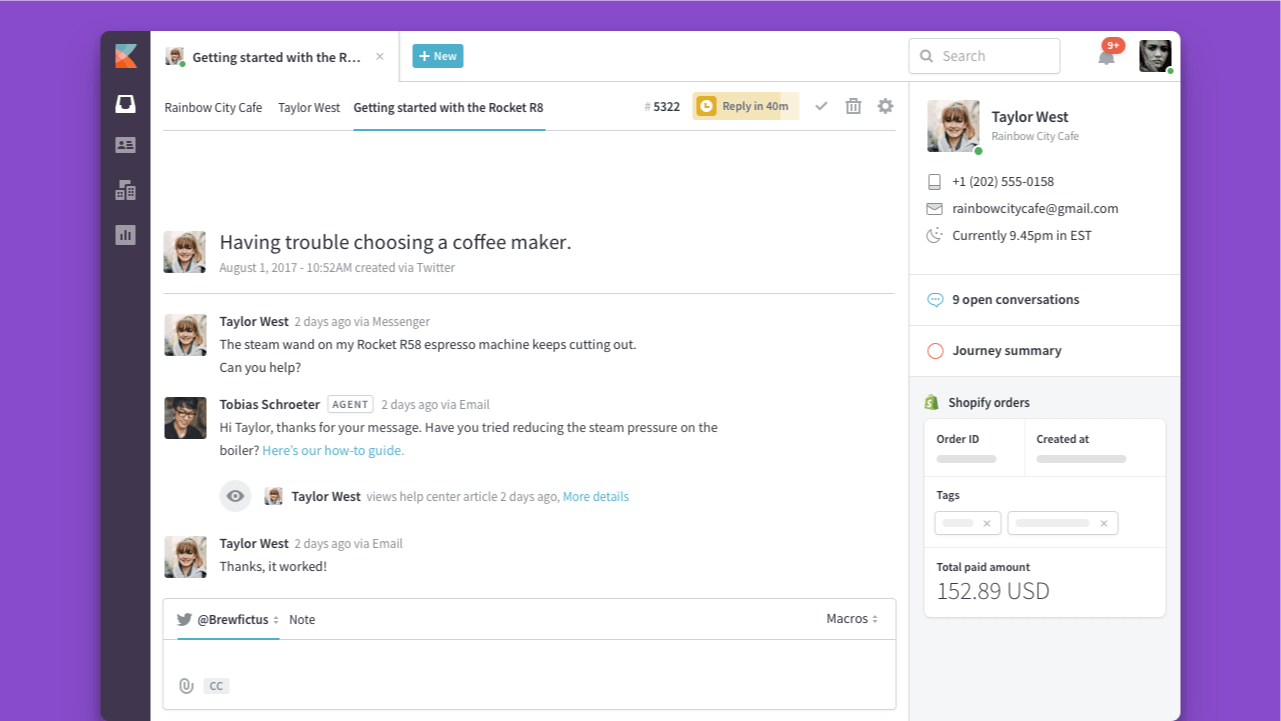
Kayako is a help desk software that organizes interactions into conversation timelines, giving agents a full history across email, chat, and social. It’s an intercom alternative built for SMBs that want context and continuity without stitching together multiple tools.
Top features:
- Unified inbox with timeline view of all interactions
- Live chat and in‑app messaging
- Knowledge base and FAQ publishing
- SLA rules and automation workflows
- Guest collaborator access for external partners
How it’s better than Intercom: Kayako emphasizes continuity of conversation - every interaction is part of one thread. Intercom fragments channels into separate tools and add‑ons, whereas Kayako keeps context visible by default. For teams handling multi‑touch relationships, this can be the perfect intercom alternative.
Pricing: Kayako’s AI agent, Kay, costs $1 per resolved ticket. The full Kayako One support platform starts at $79/agent/month.
16. Quiq
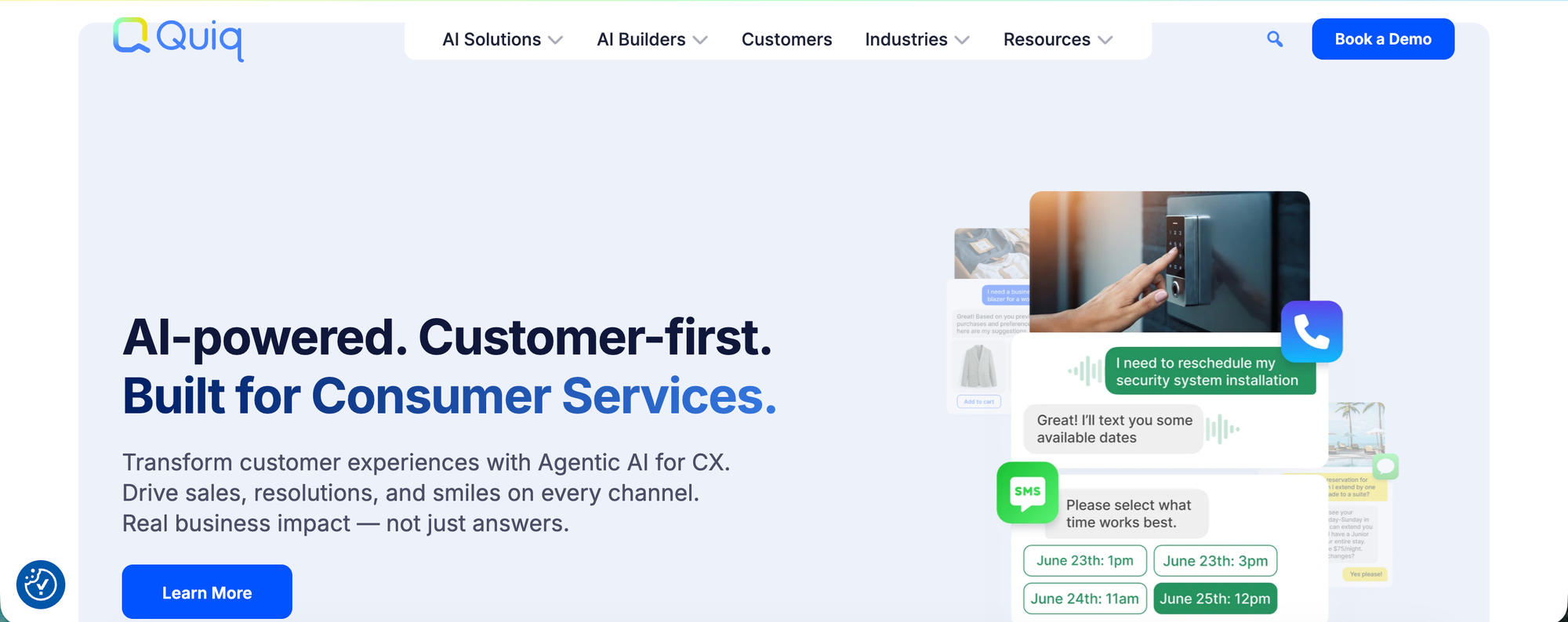
Quiq is a strong Intercom alternative for enterprise brands that rely heavily on messaging based customer support. It is built for high-volume service teams in retail, travel, hospitality, and consumer services that need reliable AI-assisted conversations across SMS, chat, WhatsApp, and voice.
Unlike tools aimed at small teams, Quiq focuses on complex support scenarios where context, accuracy, and smooth handoffs between AI and human agents matter most.
Top features:
- Asynchronous messaging across SMS, chat, WhatsApp, and other digital channels
- Agentic AI that can take actions like rebooking, returns, and account updates
- Unified inbox that keeps full conversation context when switching between AI and human agents
- AI assistants that help agents reply faster with guided responses and suggested actions
- Conversation analytics that analyze all interactions for quality and customer sentiment
How it’s better than Intercom: Quiq is built around asynchronous messaging and complex resolution, rather than tickets and basic chat flows.
It handles high-volume conversations more naturally, keeps full context across channels, and supports deeper action-based automation, which makes it a better fit for large support teams dealing with operationally heavy customer requests.
Pricing: Quiq uses usage-based, enterprise-level pricing tied to conversation volume and features.
Conclusion
Intercom is powerful, but it’s not always the best fit - especially if you’re tired of unpredictable pricing, clunky workflows, or paying extra for every little feature. The good news is there are plenty of modern tools that can give you the same (or better) support capabilities at a fraction of the cost.
Featurebase is a modern Intercom alternative with an affordable AI-powered inbox & help center. It comes with omnichannel support, native ticketing, custom workflows, and much more. It's loved by thousands of companies like Lovable, Polymarket, and Raycast.
What's best is that it comes with a Free plan, and you can migrate your Intercom help center with just one click, so there's no downside to trying it out! 👇
✨ Switch from Intercom and get the fastest AI-powered inbox & knowledge base →
More reading: