Blog Customer ServiceChatbot Marketing: A Practical Guide for SaaS Teams
Chatbot Marketing: A Practical Guide for SaaS Teams
Chatbot marketing helps SaaS teams capture leads, answer questions, and engage visitors 24/7. Here's what it is, the top use cases, and how to start.


✨ Automate your support with the fastest AI-enhanced Inbox today →
A visitor lands on your pricing page at 11pm, has one question, finds no answer, and leaves. That's a lead gone, and your team was asleep.
Chatbot marketing fixes this. It puts an always-on assistant on your site to answer questions, capture details, and qualify leads around the clock.
Here's what it is, the use cases that actually move the needle, and how to ship your first bot. 👇
Key takeaways:
- Chatbot marketing uses automated chat to engage website visitors, answer questions, and capture leads around the clock, even when your team is offline.
- The payoff is speed and scale: bots reply instantly, handle unlimited conversations at once, and qualify leads before a human ever steps in.
- The highest-value use cases are lead capture, lead qualification, product recommendations, proactive engagement, and feedback collection.
- Rule-based bots follow scripts, while AI bots understand natural language and learn over time: most teams use a mix of both.
- A good strategy starts with one clear goal, one well-designed flow, and an easy human handoff, then improves from there.
- Featurebase✨ combines an AI chatbot (Fibi), live chat, and a help center so you can capture leads and automate support from one platform, on a free plan.
What is chatbot marketing?
Chatbot marketing is the practice of using chatbots - automated programs that simulate conversation - to engage visitors, answer their questions, and move them toward a purchase. Instead of a static contact form, a chatbot talks to people in real time on your website, in your app, or in messaging apps.
The approach is everywhere now because it scales. The global chatbot market is projected to reach roughly $27.29 billion by 2030, growing at a 23.3% CAGR from 2025 to 2030, with sales and marketing among the biggest drivers.
In practice, a single bot can greet a first-time visitor, answer a pricing question, collect an email, and book a demo without a human touching the conversation. When something genuinely needs a person, it hands the chat off.
Chatbots vs conversational AI: What's the difference?
These two terms get used interchangeably, but they aren't the same thing:
- A chatbot follows predefined rules or scripts. It's great at routine tasks like answering FAQs or routing a request, but it struggles with anything off-script.
- Conversational AI uses natural language processing to understand intent, handle messy phrasing, and learn from past conversations. It's much closer to talking to a person.
Most marketing bots today blend the two: scripted flows for the predictable paths, AI for everything else.
Why use chatbots in your marketing?
Chatbots are the most-used GenAI application among marketing teams, used by 62% of them in a 2025 SAS survey. Here's why they've become a default:
- They're always on: A bot answers at 2am, on weekends, and during your busiest launch day without adding headcount.
- They qualify leads automatically: Instead of a form that dumps every submission into one bucket, a bot asks questions and separates high-intent leads from tire-kickers before they ever reach sales.
- They scale infinitely: One bot handles 5 conversations or 5,000 at the same time, so a traffic spike never means slower replies.
- They personalize at scale: Using the details a visitor shares, a bot can tailor its recommendations and messaging to each person.
- They cut costs: Routine questions get deflected automatically, freeing your team for the conversations that actually need a human.
6 chatbot marketing use cases
The concept is simple, but it earns its keep in specific places. These are the 6 use cases worth building first:
- Capture leads before they leave: A bot can greet visitors, offer help, and collect an email or phone number so you can follow up even if they don't convert on the spot. It replaces the dead-end contact form with an actual conversation.
- Qualify leads automatically: A bot can ask about company size, budget, or use case, then send high-intent leads straight to sales. With Featurebase, you can use Workflows and the Fibi AI Agent to ask qualifying questions, capture details like email and company size, and route each lead to the right team automatically.
- Recommend products and upsell: Based on what a visitor browses or asks, a bot can suggest the right plan, surface a relevant feature, or nudge an existing customer toward an upgrade.
- Engage visitors proactively: A bot can trigger on high-intent pages like pricing or checkout to offer help at the exact moment someone is deciding.
- Share news and updates: A bot can announce a launch, a promotion, or an event to the people already on your site, driving attention without another email blast.
- Collect feedback: After a conversation or a purchase, a bot can ask a quick question or run a short survey to learn what's working and what isn't.
Types of marketing chatbots
Not all bots are built the same. When you're choosing a tool, it helps to know which kind you're actually getting:
- Rule-based bots follow if-then logic and menus. They're cheap and predictable, best for FAQs and simple routing.
- AI-powered bots use natural language processing to understand free-form questions and pull answers from your content. They handle far more variety than a scripted bot.
- Conversational AI is the most advanced: it learns from interactions, holds context across a conversation, and responds in a near-human way.
For most SaaS teams, the sweet spot is an AI-powered bot with scripted flows for the paths you want to control, like lead qualification.
How to build a chatbot marketing strategy
You don't need a 6-month rollout to get value from a chatbot. You need one good flow that does one job well. Here's the practical path:
- Start with one goal: Decide what this bot is for before you build it, whether that's capturing leads, booking demos, or deflecting support tickets. One clear goal keeps the flow focused.
- Pick the right tool: Look for real AI capabilities, easy integrations with your CRM, and a free plan or trial so you can test before you commit.
- Design a conversation, not a script: Map how the bot greets visitors, what it asks, and where each answer leads. Keep it short and always give people an obvious way out.
- Always offer a human handoff: Some questions need a person. A good bot resolves what it can and routes the rest with context. Featurebase's Fibi AI Agent answers common questions instantly from your help content, then hands the conversation to a teammate with the full thread when a human is needed.
- Measure and improve: Track the metrics tied to your goal - leads captured, qualification rate, conversions, and deflected tickets - and refine your flows based on what the data shows.
Where the chatbot should live
One practical decision shapes everything above: where your chatbot actually runs. If it's a standalone marketing widget, the leads it captures and the questions it answers end up disconnected from the team that follows up. The cleaner setup is a chatbot that sits in the same place you handle support, so a captured lead and a resolved question share one thread.
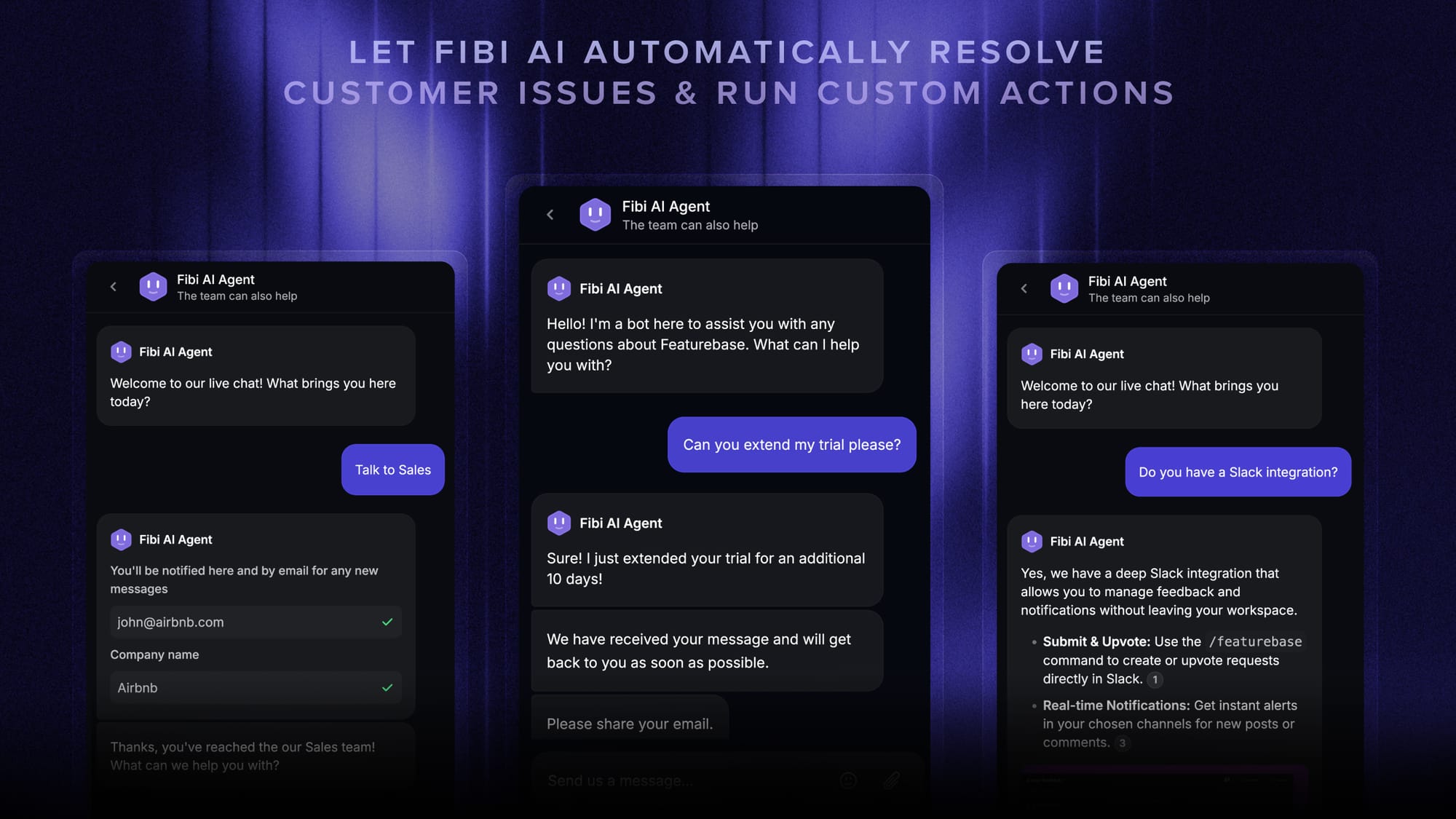
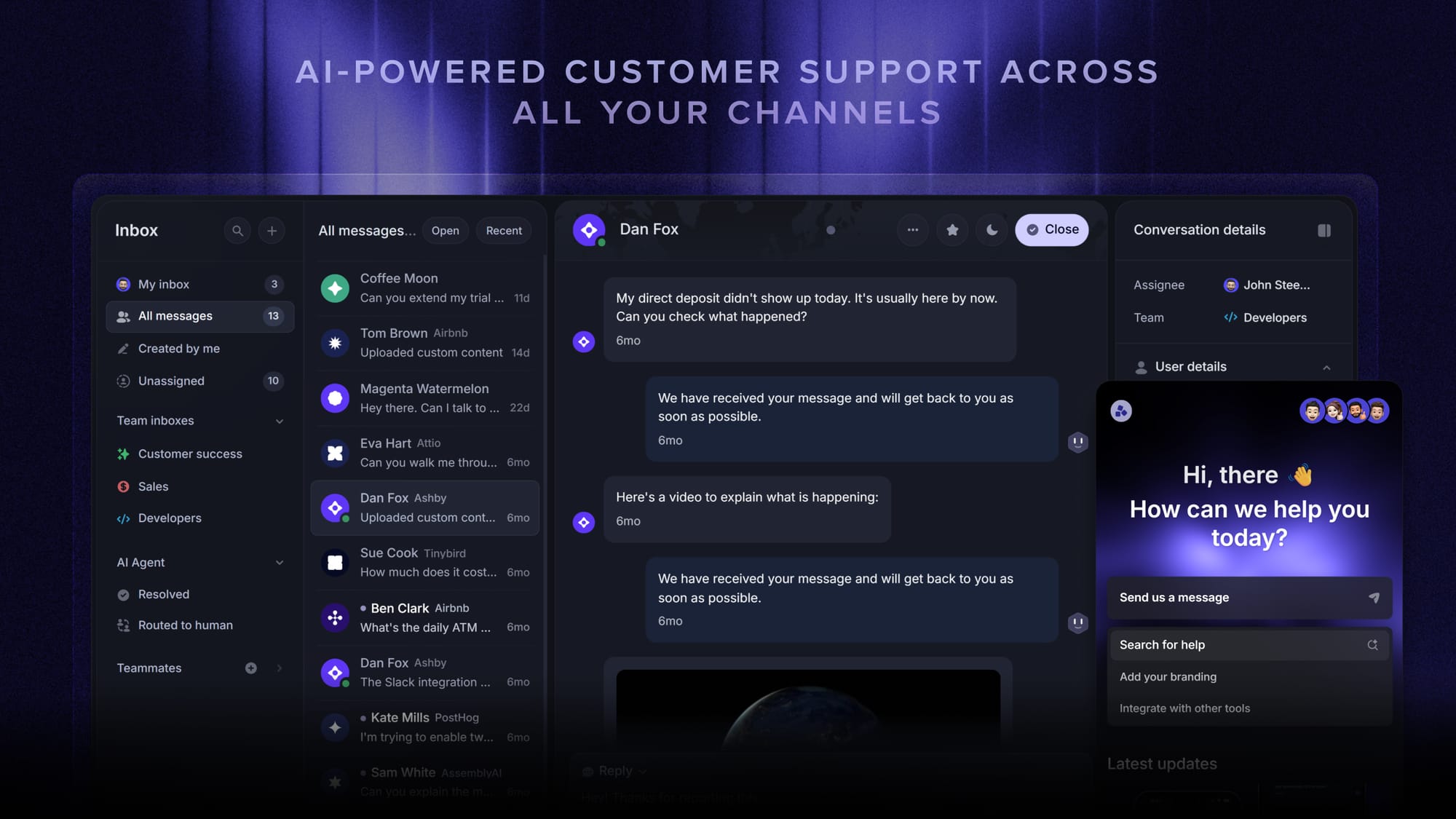
That's the approach we take with Featurebase. The Fibi AI Agent answers common questions from your help content and hands off to a teammate with full context, while Workflows handle the lead-capture and qualification flows described earlier - all in the same inbox your team already works from. There's a free plan with unlimited conversations if you want to try the pattern before committing to a tool.
The broader point holds whatever you choose: keep lead capture, answers, and follow-up in one system instead of stitching a marketing bot to a separate support tool later.
Conclusion
Chatbot marketing isn't about replacing your team with a robot. It's about putting an always-on layer between your website and your inbox that catches leads, answers the easy questions, and qualifies people before a human steps in.
Featurebase is a modern AI-powered support platform that brings your chatbot, live chat, help center, and feedback collection into one place. Its Fibi AI Agent answers customer questions automatically, while Workflows capture and qualify leads so your team can focus on the conversations that matter.
It comes with a Free plan and unlimited conversations, and the onboarding takes minutes, so there's no downside to trying it. 👇
✨ Automate your support with the fastest AI-enhanced Inbox today →
FAQs
What is the difference between a chatbot and conversational AI?
A chatbot follows predefined rules, scripts, or decision trees, so it's reliable for routine tasks but limited when a question goes off-script. Conversational AI uses natural language processing and machine learning to understand intent, handle unexpected phrasing, and improve over time. Most modern marketing bots combine both: scripted flows for predictable paths and AI for everything else.
What businesses benefit most from chatbot marketing?
Any business with a digital presence can benefit, even if it doesn't sell online. Ecommerce, SaaS, real estate, healthcare, and finance see the strongest results because they field high volumes of repetitive questions and have clear lead-capture moments. If visitors regularly ask the same things or fill out forms to reach you, a chatbot will pay off quickly.
How do I measure the ROI of chatbot marketing?
Tie your metrics to the goal you set for the bot. The most useful ones are leads captured, qualification rate, conversion rate from chat, and the volume of support questions deflected from your team. Track these against the cost of the tool and the time your team saves, and the return becomes clear within a few weeks.
What's the best free chatbot for marketing?
The best free option is one that pairs lead capture with a real path to resolution, not just a scripted FAQ widget. Look for a free plan that includes an AI agent, live chat, and an easy human handoff. Featurebase offers a free plan with unlimited conversations, an AI chatbot, and lead-capture Workflows, which makes it a strong starting point for SaaS teams.
Can a chatbot replace my marketing or support team?
No, and it shouldn't. A chatbot handles repetitive questions and first-touch lead capture so your team spends its time on complex, high-value, or sensitive conversations. The best setups balance automation with human touchpoints and always give visitors a way to reach a person.
How do I get started with chatbot marketing?
Start small. Pick one goal, such as capturing leads on your pricing page, choose a tool with a free plan, and build a single conversation flow for that one job. Once it's live, watch how visitors respond, refine the questions, and only then expand to more pages and use cases.