Blog Customer FeedbackChurn Risk: How to Identify and Reduce At-Risk Customers
Churn Risk: How to Identify and Reduce At-Risk Customers
Churn risk is how likely a customer is to leave, and it's usually visible weeks before they go. Here's how to spot at-risk customers and reduce churn before it happens.


✨ Start collecting & managing feedback with Featurebase for free →
Most customers don't churn out of nowhere. They go quiet, stop logging in, or raise one too many tickets that never quite get resolved. Then weeks later, the cancellation email lands.
The frustrating part is that the signals were there the whole time. Churn risk is simply how likely a customer is to leave, and it's almost always visible before it happens - if you know what to look for.
In this guide, I'll break down what churn risk actually is, the warning signs to watch, and how to spot and reduce at-risk customers before they walk. 👇
Key takeaways
- Churn risk is the probability that a customer stops using or paying for your product, usually expressed as a score or a low/medium/high flag built from behavioral and account signals.
- It's not the same as churn rate. Churn rate looks backward at customers you already lost, while churn risk looks forward at who's about to leave.
- The clearest warning signs are dropping usage, falling survey scores, rising support friction, a lost champion, and coasting toward renewal with no real engagement.
- You lower churn risk by acting on those signals early: reaching out, removing friction, and closing the loop on the feedback at-risk customers are already giving you.
- Featurebase✨ helps you catch churn signals early by collecting feedback, running NPS and CSAT surveys, and tying it all to customer revenue so you know which at-risk accounts matter most.
What is churn risk?
Churn risk is the likelihood that a specific customer will stop doing business with you within a set period, like the next 30, 60, or 90 days.
Unlike churn rate, which is a single number for your whole customer base, churn risk is measured per customer. Most teams express it as a score (say, 0 to 100) or a simple flag: low, medium, or high risk.
The score comes from combining signals you already have - product usage, support history, survey responses, billing events, and account details - into one view of how healthy each customer is. A customer who logged in twice this month, left a 3 on your last survey, and has an open complaint is carrying far more risk than one who logs in daily and just upgraded.
The point of measuring it is simple: churn risk turns a vague worry ("are our customers happy?") into a specific, ranked list of accounts you can actually do something about this week.
Churn risk vs. churn rate
These two terms get used interchangeably, but they answer different questions.
Churn rate is a backward-looking metric. It tells you what percentage of customers (or revenue) you lost over a period. It's a scorecard - useful for reporting, useless for prevention, because by the time it moves, the customers are already gone.
Churn risk is forward-looking. It's a prediction about individual customers who are still with you, which means you can still change the outcome.
| Churn rate | Churn risk | |
|---|---|---|
| Direction | Backward-looking | Forward-looking |
| Measures | Customers you already lost | Customers likely to leave |
| Unit | A percentage across a period | A score or flag per customer |
| Best used to | Report on retention | Act before customers leave |
You need both. Churn rate tells you how big the problem is. Churn risk tells you which customers to call first.
Why catching churn risk early matters
Every at-risk customer you save is worth more than a new one you win, and the math is lopsided in a way that's easy to underestimate.
In Loyalty Rules!, Bain & Company's Frederick Reichheld found that an increase in customer retention rates of 5 percent increases profits by 25 percent to 95 percent. Retained customers buy more over time, cost less to serve, and refer others, so small improvements compound.
Catching churn risk early also widens your options. A customer who's mildly disengaged today can be re-onboarded with a friendly email. The same customer three weeks from now, staring at a renewal they've decided against, needs a discount or a save call that may not work at all. Early is cheap. Late is expensive, and often too late.
6 warning signs of churn risk
Churn risk shows up as a pattern, not a single event. Here are the indicators worth watching, roughly in the order they tend to appear:
- Declining product usage: The single strongest predictor. Fewer logins, shrinking session time, or a drop in the core action that makes your product valuable all point to a customer drifting away. Watch trends, not snapshots - a steady 3-week decline matters more than one quiet week.
- Falling survey scores or sentiment: A slipping NPS, a low CSAT after a support chat, or a tone shift in messages is an early flare. Sentiment usually sours before usage collapses, which makes it one of your best lead indicators.
- Rising support friction: A spike in tickets, repeat contacts about the same unresolved issue, or angry language signals a customer whose patience is running out. Unresolved problems are one of the most common reasons people leave.
- A lost champion: In B2B, accounts are often held together by one internal advocate. When that person leaves, gets a new role, or stops responding, the account can go dark fast, even if overall usage looks fine.
- Coasting toward renewal with no engagement: A customer who hasn't logged in, adopted new features, or spoken to your team in months is not "low maintenance." They're deciding not to renew, quietly.
- No early "aha" moment: Customers who never reach first value during onboarding are at risk from day one. If someone signed up and never completed the action that makes your product click, they're already leaning toward the exit.
No single sign is a verdict. But two or three stacking up on the same account is a clear call to act.
How to identify and score churn risk
Spotting signs one by one is fine for a handful of accounts. To do it at scale, you need to combine those signals into a single churn risk score so nothing slips through.
You don't need a data science team to start. A workable score can be as simple as assigning points to a few weighted signals:
- Usage trend - is the core action trending up, flat, or down over the last 30 days?
- Sentiment - what was the last survey score or support interaction like?
- Support health - any open, repeat, or escalated tickets?
- Engagement - time since last login, and whether they've adopted key features.
- Account value - revenue, plan, and company size, so you can weight the accounts worth saving most.
Add those into a low/medium/high flag, then pressure-test it against customers who actually churned last quarter. If your "high risk" bucket would have caught most of them, the model works. Refine the weights from there.
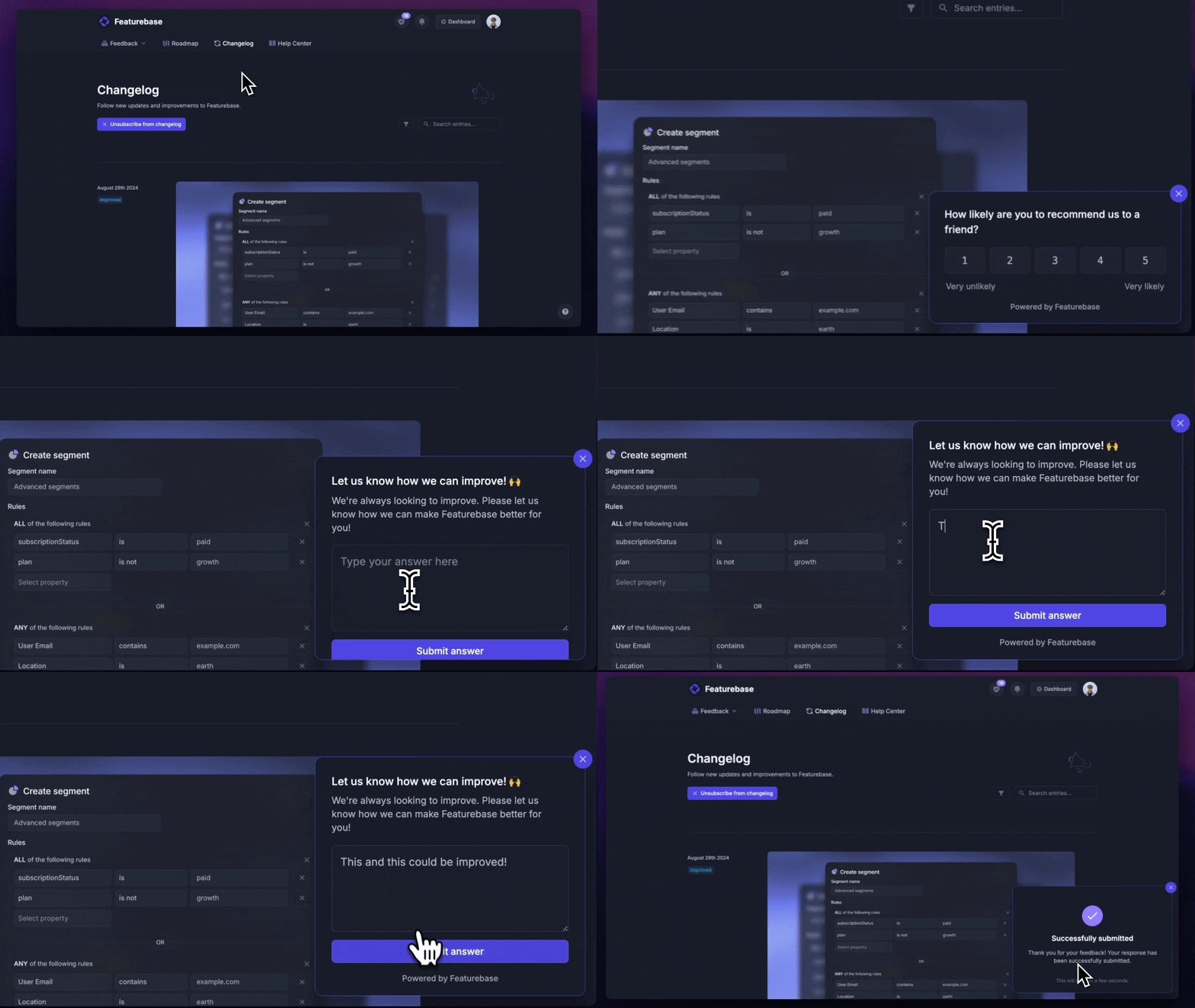
This is also where survey signals earn their keep. With Featurebase you can run NPS and CSAT surveys directly inside your product to catch sentiment dropping before usage does. And because that feedback is tied to each customer's revenue and plan, you can immediately see which at-risk accounts actually move the needle, instead of treating a free-tier user's frustration the same as a key enterprise account's.
How to reduce churn risk: a 6-play playbook
A score is only useful if it triggers action. Once you know who's at risk, here's how to bring them back.
- Reach out before they ask: A simple, human check-in ("noticed you haven't been in lately - anything we can help with?") often surfaces the real issue while it's still fixable. Proactive beats reactive every time.
- Remove the friction you can see: If the risk traces to an unresolved ticket, a confusing workflow, or a missing integration, fix that first. Saving a customer whose core complaint is still broken rarely sticks.
- Re-onboard toward value: For customers who never hit their "aha" moment, don't push features - push outcomes. Walk them to the one action that makes your product worth paying for.
- Act on their feedback and close the loop: At-risk customers often already told you what's wrong. Acting on it, and telling them you did, is one of the most powerful retention moves there is. Closing the feedback loop - letting users see their requests being tracked and notifying them the moment a fix or feature they asked for ships - turns a frustrated user into one who feels heard.
- Make it easy to reach a human: When a high-value account shows risk, a real conversation beats an automated sequence. Give them a fast path to someone who can help, not a deflection loop.
- Prioritize saves by value: You can't rescue everyone at once. Focus your team's time on the high-risk, high-revenue accounts first, and lean on automation and a repeatable retention process for the long tail.
The goal isn't to win back every account. It's to systematically catch the winnable ones before they're gone.

Turn feedback into products your users love
Centralize feedback, identify product opportunities, and build the right features
How Featurebase helps you get ahead of churn risk
Most churn risk traces back to the same root cause: customers who feel unheard. They hit a problem, ask for a fix, and nothing visibly changes, so they leave. The fastest way to lower churn risk is to close that gap.
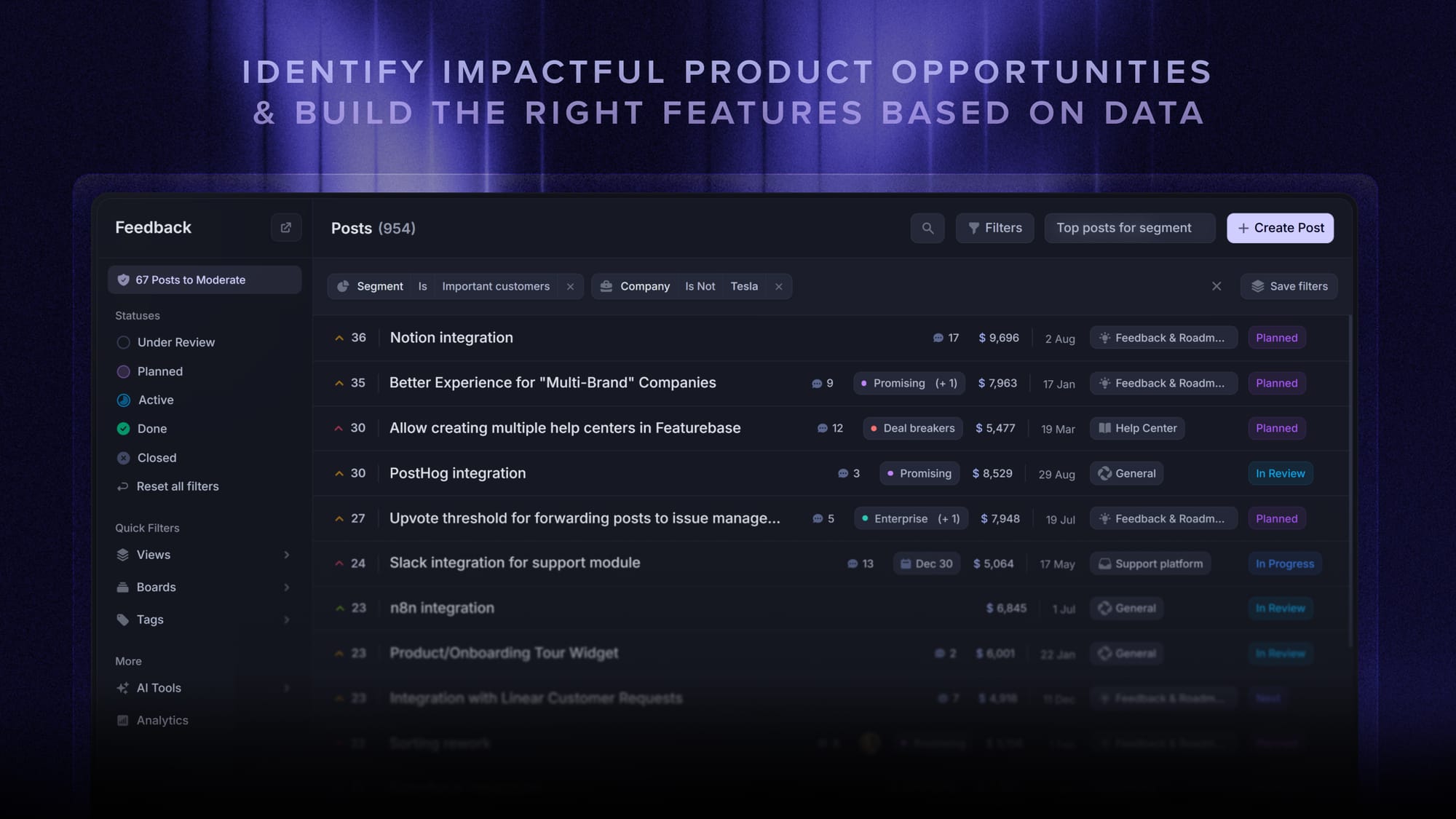
Featurebase is a modern feedback and support platform that helps you collect feedback, measure satisfaction, and act on what at-risk customers are telling you - all in one place. It's loved by thousands of product teams from companies like Lovable, Raycast, and n8n. 💫
A few features that map directly to catching and reducing churn risk:
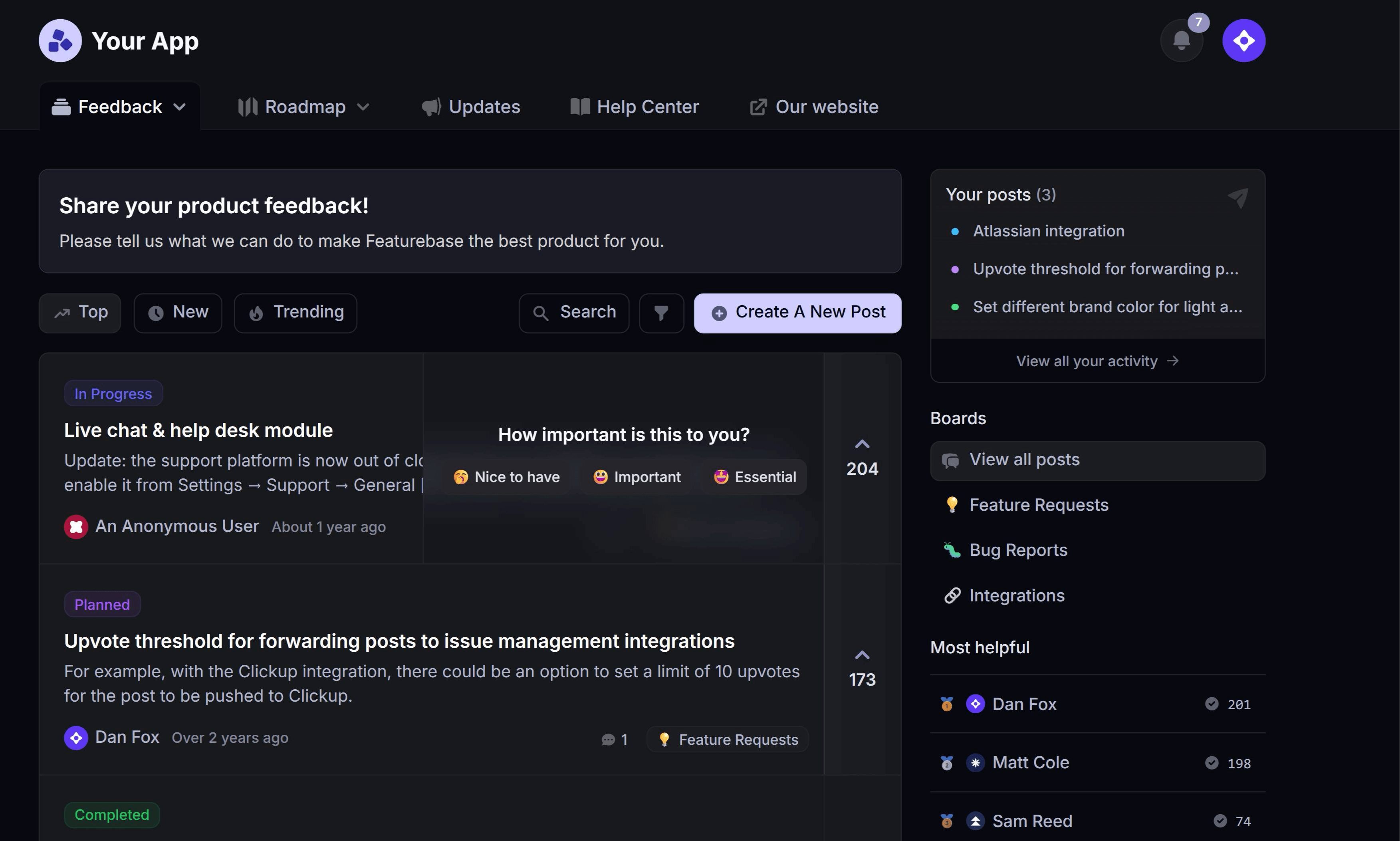
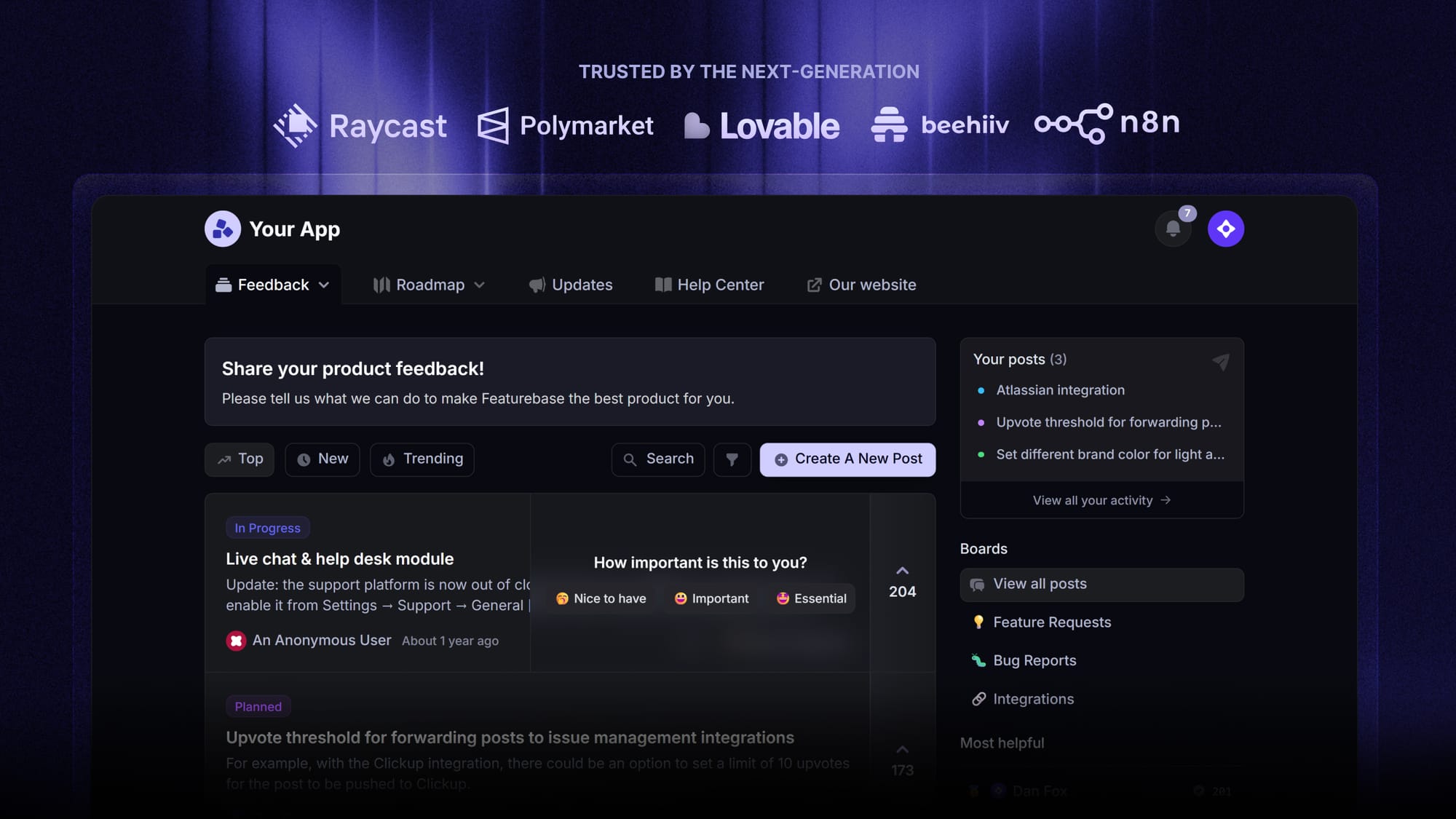
- Feedback forum – A public board where users submit ideas and vote, so you can see brewing frustration before it becomes churn
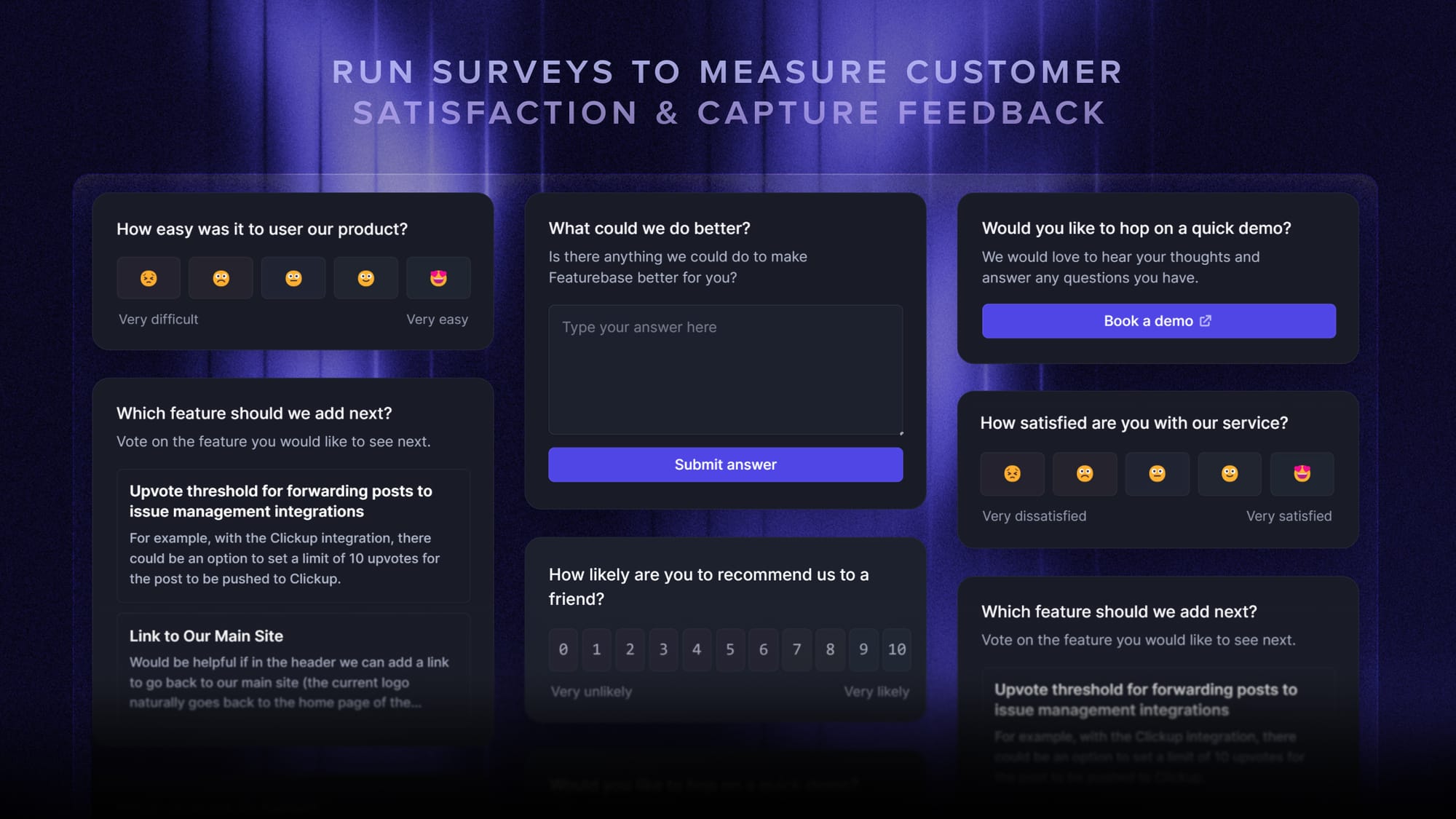
- Surveys (NPS, CSAT, etc.) – Run targeted in-app surveys to catch sentiment dropping as an early warning signal
- Prioritize by revenue – Link feedback to customer revenue and company size so you know which at-risk accounts matter most
- Automated email updates – Automatically tell users when a feature they requested ships, closing the loop that keeps them around
- Roadmaps – Share what's coming so customers have a reason to stay for what's next
Pricing: Free plan available with unlimited feedback collection. Paid plans start at $29/seat/mo.
Conclusion
Churn risk is the quiet signal before the loud goodbye. The customers about to leave are almost always telling you - through fading usage, slipping scores, and feedback that went unanswered - and the teams that win at retention are simply the ones watching and acting early.
Featurebase helps you spot those signals early by collecting feedback, running NPS and CSAT surveys, and connecting every insight to customer revenue, so you can focus on the at-risk accounts that matter most.
It comes with a Free plan for unlimited feedback, and the onboarding is quick with no credit card required, so there's no downside to trying it. 👇
✨ Start collecting & managing feedback with Featurebase for free →
FAQs
What is a good churn rate?
Established B2B SaaS companies generally aim for annual churn in the low single digits (around 5 to 7 percent), while early-stage and SMB-focused products tend to run higher. For subscription businesses, monthly churn above 2 to 3 percent is usually a warning sign. That said, the most useful comparison is your own trend over time rather than a broad industry average, since a "good" rate varies a lot by market and price point.
What's the difference between churn risk and churn rate?
Churn rate is a backward-looking metric that tells you what percentage of customers or revenue you lost over a period. Churn risk is forward-looking - it estimates how likely individual, current customers are to leave. Churn rate tells you how big the problem is, while churn risk tells you which specific customers to act on before they're gone.
How do you calculate a churn risk score?
Most teams build a score by assigning weighted points to a handful of signals: product usage trend, recent survey or sentiment scores, support ticket health, time since last login, and account value. Those combine into a single number or a low/medium/high flag per customer. The key is to validate it against customers who actually churned recently and adjust the weights until your high-risk bucket reliably catches them.
What are the most common causes of customer churn?
The biggest drivers are a poor onboarding experience where customers never reach first value, unresolved support issues, and a lack of ongoing engagement or perceived value for the price. Price sensitivity and a departing internal champion (in B2B) also play major roles. Most of these are preventable, which is exactly why tracking churn risk early is worth the effort.
Should you offer discounts to save at-risk customers?
Discounts can work for genuinely price-sensitive accounts, but they're risky as a default move. Leaning on them too often trains customers to threaten cancellation for a deal, and it papers over the real problem when the issue is actually a product gap or unresolved friction. Fix the underlying cause first, and reserve discounts for cases where price is truly the blocker.
Which tools help you track churn risk?
Product analytics tools (like Amplitude or Mixpanel) surface usage signals, CRMs and customer success platforms centralize account health, and feedback tools capture the sentiment side. Featurebase helps on that last front by running NPS and CSAT surveys, collecting feedback in one place, and linking it to customer revenue, so you can spot at-risk accounts and act on what they're telling you before they leave.