Blog Customer ServiceCustomer Onboarding: The Complete Guide for SaaS Teams
Customer Onboarding: The Complete Guide for SaaS Teams
Customer onboarding is where new signups become loyal customers. Here's a step-by-step guide to the process, best practices, and the metrics that matter.


The first few weeks after someone signs up decide almost everything. That's when a new customer either finds real value in your product or quietly drifts toward churn. Customer onboarding is how you tip that moment in your favor, guiding new users to their first win before doubt sets in.
In this guide, I'll break down what customer onboarding is, why it matters, a step-by-step process you can run, the best practices behind it, common mistakes to avoid, and how to measure it all. 👇
Key takeaways:
- Customer onboarding gets new customers to value: it starts right after signup and runs until users are confident and self-sufficient with your product.
- It directly drives retention and revenue: strong onboarding reduces churn, shortens time to value, and lifts product adoption and expansion.
- A repeatable process beats improvisation: welcome, guide setup, drive an early win, support, then hand off to ongoing success.
- Self-service scales onboarding: knowledge bases, in-app guidance, and product tours let customers learn at their own pace without waiting on your team.
- What gets measured gets better: track time to first value, onboarding completion rate, feature adoption, and CSAT or NPS.
- Featurebase✨ brings your help center, product updates, surveys, and feedback into one platform: onboard new customers with self-service answers and keep guiding them long after day one.
What is customer onboarding?
Customer onboarding is the process of getting new customers comfortable and successful with your product. It starts the moment someone signs up or buys, and it continues until they can use your product confidently on their own and are seeing real value from it.
It's tempting to think of onboarding as a single welcome email or a one-time product tour, but it's really a journey. Good onboarding moves a customer from "I just paid for this" to "I can't imagine working without this."
Along the way you're teaching people how the product works, helping them hit an early win, and building the trust that makes them stay. The goal is simple to state and hard to do well: get customers to value as fast as possible, then keep them there.
Why customer onboarding matters
Onboarding isn't a nice-to-have. It's one of the highest-leverage things you can do for retention and revenue, because it shapes a customer's first real impression of your product.
The money is in keeping and growing the customers you already have, and onboarding is where that starts. McKinsey found that top-quartile-valued B2B SaaS companies reach 113% net revenue retention, meaning they grow 13% from their existing base alone, while bottom-quartile peers sit at 98% and shrink. The difference between growing and shrinking often traces back to whether customers ever got up and running in the first place.
Customers notice the effort, too. In Wyzowl's onboarding research, 88% of people said they're more loyal to businesses that invest in onboarding, and over 90% felt the companies they buy from could do onboarding better. That's a low bar and a big opportunity.
When onboarding works, the benefits compound:
- Lower churn: customers who reach value early have a real reason to stay.
- Faster time to value: a structured start gets people to their first win sooner.
- Higher product adoption: guided setup pushes users deeper into the product's features instead of leaving them on the surface.
- More expansion and referrals: customers who succeed buy more and tell others.
Poor onboarding does the reverse. It creates confusion, stalls customer retention, and sends customers looking for the exit before they ever saw what your product could do.
The customer onboarding process, step by step
Every product is different, but strong onboarding tends to follow the same arc. Here's a 5-step process you can adapt to your own product and customer type.
1. Welcome and set expectations
The first message sets the tone. A good welcome does three things: it thanks the customer, tells them what happens next, and points them toward a single first action rather than the whole product at once.
Keep it warm and specific. Greet people by name, lay out the onboarding timeline so nothing feels like a surprise, and give them one clear next step to take.
This is also where in-app onboarding earns its keep. With Featurebase, you can welcome new users with a message that greets them by name and points them to their first valuable action, then surface help articles and product updates directly inside your app so guidance shows up right where people are working.
2. Guide the first setup and integrations
Setup is where a lot of customers stall. For B2B products especially, getting value often means connecting other tools, importing data, or inviting teammates, and every extra step is a chance to drop off.
Make the critical path obvious and everything else optional. Automate what you can, offer a setup checklist so customers can see their progress, and make it easy to skip steps they don't need yet. If integrations are involved, provide clear guidance and quick access to help so a stuck customer doesn't go quiet.
3. Educate and drive the first win
Education is what turns a configured account into an active user. Customer enablement keeps that learning going beyond onboarding. This is the stage where customers learn how your product fits their actual job, ideally by doing rather than just watching.
Offer flexible formats so people can learn how they prefer, like short guided tours, self-paced tutorials, and live sessions for complex setups. Then focus everything on one early win, the first meaningful outcome that proves the product works. That could be shipping a first project, running a first report, or completing a first key task. Celebrate it when it happens, because that moment is what makes the rest of onboarding stick.
4. Support and check in
Even great self-service leaves some customers with questions, and how you handle those early moments matters. Fast, low-friction help during onboarding stops small blockers from turning into churn reasons.
Give people more than one way to get unstuck: a searchable knowledge base for instant answers, live chat or email for the trickier issues, and proactive check-ins for higher-touch accounts. The goal is to make sure nobody stays stuck long enough to give up.
5. Review and hand off to ongoing success
Onboarding has an end, but the relationship doesn't. Before you consider a customer fully onboarded, confirm they've hit the goals you set together and gather feedback on how the experience went.
Then transition them smoothly into ongoing success: introduce whoever owns the long-term relationship, set a rhythm for check-ins, and keep guiding them toward new value. Onboarding earns the renewal, but ongoing engagement is what expands the account.
Customer onboarding best practices
A few habits separate onboarding that scales from onboarding that burns out your team. These apply whether you're onboarding your first 10 customers or your ten-thousandth.
- Lean on self-service: not every customer wants a call, and your team can't sit with all of them anyway. A strong self-service knowledge base, in-app tooltips, and video walkthroughs let customers learn at their own pace and take pressure off your team.
- Personalize by segment: a solo user and an enterprise account don't need the same onboarding. Tailor the path by role, use case, or plan so each customer sees what's actually relevant to them.
- Build around milestones: onboarding should be organized around the outcomes customers want, not a tour of your features. Define value milestones and guide people to each one with an obvious next step.
- Automate the repetitive parts: welcome emails, reminders, progress nudges, and check-in prompts can run on their own, freeing your team for the conversations that genuinely need a human.
- Close the feedback loop: ask new customers how onboarding went and feed what you learn back into the process, so it keeps getting better. A simple feedback loop turns every new cohort into a source of improvements.
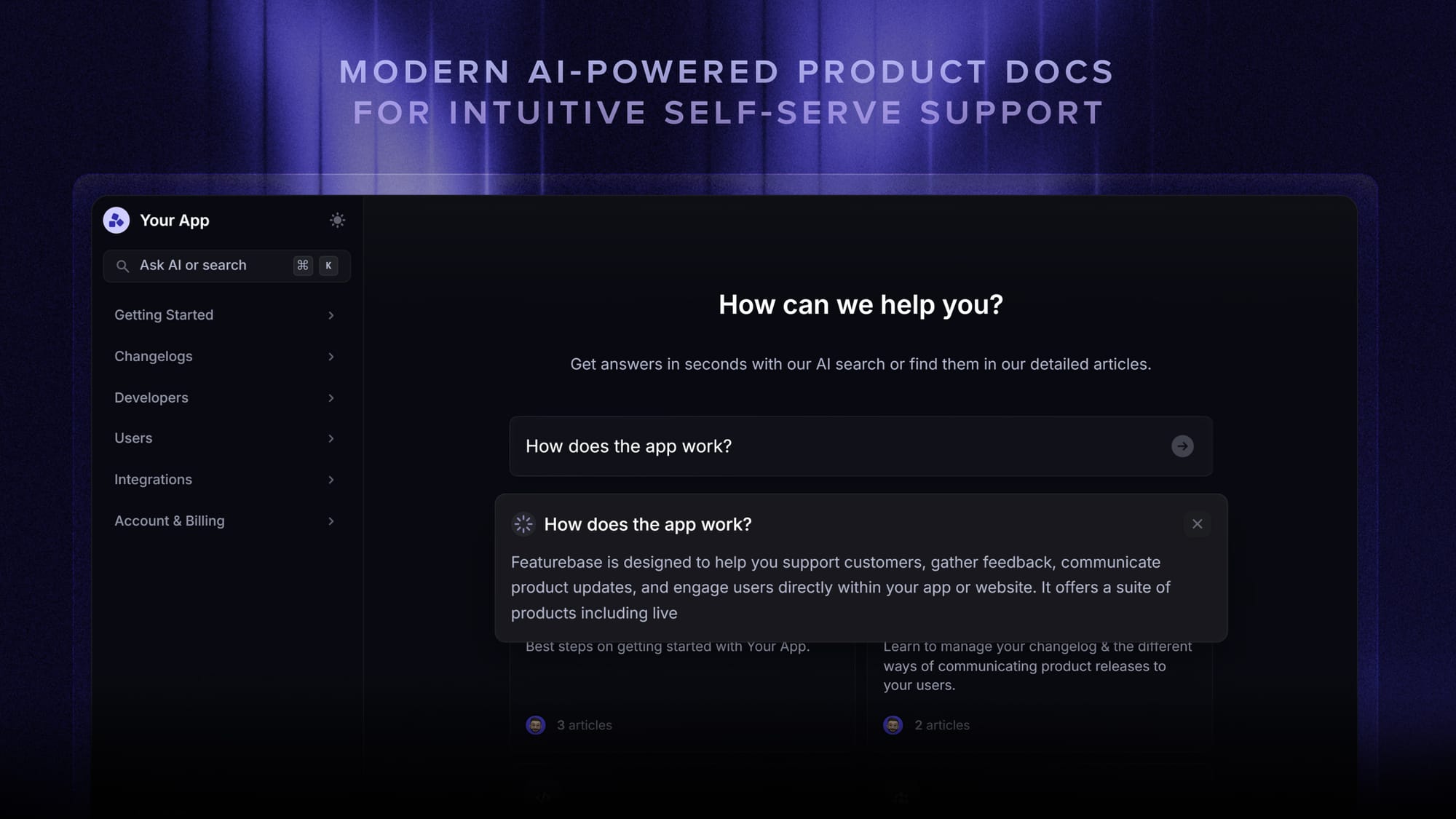
Self-service is usually the highest-leverage of these, because it scales without adding headcount. A Featurebase AI-powered Help Center lets new customers find instant, multilingual answers on their own, which shortens time to value and cuts the onboarding questions landing in your inbox.
Common onboarding mistakes to avoid
Most onboarding problems come down to a handful of avoidable mistakes.
- One-size-fits-all onboarding: forcing every customer down the same path ignores that their goals, roles, and experience levels differ. Segment your onboarding instead of lumping everyone together.
- Information overload: dumping every feature on a new customer at once guarantees they'll remember none of it. Break onboarding into digestible steps and let people move at their own pace.
- No clear goals: if you haven't defined what a successfully onboarded customer looks like, you can't tell whether onboarding is working. Set measurable goals up front.
- Going quiet after setup: onboarding that stops the moment the account is configured leaves customers to find real value on their own. Keep guiding them well past the initial setup.
- Ignoring feedback: if you never ask customers how onboarding felt, you'll keep repeating the same friction. Treat their input as your best source of fixes.
How to measure onboarding success
You can't improve what you don't measure, and onboarding has clear signals worth watching. Track a mix of hard numbers and customer sentiment.
- Time to first value (TTFV): how long it takes a new customer to reach their first meaningful outcome. Shorter is better, and it's often the single most predictive onboarding metric.
- Onboarding completion rate: the percentage of customers who finish the key onboarding steps. Big drop-offs point to exactly where your process breaks.
- Feature adoption: how many core features new customers actually use in their first weeks. Deeper adoption usually means stickier customers.
- Customer satisfaction: a direct read on how the experience felt, gathered with a quick survey at key milestones using CSAT or NPS.
- Early support volume: the number and type of questions during onboarding. Recurring questions are a map of what to fix next.
Review these regularly rather than once. Watching trends across new customer cohorts is how you catch friction early and keep tightening the process.
Onboard customers faster with Featurebase
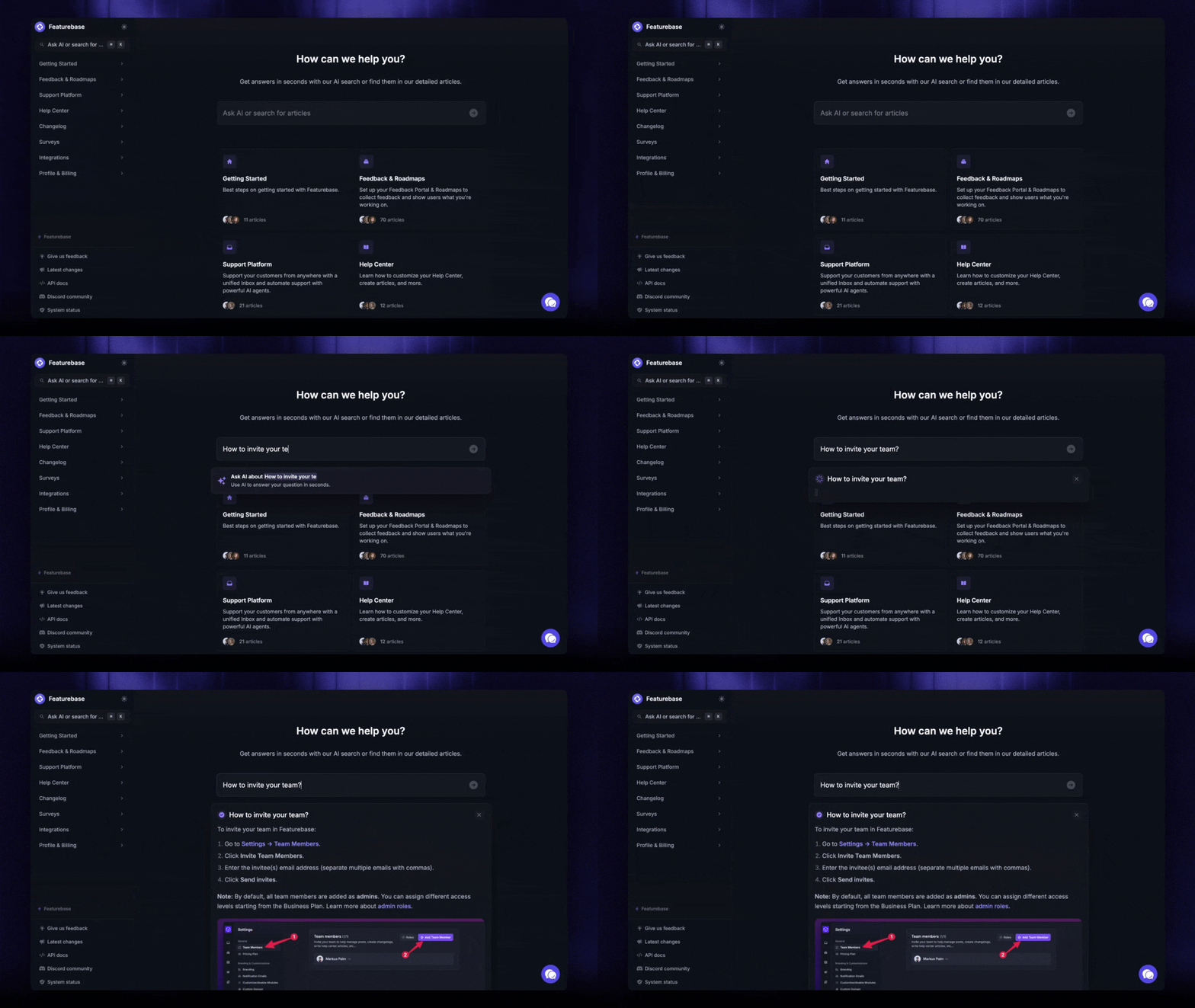
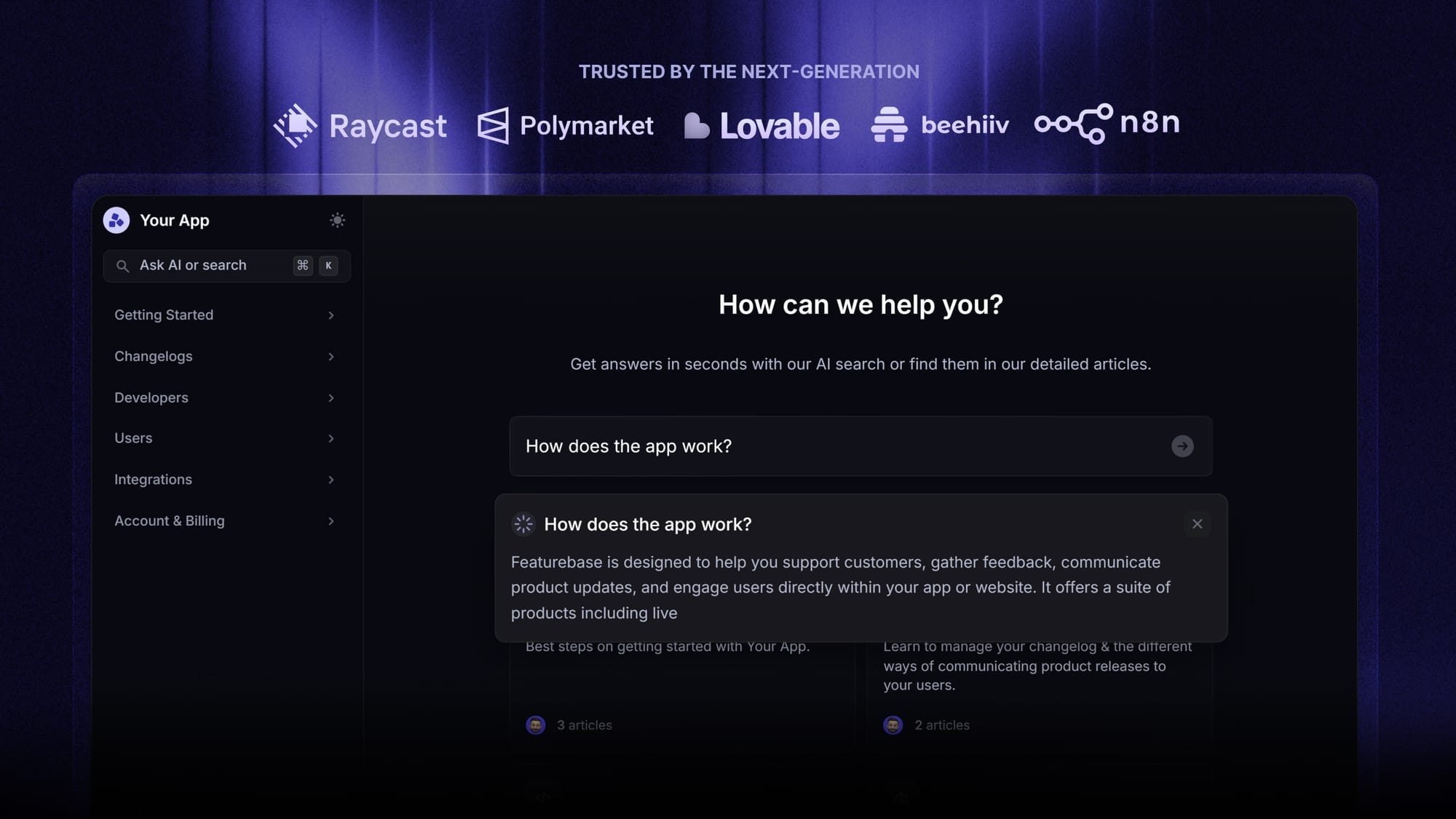
Featurebase is a modern & powerful support platform for SaaS teams that helps you create beautiful product docs, provide AI-powered support, and collect feedback all in one place. It's loved by thousands of support teams from companies like Lovable, Raycast, and n8n. 💫
For onboarding specifically, it gives new customers a place to find answers on their own and gives you the tools to keep guiding them long after signup.
Top features:
- Public & internal help center – Create a branded, knowledge base with your domain and design for easy self-service support.
- Embeddable in-app widget – Serve help articles directly within your app, reaching users where they need assistance most
- AI-powered search answers – Summarize answers for users right in the search bar in seconds
- Automatic AI translations – Automatically translate and show your Help Center in your users native languages
- Multi-brand support – Manage multiple Help Centers and Live chats from a single workspace
- AI-powered support platform – Manage chat, email, and Slack support conversations from one AI-powered view
- Feedback & roadmap tools – Collect feature requests and close the loop with updates
- Product updates – Publish release notes with a changelog page, in-app widget, and emails
- Integrations – Connects with Slack, Linear, Jira, HubSpot, and more
Pricing: You can create a public help center with a fully free plan. Paid plans start at just $29/seat/mo for unlimited articles.
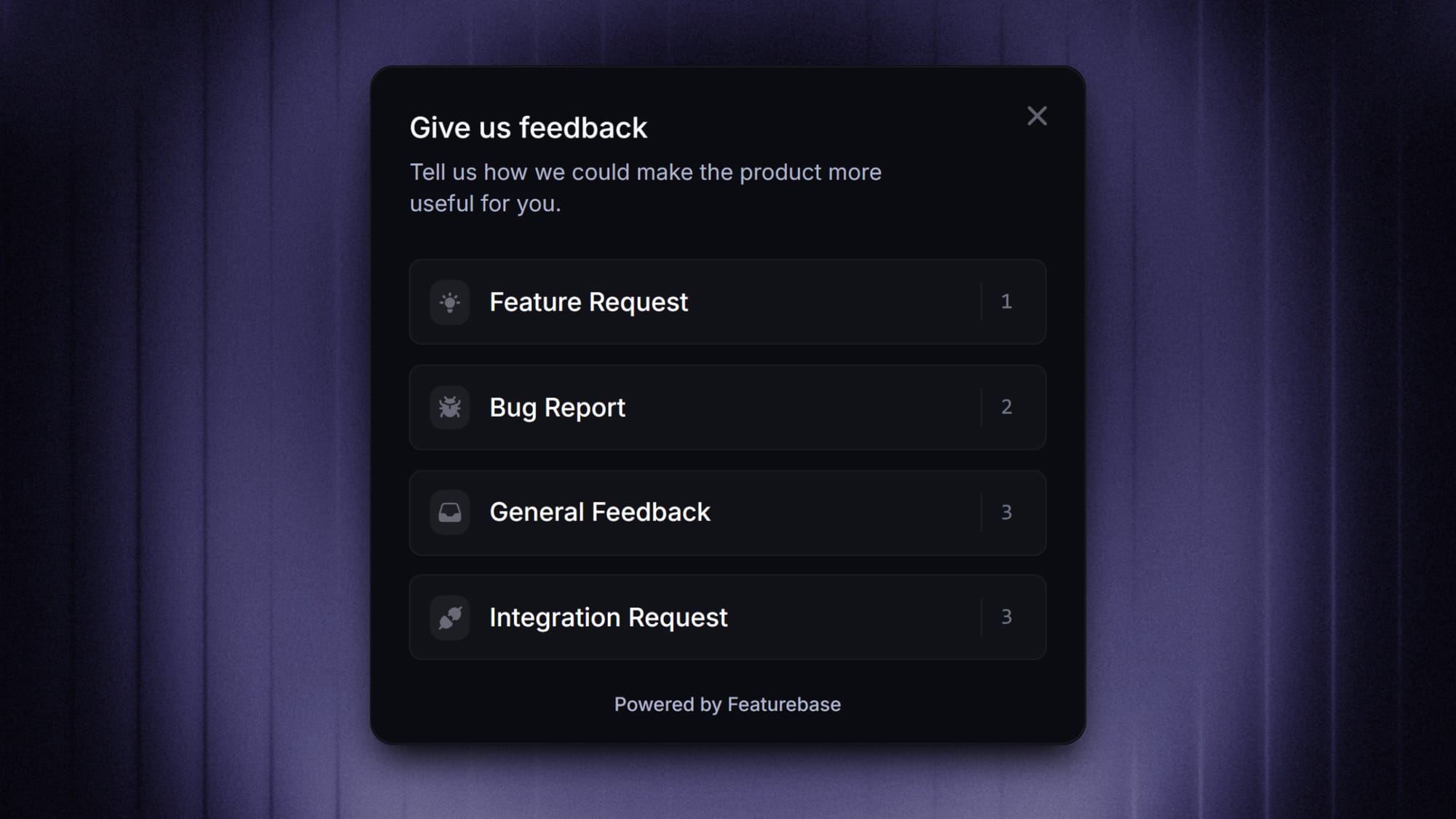
Featurebase offers a modern customer-facing product suite by integrating your help center, live chat, feedback collection, and product updates to build better products and customer experiences.
Turn onboarding into your growth engine
Customer onboarding is the bridge between a signup and a long-term customer. Nail those first weeks and you reduce churn, speed up time to value, and turn new users into advocates.
Featurebase is a modern & powerful support platform that helps you onboard customers with a beautiful AI-powered Help Center, in-app widgets, and product updates. It also comes with surveys and feedback collection, so you can measure how onboarding is landing and keep building a product your users love.
It has affordable pricing and a Free plan, so there's no downside to trying it. Plus, we can help you seamlessly migrate from any existing knowledge base tools. 👇
✨ Create a beautiful AI-powered Help Center with Featurebase for free →
FAQs
What are the 3 stages of customer onboarding?
The three stages are usually described as primary, secondary, and tertiary. The primary stage gets customers to understand and reach your product's core value, the secondary stage introduces additional features and deeper use cases, and the tertiary stage focuses on strengthening the long-term relationship and driving expansion. Think of it as first value, then broader adoption, then loyalty.
How is customer onboarding different from user onboarding?
Customer onboarding covers the whole account and relationship, including all the people, setup, training, and success planning that get an organization using your product. User onboarding is narrower: it's about activating an individual person inside the product, usually through in-app guidance that leads them to a first action. In a B2B product you often run both at once, onboarding the account while activating each user.
What is a customer onboarding platform?
A customer onboarding platform is software that helps you guide new customers from signup to active use. Depending on the tool, that can include welcome flows, product tours, knowledge bases, in-app messaging, progress tracking, and analytics on how onboarding is going. The point is to make onboarding consistent and scalable instead of a manual, one-off effort for every customer.
What is the best customer onboarding software?
There's no single best tool, because it depends on whether you need in-app product tours, self-service documentation, project management, or all of the above. Look for something that helps customers reach value on their own and lets you keep guiding them after setup. Featurebase is a strong option for product-led SaaS teams that want an AI-powered help center, in-app widgets, product updates, and feedback collection in one place rather than stitching several tools together.
How do you automate customer onboarding with AI?
AI can take over the repetitive parts of onboarding so your team focuses on the high-value moments. Common uses include AI-powered help center search that answers customer questions instantly, in-app assistants that guide users through setup, and automated emails that nudge customers toward their next step or point out features they haven't tried yet. Used well, AI shortens time to value without making onboarding feel impersonal.
How long should customer onboarding take?
It depends on your product and onboarding model. A simple self-serve product might onboard a customer in minutes to a few days, while a complex B2B platform with integrations and training can take several weeks. Rather than optimizing for a fixed length, anchor onboarding to time to value, how fast a customer reaches their first real win, and work to shorten that.