Blog Customer FeedbackCustomer Dissatisfaction: Causes and How to Prevent It
Customer Dissatisfaction: Causes and How to Prevent It
Customer dissatisfaction is a signal, not a dead end. Learn what causes it, how to spot unhappy customers, and how to prevent it before they churn.


Most businesses think their customers are happier than they actually are. Teams watch their satisfaction scores tick up while customers quietly feel otherwise, and that gap is exactly where dissatisfaction hides.
The good news is that customer dissatisfaction is a signal, not a dead end. Catch it early, and you can turn an unhappy customer into a loyal one.
This guide covers what customer dissatisfaction really is, what causes it, how to handle the different types of unhappy customers, and how to prevent it before it costs you revenue. 👇
Key takeaways
- Customer dissatisfaction is the gap between what a customer expected and what they actually experienced. It shows up as churn, complaints, and quiet disengagement.
- Most dissatisfaction traces back to a handful of causes: poor service, product issues, unmet expectations, weak self-service, and a lack of personalization.
- Dissatisfied customers rarely announce themselves. The silent ones who simply stop engaging are often the most dangerous.
- Prevention comes down to listening early and often, responding fast, and closing the loop so customers see you act on their feedback.
- Featurebase✨ helps you catch dissatisfaction before it turns into churn by collecting feedback, running CSAT and NPS surveys, and closing the loop with a public roadmap and changelog.
What is customer dissatisfaction?
Customer dissatisfaction is the negative sentiment a customer feels when a product or service falls short of their expectations. It is the gap between what they were promised and what they actually got.
That gap can open anywhere: a product that does not work as advertised, a support reply that takes 3 days, a confusing policy, or an experience that just feels impersonal. The emotion is the same - disappointment, frustration, and a slow erosion of trust.
What matters most is not whether dissatisfaction happens, because some of it always will. It is how quickly you notice it and what you do next.
DSAT: dissatisfaction as a metric
DSAT (short for dissatisfaction) is the flip side of CSAT, your customer satisfaction score. In customer service specifically, DSAT measures unhappy outcomes: slow responses, unresolved issues, or poor-quality interactions with your support team.
Tracking DSAT turns a vague feeling into a number you can act on. When it climbs, it is an early warning that something in your product or service is pushing customers toward the exit.
What causes customer dissatisfaction?
Dissatisfaction rarely comes out of nowhere. It builds up at specific touchpoints along the customer journey. These are the most common causes:
- Poor customer service: Slow responses, unhelpful answers, and being bounced between agents are among the fastest ways to lose a customer. When someone reaches out for help, they are already frustrated, and a sluggish or dismissive reply only deepens it.
- Product quality and performance: When a product breaks, underperforms, or fails to deliver what the marketing promised, the gap between expectation and reality turns into disappointment.
- Unmet expectations: Every customer arrives with assumptions about price, quality, speed, and service. When reality does not line up, even on small things like shipping times or fees, dissatisfaction follows.
- Weak self-service: Customers want to solve simple problems on their own. If your FAQs, help center, or knowledge base are thin or missing, they are forced into slower channels. In fact, 38% of Gen Z and millennial customers say they will give up on a service issue entirely if they cannot resolve it through self-service.
- Lack of personalization: Generic, one-size-fits-all interactions make customers feel like a ticket number. When you ignore their history and context, they feel undervalued.
- Slow or clumsy resolution: Long wait times, repeated handoffs, and having to explain the same problem twice turn a minor issue into a major grievance.
Most cases trace back to one of these. The trick is knowing which one is driving your dissatisfaction, and that only comes from listening to customers directly.
The types of dissatisfied customers (and how to handle each)
Not every unhappy customer behaves the same way, and the right response depends on the type you are dealing with. Four show up again and again:
- The angry customer: They are vocal and often escalate publicly on social media or in reviews. Do not mirror their emotion - stay calm, apologize sincerely, and move quickly to a concrete resolution.
- The silent churn risk: The most dangerous type, because they never complain. They just quietly stop using your product and eventually leave. Watch for dropping engagement and reach out proactively before they are gone.
- The demanding customer: They expect fast responses, special treatment, or custom solutions, and get frustrated when standard processes do not fit. Set clear expectations, empower your team to make reasonable concessions, and lean on your most experienced agents.
- The once-loyal advocate: A long-time fan let down by a recent experience. Their disappointment cuts deeper because their expectations were higher. Acknowledge the relationship, fix the specific issue, and give them a reason to trust you again.
How customer dissatisfaction hurts your business
A few unhappy customers are normal. A pattern of dissatisfaction is a threat to the business, and it shows up in 4 ways:
- Lost revenue: Dissatisfied customers stop buying and rarely return. Since retaining an existing customer costs far less than acquiring a new one, every customer you lose to dissatisfaction is expensive twice over.
- Higher churn: Unhappy customers switch to competitors, and the churn often happens quietly, without any warning or feedback.
- Damaged reputation: A single bad experience travels fast through reviews, social media, and word of mouth. 32% of customers say they would walk away from a brand they love after just one bad experience.
- Lower team morale: Constantly fielding complaints wears down customer-facing staff, which feeds back into worse service and even more dissatisfaction.
How to prevent customer dissatisfaction
You cannot eliminate dissatisfaction entirely, but you can catch most of it early and prevent the rest. Here is a practical playbook.
Listen actively and lead with empathy
When a customer raises an issue, the first job is not to solve it. It is to make them feel heard. Acknowledge the problem, apologize where it is warranted, and reflect their concern back to them before jumping to a fix. Often the real frustration is not the original issue but the feeling of being ignored.
Respond quickly
Speed defuses frustration. A fast acknowledgment, even before you have a full answer, reassures customers that they are not being ignored. The longer an issue sits, the more a small problem hardens into a reason to leave.
Strengthen your self-service
Many customers would rather solve a problem themselves than wait for an agent. A well-stocked help center, clear FAQs, and in-app answers let them do exactly that, and they take pressure off your support team at the same time. When self-service is thin, dissatisfaction climbs.
Personalize the experience
Use what you know about a customer, like their history, plan, and past issues, to personalize how you communicate and resolve problems. Even during a complex issue, referencing their context makes them feel valued rather than processed.
Gather feedback across the customer lifecycle
You cannot fix what you cannot see. The businesses that stay ahead of dissatisfaction collect feedback continuously, at onboarding, after purchases, following support interactions, and when customers leave, rather than waiting for complaints to pile up.
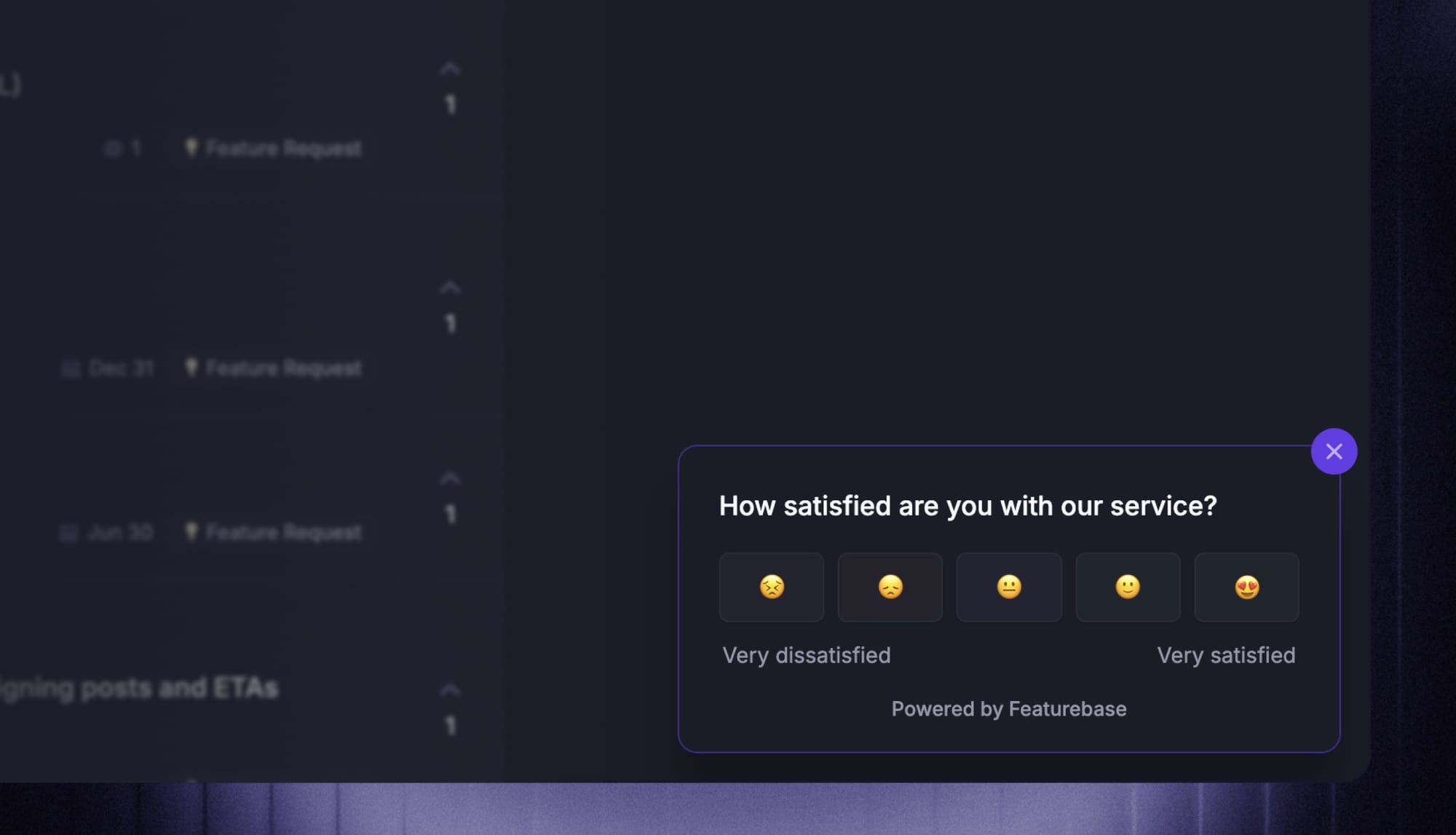
This is where a dedicated feedback tool earns its keep. With Featurebase, you can run targeted NPS and CSAT surveys to measure satisfaction at each stage, and give customers a feedback portal and in-app widget to flag problems and request fixes in their own words. That turns scattered frustration into a clear, prioritized signal you can act on.
Close the loop
Collecting feedback only works if customers see you act on it. Closing the loop, meaning you tell people when their reported problem is fixed or their requested feature ships, is what turns a dissatisfied customer into a loyal one.
Featurebase makes this part automatic. When you update your public roadmap or publish a changelog entry, it can notify the exact users who asked for it by email and in-app, so they see that their voice actually changed the product.
Turn dissatisfaction into loyalty with Featurebase
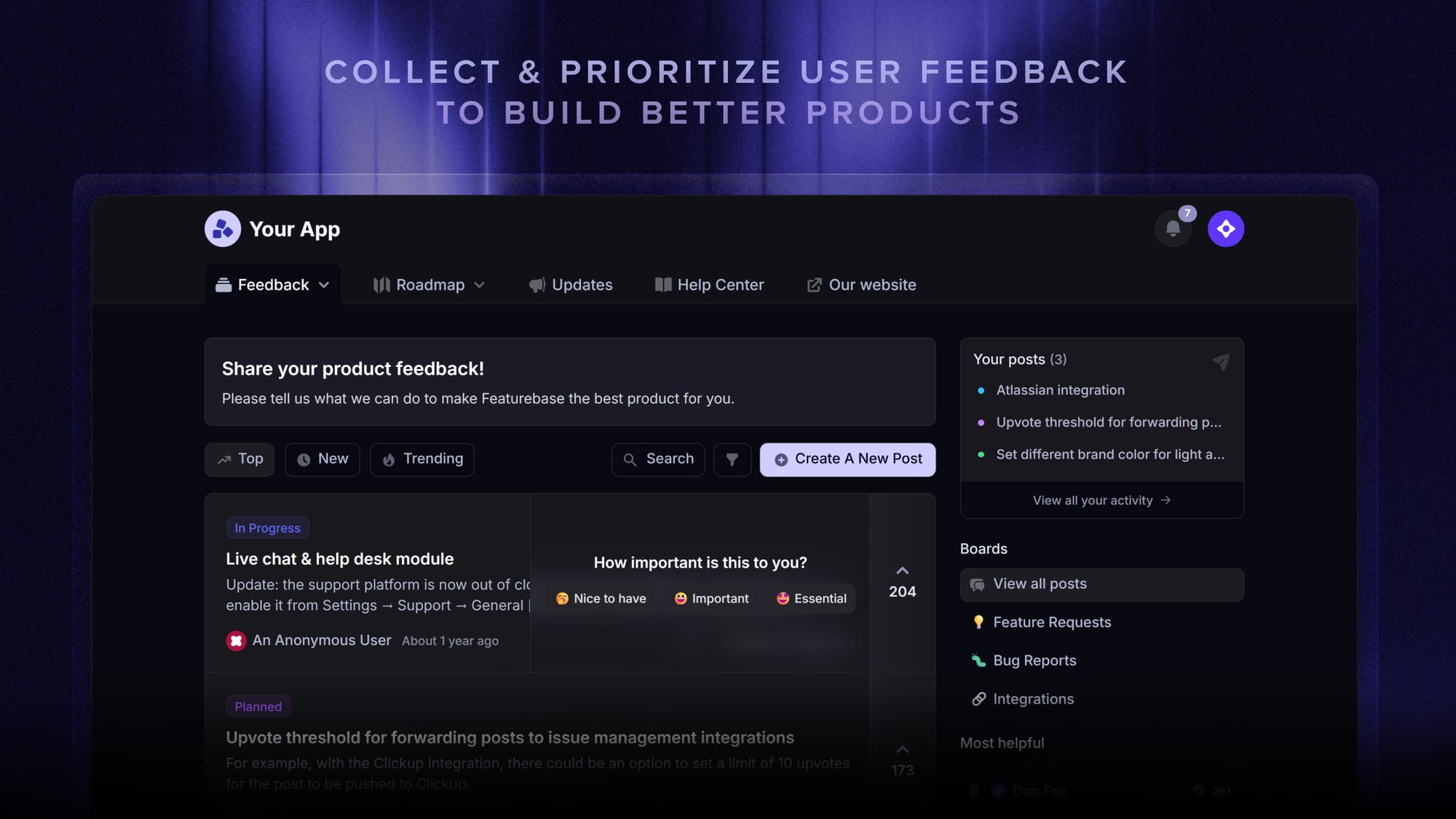
Preventing dissatisfaction comes down to hearing your customers and acting on what they tell you, which is exactly what Featurebase is built for. It is a modern feedback and support platform that helps product teams collect feedback, prioritize features, build roadmaps, and announce product updates, all in one place. It is loved by thousands of product teams from companies like Lovable, Raycast, and n8n. 💫
Top features:
- Feedback forum – Public feedback forum where users can submit ideas and vote on features helping you know what customers want
- In-app widgets – Embed feedback, changelog, and help center widgets directly in your product
- Prioritize by revenue – Link feedback with customer revenue, company size, and much more to better understand the impact of ideas
- AI feedback categorization - Automatically group large volumes of feedback into product areas, projects, or themes with AI
- Automated email updates – Automatically notify users when their requested features are implemented
- Roadmaps – Create internal & public product roadmaps to keep users informed and build engagement
- Product updates – Publish release notes with a changelog page, in-app widget, and emails
- Surveys (NPS, CSAT, etc) – Create targeted surveys to ask users anything and measure customer satisfaction
- Automatic AI translations – Automatically translate all feedback and comments to your customers / teammates native languages
- Integrations – Connects with Slack, Linear, Jira, HubSpot, and more
Pricing: Free plan available with unlimited feedback collection. Paid plans start at $29/seat/mo.
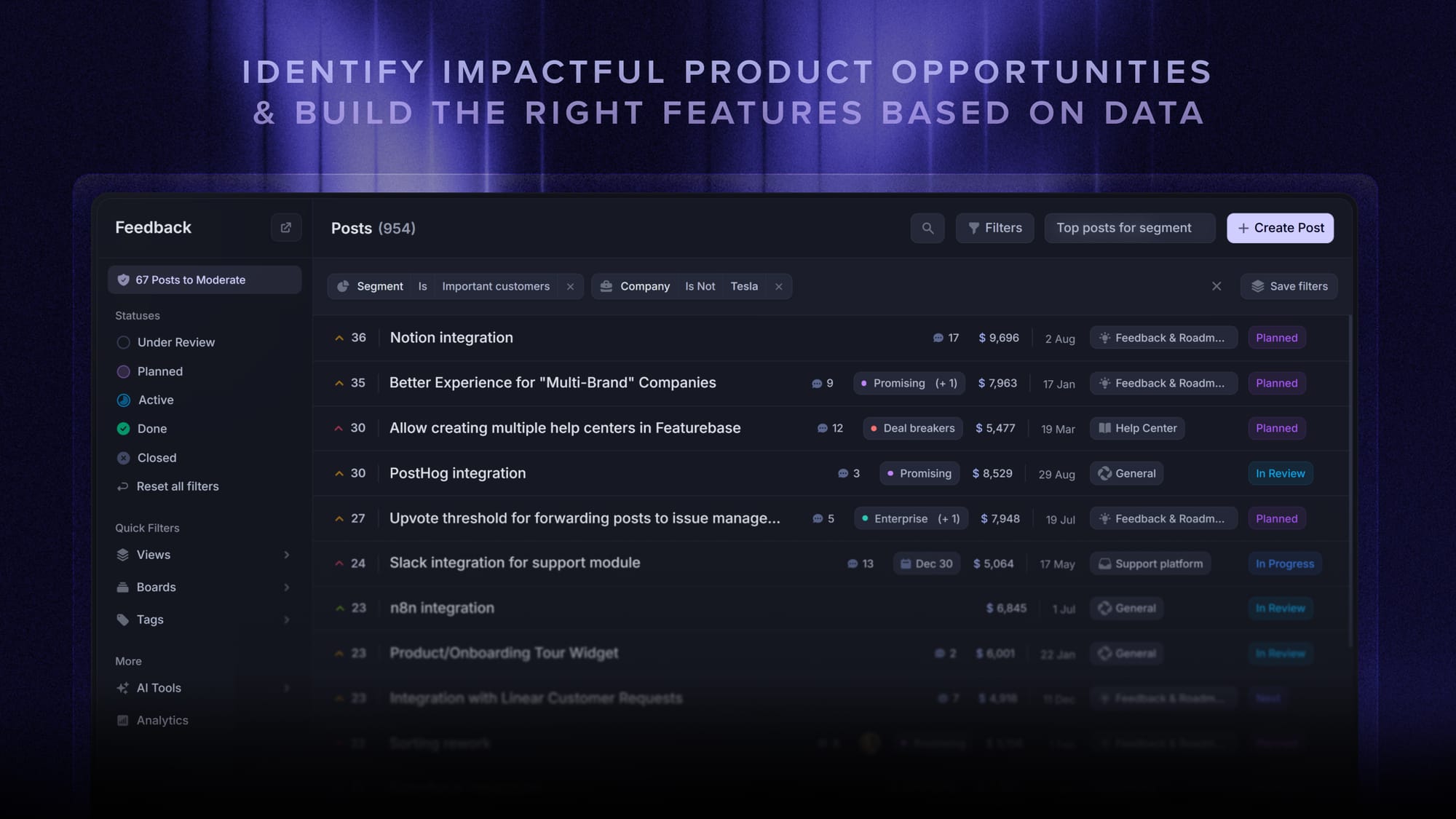
Instead of having 4+ different tools, Featurebase enables you to replace all your customer-facing tools by bringing your feedback collection, product updates, support, and help center together in one place to help you build products your users love.

Turn feedback into products your users love
Centralize feedback, identify product opportunities, and build the right features
Conclusion
Customer dissatisfaction is inevitable, but losing customers to it is not. When you understand what causes it, recognize the different ways it shows up, and build habits that surface it early, you can fix problems before they turn into churn.
The throughline is simple: dissatisfaction is feedback. The businesses that listen for it, measure it, and close the loop are the ones that turn unhappy customers into loyal advocates.
Featurebase brings feedback collection, surveys, roadmaps, and product updates into one platform, so you can catch dissatisfaction early and show customers you are acting on what they say. There is a free plan and onboarding takes minutes, so there is no downside to trying it. 👇
✨ Start collecting & managing feedback with Featurebase for free →
FAQs
How do you measure customer dissatisfaction?
You measure it with a mix of metrics rather than a single number. The most common are CSAT (customer satisfaction score), NPS (net promoter score), DSAT for service interactions, plus churn rate, repeat-purchase rate, and review or complaint volume. Tools like Featurebase let you run CSAT and NPS surveys directly in your product, so you can track satisfaction over time and spot dips early.
What is DSAT in customer service?
DSAT stands for dissatisfaction, and in customer service it measures the share of support interactions that left customers unhappy. It captures things like slow response times, unresolved issues, and low-quality answers. A rising DSAT score is an early sign that your support experience is driving customers away.
What are the early warning signs of customer dissatisfaction?
The clearest signs are declining product usage, fewer repeat purchases, and customers who stop responding or engaging. More obvious ones include negative reviews, rising complaint volume, and slower payments. Because many customers never complain directly, watching behavioral signals matters as much as reading the feedback you do receive.
What's the difference between customer dissatisfaction and a customer complaint?
Dissatisfaction is the underlying feeling, while a complaint is one way that feeling gets expressed. Most dissatisfied customers never file a complaint at all - they simply disengage and leave. That is why relying only on complaint volume badly undercounts how many customers are actually unhappy.
What should you do first when a customer is dissatisfied?
Acknowledge the problem and let them explain it fully without interrupting. Feeling heard defuses most of the initial frustration and gives you the details you need to help. Only after that should you move to a concrete solution or, if needed, escalate to someone who can resolve it.
How is customer dissatisfaction different from customer churn?
Dissatisfaction is the leading signal and churn is the lagging outcome. A customer becomes dissatisfied first, and if nothing changes, that dissatisfaction eventually turns into churn. The advantage of measuring dissatisfaction is that it gives you time to act before the customer actually leaves.