Blog Product ManagementProduct Change Management: A Guide for Product Teams
Product Change Management: A Guide for Product Teams
A practical guide to product change management: how to plan, roll out, and communicate product changes so your team and your users adapt without the friction.


You ship a change you're proud of, and the reaction isn't applause. It's confused users, a spike in support tickets, and a team that quietly dragged its feet the whole way there.
Most advice on product change management stops at the internal side: frameworks for getting your own team on board. But half the job is user-facing. In this guide, I'll walk through a practical process for managing product changes, plus how to communicate them so the people actually using your product come along too. 👇
Key takeaways
- Product change management is the process of planning, rolling out, and communicating changes to a product so both your team and your users adapt with minimal friction.
- It matters because most change goes badly: fewer than a third of transformations succeed, and teams with strong change management are far more likely to hit their goals.
- A solid process runs in stages: assess the change, plan the rollout, communicate early, ship it, then measure and adjust.
- Resistance is normal, from teammates and users alike. Change fatigue is real and rising, so the "why" behind a change matters as much as the change itself.
- Featurebase✨ brings roadmaps, changelogs, and feedback into one place so you can plan and announce product changes without losing your users along the way.
- The user-facing side is where most teams slip: a public roadmap and a changelog keep users in the loop before and after you ship.
What is product change management?
Product change management is the process of planning, communicating, and rolling out changes to your product so both your team and your users adapt with as little friction as possible.
The word "change" is doing a lot of work here, because a product change can be almost anything:
- A new feature or capability: something users have to discover, learn, and fold into how they already work.
- A redesign of an existing flow: the risky kind, because you're moving something people already relied on.
- A pricing or packaging change: often the most emotionally charged, since it touches what people pay.
- A deprecation or sunset: removing something, which almost always upsets the users who loved it most.
Worth clearing up one thing early: in manufacturing and hardware, "product change management" usually means engineering change orders and bill-of-materials revisions. That's a different world. In software, we're talking about managing changes to a digital product and the people affected by them, which is what the rest of this guide covers.
Why product change management matters
Change is the job. Products that stop changing stop mattering. But changing things well is much harder than it looks, and the failure rate is sobering.
Across organizations, less than one-third of transformations succeed at both improving performance and sustaining it, according to McKinsey's global research. Most changes don't fail because the idea was wrong. They fail in the rollout: unclear communication, no buy-in, and no plan for the people on the receiving end.
The upside is just as dramatic. Projects with excellent change management are roughly 7 times more likely to meet their objectives than those with poor change management, based on Prosci's research across more than 2,600 practitioners. In their data, 88% of well-managed changes met or beat their goals, versus just 13% of poorly managed ones.
That gap is the entire case for treating product change as a discipline, not an afterthought. The change itself is often the easy part. Getting people to adopt it is where the value is won or lost.
The product change management process
You don't need a heavyweight process for every tweak. But for anything that touches how people use your product, a repeatable set of product management stages keeps you from skipping the steps that actually matter:
- Assess the change: figure out what's changing, who it affects (both your team and your users), and how risky it is. A copy tweak and a navigation overhaul are not the same project.
- Plan the rollout: decide the approach - gradual, phased, or all at once - set a timeline and an owner, and write down how you'll roll back if it goes sideways.
- Communicate early: tell your team and your users what's coming and why, before it ships. Surprises are what turn a good change into a support fire.
- Roll it out: ship it, ideally to a subset of users first so you can catch problems while they're small.
- Measure and adjust: watch adoption, feedback, and support load, then iterate. A rollout isn't done the moment it's live.
The order matters more than the labels. Most botched changes skipped "communicate early" or "measure and adjust," not the shipping part.
A framework to lean on: ADKAR
If you want a mental model for the human side, ADKAR is a good one to start with. It breaks any change into 5 things people need, in order:
- Awareness - they understand why the change is happening
- Desire - they actually want to support it
- Knowledge - they know what to do differently
- Ability - they can put it into practice
- Reinforcement - the change sticks instead of sliding back
The value of ADKAR isn't the acronym, it's the diagnosis. When a change stalls, you can usually point to the exact letter you skipped. People aren't adopting the new flow? You probably jumped to "ability" without building "desire" first.
How to overcome resistance to change
Resistance is not a sign the change is bad. It's a sign of how the change was introduced, and it's getting harder to manage. Employees' willingness to support enterprise change fell to 43% in 2022 from 74% in 2016, according to Gartner research reported by Harvard Business Review. People are tired of change, which means every new one starts from a lower baseline of goodwill.
Most resistance traces back to a handful of causes:
- Change fatigue: too many changes, too fast, with no time to absorb any of them.
- An unclear "why": people resist what they don't understand, and "because we decided to" is not a reason.
- Loss of control: a change done to someone lands very differently than one done with them.
- Switching cost: users built muscle memory around the old way, and the new way makes them slow again, at least at first.
The fixes are mostly the inverse. Involve the people affected early, explain the reasoning honestly, give them a real channel to push back, and roll out gradually so nobody feels ambushed. A change people helped shape is a change they'll defend instead of fight.
How to communicate product changes to your users
This is the part most product teams underdo, and it's the difference between a change that lands and one that generates a churn spike. Your users can't get on board with something they didn't see coming.
Good product-change communication happens in 3 moments:
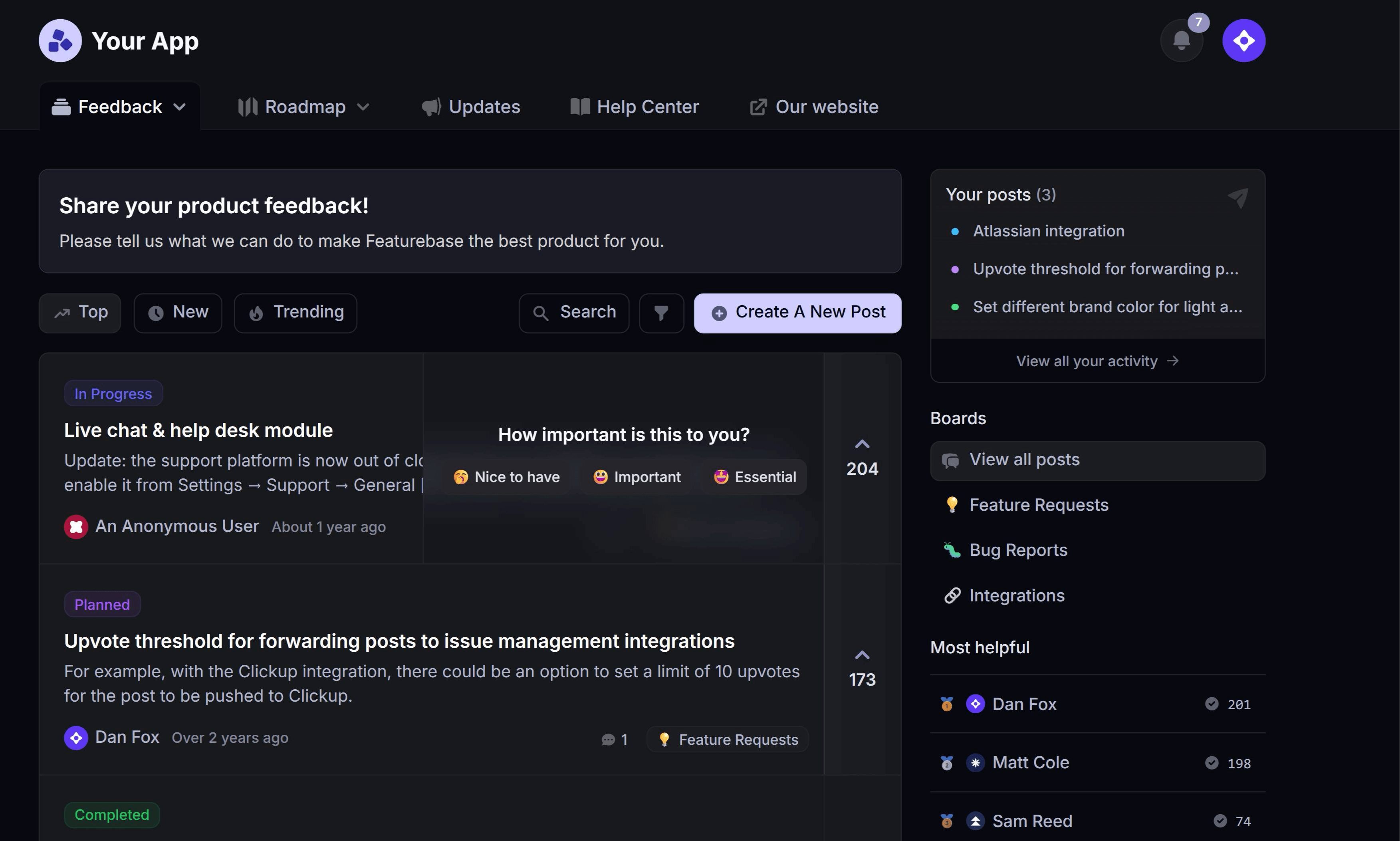
- Before you ship: share what's coming so nothing feels sudden. A public roadmap does this quietly in the background, setting expectations weeks before launch.
- When you ship: announce what changed and why, where users will actually see it. A changelog with in-app notifications beats a buried blog post every time.
- After you ship: close the loop with the people who asked for it, and give everyone a way to react so you hear about problems early.
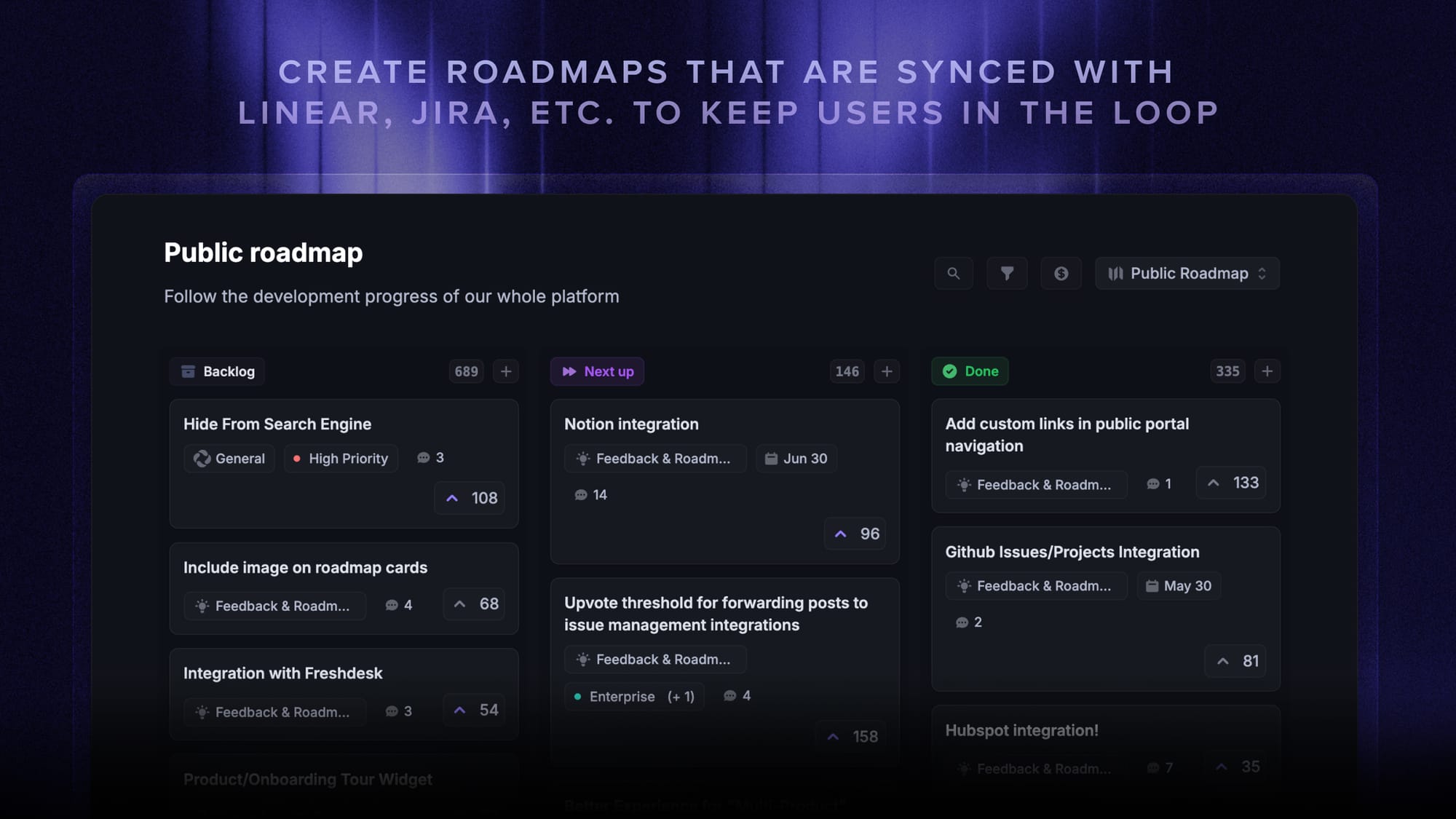
This is where a tool like Featurebase earns its place. You can plan changes on an internal or public roadmap so users see what's coming, announce shipped changes through a changelog with in-app widgets and release emails, and let people react and request follow-ups in a feedback forum. Keeping the whole change visible in one place is what turns communication from a scramble into a habit.
How to measure whether a change worked
A change isn't successful because it shipped. It's successful because it did what you hoped without costing you something else. Look at 4 signals:
- Adoption: are people actually using the new thing, or routing around it?
- Sentiment: what do surveys and feedback comments say about it, in tone as much as content?
- Support load: did tickets and confused messages spike right after launch?
- Retention: did the change quietly cost you users who preferred the old way?
Watch these together, not in isolation. A feature with great adoption but a support-ticket surge might have a discoverability problem worth fixing. The point of measuring is to decide your next move: double down, tweak, or roll back.
Conclusion
Product change management isn't about slowing down or adding process for its own sake. It's about making sure the changes you're already shipping actually land - with your team and with the users who have to live with them. Get the process, the communication, and the follow-up right, and change stops being a risk and starts being your biggest advantage.
Featurebase is a modern product management tool that helps you manage product change from end to end. You can plan work on internal and public roadmaps, collect and prioritize feedback, announce what shipped with a changelog, and close the loop with the users who asked for it, all in one place.
It comes with a Free plan and the onboarding takes minutes, so there's no downside to trying it. 👇
✨ Create internal & public roadmaps with Featurebase for free →
FAQs
What's the difference between change management and product management?
Product management is about deciding what to build and why - the strategy, priorities, and roadmap. Change management is about how you roll those decisions out so people adapt, covering the communication, training, and buy-in around a change. You need both: product management picks the change, change management makes it land.
What are the 5 C's of change management?
The 5 C's are a simple checklist for leading change: Clarity (explain why the change is happening), Communication (keep people informed with two-way dialogue), Commitment (build genuine support rather than compliance), Capability (give people the skills to adapt), and Continuity (reinforce the change so it sticks). They're a memory aid, not a rigid process, but they cover the pieces teams most often skip.
What are the main stages of the product change management process?
Most product changes move through 5 stages: assess the change and who it affects, plan the rollout and a fallback, communicate it to your team and users before it ships, roll it out (ideally to a subset first), then measure adoption and feedback and adjust. The labels matter less than the order, and the stages teams skip most are early communication and post-launch measurement.
Why do employees resist product changes?
Usually not because the change is bad, but because of how it's introduced. Change fatigue from too many shifts at once, an unclear reason for the change, and feeling like it's happening to them rather than with them are the common drivers. Involving people early and explaining the "why" removes most of the friction before it starts.
How do you communicate a product change to customers?
Tell them before and after. Share what's coming on a public roadmap so nothing feels sudden, then announce what shipped through a changelog with in-app and email notifications so users actually notice. Tools like Featurebase bring the roadmap, changelog, and feedback forum together so you can manage that communication from one place instead of stitching it across channels.
How do you measure if a product change was successful?
Look past "did it ship." Track adoption (are people using it), sentiment (what surveys and feedback say), support volume (did tickets spike), and retention (did the change cost you users). A change that ships but drops adoption or spikes churn isn't a win, and watching these signals together tells you whether to double down, tweak, or roll back.