Blog Customer FeedbackValue Metrics: How to Choose the Right Ones for SaaS
Value Metrics: How to Choose the Right Ones for SaaS
Learn what value metrics are, explore 6 SaaS examples, and choose the right metric using customer feedback, product usage data, and practical pricing tests.

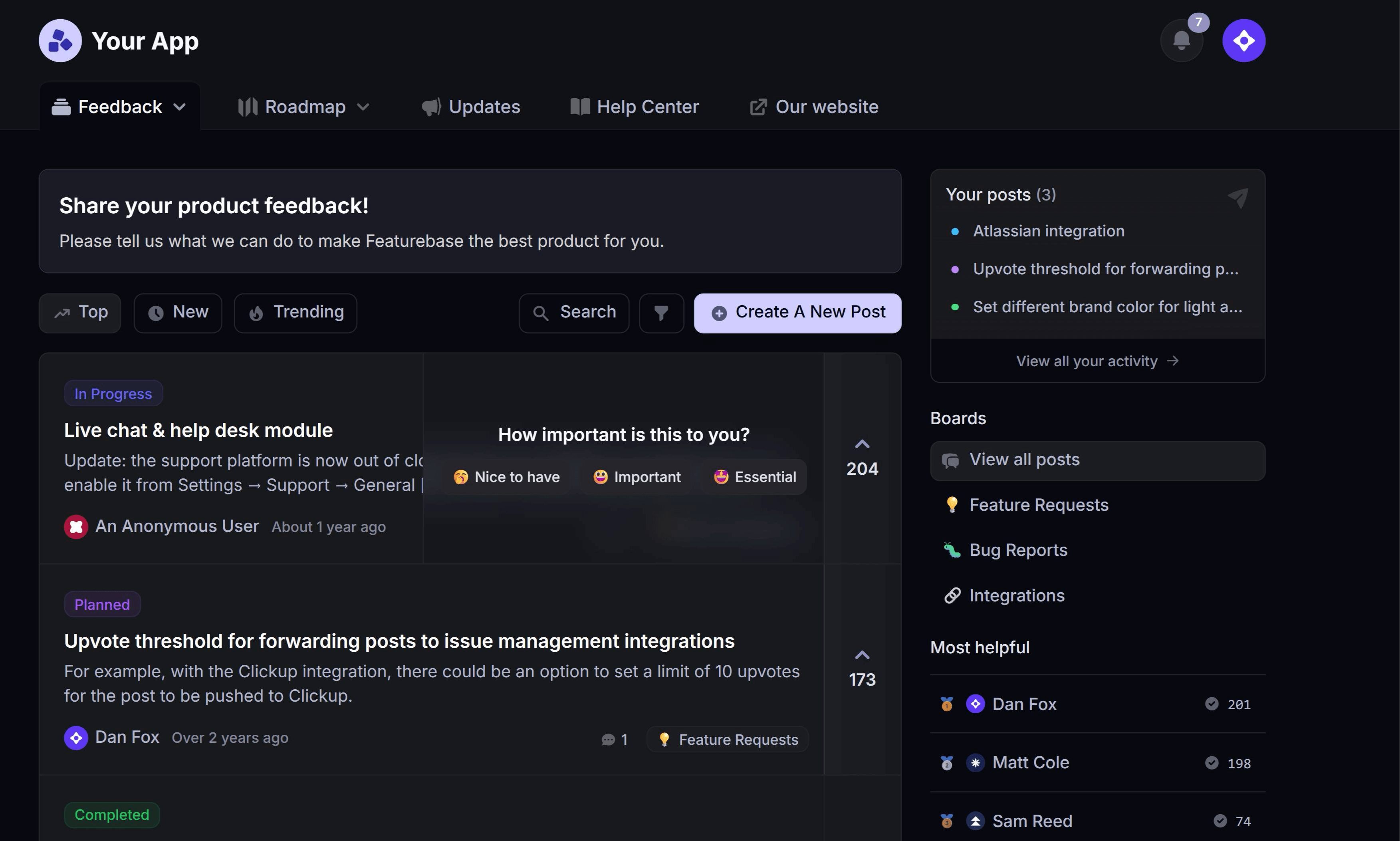

Your customers can use your product every day and still question what they're paying for. Charging for the wrong thing can make a useful product feel expensive, or leave your biggest customers paying the same as your smallest.
Value metrics help connect your pricing to the benefits customers receive. But choosing one takes more than picking something you can count.
In this guide, I'll walk through 6 examples and a practical process for choosing and testing yours. 👇
Key takeaways
- A value metric measures a unit of customer value, often used to determine how pricing scales.
- Usage and outcomes are different. More activity only makes a good pricing basis when it reflects more value.
- Good metrics are understandable, measurable, and predictable, with room to grow alongside customers.
- Validate your choice with feedback and usage data before changing what customers pay for.
- Featurebase✨ helps you collect customer feedback to understand which outcomes matter to users.
What are value metrics?
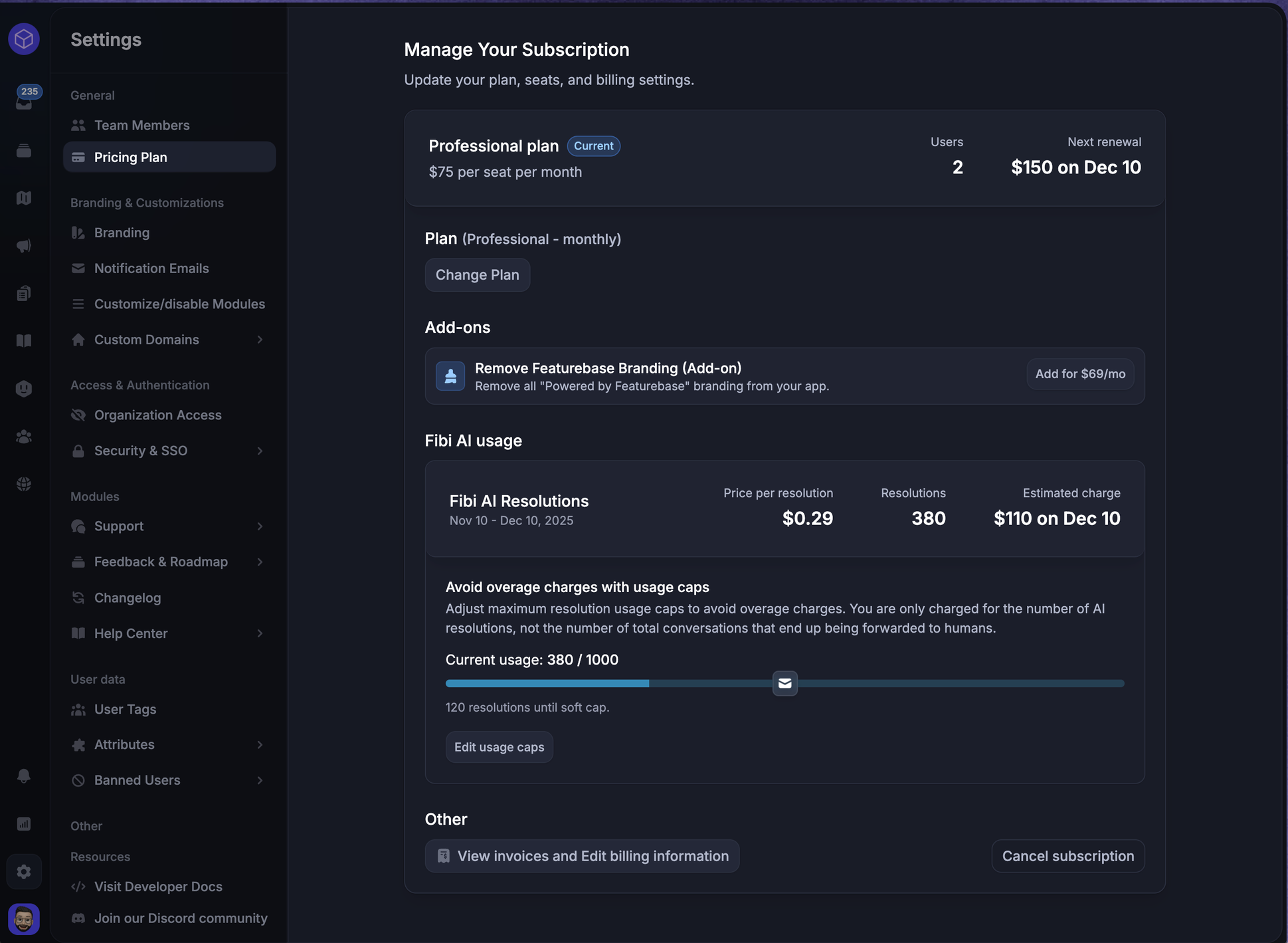
Value metrics are measurable units that represent the value customers receive from a product. In SaaS pricing, they're often the units that determine how much a customer pays, such as active seats, contacts managed, or transactions processed.
For example, a payment service might charge based on transaction volume. As a merchant processes more payments, the service handles more business for them and the bill grows accordingly.
The important part is the connection to customer value. Counting logins is easy, but a login alone doesn't tell you whether someone achieved anything useful. Usage-based pricing needs a unit that represents useful consumption, not just activity.
There are 2 common approaches:
- Functional value metrics: Measure a product capability or amount of usage, such as storage consumed. They act as a proxy for the benefit delivered.
- Outcome-based value metrics: Measure a result, such as revenue recovered. They get closer to the customer's goal, but can be harder to measure and attribute reliably.
Value metrics vs business KPIs
Business KPIs tell you how your company is performing. A value metric identifies the unit of benefit your customer receives.
- Monthly recurring revenue (MRR): Tracks your subscription revenue. It doesn't identify what customers value.
- Customer churn rate: Tracks customers leaving. It helps assess whether your offering keeps meeting their needs.
- Customer lifetime value (CLV): Estimates a customer's financial contribution over the relationship.
Use these KPIs to evaluate your pricing strategy. For instance, a rise in customer churn rate after a pricing change should prompt investigation, but it doesn't tell you which value metric to choose.
Why value metrics matter for SaaS
Your value metric shapes both your revenue model and how customers behave inside your product.
Imagine a reporting tool charging only by seat. A solo consultant and an agency with 100 clients might each need 1 login, despite getting very different amounts of value. A metric tied to active client accounts could better reflect that difference.
The wrong metric can also discourage the behavior that makes your product useful. Charging for every internal message, for example, could make customers hesitate to collaborate.
A useful value metric lets customers understand why their bill grows. That can support expansion revenue while giving your team a clearer target for improving the product. It doesn't guarantee growth, though: customers still need to receive benefits worth paying for.
6 value metric examples
These are illustrative candidates, not universal recommendations. Each works only when the unit matches the product's value proposition and the customer's use case.
| Value metric | Example product | Why it might fit | What to watch for |
|---|---|---|---|
| Active seats | Team collaboration software | More participating people can increase its usefulness | Seat charges may discourage inviting colleagues |
| Contacts managed | Email marketing platform | A larger reachable audience can create more opportunities | Inactive contacts may inflate bills without adding value |
| Storage consumed | Cloud backup service | More protected data can justify a larger subscription | Storage volume doesn't capture how important the data is |
| Transactions processed | Payment service | More completed payments represent more business handled | Failed or refunded payments need clear treatment |
| Successful resolutions | Automated support service | Customers pay for issues handled successfully | Both parties need an agreed definition of success |
| Revenue recovered | Failed-payment recovery tool | The metric connects directly to money recovered | Attribution and later refunds can complicate measurement |
Notice how the last 2 examples measure outcomes. The others measure usage or capacity that may represent value.
Getting closer to the outcome is useful only if customers trust the measurement. An understandable proxy can work better than a supposedly precise outcome that nobody can verify.
What makes a good value metric?
A candidate should pass these checks before it becomes part of your pricing model:
- Customer alignment: An increase generally means the customer receives more of the benefit they bought your product for.
- Clarity: Customers can explain the unit without help from your sales team.
- Measurability: You can count it consistently and let customers verify the total.
- Predictability: Buyers can estimate their bill and understand what will change it.
- Scalability: The metric can grow as the customer's needs grow, without pushing them to avoid useful product behavior.
Don't confuse a value metric with your own operating costs. API calls may closely track your infrastructure bill, but customers might care about completed workflows instead.
You'll still need to check margins. The goal is a pricing model that makes sense to the buyer and remains viable for your business.
How to choose your value metric in 5 steps
Start with the customer outcome, then test possible ways to measure it. Here's how I'd approach the decision.
1. Identify the outcome customers want
Write down what customers hire your product to accomplish. Keep it specific enough to observe.
For a reporting tool, “better analytics” is vague. “Deliver accurate client reports without rebuilding them manually” gives you something concrete to investigate.
Ask customers what changed after adopting your product. Their answers may point to time saved, fewer errors, more completed tasks, or increased revenue.
2. Gather feedback from different customer segments
Talk to new customers, long-term customers, and people who canceled. Separate their responses by use case and account size so a vocal group doesn't define value for everyone.
Useful customer feedback questions include:
- What job did you buy this product to help with?
- What would become harder if you stopped using it?
- When does the product feel most valuable?
- Which pricing unit would be easiest to budget for, and why?
Ask about actual experiences before presenting your shortlist. Good survey questions leave room for unexpected answers. Leading with “Would you pay per report?” can narrow the conversation too early.
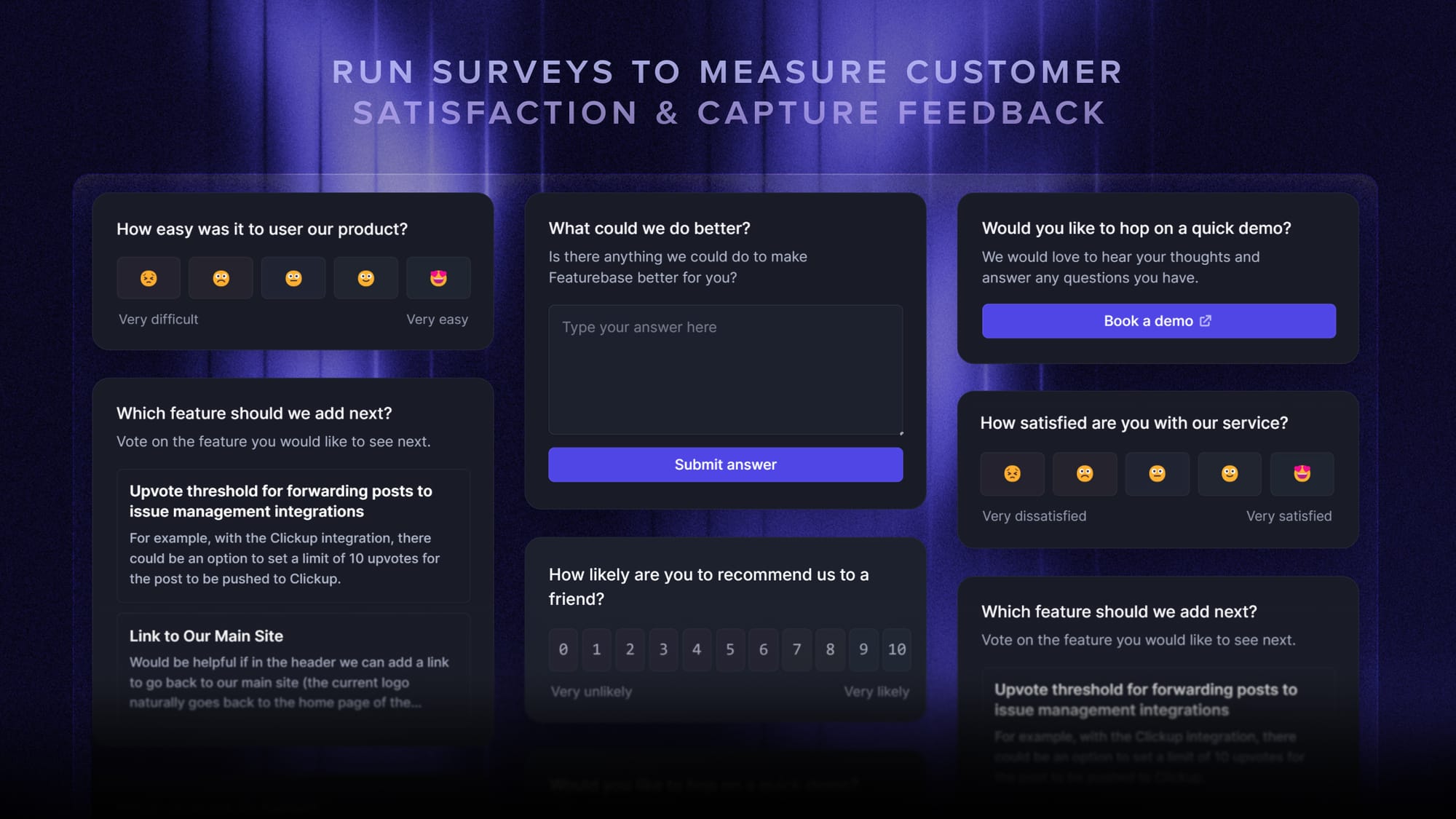
Featurebase Surveys let you ask targeted questions inside your web app and collect responses from specific user segments. That gives you customer context to compare with your product usage data.
3. Shortlist measurable candidates
Choose a few units that could represent the outcome, then define exactly what counts.
For our reporting tool, the shortlist might be active client accounts, reports delivered, and hours saved. Specify the measurement period and exclusions before comparing them.
Here's an illustrative first pass:
| Candidate | Main strength | Main concern | Next check |
|---|---|---|---|
| Active client accounts | Easy for agencies to budget | Client accounts may have different needs | Compare reporting activity across account sizes |
| Reports delivered | Directly tied to completed work | Could discourage useful reporting | Ask whether customers would reduce reporting frequency |
| Hours saved | Closely matches the desired outcome | Relies on an uncertain manual-work baseline | Test whether customers trust the estimate |
Treat this as a shortlist, not a verdict. Customer feedback analysis may reveal that agencies and internal teams need different packaging.
4. Compare candidates against usage and retention
Use product analytics to check whether customers receiving more of the candidate unit tend to keep using your product. Compare similar customers over the same period, including those who churned.
For example, check whether agencies managing more active clients have a higher customer retention rate. Account size, onboarding quality, and customer fit may also explain the relationship, so don't treat correlation as proof.
Define the tracking rules clearly. In this example, an “active client account” might require at least 1 successfully delivered report during the month. Test accounts and duplicate records shouldn't silently increase the count.
5. Test customer understanding and likely bills
Show customers sample bills based on their historical usage. Ask them to explain what they're paying for and estimate what next month's bill would look like.
For a hypothetical test, suppose pricing is $10 per active client account per month. An agency with 12 active accounts would pay $120, while 20 would cost $200. These are example prices, not recommended rates.
Check whether customers find that increase fair and whether it would change their behavior. Also model seasonal spikes and unusually large accounts before launching.
If the metric works but bills fluctuate too much, explore included allowances, tiers, or spending controls. Pilot the model with a limited group, then review billing questions, usage changes, margins, and renewals.
Common value metric mistakes
Most problems start when teams choose a convenient unit before understanding the customer's goal. Watch for these traps:
- Copying a competitor's pricing: Their customers, costs, and use cases may differ from yours. Use their model as a hypothesis to investigate.
- Charging for friction: Repeated attempts, errors, and reopened requests can increase activity without adding value. Exclude failed work where appropriate.
- Choosing seats by default: Per-user pricing can fit collaboration tools, but may undercharge for automation that lets a small team accomplish more.
- Trusting the loudest customers: Combine interviews with broader feedback and usage patterns. A few enthusiastic responses don't establish willingness to pay.
- Ignoring change: New features and customer segments can weaken the connection between a metric and value. Revisit it when your product or audience changes substantially.
The test is straightforward: can customers see a reasonable connection between the unit you count, the benefit they receive, and the amount they pay?

Turn feedback into valuable insights
Centralize feedback, identify product opportunities, and build the right features
Conclusion
Choose a value metric by starting with the outcome customers want, shortlisting measurable units, and testing them against real behavior. Before changing your pricing, make sure customers understand the metric and can predict their bills.
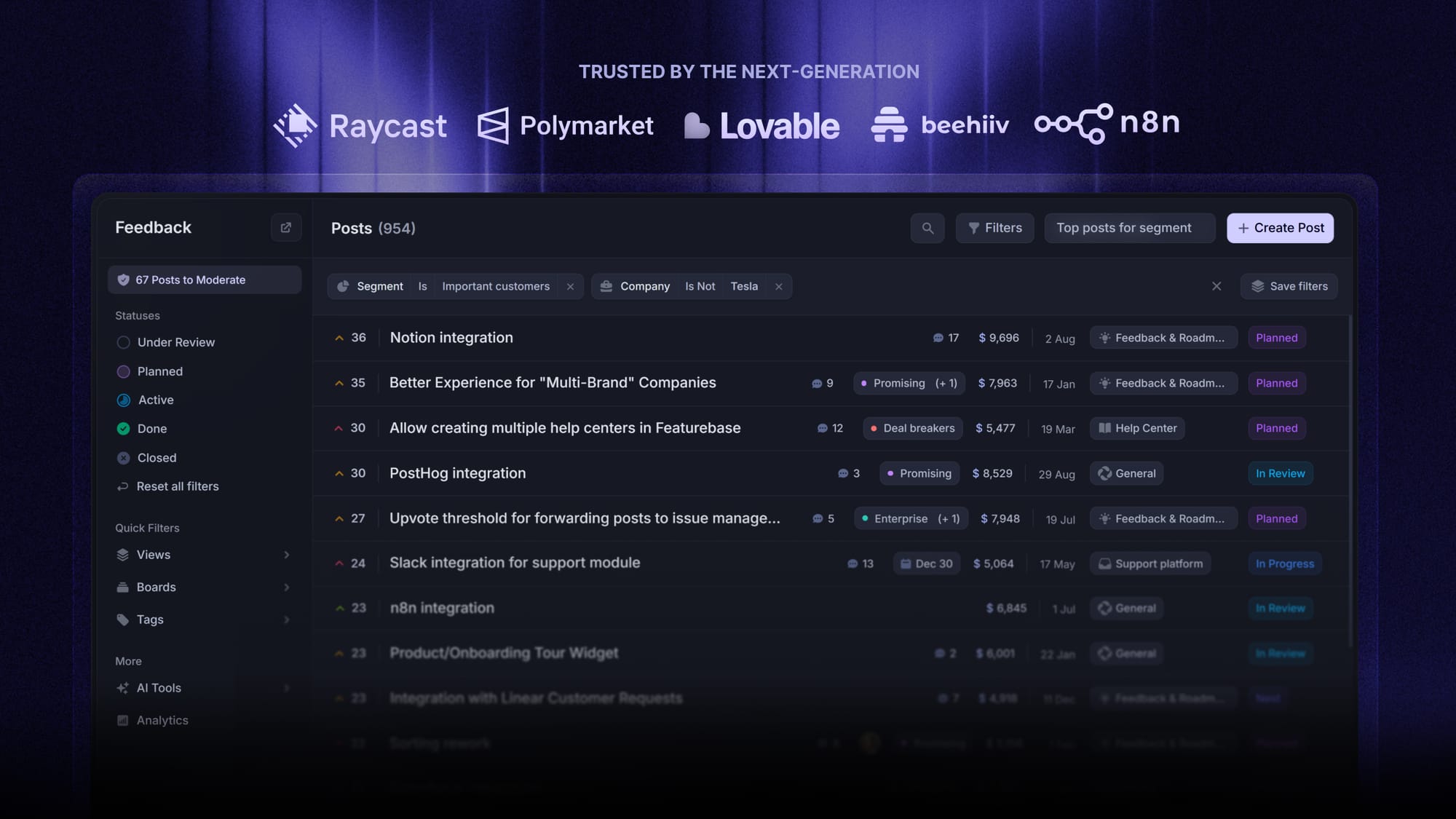
Featurebase is a modern feedback tool that helps you collect all of your product feedback in one place with the help of surveys, feedback forms, integrations, and a public Feedback Forum. You can then connect your customer data to the feedback and prioritize ideas based on customer revenue, company size, etc., to build what really matters.
It comes with a Free plan, and the onboarding is super simple, so there's no downside to trying it out! 👇
✨ Start collecting & managing feedback with Featurebase for free →
FAQs
Can a product have more than one value metric?
Yes. A product might combine a base subscription with a usage charge, or use different units for separate services. Keep each unit's purpose clear so customers can understand what drives their total bill.
Can you use value metrics with flat-rate pricing?
Yes. You can track value delivered to guide product decisions even when every customer pays the same amount. You don't have to turn every useful measurement into a billing unit.
How is a value metric different from a North Star metric?
A North Star metric gives teams a shared measure of progress toward delivering product value. A pricing value metric determines the unit along which charges scale. They may overlap, but a useful company-wide measure isn't automatically suitable for an individual customer's bill.
How do you set a price after choosing a value metric?
Research customers' willingness to pay, the alternatives available to them, and your cost to serve them. Then test price levels and packaging separately from the choice of billing unit. Choosing the right unit doesn't tell you the right dollar amount.
How should you change value metrics for existing customers?
Explain the new unit, show how it changes each customer's expected bill, and provide clear notice under their contract terms. Consider a transition period or retaining existing terms temporarily for customers facing a large change. Give customers visibility into their usage before the new model takes effect.