Blog Customer ServiceB2B Customer Service: A Practical Guide
B2B Customer Service: A Practical Guide
B2B customer service runs on different rules than B2C. Here's the practical guide: what it is, how it differs, the 7 practices that move retention, and the metrics that matter.


✨ Automate your support with the fastest AI-enhanced Inbox today →
In B2B, one churned account can be worth more than a hundred B2C cancellations. That changes the math on customer service, and most playbooks miss it.
The result is a lot of advice that quietly reads as B2C wisdom in a B2B costume - "make it personalized", "build strong relationships" - without naming the structural differences that actually move retention with business clients.
This guide covers what B2B customer service is, the 5 ways it diverges from B2C, the practices that move the needle, the metrics that map to revenue, and the stack a small team can run without a 12-month rollout. 👇
Key takeaways
- B2B customer service is the work of supporting business clients across technical issues, account-level escalations, and long-running relationships. It's structurally different from B2C, not "B2C for companies".
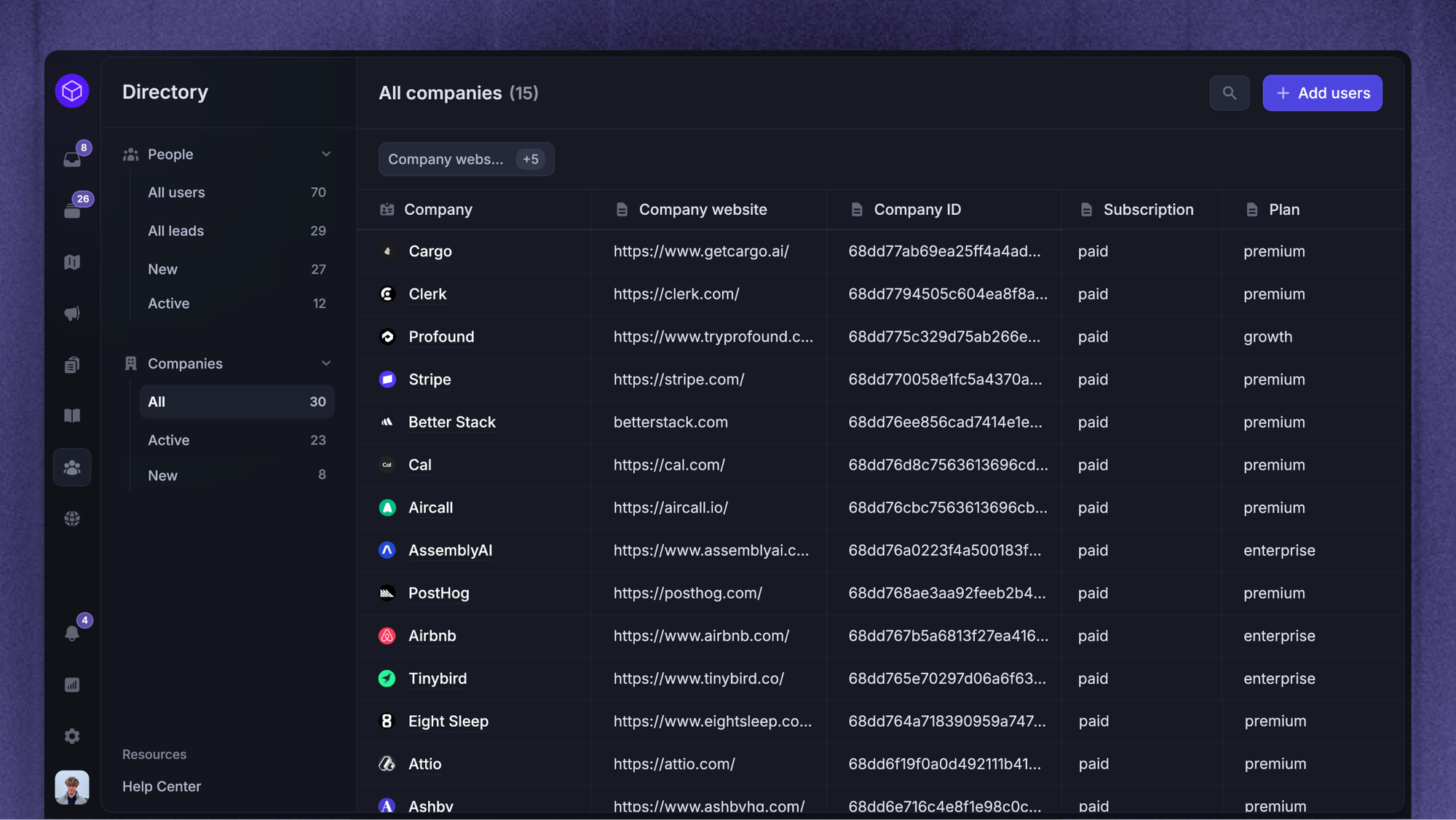
- The 5 differences that change everything: account value, multiple stakeholders per account, technical depth, SLA expectations, and lifetime value.
- The 7 best practices that move B2B retention: tier your accounts, write service level agreements you can hit, go omnichannel without going chaotic, lead with self-service, close the feedback loop, use AI for deflection, and measure what maps to revenue.
- AI is reshaping B2B support in 3 specific places: routine deflection, agent copilot on complex issues, and automatic translation for global accounts.
- The right performance metrics for B2B aren't CSAT and ticket volume alone. They're NRR by account tier, response time against your SLA, deflection rate, and churn by account.
- Featurebase✨ bundles the modern B2B support stack into one platform: AI-enhanced inbox, AI agent for deflection, multilingual help center, feedback portal with revenue weighting, and SLAs.
What is B2B customer service
B2B customer service is the work of supporting business clients - the companies that buy your product to run theirs. It covers the same surfaces as consumer support (the inbox, the help center, live chat, phone calls, sometimes video calls for tier-1 incidents) but the customer interactions are different.
Tickets often come from a procurement lead, a developer, a security reviewer, and an exec on the same account. Issues are technical. Stakes are concentrated. A single B2B account can represent six figures of annual revenue, and when something breaks for them, the response shapes whether they renew.
The practical version: B2B customer service is what your customer service team does to keep your most important accounts trusting you, across multiple channels, multiple stakeholders, and time horizons measured in years.
B2B vs B2C customer service: 5 differences that change everything
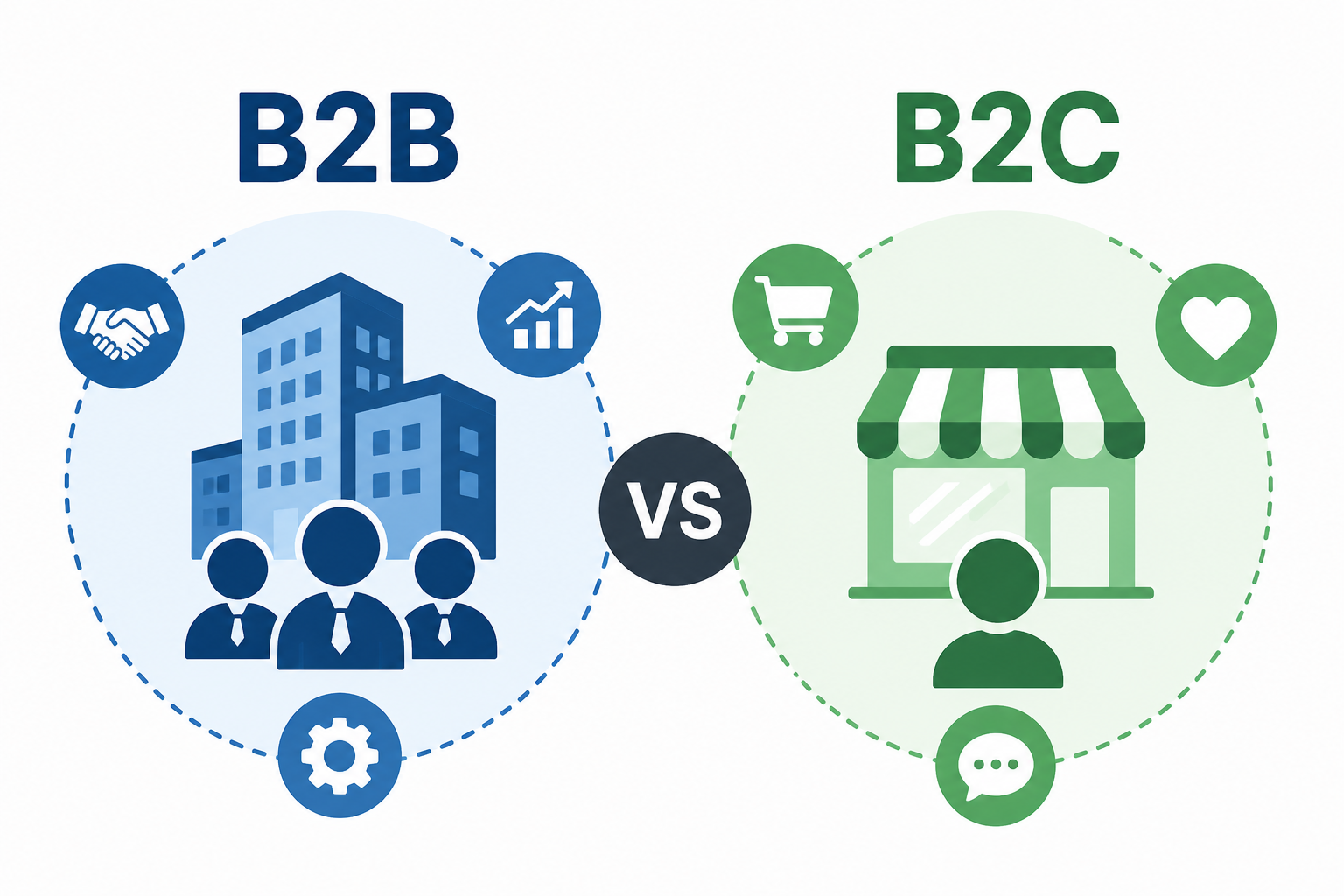
Most playbooks treat business-to-business support as B2C with bigger logos. It isn't. Here are the 5 structural differences that change how the team should actually operate.
Account value and revenue concentration
In B2C, the lifetime value of one customer rounds to noise. In B2B, one customer can be 5% of your revenue. Bain & Company's classic research found that a 5% increase in customer retention can lift profits by 25 to 95%, and the effect compounds harder in B2B where expansion revenue rides on top of retention.
The implication is simple: it's worth spending senior agent capacity on your top accounts. The "treat every customer the same" reflex from everyday consumers is a costly mistake in B2B.
Multiple stakeholders per ticket
A B2C ticket has one author and one resolver. A B2B ticket often involves multiple stakeholders: an admin who opened it, a developer who can reproduce it, a finance lead who's CC'd, and an exec who'll be on the renewal call.
This is why B2B support tools live and die on assignment, visibility, and customer history. Case management software keeps all of that in one record. Multiple teams - support agents, engineering, customer success teams - have to land in the same conversation without losing context.
Technical depth and product knowledge
B2B support tickets are technical. Even when the surface question is billing, the actual blocker is often "your webhook isn't firing on this event" or "the SSO config breaks our IdP". Your support agents need real product knowledge and a clean path to escalate when they don't.
This puts pressure on the internal knowledge base, agent copilot tools, and the workflow between support and engineering on every support ticket that lands.
SLA expectations and uptime stakes
Service level agreements aren't a formality in B2B - they're contractual. Enterprise customers expect named response times by severity, a clear escalation path, and a status page that's actually accurate during incidents. Falling behind on SLAs is one of the fastest ways to lose a renewal.
The operational implication: you need tooling that tracks response and resolution time against the SLA on every conversation, not just an average across the queue.
Lifetime value and relationship horizon
Consumer customer journeys are short and transactional. B2B relationships run for years. Your support team will talk to the same customer success teams on the buyer's side dozens of times across a contract, and the relationship deepens (or rots) with every interaction.
Long-term relationships also mean past interactions matter more. The agent picking up an escalation today should see the full customer history - features they've requested, tickets they've opened, account size, plan - without context-switching across four tools.
Why B2B customer service makes or breaks retention
In B2B, customer service is a retention function dressed as a cost center. The companies that figure this out renew their accounts, expand them, and convert them into references. The ones that don't churn quietly.
The data backs this up. Salesforce's State of the Connected Customer found that 80% of customers say the experience a company provides is as important as its products and services. In B2B, where switching costs are higher but trust is everything, the experience question often outweighs the feature question on a renewal call.
And Microsoft's State of Global Customer Service reports that 90% of customers say customer service is important to their choice of and loyalty to a brand. Your B2B buyer is making a decision their team will live with for years, so the customer service signal weighs even more.
Great customer service experience in B2B unlocks four things:
- Renewals: the single biggest retention lever for SaaS. Bad service shows up on the renewal call as "they were unresponsive".
- Expansion revenue and repeat business: support teams hear which features tier-1 accounts want next. That's a direct input to net revenue retention.
- Brand loyalty and brand reputation: B2B word-of-mouth runs through Slack groups, peer networks, and G2. One bad incident travels fast.
- Competitive advantage: in a market where most competitors offer similar features, service is often the deciding factor on a head-to-head deal.
Cost-cutting on support feels efficient on a spreadsheet and reads as a churn signal on every other report. Modern teams treat customer retention software and a strong support stack as the same investment.
7 best practices for great B2B customer service
The practices below are what we see working at modern B2B SaaS support teams. Not every practice will fit every team - pick the 3 to 4 that match where you're bottlenecked today.
1. Treat tier-1 accounts like tier-1 accounts
The first move is to stop pretending all your accounts are equal. They aren't. Tier your customer base by revenue, contract size, or strategic value, and route their conversations accordingly. A tier-1 enterprise account hitting the inbox should see a faster response, a more senior agent, and an automatic loop to the assigned customer success manager.
This isn't about giving worse service to smaller customers. It's about making sure scarce senior capacity lands where it has the biggest retention impact, with personalized support shaped by the account's history and value.
2. Build service level agreements your team can actually hit
Service level agreements are useful only if they're real. The same goes for your broader customer service standards. Pick response and resolution times by severity that your team can hit 95% of the time, write them into the contract, and instrument every conversation against them.
The trap is signing aggressive SLAs to win the deal and then quietly missing them - that destroys trust faster than no SLA at all. A clean structure (critical = 1 hour, high = 4 hours, normal = 1 business day, low = 3 business days) works for most B2B SaaS teams as a starting point.
3. Go omnichannel without going chaotic
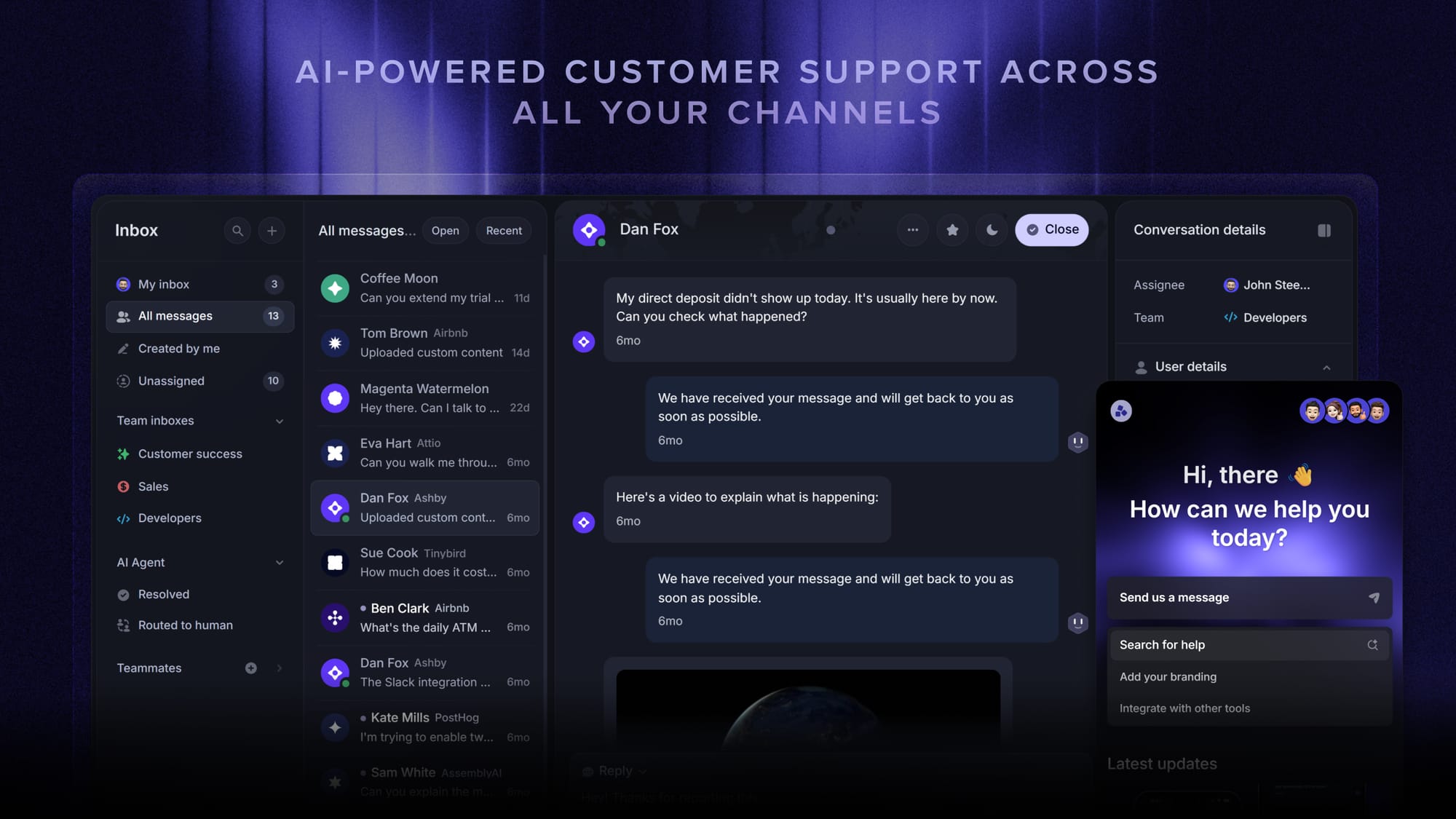
B2B customers will reach you across multiple channels: email, in-app live chat, a shared Slack channel for tier-1, sometimes phone calls or video calls for incidents. The instinct is to add channels until the team is answering on all of them, which is how you end up dropping messages.
The better move is omnichannel with a single inbox. Good customer service email software gives your team that shared view. Every communication channel routes to the same place, every conversation has a single source of truth, and your support agents don't have to alt-tab to find what was said yesterday. Customers should feel like they're talking to one company across all these channels, not five disconnected teams - which is exactly what a unified omnichannel customer support platform is designed to deliver.
4. Make self-service the first response
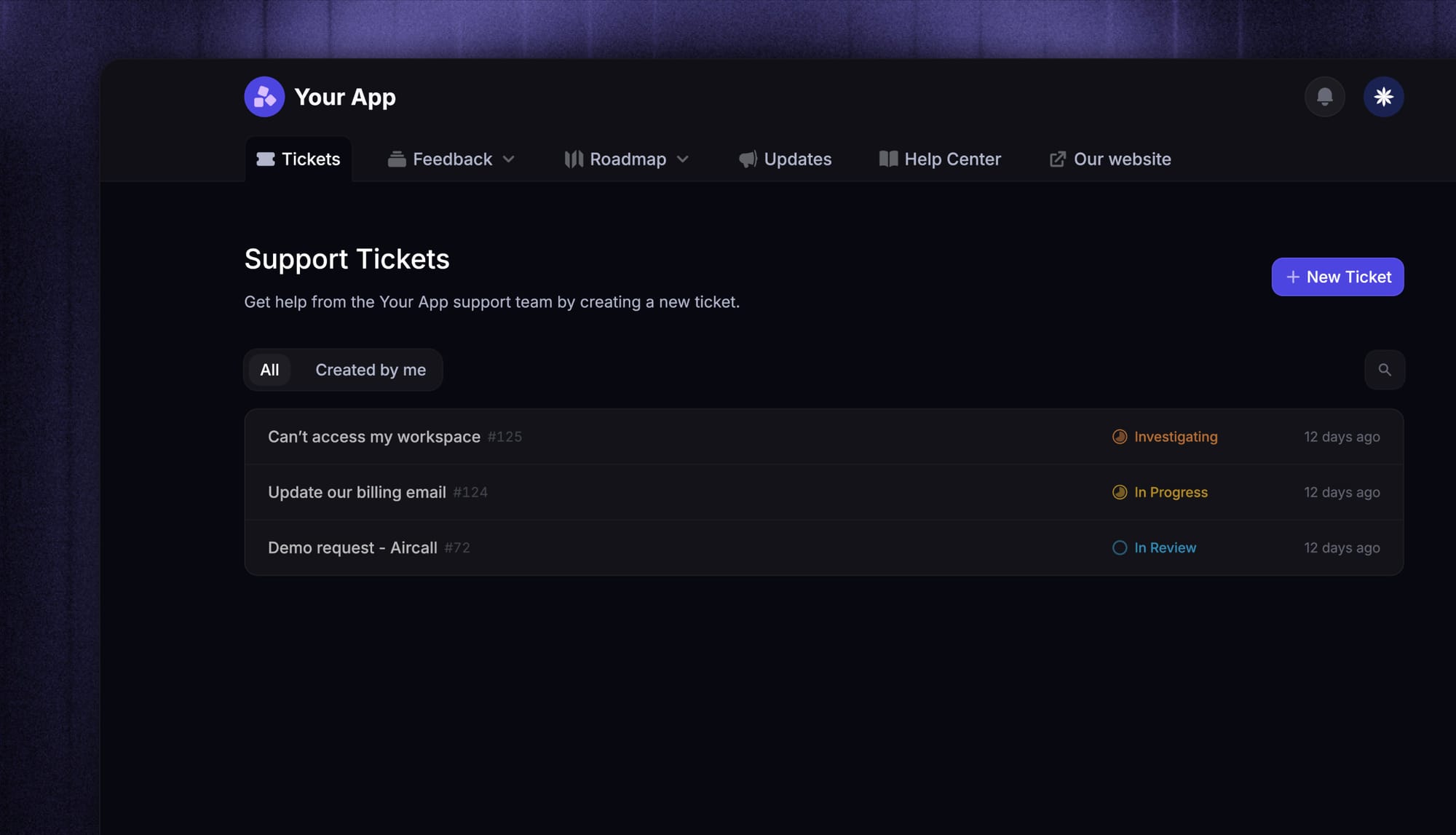
For most B2B SaaS products, 40 to 60% of tickets are routine questions that already have answers somewhere. Putting those answers into a searchable, AI-powered knowledge base deflects the volume your team can't usefully add value on, which frees agents up for complex issues that actually need a human.
With Featurebase you can run a multilingual help center with AI search that summarises answers in the search bar before the customer even files a support ticket, and the same articles power answers inside the AI agent and the in-app messenger. Self-service resources stop being a graveyard of unread docs and start being the first response - one of the highest-leverage chatbot self-service plays for any B2B team.
5. Close the feedback loop with named accounts
B2B customer feedback is more valuable than consumer feedback because each piece of it is attached to a known account, with a known contract value, in a known segment. The trap is treating it like B2C feedback and aggregating it into a backlog prioritised purely by upvote count.
The better approach is feedback that's weighted by who's asking. A feature request from one customer paying $50k/year often matters more than the same request from 20 customers paying $20/month. Surfacing that weight - and being able to notify the right accounts when the feature ships - is what turns support feedback into expansion revenue. Closing the customer feedback loop cleanly is one of the most underrated B2B retention plays.
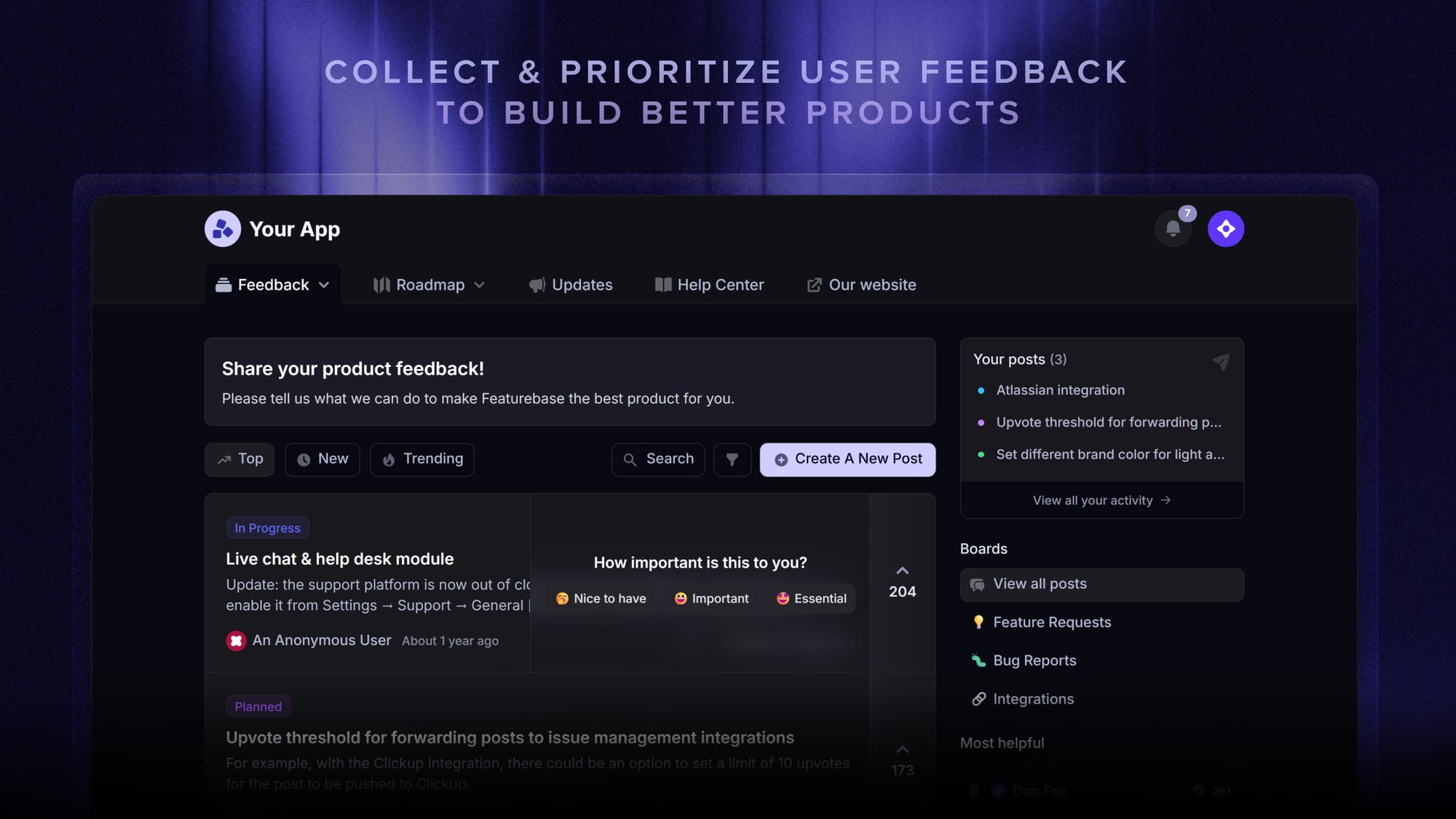
With Featurebase, the feedback portal ties feature requests to monthly spend and to opportunity amounts pulled from HubSpot and Salesforce, so the highest-revenue voices land at the top. When a feature ships, the changelog and roadmap notify the relevant accounts automatically.
6. Use AI for deflection, not deflation
Artificial intelligence in B2B support is a tactical lever, not a strategy. The wins are concrete and limited:
- Deflection on routine questions: the AI agent answers "how do I reset my SSO" without involving a human.
- Agent copilot for complex issues: AI drafts a starting response a senior agent edits, instead of starting from a blank.
- Automatic translation: the same conversation in 40 languages, so a global team doesn't need 40 native speakers.
What AI is bad at in B2B is pretending to handle nuanced enterprise escalations. The customers you most need to delight are the ones who can tell instantly they're talking to a bot. Build the handoff to human support as a first-class part of the workflow, not an apology when the AI gets stuck. The teams getting this right pick AI help desk software that exposes the handoff cleanly instead of hiding it.
7. Measure the performance metrics that map to revenue
The default support metrics - CSAT, ticket volume, average handle time - are useful but incomplete in B2B. Add the metrics that map to revenue retention: NRR by account tier, first-response time on tier-1 conversations specifically, deflection rate, and churn rate among accounts with three or more unresolved tickets in a quarter.
Without these, your dashboard tells you the team is busy. It doesn't tell you whether the work is moving the business.
How AI is reshaping B2B customer service
AI tools are the biggest shift in B2B customer service in a decade, and most of the value lands in a few specific places:
- Routine question deflection: AI agents resolve common customer issues before a human ever sees them. For B2B teams running lean, this is the single biggest unlock - the AI handles the volume so the humans handle the nuance.
- Agent copilot on complex issues: AI drafts responses from your internal knowledge, cutting the time a senior agent spends on technical tickets without removing the human review step.
- Automatic translation across global accounts: B2B customers are often global. AI translation lets one team answer in the customer's native language without staffing 40 native speakers.
- Pattern detection and analytics: AI categorisation helps you identify trends in support volume ("we're suddenly getting 5x more SSO tickets after the release") faster than a human reviewer could, and surfaces valuable insights from past conversations across one customer or all of them.
- Conversation summarisation: long B2B threads become three-bullet summaries the next agent reads in 10 seconds, instead of scrolling through 40 messages.
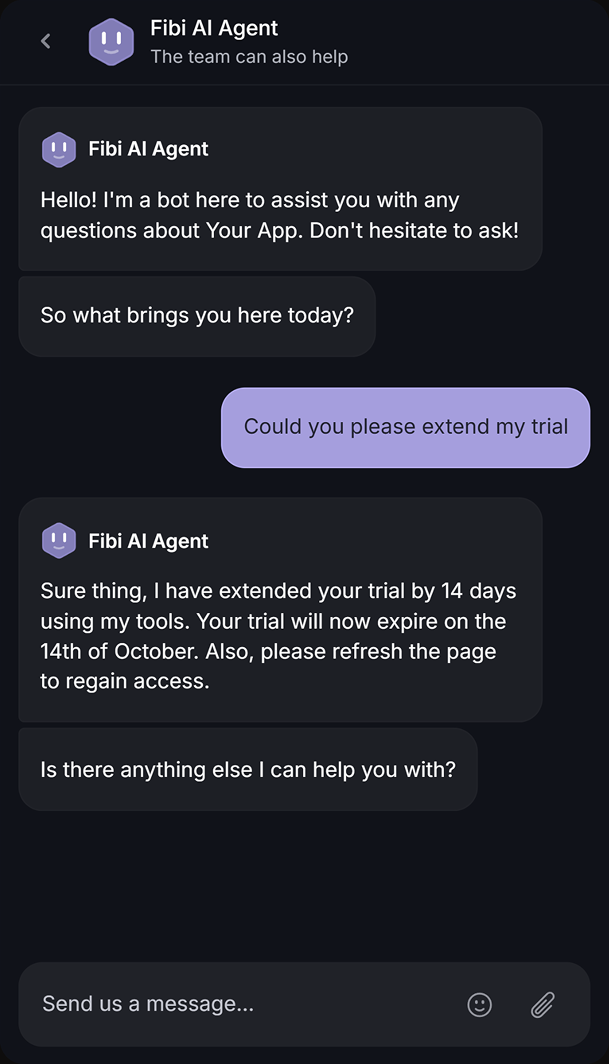
Featurebase's Fibi AI Agent handles the first three of these directly inside the inbox, with handoffs to humans built into the conversation flow rather than tacked on. It can also run custom actions during conversations (extending a trial, applying a refund, pulling a customer's data) so deflection isn't just answers, it's resolution.
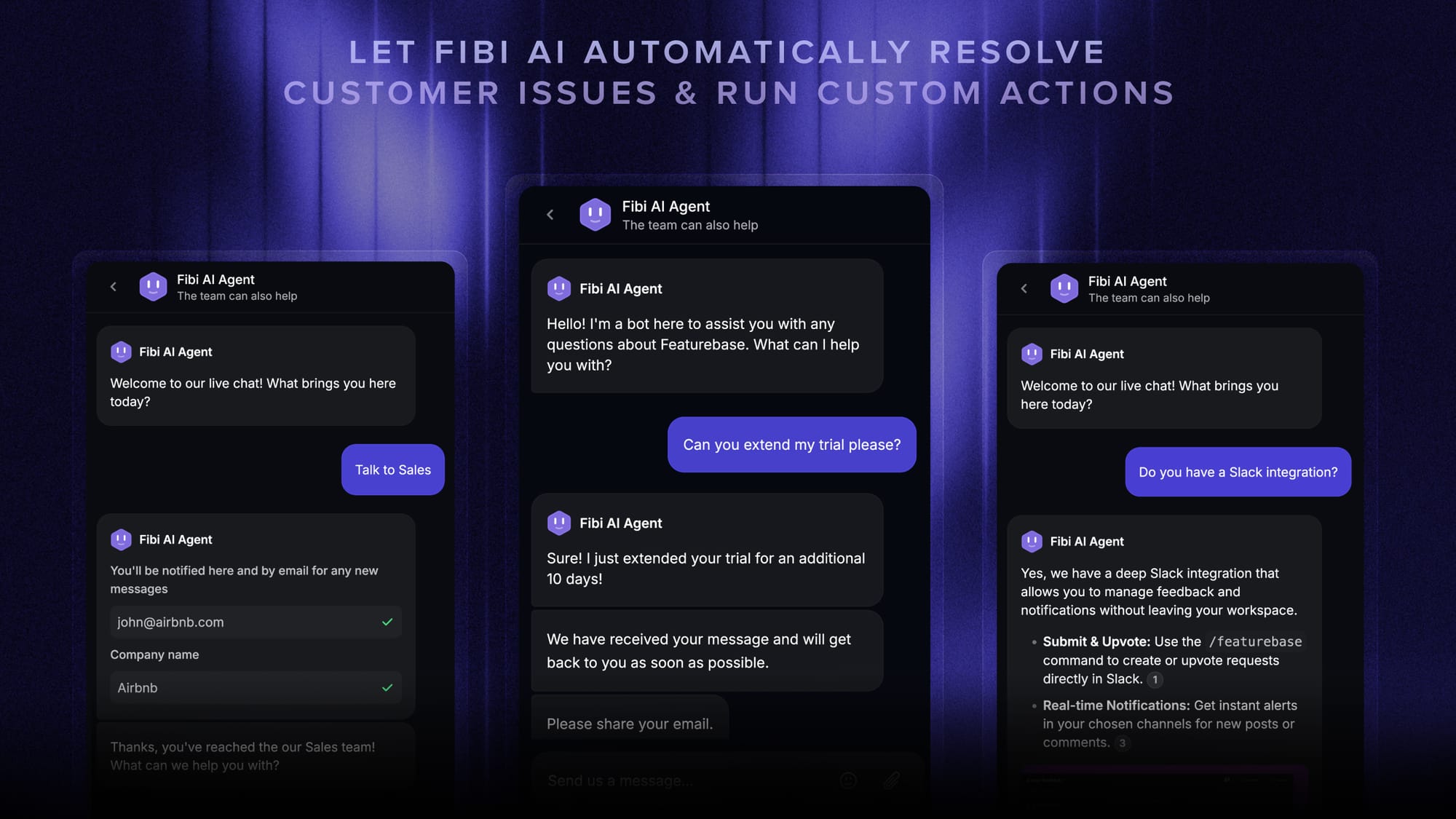
The trap with AI in B2B is over-promising. AI is not a senior CSM and customers will know. Use it on routine work, free up your team for the strategic work, and the math gets cleaner every quarter.
The metrics that matter for B2B support
The B2B support dashboard needs different numbers than the B2C one. The metrics that actually map to retention and revenue:
- First response time: time from inbound to first response (human or AI). Track by tier and against your SLA.
- Resolution time: time from inbound to the conversation being closed. Same: tier-segmented, SLA-tracked.
- CSAT and NPS: customer satisfaction at the conversation level. Don't just average them - look at low scores from named accounts, because that's where churn hides. The CSAT vs NPS split matters more in B2B than most teams realise.
- Deflection rate: percent of tickets resolved by self-service or the AI agent before a human picks them up. Higher deflection means more senior capacity for complex issues.
- NRR by account tier: net revenue retention broken out by tier-1, tier-2, tier-3. The 7 practices above should move this number up.
- Open tickets per account: accounts with 3+ unresolved tickets at quarter-end are at materially higher churn risk. Treat this as a leading indicator your team watches weekly.
- AI resolution rate: of the tickets the AI handles end-to-end, how many are actually resolved (not just handed off). This is your AI agent's quality score.
Performance metrics on their own aren't strategy. The point is to use them to spot bottlenecks (which channel is slow, which account is overrun, which agent needs help) and act on what you find.
Run B2B customer service on a modern stack with Featurebase
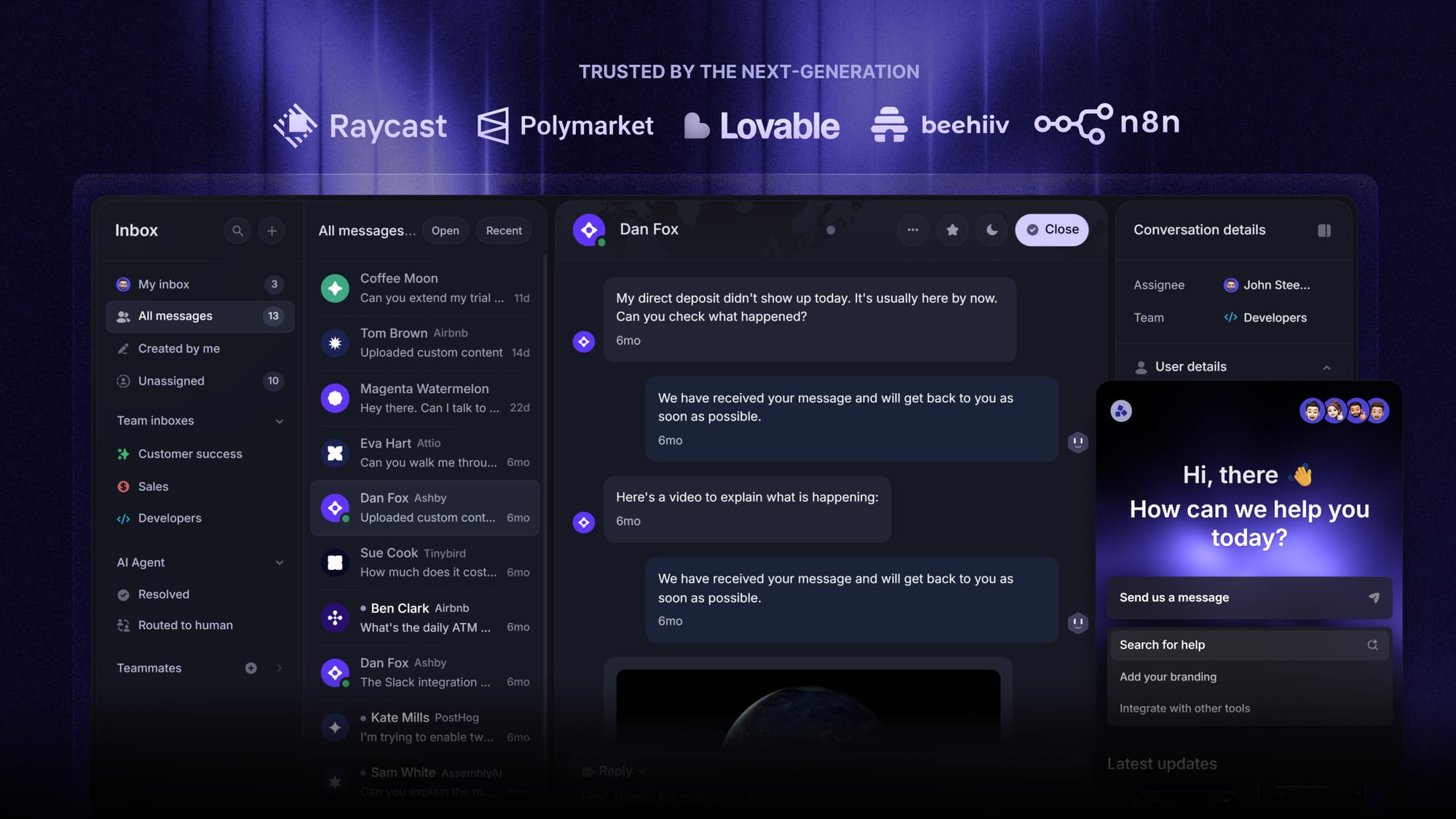
Featurebase is a B2B customer support platform for product-led SaaS teams. It pulls the support workflow into one place - the omnichannel inbox, AI agent, SLAs, account-tier routing, and the help center - so you don't have to assemble it from four different tools. The same workspace also holds the feedback portal and roadmap, which is what closes the loop with tier-1 accounts when their requests ship.
Core B2B customer service features:
- Omnichannel inbox – Manage live chat, email, and Slack conversations from one AI-powered view
- Service Level Agreements – Track SLAs to make sure your team responds to customers on time, every time
- Fibi AI Agent - Resolve customer issues on autopilot & run custom actions like trial extensions and refunds
- AI Copilot – Help your agents answer customers faster with AI Copilot that uses your internal knowledge
- Help center with AI search – Provide instant, multilingual self-serve answers
- Workflows & automations – Auto-assign tickets, route conversations, collect customer data, and more
- Multi-brand support – Manage multiple Help Centers and Live chats from a single workspace
- Automatic AI translations – Automatically translate all messages and help articles to your customers' native language
- Mobile app – Respond to customers, receive notifications, and unblock users on the go
Plus, in the same workspace:
- Feedback & roadmap tools – Collect feature requests and close the loop with named accounts
- Product updates – Publish release notes with a changelog page, in-app widget, and emails
- Integrations – Connects with Slack, Linear, Jira, HubSpot, and more
Pricing: Free plan available with unlimited conversations. Paid plans start at $29/seat/month with $0.29 per AI resolution.
Conclusion
B2B customer service isn't a smaller, more polite version of B2C support. It's a retention function with different math, different conversation patterns, and different metrics. Get the structure right (tier your accounts, write SLAs you can hit, lead with self-service, weight feedback by revenue, use AI on routine work) and your customer service team becomes one of the most reliable inputs to NRR you have.
Featurebase is a modern AI customer support platform that bundles the full B2B support stack: an AI-enhanced inbox across email, chat, and Slack, an AI agent for deflection, a multilingual help center, a feedback portal that weights requests by revenue, and SLAs you can actually instrument.
It comes with a Free plan and onboarding takes minutes, so there's no downside to trying it. 👇
✨ Automate your support with the fastest AI-enhanced Inbox today →
FAQs
What is B2B customer service?
B2B customer service is the support function for business clients, the companies that buy your product to run theirs. Unlike B2C, where a typical conversation has one customer and one issue, B2B conversations often span multiple stakeholders (admin, developer, finance, exec), longer time horizons, and far higher account value. That raises the bar for response time, technical depth, and consistency on every interaction.
How is b2b customer service different from B2C?
Three differences carry most of the weight. Account value is concentrated, so one churned B2B customer can equal a hundred consumer cancellations and the per-account effort is worth it. Tickets are multi-stakeholder and technical, which means your support team needs real product knowledge and a clean handoff to engineering. And the relationships run for years, so past interactions and customer history matter on every new conversation.
Why is B2B customer service important?
Because in B2B, customer service is a retention function. Renewal conversations are decided as much by how your team handled the year's incidents as by the product roadmap. Bad service shows up directly in churn, lost expansion revenue, and brand reputation inside the buyer's peer network. Good service compounds into long term relationships, repeat business, and warm referrals to the next buyer.
What is the best b2b customer service software?
The right answer depends on company size and channel mix, but the modern shortlist needs five things in one stack: an AI-enhanced omnichannel inbox, an AI agent for deflection on routine questions, a multilingual help center, feedback collection tied to account revenue, and service level agreements you can instrument. Featurebase bundles all five into a single platform with a free plan, which makes it a strong fit for product-led SaaS teams who don't want to assemble the stack themselves.
How can AI improve B2B customer service?
AI helps in three concrete places. It deflects routine questions through an AI agent inside the messenger or help center, so the support team only sees the conversations that actually need a human. It acts as a copilot on complex issues by drafting starting responses from your internal knowledge. And it translates conversations automatically, which lets a small team support customers across many languages without staffing native speakers in each one.
What metrics should I track for B2B customer service?
Five metrics are usually enough. First response time and resolution time, both tracked against your SLA and segmented by account tier. CSAT and NPS at the conversation level, with a separate alert when low scores come from named tier-1 accounts. Deflection rate, to see how much volume self-service is absorbing. NRR by account tier, to confirm support effort is moving retention. And open tickets per account, which is one of the best leading indicators of churn risk.