Blog Customer Service20 chatbot ideas worth building in 2026 (with real examples)
20 chatbot ideas worth building in 2026 (with real examples)
20 chatbot ideas worth building in 2026, organized by goal, with real examples and a simple framework to help you pick which one to build first.


Chatbots used to be a novelty. Now they handle the front line of customer support, lead generation, onboarding, and even HR.
But not every chatbot is worth building. Picking the wrong use case wastes weeks of build time and frustrates the users you wanted to help. Picking the right one deflects support tickets, qualifies leads, and saves your team hours every week.
So which ideas are actually worth building?
In this guide, I'll walk through 20 chatbot ideas that are genuinely useful in 2026, organized by the job they do, with real-world examples and a simple framework to help you pick which one to build first. 👇
The best chatbot ideas worth building in 2026
If you only have a minute, here are the chatbot ideas that consistently deliver the most value:
- Support & FAQ bots – Deflect basic customer support tickets with instant responses
- Lead generation chatbots – Qualify website visitors and book demos for your sales teams
- Onboarding & activation bots – Guide users through your product and boost retention
- Feedback chatbots – Collect customer feedback in a conversational, low-friction way
- Internal productivity bots – HR policy FAQ assistant, IT helpdesk, and employee onboarding wizard
- Engagement bots – Storytelling bot, recommendation quizzes, and win-back flows
✨ Build them all with Featurebase – Best modern AI customer support platform with built-in chatbot, help center, and feedback tools

Resolve 70% of customer requests with AI
Automatically resolve customer issues & cut down support loads for your team
I'll break each category down below with specific ideas, real-world examples, and who they're a fit for.
What makes a chatbot idea worth building
Before we get into the list, let's set a quick filter. A good chatbot idea is one that:
- Solves a real, repeated problem
Not "wouldn't it be cool if". The problem should already eat up time from your team or frustrate your users. - Has a clear success metric
You should be able to track whether the bot is working. Tickets deflected, leads qualified, customer satisfaction score, conversions, you name it. - Doesn't replace the human touch where it matters
Chatbots are great at basic customer support and repetitive tasks. They are bad at high-stakes empathy. Know the line. - Can be built with a no code chatbot builder or your existing AI tools
You shouldn't need a six-month engineering project to ship your first chatbot.
If your idea passes those four tests, it's worth a prototype. Now let's get into the actual ideas.
Support & FAQ chatbot ideas
Customer support is the bread and butter of chatbots. These ideas help you provide customer support around the clock without growing the team. If you're starting from zero, this is usually where the ROI shows up first.
1. The 24/7 help center assistant
What it does: Sits on your website or inside your app and answers user queries instantly using your help center articles, docs, and past support tickets.
Best for: Any SaaS or e-commerce business with a growing support volume.
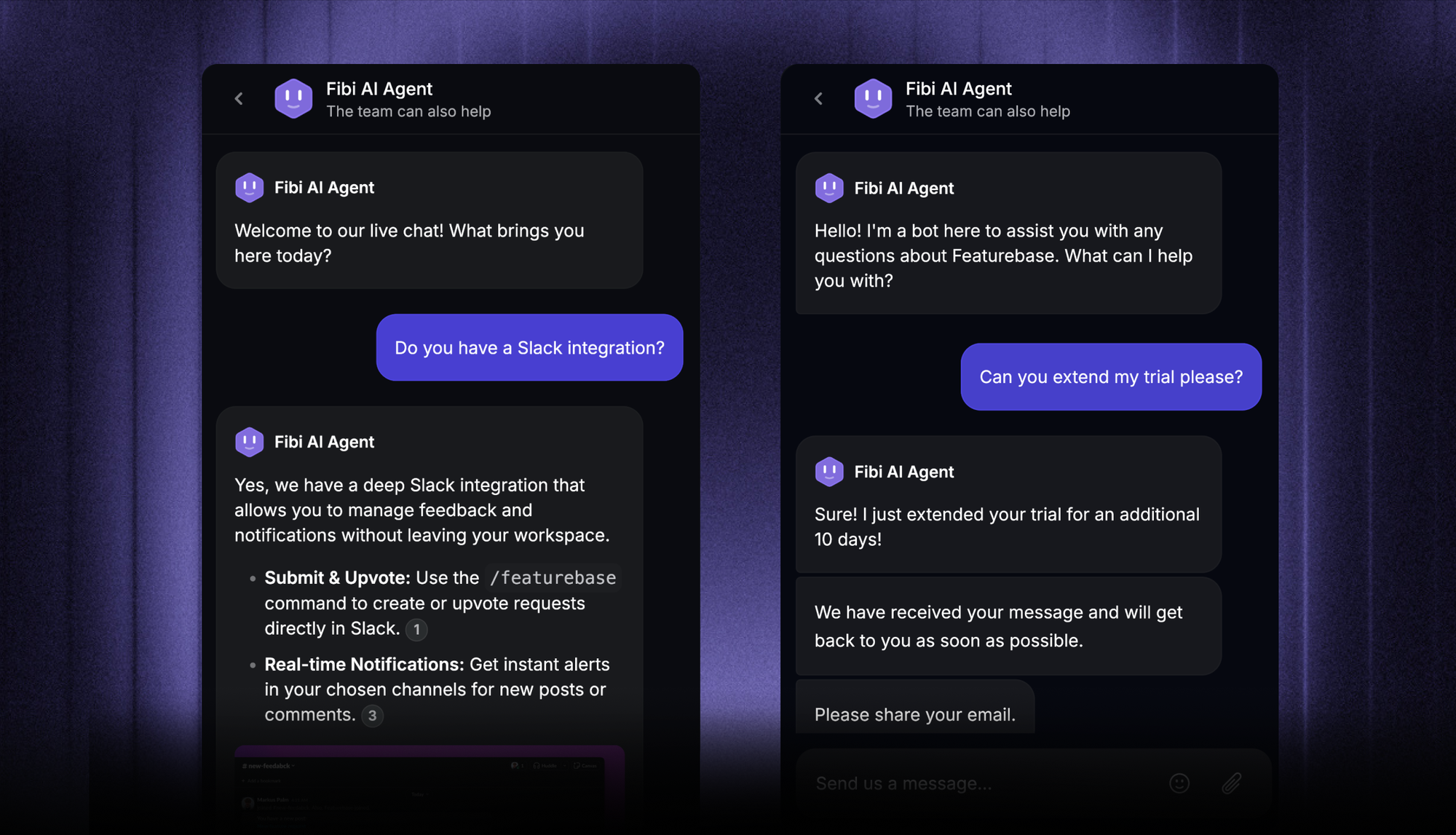
Why it works: It handles the "where is my password reset link" and "how do I cancel" questions that drain your customer support agents. With AI chatbots like Featurebase's Fibi AI Agent, the bot pulls answers directly from your AI-powered help center and can run custom actions like trial extensions or refunds, not just point users to articles.
2. Order or shipment status bot
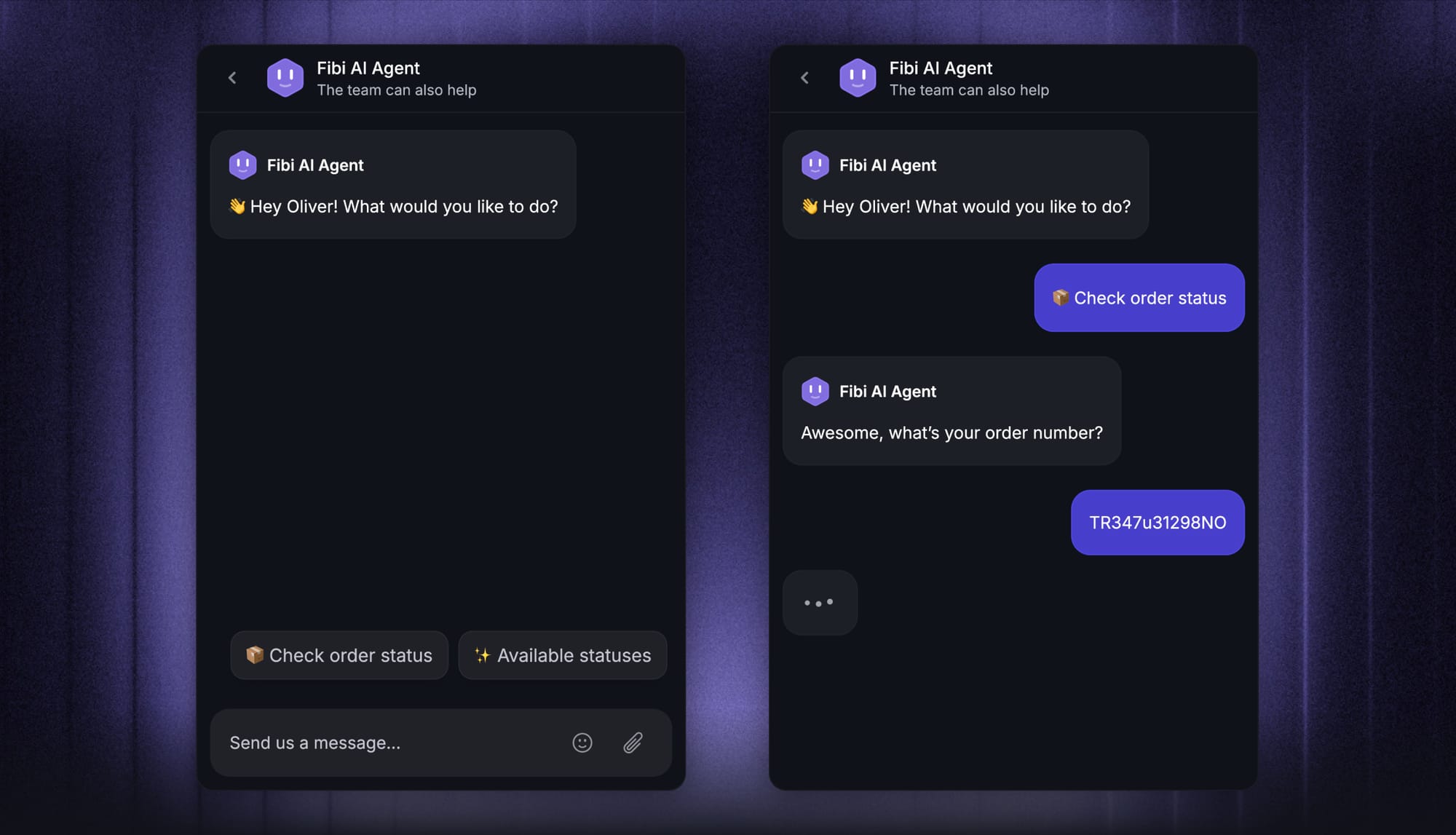
What it does: Lets customers type "where's my order" and get the latest tracking status, ETA, and carrier details without opening a ticket.
Best for: E-commerce, logistics, and any business shipping physical products.
Why it works: Order status questions are some of the most common, lowest-value tickets in any e-commerce support inbox. A bot handles them in seconds. Sephora, Domino's, and most major retailers run this exact bot.
3. Refund or cancellation self-serve bot
What it does: Walks the user through verifying their account, choosing a reason, and processing a refund or cancellation, all inside the chat.
Best for: Subscription businesses, SaaS, and e-commerce.
Why it works: This is one of the highest-friction support flows for both customers and agents. With AI agents that can run custom actions (like Fibi), the bot handles the full refund or cancellation end-to-end. Service quality stays high and your team gets time back.
4. Multilingual FAQ responder
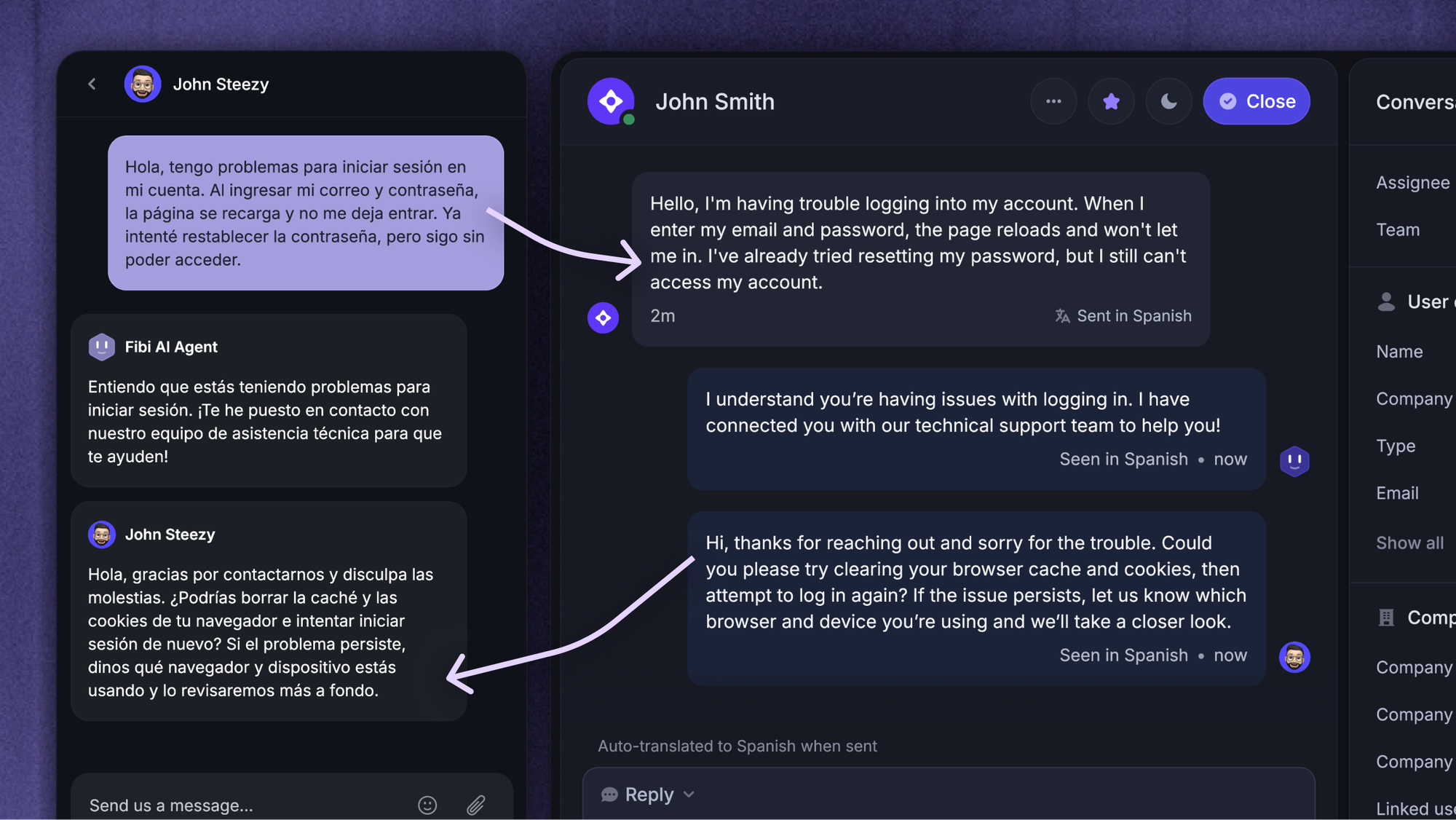
What it does: Answers FAQ in the customer's native language, regardless of where your team sits.
Best for: Global brands, software companies with international users, and government services with multilingual citizen support.
Why it works: A multilingual FAQ responder dramatically lowers operational costs vs. hiring native-speaking support staff in every region. It also improves customer experience for users who would otherwise sit in a queue waiting for a translator. Most modern customer service software now supports automatic translation out of the box.
Lead generation & sales chatbot ideas
If you have traffic and want more leads (or better-qualified ones), these chatbot solutions help your sales teams stop chasing dead ends.
5. Website lead qualifier
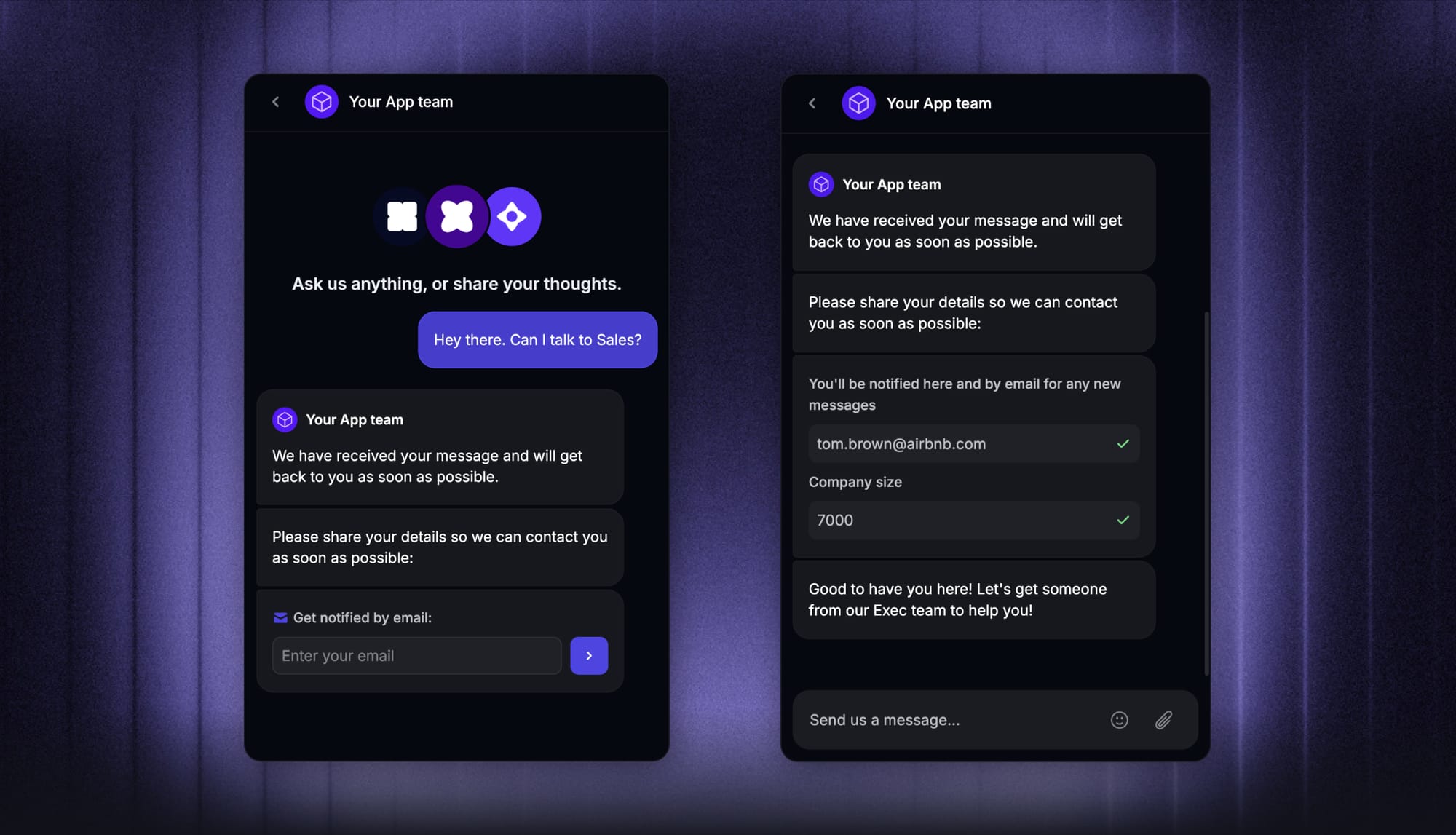
What it does: Engages website visitors with a few short qualifying questions (company size, role, use case) and routes hot leads to a sales rep.
Best for: B2B SaaS, agencies, and any business with a long sales cycle.
Why it works: Forms are dead ends. A short conversation feels lower-stakes and collects more nuanced data on user intent. Landbot's AI sales rep "Andrew" is a great example here: it qualifies leads before they ever book a call, so the sales team only spends time on the right ones.
6. Demo or call booker
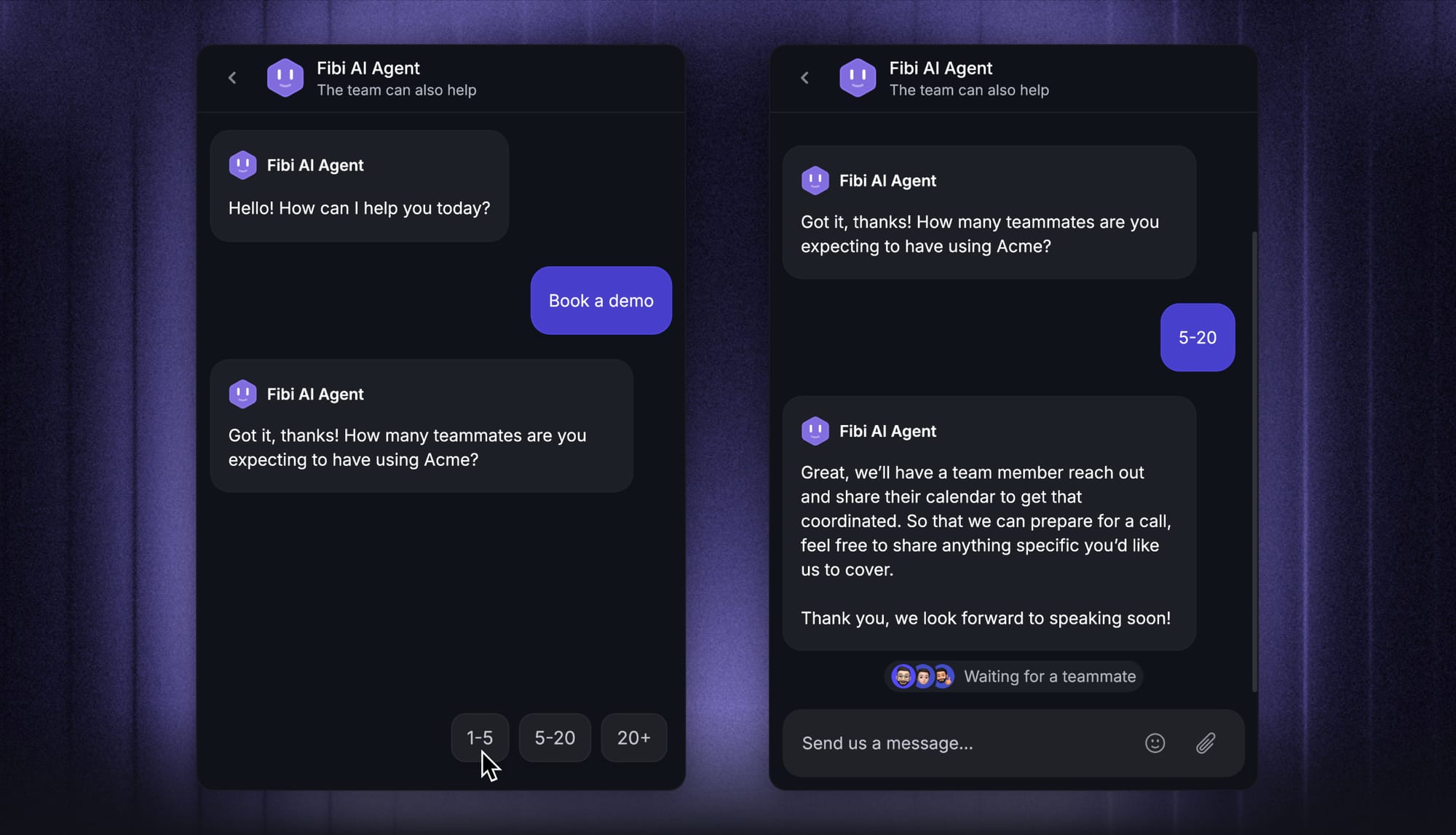
What it does: Once a lead is qualified, the bot opens up a live calendar and books a demo or sales call without back-and-forth scheduling emails.
Best for: SaaS, consulting, and high-ticket services.
Why it works: Scheduling appointments is the second-most-friction step after qualification. Combining lead qualification and demo booking in one chat collapses what used to be a multi-day email thread into 90 seconds.
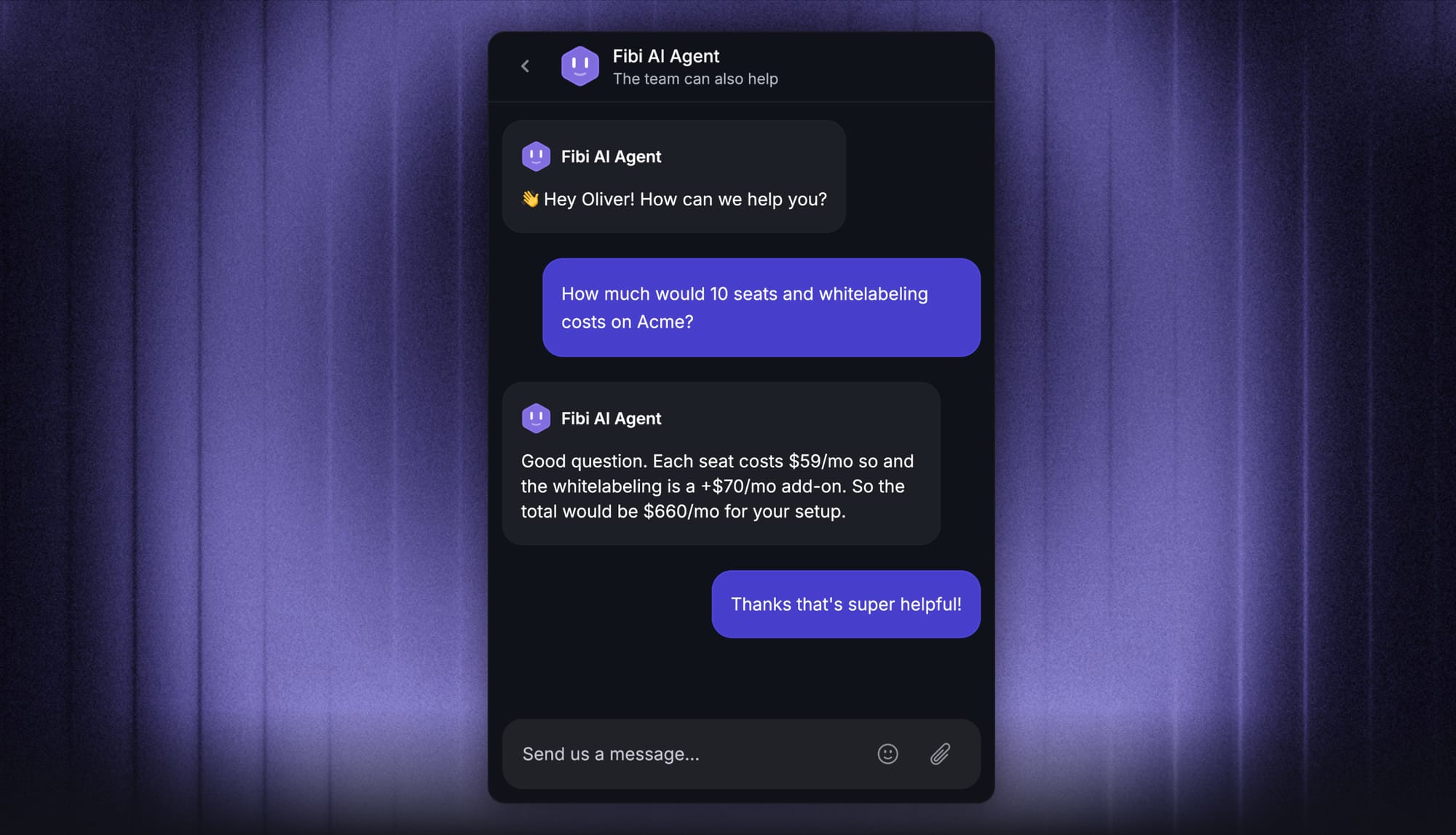
7. Pricing calculator
What it does: Asks a few questions (number of seats, plan, add-ons) and gives users an instant, personalized pricing quote without forcing them to talk to sales.
Best for: SaaS with variable pricing, agencies, and any service business with a quote-based model.
Why it works: Many users will not contact sales just to see a price. A pricing calculator chatbot moves them along the funnel and signals real buying intent (so sales can prioritize them).
8. Real-estate or service quoting bot
What it does: Collects the buyer's preferences (location, budget, urgency) and either returns instant quotes or routes the lead to a human agent. A real estate lead screener is the classic version.
Best for: Real estate, insurance business, solar, contractors, and any local service.
Why it works: People shopping for a house, a roof, or an insurance quote are usually comparing 3+ providers. The fastest, easiest experience wins. A chatbot beats a form every time.
Resolve 70% of customer requests with AI
Automatically resolve customer issues & cut down support loads for your team
Onboarding & product-activation chatbot ideas
Once a user signs up, the onboarding process determines whether they ever come back. These chatbot ideas help guide users through your product and improve retention.
9. In-app onboarding guide
What it does: Pops up after sign-up and guides users through their first key actions ("connect your data", "invite a teammate", "set up your first project").
Best for: SaaS products with multi-step setup.
Why it works: Most users don't read tooltips and tutorials. A conversational walkthrough that asks questions and reacts to user input feels less intrusive and finishes more often.
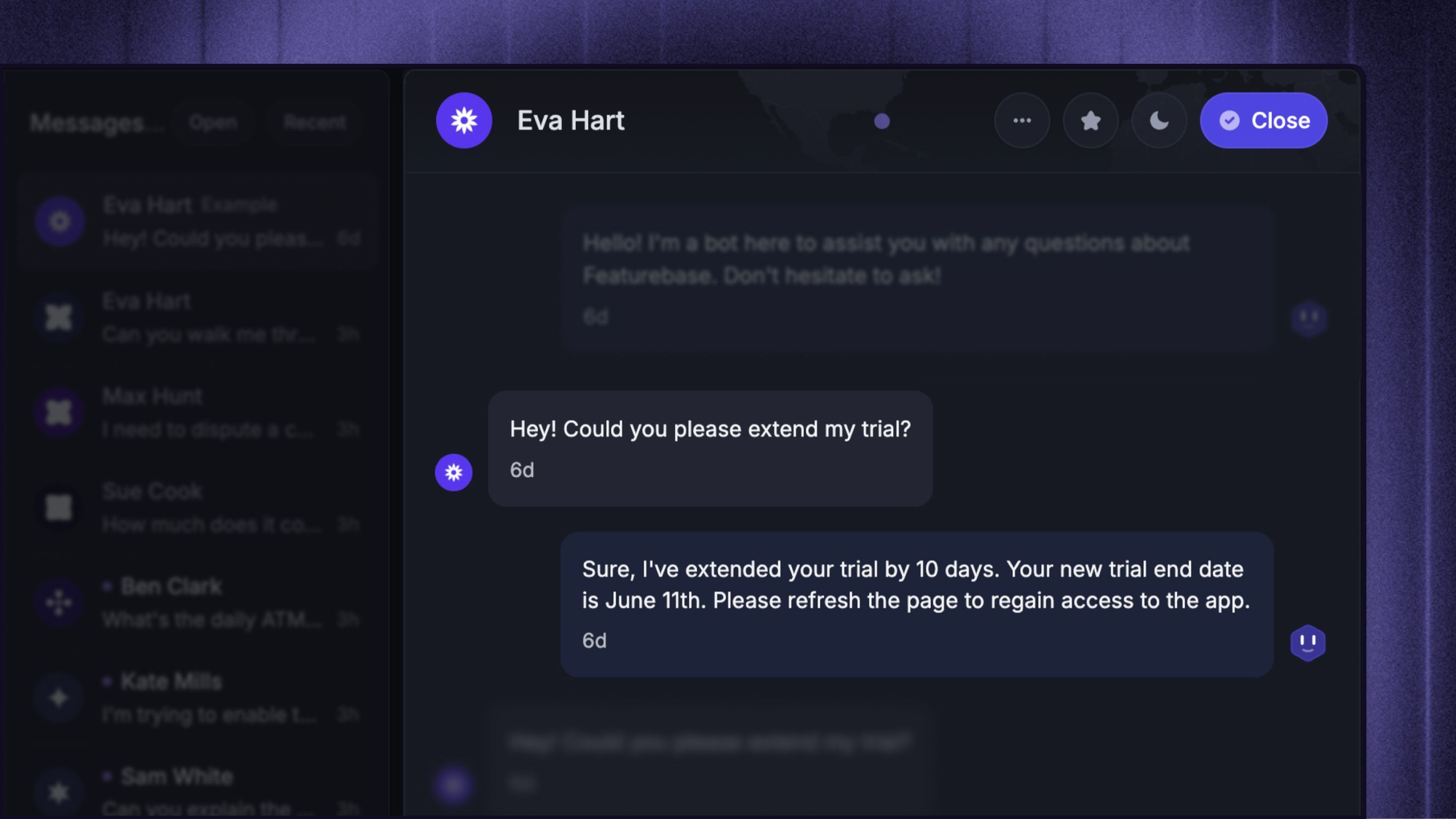
10. Trial extender or "save" bot
What it does: When a trial user looks like they're about to drop off (no logins for 5 days, hit a paywall), the bot offers a trial extension or routes them to a real human.
Best for: SaaS with free trials.
Why it works: Trial drop-off is silent and expensive. A bot that catches it (and offers something useful, like more time or a 1:1 setup call) can recover a meaningful chunk of would-be churners. With AI agents that can run custom actions, the bot can extend the trial automatically, no human in the loop required. (Pair this with proper customer retention software and you have a real save flow.)
11. Feature discovery prompts
What it does: Watches what the user has and hasn't done in your product, then nudges them toward features they haven't used yet ("Want me to set up the Slack integration?").
Best for: Products with lots of features and low feature adoption.
Why it works: Most users use 20% of your product. Personalized suggestions delivered in-context drive feature adoption and customer loyalty far better than a generic onboarding email.
Feedback & insights chatbot ideas
The best way to collect customer feedback is to ask for it in the moment, in the channel the user is already in. These chatbots make feedback collection feel like a conversation, not a survey.
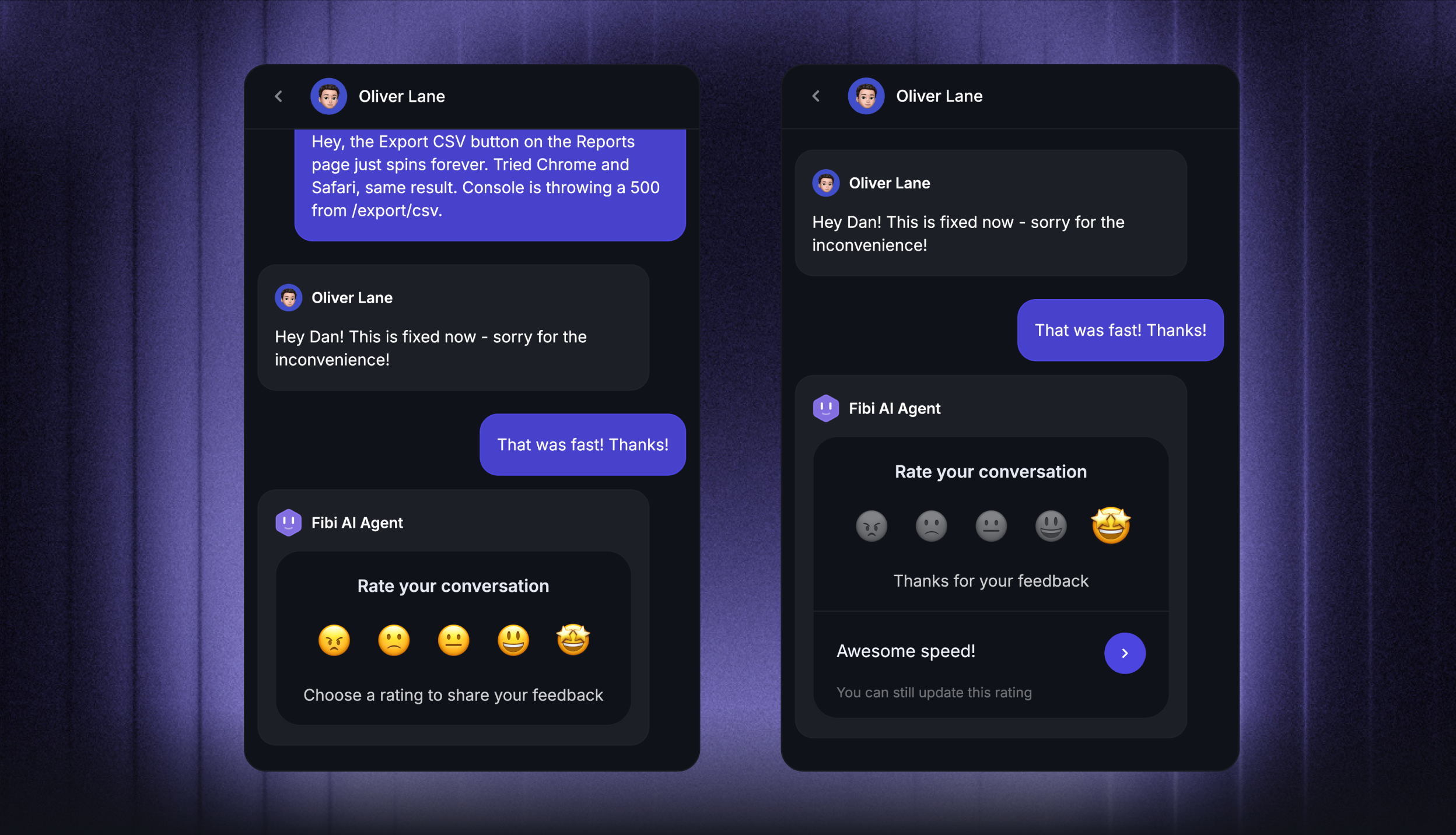
12. Conversational NPS or CSAT bot
What it does: After a support interaction, demo, or key product action, the bot asks a 1-2 question rating ("how would you rate this?") plus an optional open follow-up.
Best for: Any product team that wants to track customer satisfaction over time.
Why it works: Standalone NPS emails have abysmal response rates. A conversational micro-survey in-context can get 5-10x the response rate, and the open-text follow-ups give you real qualitative insights. (If you're choosing between metrics, our NPS vs CSAT breakdown is a good starting point.)
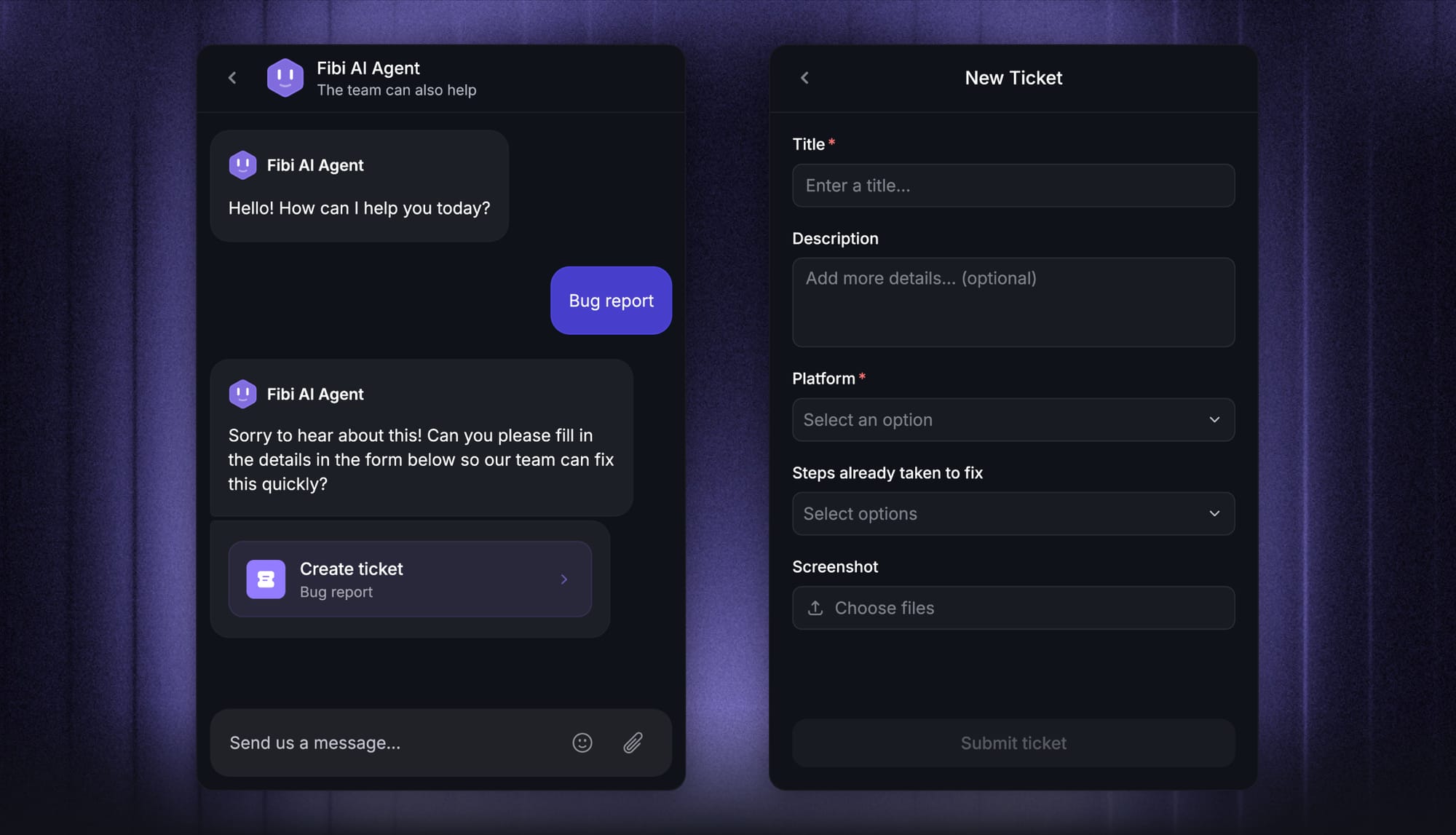
13. Bug report intake bot
What it does: Walks the user through a structured bug report (what happened, what was expected, browser, screenshot) and files it directly into your issue tracker.
Best for: SaaS, web apps, and consumer apps where bug reports come in via support.
Why it works: Bug reports are usually missing 80% of the info engineers need. A guided chatbot collects everything in one go (using a solid bug report template) and saves your support team from playing detective.
14. Feature request collector
What it does: Captures feature ideas from your users, deduplicates them against existing requests, and surfaces them on a public roadmap or feedback portal.
Best for: SaaS, product-led companies, and any business where users have strong opinions about the product.
Why it works: Most feedback dies in Slack or support inboxes. A dedicated feature request management flow (paired with a public feedback portal so users can vote) turns feedback into a real product input. Featurebase's in-app feedback widget is built around exactly this loop.
Internal productivity chatbot ideas
Not all chatbots face the customer. Some of the highest-ROI bots sit inside your team, taking repetitive tasks off internal workflows.
15. HR policy FAQ assistant
What it does: Answers common questions about benefits, time off, expense policies, and onboarding from the company handbook.
Best for: Companies over 30 employees, especially distributed teams.
Why it works: HR teams answer the same 20 questions every week. An HR policy FAQ assistant (built on top of your internal knowledge base) deflects the bulk of it instantly, and HR gets to focus on actually strategic work.
16. IT helpdesk ticket bot
What it does: Handles the most common IT requests ("reset my password", "I need access to X", "my laptop won't connect to Wi-Fi") and only escalates to humans when the issue actually needs a person.
Best for: Mid-size to enterprise companies with a real IT team.
Why it works: Most IT tickets are level-1 issues with known fixes. Automating them saves the team for the harder stuff and gets employees unblocked in minutes, not hours.
17. Employee onboarding wizard
What it does: Guides new hires through their first-week tasks, forms, training videos, and intros to teammates, all in one chat.
Best for: Companies hiring more than 1-2 people a month.
Why it works: Onboarding is a beautiful chaos of forms, accounts, and Slack invites. A bot makes the new hire feel taken care of from day one and saves managers from herding paperwork.
Engagement & retention chatbot ideas
These chatbots are less about deflection and more about brand, fun, and keeping users in your orbit.
18. Re-engagement or win-back bot
What it does: Pings dormant users (or former customers) via email or messaging apps with a personalized message and an easy way to come back.
Best for: Consumer apps, e-commerce, and any subscription business with churn.
Why it works: Bringing back a former user is cheaper than acquiring a new one. A bot can run hundreds of these conversations in parallel, with personalized offers based on what the user used to do in your product.
19. Recommendation quiz bot
What it does: Asks the user 4-5 questions and gives personalized recommendations (a gift, a product, a plan, a workout). This is a classic engagement format on Facebook Messenger and on-site widgets.
Best for: E-commerce, especially gift, fashion, beauty, and fitness brands.
Why it works: Quizzes feel like play, not selling. Landbot's AI Gift Idea Wizard is a great example: it turned a holiday promo into one of their highest-engagement chatbots ever.
20. Storytelling or trivia bot
What it does: Tells an interactive story or runs trivia rounds where the user chooses what happens next. Sometimes used for marketing campaigns, sometimes for education.
Best for: Media brands, education, and consumer marketing campaigns.
Why it works: Pure engagement plays. They're not for every brand, but for the ones where they fit (think Patrón's Bot-Tender), they're memorable enough to drive thousands of DMs and press coverage.
How to pick the right chatbot idea for your business
20 ideas is a lot. Don't try to ship them all. Use this three-step filter to pick the right chatbot idea for you:
1. Audience
Decide who the bot is for. Customer-facing bots focus on support, sales, and engagement. Internal bots focus on streamlining workflows for your own team. Mixed-audience bots exist, but they're harder to design well. Pick a lane first.
2. Goal
Be brutally specific. "Improve customer experience" is not a goal. "Deflect 30% of password reset tickets in 90 days" is. Tie the bot to a measurable outcome: tickets deflected, qualified leads booked, customer satisfaction score moved, onboarding completion rate.
3. Complexity
Match the chatbot type to the problem:
- Rule based chatbots follow predefined rules and decision trees. Great for FAQ bots, form submission bots, and simple flows.
- AI chatbots use NLP and large language models to understand user intent. Better for nuanced support and conversation.
- Hybrid chatbots combine both: predefined rules for the predictable paths, AI fallback for the unpredictable ones. This is the safest pick for most modern teams.
Once you have those three answers (audience, goal, complexity), you'll know which of the 20 ideas above to start with, and which to park.
Build any of these chatbot ideas with Featurebase
If a chatbot idea on this list got you nodding, you'll need a platform that can actually ship it (without stitching together three tools). Most teams want their support, AI agent, help desk, and feedback under one roof, not scattered across vendors.
Featurebase ✨
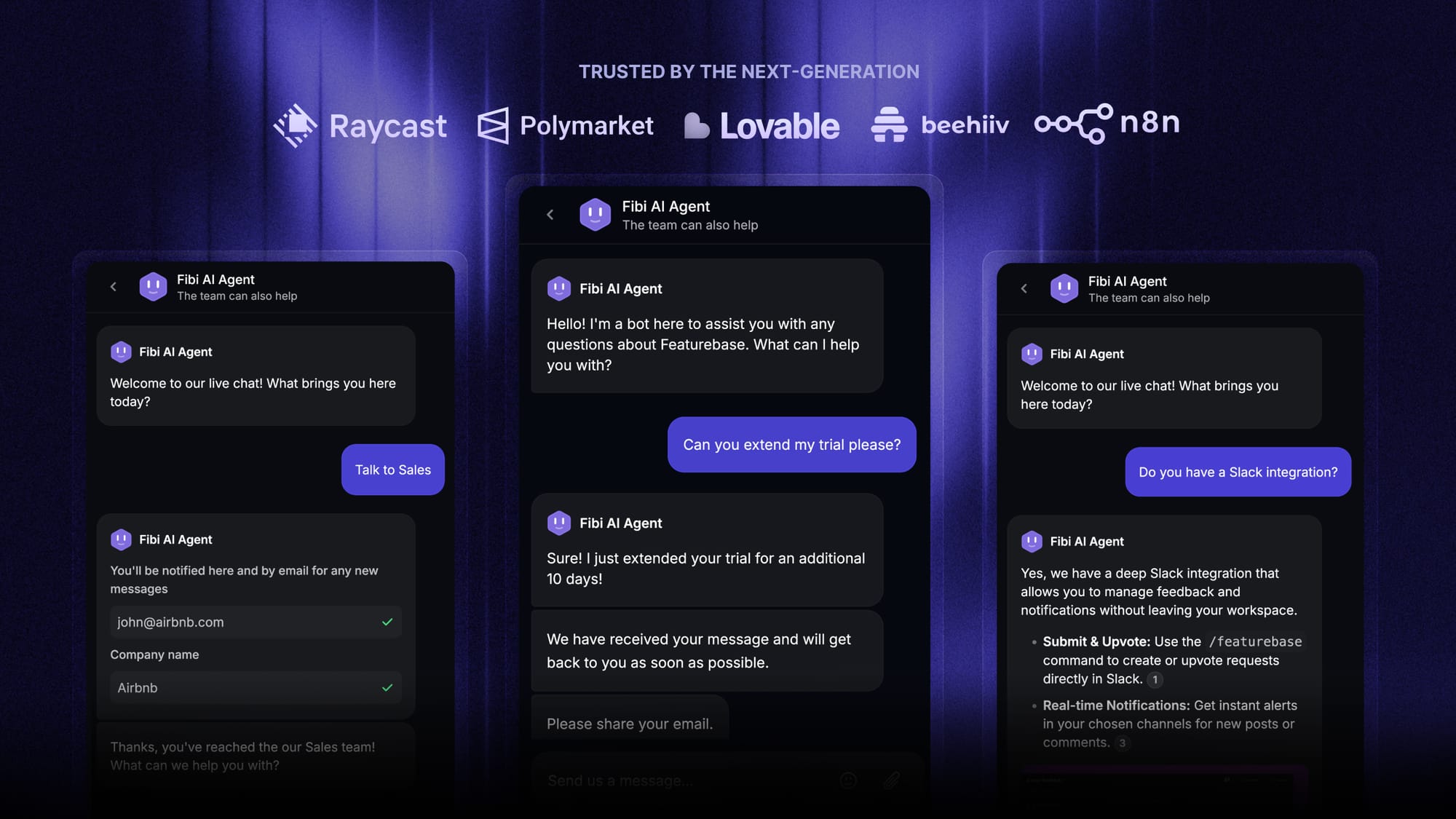
Featurebase is a modern AI customer support platform for product-led SaaS. It combines AI-powered support, help center, and feedback management into a single platform for startups that want all their customer-facing tools in one place. Featurebase is loved by thousands of support teams from companies like Lovable, Raycast, and n8n. 💫
Top features:
- Omnichannel inbox – Manage live chat, email, and Slack conversations from one AI-powered view
- Fibi AI Agent – Resolve customer issues on autopilot & run custom actions like trial extensions and refunds
- Help center with AI search – Provide instant, multilingual self-serve answers
- Workflows & automations – Auto-assign tickets, route conversations, collect customer data, and more
- AI Copilot – Help your agents answer customers faster with AI Copilot that uses your internal knowledge
- Multi-brand support – Manage multiple Help Centers and Live chats from a single workspace
- Automatic AI translations – Automatically translate all messages and help articles to your customers native language
- Service Level Agreements – Track SLAs to make sure your team responds to customers on time, every time
- Mobile app – Respond to customers, receive notifications, and unblock users on the go
- Integrations – Connects with Slack, Linear, Jira, HubSpot, and more
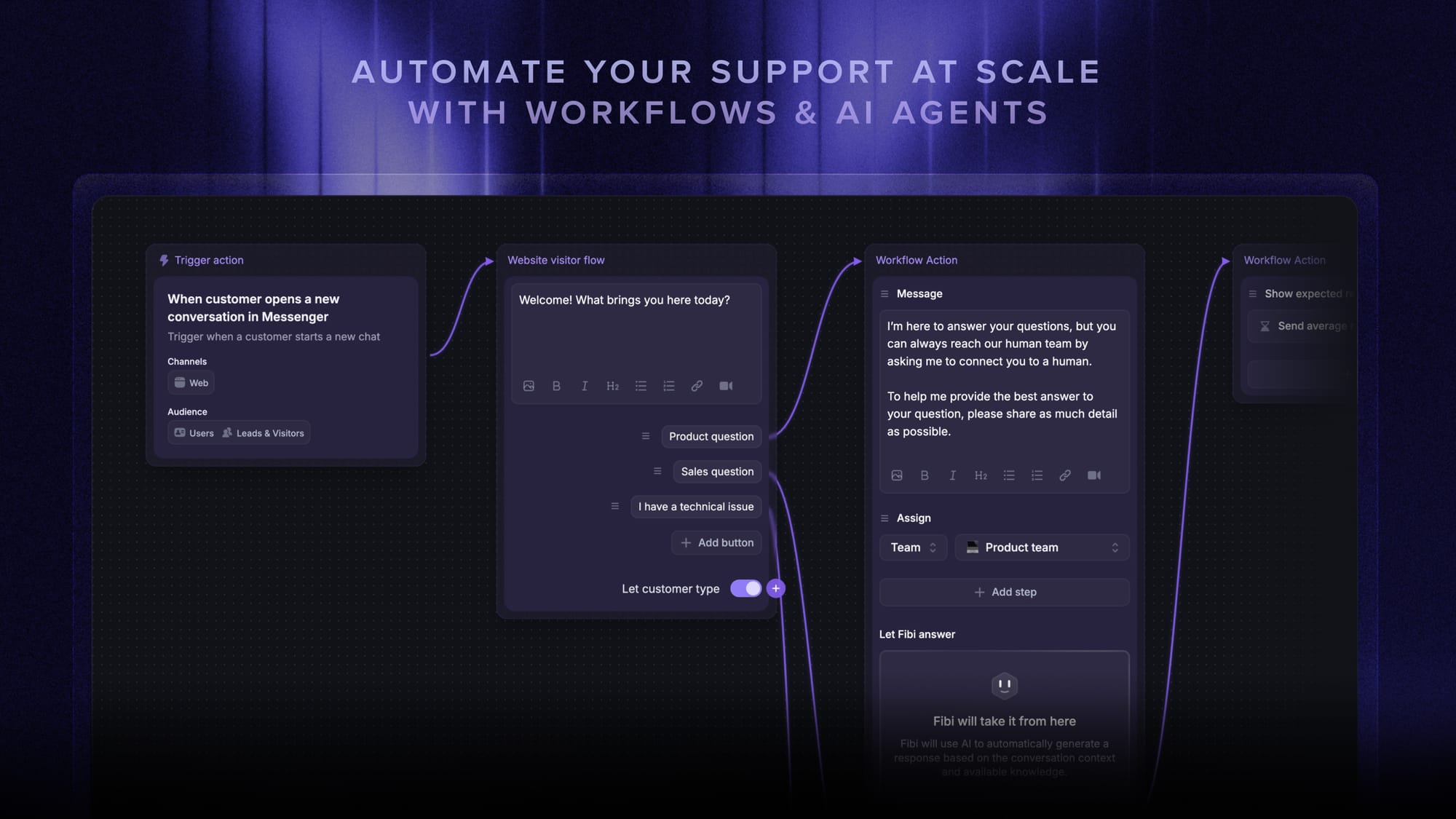
Pricing: Free plan available with unlimited conversations. Paid plans start at $29/seat/month with $0.29 per AI resolution.
Featurebase covers all the basic customer support features that legacy platforms do, but with a much more modern approach. It comes with AI automations, a mobile app, and multiple channels (email, live chat, Slack, etc.), so you can build most of the chatbot ideas above without ever leaving the platform.
Resolve 70% of customer requests with AI
Automatically resolve customer issues & cut down support loads for your team
Conclusion
The best chatbot ideas aren't the flashiest. They're the ones that quietly solve a real, repeated problem for your team or your users. Start small, pick one idea from the list above, ship it, and measure.
And if you want a single platform to build your support bot, help center, feedback portal, and product updates all at once, Featurebase is the fastest way to do it. Our AI-powered inbox, Fibi AI Agent, and built-in help center can handle most of the chatbot ideas above out of the box, without any custom development.
It comes with a Free plan with unlimited conversations, and the onboarding is incredibly quick, so there's no downside to trying it. 👇
✨ Automate your support with the fastest AI-enhanced Inbox today →