Blog Customer FeedbackCustomer Orientation: Definition, Examples & Tips
Customer Orientation: Definition, Examples & Tips
Customer orientation means building your company around customer needs, not your own metrics. Here's what it is, why it matters, and how to get there.

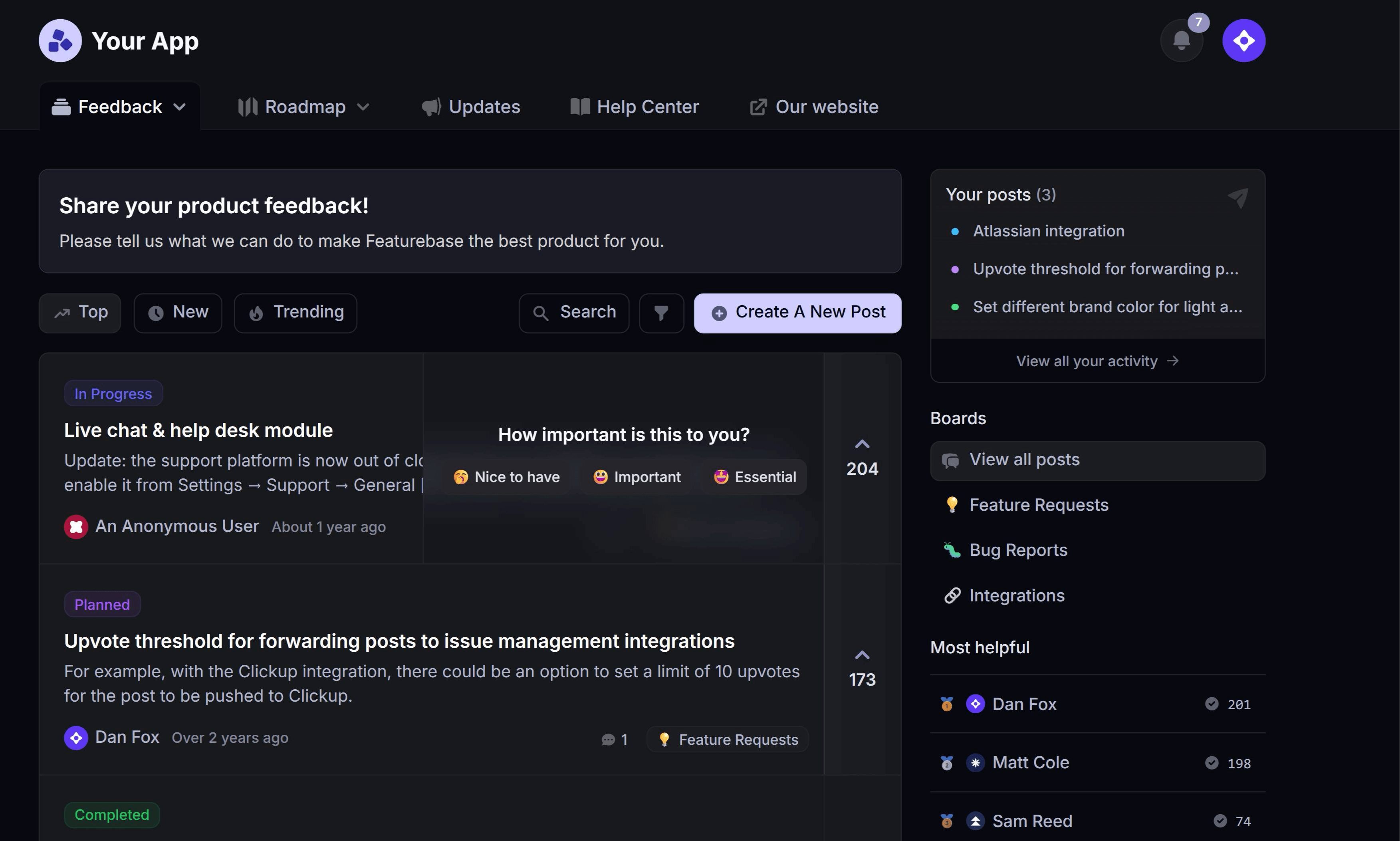

Almost every company claims the customer comes first. Then they build the roadmap around internal goals, measure success by deals closed, and treat support as a cost center.
Customer orientation is the opposite. It means shaping your product, decisions, and processes around what customers actually need, then proving it in how you act.
In this guide, I'll break down what customer orientation is, why it pays off, and how to build it step by step. 👇
Key takeaways
- Customer orientation is a company-wide approach that puts customer needs ahead of short-term business goals.
- It's different from customer-centricity: orientation is the mindset, centricity is how you execute it day to day.
- It pays off. Customer-obsessed companies see higher retention, faster revenue growth, and stronger loyalty.
- Becoming customer-oriented comes down to a loop: collect customer feedback, prioritize it, and close the loop.
- Featurebase✨ helps you become customer-oriented by centralizing feedback, roadmaps, and surveys in one place.
- Real companies like Amazon, Zappos, and Trader Joe's show it's a whole-company habit, not a support tactic.
What is customer orientation?
Customer orientation is a business approach that puts customer needs ahead of the company's own short-term interests. Customer-oriented companies make decisions about the product, marketing, and support based on what helps the customer, not just what's easiest internally.
The idea is simple: the business only grows when customers succeed. So instead of pushing customers toward your goals, you orient the whole company around theirs.
It's not a job for the support team alone. Customer orientation shows up everywhere, from the features you build to the way you answer a refund request.
Customer orientation vs. customer-centricity
People use these two terms interchangeably, but there's a useful distinction. Customer orientation is the mindset: a company-wide belief that customer needs come first. Customer-centricity is the execution: the processes, tools, and workflows that put that belief into practice.
You need the mindset before the tactics work. A team that buys customer-centric software without genuinely caring about customer outcomes just ends up with an expensive tool and the same old priorities.
Customer-oriented skills
Customer orientation is a company philosophy, but it runs on individual habits. A few customer service skills show up again and again in customer-oriented teams:
- Empathy - understanding how a customer feels, not just what they asked
- Active listening - catching the real problem behind the words
- Adaptability - adjusting your approach as customer needs change
- Problem-solving - finding a fix instead of following a script
- Clear communication - explaining things simply, without jargon
These are skills you can hire for and coach. The more people across your company who have them, the more natural customer orientation feels.
Why customer orientation matters
Being customer-oriented isn't just good manners. It shows up in the numbers.
Customers now expect it. 88% of customers say the experience a company provides is as important as its products and services. Meet that bar and you stand out. Miss it and they leave.
It also protects revenue. It costs far more to win a new customer than to keep one, and a 5% increase in customer retention can boost profits by 25% to 95%. Customer orientation is one of the most reliable ways to lift customer retention in the first place.
And it compounds. Forrester found that customer-obsessed companies see 41% faster revenue growth, 49% faster profit growth, and 51% better customer retention than everyone else, yet only 3% of companies actually qualify. That gap is the opportunity.
How to become customer-oriented (step-by-step)
Customer orientation sounds abstract, but it comes down to a repeatable loop: listen to customers, act on what they tell you, and let them know you did. Here's how to build it.
1. Collect customer feedback continuously
You can't orient around customers you don't understand. So the first step is to collect customer feedback consistently, not once a year in a survey blast.
Set up a voice of the customer program that pulls feedback from every channel, including support chats, sales calls, in-app widgets, and social media, into one place. Scattered feedback sitting in inboxes and spreadsheets is feedback you'll never act on.
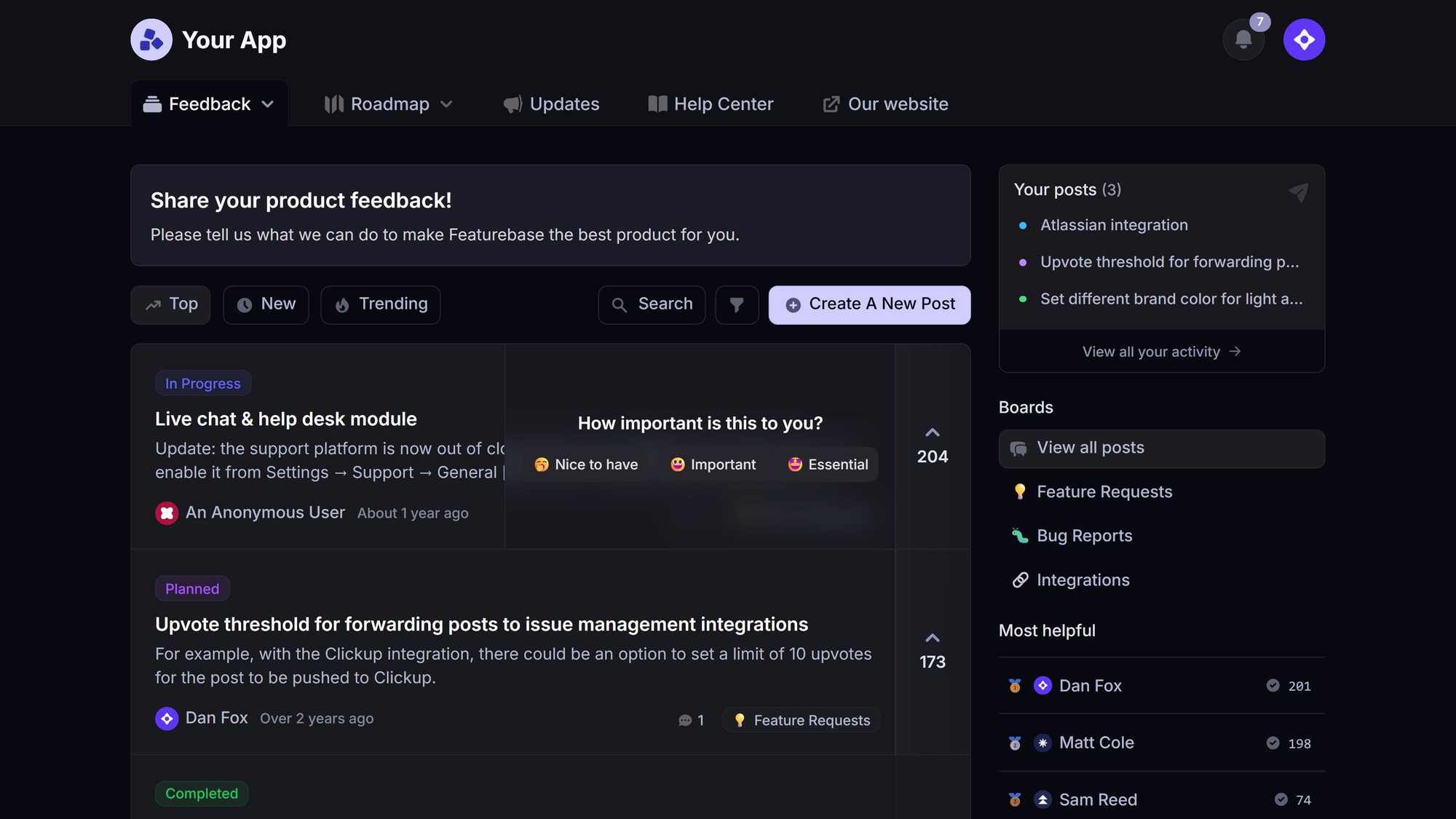
This is where a tool like Featurebase helps. It gives you a public feedback forum where users submit ideas and upvote each other's requests, and AI automatically sorts each submission into boards like feature requests and bug reports. Everything lands in one organized place instead of ten different inboxes.
2. Prioritize feedback by impact
Once feedback is flowing, you'll have more ideas than you can build. Customer orientation doesn't mean saying yes to everything. It means saying yes to what matters most.
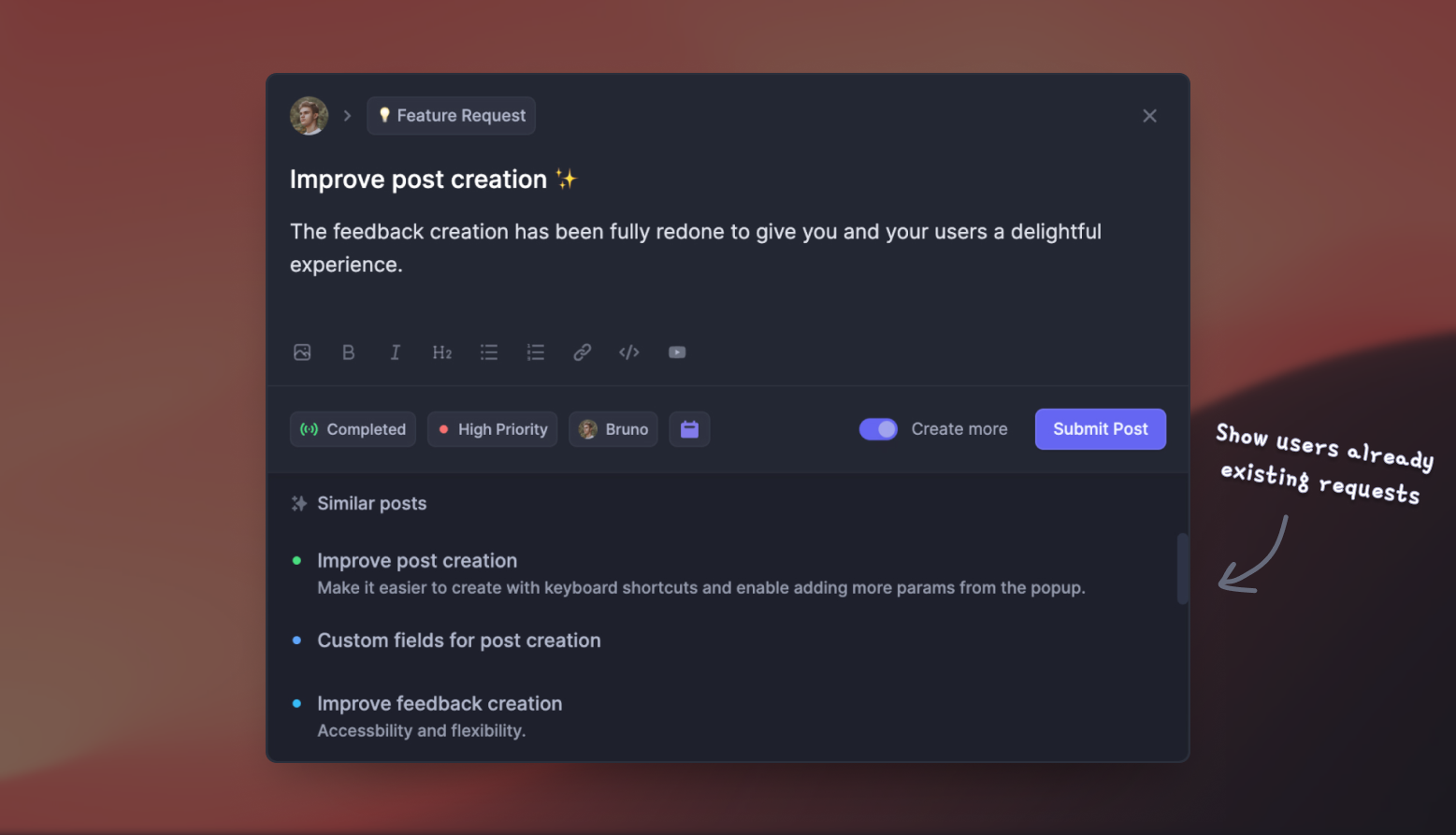
The trap is prioritizing by volume. A feature request with 100 votes from free users can matter far less than one that two enterprise accounts are quietly asking for.
A better approach is to weigh feedback by impact. With Featurebase you can link feedback to each customer's revenue, so you see the real business value behind a request and build the highest-impact features first, not just the loudest ones.
3. Close the loop with customers
Collecting feedback and going silent is worse than not asking. If customers never hear back, they stop bothering, and you lose the signal.
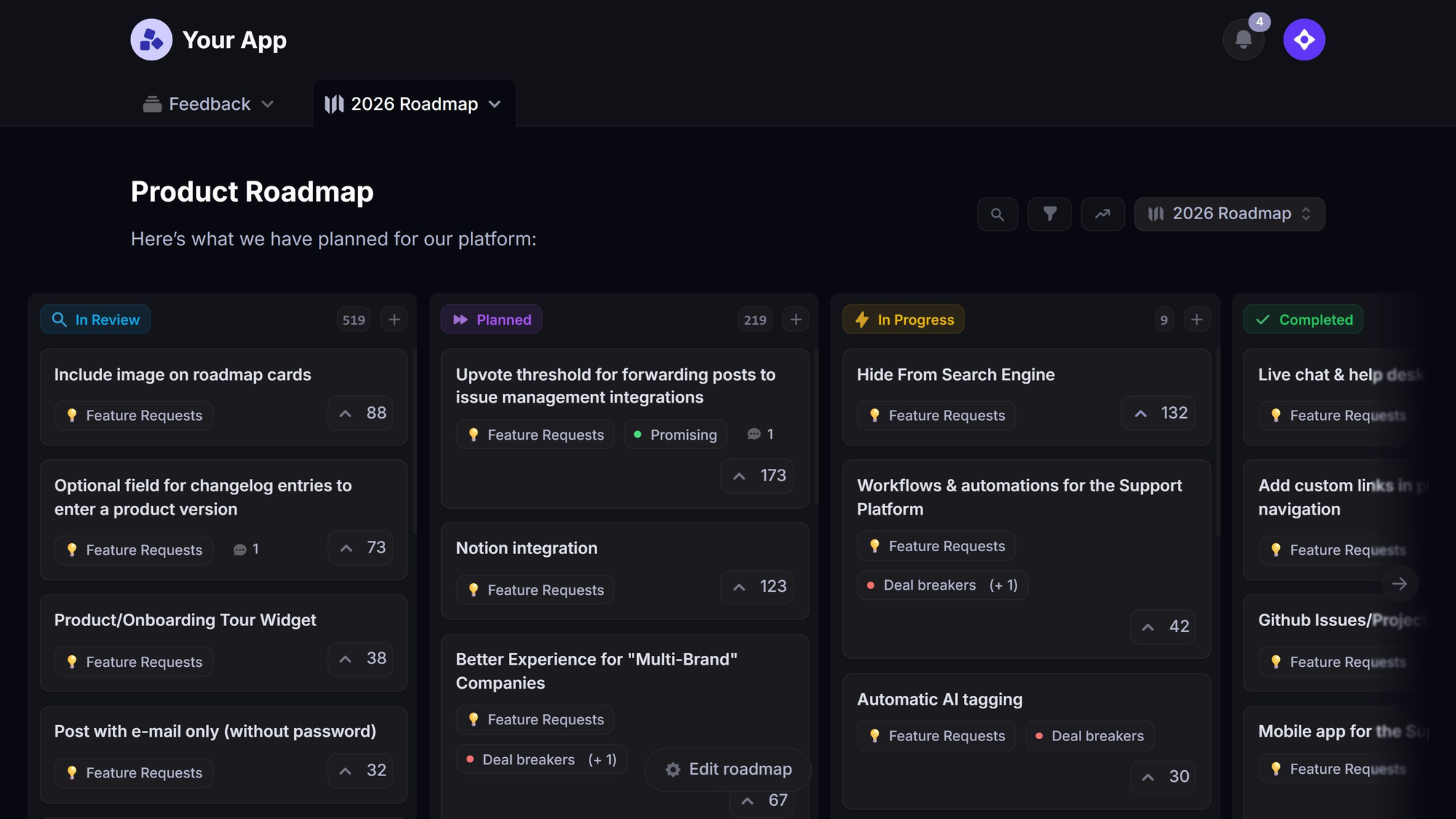
Closing the feedback loop means telling people what you did with their input: when a request is planned, when it ships, and why some things won't happen. A public roadmap and release notes make this almost automatic, since users can watch their request move from "under review" to "shipped" without you emailing each one.
4. Make it a whole-company effort
Customer orientation breaks the moment it's treated as the support team's job. Marketing writes the promises, product decides what ships, and sales sets expectations. Every one of them shapes the customer's experience.
The fix is shared context. When sales, support, and product all see the same customer history and feedback, customers stop repeating themselves and stop falling through the cracks between teams.
A simple habit helps too: have people from every department spend time reading customer feedback or sitting in on support conversations. It's hard to deprioritize customers you hear from directly.
5. Track the right metrics
What gets measured gets managed, so pick metrics that reflect the customer's experience, not just your team's efficiency. A few are worth watching:
- CSAT (Customer Satisfaction Score): how happy customers are after a specific interaction
- NPS (Net Promoter Score): how likely customers are to recommend you
- CES (Customer Effort Score): how easy you make it to get help or get things done
- Retention and churn rate: whether customers actually stick around
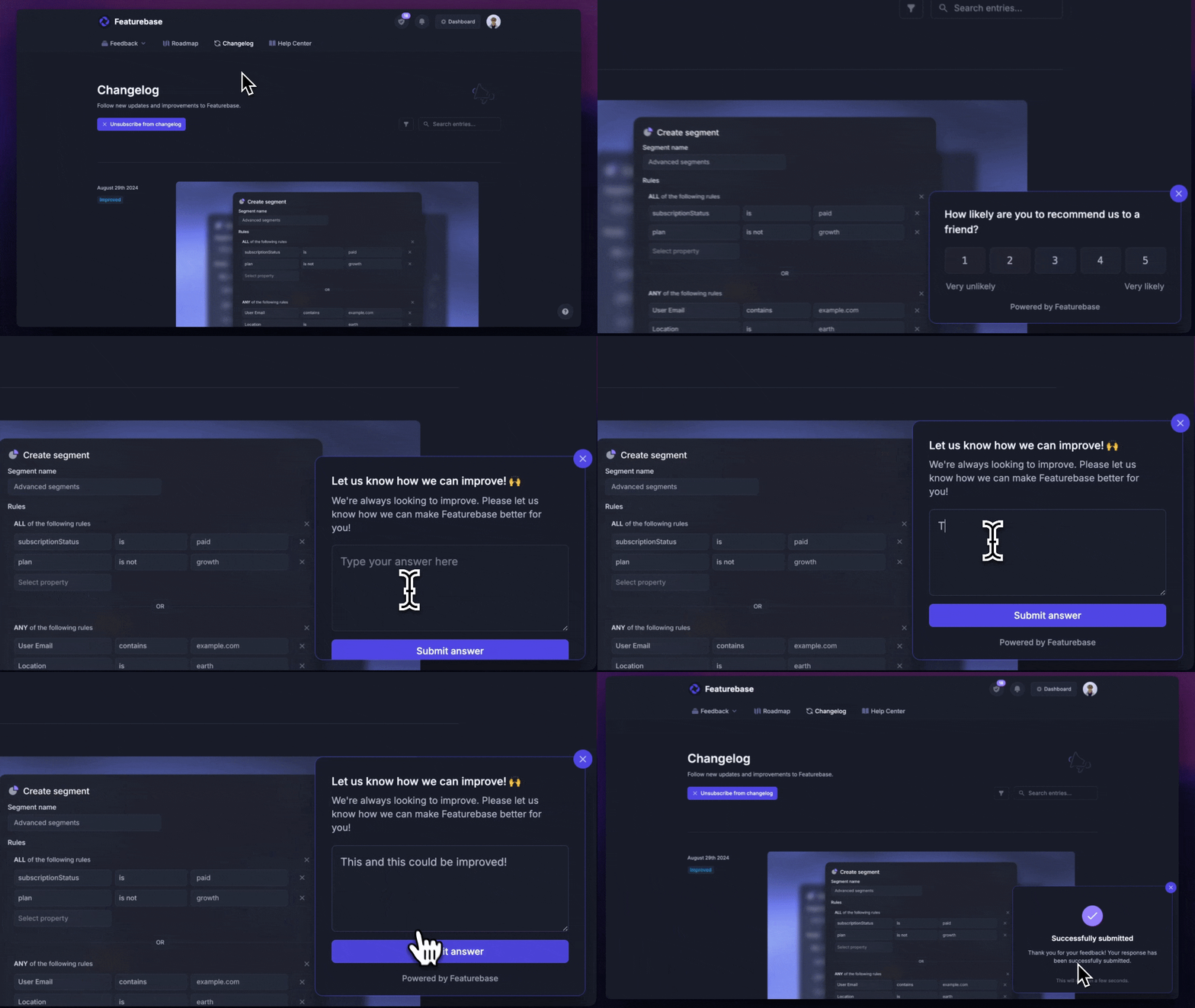
No single number tells the whole story. Read the scores alongside real customer comments, and watch the trend over time rather than obsessing over one month.
Customer orientation examples
The best way to understand customer orientation is to see it in action. Here are three companies known for it.
Amazon
Amazon's founding principle is "start with the customer and work backwards." Instead of asking what the company wants to sell, teams start with a customer need, like lower prices or faster delivery, and build toward it relentlessly. That obsession took average delivery from around 6 days to under 2 and reset what shoppers expect from every other retailer.
Zappos
Zappos built its brand on the belief that "customer service shouldn't just be a department, it should be the entire company." Agents work without scripts or tight time limits, and the famous 365-day return policy exists because it's what customers want, even when it defies conventional retail logic. It worked: Amazon acquired the company for around $1.2 billion.
Trader Joe's
Trader Joe's proves customer orientation isn't only for tech giants. With no loyalty program or discounts, it earns devotion through the in-person experience. Employees will open any product for you to sample, and the chain regularly adjusts its products, packaging, and store hours based on customer feedback.

Capture feedback from the best customer support tool
Centralize feedback, identify product opportunities, and build the right features
Conclusion
Customer orientation isn't a slogan or a support tactic. It's the habit of building your entire company around what customers need, then proving it by acting on their feedback. Get that right and retention, loyalty, and growth tend to follow.
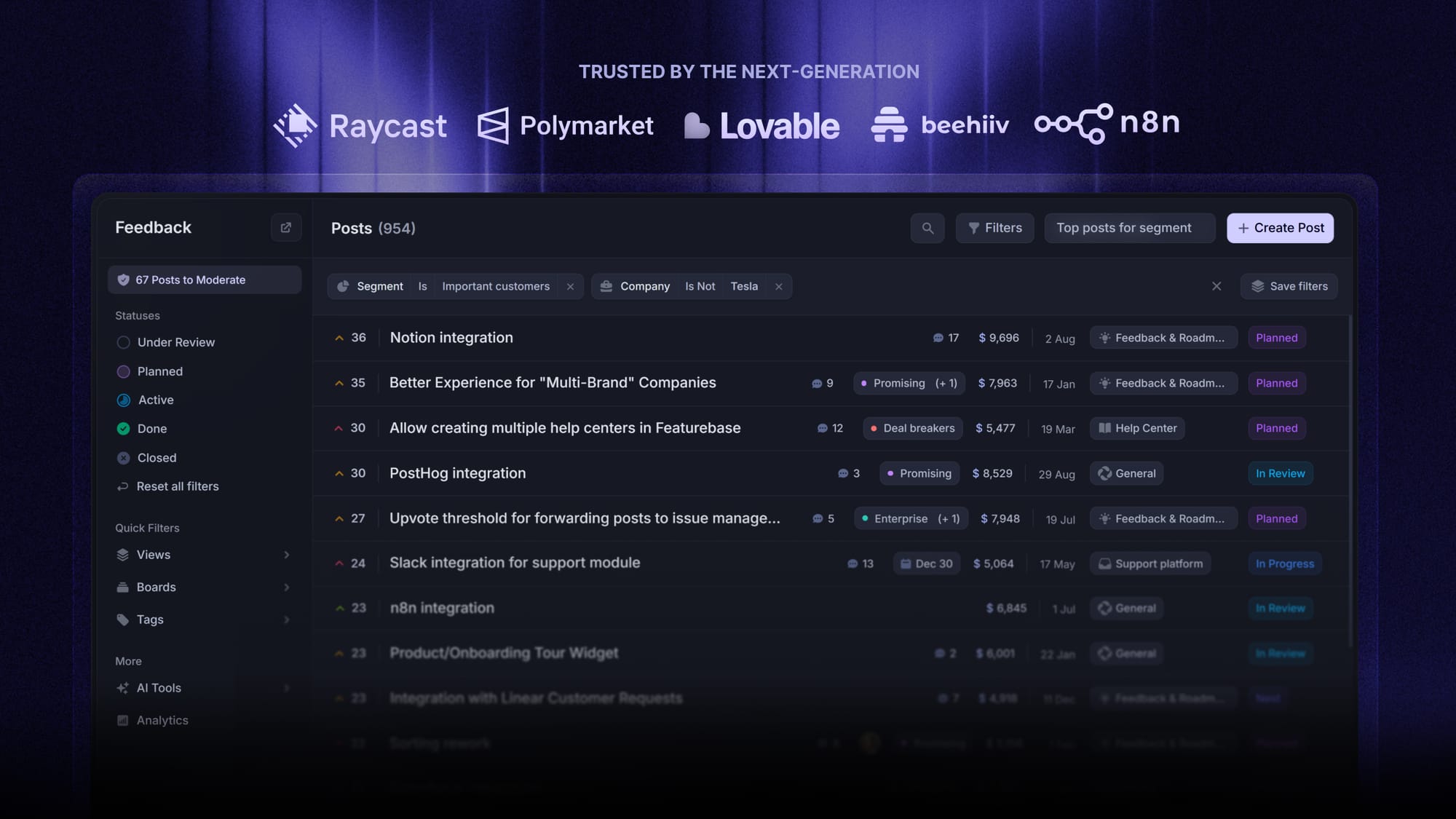
Featurebase is a modern & powerful feedback tool. It helps you collect feedback with a feature voting forum, surveys, embeddable widgets, and integrations. You can then analyze all of that feedback in one place by connecting it to your customers' revenue and data to make better product decisions.
It comes with affordable pricing and a Free plan allowing unlimited feedback. The onboarding is incredibly quick and doesn't require a credit card, so there's no downside to trying it. 👇
✨ Start collecting & managing feedback with Featurebase for free →
FAQs
What does it mean to be a customer-oriented person?
Being a customer-oriented person means you naturally put the customer's needs at the center of your work. In practice that shows up as empathy, active listening, patience, and a habit of solving the real problem instead of just closing the ticket. It's a mindset any employee can have, not only those in support roles.
What's the difference between customer orientation and customer-centricity?
Customer orientation is the mindset, a company-wide belief that customer needs come first. Customer-centricity is the execution, the processes, tools, and workflows that turn that belief into daily practice. You need the orientation before the customer-centric tactics deliver results.
What are the main types of customer orientation?
In sales, customer orientation usually splits into four buyer types:
- Security-oriented - want to avoid risk and prefer proven solutions
- Relationship-oriented - value personal connection and trust
- Results-oriented - focus on measurable outcomes and ROI
- Innovation-oriented - chase new capabilities and a competitive edge
Recognizing which type you're dealing with helps you frame your solution around what that customer actually cares about.
What are common mistakes when becoming customer-oriented?
The biggest one is collecting feedback and never acting on it, which trains customers to stop sharing. Others include treating customer orientation as the support team's job alone, prioritizing feature requests by raw vote count instead of impact, and chasing a single metric like NPS while ignoring the story behind it. Customer orientation fails when it's a slogan rather than a repeated habit.
How long does it take to become a customer-oriented company?
You can start immediately, but a real shift takes time. Most teams see satisfaction scores improve within 30 to 90 days of putting a feedback loop in place, while deeper gains in retention and lifetime value show up over 6 to 12 months. The mindset change is fast, but the compounding results are gradual.
What's the best way to collect customer feedback to become customer-oriented?
The best way is to centralize feedback from every channel into one place instead of letting it scatter across inboxes, tickets, and spreadsheets. A dedicated feedback tool like Featurebase gives customers a single forum to submit and vote on ideas, then lets you prioritize by customer revenue and close the loop with a public roadmap and release notes. That way feedback actually turns into action, which is the whole point of customer orientation.