Blog Customer FeedbackCustomer Needs: Types and How to Identify Them
Customer Needs: Types and How to Identify Them
Learn what customer needs are, the main types (functional, emotional, and social), and practical ways to identify and meet them so you can build products and support people actually want.


Most businesses think they know what their customers want. Then a product flops, a new feature goes unused, or churn quietly creeps up, and it turns out they were solving the wrong problem.
The gap almost always comes down to customer needs: the real reasons people buy. They're easy to assume and surprisingly hard to pin down.
This guide breaks down what customer needs are, the main types, and how to identify and meet them so you can build what people actually want. 👇
Key takeaways
- Customer needs are the underlying reasons someone chooses a product or service, from solving a practical problem to how it makes them feel.
- Most needs fall into 3 core types: functional, emotional, and social.
- Needs are not the same as wants. A need is essential; a want is a preferred way of meeting it.
- You identify needs by combining behavioral data, direct conversations, and continuous feedback, not guesswork.
- Meeting customer needs drives loyalty, retention, and word of mouth, while missing them is the fastest way to lose people to a competitor.
- Featurebase✨ helps you collect, centralize, and prioritize customer feedback so you always know what your users need next.
What are customer needs?
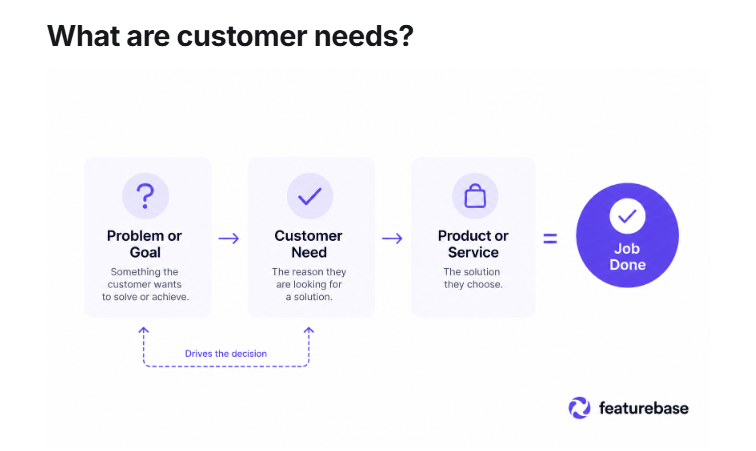
A customer need is the reason someone buys a product or service. It's usually tied to a specific problem they want to solve or a goal they want to reach.
Sometimes customers can tell you exactly what they need. Often they can't, either because the need is unspoken or because they haven't fully worked it out themselves. Either way, the need is what drives the decision: it shapes which option they pick from everything available.
A useful way to think about this is the jobs-to-be-done framework, popularized by Harvard Business School professor Clayton Christensen. The idea is that customers don't just buy a product, they "hire" it to get a job done. Someone doesn't want a drill, they want a hole in the wall. Figure out the job, and you've found the need.
Customer needs vs. customer wants
Needs and wants get used interchangeably, but they're not the same thing:
- A need is something essential to solving the customer's problem. A commuter needs a reliable way to get to work.
- A want is a preferred way of meeting that need. That same commuter might want a specific car brand, but a bus or a bike would also do the job.
Why does the distinction matter? Because customers often tell you their wants ("I want a faster dashboard") when what they're really expressing is a deeper need ("I need to make decisions without waiting around"). If you only build the literal want, you can still miss the need. The goal is to hear the want and trace it back to the need underneath.
The 3 main types of customer needs
Customer needs come in many forms, but most fall into 3 core categories: functional, emotional, and social. Almost every purchase is driven by some mix of the three.
Functional needs
Functional needs are the most tangible and usually the primary driver. They're about whether a product actually does the job the customer hired it for.
These can be broad or highly specific. A first-time gardener might just need "a garden hose." A more experienced one needs "a hose long enough to reach the vegetable patch that won't kink." Same category, very different criteria.
Functional needs are the easiest to measure because you can objectively check whether the job got done. Nail these first, because no amount of emotional or social appeal makes up for a product that doesn't work.
Emotional needs
Emotional needs are about how a customer wants to feel while using your product or after it's done the job. They're usually secondary to functional needs, but they heavily influence the final choice.
Think about why someone gardens. If it's a relaxing hobby, they may prefer a simple, pleasant-to-use hose over a feature-packed one. If a product sparks joy, confidence, or calm, people stick with it and recommend it. If it's frustrating to use, they'll drop it even when it technically works.
Social needs
Social needs relate to how customers want to be perceived by others when they use your product. They're often the hardest to spot and vary a lot between people.
A gardener in a community of sustainability-minded peers might choose an eco-friendly hose that reflects their values. Someone in a group that loves high-tech gadgets might pick the model with a built-in watering timer. The product becomes a small signal of identity and belonging.
7 common customer needs across the buying journey
The 3 categories above are the framework. In practice, they show up as concrete, recurring needs that customers bring to almost every interaction. Here are 7 of the most common:
- Price and value: Customers need to feel the cost matches what they're getting. This isn't always about being cheapest, it's about a fair exchange for the value delivered.
- Functionality: The product or service has to reliably do the core job it promises. This is the baseline everything else is built on.
- Convenience: People need solutions that fit into their lives with minimal friction. Easy access, simple processes, and time saved all count.
- Reliability: Customers need consistency. A product that works brilliantly one day and fails the next erodes trust fast.
- Information: Buyers need clear, accurate information to make confident decisions, from product details to honest answers when something goes wrong.
- Empathy: When customers reach out, they need to feel understood, not processed. A little genuine care turns a complaint into loyalty.
- Choice: Customers need to feel they have options and control, whether that's flexible plans, multiple support channels, or the freedom to change their mind.
Most of these span all 3 core types at once. Good pricing meets a practical need, reassures the customer emotionally, and can even carry social signals about the kind of brand they're buying from.
Why understanding customer needs matters
Getting customer needs right isn't a soft, nice-to-have exercise. It's directly tied to whether your product survives.
The stakes are easy to underestimate. According to Clayton Christensen, somewhere between 75 and 85 percent of new products launched fail financially, and the main reason is that they don't target a real job customers are trying to get done. Building something nobody needs is the single most expensive mistake a business can make.
Expectations are rising, too. Salesforce's research found that 73% of customers expect companies to understand their unique needs, and 62% expect businesses to anticipate them. Meeting the bare minimum no longer stands out.
When you genuinely understand what your customers need, the payoffs compound:
- Higher retention: Customers stay when their needs keep getting met, which lowers churn and acquisition costs.
- Stronger loyalty and referrals: People who feel understood spend more and tell others, giving you word-of-mouth growth.
- Better products: Real needs point your roadmap at features that matter instead of ones that just sound good in a meeting.
- A real edge: Consistently meeting needs is hard to copy, so it becomes a durable way to improve the customer experience and stand apart from competitors.
How to identify your customers' needs
You can't meet needs you don't understand, and you can't understand them by guessing. Here are the most reliable ways to figure out what your customers actually need:
- Review your existing data: Support tickets, chat transcripts, and product usage already hold patterns. Recurring complaints and drop-off points quietly tell you where needs aren't being met.
- Talk to customers directly: The simplest method is often the best. Interview current, former, and prospective customers to hear why they chose you, why they left, or why they picked a competitor.
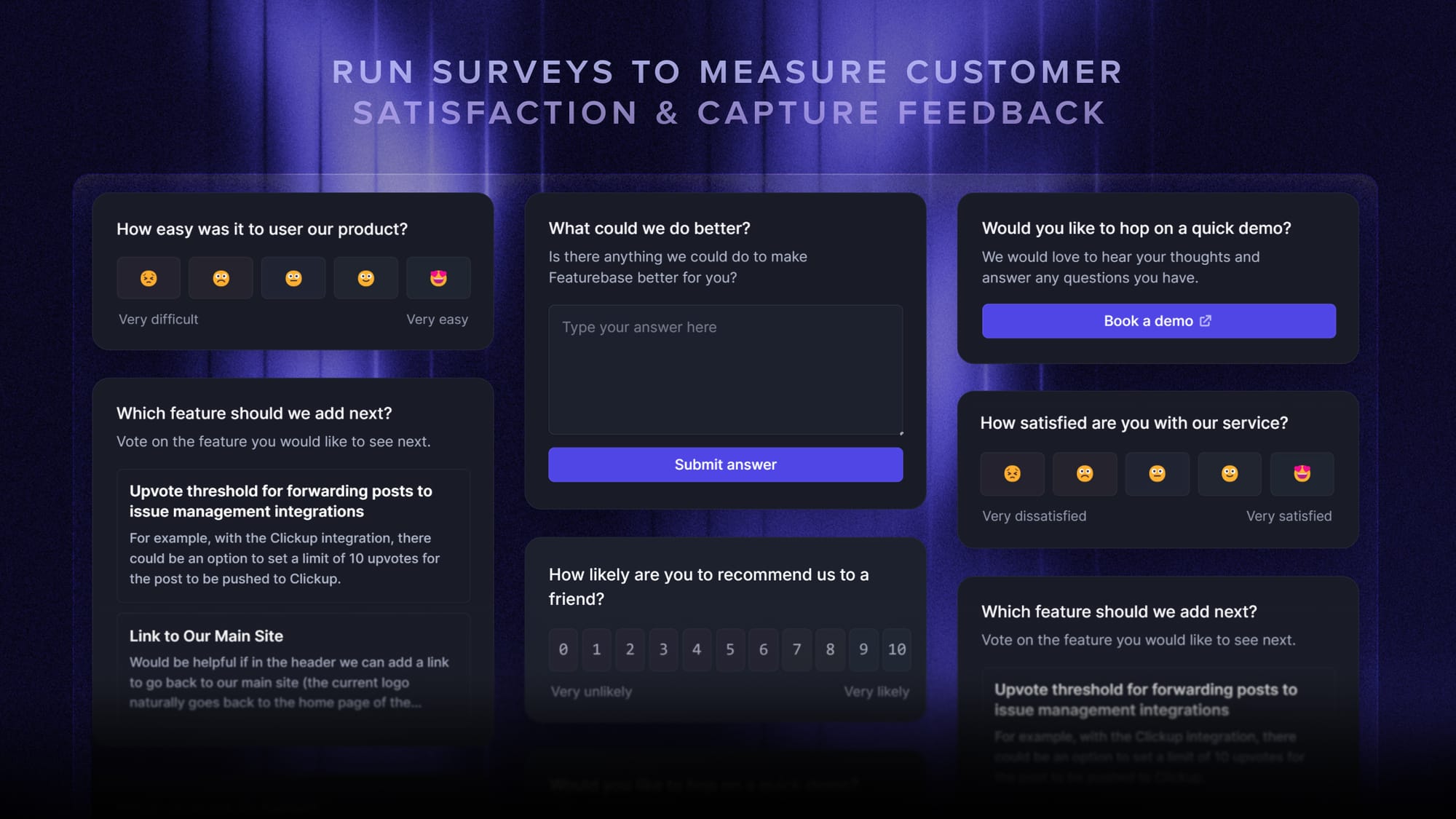
- Run surveys: Surveys let you gather input at scale. A good mix of open-ended and multiple-choice questions works best, and it's worth learning to ask the right survey questions so the answers are actually useful.
- Gather feedback from customer-facing teams: Your support and sales teams talk to customers every day. They hear the questions, confusion, and requests long before they show up in a report.
- Listen on social channels: People talk about brands openly online. Monitoring those conversations surfaces real-time feedback and unmet needs you'd never hear otherwise.
- Map the customer journey: Laying out each stage from discovery to purchase to support helps you see needs in context and spot where the experience breaks down.
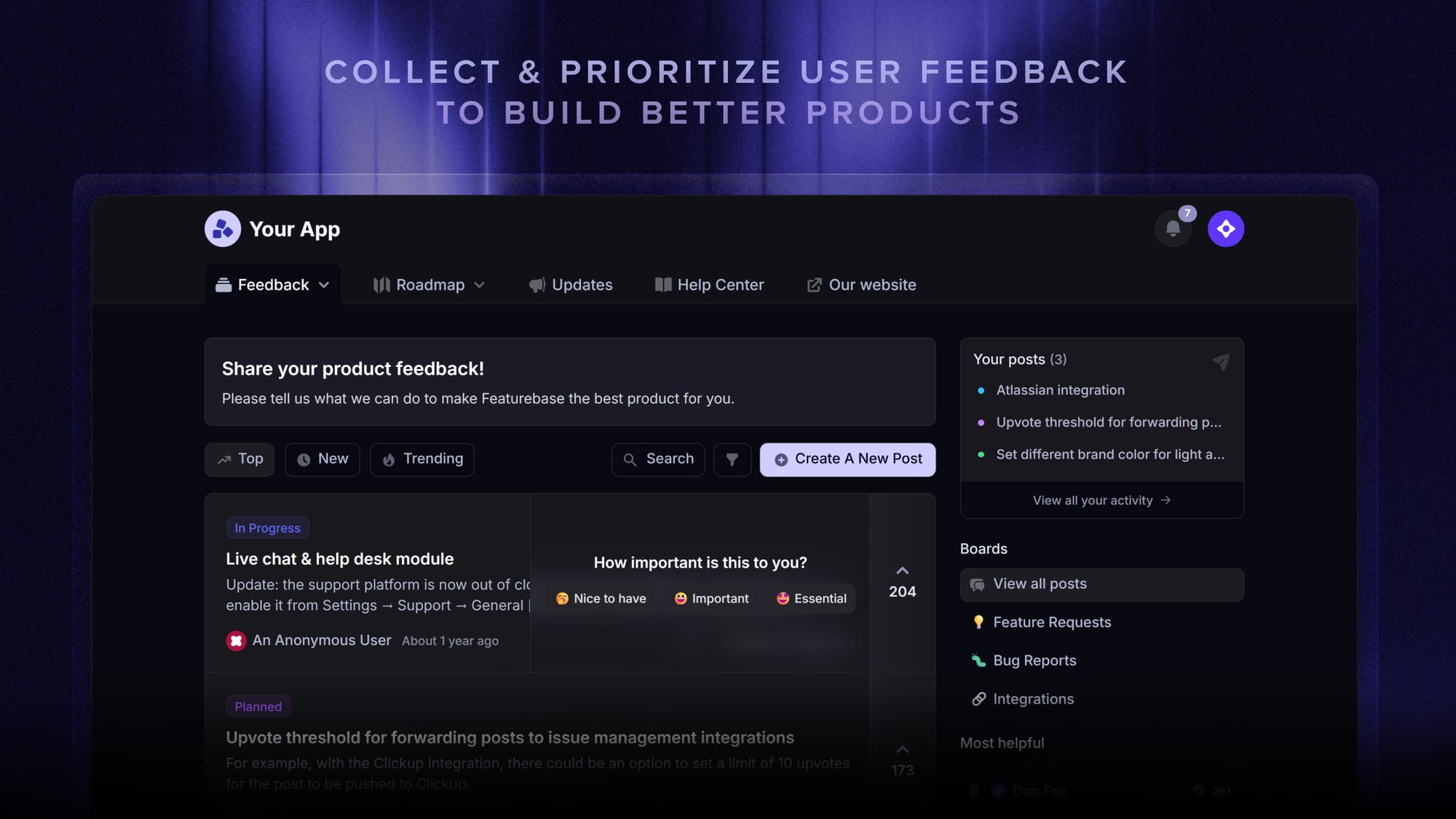
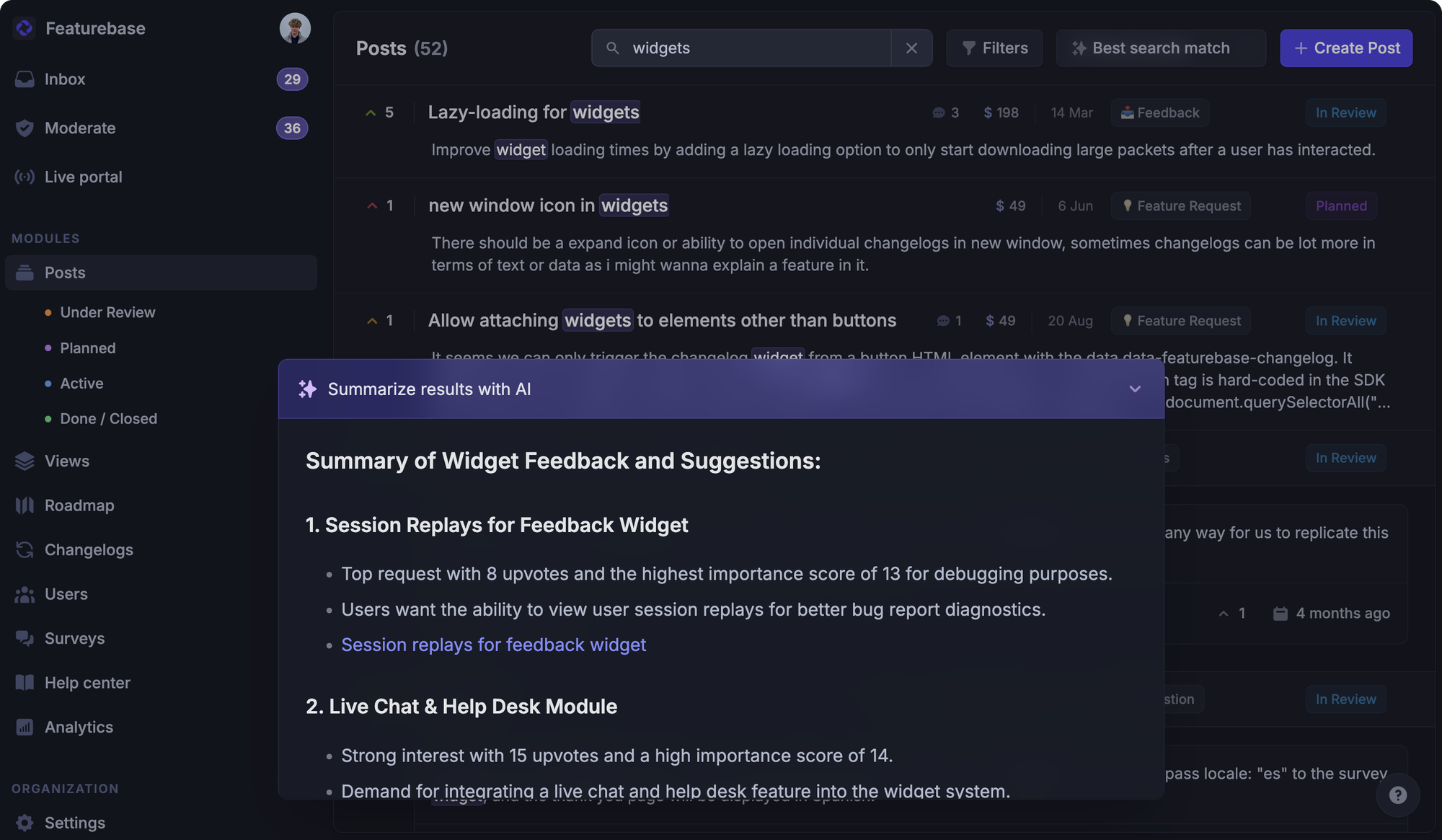
The hard part isn't running one survey, it's keeping everything in one place over time so patterns become obvious. A dedicated feedback tool helps here. With Featurebase you can gather feature requests and bug reports in a public feedback forum, run targeted surveys, and link each piece of feedback to customer revenue and data, so you can see not just what customers ask for but which needs actually matter most. For the full playbook, see our guide to collecting customer feedback.
How to meet customer needs
Identifying needs is only half the job. Meeting them is what earns loyalty. A few strategies consistently work:
- Prioritize by impact: You can't build everything at once. Weigh needs by how many customers share them and how much value solving them creates, then start there.
- Act quickly: Customers increasingly expect fast responses. Slow service signals that their time, and their need, doesn't matter to you.
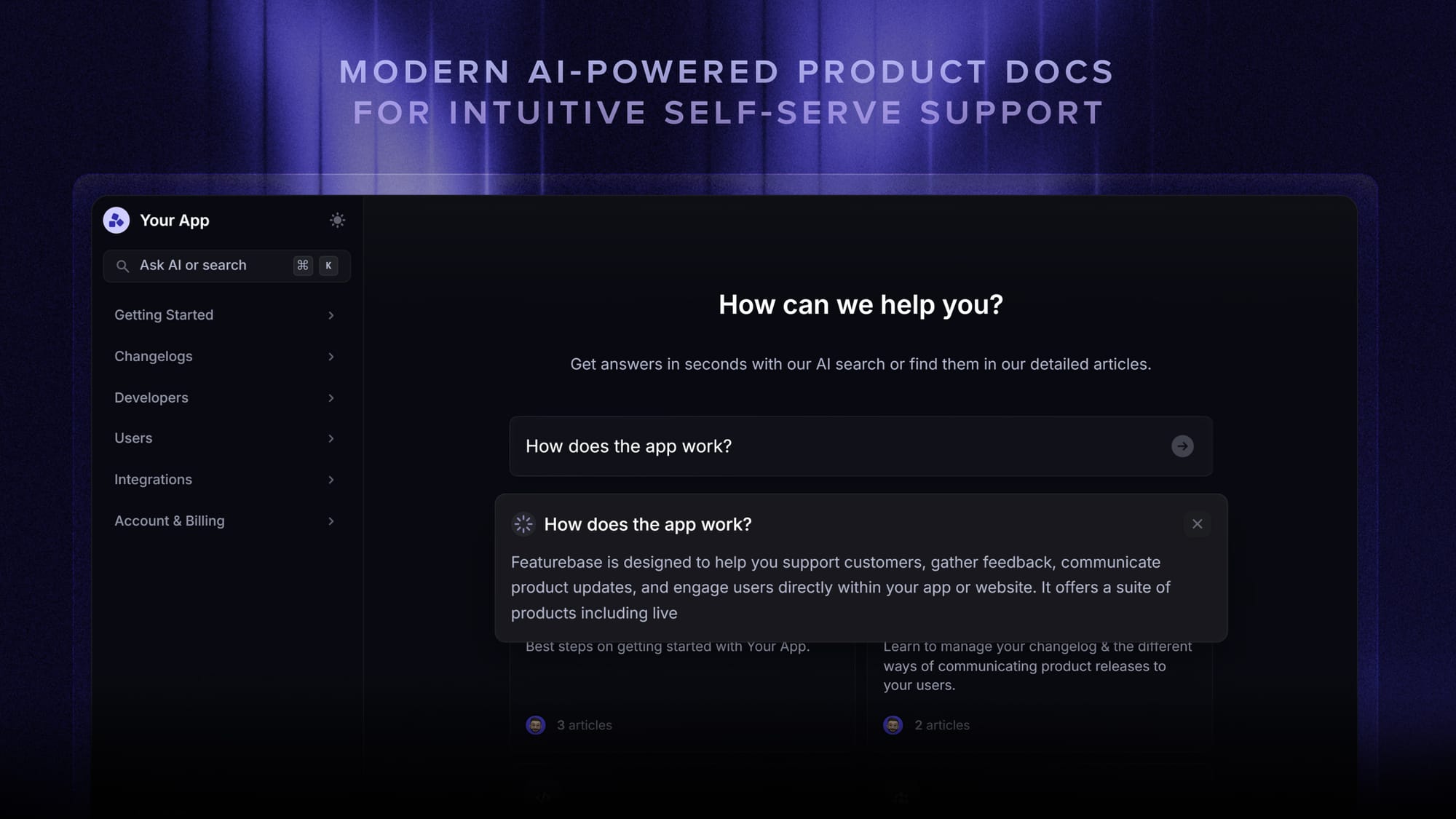
- Make help self-serve: A lot of needs come down to a customer just wanting a quick answer. An AI-powered help center lets them find it instantly on their own, at any hour, without waiting on your team.
- Personalize the experience: Use what you know about each customer to tailor interactions. Referencing their history or context makes people feel seen rather than processed.
- Close the loop: When a customer shares feedback, tell them what you did with it. Learning to close the feedback loop turns one-off input into lasting trust.
- Keep listening: Needs shift over time, so meeting them is never "done." Treat it as an ongoing cycle: collect, analyze the feedback, act, and repeat.
The businesses that win aren't the ones that guessed right once. They're the ones that built a habit of listening and adapting as their customers change.
Conclusion
Customer needs are the foundation of every good product and every good support experience. Get clear on the functional, emotional, and social reasons people buy, keep listening as those reasons evolve, and you'll spend your time building what customers actually want instead of guessing.
Featurebase is a modern and powerful feedback tool. It helps you collect feedback with a feature voting forum, surveys, embeddable widgets, and integrations. You can then analyze all of that feedback in one place by connecting it to your customers' revenue and data to make better product decisions.
It comes with affordable pricing and a Free plan that allows unlimited feedback. The onboarding is quick and doesn't require a credit card, so there's no downside to trying it. 👇
✨ Start collecting & managing feedback with Featurebase for free →
FAQs
What are the 4 main customer needs?
Different frameworks split customer needs in different ways. The most common model groups them into 3 types: functional, emotional, and social. When people refer to "4 main needs," they usually mean the practical essentials customers expect from most purchases: price, quality (or functionality), convenience, and a good overall experience. The exact labels matter less than covering both the practical job and how the customer feels about it.
What's the difference between customer needs and expectations?
A need is the underlying requirement a customer is trying to satisfy, while an expectation is the standard they use to judge whether you met it. For example, a customer needs to get help with a problem, but they expect that help to arrive within a few minutes. You can meet the need and still fall short of the expectation. Getting both right is what creates a genuinely satisfying experience.
How can you anticipate customer needs?
Anticipating needs means solving problems before customers have to ask. The best inputs are behavioral data and patterns from past interactions, which reveal what customers tend to want next. Proactive feedback loops help too, so you catch emerging needs early. Over time, spotting recurring signals lets you act ahead of demand instead of reacting to it.
How do customer needs change over time?
Customer needs are not fixed. They shift as technology advances, trends change, and expectations rise, and a feature that was once a delightful extra can quickly become a baseline expectation. This is why one-off research isn't enough. Continuous monitoring of feedback and behavior is the only way to keep up as needs evolve.
What is a customer needs analysis?
A customer needs analysis is the structured process of gathering, organizing, and interpreting what your customers need so you can act on it. It usually combines surveys, interviews, support data, and behavioral insights, then groups the findings into themes or categories. The output guides decisions on product development, messaging, and service, keeping them anchored to real needs rather than assumptions.
How do you prioritize competing customer needs?
Not every need can be met at once, and some genuinely conflict. Prioritize by weighing how many customers share a need against the impact of solving it, often factoring in revenue and strategic fit. When two needs pull in opposite directions, the answer is sometimes to serve them with separate products or plans rather than compromising on both. Clear priorities keep you focused on the needs that move the business most.