Blog Customer ServiceHow to Write a Customer Service Policy (+ Template)
How to Write a Customer Service Policy (+ Template)
A customer service policy keeps your team's support consistent. Here's what to include, how to write one, and a free template you can copy.


A customer complains about the same issue to two different agents and gets two completely different answers. One offers a refund, the other offers nothing. That inconsistency is what quietly erodes trust in your brand.
A customer service policy fixes this. It's the written playbook that tells your team exactly how to handle customers, so everyone delivers the same quality of service no matter who picks up the ticket.
In this guide, I'll cover what a customer service policy is, what to put in one, how to write it step by step, and a free template you can copy. 👇
Key takeaways:
- A customer service policy is a written document that defines how your team handles customer interactions, so service stays consistent across agents and channels.
- The biggest payoff is consistency: customers get the same experience every time, and your team stops guessing how to handle tricky situations.
- A strong policy covers your service vision, measurable standards (like response times), channel rules, scenario guidelines, and escalation and refund procedures.
- You can write one in 7 steps: set your vision, define standards, map channels, write scenario guidelines, cover refunds and escalations, roll it out, and review it regularly.
- Featurebase✨ gives you an omnichannel inbox, SLA tracking, and automations to actually deliver on the standards your policy sets.
- Grab the free template near the end of this guide and adapt it to your business.
What is a customer service policy?
A customer service policy is a written document that lays out how your team should interact with customers. It covers everything from how quickly you respond, to how you handle complaints, to when a refund gets approved.
Think of it as the rulebook for service. Instead of each agent deciding on the fly, the policy gives everyone a shared standard to follow.
Most companies write these for internal use, but some publish them so customers know what to expect. A policy usually guides interactions across every channel you support:
- Live chat
- Phone
- Social media
- In-person
It's closely related to your customer service standards, but it isn't the same thing. More on that difference in the FAQ.
Why your business needs a customer service policy
Great service is only valuable if it's reliable. A customer who gets amazing help one day and a shrug the next won't stick around.
The numbers back this up. 80% of customers say they've switched brands because of a poor customer experience, and 43% would leave after a single bad interaction. Poor service is the fastest way to lose people you already won.
Consistency is exactly what customers expect. In Zendesk's research, 70% of customers expect anyone they interact with to have the full context of their situation, with no repeating themselves and no different answer depending on who picks up.
A written policy delivers on that expectation in 3 ways:
- Consistency across your team: every agent handles the same situation the same way, so customers get a predictable experience no matter who they reach.
- Clarity for your team: agents stop second-guessing what they're allowed to offer, which speeds up responses and cuts stress.
- A benchmark for improvement: once your standards are written down, you can measure performance against them and spot where service is slipping.
What to include in a customer service policy
Every policy looks a little different, but the strong ones cover the same core areas. Here's what to include:
- Your service vision and values: a short statement of how you want customers to feel and the principles your team serves by. This anchors every other decision in the policy.
- Measurable service standards: concrete targets like first-response time, resolution time, and customer satisfaction goals. Vague promises like "fast service" don't help anyone.
- Supported channels: which channels you offer (email, live chat, phone, social) and the expectations for each one.
- Response and resolution guidelines: how agents should greet customers, gather details, and work toward a solution, including tone of voice.
- Escalation procedures: when and how an issue moves up to a manager or specialist, so hard cases don't stall. A clear escalation procedure keeps tricky tickets from falling through the cracks.
- Refund and compensation rules: who qualifies for a refund, discount, or replacement, and who has the authority to approve it.
- Handling difficult situations: guidance for hostile or unhappy customers, so agents stay safe and calm.
- Feedback and review process: how you collect customer feedback on service, and how often you revisit the policy.
How to write a customer service policy in 7 steps
You don't need to write all of this at once. Work through these 7 steps and you'll have a policy that's clear, realistic, and actually useful to your team.
1. Start with your service vision and values
Begin with the big picture. What does great service look like at your company, and why does it matter?
Write a short vision statement, one or two lines summarizing how you want to treat customers. For example: "We treat every customer with respect and resolve their issues quickly, because their success is our success."
Tie this to your broader customer service goals so the policy supports what the business is actually trying to achieve. It becomes the north star for every specific rule that follows.
2. Set measurable service standards
Turn your vision into numbers. Standards are the specific, measurable benchmarks your team commits to.
Common ones include:
- First-response time (for example, replying to emails within 4 hours)
- Resolution time (resolving most issues within 1 business day)
- Customer satisfaction score targets
- Follow-up expectations after a ticket closes
Be realistic. A standard you can't hit is worse than no standard, because it erodes trust when you miss it.
3. Map your channels and response times
List every channel customers can reach you on and set clear expectations for each. Response times on live chat should be faster than email, and social media needs its own rules.
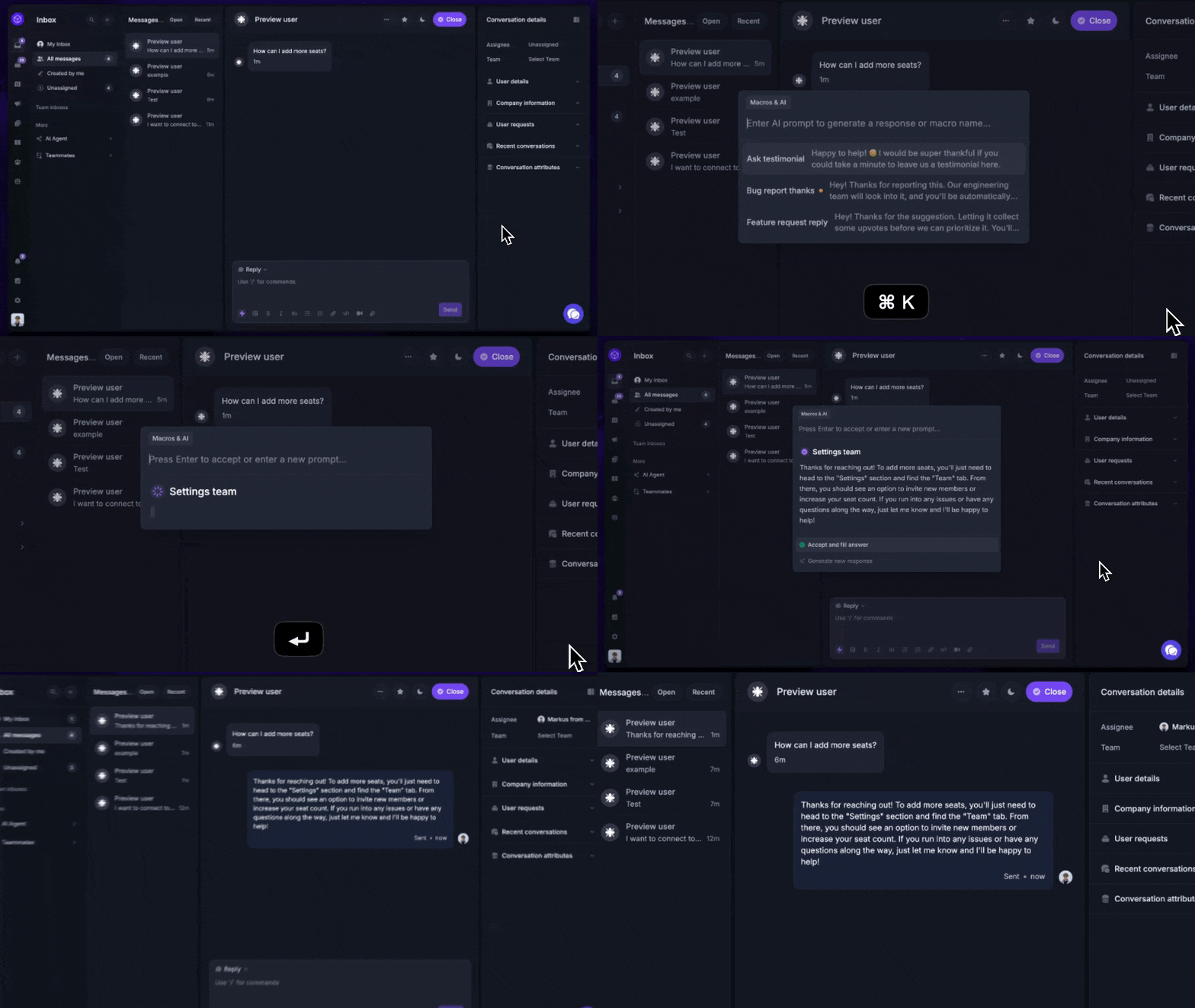
This is also where the right tooling matters. With Featurebase, you can manage live chat, email, and Slack from one omnichannel inbox and track SLAs, so the response-time standards in your policy actually get met instead of just sitting on paper.
4. Write clear guidelines for common scenarios
The heart of your policy is guidance for everyday interactions. Give agents a repeatable structure so they're not improvising under pressure.
A simple framework for handling a complaint:
- Greet the customer by name and in a friendly tone
- Ask them to explain the issue, then repeat it back to confirm you understand
- Apologize for the inconvenience and show empathy
- Offer a solution, or 2 to 3 options
- If they're still unhappy, escalate
You can make this as scripted or as flexible as you like. Some teams hand agents ready-made scripts and phrases, while others give principles and trust agents to adapt.
5. Define refunds, escalations, and edge cases
Ambiguity around money and authority is where service breaks down. Spell out:
- Refund eligibility: what qualifies a customer for a refund, discount, or replacement, and any time limits (for example, within 90 days with a receipt).
- Approval authority: who can sign off on refunds or exceptions, so agents know when to ask.
- Escalation path: exactly when and how an issue moves to a manager, and how quickly they respond.
Getting finance or leadership to sign off on the refund rules up front saves a lot of back-and-forth later.
6. Roll it out and train your team
A policy nobody reads does nothing. Once it's written:
- Store it somewhere everyone can find it, like your internal knowledge base
- Walk the team through it in training, using real scenarios and role-play
- Repeat the training for new hires and whenever the policy changes
Automations help here too. You can auto-route and escalate tickets according to the rules in your policy, so the standards enforce themselves rather than relying on memory.
7. Review and improve it regularly
A customer service policy is a living document, not a one-time project. Set a schedule to review it at least once a year, and any time you add a channel, launch a product, or spot a recurring issue.
Use customer feedback and your service metrics to guide updates. If you're consistently missing a standard, either the team needs more support or the standard isn't realistic.
Customer service policy template
Here's a simple template you can copy and adapt. Fill in the brackets with your own details.
[Company name] customer service policy
Our vision: [One or two lines on how you want customers to feel and the values behind your service.]
Our service standards:We respond to all emails within [X hours].We reply to live chat within [X minutes].We aim to resolve [X%] of issues on first contact.
How we handle every interaction:Greet the customer warmly and by name.Listen fully and confirm we understand the issue.Apologize for any inconvenience and show empathy.Offer a clear solution or set of options.Follow up within [X hours] to confirm the issue is resolved.
Refunds and compensation:Within [90] days with proof of purchase: [full refund or replacement].After [90] days: [store credit or discount].Refunds above [$X] require [manager] approval.
Escalation:If a customer is unsatisfied after [2] attempts, escalate to [role].Escalated issues receive a response within [X hours].
Difficult situations:Stay calm and professional, and never argue.If a customer becomes abusive, [follow this step].
Feedback and review:We survey customers after every resolved ticket.We review this policy every [12] months.
That's a starting point. Trim or expand each section to fit how your team actually works.
Deliver on your policy with the right tools
A written policy sets the standard. A modern support platform helps you hit it. That's where Featurebase comes in.
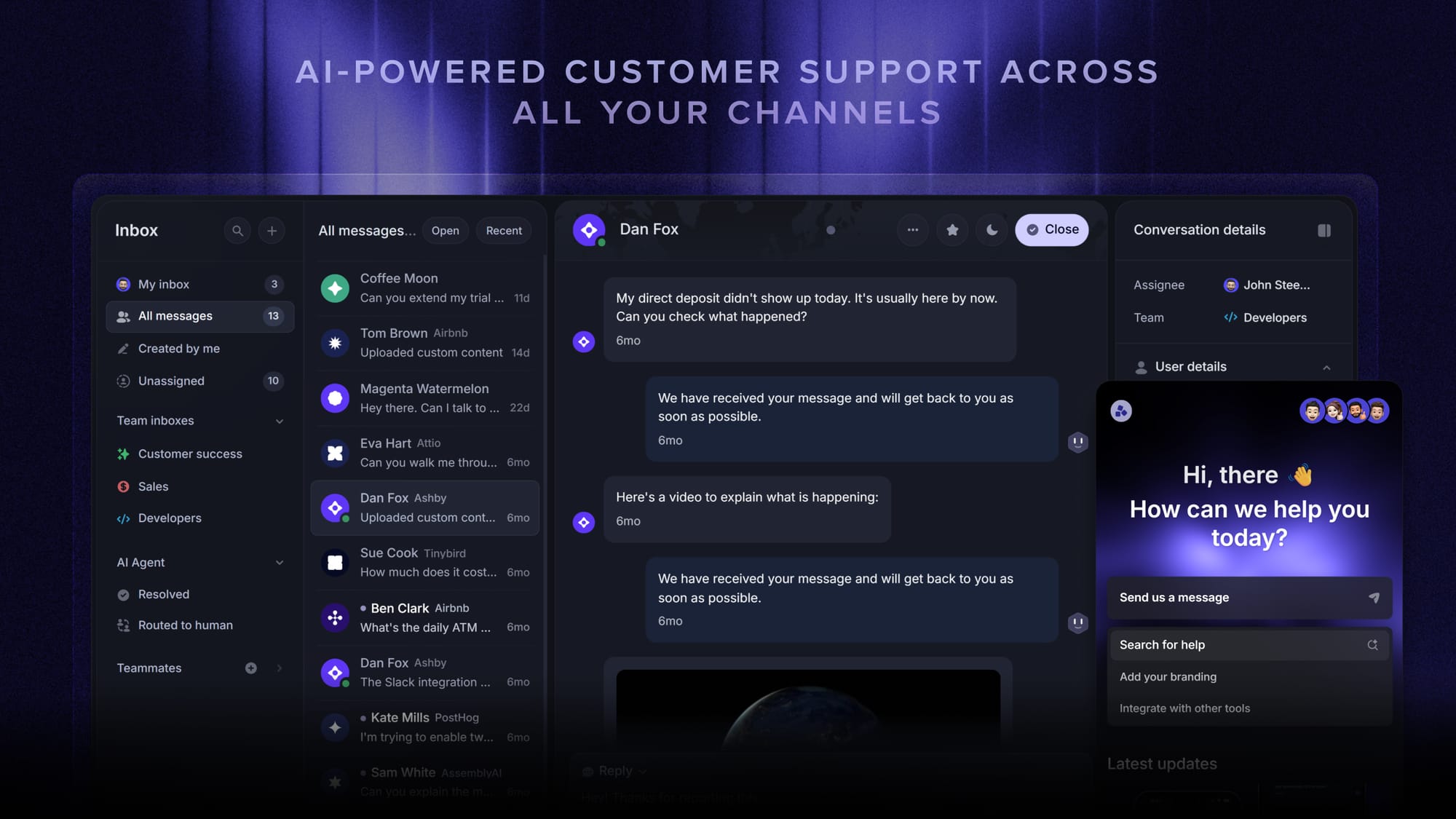
Featurebase is a modern AI customer support platform for product-led SaaS. It combines AI-powered support, help center, and feedback management into a single platform for startups that want all their customer-facing tools in one place. Featurebase is loved by thousands of support teams from companies like Lovable, Raycast, and n8n. 💫
Top features:
- Omnichannel inbox – Manage live chat, email, and Slack conversations from one AI-powered view
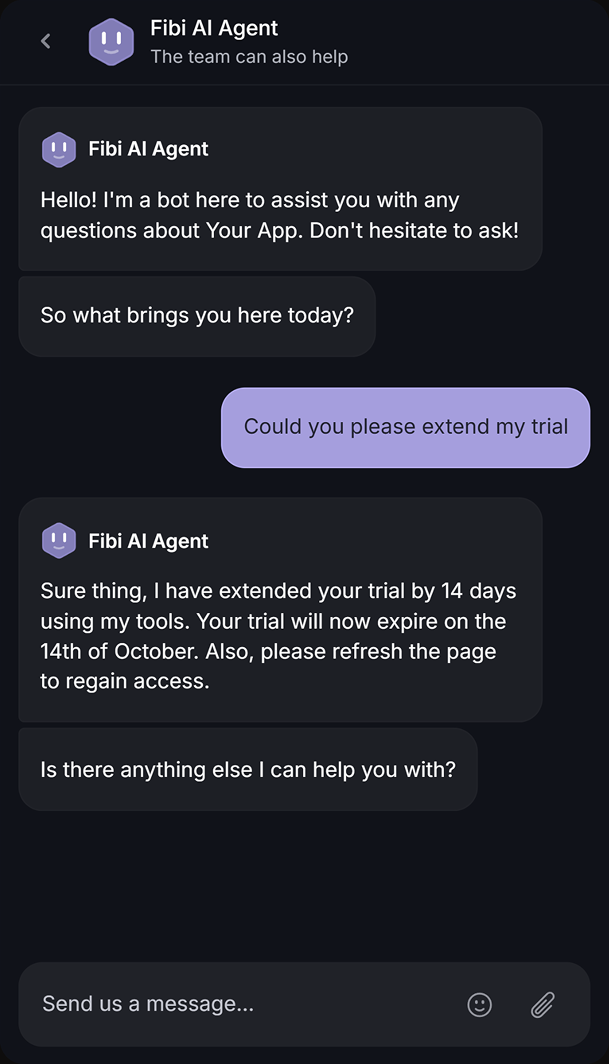
- Fibi AI Agent - Resolve customer issues on autopilot & run custom actions like trial extensions and refunds
- Help center with AI search – Provide instant, multilingual self-serve answers
- Workflows & automations – Auto-assign tickets, route conversations, collect customer data, and more
- AI Copilot – Help your agents answer customers faster with AI Copilot that uses your internal knowledge
- Multi-brand support – Manage multiple Help Centers and Live chats from a single workspace
- Automatic AI translations – Automatically translate all messages and help articles to your customers native language
- Service Level Agreements – Track SLAs to make sure your team responds to customers on time, every time
- Mobile app – Respond to customers, receive notifications, and unblock users on the go
- Feedback & roadmap tools – Collect feature requests and close the loop with updates
- Product updates – Publish release notes with a changelog page, in-app widget, and emails
- Integrations – Connects with Slack, Linear, Jira, HubSpot, and more
Pricing: Free plan available with unlimited conversations. Paid plans start at $29/seat/month with $0.49 per AI resolution.
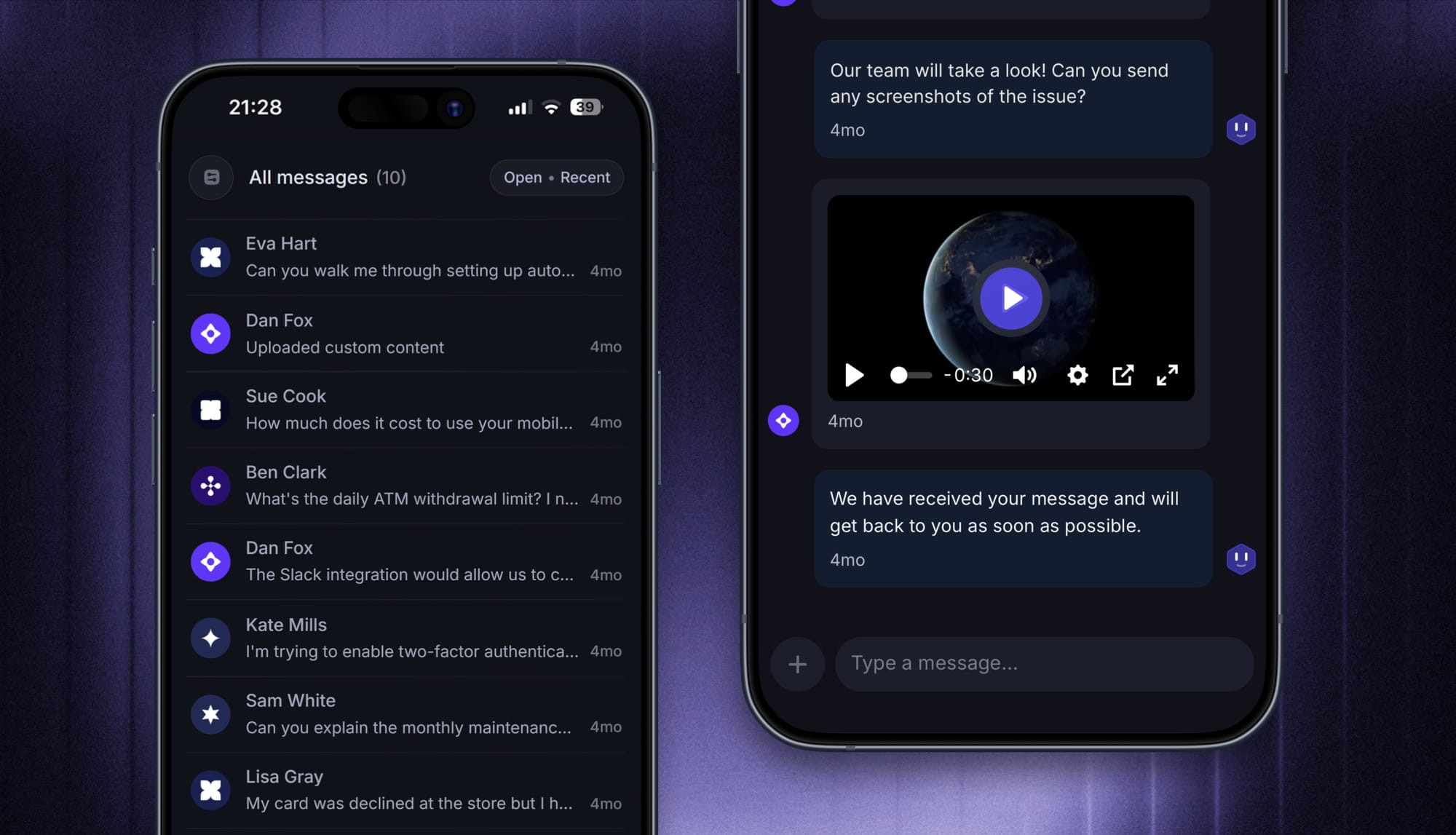
Featurebase covers all the basic support features that legacy platforms do, but with a much more modern approach. It comes with AI automations, a mobile app, and multiple channels (email, live chat, Slack, etc.).

Time to use a better CX tool
Automatically resolve 70% of customer requests & cut down manual support loads
Conclusion
A customer service policy turns good intentions into consistent, repeatable service. Define your standards, write down how to handle the common situations, and keep the document alive with regular reviews. Your team stops guessing, and your customers get the reliable experience that keeps them around.
Featurebase is a modern AI-powered customer support platform that helps you deliver on your policy, with an omnichannel inbox, SLA tracking, AI agents, and a help center, all in one place. It also includes feedback, roadmap, and changelog tools, so you can close the loop with customers after every interaction.
It comes with a Free plan and fast onboarding that doesn't require a credit card, so there's no downside to trying it. 👇
✨ Automate your support with the fastest AI-enhanced Inbox today →
FAQs
What is an example of a customer service policy?
A simple example: "We respond to all emails within 24 hours, resolve most issues on first contact, and offer a full refund within 90 days with proof of purchase. If a customer is unhappy after 2 attempts, we escalate to a manager." A full policy expands each of those lines into clear guidelines. You can copy the template earlier in this guide as a starting point.
What are the 7 principles of customer service?
The 7 principles most teams follow are speed, honesty, accessibility, empathy, consistency, accountability, and continuous improvement. In practice, that means helping customers quickly, being transparent, meeting them on their preferred channel, treating them with care, delivering the same quality every time, owning your mistakes, and always looking for ways to improve.
What are the 3 C's of customer service?
The 3 C's are communication, consistency, and caring. Communication means keeping customers clearly informed, consistency means every interaction meets the same standard, and caring means showing genuine empathy for the customer's situation. A good customer service policy reinforces all 3.
Should you make your customer service policy public?
You can, and many brands do. Publishing your policy signals transparency and sets clear expectations, which builds trust and holds you accountable. If your policy contains internal-only details like approval thresholds or agent scripts, publish a simplified customer-facing version and keep the full document internal.
How often should you review your customer service policy?
Review it at least once a year. You should also revisit it any time you add a support channel, launch a new product, change your pricing, or notice a recurring issue your current policy doesn't cover. Treat it as a living document rather than a set-and-forget file.
What's the difference between a customer service policy and customer service standards?
Your customer service standards are the measurable targets, like a 4-hour first-response time or a 90% satisfaction score. Your customer service policy is the wider document that contains those standards plus the guidelines, escalation paths, and refund rules for how to hit them. In short, standards are the numbers and the policy is the full playbook around them.