Blog Customer ServiceFreshdesk vs HappyFox: Which Help Desk Wins in 2026?
Freshdesk vs HappyFox: Which Help Desk Wins in 2026?
Freshdesk vs HappyFox compared for 2026: pricing, ticketing, automation, AI, and support, plus an honest verdict on which help desk fits your team.


✨Psst... Looking for a modern, AI-first alternative to Freshdesk and HappyFox? Check out Featurebase →
Freshdesk and HappyFox are both mature help desks, but they pull in opposite directions. Freshdesk is the broad, AI-forward support platform with a real free plan and the lowest transparent entry price, while HappyFox is the deeper, IT-leaning ticketing tool with native asset management but no free plan.
This guide compares them category by category - pricing, ticketing, automation, AI, channels, and support - and calls a winner for each. 👇
Key takeaways:
| Freshdesk | HappyFox | |
|---|---|---|
| Starting price | $15/agent/mo (Growth, billed annually) | ~$29/agent/mo (pricing not fully public) |
| Free plan | Yes, up to 10 agents | No, free trial only |
| Best for | Broad customer support with a free entry point | IT and ITSM-leaning teams needing asset management |
| Built-in AI | Freddy AI (copilot + agent, often an add-on cost) | Lighter, automation-first |
| Asset management | Not native | Native (hardware and software) |
| Live chat | Separate product (Freshchat) | Separate sub-product |
Freshdesk wins on price, breadth, and AI. HappyFox wins on ticketing depth, asset management, and out-of-the-box automation. Neither bundles live chat into the core product, and both feel like legacy platforms next to newer AI-native tools.
What are Freshdesk and HappyFox?
Both tools sit in the same category - cloud help desks built around ticketing - but they were designed for different buyers.
Freshdesk
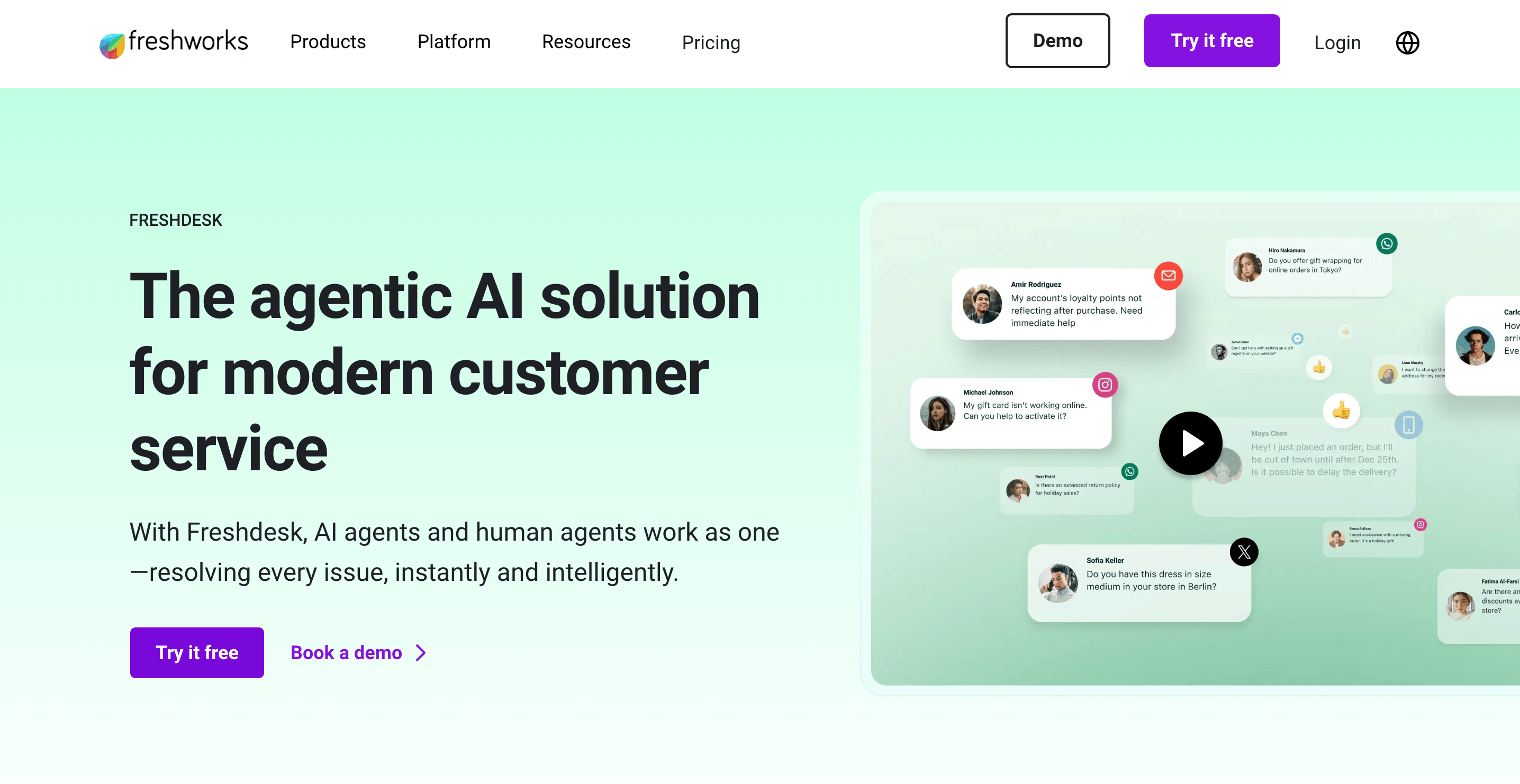
Freshdesk, made by Freshworks, is a general-purpose customer support platform. It handles email, social, phone, and web support out of the box, ships with a large app marketplace, and layers on Freddy AI for triage and suggested replies. It is popular for being approachable, and its free plan plus a low $15 entry point make it easy for small teams to start. If you want the full picture, our Freshdesk review digs into the details.
HappyFox
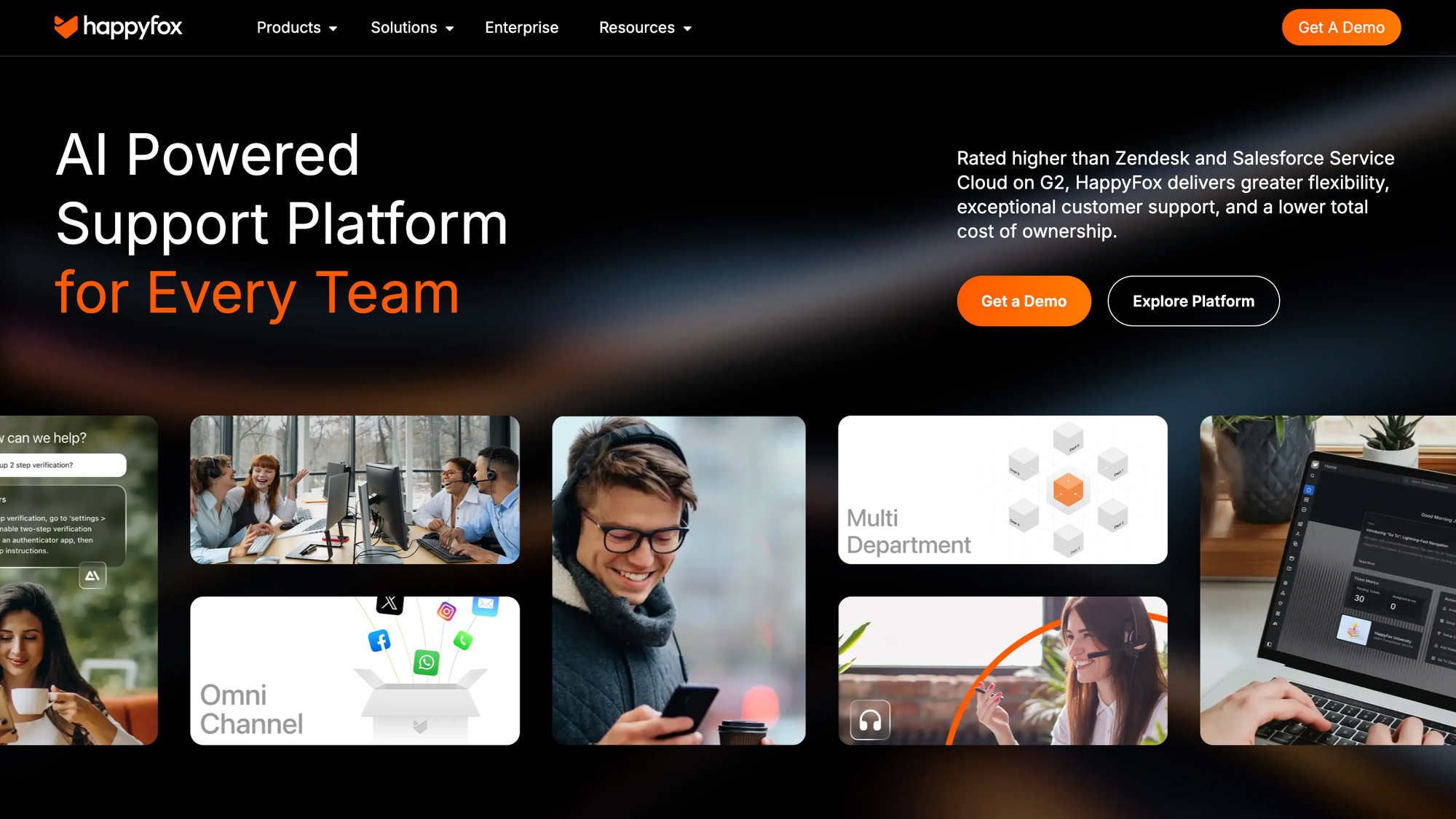
HappyFox is a help desk that leans toward IT service management. Its standout difference is native asset management for hardware and software, plus ITIL workflows and strong SLA controls. That makes it a fit for internal IT teams that need process compliance without jumping all the way to a heavyweight platform. The trade-off: no free plan, a dated interface, and pricing you mostly have to ask for.
Pricing and plans
Pricing is where these two diverge most, and it is usually the deciding factor.
Freshdesk pricing
Freshdesk keeps its pricing public and starts low:
- Free: $0 for up to 10 agents, with email and social ticketing, a knowledge base, and basic collaboration
- Growth: $15/agent/mo billed annually, adding automation, marketplace apps, and helpdesk reports
- Pro: $49/agent/mo billed annually, adding custom roles, custom reports, SLA management, and a multilingual knowledge base
- Enterprise: $79/agent/mo billed annually, adding skill-based assignment, sandbox, and IP whitelisting
Two caveats matter. Monthly billing runs higher than the annual rates above, and the headline price excludes live chat (Freshchat) and customer-facing Freddy AI, which are billed separately. Big jumps between tiers are a recurring complaint from Freshdesk users on G2.
HappyFox pricing
HappyFox is harder to pin down. There is no free plan, only a trial, and the company does not publish fully transparent pricing - figures vary by source. Agent-based plans generally start around $29/agent/mo and climb to roughly $89/agent/mo at the top, while unlimited-agent plans start near $1,499/month and scale up from there. Our HappyFox pricing breakdown tracks the moving numbers in more detail.
For most small and mid-sized teams, HappyFox ends up pricier than Freshdesk once you factor in the missing free tier and the higher per-agent floor.
Winner: Freshdesk A genuine free plan, a $15 entry point, and transparent pricing beat HappyFox's no-free-plan, ask-us-for-a-quote model for the vast majority of buyers.
Ticketing and core help desk features
This is where HappyFox earns its keep. Both tools cover the basics well - unlimited tickets, custom statuses and fields, SLA timers, canned responses, and a knowledge base. The difference is depth.
HappyFox adds native asset management, letting you link hardware and software assets directly to tickets without a separate tool. Pair that with ITIL workflows and agent collision detection, and it becomes a credible choice for IT teams. If you are weighing what a ticketing system actually needs to do for an internal desk, asset tracking is often the line that separates a help desk from an ITSM tool.
Freshdesk's ticketing is strong but more customer-support shaped: automatic ticket merging, time tracking, ticket watching, and annotated attachments. It does not include asset management natively, so IT-heavy teams would need an integration. One more gap worth noting - several Freshdesk reviewers point out that deeper customization and advanced reporting sit behind the higher tiers.
Winner: HappyFox Native asset management and ITIL workflows give HappyFox the edge for teams that need more than customer-facing support.
Automation and workflows
Both platforms automate the repetitive parts of support, just with different flavors.
Freshdesk leans on rule-based dispatch, intelligent ticket assignment, and time- or event-triggered automations, with Freddy AI handling triage and field suggestions. HappyFox counters with smart rules, canned actions that bulk-apply multi-step macros, automated time tracking, SLA breach alerts, and a ticket load balancer.
In practice, HappyFox's canned actions and load balancing feel a touch more powerful out of the box, while Freshdesk's automation is easier to set up but starts gating the better pieces behind Pro and Enterprise. If automation is your priority, our guide to customer service automation software covers what to look for beyond either tool.
Winner: HappyFox (slightly) Stronger default automation tooling, though Freshdesk closes the gap on ease of setup.
AI capabilities
AI is the fastest-moving part of this category, and it is where the two tools feel furthest apart.
Freshdesk's Freddy AI is the more developed offering, with an answer bot for deflection, ticket field suggestions, and agent-assist replies. The catch is cost - the agent-facing copilot and customer-facing AI agent are typically billed on top of your plan. You can read more about how Freshdesk's AI is packaged. HappyFox, by contrast, is automation-first rather than AI-first, and its AI features lag behind on depth.
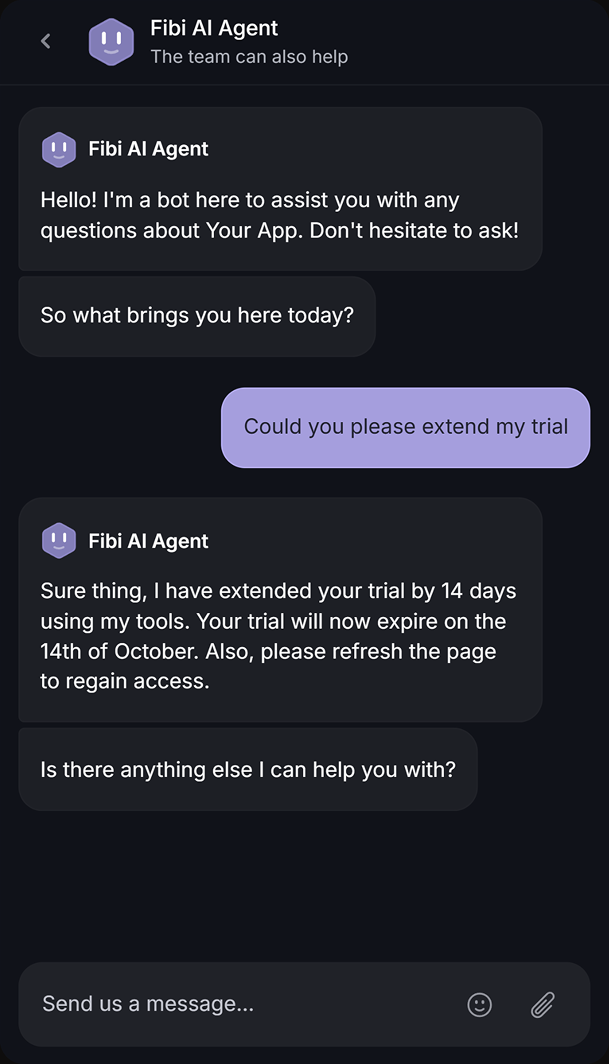
This is also where modern, AI-native platforms pull ahead of both. With Featurebase, the Fibi AI Agent resolves customer issues on autopilot and can run custom actions like trial extensions and refunds, rather than just suggesting a canned reply. For product-led SaaS teams, that difference between "AI that drafts" and "AI that resolves" is the whole game.
Winner: Freshdesk Freddy AI is more capable than HappyFox's AI, even if the add-on pricing stings.
Channels and integrations
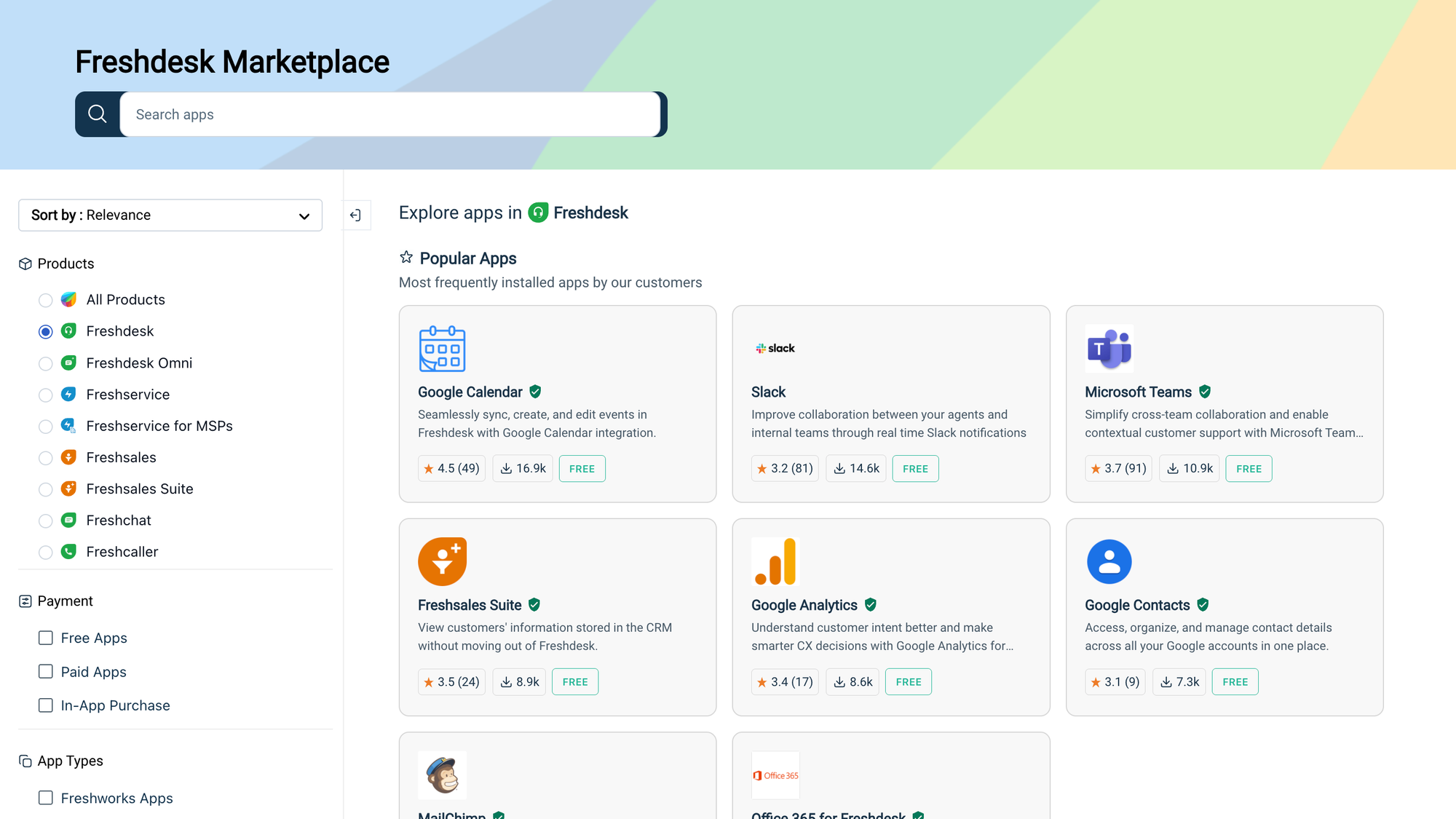
Freshdesk covers more channels natively: email, social, phone, web forms, and WhatsApp, plus a web widget that turns into tickets. HappyFox handles email, social, web forms, and an API, with a slightly stronger social presence.
The shared catch is live chat. Neither tool bundles it into the core product - Freshdesk routes you to Freshchat and HappyFox to a separate HappyFox Chat sub-product, both with their own pricing. If a single platform for every channel matters to you, that is a mark against both.
On integrations, it is close to even. Freshdesk's app marketplace is larger, while HappyFox covers the major CRMs and project tools and leans on Zapier for the rest.
Winner: Freshdesk (slightly) More native channels and a bigger marketplace, though both treat live chat as an add-on.
Ease of use and support
Freshdesk is widely praised for being approachable - most support staff can pick it up with minimal training. HappyFox is also easy to onboard and configure, but its interface is frequently described as dated, and its knowledge base UI draws criticism from reviewers.
On support quality, both offer email, chat, and social support, with the best response tiers reserved for higher plans. Freshdesk includes 24/7 email support even on its free plan, which is rare. HappyFox's faster support windows are gated to its pricier tiers, and some users report slow, impersonal service.
Winner: Freshdesk A cleaner interface and 24/7 email support on every plan, including free, edge out HappyFox.
Overall verdict: Freshdesk vs HappyFox
There is no universal winner here, only the right tool for your shape of team.
- Choose Freshdesk if you are a customer-facing support team that wants a free plan, low entry pricing, broader channels, and more mature AI.
- Choose HappyFox if you are an IT or ITSM-leaning team that needs native asset management, ITIL workflows, and deeper out-of-the-box automation, and the pricing fits your budget.
Overall winner: Freshdesk for most teams Freshdesk takes pricing, AI, channels, and ease of use. HappyFox wins ticketing depth and asset management, which makes it the better pick specifically for IT-heavy desks.
But if both feel like they are showing their age - separate chat products, AI billed as an extra, reporting locked behind upgrades - it is worth looking at a newer option before you commit. 👇
Looking beyond Freshdesk and HappyFox: try Featurebase
If both Freshdesk and HappyFox feel like they were built for a pre-AI era, it is worth seeing what a newer approach looks like. Featurebase is an AI customer support platform aimed at product-led SaaS teams, and it is used by companies like Lovable, Raycast, and n8n.
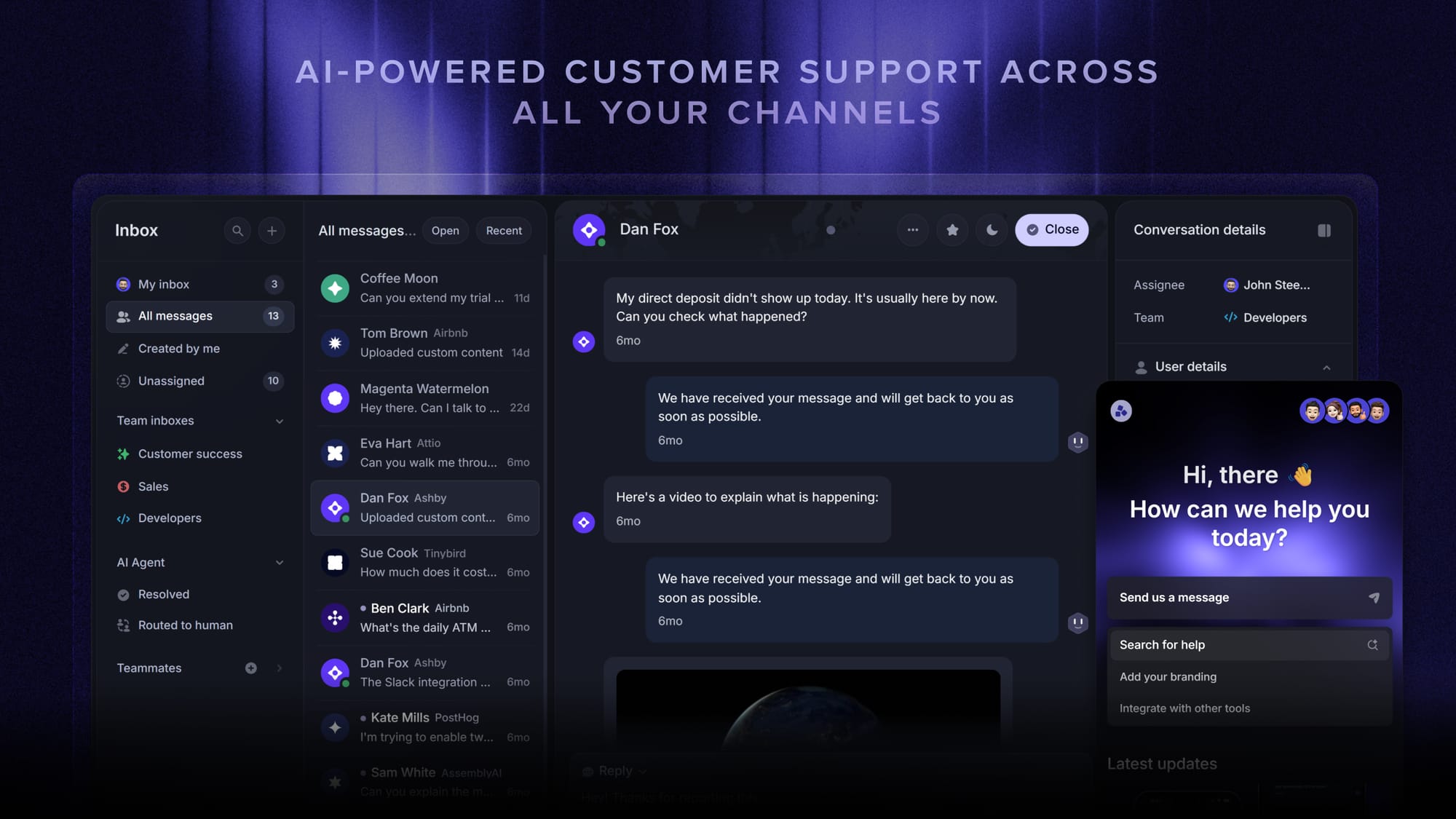
The core idea is to stop juggling separate tools. Your live chat, email, and Slack conversations live in one omnichannel inbox, and the Fibi AI Agent works the front line - resolving common issues on autopilot and even running actions like trial extensions and refunds, rather than just drafting a reply for someone to approve. Behind that sit the pieces you would otherwise buy separately: an AI-powered help center with multilingual answers, an AI Copilot that drafts replies from your own knowledge, SLA tracking, workflows for routing and assignment, and feedback and roadmap tools to close the loop with customers.
The pricing is the part Freshdesk and HappyFox buyers tend to notice. There is a real free plan with unlimited conversations, and paid plans start at $29/seat/month with $0.29 per AI resolution - so AI is part of the platform, not a separate line item you negotiate later.
Conclusion
Freshdesk and HappyFox are both solid, mature help desks. Freshdesk is the better default for customer-facing teams thanks to its free plan, low pricing, broader channels, and more developed AI. HappyFox is the smarter buy for IT-leaning teams that need native asset management and ITIL workflows, provided the pricing works for you.
If you want the modern path - AI that actually resolves tickets, an omnichannel inbox, help center, and feedback tools in one place - Featurebase is built for product-led SaaS teams who find legacy help desks slow and fragmented. It brings support, knowledge base, and feedback together so you are not stitching 3 products and an AI add-on into one workflow.
There is a free plan and onboarding takes minutes, so there is no downside to trying it. 👇
✨Automate your support with the fastest AI-enhanced Inbox today →
FAQs
What is the main difference between Freshdesk and HappyFox?
Freshdesk is a broad, AI-forward customer support platform with a free plan and a low entry price, built mainly for customer-facing teams. HappyFox is a deeper, IT-leaning ticketing tool with native asset management and ITIL workflows, but no free plan. In short, Freshdesk is for customer support, HappyFox is for IT-style service desks.
Does HappyFox have a free plan?
No. HappyFox only offers a free trial, not a permanent free plan. Freshdesk does offer a genuine free plan for up to 10 agents, which is one of the clearest advantages it has over HappyFox for small teams.
Is Freshdesk cheaper than HappyFox?
At the entry level, yes. Freshdesk's paid plans start at $15/agent/month billed annually, while HappyFox generally starts around $29/agent/month. Keep in mind that Freshdesk bills live chat and customer-facing AI separately, so the real cost depends on which add-ons you need.
Which is better for IT and asset management, Freshdesk or HappyFox?
HappyFox. It includes native asset management for hardware and software plus ITIL workflows, which Freshdesk does not offer out of the box. For an internal IT desk that tracks devices and licenses alongside tickets, HappyFox is the stronger fit.
Do Freshdesk and HappyFox include live chat?
Not in their core products. Freshdesk routes live chat through a separate product called Freshchat, and HappyFox offers it as a separate HappyFox Chat sub-product. Both carry their own pricing, so a single all-in-one platform is not what either delivers by default.
What is a good modern alternative to Freshdesk and HappyFox?
Featurebase is a strong AI-first alternative that combines an omnichannel inbox, an AI agent that resolves tickets on autopilot, a help center, and feedback tools in one platform, with a free plan to start. It is built for product-led SaaS teams who want modern support without bolting AI and live chat on as paid extras. You can also compare other options in our Freshdesk alternatives guide.