Blog Customer ServiceInsurance Chatbots: Use Cases, Benefits & Examples
Insurance Chatbots: Use Cases, Benefits & Examples
Insurance chatbots handle quotes, claims, and coverage questions around the clock. Here are the real use cases, benefits, limits, and how to choose one.


✨ Automate your support with the fastest AI-enhanced Inbox today →
Insurers are pouring money into chatbots. Yet only about a quarter of customers actually trust the advice a bot gives them.
That gap is the whole story of AI in insurance right now. Done badly, a chatbot frustrates people at their worst moment. Done well, it answers coverage questions at 2am, files a claim in minutes, and frees your agents for the cases that need a human.
This guide covers what insurance chatbots do, the use cases that actually pay off, the benefits, the limits, and how to choose one 👇
Key takeaways:
- Insurance chatbots automate high-volume, repetitive work: quotes, first notice of loss, coverage questions, renewals, and payments, so agents can focus on complex cases that need empathy.
- Adoption is now mainstream: the insurance chatbot market was worth around $467 million in 2022 and is projected to reach $4.5 billion by 2032, a 25.6% annual growth rate.
- There are 3 technology levels: rule-based bots, conversational AI, and generative AI, and matching the right level to the right task is what separates a useful bot from a frustrating one.
- The biggest wins are 24/7 omnichannel support and faster claims processing.
- The biggest risks are the customer trust gap, data privacy and compliance, and generative AI "hallucinations".
- Featurebase✨ is a modern AI support platform that combines an AI agent, omnichannel inbox, and help center in one place, so you can automate support without stitching 5 tools together.
What is an insurance chatbot?
An insurance chatbot is a software assistant that talks to customers in plain language to handle insurance tasks, from answering a coverage question to guiding someone through a claim.
Early versions were basic. They followed a script and matched keywords, which meant they got lost the moment a question went off-track. Modern insurance chatbots use AI to understand what a customer actually means, pull answers from your policies and help center, and even take action inside your systems.
The term covers a wide range of tech, though. And the difference matters a lot when you're choosing one.
Rule-based vs conversational vs generative AI
Not every "chatbot" is the same thing. There are 3 levels, and each fits a different job:
- Rule-based bots follow a fixed decision tree or script. They work well for narrow, predictable tasks (an interactive FAQ, say), but they break as soon as a customer phrases something in an unexpected way.
- Conversational AI uses natural language processing to understand intent, even when a question is worded oddly. It can hold a real back-and-forth and improve over time from past interactions.
- Generative AI uses large language models to produce human-like answers and handle complex, open-ended tasks. Most business deployments ground the model in the company's own knowledge base (a technique called retrieval-augmented generation) so answers stay factual instead of made up.
The trend is toward the third level, but that doesn't mean rule-based flows are useless. A well-designed insurance bot often blends all 3, using scripted steps for regulated processes and generative AI for open questions.
How insurance chatbots are changing the industry
Chatbots have moved from a novelty on the website to a core part of how insurers serve customers. The numbers back that up.
The insurance chatbot market was valued at around $467 million in 2022 and is projected to hit $4.5 billion by 2032, a compound annual growth rate of 25.6%. That kind of consistent growth signals the technology is now treated as a strategic investment, not an experiment.
Adoption is already widespread. In the UK, 83% of insurers had implemented or were in the process of implementing AI chatbots or generative AI, according to Gallagher Bassett's 2024 Claims Insights report. Insurers expect faster processing, lower costs, and better customer service in return.
What changed is trust in the technology itself. As bots got better at understanding language, insurers handed them more responsible work: taking the first notice of a claim, gathering documents, and qualifying leads. The story of insurance chatbots is really a story of growing trust and deeper integration into core operations. For a broader look at where bots fit, our guide to common chatbot use cases covers the patterns that show up across industries.
6 insurance chatbot use cases across the customer journey
The value of a chatbot shows up when you map it to the jobs your team does over and over. Here are the 6 use cases that consistently pay off in insurance.
Quotes and lead qualification
A chatbot can greet a prospect, ask the right questions, and return a personalized quote in real time, without a human agent lifting a finger. It captures details like coverage needs and risk profile, then recommends the most suitable policy.
Because it never sleeps, it catches leads that would otherwise slip away after hours. If you want the mechanics, our breakdown of how chatbots qualify leads walks through the questions to ask and when to hand off to sales.
First notice of loss and claims
Filing a claim is where customers are most stressed and most likely to churn. It's also the process with the most to gain from automation.
A chatbot can handle the first notice of loss (FNOL) by guiding the customer step by step, collecting the required information and photos, and giving real-time status updates. Instead of waiting on hold, the customer reports the incident in a single conversation, and the bot summarizes everything before handing it to a human to finalize.
Coverage questions and policy FAQs
"Am I covered for this?" is the question your agents answer a hundred times a day. A chatbot pulls answers from your policies and help center and delivers them in a one-to-one dialogue that feels far more personal than sending someone off to read a static FAQ page.
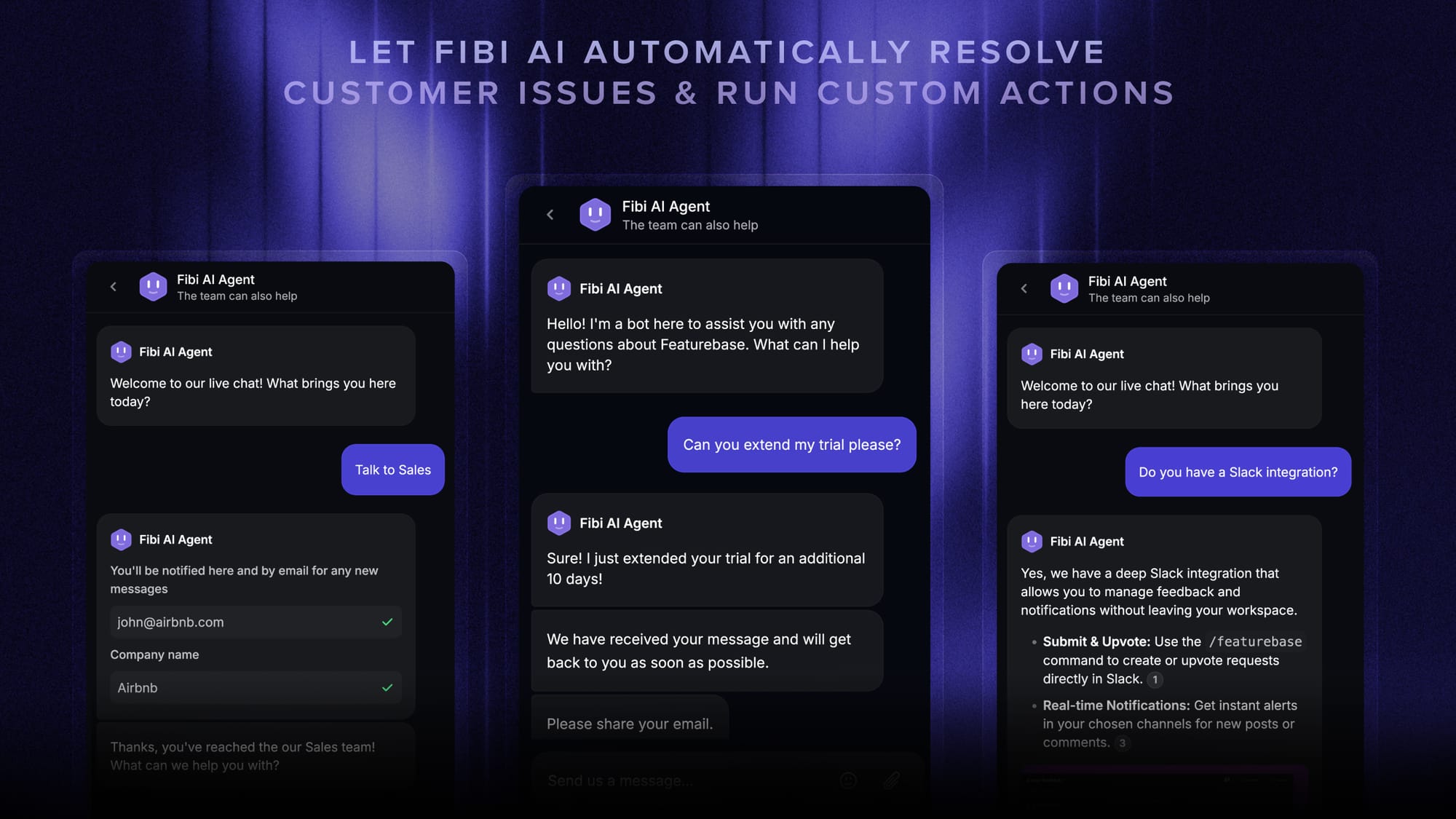
Platforms built for support handle this out of the box. Featurebase, for example, uses its Fibi AI Agent to answer questions from your help center and hand off to a human the moment a query gets too complex. A well-built FAQ chatbot can deflect a big share of routine tickets before they ever reach an agent.
Renewals, payments, and proactive nudges
Chatbots don't just react, they reach out. A bot can remind a customer that a policy is up for renewal, walk them through payment, and flag relevant updates or new offers.
These proactive nudges keep policies from lapsing and open the door to cross-selling, all inside a channel the customer already uses like WhatsApp or your app.
Agent and internal support
The value isn't only customer-facing. Chatbots also act as an internal knowledge base for agents and brokers, surfacing instant answers to complex product and procedure questions.
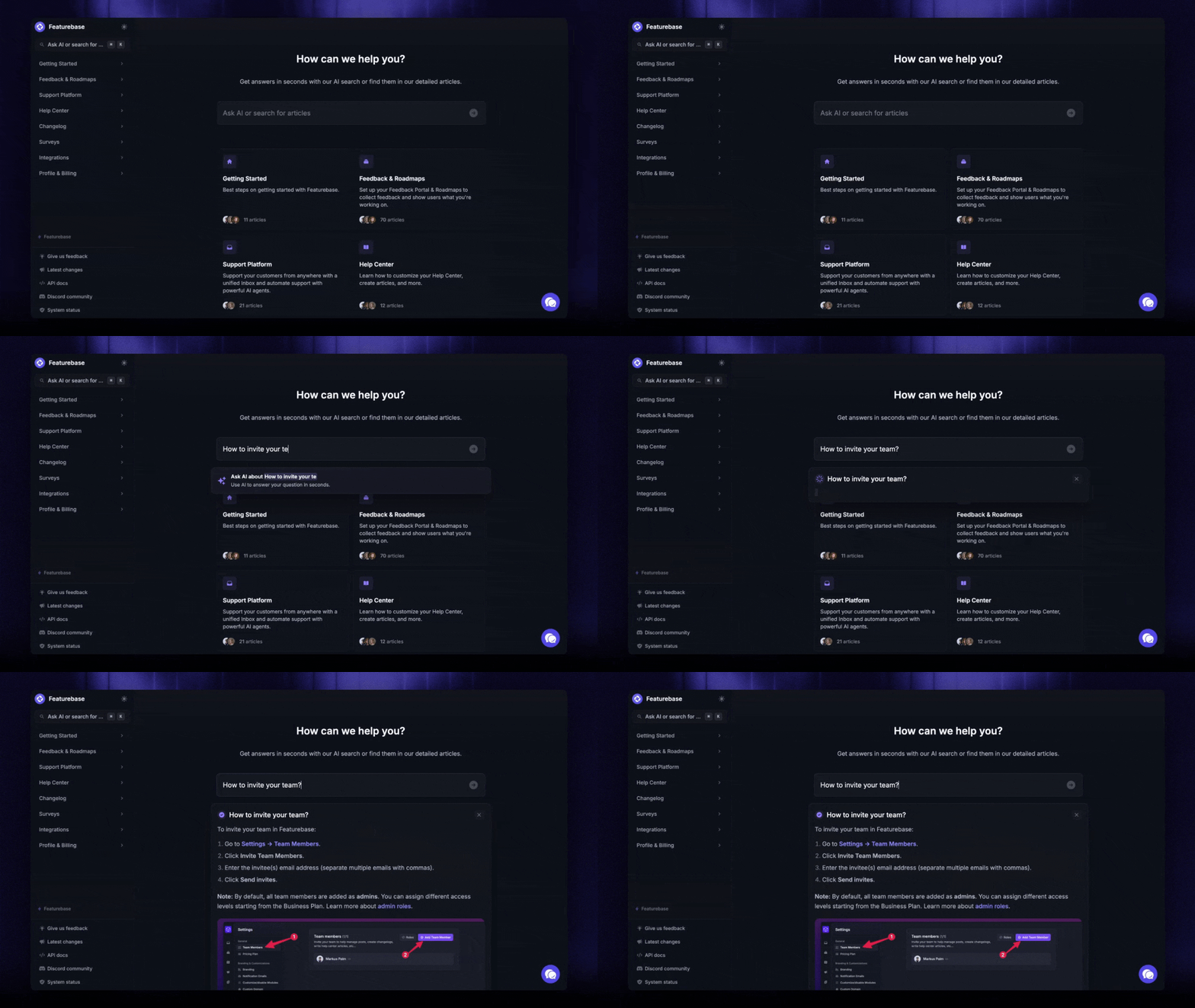
They support underwriting by collecting initial data, and they help with compliance by making sure data is gathered consistently and completely. This is the self-service layer that quietly saves your team hours every week.
Fraud and data collection support
Because a chatbot collects information in a structured, consistent way, it creates cleaner data than free-form phone notes. That structure helps flag anomalies for fraud review and feeds better records into your core systems.
It won't replace a fraud team, but it gives them a stronger starting point on every claim.
Benefits of insurance chatbots
Once you see the use cases, the benefits are easy to line up. Here's what insurers actually get.
- 24/7 omnichannel support: customers can start a quote or a claim at any hour, across chat, WhatsApp, email, and social, without waiting for business hours.
- Faster claims and lower costs: automating routine steps shortens claim settlement times and cuts service costs, freeing agents for high-value work.
- Better customer experience: instant, personalized answers beat hold music, which lifts satisfaction and loyalty in an industry where switching is easy.
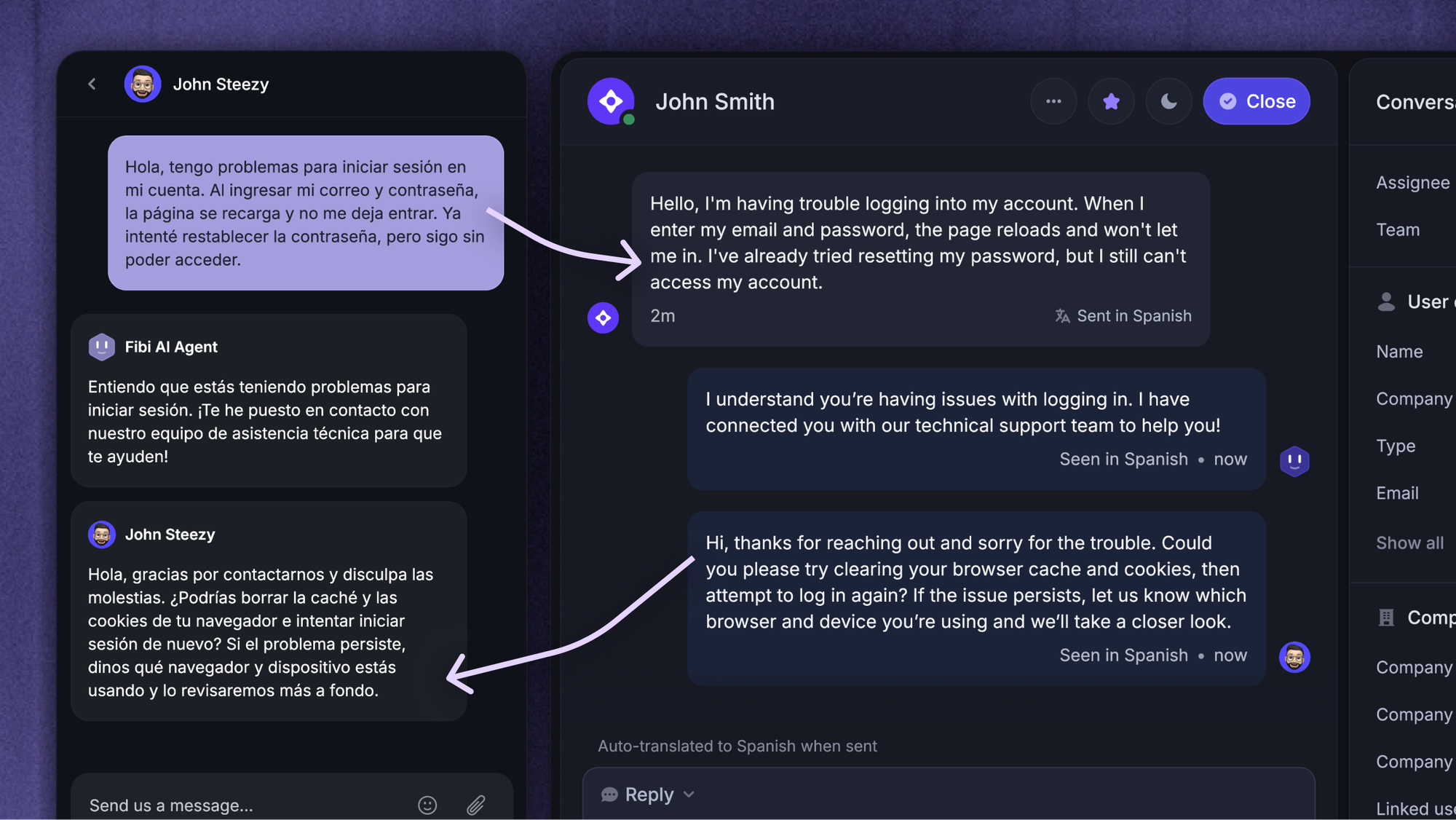
- Multilingual reach: AI bots translate on the fly, so you can serve customers in their native language without hiring for every market.
- Happier agents: when the bot handles identity checks and repetitive questions, your people spend their time solving real problems instead of reading scripts.
The through-line is simple. Chatbots take the high-volume, low-complexity work off your team's plate so humans can do what only humans can.
Challenges and limits to plan for
A chatbot is not a magic fix, and pretending otherwise is how insurers end up with an expensive, unloved bot. Go in with clear eyes on these.
The first is trust. Only about 26% of customers trust the advice an insurance chatbot gives, and just 29% are comfortable being served by a virtual agent. If the bot feels robotic or blocks people from reaching a human, it does more harm than good.
The other big risks are worth naming plainly:
- Data privacy and compliance: insurance is tightly regulated, and bots handle sensitive personal and financial data. Any deployment has to meet rules like GDPR and keep that data secure.
- Hallucinations: generative AI can produce confident, wrong answers. Grounding the bot in your own verified content and keeping a human in the loop for high-stakes replies is essential.
- Legacy integration: many insurers still run older core systems that make connecting a modern bot slow and costly.
None of these are reasons to avoid a chatbot. They're reasons to scope one carefully, start with lower-risk use cases, and keep a clean human handoff for anything sensitive.
How to choose and roll out an insurance chatbot
You don't need a giant project to get value. A focused rollout beats a "big bang" every time. Here's a simple way to approach it.
- Start with one high-volume use case: pick something like coverage FAQs or FNOL where the bot can prove its worth quickly and safely.
- Define success upfront: decide the metrics that matter (deflection rate, resolution time, customer satisfaction) before you launch, so you can tell if it's working.
- Meet customers where they already are: if most of your traffic is on WhatsApp or mobile, don't bury the bot in a desktop web widget.
- Design a clean human handoff: the bot should pass complex or emotional cases to a person smoothly, carrying the full context so the customer never repeats themselves.
- Choose a platform, not just a bot: look for something that combines AI, a help center, and an omnichannel inbox, so support, self-service, and escalation live in one place.
That last point matters most. A standalone bot bolted onto old tools creates silos. A modern support platform gives the bot the knowledge and the handoff path it needs to actually resolve issues. If you're comparing options, our roundup of customer service chatbot software is a good starting point.
Conclusion
Insurance chatbots have graduated from website gimmick to genuine operational infrastructure. The insurers who win won't be the ones who automate the most aggressively to cut costs. They'll be the ones who use bots to deliver real, personalized value: faster claims, instant answers, and agents who are freed up for the moments that need a human.
Featurebase is a modern AI customer support platform for product-led teams. It combines a powerful AI agent, an omnichannel inbox for live chat, email, and Slack, and an AI-powered help center in one place, so you can automate routine support and coverage questions while your team handles the complex cases. It also comes with feedback, roadmap, and changelog tools to help you build what your customers actually want.
It has a Free plan with unlimited conversations, and the onboarding takes minutes, so there's no downside to trying it. 👇
✨ Automate your support with the fastest AI-enhanced Inbox today →
FAQs
What's the difference between a rule-based and an AI insurance chatbot?
A rule-based chatbot follows a fixed script or decision tree, so it can only handle questions it was explicitly built for and breaks when a customer phrases things unexpectedly. An AI chatbot uses natural language processing and, increasingly, generative AI to understand intent and hold a real conversation. For anything beyond a simple interactive FAQ, an AI bot handles the messiness of real customer language far better.
Can an insurance chatbot process claims on its own?
It can handle a lot of the claims process, but not usually the entire thing end to end. A chatbot is excellent at the first notice of loss: guiding the customer through the form, collecting photos and details, and giving status updates. Complex claims decisions and anything requiring judgment still route to a human, with the bot passing along all the context it gathered.
How much does it cost to build an insurance chatbot?
It varies widely. A custom-built, advanced chatbot can run over $150,000 in development plus ongoing maintenance, which is why many insurers choose a SaaS support platform instead. Platform pricing is usually per seat with usage-based AI costs, which makes it far cheaper to start and easier to scale than building from scratch.
Are insurance chatbots secure and compliant?
They can be, but it depends entirely on implementation. Insurance is tightly regulated, and bots handle sensitive personal and financial data, so any deployment must meet rules like GDPR and keep data encrypted and access-controlled. A well-implemented chatbot on a reputable platform can actually improve data handling by collecting information consistently rather than in scattered phone notes.
How many insurance companies use chatbots?
Adoption is now mainstream. In the UK, 83% of insurers reported they had either implemented or were in the process of implementing AI chatbots or generative AI as of 2024. The insurance chatbot market's projected growth to $4.5 billion by 2032 reflects how quickly the rest of the industry is following.
What's the best chatbot for insurance customer support?
The best fit is a platform that combines an AI agent, a help center, and an omnichannel inbox, rather than a standalone bot. That way the bot can answer from verified content and hand complex cases to a human without losing context. Featurebase is one option built around exactly that: its Fibi AI Agent resolves routine issues on its own and escalates cleanly to your team when a customer needs one.