Blog Customer FeedbackNet Revenue Retention: How to Calculate & Improve NRR
Net Revenue Retention: How to Calculate & Improve NRR
Net revenue retention shows whether the customers you already have are growing or quietly shrinking. Here's how to calculate NRR, what a good rate looks like, and how to move it.


You can add new logos every month and still be going backwards. If your existing customers are downgrading and churning faster than the rest are expanding, growth is a leaky bucket with the tap left on.
Net revenue retention exposes that leak. It tells you whether the revenue you already won is growing or shrinking, which is why boards and investors treat it as a top-line health check.
In this guide, I'll break down the NRR formula with real examples, share the benchmarks that matter, and walk through how to actually move the number. 👇
Key takeaways
- Net revenue retention (NRR) measures how much recurring revenue you keep and grow from your existing customers over a set period, usually a year. It includes upgrades, downgrades, and churn, but not new customers.
- The formula is (Starting MRR + expansion − contraction − churn) ÷ starting MRR × 100. Anything above 100% means your existing base is growing on its own.
- Median NRR for private B2B SaaS sits around 101%, so crossing 100% puts you ahead of half the market. Top performers run 120% and up.
- NRR differs from gross revenue retention (GRR): GRR ignores expansion and caps at 100%, while NRR can climb past it.
- You improve NRR by reducing churn and driving expansion, and both start with understanding what your customers actually need.
- Featurebase✨ helps you collect feedback, prioritize by revenue, and close the loop, so you build the features that keep customers and grow accounts.
What is net revenue retention?
Net revenue retention is the percentage of recurring revenue you retain from your existing customers over a period, after accounting for expansion, downgrades, and cancellations. It's also called net dollar retention (NDR), and the two terms mean the same thing.
The key word is existing. NRR only looks at the cohort of customers you had at the start of the period. New customers you win along the way don't count, because the whole point is to isolate how well you hold on to and grow the revenue you already have.
That isolation is what makes it so revealing. Total revenue growth can hide a lot of churn behind a strong sales quarter. NRR strips the new logos out and shows you what's happening underneath.
An NRR above 100% means your existing customers are, as a group, spending more than they were a year ago even after some of them left. That's the holy grail of SaaS: growth that compounds without adding a single new customer.
How to calculate net revenue retention
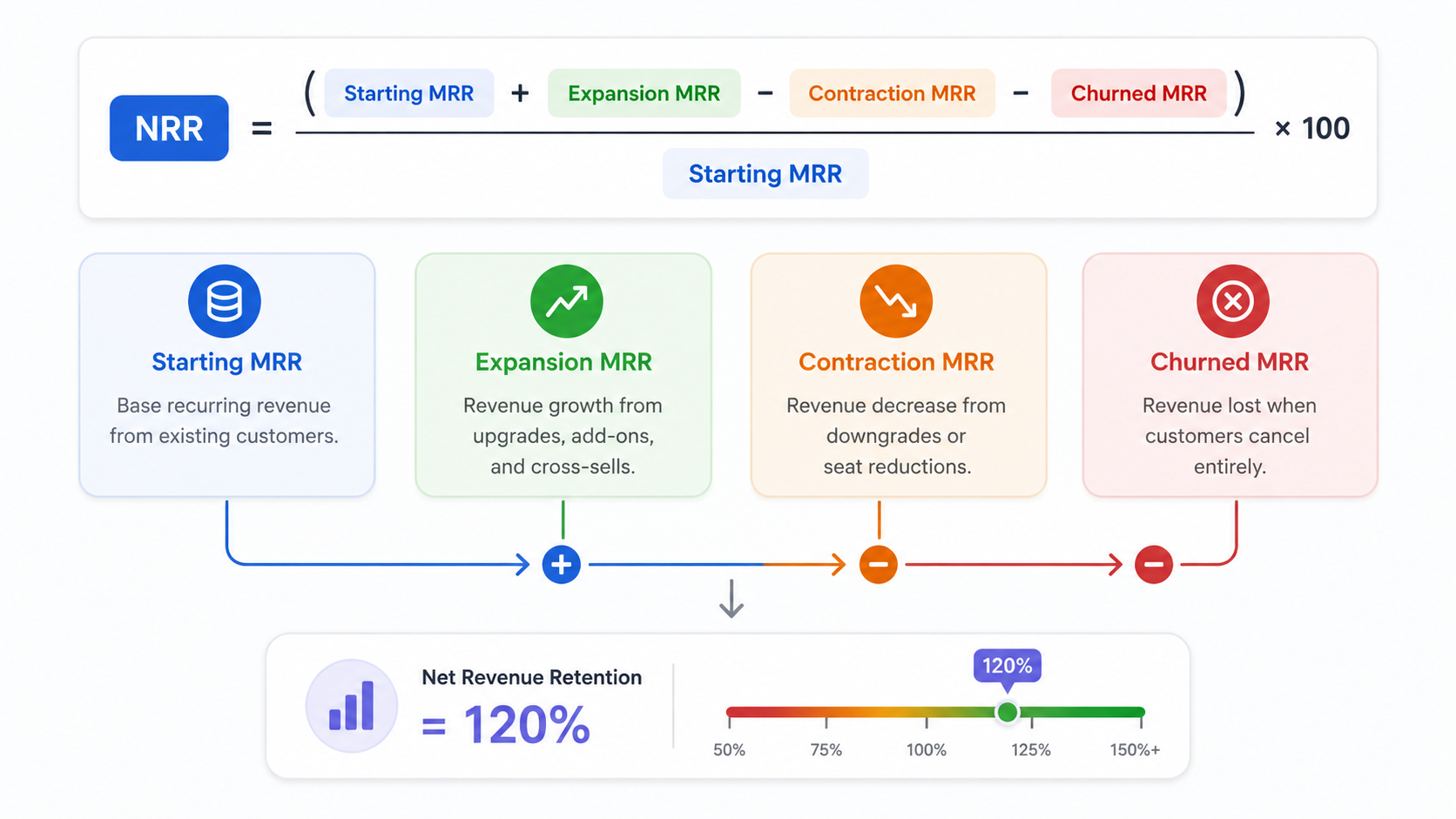
The formula is straightforward once you know the 4 inputs:
NRR = (Starting MRR + Expansion MRR − Contraction MRR − Churned MRR) ÷ Starting MRR × 100
Here's what each input means:
- Starting MRR: the monthly recurring revenue from your existing customers at the beginning of the period.
- Expansion MRR: extra revenue from those same customers through upgrades, seat additions, and cross-sells.
- Contraction MRR: revenue lost when those customers downgrade to a cheaper plan or drop seats.
- Churned MRR: revenue lost when those customers cancel entirely.
Notice what's missing: revenue from brand-new customers. It never enters the calculation, because NRR is a retention metric, not a growth metric.
Let's run a quick example. Say you start the year with $100,000 in MRR from your existing base. Over the next 12 months, that same group of customers gives you $20,000 in expansion, $5,000 in downgrades, and $10,000 in cancellations.
Your NRR is (100,000 + 20,000 − 5,000 − 10,000) ÷ 100,000 × 100 = 105%.
So even though you lost $15,000 to downgrades and churn, the $20,000 in expansion more than made up for it. Your existing customers are worth 5% more than they were a year ago.
Most companies calculate NRR on either a monthly or annual basis. Annual is the standard for board and investor reporting, since it smooths out seasonal noise and matches how revenue is usually discussed.
What is a good net revenue retention rate?
The simple answer: anything above 100% is good, and the higher you go, the better. At exactly 100%, expansion is perfectly offsetting your losses. Below that, your existing base is shrinking.
But "good" depends on who you are. According to Benchmarkit's 2024 SaaS performance report, the median NRR for private B2B SaaS companies is around 101%, while public SaaS companies sit closer to 110%. So just clearing 100% already puts you ahead of half the private market.
Here's a rough way to read your number:
- Below 90%: a warning sign. Your existing revenue is contracting meaningfully, and new sales are papering over a retention problem.
- 90% to 100%: you're holding most of your base but not growing it. Common for early-stage products still finding their expansion motion.
- 100% to 110%: solid. Your existing customers are growing on their own, a healthy sign of product-market fit.
- Above 120%: exceptional. This is the territory of best-in-class enterprise SaaS, where expansion massively outpaces churn.
Context matters too. A product with natural expansion built in, like usage-based pricing or per-seat billing, will find high NRR easier than a flat-rate tool. Judge yourself against companies with a similar model and stage, not against the outliers you read about in headlines.
Net revenue retention vs gross revenue retention
NRR has a close cousin that's just as important to track: gross revenue retention (GRR). The two answer different questions, and you need both to see the full picture.
- Gross revenue retention measures how much revenue you keep from your existing customers before any expansion. It only subtracts downgrades and churn, so it can never exceed 100%. GRR tells you how leaky your bucket is.
- Net revenue retention takes that same base and adds expansion back in. Because upgrades can outweigh losses, NRR can climb well past 100%. NRR tells you whether the customers you keep are growing.
The gap between the two numbers is telling. If your NRR is 115% but your GRR is only 80%, expansion from a handful of accounts is masking heavy churn underneath. That's a fragile position, because the growth depends on a few big customers continuing to expand.
A healthy SaaS business usually shows GRR in the 90% range and NRR comfortably above 100%. Watching them together stops you from celebrating a strong NRR that's really hiding a churn problem.
One more term you'll see: net dollar retention (NDR). It's simply another name for NRR, so don't let the two labels confuse you. They're the same calculation.
Why net revenue retention matters
NRR matters because it's the clearest signal of whether your growth is efficient or expensive. Every point of NRR above 100% is growth you get without spending a cent on acquisition, and that changes the entire economics of your business.
The math behind retention has been well documented for decades. Research by Frederick Reichheld of Bain & Company found that increasing customer retention rates by 5% increases profits by 25% to 95%. Keeping and growing customers is dramatically cheaper than replacing them.
Investors know this, which is why NRR is one of the first numbers they ask for. A company with 120% NRR can grow revenue meaningfully even if it stops acquiring new customers entirely, and that resilience commands higher valuations. It signals real product-market fit, not just an effective sales team.
It's also a metric that spans your whole company, which is part of why it deserves a seat in your customer success metrics. Product decides whether there's anything worth expanding into. Support and customer success decide whether customers stick around long enough to expand. Finance and leadership decide how to price it all. NRR ties those threads into one number.
How to improve your net revenue retention
Improving NRR comes down to 2 levers: lose less revenue (reduce churn) and grow more of it (drive expansion). Everything below serves one or both. The good news is that most of the work starts with the same thing: actually understanding what your customers need.
Here are the moves that move the number:
- Nail your onboarding: most churn is decided in the first few weeks, before a customer ever sees the full value of your product. Customers who complete a strong onboarding are far more likely to renew, so getting people to their first win quickly protects the base you're trying to grow.
- Close the feedback loop: customers churn when they feel unheard and stay when they see their input shape the product. Collecting feature requests in one place, then telling people when you ship what they asked for, turns passive users into invested ones.
- Build what your biggest accounts need: not all feedback carries equal weight. Weighting requests by the revenue behind them tells you which features protect and expand your most valuable customers, so your roadmap defends the revenue that matters most.
- Drive expansion deliberately: expansion rarely happens by accident. Identify the accounts already getting strong value and give them a clear reason to upgrade, add seats, or adopt a second product. These customers have the lowest acquisition cost you'll ever see, because you already own the relationship.
- Catch churn risk early: a drop in usage or a low satisfaction score is a customer telling you they're drifting. Running NPS and CSAT surveys and watching product engagement lets you step in before a renewal quietly lapses.
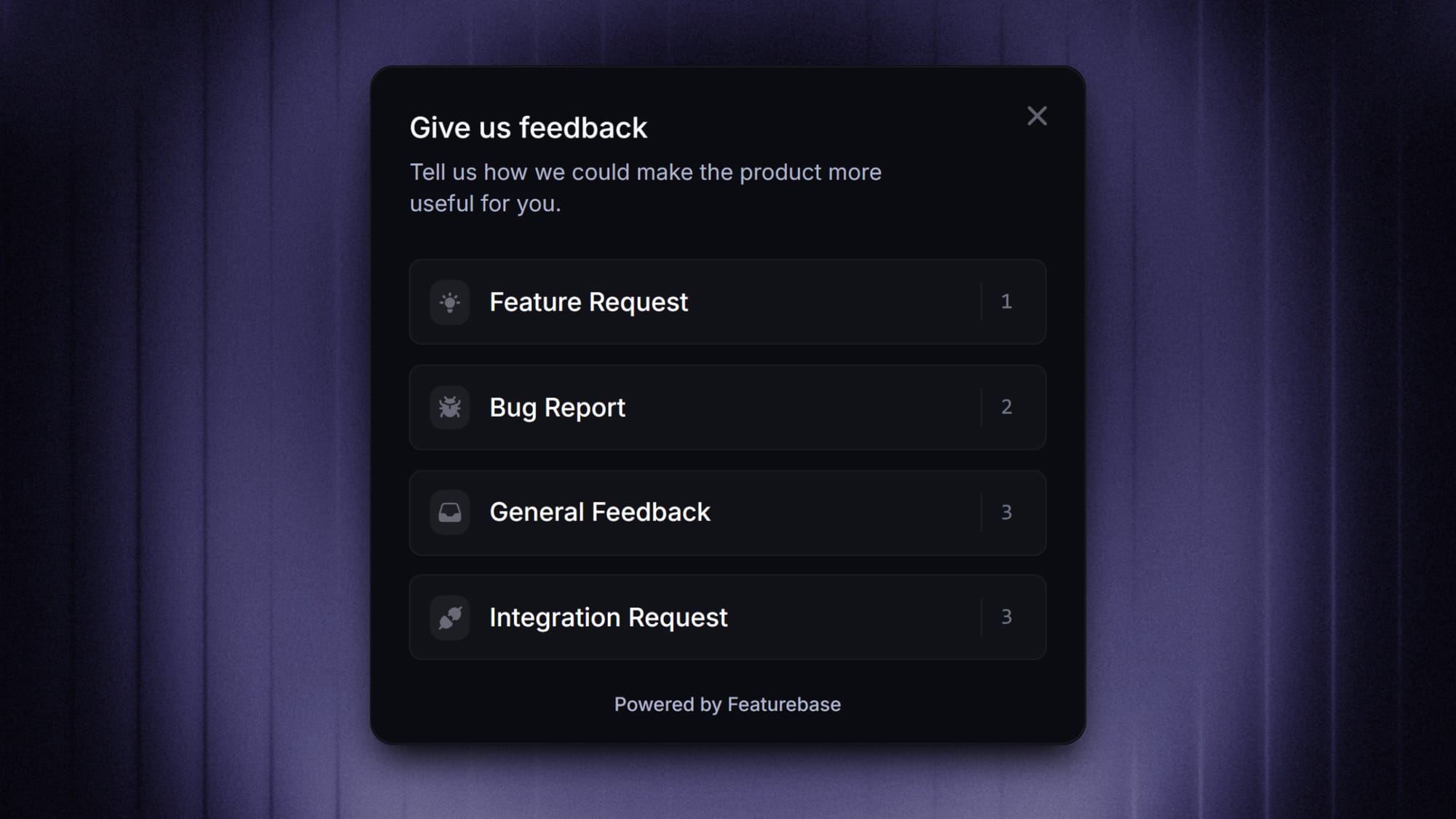
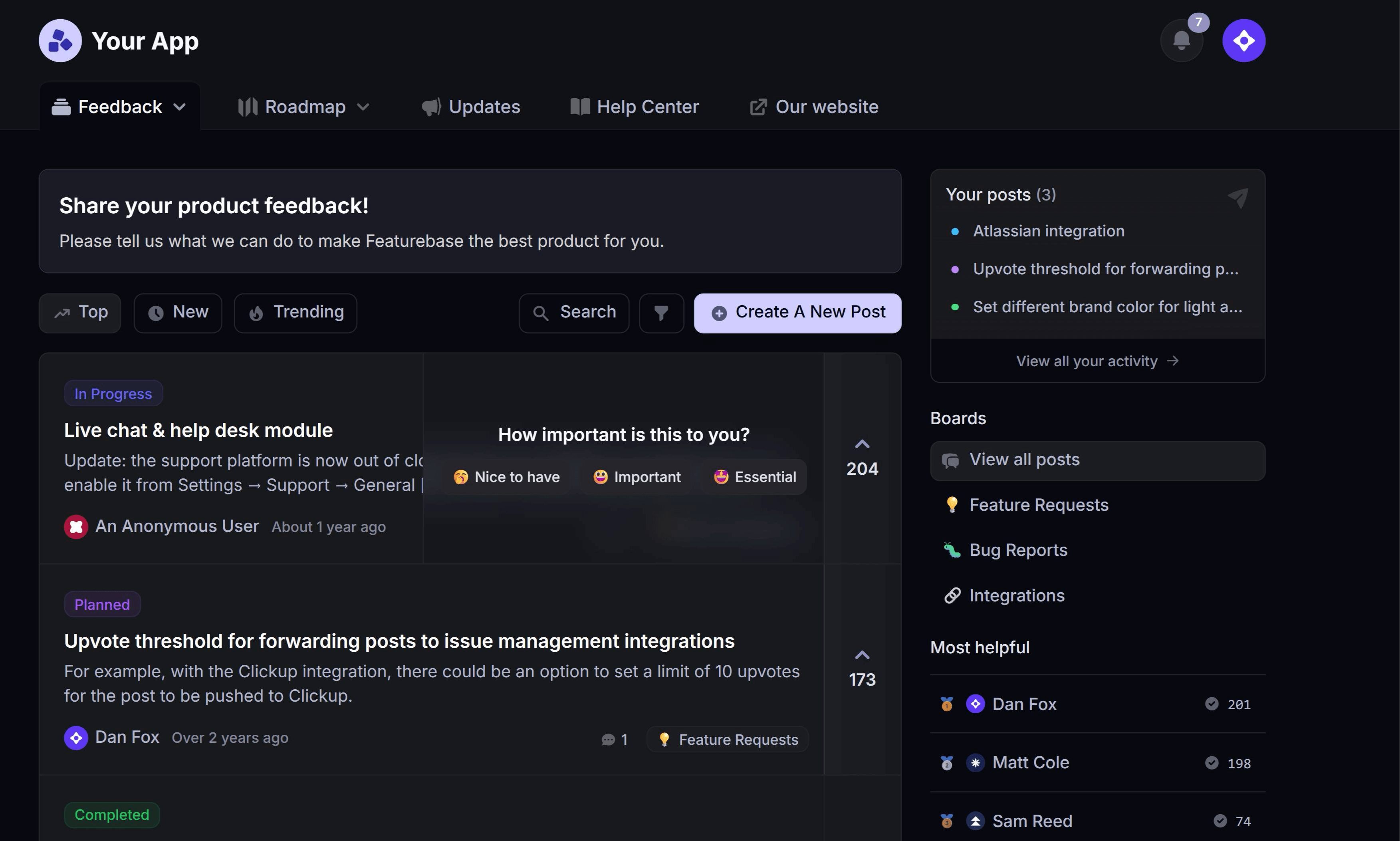
This is where a dedicated feedback system pays for itself. With Featurebase, you can collect feature requests through a public feedback forum and in-app widgets, then link each request to the revenue and company data behind it. That lets you prioritize the features that protect and expand your highest-value accounts instead of building on gut feel.
The other half is closing the loop once you ship. Featurebase lets you announce what's new through a changelog page, in-app widgets, and automatic emails, so customers actually notice the value you're adding. When people see their requests turn into real features, they stick around and they grow, which is exactly what NRR is measuring.
Build the feedback loop that drives NRR with Featurebase
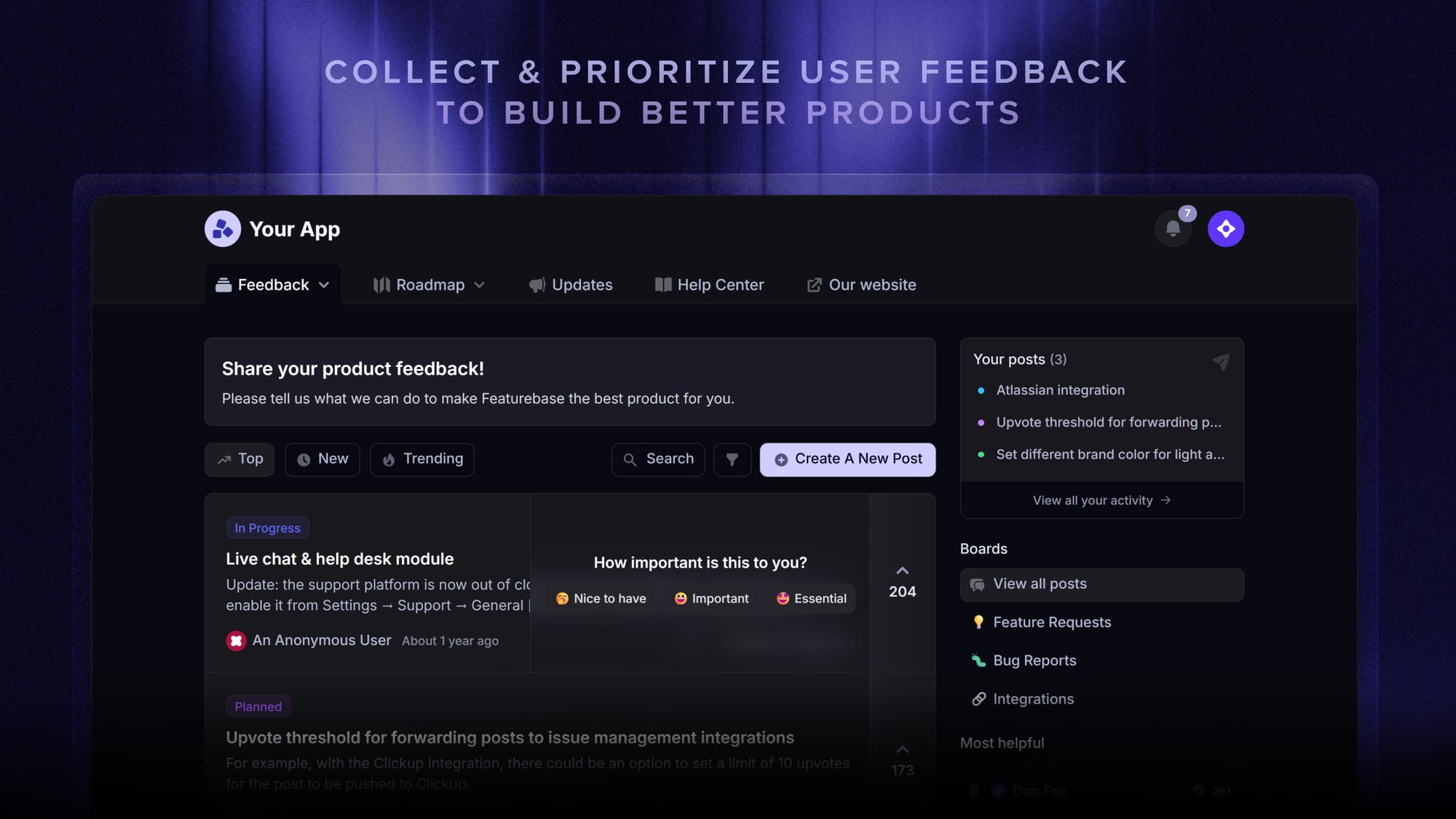
Featurebase is a modern feedback & support platform that helps product teams collect feedback, prioritize features, build roadmaps, and announce product updates – all in one place. It's loved by thousands of product teams from companies like Lovable, Raycast, and n8n. 💫
Top features:
- Feedback forum – Public feedback forum where users can submit ideas and vote on features helping you know what customers want
- In-app widgets – Embed feedback, changelog, and help center widgets directly in your product
- Prioritize by revenue – Link feedback with customer revenue, company size, and much more to better understand the impact of ideas
- AI feedback categorization - Automatically group large volumes of feedback into product areas, projects, or themes with AI.
- Automated email updates – Automatically notify users when their requested features are implemented
- Roadmaps – Create internal & public product roadmaps to keep users informed and build engagement
- Product updates – Publish release notes with a changelog page, in-app widget, and emails
- Surveys (NPS, CSAT, etc) – Create targeted surveys to ask users anything and measure customer satisfaction.
- Automatic AI translations – Automatically translate all feedback and comments to your customers / teammates native languages
- Integrations – Connects with Slack, Linear, Jira, HubSpot, and more
Pricing: Free plan available with unlimited feedback collection. Paid plans start at $29/seat/mo.
Instead of having 4+ different tools, Featurebase enables you to replace all your customer-facing tools by bringing your feedback collection, product updates, support, and help center, together in one place to help you build products your users love.

Turn feedback into products your users love
Centralize feedback, identify product opportunities, and build the right features
Conclusion
Net revenue retention is the truest test of whether your product is worth keeping and worth growing. New logos flatter the top line, but NRR is what tells you and your investors that the revenue you've already earned is compounding instead of leaking away.
Featurebase is a modern & powerful feedback tool. It helps you collect feedback with a feature voting forum, surveys, embeddable widgets, and integrations. You can then analyze all of that feedback in one place by connecting it to your customers' revenue and data to make better product decisions, so you build what keeps and grows your accounts.
It comes with affordable pricing and a Free plan allowing unlimited feedback. The onboarding is incredibly quick and doesn't require a credit card, so there's no downside to trying it. 👇
✨ Start collecting & managing feedback with Featurebase for free →
FAQs
Does net revenue retention include new customers?
No. NRR only measures revenue from the cohort of customers you had at the start of the period. Revenue from customers you acquire during the period is deliberately excluded, because the metric is meant to isolate how well you retain and expand your existing base rather than how well you sell.
Is net revenue retention the same as net dollar retention?
Yes. Net revenue retention (NRR) and net dollar retention (NDR) are two names for the same metric, and companies use them interchangeably. Both measure the change in recurring revenue from your existing customers, including expansion, downgrades, and churn.
What does 100% net revenue retention mean?
A net revenue retention of 100% means your existing customers are generating exactly the same recurring revenue as they were at the start of the period. The expansion from upgrades has precisely offset the revenue lost to downgrades and cancellations. Your base is stable but not growing on its own.
What is the difference between NRR and MRR?
MRR (monthly recurring revenue) is a dollar amount: the total recurring revenue you bill in a month. NRR is a percentage that measures how that revenue from a specific customer cohort changes over time. In short, MRR tells you how much you're earning, while NRR tells you whether your existing customers are growing or shrinking.
Who should own net revenue retention?
NRR is a shared metric, but day-to-day ownership usually sits with customer success or the wider post-sale team, since they drive renewals and expansion. Product, finance, and leadership all influence it too. The most effective setup gives one team clear accountability for the number while treating it as a company-wide goal.
How often should you measure net revenue retention?
Most SaaS teams track NRR monthly for internal operations, which helps spot churn and expansion trends early. For board and investor reporting, an annual figure based on a trailing 12-month cohort is the standard, because it smooths out short-term noise and reflects the real trajectory of your customer base.