Blog ComparisonsParahelp Pricing in 2026: The Hidden Per-resolution Model
Parahelp Pricing in 2026: The Hidden Per-resolution Model
Parahelp doesn't publish pricing. Here's what we know about their per-resolution model, what it likely costs, and the transparent AI support alternatives with public pricing.

✨ Looking for an affordable Parahelp alternative? Check out Featurebase →
Parahelp doesn't publish pricing. Here's what we know about their per-resolution model, what it likely costs, and the transparent AI support alternatives with public pricing.
Hit "Parahelp pricing" in Google and you get a "Book a demo" button. No tiers, no per-seat number, no per-resolution rate. Just a sales cycle waiting for you.
That's frustrating when you're trying to budget. So I dug into what Parahelp actually charges, what the market benchmarks say, and which AI support tools publish real numbers you can plan around. Here's the full breakdown. 👇
Key takeaways
- Parahelp uses a per-resolution pricing model and only shares numbers on a sales call.
- Based on market benchmarks, expect likely on the upper end of $0.50 to $1.00 per resolved ticket, with annual contracts typically starting in the low five figures.
- Costs scale with volume, which means marketing pushes and product launches can spike your bill.
- There's no public free trial and no self-serve path to test it before signing.
- ✨ Featurebase has a transparent pricing at just $29/seat plus $0.29 per AI resolution with a free plan, and it covers support, help center, and feedback in one stack.
What is Parahelp
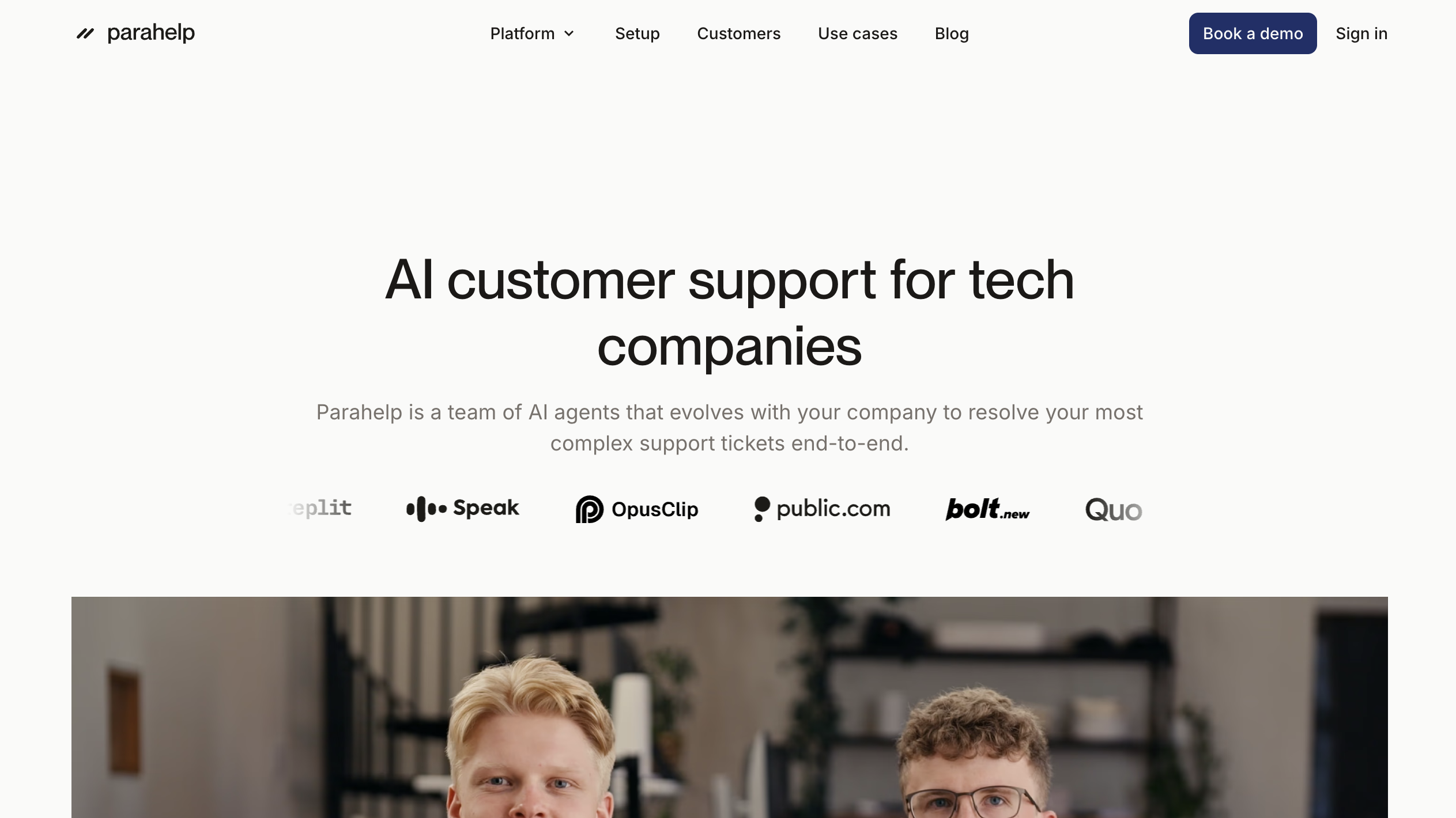
Parahelp is a YC-backed AI customer support agent built for fast-moving software companies. It plugs into your existing helpdesk (Zendesk, Intercom, Front) and resolves complex tickets end-to-end by calling tools like Stripe, Slack, and Linear.
The company raised $21.2M in 2025 across a $3.2M Seed and an $18M Series A. Public customers include Perplexity, Cursor, Replit, Bolt, HeyGen, and Framer.
The product runs two agents:
- A customer agent that handles end-user tickets across your helpdesk channels.
- An AI Manager that configures, tests, and optimizes the customer agent.
It's a real product. The question this post answers is what it costs.
How Parahelp pricing works
The per-resolution model
Parahelp prices by resolved ticket, not by seat or by conversation. You pay only when the AI fully closes a ticket without handing off to a human. The headline benefit: your bill is tied to outcomes, not effort.
This model is becoming the standard for newer AI support agents. The pitch is outcome alignment: traditional per-seat pricing charges you whether the tool works or not, while per-resolution puts both vendor and customer on the same side of the table.
There are no seat fees, no platform fees disclosed publicly, and no per-conversation charges. Just per-resolution, plus whatever you pay your existing helpdesk underneath. Parahelp doesn't replace Zendesk or Intercom, it sits on top.
The contact-sales gate
Parahelp doesn't publish a number anywhere on its site. Every button on parahelp.com routes to "Book a demo" or "Talk to a founder." That's deliberate. The team is targeting Y Combinator-adjacent software companies and well-funded scale-ups, and a sales-led motion qualifies leads before they ever see a price.
For buyers, this means three things:
- You can't compare Parahelp against self-serve competitors without first booking a call.
- You can't run a real test on your own ticket volume before committing.
- You can't share a number with finance for budget approval without going through procurement first.
If you're a small SaaS team that wants to evaluate three tools in an afternoon, that's a wall. For an enterprise CX team with a three-month procurement cycle, it's normal.
What Parahelp customers likely pay
The per-resolution market has converged on a fairly narrow band. Here's what the published competitors charge per resolved ticket:
| Tool | Per-resolution price | Notes |
|---|---|---|
| Featurebase | $0.29 | Lowest published rate, full platform included |
| eesel AI | $0.40 | Per support ticket, no seat fees |
| Intercom Fin | $0.99 | Per outcome, on top of Intercom seats ($39-$139/agent) |
| Zendesk AI | $1.50-$2.00 | Per resolution, plus a Suite seat and a $50/agent AI add-on |
| Decagon | ~$0.50 / ~$0.99 | Per resolution or per conversation, plus a $50K annual platform fee |
| Sierra | Custom | Typically $150K+/year, with $50K-$200K setup |
Parahelp targets the same buyer profile as Sierra and Decagon (well-funded SaaS, complex tickets, custom workflows), which suggests pricing in the upper half of that range. A reasonable estimate is $0.50 to $1.00 per resolved ticket, with annual contracts likely starting in the low five figures.
To estimate your own bill: take your monthly inbound tickets, multiply by an expected resolution rate of 40-65% (the typical band across mature AI support agents), then multiply by $0.75 as a midpoint per-resolution estimate.
Example: A team with 4,000 monthly inbound tickets at a 50% resolution rate would pay roughly 2,000 × $0.75 = $1,500/month ($18K/year) on a Parahelp-style model. Double the resolution rate or the ticket volume, and that becomes $36K/year fast.
The risks of Parahelp's pricing model
Per-resolution sounds aligned ("you only pay when it works"), but the model has three real downsides worth weighing before you sign.
- Costs spike with volume: Run a product launch, hit a press cycle, or have a viral moment, and your inbound tickets double. So does your bill. The model punishes the moments when automation is most valuable to you. Predictable per-seat pricing protects against this, per-resolution doesn't.
- No way to test before signing: There's no free trial, no public sandbox, no self-serve path. You commit based on a sales demo and case studies. For a tool that resolves customer tickets autonomously, that's a meaningful risk. Some competitors run their AI against your historical tickets first to forecast resolution rates before you go live.
- It's just an AI agent, not a stack: Parahelp doesn't replace your helpdesk, knowledge base, or feedback portal. You're still paying for Zendesk or Intercom underneath, plus a separate help center, plus a feedback tool. The all-in price often beats the per-resolution headline.
Parahelp alternatives that publish pricing
If Parahelp's demo gate isn't a fit, here are the AI support tools that put a number on the page. The full per-tool breakdown lives in our Parahelp alternatives guide.
- Featurebase: $29/seat plus $0.29 per AI resolution, with a free plan that includes unlimited conversations. The cheapest published per-resolution rate in this list.
- Intercom Fin: $0.99 per outcome on top of Intercom pricing ($39-$139 per agent).
- eesel AI: $0.40 per support ticket, no seat fees.
- Zendesk AI: $1.50-$2.00 per resolution plus a $50/agent AI add-on and a Suite seat ($55-$169/agent).
- Decagon: $50K annual platform fee plus per-conversation usage.
- Sierra: Custom enterprise contracts, typically $150K+ per year.
Pick a pricing model that scales with your team
Parahelp's per-resolution model is genuinely outcome-aligned, and for well-funded SaaS teams with predictable ticket volumes, it works. The trade-off is the demo gate, the cost spikes during high-volume months, and the fact that you're buying one tool when you may need three.
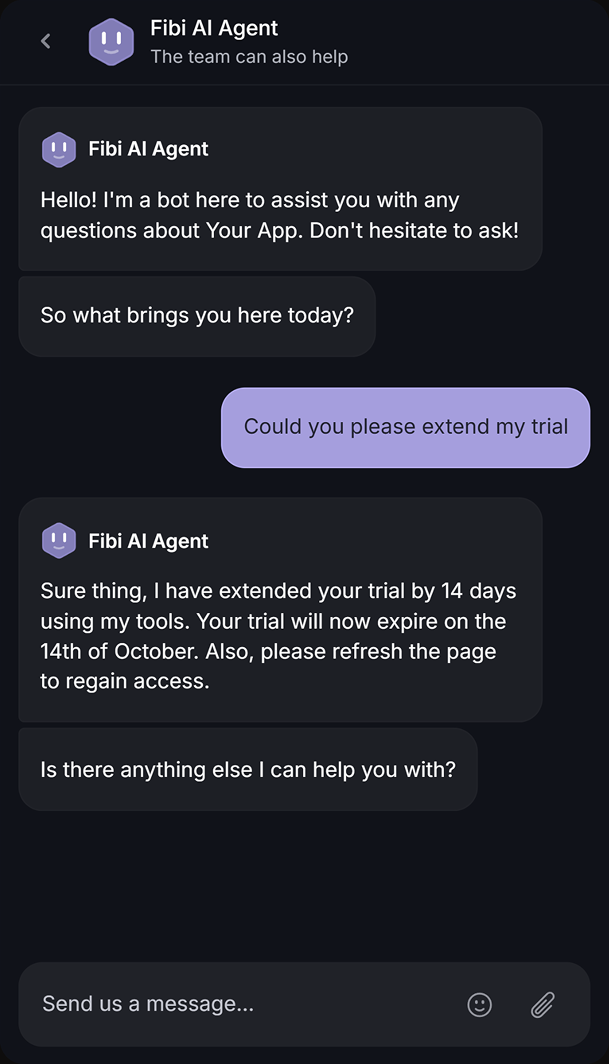
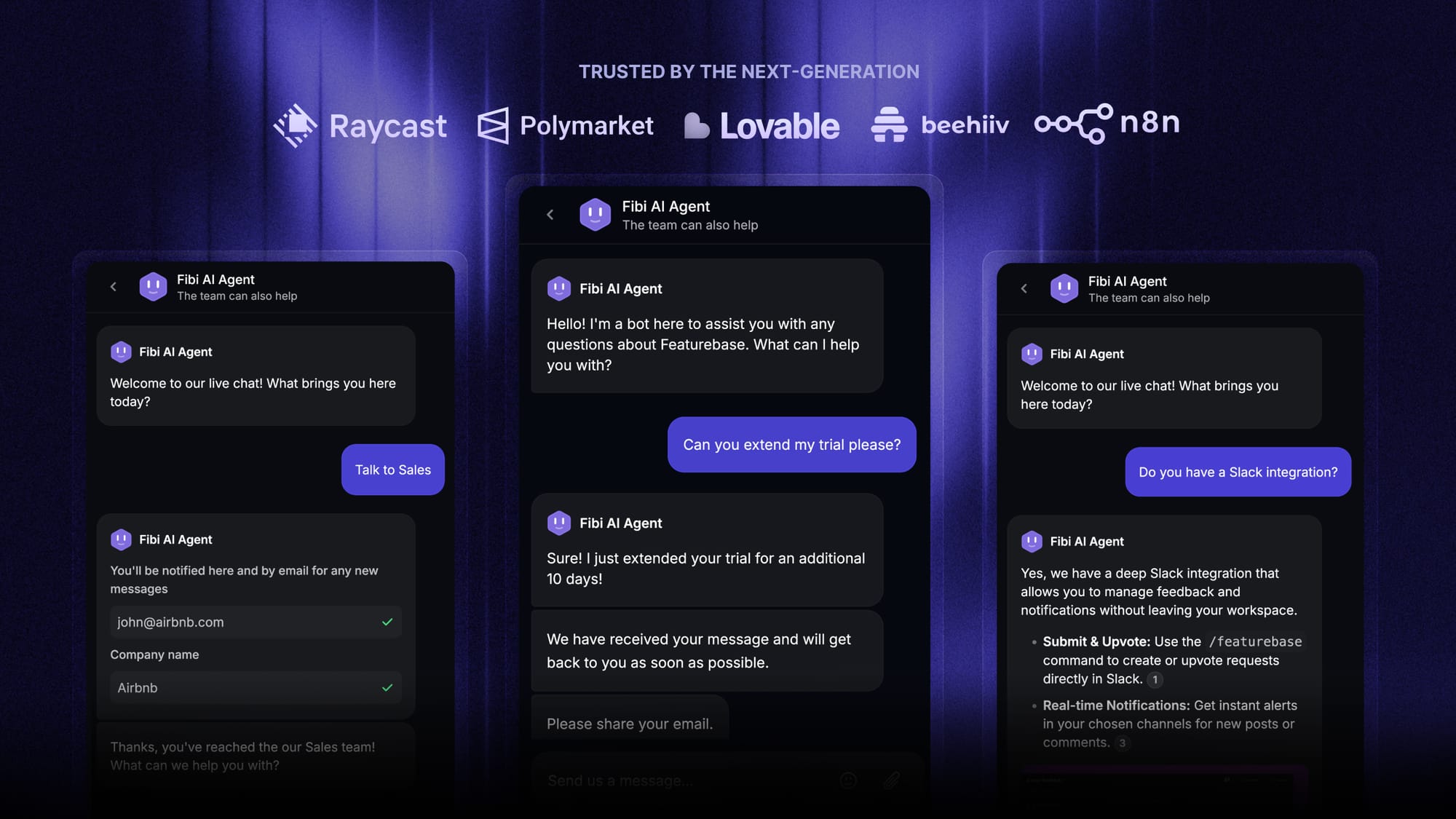
Featurebase is a modern AI customer support platform that publishes pricing transparently and gives you the full support stack in one place. Fibi AI Agent resolves tickets at $0.29 each, the omnichannel inbox handles live chat, email, and Slack, and the help center, feedback portal, and changelog are all included. No sales call needed to see a number, no surprise bill when your inbound volume spikes.
It comes with a Free plan, paid plans starting at $29/seat with $0.29 per Fibi resolution, and the onboarding is fast enough to ship in an afternoon. There's no downside to trying it. 👇
✨ Switch from Parahelp to transparent AI support pricing →
Frequently asked questions
How much does Parahelp cost?
Parahelp doesn't publish pricing. Based on market benchmarks for per-resolution AI support agents and Parahelp's positioning in the well-funded SaaS segment, expect roughly $0.50 to $1.00 per resolved ticket with annual contracts typically starting in the low five figures. The actual number comes from a sales call.
Does Parahelp have a free trial?
No. There's no free trial, no public sandbox, and no self-serve sign-up. Every path on parahelp.com routes to "Book a demo." Competitors like eesel AI and Featurebase let you sign up and connect a helpdesk without talking to sales first.
Why doesn't Parahelp publish pricing?
Parahelp targets enterprise and well-funded scale-up buyers, and a sales-led motion qualifies leads before they ever see a price. The model isn't unusual for AI agents at this stage. Sierra, Decagon, and Ada use the same approach, while Intercom Fin, eesel AI, and Zendesk AI publish their numbers.
What is per-resolution pricing?
Per-resolution pricing charges you only when the AI fully resolves a customer ticket without escalating to a human. It's outcome-aligned but also volume-coupled, meaning your bill grows with your support traffic. Per-seat or per-interaction models are more predictable but less directly tied to results.
Is Parahelp expensive for small teams?
Effectively yes. The demo gate and enterprise-shaped sales motion make it a poor fit for teams under 20 employees with limited support volume. Self-serve options like Featurebase ($0.29 per resolution with a free plan) or eesel AI ($0.40 per ticket) are far easier to evaluate and budget for.
What's the best Parahelp alternative?
Featurebase is the best affordable Parahelp alternative at $0.29 per AI resolution plus $29/seat, with a free plan that includes unlimited conversations.