Blog Comparisons7 best Parahelp alternatives for AI support in 2026
7 best Parahelp alternatives for AI support in 2026
Parahelp is one of the fastest-rising AI support agents in YC, but it's not for every team. Here are the 7 best Parahelp alternatives in 2026, ranked by who they actually fit.

Parahelp has been making the rounds in YC circles. It's the AI support agent behind Perplexity, Cursor, Replit, and Bolt, and they've open-sourced six-page prompts that read more like software than instructions.
It's powerful. It's also built for teams that can treat prompt engineering like a software project. If your support team doesn't have AI engineers on standby, that's a wall.
I looked at the AI support agents teams actually move to when Parahelp is too engineering-heavy. Here are the 7 best Parahelp alternatives in 2026, who each one fits, and what you'll trade off to get there. 👇
Key takeaways
| Tool | Best for | Starting cost | Setup time | Main trade-off |
|---|---|---|---|---|
| Featurebase | SaaS teams that want AI support, feedback, and a help center in one place | $29/seat + $0.29 per resolution | Minutes (self-serve) | Newer than legacy support suites |
| Intercom Fin | Teams already running Intercom who want the most mature AI agent | $0.99 per outcome; Intercom seats from $19/month billed annually ($29 monthly), or no Intercom seats on a supported existing helpdesk (minimum commitment applies) | Days | Costs balloon fast at high volumes |
| Sierra | Large enterprises with the budget for a custom-built AI agent | Custom (typically $150K+/year) | 3-6 months | Sales-led, no self-serve path |
| Decagon | Enterprise CX teams that want deep analytics with their AI agent | $50K platform fee + per-conversation pricing | Weeks | Requires dedicated ops headcount |
| Zendesk AI | Teams already invested in the Zendesk ecosystem | $55-$169/agent + $50 AI add-on + $1.50-$2 per resolution | Weeks | AI features sit behind multiple paywalls |
| eesel AI | Smaller teams that want a self-serve AI layer over Freshdesk or Zendesk | $0.40 per ticket, no seats | Hours | Thin G2 validation, EU-timezone support |
| Ada | Large enterprises in regulated industries (HIPAA, SOC 2) | Custom (typically $30K-$300K+/year) | Multiple months | Can't ingest past tickets or wikis natively |
What is Parahelp?
Parahelp is a YC-backed AI support agent platform built for engineering-heavy SaaS teams. It's described on its own site as a team of AI agents that evolves with your company to resolve your most complex support tickets end-to-end.
It runs two kinds of agents: a customer agent that handles end-user tickets across channels, and an internal agent that helps the support ops team. Both are configured through long, structured prompts (often using XML tags) that give developers fine-grained control over how the AI behaves.
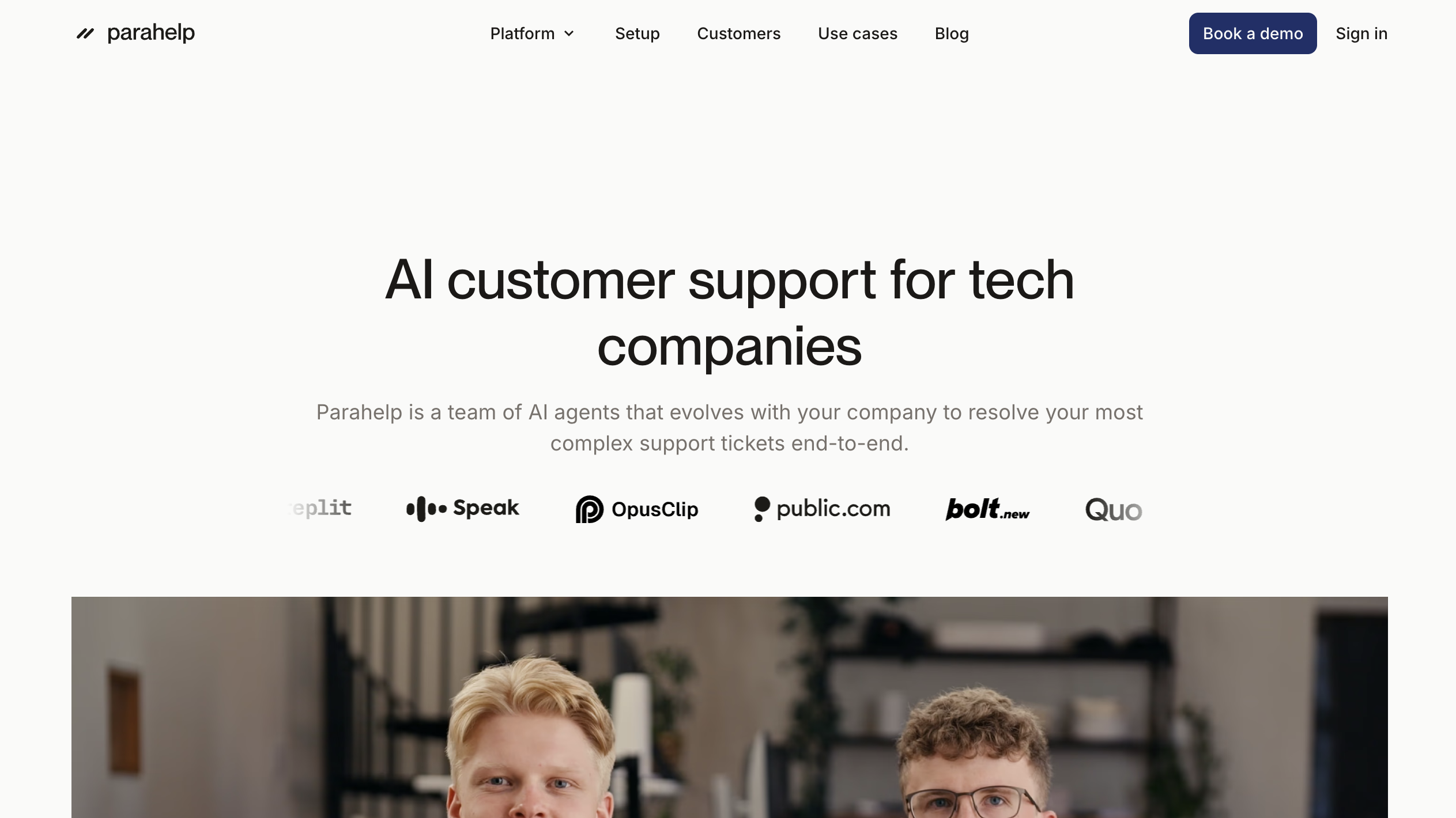
Parahelp recently launched an "Intelligent Setup" flow that promises to get a customer agent live in three days: AI builds the agent on day one, you review configurations on day two, and you launch on day three. It's a real improvement over the old approach, but the underlying architecture still rewards teams who have the engineering chops to iterate on prompts like code.
Pricing is demo-only. There's no public pricing page, no self-serve trial, and no published tier structure. Customers include Perplexity, Cursor, Replit, Bolt, Lovable, and Framer.
Why look for Parahelp alternatives
Parahelp is genuinely good at what it does. But "good at what it does" isn't always what a support team needs.
Heavy engineering overhead
Parahelp's whole architecture rewards teams who can write and iterate on long, structured prompts. The blog posts they've published walk through six-page XML prompts that look more like software than support configurations. That's a feature if your team has dedicated AI engineers. It's a wall if your support lead is the one trying to configure it.
The new 3-day setup flow softens this, but the ceiling on what you can do without engineering help is still lower than self-serve platforms built for non-technical operators.
No public pricing or self-serve path
There's no pricing page. There's no free trial. The only way in is a sales demo, which means you can't put Parahelp on a real support volume and see how it actually performs before signing.
For teams that need to compare 4-5 options on a tight timeline, that gate adds weeks. For teams that already know what they want and just want to ship, it's a process tax with no upside.
Single-purpose tool, not a support stack
Parahelp is an AI customer support agent. That's the whole product. If your team also needs a knowledge base, a unified inbox, a feedback portal, or a public changelog, you're stacking 4-5 tools to get there.
An all-in-one platform like Featurebase replaces that stack with a single tool, which changes the math on both procurement and how data flows between your support inbox and your product team.
7 best Parahelp alternatives for AI support in 2026
1. Featurebase ✨
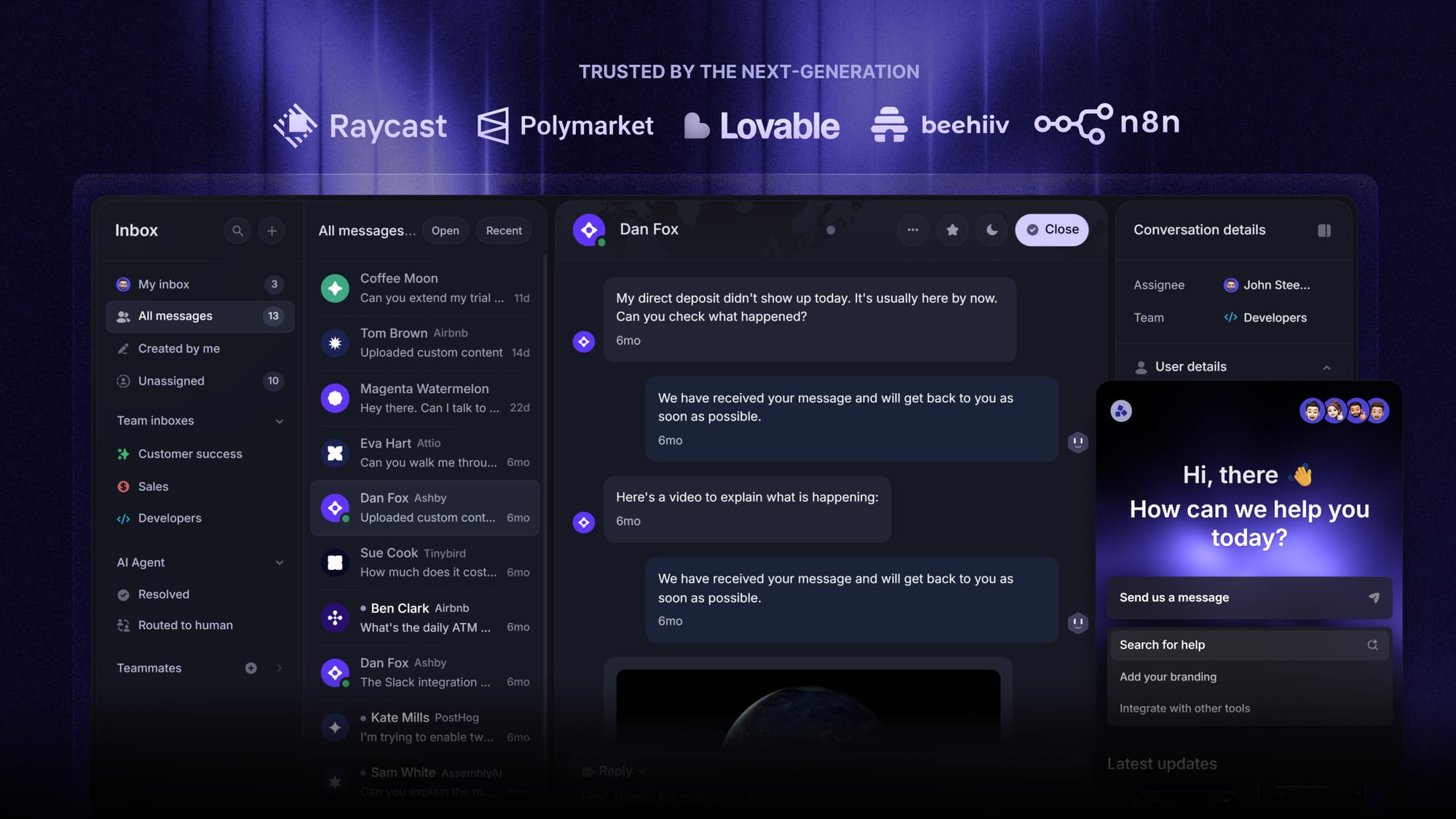
Featurebase is a modern AI customer support platform for product-led SaaS. It combines AI-powered support, help center, and feedback management into a single platform for startups that want all their customer-facing tools in one place. Featurebase is loved by thousands of support teams from companies like Lovable, Raycast, and n8n. 💫
Top features:
- Omnichannel inbox – Manage live chat, email, and Slack conversations from one AI-powered view
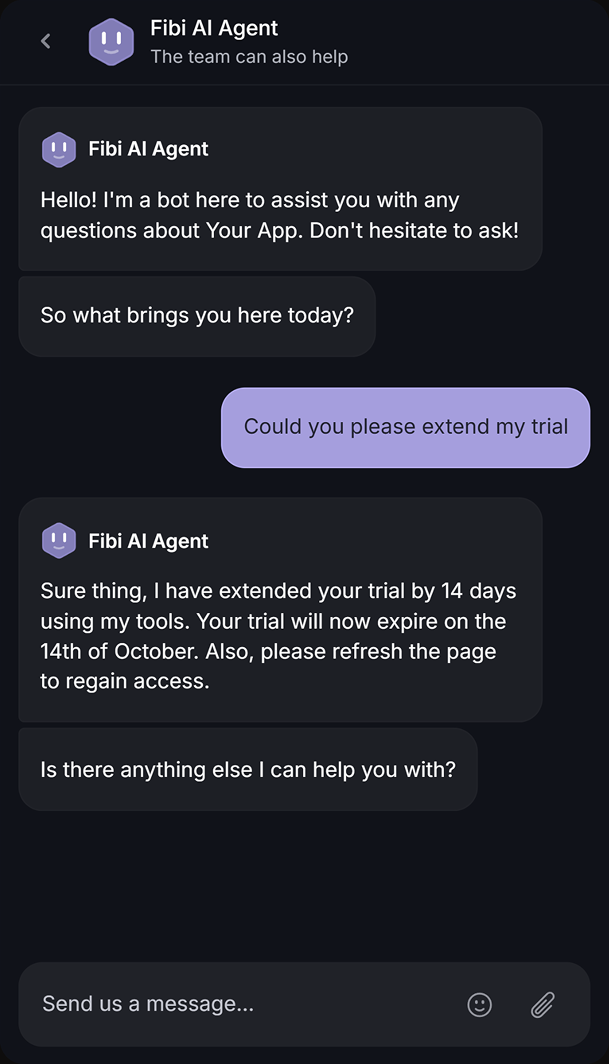
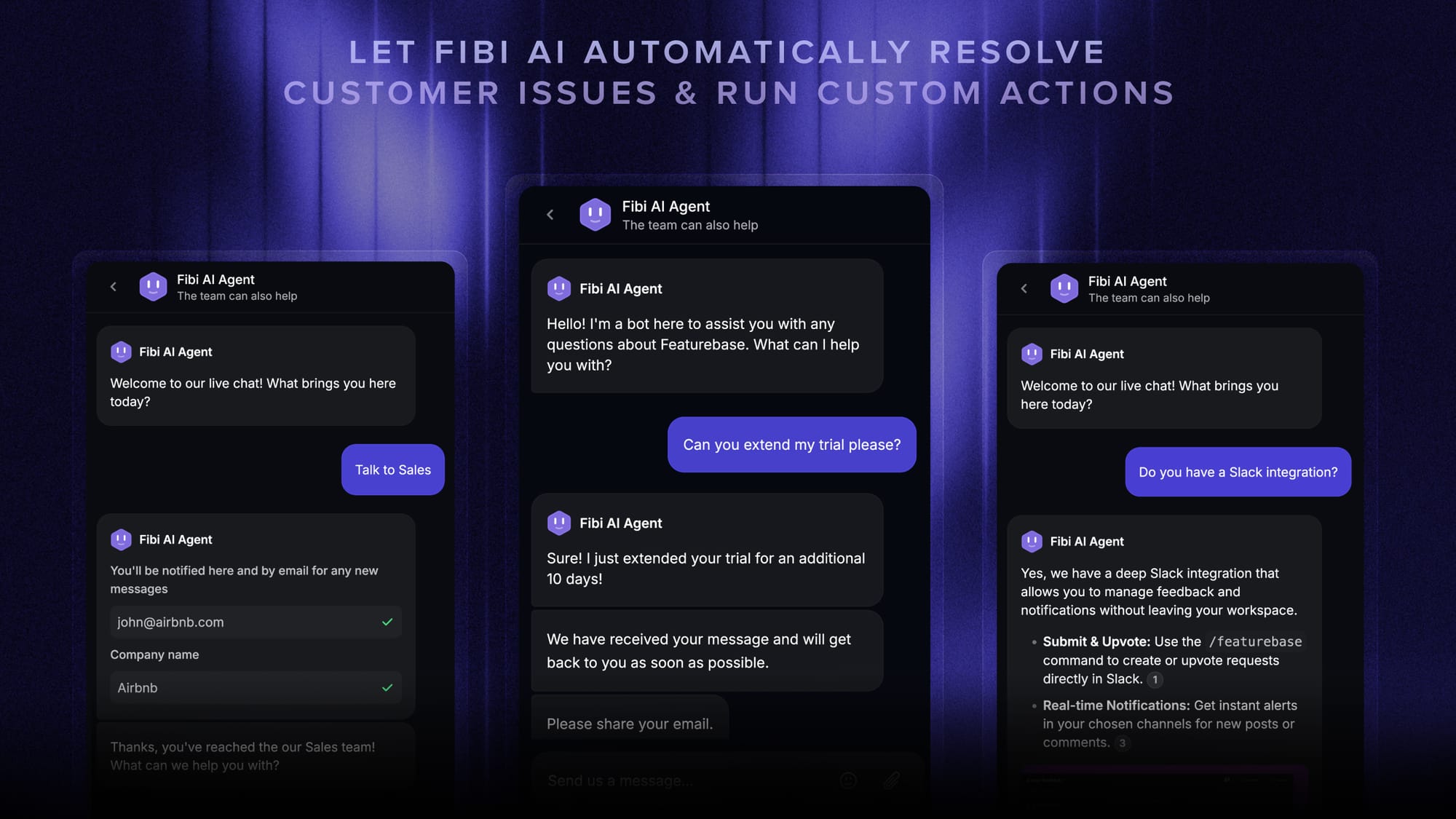
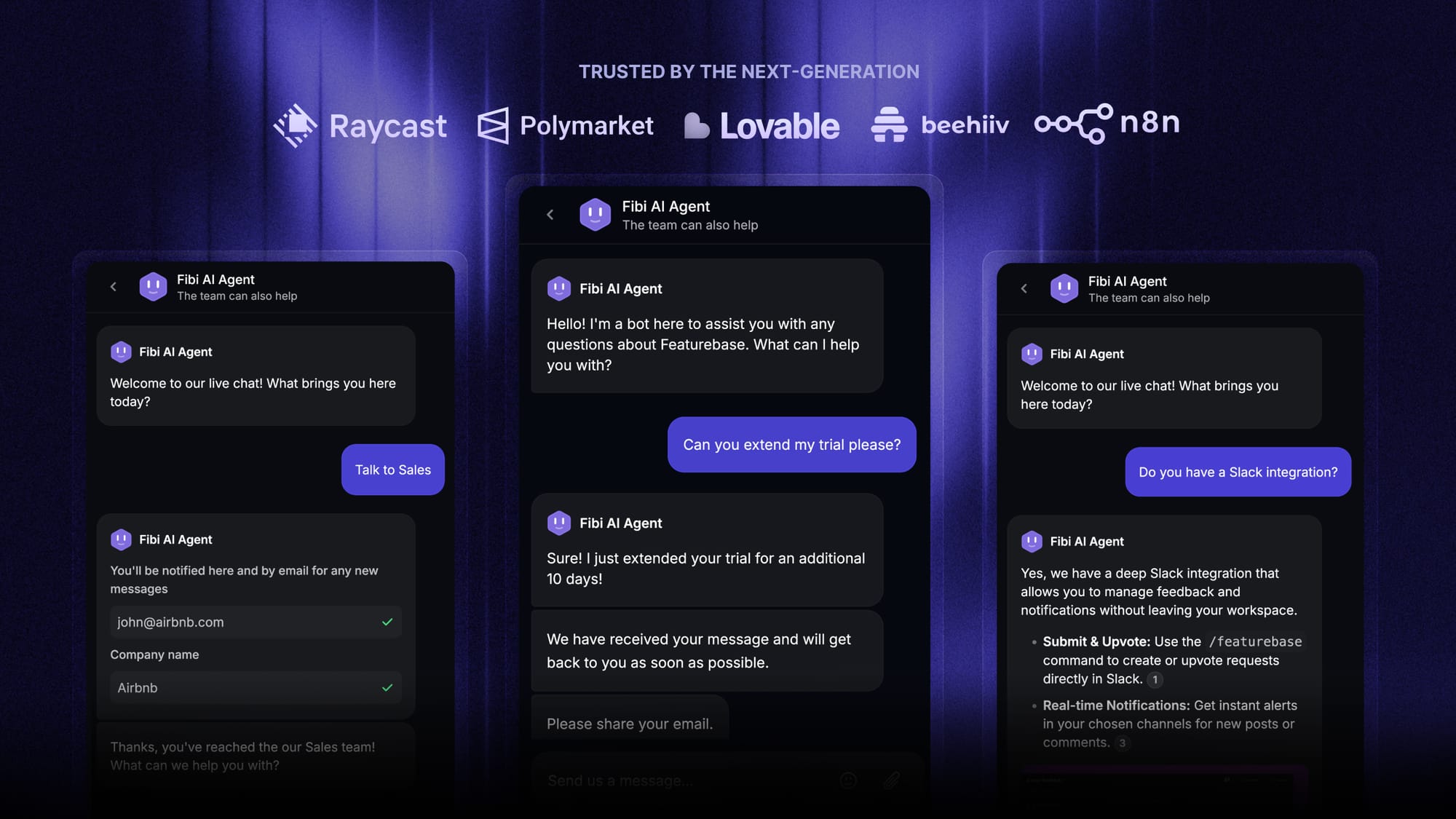
- Fibi AI Agent – Resolve customer issues on autopilot & run custom actions like trial extensions and refunds
- Help center with AI search – Provide instant, multilingual self-serve answers
- Workflows & automations – Auto-assign tickets, route conversations, collect customer data, and more
- AI Copilot – Help your agents answer customers faster with AI Copilot that uses your internal knowledge
- Multi-brand support – Manage multiple Help Centers and Live chats from a single workspace
- Automatic AI translations – Automatically translate all messages and help articles to your customers' native language
- Service Level Agreements – Track SLAs to make sure your team responds to customers on time, every time
- Mobile app – Respond to customers, receive notifications, and unblock users on the go
- Integrations – Connects with Slack, Linear, Jira, HubSpot, and more
Pricing: Free plan available with unlimited conversations. Paid plans start at $29/seat/month with $0.29 per AI resolution.
Featurebase covers all the basic support features that legacy platforms do, but with a much more modern approach. It comes with AI automations, a mobile app, and multiple channels (email, live chat, Slack, etc.).
Why it's a strong Parahelp alternative: where Parahelp hands you an AI agent and stops, Featurebase hands you the entire support surface around it. Fibi resolves tickets, but it also submits feedback to your portal on customers' behalf, answers from your roadmap, and runs custom workflows (trial extensions, refunds, account lookups). And you can stand it all up in an afternoon, no AI engineer required.

Get the best modern Parahelp alternative
Automatically resolve 70% of customer requests & cut down manual support loads
2. Intercom Fin
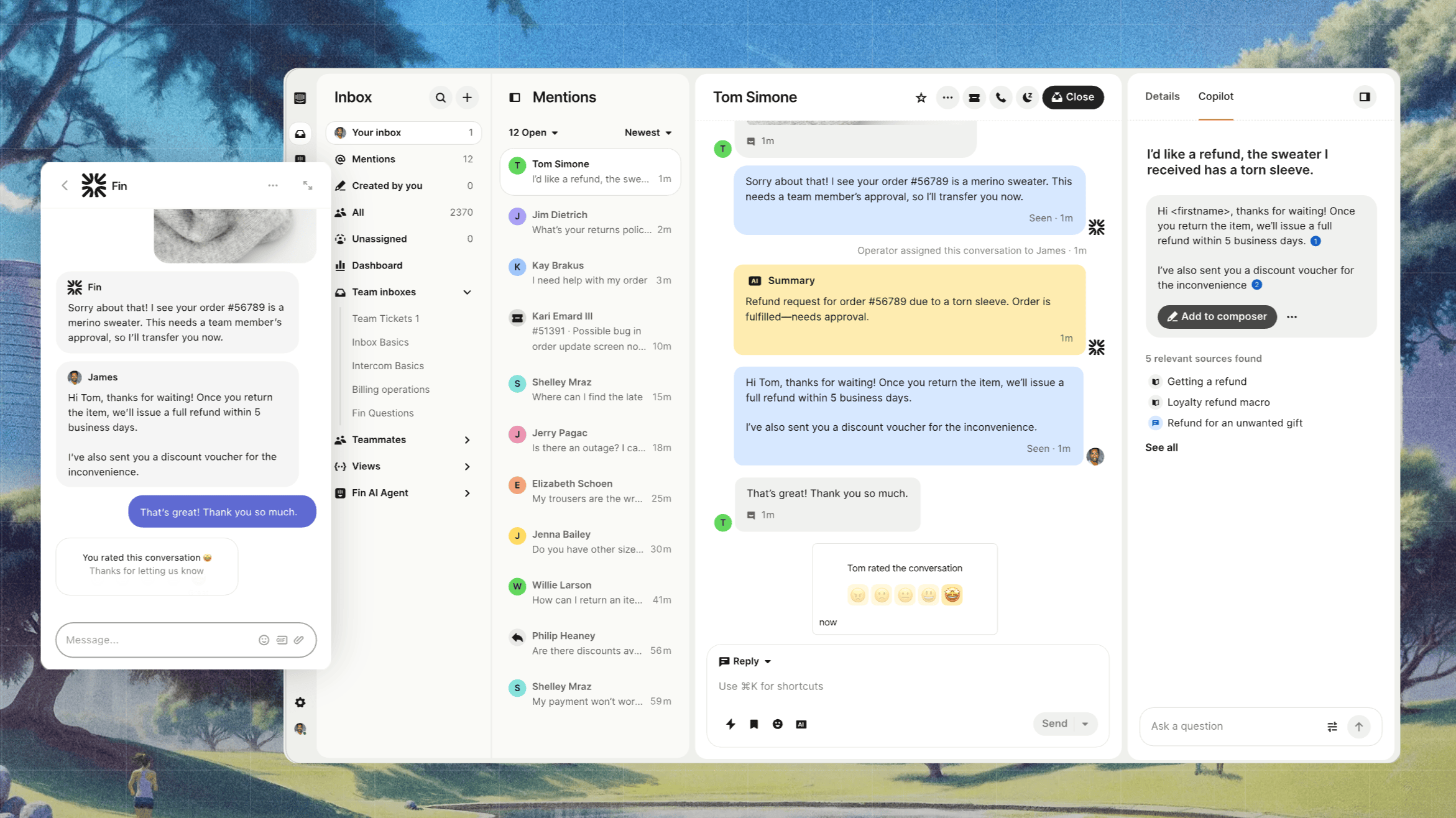
Intercom Fin is the most mature AI support agent on the market. It runs inside Intercom's customer service platform or integrates with an existing helpdesk like Zendesk, and Intercom reports an average 67% resolution rate across customers.
What to watch for:
- Costs balloon fast at scale (a team with 5,000 monthly conversations and 60% resolution pays ~$2,970/month for Fin alone, before seats)
- Can be rigid with phrasing and miss nuance on edge-case questions
- Simulation features and granular controls sit behind higher-tier plans
Best for: teams already running Intercom who want the most battle-tested AI agent.
Pricing: $0.99 per outcome. With Intercom’s helpdesk, Intercom pricing starts at $19/seat/month for Essential billed annually ($29 billed monthly). Advanced costs $85/seat/month and Expert costs $132/seat/month, billed annually. Fin on a supported existing helpdesk requires no Intercom seats; a minimum commitment applies. See the full Fin AI pricing breakdown.
3. Sierra
Sierra is the most well-funded entrant in the AI agent space, founded by Bret Taylor (ex-Salesforce co-CEO) and Clay Bavor. It deploys supervised AI agents across chat, SMS, WhatsApp, email, voice, and ChatGPT for enterprise CX use cases.
What to watch for:
- Custom enterprise pricing only, with contracts typically starting at $150K/year
- 3-6 month deployments managed by Sierra's team, not self-built
- Changes to AI logic or prompts often require contacting the vendor, slowing iteration
Best for: large enterprises with the budget and timeline for a vendor-managed AI agent.
Pricing: Custom. Sierra pricing typically starts at $150K/year with $50K-$200K setup fees. Sales-led only.
4. Decagon
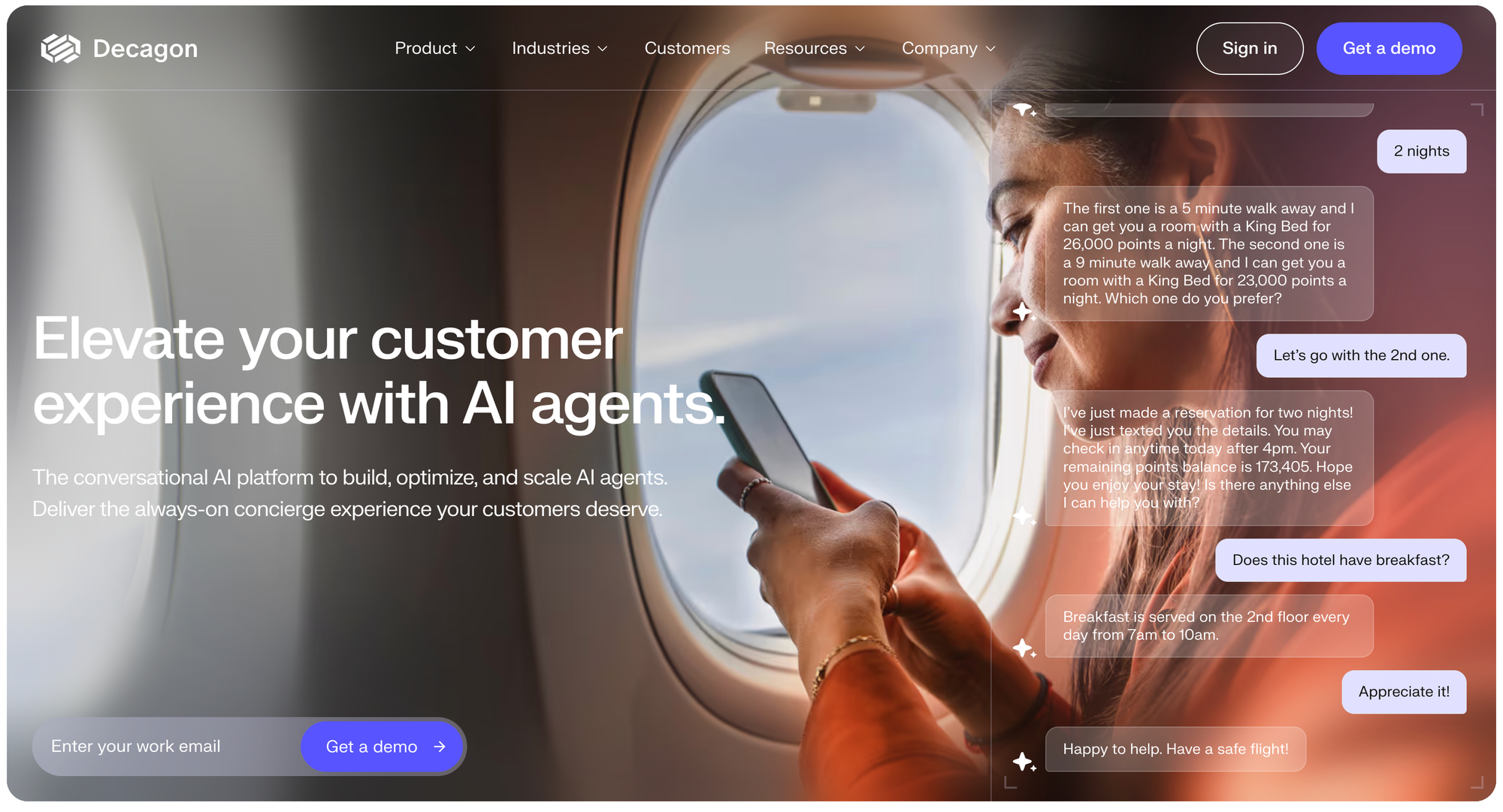
Decagon is an enterprise AI agent platform recently valued at $4.5B, with a standout analytics layer that turns support data into actionable CX insights. It runs across chat, email, and voice.
What to watch for:
- $50K annual platform fee plus per-conversation usage on top
- Median contracts run ~$400K/year, with a $95K floor
- Needs a dedicated person to manage; advanced workflows require developers
Best for: mid-market and enterprise CX teams with budget for dedicated AI ops headcount.
Pricing: $50K annual platform fee + per-conversation (~$0.99) or per-resolution (~$0.50) usage. See the full Decagon pricing breakdown.
5. Zendesk AI
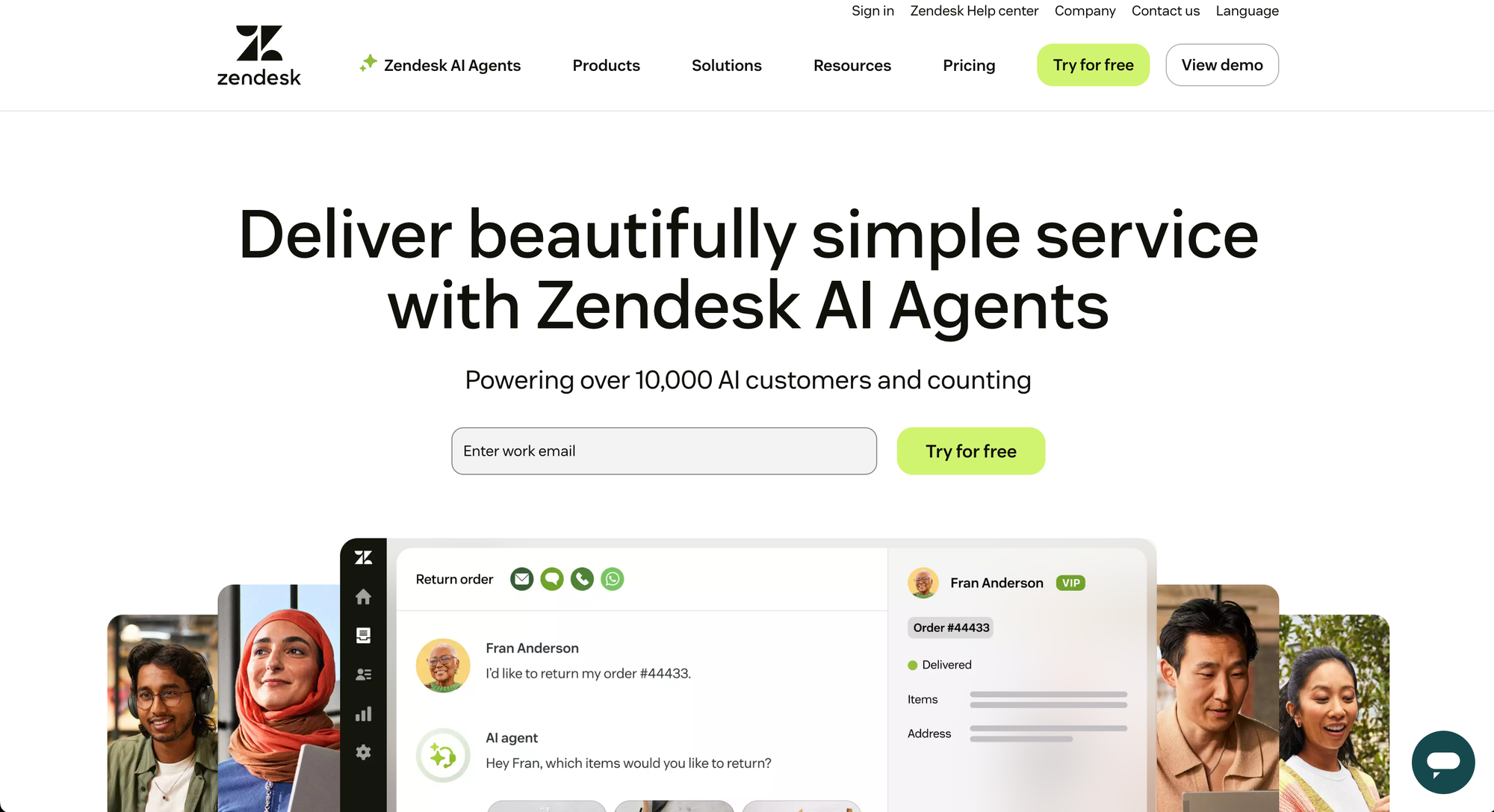
Zendesk AI is Zendesk's AI agent layer on top of their support suite. If you're already running Zendesk, it's the path of least resistance: same tool, same workflows, with intelligent triage, AI-generated replies from your help center, and agent copilot suggestions.
What to watch for:
- Three pricing layers stacked: Suite plan + Advanced AI add-on + per-resolution charges
- A 20-agent team on Suite Professional + AI hits ~$33K/year before resolutions
- Steep learning curve and many features gated behind Enterprise tier
Best for: teams already deeply invested in the Zendesk ecosystem who don't want to migrate.
Pricing: Zendesk pricing for Suite plans is $55-$169 per agent/month + $50 per agent/month for Advanced AI + $1.50-$2.00 per automated resolution.
6. eesel AI
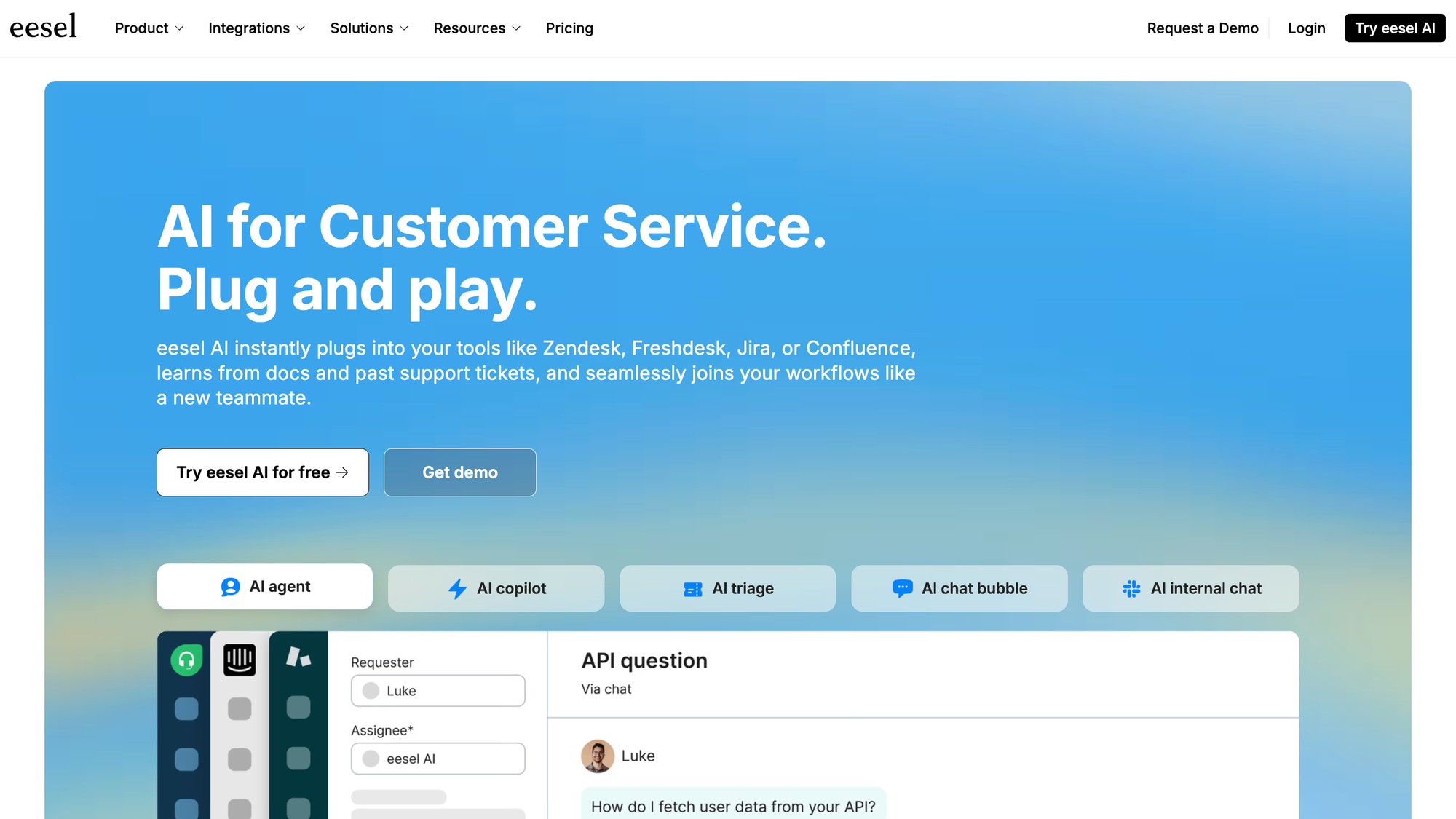
eesel AI is the closest direct competitor to Parahelp in spirit: a self-serve AI layer that connects to your existing helpdesk (Zendesk, Freshdesk, Intercom) without forcing a migration. It includes a simulation mode that runs the AI against historical tickets before you go live.
What to watch for:
- Thin independent validation (only 15 G2 reviews despite a "2,000+ customers" claim)
- EU-timezone teams report slow customer support response times
- Copilot UX requires tab-switching between eesel and your helpdesk
Best for: smaller teams who want a self-serve AI overlay on an existing Zendesk or Freshdesk setup.
Pricing: eesel pricing is $0.40 per support ticket. No platform fee, no seat charges. $50 in free usage to start.
7. Ada
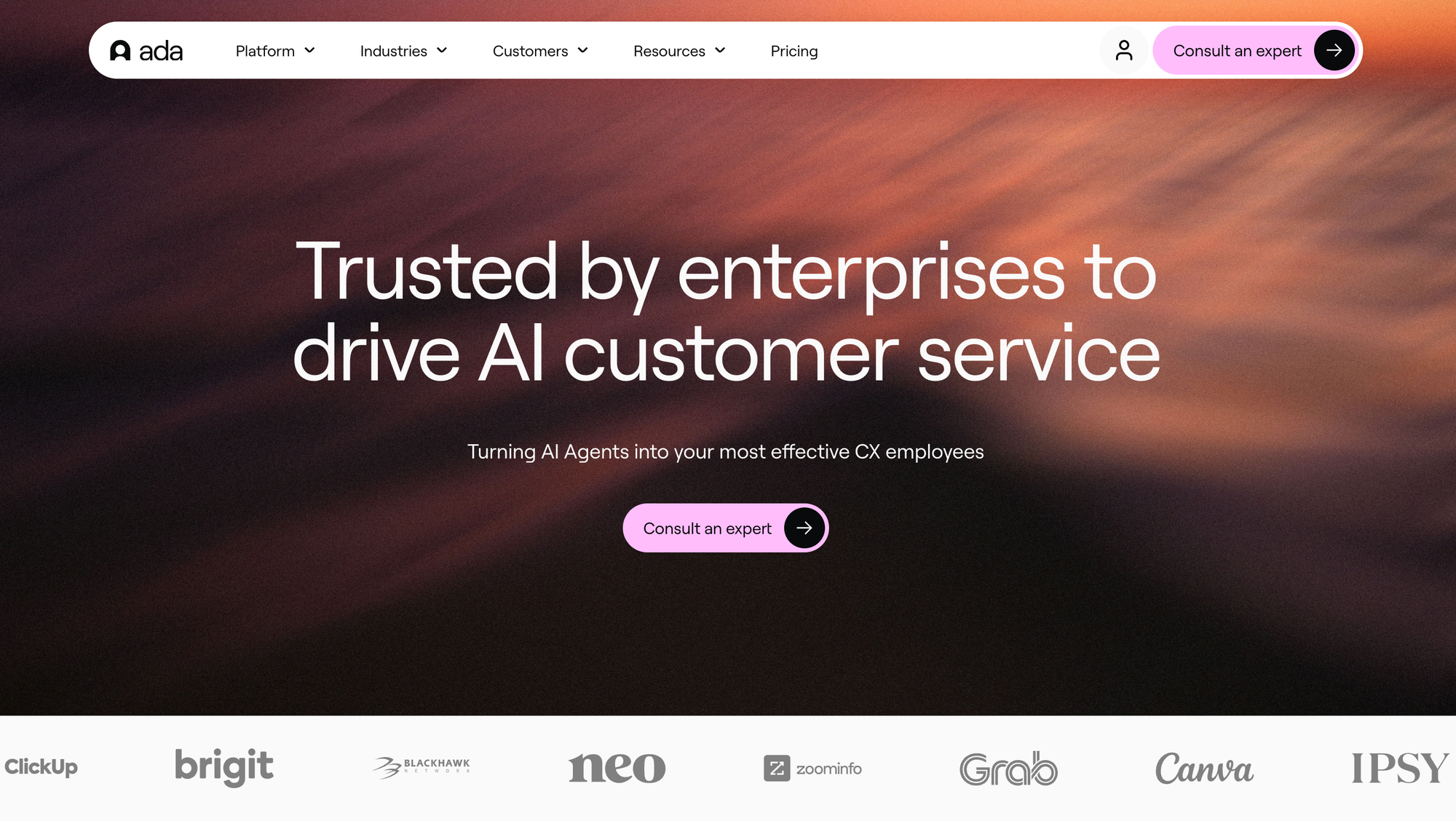
Ada is the legacy enterprise option, around since 2016 and entrenched in regulated industries (healthcare, finance, fintech). Admin reviewers on G2 rate it highly, and deflection rates reach 70-83% in mature deployments.
What to watch for:
- Can't natively ingest past tickets, PDFs, internal wikis, Google Docs, or Confluence
- End users on Trustpilot frequently report "endless loops" with no human handoff
- No self-serve trial; implementations typically take several months
Best for: large enterprises in regulated industries with existing implementation budget.
Pricing: Custom, conversation-based. Ada CX pricing typically runs $30K-$300K+ per year.
How to pick the right Parahelp alternative
Most teams overthink this. The right answer falls out pretty quickly once you're honest about three things.
- Your team's technical depth: If you have AI engineers who want to write XML prompts, Parahelp is fine and you don't need this list. If your support lead is the one configuring the AI, pick something self-serve. Featurebase, and Intercom Fin both fit. Sierra, Decagon, and Ada do not.
- Your budget envelope: Sierra, Decagon, and Ada start at five-figure annual commitments and frequently push into six. If you're not in that range, they'll come back as "no" after a sales call anyway. Featurebase, Intercom Fin, and Zendesk AI are realistic from the first $100/month onwards.
- Whether you need a full support stack or just an AI agent: If you're stacking a helpdesk, a knowledge base, a feedback portal, and a changelog separately, you're paying for 4 tools when you could pay for 1. Featurebase replaces the stack. The other options on this list are AI agents bolted onto whatever you already have.
The honest take: if you're already running Intercom or Zendesk and they're working for you, add Fin or Zendesk AI on top and you're done. If you're building from scratch or already feeling stack fatigue, Featurebase is the only option here that gives you the AI agent and everything else in one place.
Build a self-serve AI support stack with Featurebase
Parahelp is genuinely powerful, but it's built for a specific kind of team. If you don't have AI engineers writing six-page prompts, you'll spend more time fighting the tool than benefiting from it.
Featurebase is a modern AI customer support platform that gives you the same level of automation control without the engineering overhead. Fibi AI Agent resolves tickets, submits feedback on customers' behalf, answers from your roadmap, and runs custom workflows like trial extensions and refunds. And it sits inside a complete support and product suite: omnichannel inbox, help center, feedback portal, public roadmap, and changelogs, all in one place.
It comes with a Free plan, paid plans starting at $29/seat with $0.29 per Fibi resolution, and the onboarding is fast enough to ship in an afternoon. There's no downside to trying it. 👇
✨ Switch from Parahelp to a self-serve AI support platform that does more →
Frequently asked questions
Why are teams looking for Parahelp alternatives?
Parahelp is powerful but built for teams with AI engineers who can iterate on long, code-like XML prompts. Most support teams don't have that bandwidth. The other common reasons are no public pricing (sales demos only), no self-serve trial, and the fact that Parahelp is a single-purpose AI agent rather than a full support stack.
How much does Parahelp cost?
Parahelp doesn't publish pricing. The only way to get a number is a sales demo. Comparable AI support agents on the market range from $0.29 per resolution (Featurebase) to $0.99 per outcome (Intercom Fin) on the self-serve end, up to custom enterprise contracts of $150K-$400K+ annually for Sierra and Decagon.
What companies use Parahelp?
Parahelp's public customer list includes Perplexity, Cursor, Replit, Bolt, and Framer. Most of their customers are fast-growing, technically sophisticated SaaS companies with dedicated engineering or AI ops teams.
Which Parahelp alternatives have self-serve pricing?
Featurebase ($29/seat + $0.29 per resolution), eesel AI ($0.40 per ticket, no seats), Intercom Fin ($0.99 per outcome, plus seats when using Intercom’s helpdesk; no Intercom seats required on a supported existing helpdesk), and Zendesk AI all publish pricing and let you sign up without a sales call. Sierra, Decagon, and Ada are demo-only with custom enterprise pricing.